 English
 Français


Description
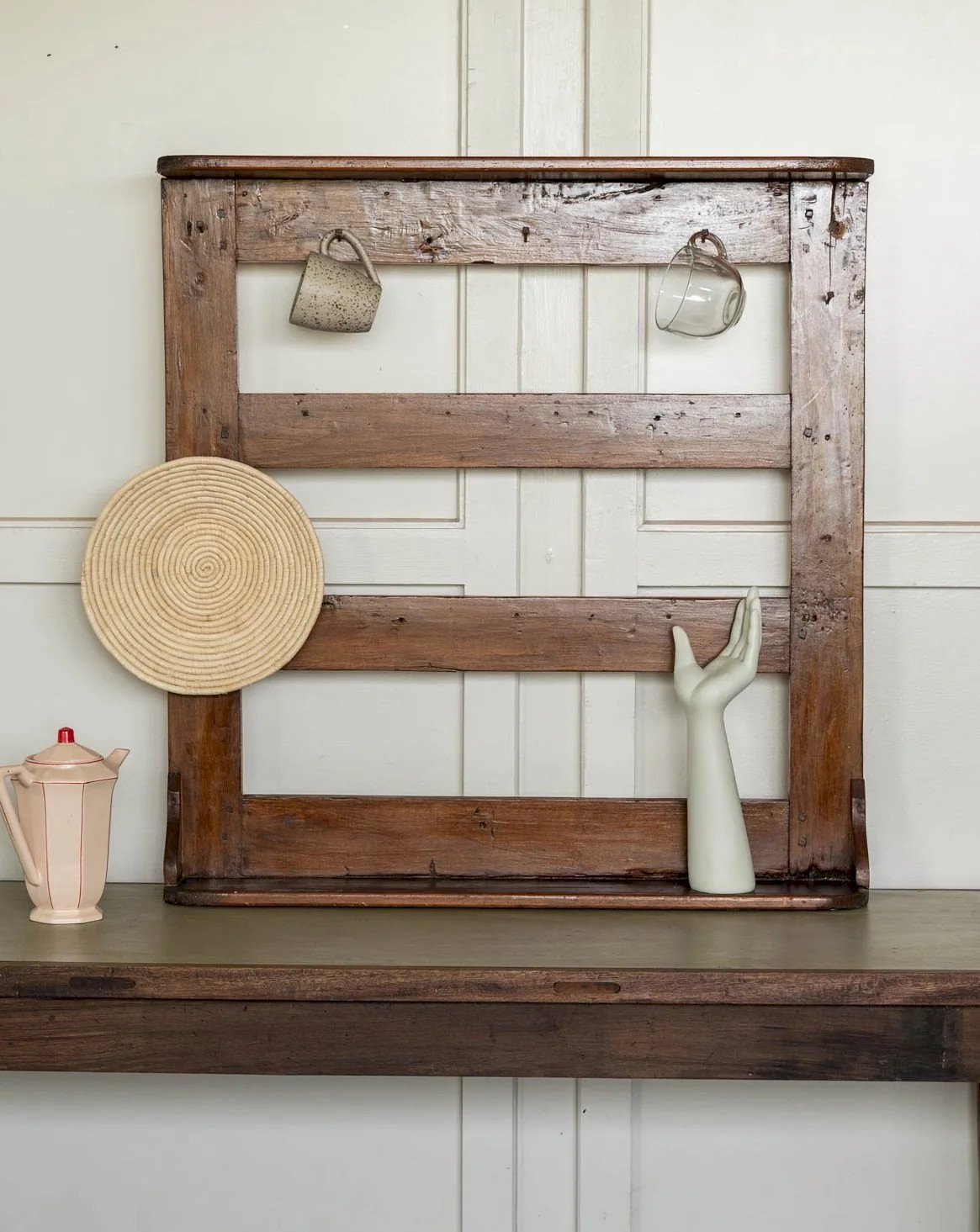
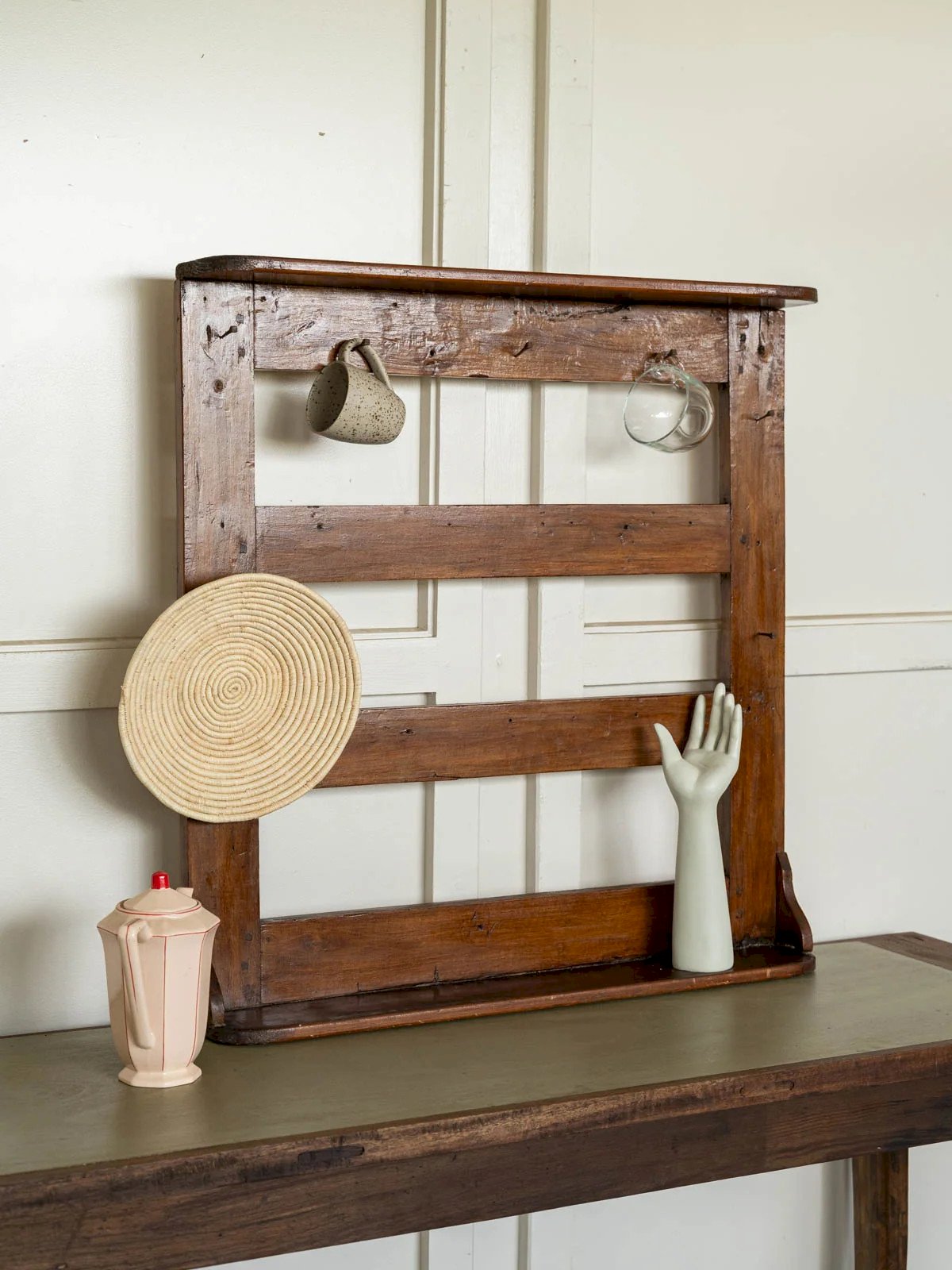
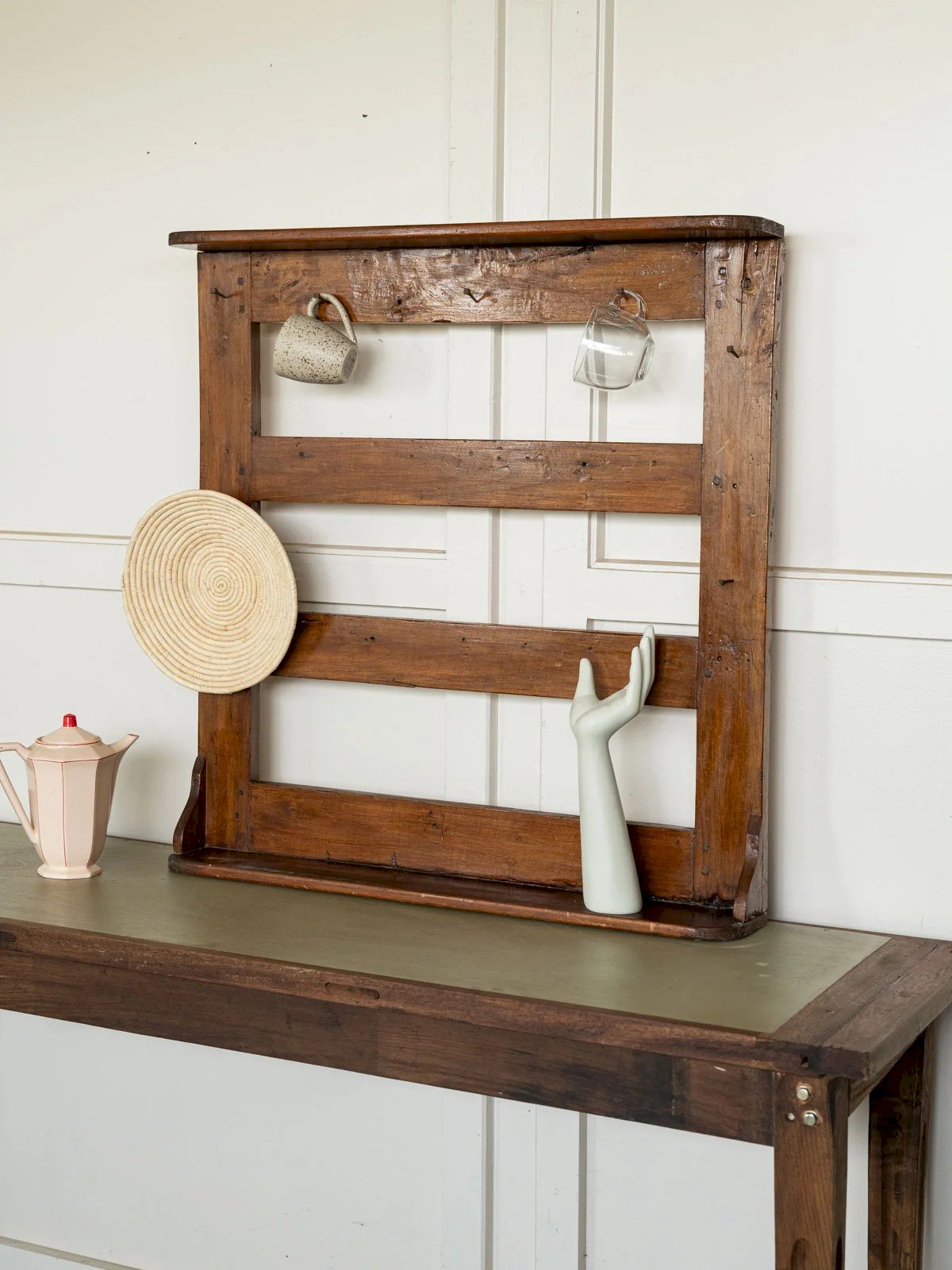
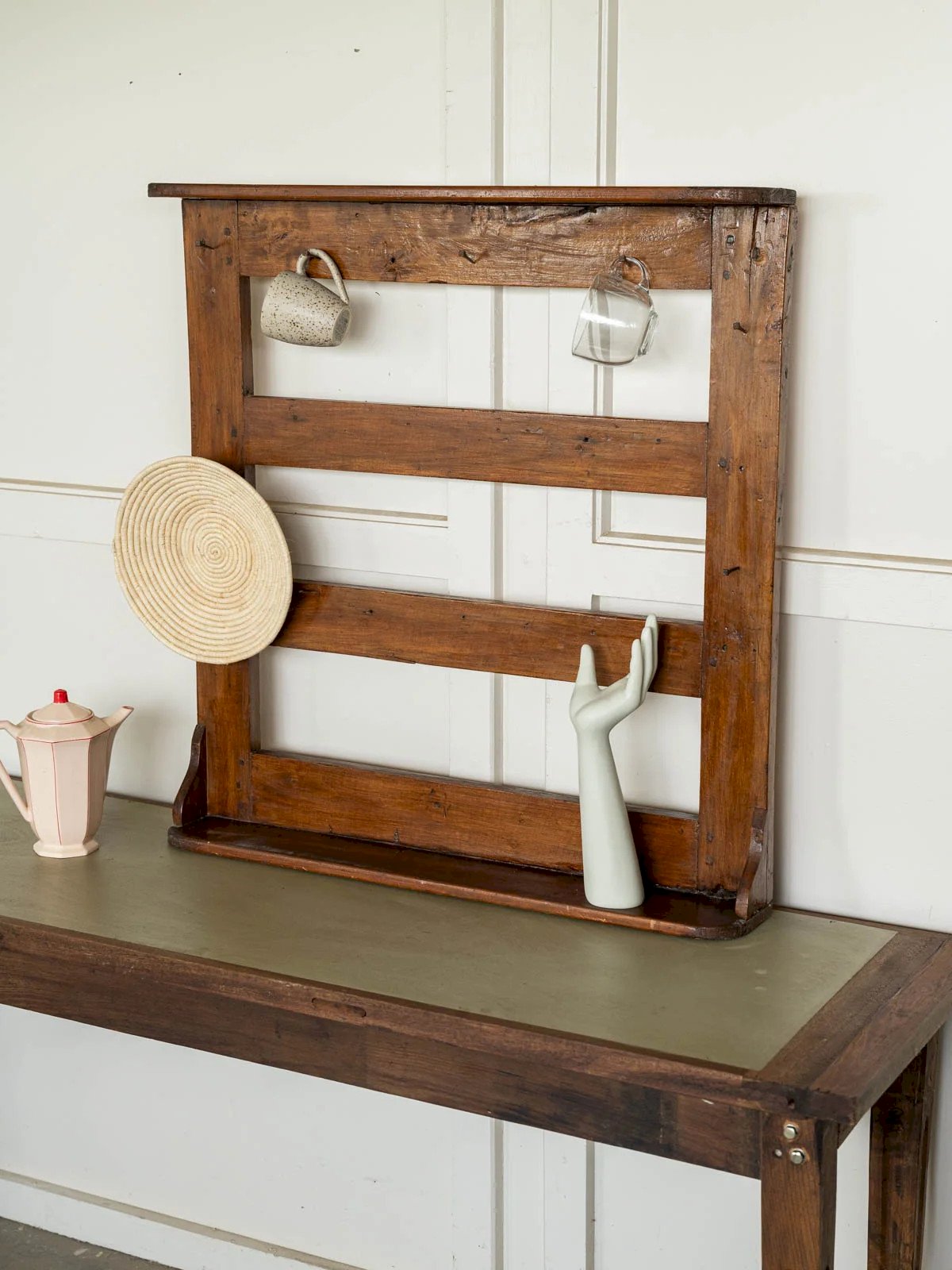
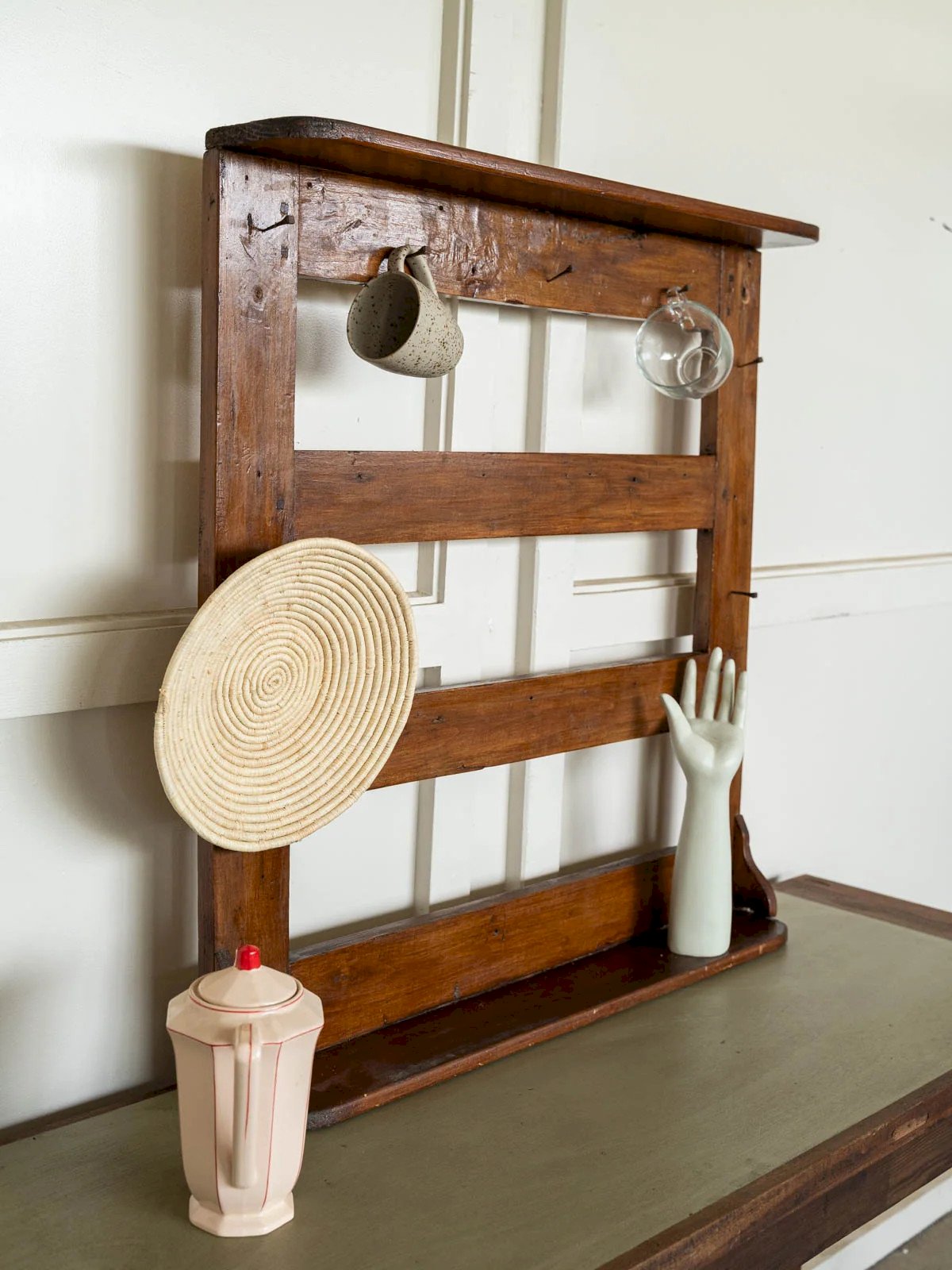
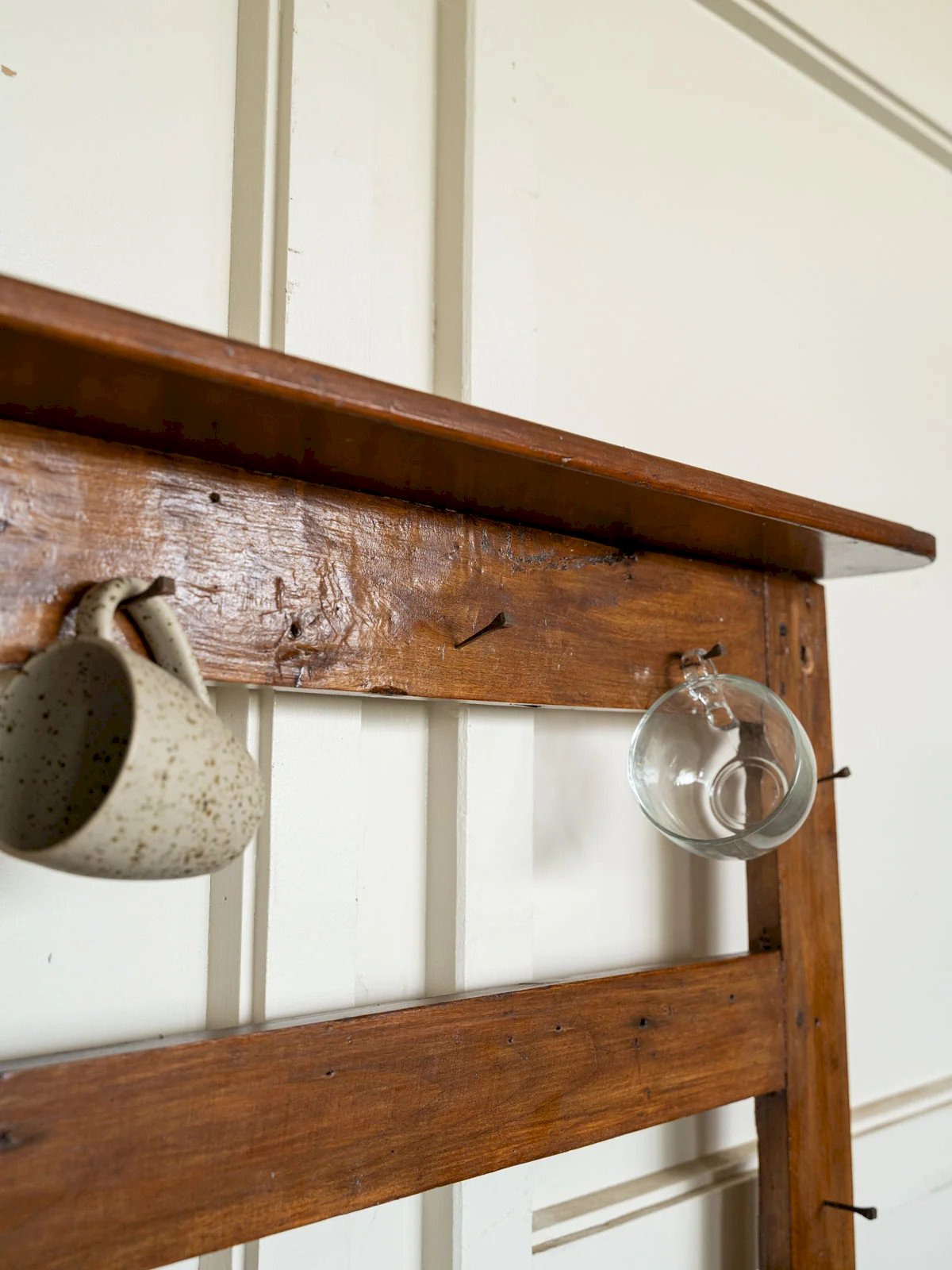
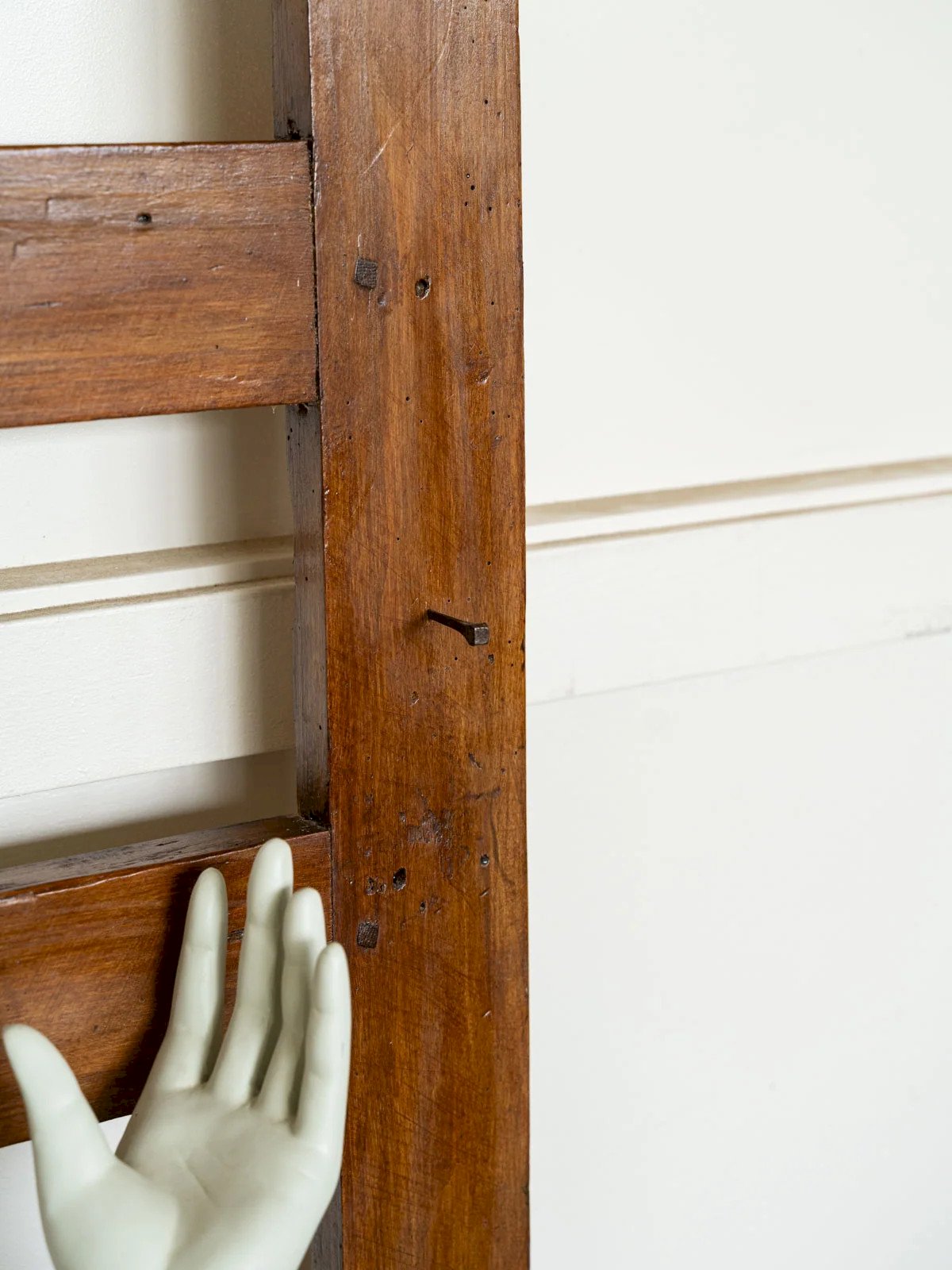
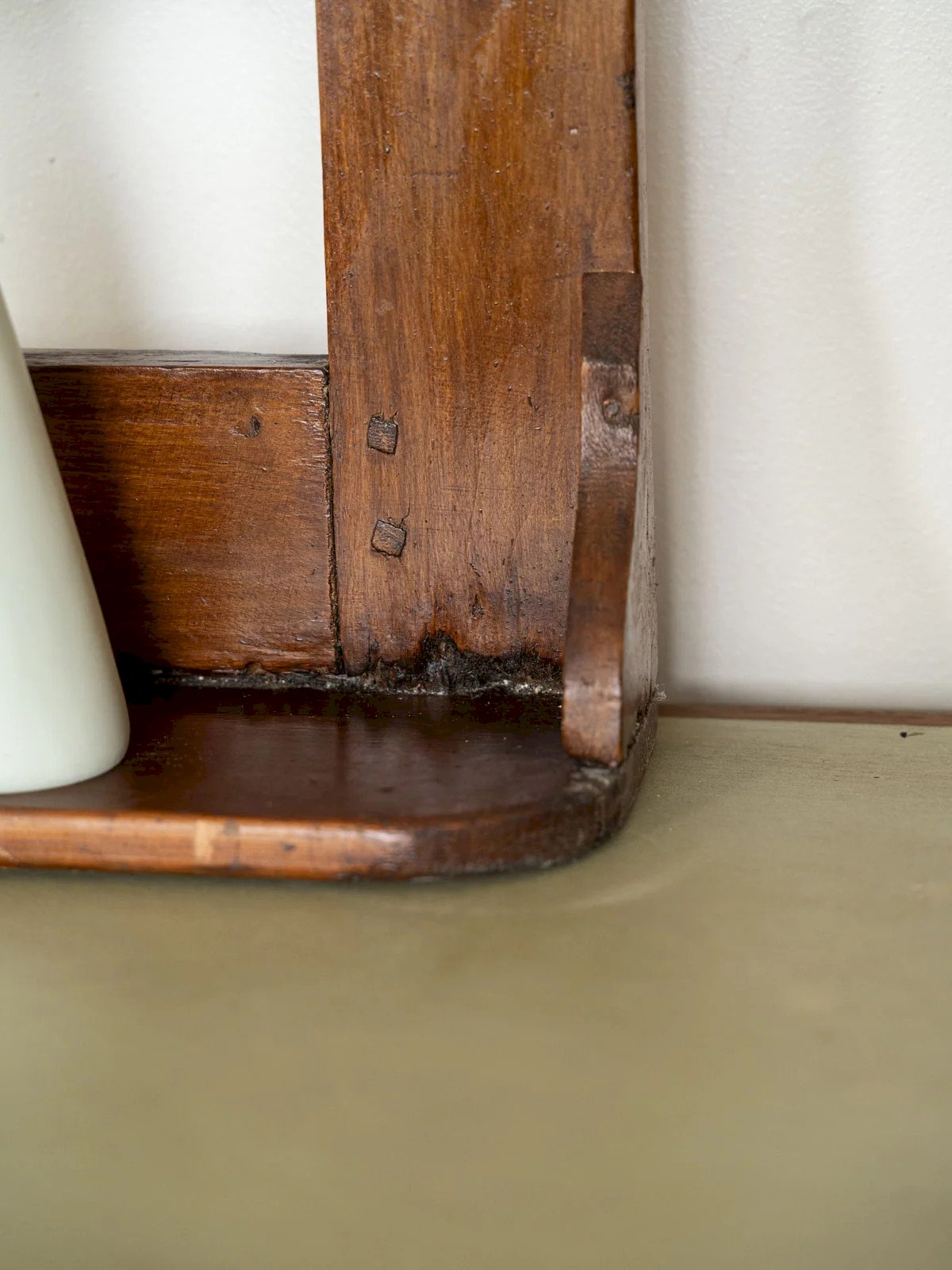
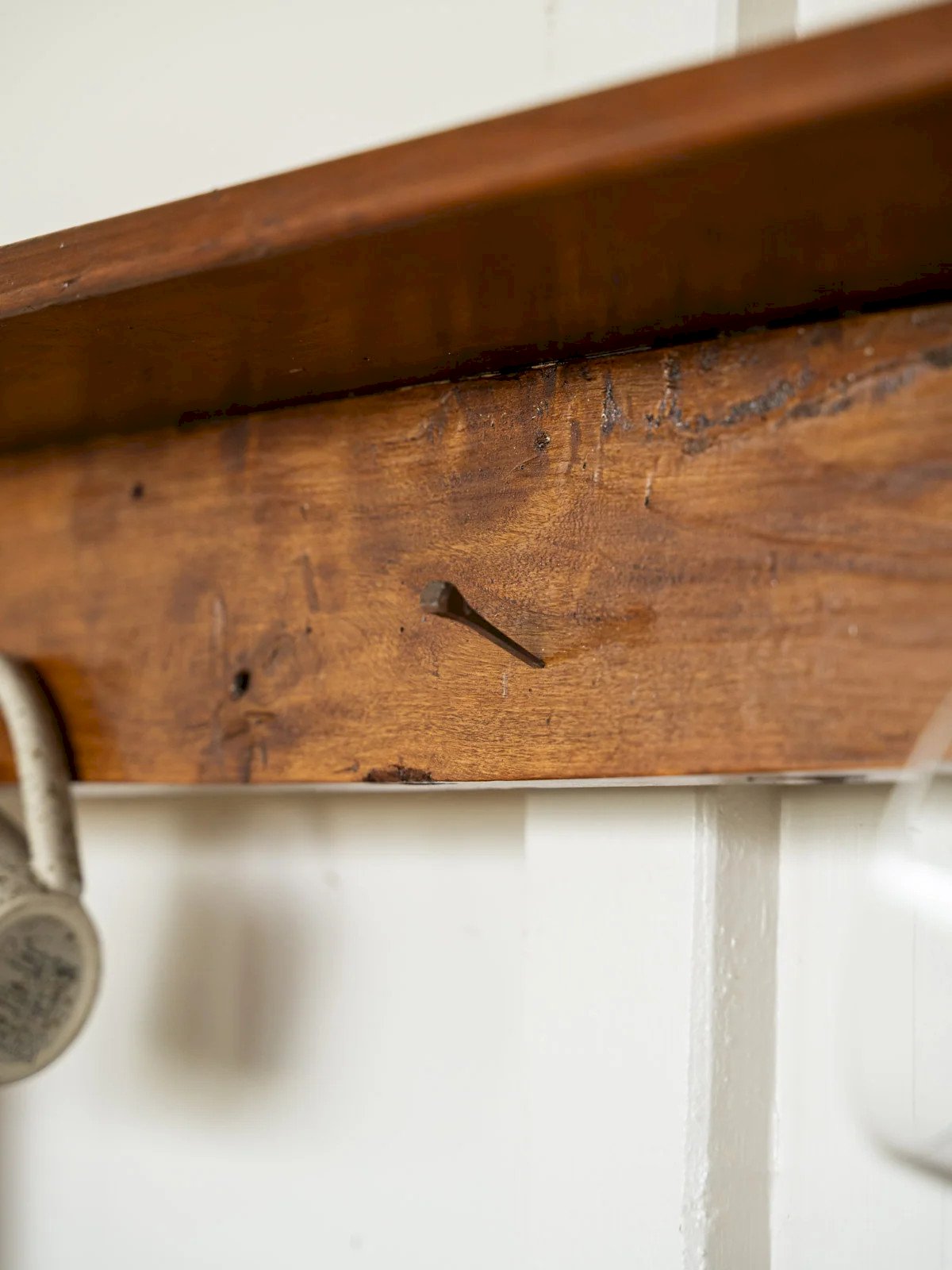
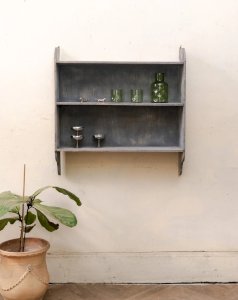
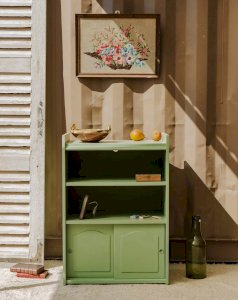
The old dark wood shelf charms with its wall presence and country spirit, ideal for a kitchen with a subtle charm. Its lightweight structure is easily mounted and allows for hanging various elements, such as cups, while keeping the countertop clear. The wood brings a warm texture that easily pairs with white dishware, jars, or a few zinc accessories. In a kitchen or dining nook, this second-hand shelf offers decorative storage that places everyday items within reach. Hosting aligned cups and a small dried bouquet, it creates an authentic scene. As a second-hand object, it bears the marks of its history: traces of time. Width: 85 cm Depth: 14 cm Height: 89 cm A little history of the shelf Long before becoming the streamlined piece of furniture we know, the shelf was merely a simple plank of raw wood fixed in kitchens or workshops to keep tools within reach. It gained its nobility in the 18th century under the name "gradin," making its way into living rooms to display precious bindings or fine porcelains. Its structure without doors or side panels makes it the lightest piece of furniture in the house, a feat of minimalism that frees up floor space while dressing the walls. Today, it serves not only for storage but also for staging our daily lives, transforming a utilitarian surface into a true living tableau that breathes and allows light to circulate.
Réf :
#414284
Brand / From : Debongout
Related Products
Comments
Gaëlle, the former wooden pot rack No. 1572
189€
75002 Paris
Ce site contient des liens d’affiliation pour lesquels je peux recevoir une compensation.
Description
The old dark wood shelf charms with its wall presence and country spirit, ideal for a kitchen with a subtle charm. Its lightweight structure is easily mounted and allows for hanging various elements, such as cups, while keeping the countertop clear. The wood brings a warm texture that easily pairs with white dishware, jars, or a few zinc accessories. In a kitchen or dining nook, this second-hand shelf offers decorative storage that places everyday items within reach. Hosting aligned cups and a small dried bouquet, it creates an authentic scene. As a second-hand object, it bears the marks of its history: traces of time. Width: 85 cm Depth: 14 cm Height: 89 cm A little history of the shelf Long before becoming the streamlined piece of furniture we know, the shelf was merely a simple plank of raw wood fixed in kitchens or workshops to keep tools within reach. It gained its nobility in the 18th century under the name "gradin," making its way into living rooms to display precious bindings or fine porcelains. Its structure without doors or side panels makes it the lightest piece of furniture in the house, a feat of minimalism that frees up floor space while dressing the walls. Today, it serves not only for storage but also for staging our daily lives, transforming a utilitarian surface into a true living tableau that breathes and allows light to circulate.
Réf :
#414284
Brand / From : Debongout