 English
 Français


Description
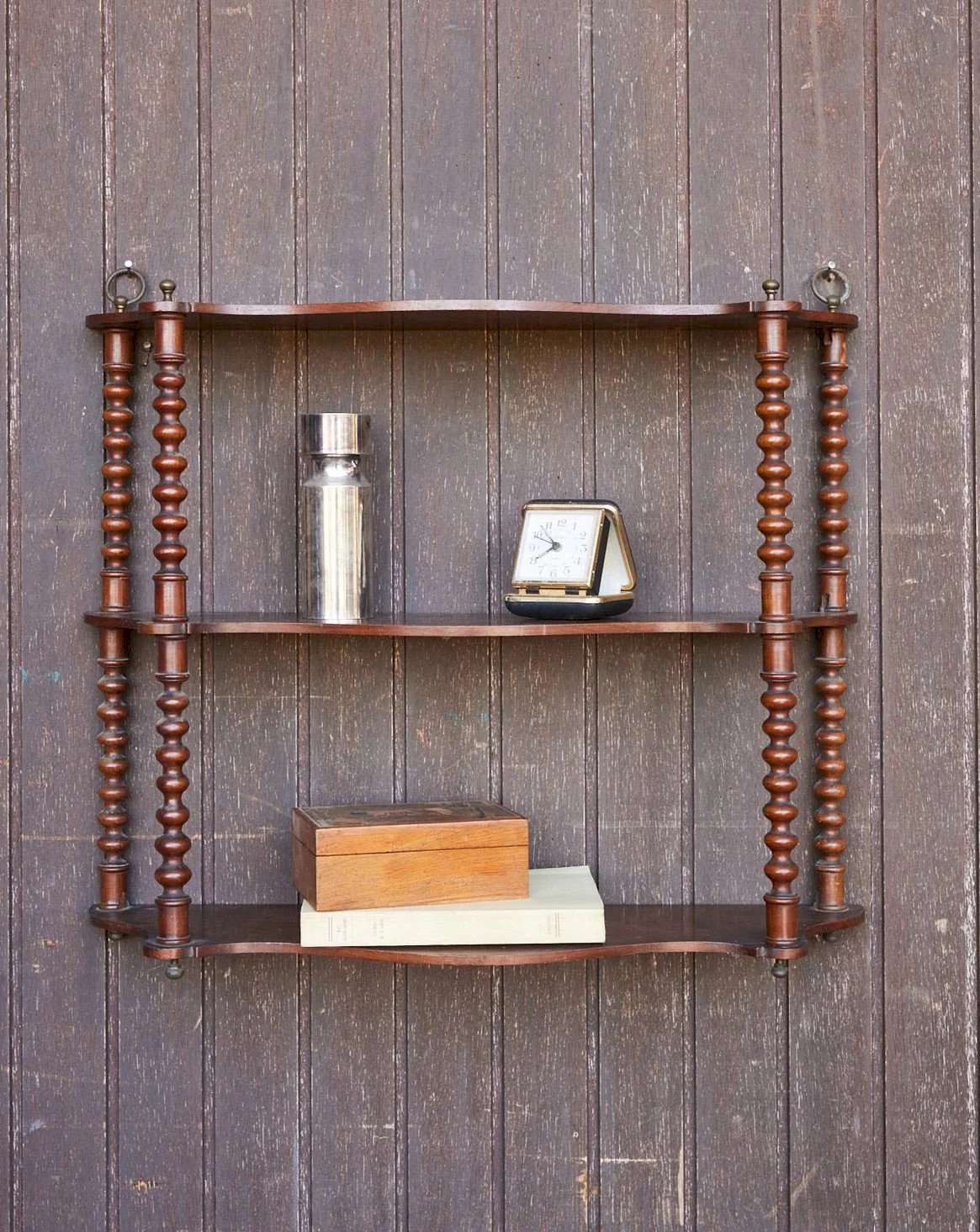
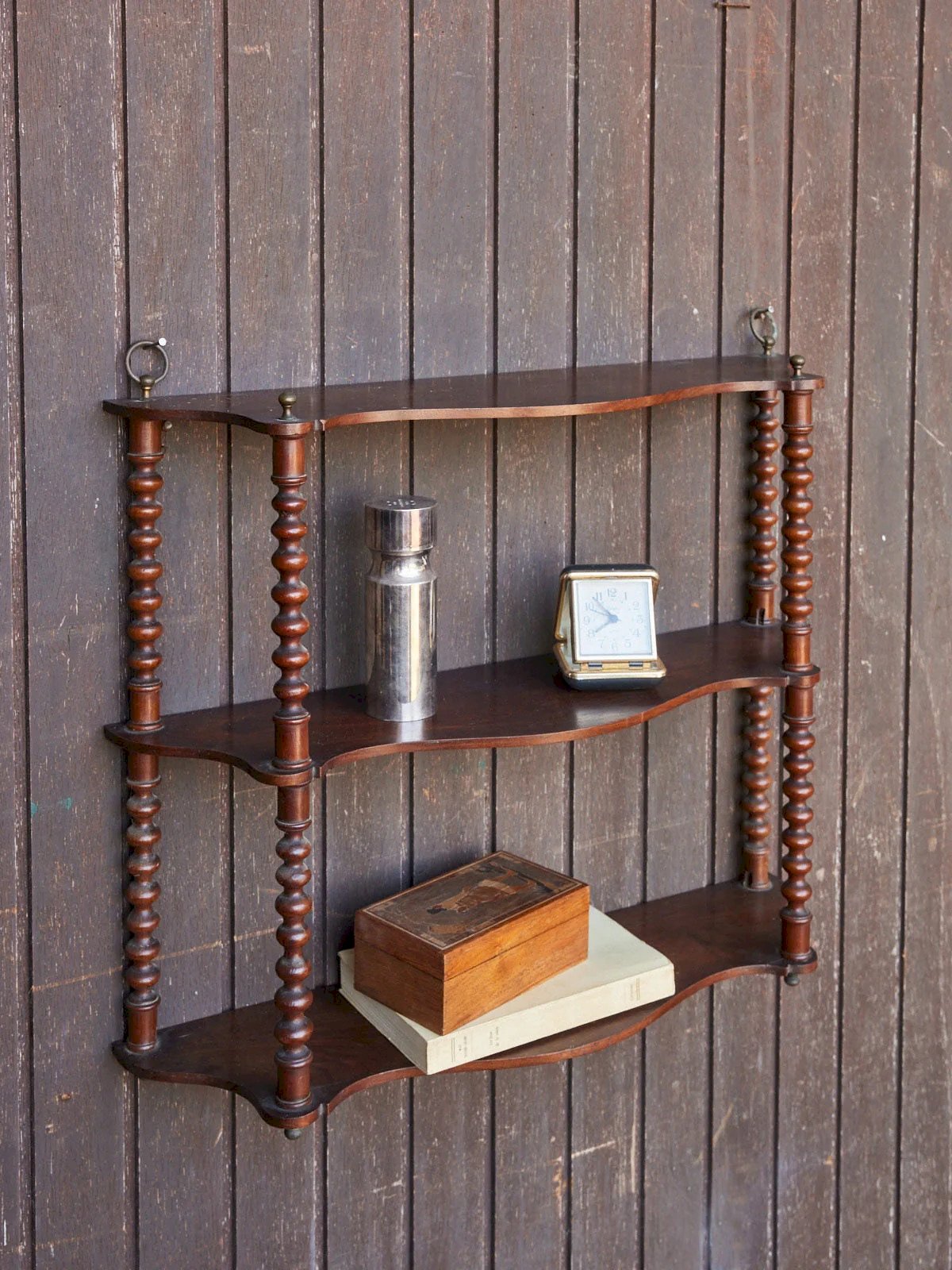
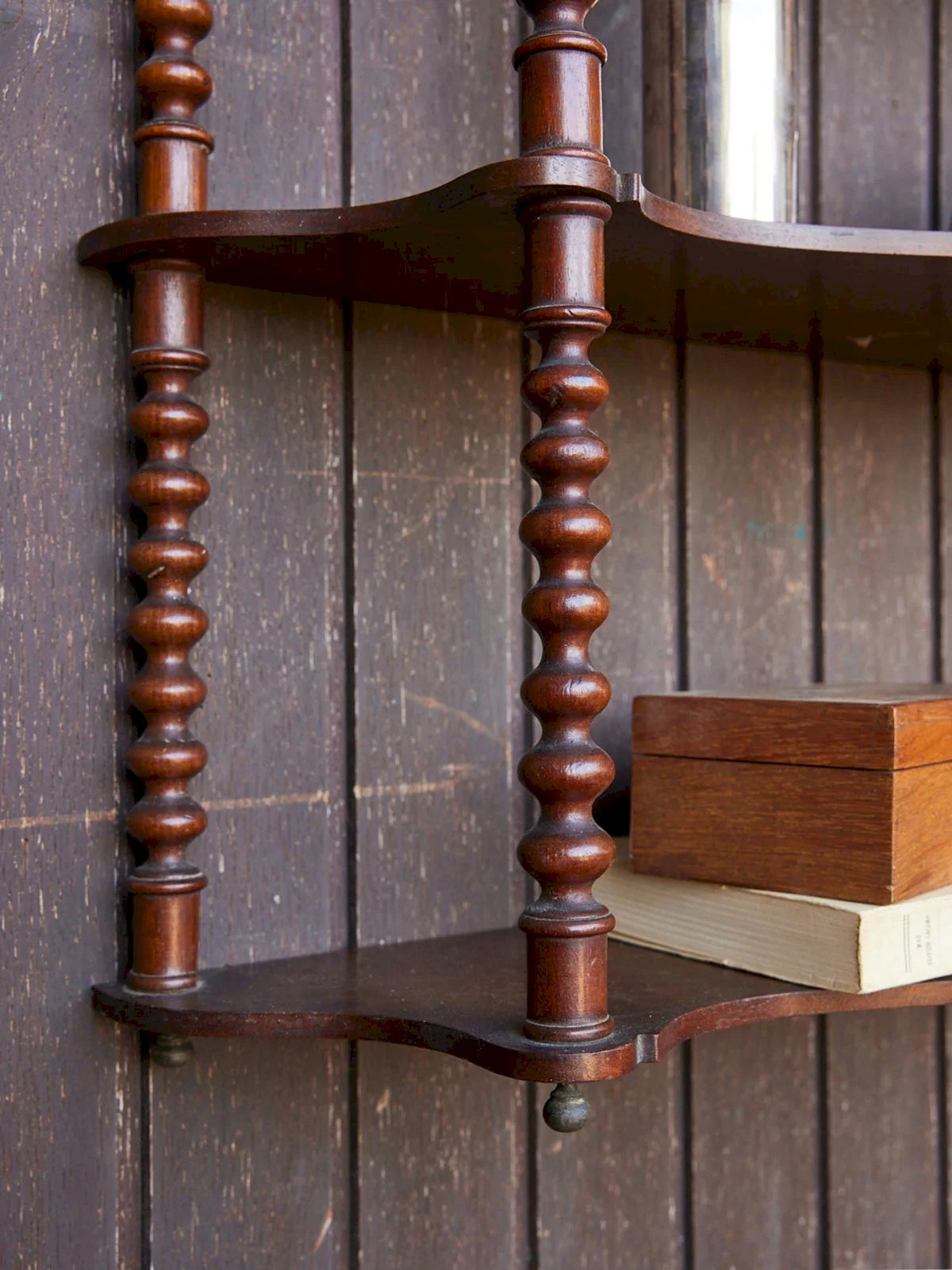
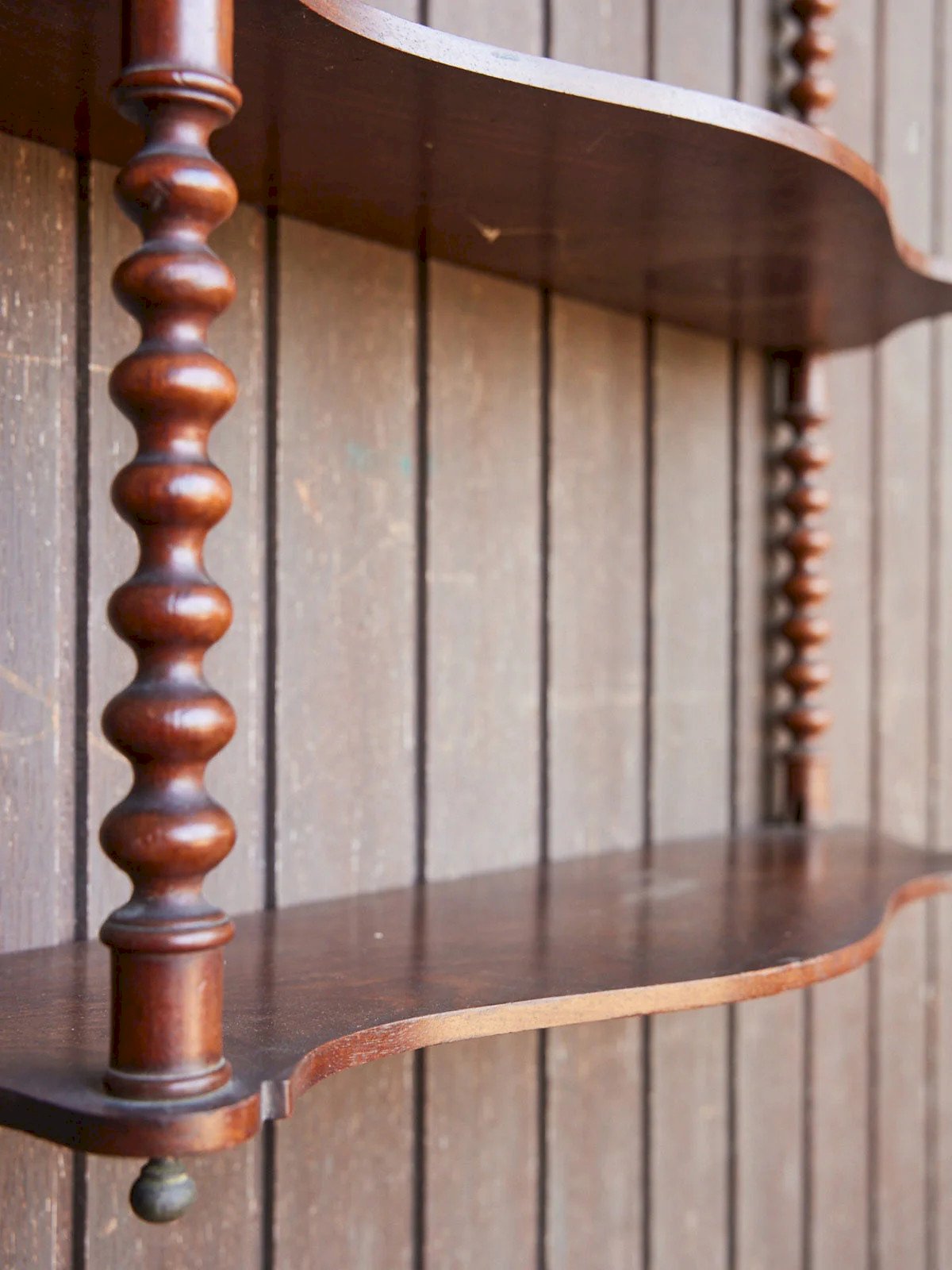
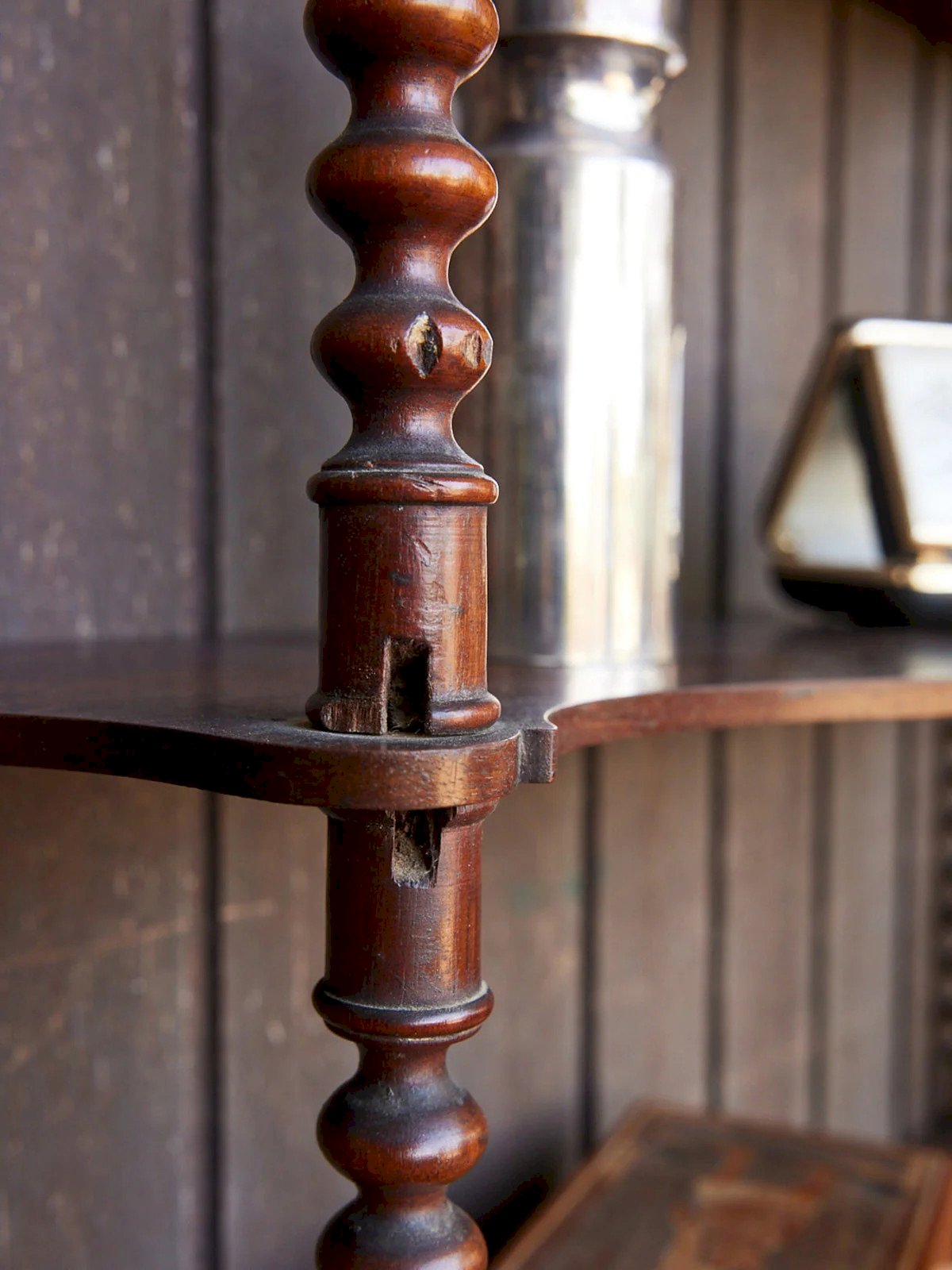
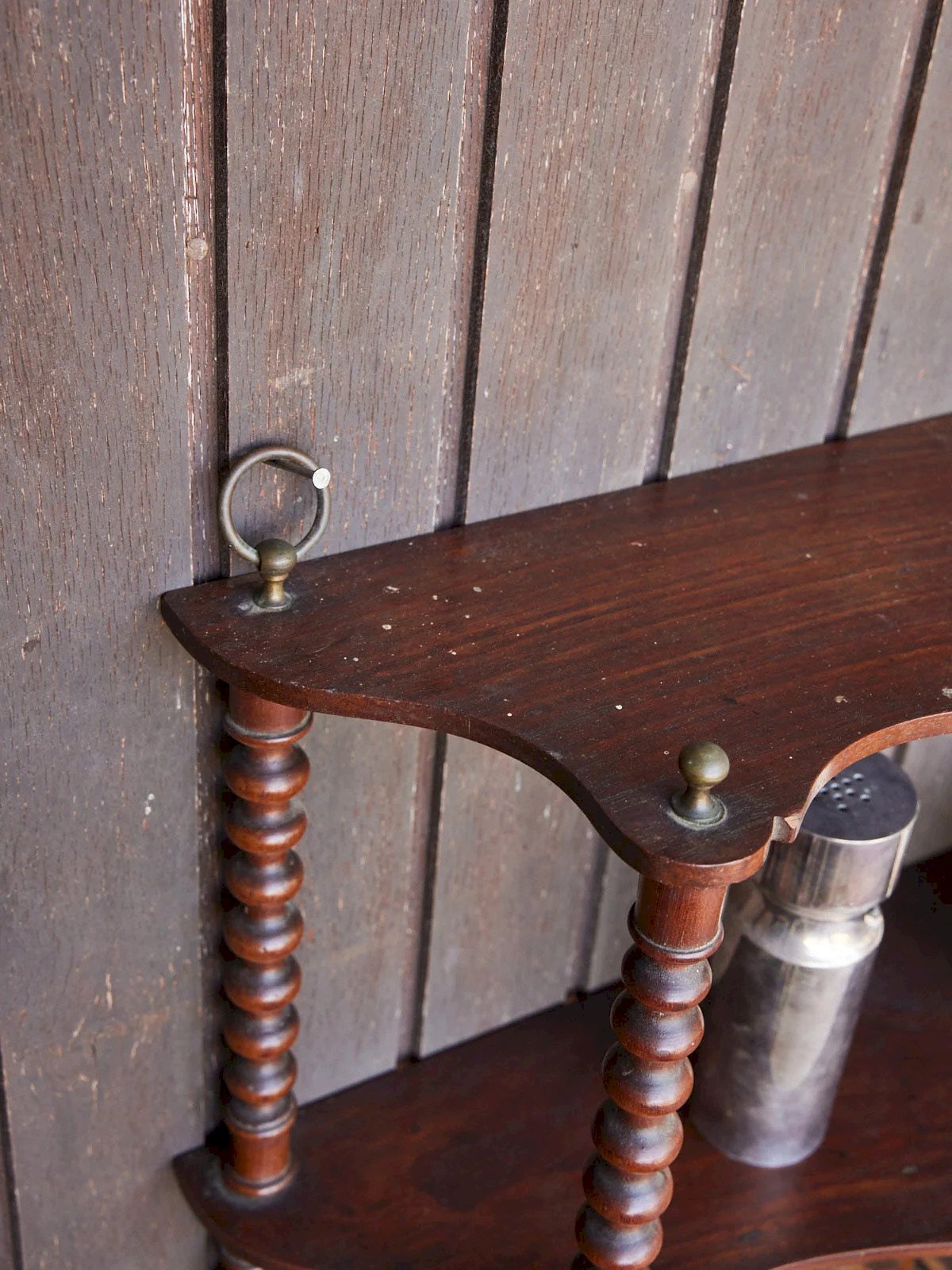
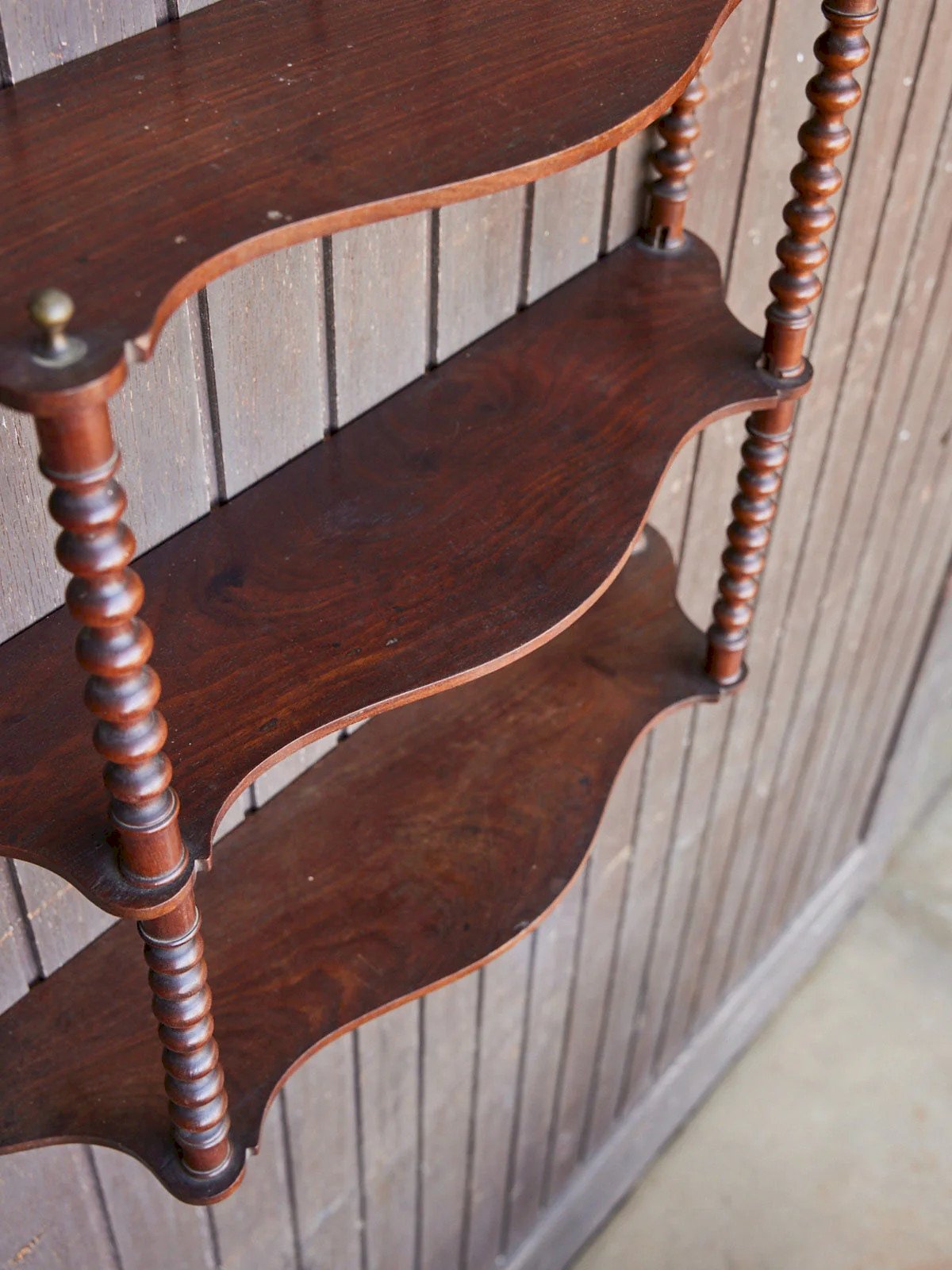
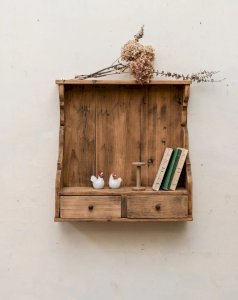
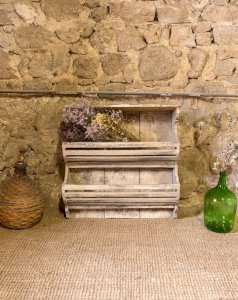
Invite elegance into your home with this turned wooden wall shelf. Its three horizontal shelves, adorned with a delicate rounded cut, provide functional storage space while adding a touch of sophistication to your decor. Ideal for displaying your books, decorative items, or plants, it fits perfectly in a living room, hallway, or bedroom. Its easy attachment system allows for simple and quick installation. Some signs of use that add to its authenticity. Length: 57 cm Width: 16 cm Height: 45 cm Niche height: 21 cm A brief history of the shelf Long before it became the streamlined piece of furniture we know today, the shelf was just a simple plank of raw wood fixed in kitchens or workshops to keep tools within reach. It gained its nobility in the 18th century under the name of "gradin," making its way into living rooms to showcase precious bindings or fine porcelain. Its structure without doors or side panels makes it the lightest piece of furniture in the house, a feat of minimalism that frees up floor space while dressing the walls. Today, it serves not only as storage but also as a way to stage our daily lives, transforming a utilitarian surface into a true living tableau that breathes and allows light to flow.
Réf :
#412490
Brand / From : Debongout
Related Products

Comments
Gaëlle, the turned wooden wall shelf N°928
179€
75002 Paris
Ce site contient des liens d’affiliation pour lesquels je peux recevoir une compensation.
Description
Invite elegance into your home with this turned wooden wall shelf. Its three horizontal shelves, adorned with a delicate rounded cut, provide functional storage space while adding a touch of sophistication to your decor. Ideal for displaying your books, decorative items, or plants, it fits perfectly in a living room, hallway, or bedroom. Its easy attachment system allows for simple and quick installation. Some signs of use that add to its authenticity. Length: 57 cm Width: 16 cm Height: 45 cm Niche height: 21 cm A brief history of the shelf Long before it became the streamlined piece of furniture we know today, the shelf was just a simple plank of raw wood fixed in kitchens or workshops to keep tools within reach. It gained its nobility in the 18th century under the name of "gradin," making its way into living rooms to showcase precious bindings or fine porcelain. Its structure without doors or side panels makes it the lightest piece of furniture in the house, a feat of minimalism that frees up floor space while dressing the walls. Today, it serves not only as storage but also as a way to stage our daily lives, transforming a utilitarian surface into a true living tableau that breathes and allows light to flow.
Réf :
#412490
Brand / From : Debongout