 English
 Français


Description
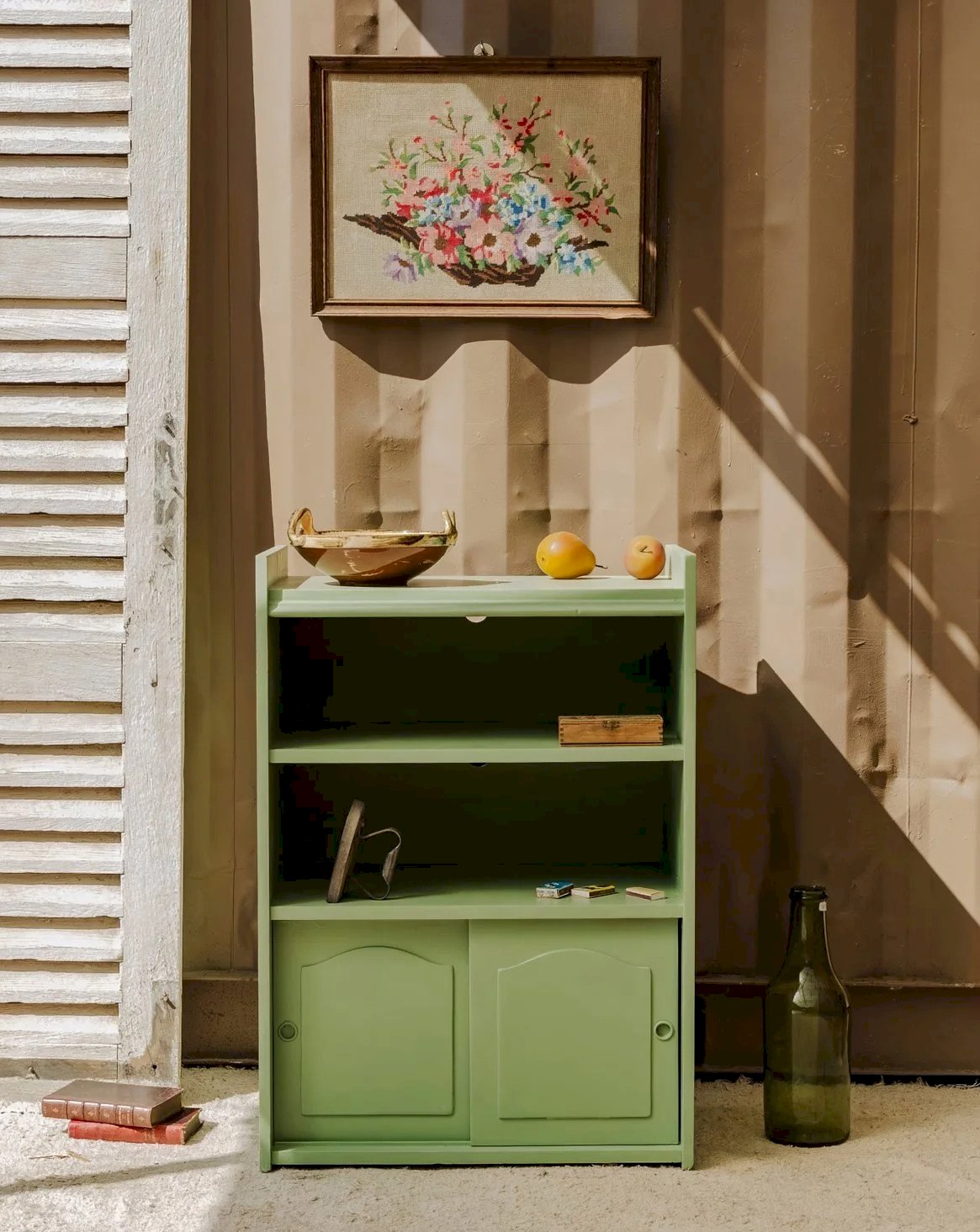
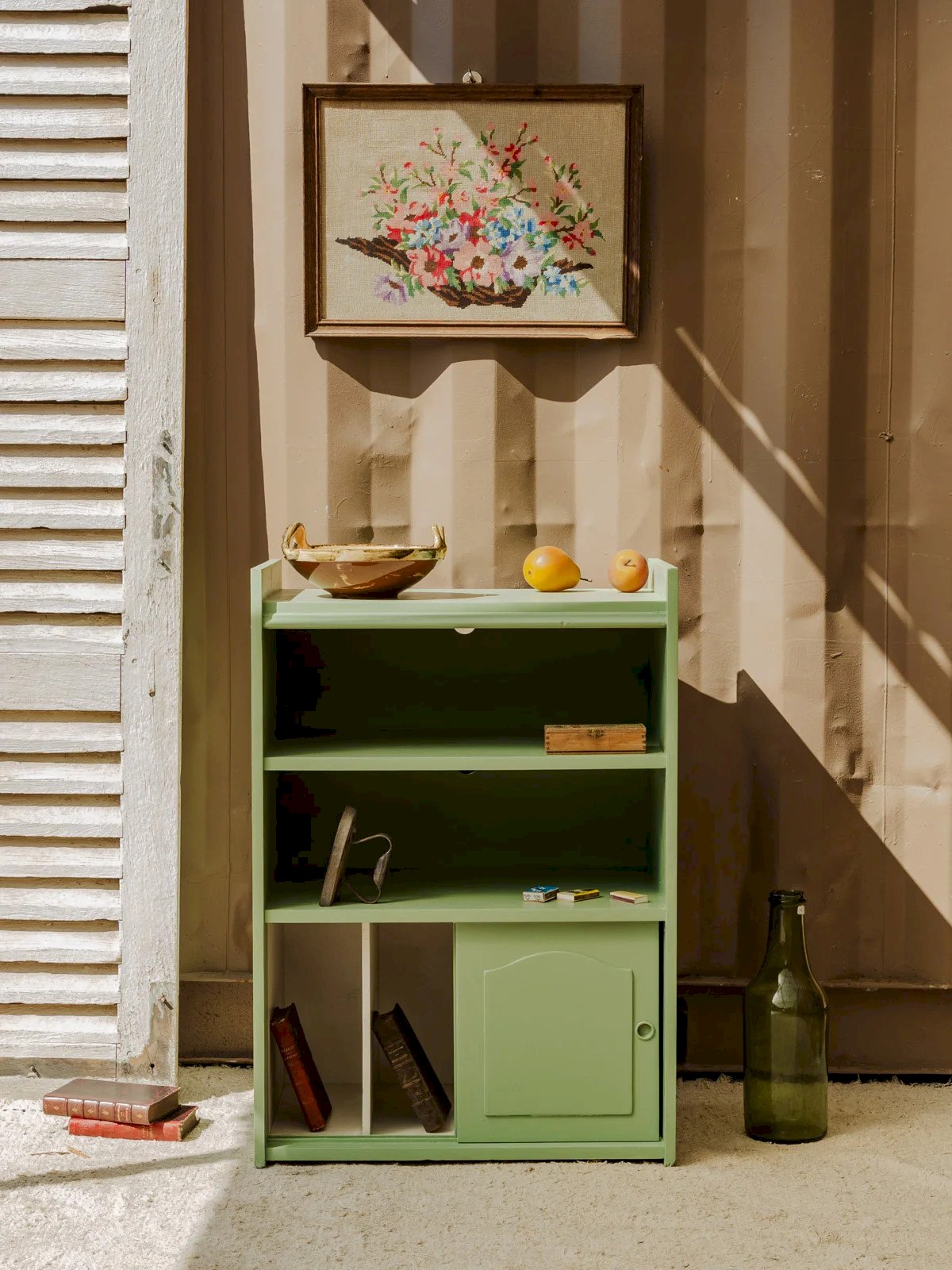
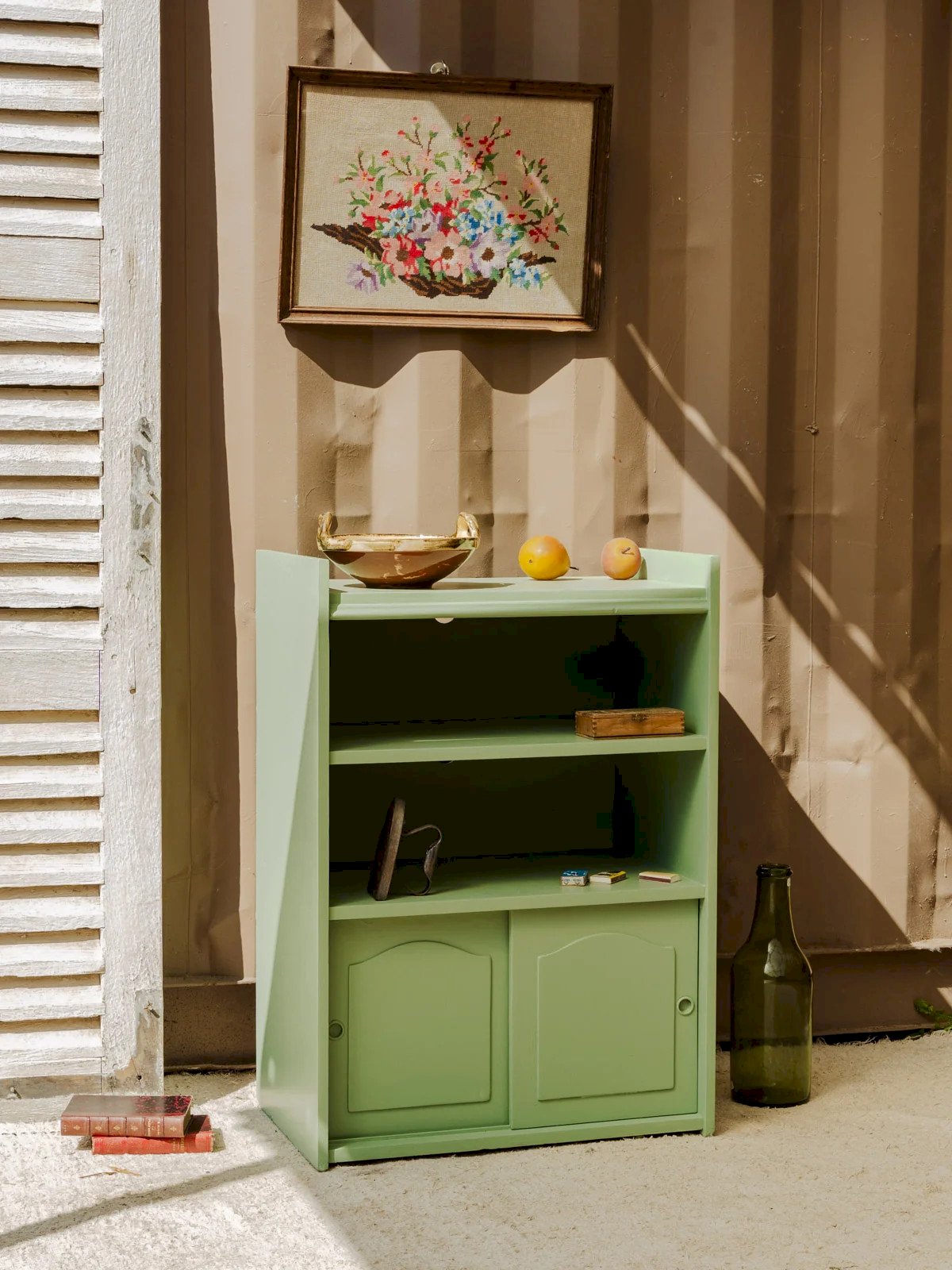
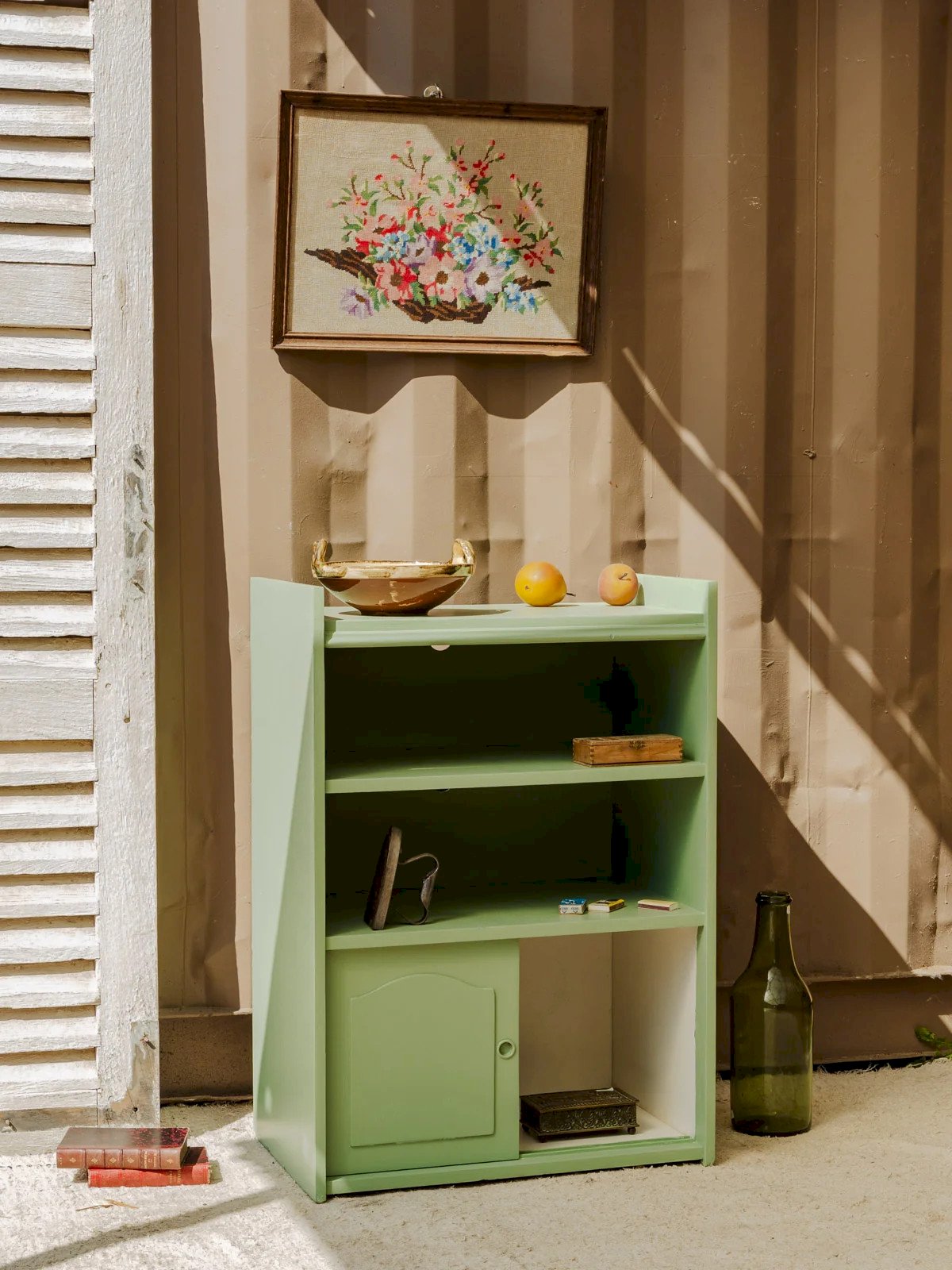
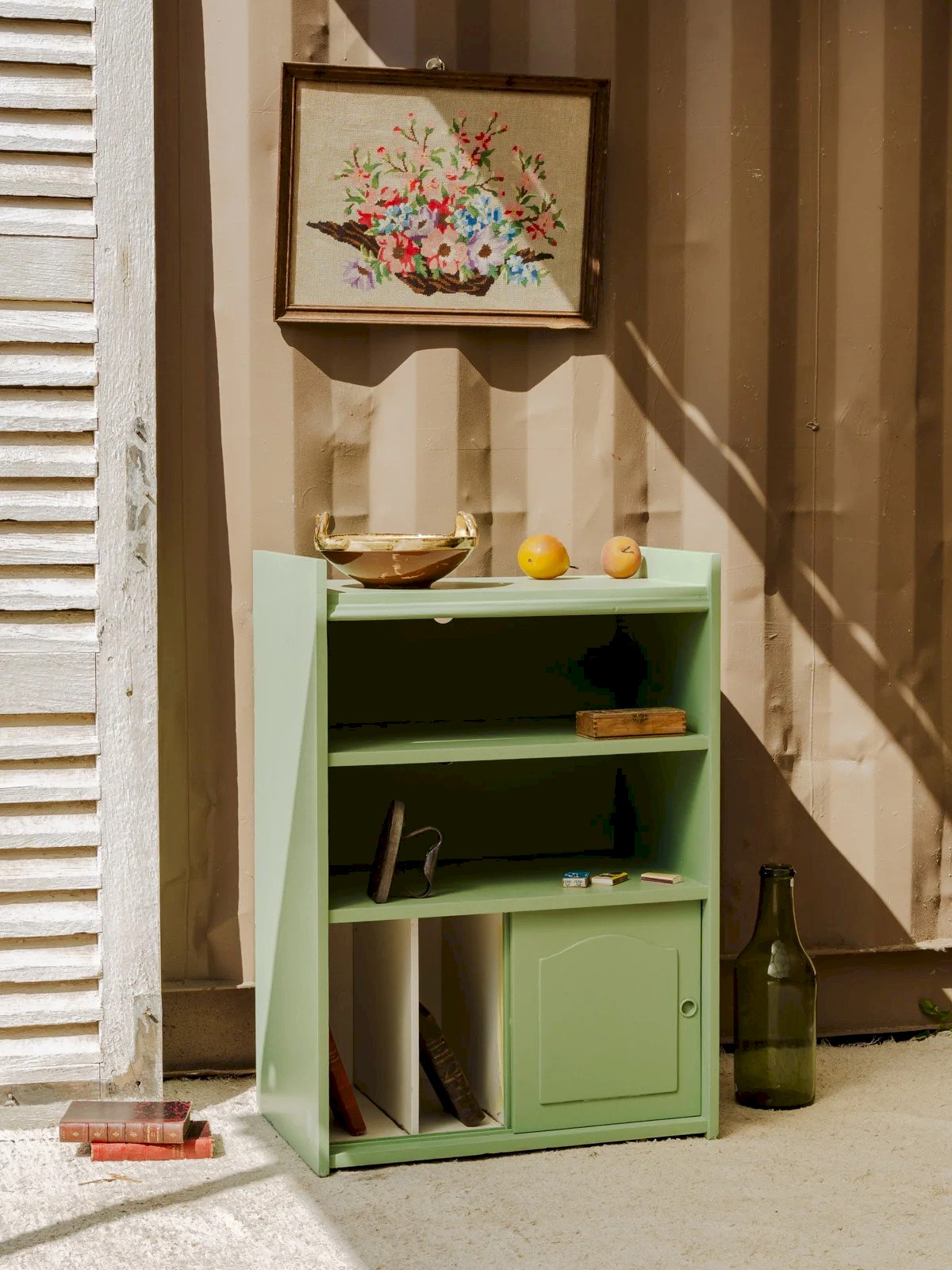
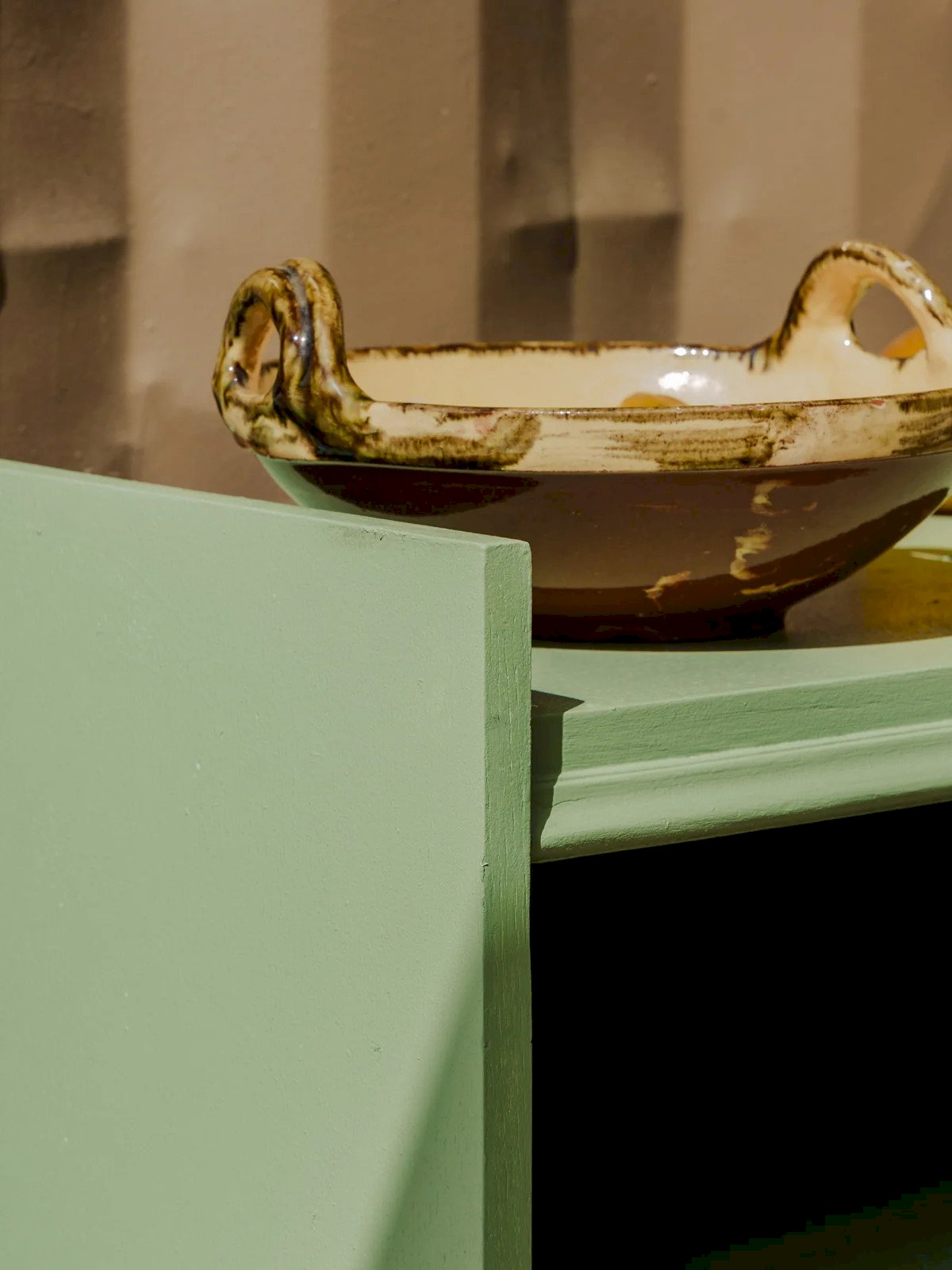
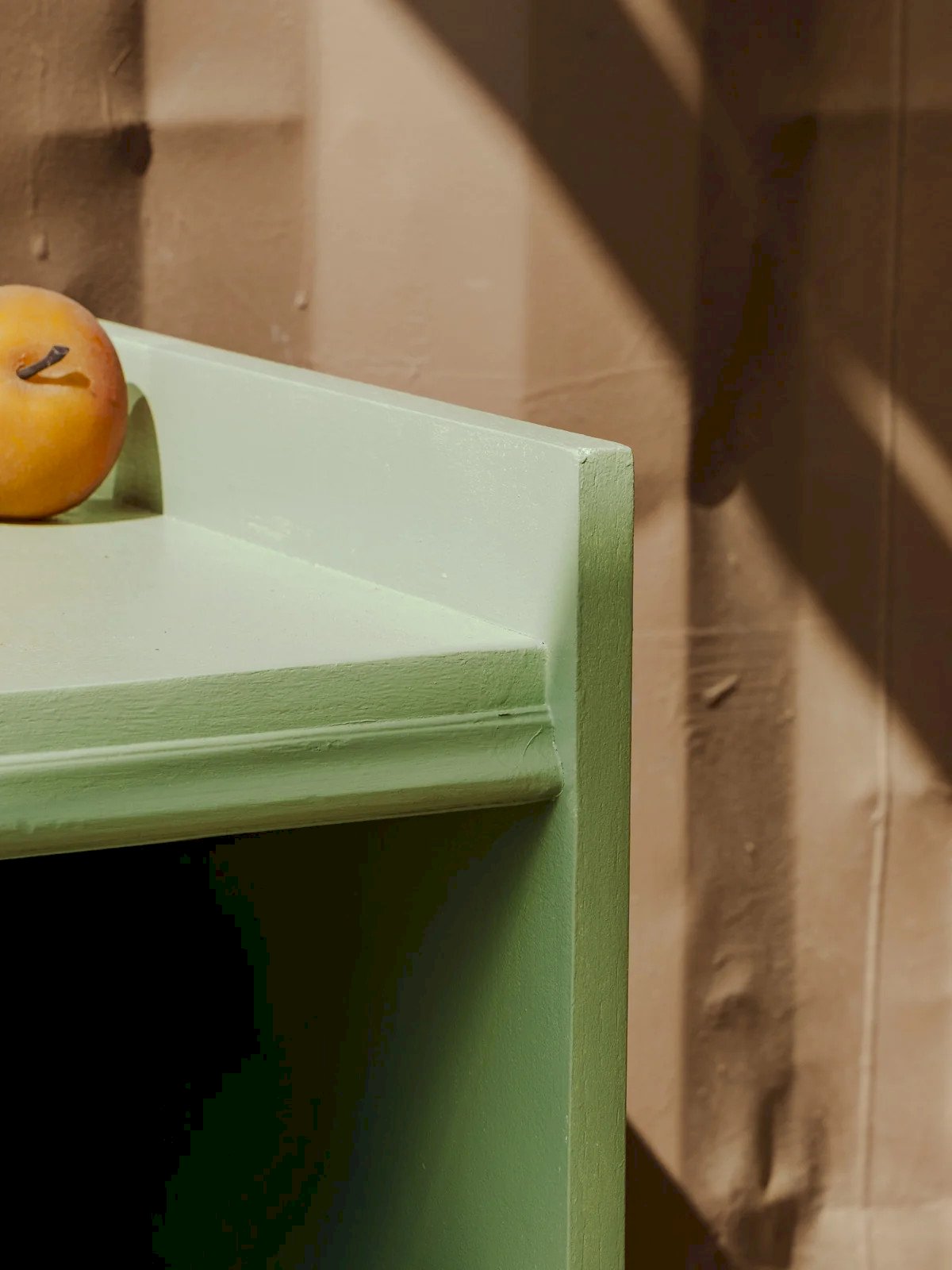
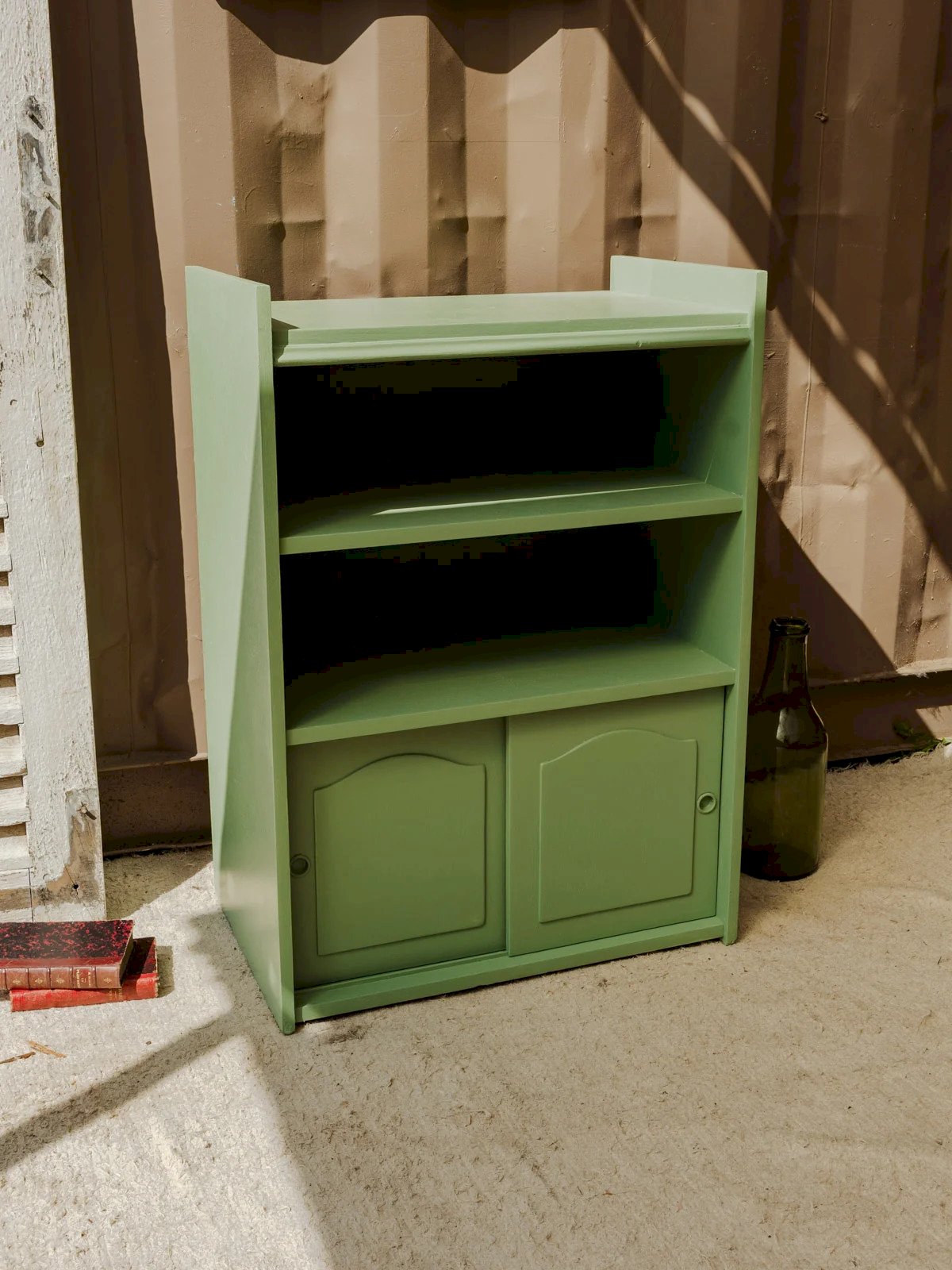
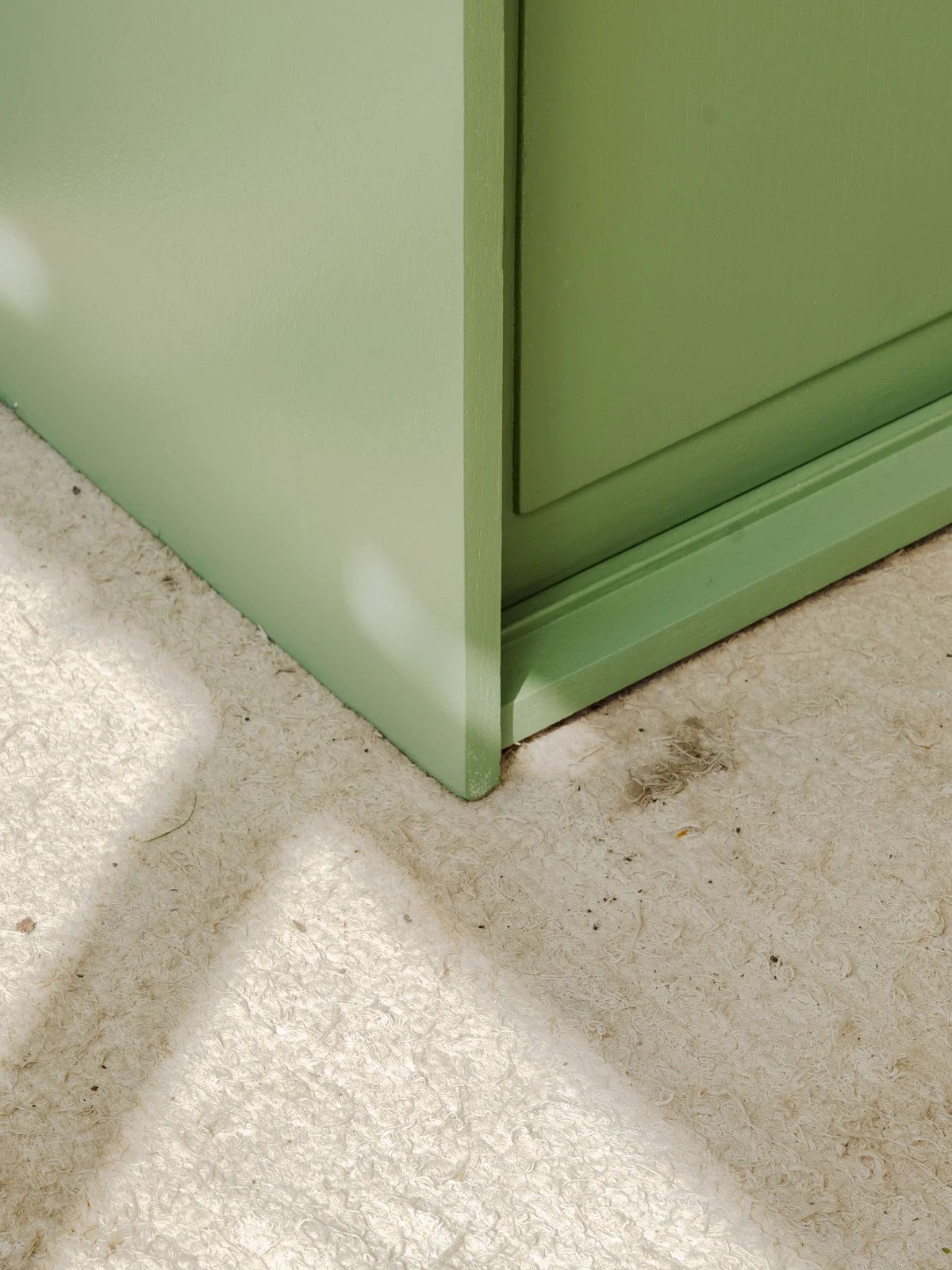
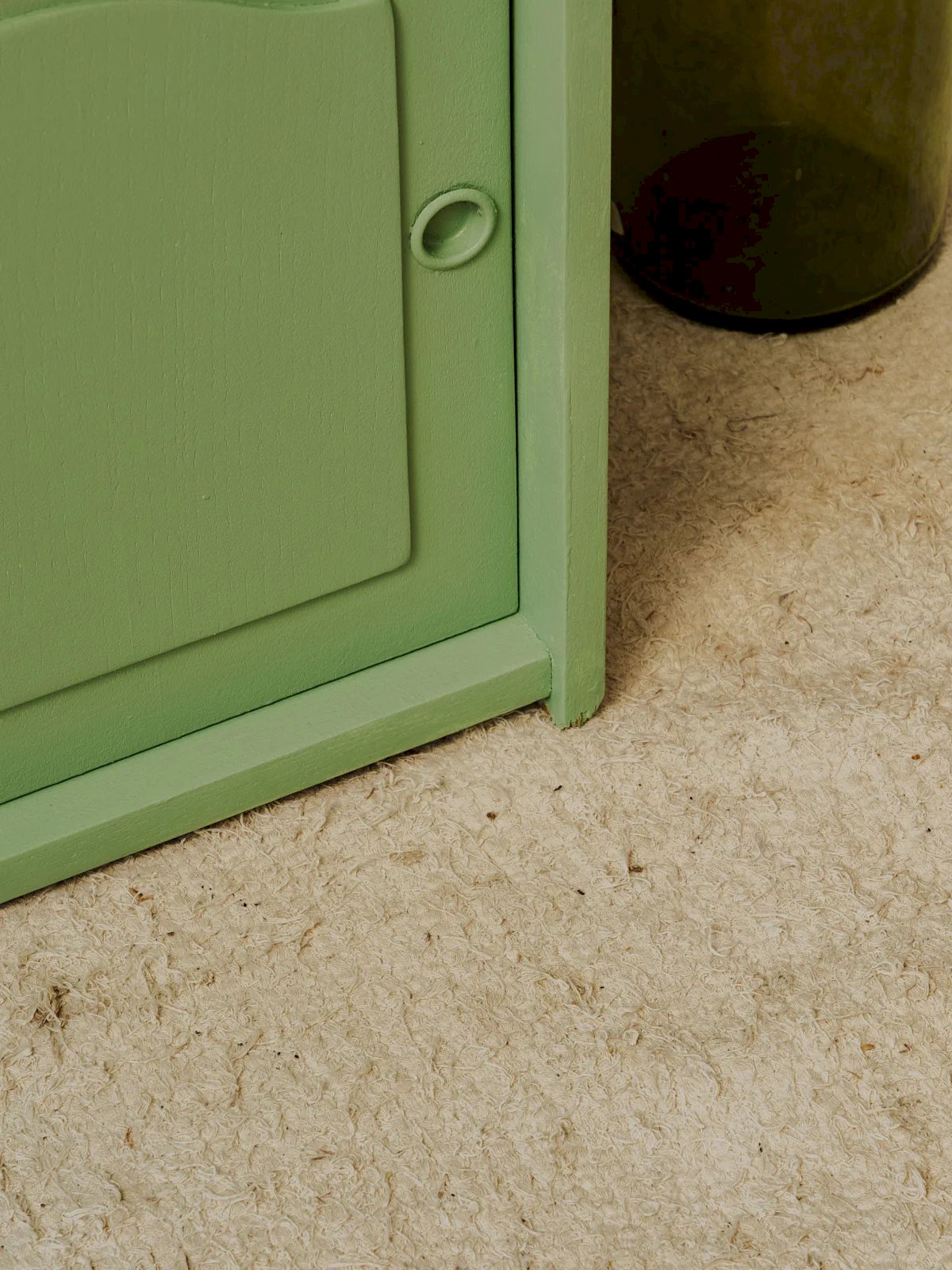
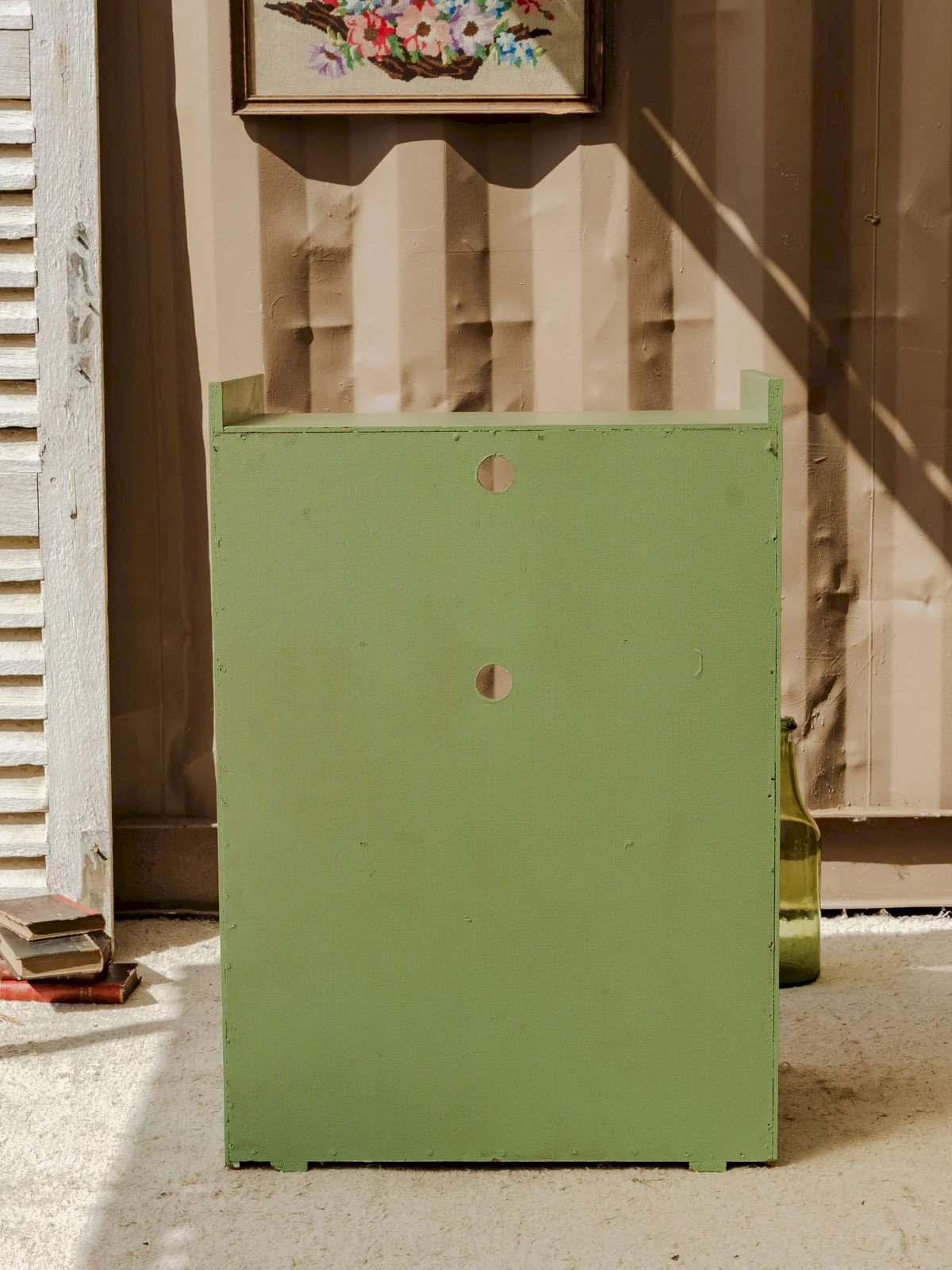
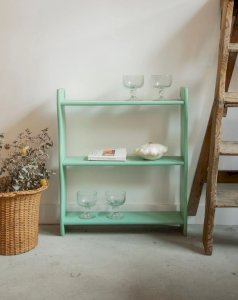
Discover this painted wood shelf in sage green, with a simple and warm design that adds a natural touch to your interior. Two open shelves accommodate books and decorative objects while the lower section, featuring two sliding doors, conceals modular storage. The left side, divided into two compartments, offers solutions for organizing small items, and the right niche holds taller pieces. Ideal for an entryway, kitchen, or living room for a soft ambiance. Some signs of wear are present. Length: 64 cm Width: 39 cm Height: 91 cm Height of the niche: 34 cm A brief history of the shelf Long before becoming the sleek piece of furniture we know today, the shelf was merely a simple board of raw wood fixed in kitchens or workshops to keep tools within reach. It gained recognition in the 18th century under the name "gradin," making its way into salons to display precious bindings or fine porcelain. Its structure, without doors or side panels, makes it the lightest piece of furniture in the house, a feat of minimalism that frees up floor space while dressing the walls. Today, it serves not only to store but also to stage our daily lives, transforming a utilitarian surface into a true living tableau that breathes and lets light circulate.
Réf :
#412158
Brand / From : Debongout
Related Products


Comments
Gaëlle, the green wooden shelf No. 879
199€
75002 Paris
Ce site contient des liens d’affiliation pour lesquels je peux recevoir une compensation.
Description
Discover this painted wood shelf in sage green, with a simple and warm design that adds a natural touch to your interior. Two open shelves accommodate books and decorative objects while the lower section, featuring two sliding doors, conceals modular storage. The left side, divided into two compartments, offers solutions for organizing small items, and the right niche holds taller pieces. Ideal for an entryway, kitchen, or living room for a soft ambiance. Some signs of wear are present. Length: 64 cm Width: 39 cm Height: 91 cm Height of the niche: 34 cm A brief history of the shelf Long before becoming the sleek piece of furniture we know today, the shelf was merely a simple board of raw wood fixed in kitchens or workshops to keep tools within reach. It gained recognition in the 18th century under the name "gradin," making its way into salons to display precious bindings or fine porcelain. Its structure, without doors or side panels, makes it the lightest piece of furniture in the house, a feat of minimalism that frees up floor space while dressing the walls. Today, it serves not only to store but also to stage our daily lives, transforming a utilitarian surface into a true living tableau that breathes and lets light circulate.
Réf :
#412158
Brand / From : Debongout