 English
 Français


Description
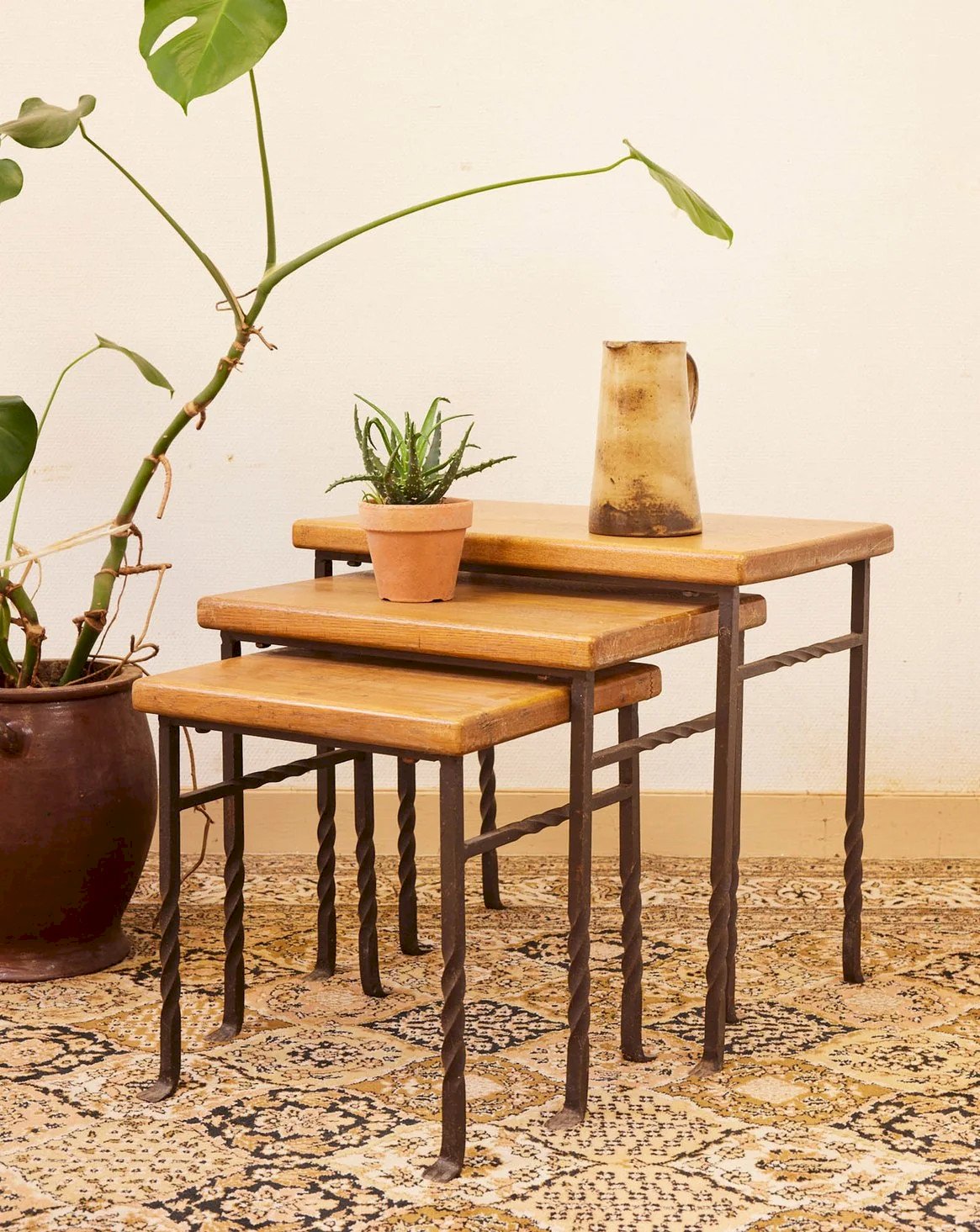
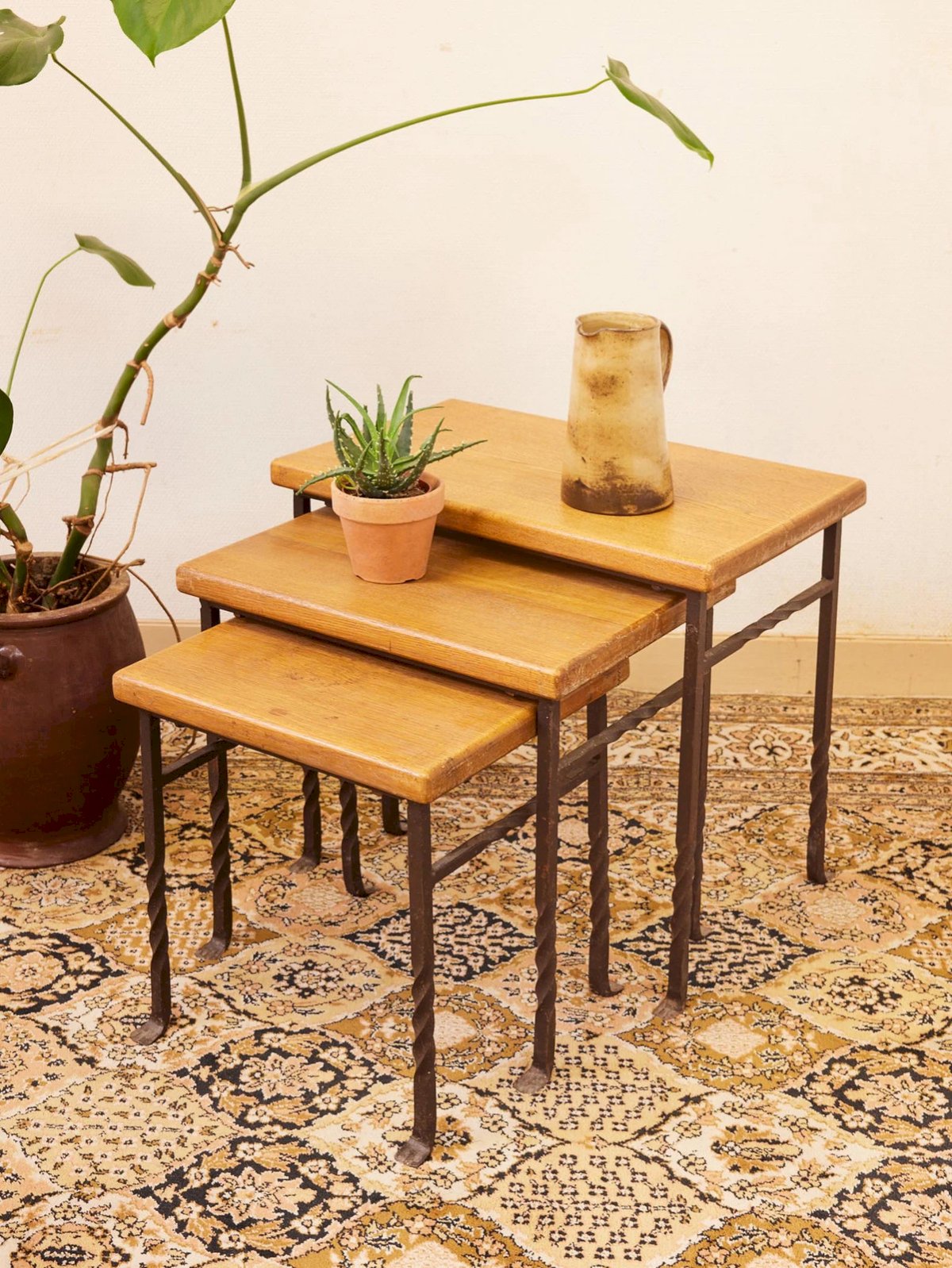
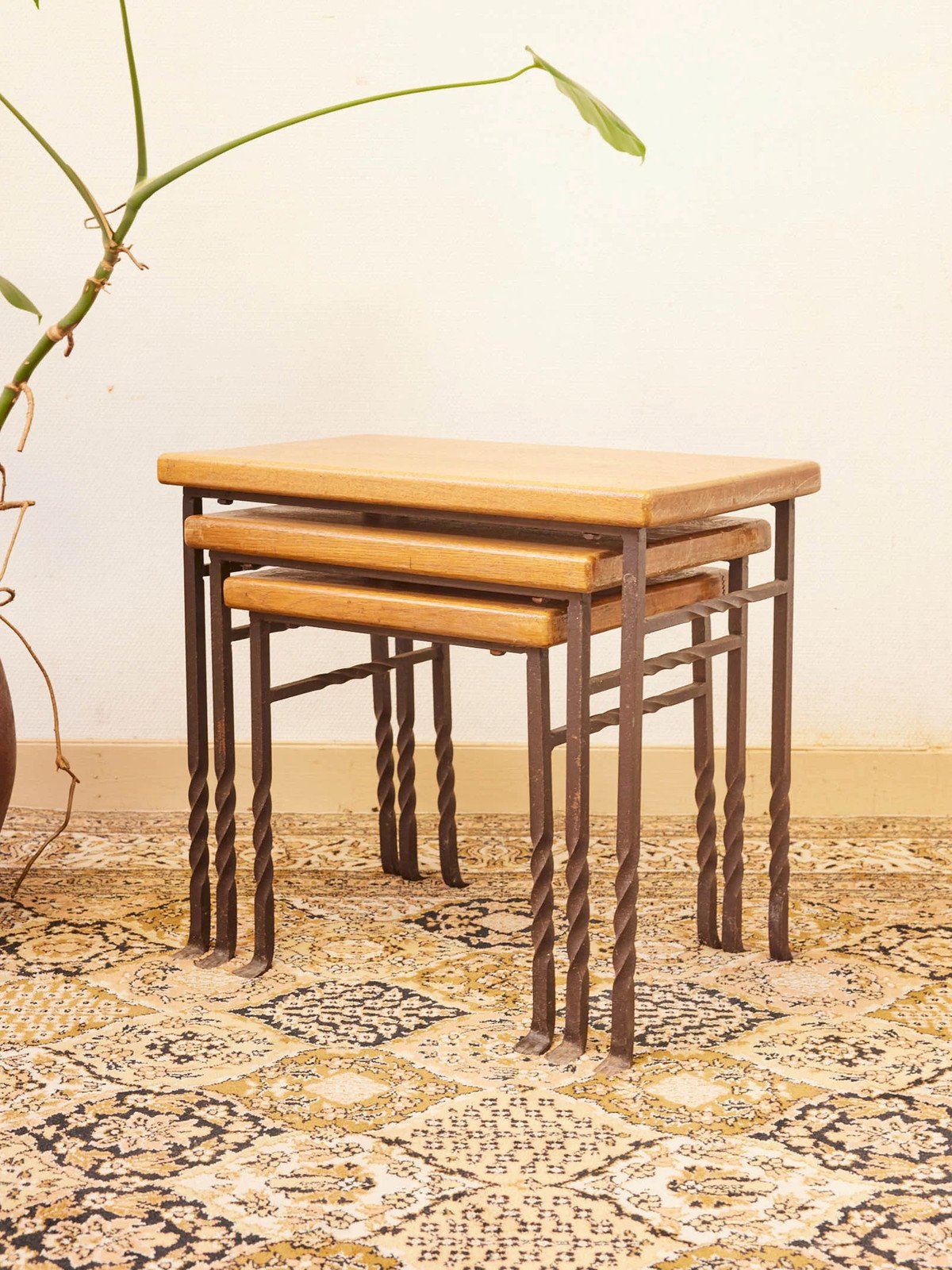
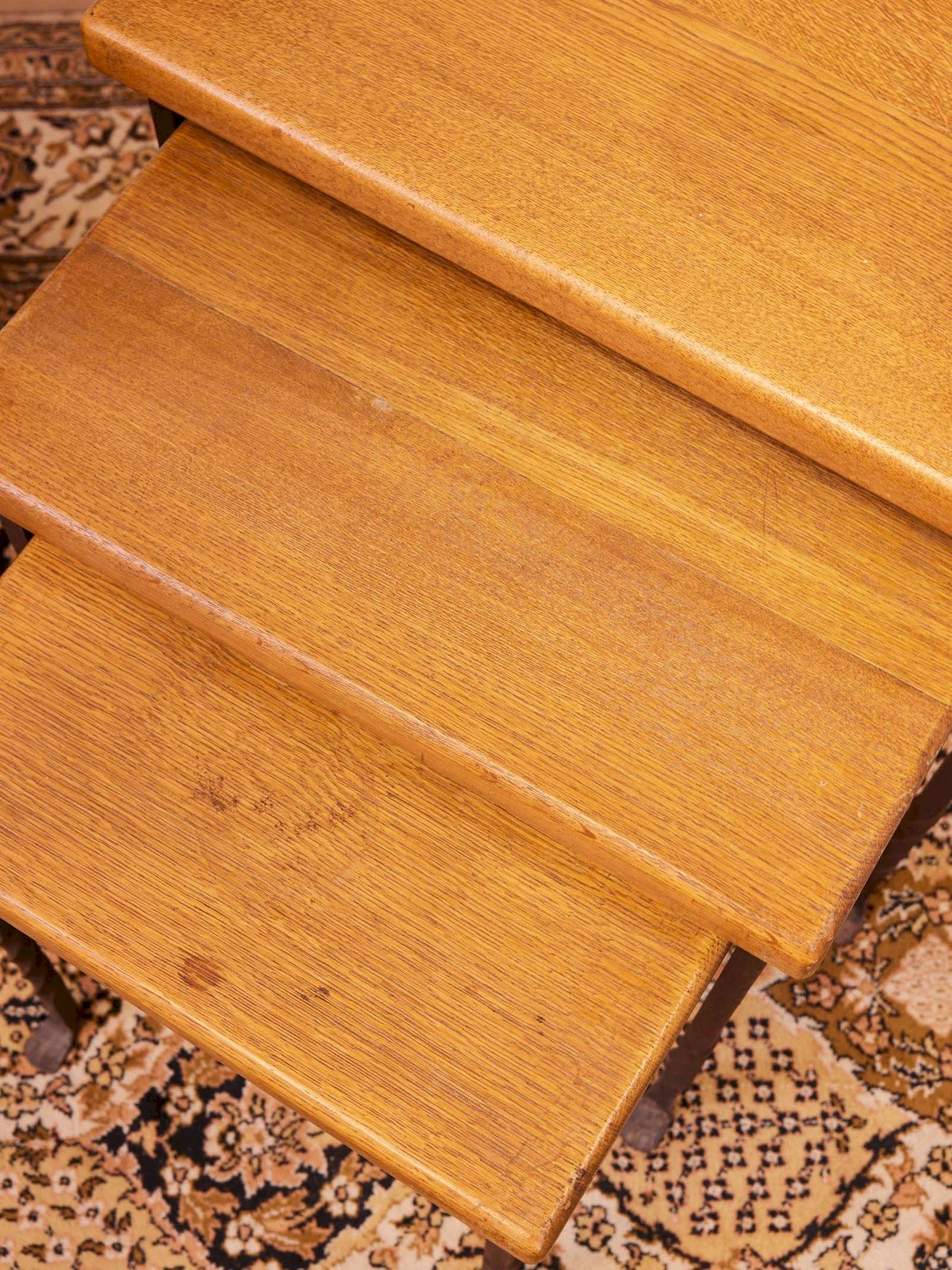
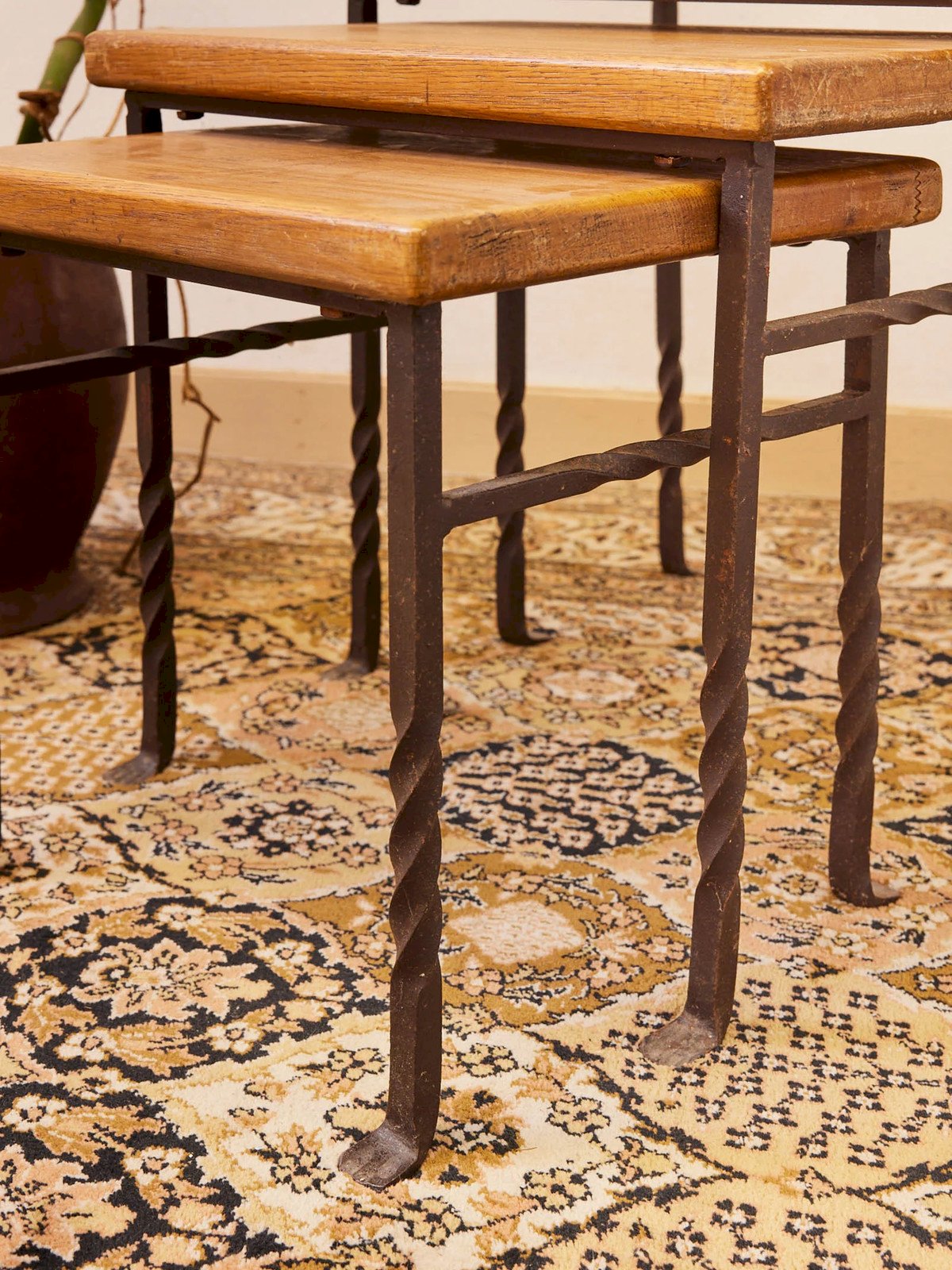
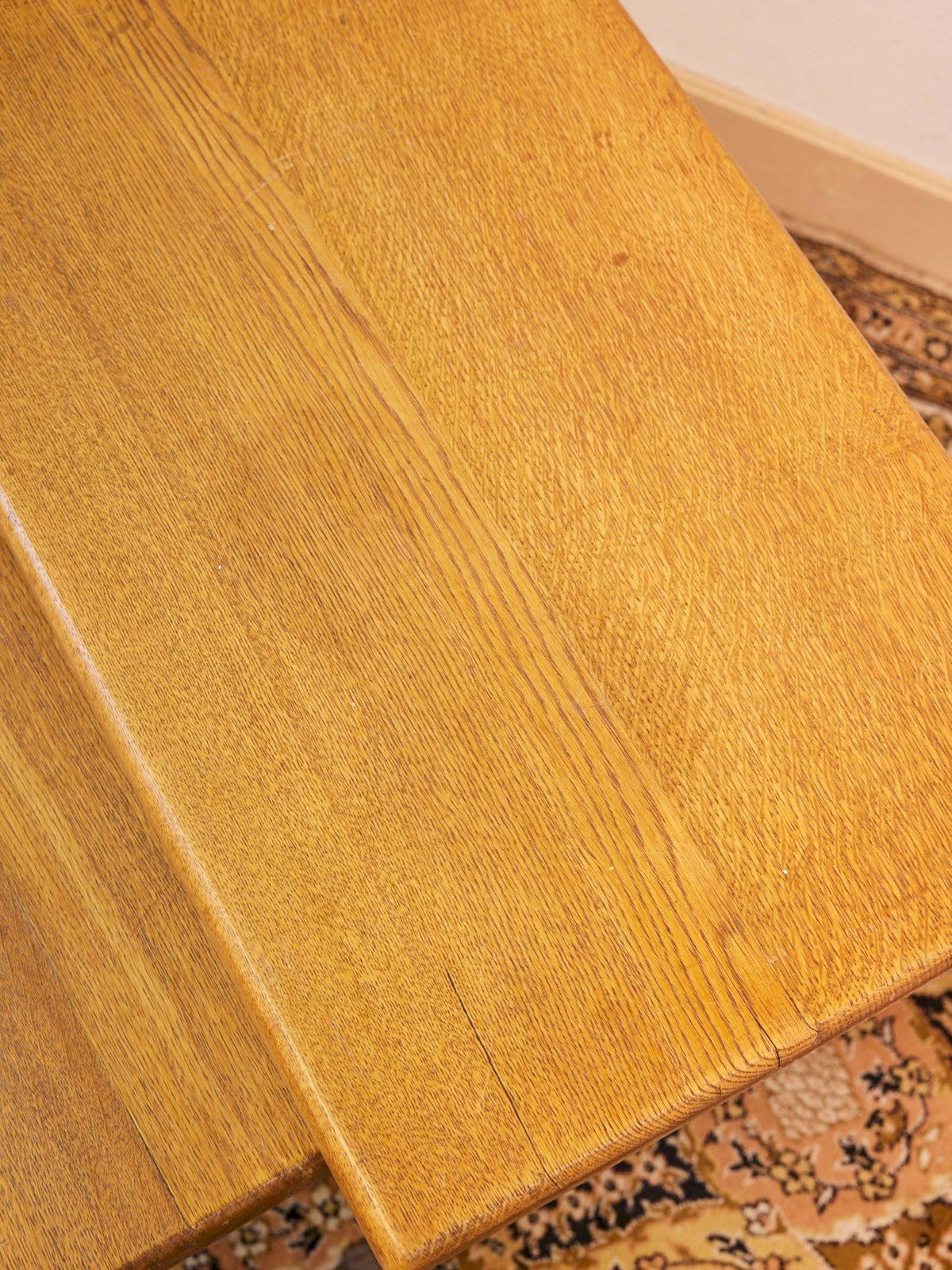
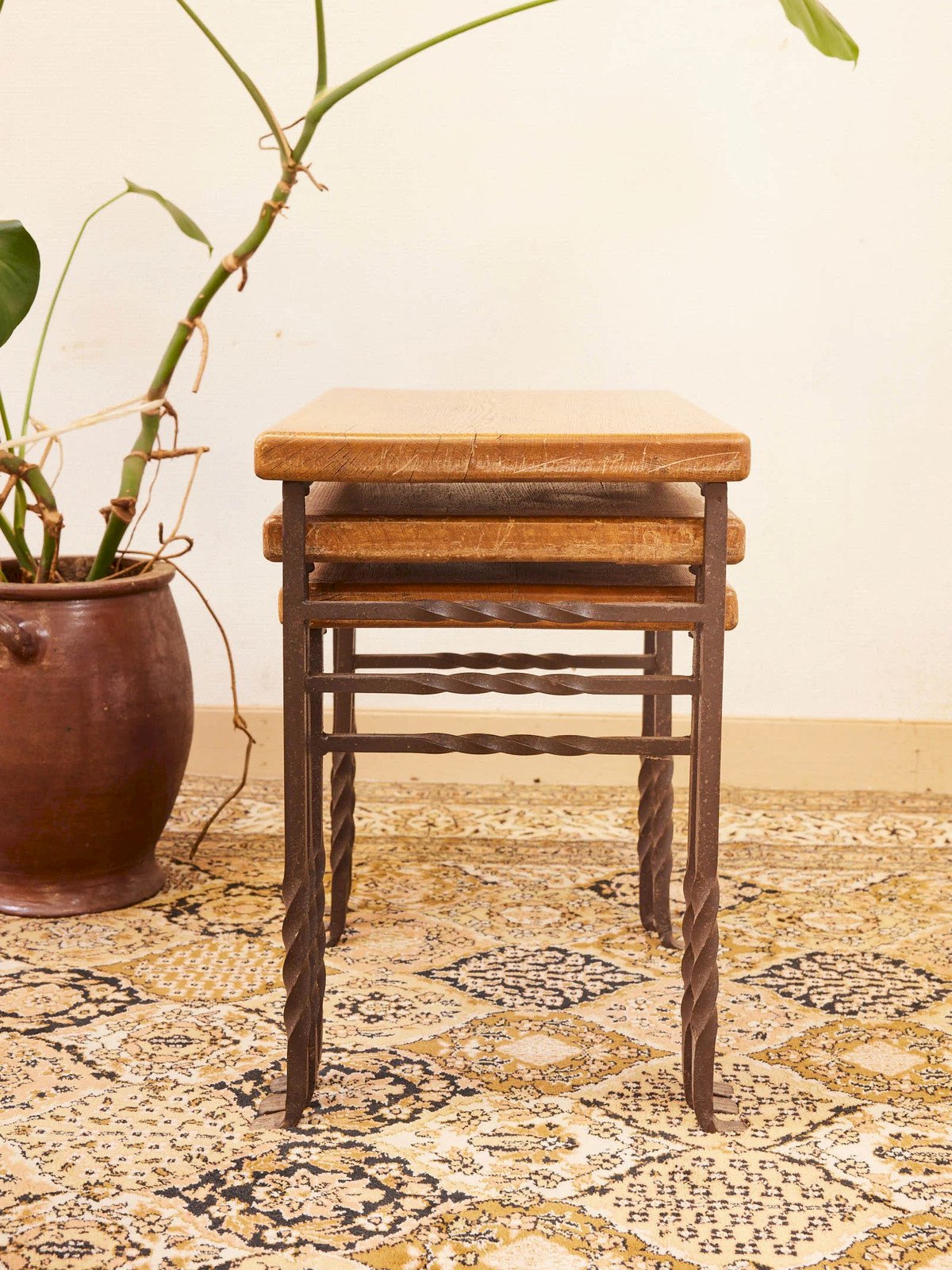
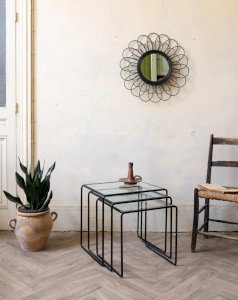
Add a touch of elegance to your space with these nesting tables made of wood and wrought iron. Their subtle design blends the warmth of natural wood with the sturdiness of iron, creating a perfect harmony between contemporary style and industrial charm. Ideal for optimizing your living room, these tables fit together easily and adapt to all your desires, whether for a friendly aperitif or a moment of relaxation. Light signs of use testify to their history. Size L: Length: 34 cm Width: 56 cm Height: 52 cm Size M: Length: 34 cm Width: 47 cm Height: 47 cm Size S: Length: 34 cm Width: 38 cm Height: 40 cm A brief history of nesting tables. Invented in the late 18th century by English cabinetmaker Thomas Sheraton, nesting tables are a set of progressively sized tables that fit under one another. Popular during the Art Deco period for their geometry and then reinvented in the 50s and 60s with organic lines, they embody the ultimate in modular furniture. They are called nesting tables by analogy to Russian dolls, offering an ingenious space-saving solution for small spaces. Versatile, they serve alternately as coffee tables, nightstands, or supplementary supports according to your needs at the moment.
Réf :
#413873
Brand / From : Debongout
Related Products


Comments
Barbara, the wrought iron nesting tables No. 200
289€
75002 Paris
Ce site contient des liens d’affiliation pour lesquels je peux recevoir une compensation.
Description
Add a touch of elegance to your space with these nesting tables made of wood and wrought iron. Their subtle design blends the warmth of natural wood with the sturdiness of iron, creating a perfect harmony between contemporary style and industrial charm. Ideal for optimizing your living room, these tables fit together easily and adapt to all your desires, whether for a friendly aperitif or a moment of relaxation. Light signs of use testify to their history. Size L: Length: 34 cm Width: 56 cm Height: 52 cm Size M: Length: 34 cm Width: 47 cm Height: 47 cm Size S: Length: 34 cm Width: 38 cm Height: 40 cm A brief history of nesting tables. Invented in the late 18th century by English cabinetmaker Thomas Sheraton, nesting tables are a set of progressively sized tables that fit under one another. Popular during the Art Deco period for their geometry and then reinvented in the 50s and 60s with organic lines, they embody the ultimate in modular furniture. They are called nesting tables by analogy to Russian dolls, offering an ingenious space-saving solution for small spaces. Versatile, they serve alternately as coffee tables, nightstands, or supplementary supports according to your needs at the moment.
Réf :
#413873
Brand / From : Debongout