 English
 Français


Description
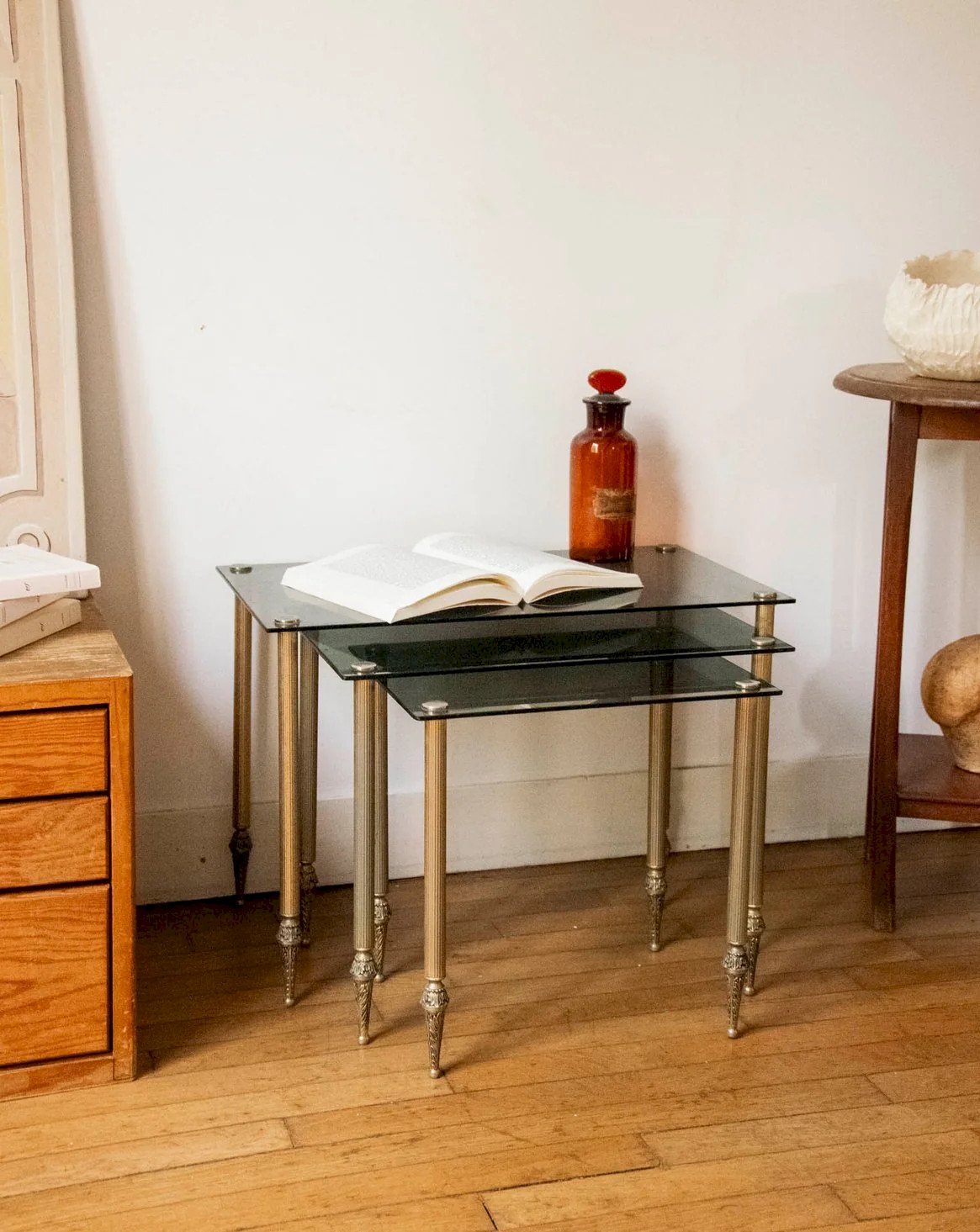
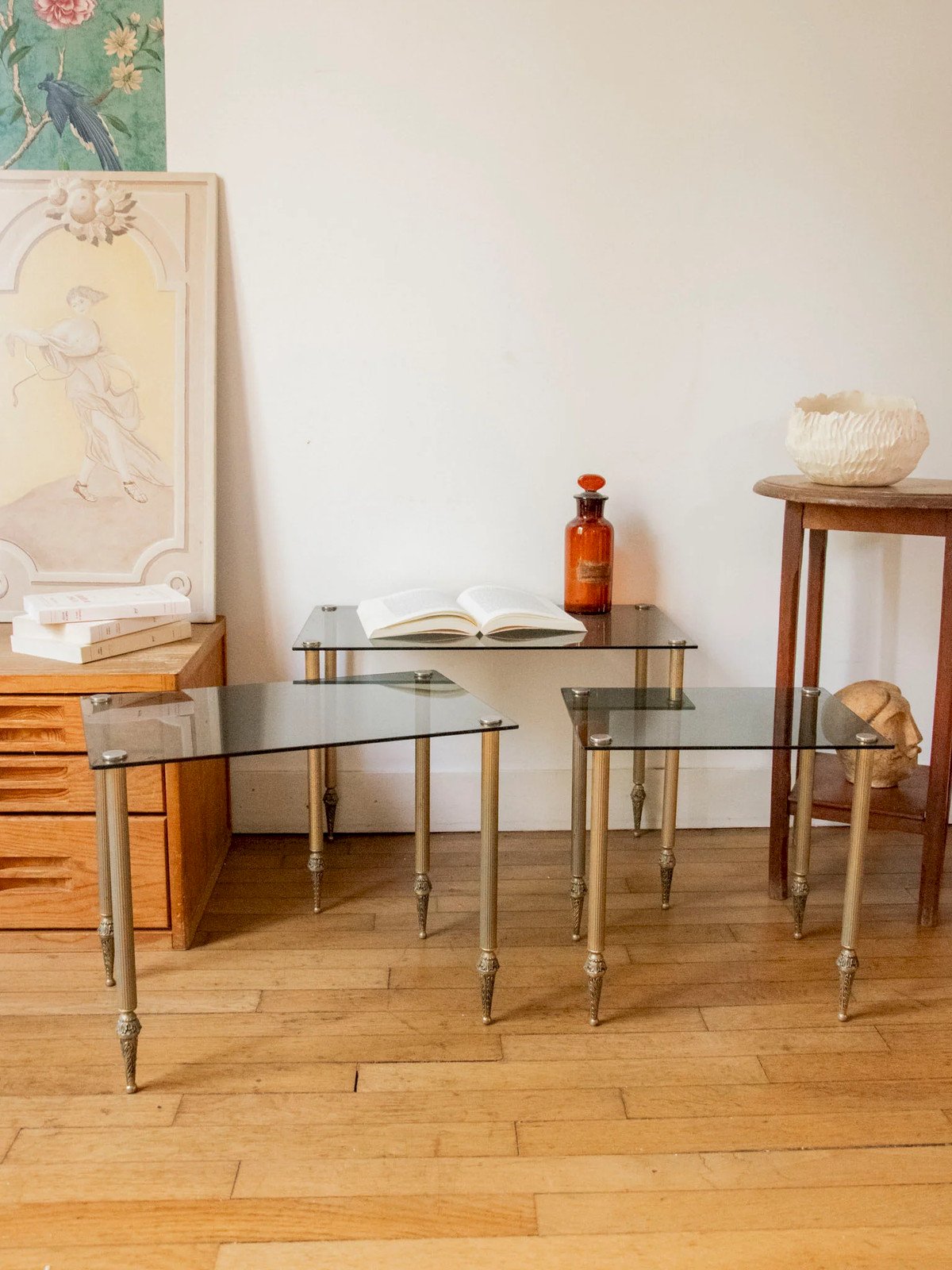
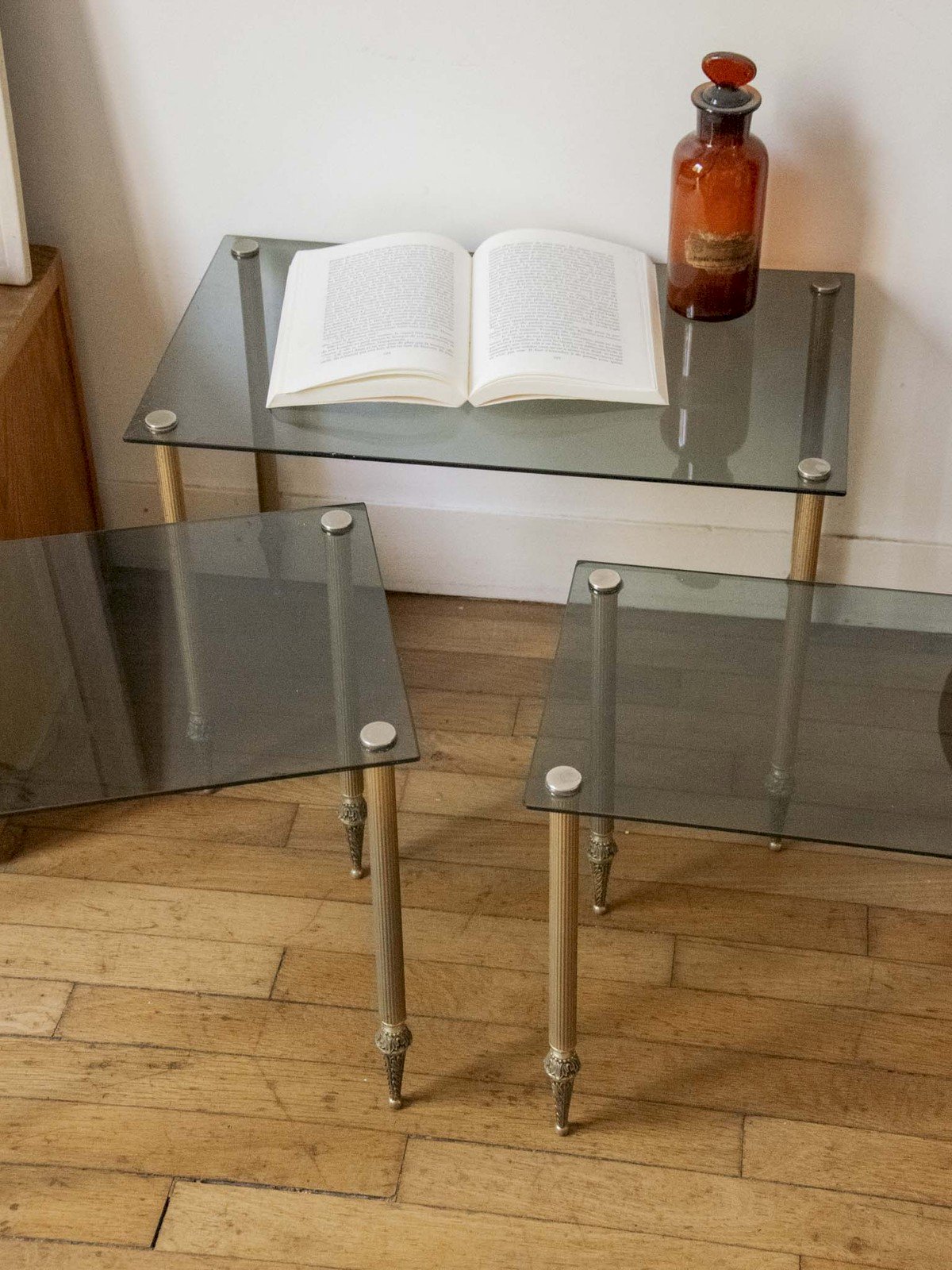
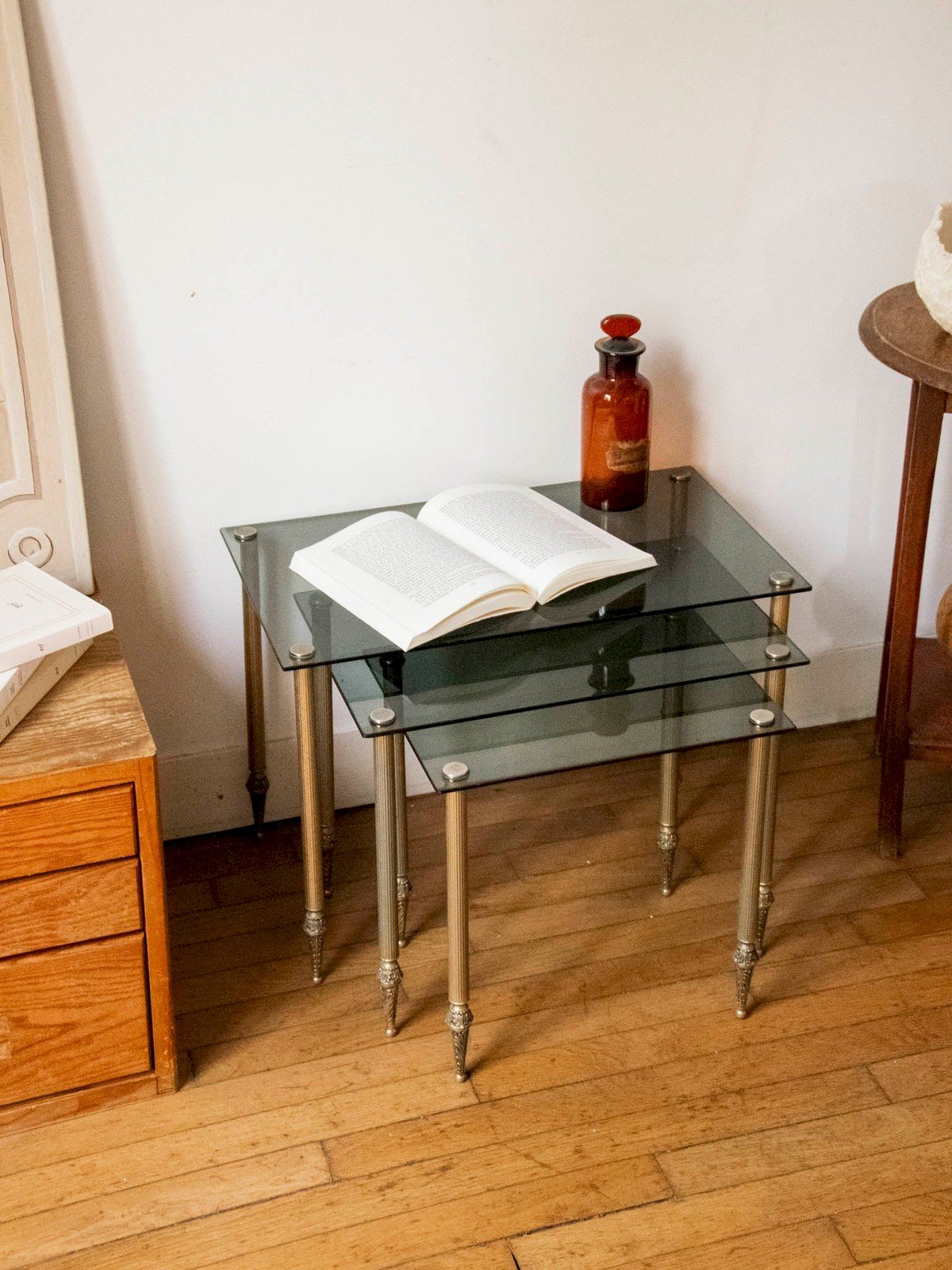
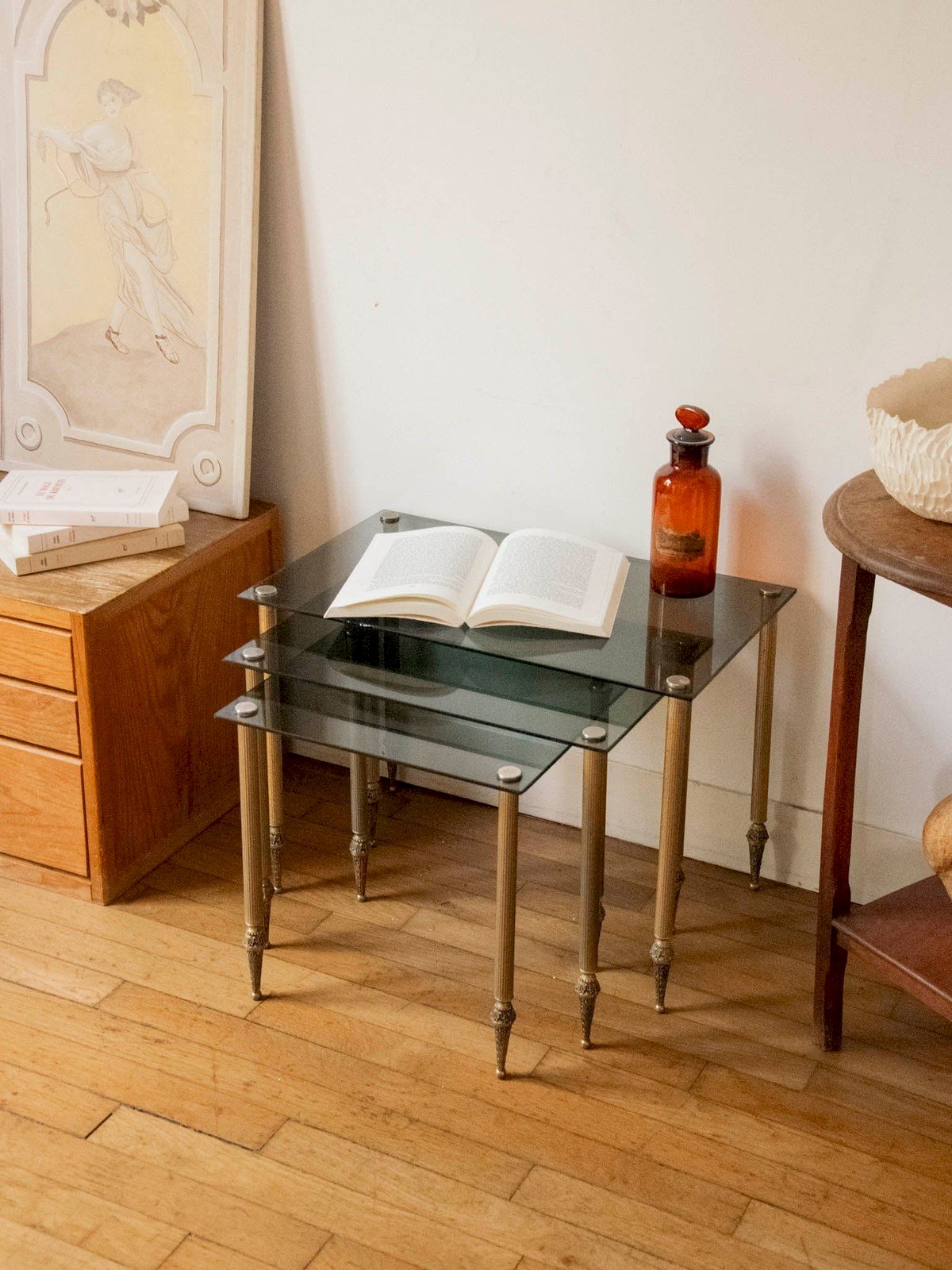
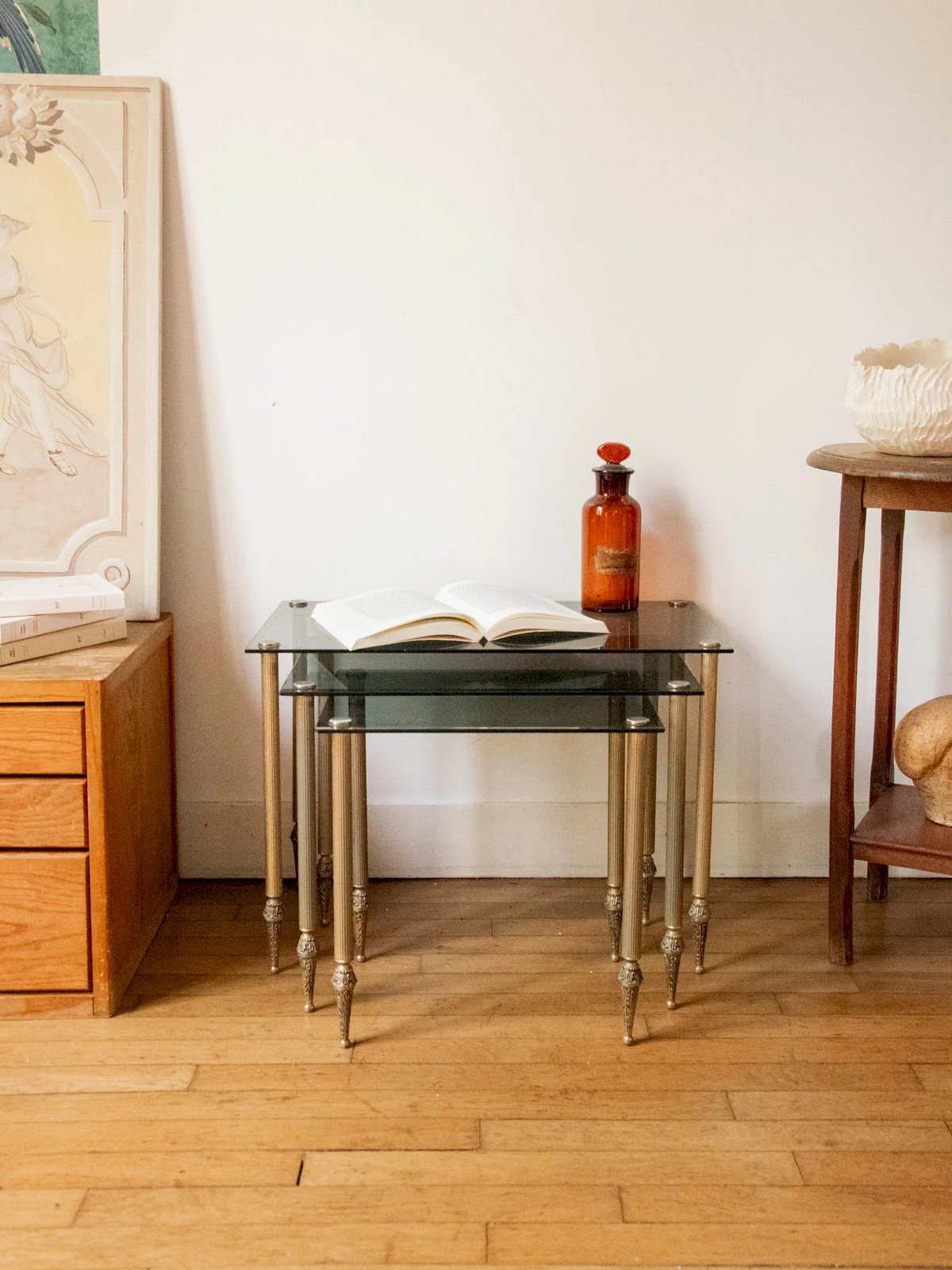
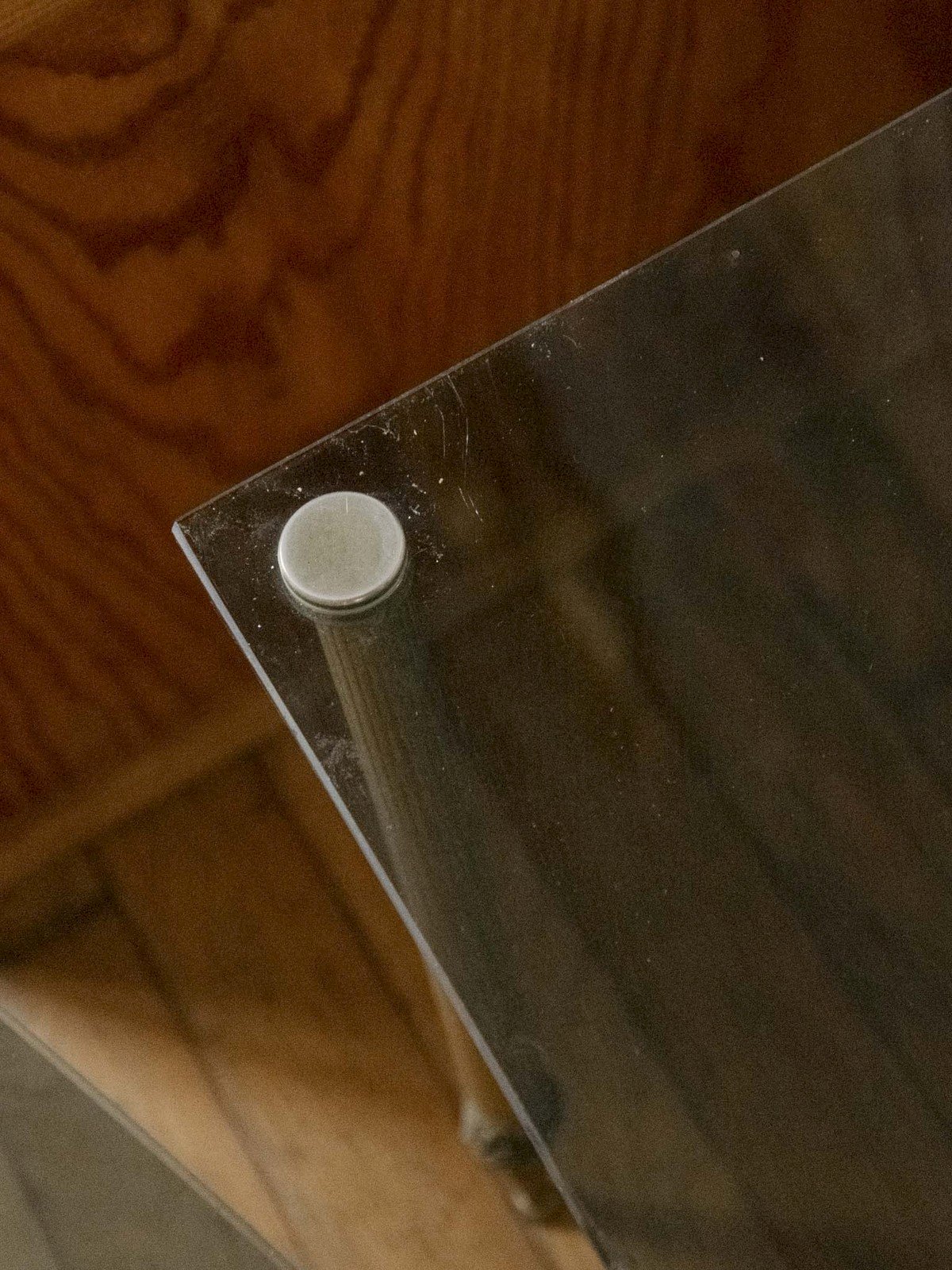
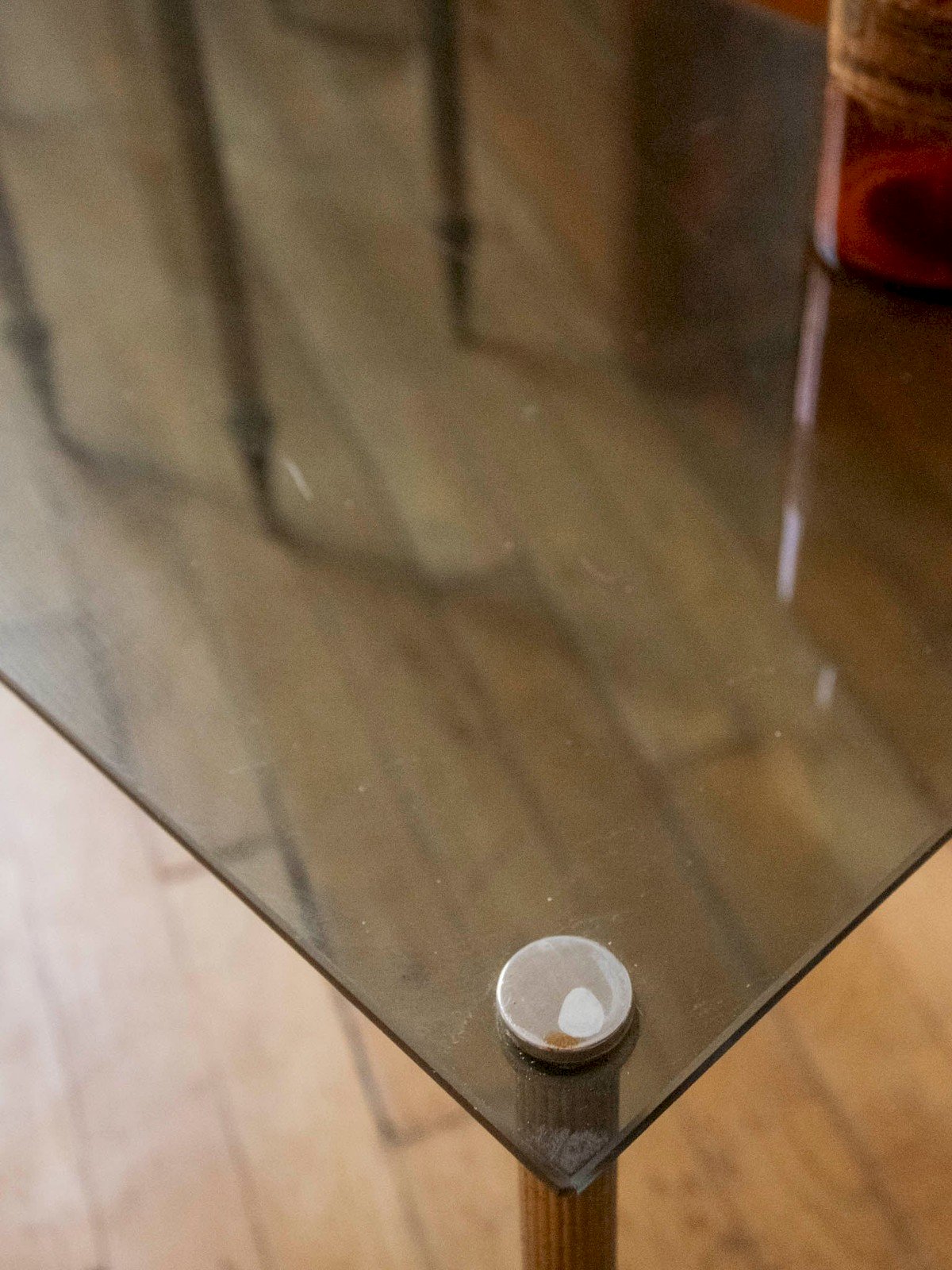
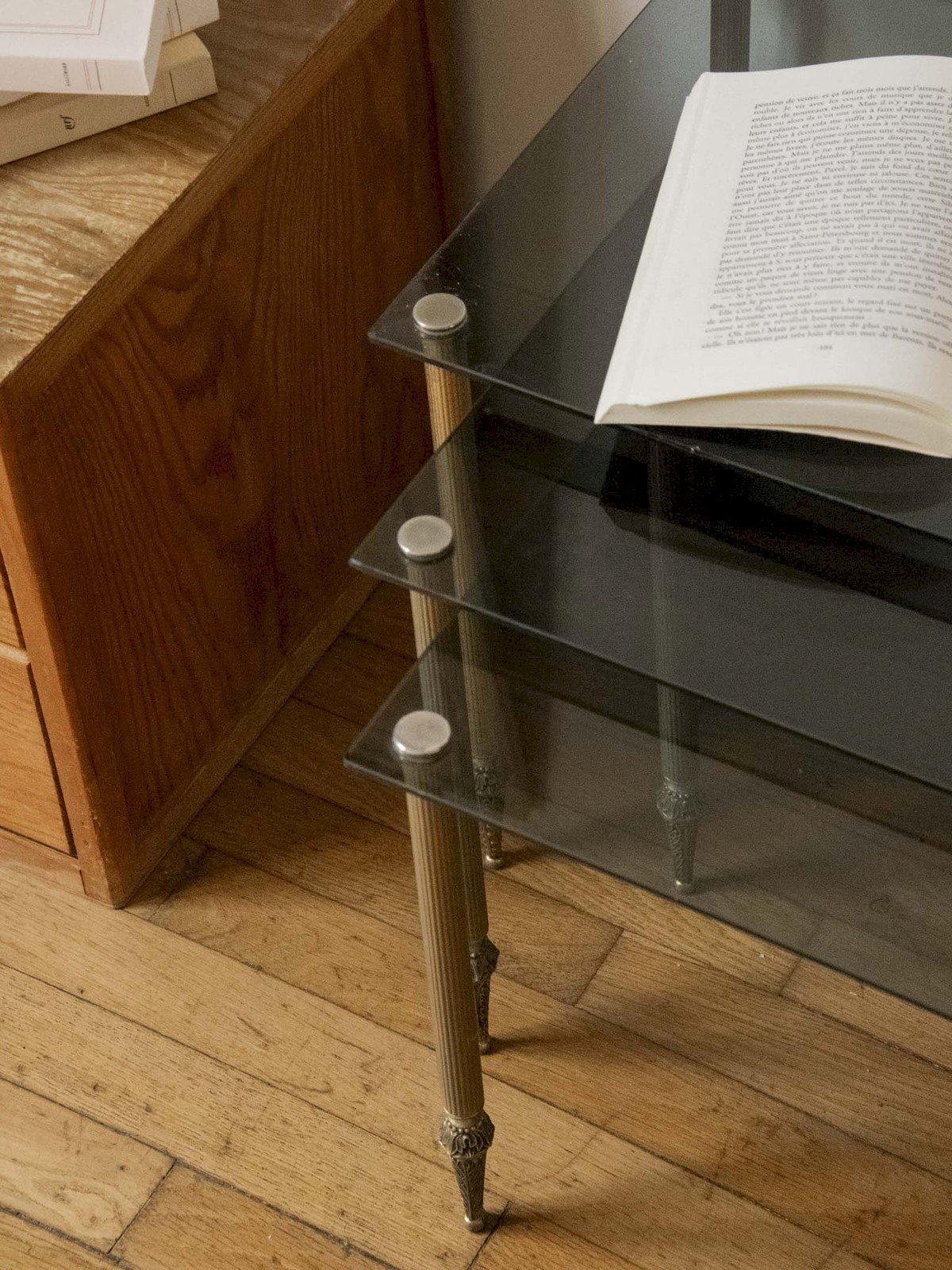
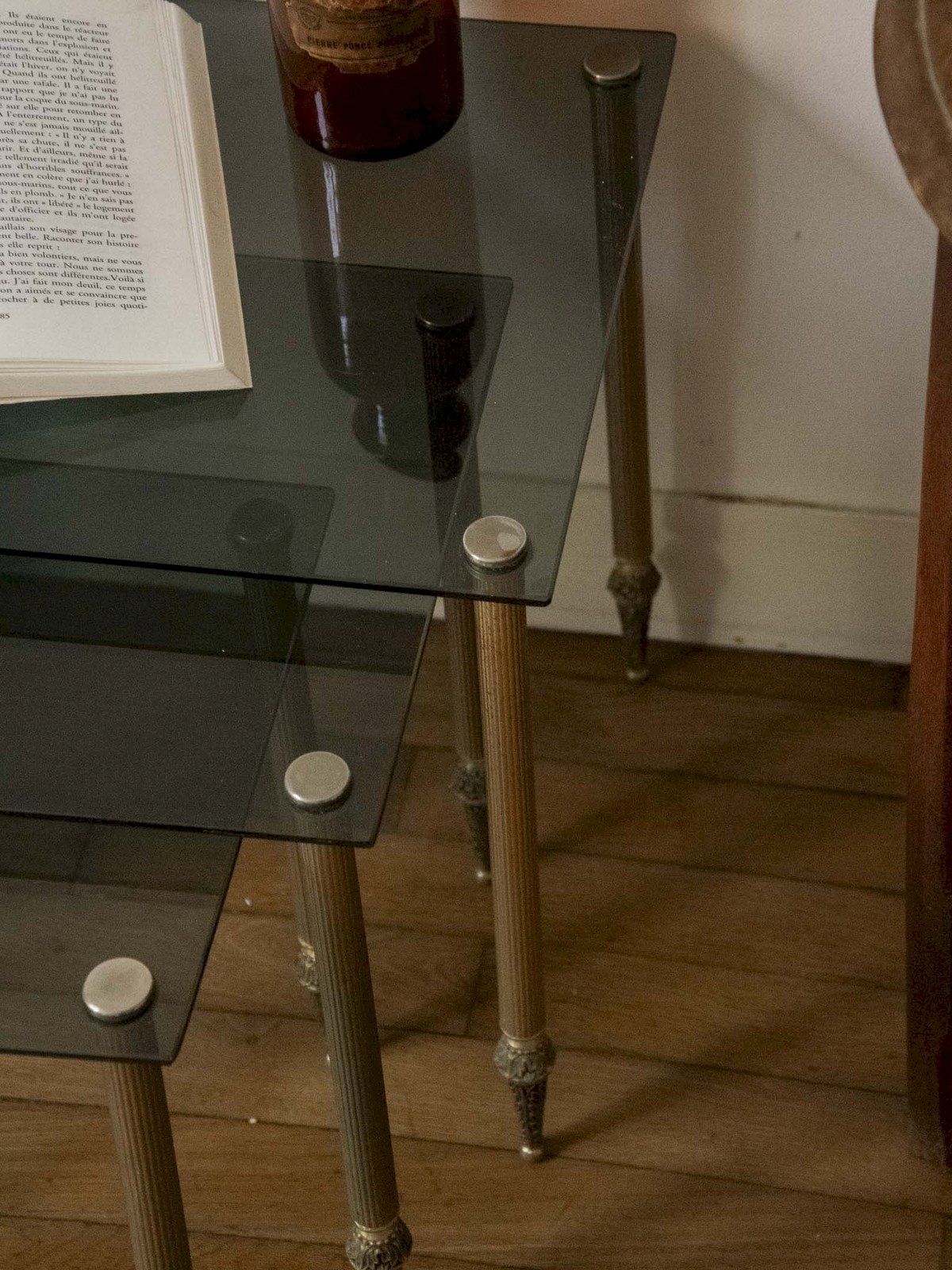
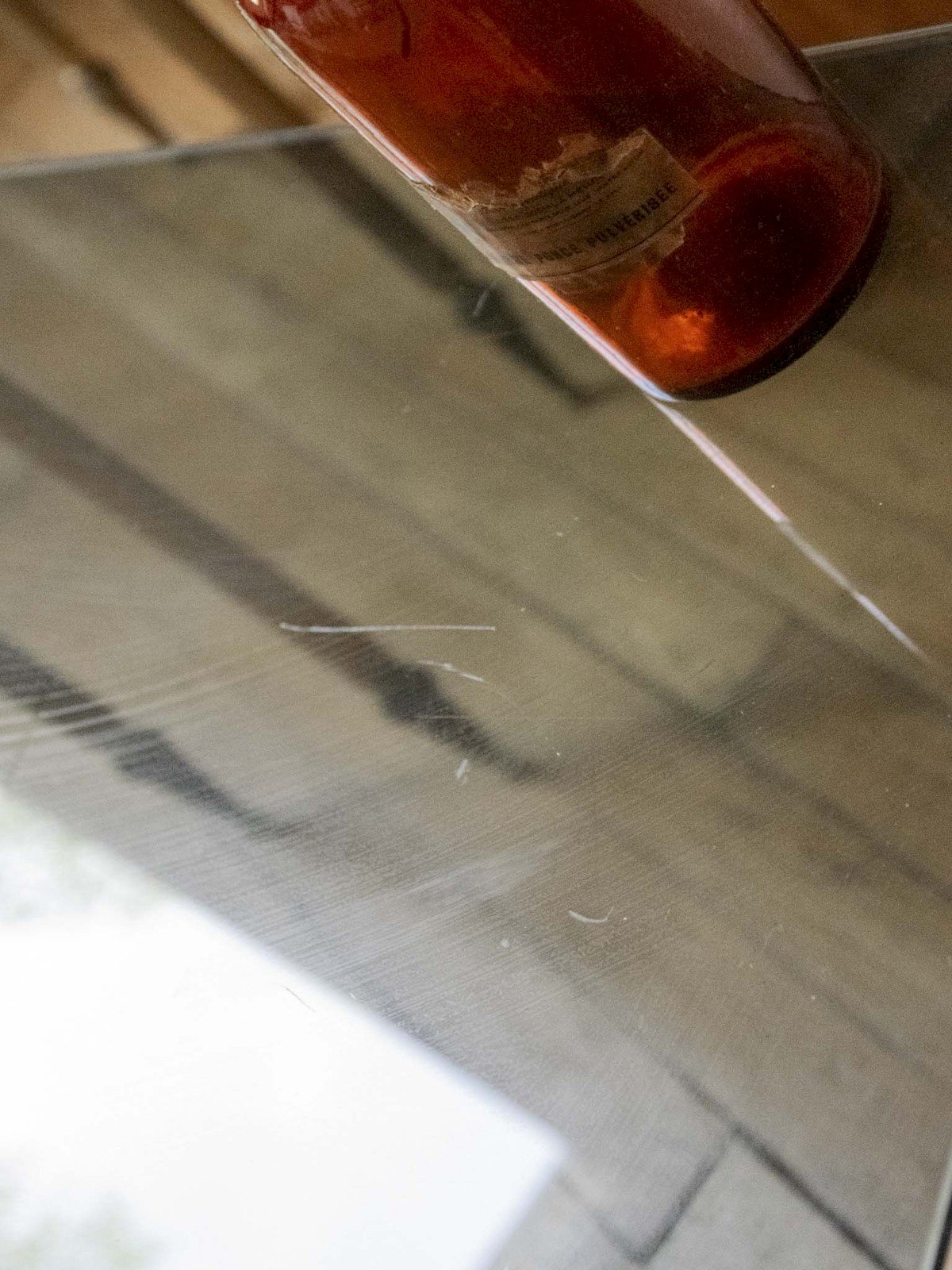
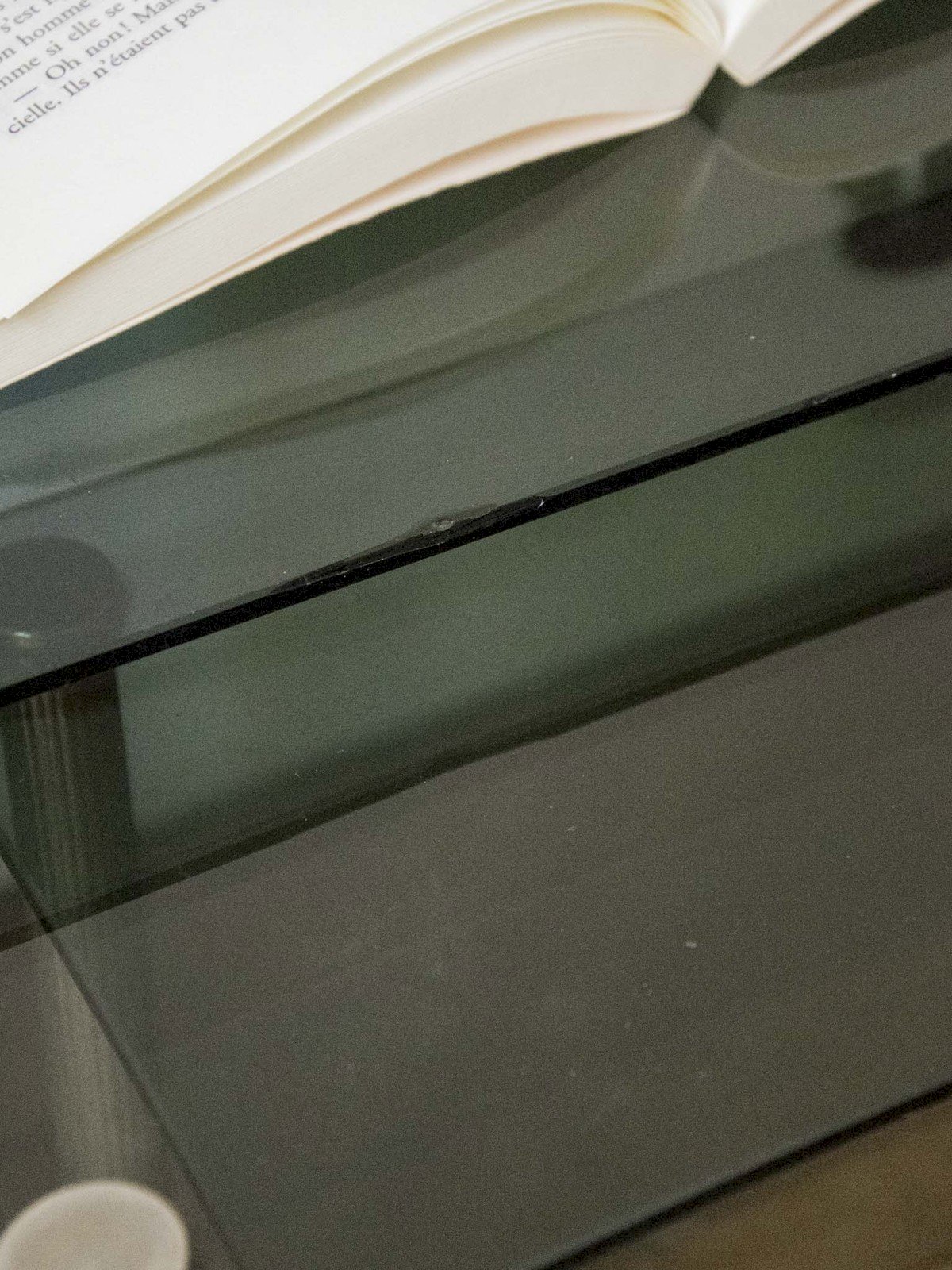
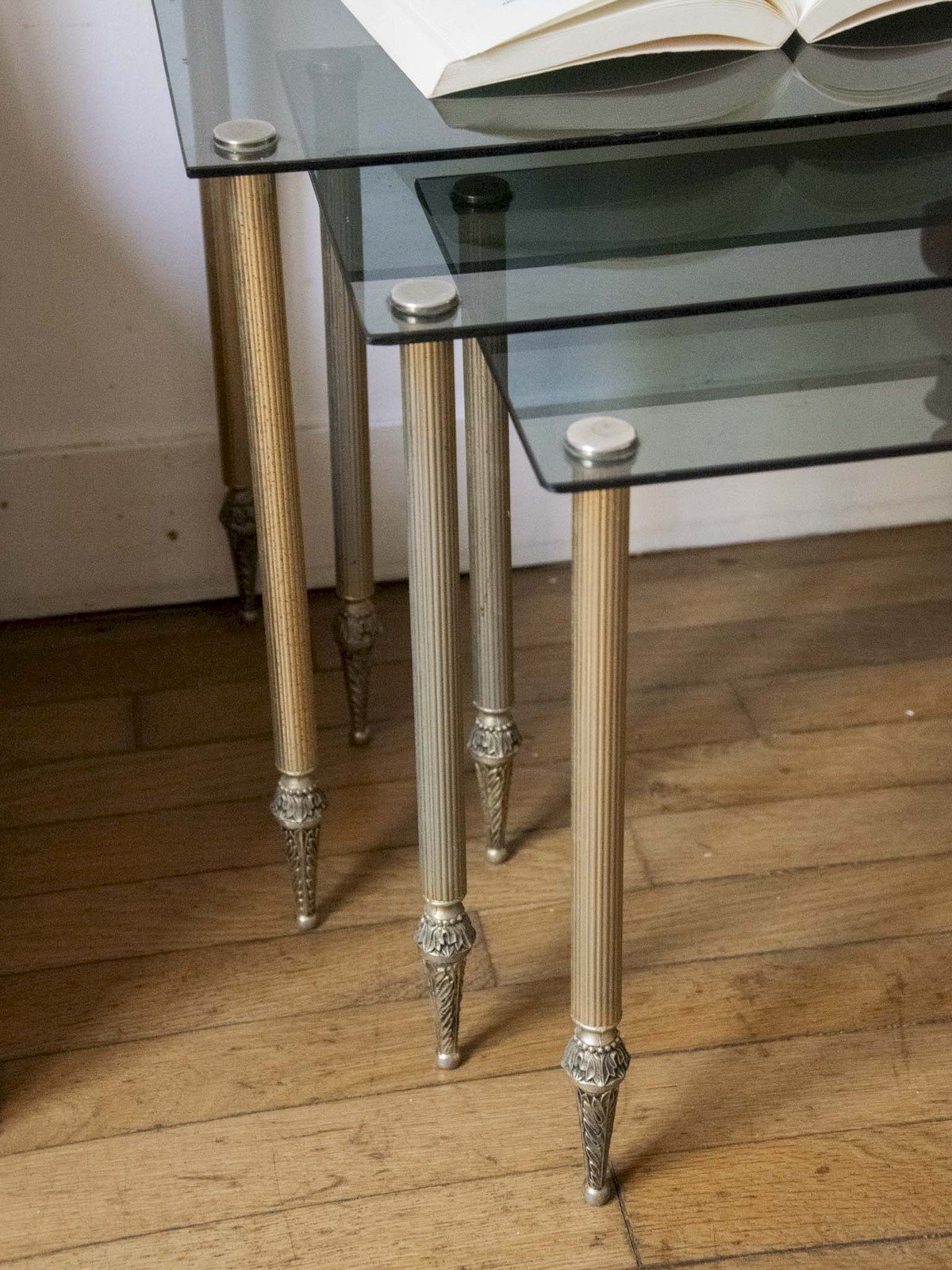
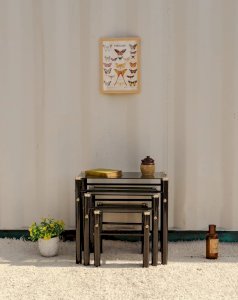
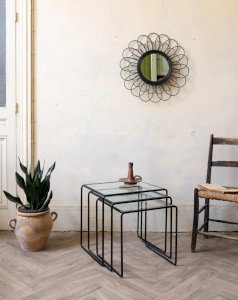
Add a modern touch to your space with these nesting tables made of glass and metal, combining elegance and functionality. Their clean and airy design harmoniously fits into any interior, whether contemporary or more classic. Each table, with its varied dimensions, offers you the flexibility of an ideal accent piece for your moments of relaxation or entertaining. The slight chips and visible scratches bear witness to their history, adding an authentic charm to your decor. LargeWidth: 56 cmDepth: 33 cmHeight: 40 cm MediumWidth: 46 cmDepth: 30 cmHeight: 37 cm SmallWidth: 27 cmDepth: 36 cmHeight: 35 cm A Brief History of Nesting TablesInvented in the late 18th century by English cabinetmaker Thomas Sheraton, nesting tables are a set of progressively sized tables that fit one underneath the other. Valued during the Art Deco period for their geometry and later reinvented in the 1950s and 60s with organic lines, they embody the epitome of modular furniture. They are so named by analogy to Russian dolls, offering an ingenious space-saving solution for small spaces. Versatile, they serve alternately as coffee tables, nightstands, or accent supports depending on your current needs.
Réf :
#413375
Brand / From : Debongout
Related Products



Comments
Barbara, the smoked glass nesting table No. 194
219€
75002 Paris
Ce site contient des liens d’affiliation pour lesquels je peux recevoir une compensation.
Description
Add a modern touch to your space with these nesting tables made of glass and metal, combining elegance and functionality. Their clean and airy design harmoniously fits into any interior, whether contemporary or more classic. Each table, with its varied dimensions, offers you the flexibility of an ideal accent piece for your moments of relaxation or entertaining. The slight chips and visible scratches bear witness to their history, adding an authentic charm to your decor. LargeWidth: 56 cmDepth: 33 cmHeight: 40 cm MediumWidth: 46 cmDepth: 30 cmHeight: 37 cm SmallWidth: 27 cmDepth: 36 cmHeight: 35 cm A Brief History of Nesting TablesInvented in the late 18th century by English cabinetmaker Thomas Sheraton, nesting tables are a set of progressively sized tables that fit one underneath the other. Valued during the Art Deco period for their geometry and later reinvented in the 1950s and 60s with organic lines, they embody the epitome of modular furniture. They are so named by analogy to Russian dolls, offering an ingenious space-saving solution for small spaces. Versatile, they serve alternately as coffee tables, nightstands, or accent supports depending on your current needs.
Réf :
#413375
Brand / From : Debongout