 English
 Français


Description
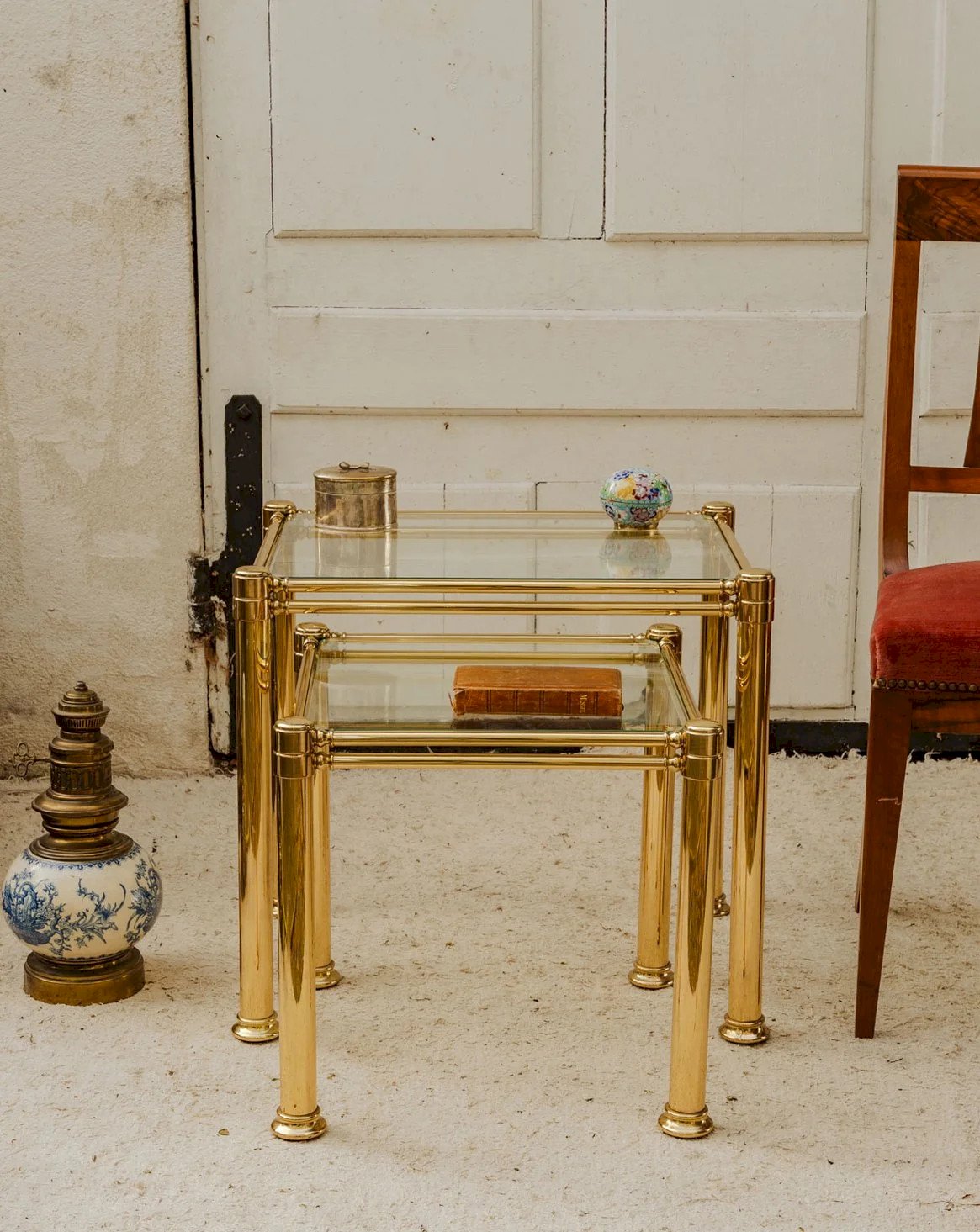
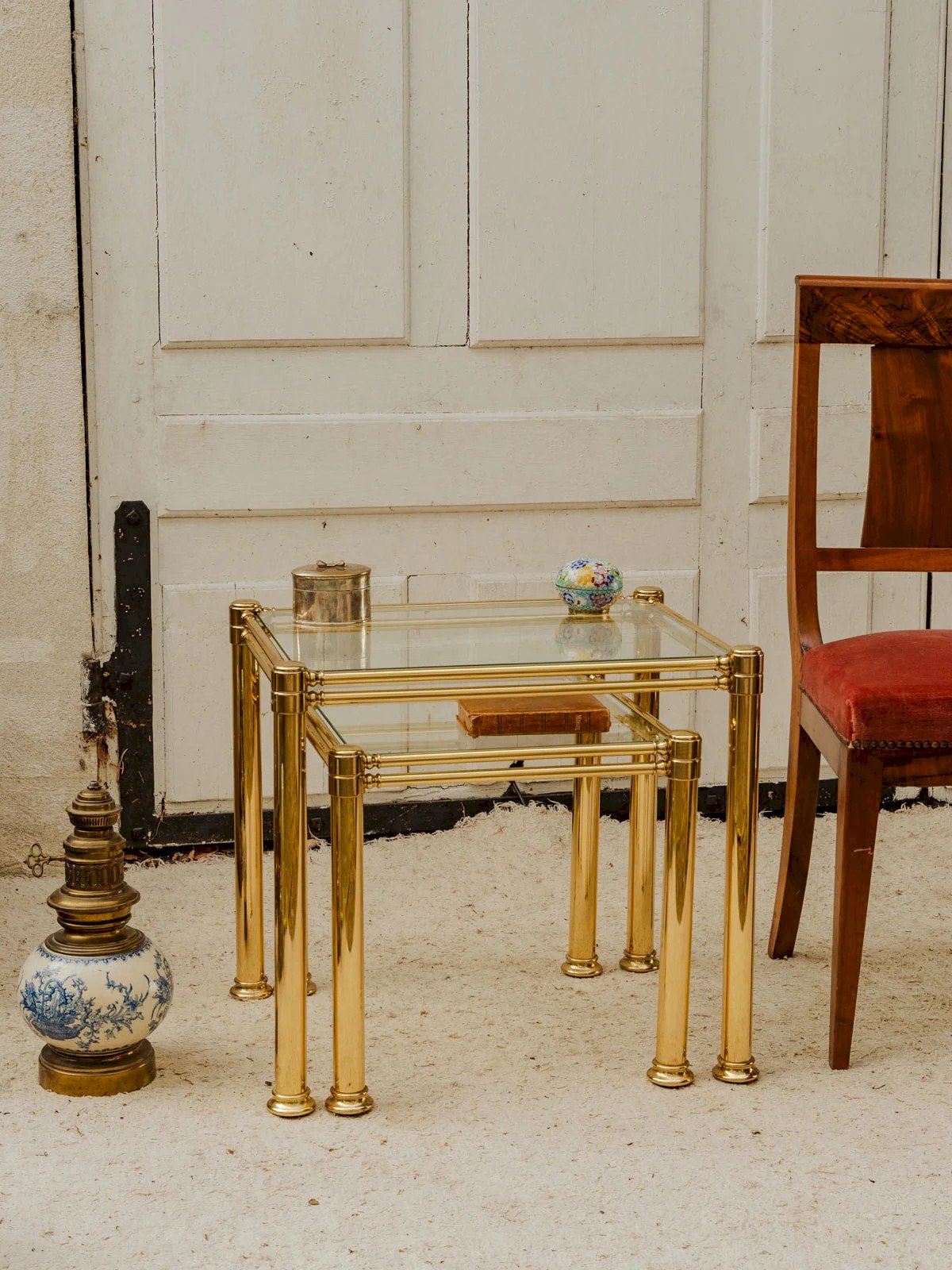
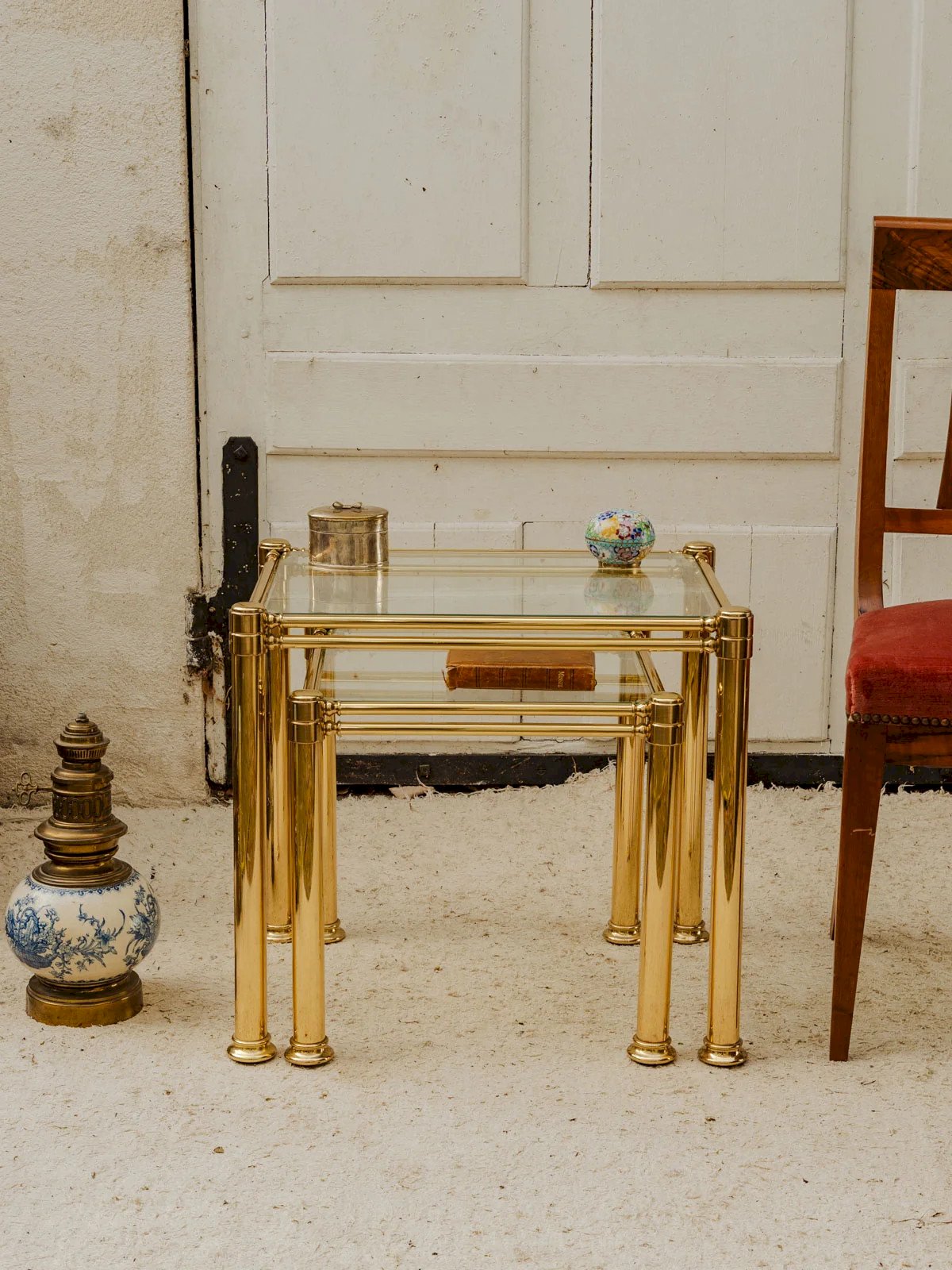
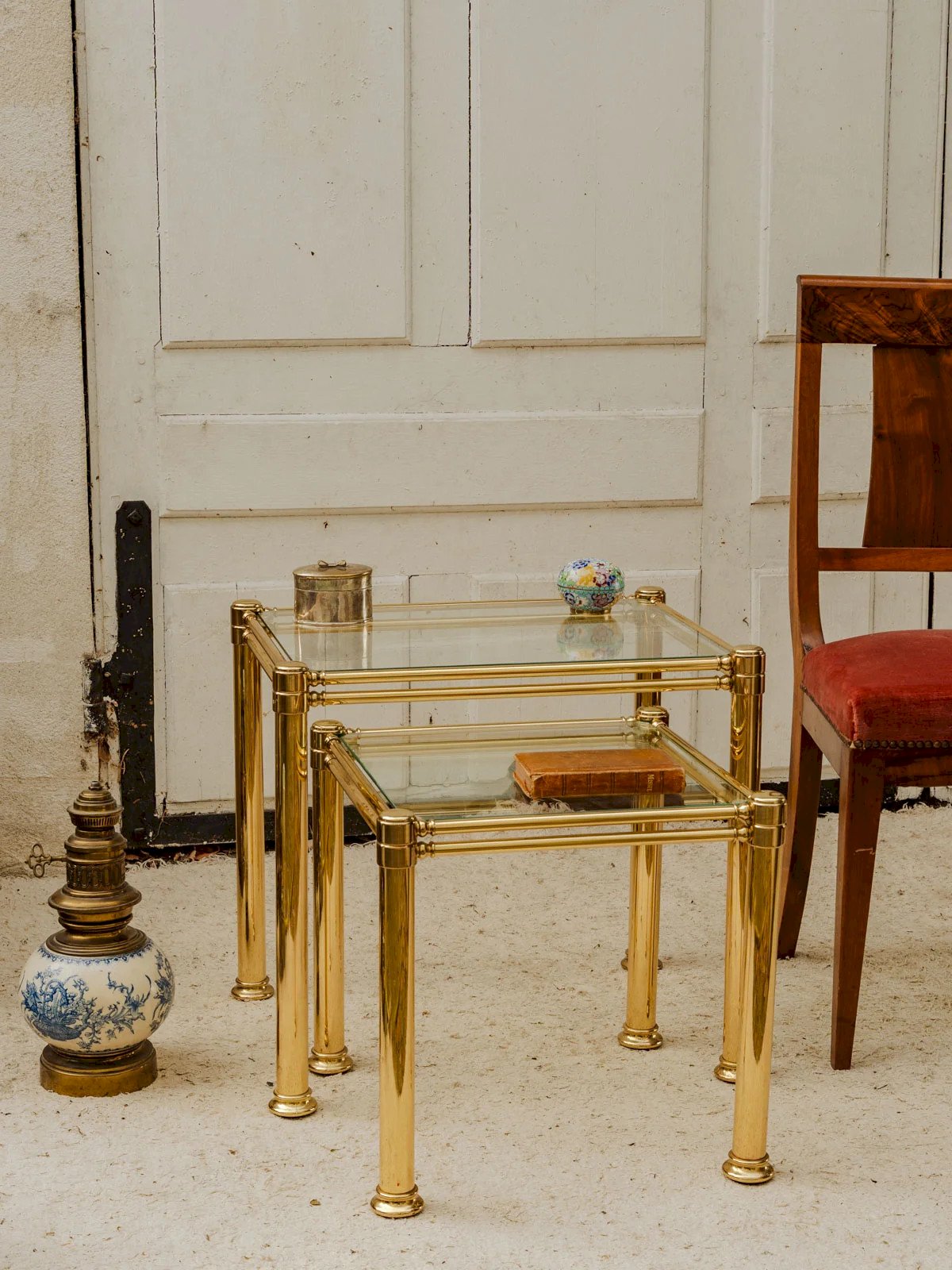
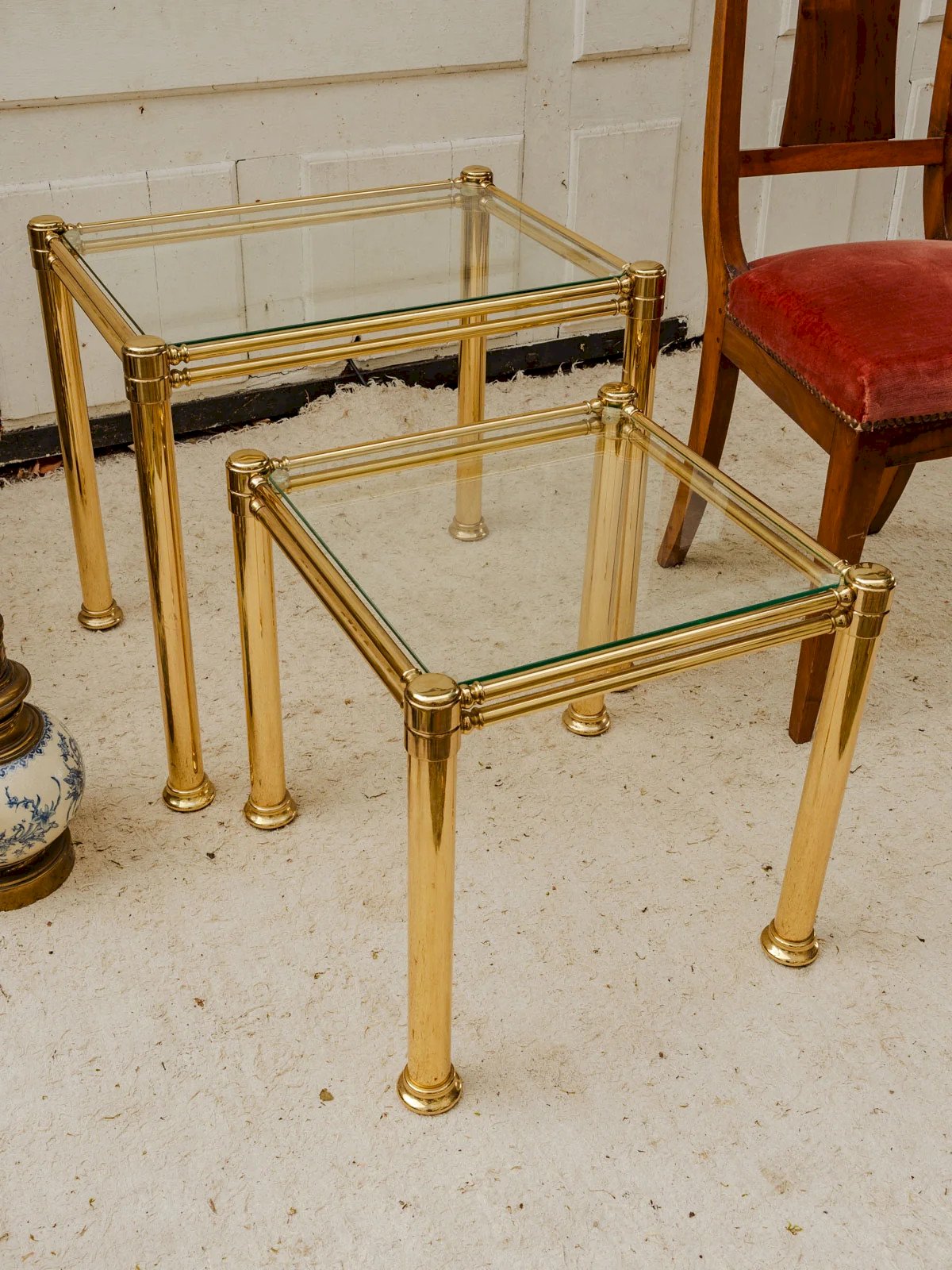
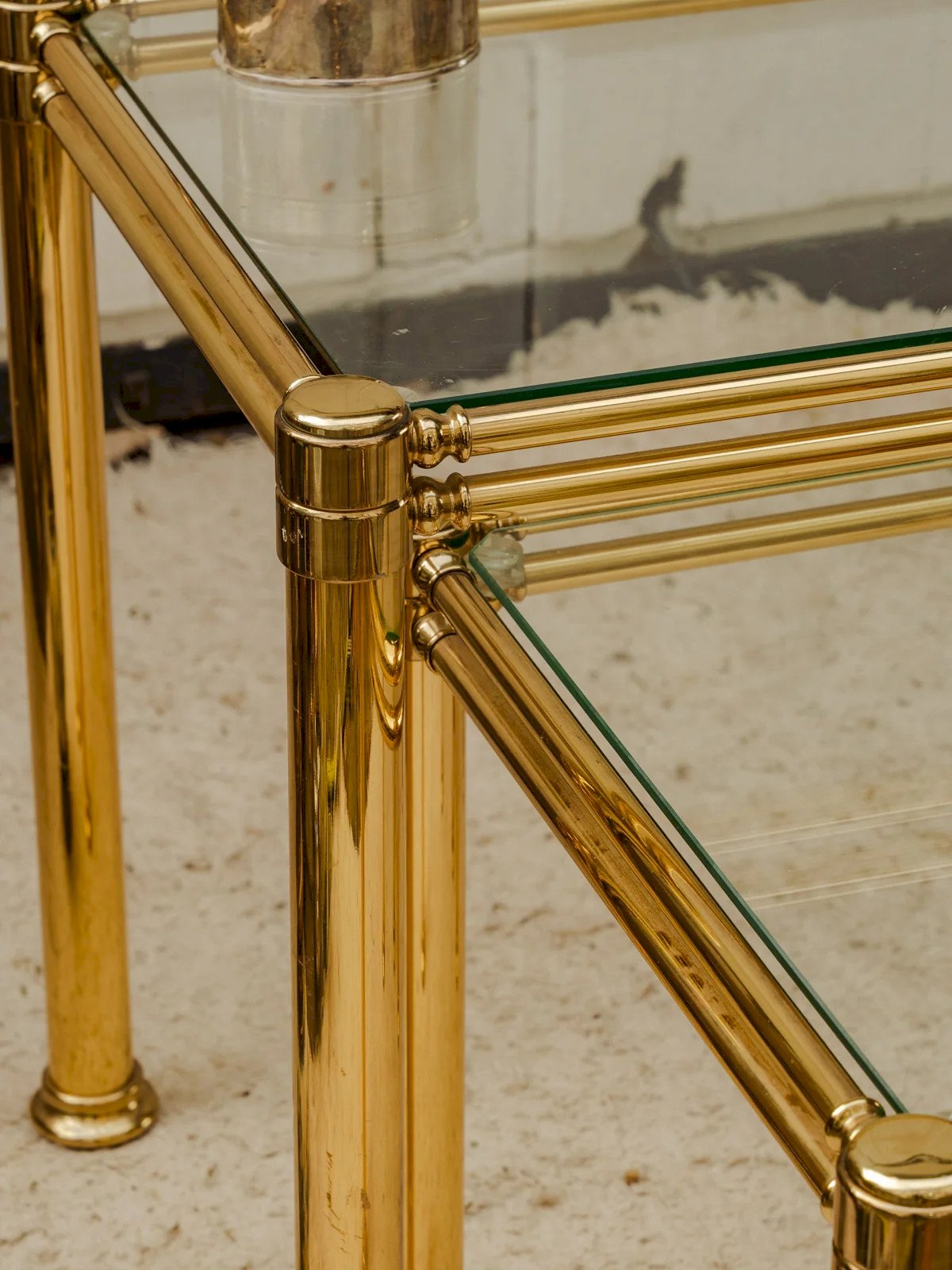
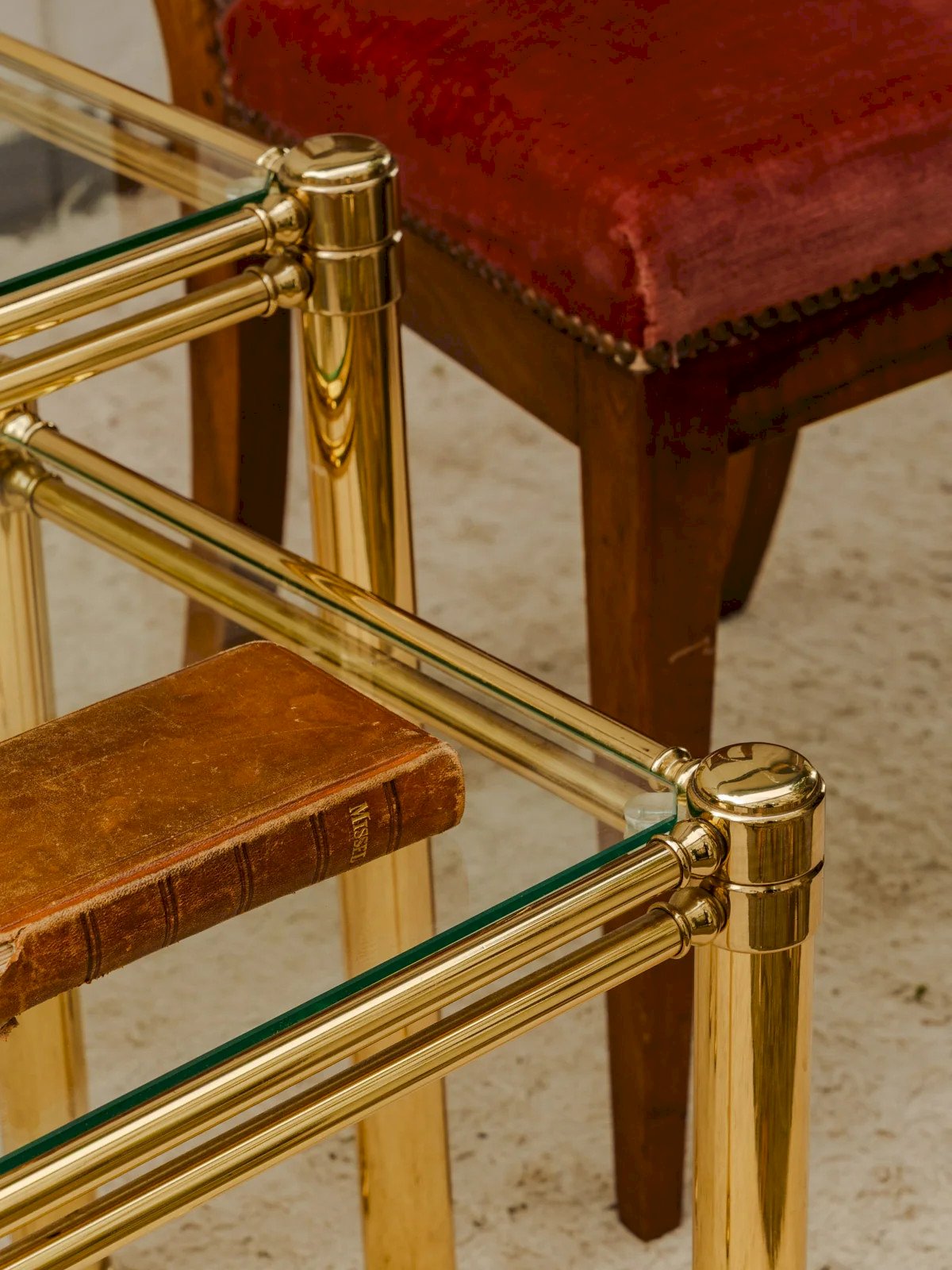
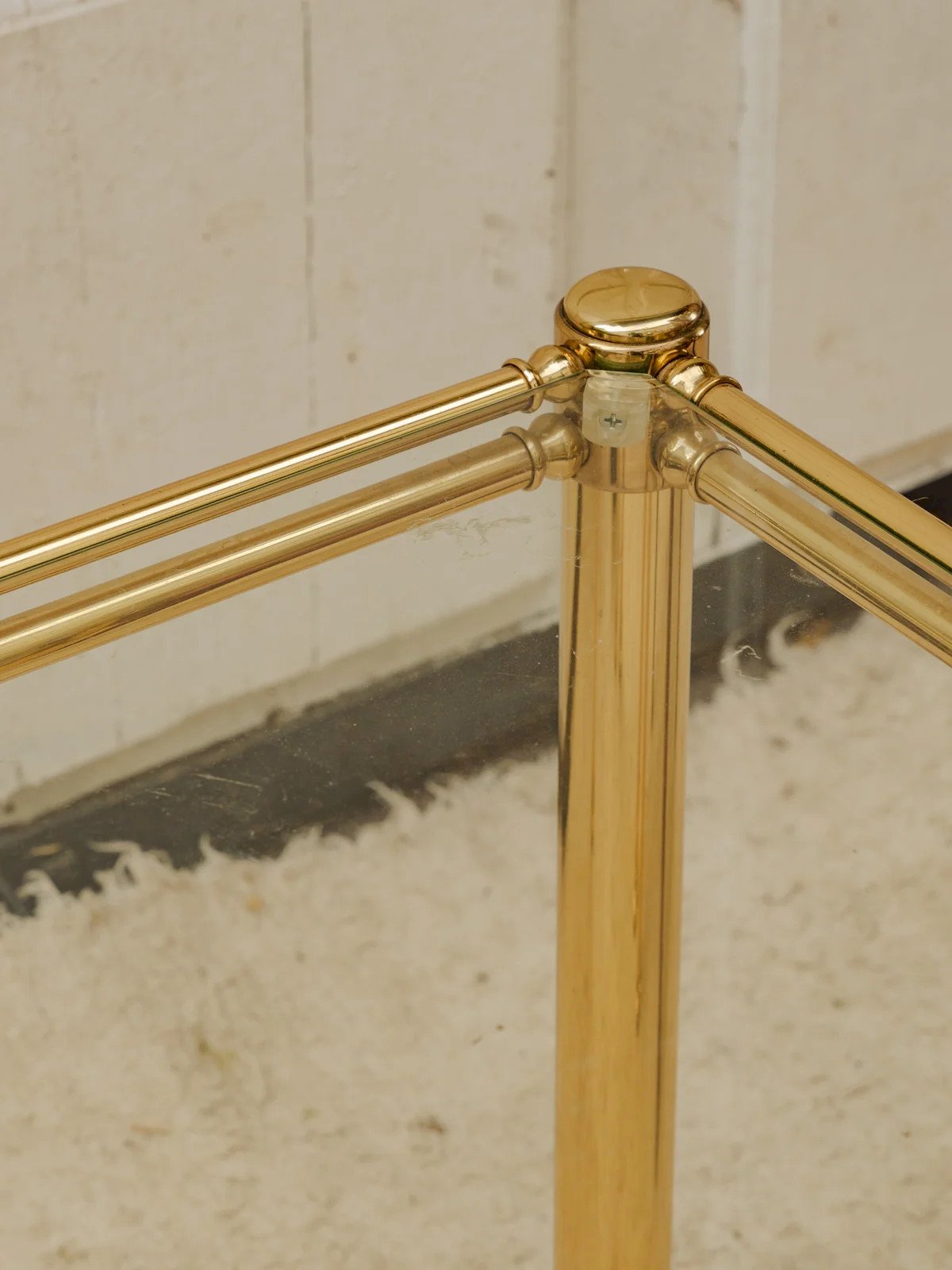
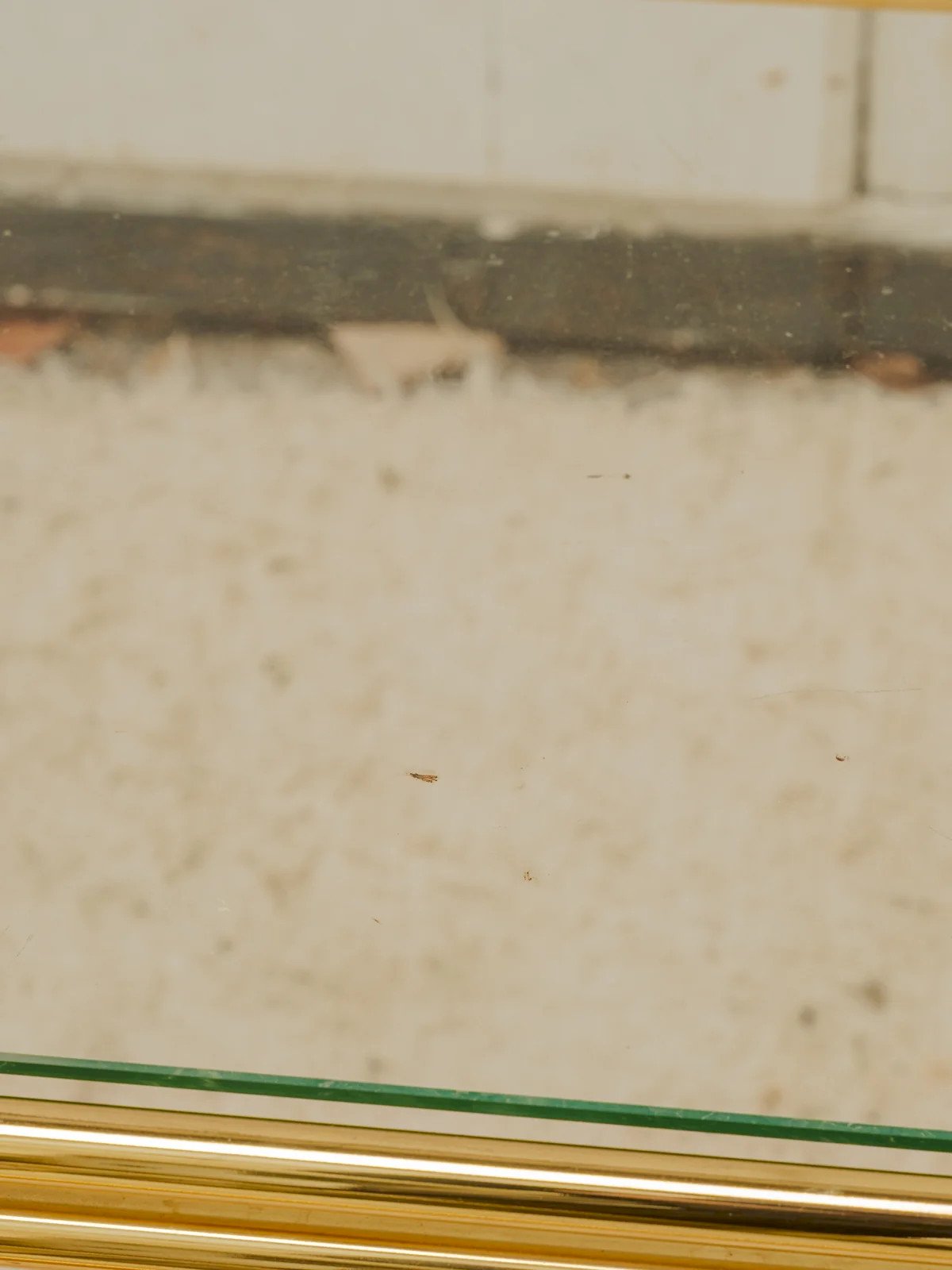
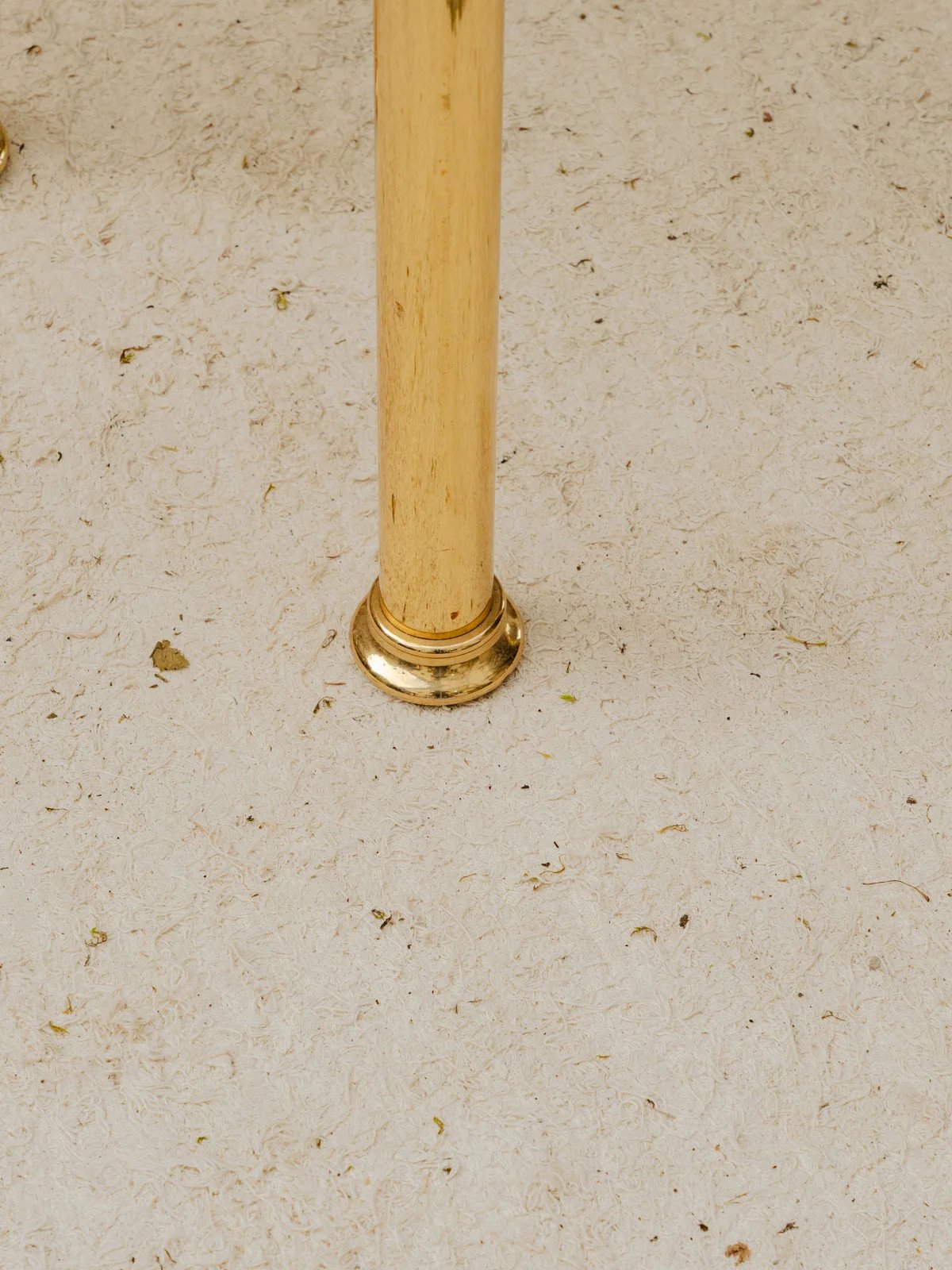
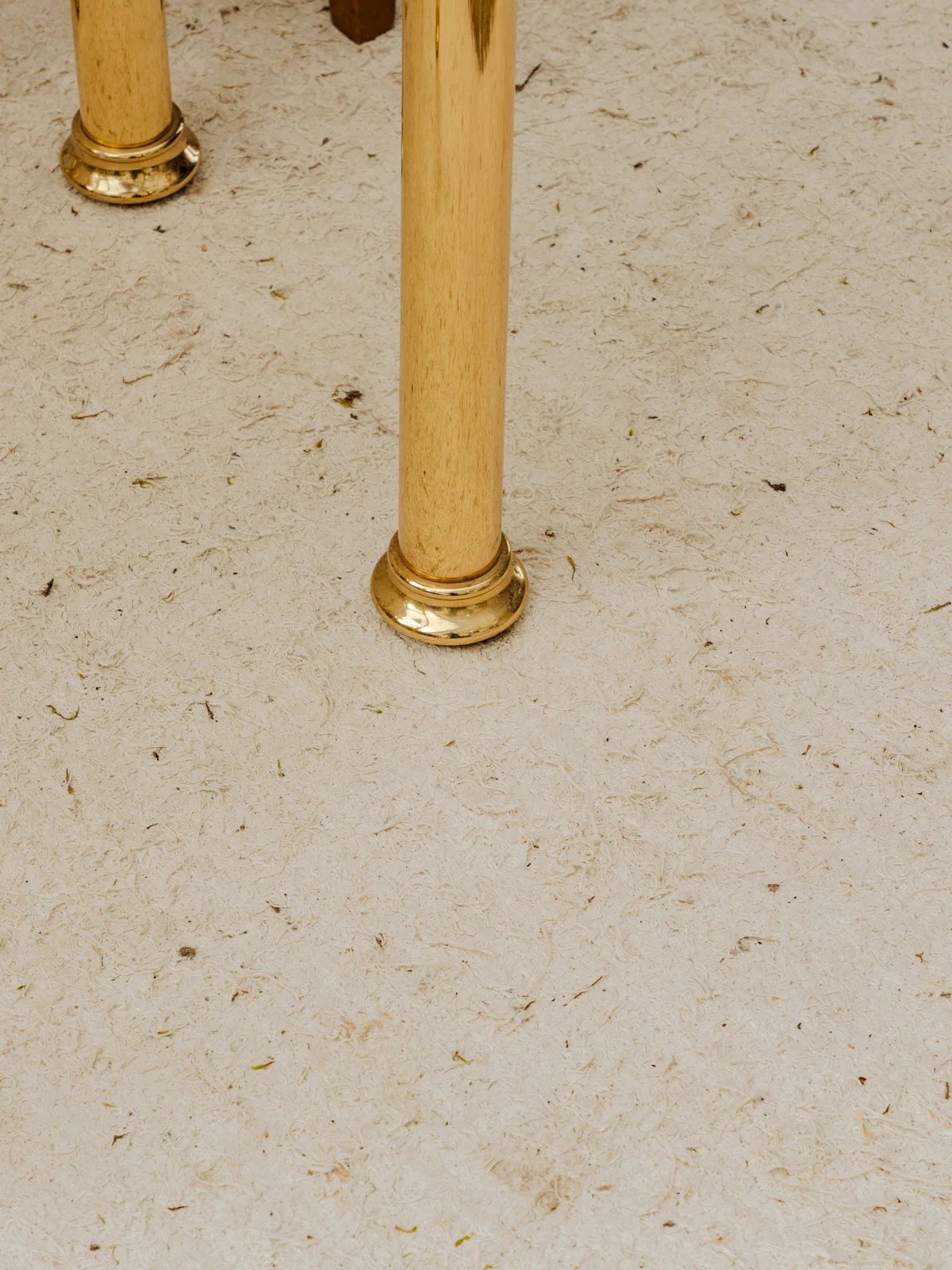
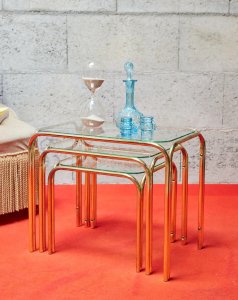
These two nesting tables in gilded brass and glass bring a contemporary and refined touch, with a combination of materials that captures light without making the whole thing feel heavy. Sourced from different places, they fit seamlessly into a living room or a reading nook, where their duo can accommodate a lamp, a book, or a vase depending on the occasion. The gilded brass interacts with the transparency of the glass to create a simple ensemble that pairs easily with a fabric sofa, an armchair, or a few decorative objects. Their presence works as a separator or when combined, allowing for varying levels and freeing up the main surface. As second-hand items, they carry the memory of their past: a few traces of time. Length: 52 cm Width: 40 cm Height: 50 cm A Brief History of Nesting Tables Invented in the late 18th century by English cabinetmaker Thomas Sheraton, nesting tables are a set of progressively sized tables that fit into one another. Valued during the Art Deco period for their geometry, they were then reinvented in the 1950s and 60s with organic lines, embodying the essence of modular furniture. They are so named by analogy to Russian dolls, providing an ingenious space-saving solution for small areas. Versatile, they serve as coffee tables, bedside tables, or supplementary supports depending on your current needs.
Réf :
#414048
Brand / From : Debongout
Related Products




Comments
Barbara, the nesting tables in brass and glass No. 221
309€
75002 Paris
Ce site contient des liens d’affiliation pour lesquels je peux recevoir une compensation.
Description
These two nesting tables in gilded brass and glass bring a contemporary and refined touch, with a combination of materials that captures light without making the whole thing feel heavy. Sourced from different places, they fit seamlessly into a living room or a reading nook, where their duo can accommodate a lamp, a book, or a vase depending on the occasion. The gilded brass interacts with the transparency of the glass to create a simple ensemble that pairs easily with a fabric sofa, an armchair, or a few decorative objects. Their presence works as a separator or when combined, allowing for varying levels and freeing up the main surface. As second-hand items, they carry the memory of their past: a few traces of time. Length: 52 cm Width: 40 cm Height: 50 cm A Brief History of Nesting Tables Invented in the late 18th century by English cabinetmaker Thomas Sheraton, nesting tables are a set of progressively sized tables that fit into one another. Valued during the Art Deco period for their geometry, they were then reinvented in the 1950s and 60s with organic lines, embodying the essence of modular furniture. They are so named by analogy to Russian dolls, providing an ingenious space-saving solution for small areas. Versatile, they serve as coffee tables, bedside tables, or supplementary supports depending on your current needs.
Réf :
#414048
Brand / From : Debongout