 English
 Français


Description
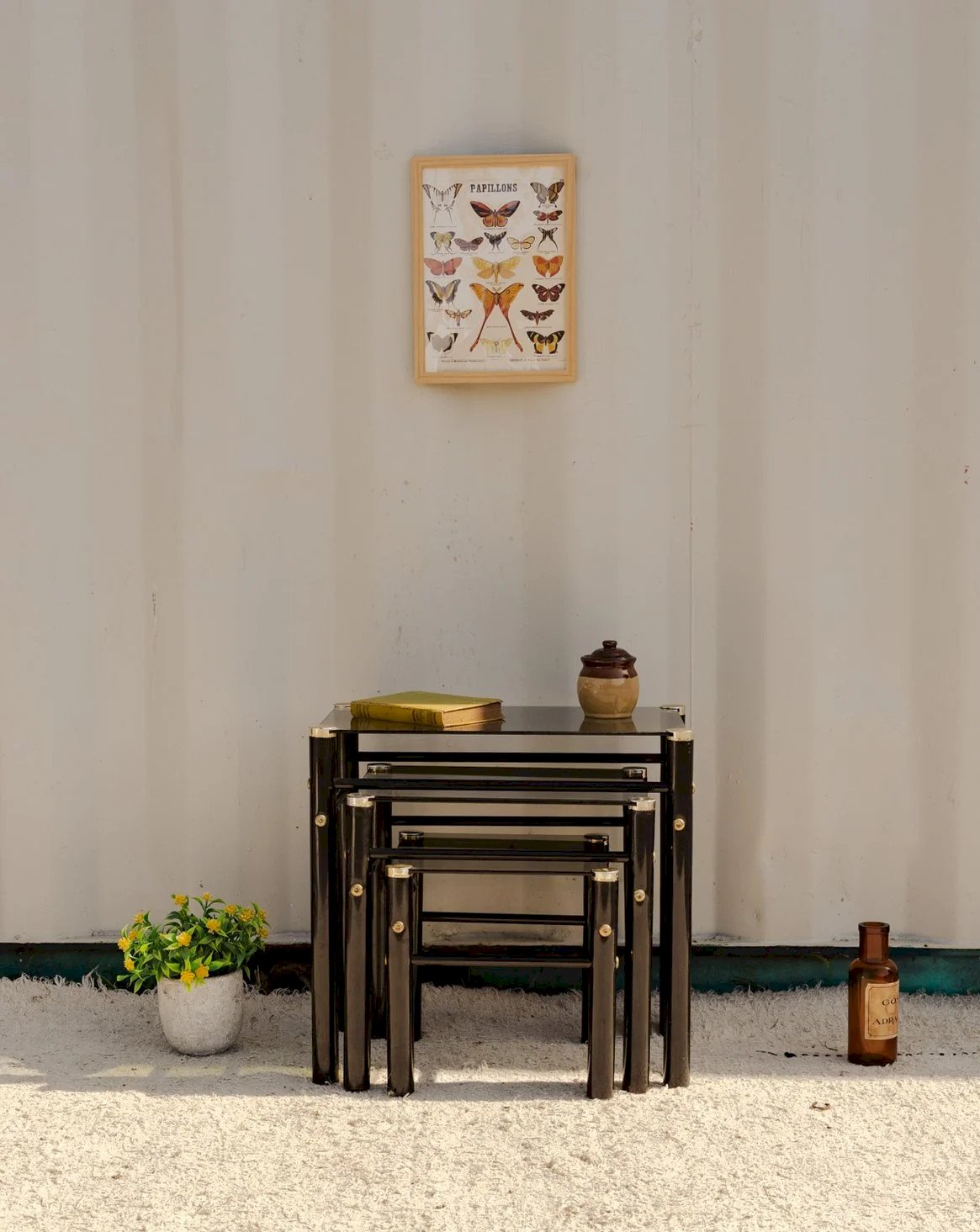
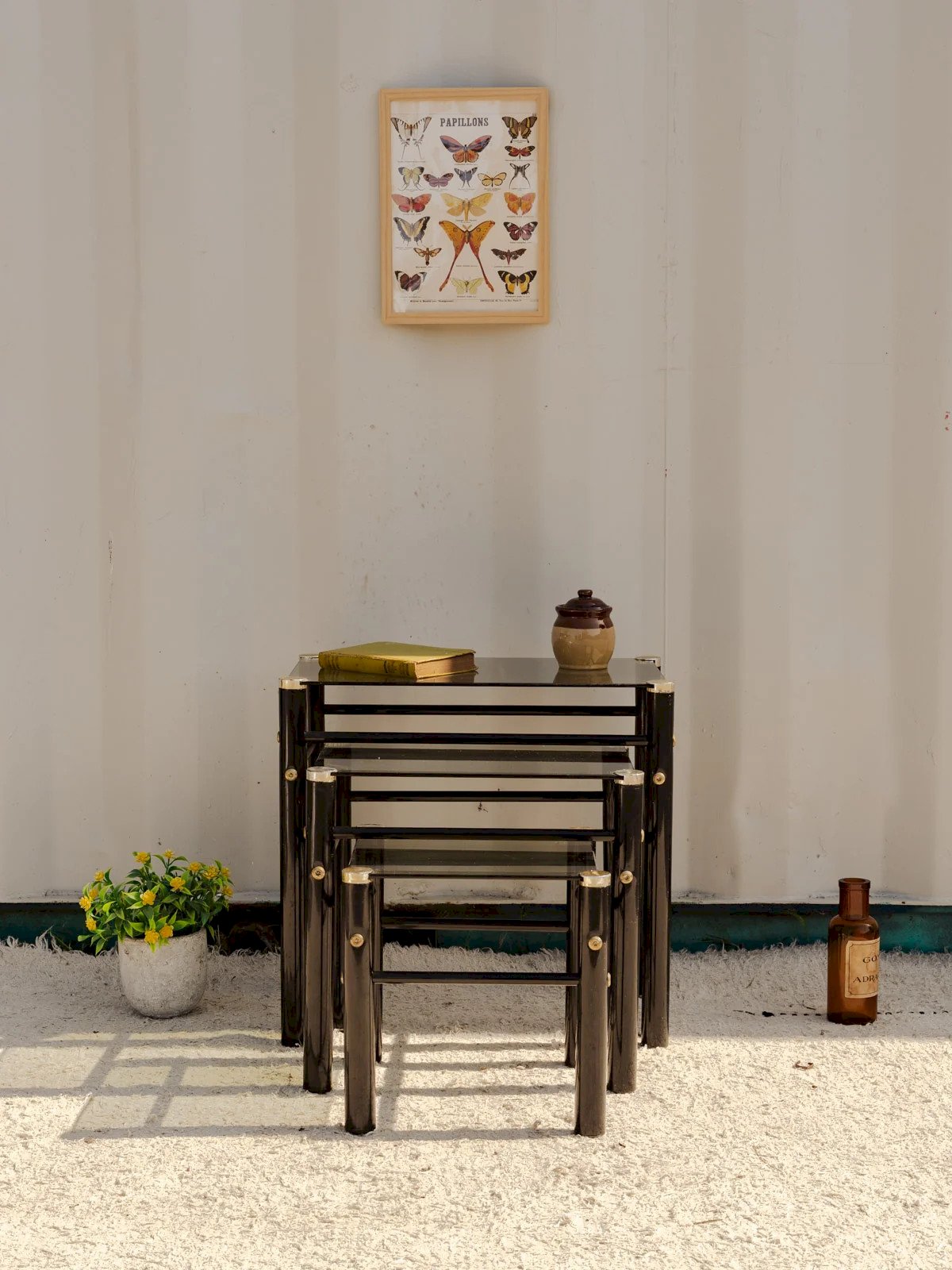
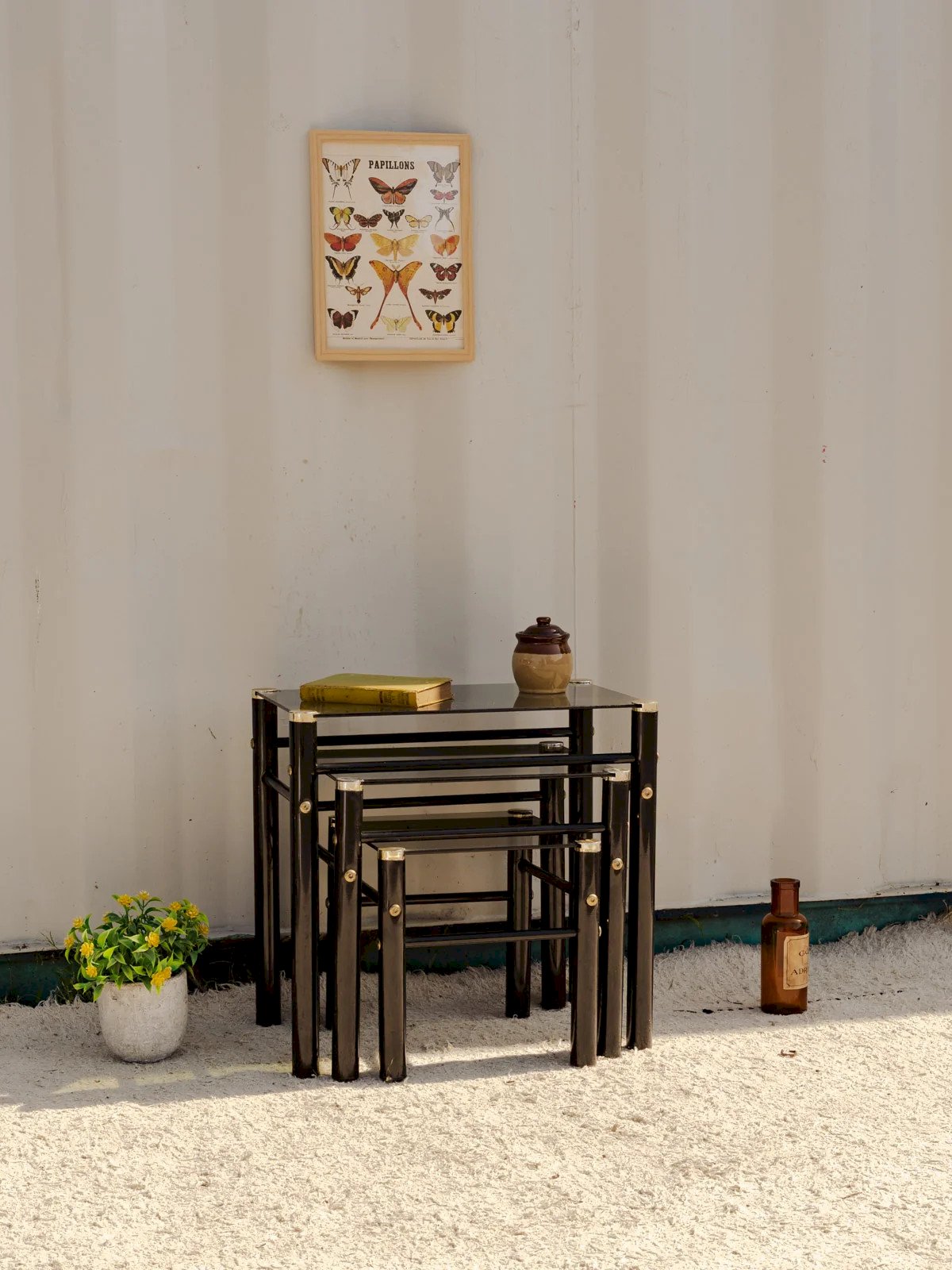
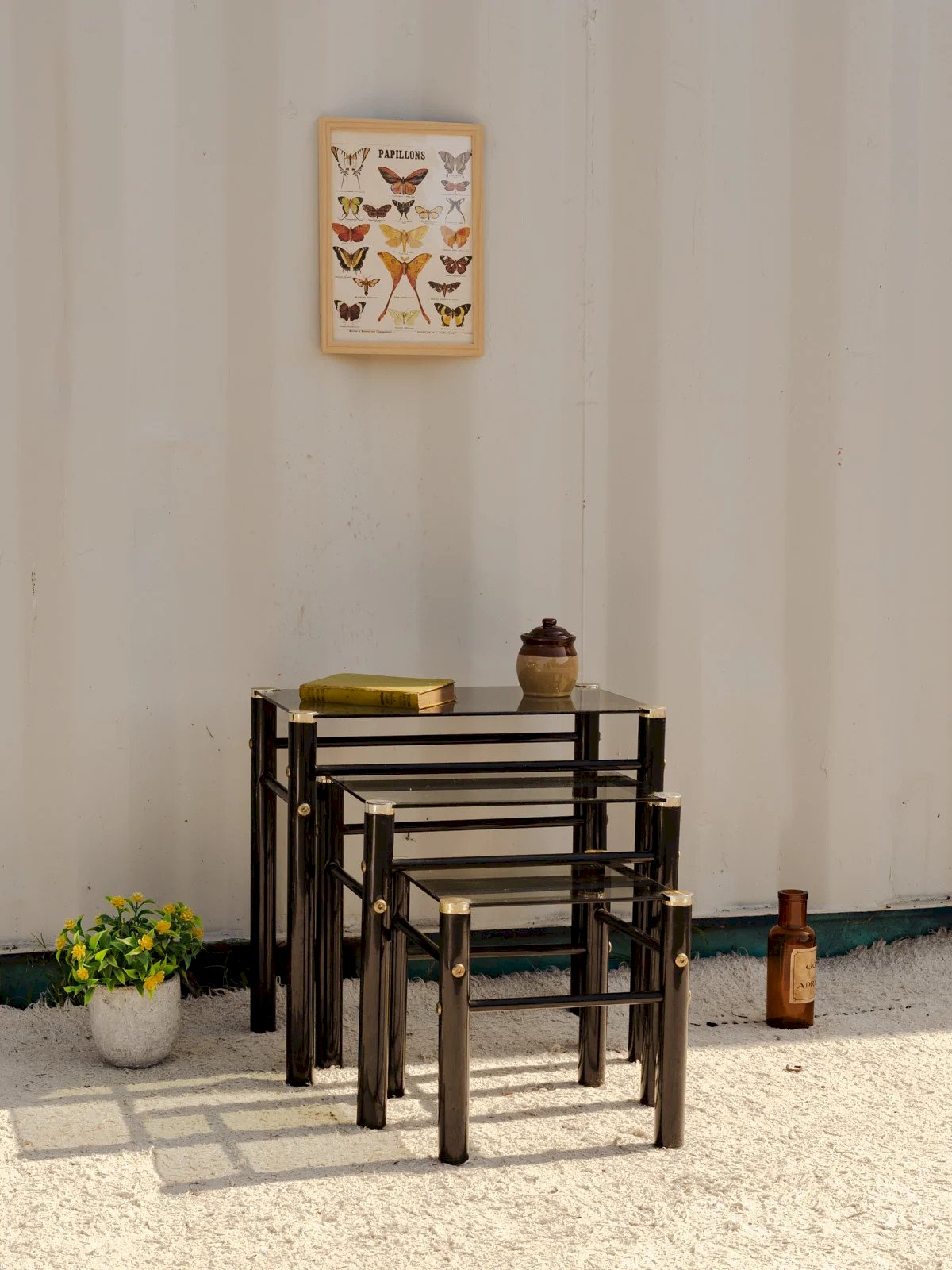
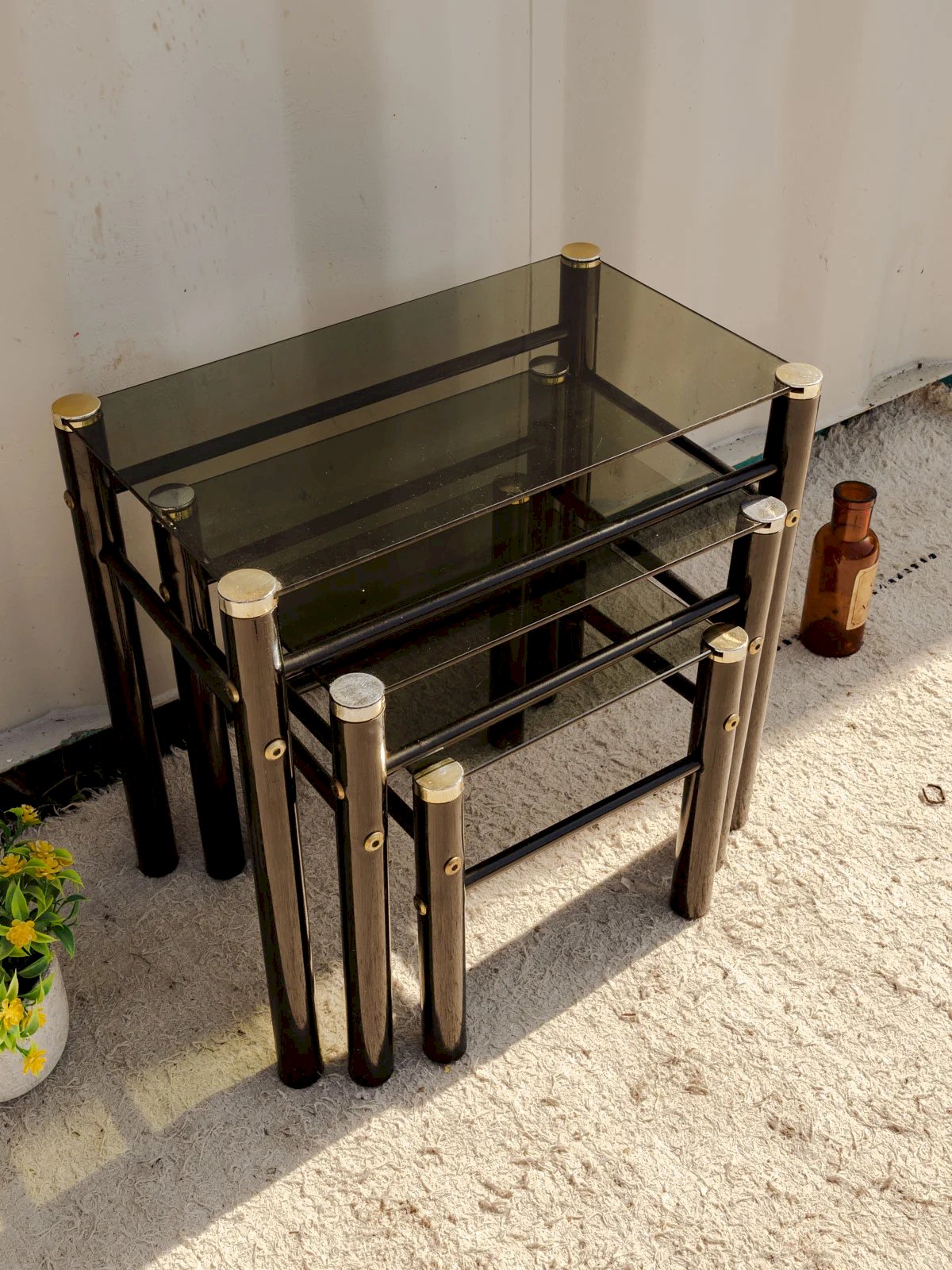
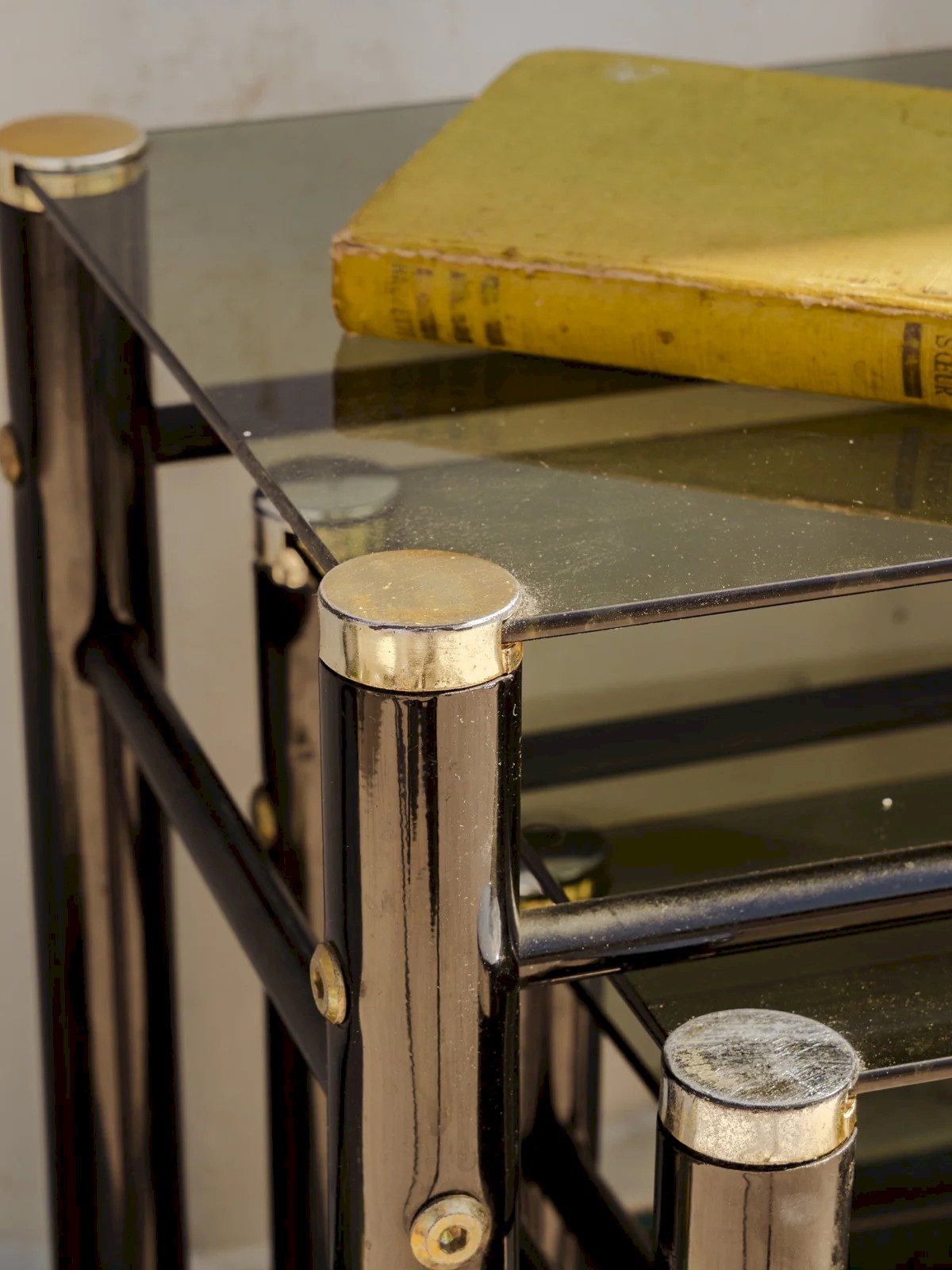
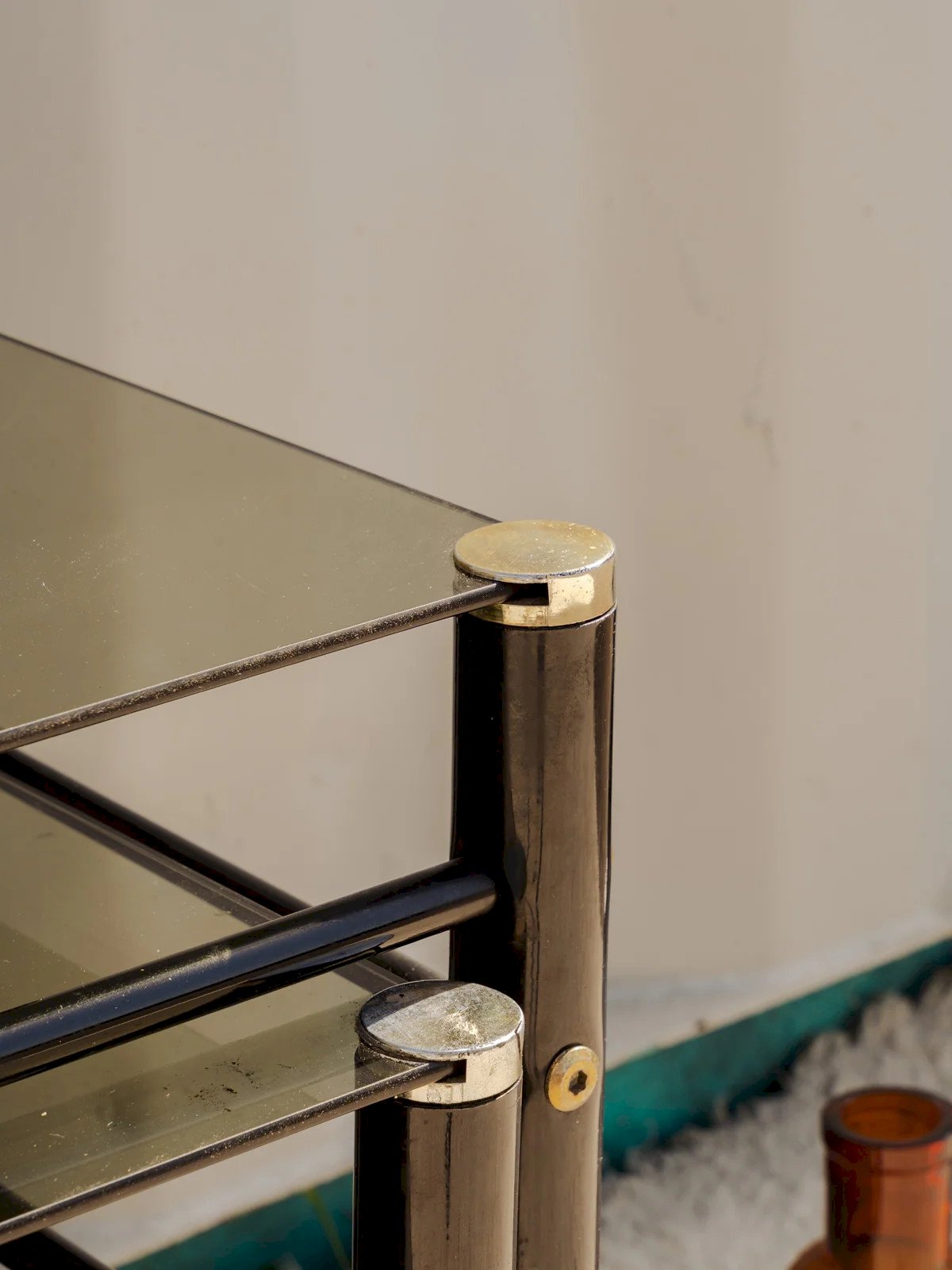
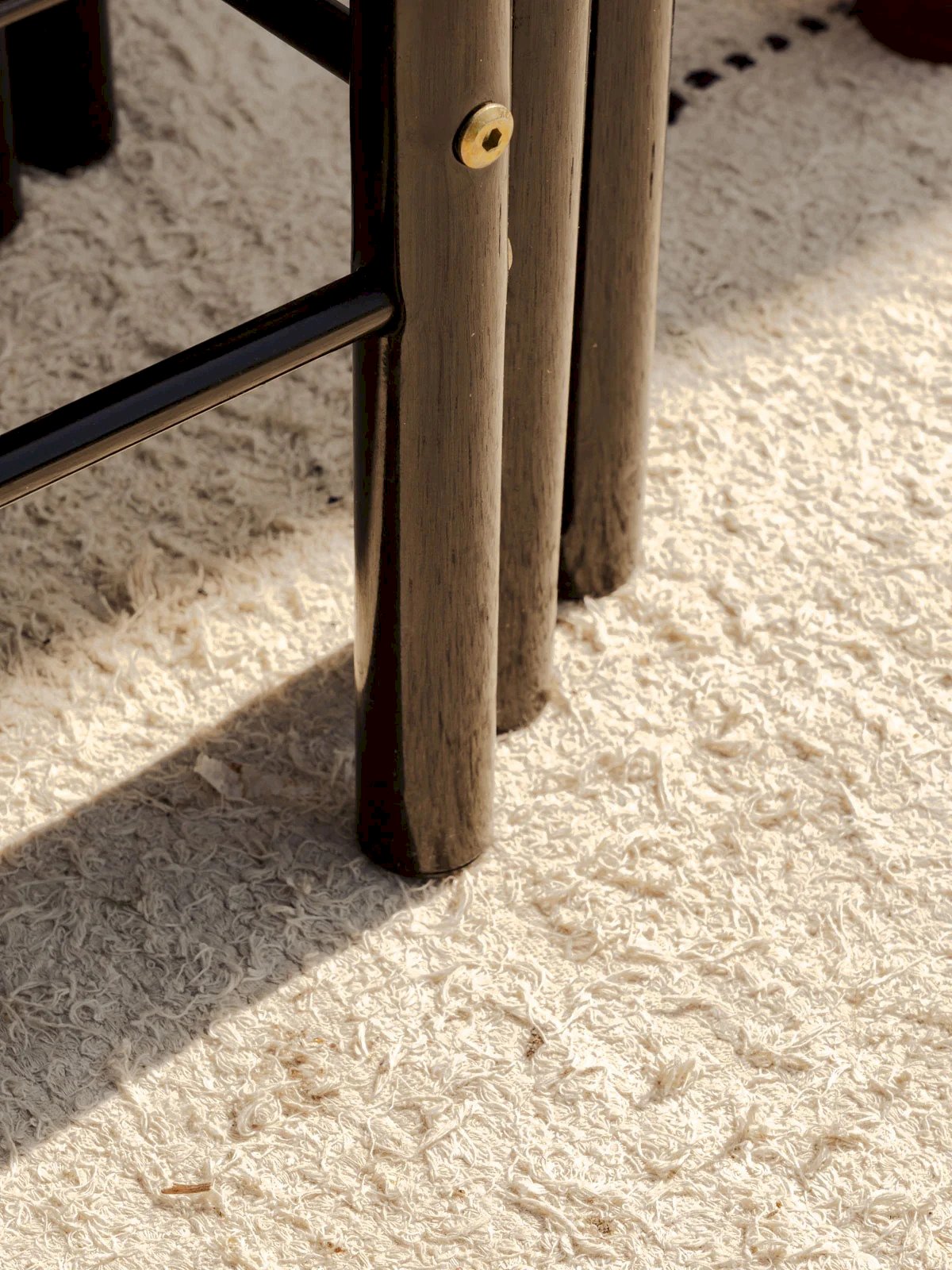
Invite elegance into your home with these contemporary nesting tables. Their transparent glass tops bring a visual lightness, while the black metal structure adds a touch of modernity and sturdiness. Available in several sizes, these tables easily adapt to any space, whether for serving drinks during an appetizer or as decorative surfaces. Some traces of time present, witnesses of their history, add to their authenticity. Dimensions of the large table: Length: 50 cm Width: 30 cm Height: 47 cm Dimensions of the medium table: Length: 39 cm Width: 30 cm Height: 39 cm Dimensions of the small table: Length: 29 cm Width: 29 cm Height: 30 cm A brief history of nesting tables Invented in the late 18th century by the English cabinetmaker Thomas Sheraton, nesting tables are a set of decreasingly sized tables that fit under one another. Popular during the Art Deco period for their geometry, they were then reinvented in the 50s and 60s with organic lines, embodying the ultimate modular furniture. They are named so by analogy to Russian dolls, offering an ingenious space-saving solution for small areas. Versatile, they serve as coffee tables, nightstands, or auxiliary supports depending on your current needs.
Réf :
#413190
Brand / From : Debongout
Related Products

Comments
Barbara, the nesting tables in glass and black metal N°183
329€
75002 Paris
Ce site contient des liens d’affiliation pour lesquels je peux recevoir une compensation.
Description
Invite elegance into your home with these contemporary nesting tables. Their transparent glass tops bring a visual lightness, while the black metal structure adds a touch of modernity and sturdiness. Available in several sizes, these tables easily adapt to any space, whether for serving drinks during an appetizer or as decorative surfaces. Some traces of time present, witnesses of their history, add to their authenticity. Dimensions of the large table: Length: 50 cm Width: 30 cm Height: 47 cm Dimensions of the medium table: Length: 39 cm Width: 30 cm Height: 39 cm Dimensions of the small table: Length: 29 cm Width: 29 cm Height: 30 cm A brief history of nesting tables Invented in the late 18th century by the English cabinetmaker Thomas Sheraton, nesting tables are a set of decreasingly sized tables that fit under one another. Popular during the Art Deco period for their geometry, they were then reinvented in the 50s and 60s with organic lines, embodying the ultimate modular furniture. They are named so by analogy to Russian dolls, offering an ingenious space-saving solution for small areas. Versatile, they serve as coffee tables, nightstands, or auxiliary supports depending on your current needs.
Réf :
#413190
Brand / From : Debongout