 English
 Français


Description
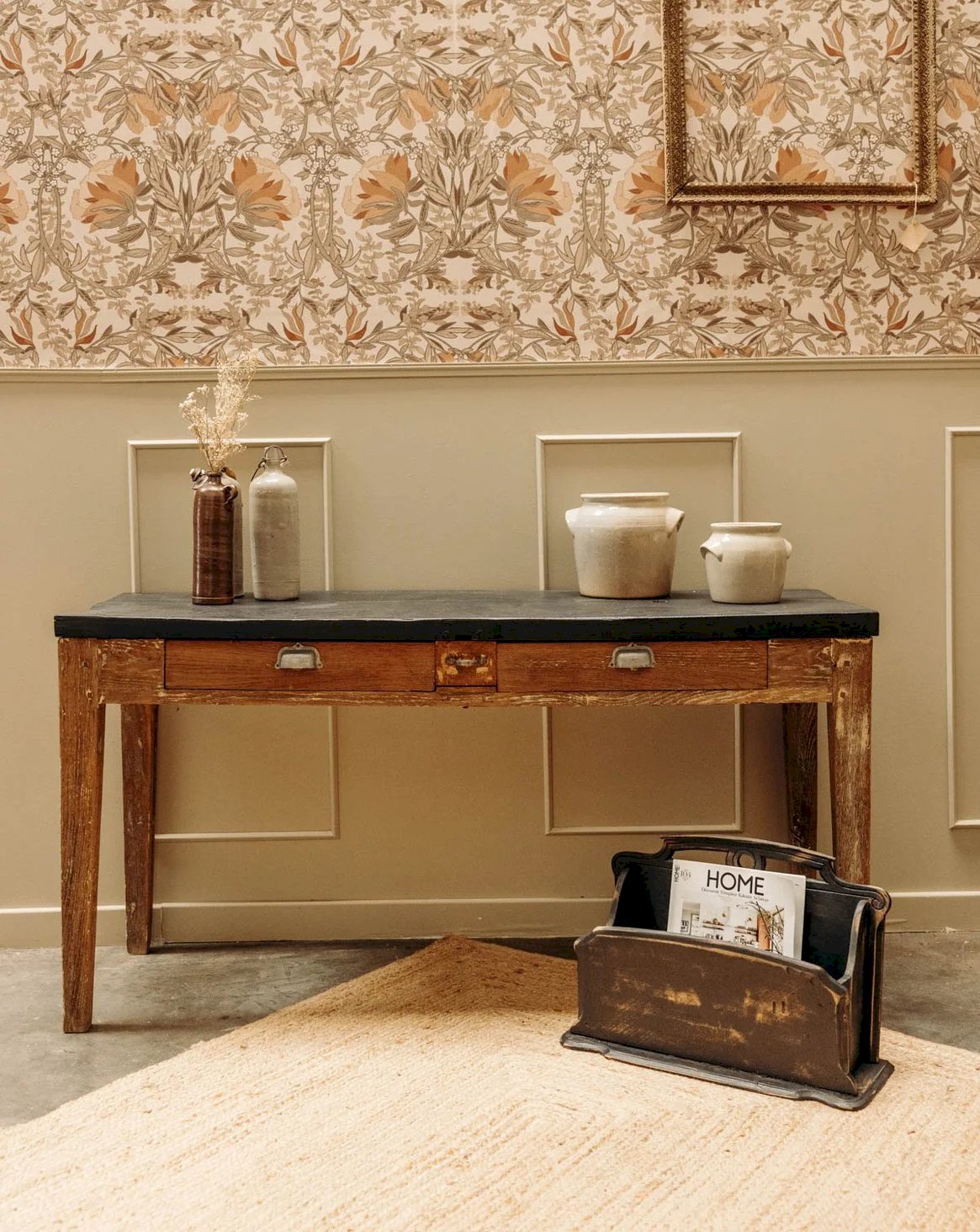
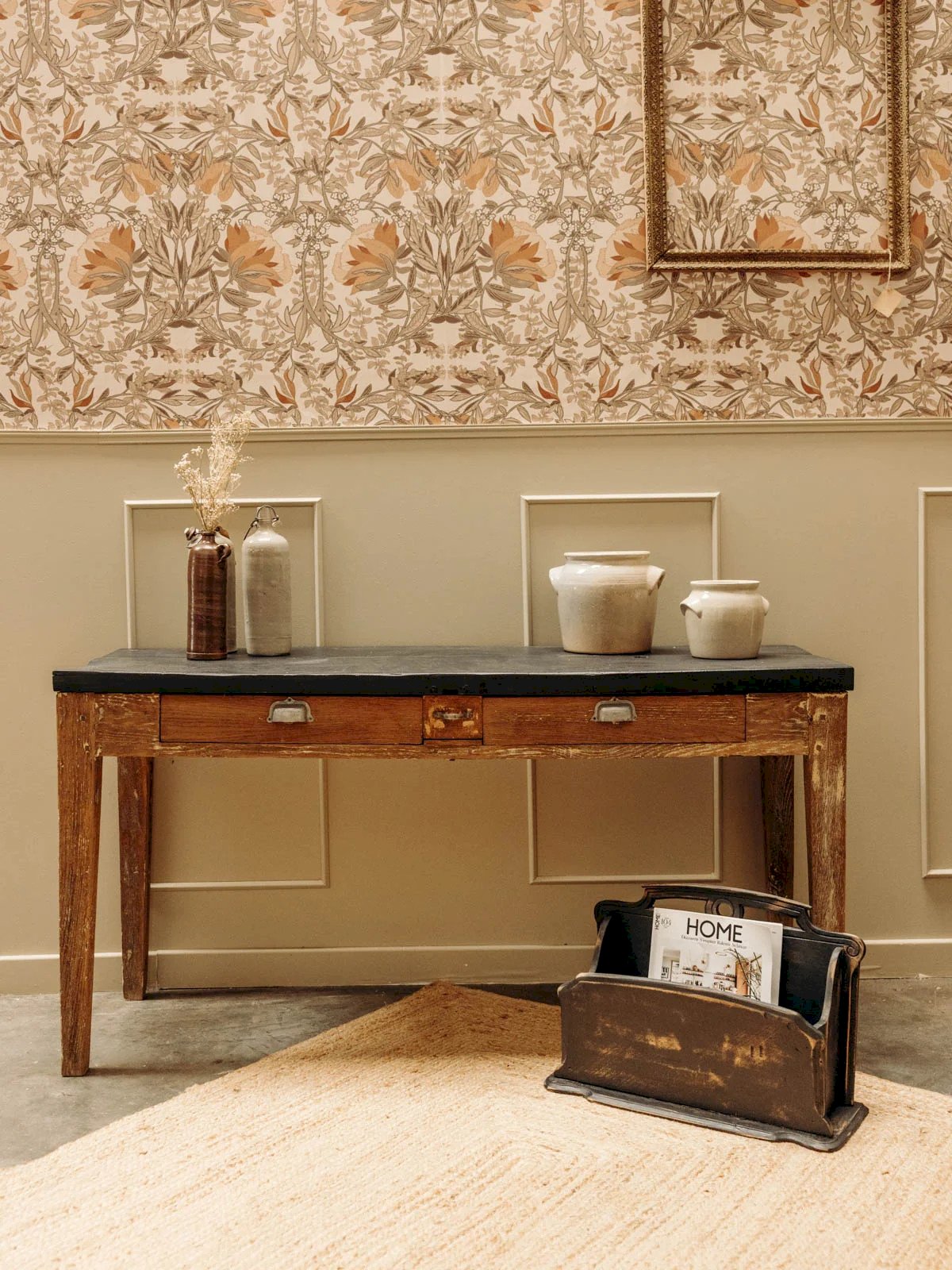
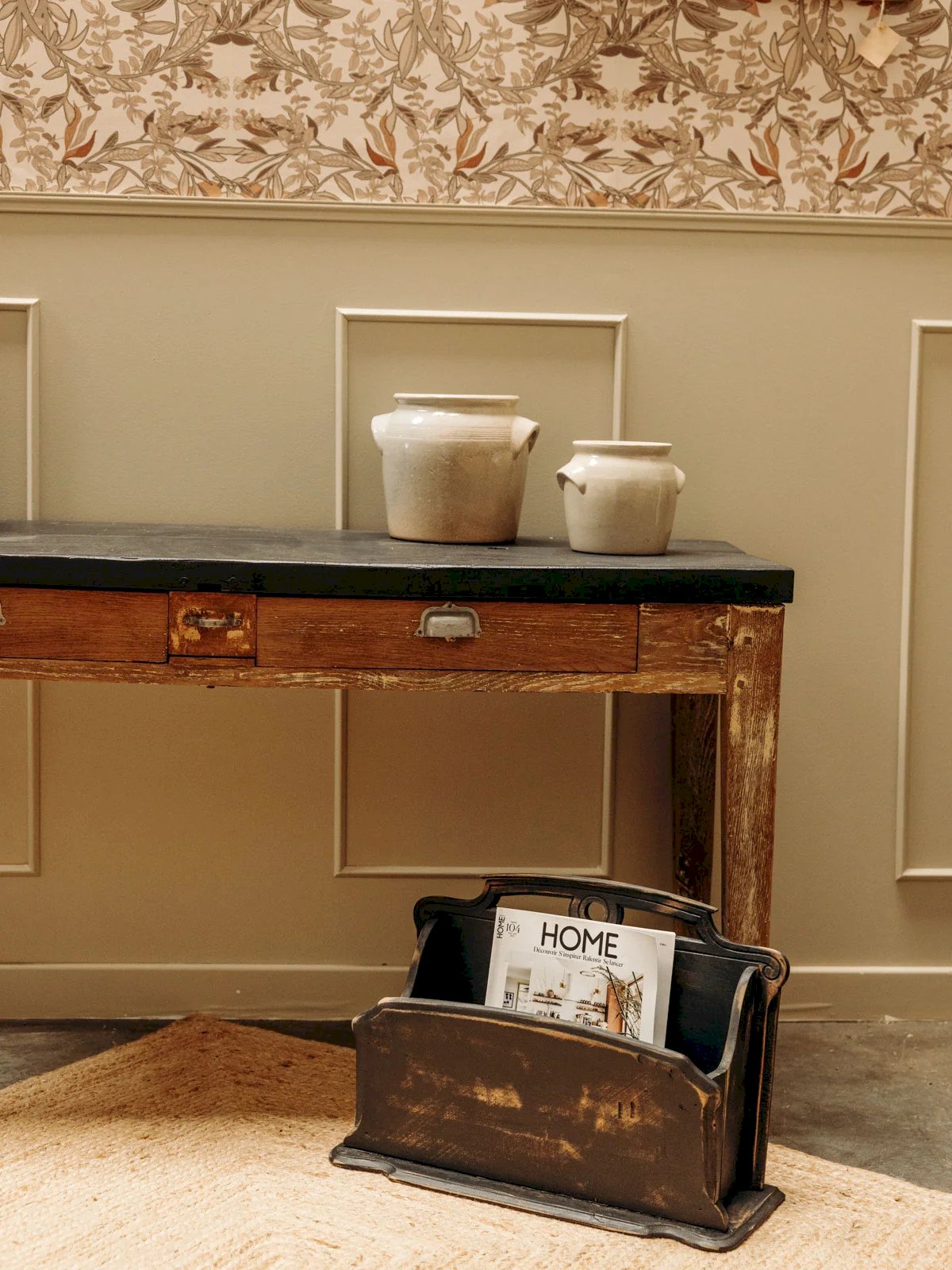
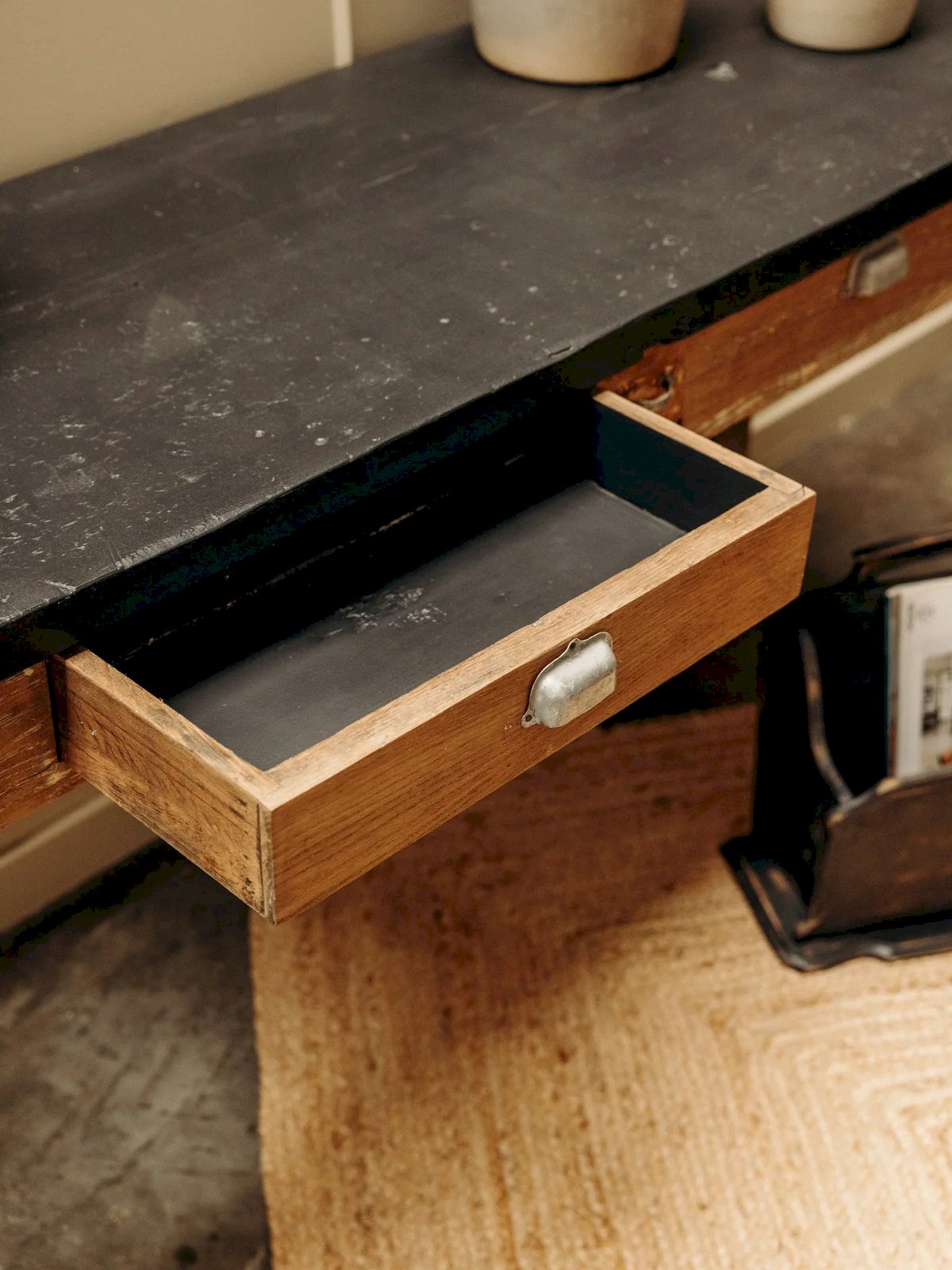
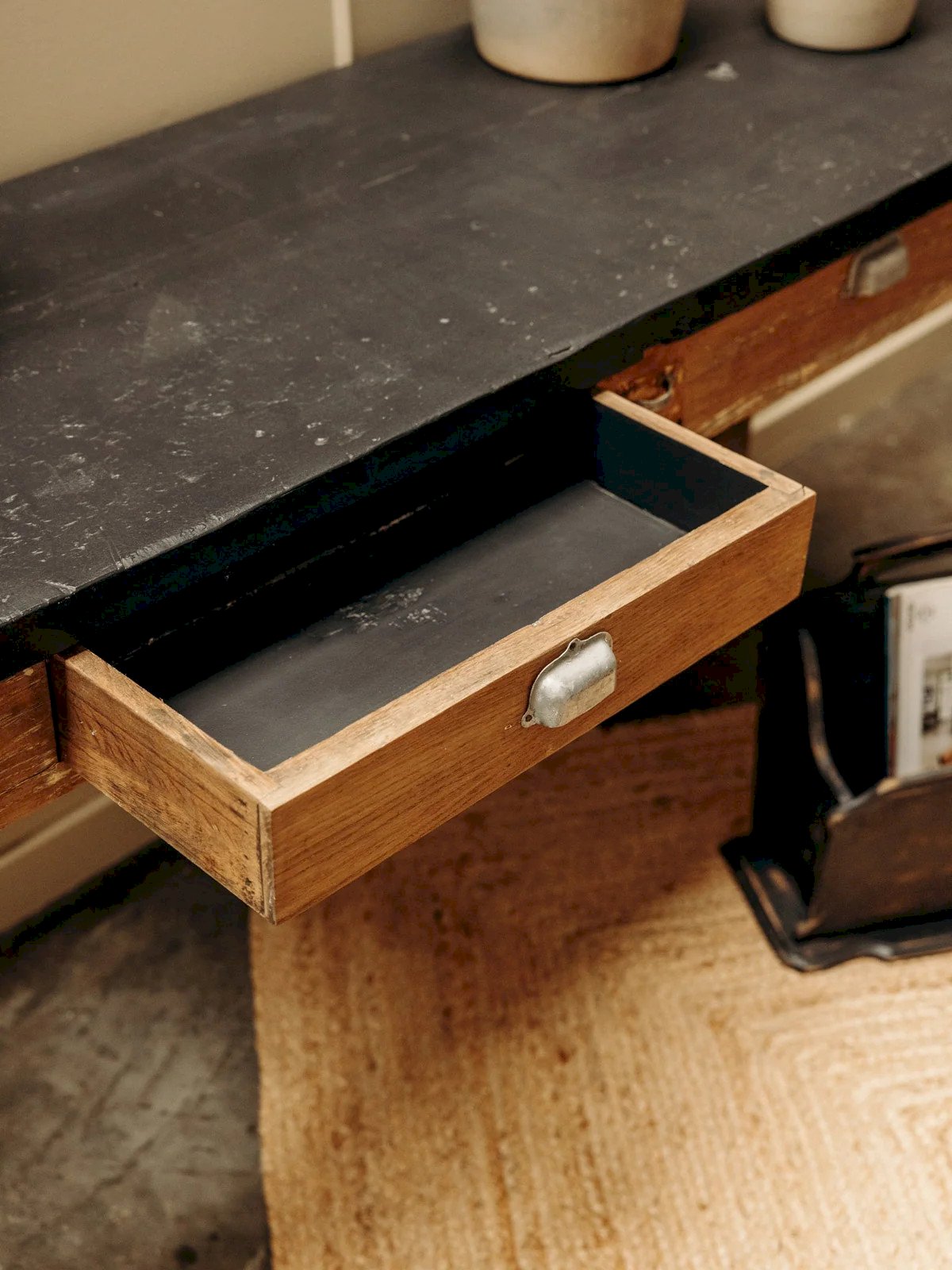
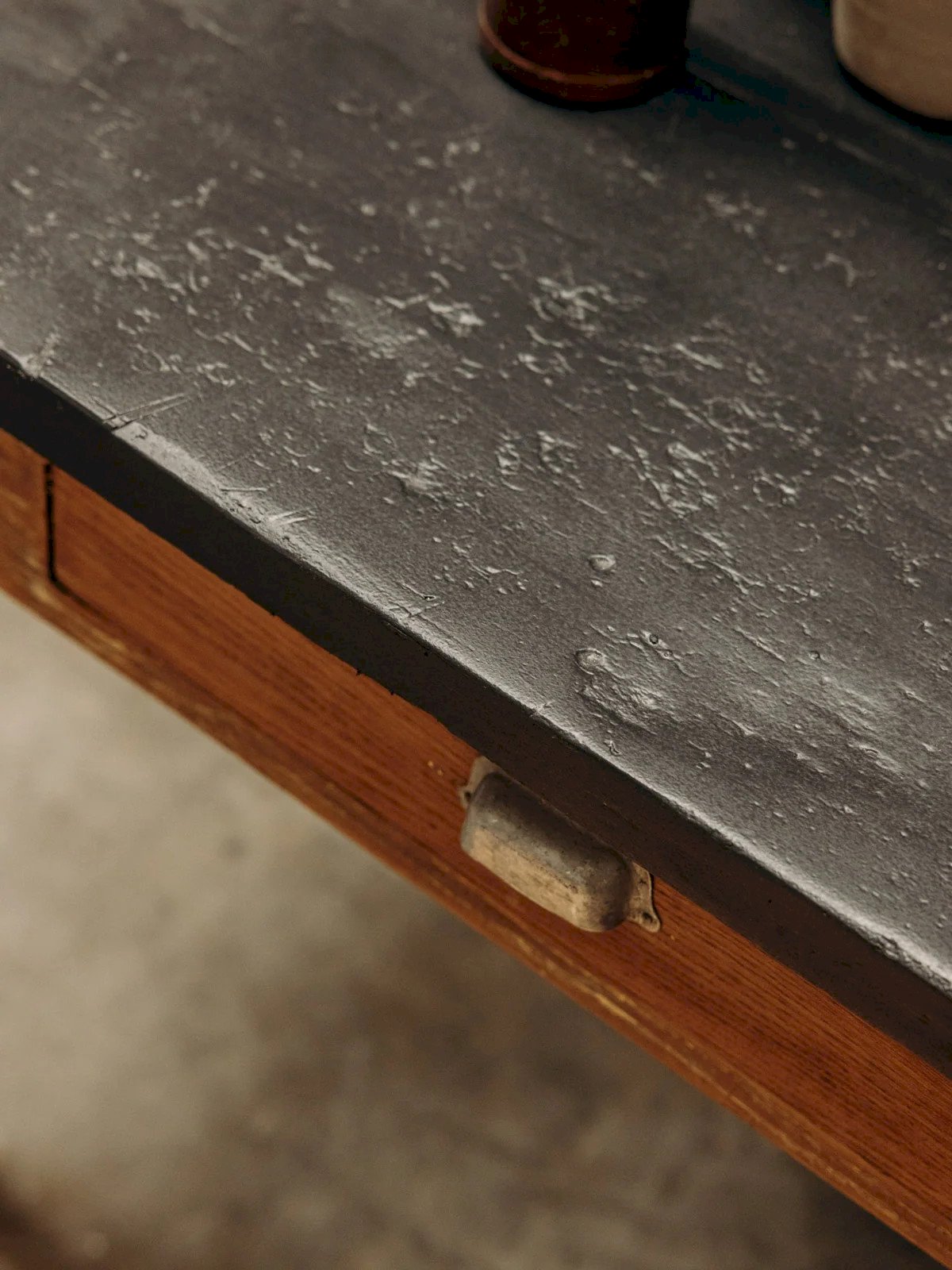
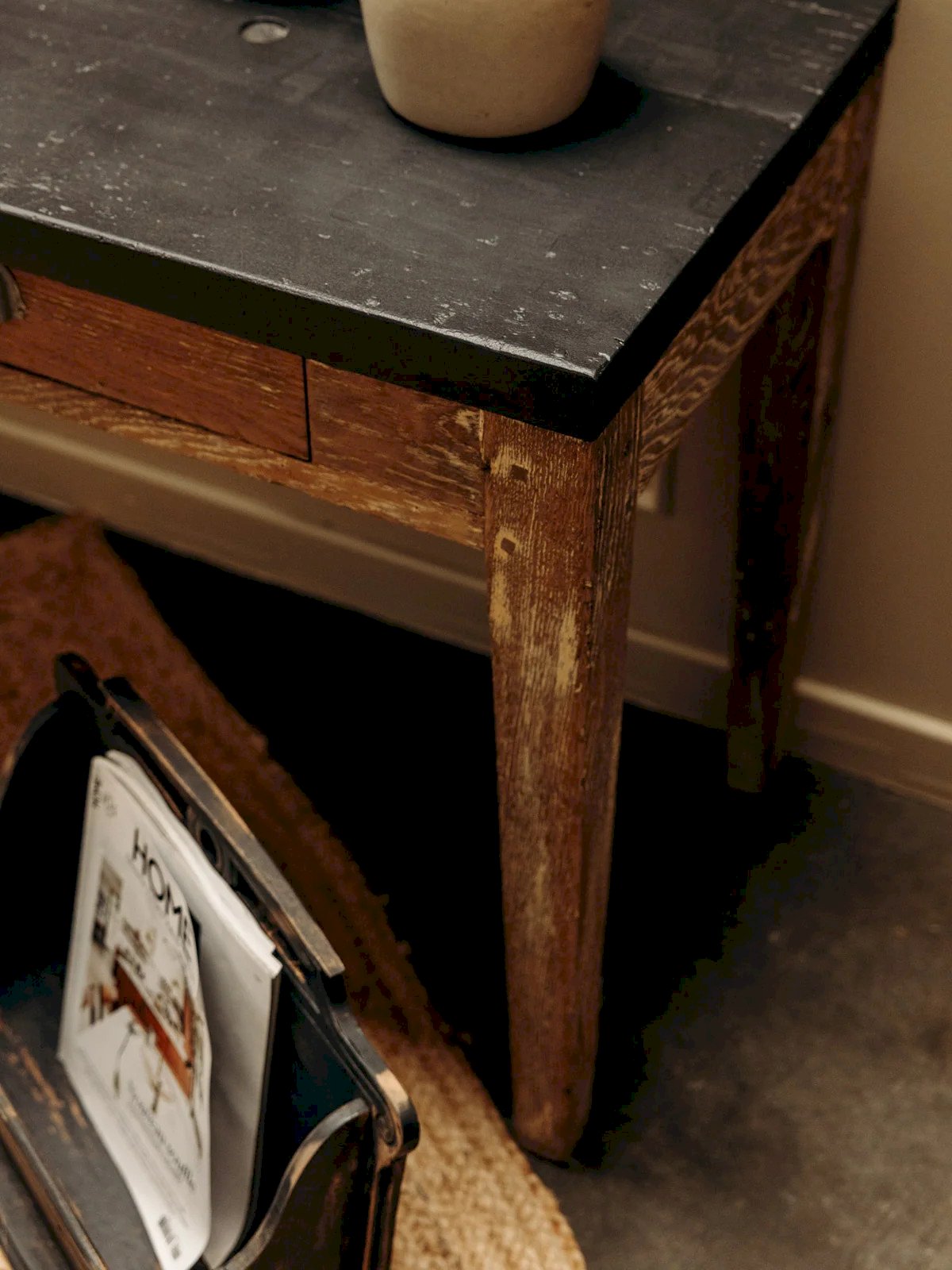
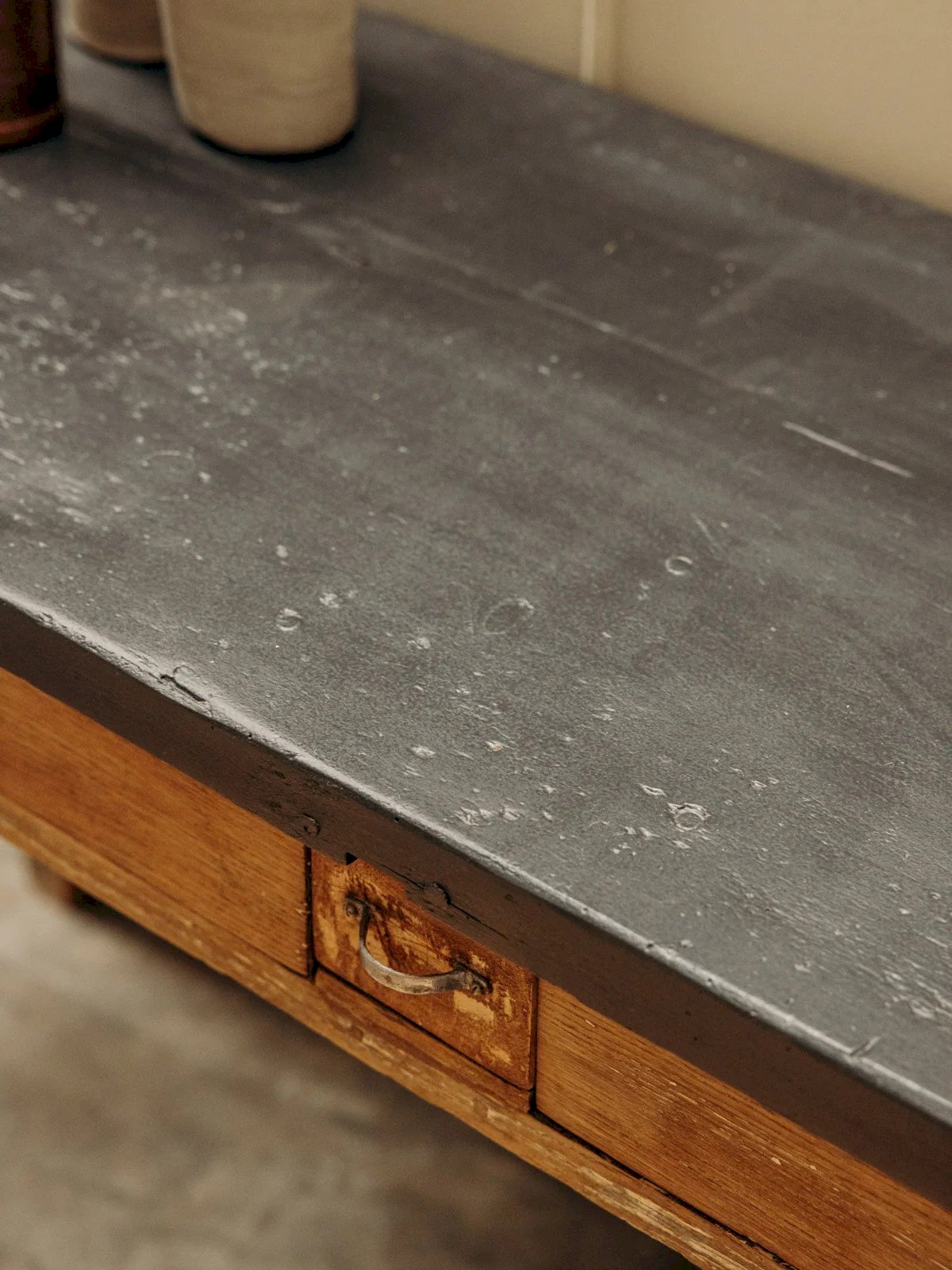
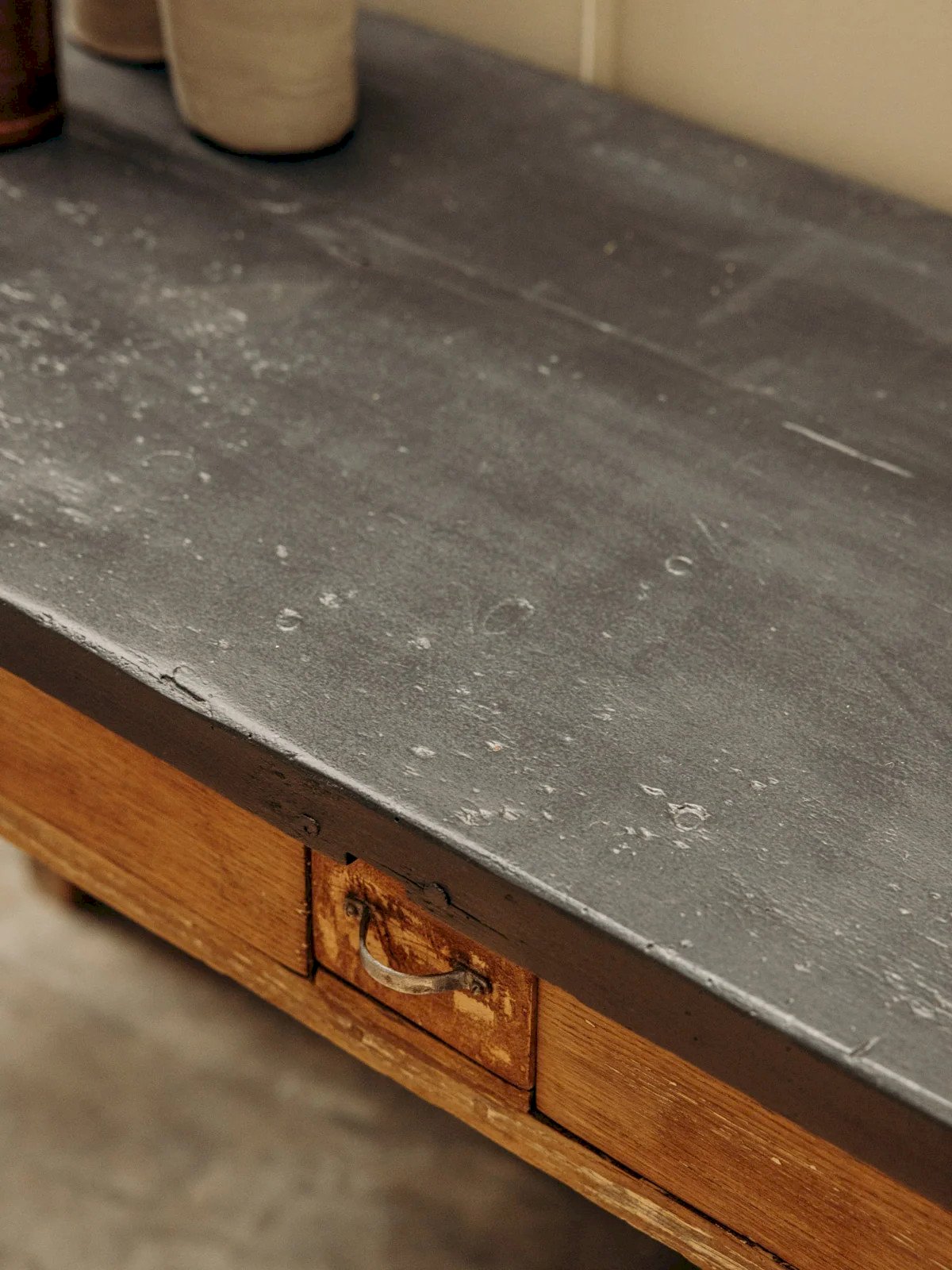
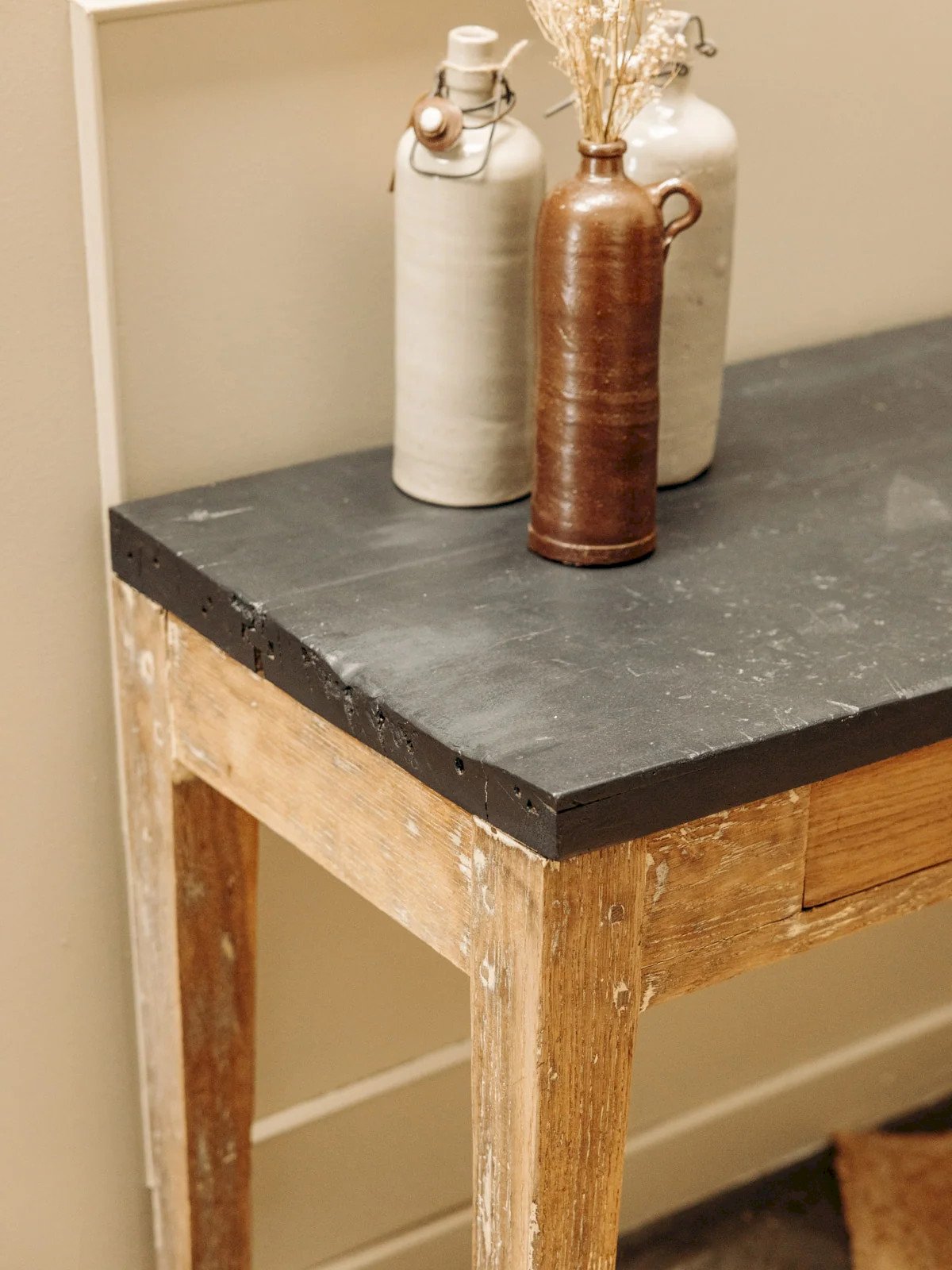
This black painted wooden console dining table, sourced from the flea market, embodies a sober and refined countryside spirit. Its black tabletop and three drawers make it a second-hand piece that is both elegant and useful, ideal for a dining room or kitchen. Its height allows it to be used as a console, a TV stand, or a central work surface, accommodating two to four guests. The soft black highlights the patinas of the legs and easily complements an antique mirror, brass candlesticks, or a few bouquets placed on the tabletop. As a second-hand object, it carries the memory of its past: one leg has been nibbled. Width: 136.5 cm Depth: 47.5 cm Height: 70 cm Drawer height: 6 cm A small history of the farmhouse table As a centerpiece of rural life in the 19th century, the farmhouse table is designed to last for generations and host large peasant gatherings. It is recognized by its thick solid wood top, often marked by the passage of time, and its sturdy legs, connected or not by a "foot bar" or stretcher. Referred to as a "refectory table" or "kitchen table," it was designed to support daily tasks as well as family banquets.
Réf :
#414424
Brand / From : Debongout
Related Products
Comments
Romy, the rustic dining table with drawers No. 1600
749€
75002 Paris
Ce site contient des liens d’affiliation pour lesquels je peux recevoir une compensation.
Description
This black painted wooden console dining table, sourced from the flea market, embodies a sober and refined countryside spirit. Its black tabletop and three drawers make it a second-hand piece that is both elegant and useful, ideal for a dining room or kitchen. Its height allows it to be used as a console, a TV stand, or a central work surface, accommodating two to four guests. The soft black highlights the patinas of the legs and easily complements an antique mirror, brass candlesticks, or a few bouquets placed on the tabletop. As a second-hand object, it carries the memory of its past: one leg has been nibbled. Width: 136.5 cm Depth: 47.5 cm Height: 70 cm Drawer height: 6 cm A small history of the farmhouse table As a centerpiece of rural life in the 19th century, the farmhouse table is designed to last for generations and host large peasant gatherings. It is recognized by its thick solid wood top, often marked by the passage of time, and its sturdy legs, connected or not by a "foot bar" or stretcher. Referred to as a "refectory table" or "kitchen table," it was designed to support daily tasks as well as family banquets.
Réf :
#414424
Brand / From : Debongout