 English
 Français


Description
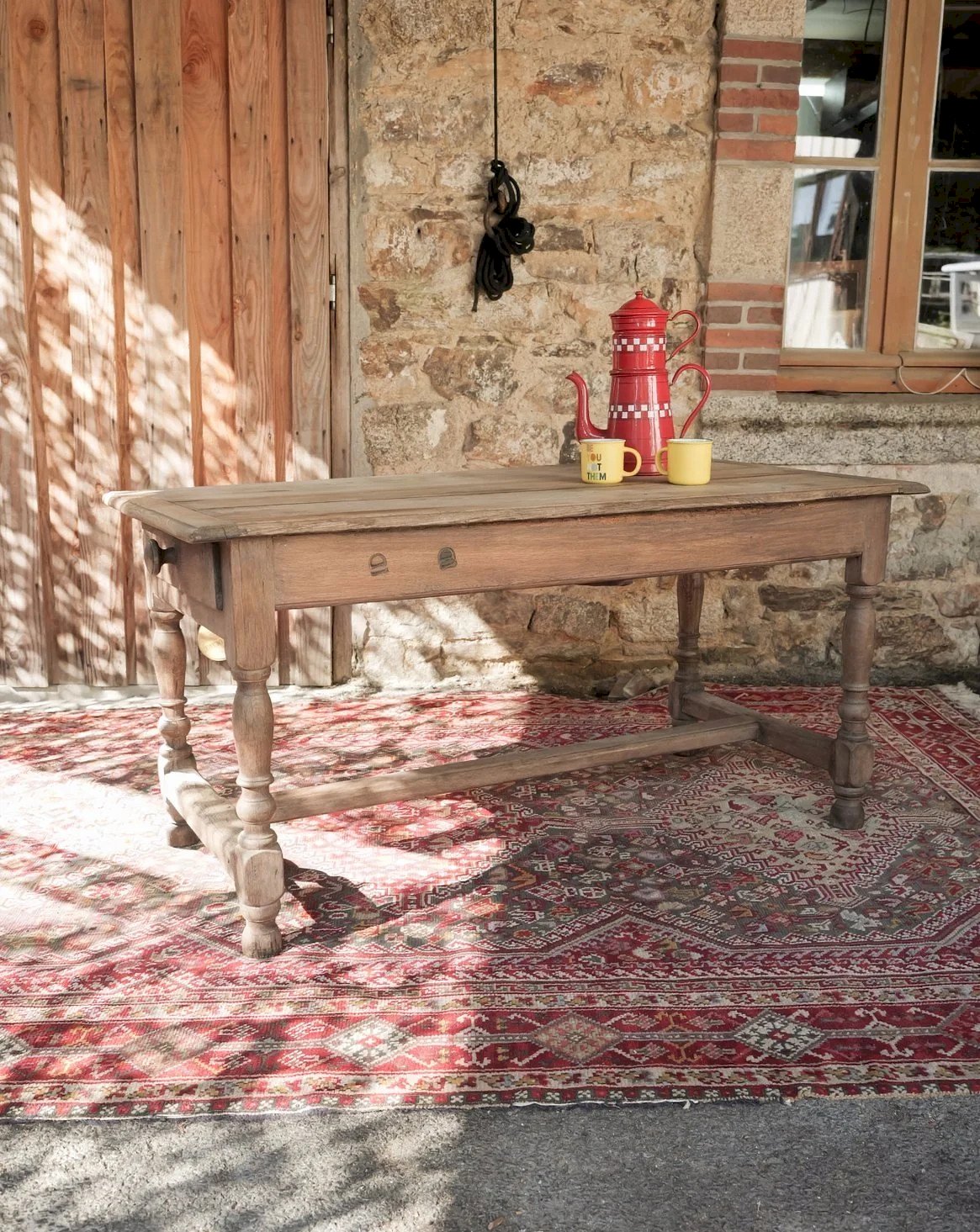
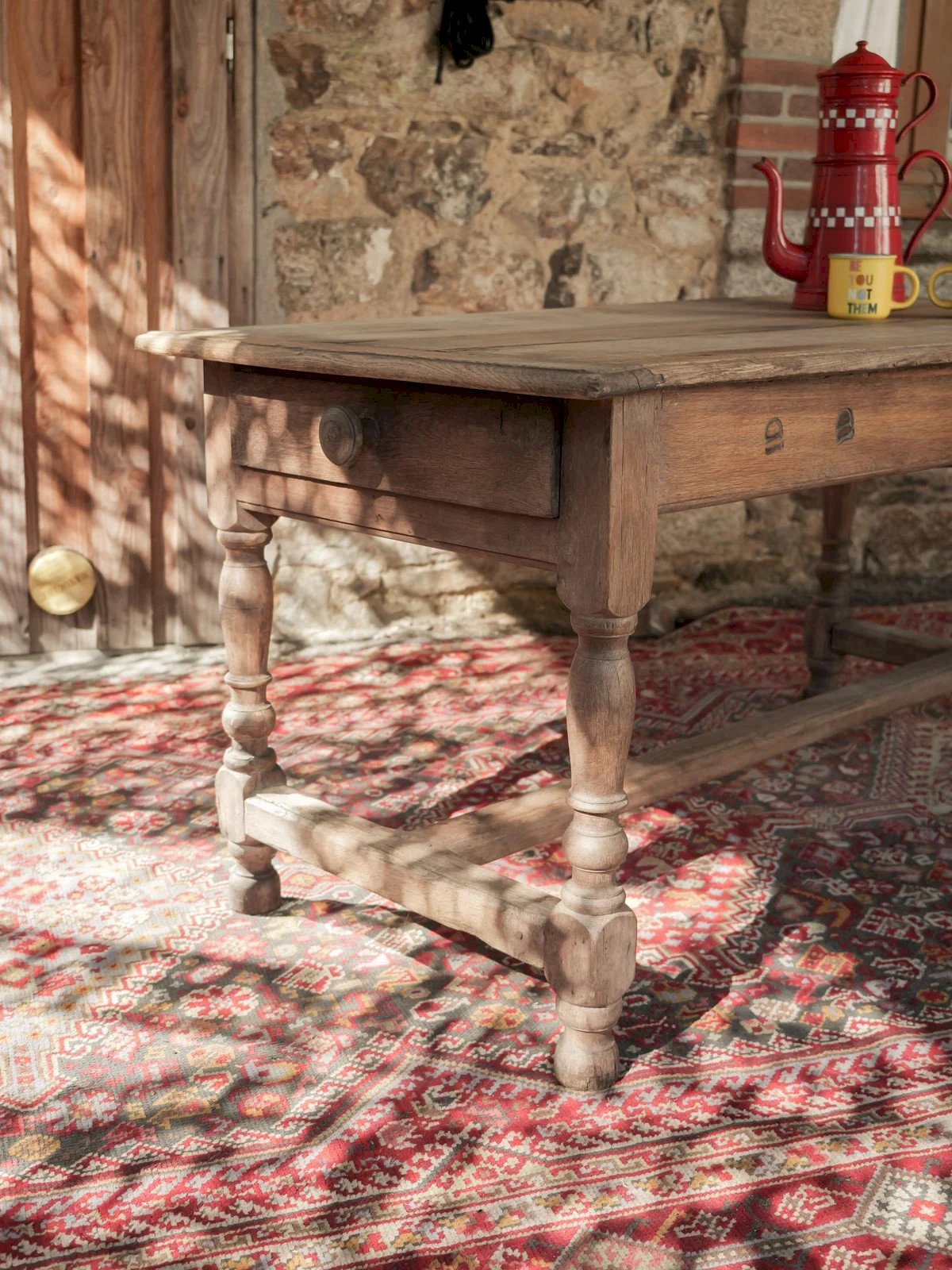
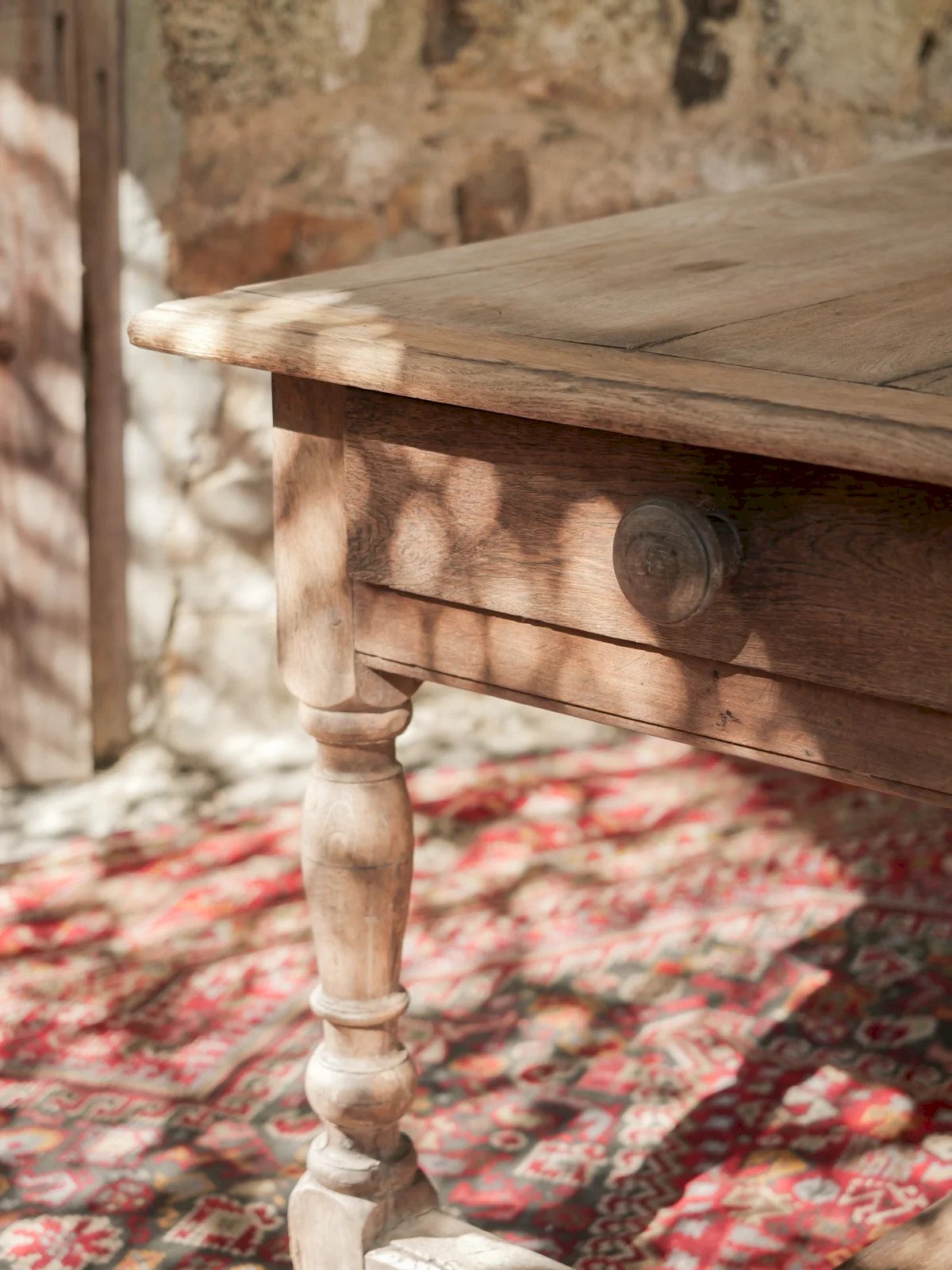
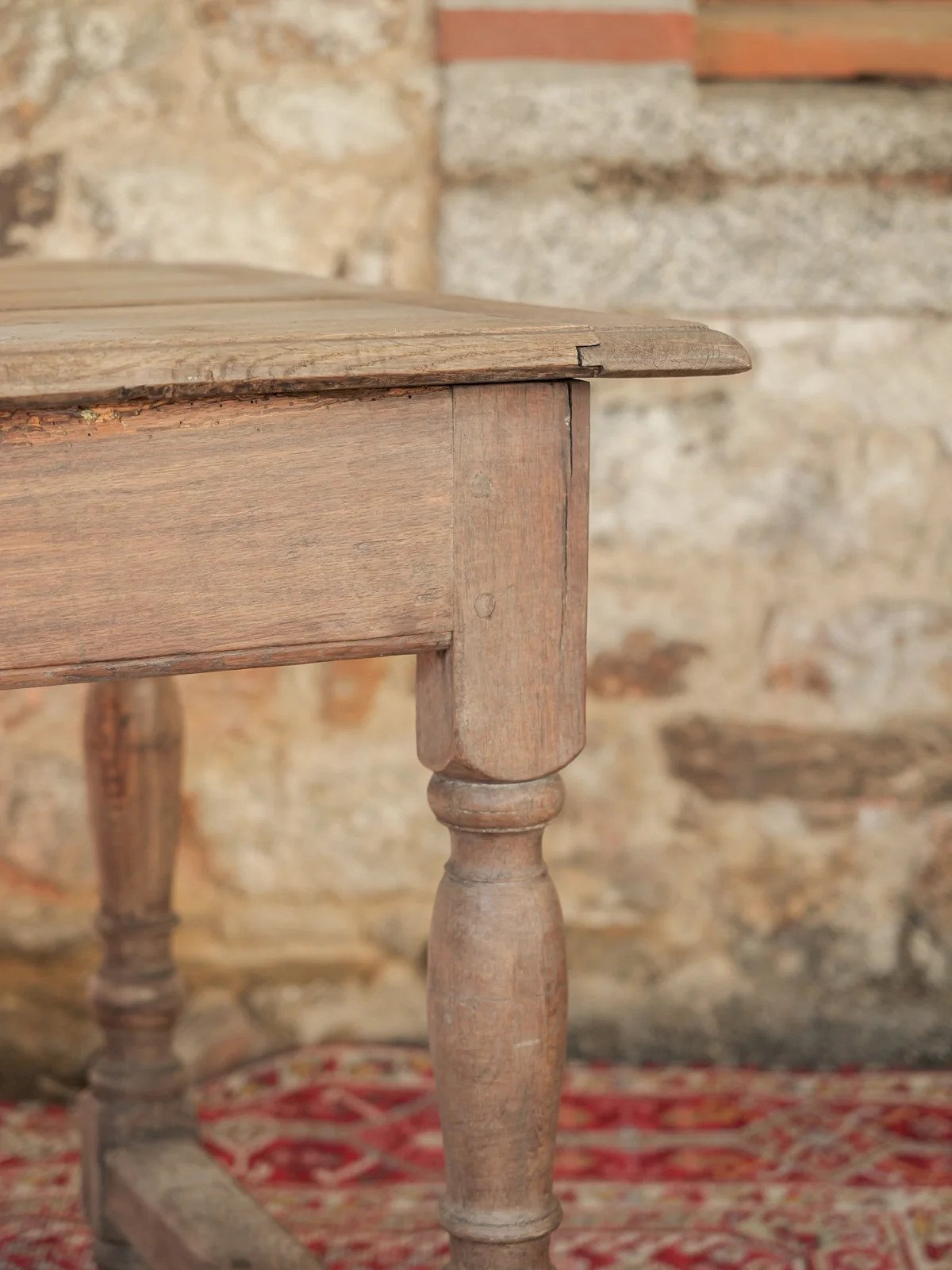
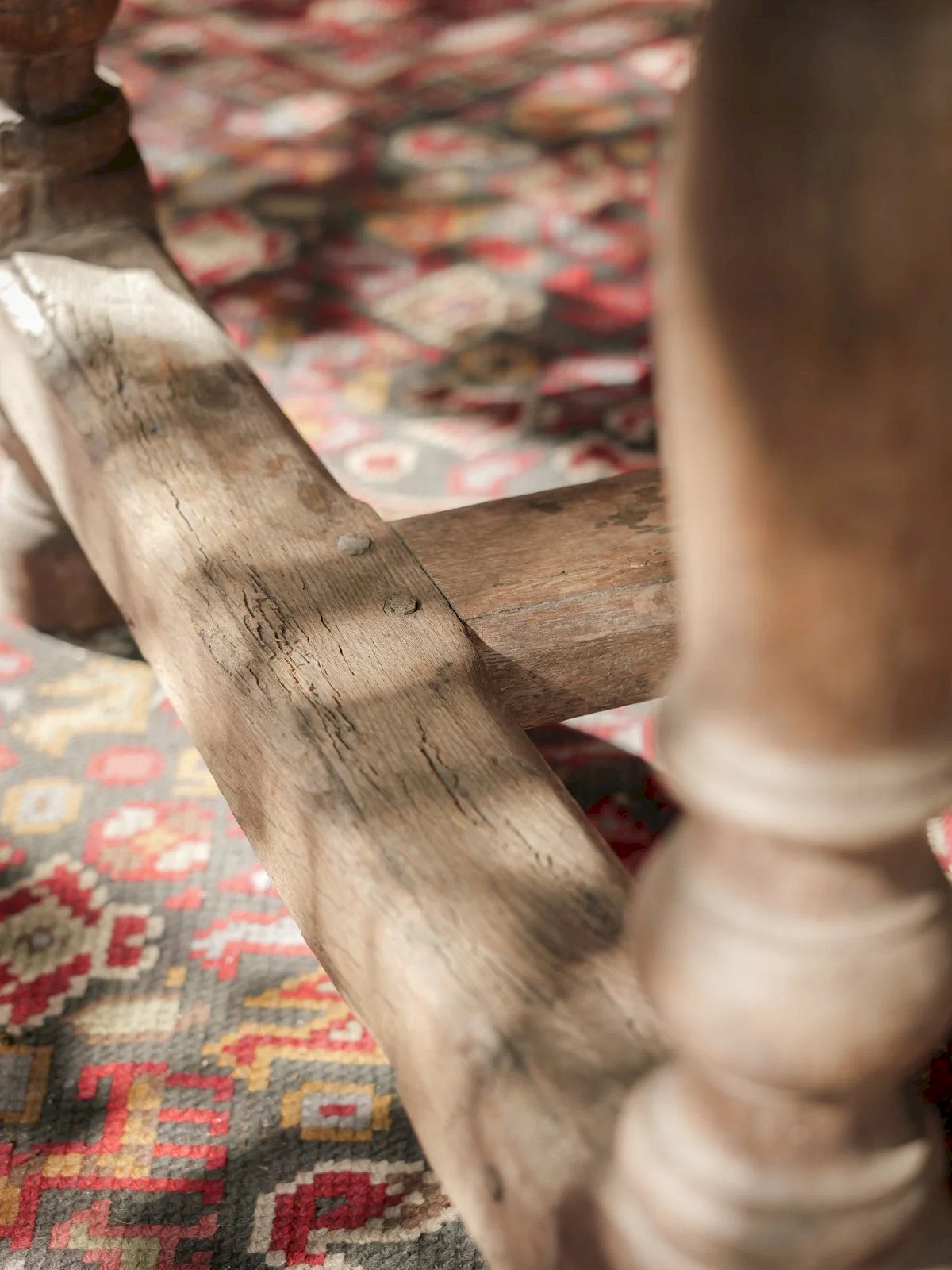
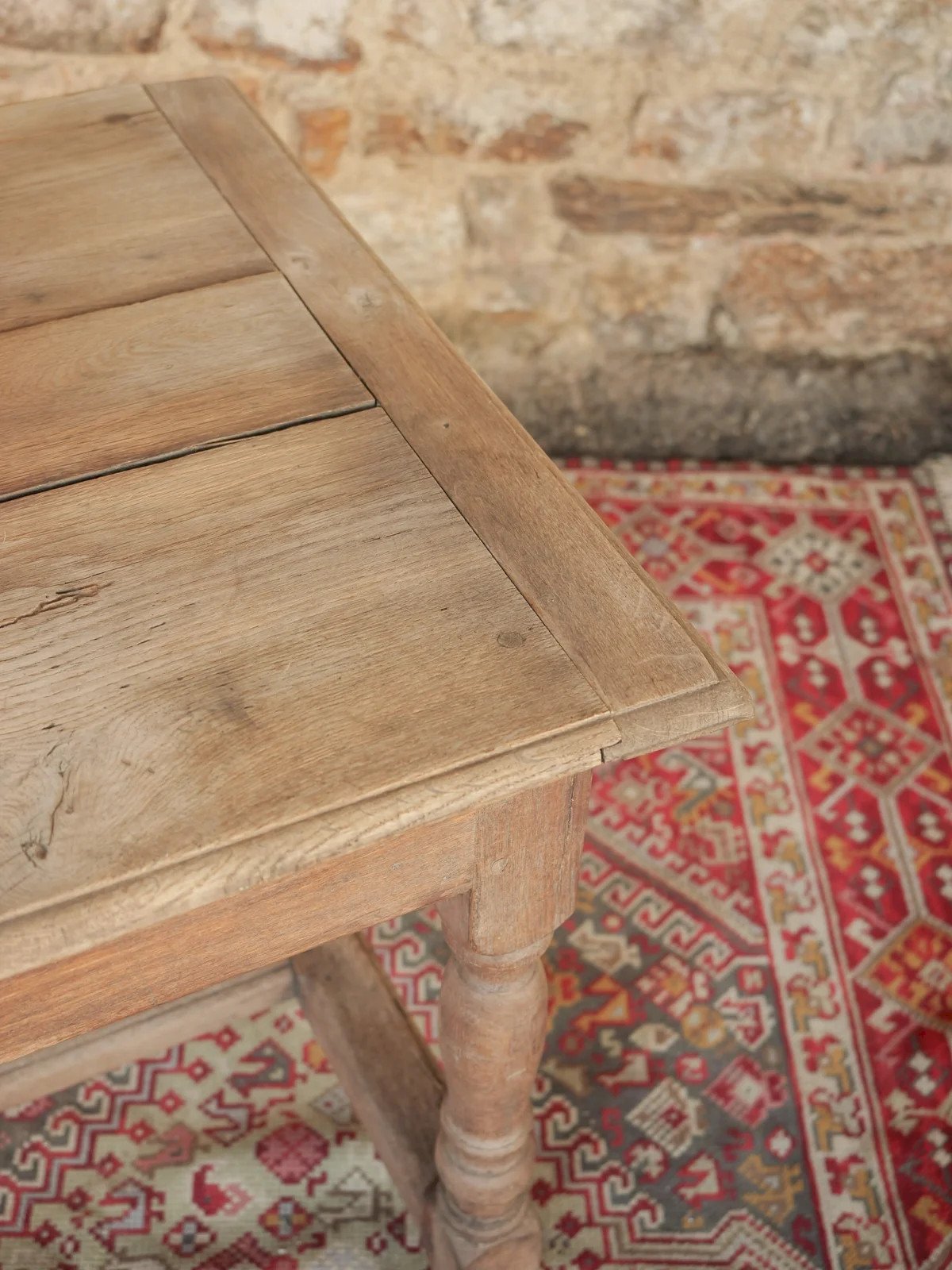
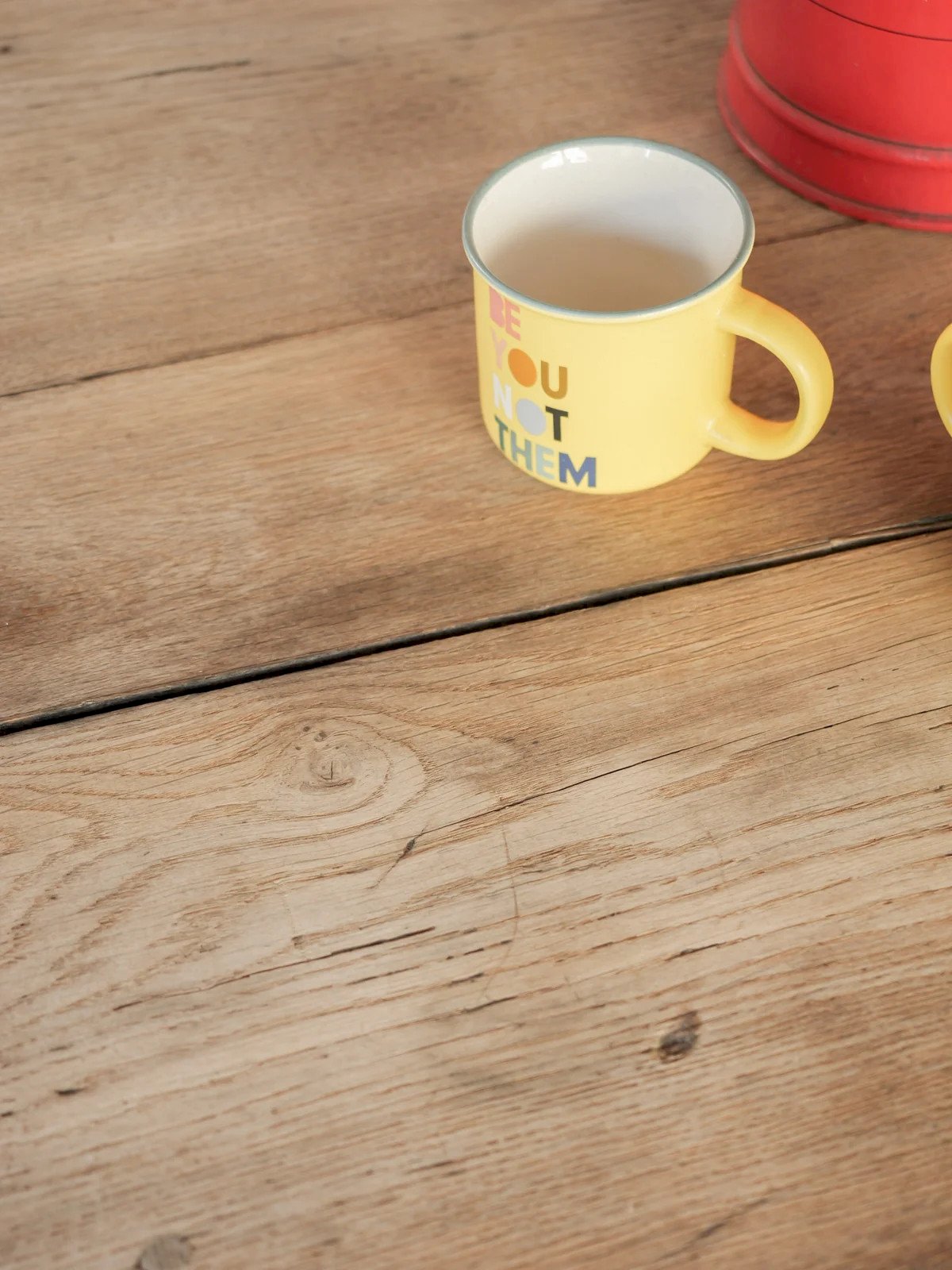
This lightly-colored wooden dining table, found in a thrift store, embodies rustic elegance, with proportions designed to accommodate both everyday meals and large gatherings. Its top easily seats up to six guests. The very deep drawer offers valuable storage for tablecloths, napkins, or cutlery, and its generous depth enhances its functional use. The light wood adds a bright touch, easily pairing with vintage tableware, washed linen, or rattan seating. Set with mismatched glasses and a bouquet of fresh flowers, it creates a warm scene in the kitchen or dining room. Length: 138 cm Width: 70 cm Height: 70 cm Drawer height: 12 cm A brief history of the farmhouse table The centerpiece of rural life in the 19th century, the farmhouse table is crafted to last for generations and welcome large peasant gatherings. It is recognized by its thick solid wood top, often marked by the passage of time, and its sturdy legs connected or not by a "foot rail" or stretcher. Referred to as a "refectory table" or "kitchen table," it was designed to withstand daily work as well as family banquets.
Réf :
#413851
Brand / From : Debongout
Related Products


Comments
Romy, the dining table with large drawer No. 1572
549€
75002 Paris
Ce site contient des liens d’affiliation pour lesquels je peux recevoir une compensation.
Description
This lightly-colored wooden dining table, found in a thrift store, embodies rustic elegance, with proportions designed to accommodate both everyday meals and large gatherings. Its top easily seats up to six guests. The very deep drawer offers valuable storage for tablecloths, napkins, or cutlery, and its generous depth enhances its functional use. The light wood adds a bright touch, easily pairing with vintage tableware, washed linen, or rattan seating. Set with mismatched glasses and a bouquet of fresh flowers, it creates a warm scene in the kitchen or dining room. Length: 138 cm Width: 70 cm Height: 70 cm Drawer height: 12 cm A brief history of the farmhouse table The centerpiece of rural life in the 19th century, the farmhouse table is crafted to last for generations and welcome large peasant gatherings. It is recognized by its thick solid wood top, often marked by the passage of time, and its sturdy legs connected or not by a "foot rail" or stretcher. Referred to as a "refectory table" or "kitchen table," it was designed to withstand daily work as well as family banquets.
Réf :
#413851
Brand / From : Debongout