 English
 Français


Description
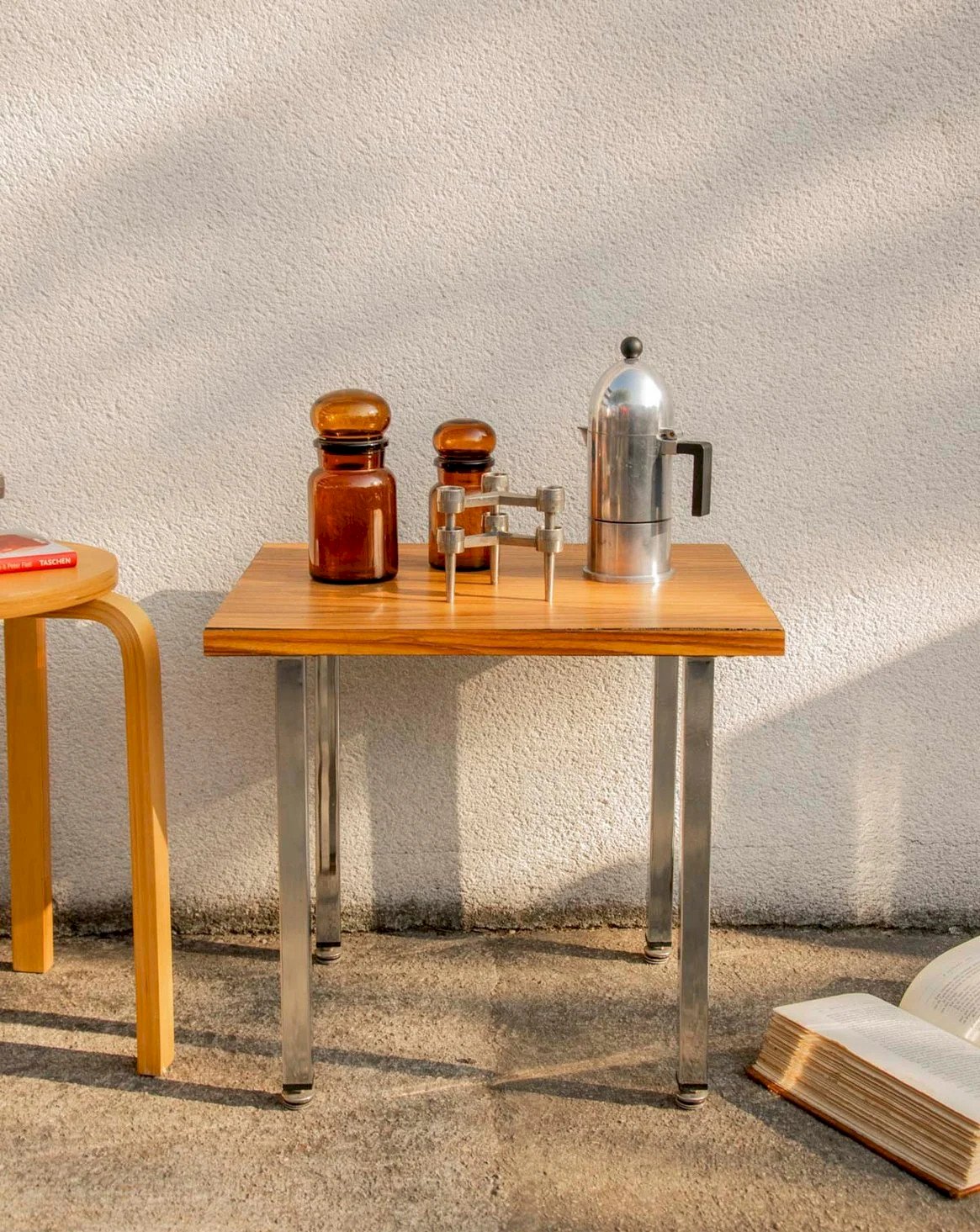
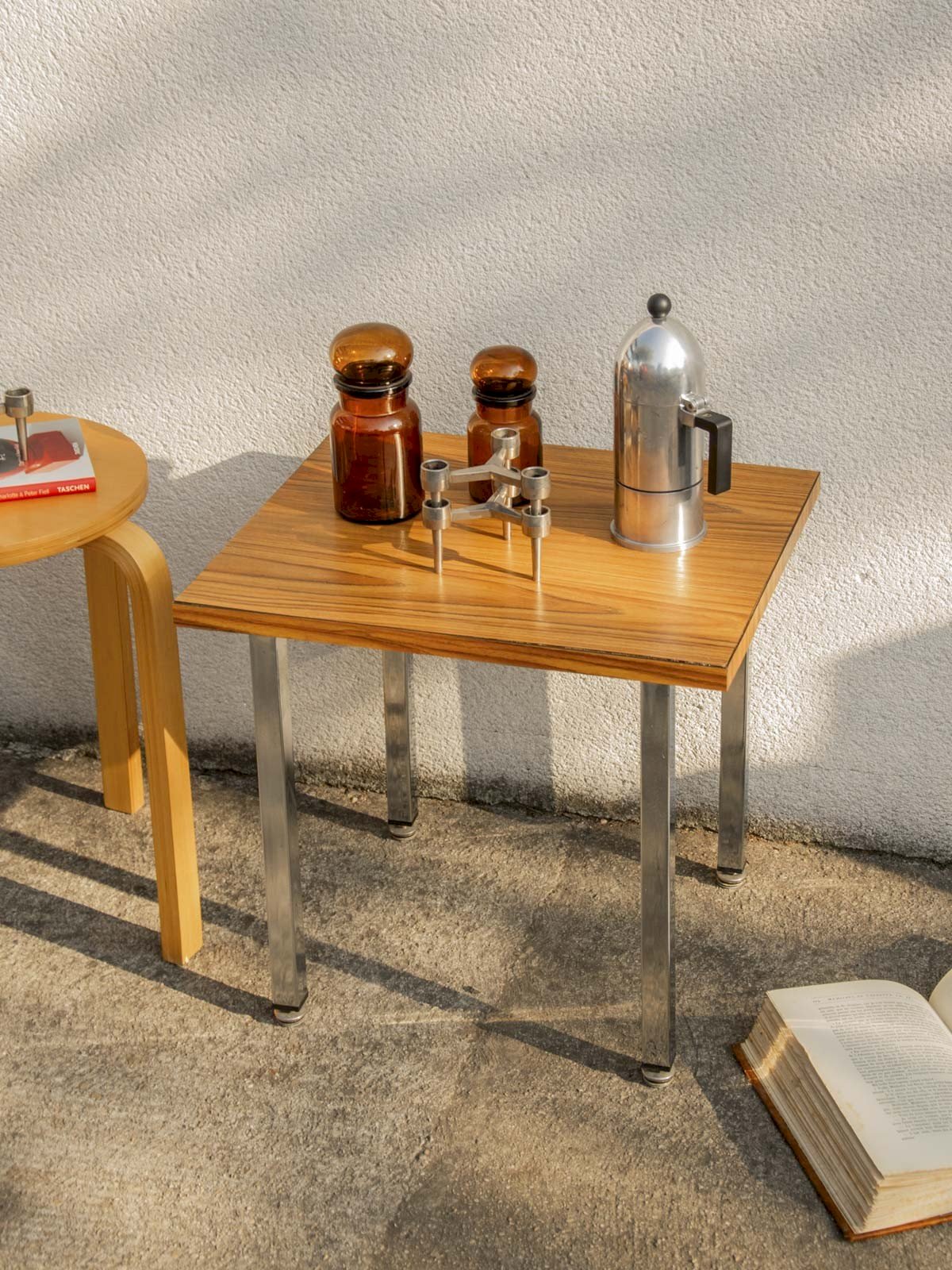
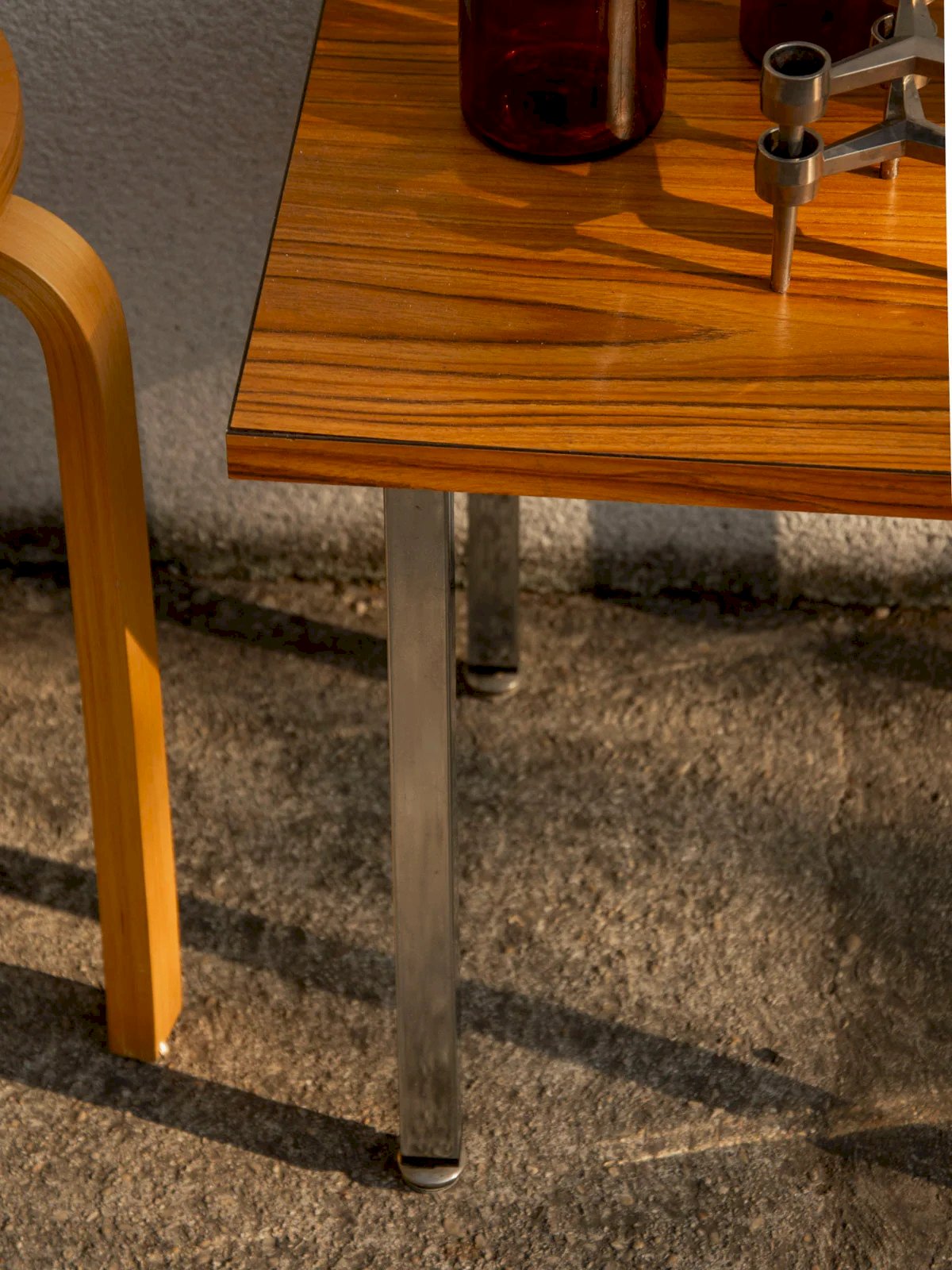
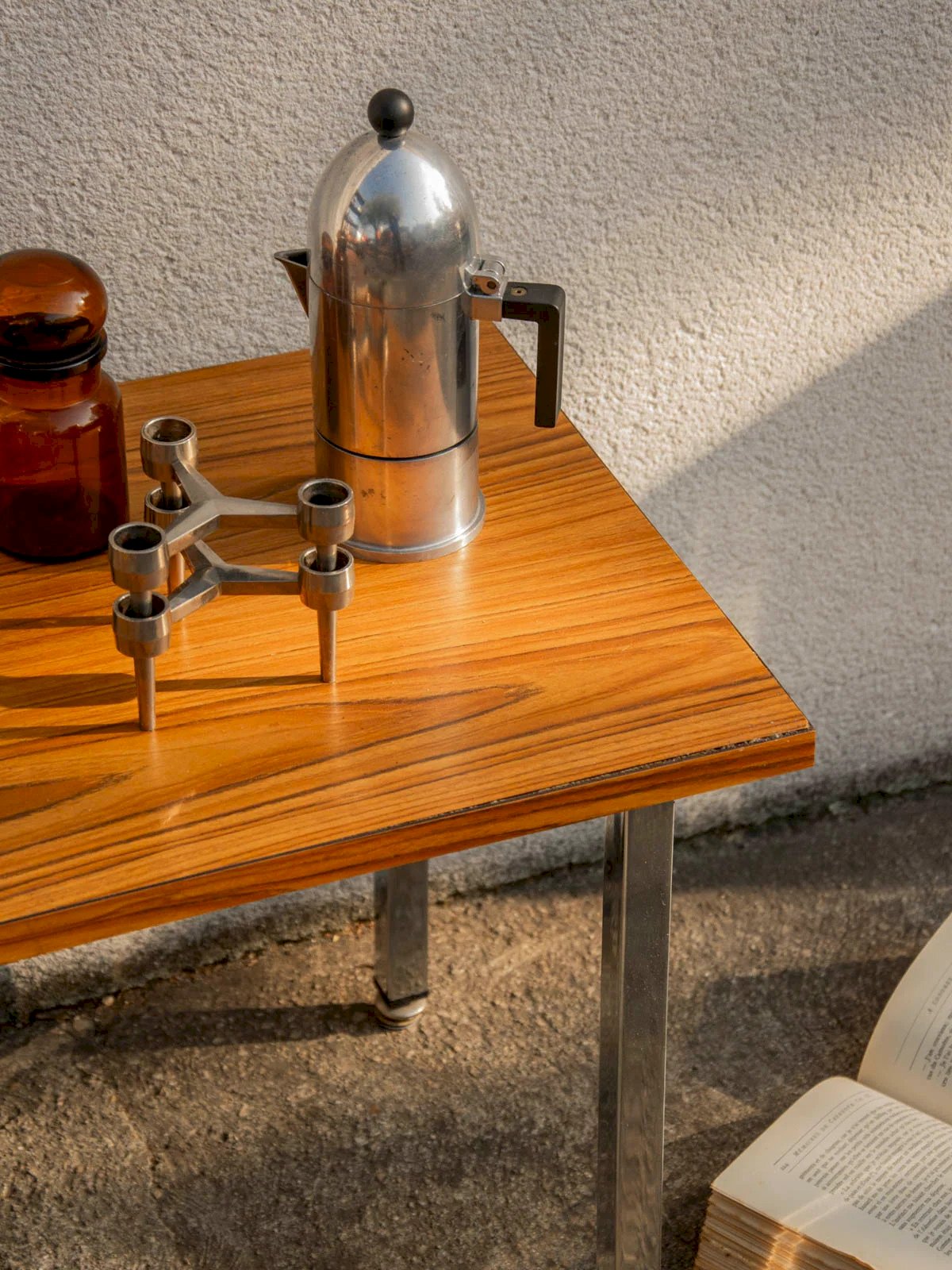
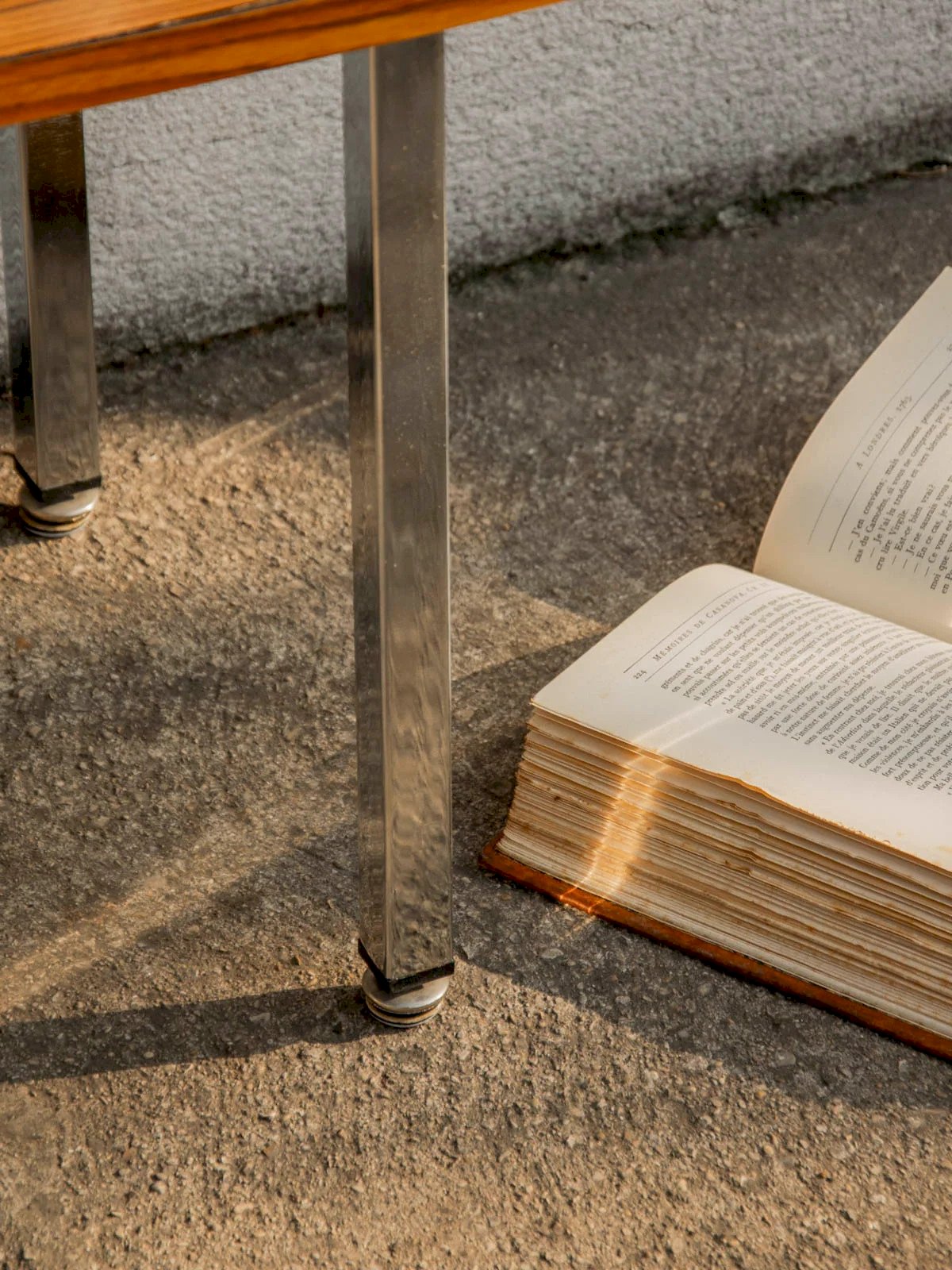
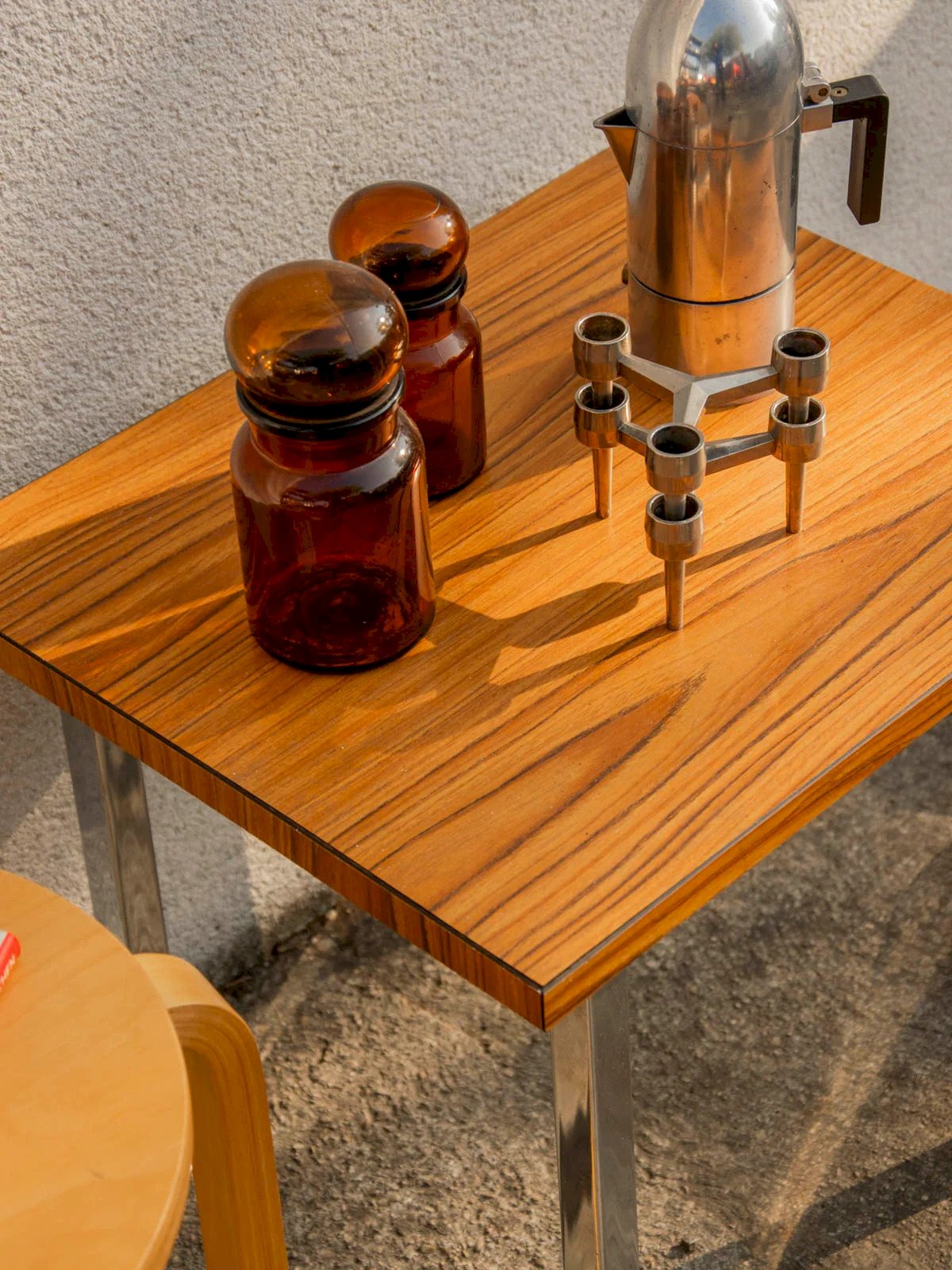
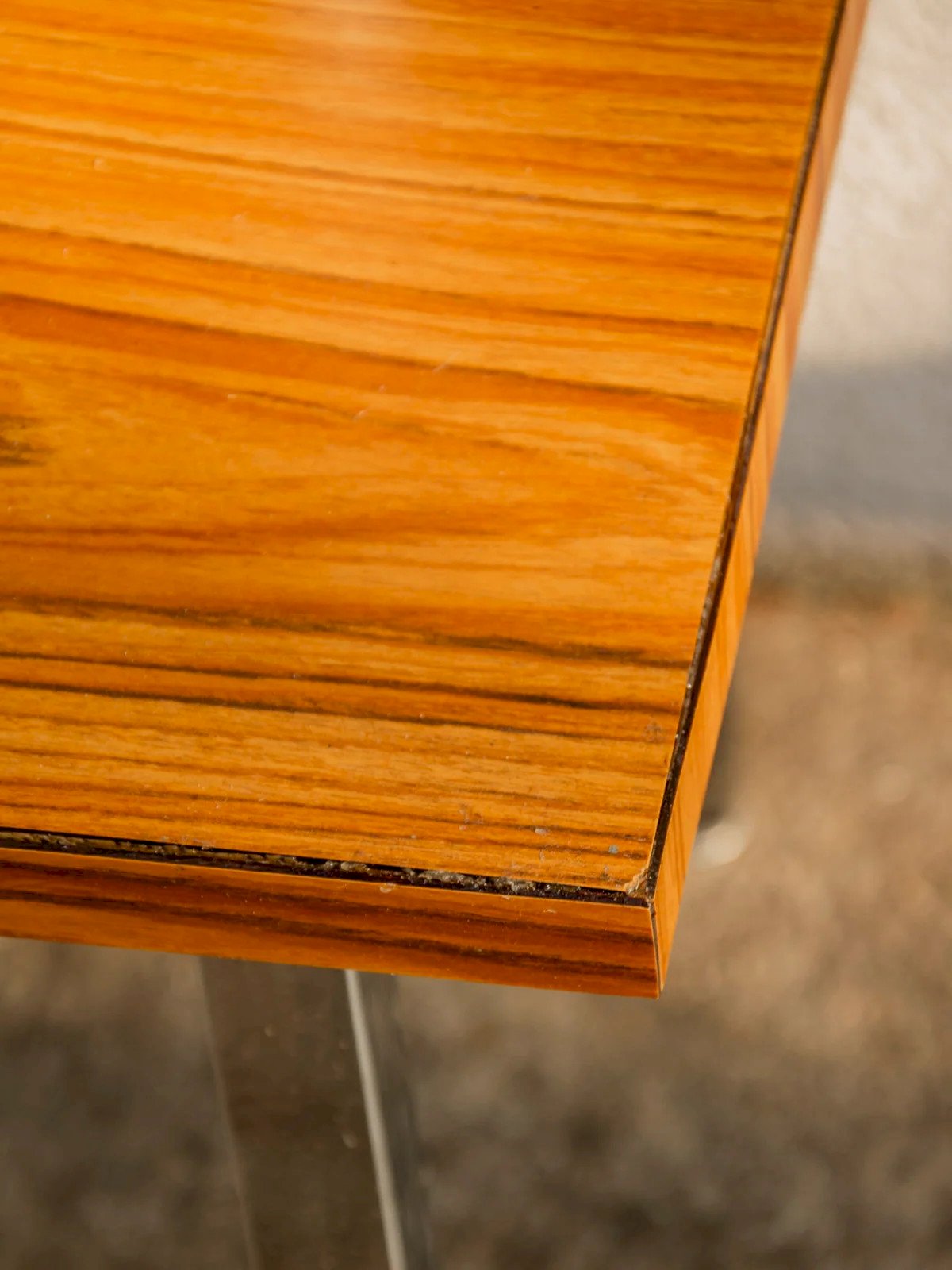
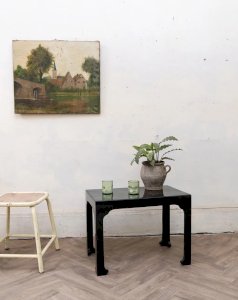
Sleek and graphic, this vintage formica side table in a light wood tone adds a contemporary touch to a well-appointed interior. Its top rests on a chrome tubular base, a sharp combination that gives it an easy-to-coordinate look with a fabric sofa or a leather armchair. Perfect as an end table, it also serves as a small coffee table for placing a glass, some magazines, or a remote control. In a living room, its size allows it to accommodate everyday items effortlessly while maintaining a discreet presence. As a second-hand piece, it bears the marks of its past: light signs of use consistent with its age. Width: 47 cm Depth: 40 cm Height: 43 cm A brief history of the side table Born in the 17th century under the name "guéridon," the side table owes its origin to Moorish slaves [called guéridons] depicted on the sculpted feet of the earliest models brought back from Italy. This nomadic piece of furniture revolutionized social life at court by allowing the rigidity of large buffets to be broken, creating conversation islands anywhere in the room. Its lightweight and compact structure was designed to be moved as needed: to place a candlestick, a cup of tea, or a bedside book.
Réf :
#414795
Brand / From : Debongout
Related Products


Comments
Hanna, the 1970s formica side table No. 1722
169€
75002 Paris
Ce site contient des liens d’affiliation pour lesquels je peux recevoir une compensation.
Description
Sleek and graphic, this vintage formica side table in a light wood tone adds a contemporary touch to a well-appointed interior. Its top rests on a chrome tubular base, a sharp combination that gives it an easy-to-coordinate look with a fabric sofa or a leather armchair. Perfect as an end table, it also serves as a small coffee table for placing a glass, some magazines, or a remote control. In a living room, its size allows it to accommodate everyday items effortlessly while maintaining a discreet presence. As a second-hand piece, it bears the marks of its past: light signs of use consistent with its age. Width: 47 cm Depth: 40 cm Height: 43 cm A brief history of the side table Born in the 17th century under the name "guéridon," the side table owes its origin to Moorish slaves [called guéridons] depicted on the sculpted feet of the earliest models brought back from Italy. This nomadic piece of furniture revolutionized social life at court by allowing the rigidity of large buffets to be broken, creating conversation islands anywhere in the room. Its lightweight and compact structure was designed to be moved as needed: to place a candlestick, a cup of tea, or a bedside book.
Réf :
#414795
Brand / From : Debongout