 English
 Français


Description
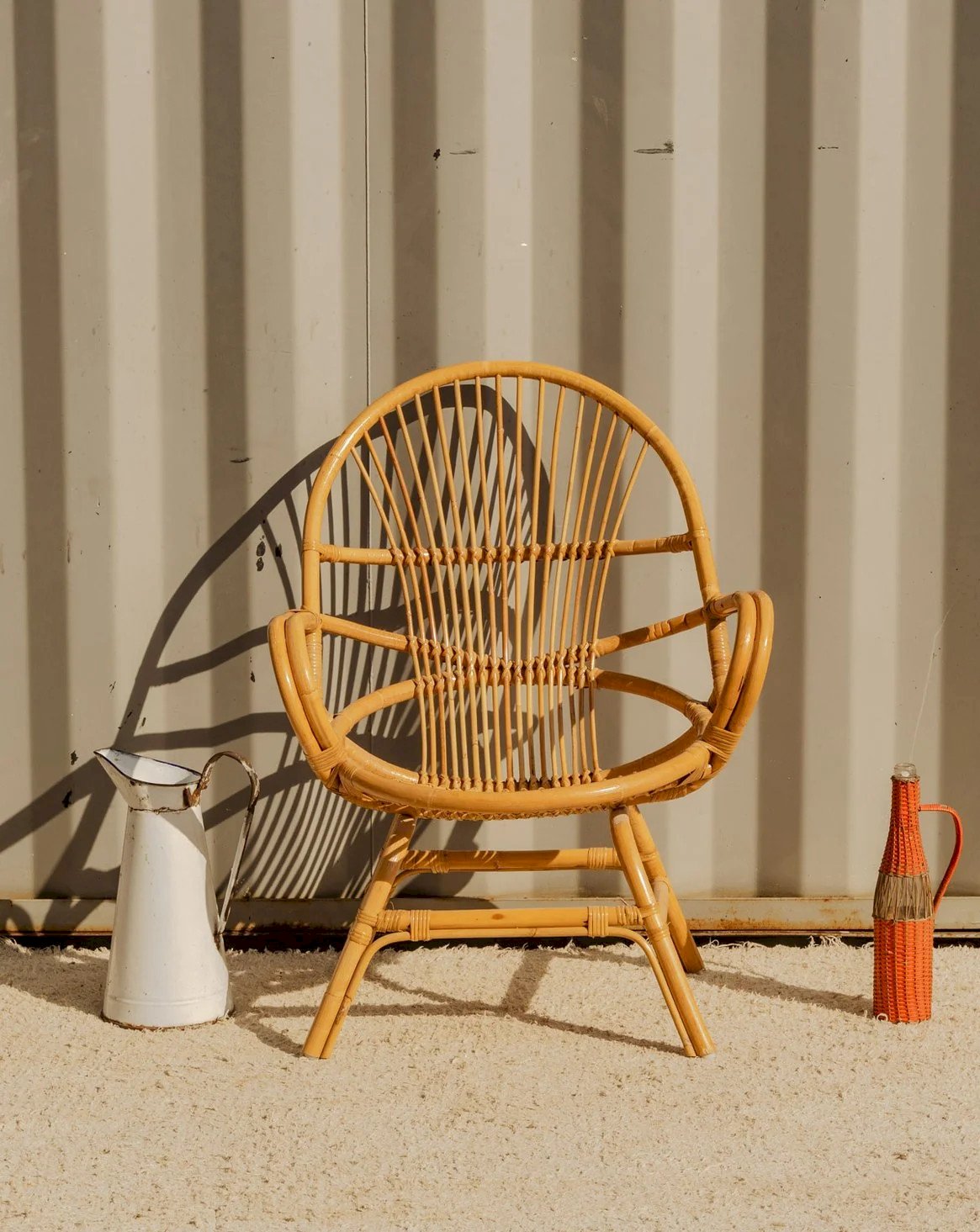
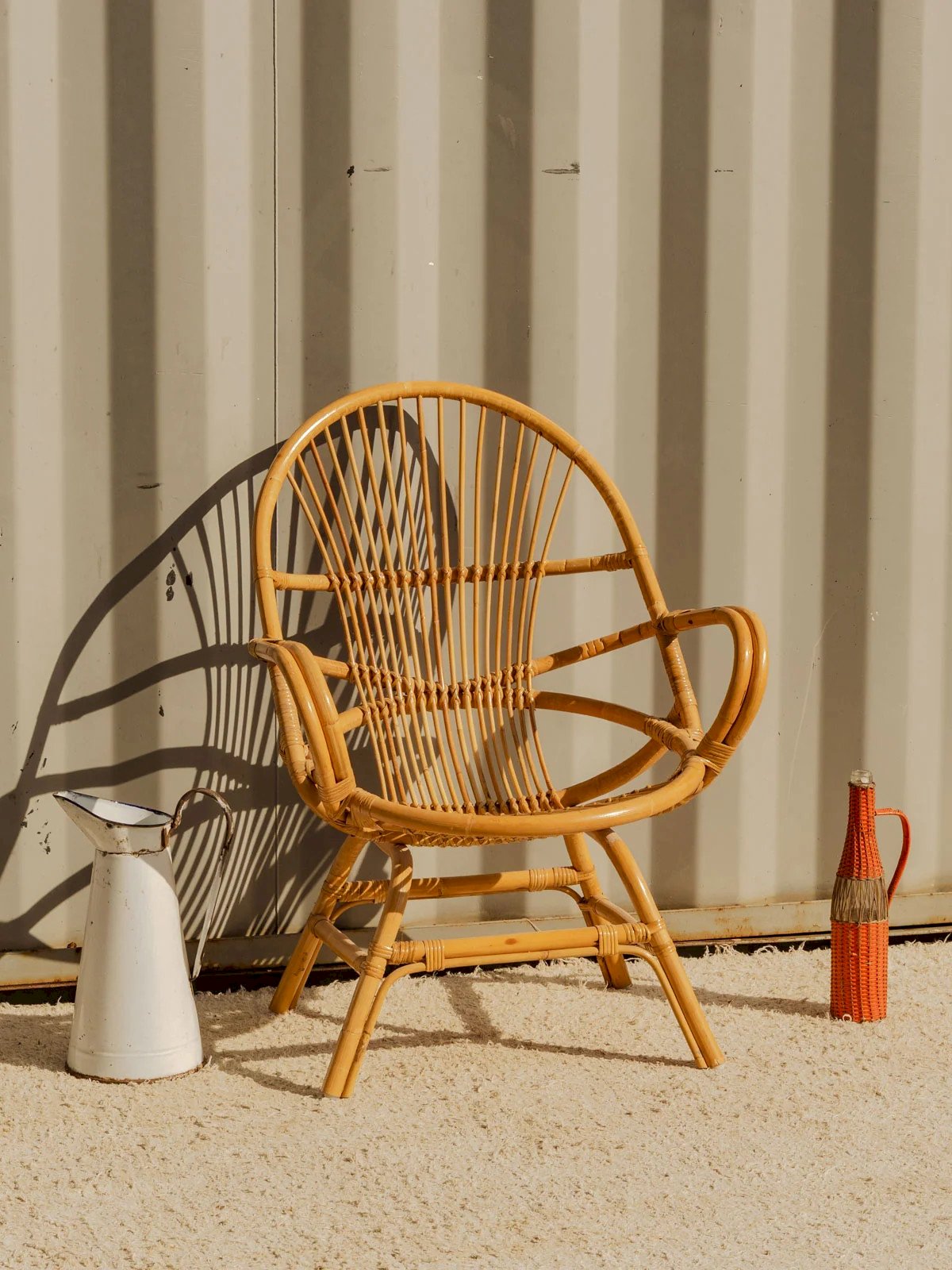
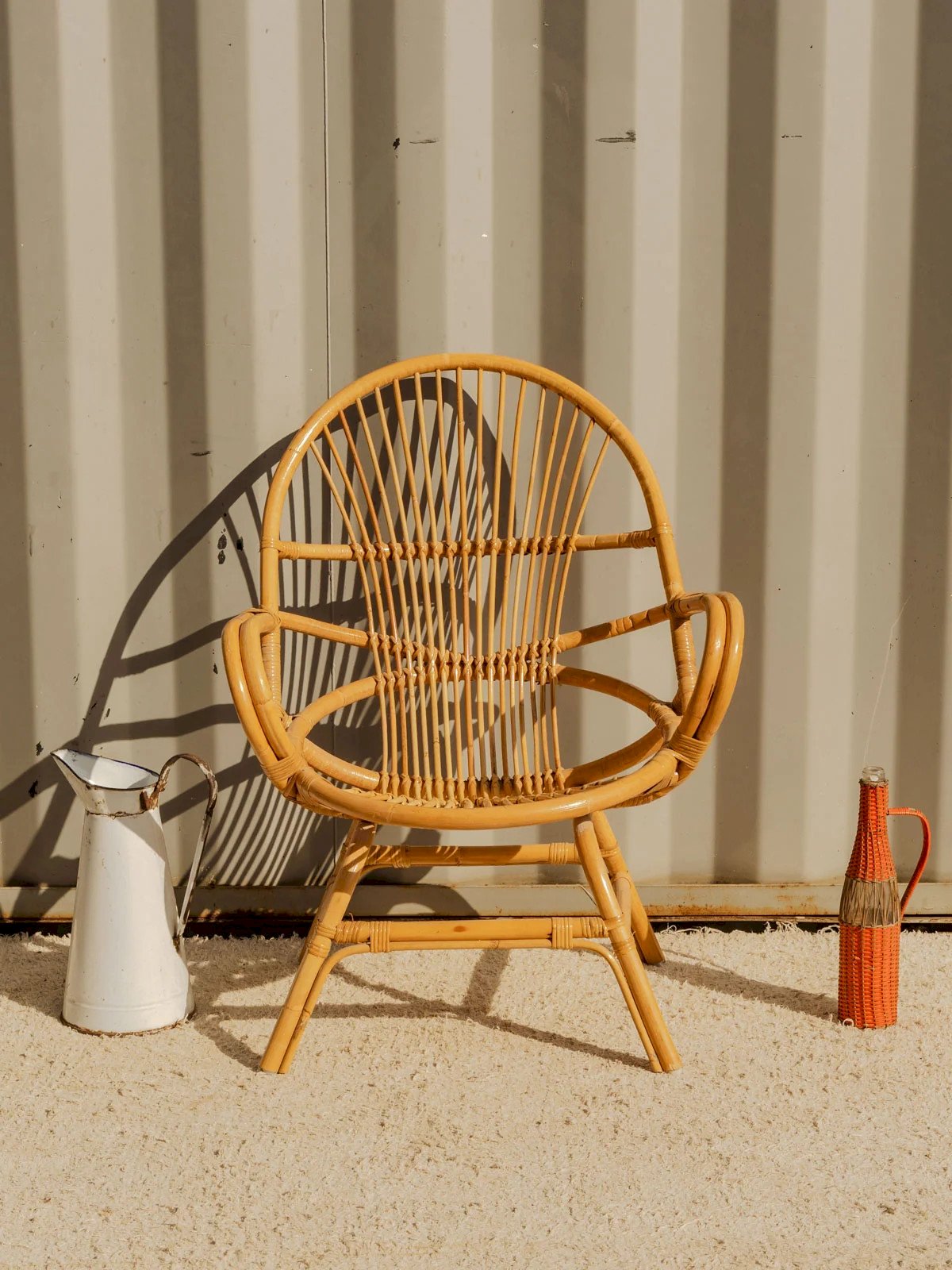
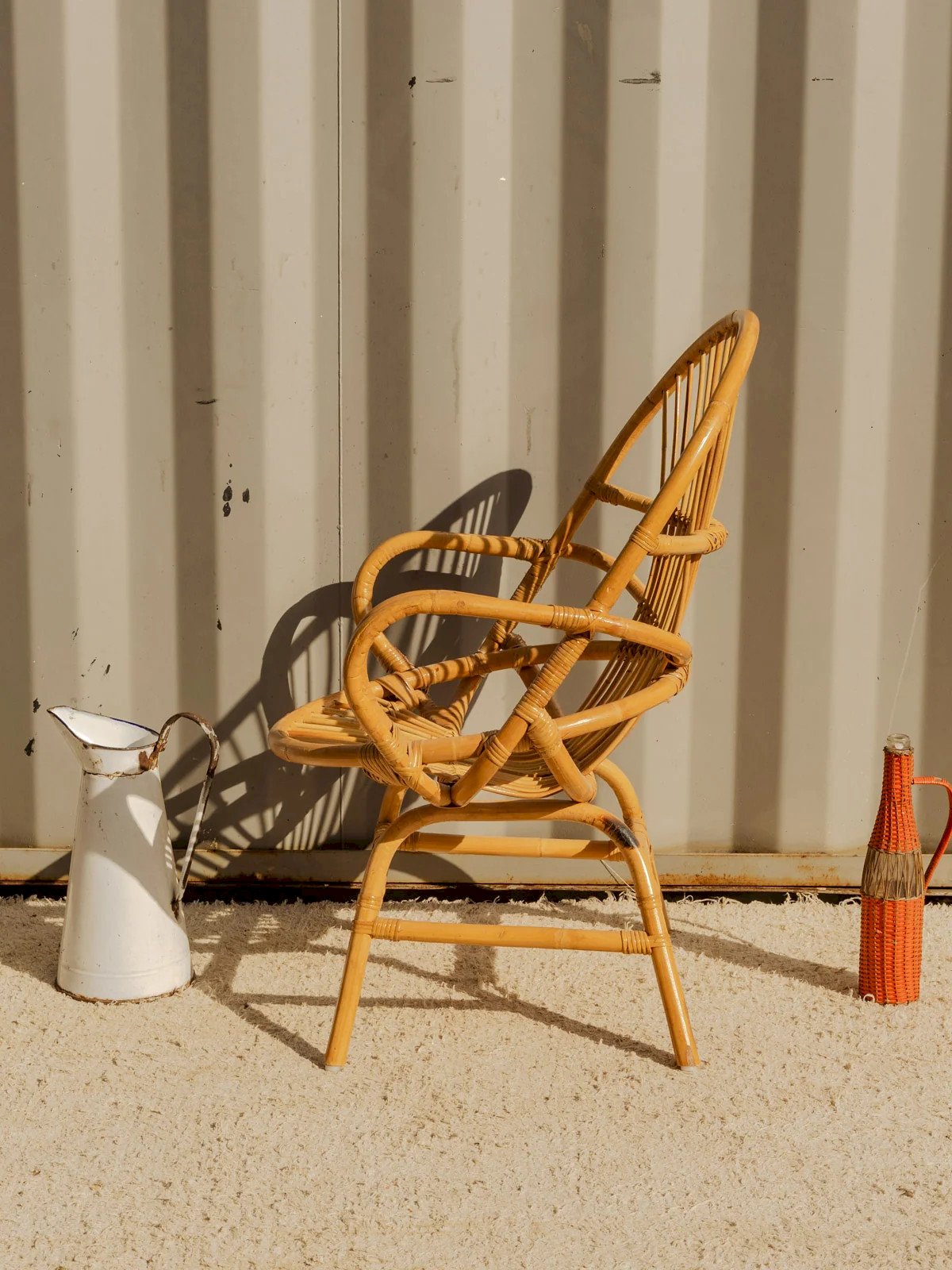
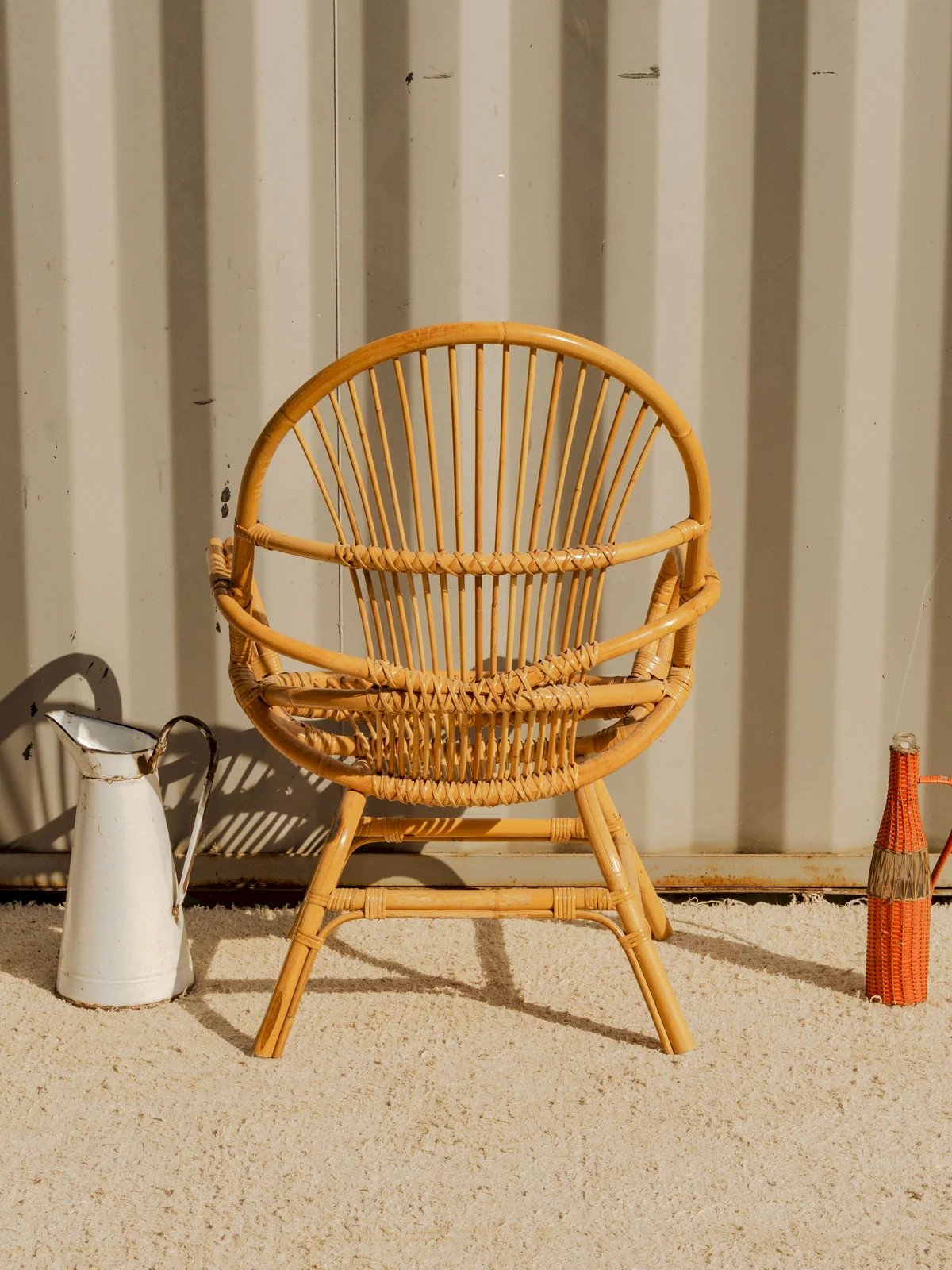
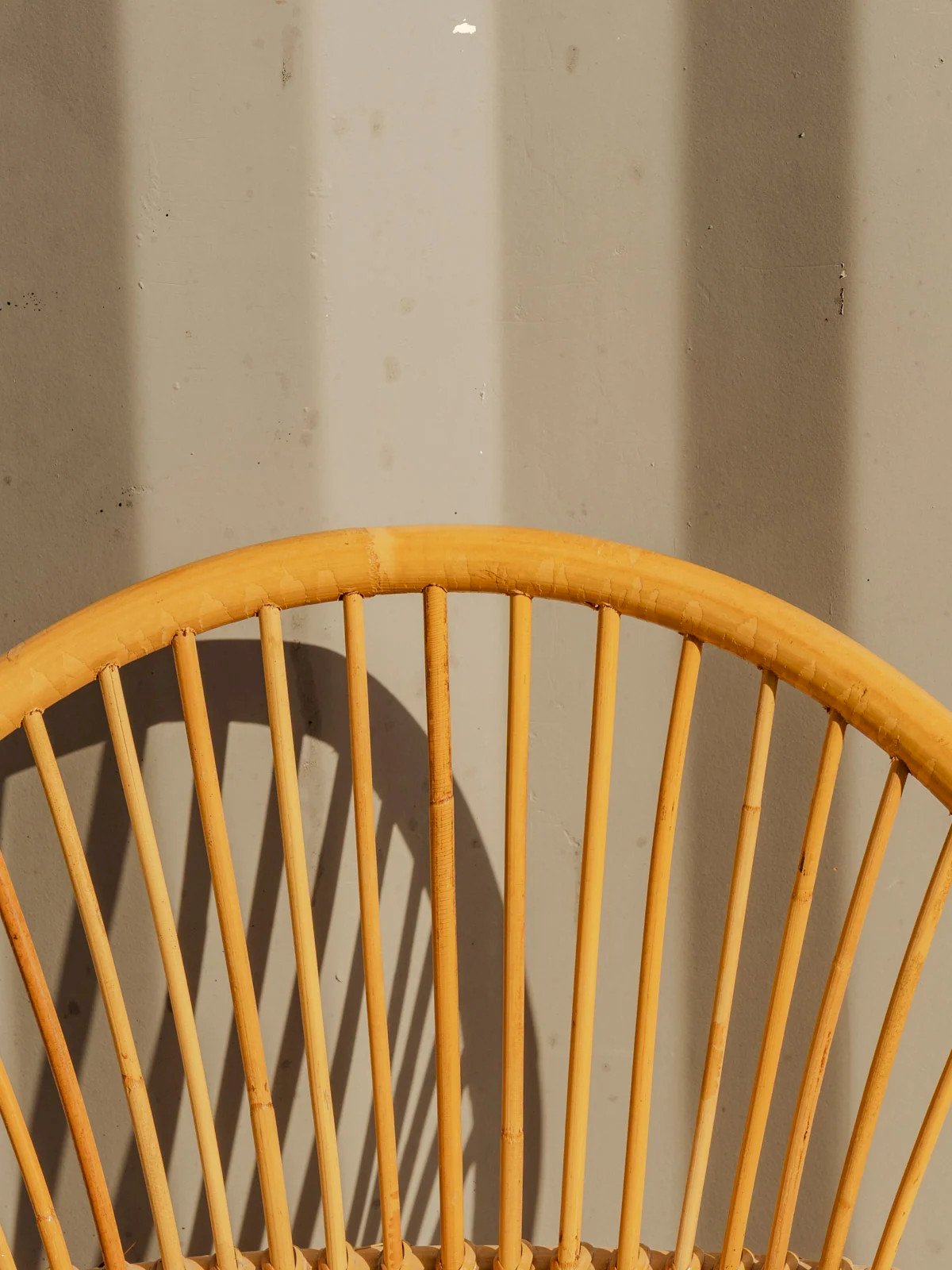
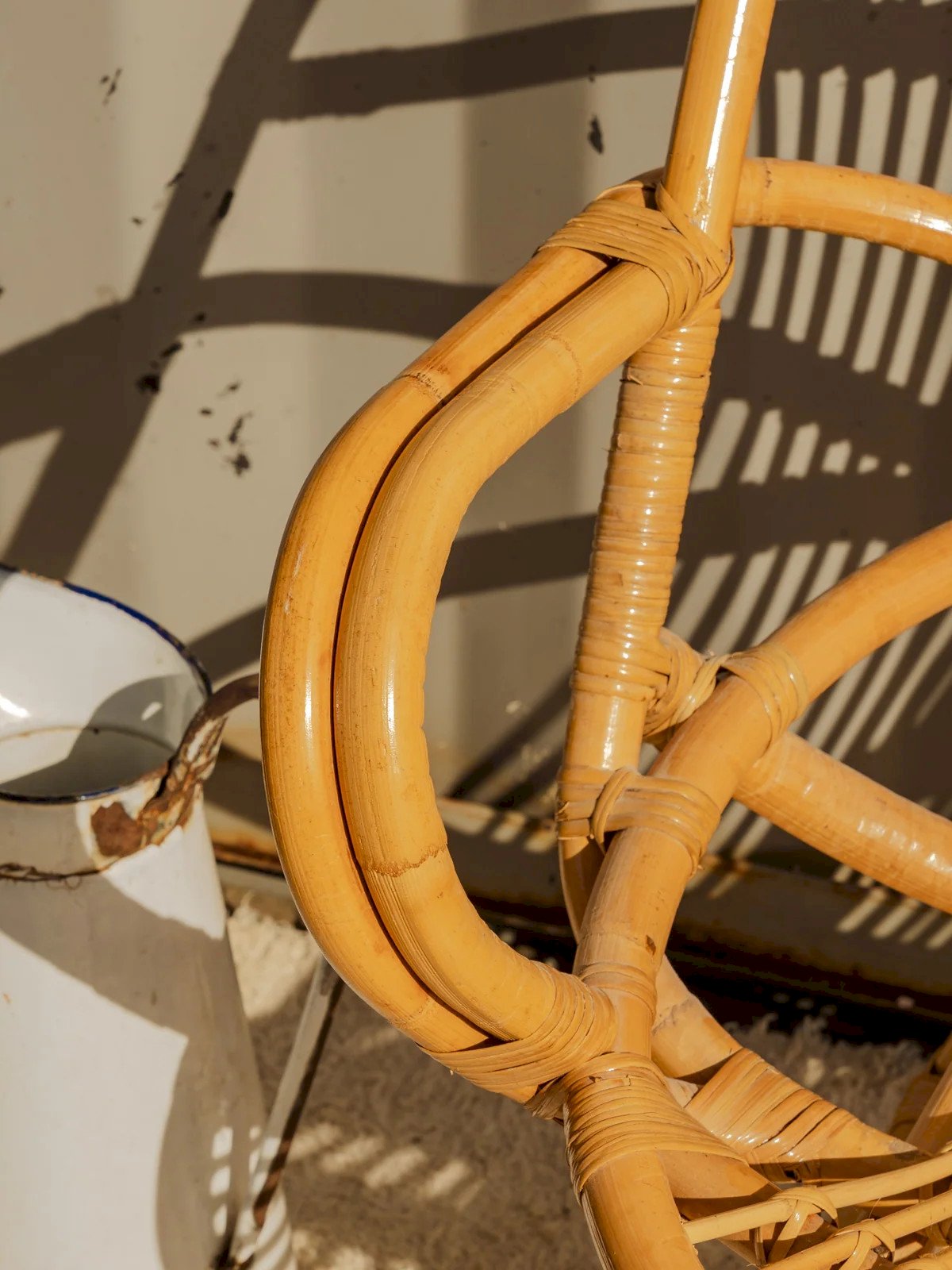
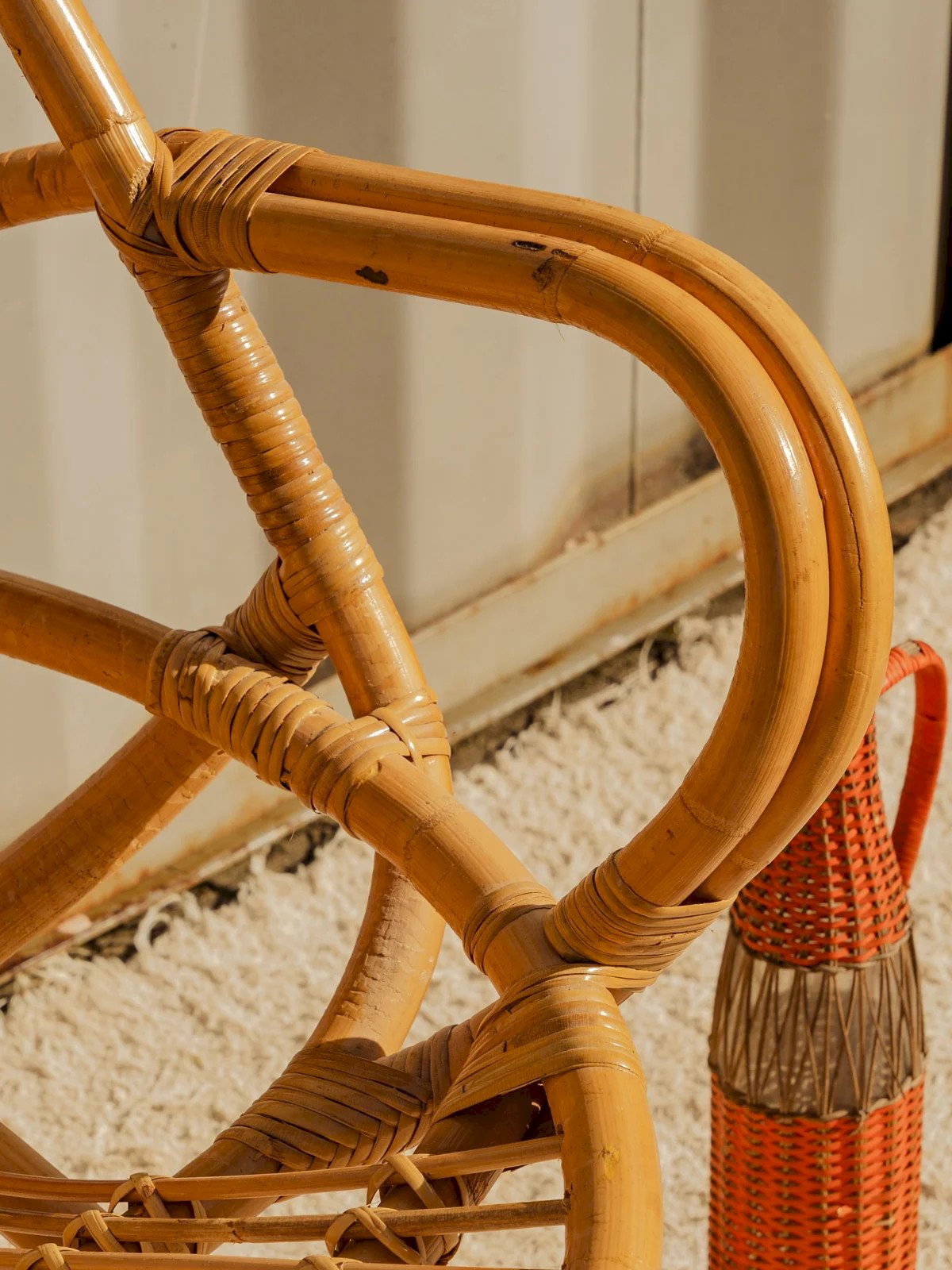
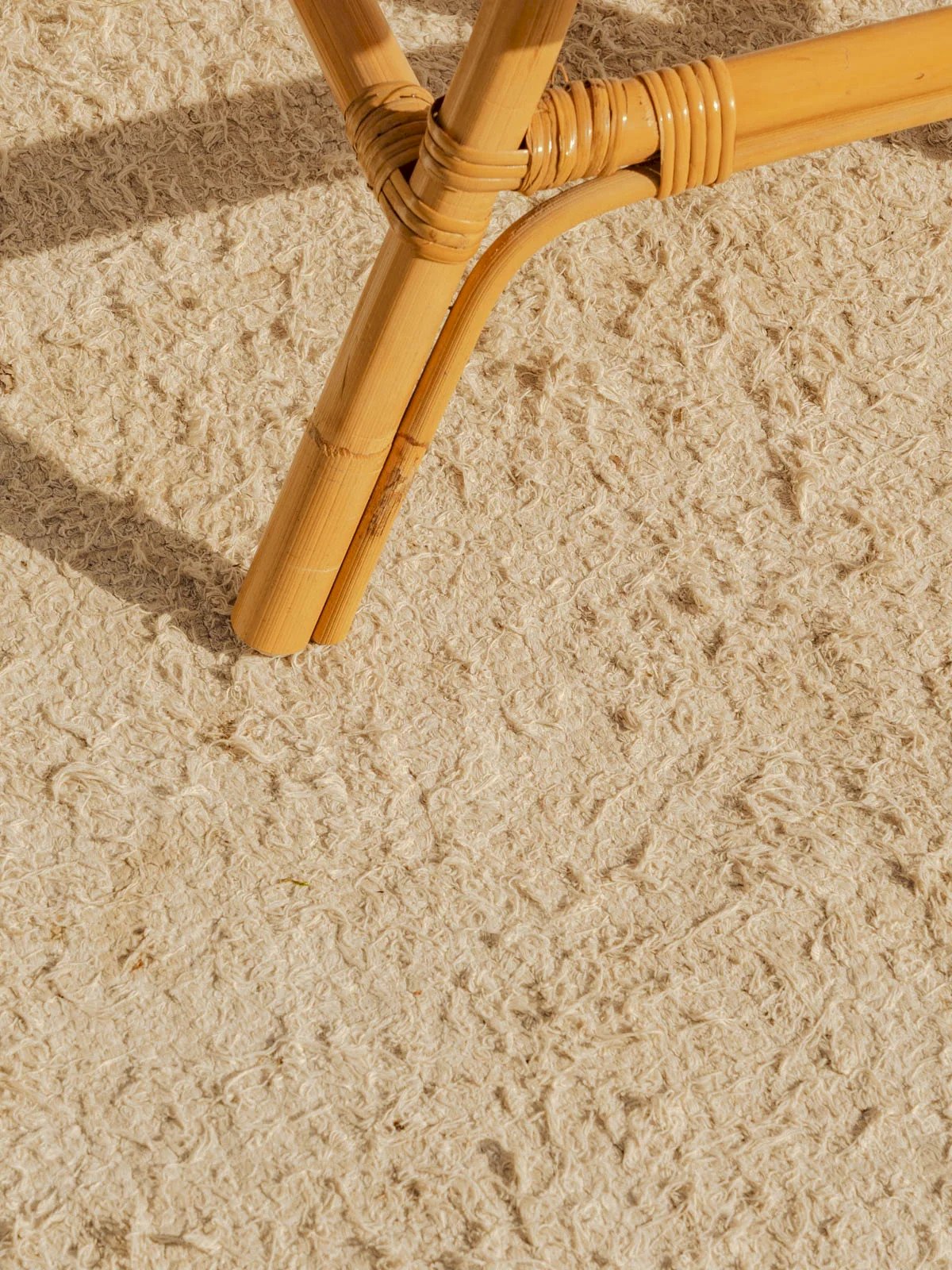
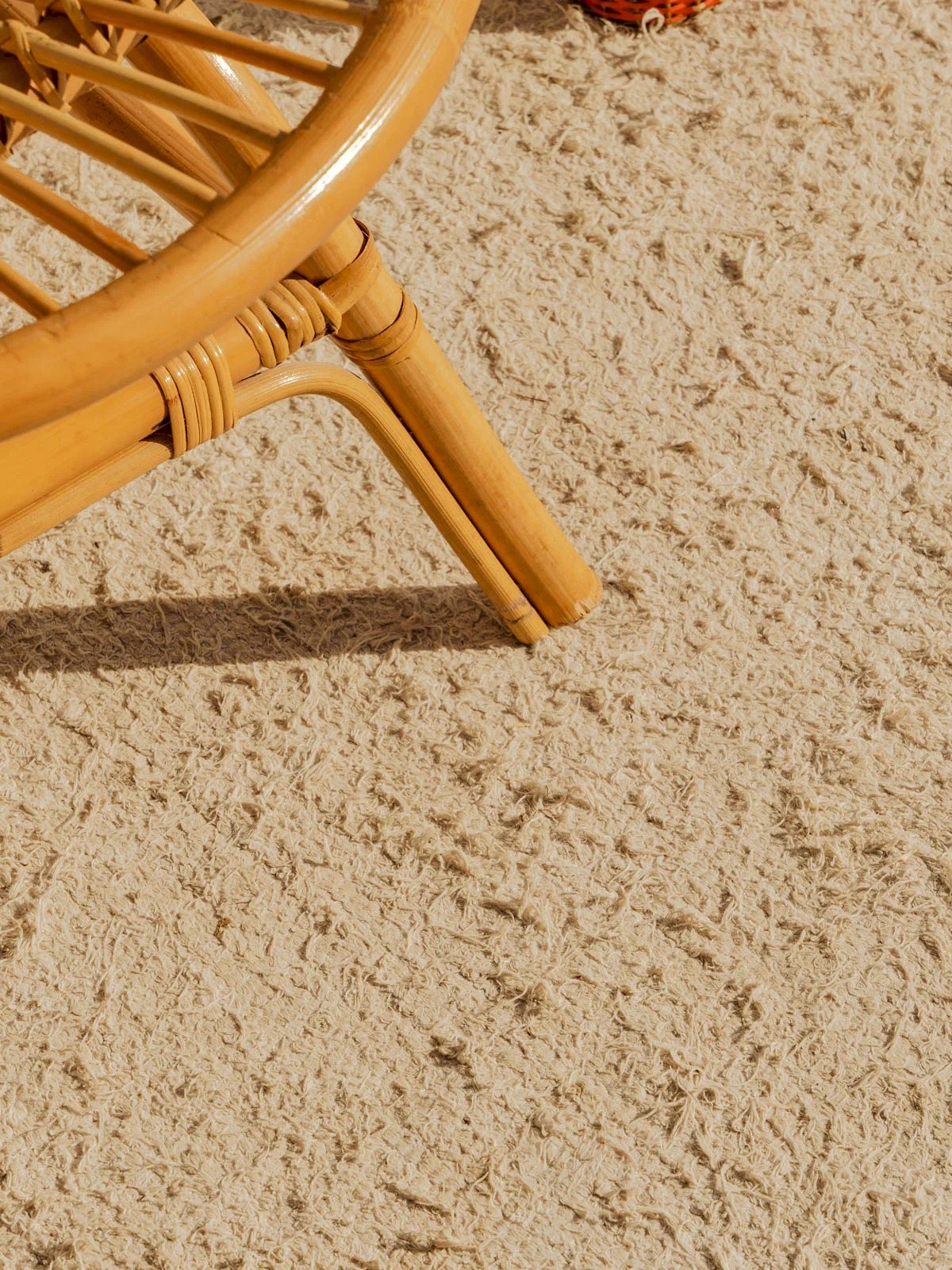
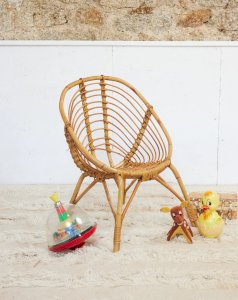
This rattan armchair brings a countryside touch with a lightness, featuring a natural presence that easily fits into a living room or a veranda. Its rattan weaving highlights a warm material, while its seat comfortably welcomes reading, a coffee, or a moment of pause. As a second-hand piece, it easily complements a wooden side table, a natural fiber rug, or a few linen textiles. Placed near a window, it creates an elegant resting corner, accented with a throw and a cushion. As a second-hand item, it bears the marks of its history: a few traces of time. Width: 69 cm Depth: 44 cm Height: 92 cm Seat height: 40 cm Seat width: 51 cm Seat depth: 42 cm A brief history of the armchair: While the chair is made for work or dining, the armchair emerged in the 17th century for a single purpose: rest. Its name derives from the old French "faudesteuil," a folding seat for dignitaries, but it emancipated under Louis XV to become this piece of furniture designed for comfort with armrests. Unlike the chair, it favors a wider seat and a tilted back, inviting conversation rather than a rigid posture. Whether it's a "bergère" with full cheeks to shield from drafts or a lighter "bridge" armchair, it embodies the evolution of the art of living.
Réf :
#414455
Brand / From : Debongout
Related Products

Comments
Ernest, the rattan armchair No. 1670
449€
75002 Paris
Ce site contient des liens d’affiliation pour lesquels je peux recevoir une compensation.
Description
This rattan armchair brings a countryside touch with a lightness, featuring a natural presence that easily fits into a living room or a veranda. Its rattan weaving highlights a warm material, while its seat comfortably welcomes reading, a coffee, or a moment of pause. As a second-hand piece, it easily complements a wooden side table, a natural fiber rug, or a few linen textiles. Placed near a window, it creates an elegant resting corner, accented with a throw and a cushion. As a second-hand item, it bears the marks of its history: a few traces of time. Width: 69 cm Depth: 44 cm Height: 92 cm Seat height: 40 cm Seat width: 51 cm Seat depth: 42 cm A brief history of the armchair: While the chair is made for work or dining, the armchair emerged in the 17th century for a single purpose: rest. Its name derives from the old French "faudesteuil," a folding seat for dignitaries, but it emancipated under Louis XV to become this piece of furniture designed for comfort with armrests. Unlike the chair, it favors a wider seat and a tilted back, inviting conversation rather than a rigid posture. Whether it's a "bergère" with full cheeks to shield from drafts or a lighter "bridge" armchair, it embodies the evolution of the art of living.
Réf :
#414455
Brand / From : Debongout