 English
 Français


Description
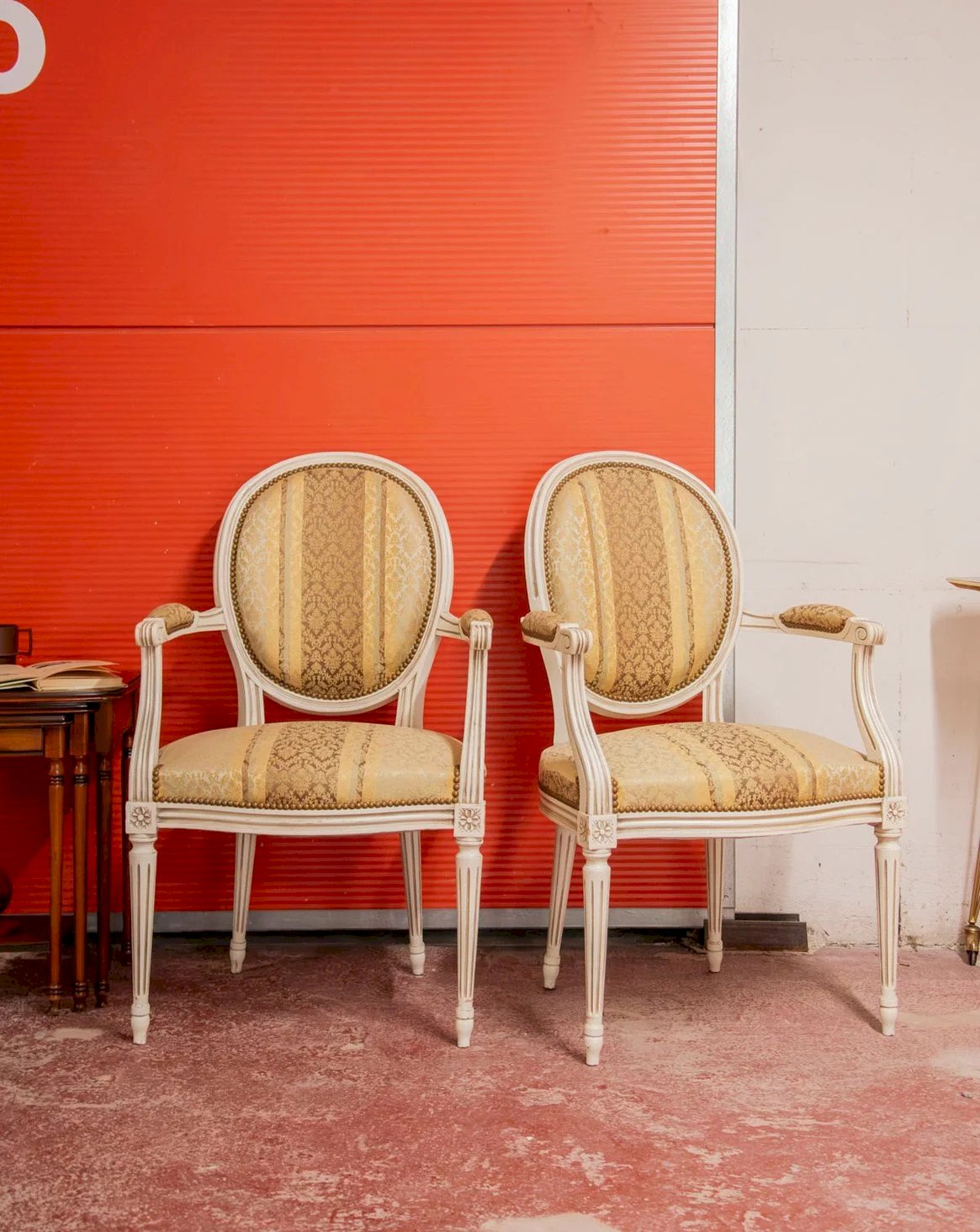
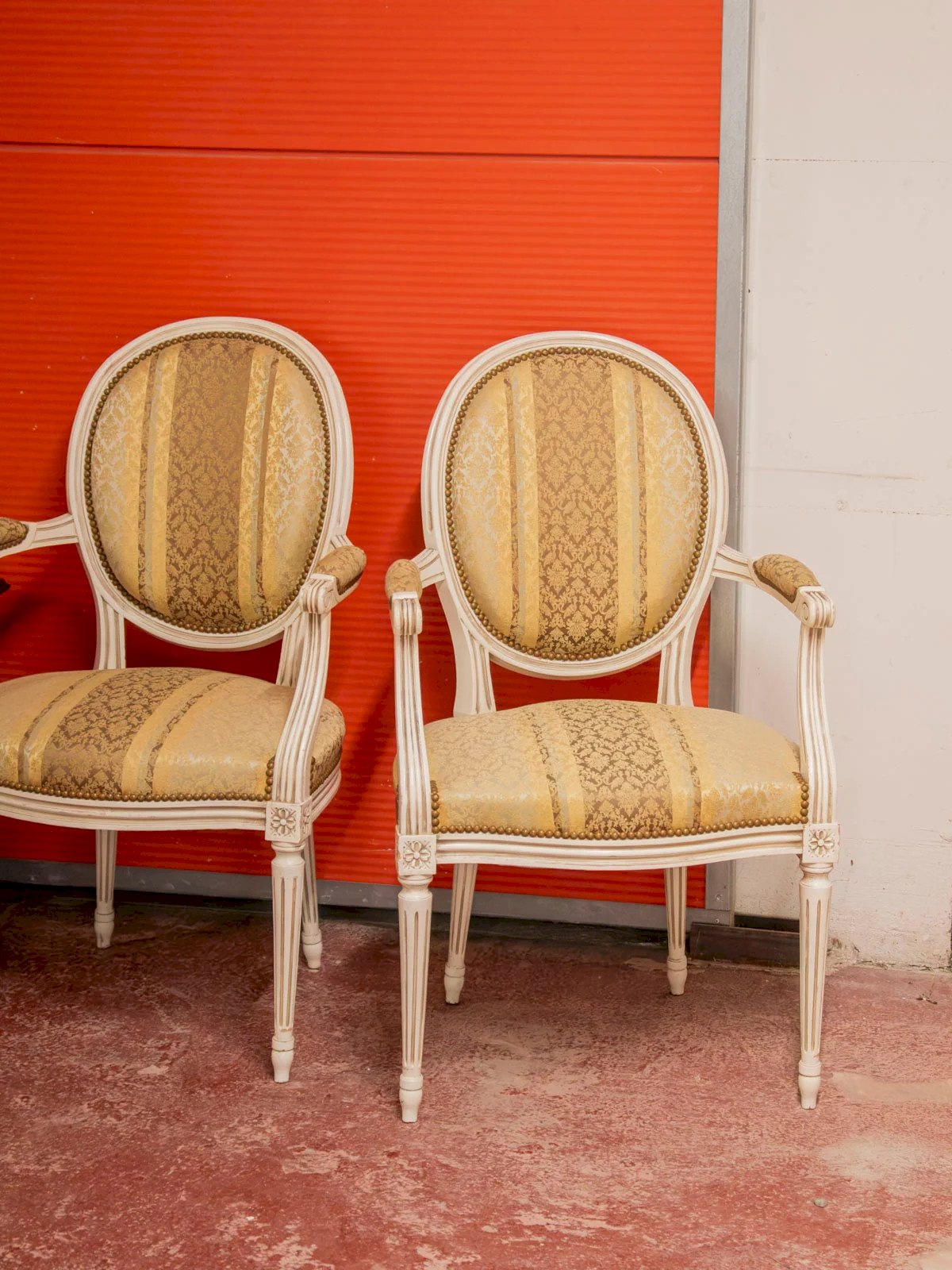
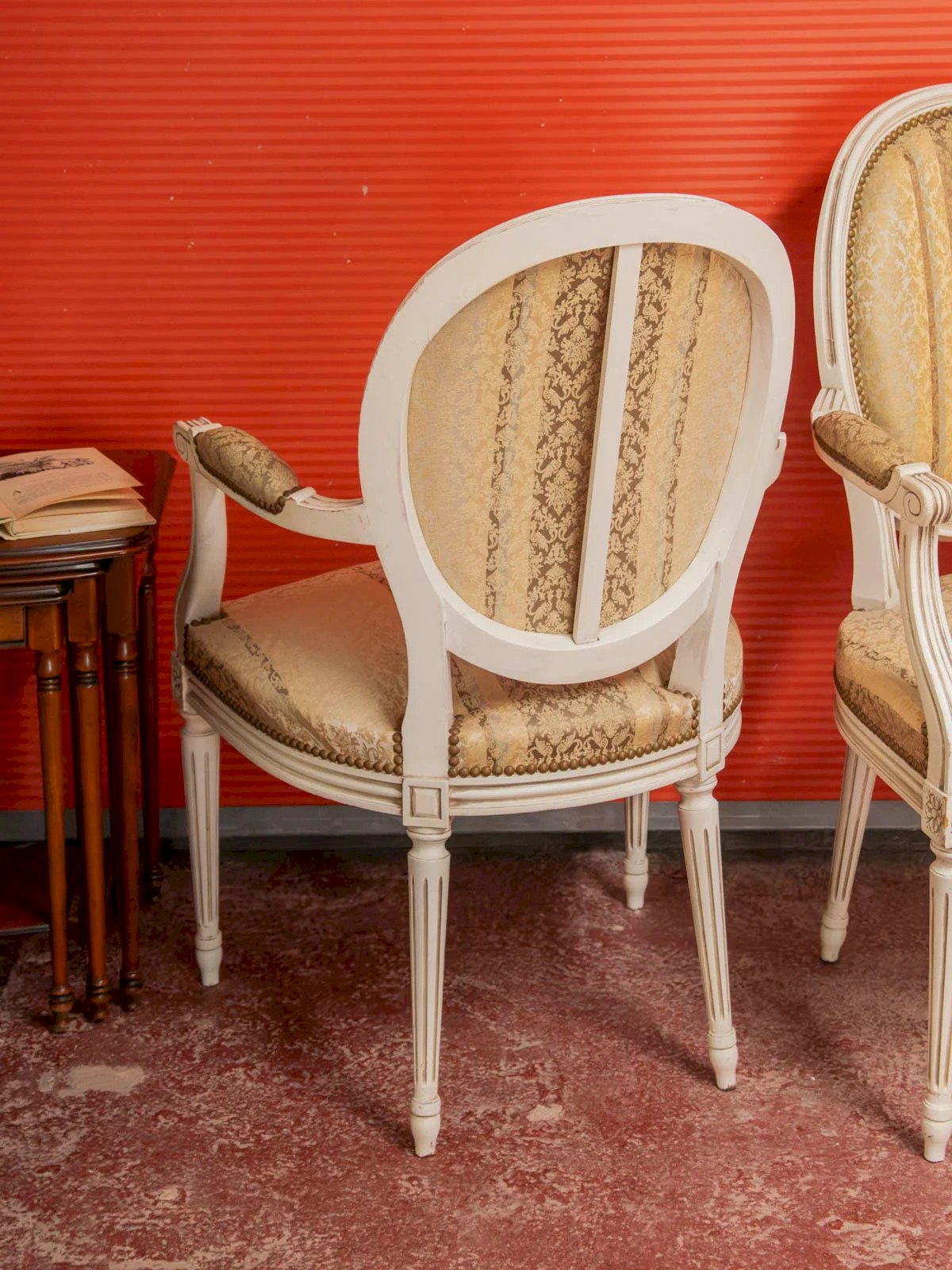
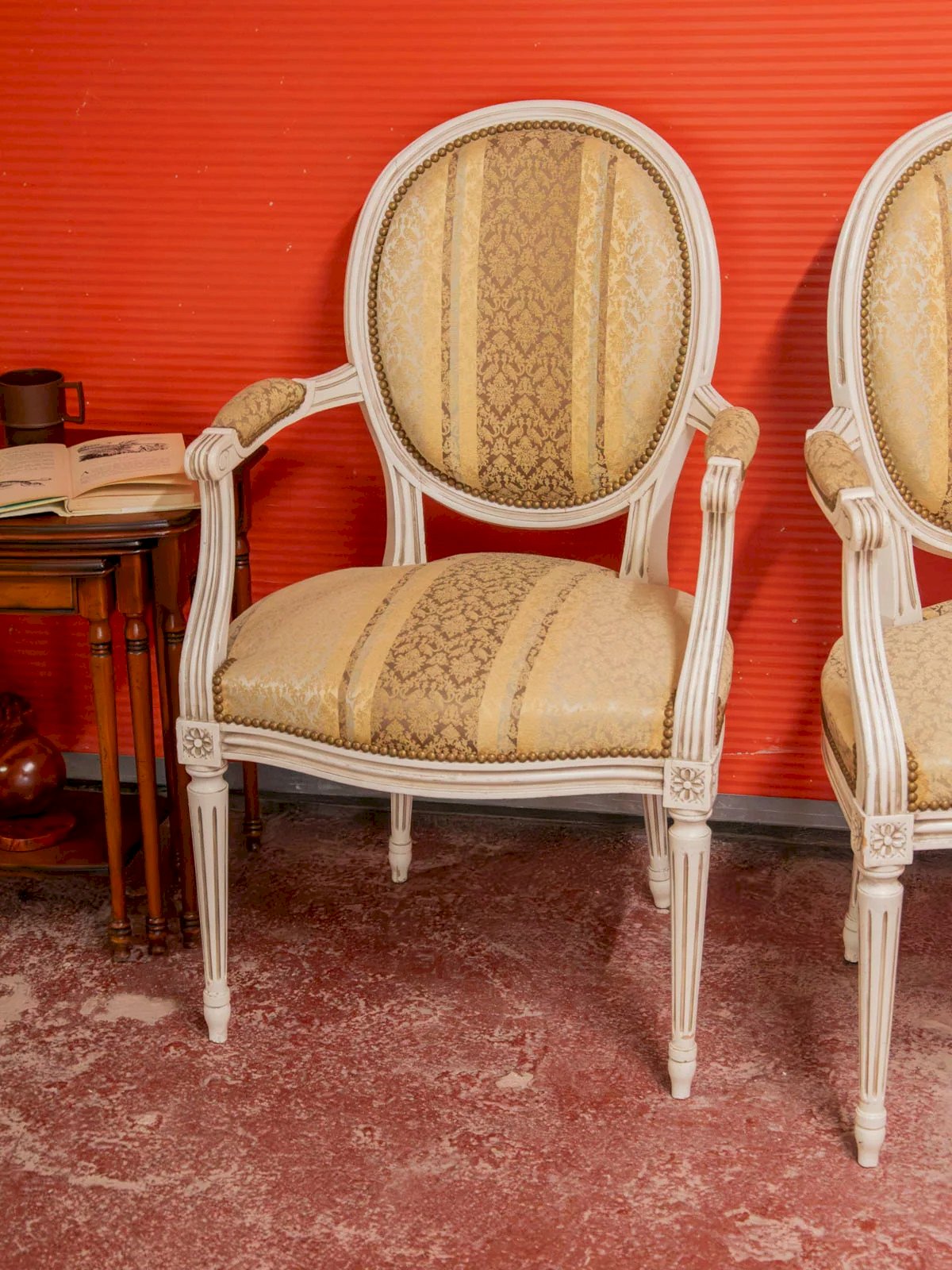
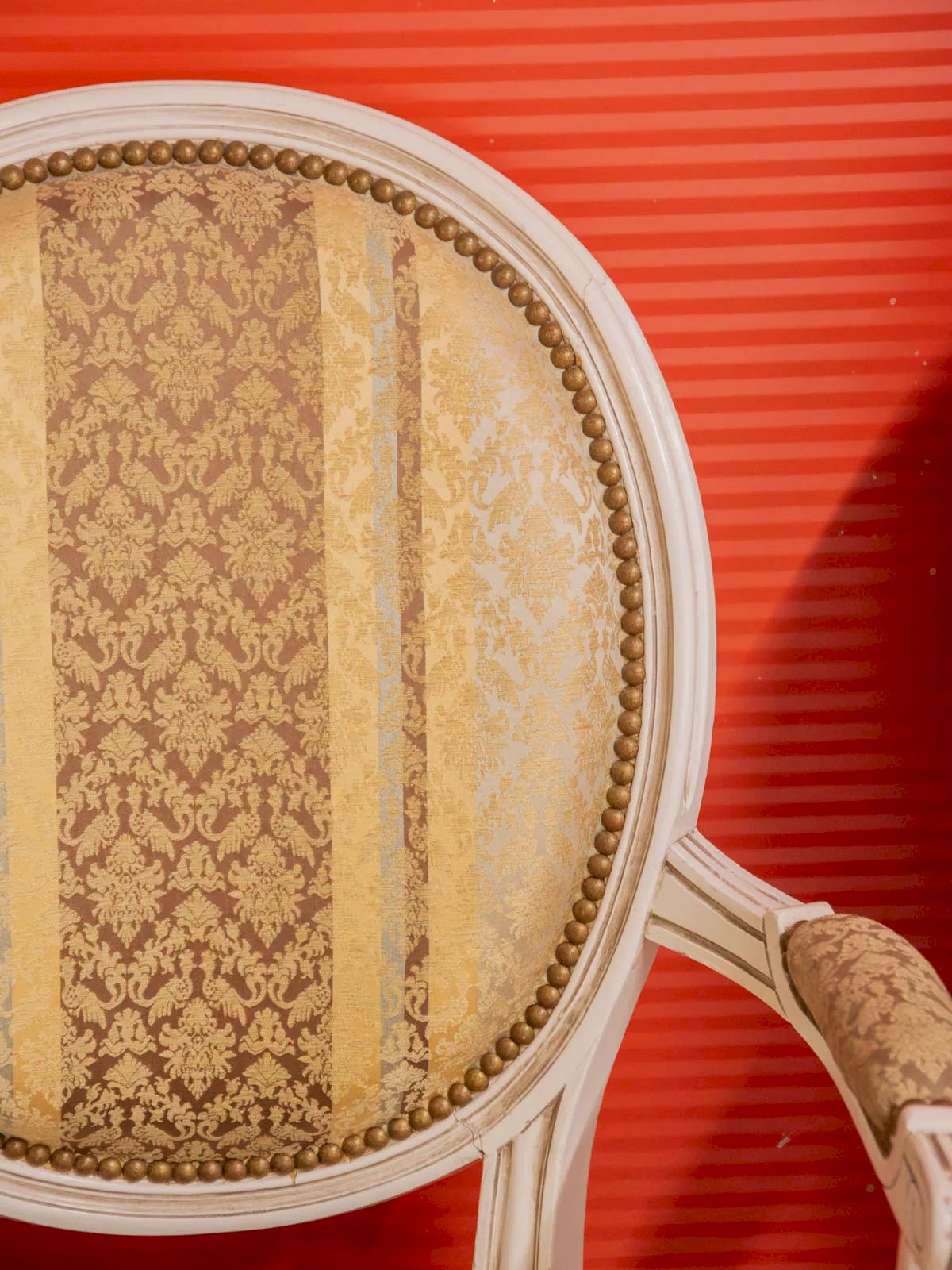
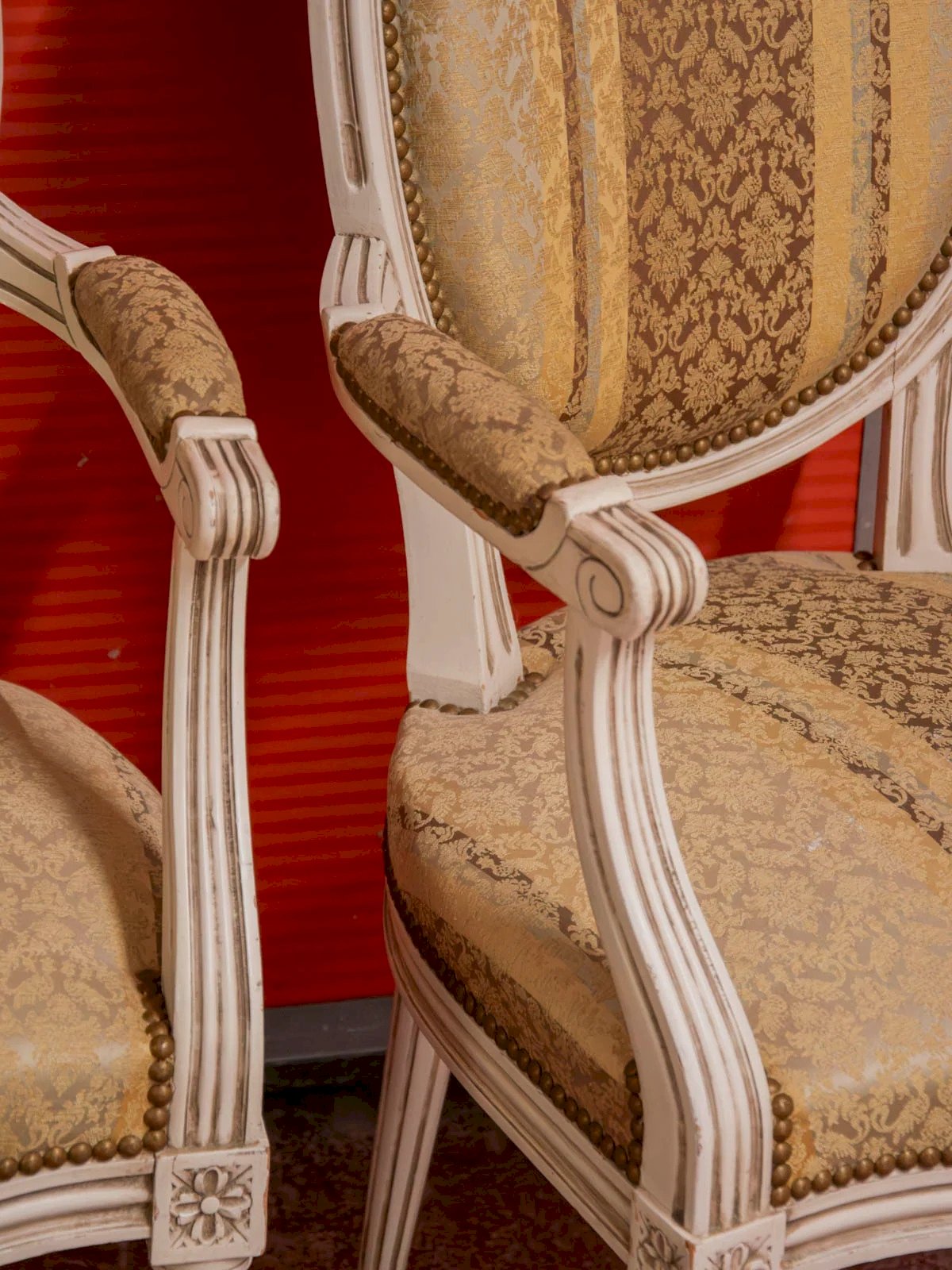
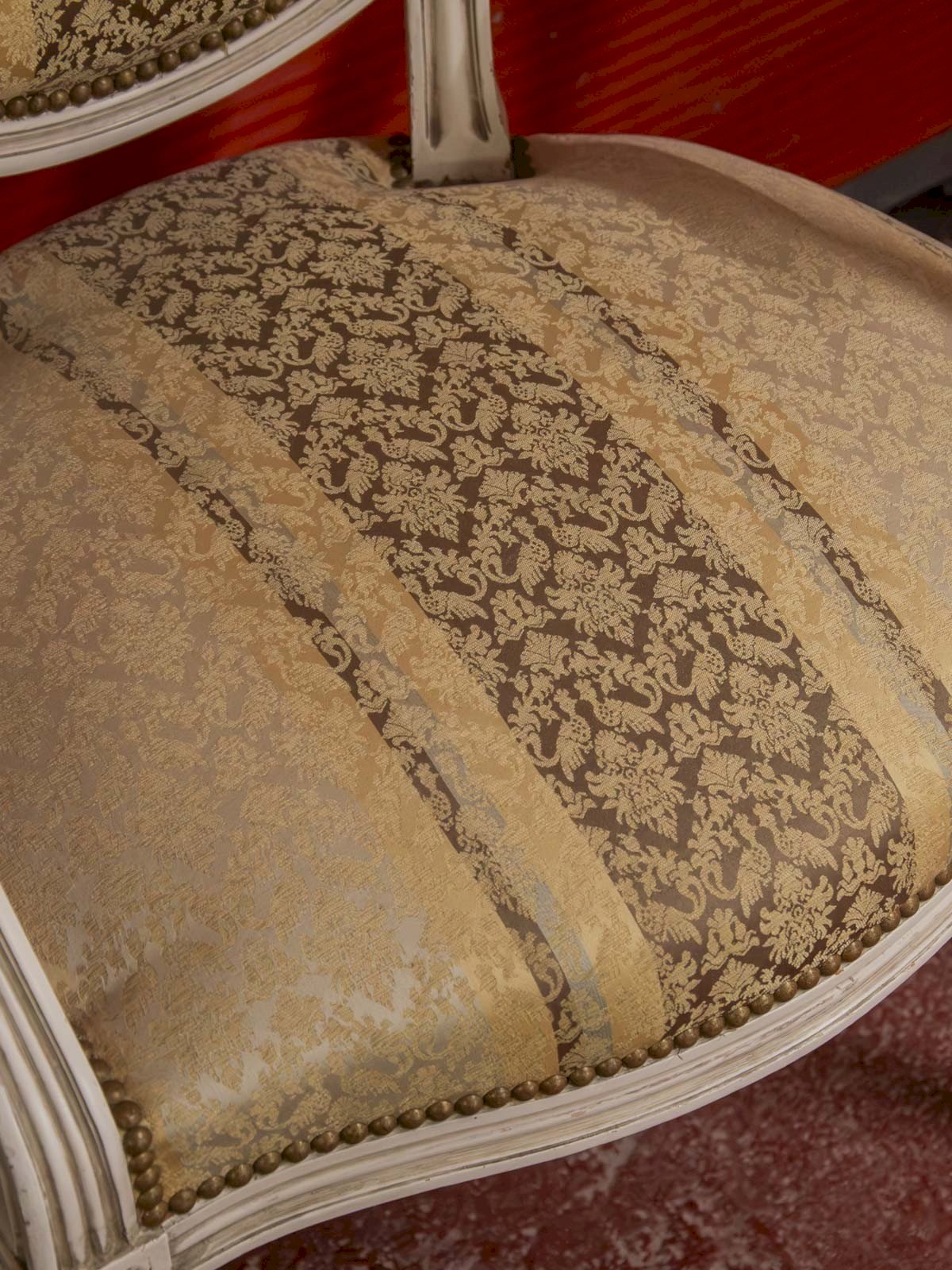
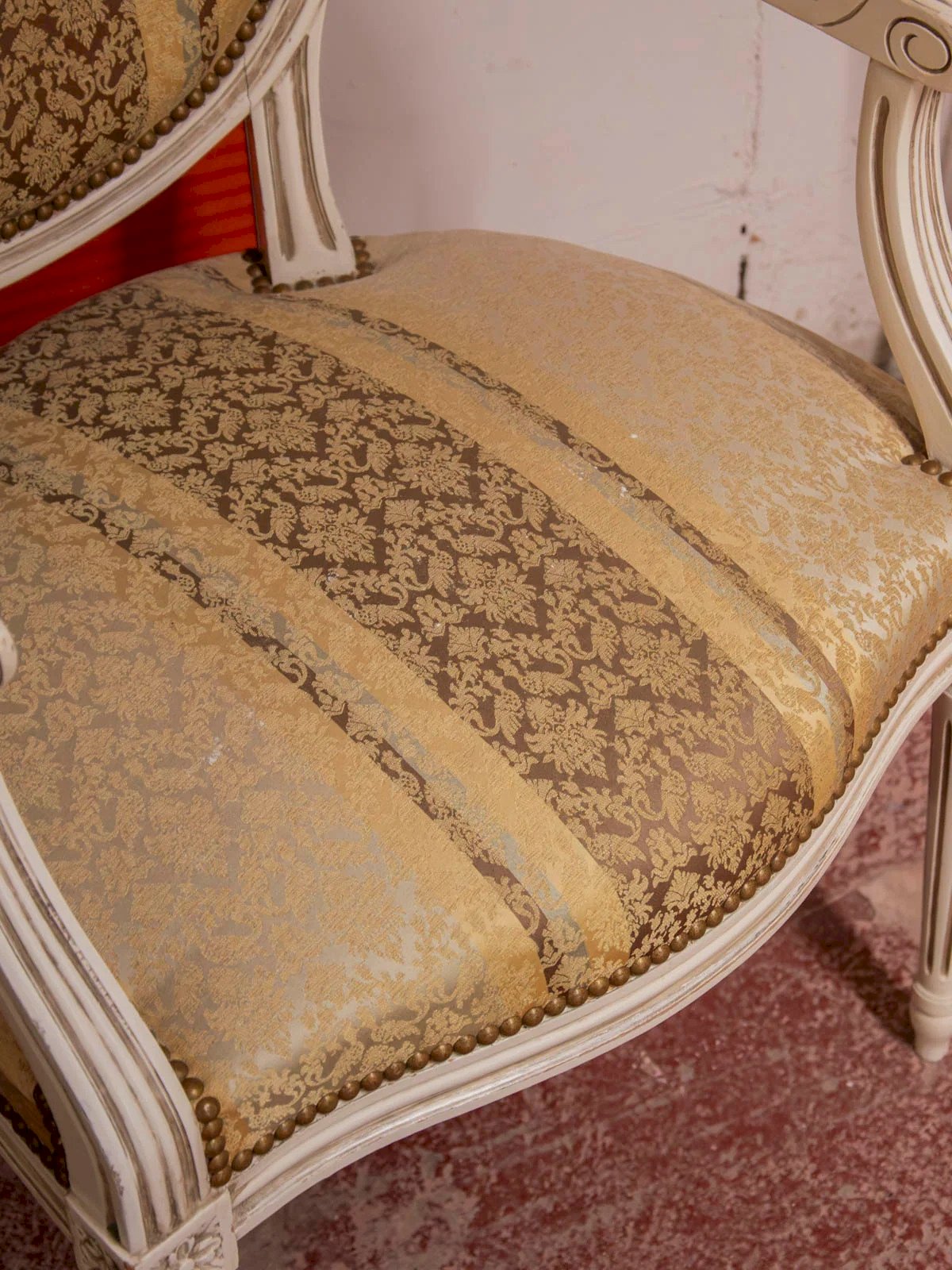
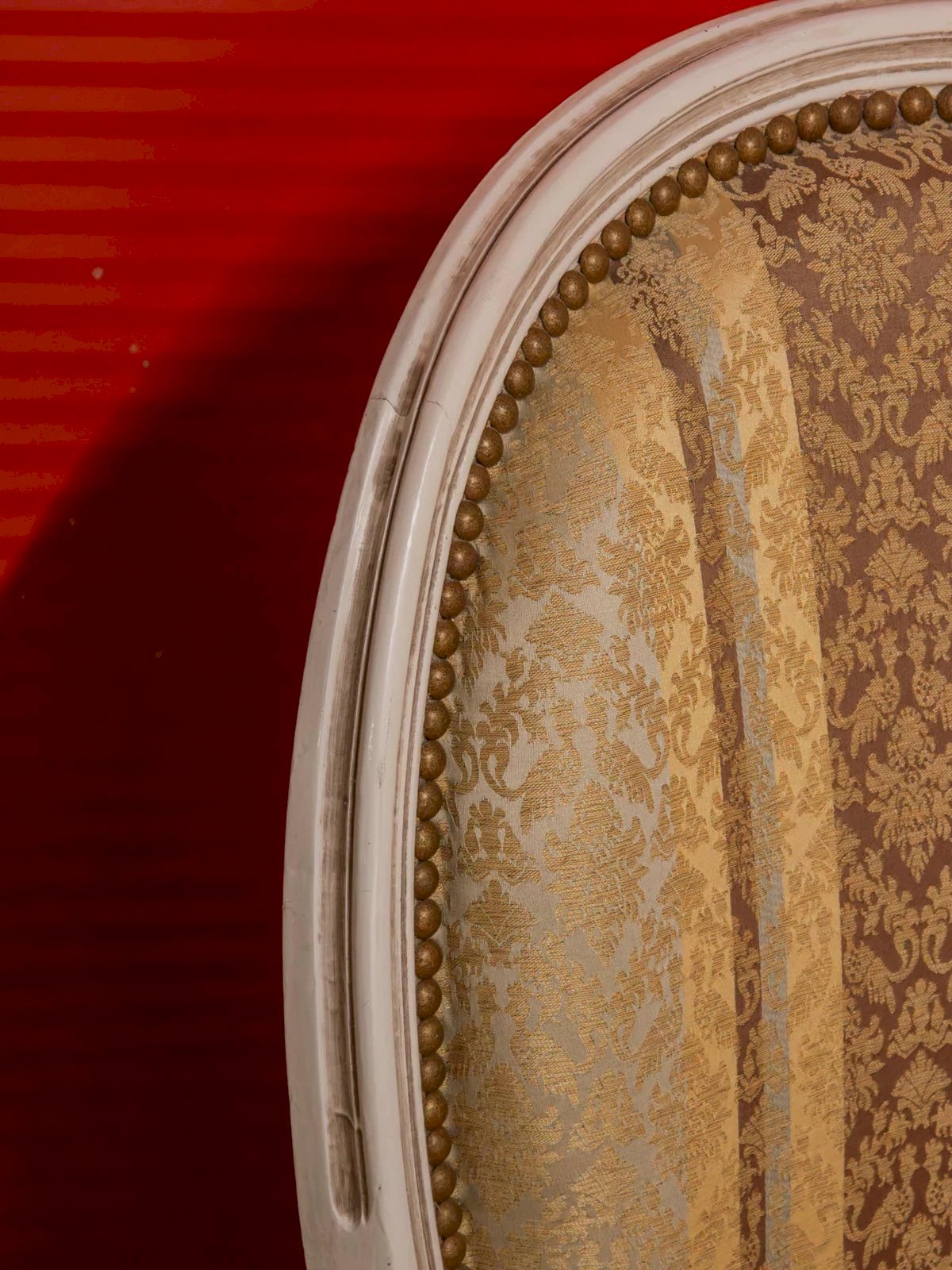
Found, this pair of painted white wooden medallion chairs, in a light wood tone, brings a restrained country touch. The rounded backrest and the studded structure highlight careful craftsmanship, while the beige seat with striped and floral patterns in beige and brown softens the whole. Second-hand, they fit around a raw wood table, where their seat height allows for comfortable seating. The light wood pairs well with linen curtains, an old tablecloth, or some ceramic plates. Around a dining table, they gladly accommodate earthenware dishes and a bouquet of wildflowers. Width: 57 cm Depth: 48 cm Height: 96 cm Seat height: 45 cm Seat width: 47 cm Seat depth: 43 cm A brief history of the armchair If the chair is made for work or dining, the armchair was born in the 17th century for one mission only: rest. Its name derives from the old French "faudesteuil," a folding seat of a dignitary, but it emancipated under Louis XV to become this comfort furniture with armrests. Unlike the chair, it favors a wider seat and a tilted backrest, inviting conversation rather than a rigid posture. Whether it's a "bergère" with full cheeks to shelter from drafts or a lighter "bridge" armchair, it embodies the evolution of the art of living.
Réf :
#414751
Brand / From : Debongout
Related Products


Comments
Ernest, the lot of two armchairs with antique charm No. 1725
579€
75002 Paris
Ce site contient des liens d’affiliation pour lesquels je peux recevoir une compensation.
Description
Found, this pair of painted white wooden medallion chairs, in a light wood tone, brings a restrained country touch. The rounded backrest and the studded structure highlight careful craftsmanship, while the beige seat with striped and floral patterns in beige and brown softens the whole. Second-hand, they fit around a raw wood table, where their seat height allows for comfortable seating. The light wood pairs well with linen curtains, an old tablecloth, or some ceramic plates. Around a dining table, they gladly accommodate earthenware dishes and a bouquet of wildflowers. Width: 57 cm Depth: 48 cm Height: 96 cm Seat height: 45 cm Seat width: 47 cm Seat depth: 43 cm A brief history of the armchair If the chair is made for work or dining, the armchair was born in the 17th century for one mission only: rest. Its name derives from the old French "faudesteuil," a folding seat of a dignitary, but it emancipated under Louis XV to become this comfort furniture with armrests. Unlike the chair, it favors a wider seat and a tilted backrest, inviting conversation rather than a rigid posture. Whether it's a "bergère" with full cheeks to shelter from drafts or a lighter "bridge" armchair, it embodies the evolution of the art of living.
Réf :
#414751
Brand / From : Debongout