 English
 Français


Description
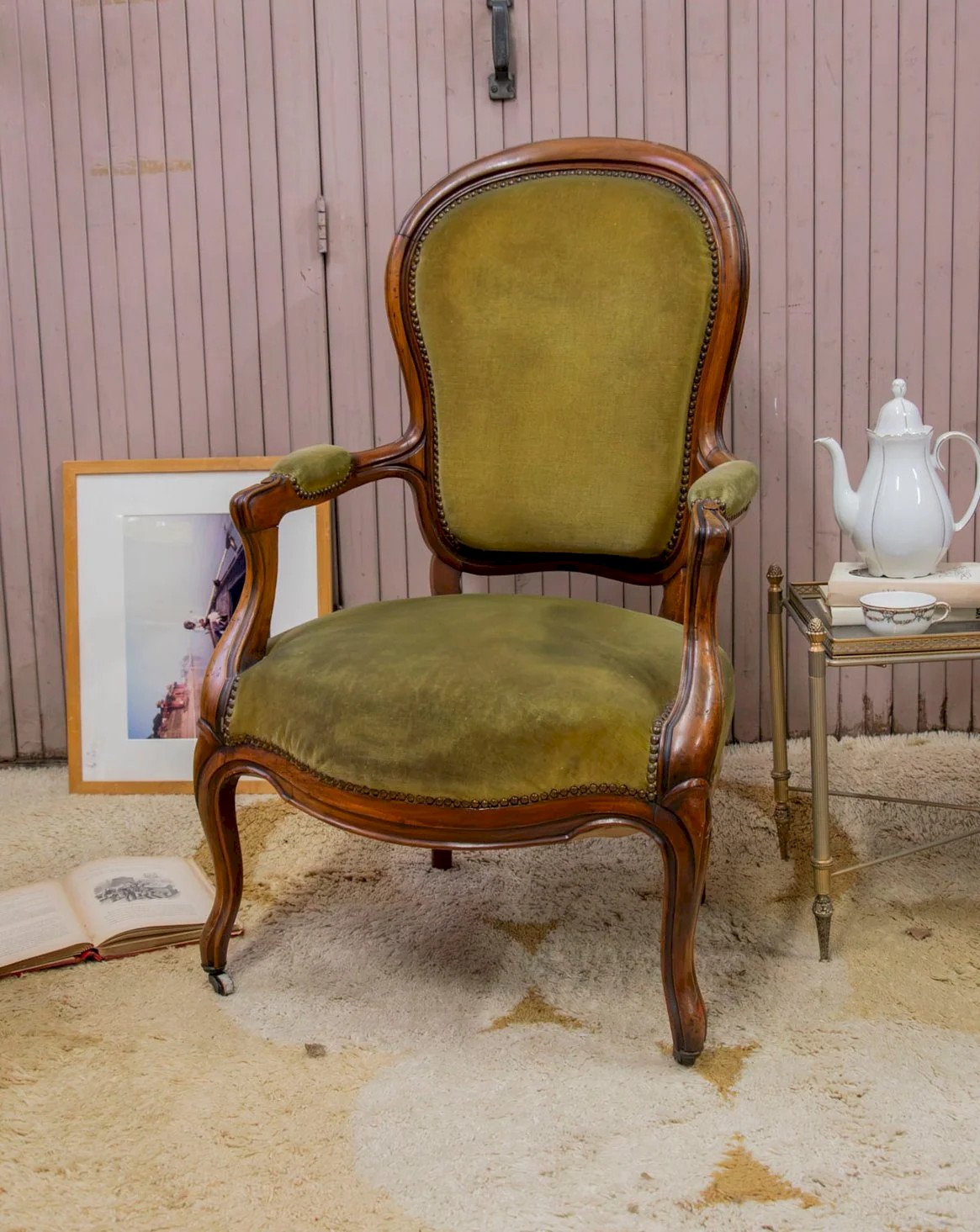
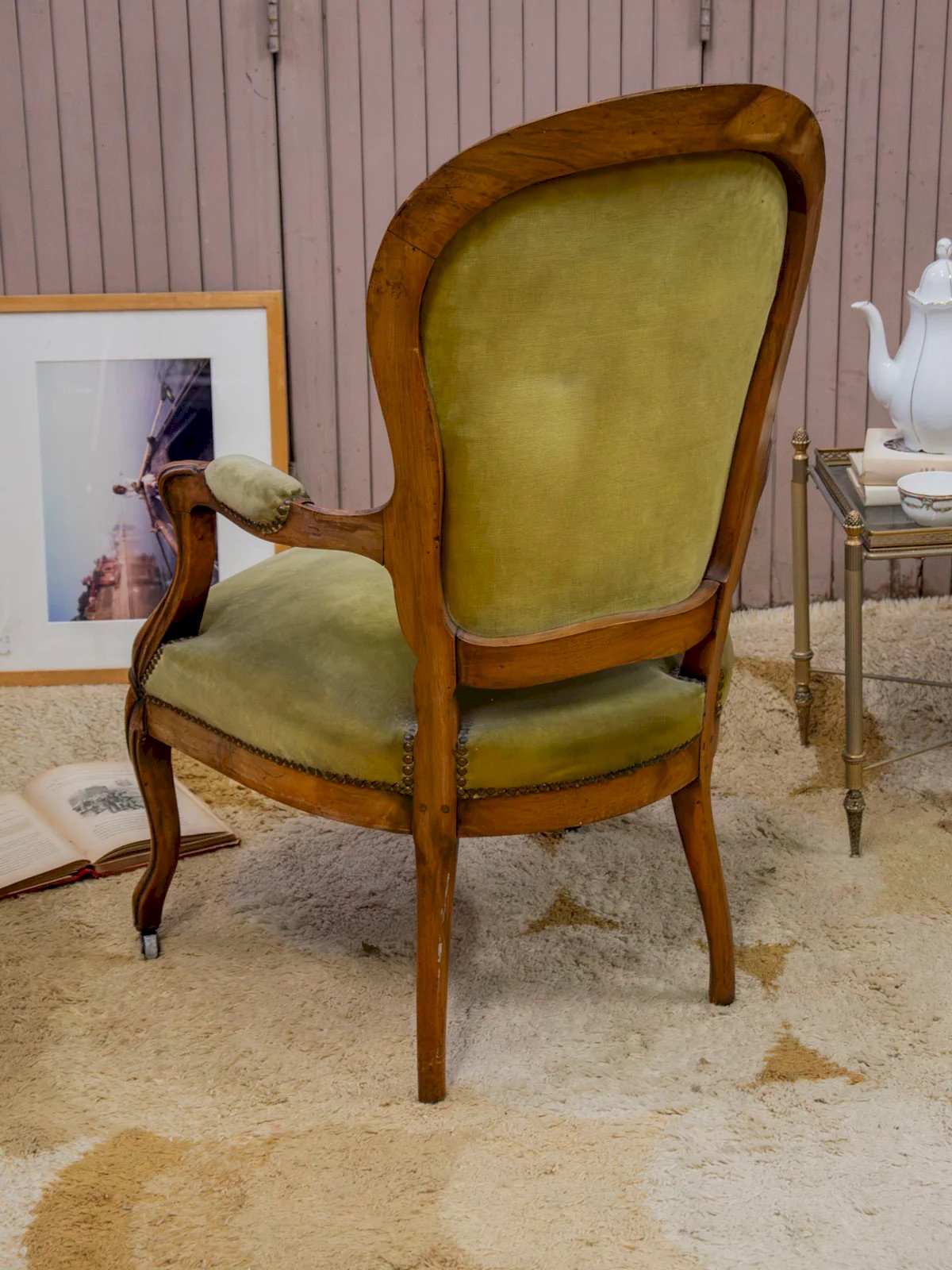
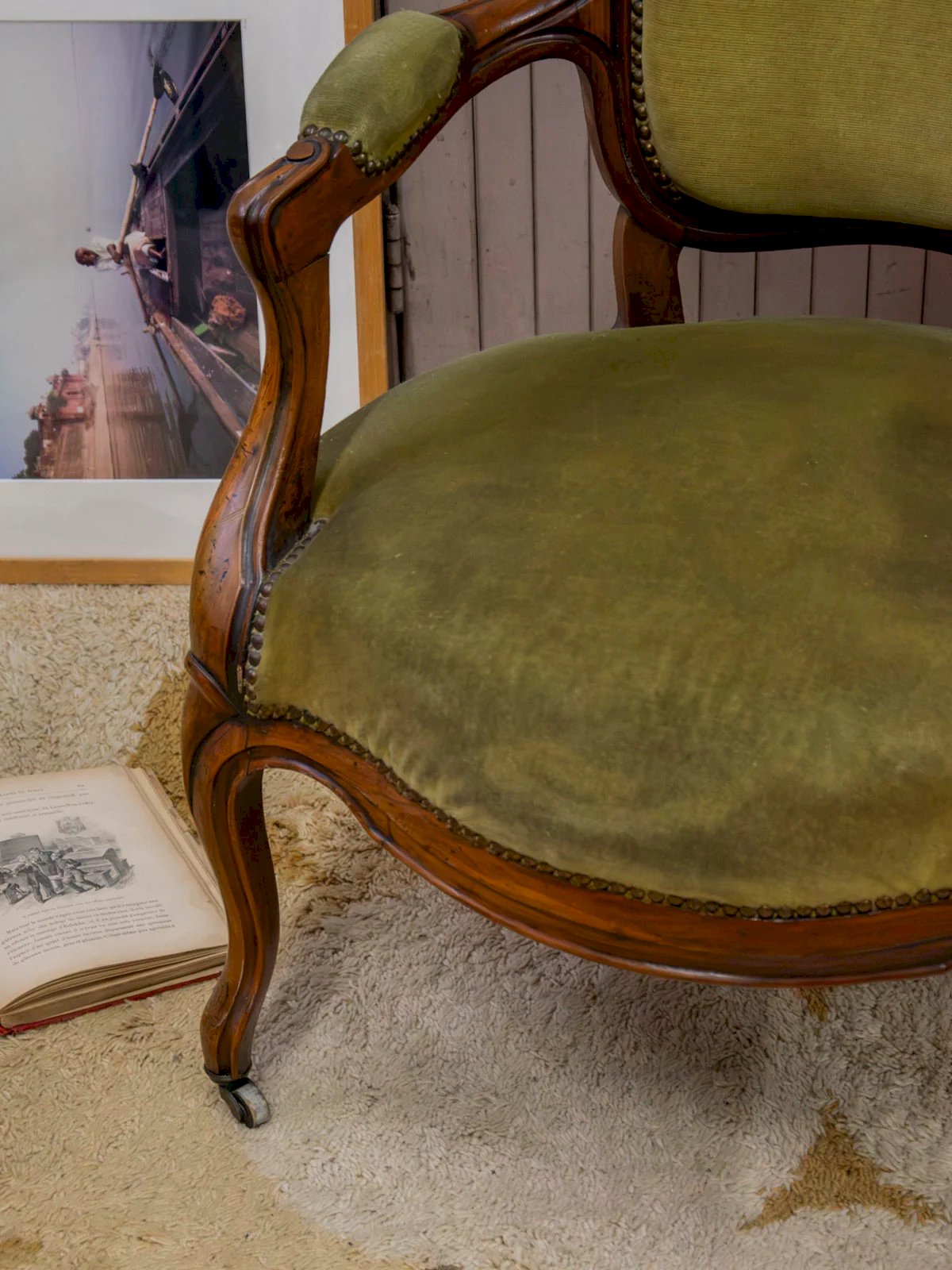
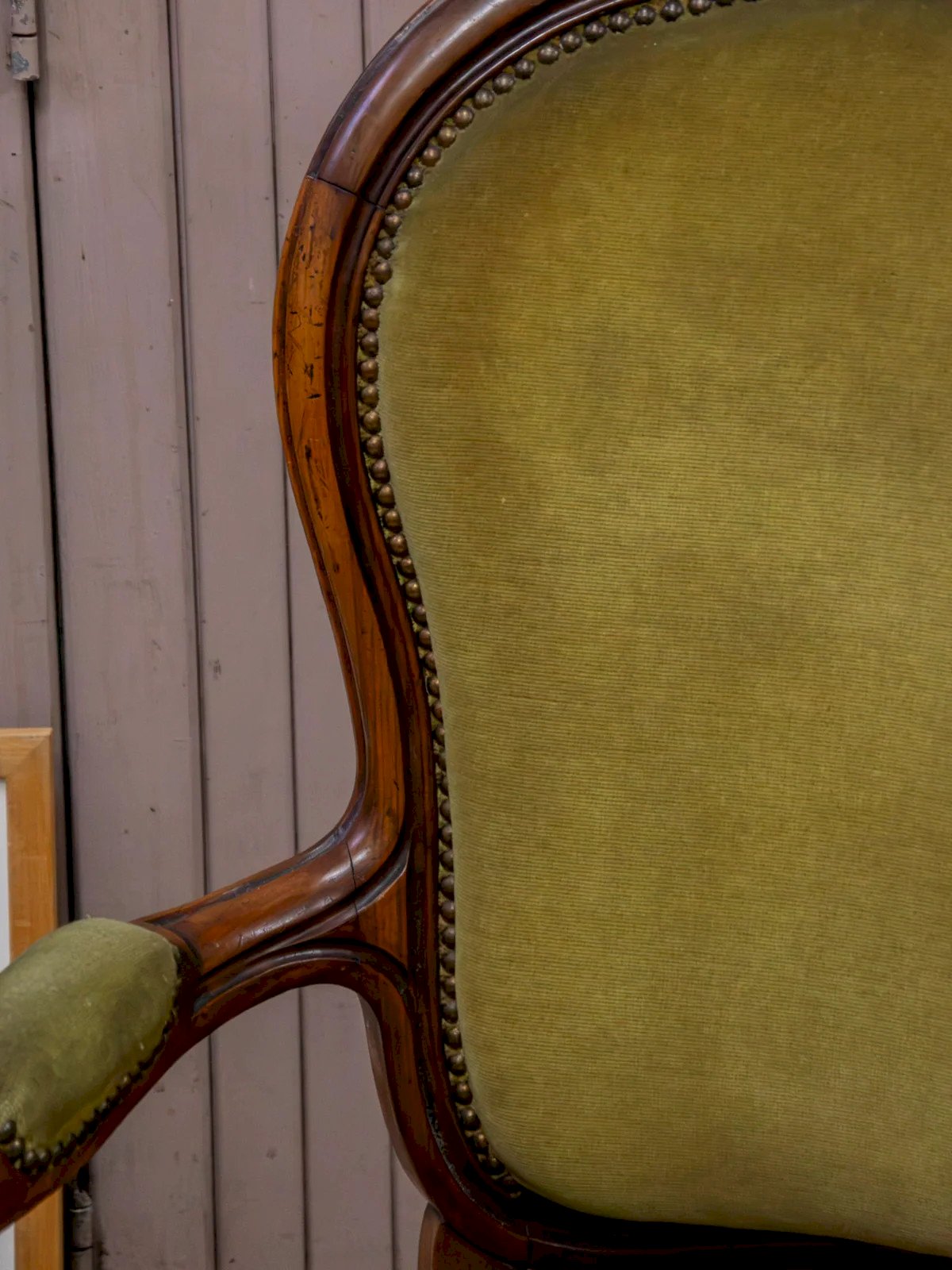
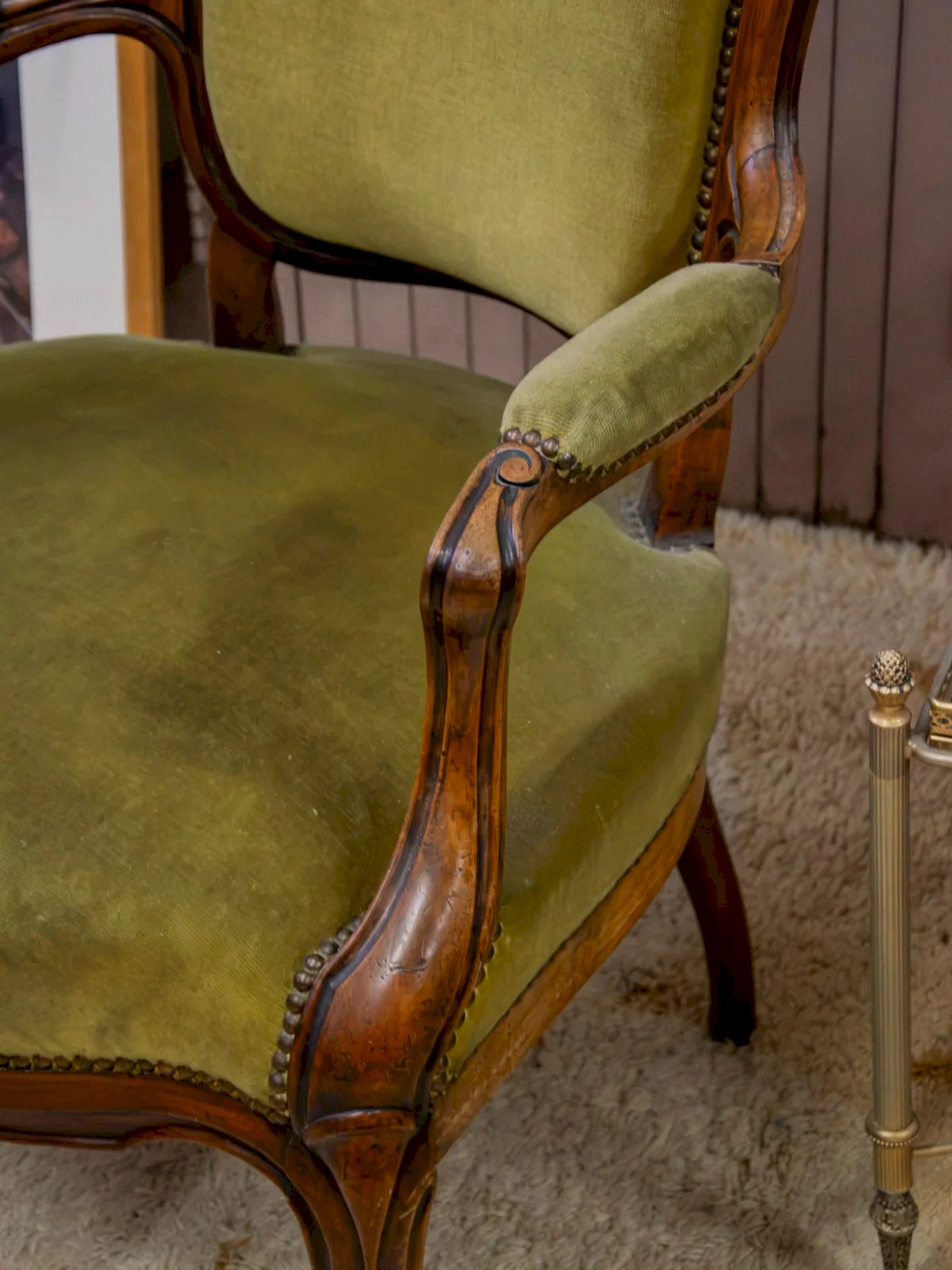
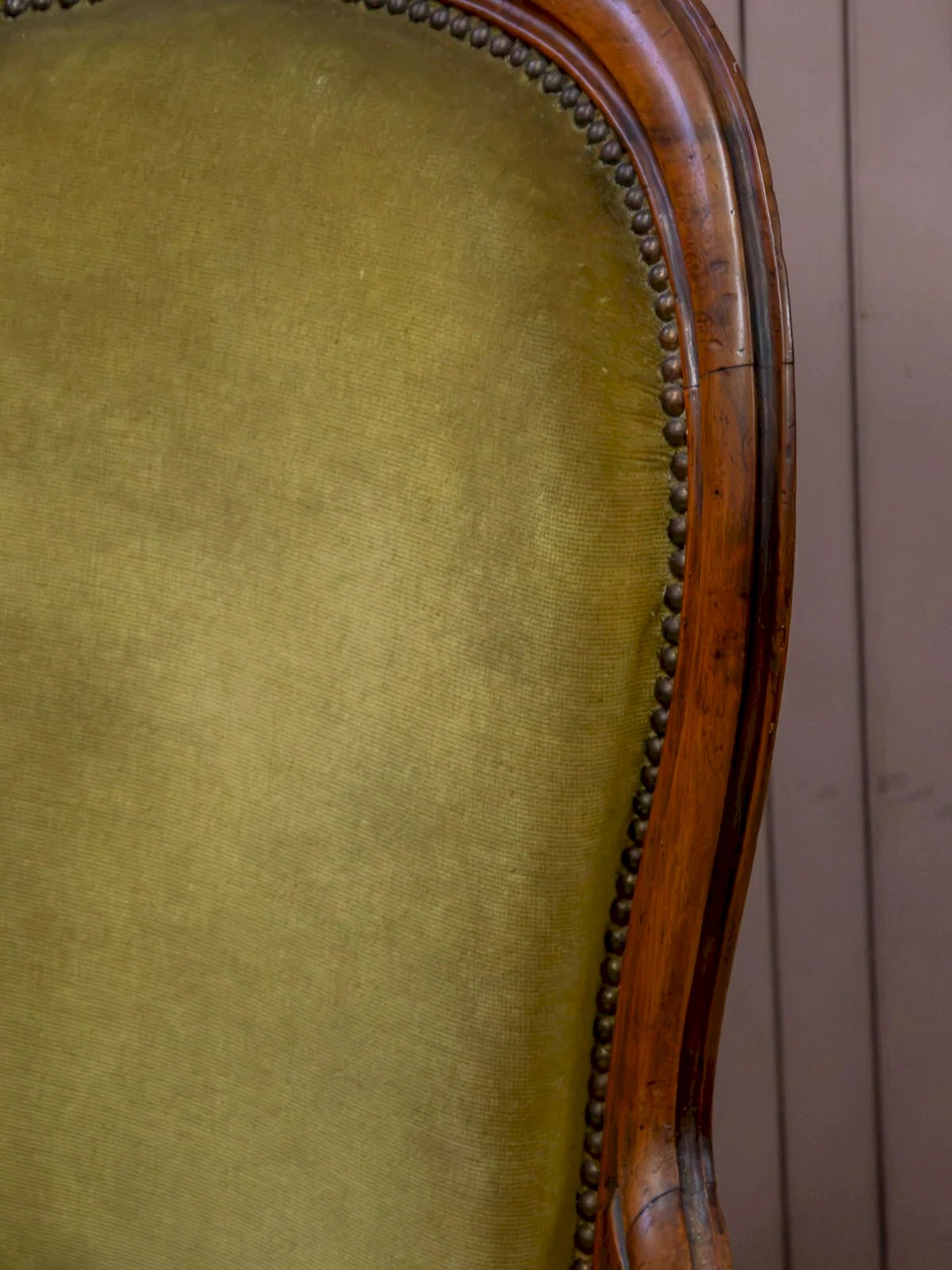
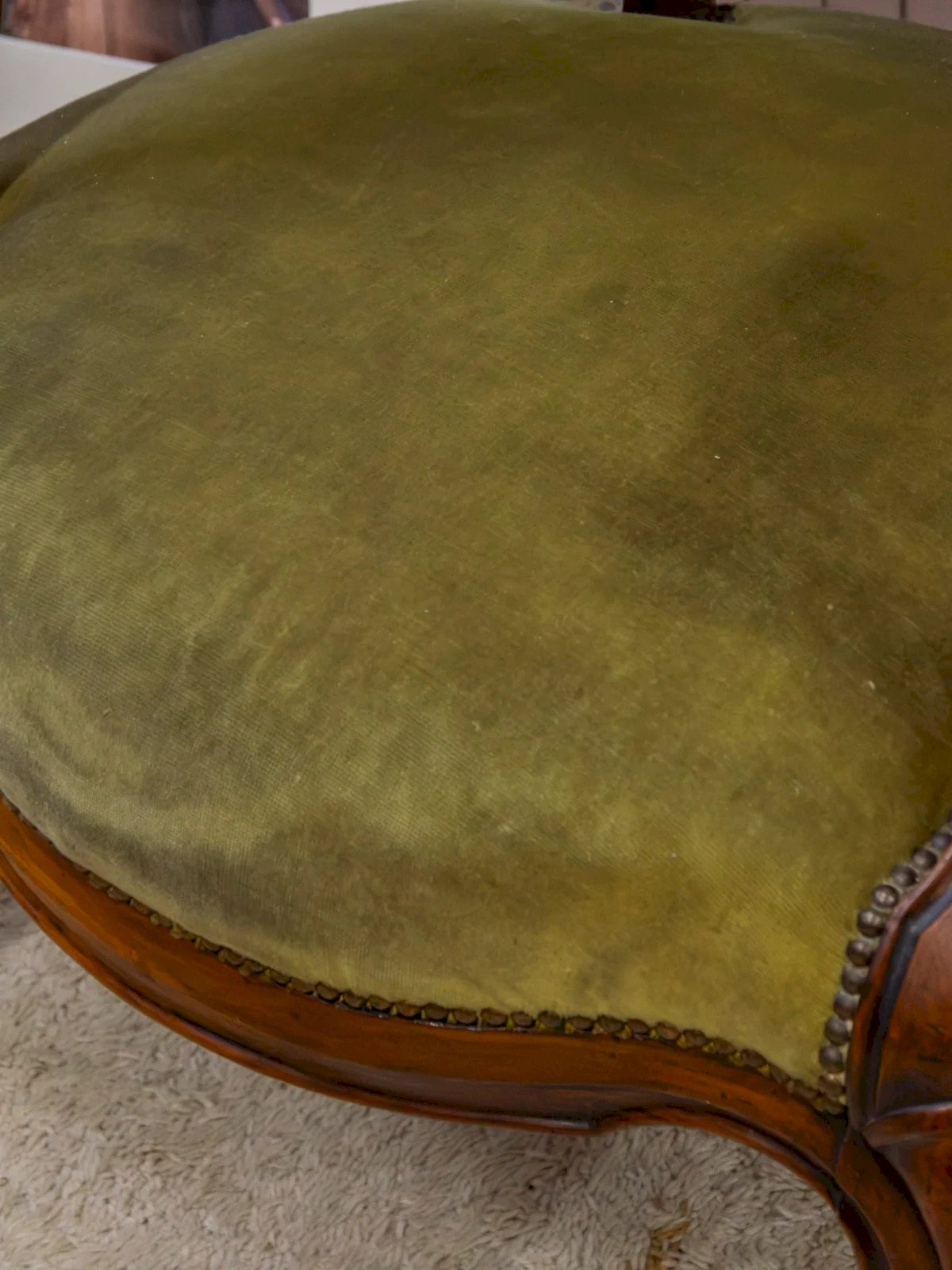
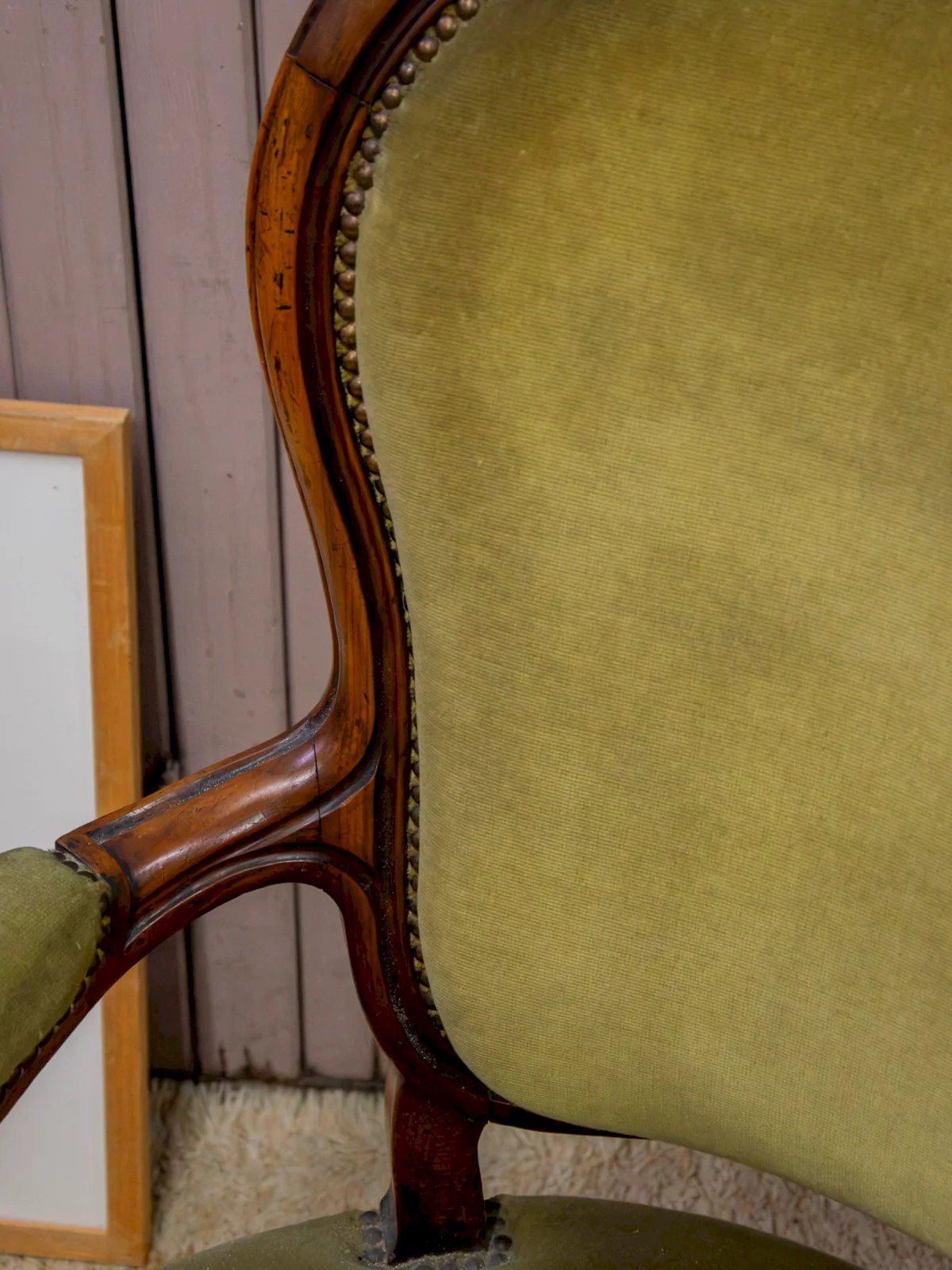
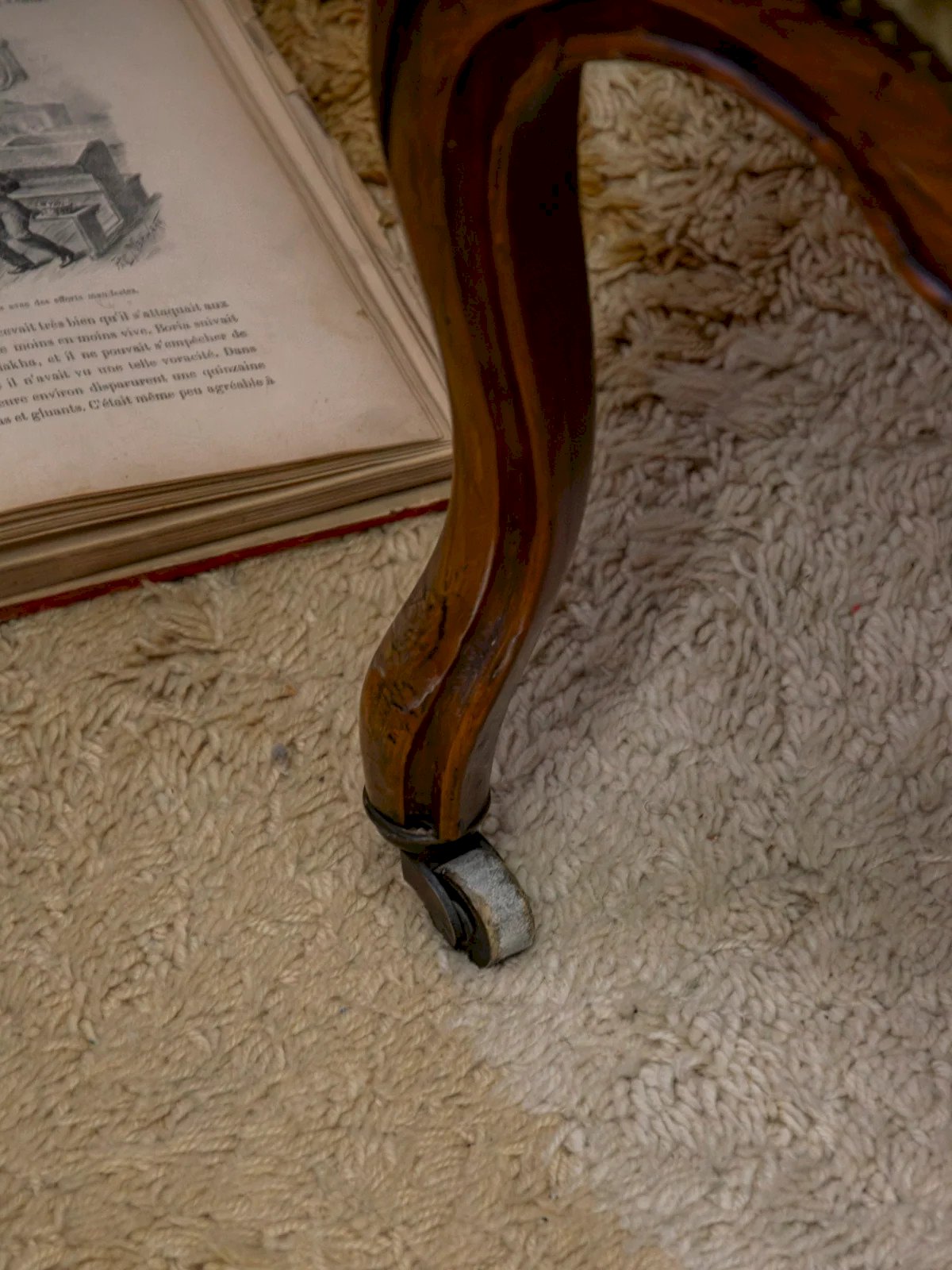
Found at a flea market, this dark wood armchair with green fabric adds a countryside touch full of refinement to a living room. The nailhead trim highlights the seat and backrest, while the wheels at the feet make it easy to move around as needed. Its balanced presence, tall back, and appropriately high seat make it a pleasant chair for taking the time to read or settle in for a coffee. In a bedroom, it fits in next to a dressing table, accompanied by a brass lamp and an open book. Width: 59 cm Depth: 55 cm Height: 102 cm Seat height: 42 cm Seat width: 47 cm Seat depth: 48 cm A brief history of the armchair If the chair is made for work or meals, the armchair was born in the 17th century for a single mission: rest. Its name comes from the old French "faudesteuil," a folding seat for dignitaries, but it emancipated itself under Louis XV to become this piece of comfort equipped with armrests. Unlike the chair, it favors a wider seat and a reclined backrest, inviting conversation rather than rigid posture. Whether it is a "bergère" with full cheeks to shield from drafts or a lighter "bridge" armchair, it embodies the evolution of the art of living.
Réf :
#414755
Brand / From : Debongout
Related Products



Comments
Ernest, the antique armchair with green velvet No. 1731
199€
75002 Paris
Ce site contient des liens d’affiliation pour lesquels je peux recevoir une compensation.
Description
Found at a flea market, this dark wood armchair with green fabric adds a countryside touch full of refinement to a living room. The nailhead trim highlights the seat and backrest, while the wheels at the feet make it easy to move around as needed. Its balanced presence, tall back, and appropriately high seat make it a pleasant chair for taking the time to read or settle in for a coffee. In a bedroom, it fits in next to a dressing table, accompanied by a brass lamp and an open book. Width: 59 cm Depth: 55 cm Height: 102 cm Seat height: 42 cm Seat width: 47 cm Seat depth: 48 cm A brief history of the armchair If the chair is made for work or meals, the armchair was born in the 17th century for a single mission: rest. Its name comes from the old French "faudesteuil," a folding seat for dignitaries, but it emancipated itself under Louis XV to become this piece of comfort equipped with armrests. Unlike the chair, it favors a wider seat and a reclined backrest, inviting conversation rather than rigid posture. Whether it is a "bergère" with full cheeks to shield from drafts or a lighter "bridge" armchair, it embodies the evolution of the art of living.
Réf :
#414755
Brand / From : Debongout