 English
 Français


Description
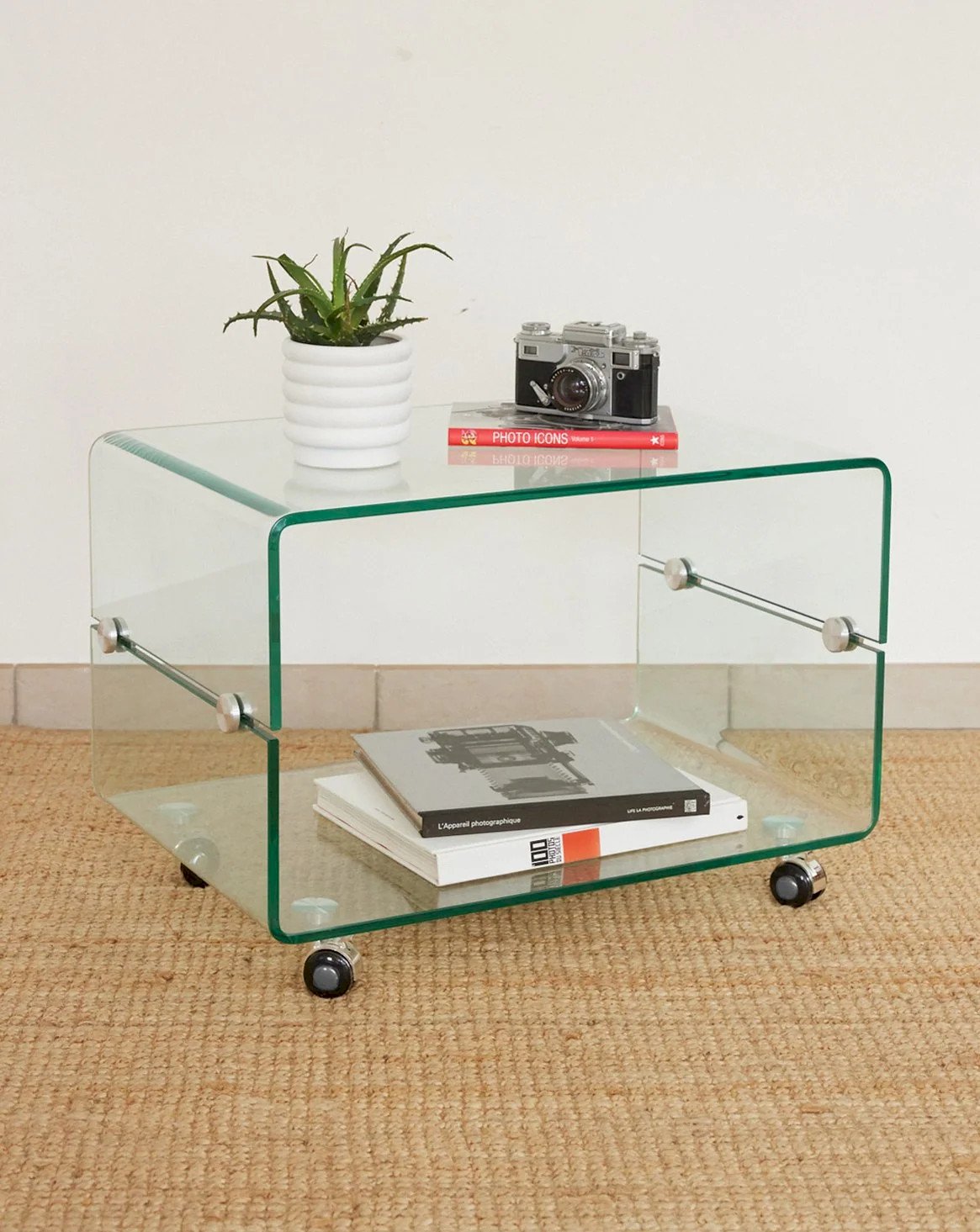
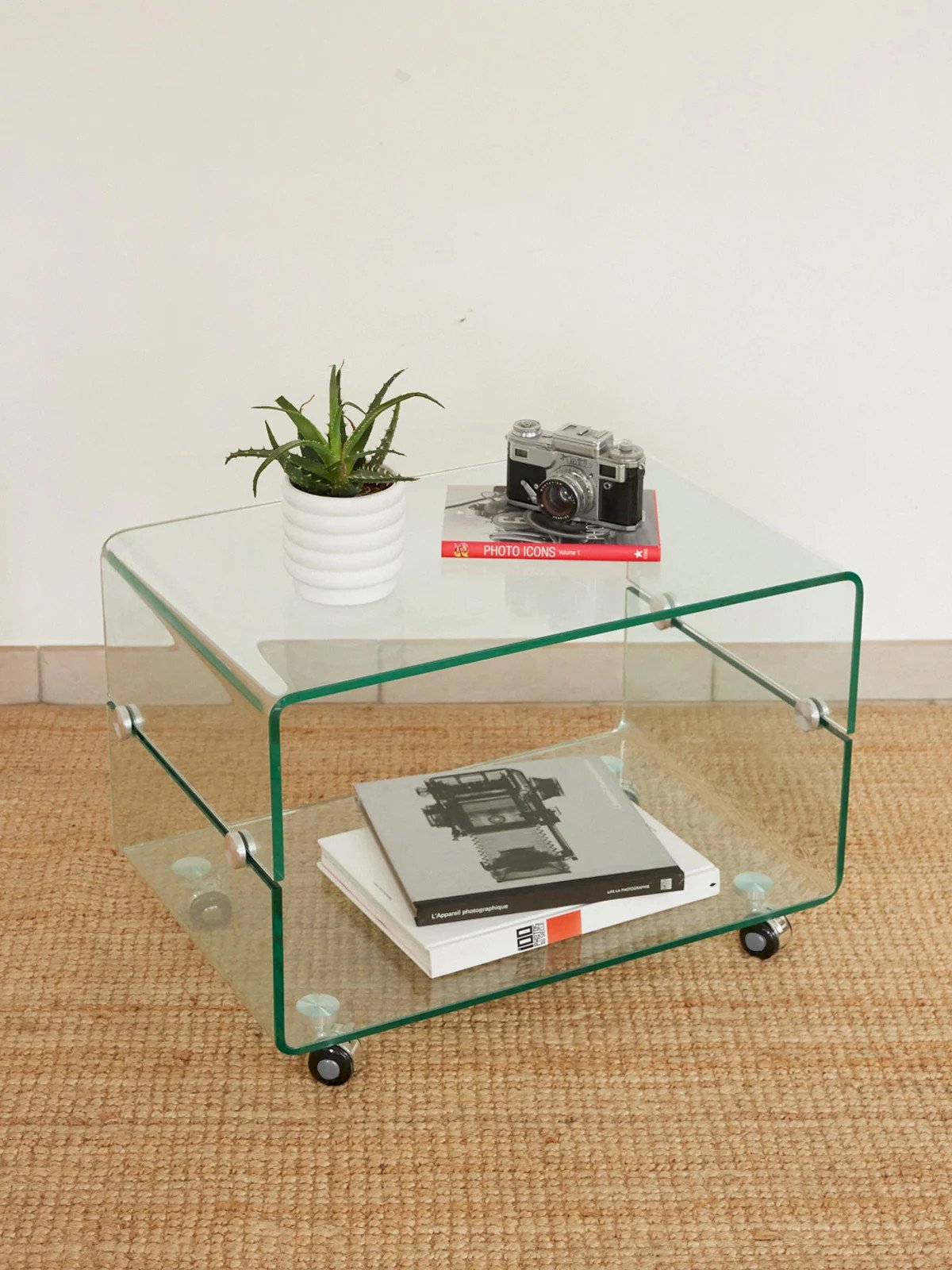
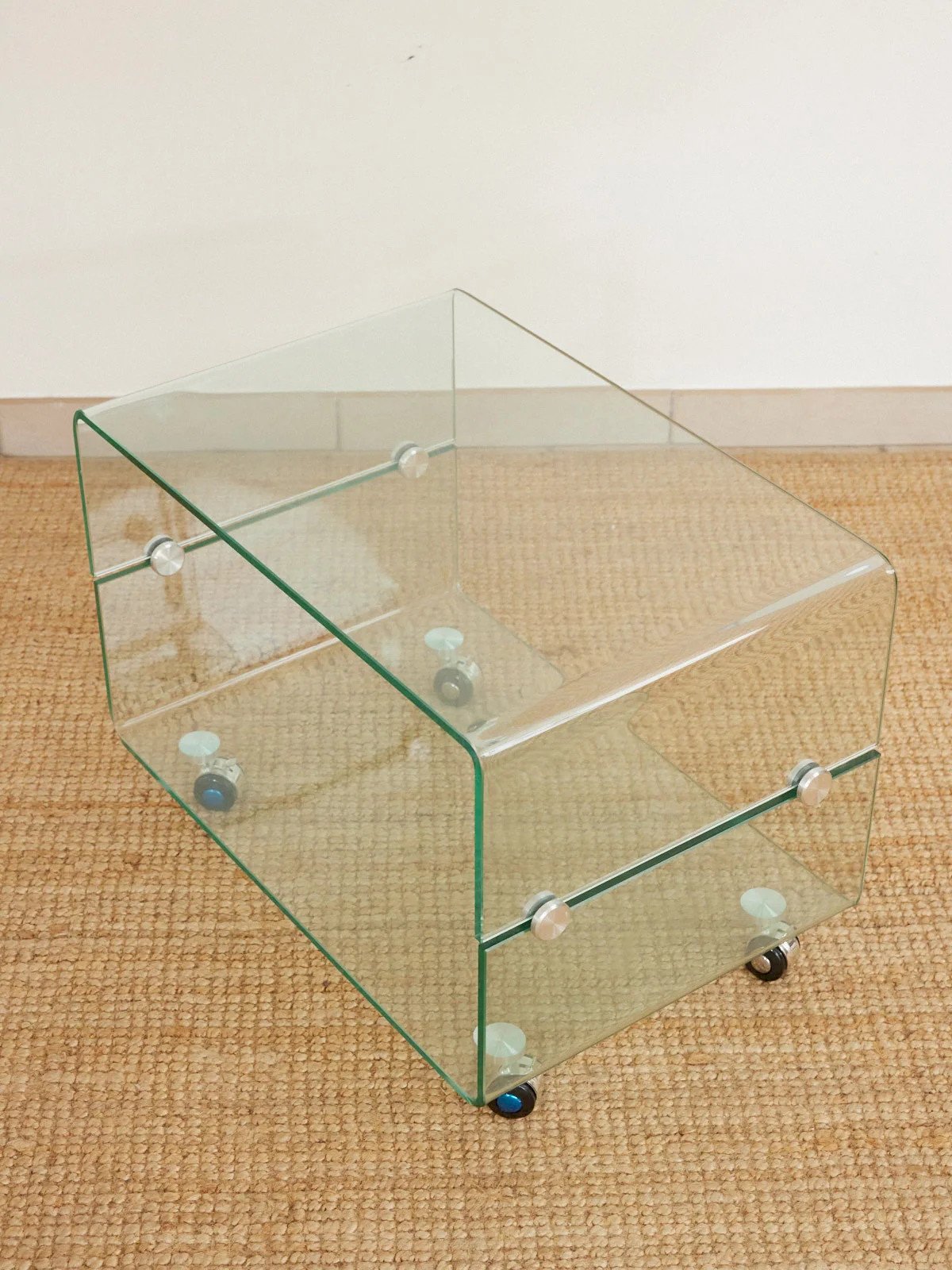
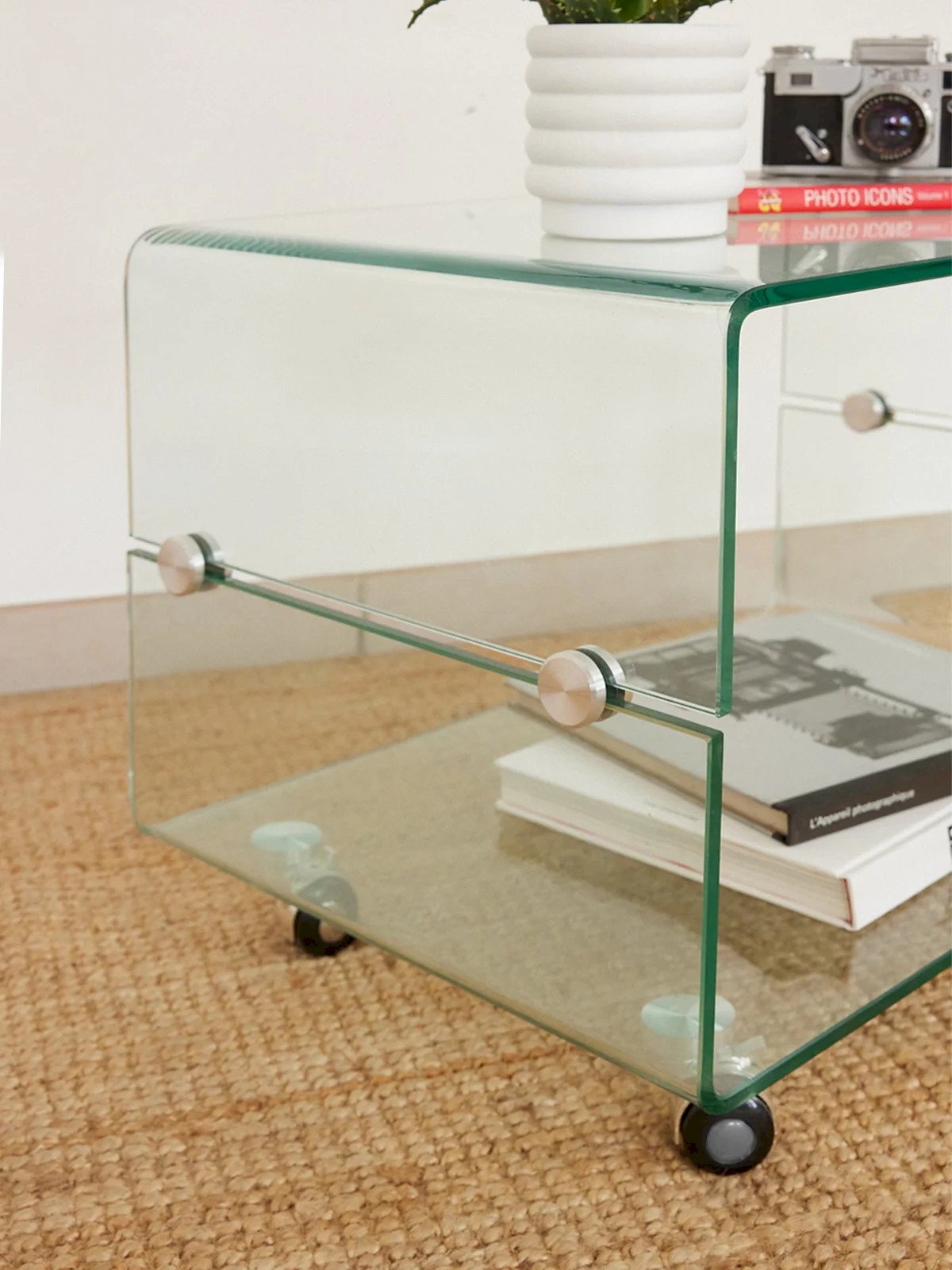
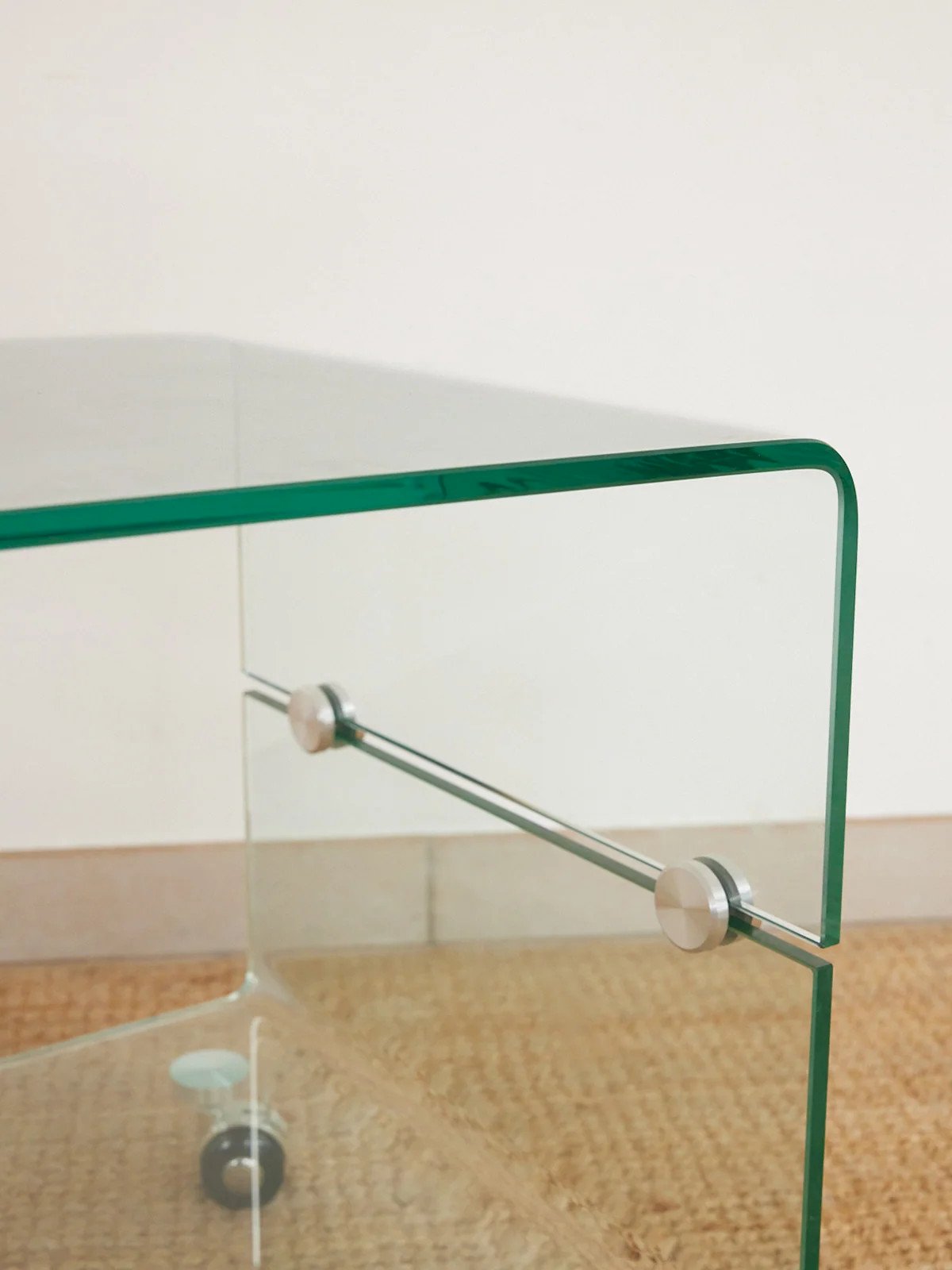
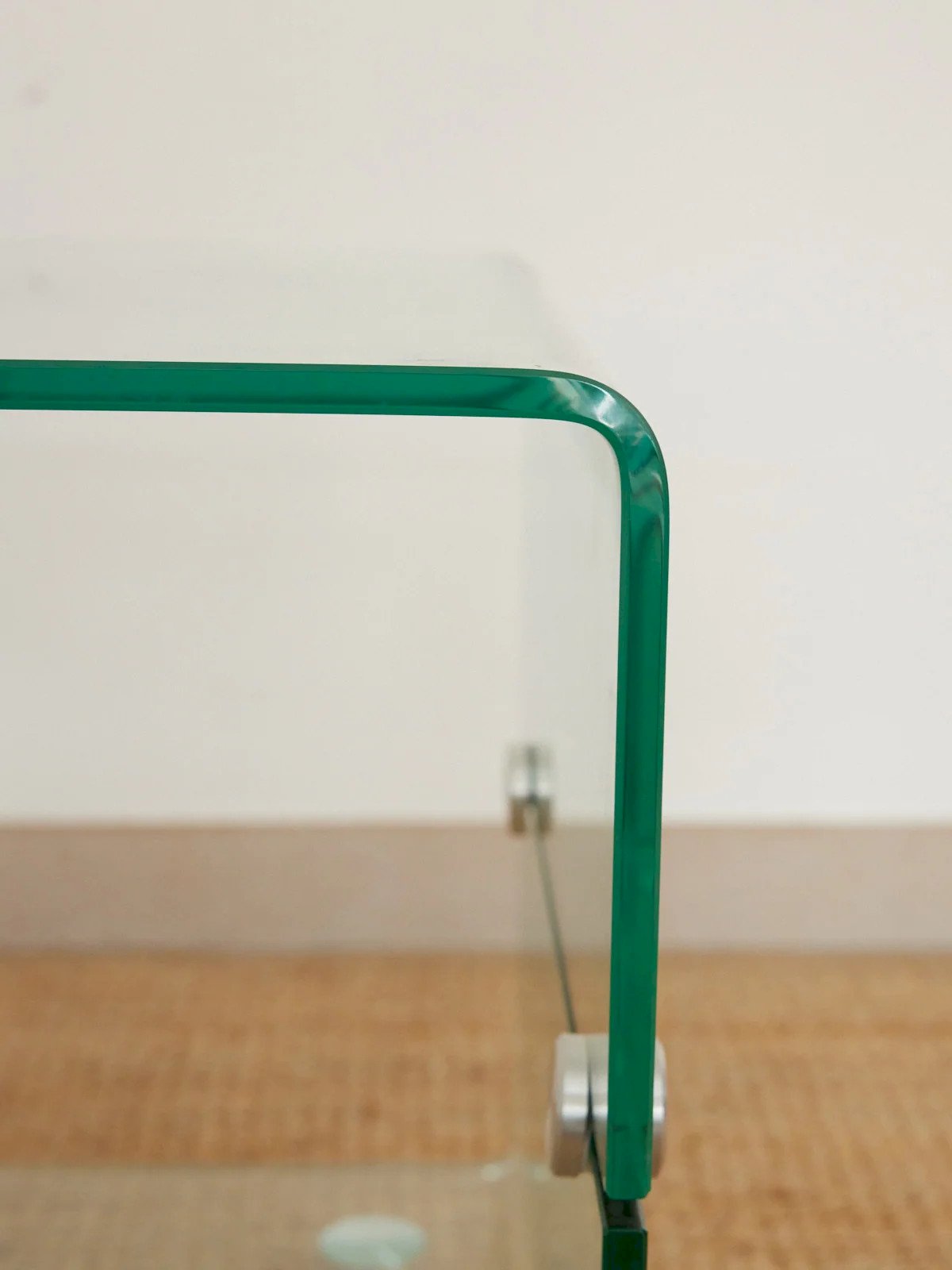
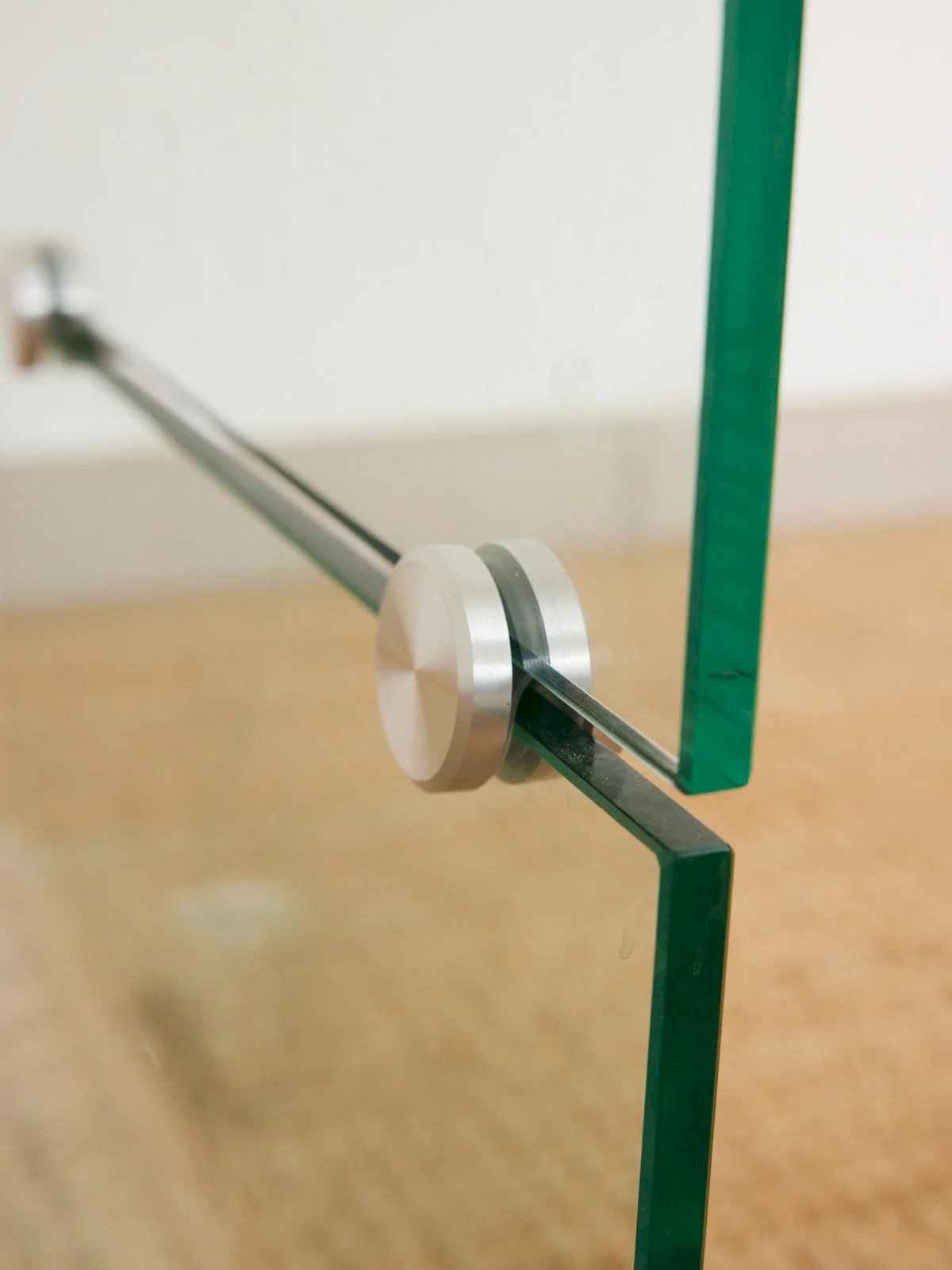
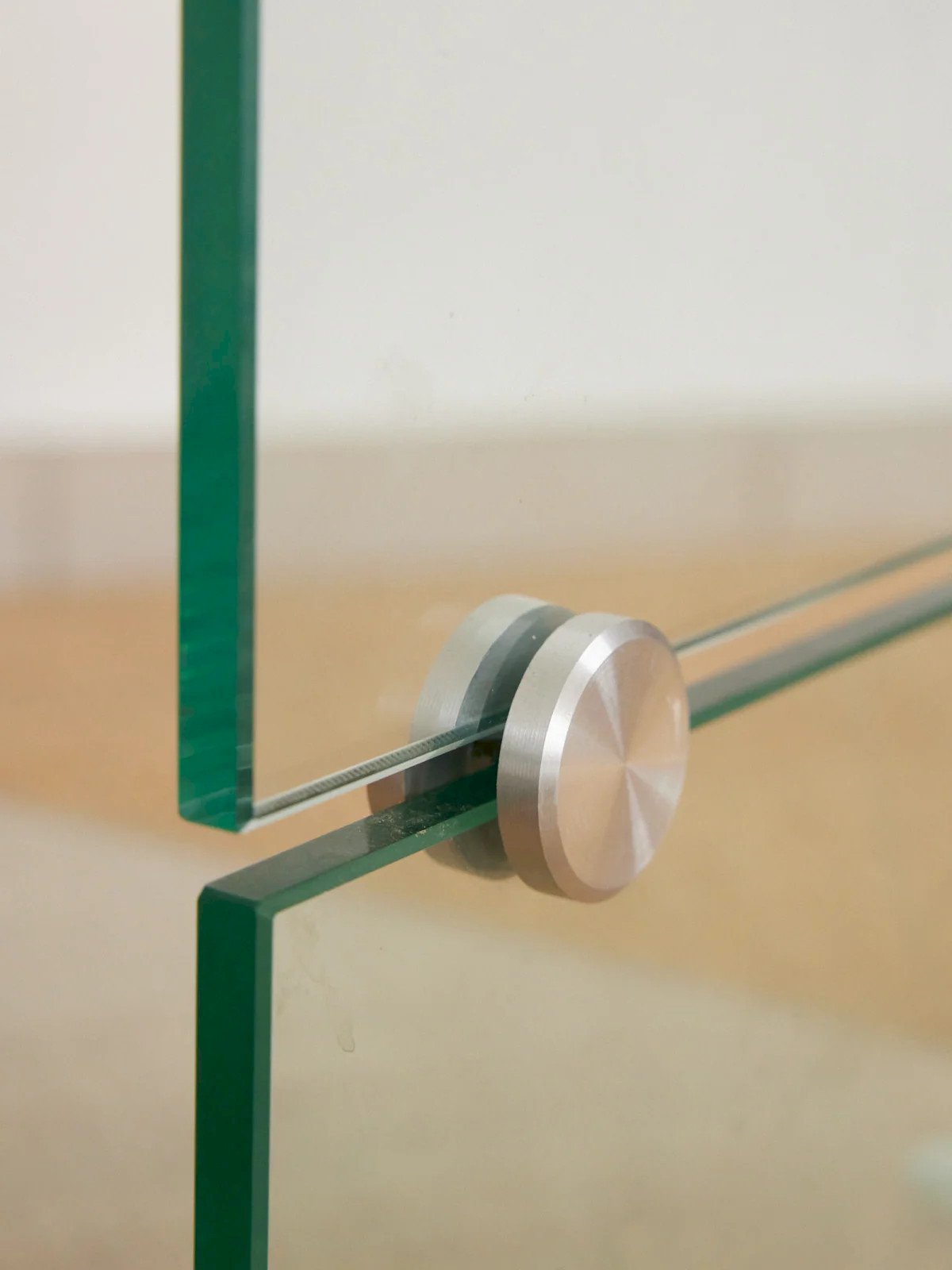
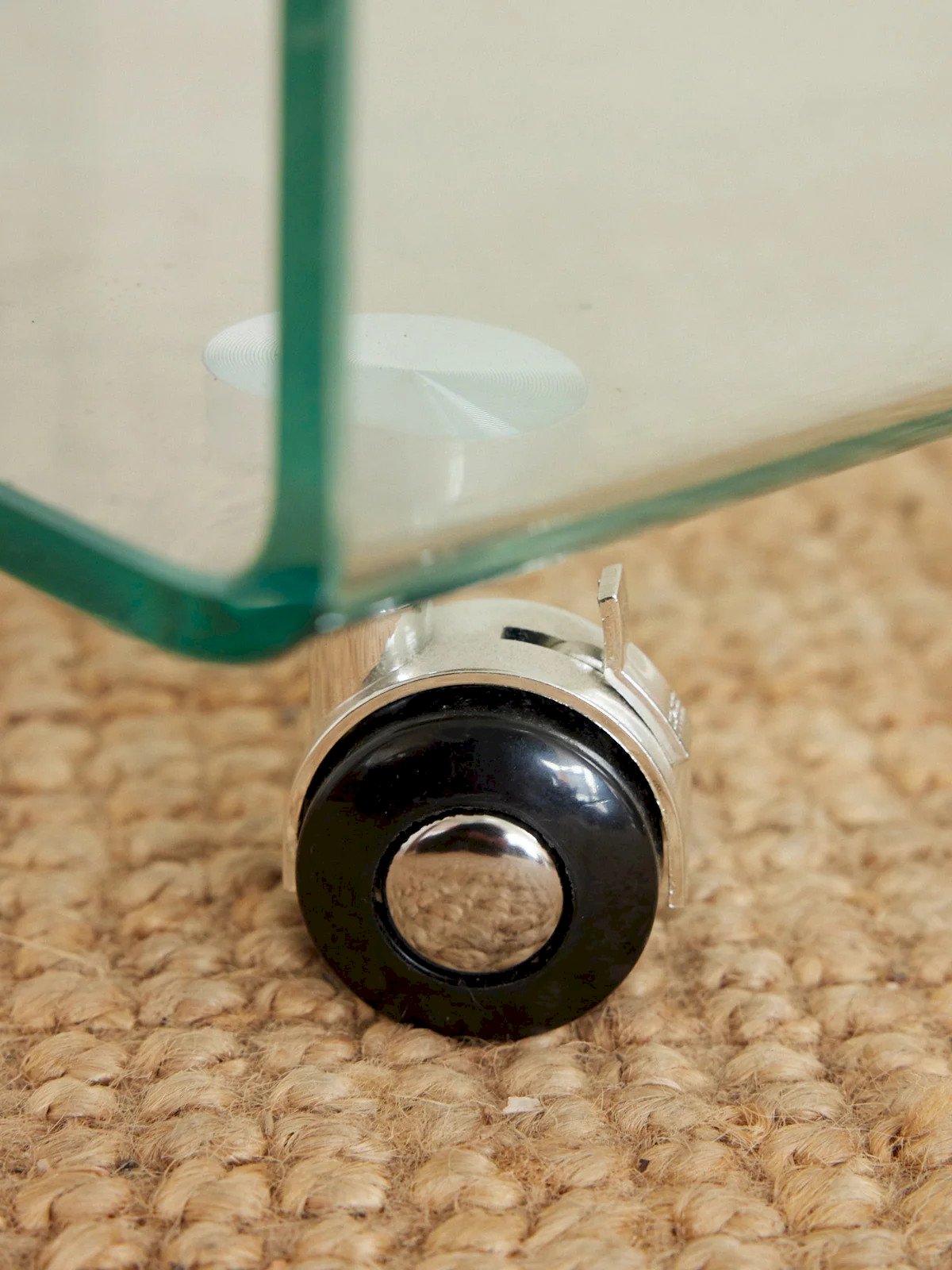
This second-hand transparent glass coffee table adds a contemporary touch of great visual lightness to the living room. Composed of two parts, it plays with transparency to allow the space to breathe and accommodates books, candles, or a vase without weighing down the whole. Its luminous material naturally pairs with a fabric sofa, a textured rug, or understated seating, creating a clean atmosphere. Positioned in front of a sofa, it offers a tabletop at a good height for a cup of coffee, a bedside lamp, or some magazines. On a light rug, it composes a refined scene with a bouquet of white flowers and a stack of art books. Length: 60 cm Width: 40 cm Height: 42 cm A Brief History of the Coffee Table Unlike dining tables, the coffee table truly emerged only in the early 20th century with the evolution of living rooms towards greater comfort and relaxation. Its intentionally low structure is designed to align with the seating height of armchairs and is inspired by oriental tea tables and 19th-century coffee supports. Referred to as a “salon table” or “cocktail table,” it is defined by its generous top supported by a short, sturdy base.
Réf :
#414272
Brand / From : Debongout
Related Products


Comments
Donna, the glass coffee table N°1658
489€
75002 Paris
Ce site contient des liens d’affiliation pour lesquels je peux recevoir une compensation.
Description
This second-hand transparent glass coffee table adds a contemporary touch of great visual lightness to the living room. Composed of two parts, it plays with transparency to allow the space to breathe and accommodates books, candles, or a vase without weighing down the whole. Its luminous material naturally pairs with a fabric sofa, a textured rug, or understated seating, creating a clean atmosphere. Positioned in front of a sofa, it offers a tabletop at a good height for a cup of coffee, a bedside lamp, or some magazines. On a light rug, it composes a refined scene with a bouquet of white flowers and a stack of art books. Length: 60 cm Width: 40 cm Height: 42 cm A Brief History of the Coffee Table Unlike dining tables, the coffee table truly emerged only in the early 20th century with the evolution of living rooms towards greater comfort and relaxation. Its intentionally low structure is designed to align with the seating height of armchairs and is inspired by oriental tea tables and 19th-century coffee supports. Referred to as a “salon table” or “cocktail table,” it is defined by its generous top supported by a short, sturdy base.
Réf :
#414272
Brand / From : Debongout