 English
 Français


Description
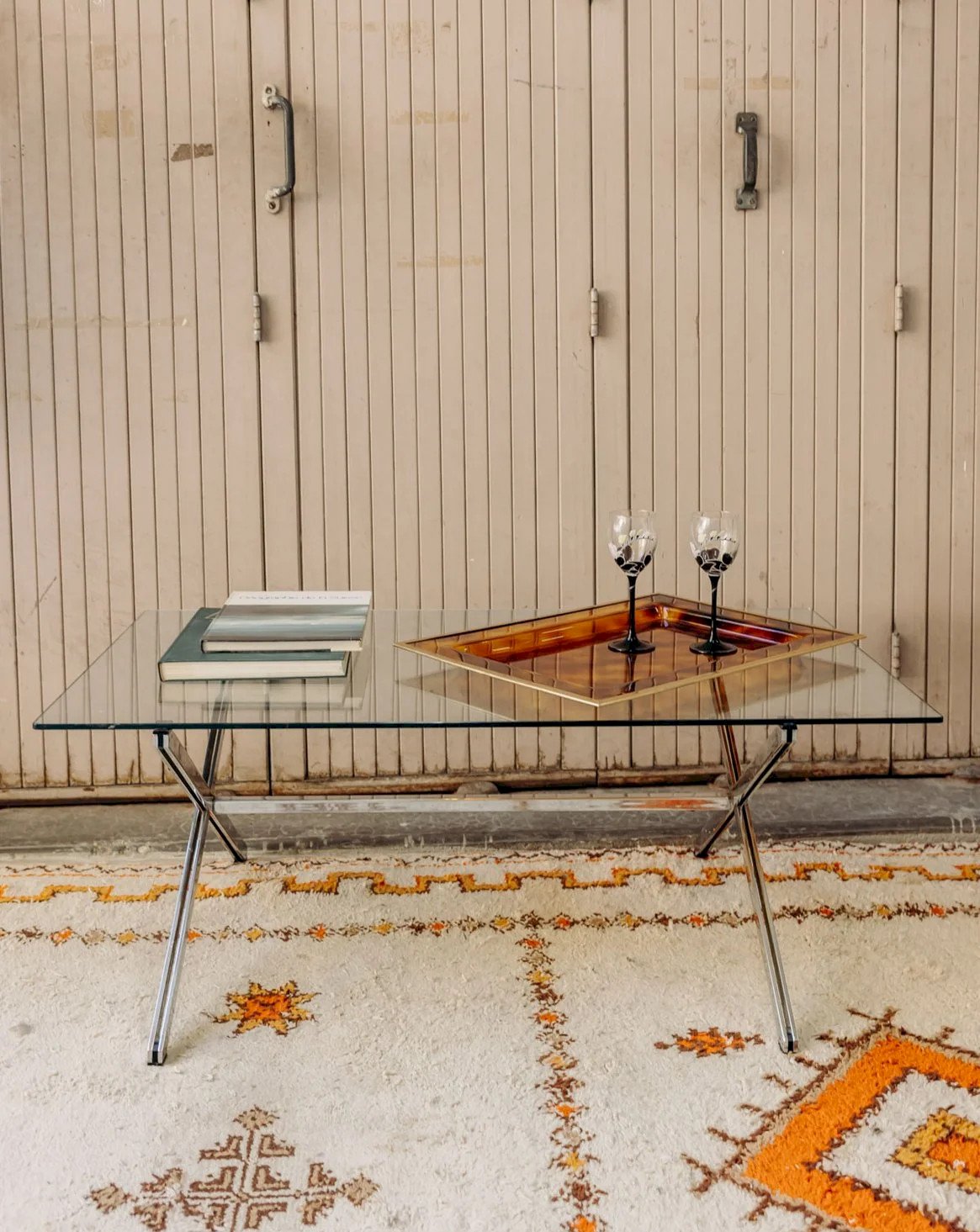
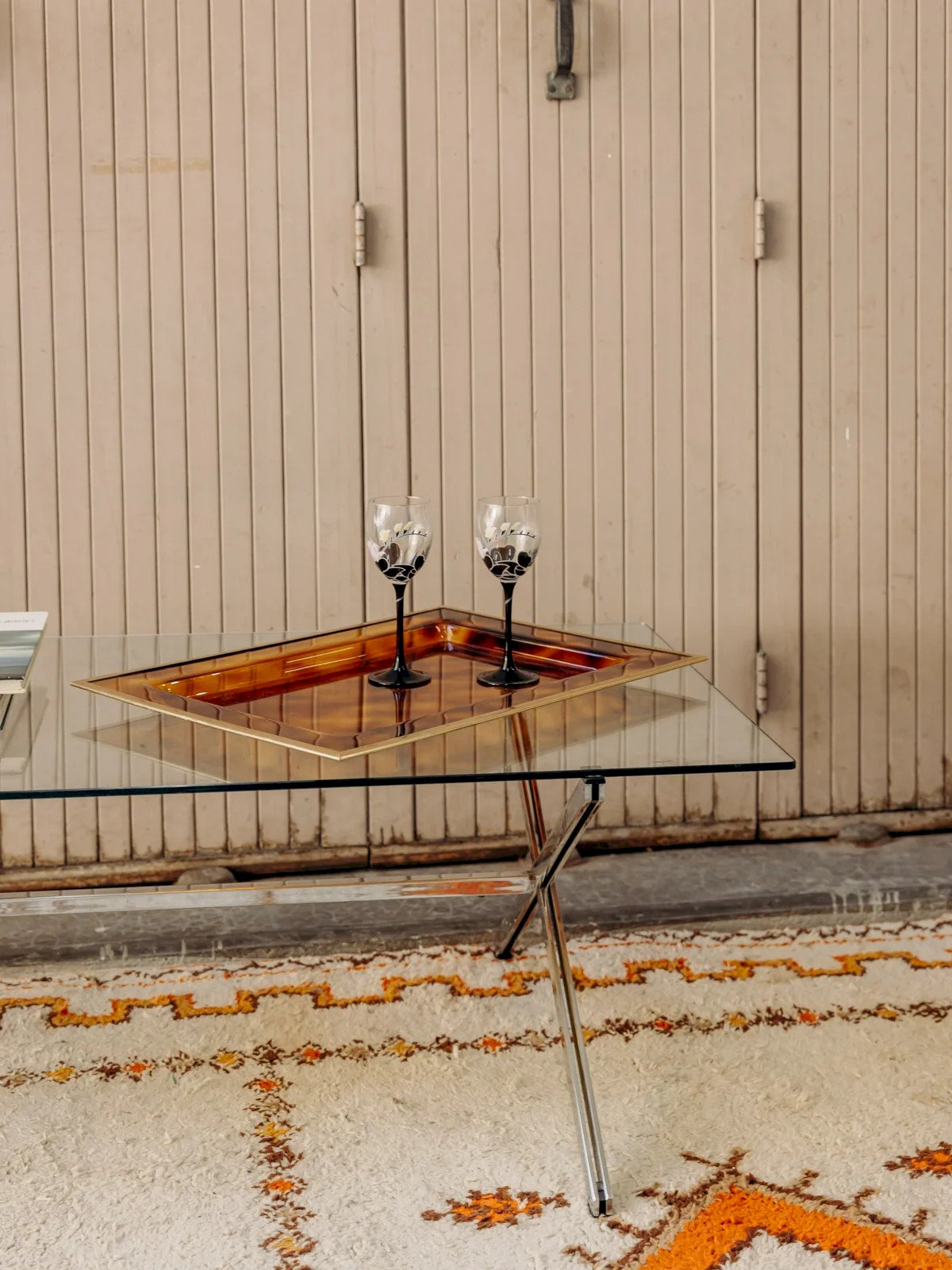
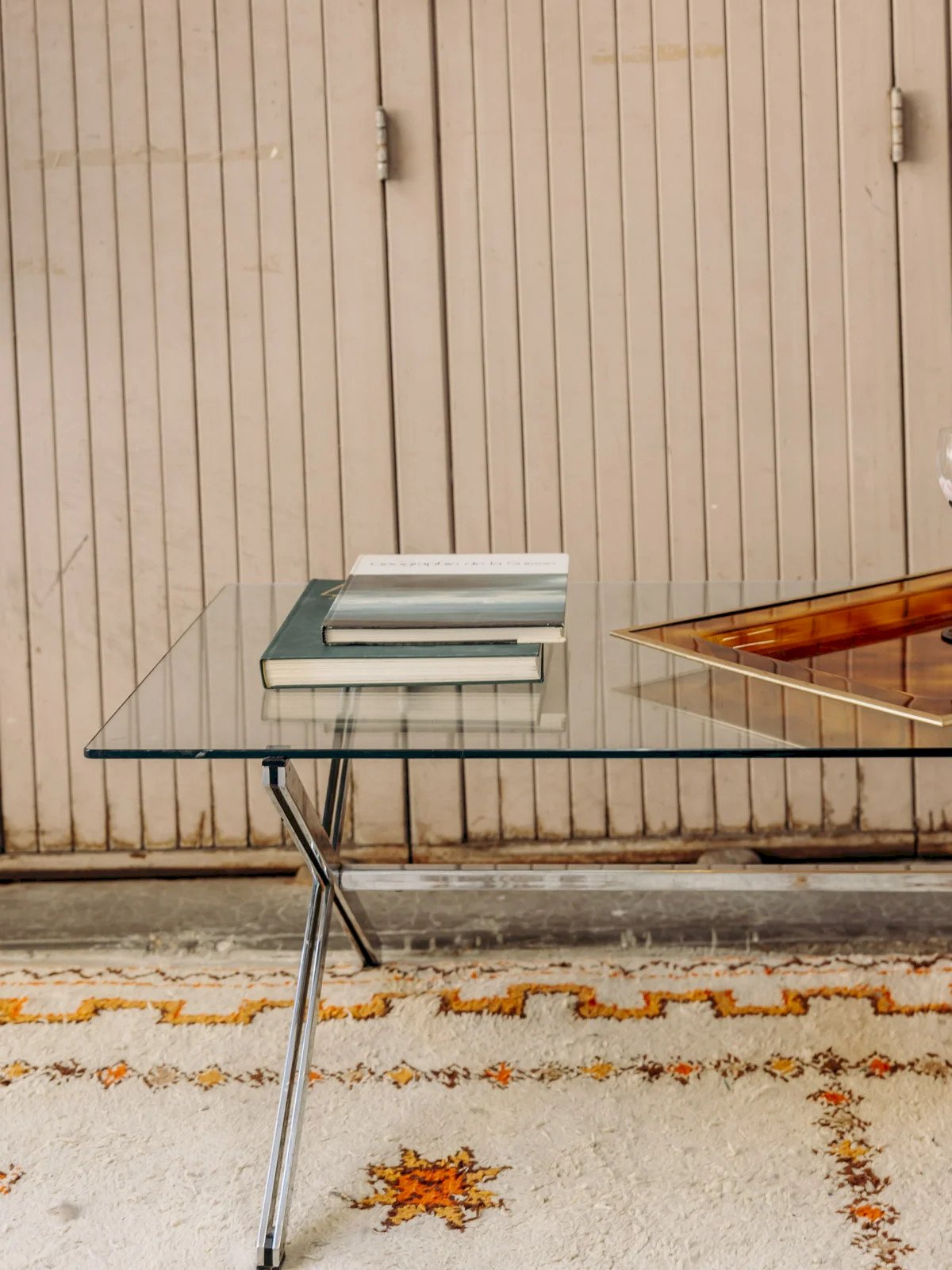
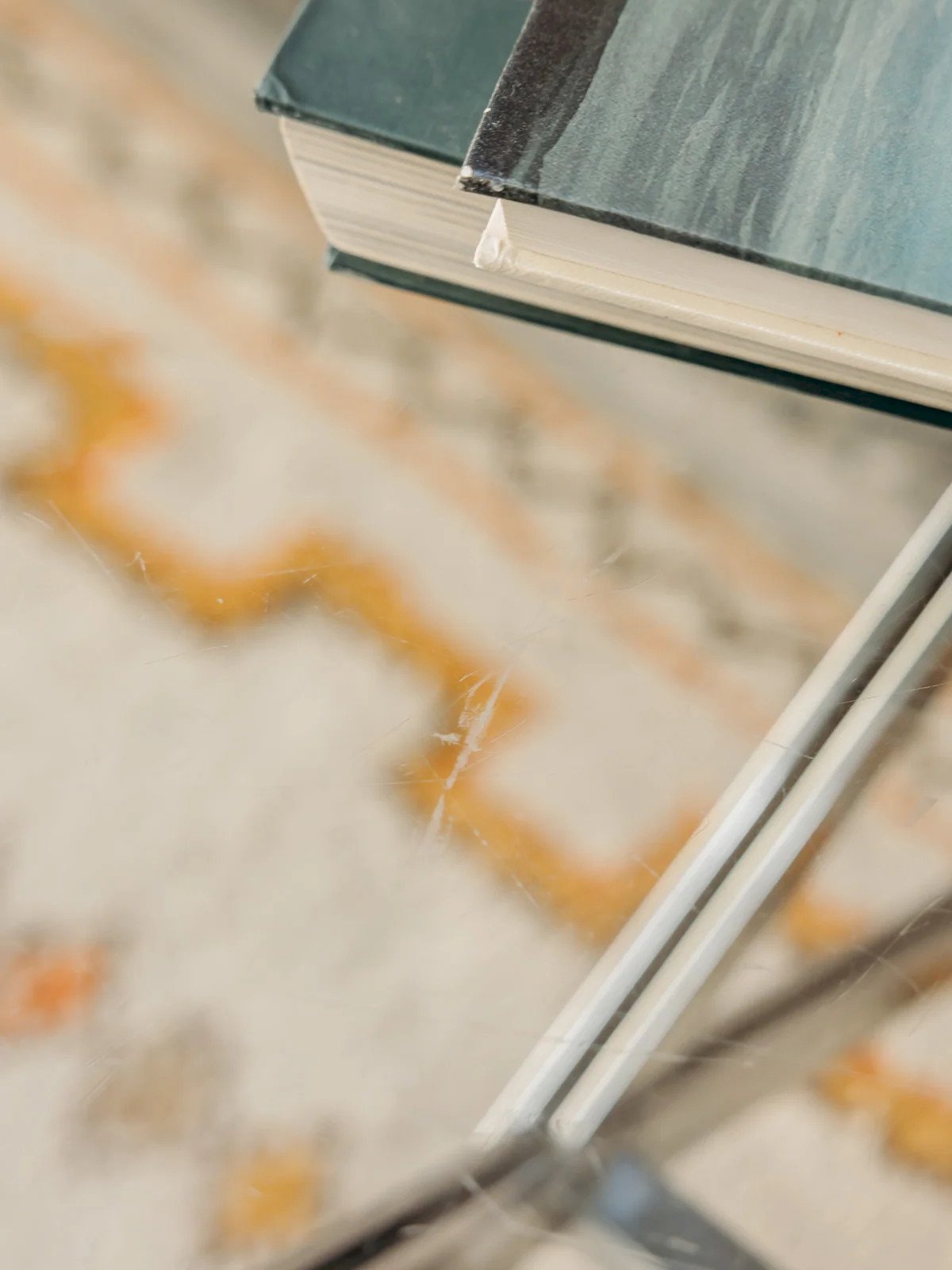
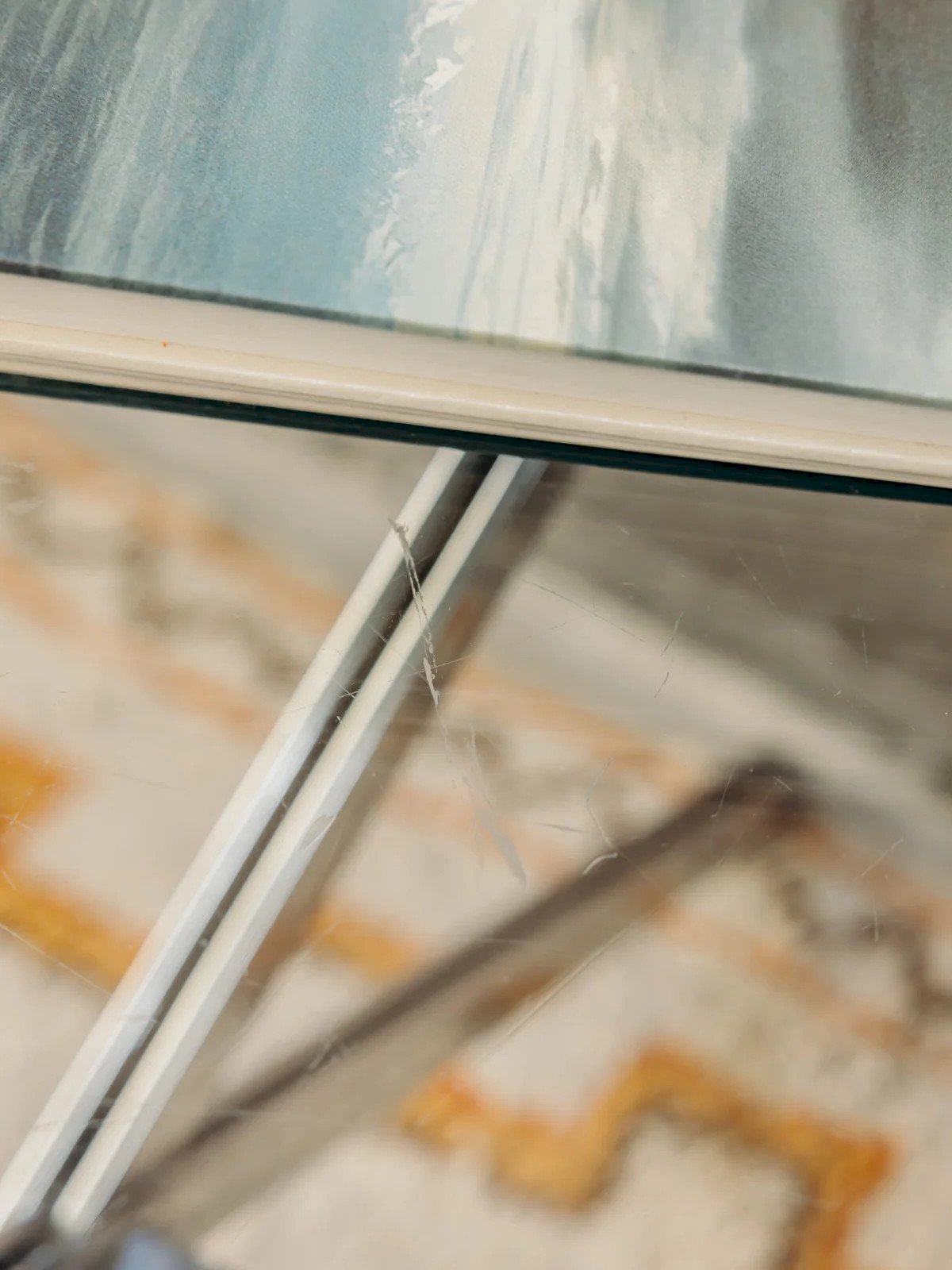
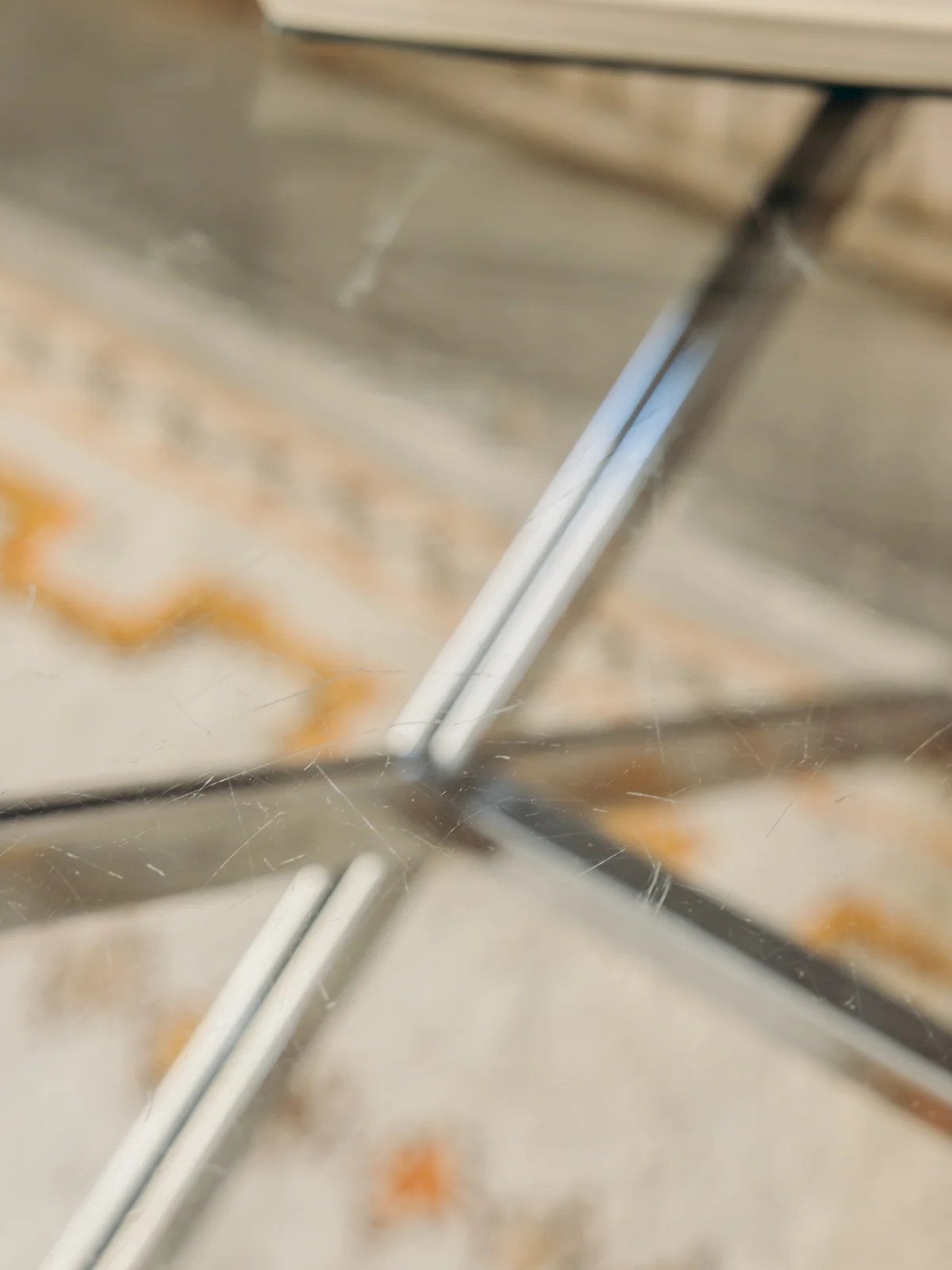
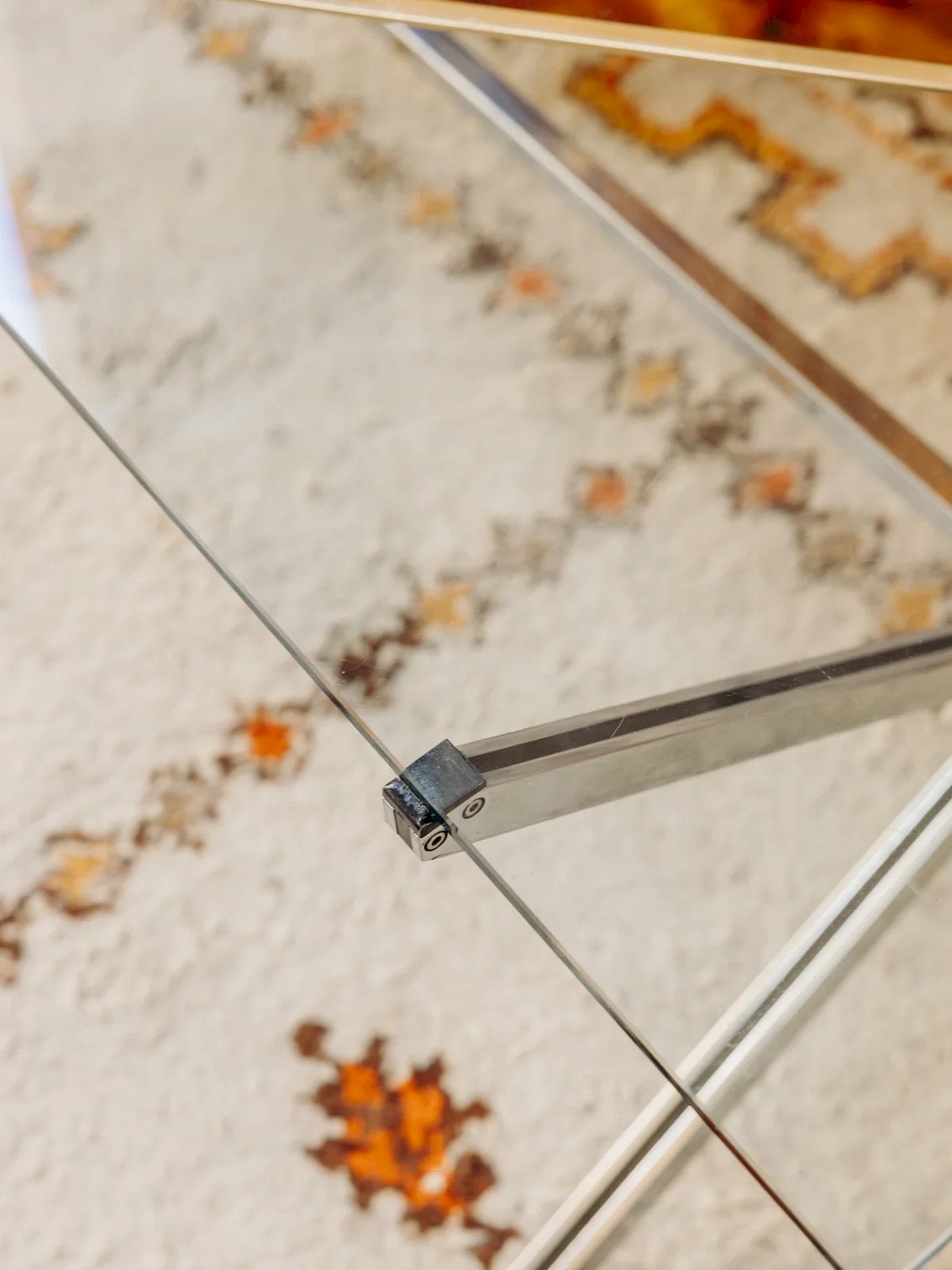
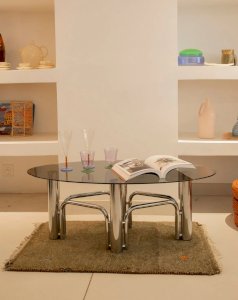
With its mid-century design and rectangular silhouette, this transparent glass coffee table adds a contemporary and refined touch to the living room. The transparency of the top visually lightens the overall look, while allowing light to circulate around the sofa and armchairs. Its measured format makes it an easy piece to integrate into a living space, perfect for holding books, a coffee cup, or a beautiful decorative object. Carefully sourced, it combines the elegance of a graphic line with the simplicity of a material that blends into almost any decor. Imagined next to a linen sofa, it will be perfect with a sculptural vase and a few art magazines. Width: 106 cm Depth: 60 cm Height: 42 cm A brief history of the coffee table Unlike dining tables, the coffee table only really emerged in the early 20th century with the evolution of living rooms towards more comfort and relaxation. Its intentionally low structure aligns with the seat height of armchairs and is inspired by Eastern tea tables and 19th-century coffee supports. Referred to as a "salon table" or "cocktail table," it is characterized by its generous top supported by a short, sturdy base.
Réf :
#413672
Brand / From : Debongout
Related Products


Comments
Donna, the coffee table with a glass top No. 1559
569€
75002 Paris
Ce site contient des liens d’affiliation pour lesquels je peux recevoir une compensation.
Description
With its mid-century design and rectangular silhouette, this transparent glass coffee table adds a contemporary and refined touch to the living room. The transparency of the top visually lightens the overall look, while allowing light to circulate around the sofa and armchairs. Its measured format makes it an easy piece to integrate into a living space, perfect for holding books, a coffee cup, or a beautiful decorative object. Carefully sourced, it combines the elegance of a graphic line with the simplicity of a material that blends into almost any decor. Imagined next to a linen sofa, it will be perfect with a sculptural vase and a few art magazines. Width: 106 cm Depth: 60 cm Height: 42 cm A brief history of the coffee table Unlike dining tables, the coffee table only really emerged in the early 20th century with the evolution of living rooms towards more comfort and relaxation. Its intentionally low structure aligns with the seat height of armchairs and is inspired by Eastern tea tables and 19th-century coffee supports. Referred to as a "salon table" or "cocktail table," it is characterized by its generous top supported by a short, sturdy base.
Réf :
#413672
Brand / From : Debongout