 English
 Français


Description
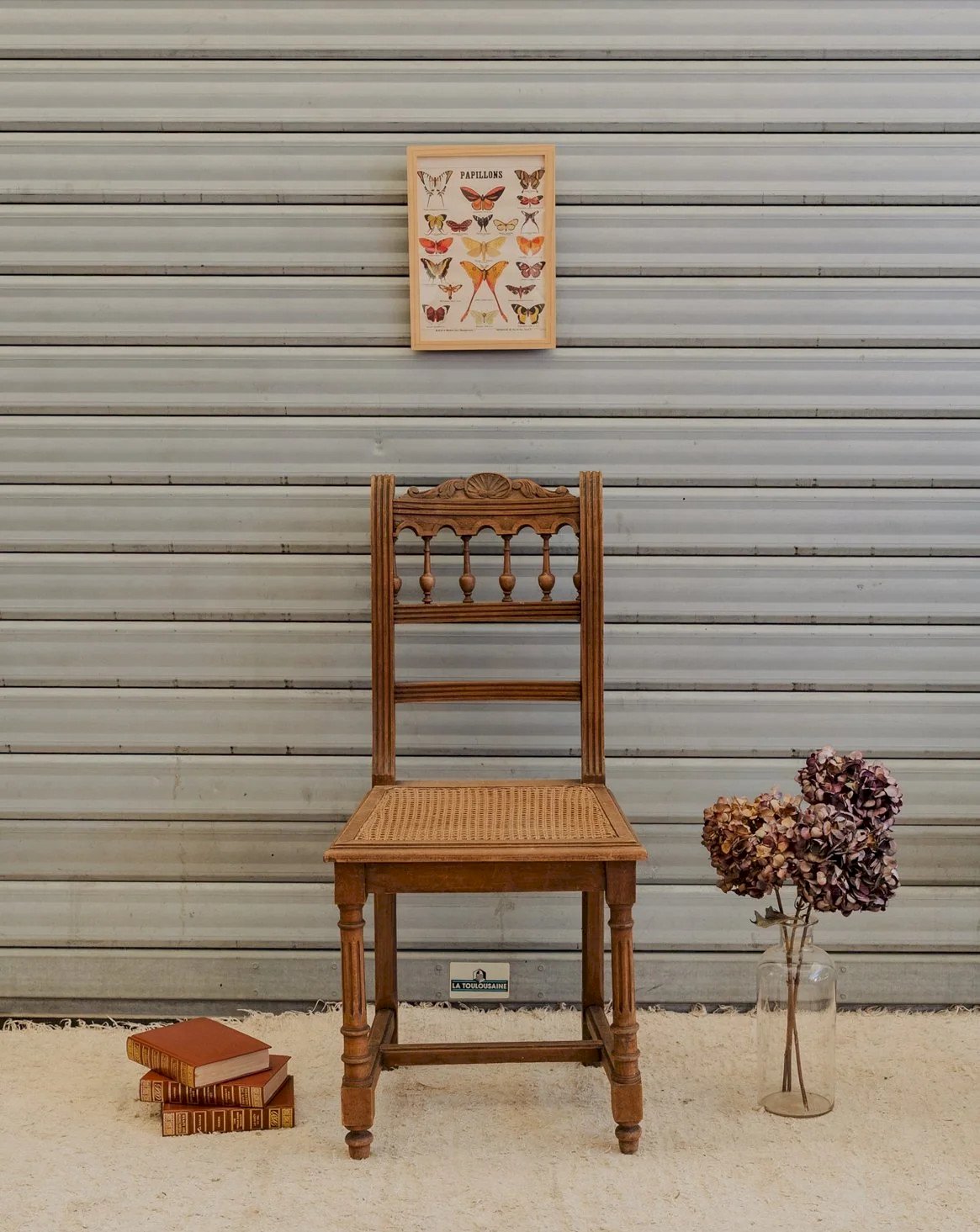
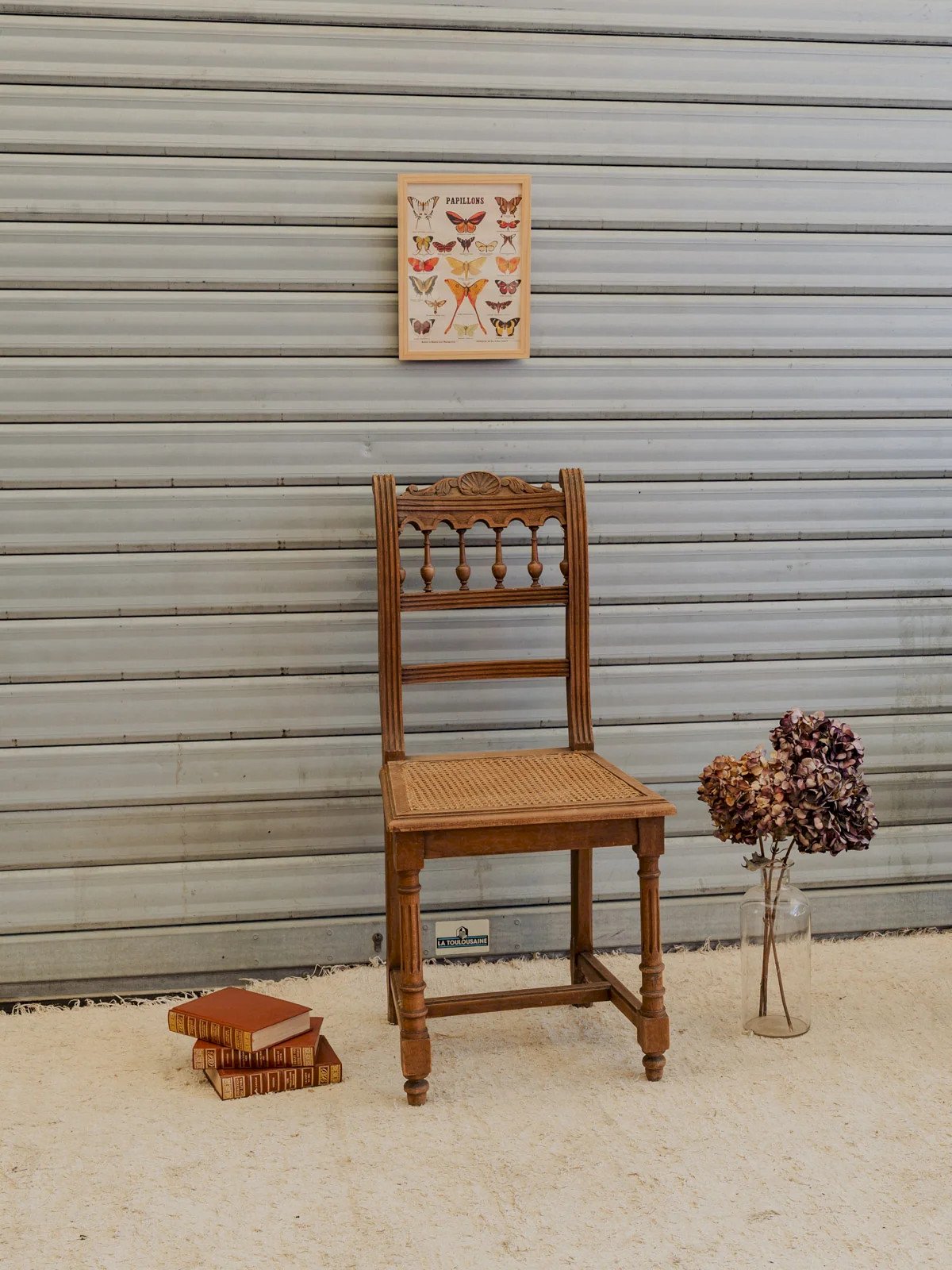
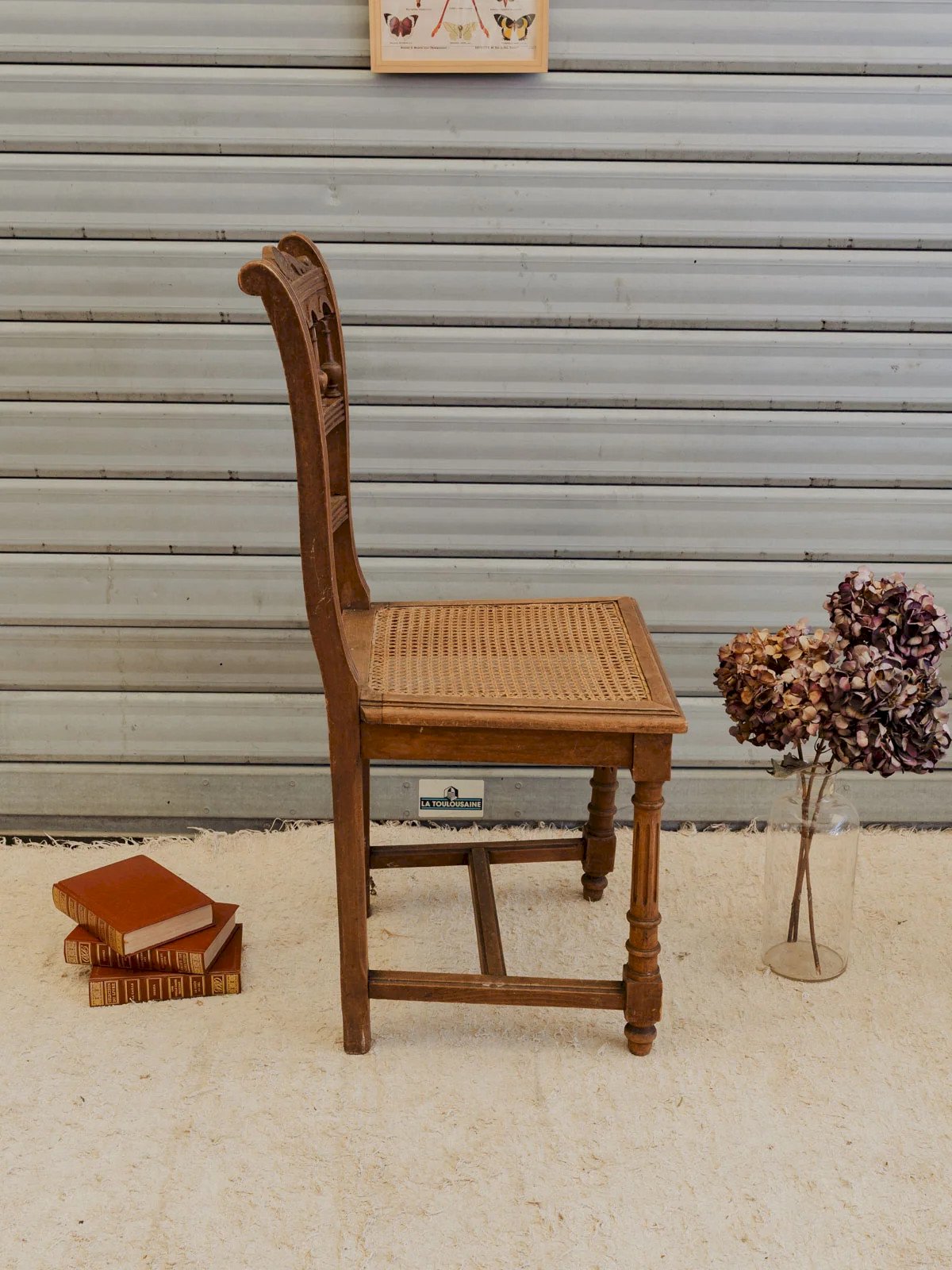
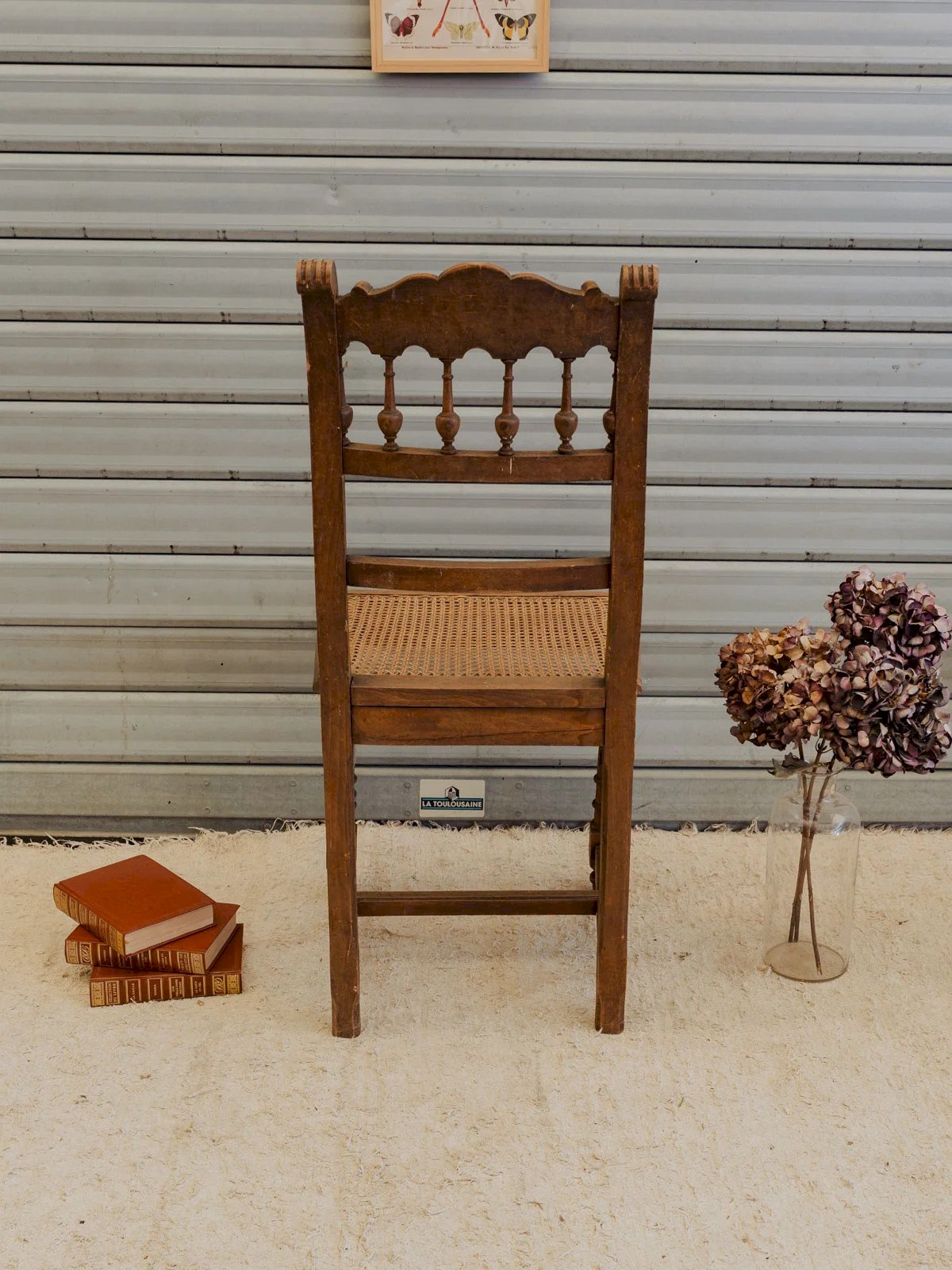
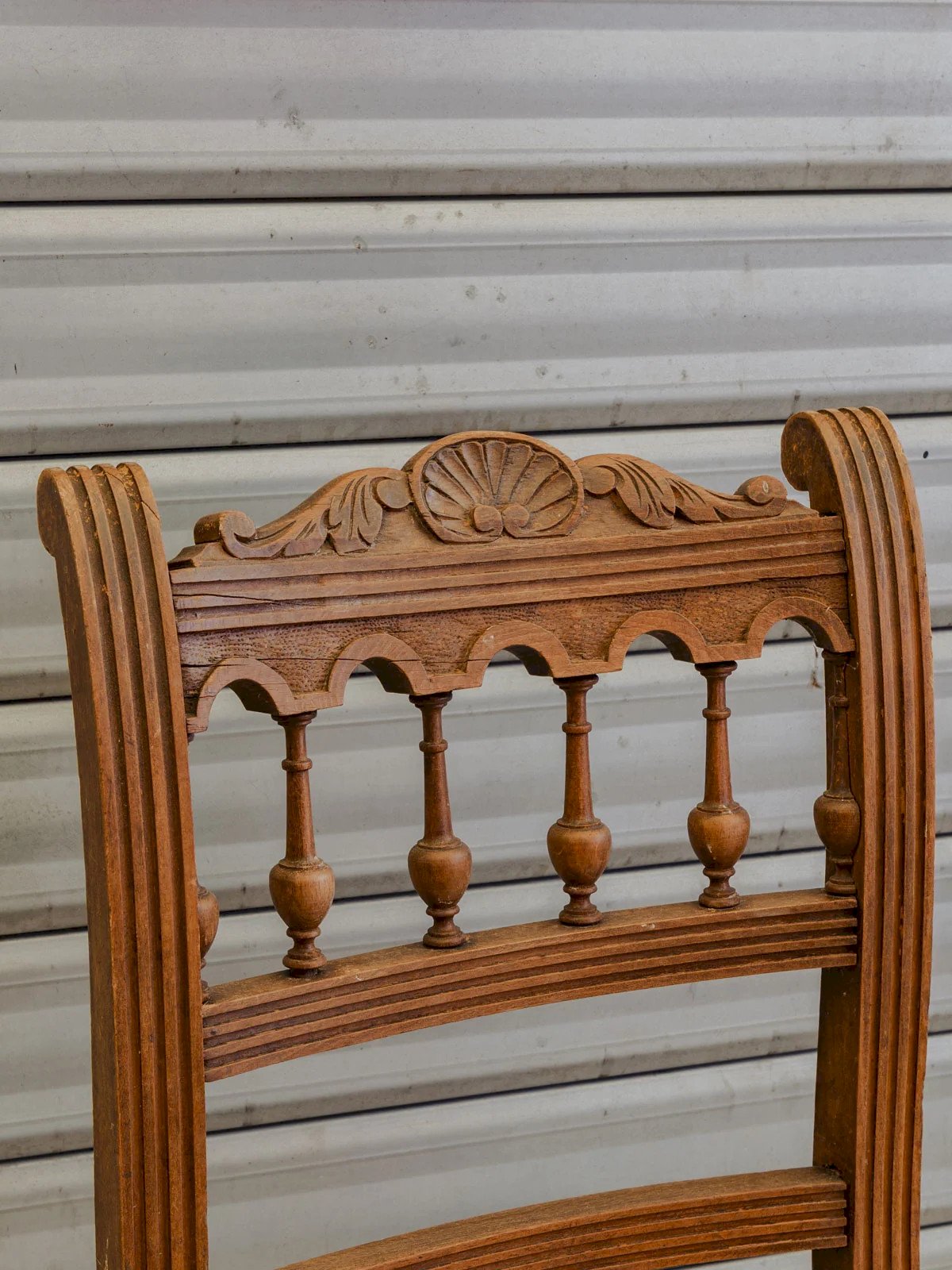
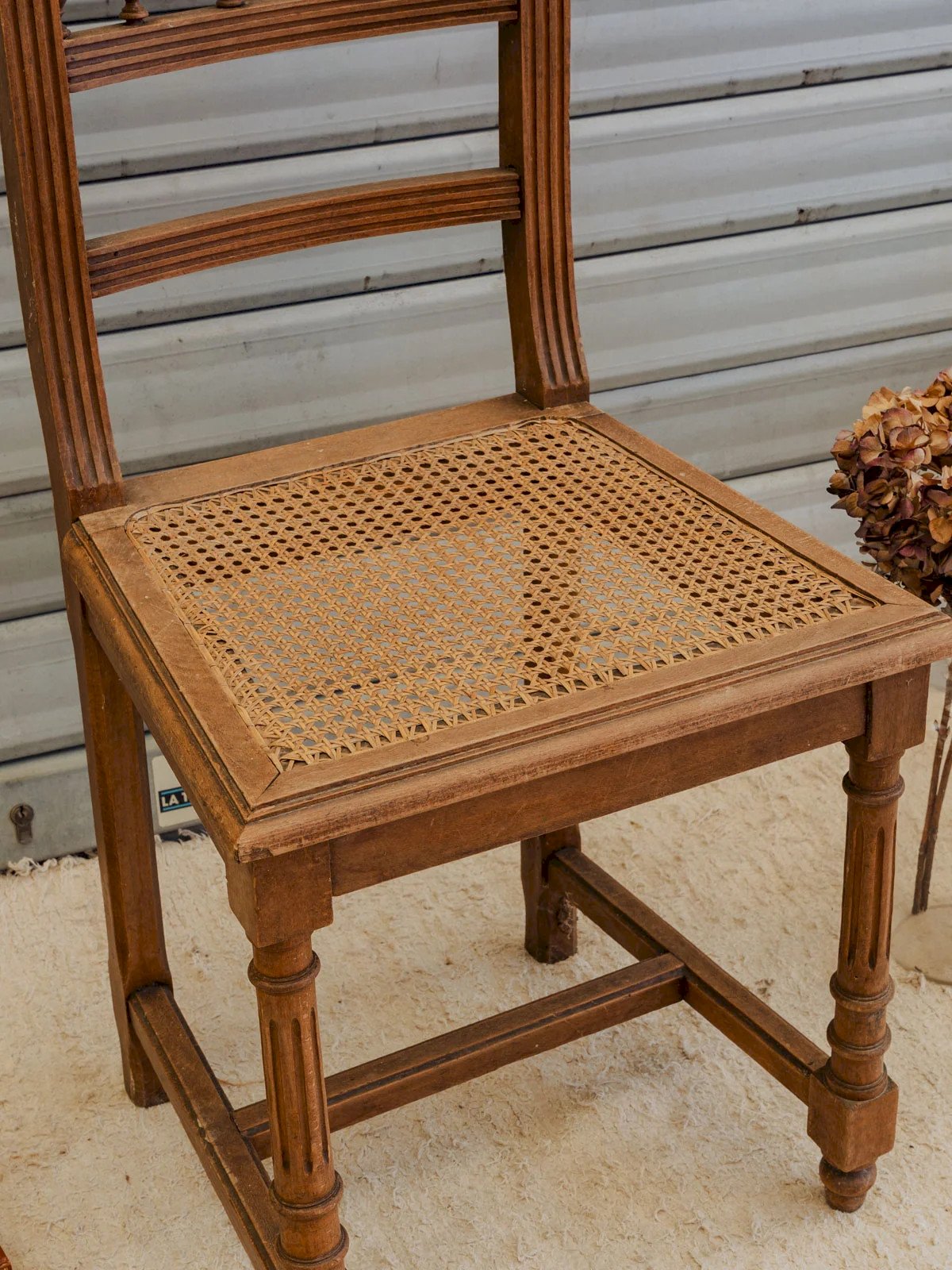
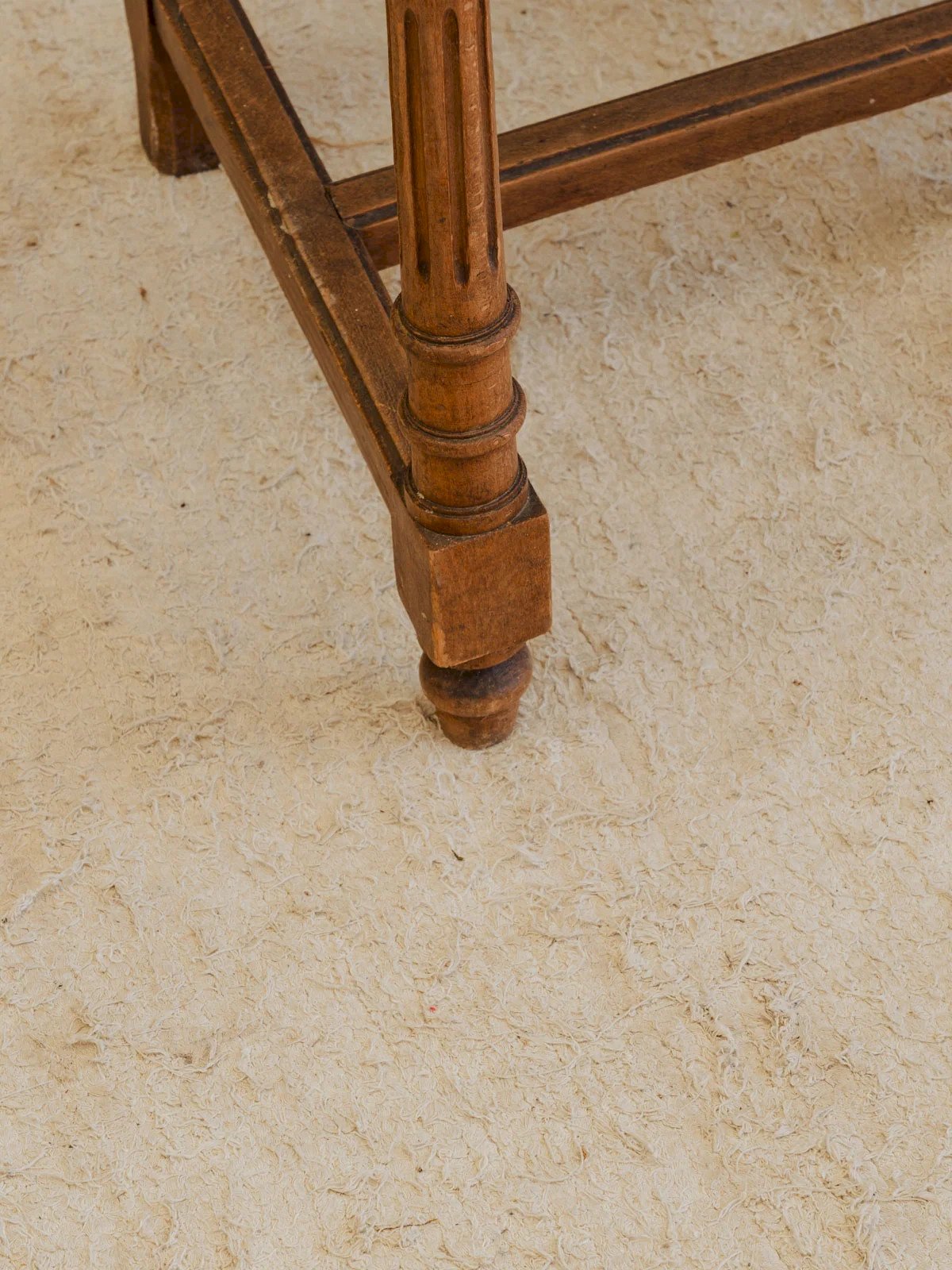
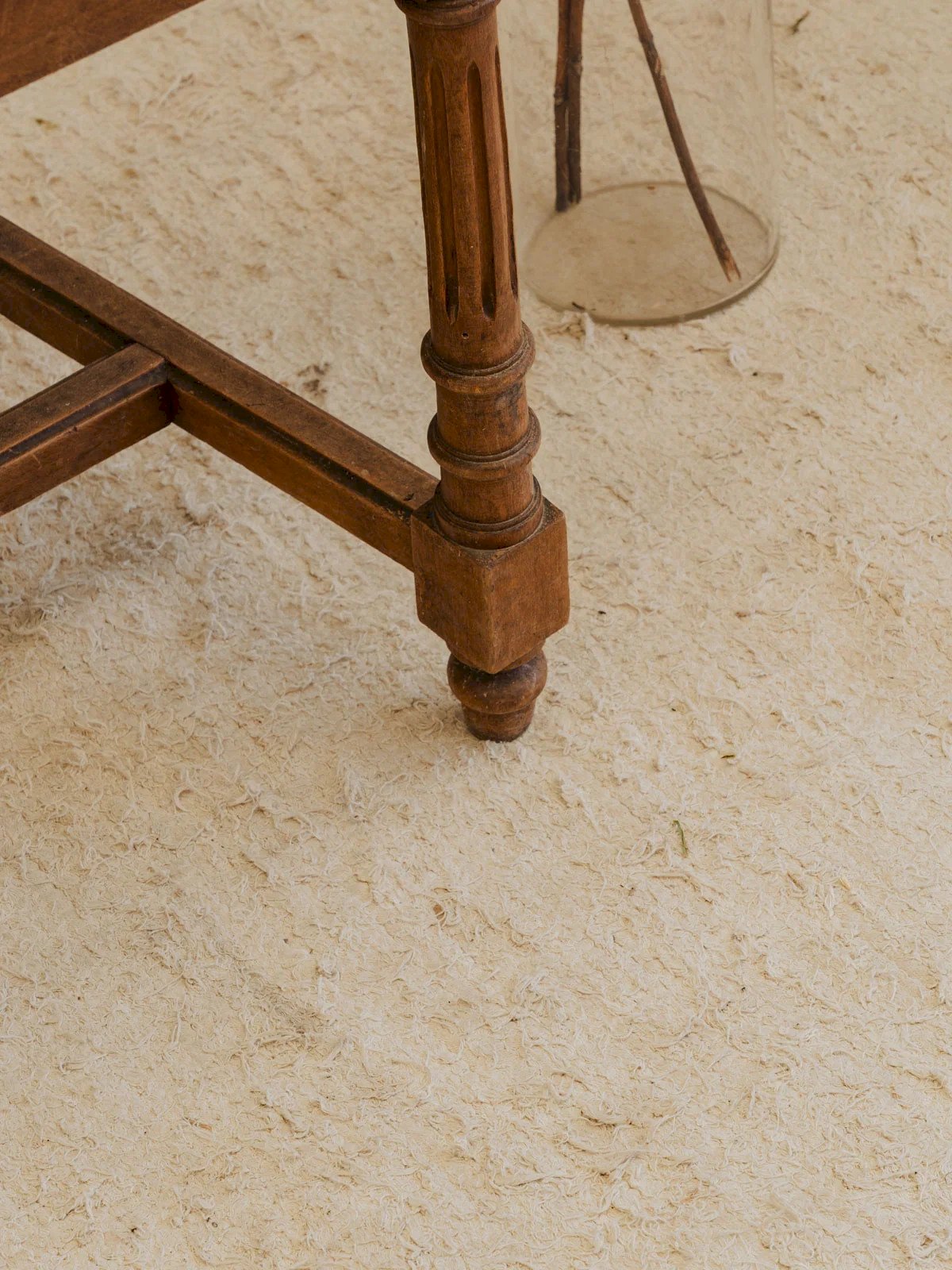
With its dark wood and caning, this vintage chair adds an elegant countryside touch around the table. Its pleasantly high seat and balanced proportions make it a comfortable choice for everyday meals as well as for prolonging dinner. The wooden backrest interacts with the open structure of the caning, highlighting a simple look that easily pairs with a rustic table, stoneware plates, or antique linens. In a dining room, it complements both a dining area and the corner of a bedroom. A second-hand piece, it bears the marks of its history: a few signs of time. Width: 41 cm Depth: 39.5 cm Height: 94 cm Seat height: 47 cm Seat width: 41 cm Seat depth: 39.5 cm A Brief History of the Chair In the Middle Ages, sitting on a chair with a backrest was a rare privilege, reserved for the person leading the assembly: the "president" [from the Latin praesidere, to sit before]. For a long time, a symbol of prestige compared to the benches and stools of the people, the chair only became democratized in the 18th century, transforming into an everyday object. It differs from an armchair in that it has no armrests, a design intended to offer complete freedom of movement around a table or desk. The result of a constant quest between lightness and sturdiness, it has evolved from carved solid wood to more modern lines, making each seat a witness to the history of comfort.
Réf :
#414092
Brand / From : Debongout
Related Products
Comments
Claude, the wooden chair with caning N°1655
179€
75002 Paris
Ce site contient des liens d’affiliation pour lesquels je peux recevoir une compensation.
Description
With its dark wood and caning, this vintage chair adds an elegant countryside touch around the table. Its pleasantly high seat and balanced proportions make it a comfortable choice for everyday meals as well as for prolonging dinner. The wooden backrest interacts with the open structure of the caning, highlighting a simple look that easily pairs with a rustic table, stoneware plates, or antique linens. In a dining room, it complements both a dining area and the corner of a bedroom. A second-hand piece, it bears the marks of its history: a few signs of time. Width: 41 cm Depth: 39.5 cm Height: 94 cm Seat height: 47 cm Seat width: 41 cm Seat depth: 39.5 cm A Brief History of the Chair In the Middle Ages, sitting on a chair with a backrest was a rare privilege, reserved for the person leading the assembly: the "president" [from the Latin praesidere, to sit before]. For a long time, a symbol of prestige compared to the benches and stools of the people, the chair only became democratized in the 18th century, transforming into an everyday object. It differs from an armchair in that it has no armrests, a design intended to offer complete freedom of movement around a table or desk. The result of a constant quest between lightness and sturdiness, it has evolved from carved solid wood to more modern lines, making each seat a witness to the history of comfort.
Réf :
#414092
Brand / From : Debongout