 English
 Français


Description
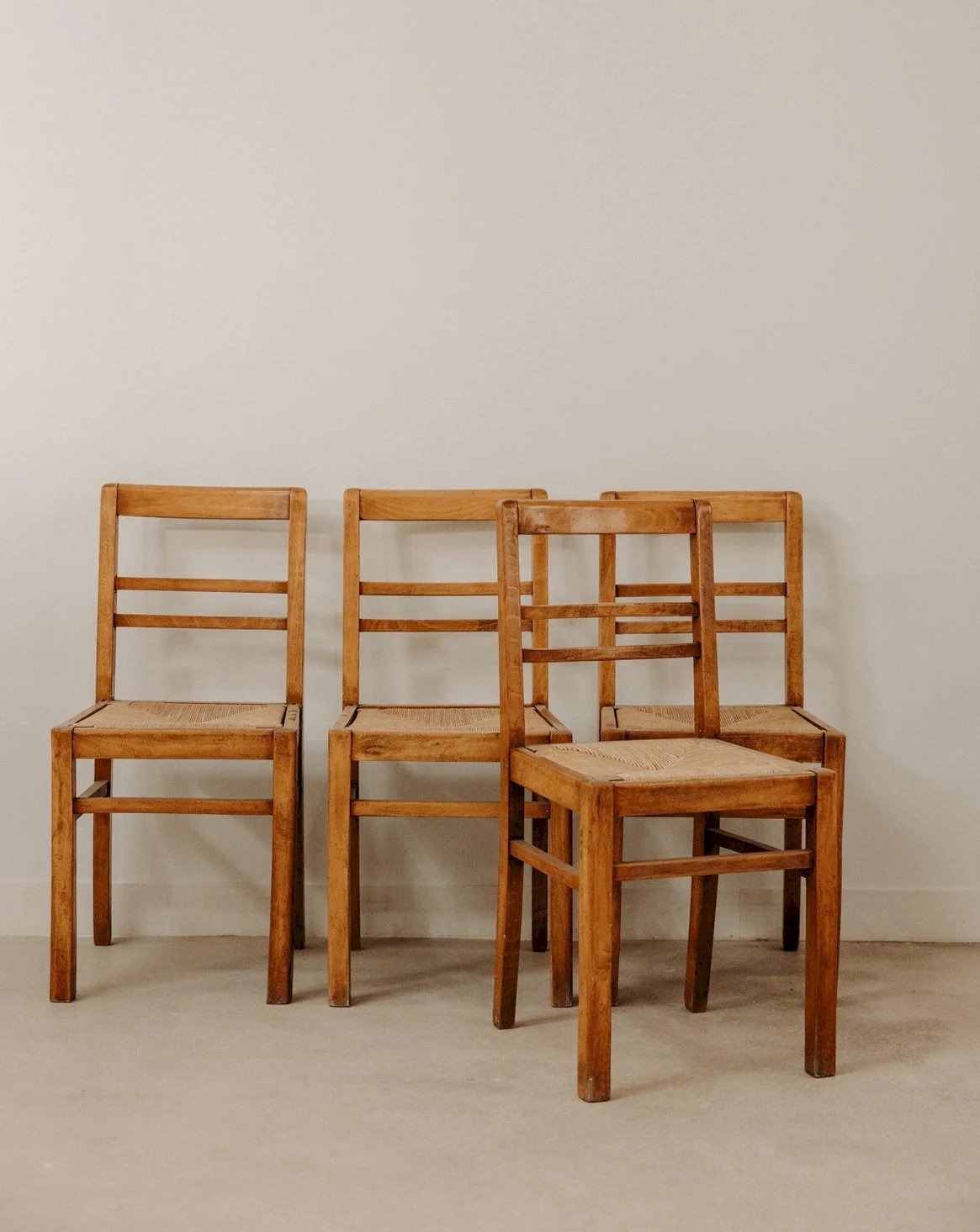
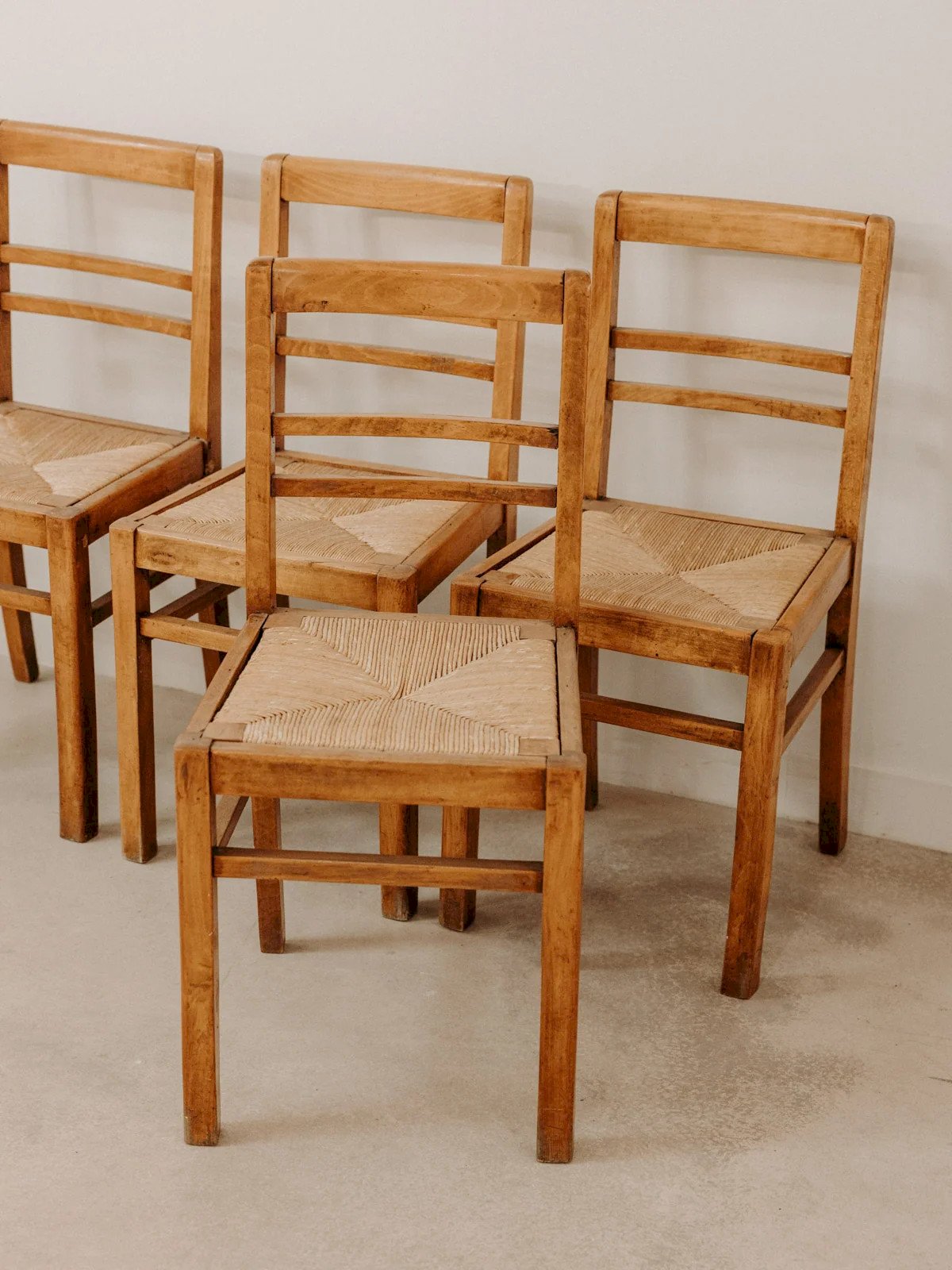
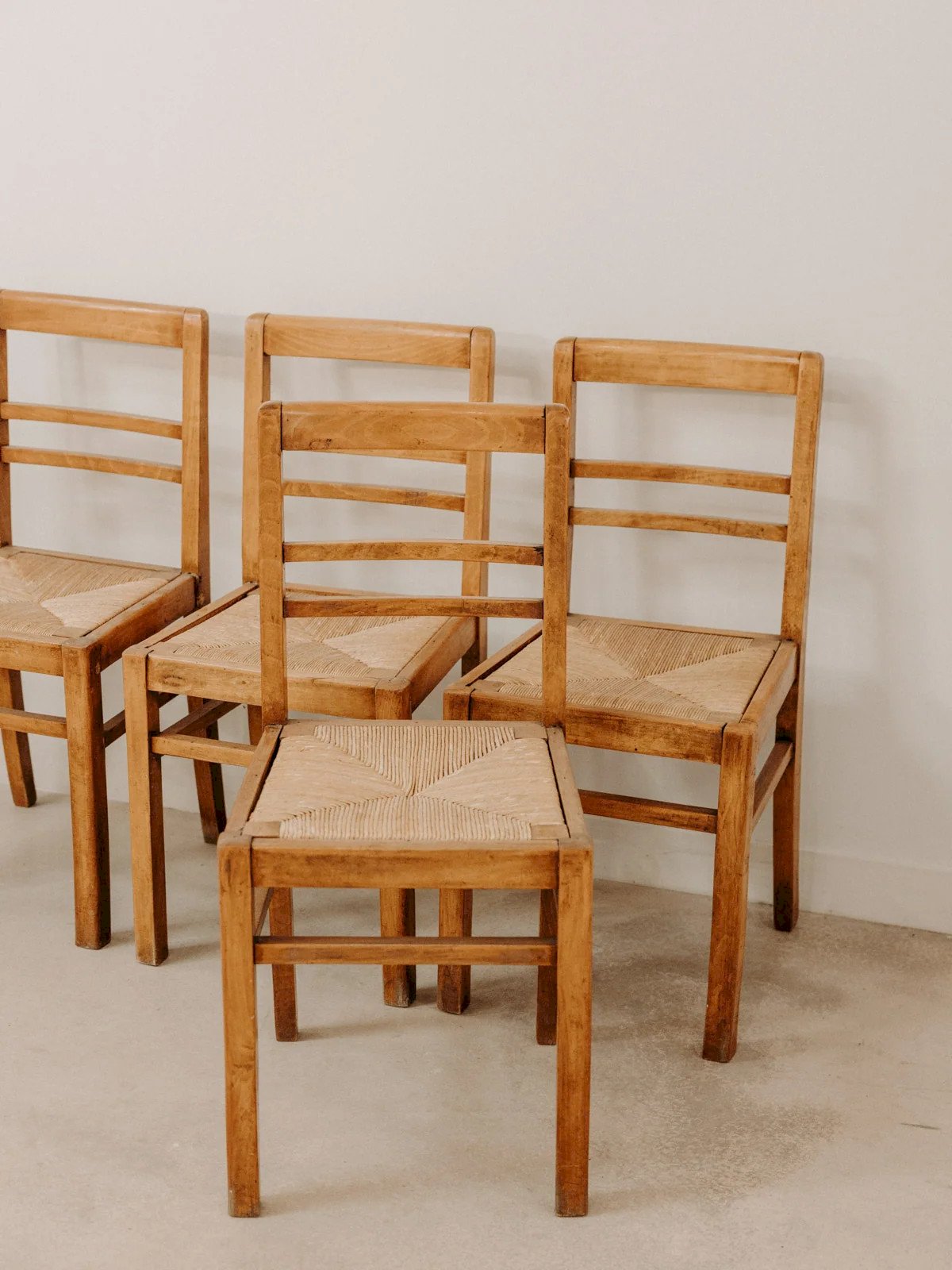
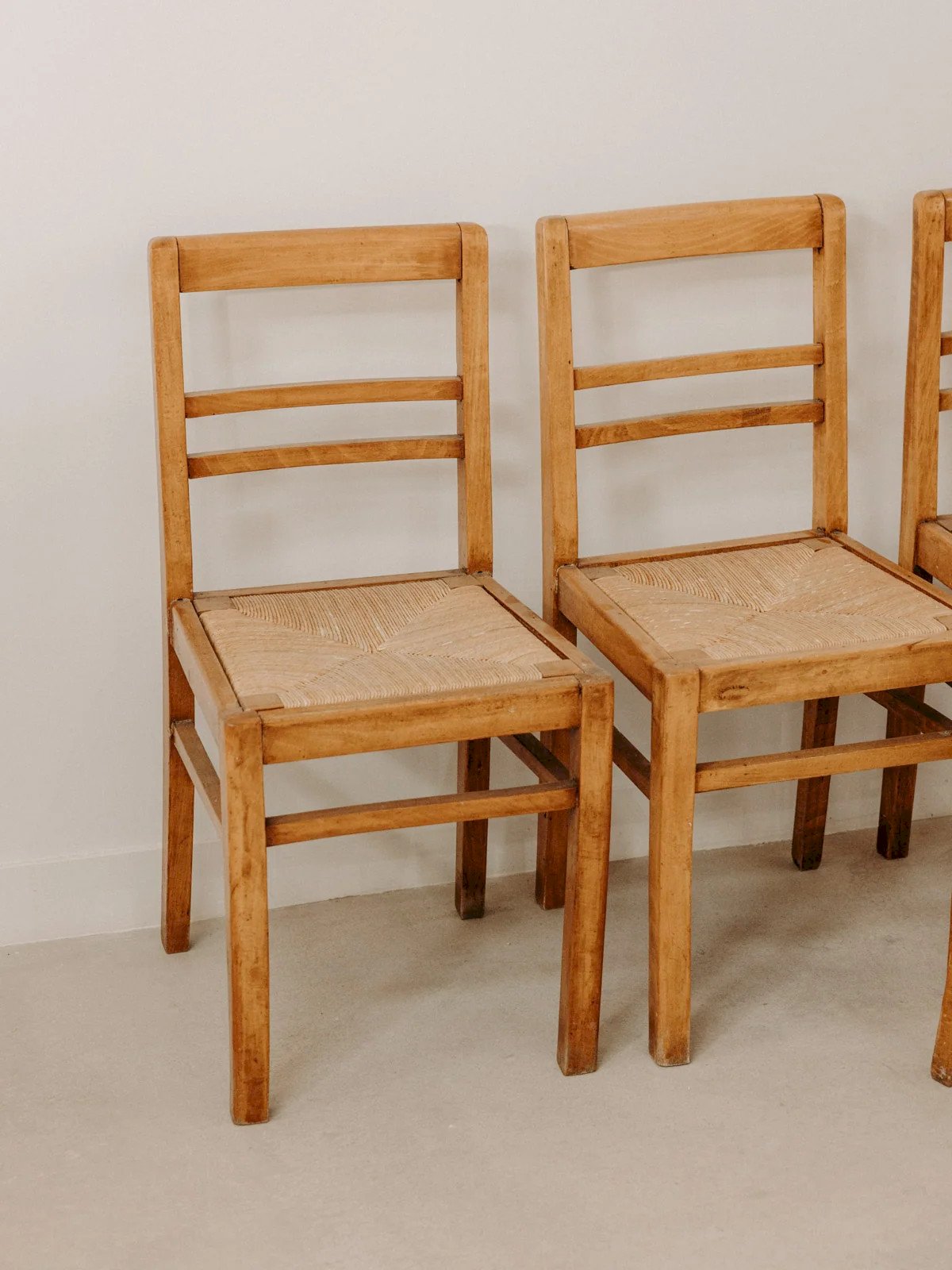
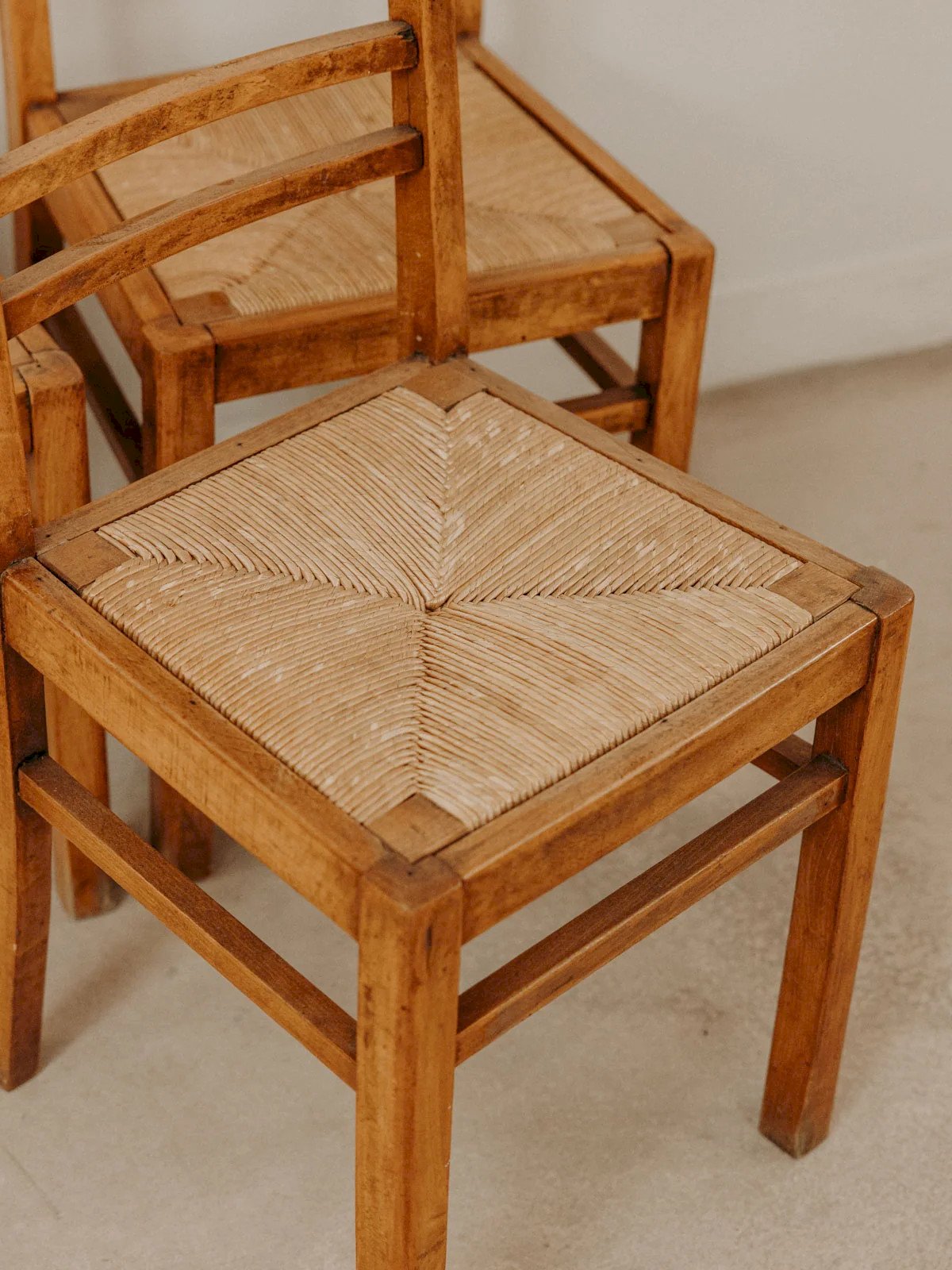
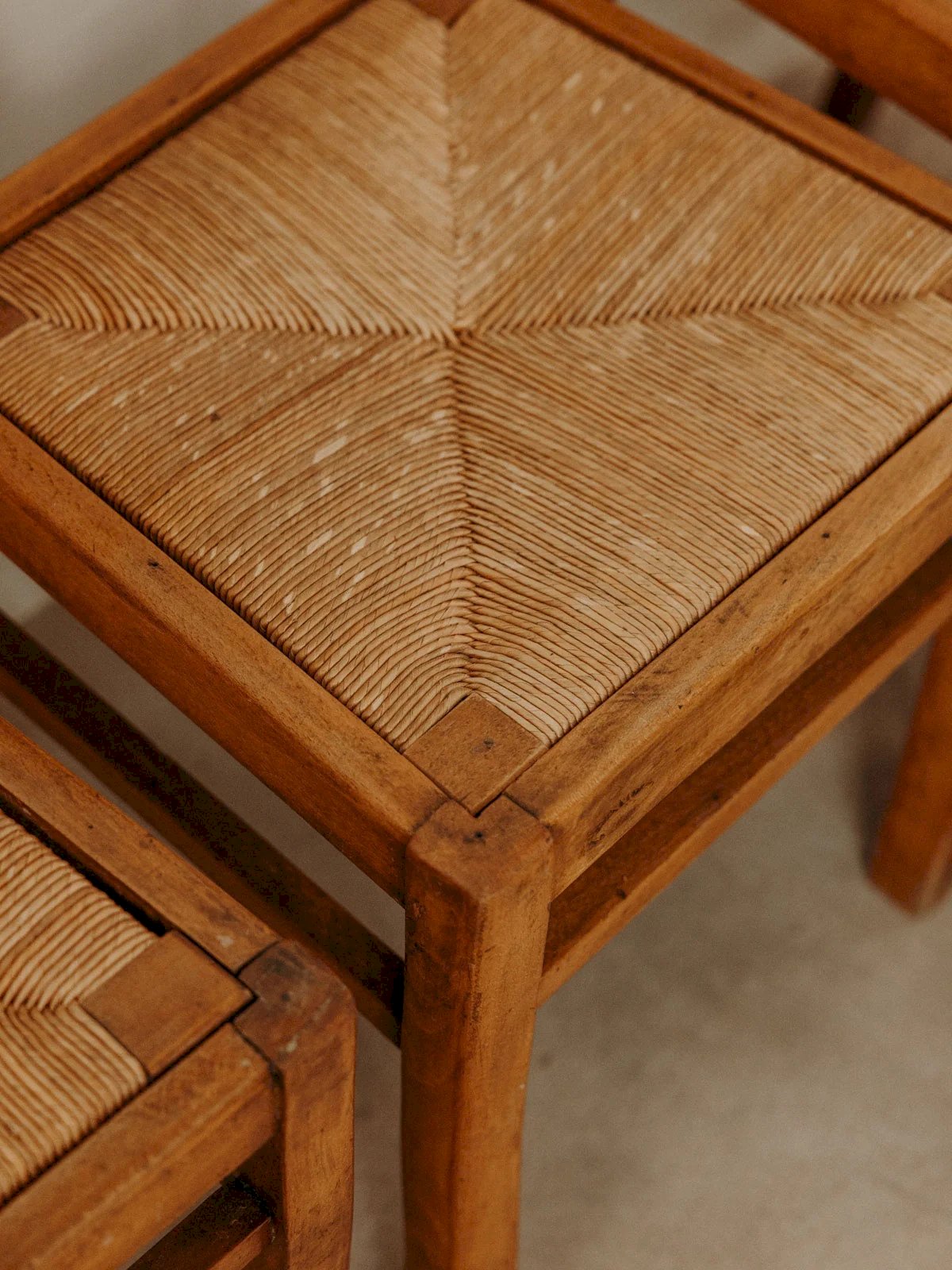
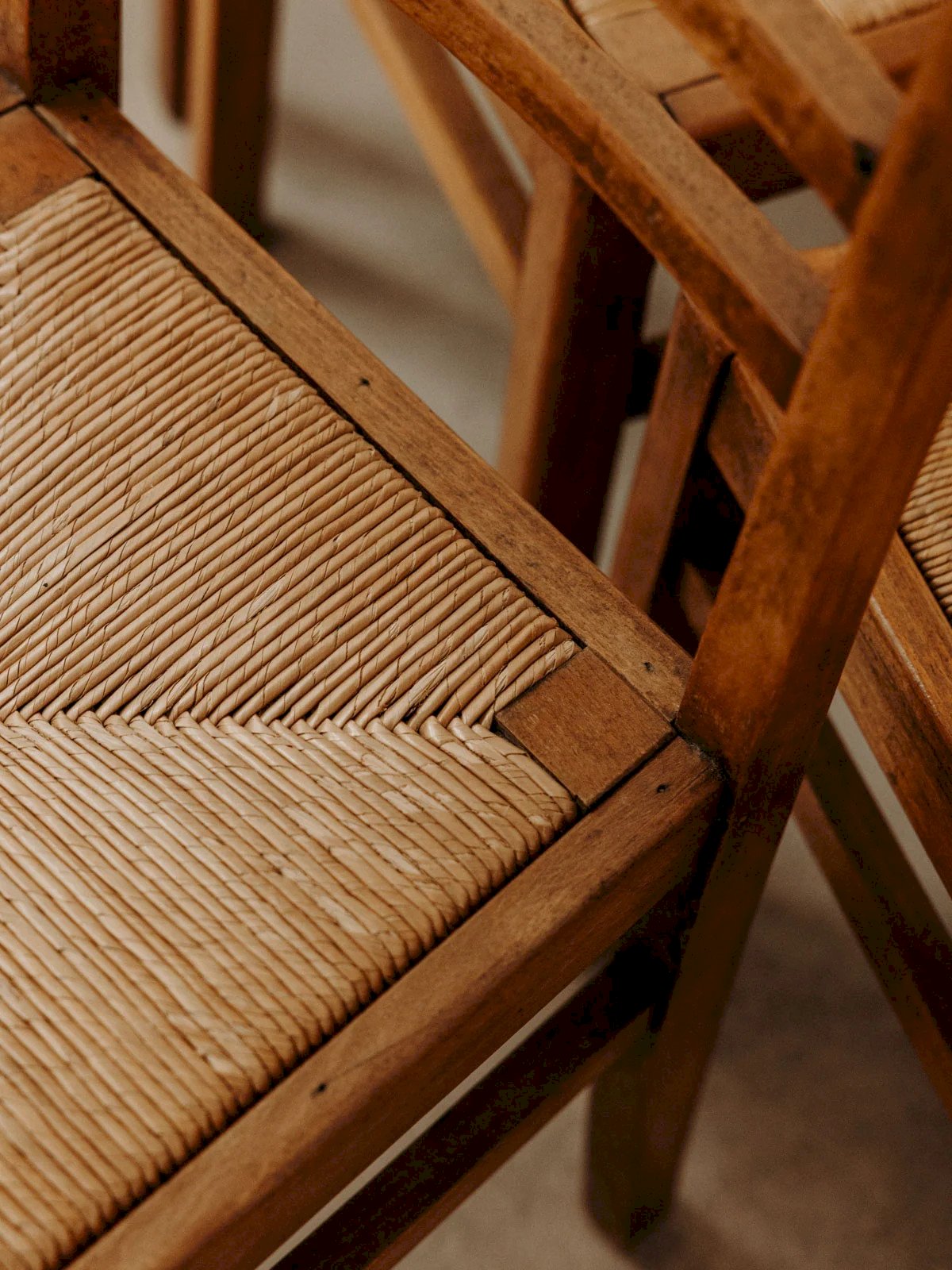
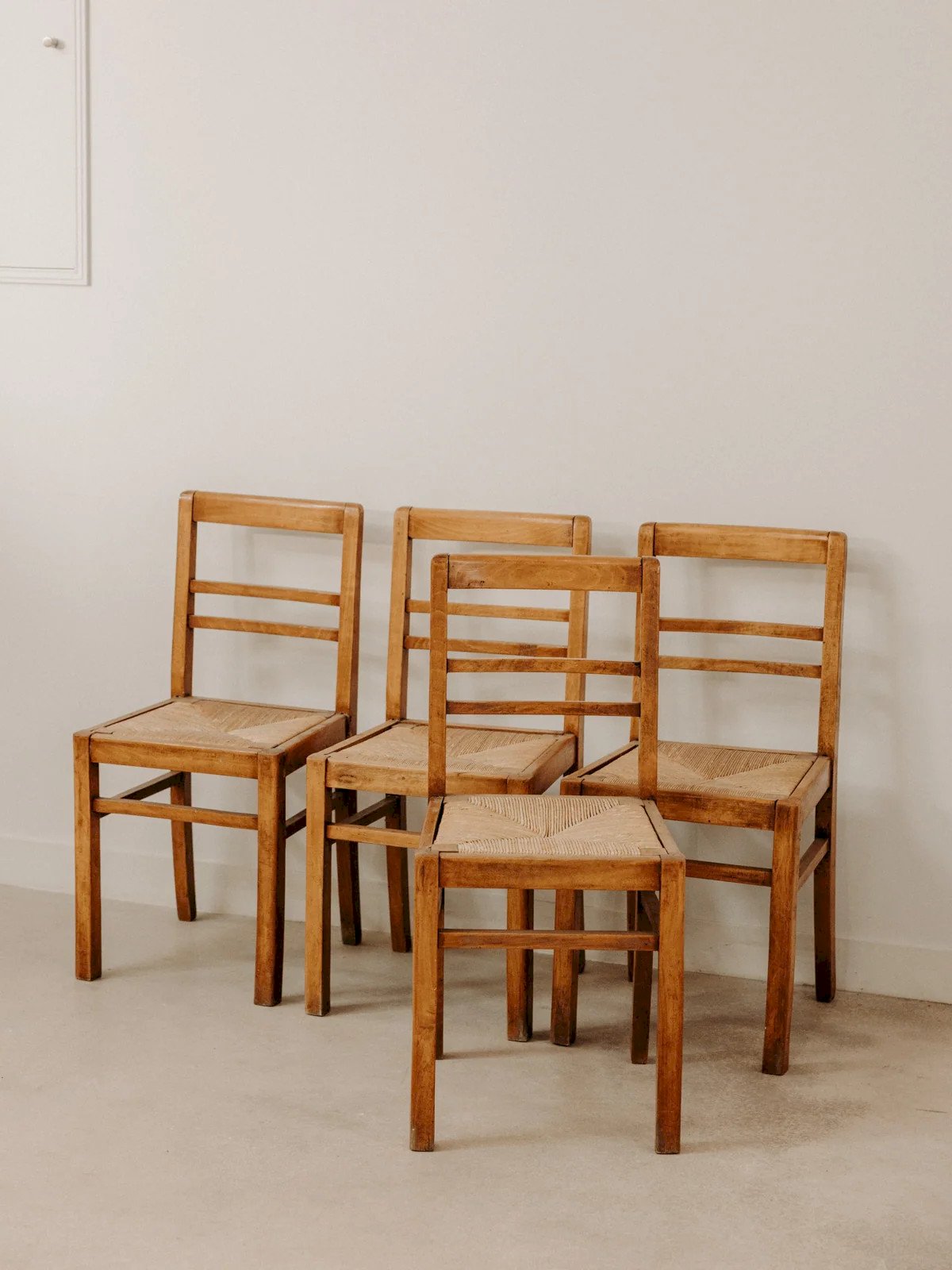
With their light wood and caning, these second-hand chairs bring a rural touch that is understated and true to the spirit of yesteryear's furniture. Offered in a set of four, they fit easily around a farmhouse table or in a kitchen, where their comfortable seat height complements everyday meals. Their wooden structure, combined with the caning, provides a sober presence and a carefully crafted artisanal look. In superb original condition and cleaned and nourished with linseed oil, they pair well with a raw wood table and some earthenware plates. As a second-hand piece, it carries the mark of its history with a visible old repair shown in the photo. Width: 39 cm Depth: 39 cm Height: 82 cm Seat height: 45 cm A brief history of the chair In the Middle Ages, sitting on a backrest seat was a rare privilege, reserved for the leader of the assembly: the "president" [from the Latin praesidere, to sit in front]. For a long time, a symbol of prestige compared to the benches and stools of the common people, the chair only became democratized in the 18th century to become a daily object. It is distinguished from an armchair by the absence of armrests, a structure designed to offer complete freedom of movement around a table or desk. The result of a constant quest between lightness and sturdiness, it has evolved from carved solid wood to more modern lines, making each seat a witness to the history of comfort.
Réf :
#414771
Brand / From : Debongout
Related Products
Comments
Claude, the set of 4 wooden and rattan chairs No. 1704
899€
75002 Paris
Ce site contient des liens d’affiliation pour lesquels je peux recevoir une compensation.
Description
With their light wood and caning, these second-hand chairs bring a rural touch that is understated and true to the spirit of yesteryear's furniture. Offered in a set of four, they fit easily around a farmhouse table or in a kitchen, where their comfortable seat height complements everyday meals. Their wooden structure, combined with the caning, provides a sober presence and a carefully crafted artisanal look. In superb original condition and cleaned and nourished with linseed oil, they pair well with a raw wood table and some earthenware plates. As a second-hand piece, it carries the mark of its history with a visible old repair shown in the photo. Width: 39 cm Depth: 39 cm Height: 82 cm Seat height: 45 cm A brief history of the chair In the Middle Ages, sitting on a backrest seat was a rare privilege, reserved for the leader of the assembly: the "president" [from the Latin praesidere, to sit in front]. For a long time, a symbol of prestige compared to the benches and stools of the common people, the chair only became democratized in the 18th century to become a daily object. It is distinguished from an armchair by the absence of armrests, a structure designed to offer complete freedom of movement around a table or desk. The result of a constant quest between lightness and sturdiness, it has evolved from carved solid wood to more modern lines, making each seat a witness to the history of comfort.
Réf :
#414771
Brand / From : Debongout