 English
 Français


Description
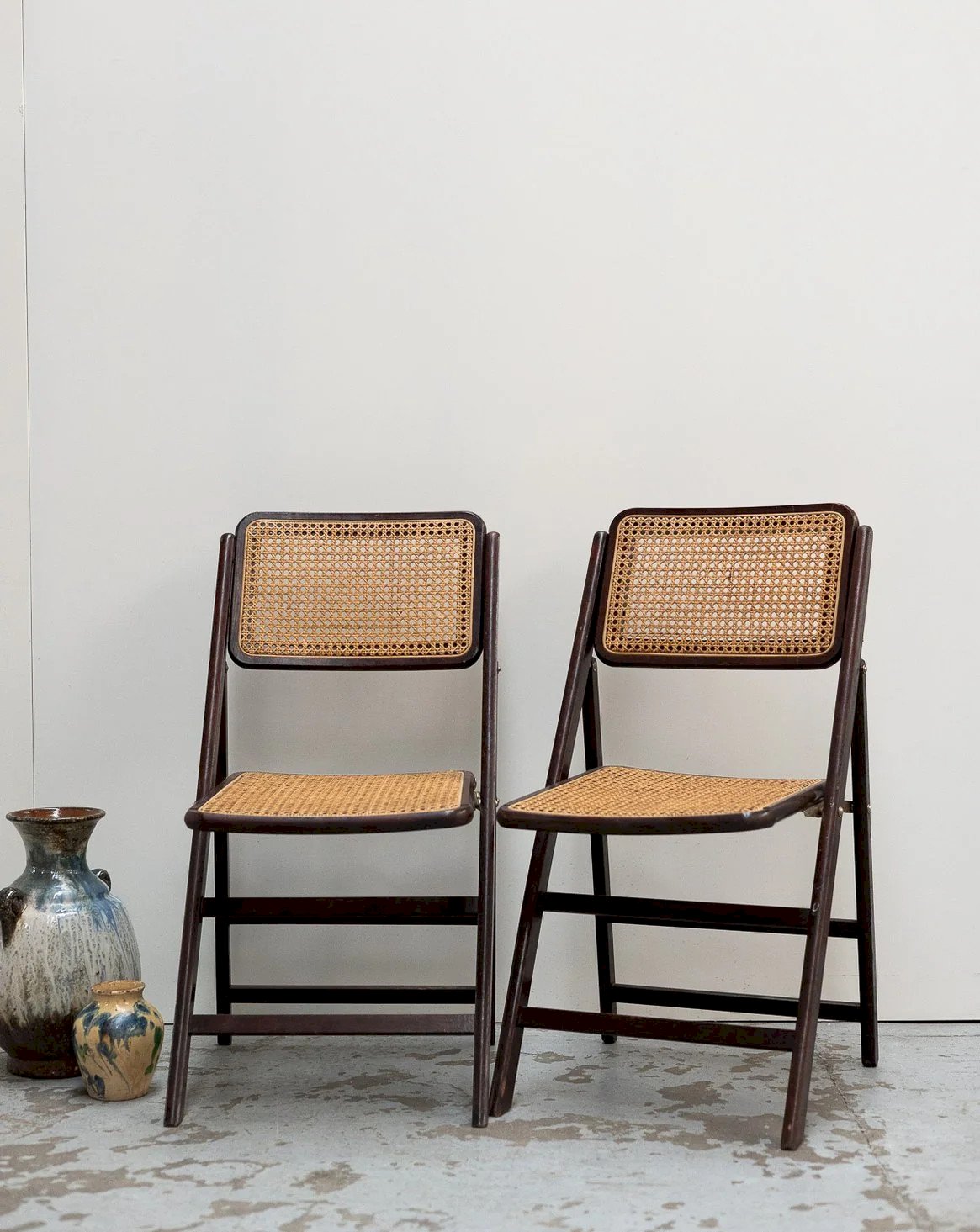
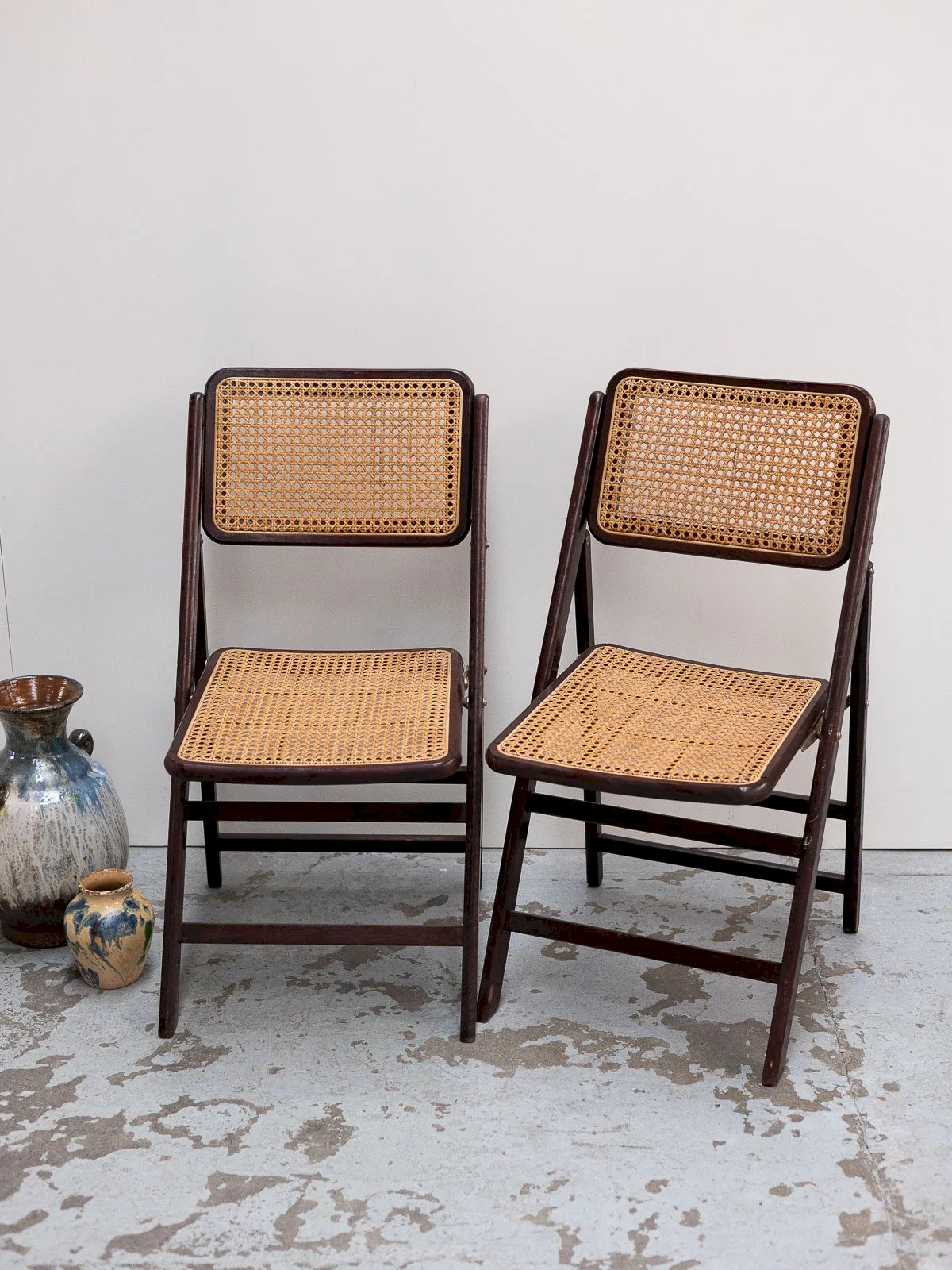
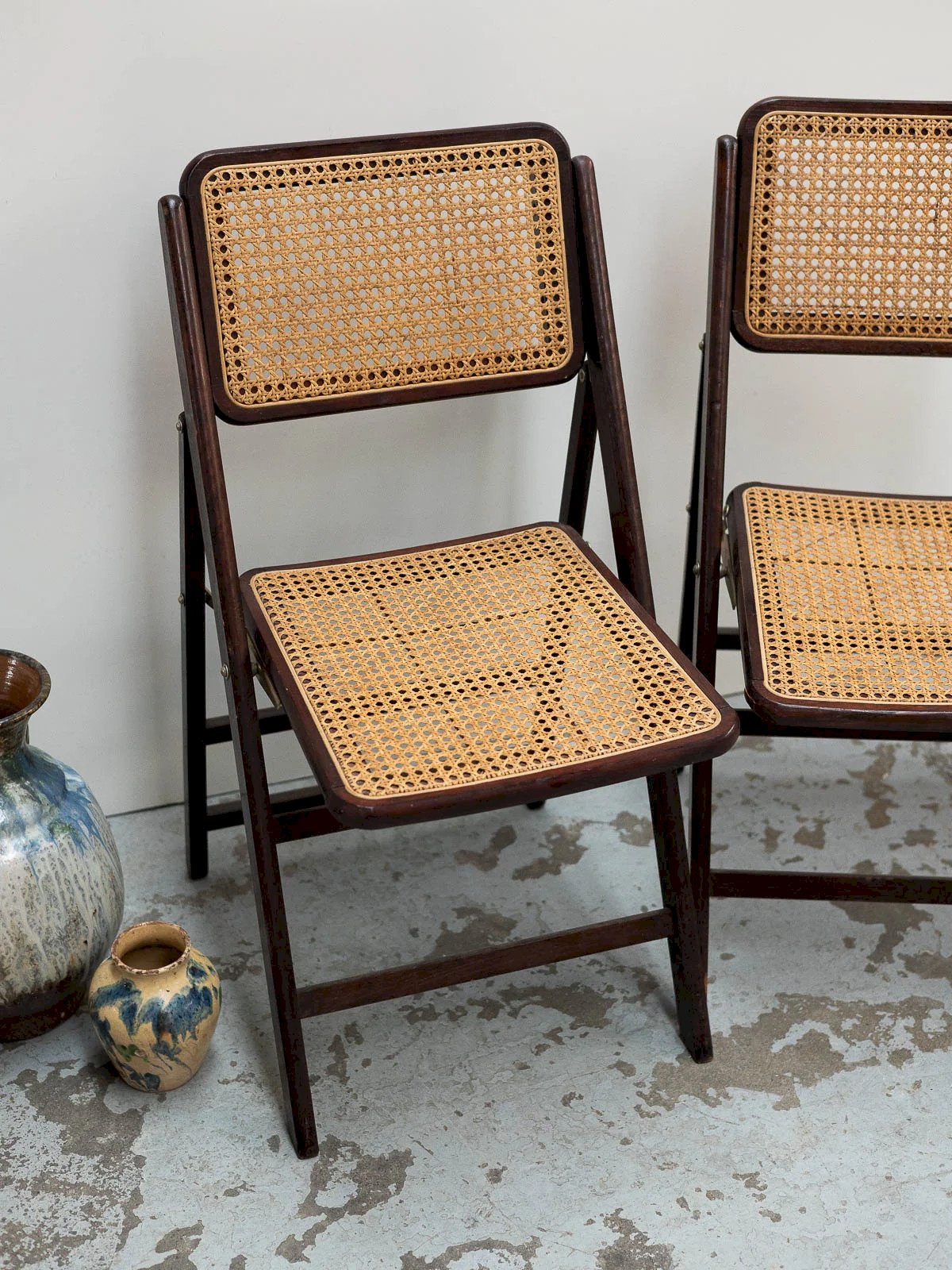
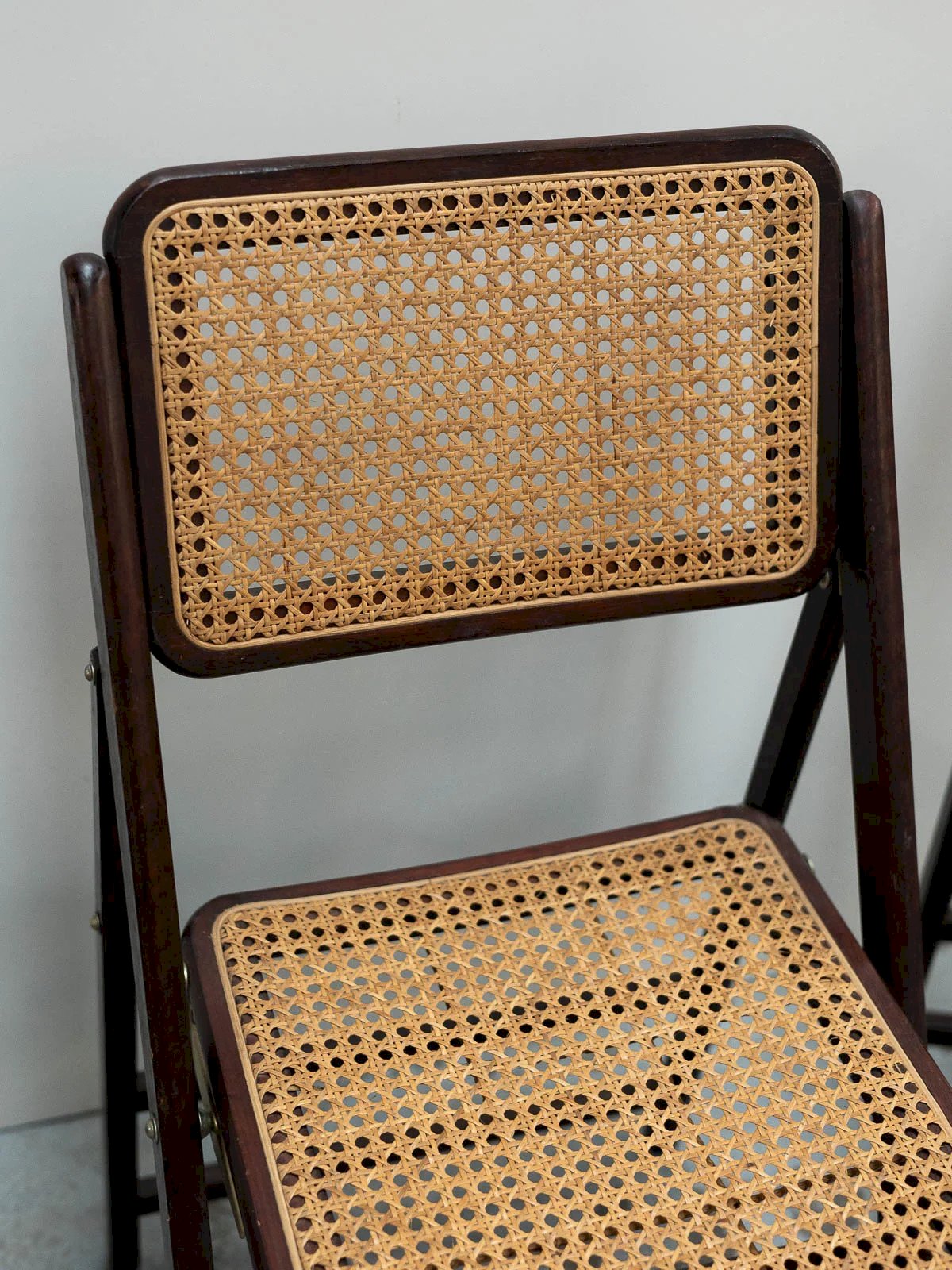
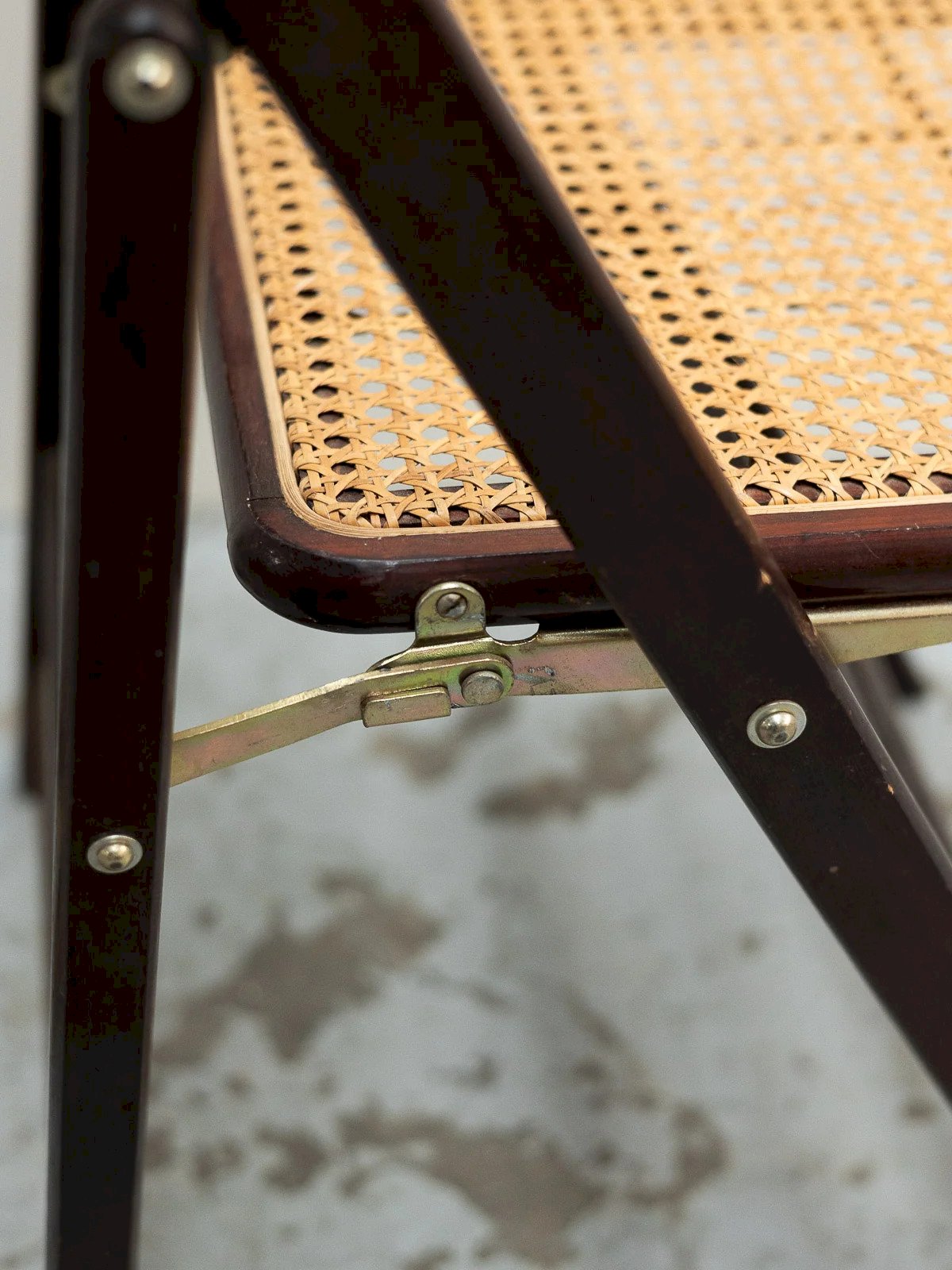
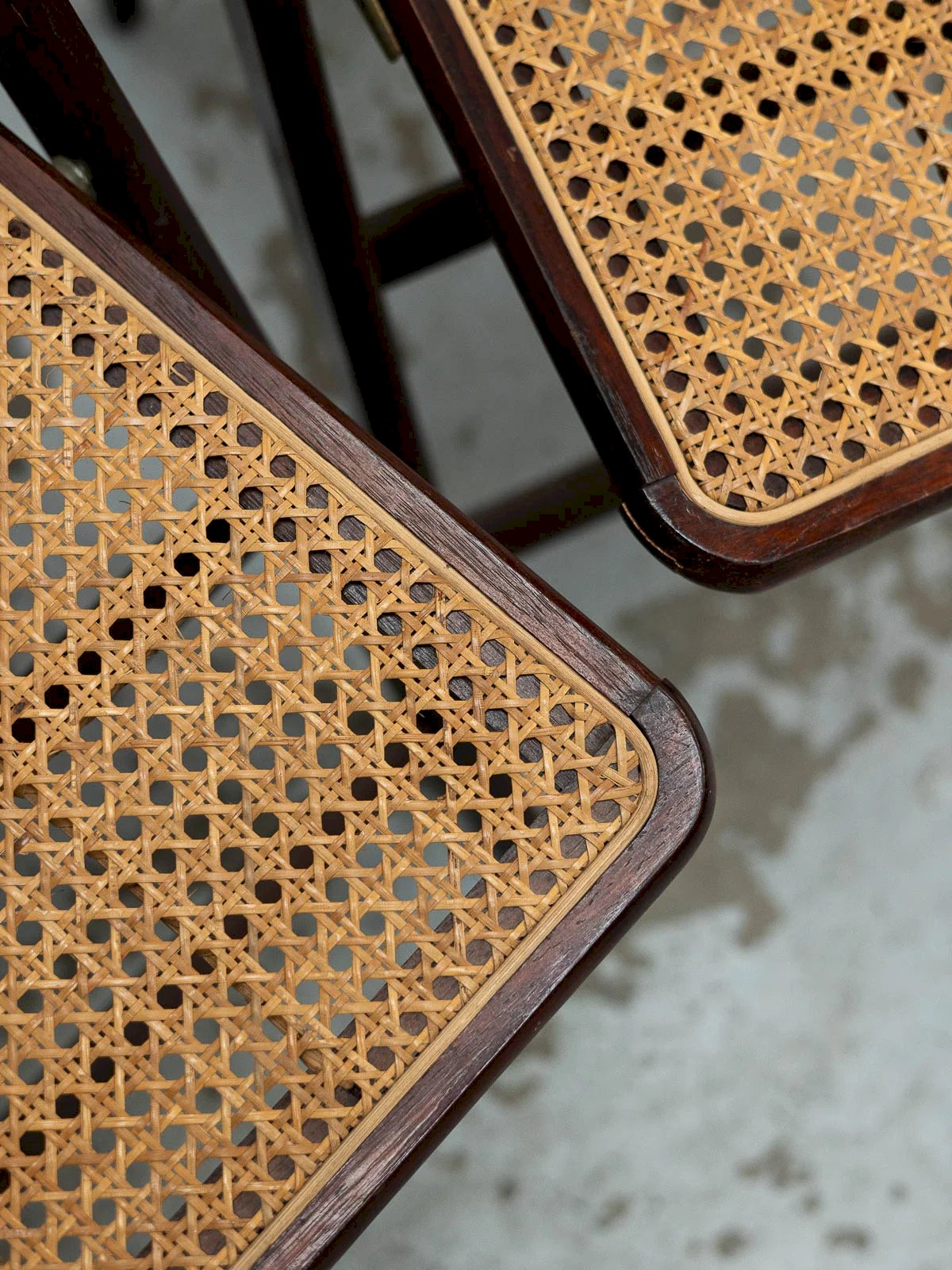
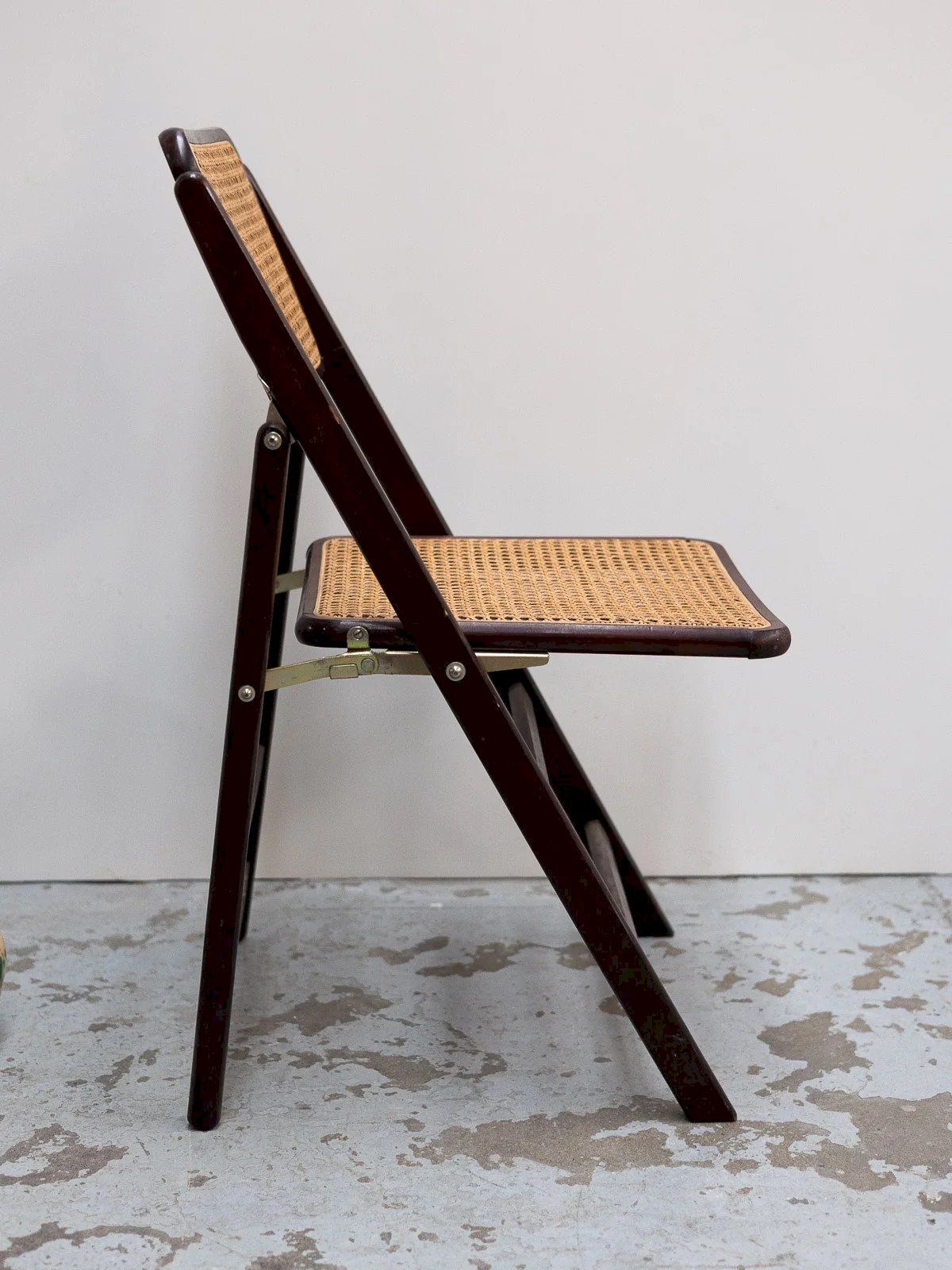
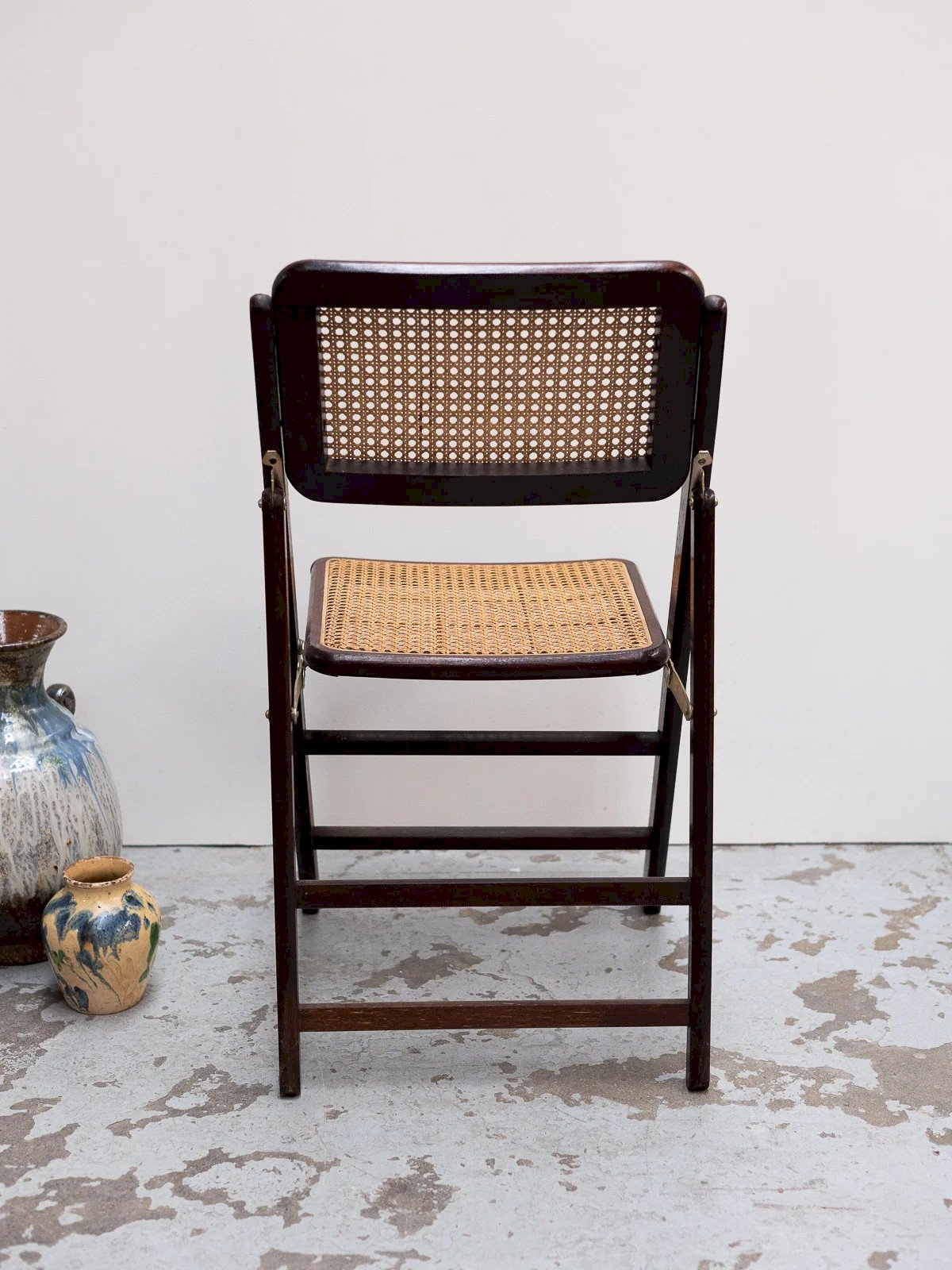
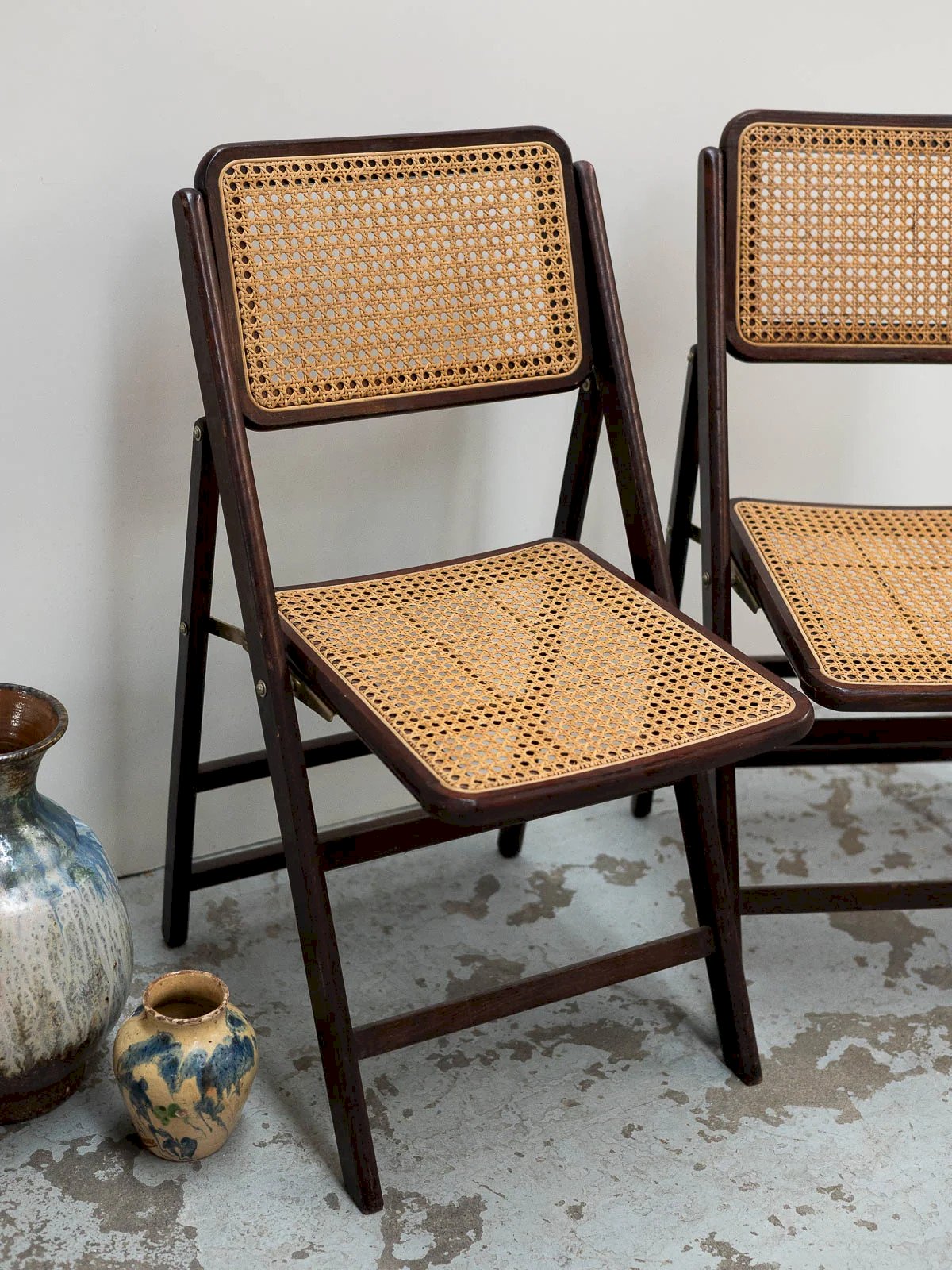
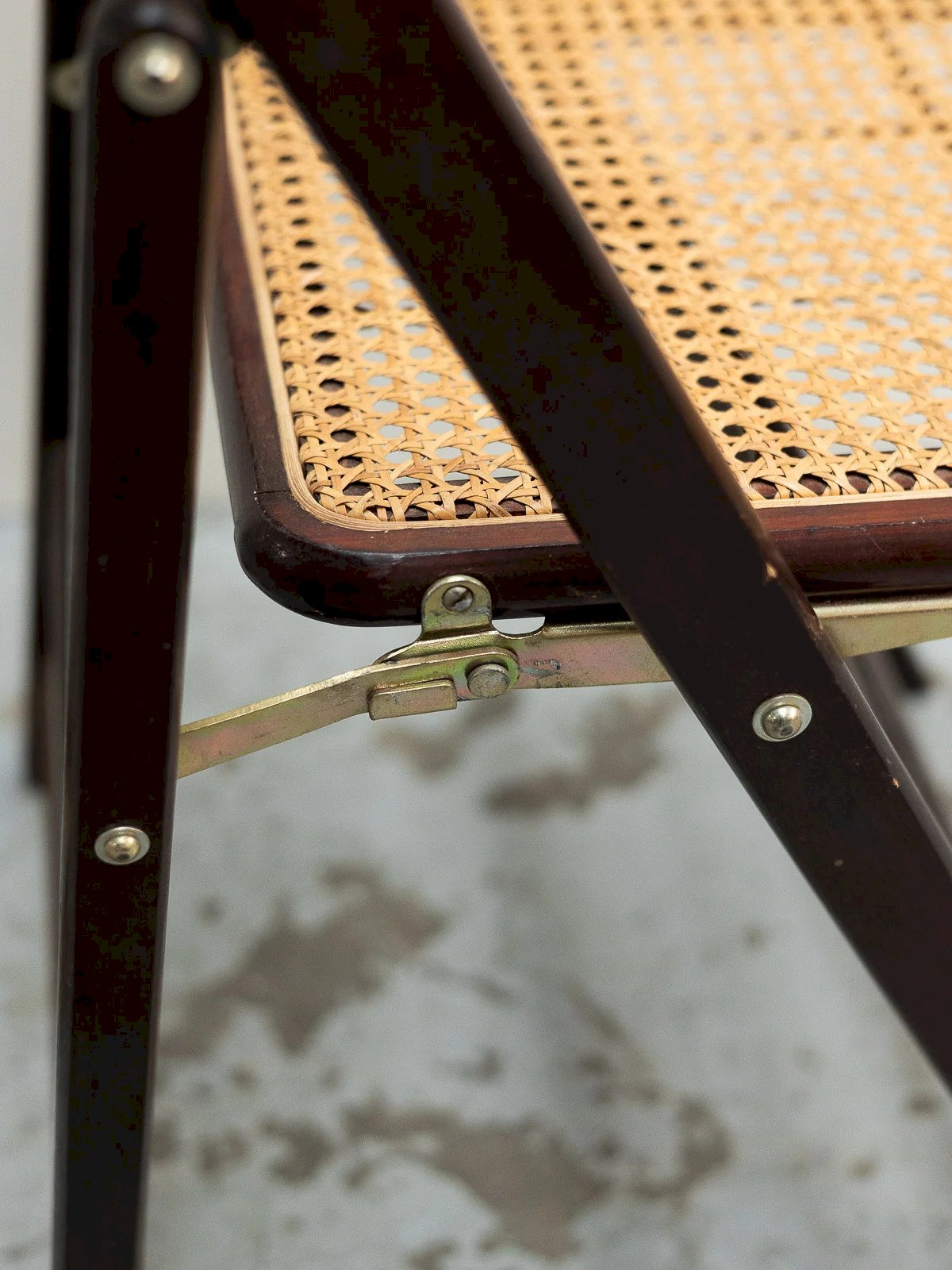
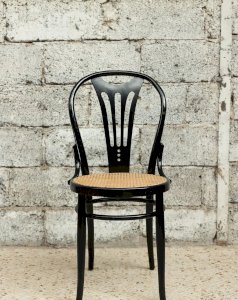
With its beige caning and black wooden frame, this second-hand chair embodies the codes of country style in a sober and refined version. The caning seat adds a beautiful visual lightness, while the backrest and the wooden structure create a measured presence around a table or in a bedroom. Foldable, it can be easily stored after use and fits perfectly in both a dining corner and an office without weighing down the space. In a dining room or living room, it willingly lends itself to a convivial scene with a linen cushion and a carafe placed on the table. Sold individually, 2 pieces available. Width: 41.5 cm Depth: 44 cm Height: 80 cm Seat height: 41 cm Seat width: 36 cm Seat depth: 40 cm A brief history of the chair In the Middle Ages, sitting on a chair with a backrest was a rare privilege reserved for the one who chaired the assembly: the "president" [from the Latin praesidere, to sit before]. For a long time a symbol of prestige compared to the benches and stools of the people, the chair only became democratized in the 18th century to become a daily object. It is distinguished from the armchair by the absence of armrests, a design intended to offer total freedom of movement around a table or desk. The result of a constant quest between lightness and solidity, it has evolved from sculpted solid wood to more modern lines, making each seat a witness to the history of comfort.
Réf :
#414099
Brand / From : Debongout
Related Products
Comments
Claude, the pretty caned chair No. 1724
99€
75002 Paris
Ce site contient des liens d’affiliation pour lesquels je peux recevoir une compensation.
Description
With its beige caning and black wooden frame, this second-hand chair embodies the codes of country style in a sober and refined version. The caning seat adds a beautiful visual lightness, while the backrest and the wooden structure create a measured presence around a table or in a bedroom. Foldable, it can be easily stored after use and fits perfectly in both a dining corner and an office without weighing down the space. In a dining room or living room, it willingly lends itself to a convivial scene with a linen cushion and a carafe placed on the table. Sold individually, 2 pieces available. Width: 41.5 cm Depth: 44 cm Height: 80 cm Seat height: 41 cm Seat width: 36 cm Seat depth: 40 cm A brief history of the chair In the Middle Ages, sitting on a chair with a backrest was a rare privilege reserved for the one who chaired the assembly: the "president" [from the Latin praesidere, to sit before]. For a long time a symbol of prestige compared to the benches and stools of the people, the chair only became democratized in the 18th century to become a daily object. It is distinguished from the armchair by the absence of armrests, a design intended to offer total freedom of movement around a table or desk. The result of a constant quest between lightness and solidity, it has evolved from sculpted solid wood to more modern lines, making each seat a witness to the history of comfort.
Réf :
#414099
Brand / From : Debongout