 English
 Français


Description
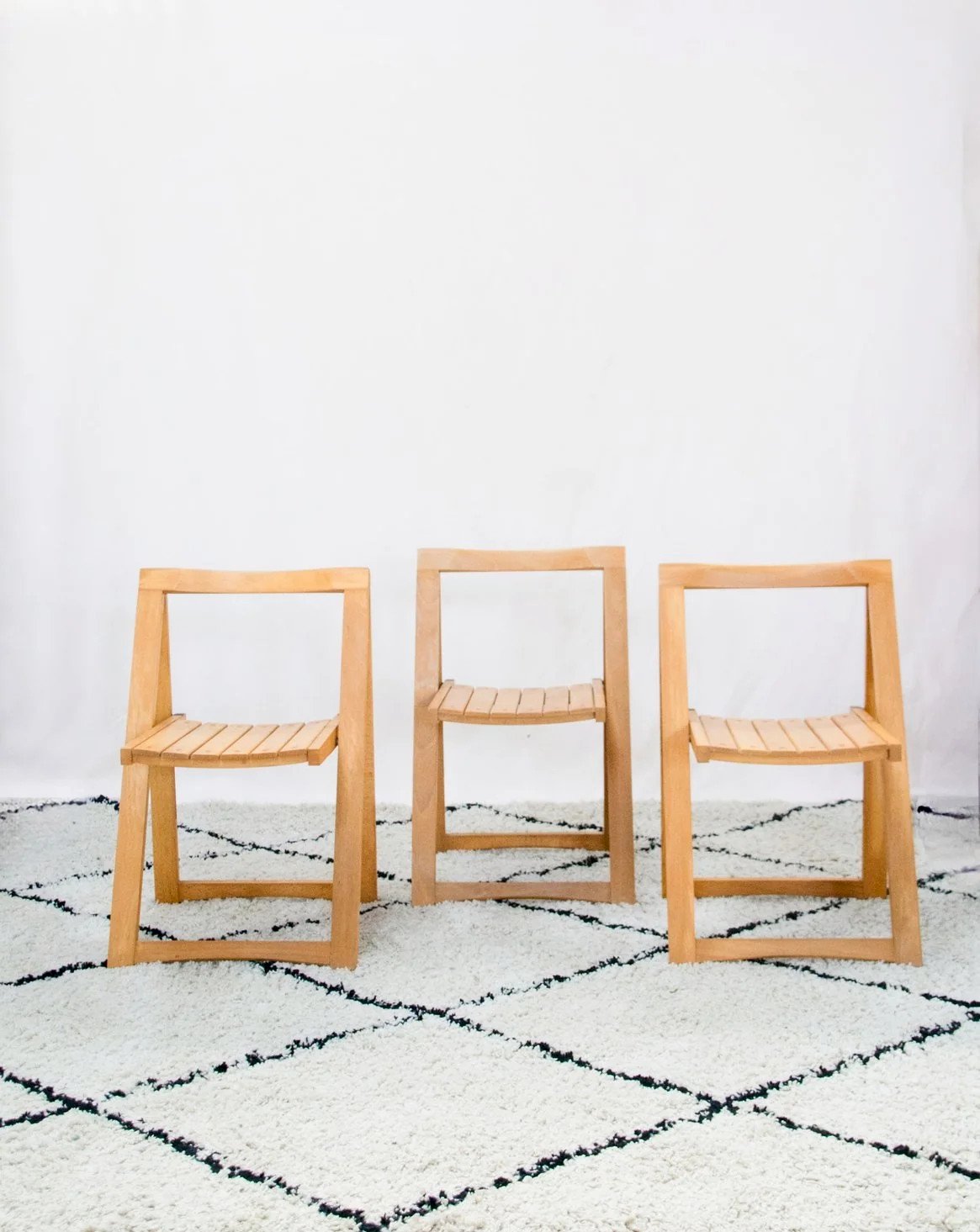
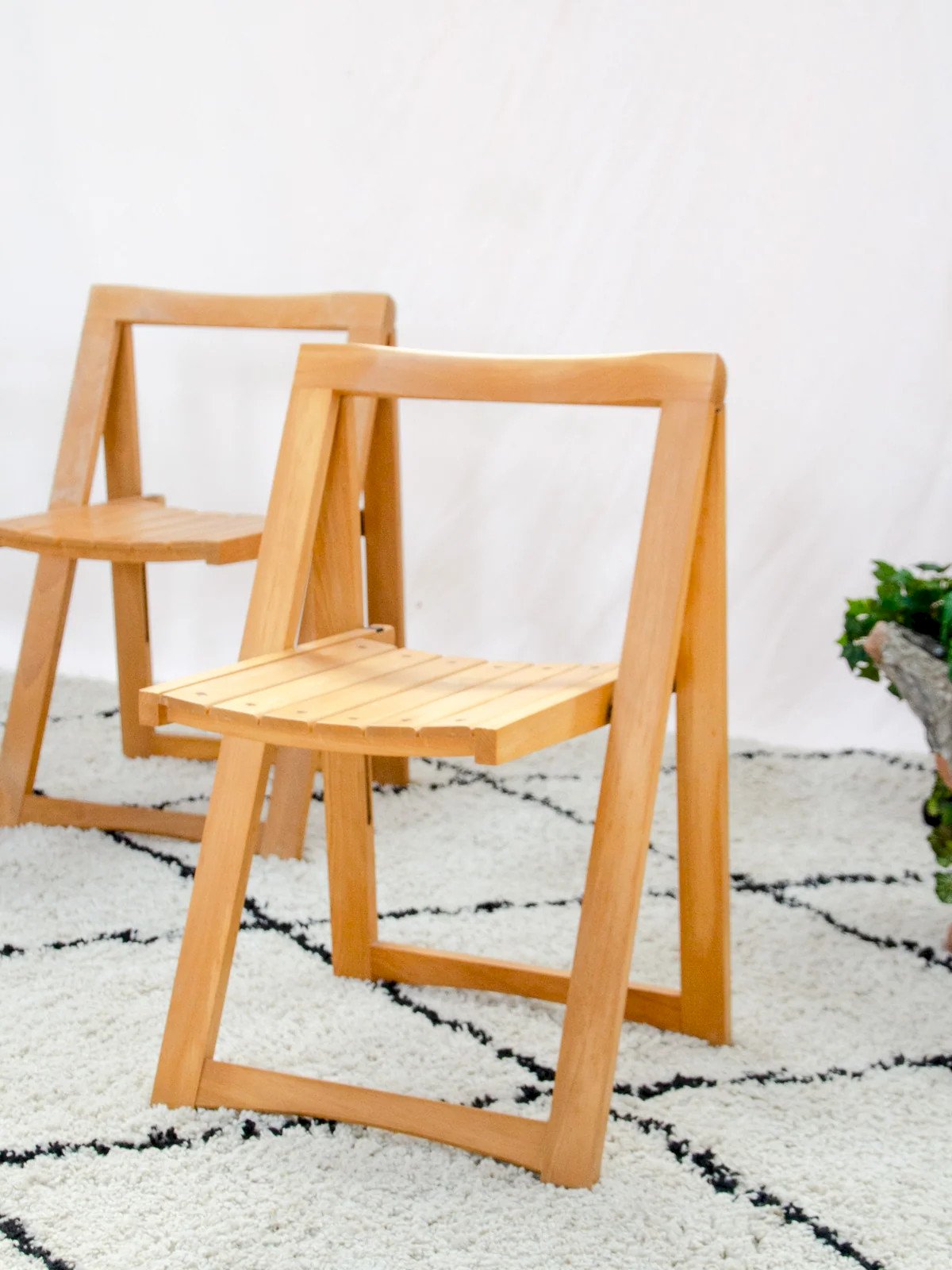
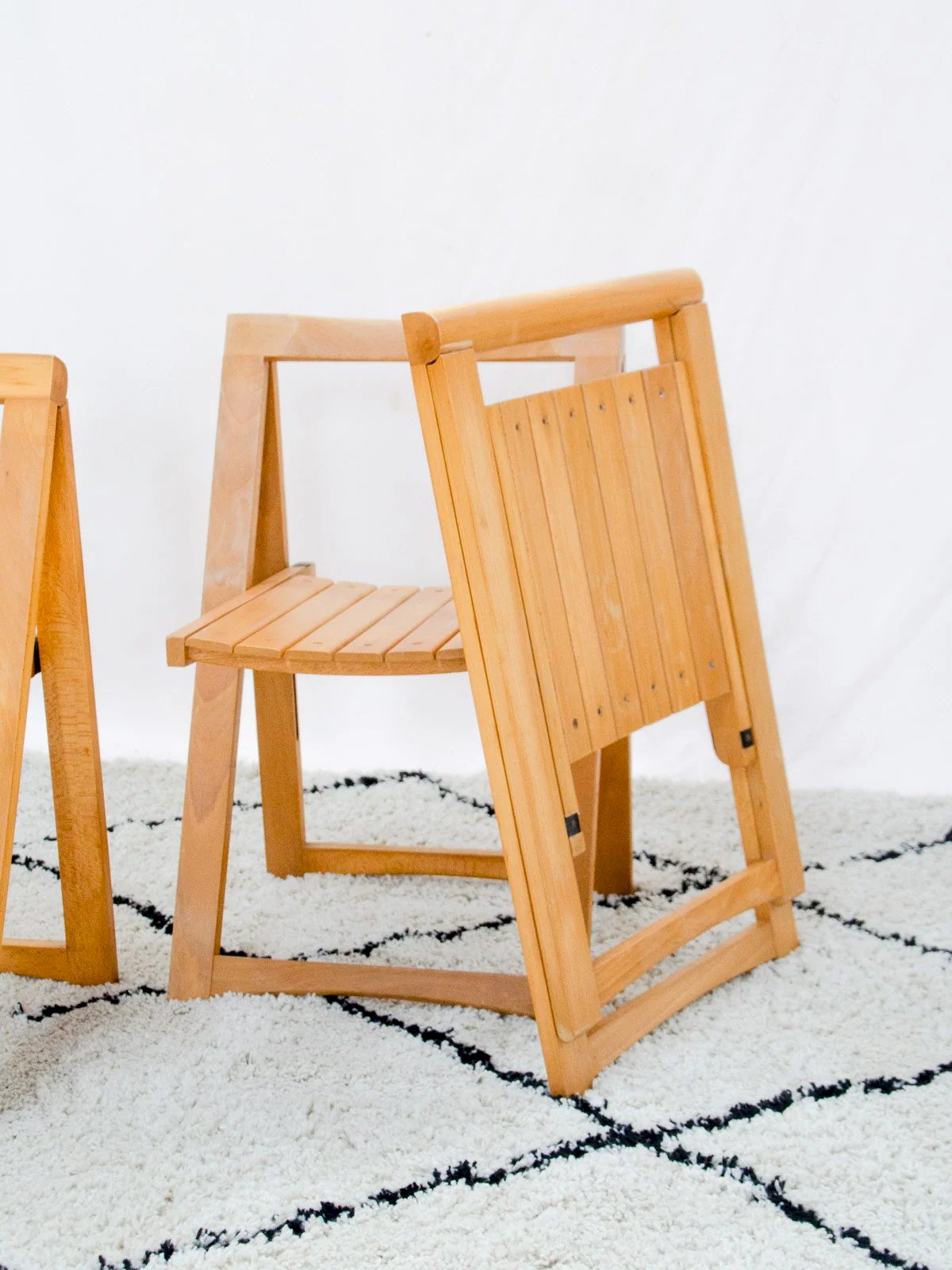
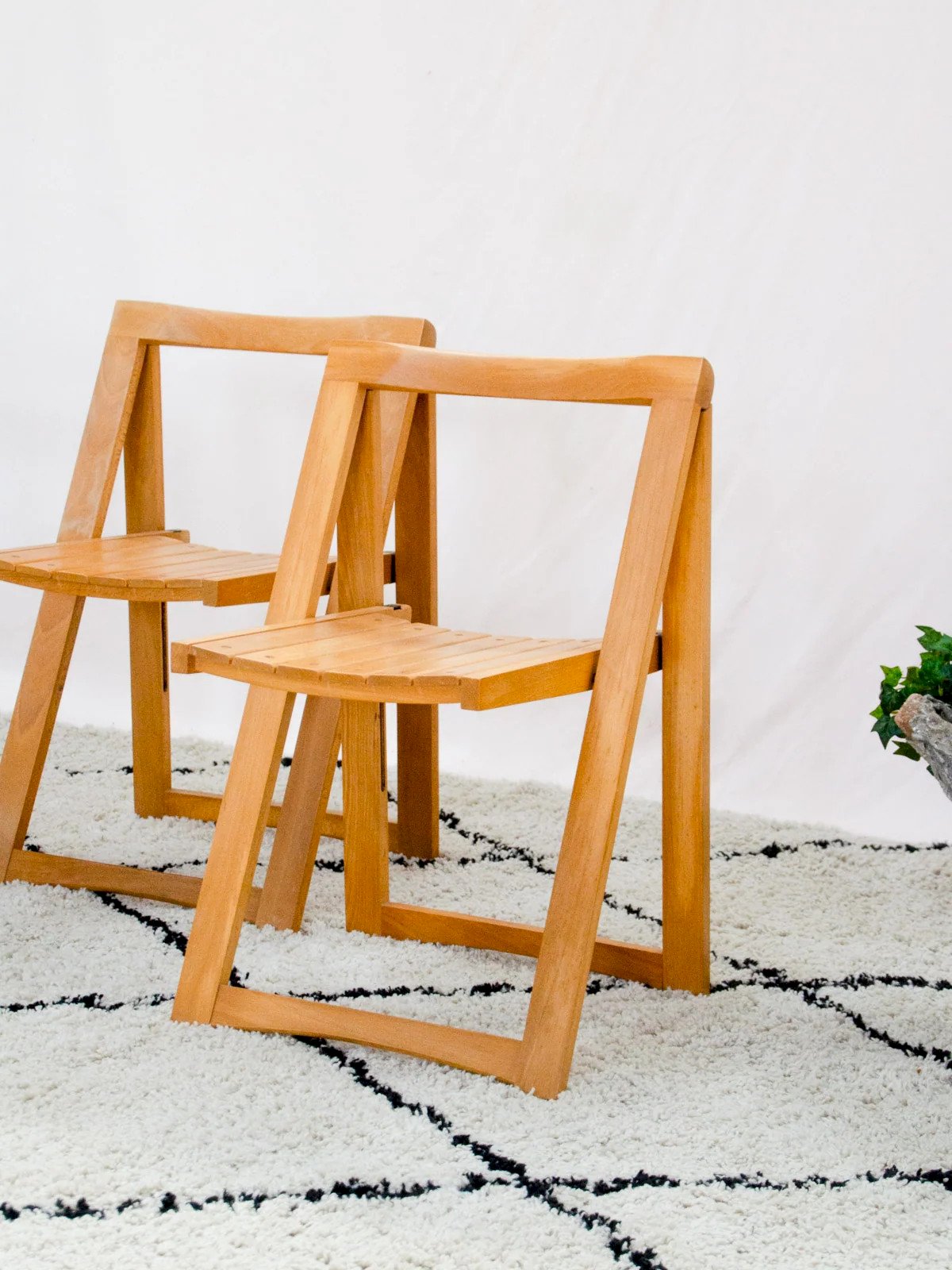
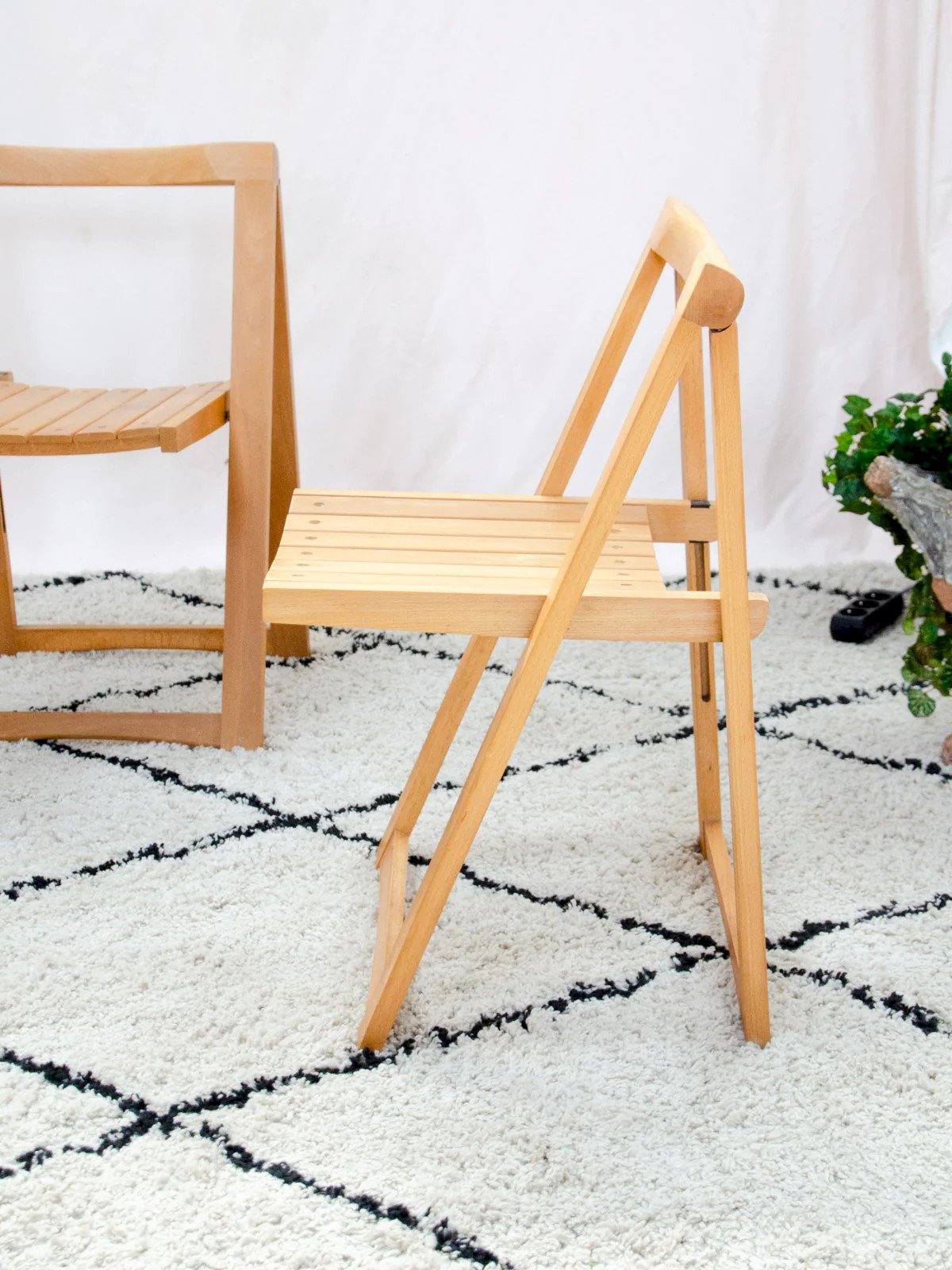
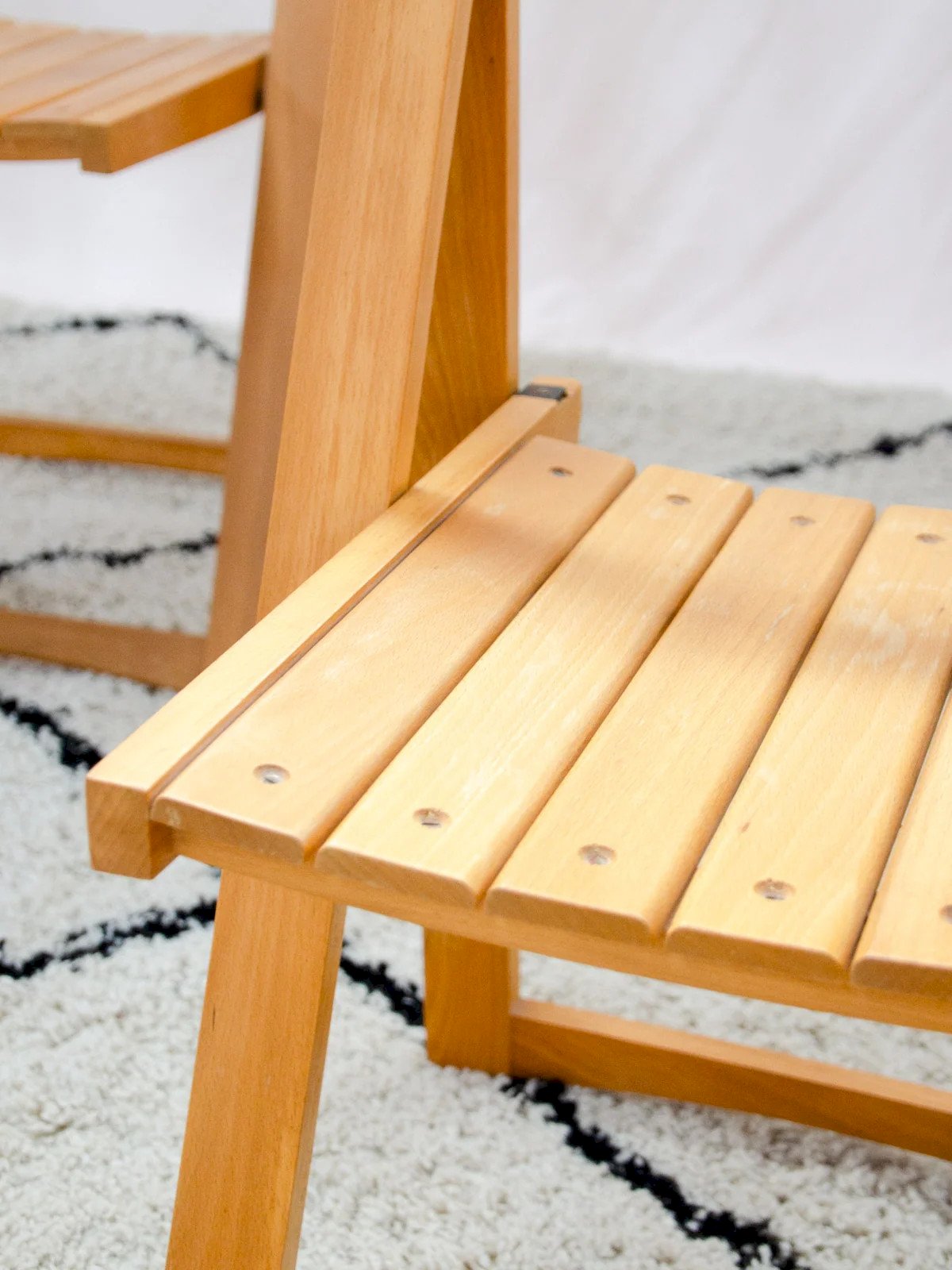
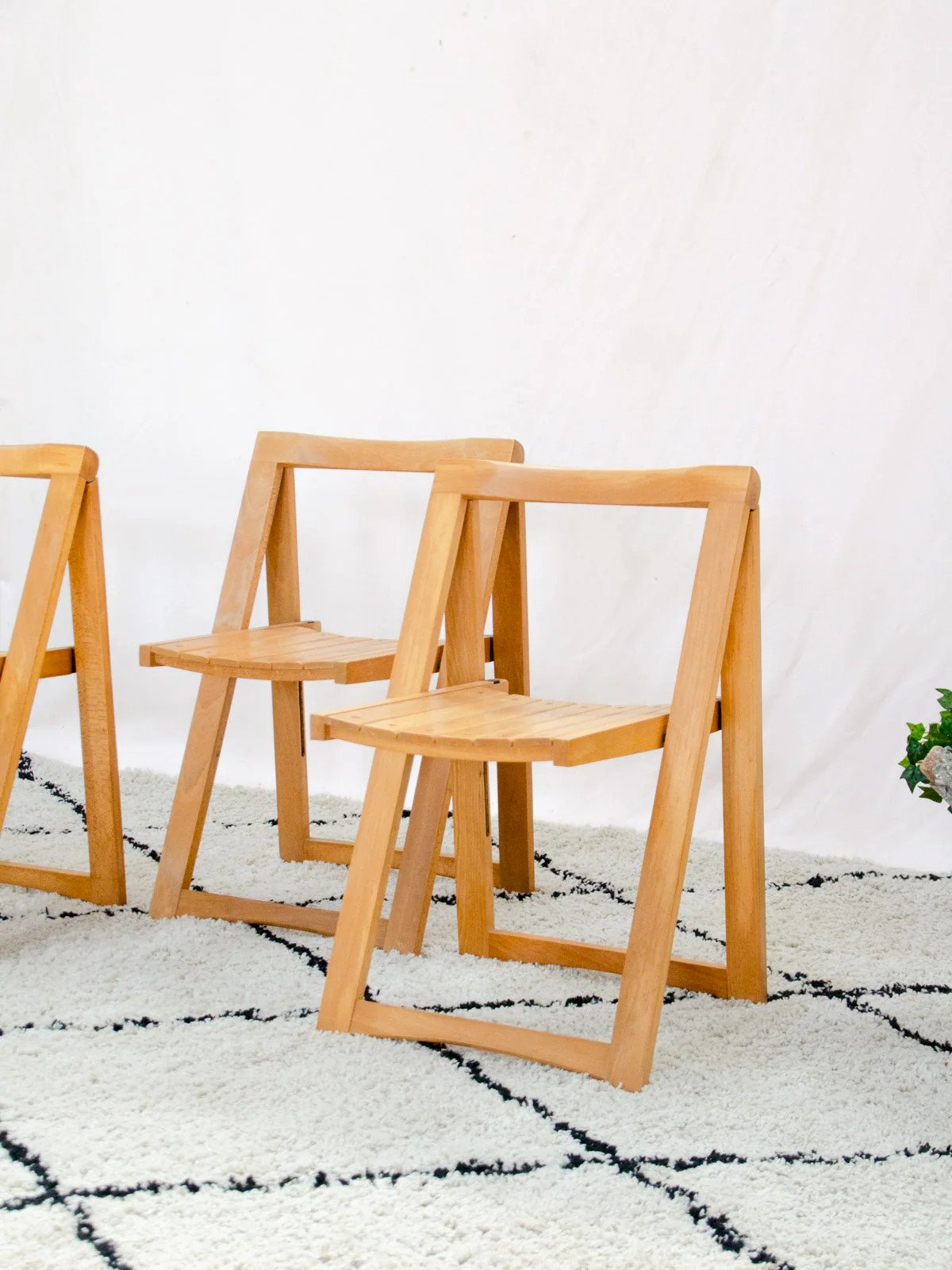
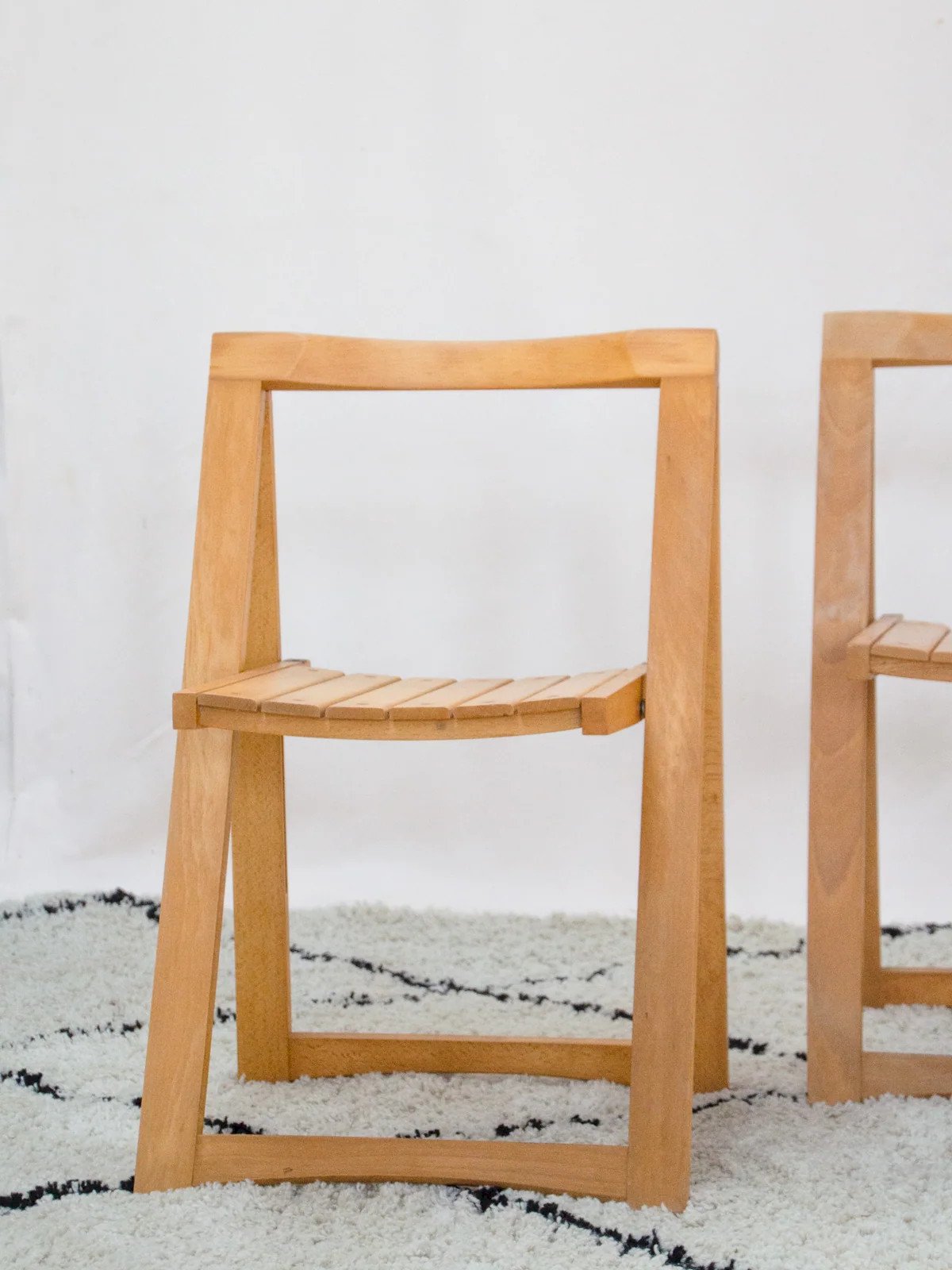
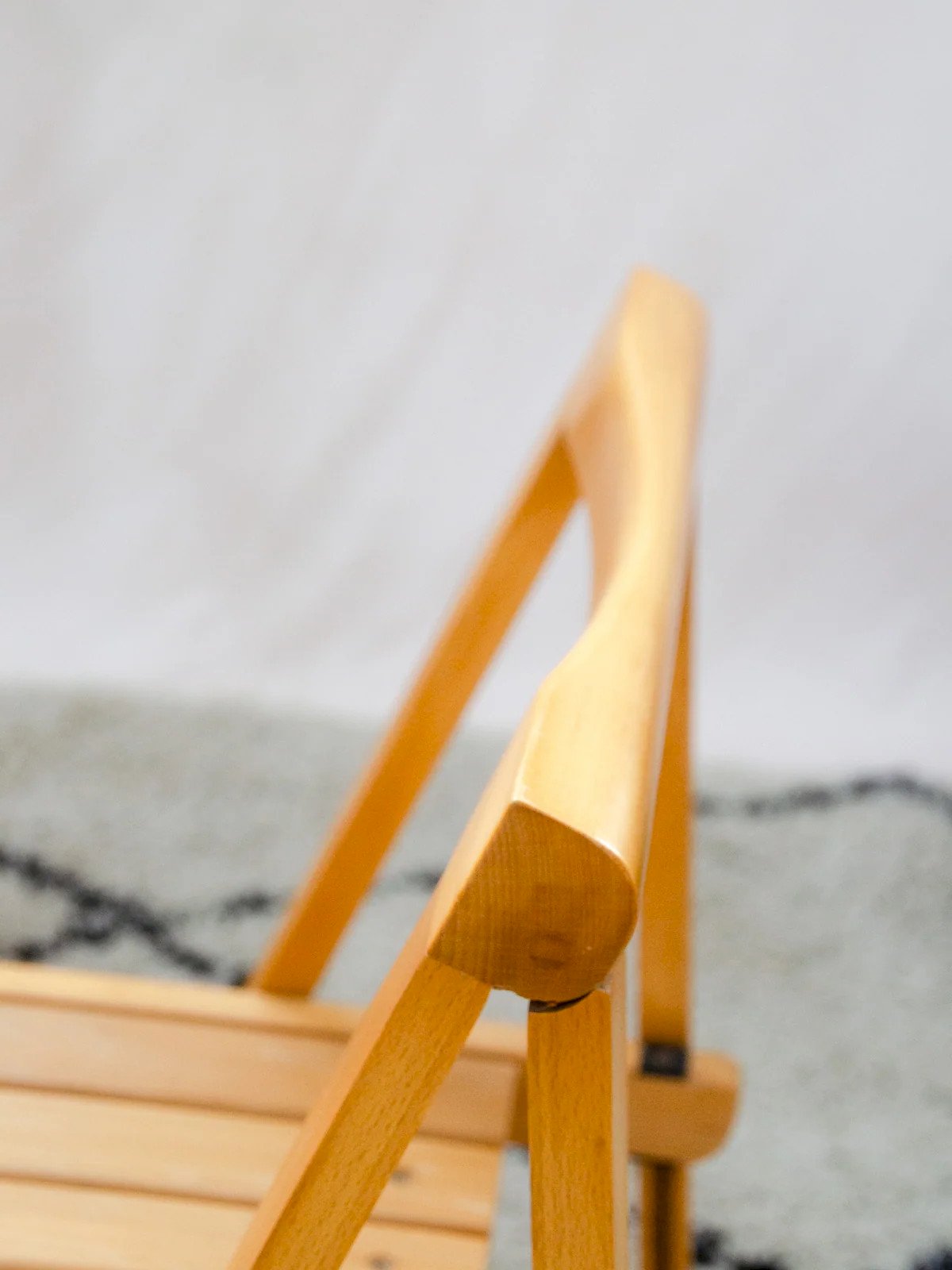
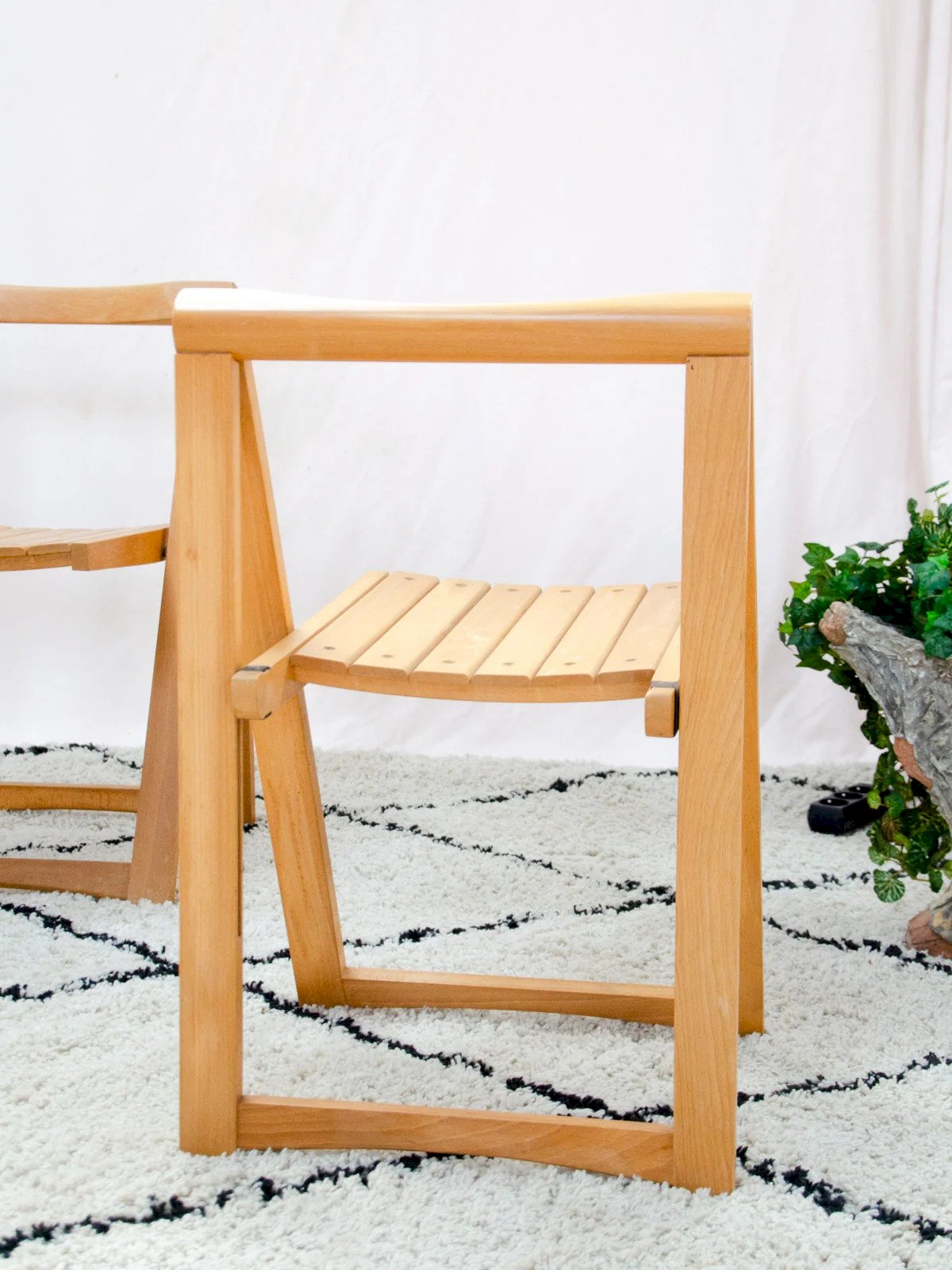
This trio of foldable chairs made of solid beech, with light wood, captivates with its geometric profile and contemporary look. Found second-hand, these Aldo Jacober chairs offer a graphic presence while remaining understated, with a comfortable seat and a backrest that draws a clean line. Their folding mechanism allows them to be opened during mealtime and then easily stored away when not in use. They complement both a wooden table and a more minimalist interior, whether in a dining room or a kitchen nook. Around an improvised lunch, they unfold to accommodate guests before sliding against a wall. Length: 47 cm Width: 45 cm Height: 72 cm Seat height: 43 cm Seat width: 35 cm Seat depth: 36 cm Folded height: 79 cm Folded width: 4.5 cm A brief history of the chair In the Middle Ages, sitting on a chair with a backrest was a rare privilege, reserved for the one presiding over the assembly: the “president” [from the Latin praesidere, to sit in front]. For a long time, it symbolized prestige compared to the benches and stools of the common people, and it was not until the 18th century that the chair democratized and became an everyday object. It is distinguished from an armchair by the absence of armrests, a structure designed to offer total freedom of movement around a table or desk. The result of a constant quest between lightness and solidity, it has evolved from carved solid wood to more modern lines, making each seat a witness to the history of comfort.
Réf :
#414338
Brand / From : Debongout
Related Products
Comments
Alma, the lot of 3 beech folding chairs No. 2152
659€
75002 Paris
Ce site contient des liens d’affiliation pour lesquels je peux recevoir une compensation.
Description
This trio of foldable chairs made of solid beech, with light wood, captivates with its geometric profile and contemporary look. Found second-hand, these Aldo Jacober chairs offer a graphic presence while remaining understated, with a comfortable seat and a backrest that draws a clean line. Their folding mechanism allows them to be opened during mealtime and then easily stored away when not in use. They complement both a wooden table and a more minimalist interior, whether in a dining room or a kitchen nook. Around an improvised lunch, they unfold to accommodate guests before sliding against a wall. Length: 47 cm Width: 45 cm Height: 72 cm Seat height: 43 cm Seat width: 35 cm Seat depth: 36 cm Folded height: 79 cm Folded width: 4.5 cm A brief history of the chair In the Middle Ages, sitting on a chair with a backrest was a rare privilege, reserved for the one presiding over the assembly: the “president” [from the Latin praesidere, to sit in front]. For a long time, it symbolized prestige compared to the benches and stools of the common people, and it was not until the 18th century that the chair democratized and became an everyday object. It is distinguished from an armchair by the absence of armrests, a structure designed to offer total freedom of movement around a table or desk. The result of a constant quest between lightness and solidity, it has evolved from carved solid wood to more modern lines, making each seat a witness to the history of comfort.
Réf :
#414338
Brand / From : Debongout