 English
 Français


Description
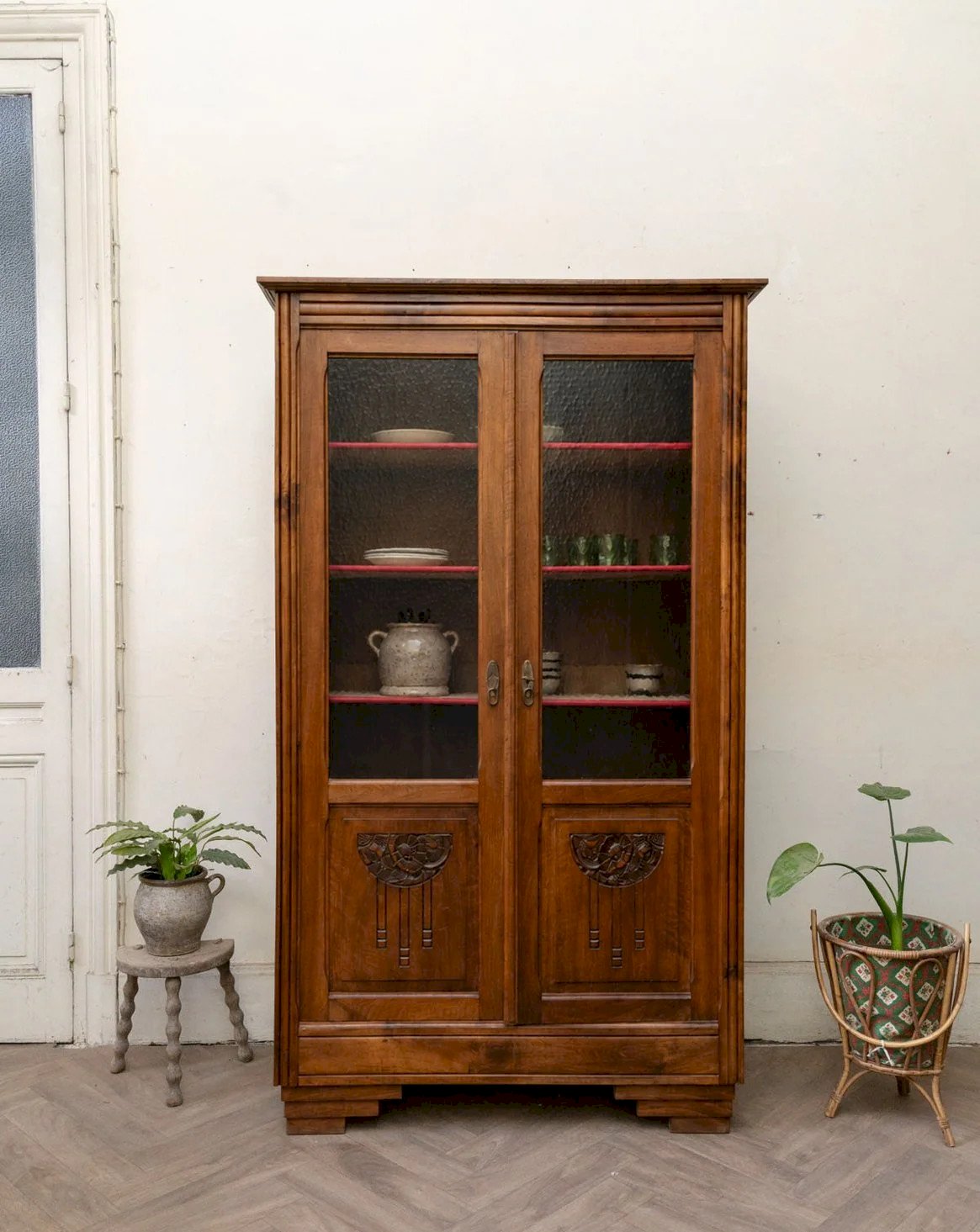
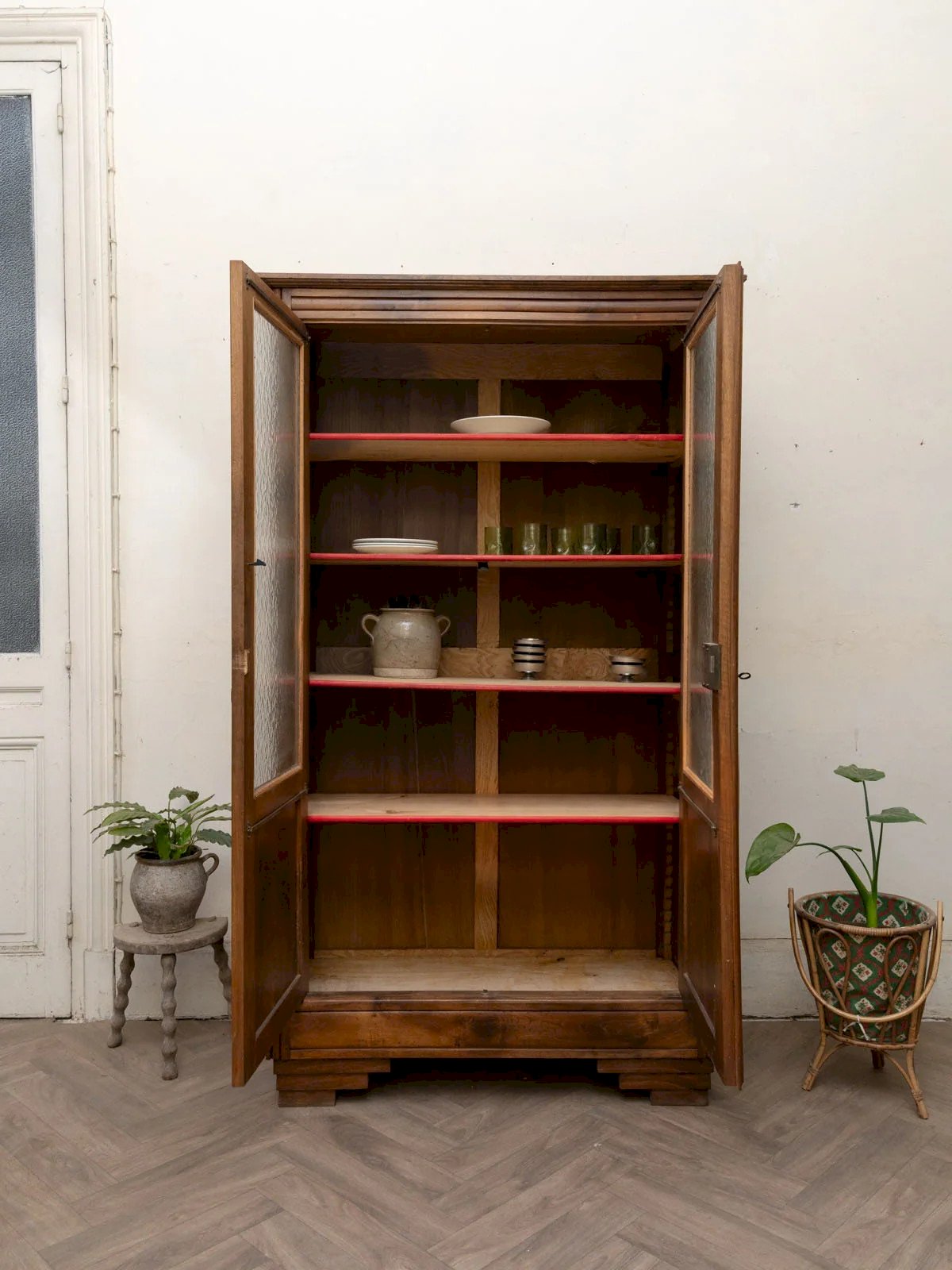
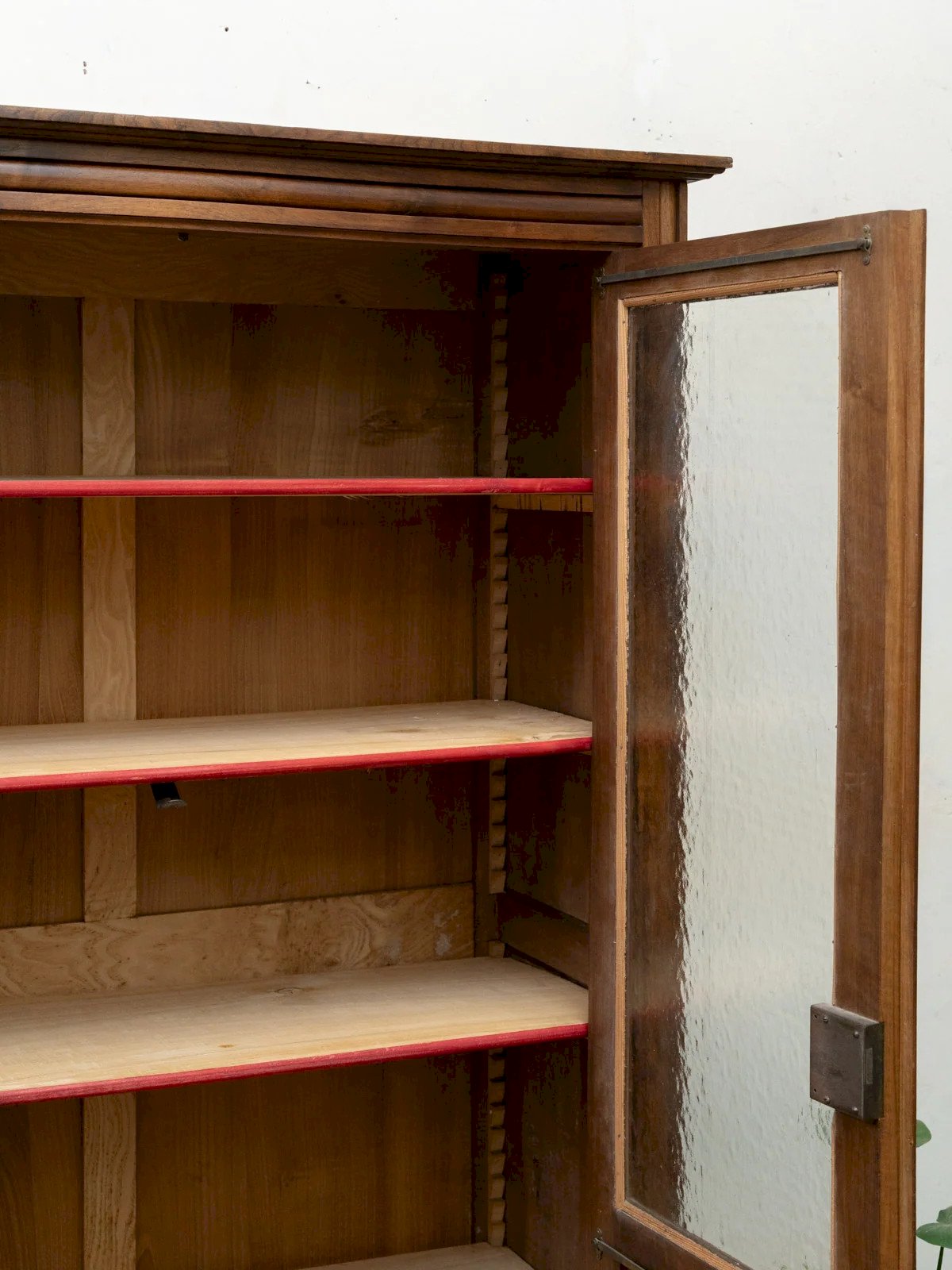
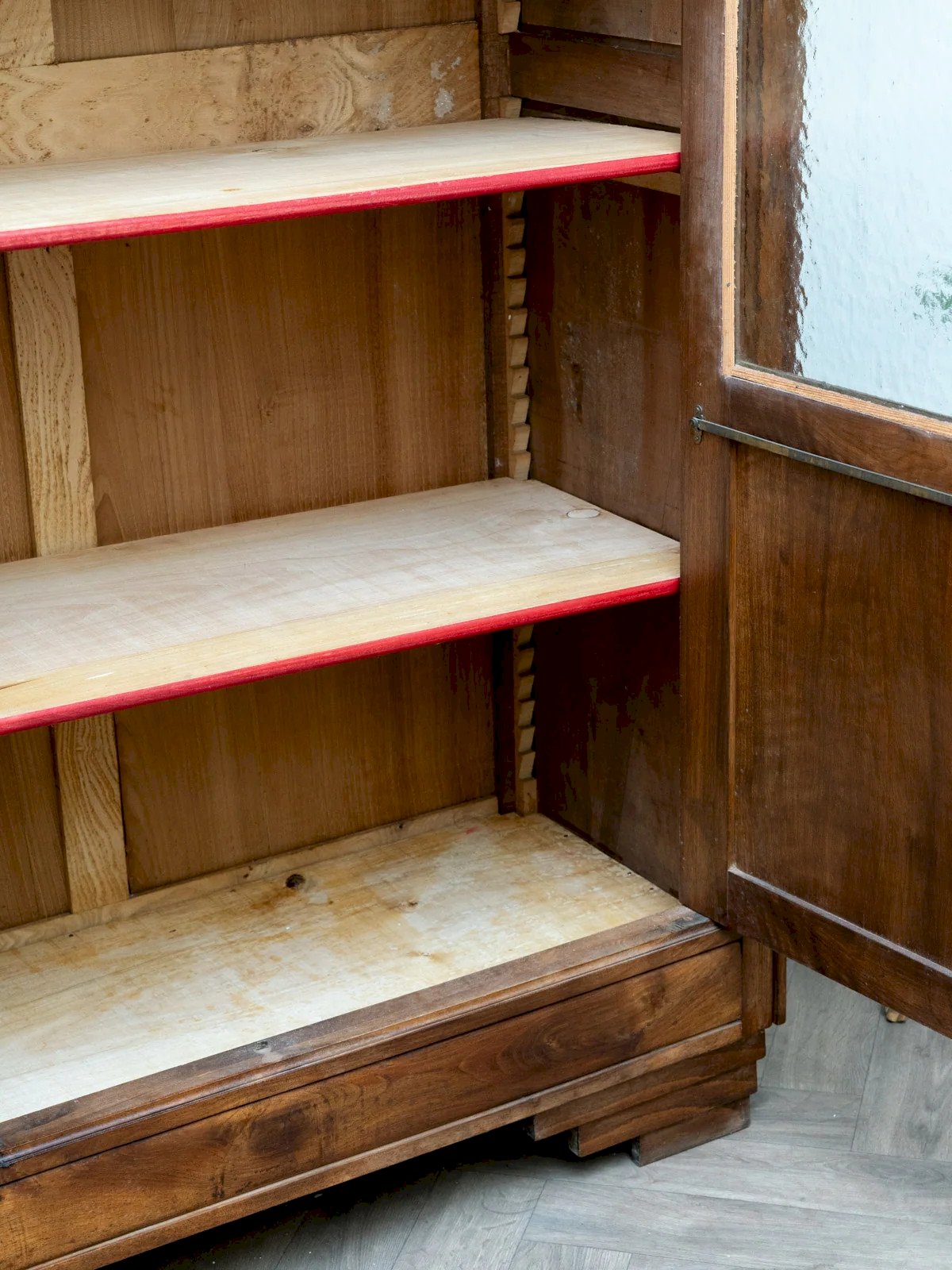
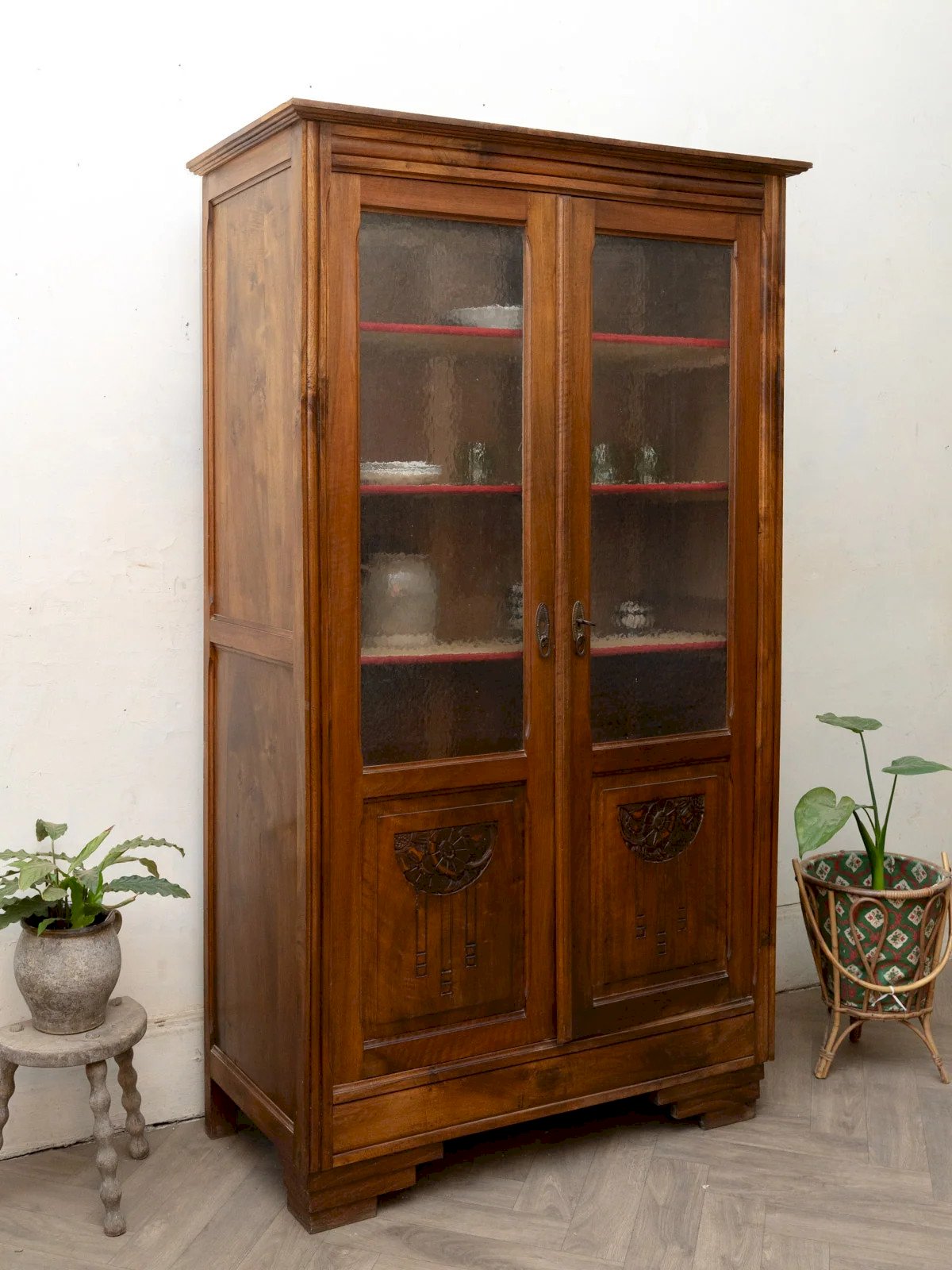
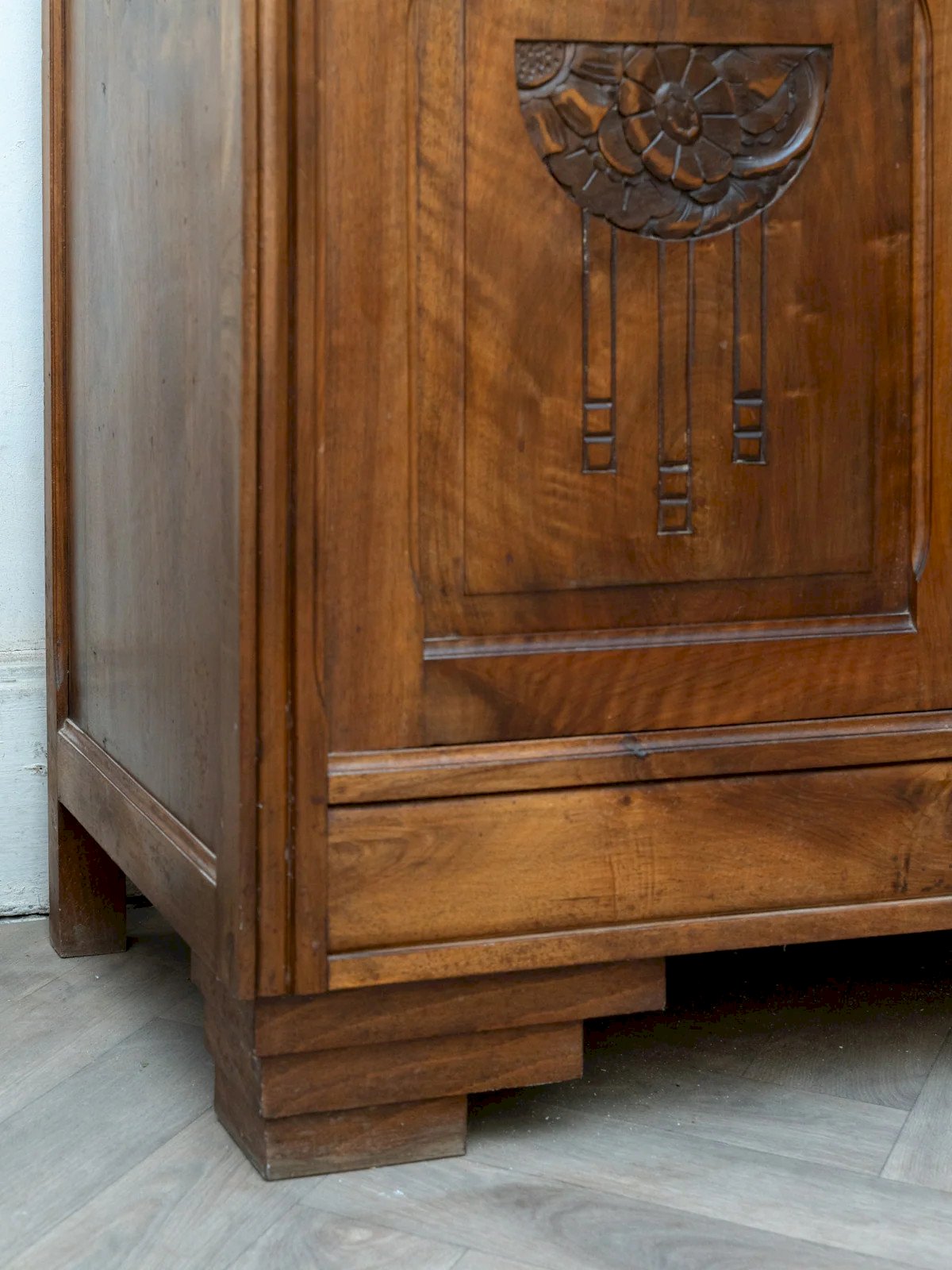
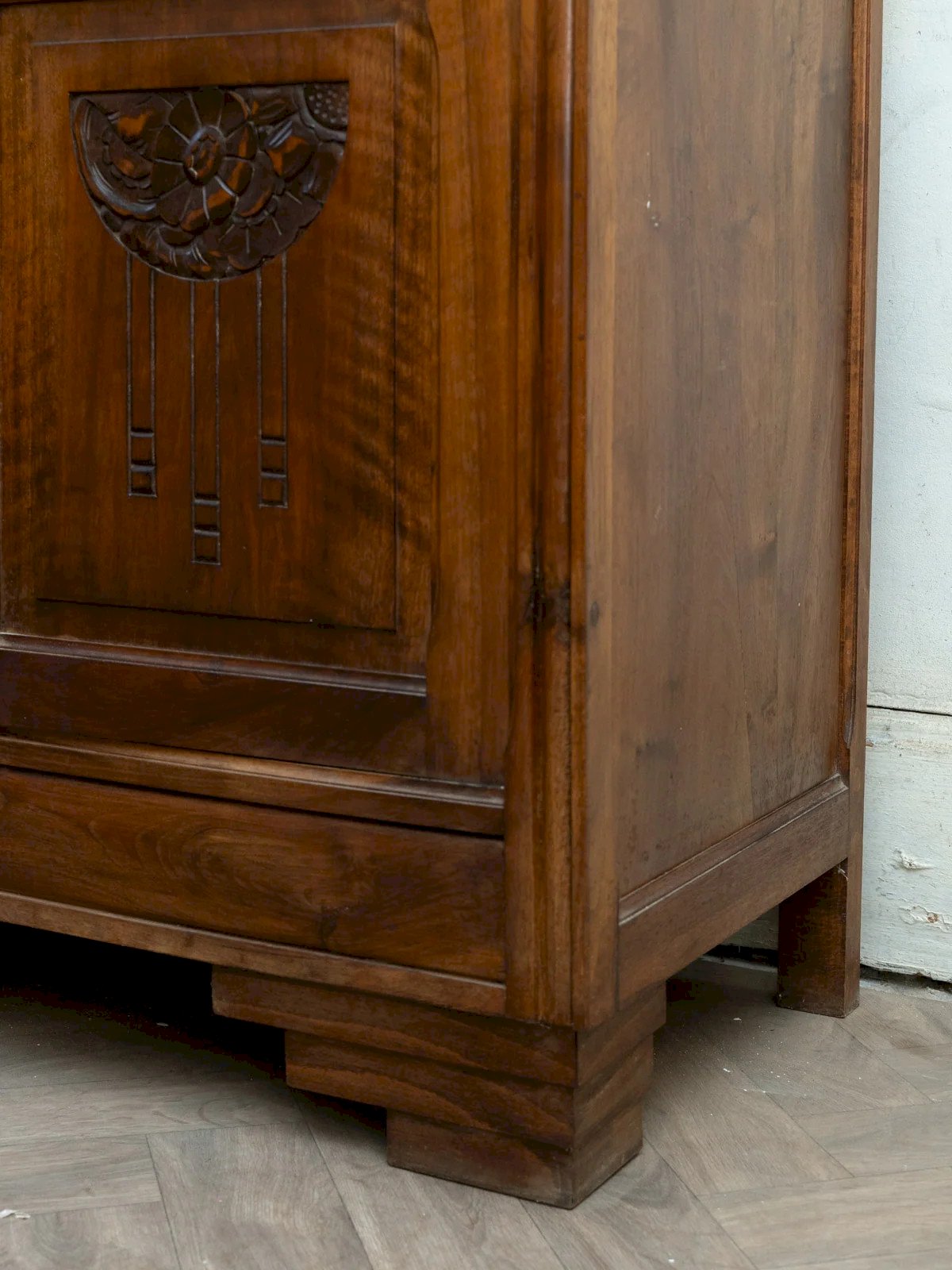
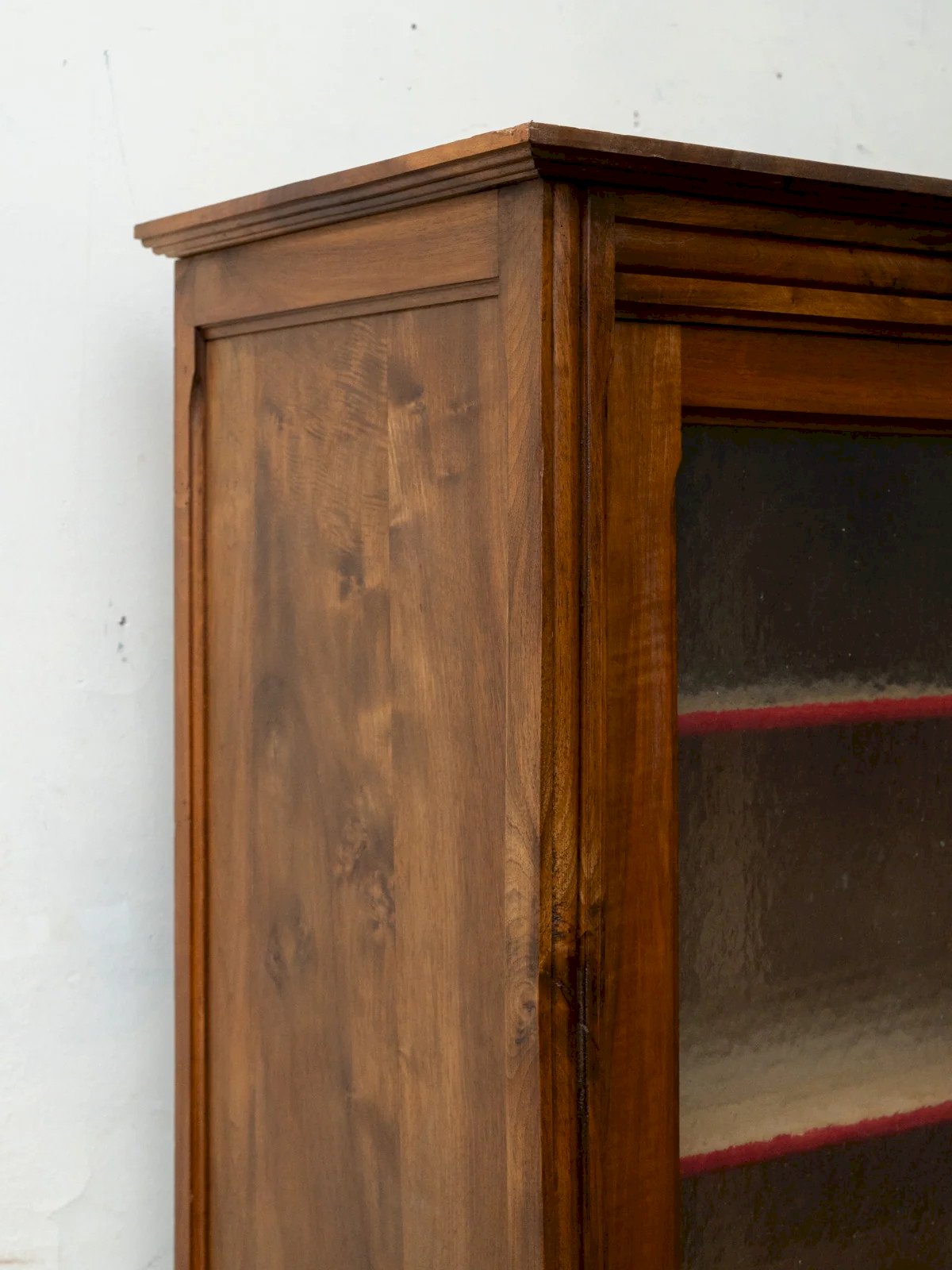
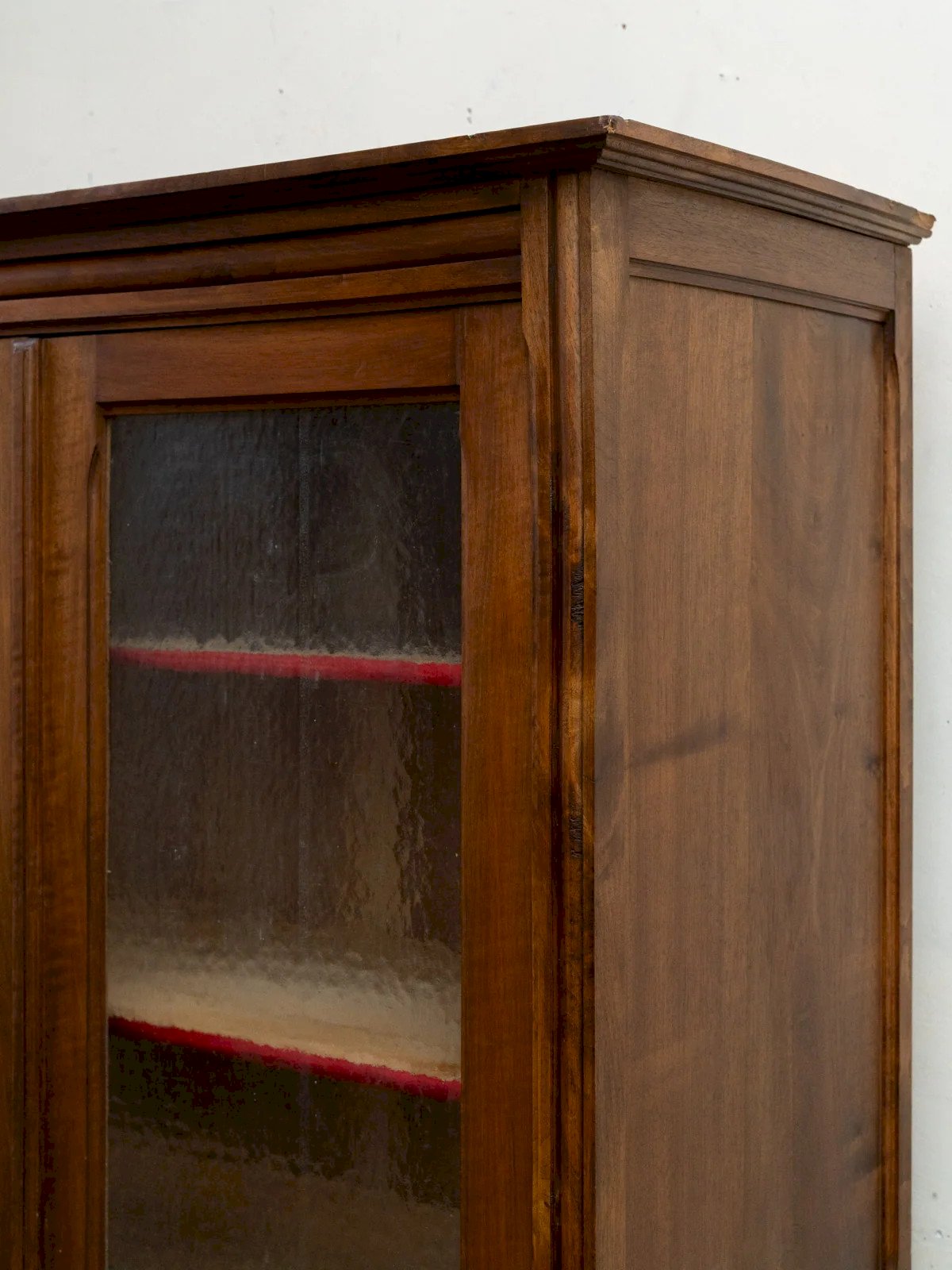
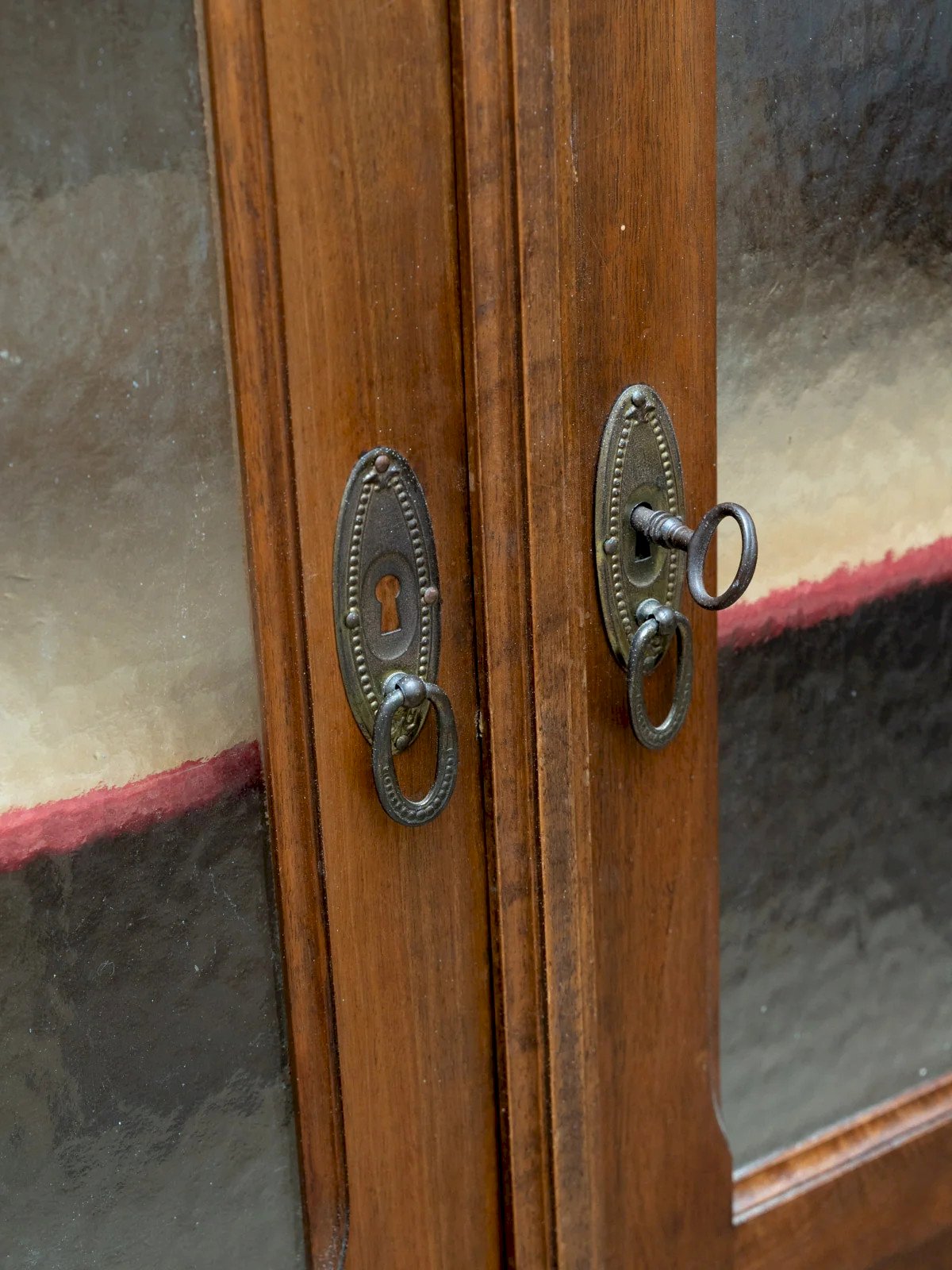
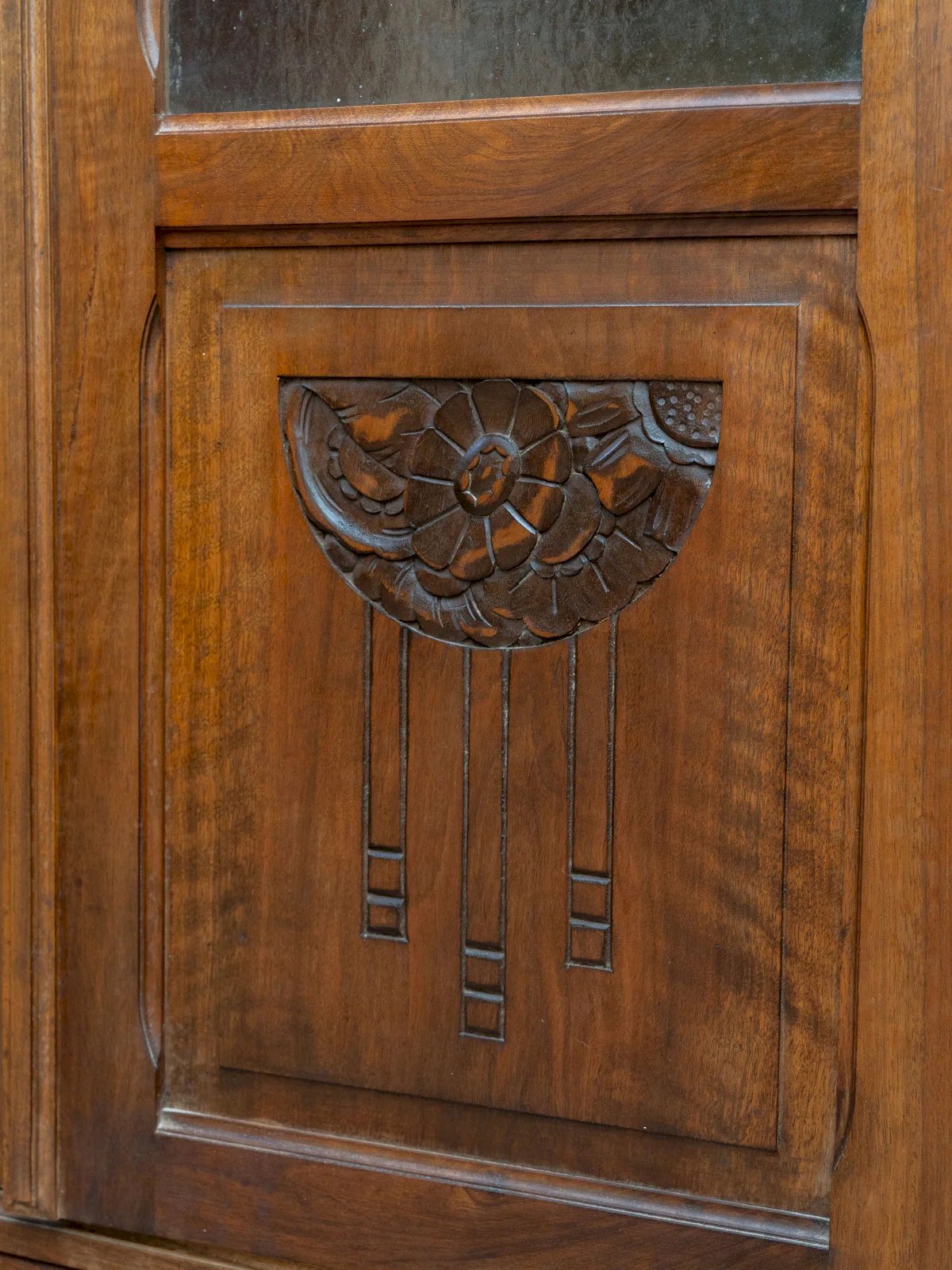
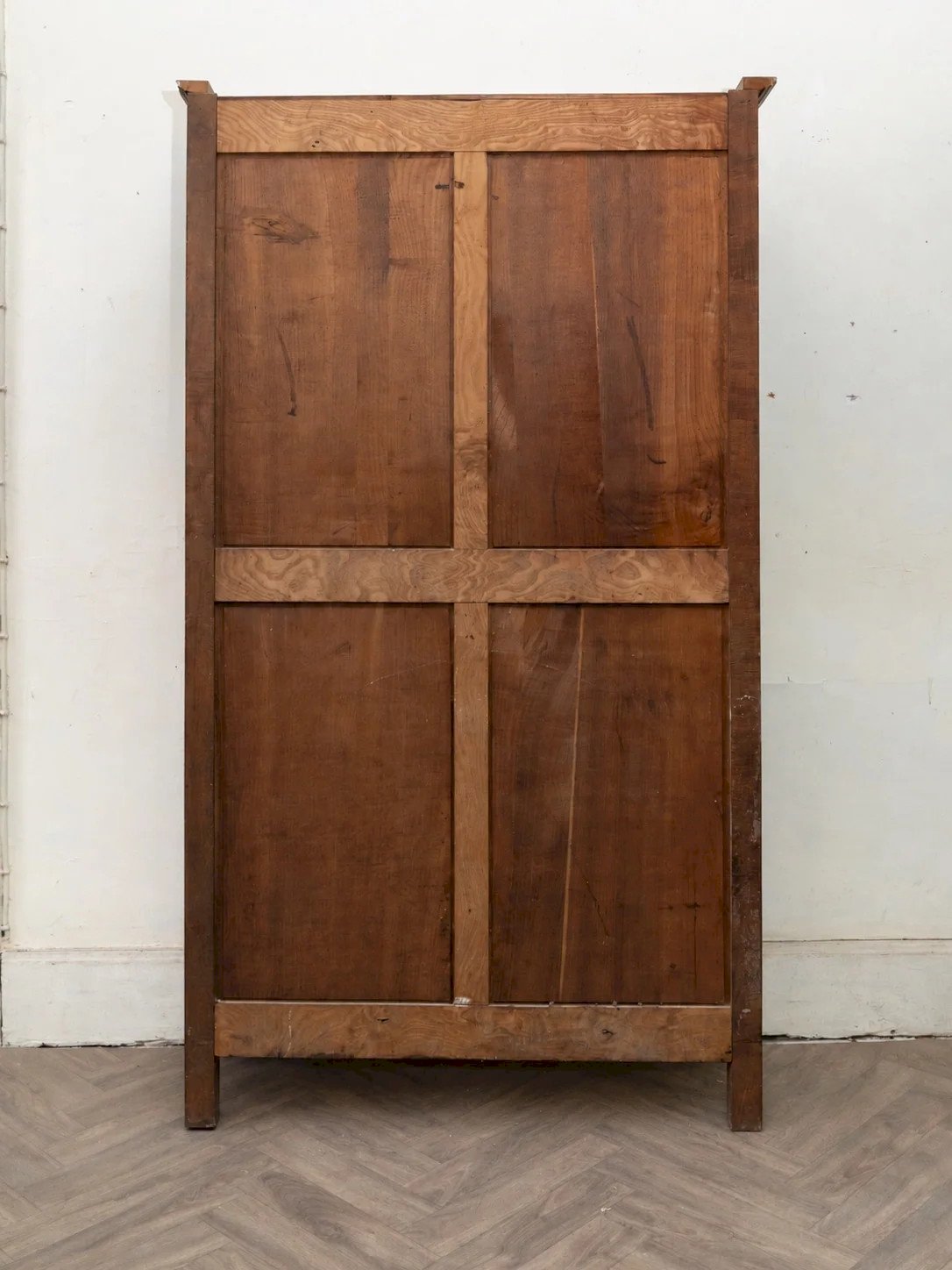
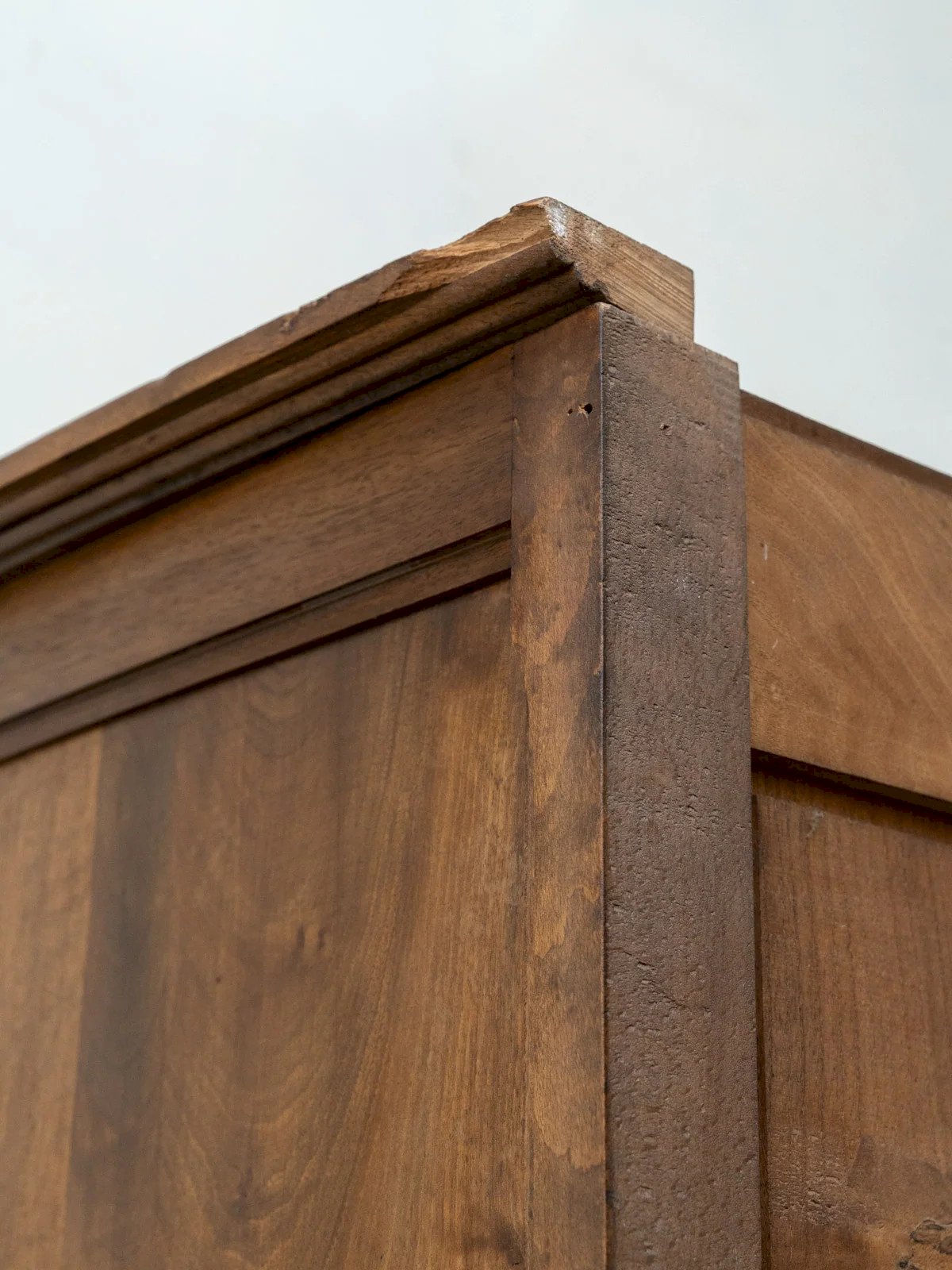
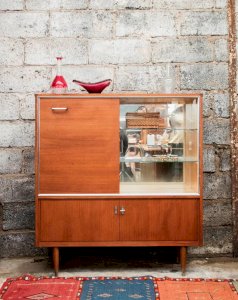
This antique dark wood display case has a very contemporary style. Its two doors are highlighted by a molded decoration at the bottom, while the cathedral glass adds lightness to the whole. Inside, the removable shelves, bordered with a red trim, allow for the organization of dishes, books, or selected objects in a clear and tidy storage space. Sourced from a vintage shop, it naturally finds its place in a living room or dining room, where its play of materials interacts with a sober decoration. Length: 101 cm Width: 45 cm Height: 183 cm Height of the niche: 25.5 cm A brief history of the display case Born in the 18th century, the display case transformed the closed sideboard into a theater for precious objects, protected from dust but visible to the eye. Originally, it served as a "showcase" for goldsmiths, using glass, then a luxurious material, to signal the wealth of the household even before revealing its contents. Its lightweight structure, marked by its transparent walls and often adjustable shelves, allows for the display of collections without visually cluttering the space. Today, it remains the ideal piece of furniture to bring clarity to a room while transforming your memories and curiosities into a personal and refined exhibition.
Réf :
#414464
Brand / From : Debongout
Related Products
Comments
Victoria, the Art Nouveau showcase in carved wood and cathedral glass °1374
769€
75002 Paris
Ce site contient des liens d’affiliation pour lesquels je peux recevoir une compensation.
Description
This antique dark wood display case has a very contemporary style. Its two doors are highlighted by a molded decoration at the bottom, while the cathedral glass adds lightness to the whole. Inside, the removable shelves, bordered with a red trim, allow for the organization of dishes, books, or selected objects in a clear and tidy storage space. Sourced from a vintage shop, it naturally finds its place in a living room or dining room, where its play of materials interacts with a sober decoration. Length: 101 cm Width: 45 cm Height: 183 cm Height of the niche: 25.5 cm A brief history of the display case Born in the 18th century, the display case transformed the closed sideboard into a theater for precious objects, protected from dust but visible to the eye. Originally, it served as a "showcase" for goldsmiths, using glass, then a luxurious material, to signal the wealth of the household even before revealing its contents. Its lightweight structure, marked by its transparent walls and often adjustable shelves, allows for the display of collections without visually cluttering the space. Today, it remains the ideal piece of furniture to bring clarity to a room while transforming your memories and curiosities into a personal and refined exhibition.
Réf :
#414464
Brand / From : Debongout