 English
 Français


Description
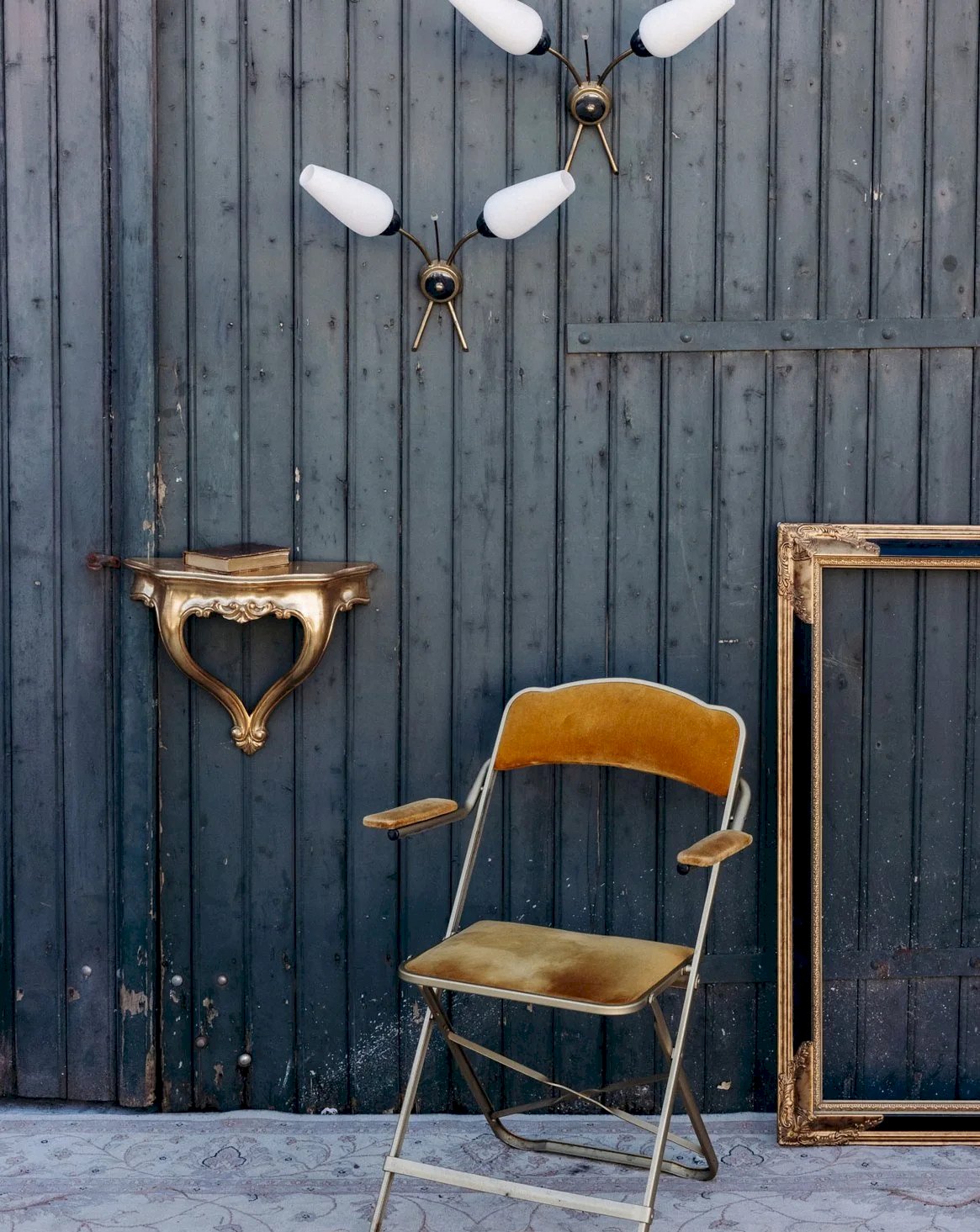
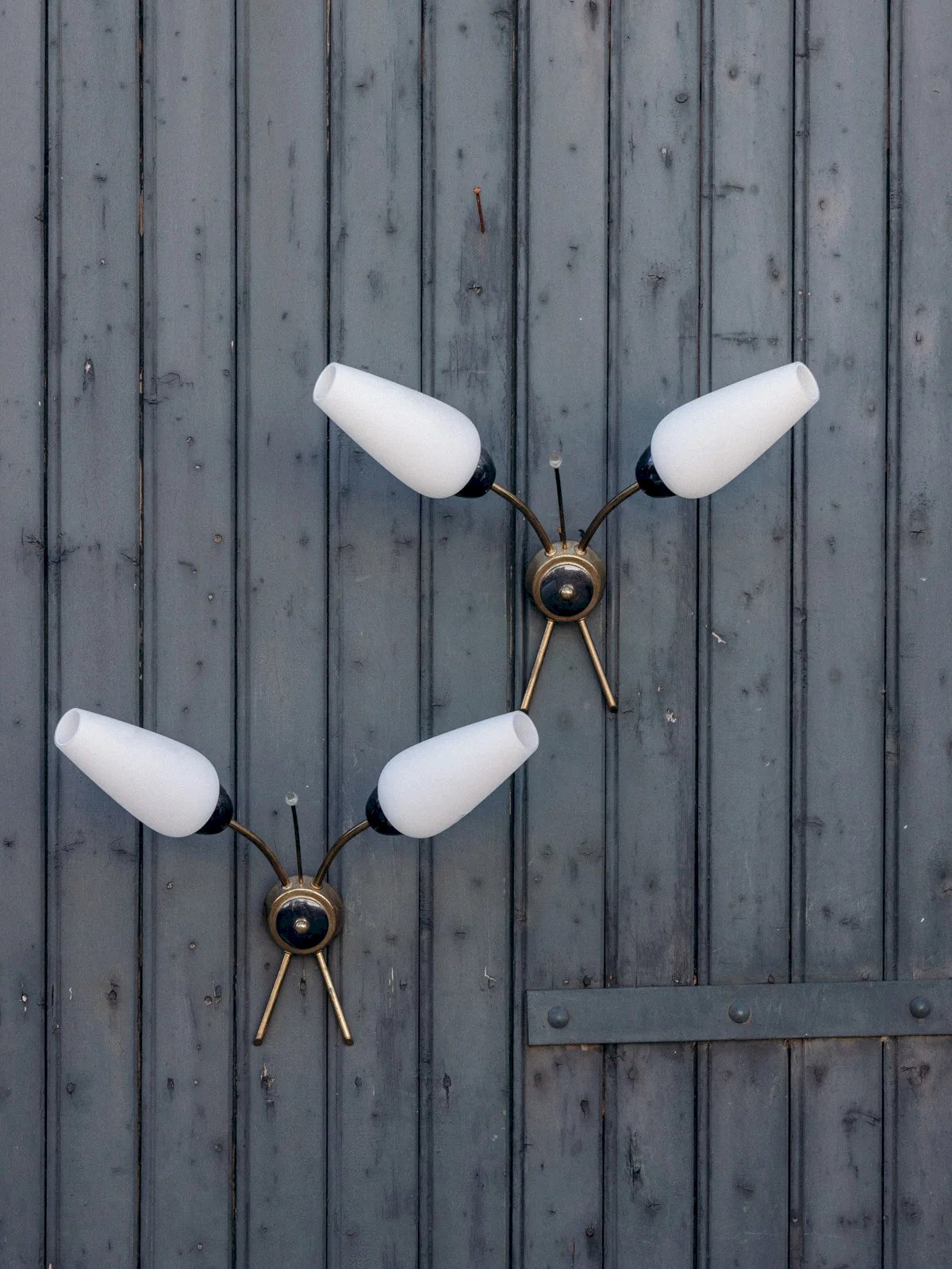
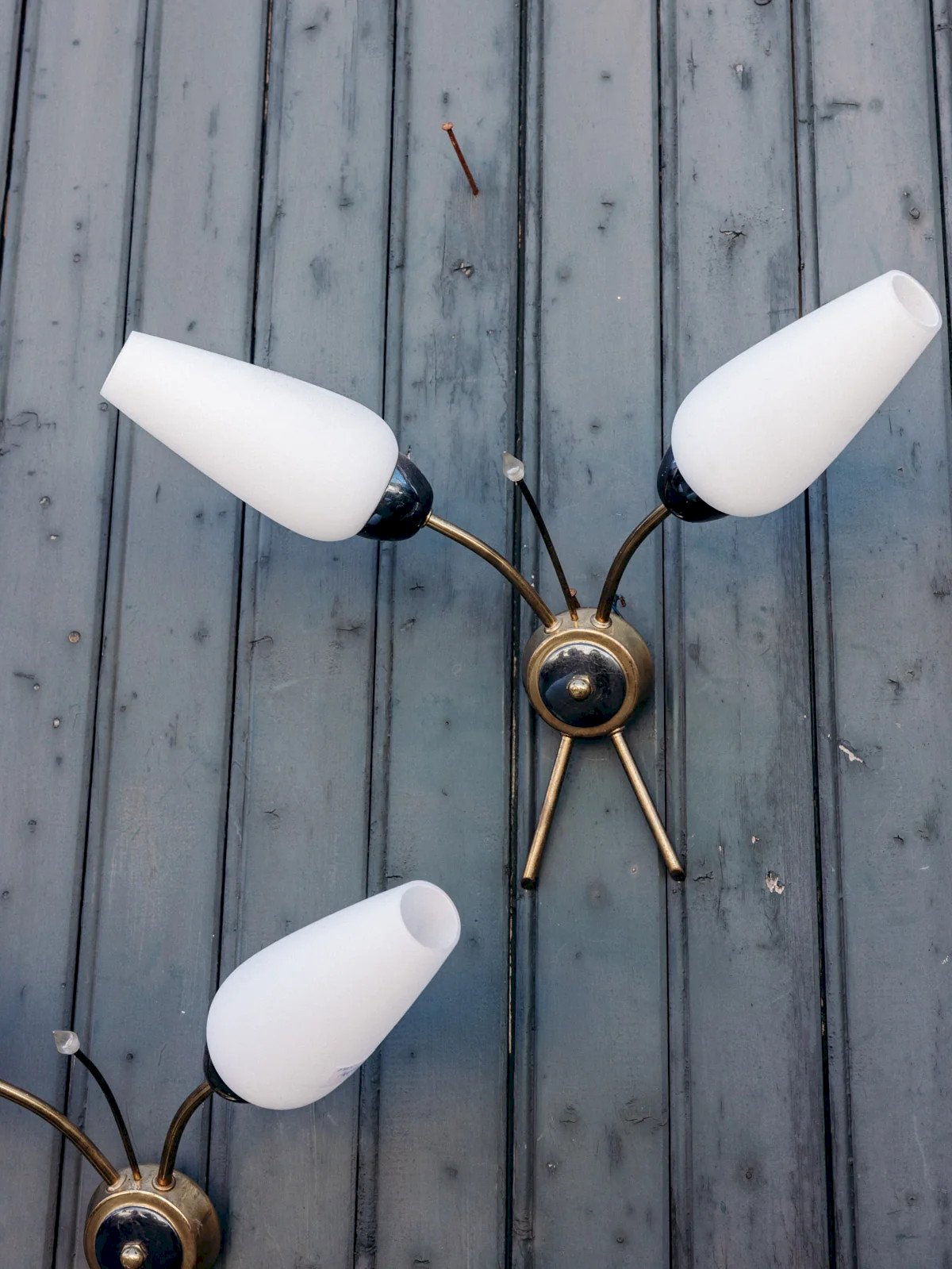
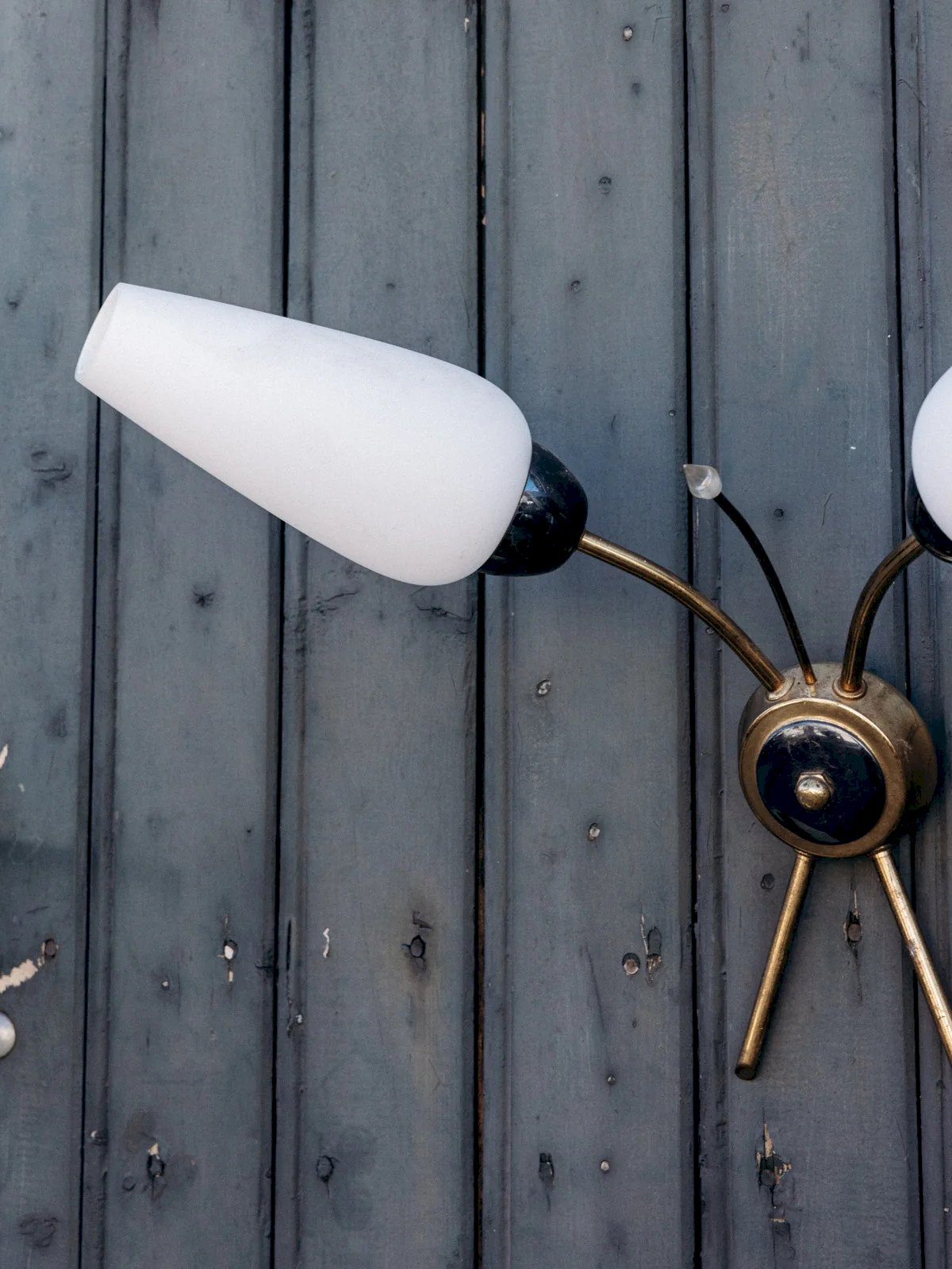
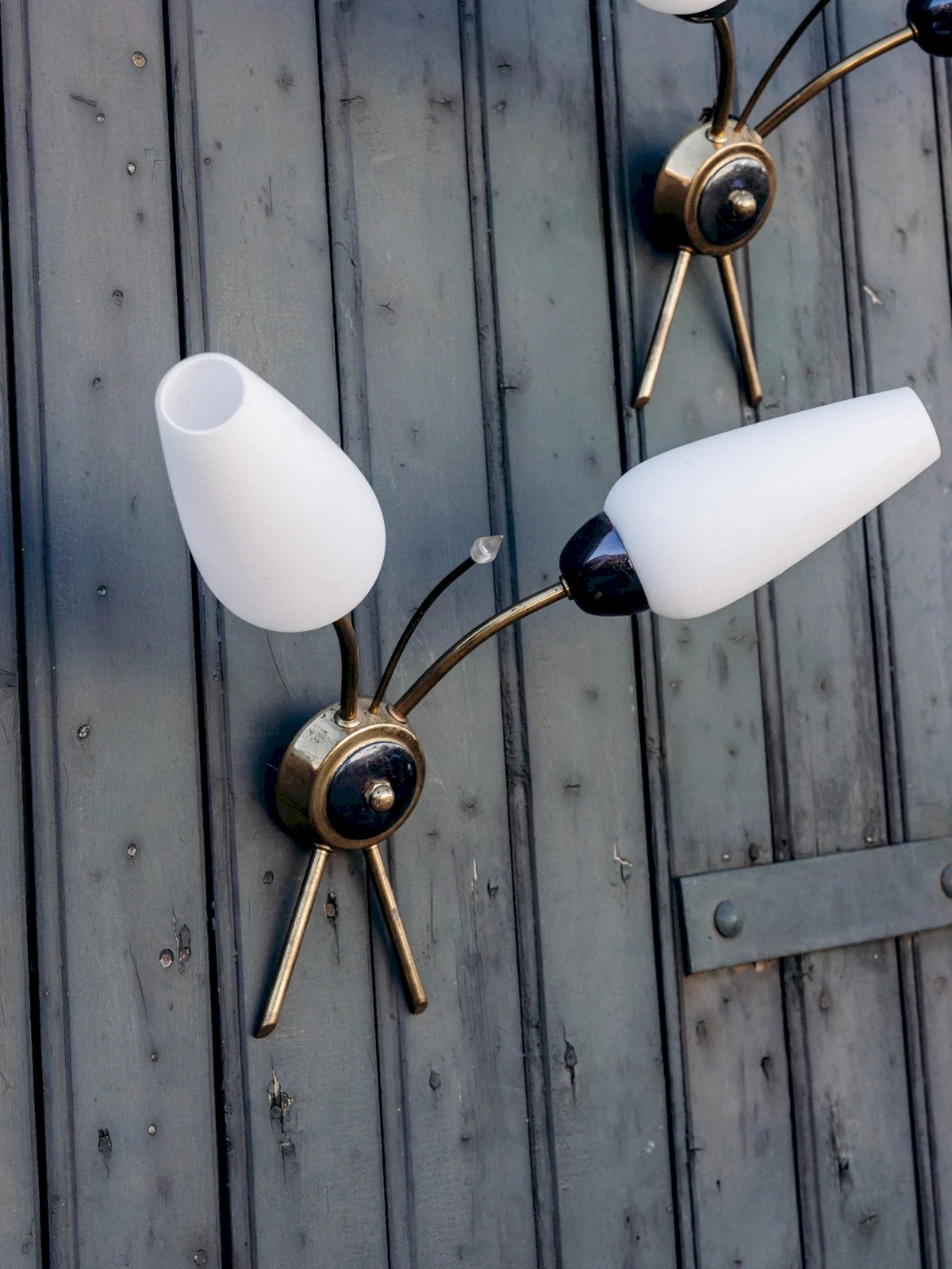
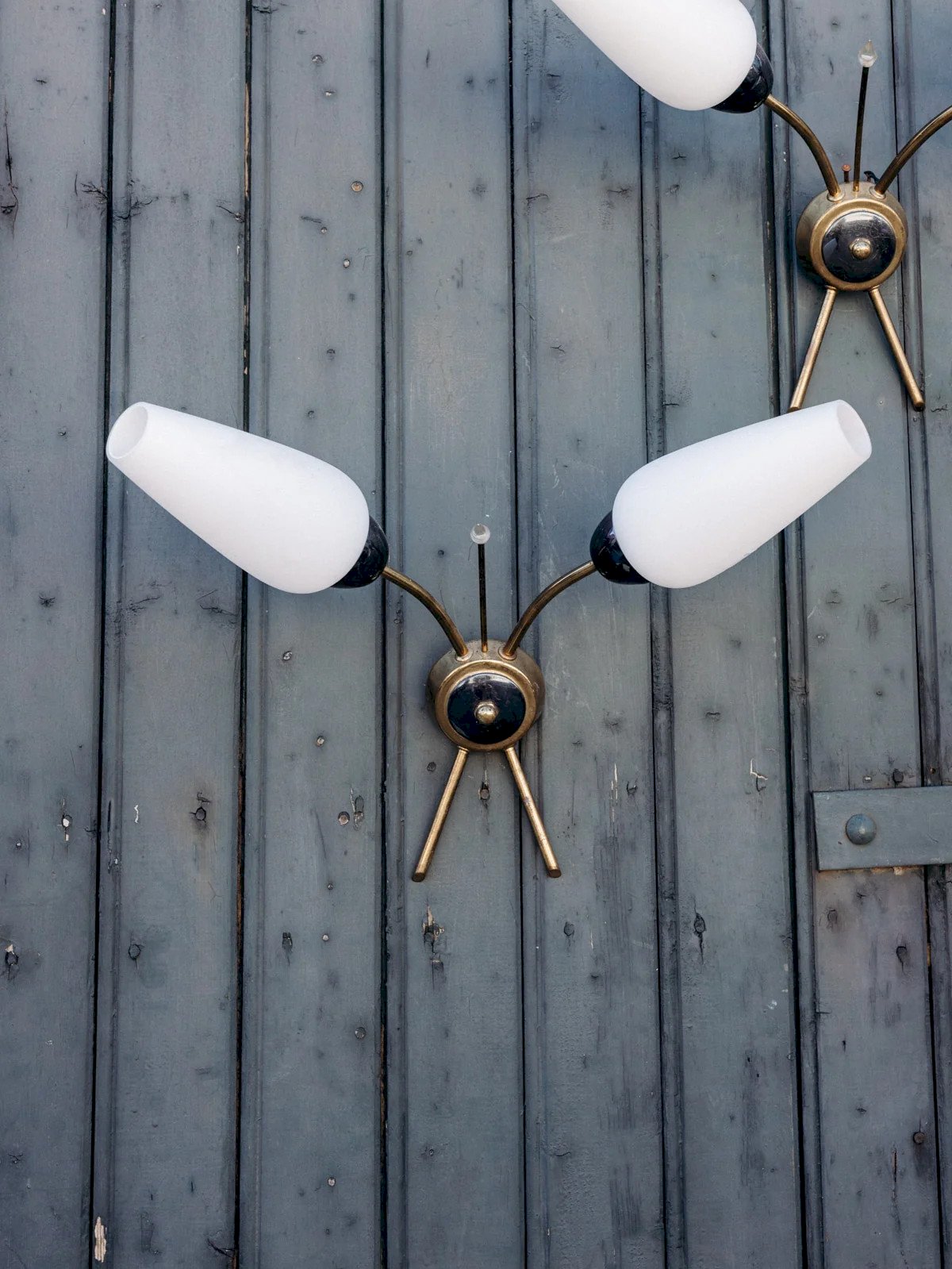
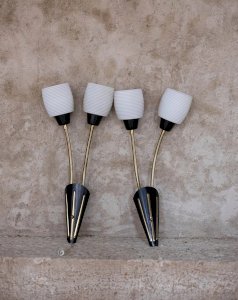
Invite elegance into your interior with these Art Deco wall sconces. Their smoked glass globes diffuse a soft and warm light, while the delicacy of brass adds a refined touch to your decor. Perfect for illuminating a hallway or enhancing a living room, these sconces blend seamlessly with contemporary or vintage atmospheres. Some signs of use that add to their character. Width: 40 cm Depth: 7 cm Height: 43 cm A brief history of the sconce The sconce descends from the medieval "light arms," these torches fixed to the walls to illuminate corridors without obstructing passage. Long before electricity, it was a concentration of ingenuity: it often incorporated a mirror or polished metal plate at the back, a technical trick essential for doubling the candle's brightness by simple reflection. In the 18th century, it moved from passage areas to reception rooms, dressing in bronze and crystal to become a true instrument of staging. Its wall-mounted position allowed for the highlighting of woodwork and architectural reliefs, creating shadow plays impossible to achieve with central lighting.
Réf :
#413318
Brand / From : Debongout
Related Products


Comments
Suzette, the Art Deco wall sconces pair No. 237
109€
75002 Paris
Ce site contient des liens d’affiliation pour lesquels je peux recevoir une compensation.
Description
Invite elegance into your interior with these Art Deco wall sconces. Their smoked glass globes diffuse a soft and warm light, while the delicacy of brass adds a refined touch to your decor. Perfect for illuminating a hallway or enhancing a living room, these sconces blend seamlessly with contemporary or vintage atmospheres. Some signs of use that add to their character. Width: 40 cm Depth: 7 cm Height: 43 cm A brief history of the sconce The sconce descends from the medieval "light arms," these torches fixed to the walls to illuminate corridors without obstructing passage. Long before electricity, it was a concentration of ingenuity: it often incorporated a mirror or polished metal plate at the back, a technical trick essential for doubling the candle's brightness by simple reflection. In the 18th century, it moved from passage areas to reception rooms, dressing in bronze and crystal to become a true instrument of staging. Its wall-mounted position allowed for the highlighting of woodwork and architectural reliefs, creating shadow plays impossible to achieve with central lighting.
Réf :
#413318
Brand / From : Debongout