 English
 Français


Description
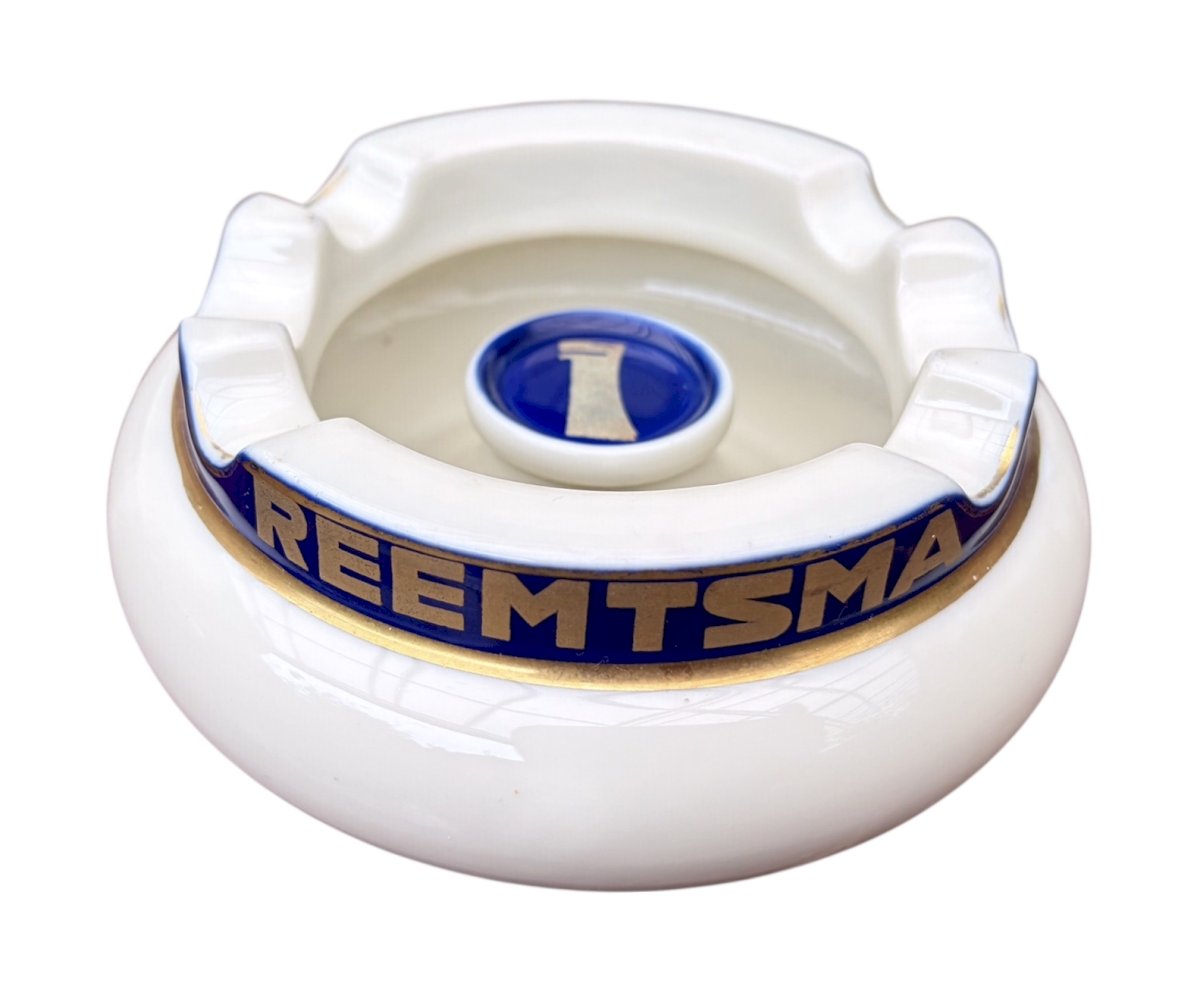
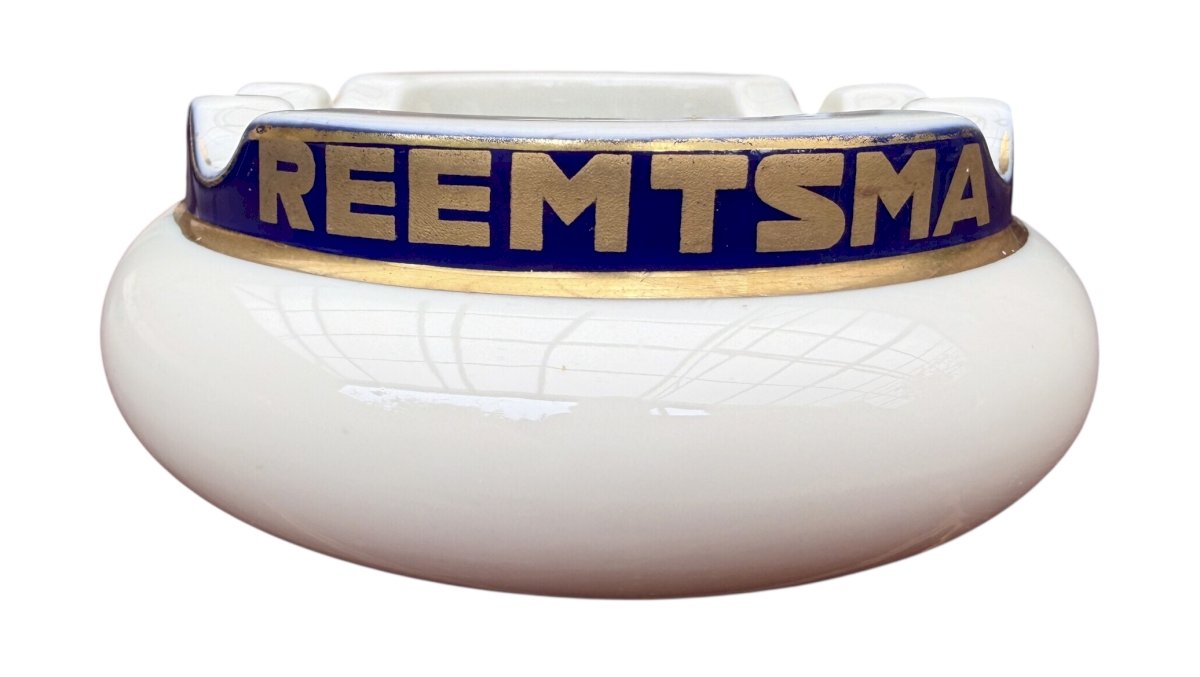
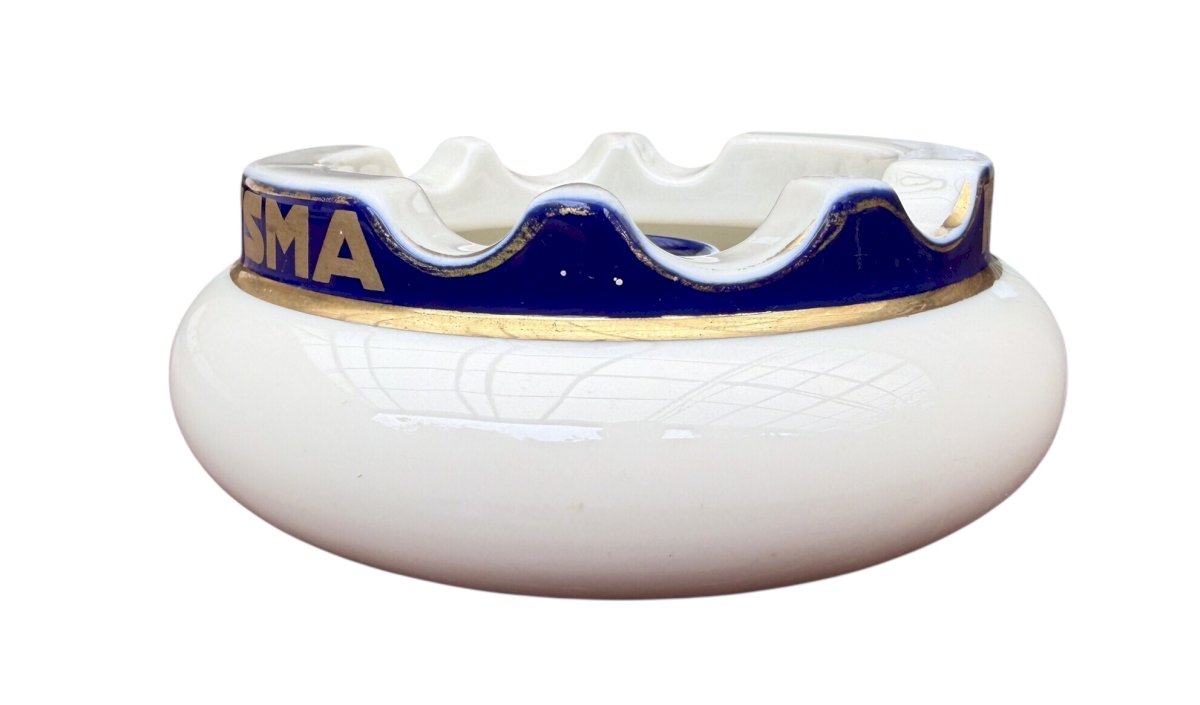
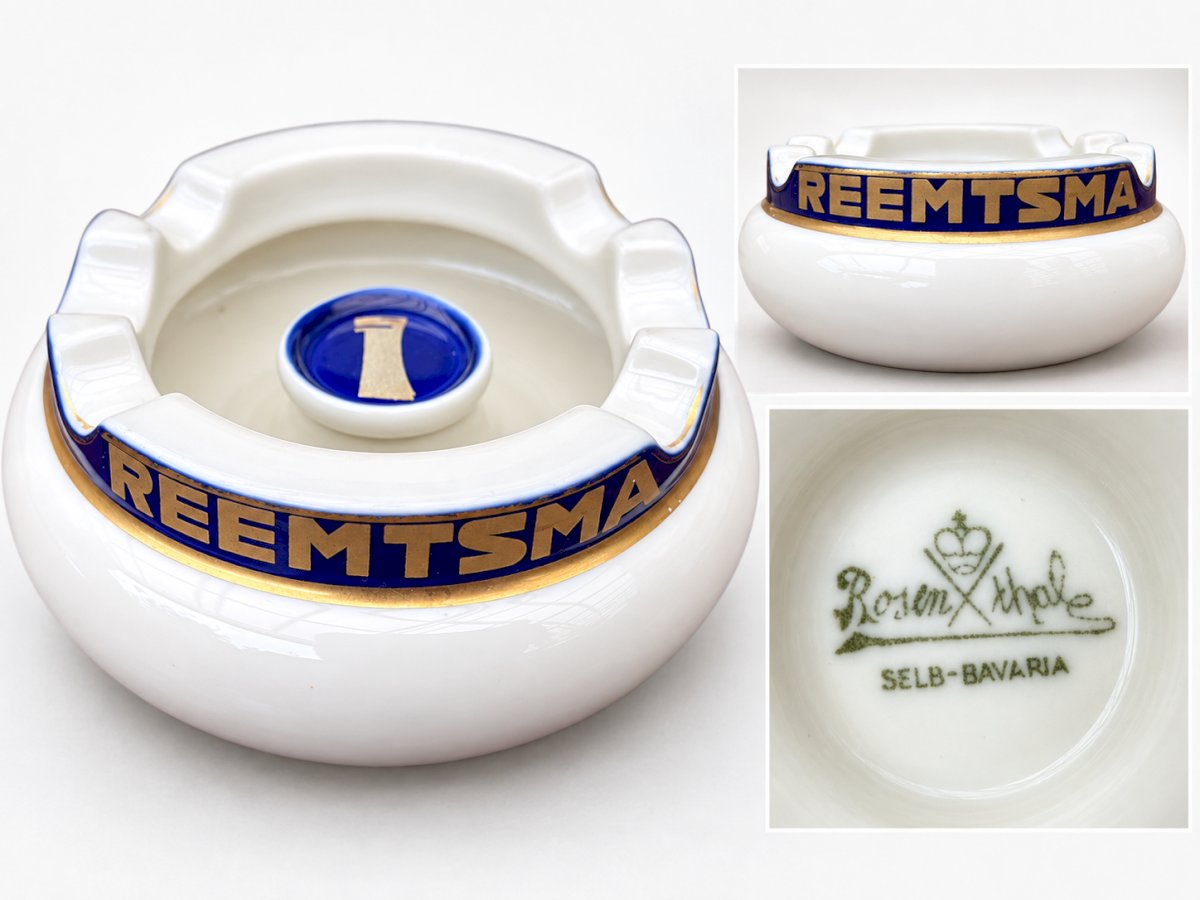
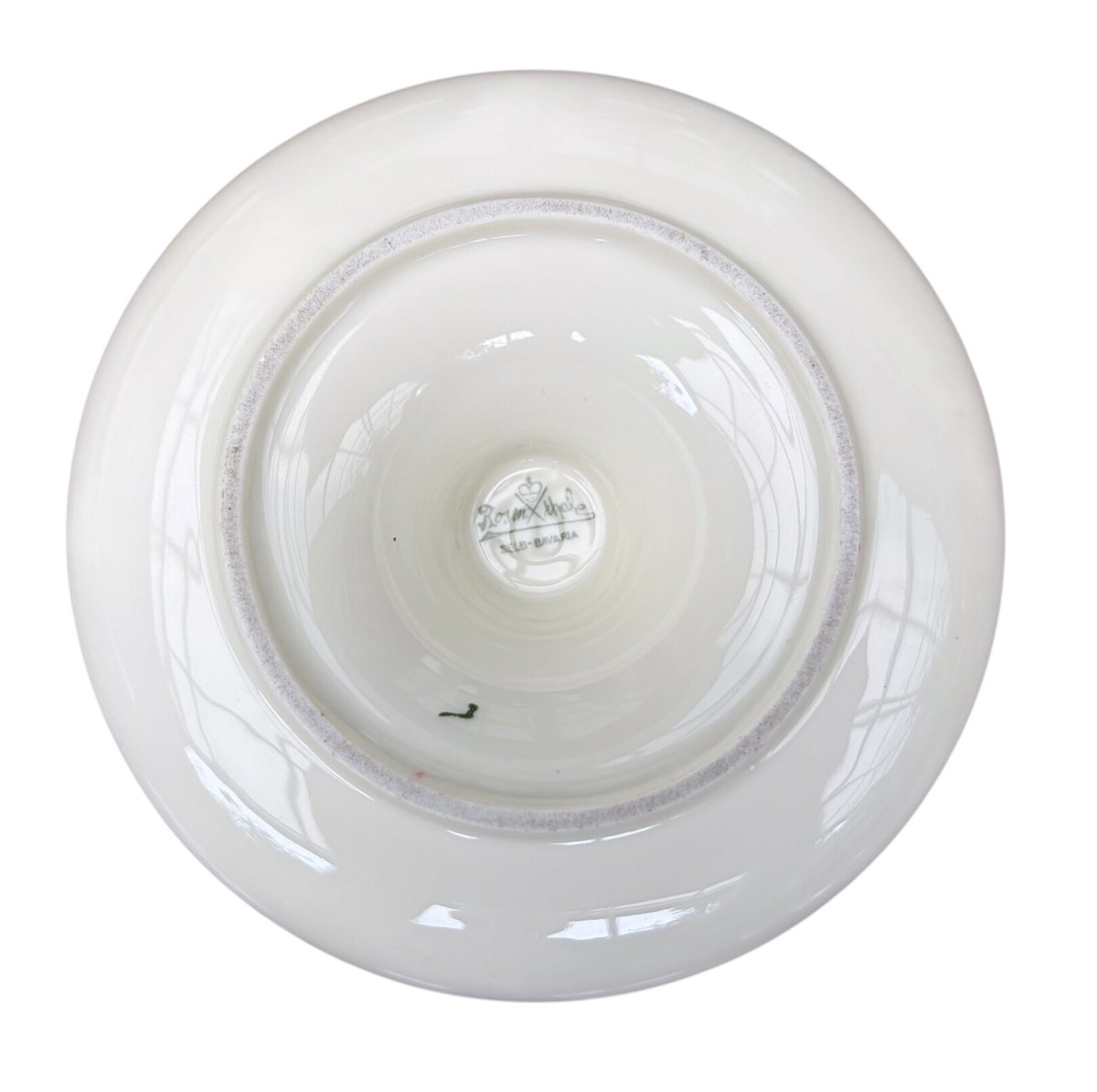
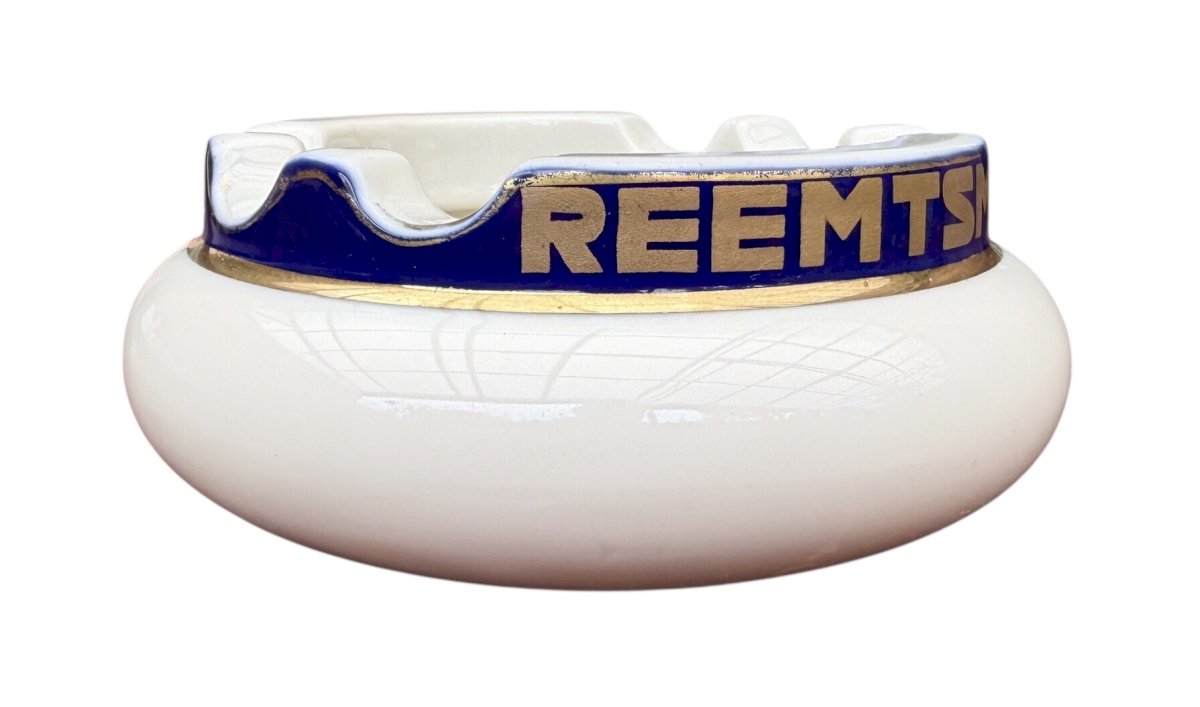
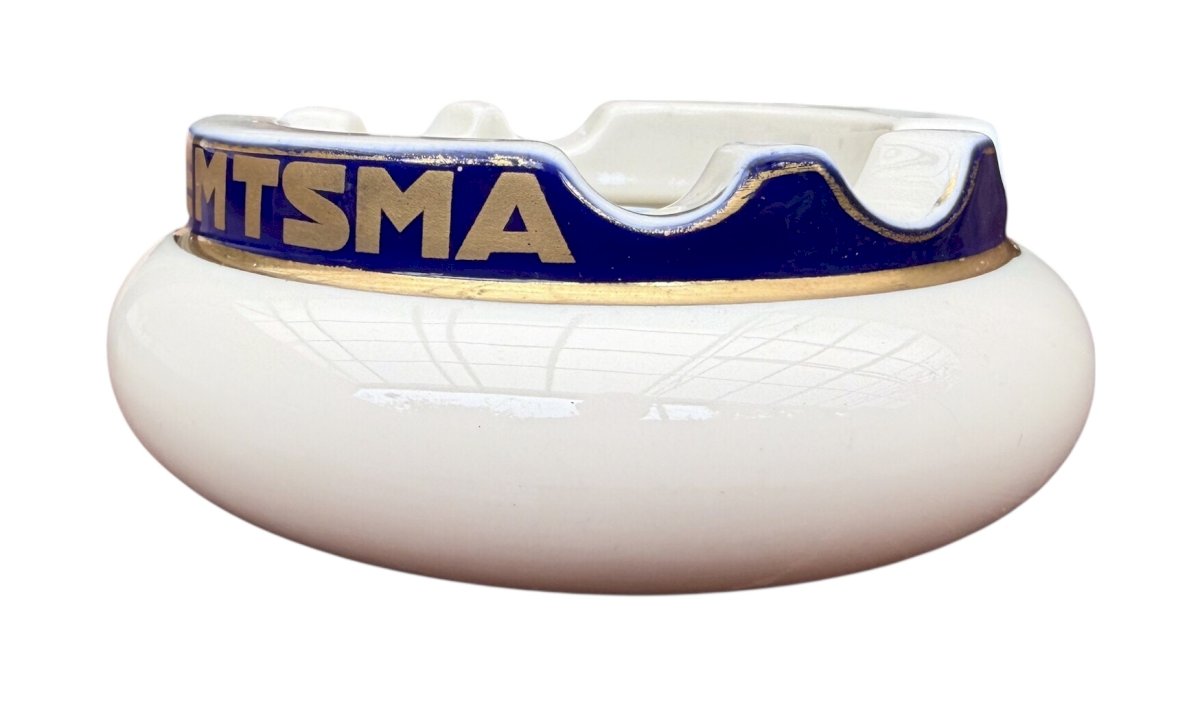
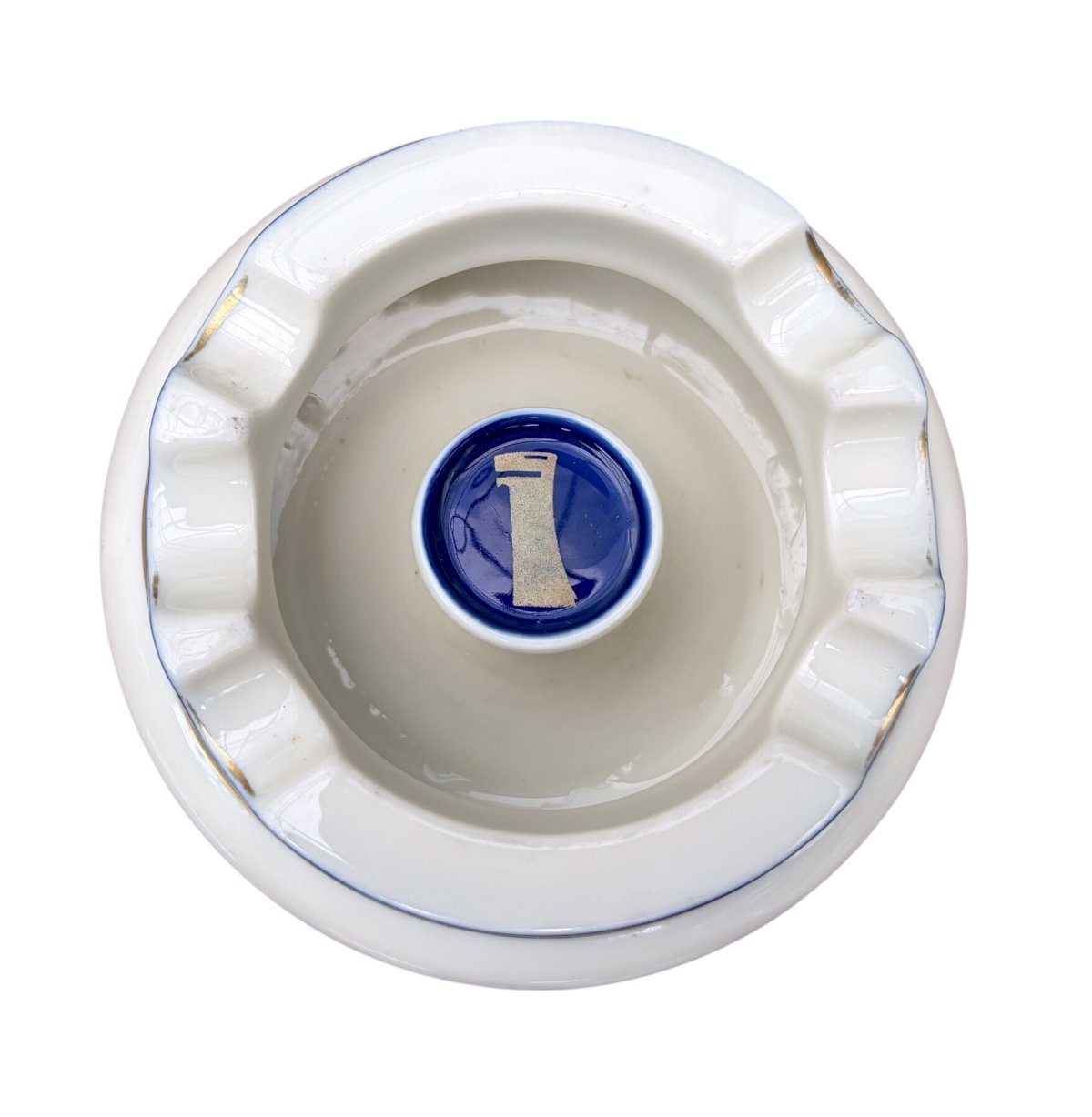
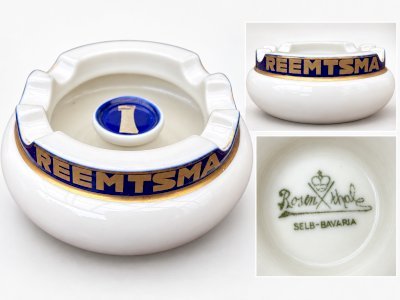
This advertising ashtray in porcelain was made by the prestigious German manufacturer Rosenthal, in Selb, Bavaria, for the company Reemtsma, one of the most important cigarette producers in Germany during the 20th century. Dating approximately from 1928, it serves as an interesting testimony to advertising design and the industrial history of Germany in the interwar period. In the Art Deco style, it features a robust and rounded shape, covered with a shiny white glaze. An elegant cobalt blue band bears the name "Reemtsma" in golden letters, while a central blue medallion displays the company emblem, a stylized tower also enhanced with gold. The Rosenthal stamp is visible at the base. The overall condition is very good for an object nearing a century in existence. The porcelain is intact and retains its beautiful sheen. The gilding shows a slight patina consistent with the age of the piece.
Particular interest for collectors of militaria and World War II reenactments. During World War II, Reemtsma played a major role in the German tobacco industry, producing the famous Ernte 23, R6, and Senoussi cigarettes. Tobacco was part of the daily life of Wehrmacht soldiers, serving as a supply item, a comfort during rest periods, and a valuable currency for trade. Although predating the conflict and lacking verified military provenance, this ashtray thus constitutes a particularly evocative accessory from that period.
It would perfectly fit into a diorama dedicated to the Wehrmacht, recreating an officer's office, a military workshop, a command post, or a rest area for German soldiers. Its period authenticity and characteristic aesthetics also make it an interesting decorative accessory for cinema, theater, or historical productions set in Germany in the 1930s and 1940s. Beyond this historical interest, this Rosenthal ashtray will also appeal to collectors of antique porcelain, advertising objects, and Art Deco design. It will naturally find its place in an office, a library, or a classic or eclectic interior. A piece combining quality craftsmanship, Art Deco elegance, and German industrial history, likely to interest both collectors of vintage advertising items and enthusiasts of historical reenactments.
Réf :
#410353
Color(s) : White / Blue / Golden
Material : Porcelain
Pattern : Logo
Related Products


Comments
Description
This advertising ashtray in porcelain was made by the prestigious German manufacturer Rosenthal, in Selb, Bavaria, for the company Reemtsma, one of the most important cigarette producers in Germany during the 20th century. Dating approximately from 1928, it serves as an interesting testimony to advertising design and the industrial history of Germany in the interwar period. In the Art Deco style, it features a robust and rounded shape, covered with a shiny white glaze. An elegant cobalt blue band bears the name "Reemtsma" in golden letters, while a central blue medallion displays the company emblem, a stylized tower also enhanced with gold. The Rosenthal stamp is visible at the base. The overall condition is very good for an object nearing a century in existence. The porcelain is intact and retains its beautiful sheen. The gilding shows a slight patina consistent with the age of the piece.
Particular interest for collectors of militaria and World War II reenactments. During World War II, Reemtsma played a major role in the German tobacco industry, producing the famous Ernte 23, R6, and Senoussi cigarettes. Tobacco was part of the daily life of Wehrmacht soldiers, serving as a supply item, a comfort during rest periods, and a valuable currency for trade. Although predating the conflict and lacking verified military provenance, this ashtray thus constitutes a particularly evocative accessory from that period.
It would perfectly fit into a diorama dedicated to the Wehrmacht, recreating an officer's office, a military workshop, a command post, or a rest area for German soldiers. Its period authenticity and characteristic aesthetics also make it an interesting decorative accessory for cinema, theater, or historical productions set in Germany in the 1930s and 1940s. Beyond this historical interest, this Rosenthal ashtray will also appeal to collectors of antique porcelain, advertising objects, and Art Deco design. It will naturally find its place in an office, a library, or a classic or eclectic interior. A piece combining quality craftsmanship, Art Deco elegance, and German industrial history, likely to interest both collectors of vintage advertising items and enthusiasts of historical reenactments.
Particular interest for collectors of militaria and World War II reenactments. During World War II, Reemtsma played a major role in the German tobacco industry, producing the famous Ernte 23, R6, and Senoussi cigarettes. Tobacco was part of the daily life of Wehrmacht soldiers, serving as a supply item, a comfort during rest periods, and a valuable currency for trade. Although predating the conflict and lacking verified military provenance, this ashtray thus constitutes a particularly evocative accessory from that period.
It would perfectly fit into a diorama dedicated to the Wehrmacht, recreating an officer's office, a military workshop, a command post, or a rest area for German soldiers. Its period authenticity and characteristic aesthetics also make it an interesting decorative accessory for cinema, theater, or historical productions set in Germany in the 1930s and 1940s. Beyond this historical interest, this Rosenthal ashtray will also appeal to collectors of antique porcelain, advertising objects, and Art Deco design. It will naturally find its place in an office, a library, or a classic or eclectic interior. A piece combining quality craftsmanship, Art Deco elegance, and German industrial history, likely to interest both collectors of vintage advertising items and enthusiasts of historical reenactments.
Réf :
#410353
Color(s) : White / Blue / Golden
Material : Porcelain
Pattern : Logo


