 English
 Français


Description
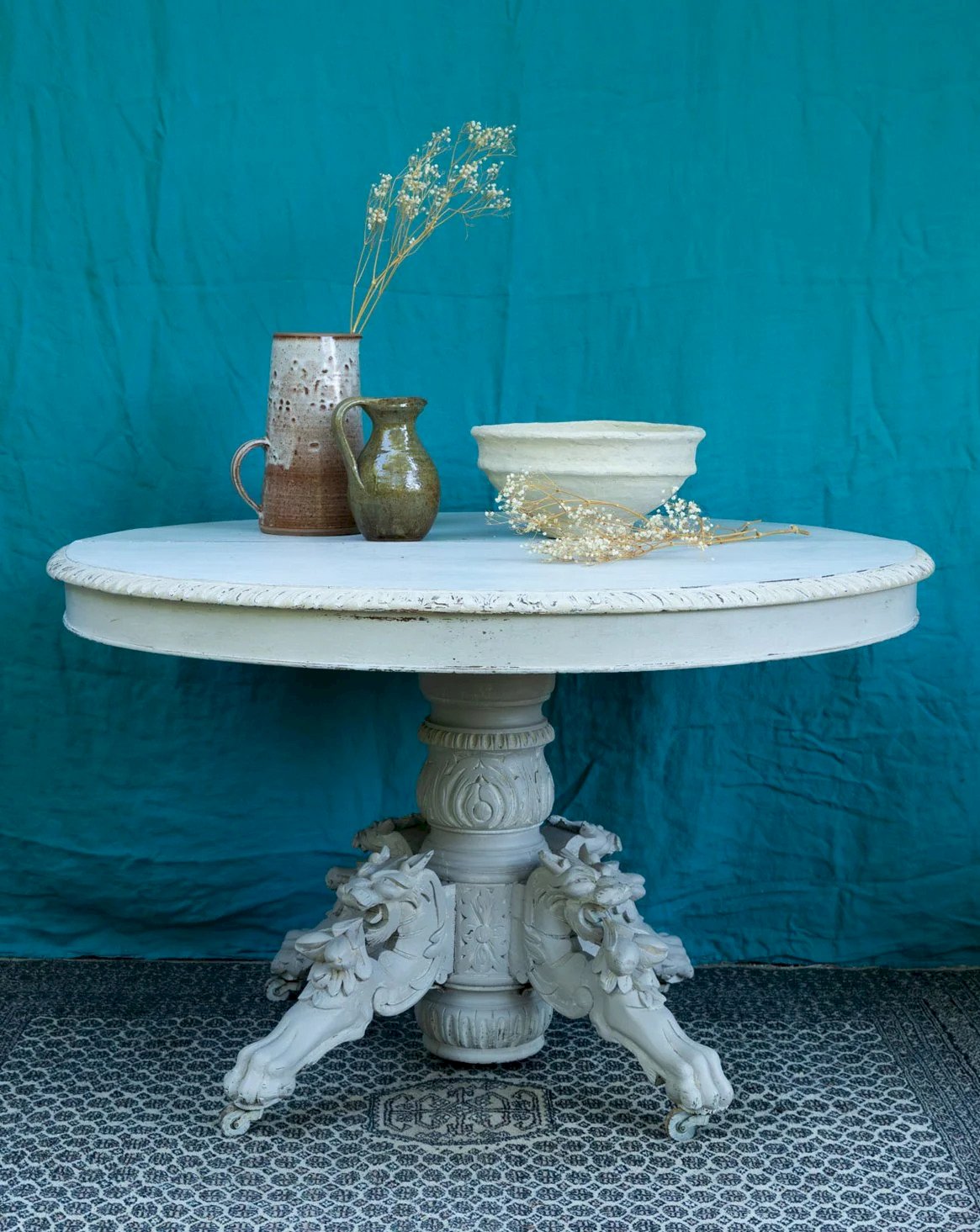
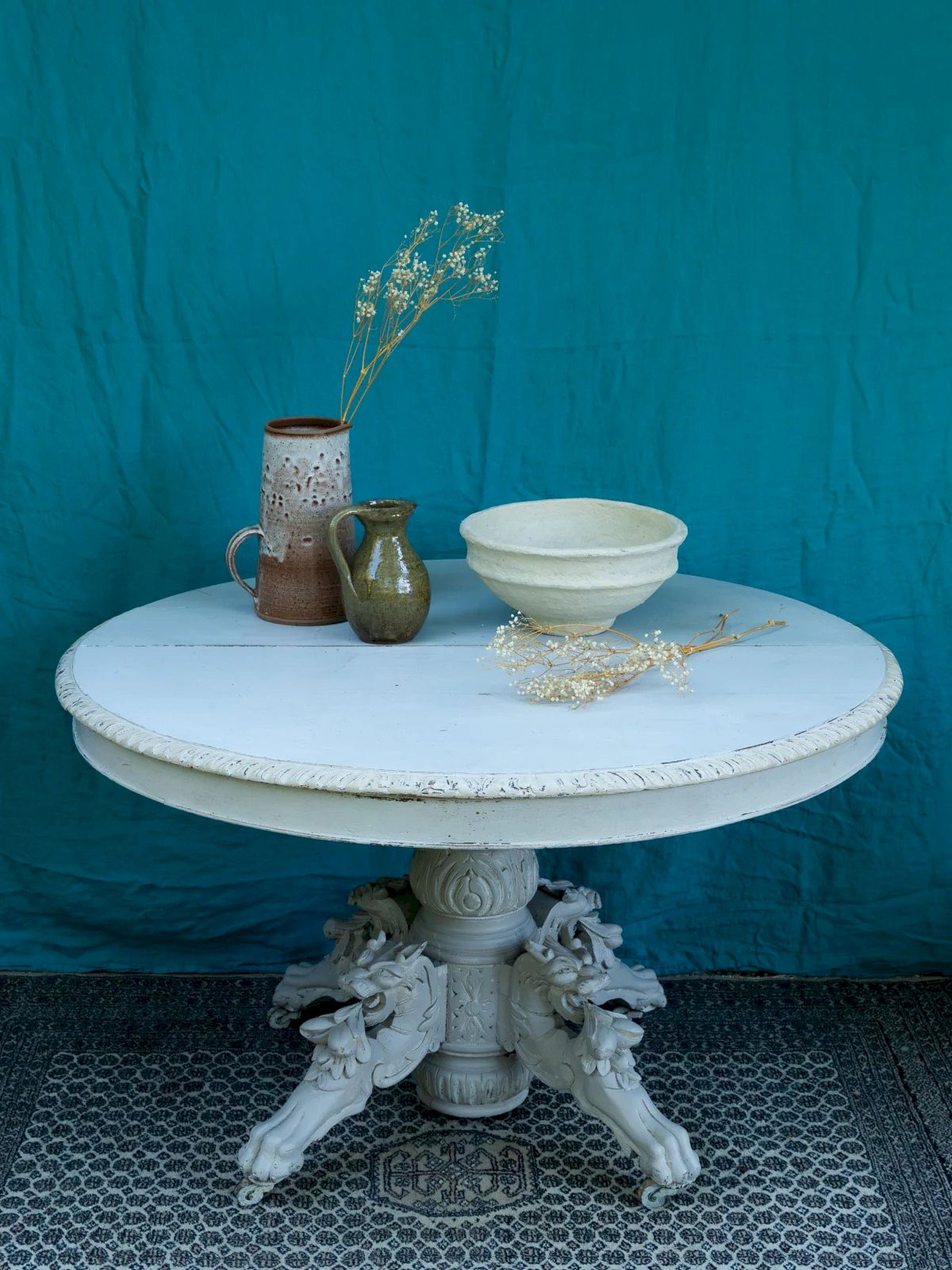
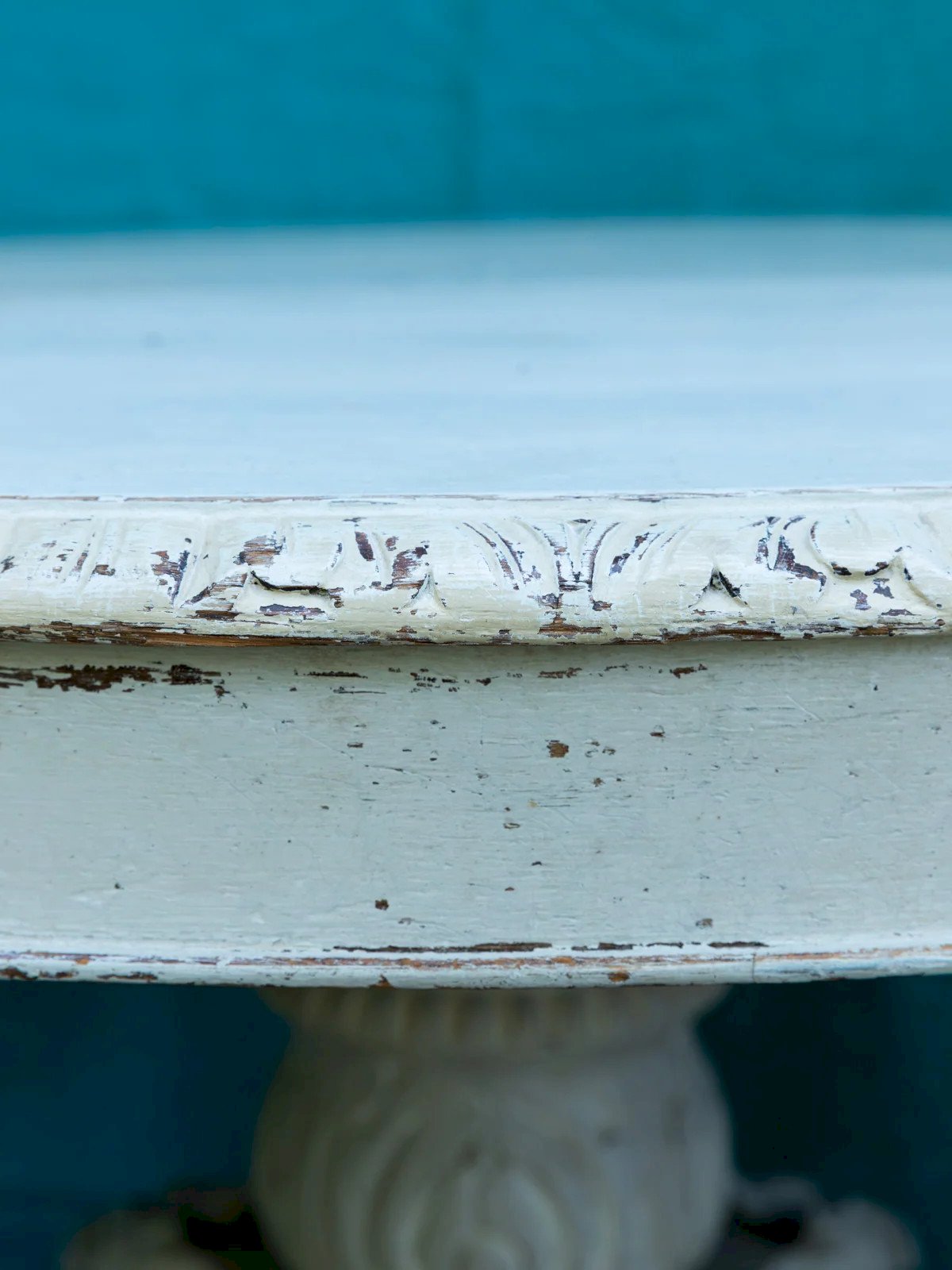
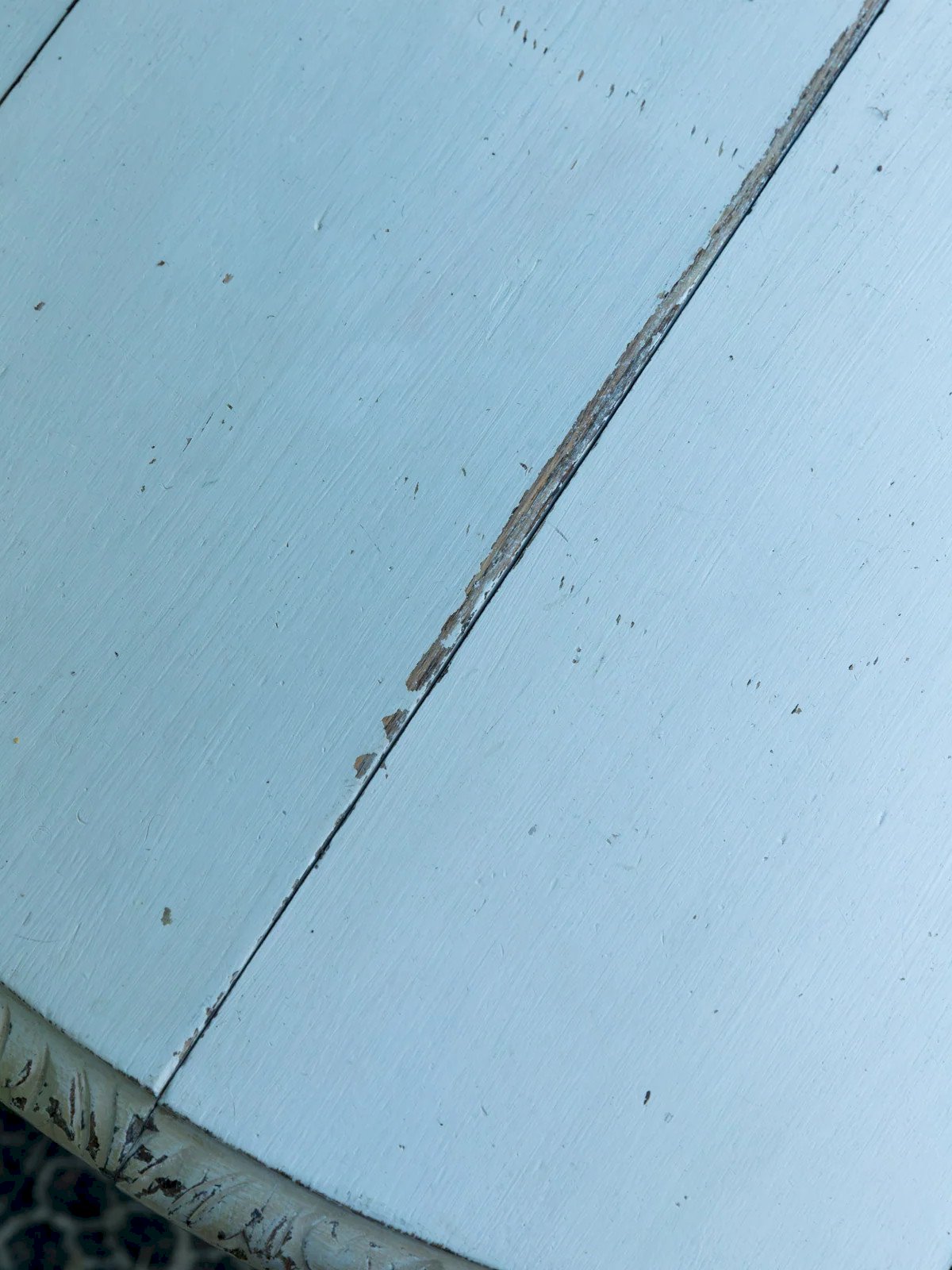
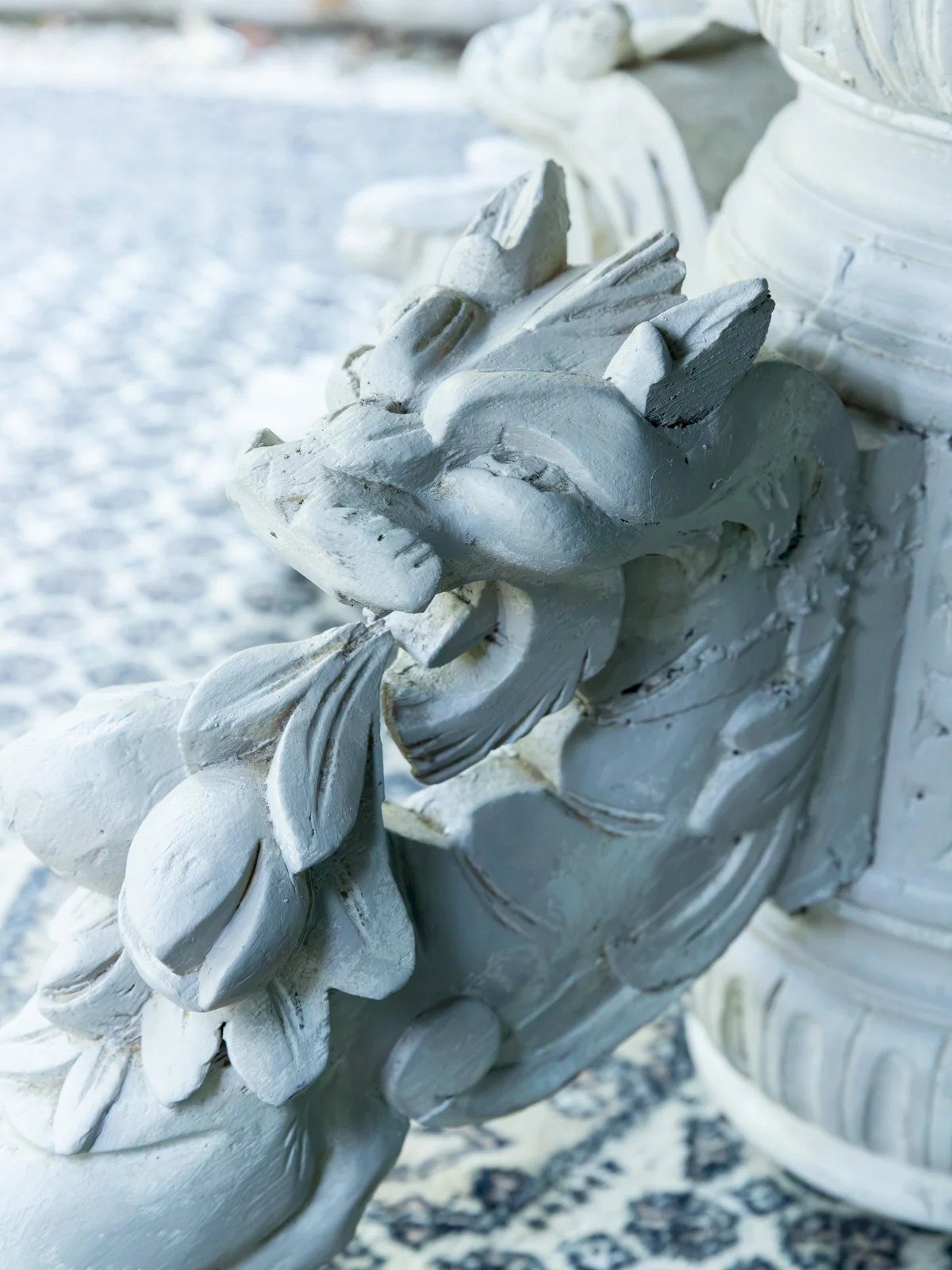
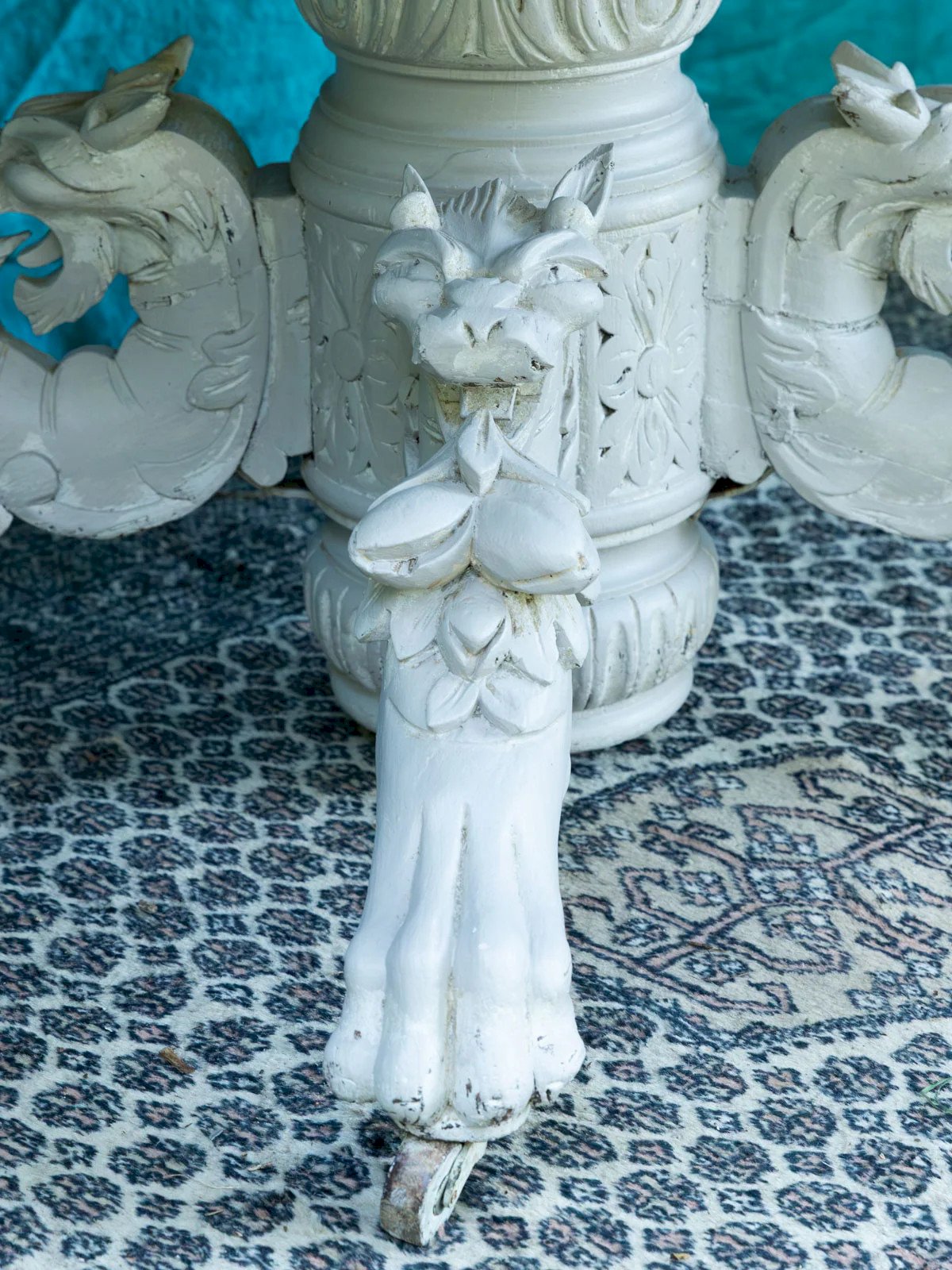
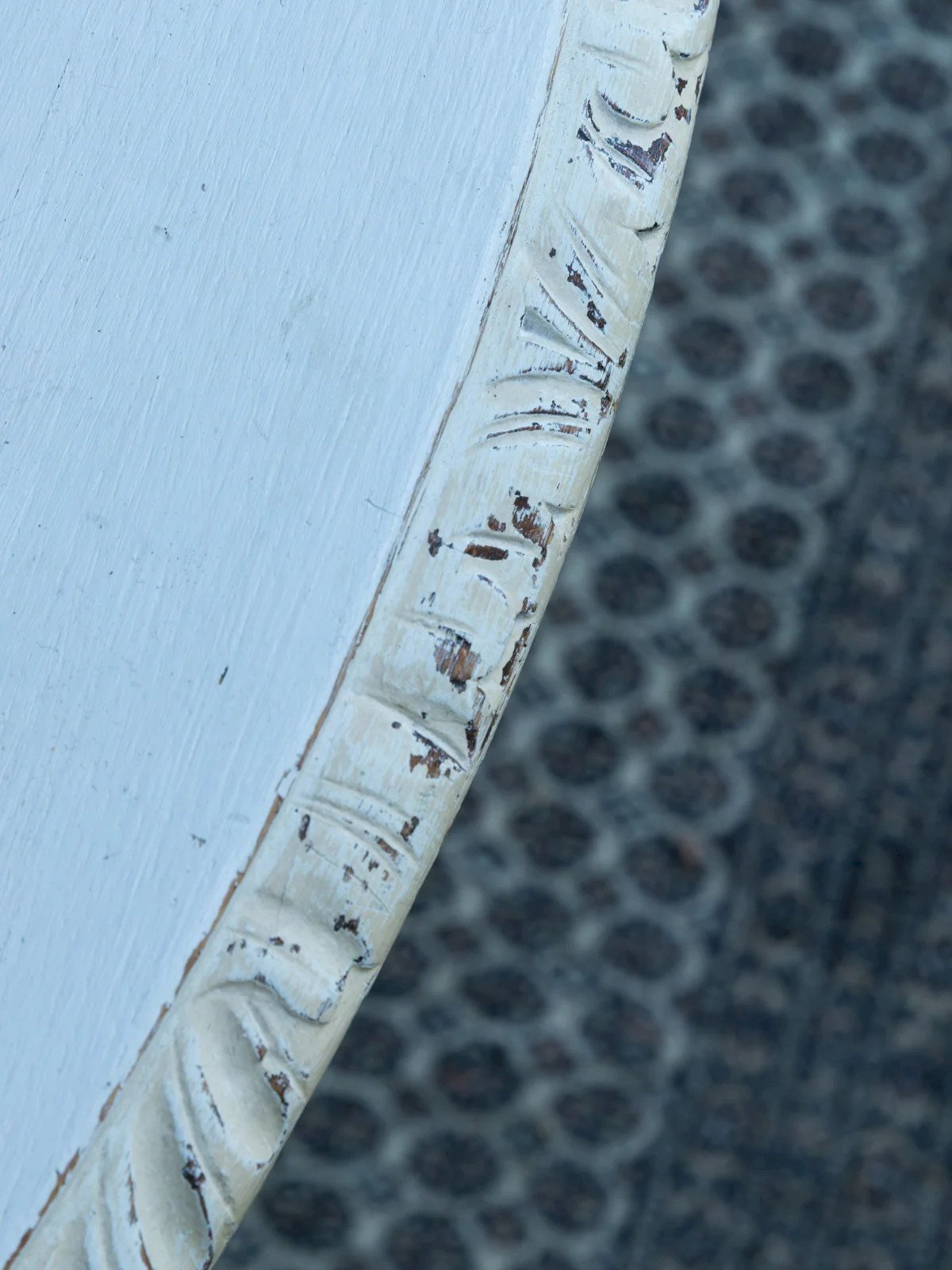
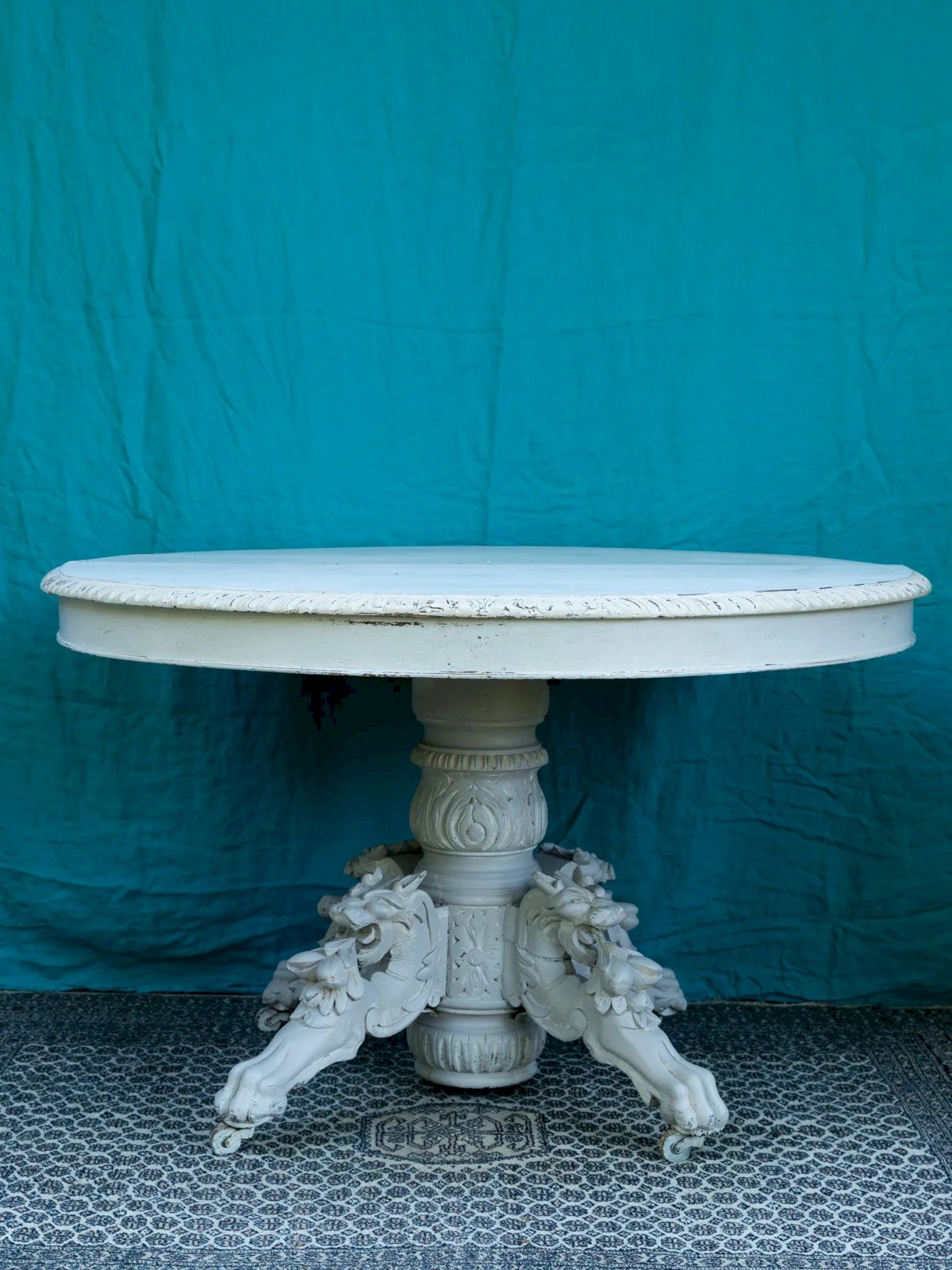
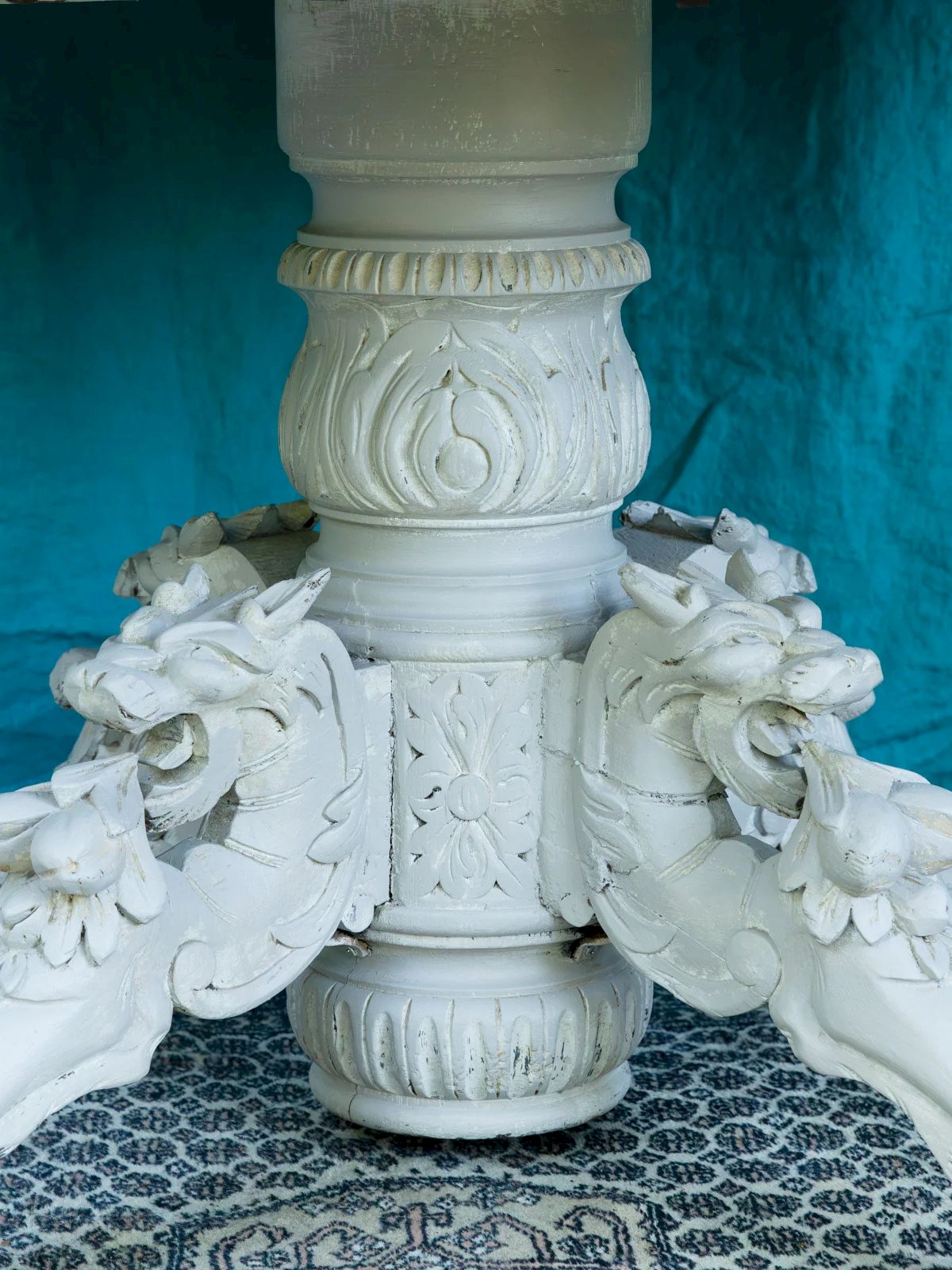
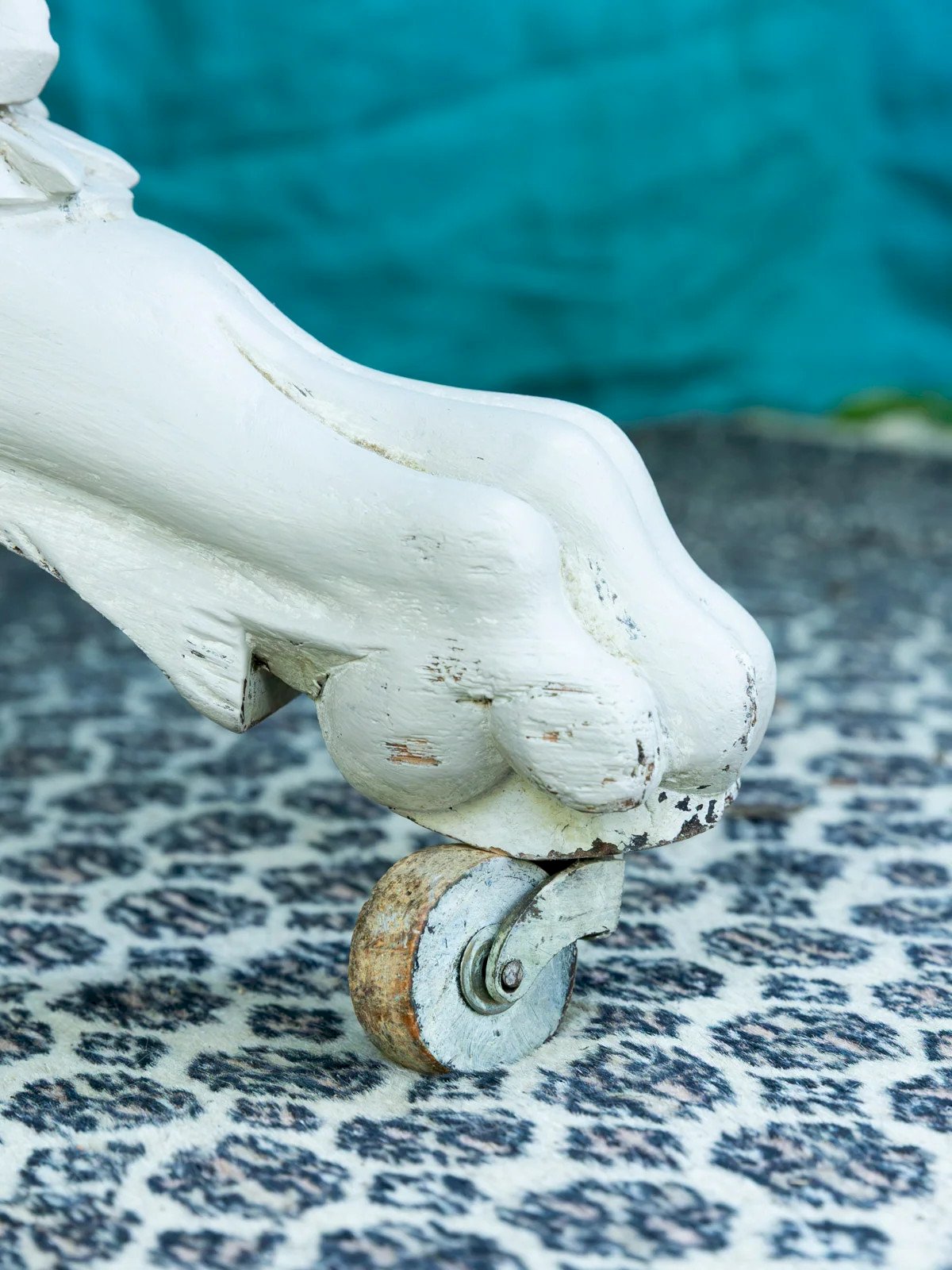
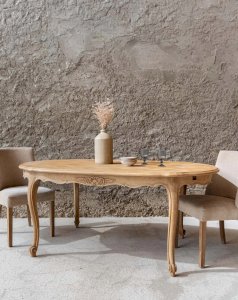
This second-hand dining table captivates with its rustic spirit and its oval gray and white wooden top, featuring a soft and luminous appearance. Its wide central carved base gives it an elegant presence and frees up space around the table for easier movement. Designed for four people, it naturally finds its place in a friendly dining room or an open kitchen, where its wood complements chairs made of straw, painted wood, or upholstered seats. Its nuanced white brings a fresh note, while the oval shape softens the overall look and facilitates everyday meals. Set with vintage tableware and a bouquet of wildflowers, it creates a refined and warm scene. Length: 116 cm Width: 106 cm Height: 69 cm A brief history of the farmhouse table The centerpiece of rural life in the 19th century, the farmhouse table is made to last generations and accommodate large peasant gatherings. It is recognized by its thick solid wood top, often marked by the passage of time, and its sturdy legs connected or not by a "foot bar" or stretcher. Known as a "refectory table" or "kitchen table," it was designed to withstand daily work as well as family banquets.
Réf :
#414407
Brand / From : Debongout
Related Products
Comments
Romy, the oval dining table for 4 people No. 1590
639€
75002 Paris
Ce site contient des liens d’affiliation pour lesquels je peux recevoir une compensation.
Description
This second-hand dining table captivates with its rustic spirit and its oval gray and white wooden top, featuring a soft and luminous appearance. Its wide central carved base gives it an elegant presence and frees up space around the table for easier movement. Designed for four people, it naturally finds its place in a friendly dining room or an open kitchen, where its wood complements chairs made of straw, painted wood, or upholstered seats. Its nuanced white brings a fresh note, while the oval shape softens the overall look and facilitates everyday meals. Set with vintage tableware and a bouquet of wildflowers, it creates a refined and warm scene. Length: 116 cm Width: 106 cm Height: 69 cm A brief history of the farmhouse table The centerpiece of rural life in the 19th century, the farmhouse table is made to last generations and accommodate large peasant gatherings. It is recognized by its thick solid wood top, often marked by the passage of time, and its sturdy legs connected or not by a "foot bar" or stretcher. Known as a "refectory table" or "kitchen table," it was designed to withstand daily work as well as family banquets.
Réf :
#414407
Brand / From : Debongout