 English
 Français


Description
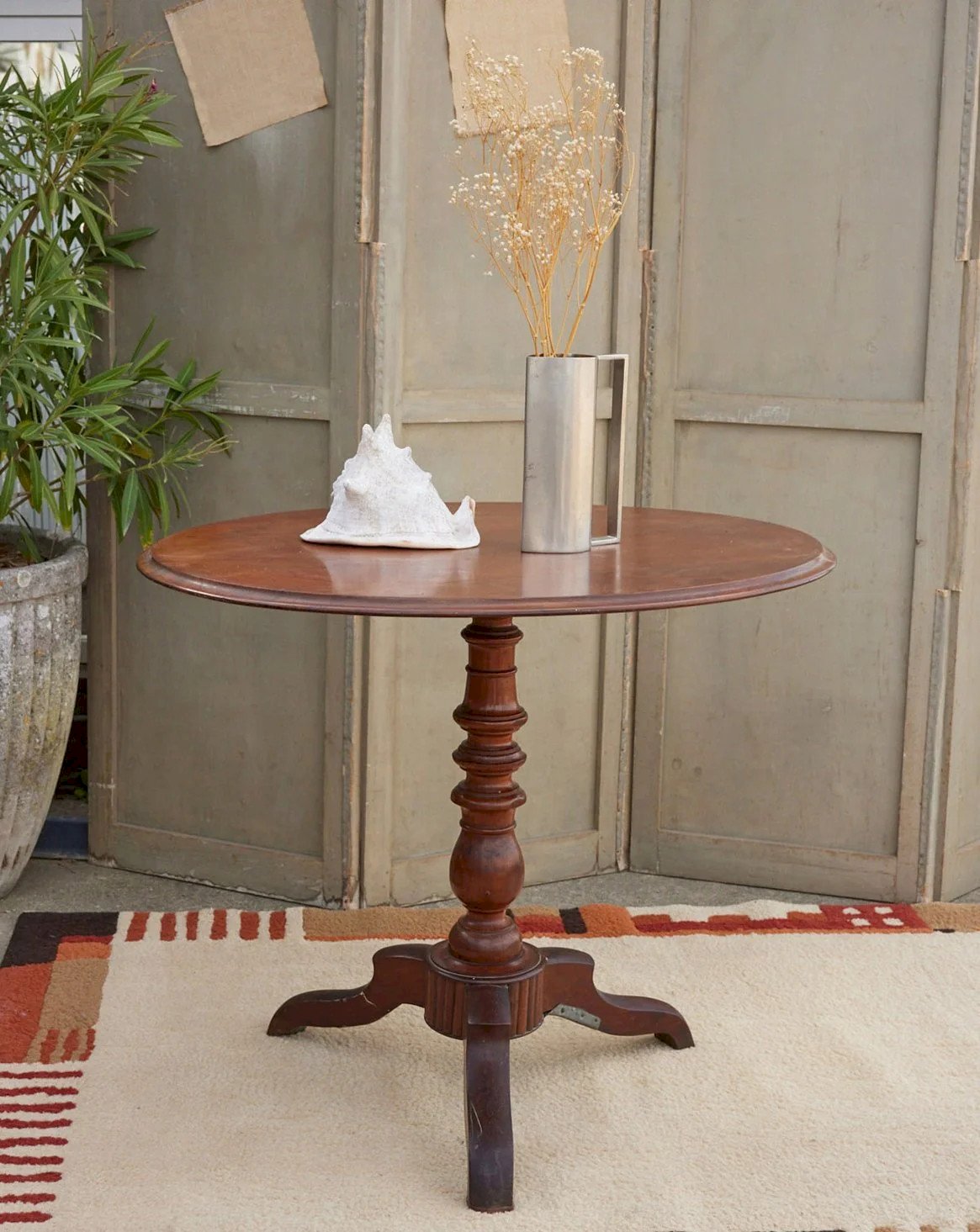
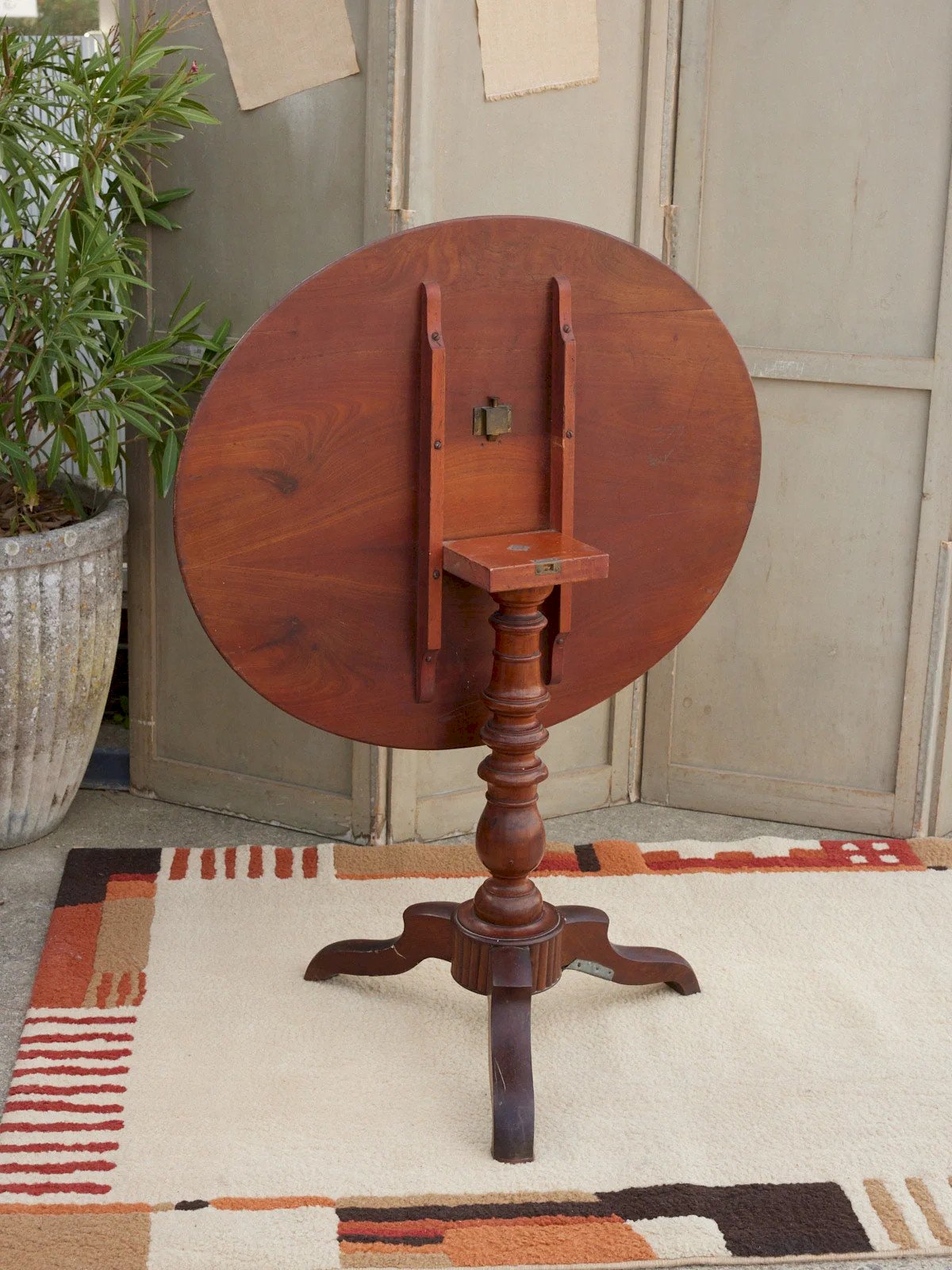
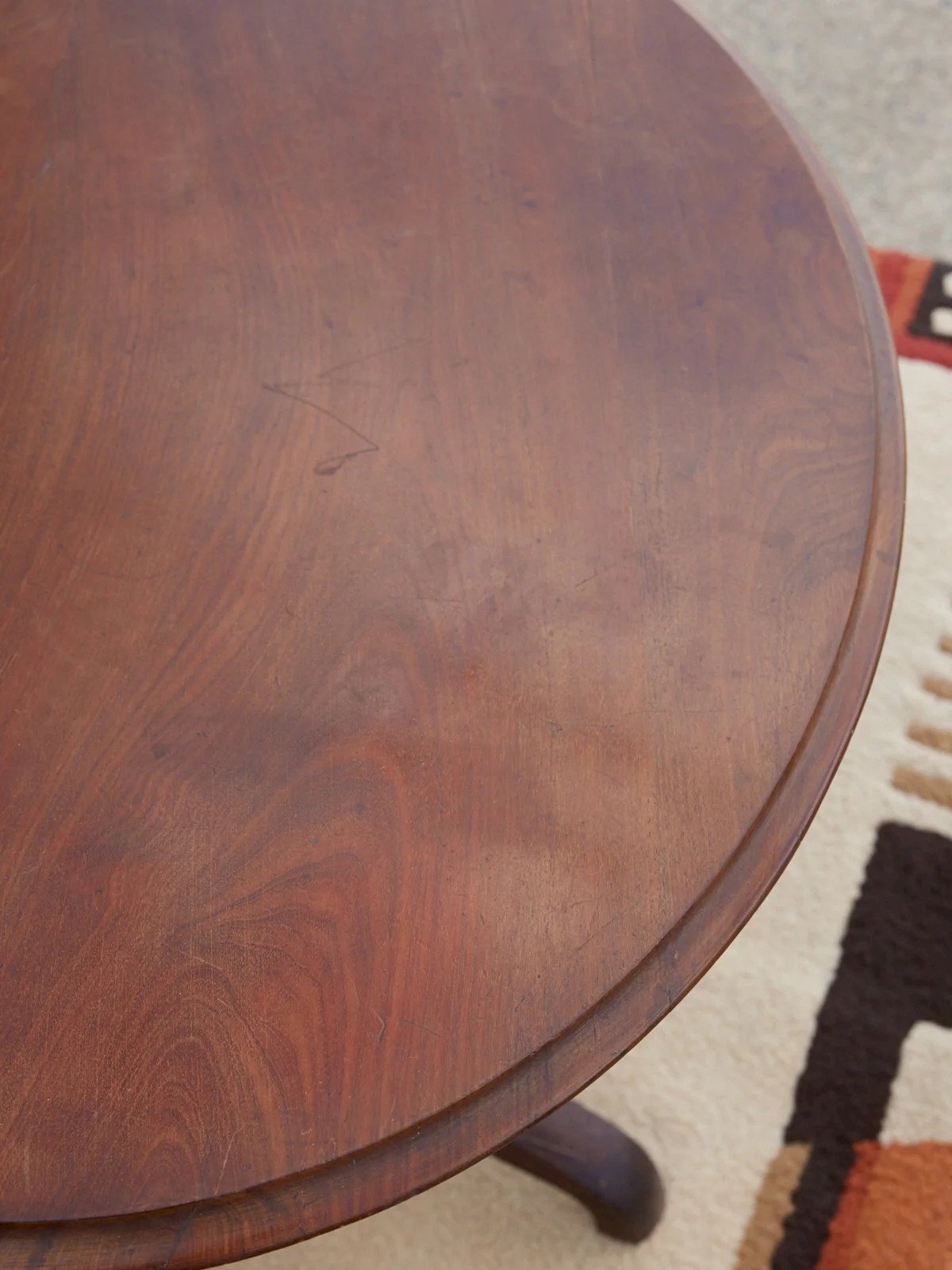
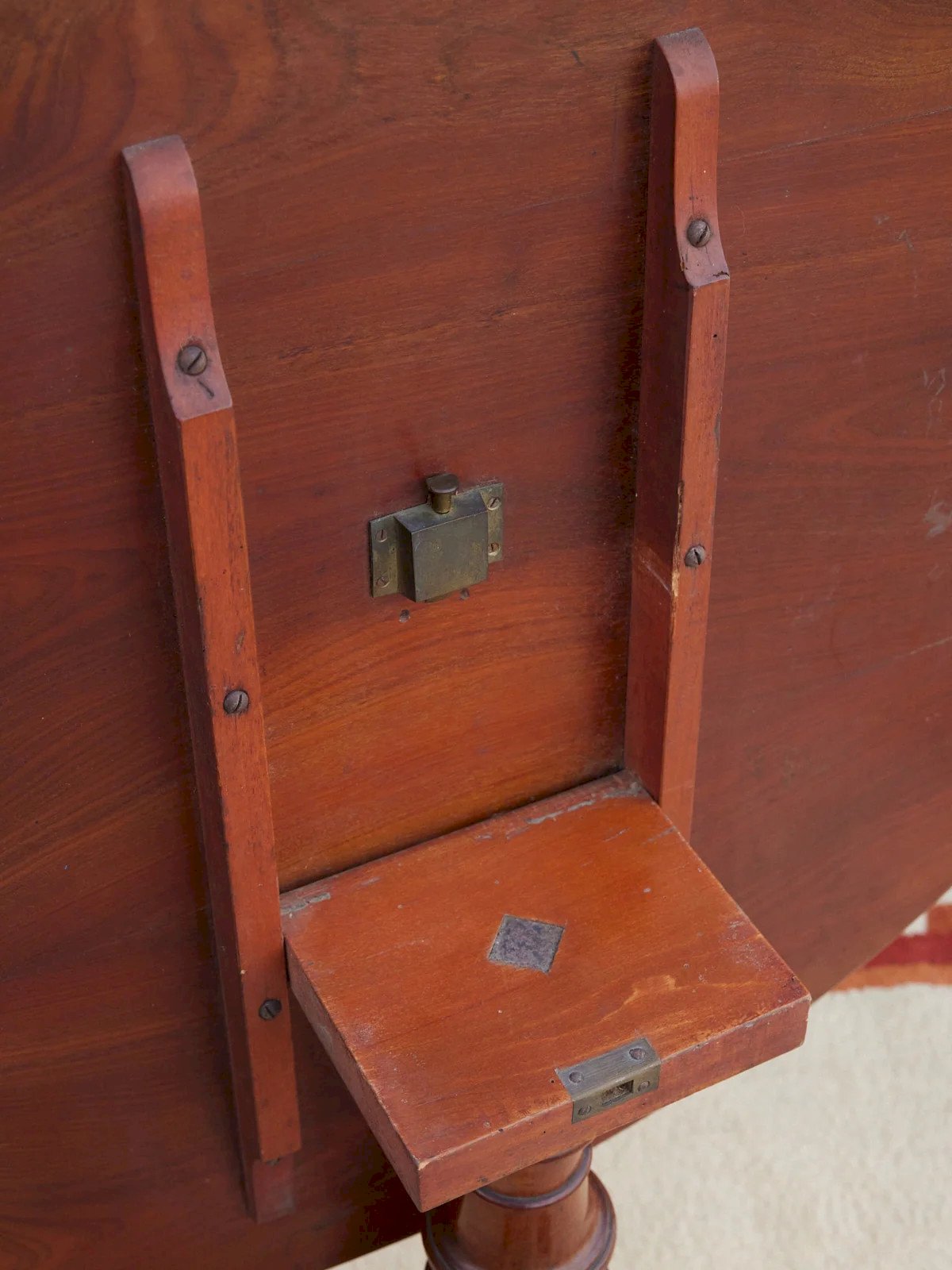
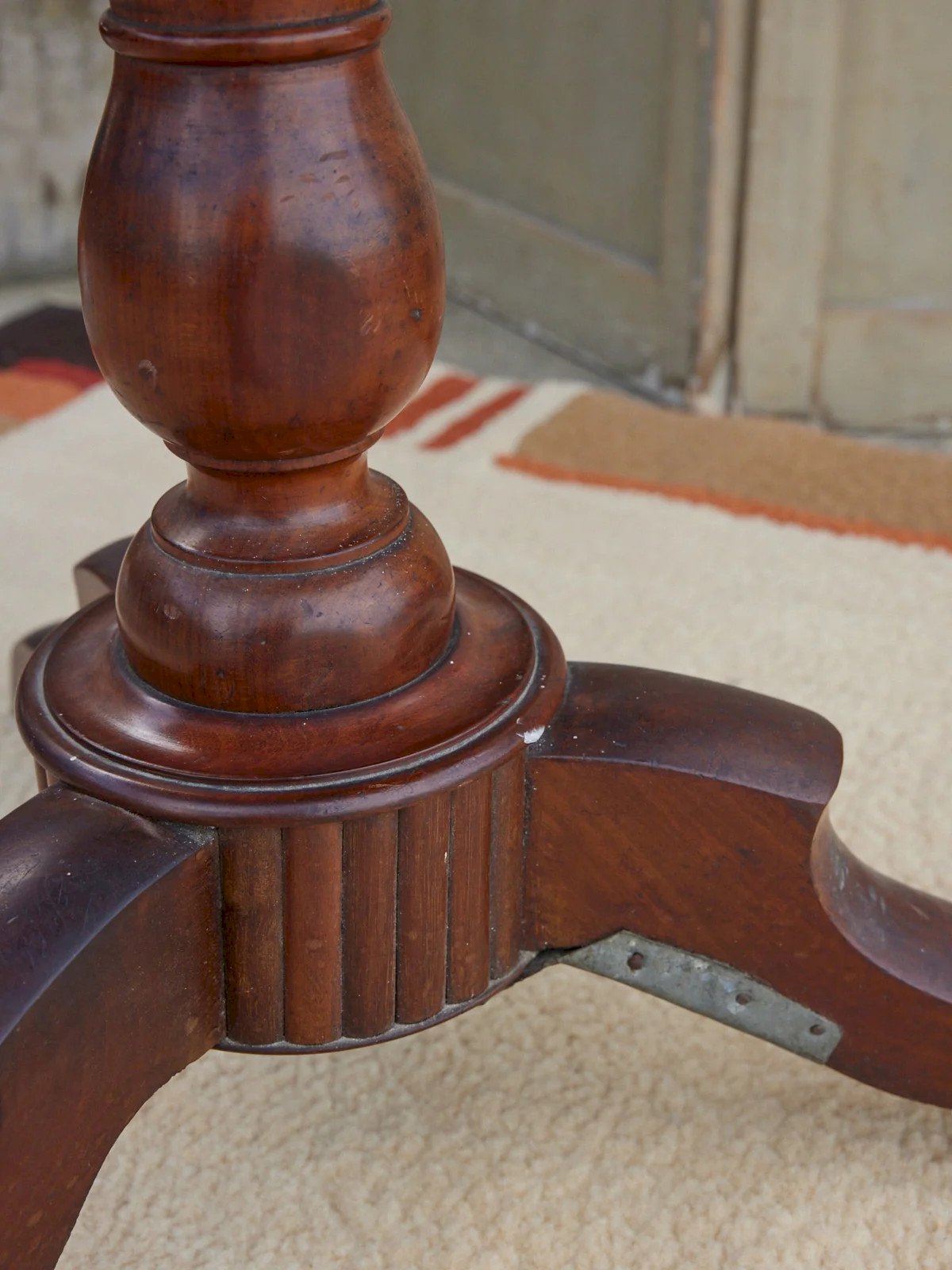
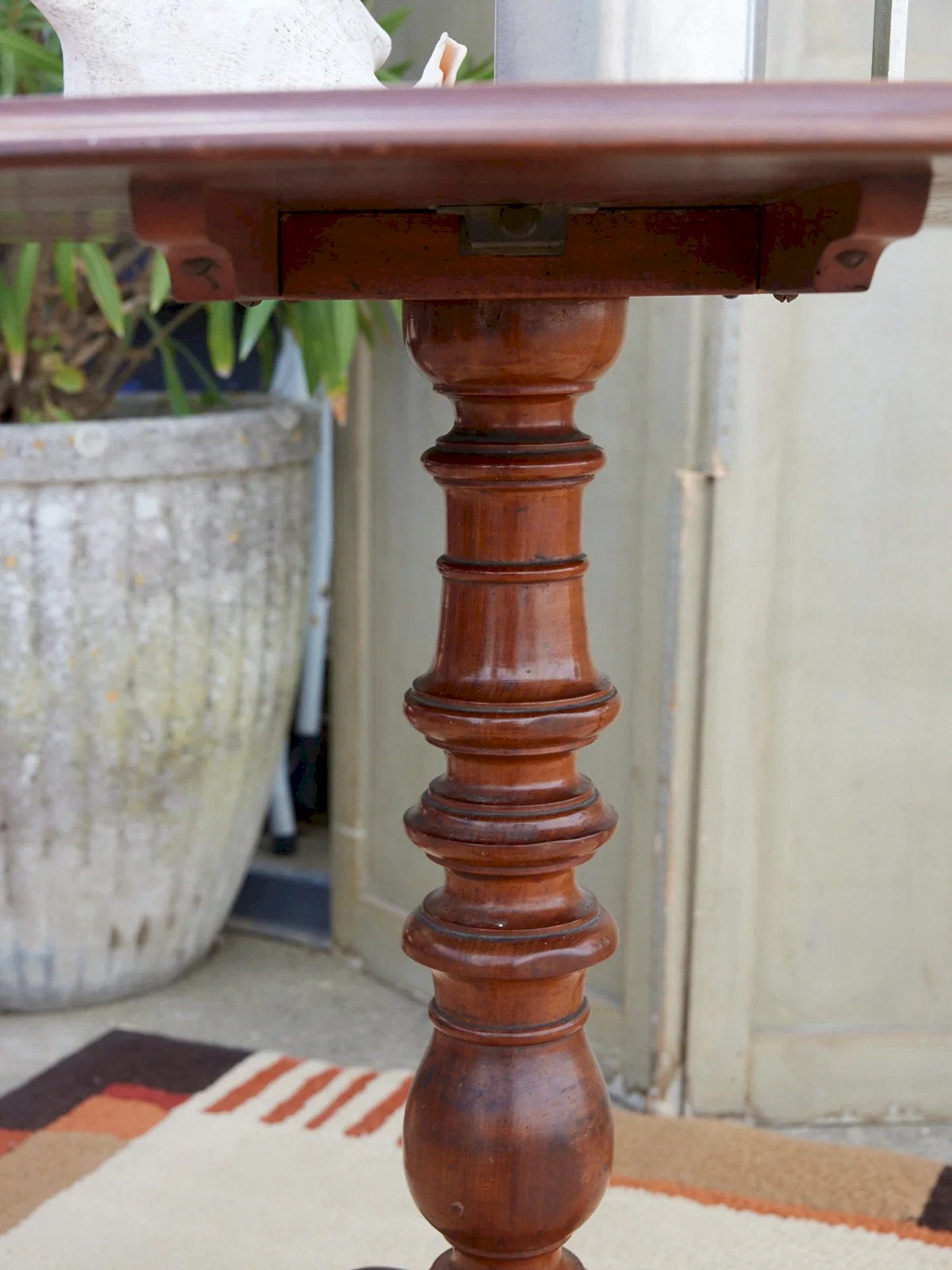
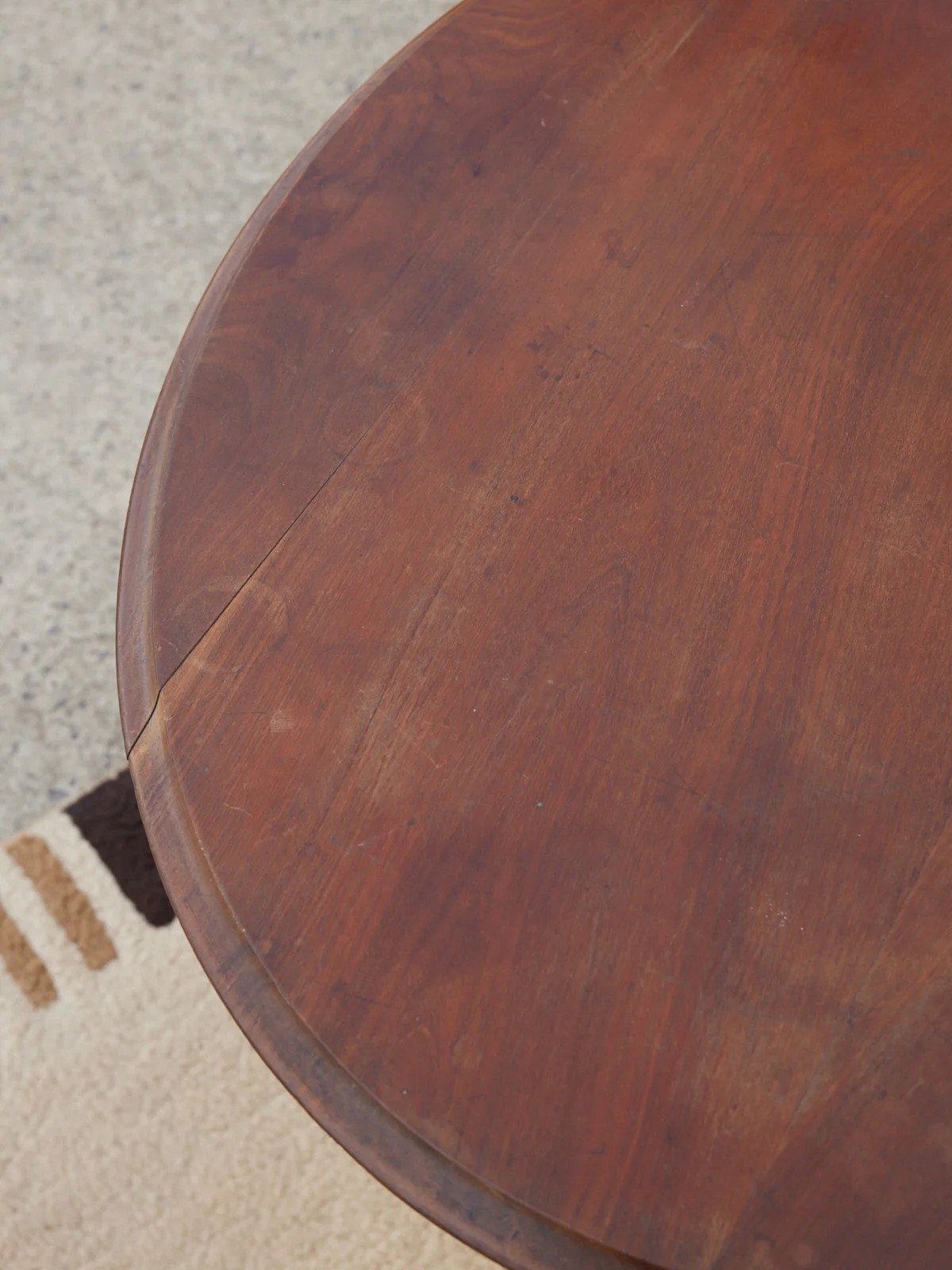
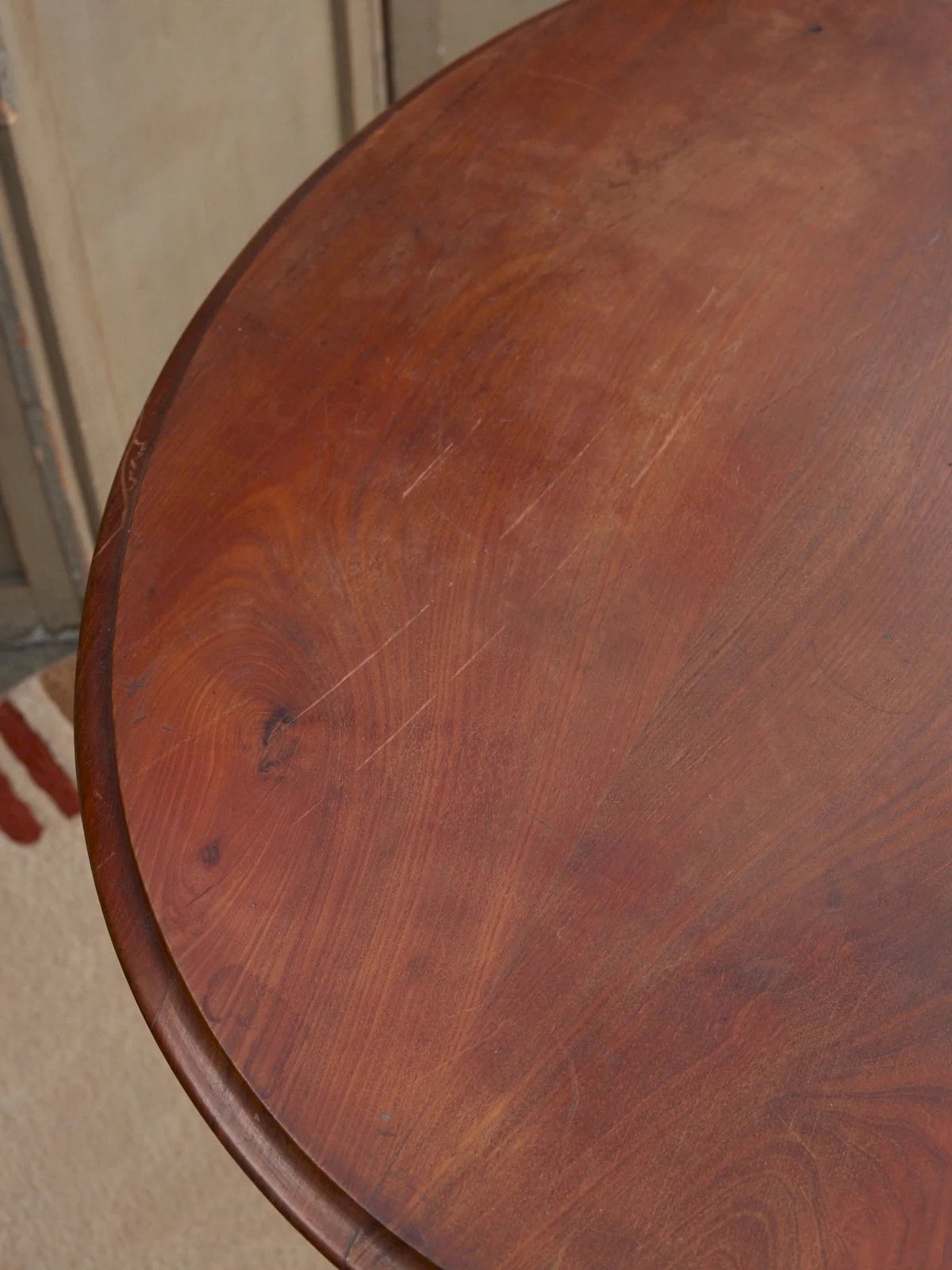
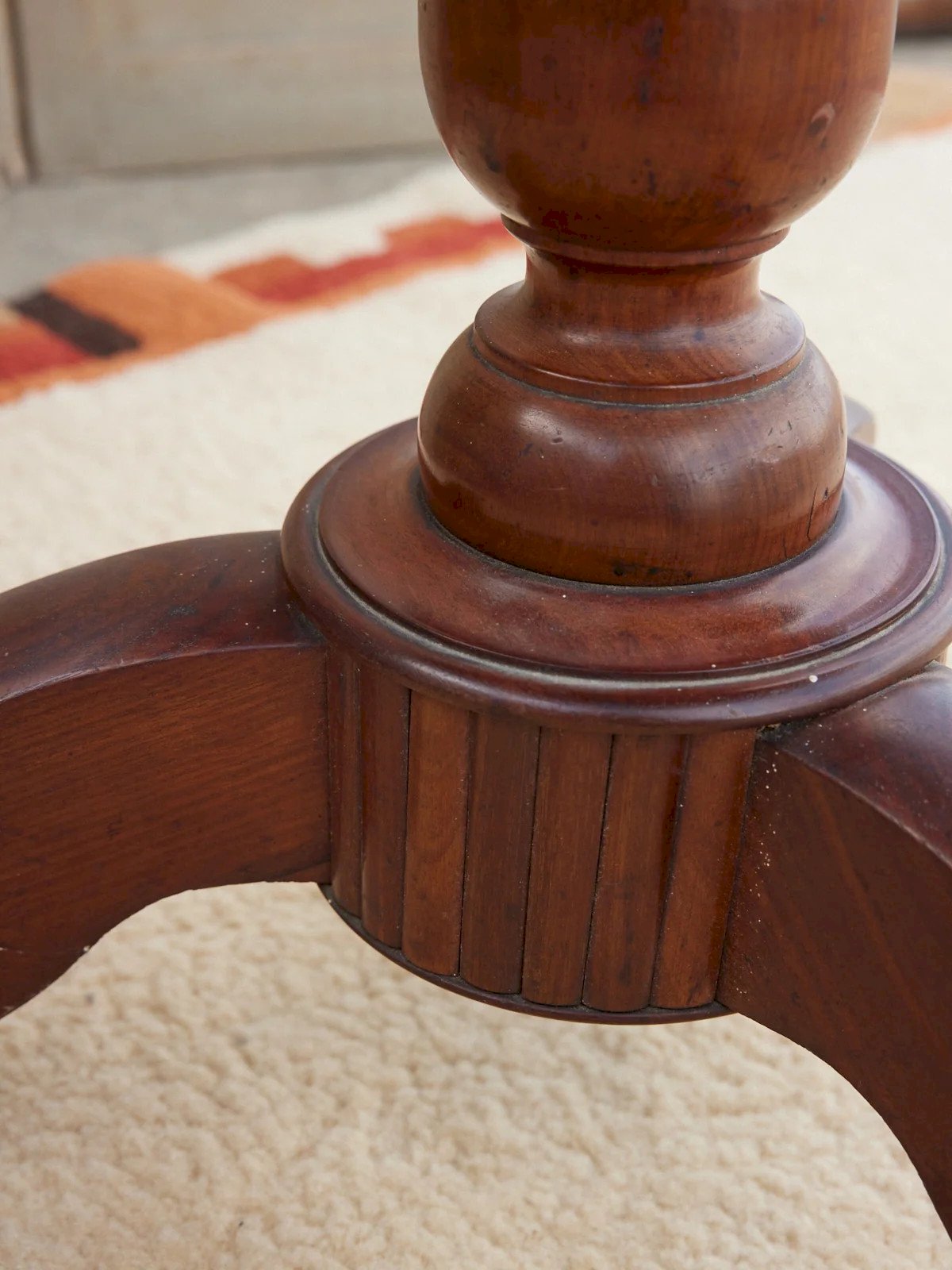
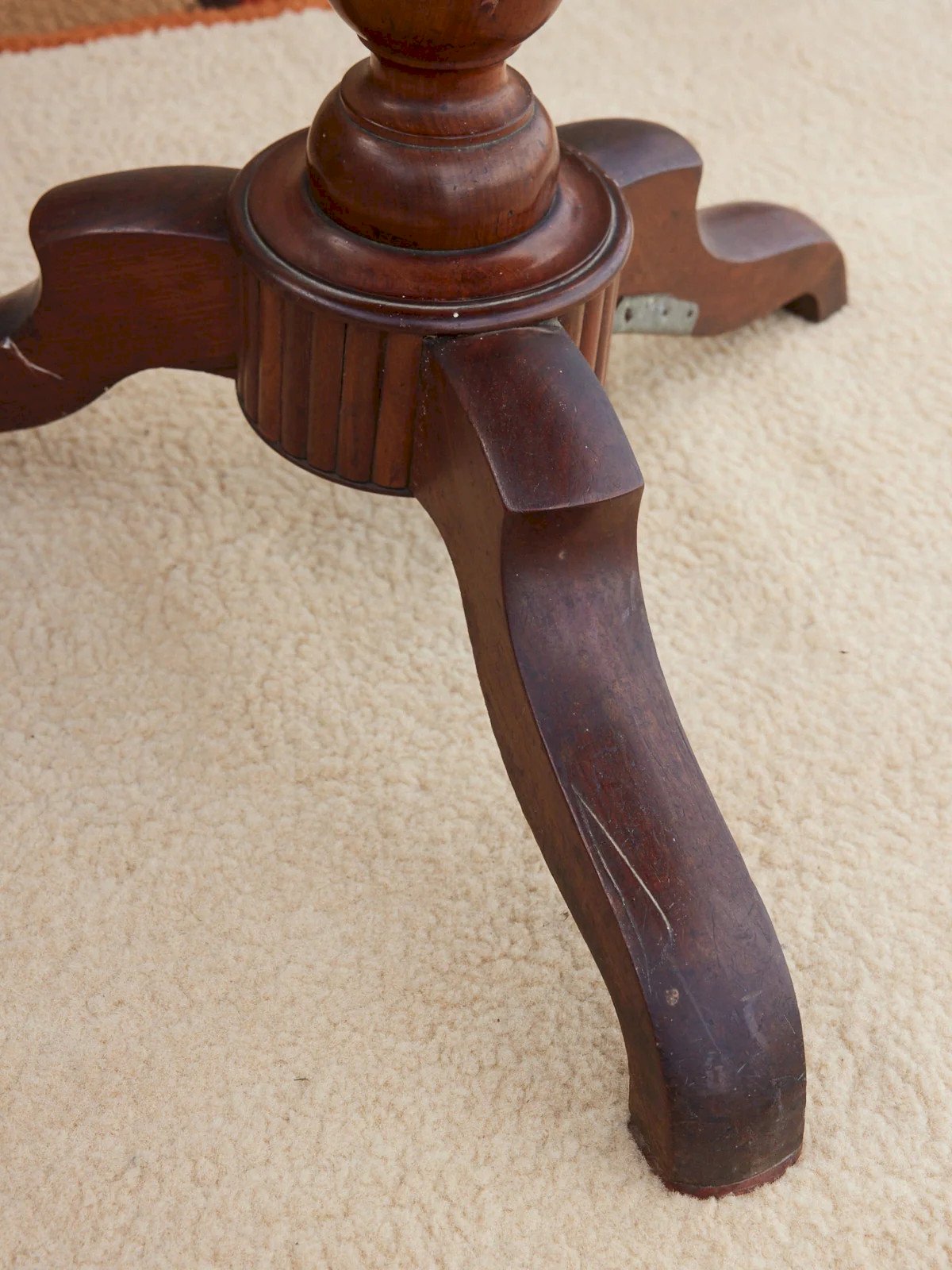
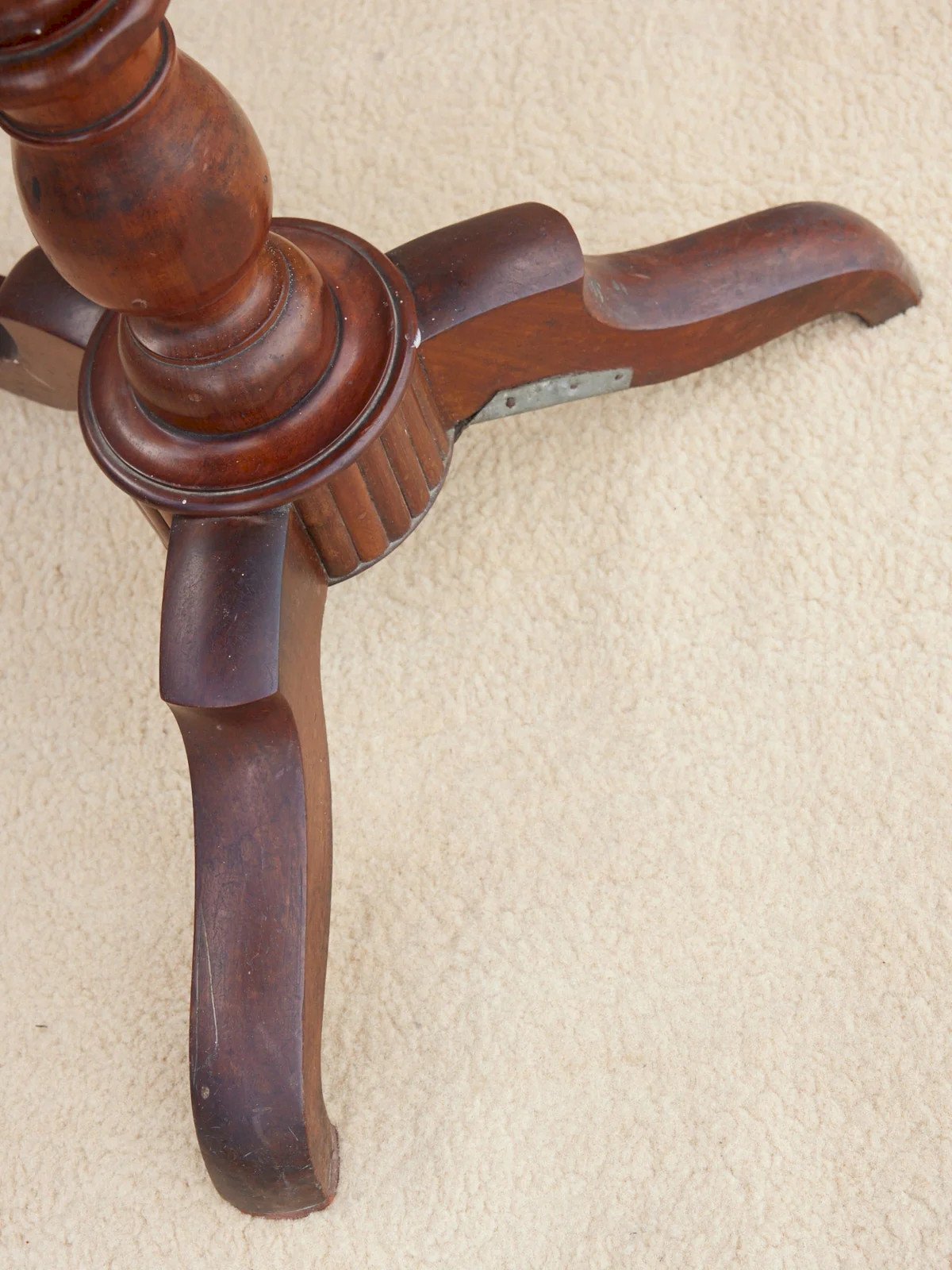
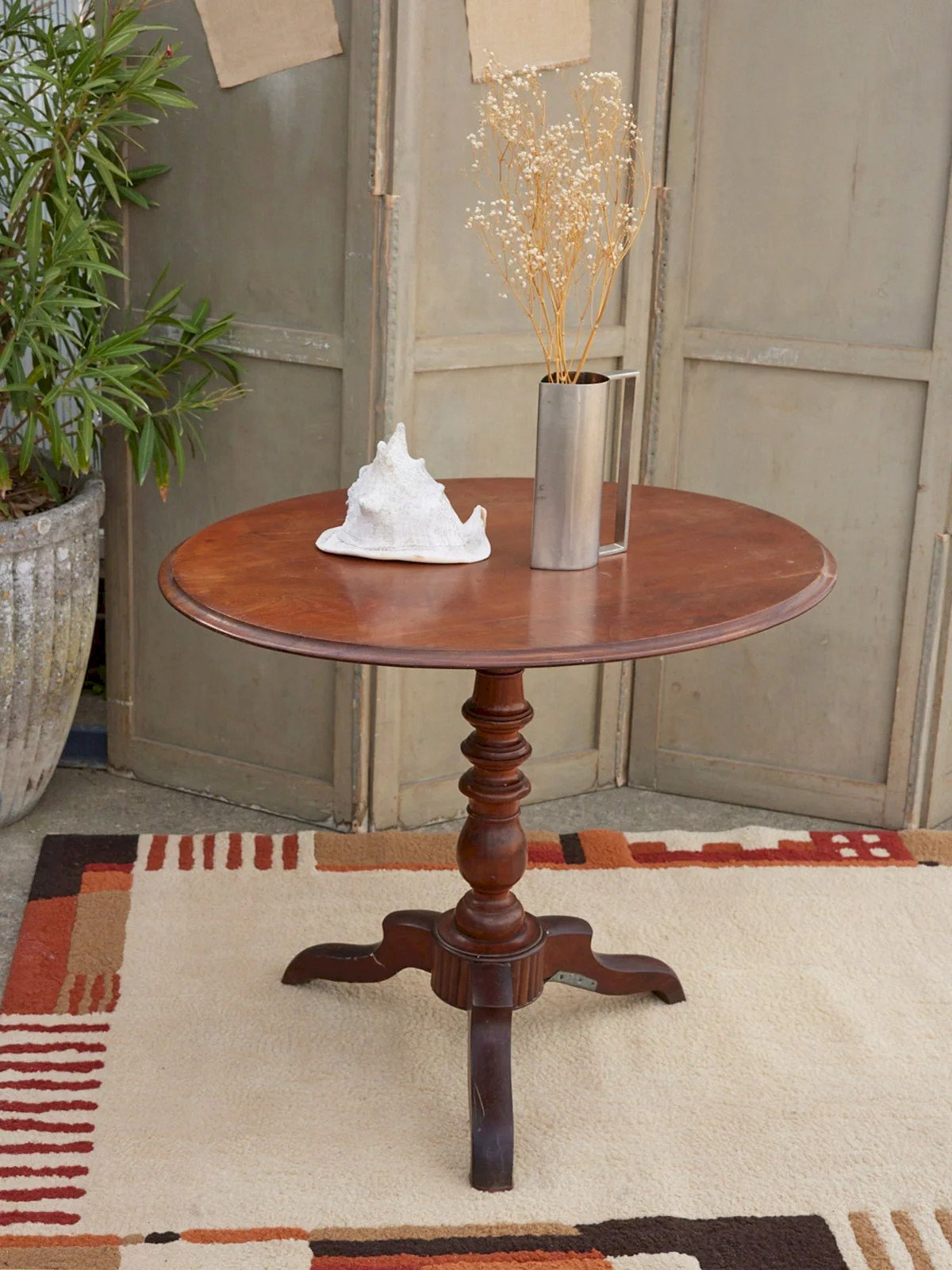
This dark wood dining table, crafted from Cuban mahogany, brings a rustic note to meals with understated elegance. Its oval top tilts, and its sculpted central pedestal and tripod legs give it a singular presence, while the wooden inlays highlight the work of the base. Second-hand, it suits a cozy dining room and willingly accompanies patinated wooden chairs or antique tableware. Its measured dimensions allow it to fit into a space where one desires a characterful piece without overwhelming the area. As a second-hand item, it bears the marks of its history, including a restoration on the metal foot. Length: 87 cm Width: 70 cm Height: 71 cm A brief history of the farmhouse table As the centerpiece of rural life in the 19th century, the farmhouse table is made to last for generations and accommodate large peasant gatherings. It is recognized by its thick solid wood top, often marked by the passage of time, and its sturdy base connected or not by a "footrail" or stretcher. Known as a "refectory table" or "kitchen table," it was designed to withstand daily use as well as family banquets.
Réf :
#414163
Brand / From : Debongout
Related Products

Comments
Romy, the 4-seater dining table in mahogany No. 1603
389€
75002 Paris
Ce site contient des liens d’affiliation pour lesquels je peux recevoir une compensation.
Description
This dark wood dining table, crafted from Cuban mahogany, brings a rustic note to meals with understated elegance. Its oval top tilts, and its sculpted central pedestal and tripod legs give it a singular presence, while the wooden inlays highlight the work of the base. Second-hand, it suits a cozy dining room and willingly accompanies patinated wooden chairs or antique tableware. Its measured dimensions allow it to fit into a space where one desires a characterful piece without overwhelming the area. As a second-hand item, it bears the marks of its history, including a restoration on the metal foot. Length: 87 cm Width: 70 cm Height: 71 cm A brief history of the farmhouse table As the centerpiece of rural life in the 19th century, the farmhouse table is made to last for generations and accommodate large peasant gatherings. It is recognized by its thick solid wood top, often marked by the passage of time, and its sturdy base connected or not by a "footrail" or stretcher. Known as a "refectory table" or "kitchen table," it was designed to withstand daily use as well as family banquets.
Réf :
#414163
Brand / From : Debongout