 English
 Français


Description
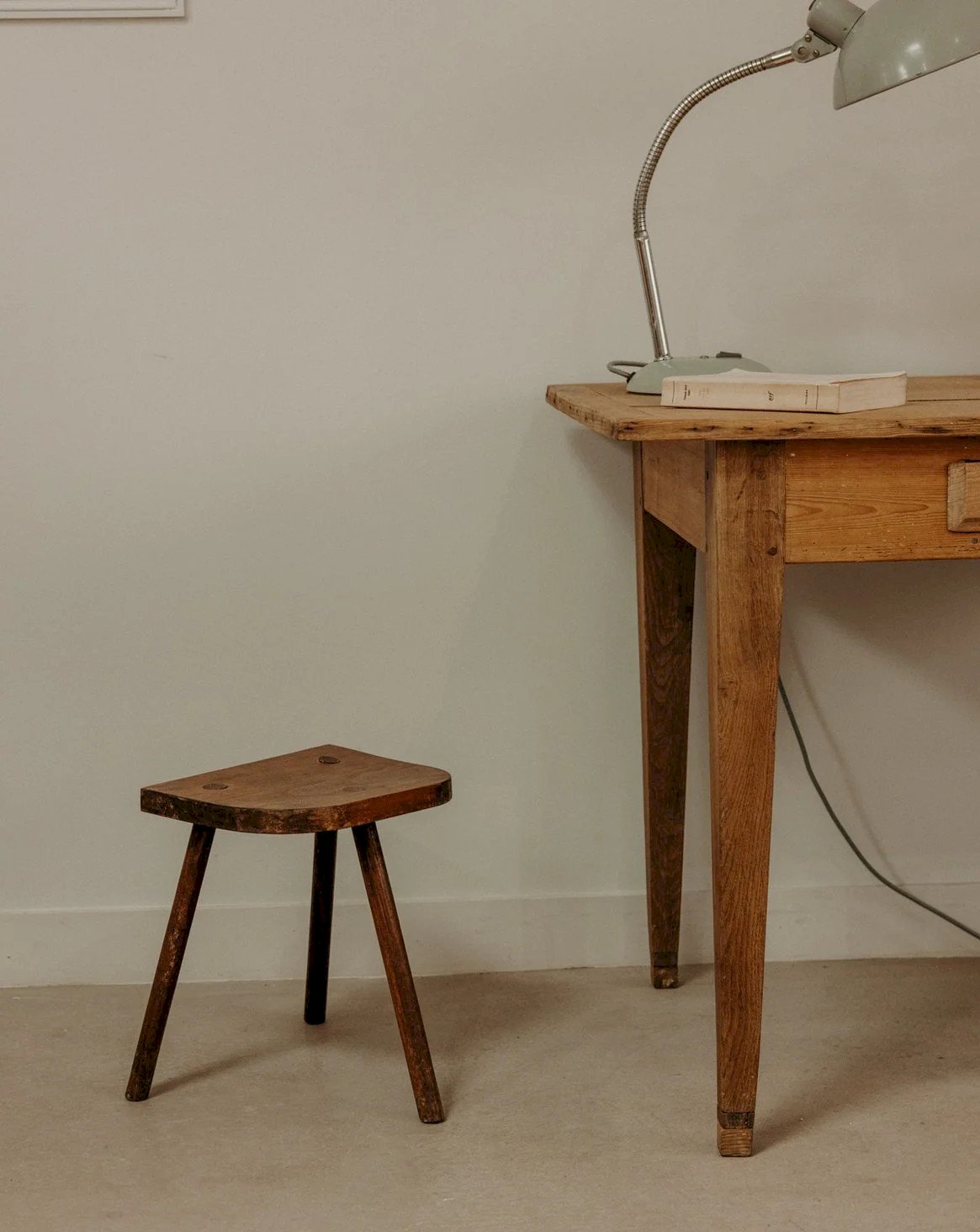
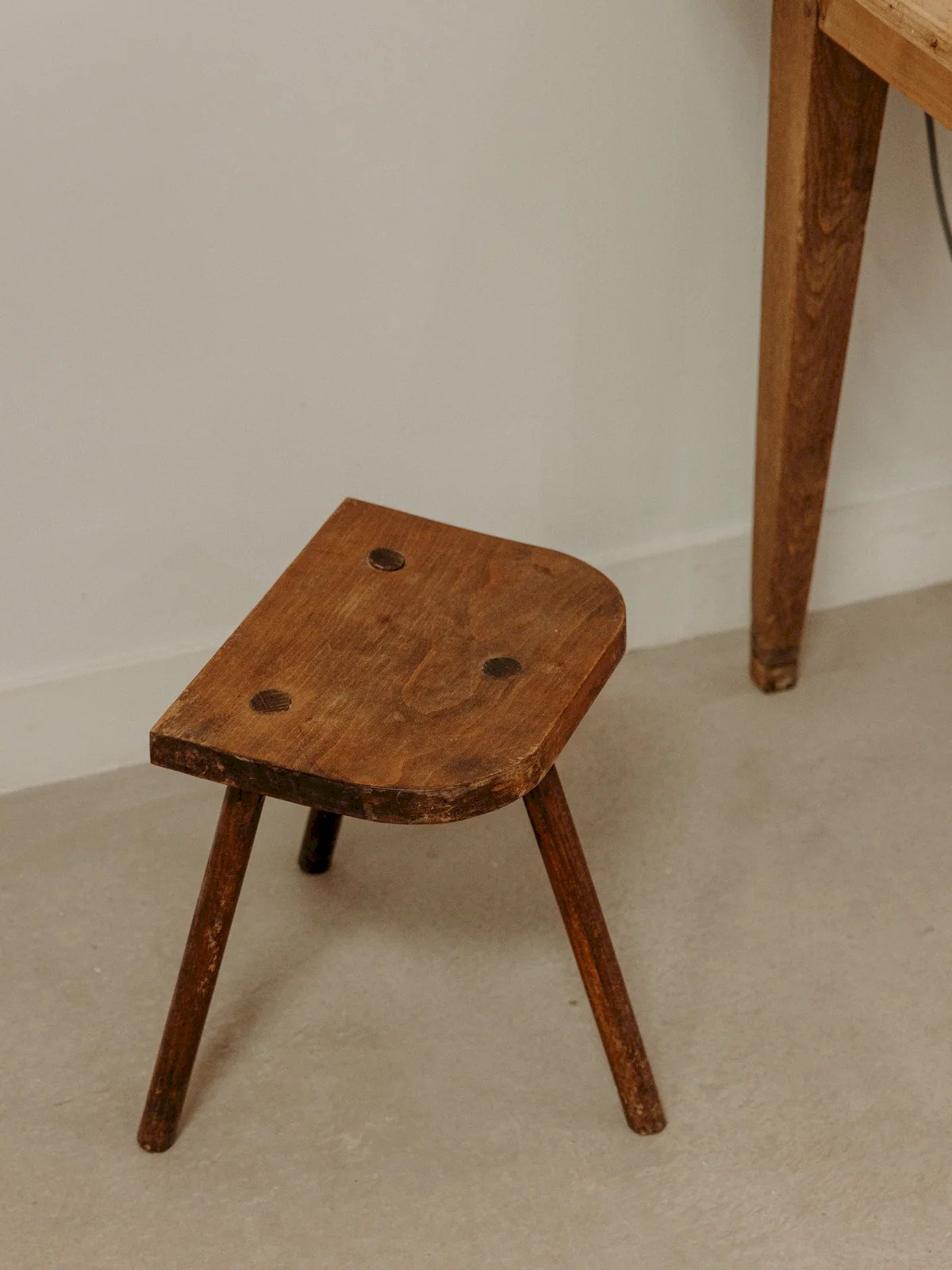
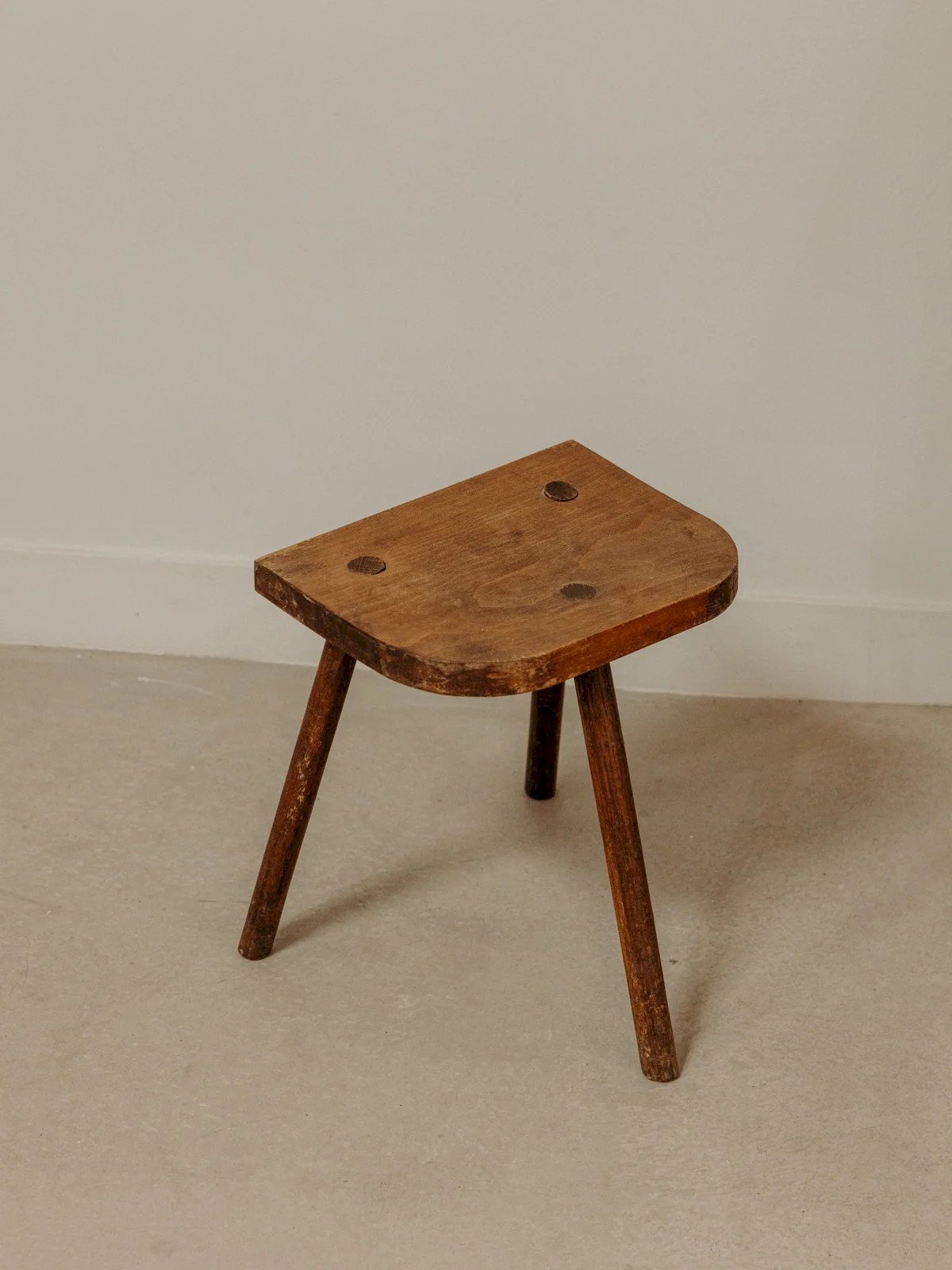
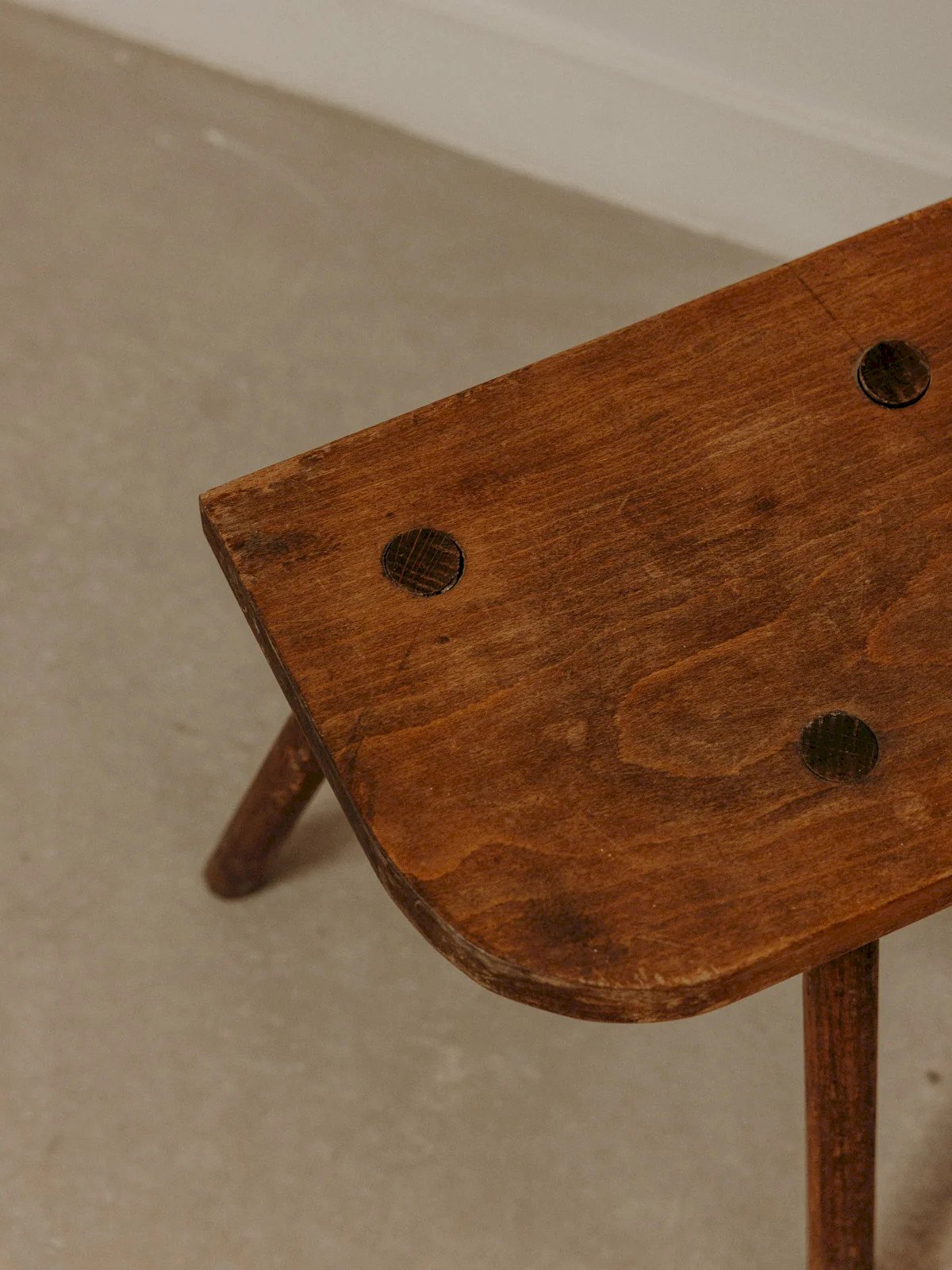
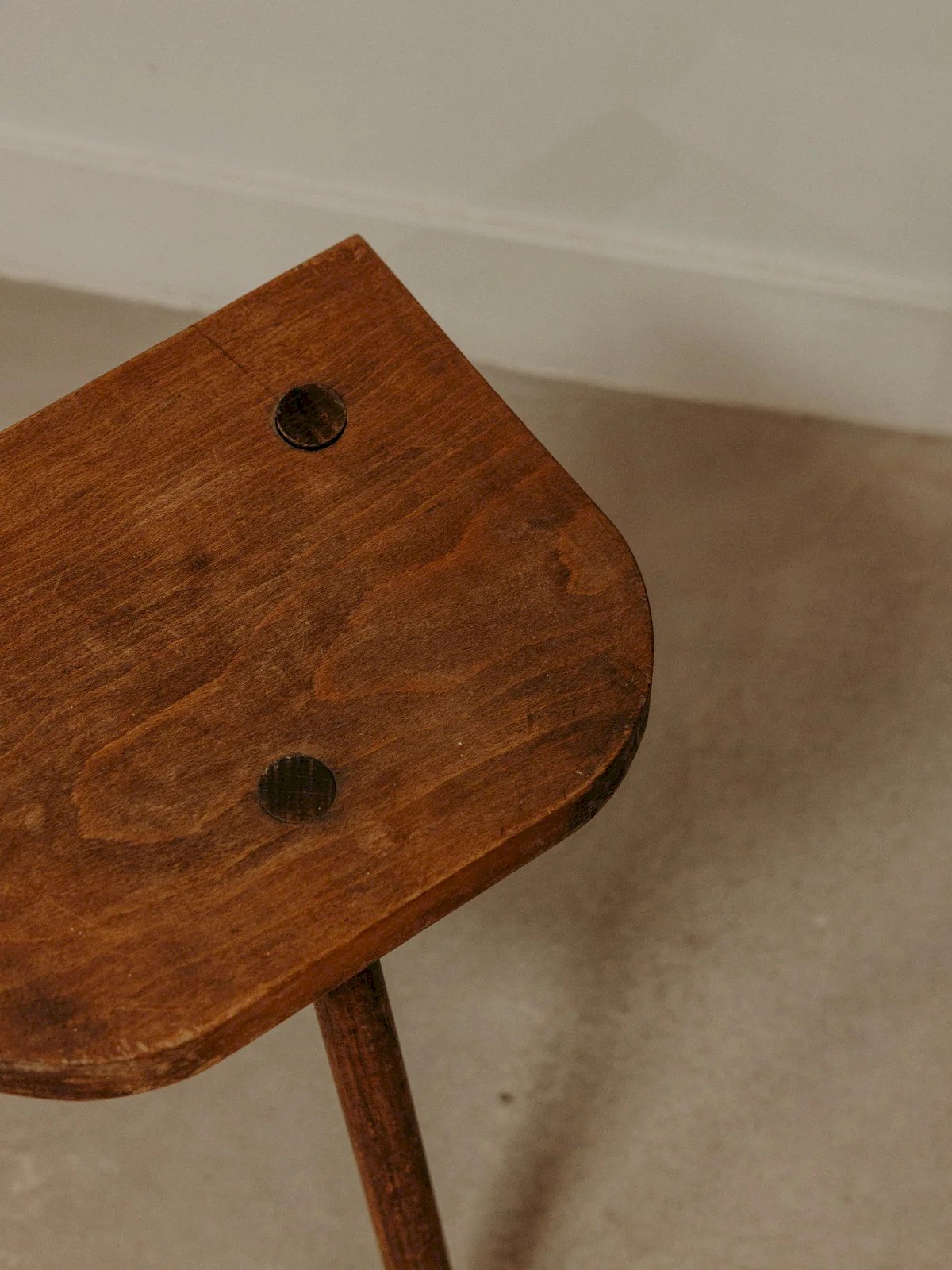
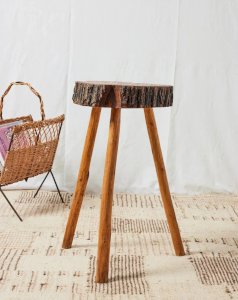
This dark wooden workbench stool embodies a simple and warm country spirit. Its second-hand presence gives it a beautiful patina, ideal for warming up a kitchen, workshop, or office corner. Its height allows it to be used as an extra seat, while its lightweight format moves easily from one room to another without cluttering the space. Placed near a work table, it gladly accommodates a stack of books, a lamp, or a ceramic vase. Width: 29 cm Depth: 22 cm Height: 35 cm A Brief History of the Stool As the oldest type of seating in history, the stool is the direct ancestor of the chair, distinguished by its lack of backrest and armrests. In the Middle Ages, it was the universal seat of the people, while among the nobility, the "right to the stool" became a highly codified court privilege, allowing ladies to sit in the presence of the king. Its structure, resting on three or four legs, is a feat of stability and lightness, designed to be slid under a table or moved with just one gesture. Whether made of raw wood from a farm or in an industrial style, it now embodies the ultimate space-saving furniture, providing an additional seat that never clutters the view.
Réf :
#414777
Brand / From : Debongout
Color(s) : Multicolored
Material : Wood
Related Products
Comments
Regis, the raw wood tripod stool No. 1624
79€
75002 Paris
Ce site contient des liens d’affiliation pour lesquels je peux recevoir une compensation.
Description
This dark wooden workbench stool embodies a simple and warm country spirit. Its second-hand presence gives it a beautiful patina, ideal for warming up a kitchen, workshop, or office corner. Its height allows it to be used as an extra seat, while its lightweight format moves easily from one room to another without cluttering the space. Placed near a work table, it gladly accommodates a stack of books, a lamp, or a ceramic vase. Width: 29 cm Depth: 22 cm Height: 35 cm A Brief History of the Stool As the oldest type of seating in history, the stool is the direct ancestor of the chair, distinguished by its lack of backrest and armrests. In the Middle Ages, it was the universal seat of the people, while among the nobility, the "right to the stool" became a highly codified court privilege, allowing ladies to sit in the presence of the king. Its structure, resting on three or four legs, is a feat of stability and lightness, designed to be slid under a table or moved with just one gesture. Whether made of raw wood from a farm or in an industrial style, it now embodies the ultimate space-saving furniture, providing an additional seat that never clutters the view.
Réf :
#414777
Brand / From : Debongout
Color(s) : Multicolored
Material : Wood