 English
 Français


Description
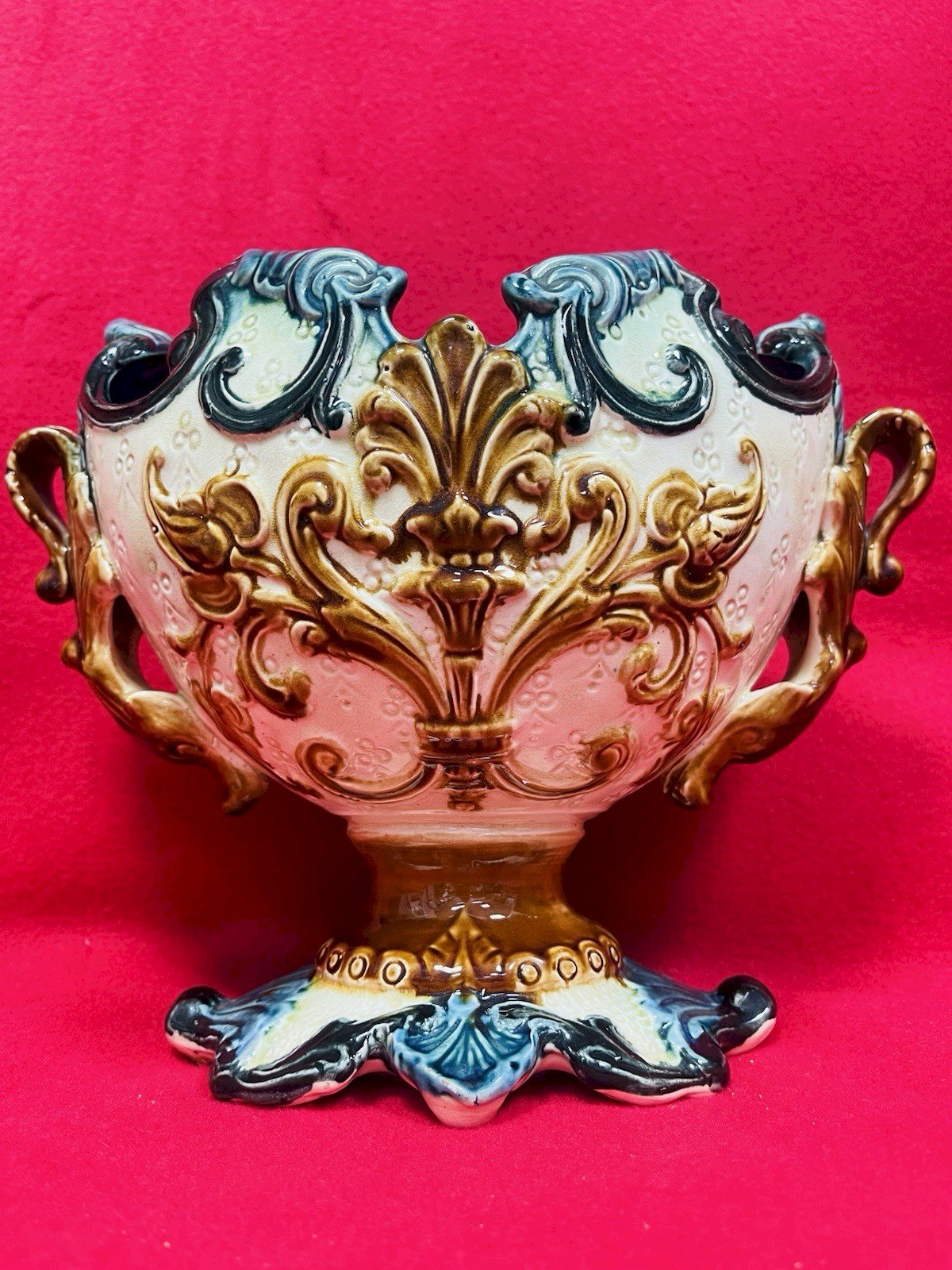
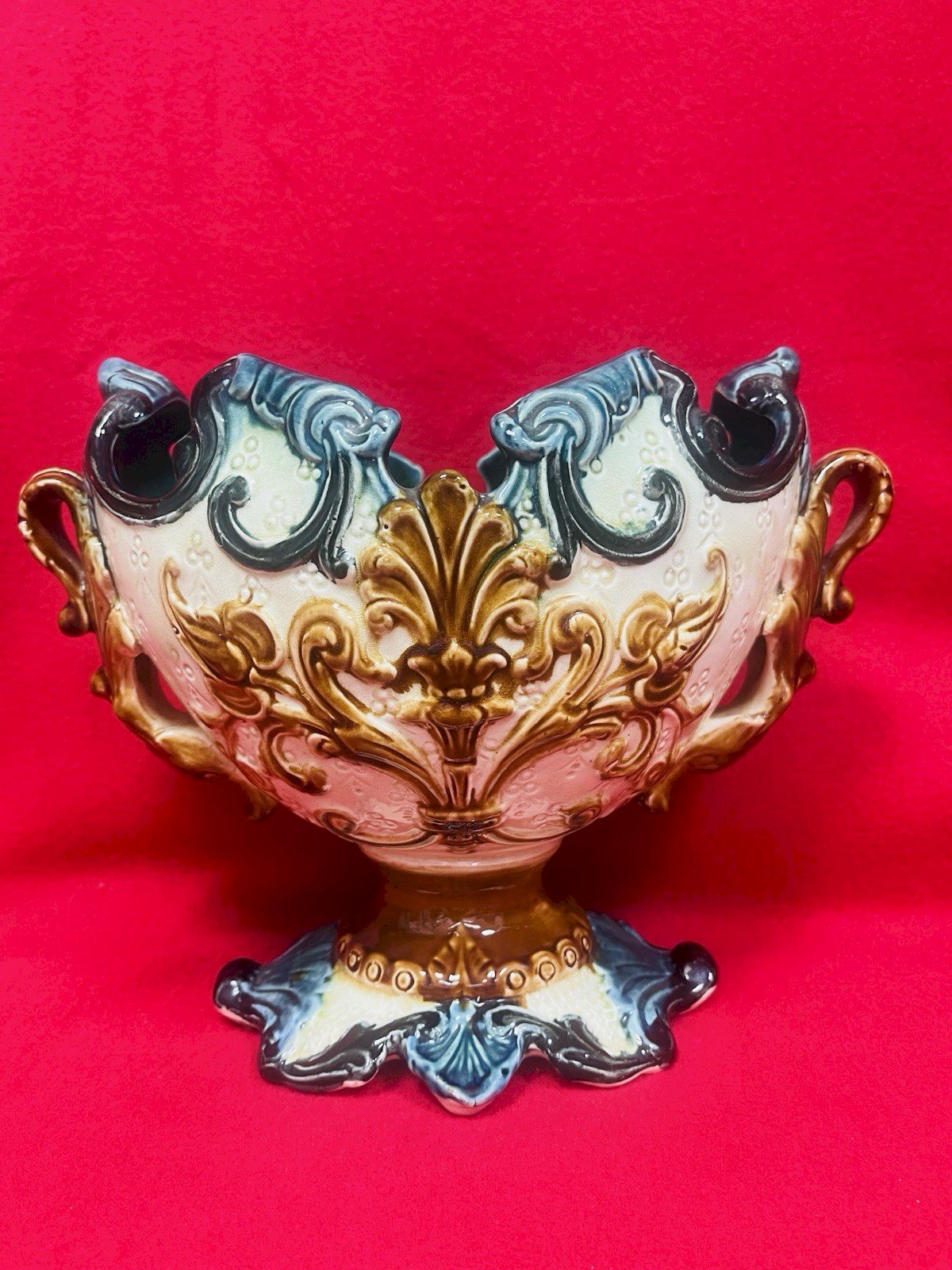
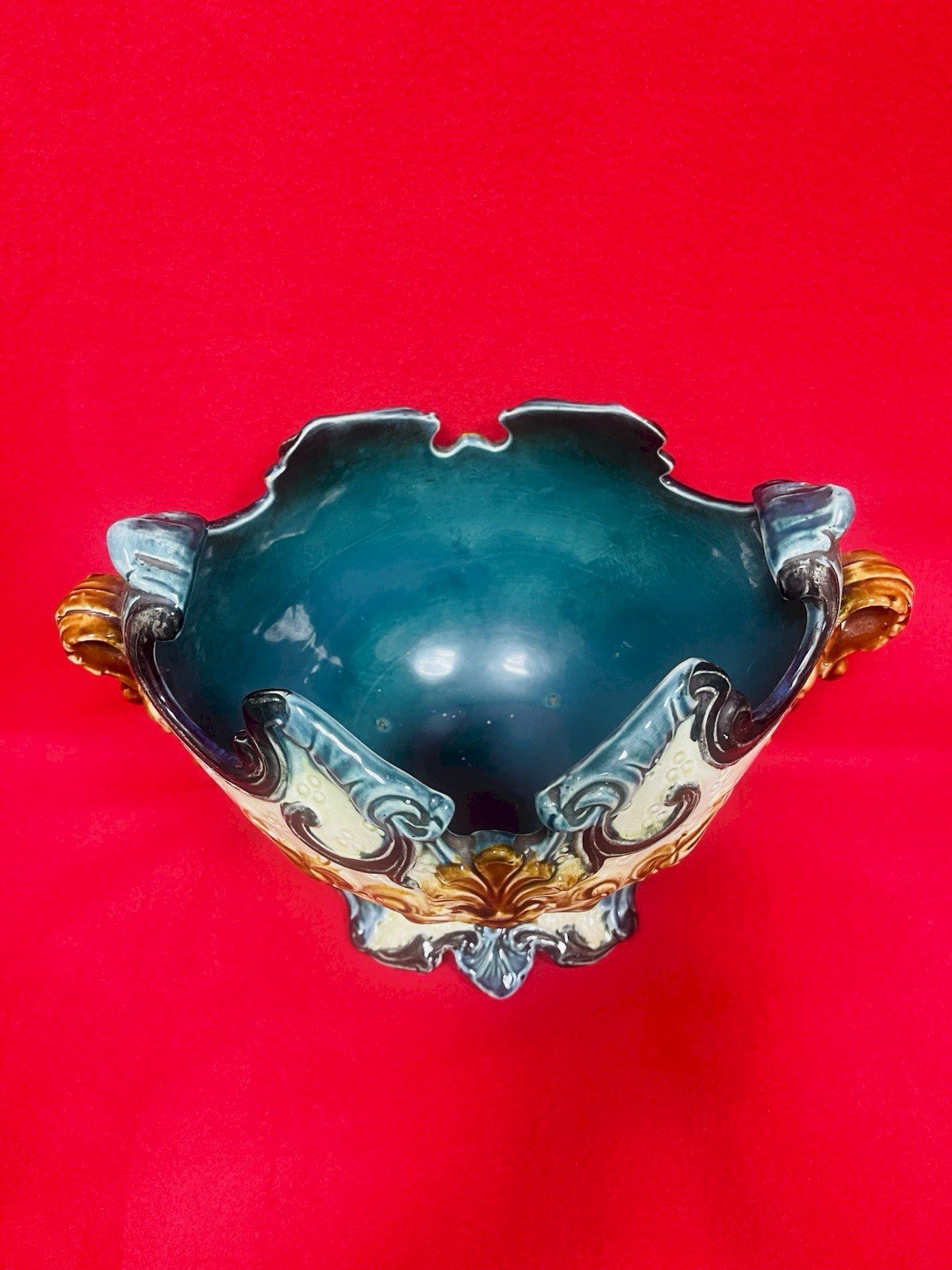
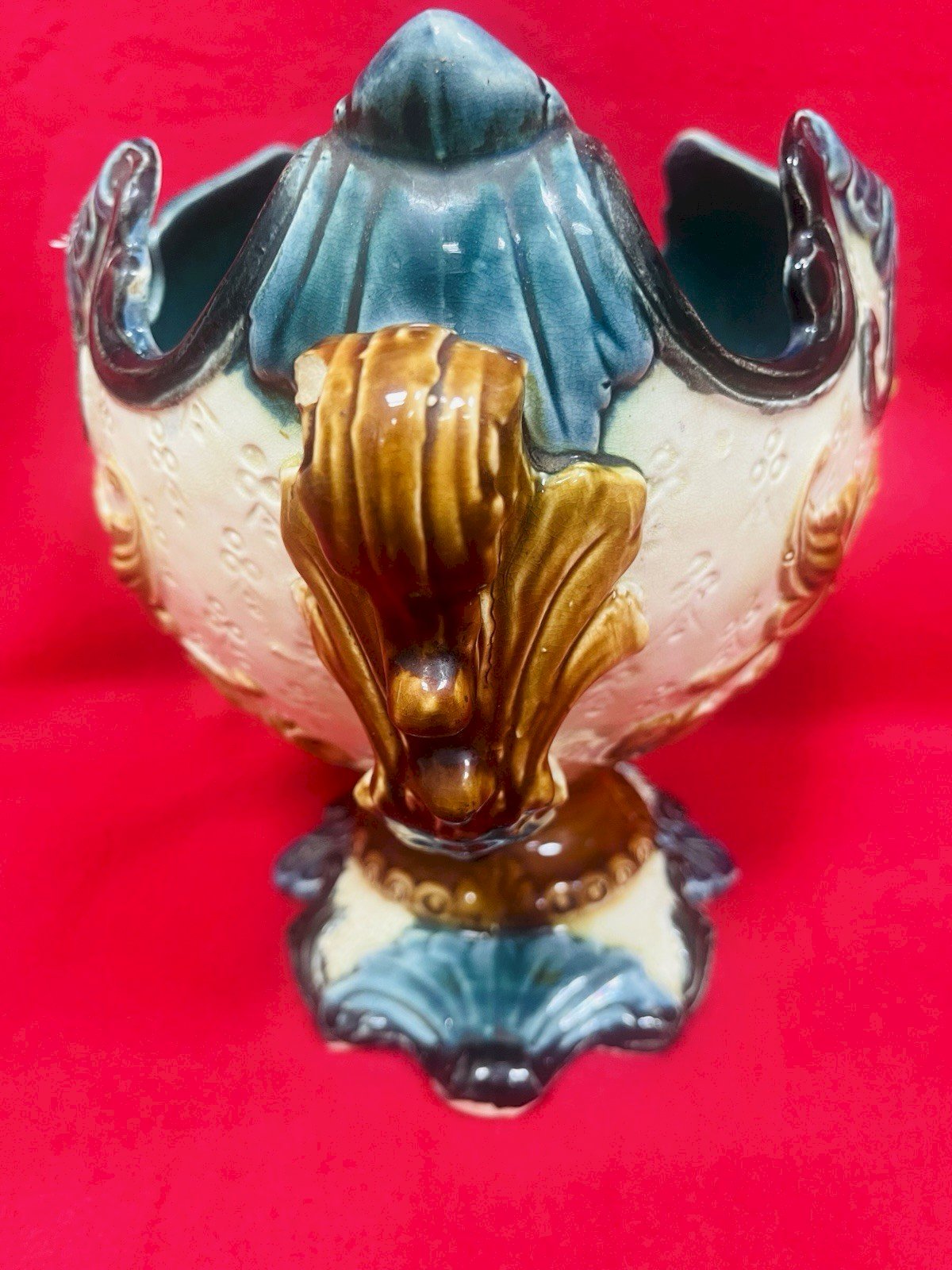
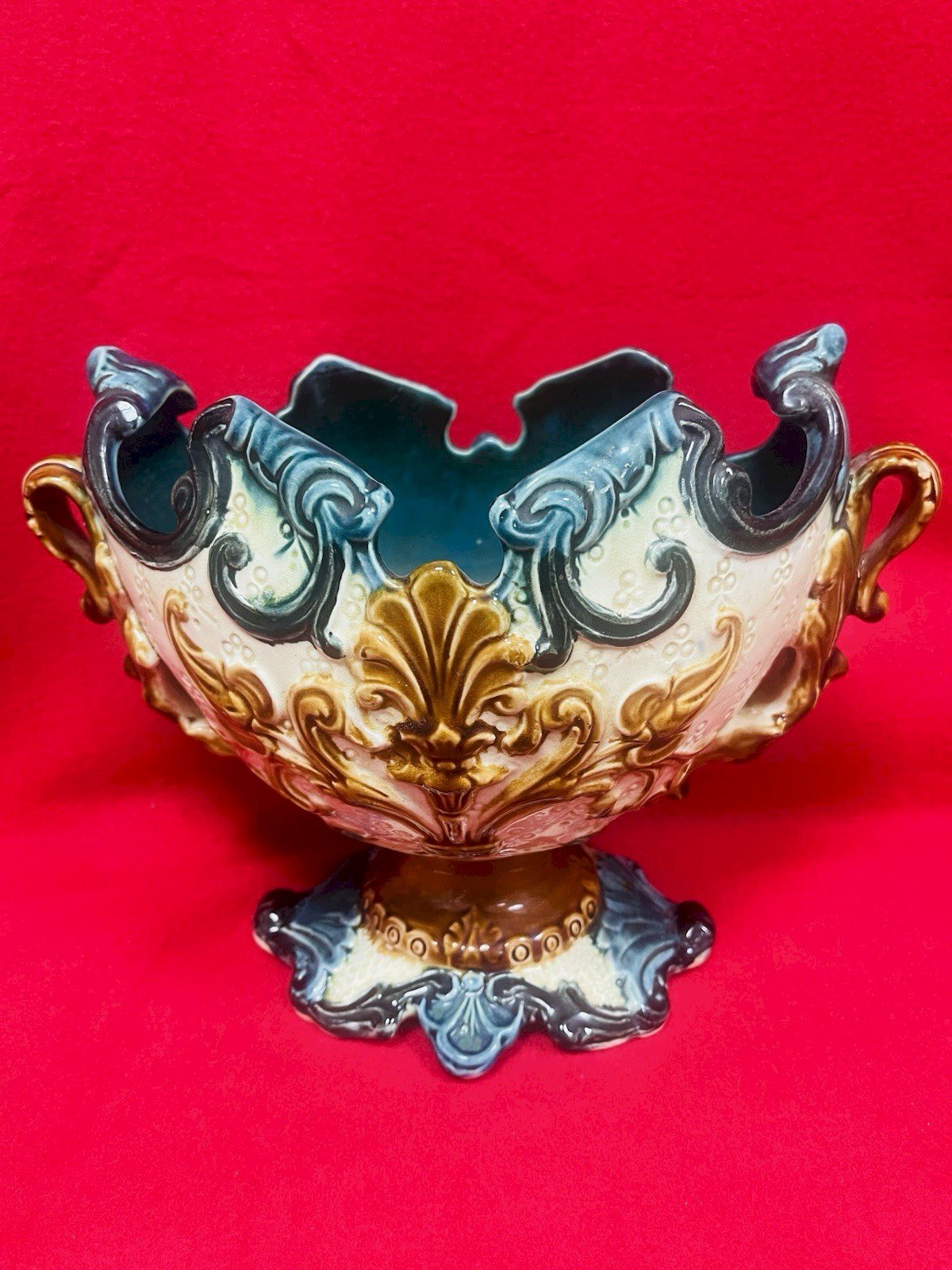
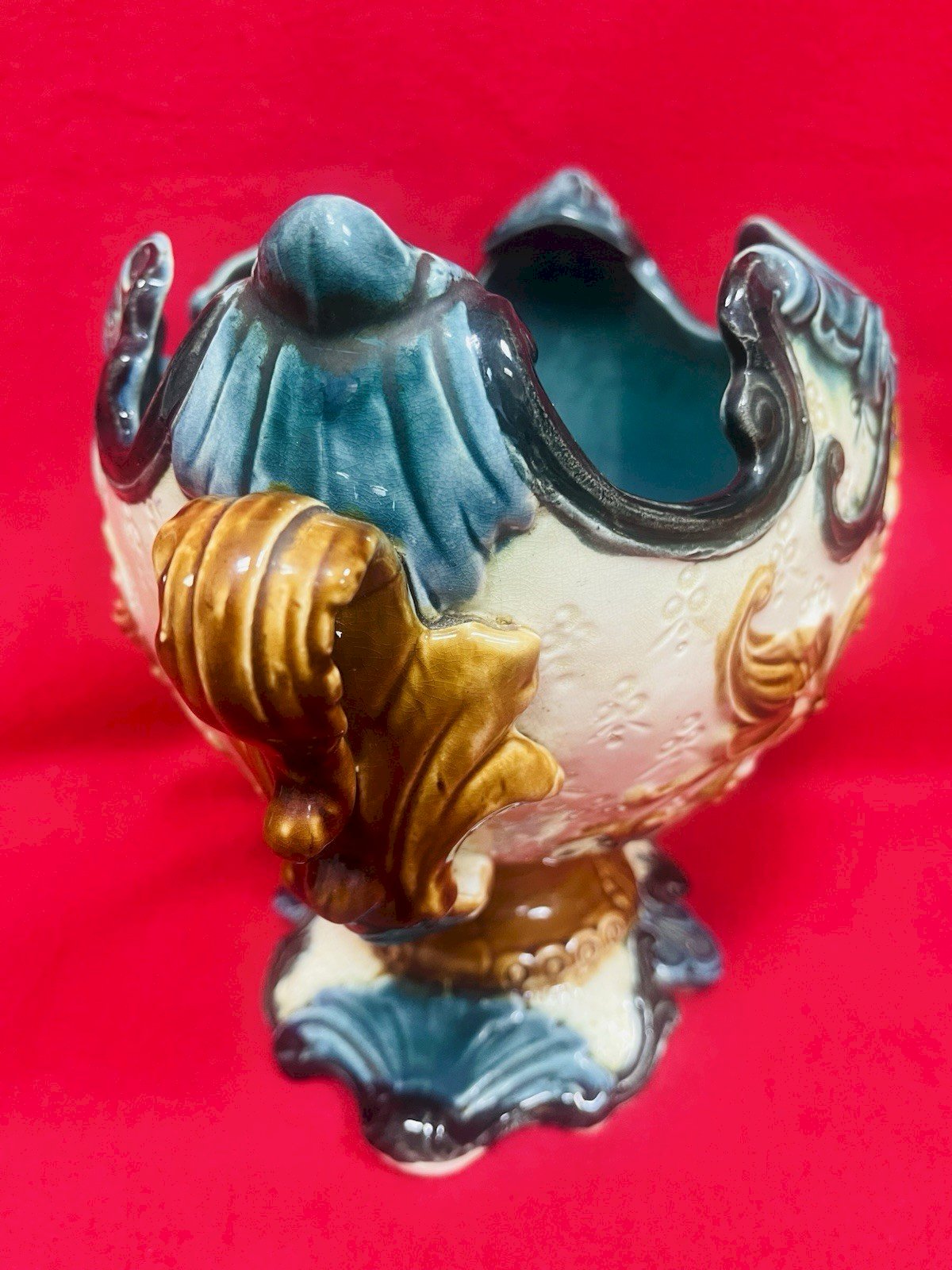
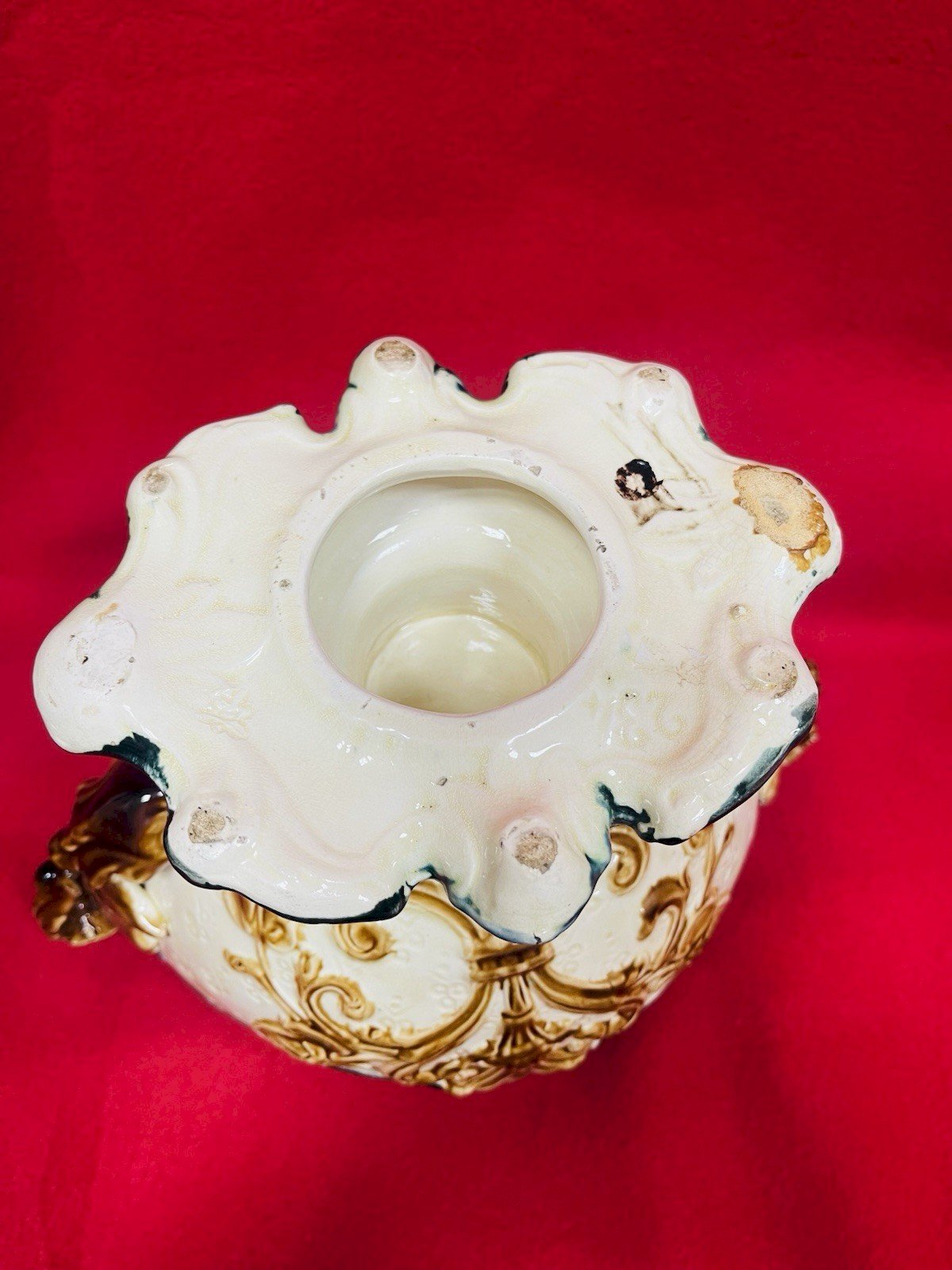
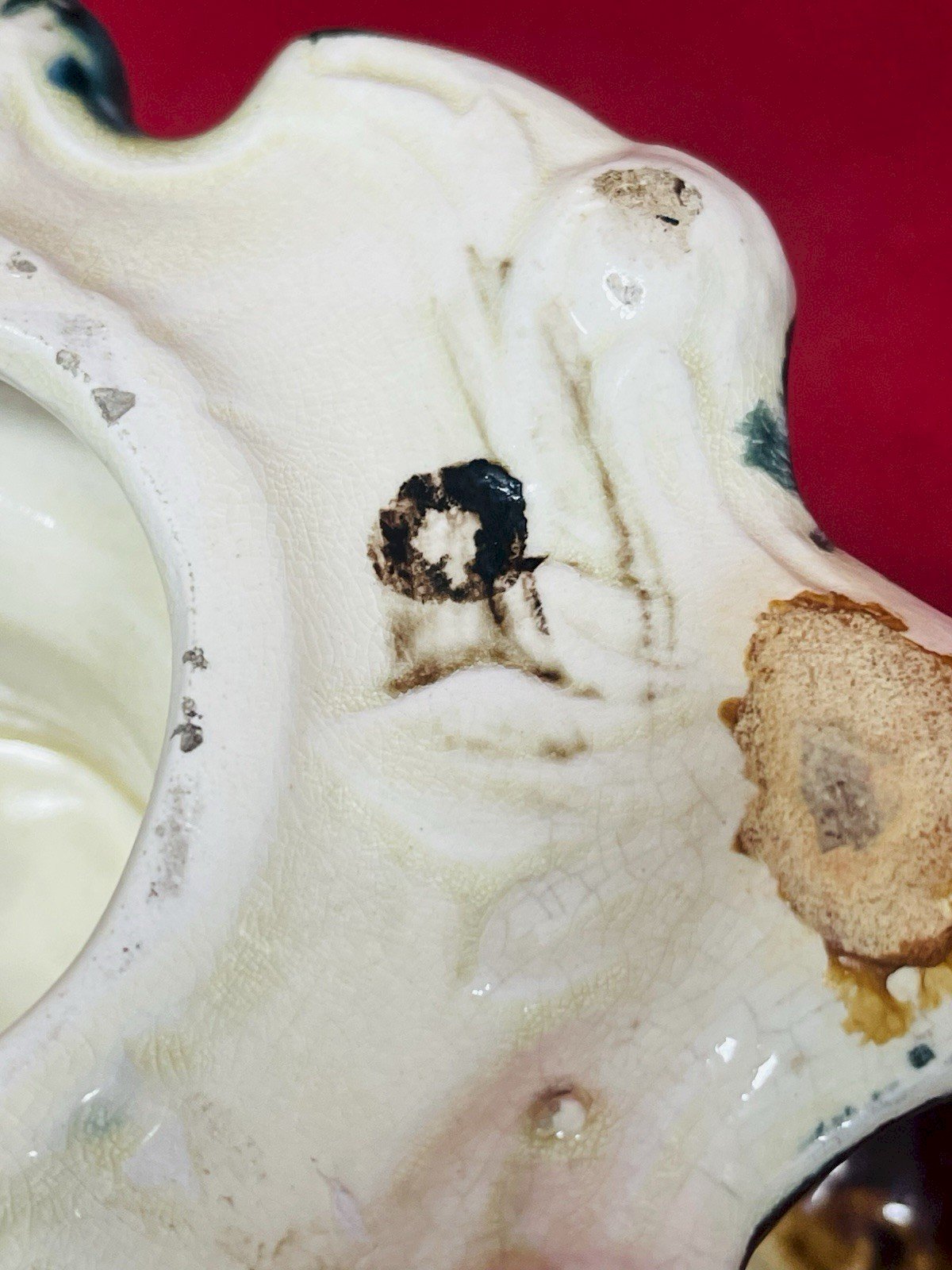
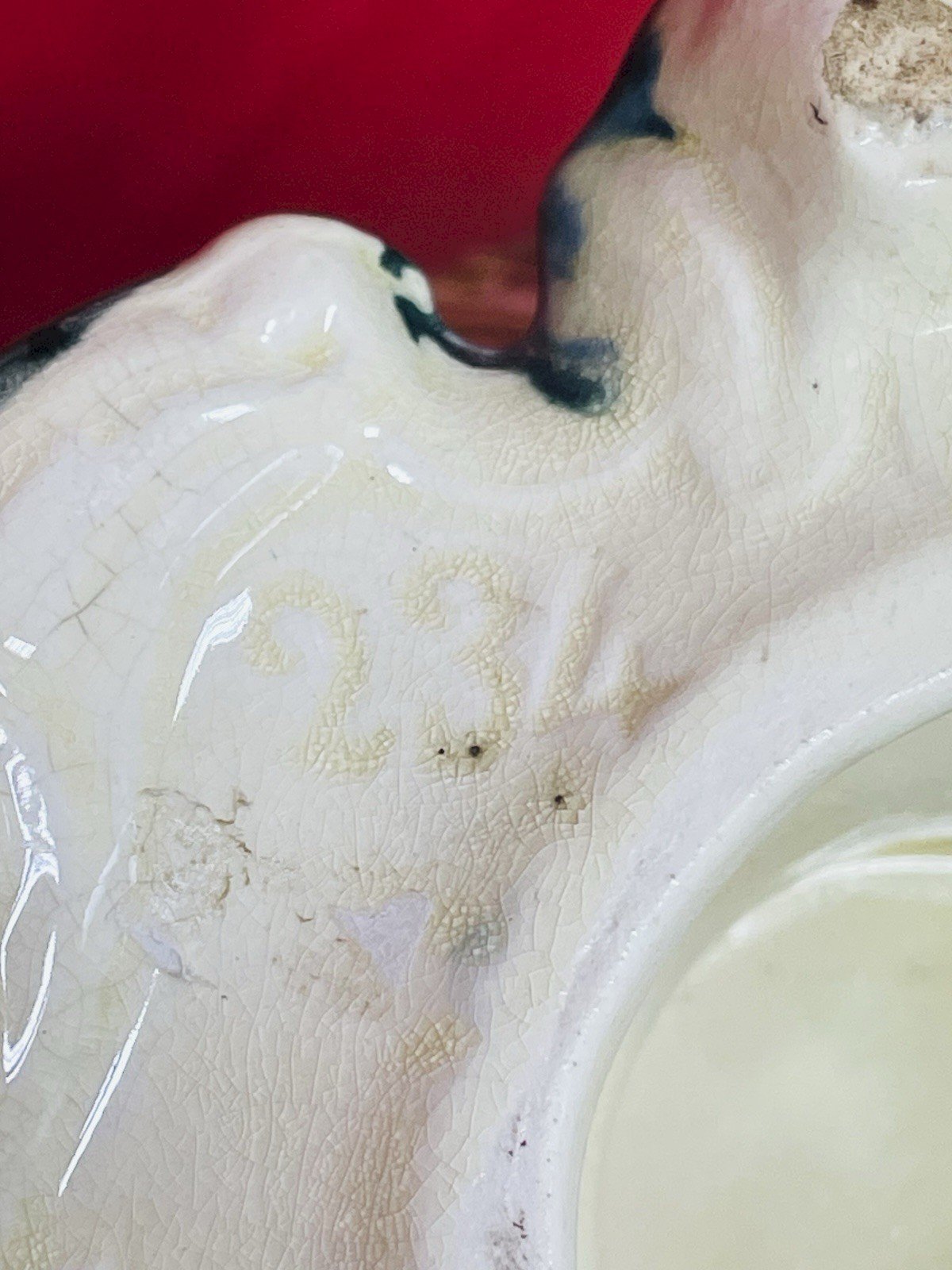
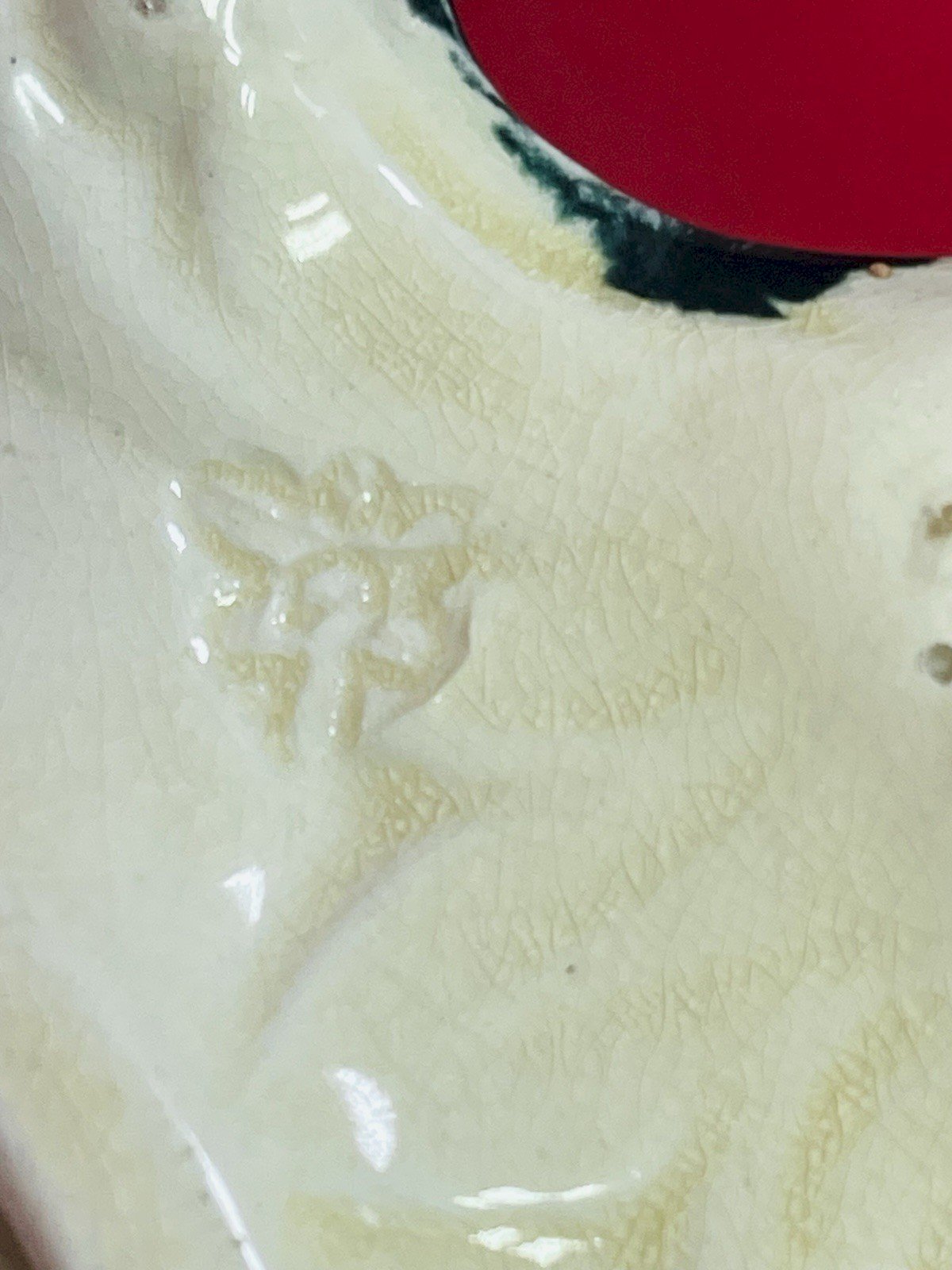
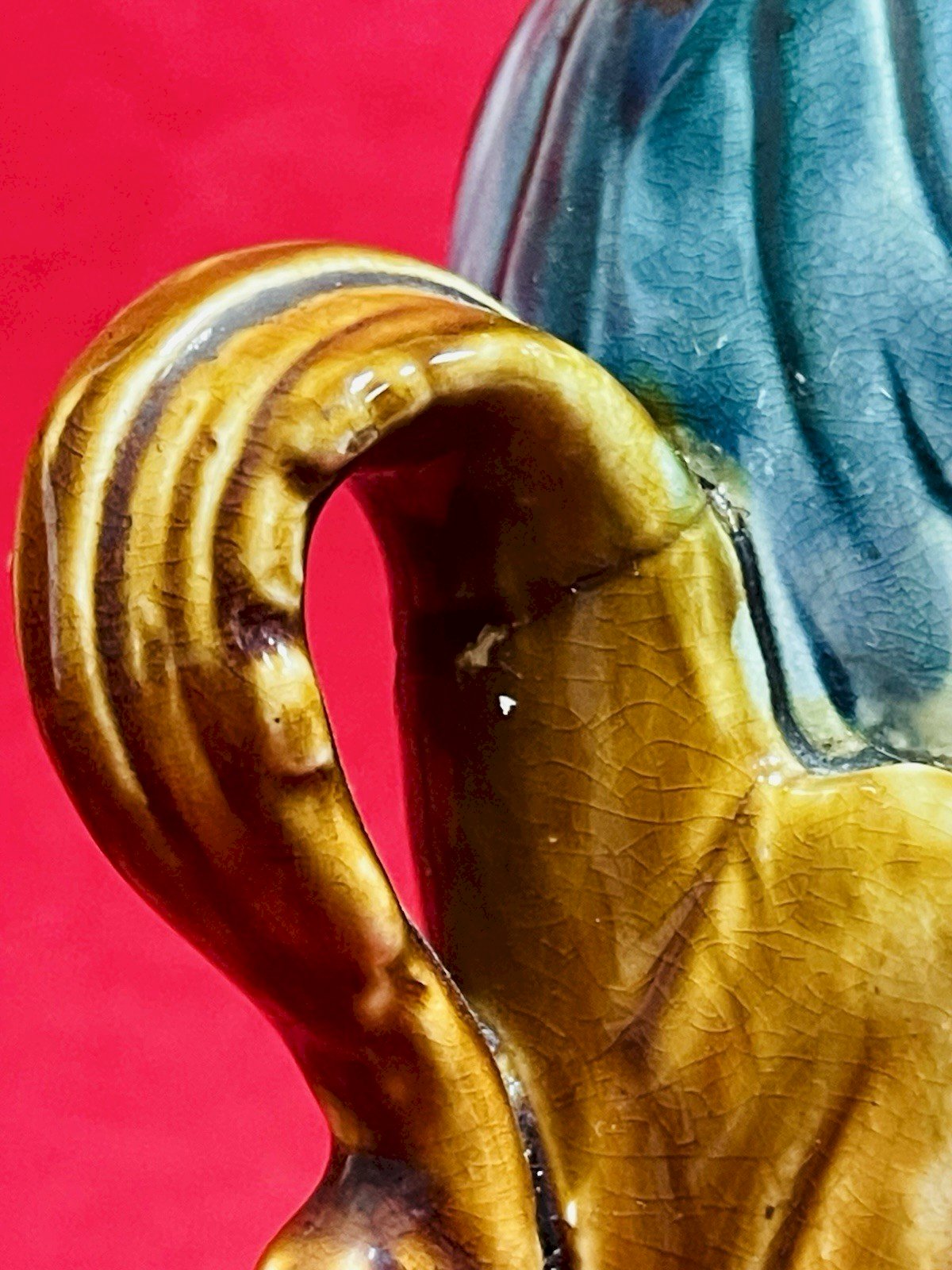
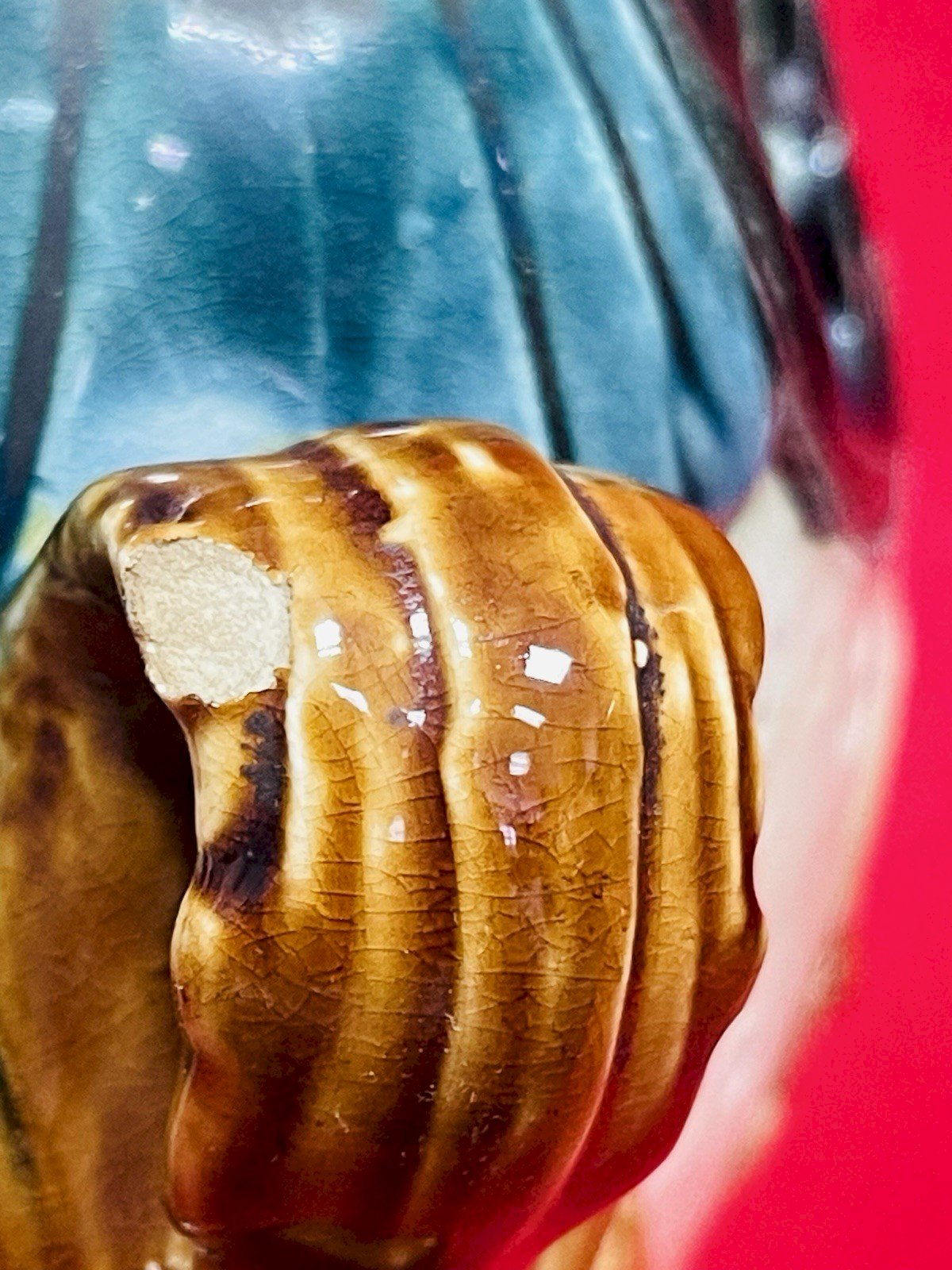
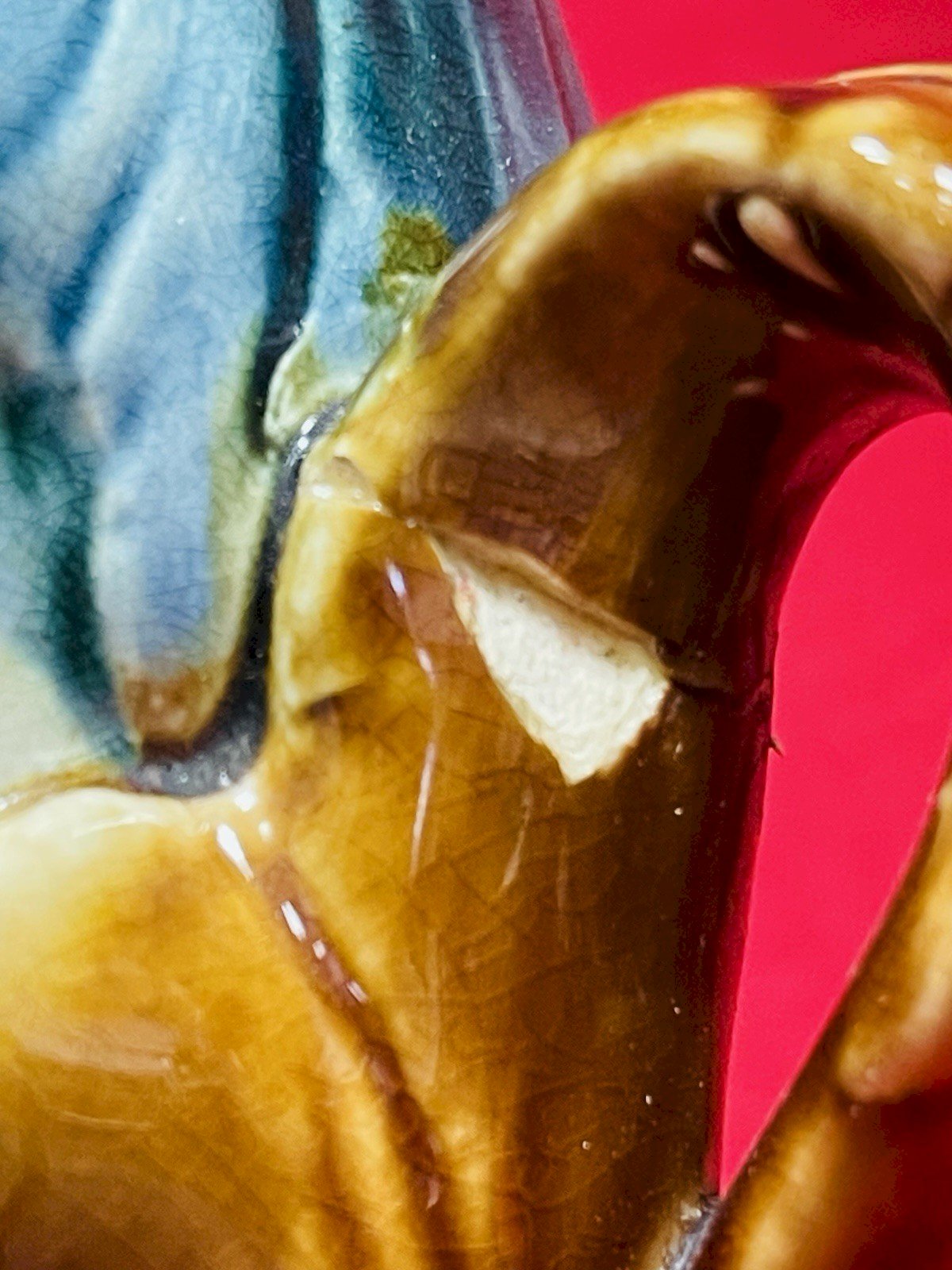
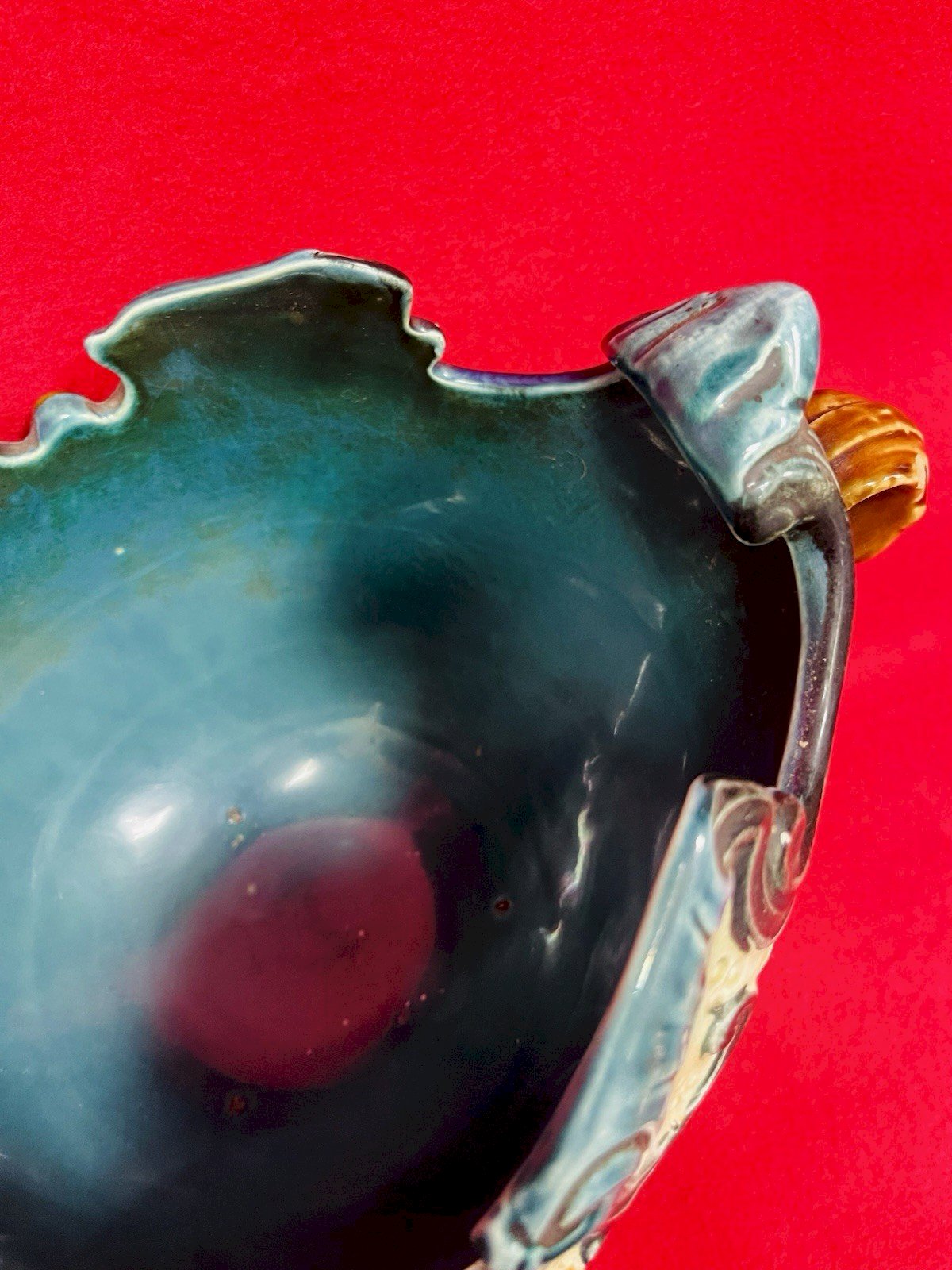
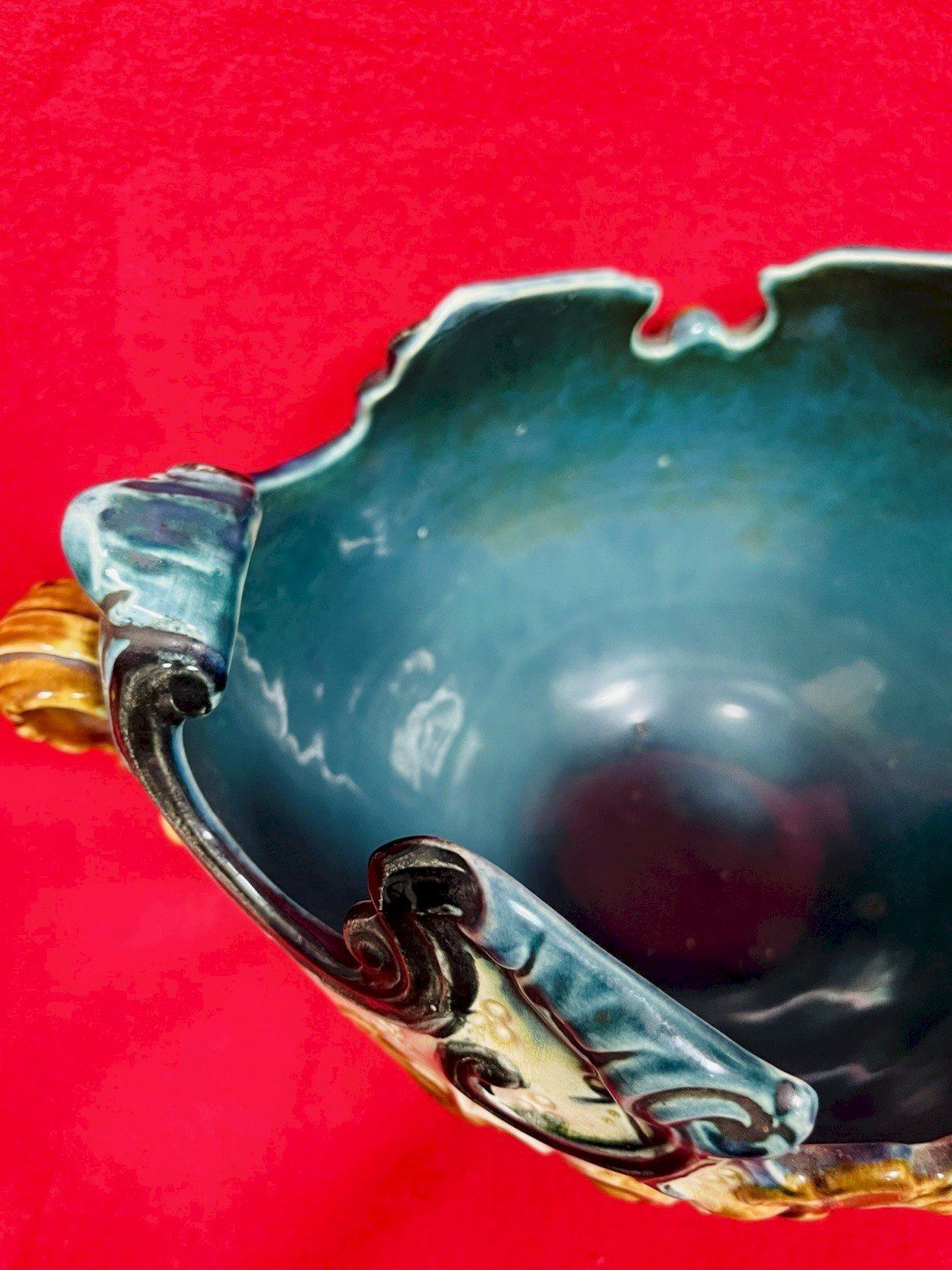
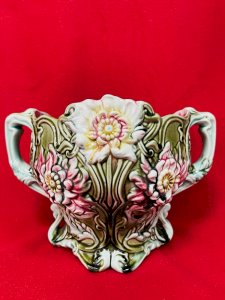
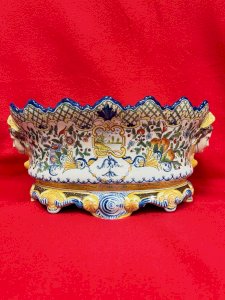
Antique large polychrome glazed earthenware planter known as "barbotine", attributed to the Onnaing factory, model no. 234, dating from the late 19th century / around 1880-1900. Very beautiful high-relief decoration in rococo style featuring shell motifs, foliage, scrolls, and plant ornaments, in shades of turquoise blue, caramel brown, and cream. Flared and cut upper edge, two ornate side handles, and a pedestal base with relief decoration. Interior fully glazed in blue-green. The underside bears the model number 234 in relief, accompanied by molded motifs/symbols. Dimensions: height 24 cm, width 30 cm, depth 18 cm. Condition: good overall condition for its age, with natural crazing of the glaze due to age. One handle has been previously reattached and shows visible restoration; there is also a chip on each of the two handles, visible in the photographs. No cracks noted. Marks and minor wear consistent with age. A beautiful decorative collector's piece, typical of the large barbotine productions of the late 19th century.
Réf :
#416442
Related Products



Comments
Onnaing barbotine planter number 234 late 19th century polychrome earthenware Art Nouveau
120€
72150 Pruillé-l'Éguillé
Ce site contient des liens d’affiliation pour lesquels je peux recevoir une compensation.
Description
Antique large polychrome glazed earthenware planter known as "barbotine", attributed to the Onnaing factory, model no. 234, dating from the late 19th century / around 1880-1900. Very beautiful high-relief decoration in rococo style featuring shell motifs, foliage, scrolls, and plant ornaments, in shades of turquoise blue, caramel brown, and cream. Flared and cut upper edge, two ornate side handles, and a pedestal base with relief decoration. Interior fully glazed in blue-green. The underside bears the model number 234 in relief, accompanied by molded motifs/symbols. Dimensions: height 24 cm, width 30 cm, depth 18 cm. Condition: good overall condition for its age, with natural crazing of the glaze due to age. One handle has been previously reattached and shows visible restoration; there is also a chip on each of the two handles, visible in the photographs. No cracks noted. Marks and minor wear consistent with age. A beautiful decorative collector's piece, typical of the large barbotine productions of the late 19th century.
Réf :
#416442