 English
 Français


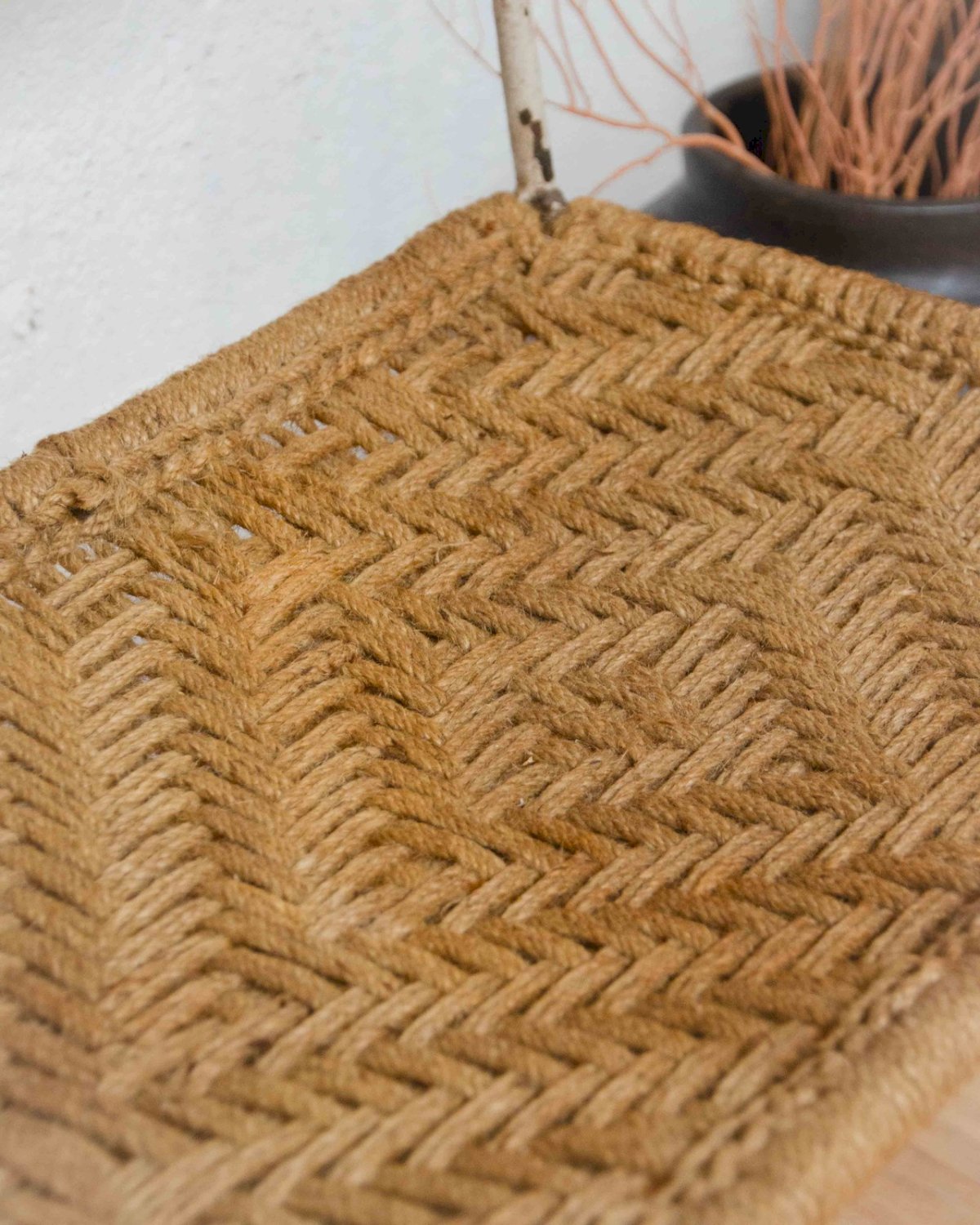
Description
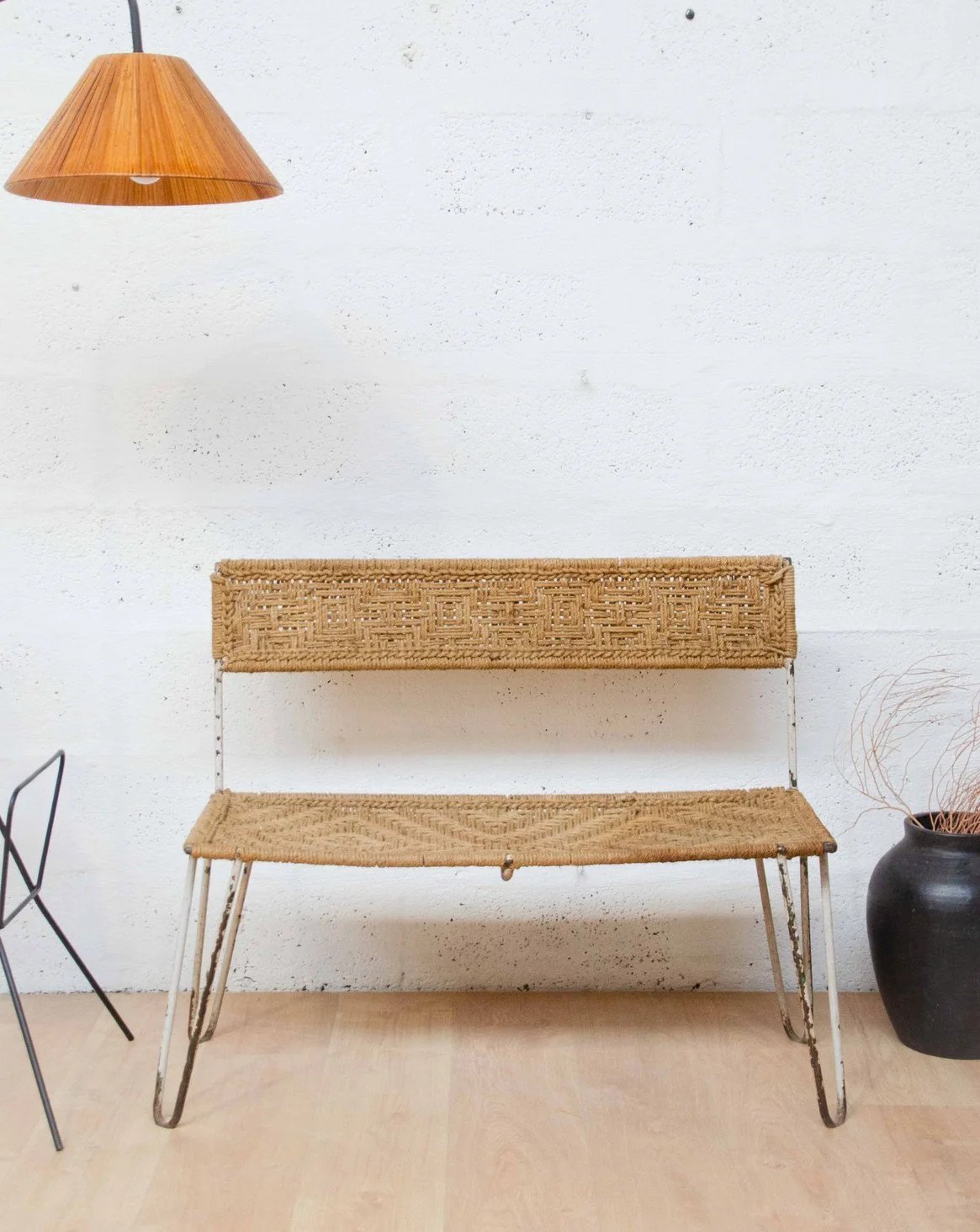
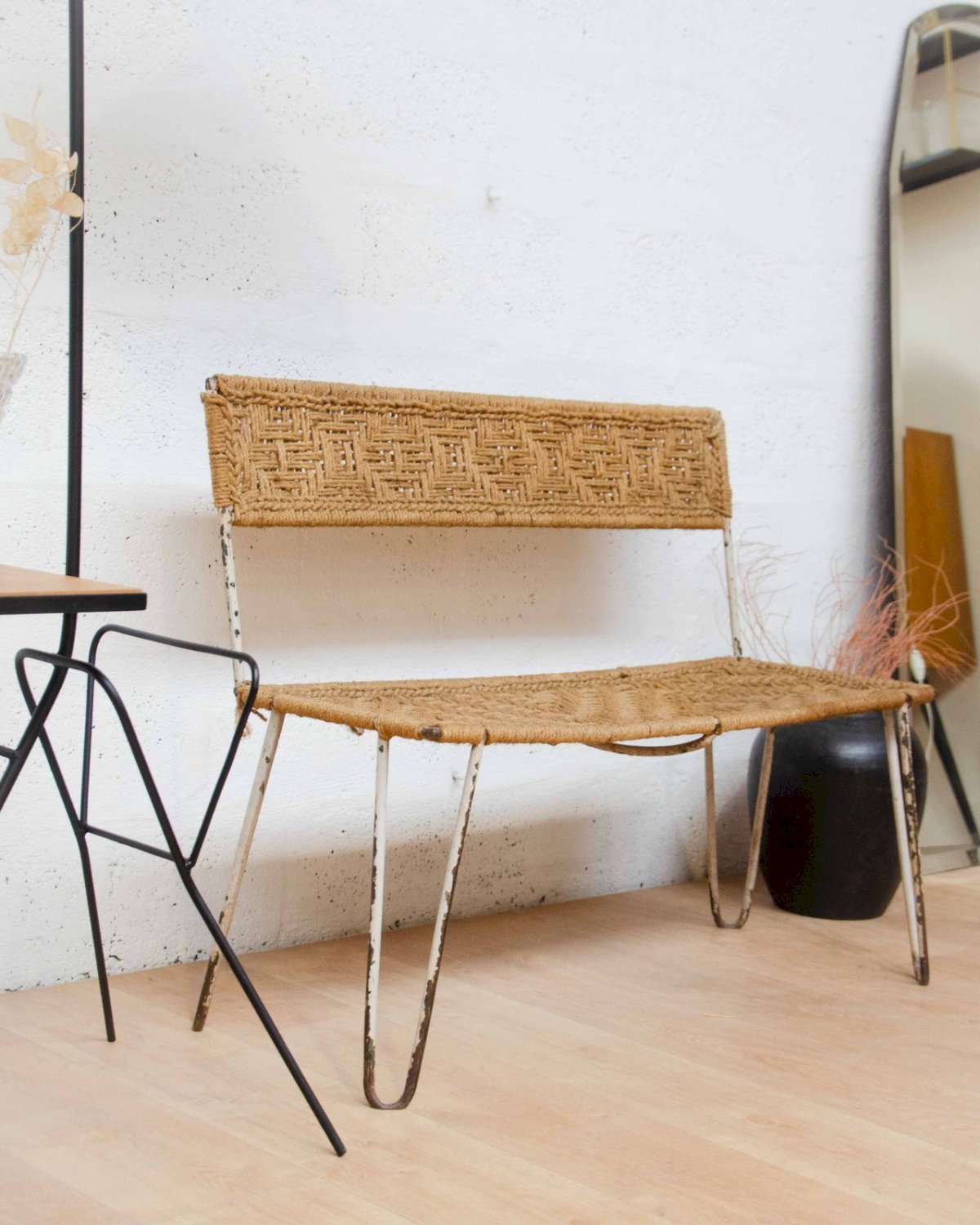
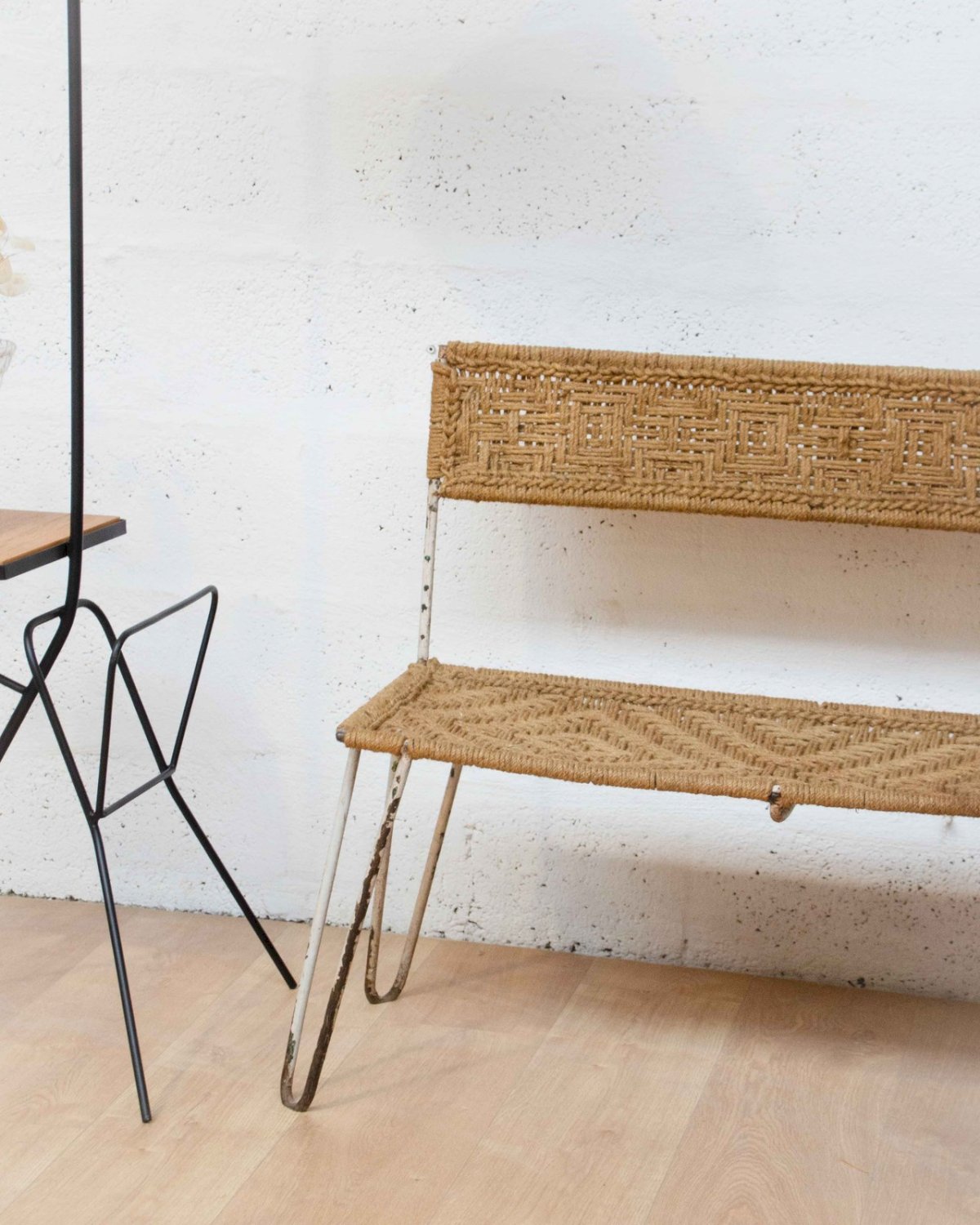
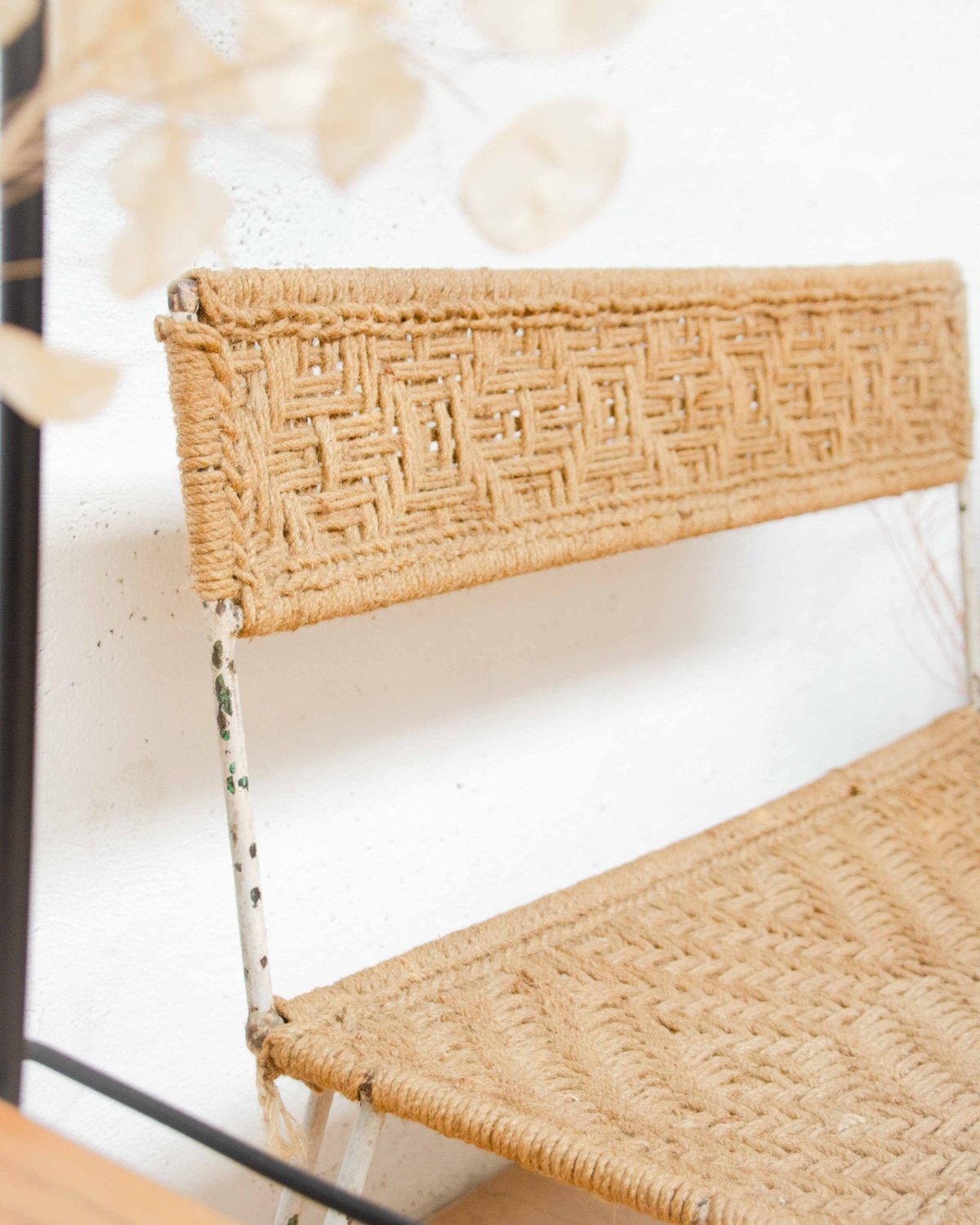
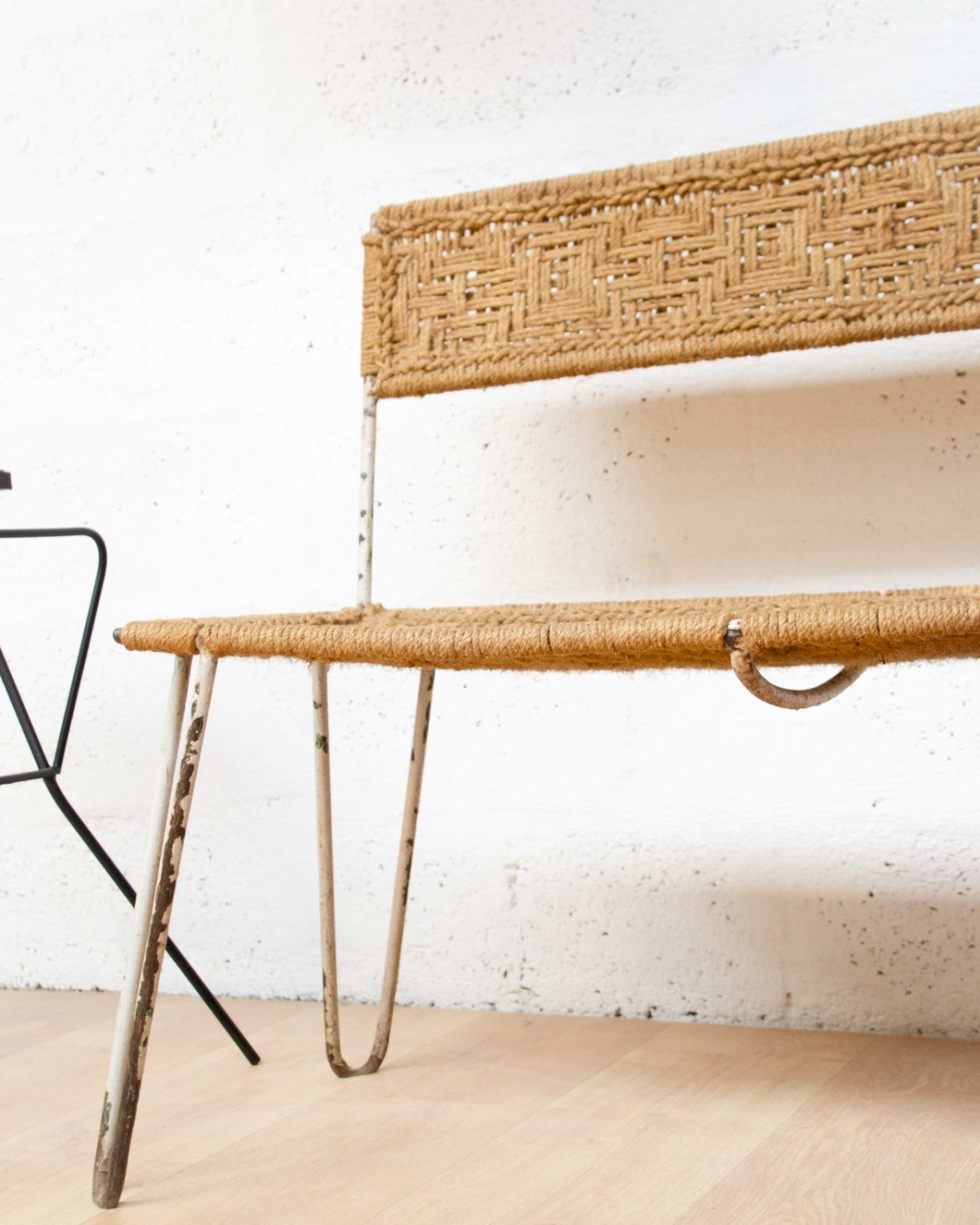
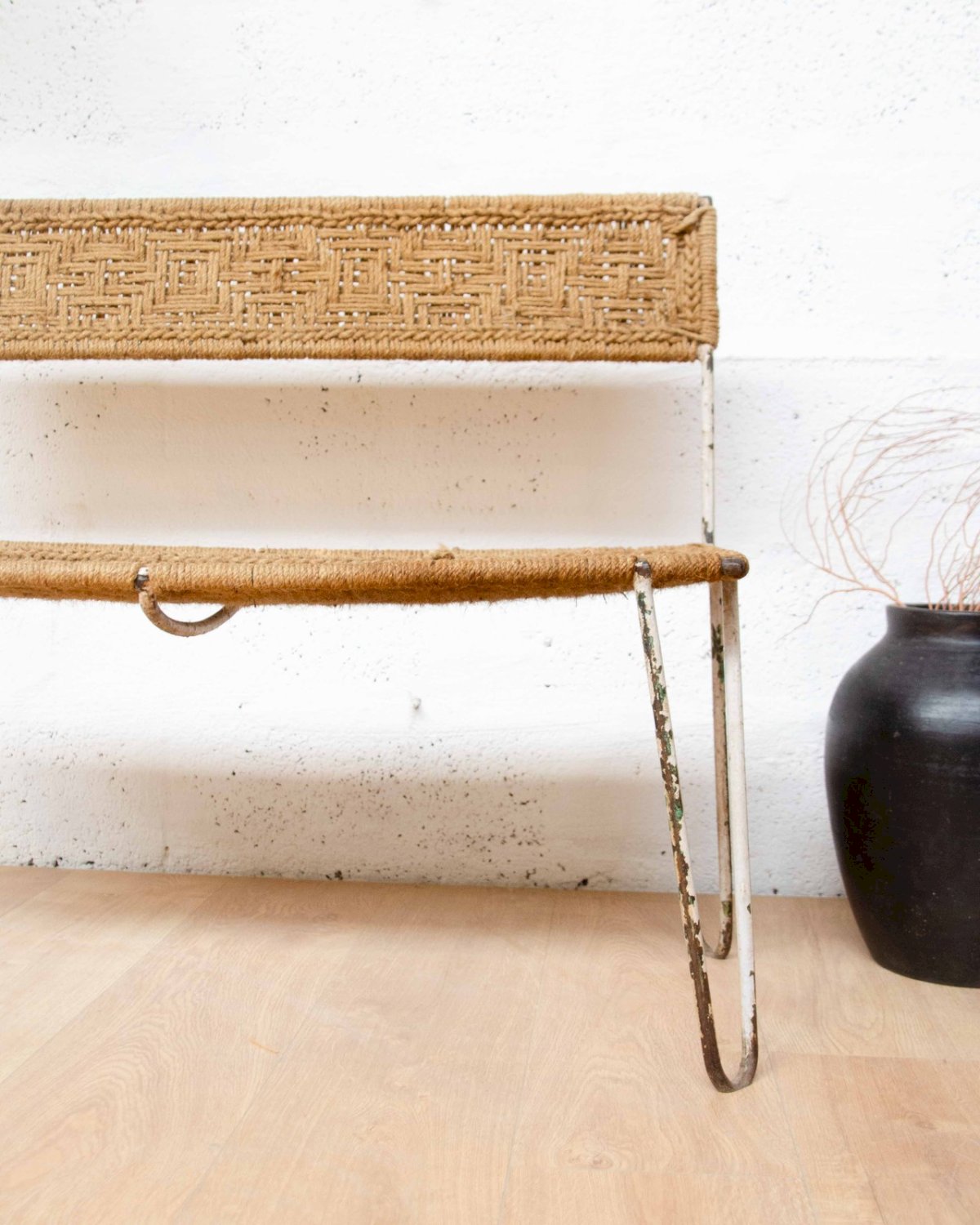
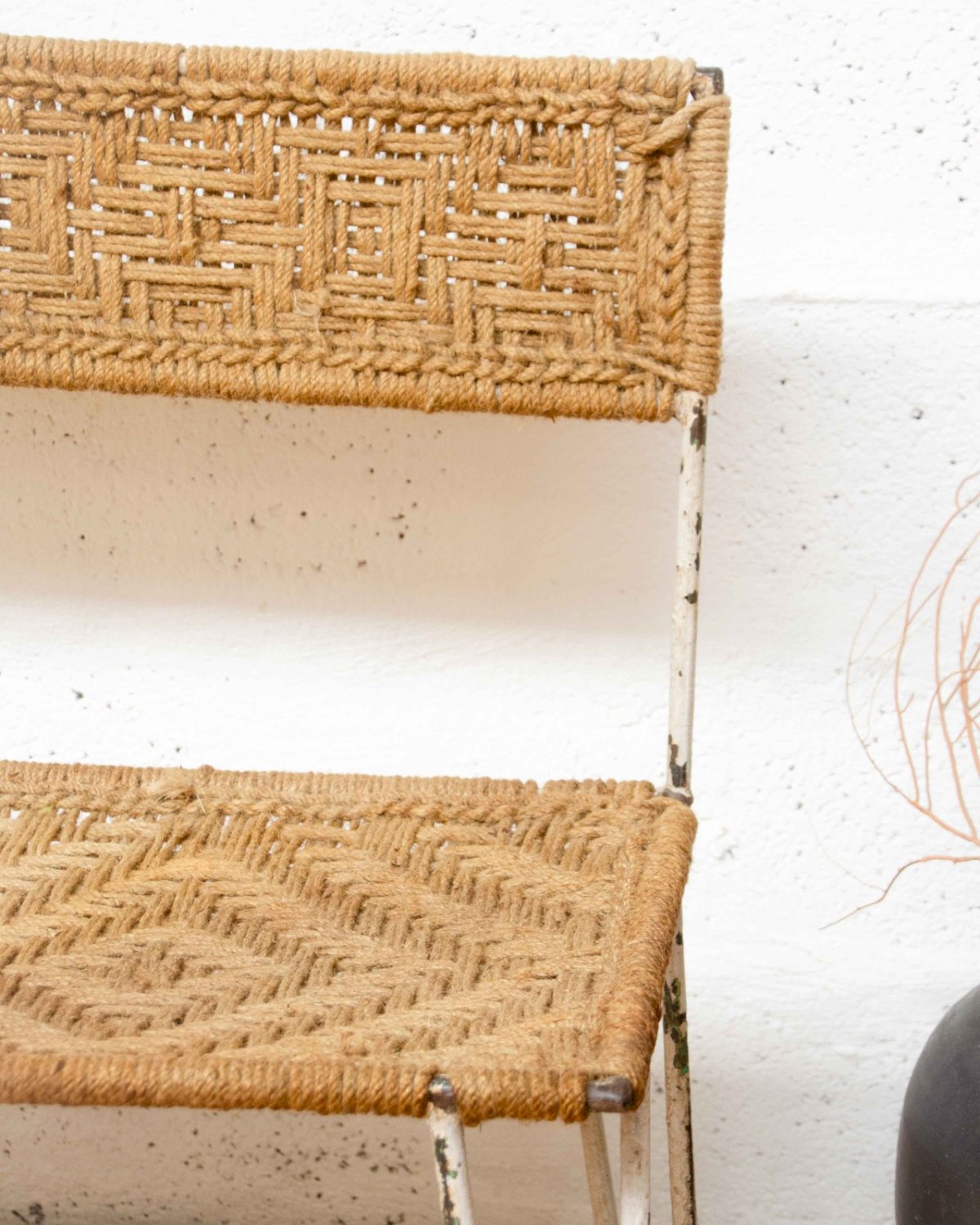
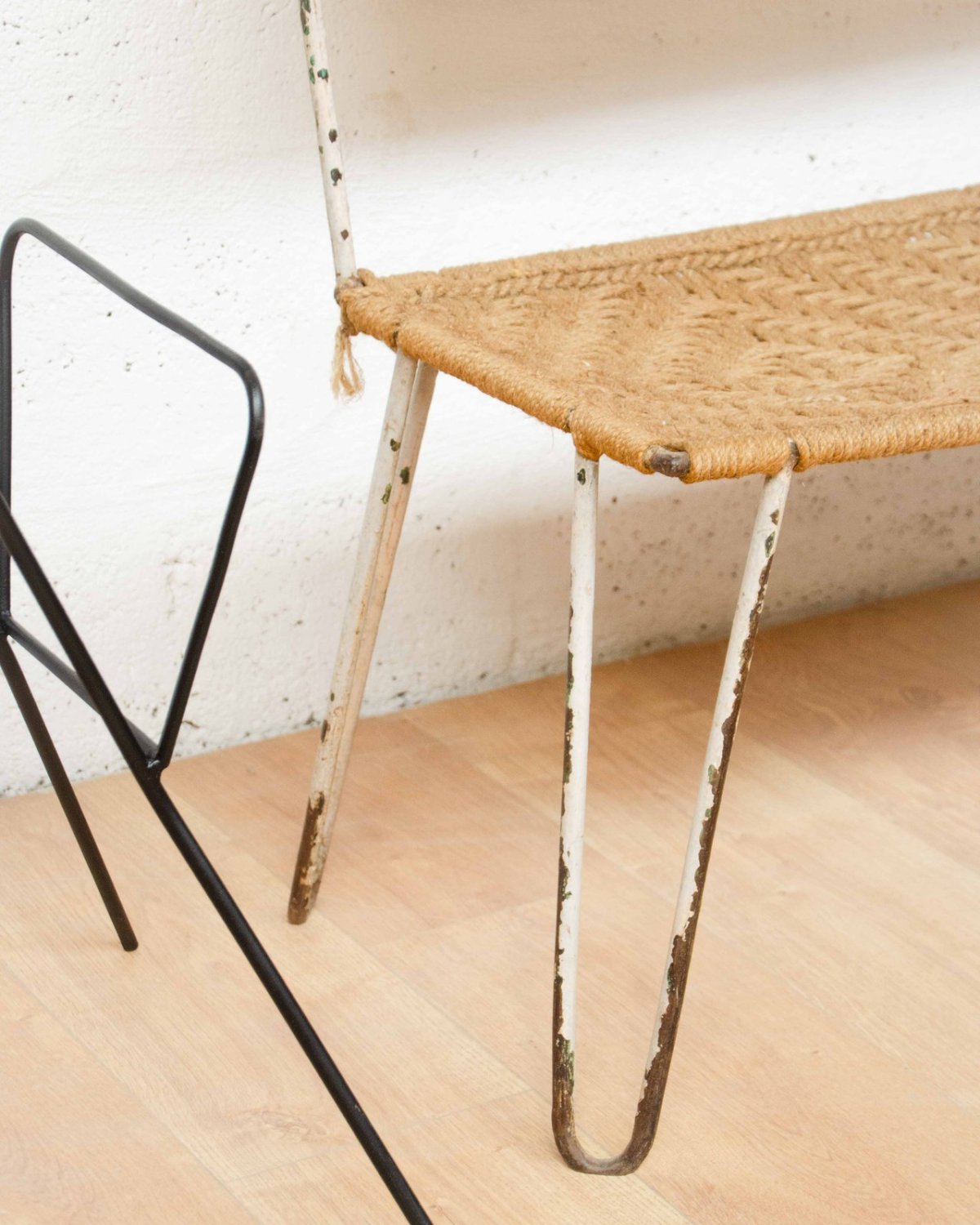
This beige and brown jute and iron bench brings a soft countryside touch with the simple elegance of a vintage piece. Handwoven in India, it combines a jute seat and backrest with a patinated beige iron frame, offering a natural and graphic presence. Its compact size and comfortable seating make it an easy bench to slip into an entryway, at the foot of a bed, or along a wall in the living room. The raw materials pair beautifully with light wood, washed linen, or some handcrafted ceramics. In a veranda, it will welcome a cushion in ecru canvas and a basket of throws. Length: 92 cm Width: 36.5 cm Height: 76 cm Seat Height: 40 cm Seat Width: 92 cm Seat Depth: 36.5 cm Little history of the bench: Appearing in the 17th century, the bench is the elegant and padded version of the stool, designed for the salons of high society. Unlike the sofa, it is distinguished by the absence of a backrest or arms, favoring an airy silhouette and a Louis XVI or Empire style. Whether called a "piano bench" or "end of bed," it fits today into a boudoir or vintage aesthetic, remaining the ideal piece to dress a window or an entryway.
Réf :
#413599
Brand / From : Debongout
Related Products


Comments
Martine, the Indian jute bench No. 66
459€
75002 Paris
Ce site contient des liens d’affiliation pour lesquels je peux recevoir une compensation.
Description
This beige and brown jute and iron bench brings a soft countryside touch with the simple elegance of a vintage piece. Handwoven in India, it combines a jute seat and backrest with a patinated beige iron frame, offering a natural and graphic presence. Its compact size and comfortable seating make it an easy bench to slip into an entryway, at the foot of a bed, or along a wall in the living room. The raw materials pair beautifully with light wood, washed linen, or some handcrafted ceramics. In a veranda, it will welcome a cushion in ecru canvas and a basket of throws. Length: 92 cm Width: 36.5 cm Height: 76 cm Seat Height: 40 cm Seat Width: 92 cm Seat Depth: 36.5 cm Little history of the bench: Appearing in the 17th century, the bench is the elegant and padded version of the stool, designed for the salons of high society. Unlike the sofa, it is distinguished by the absence of a backrest or arms, favoring an airy silhouette and a Louis XVI or Empire style. Whether called a "piano bench" or "end of bed," it fits today into a boudoir or vintage aesthetic, remaining the ideal piece to dress a window or an entryway.
Réf :
#413599
Brand / From : Debongout