 English
 Français


Description
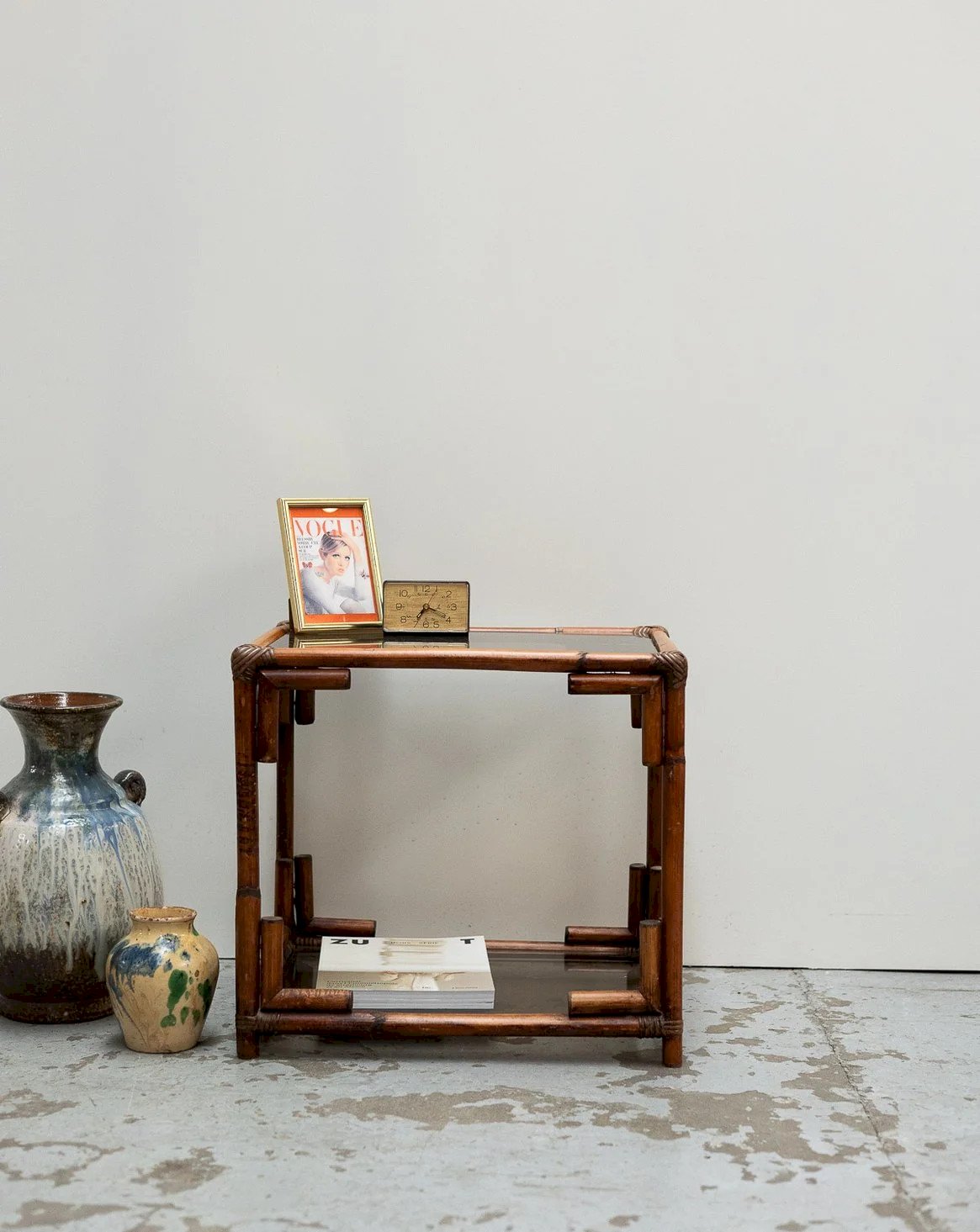
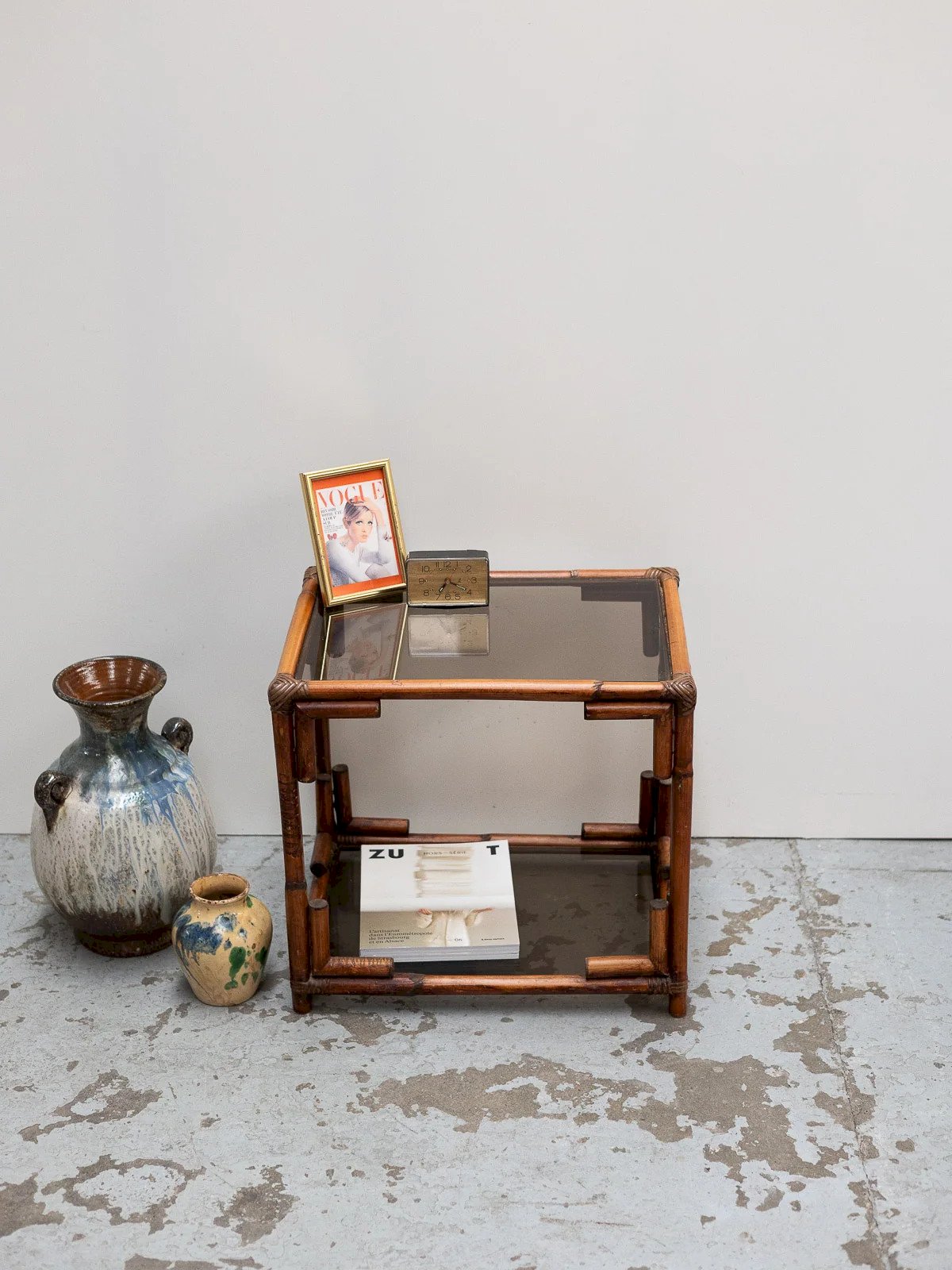
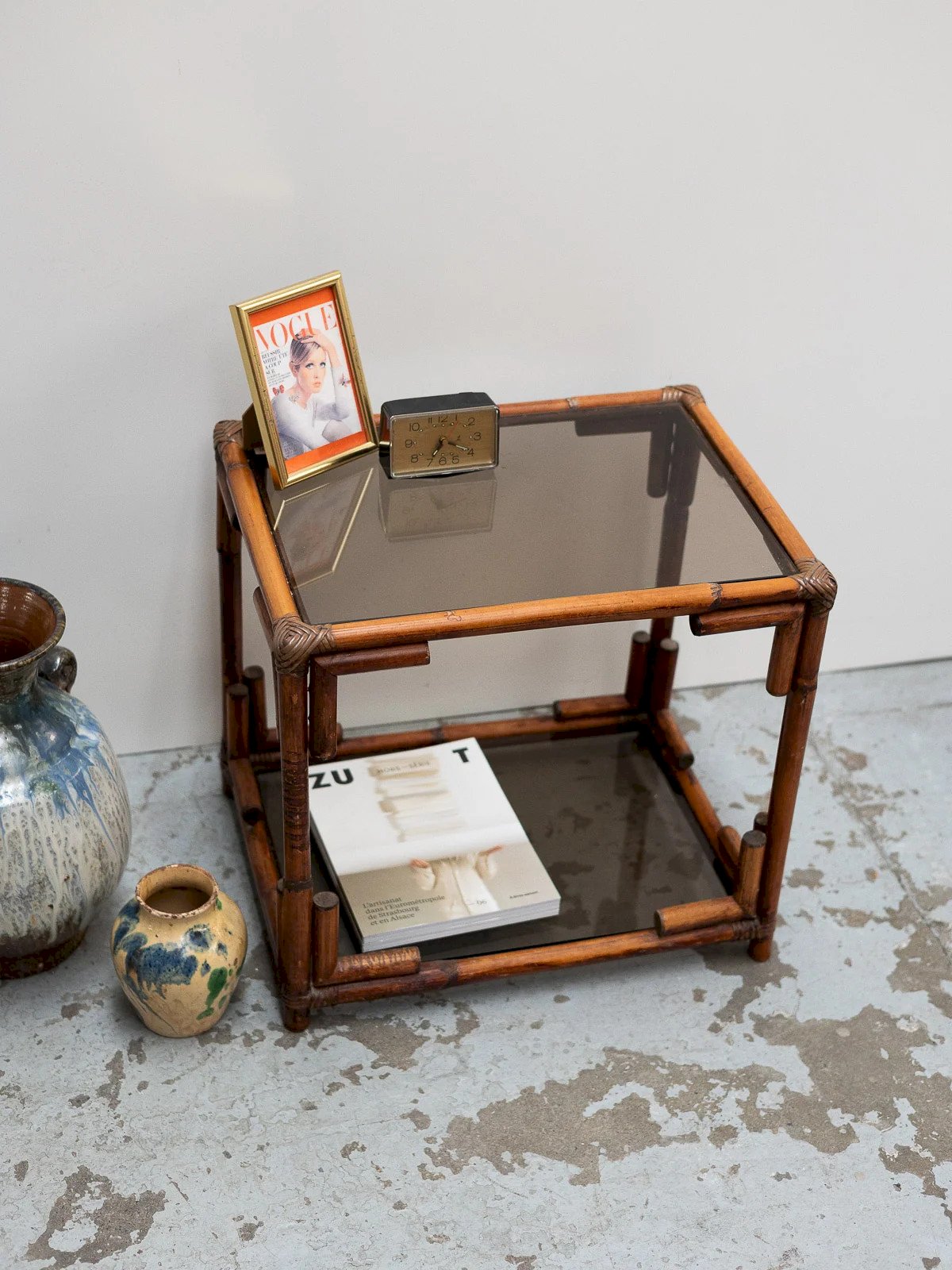
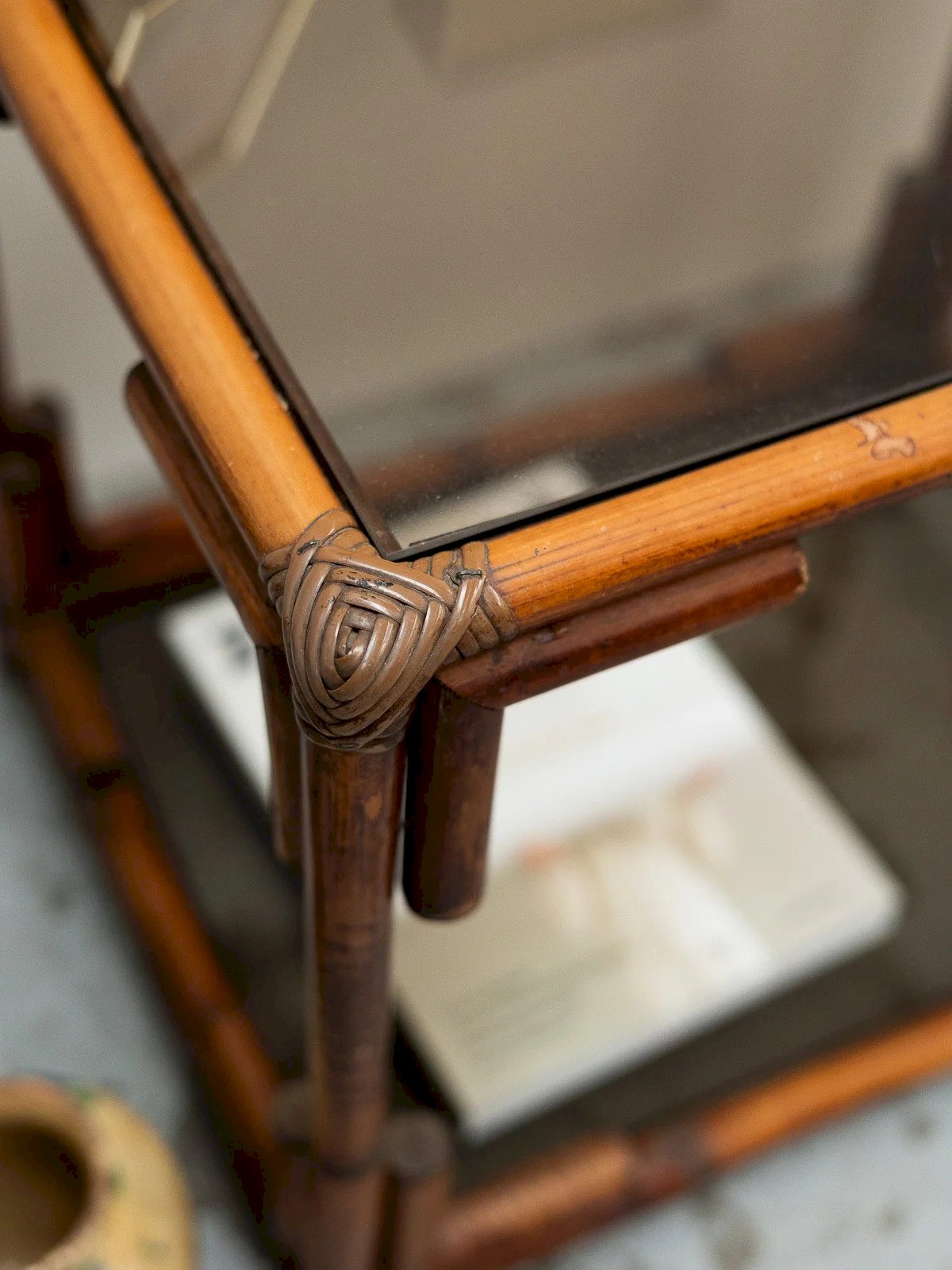
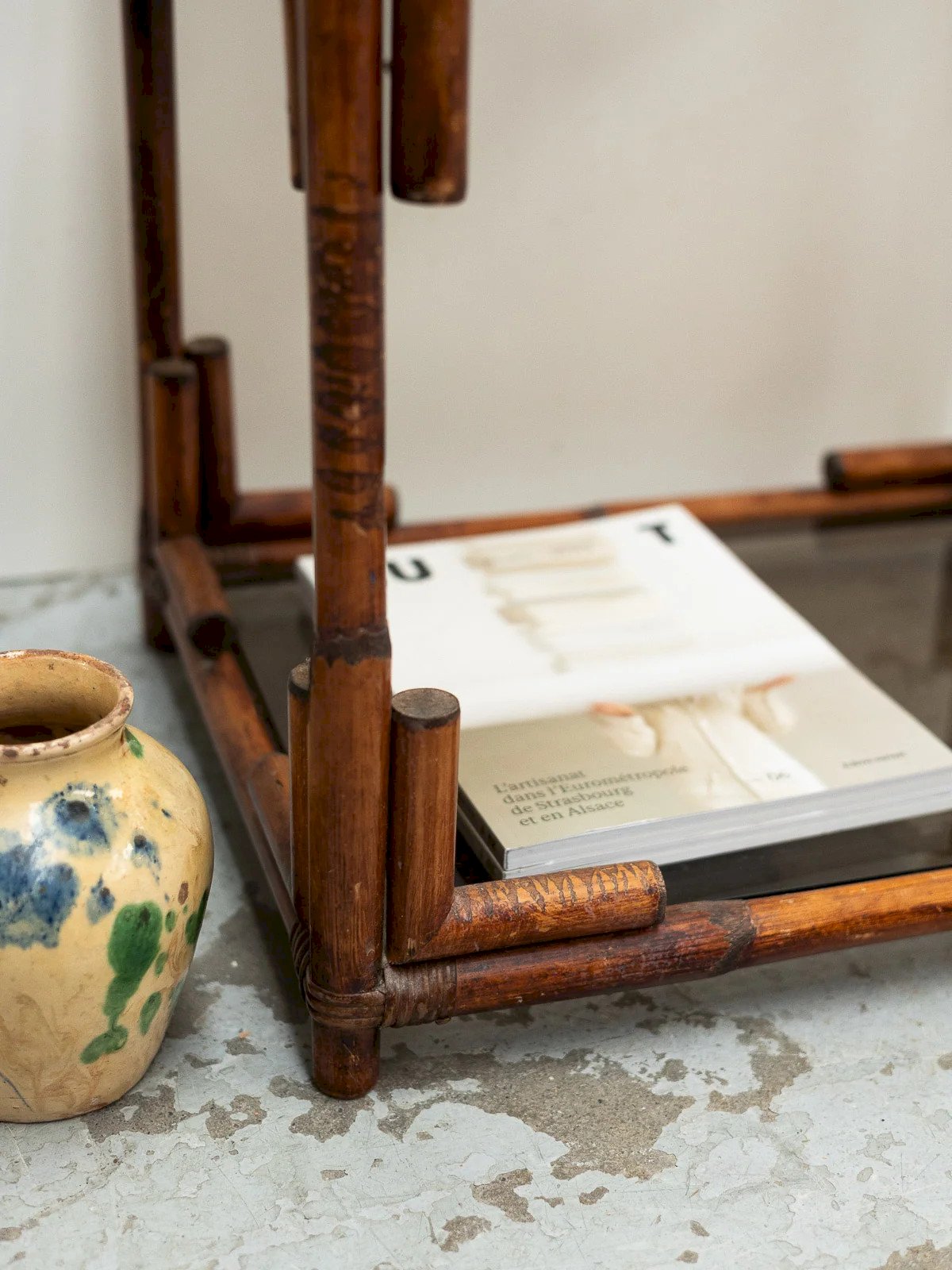
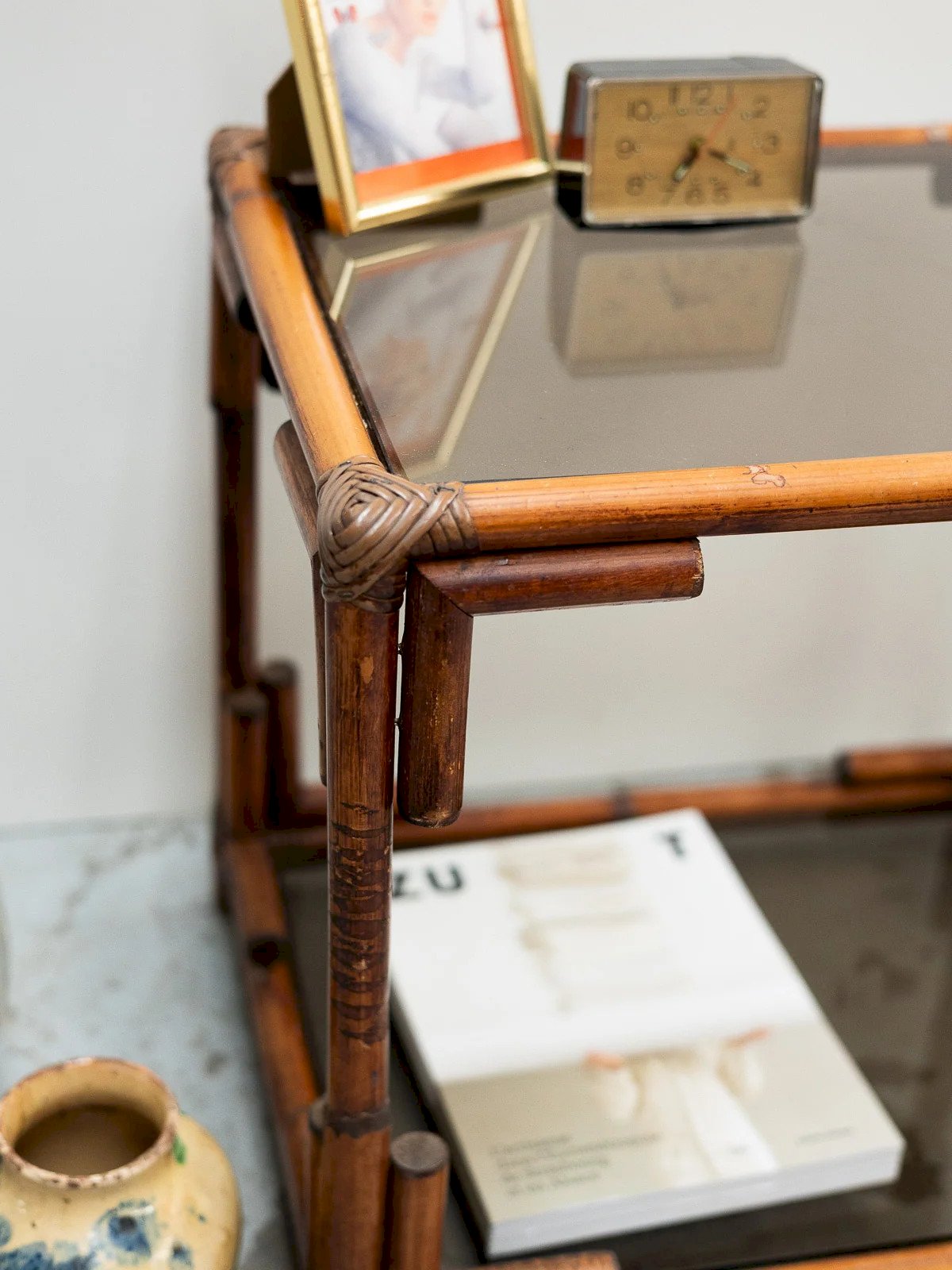
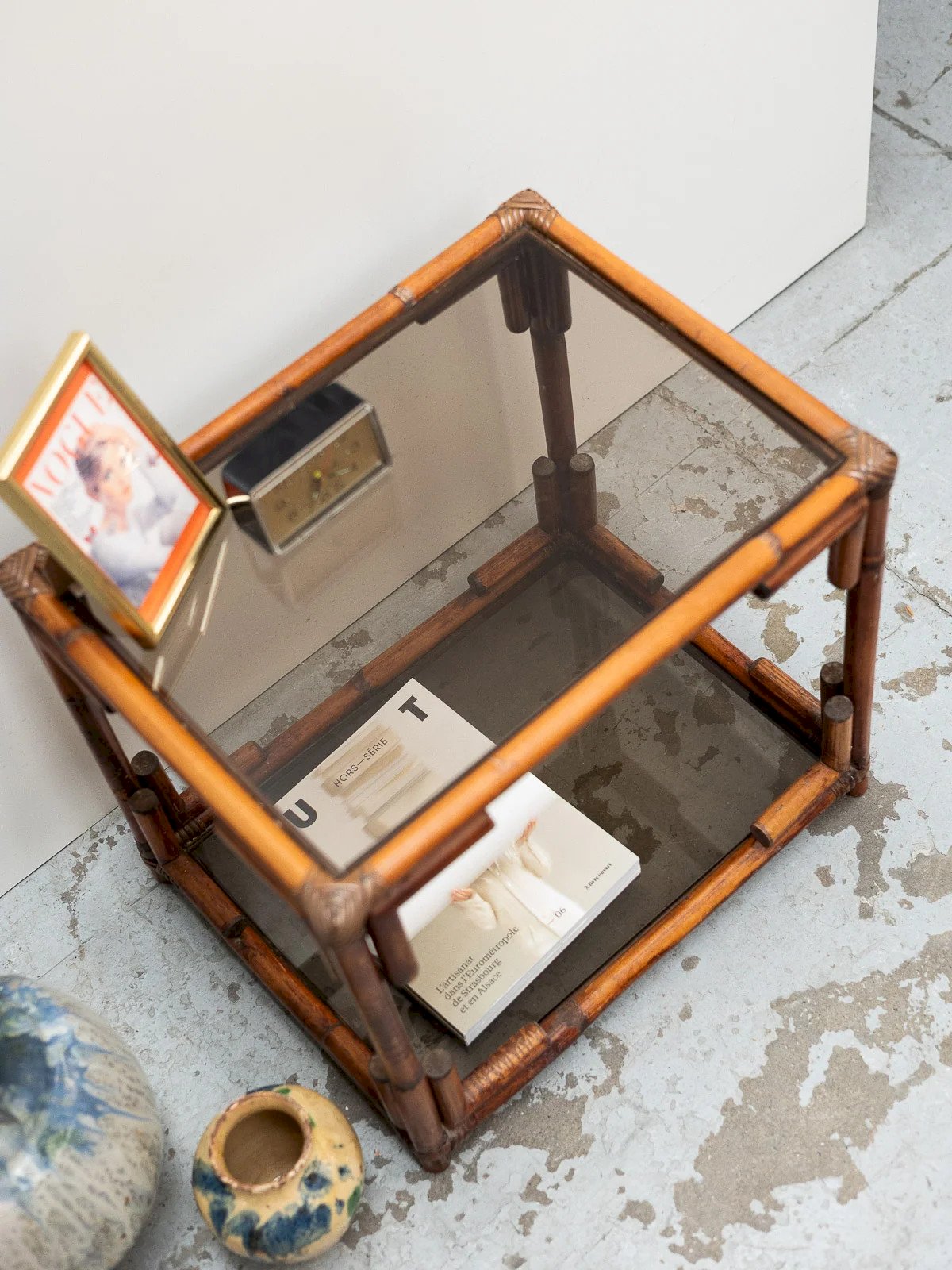
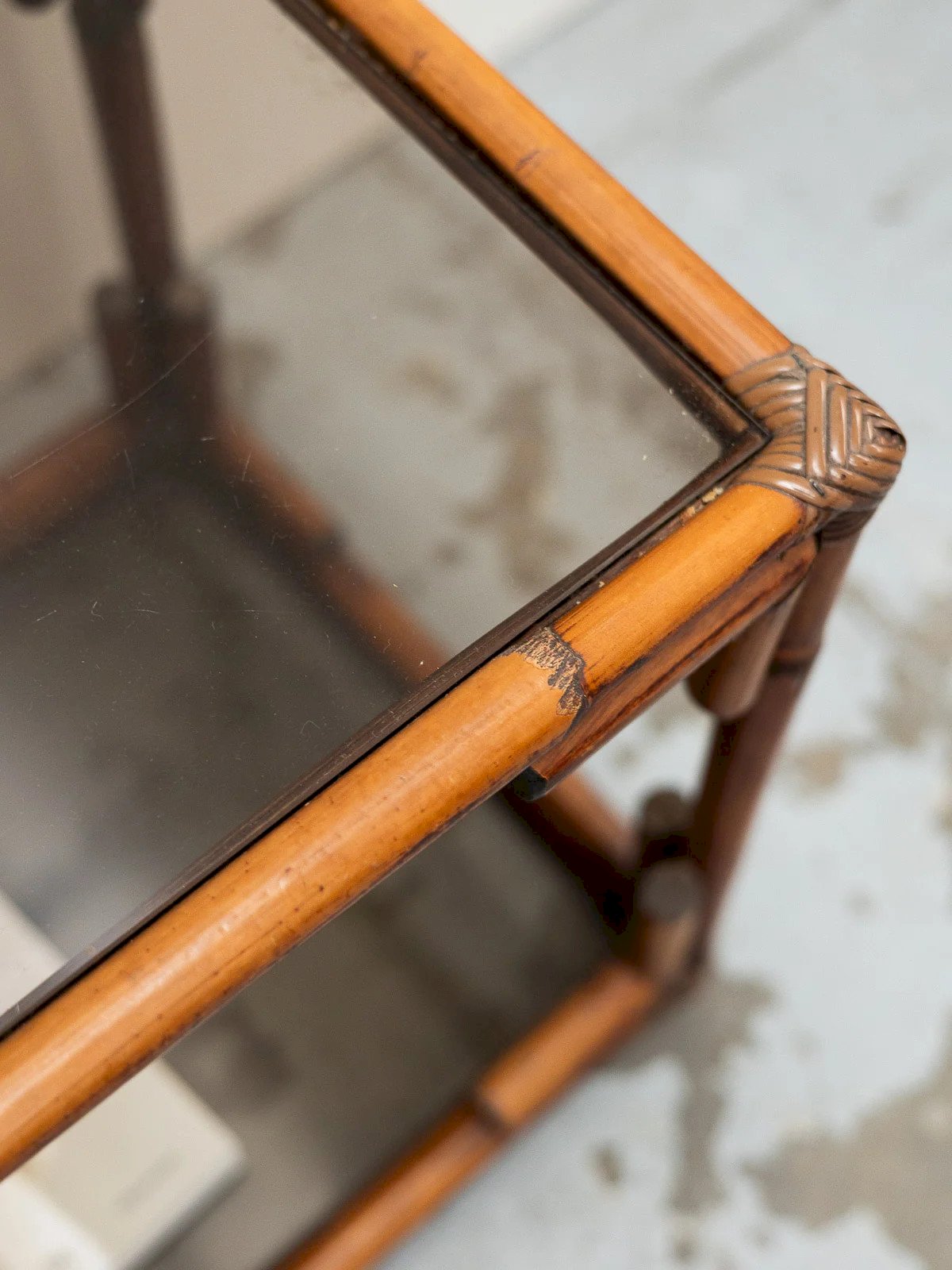
This dark wood wicker and glass coffee table fits naturally into a country interior, blending woven material with a transparent top. Its assembly combines the visual lightness of glass with the texture of wicker, resulting in a carefully crafted and unique second-hand piece. It easily slides into a living room to hold a book, a catch-all, or a cup, while keeping the center of the room clear. Its cubic format allows it to complement a linen armchair, a ceramic lamp, or a woven rug without weighing down the overall look. On its top, a bouquet of fresh flowers and a few beautiful books create a simple and elegant scene. Length: 49 cm Width: 36 cm Height: 45 cm A brief history of the coffee table Unlike dining tables, the coffee table really only emerged in the early 20th century, with the evolution of living rooms towards more comfort and relaxation. Its structure, intentionally low to align with the height of armchair seating, is inspired by Eastern tea tables and 19th-century coffee stands. Known as a "living room table" or "cocktail table," it is defined by its generous top supported by a short and sturdy base.
Réf :
#414098
Brand / From : Debongout
Related Products




Comments
Leonie, the wicker coffee table No. 1607
169€
75002 Paris
Ce site contient des liens d’affiliation pour lesquels je peux recevoir une compensation.
Description
This dark wood wicker and glass coffee table fits naturally into a country interior, blending woven material with a transparent top. Its assembly combines the visual lightness of glass with the texture of wicker, resulting in a carefully crafted and unique second-hand piece. It easily slides into a living room to hold a book, a catch-all, or a cup, while keeping the center of the room clear. Its cubic format allows it to complement a linen armchair, a ceramic lamp, or a woven rug without weighing down the overall look. On its top, a bouquet of fresh flowers and a few beautiful books create a simple and elegant scene. Length: 49 cm Width: 36 cm Height: 45 cm A brief history of the coffee table Unlike dining tables, the coffee table really only emerged in the early 20th century, with the evolution of living rooms towards more comfort and relaxation. Its structure, intentionally low to align with the height of armchair seating, is inspired by Eastern tea tables and 19th-century coffee stands. Known as a "living room table" or "cocktail table," it is defined by its generous top supported by a short and sturdy base.
Réf :
#414098
Brand / From : Debongout