 English
 Français


Description
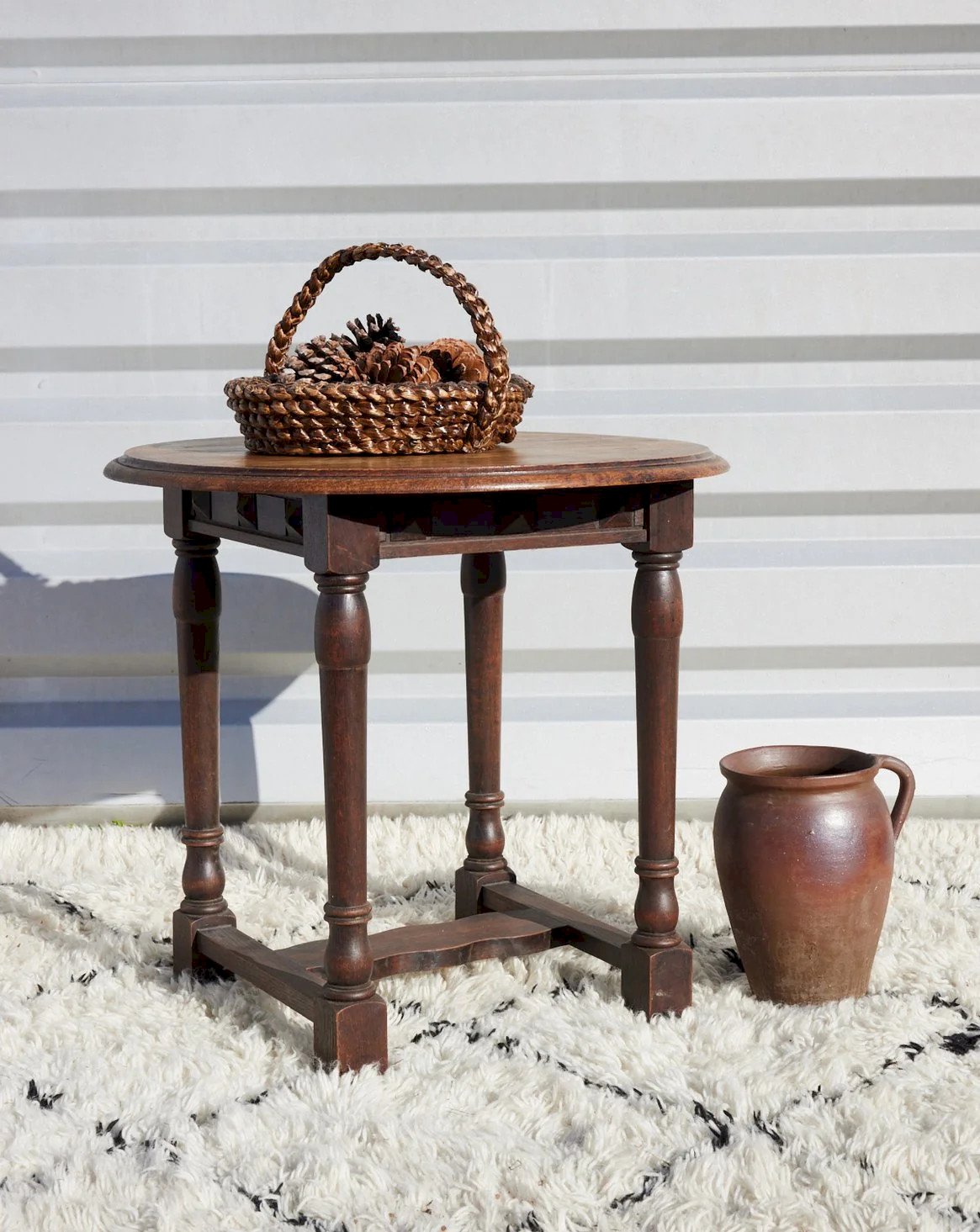
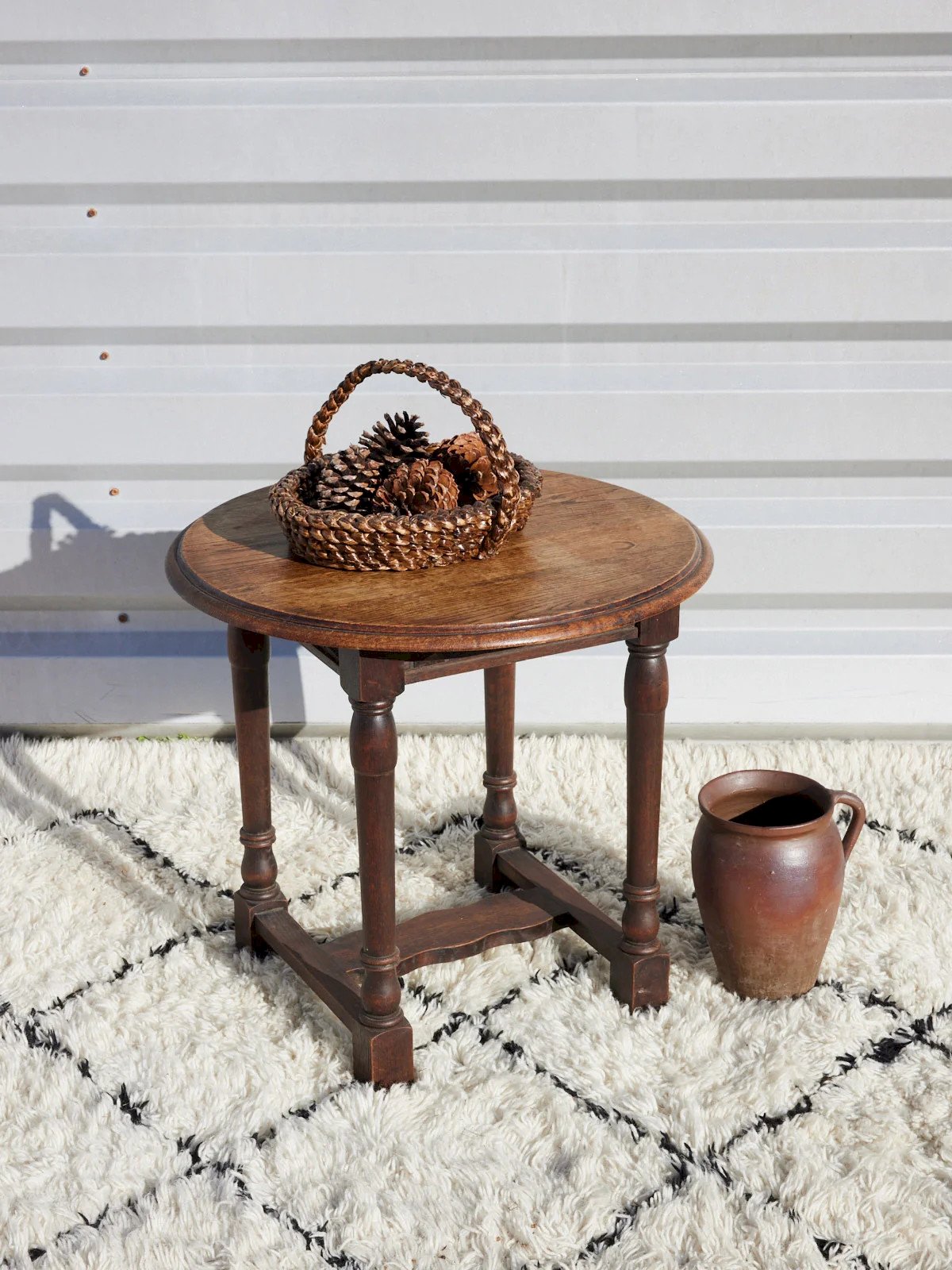
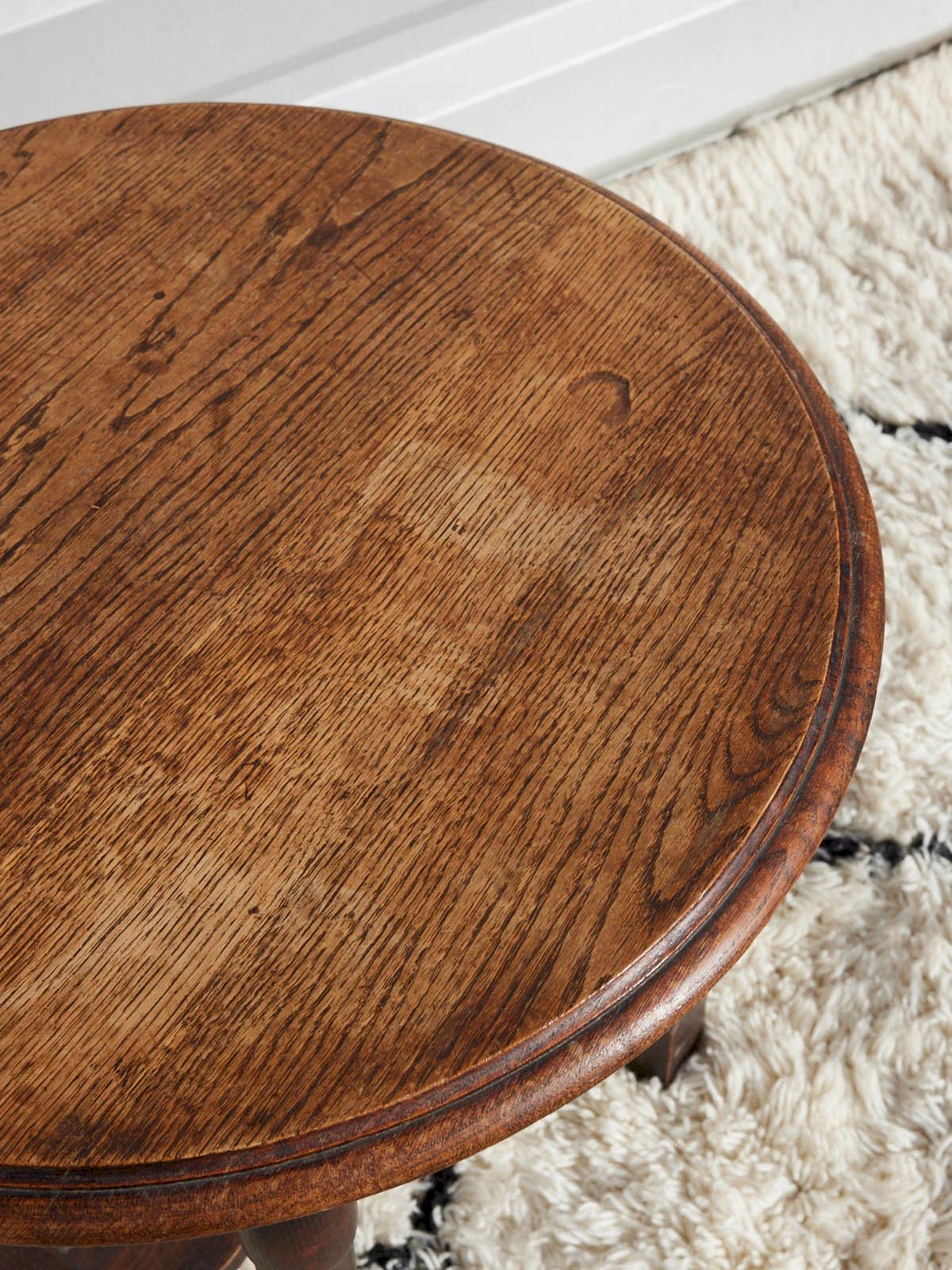
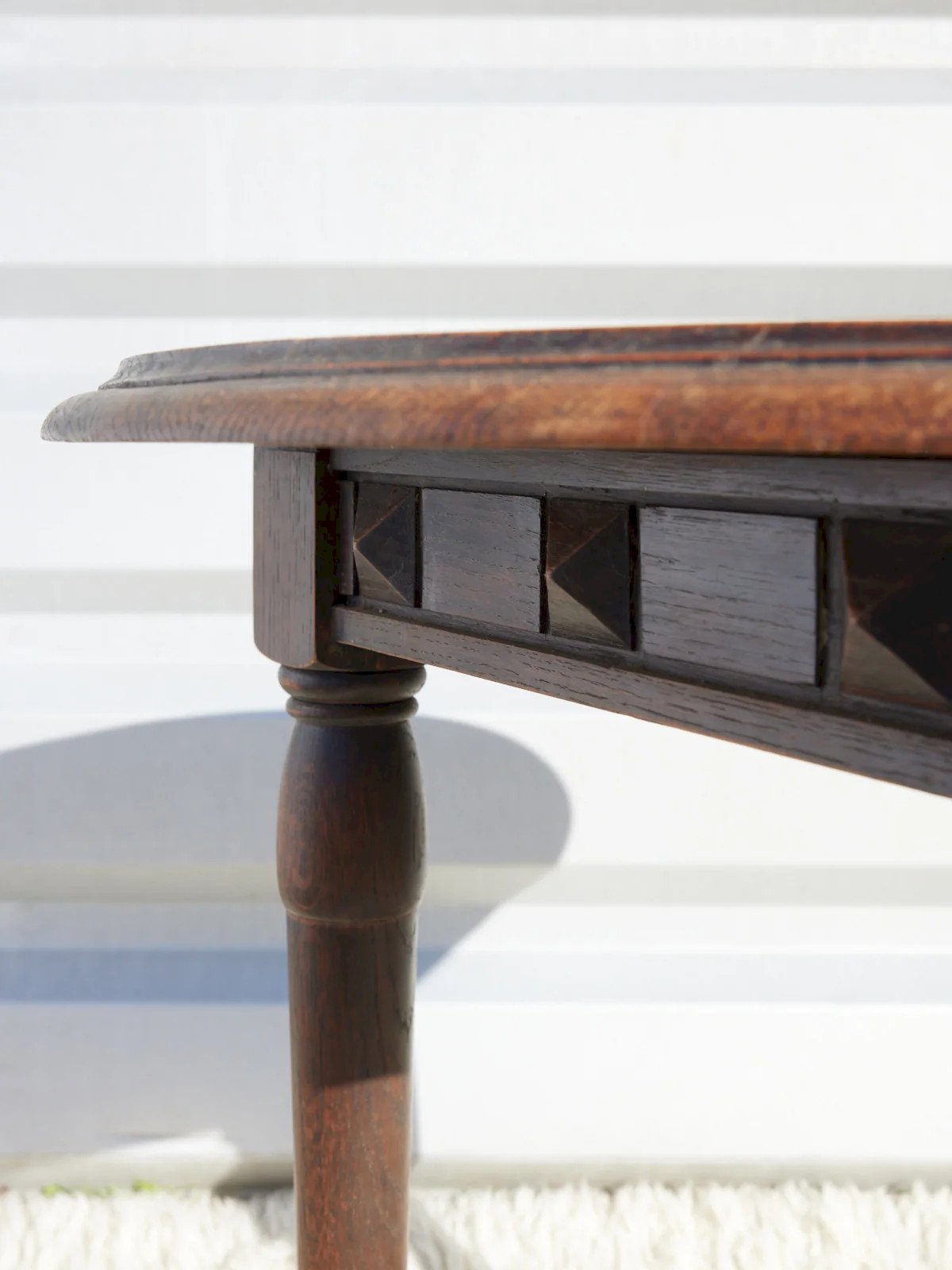
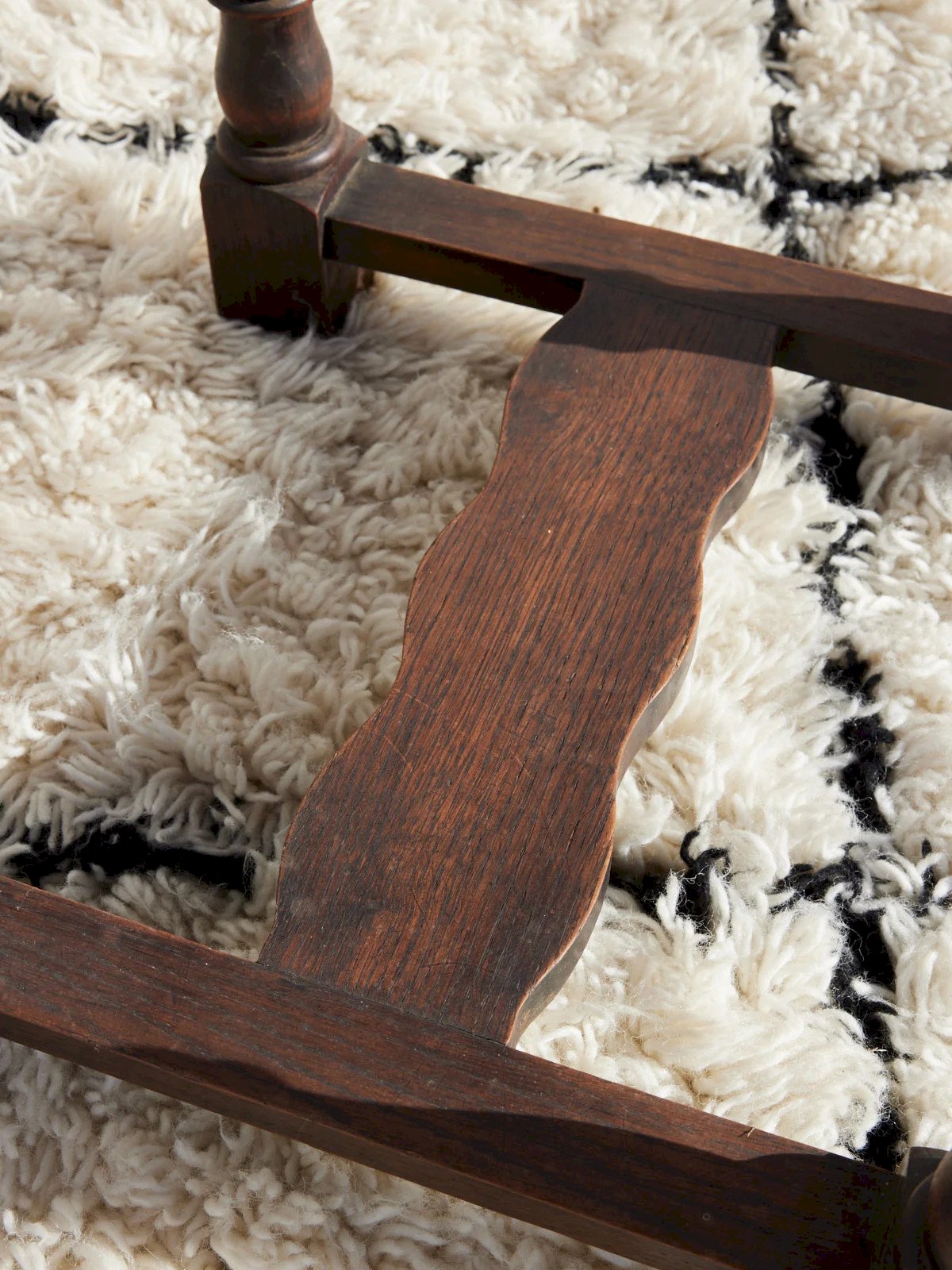
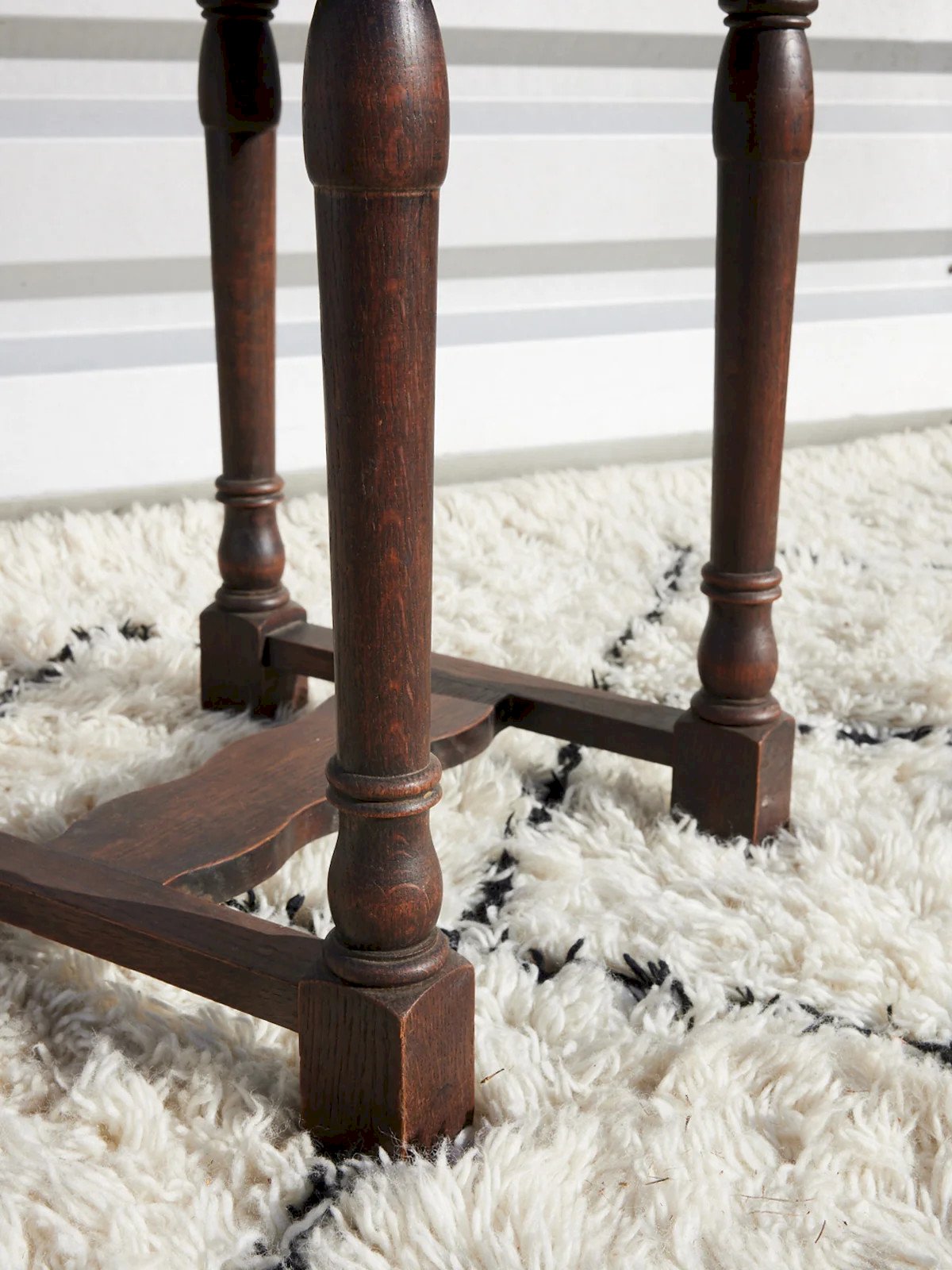
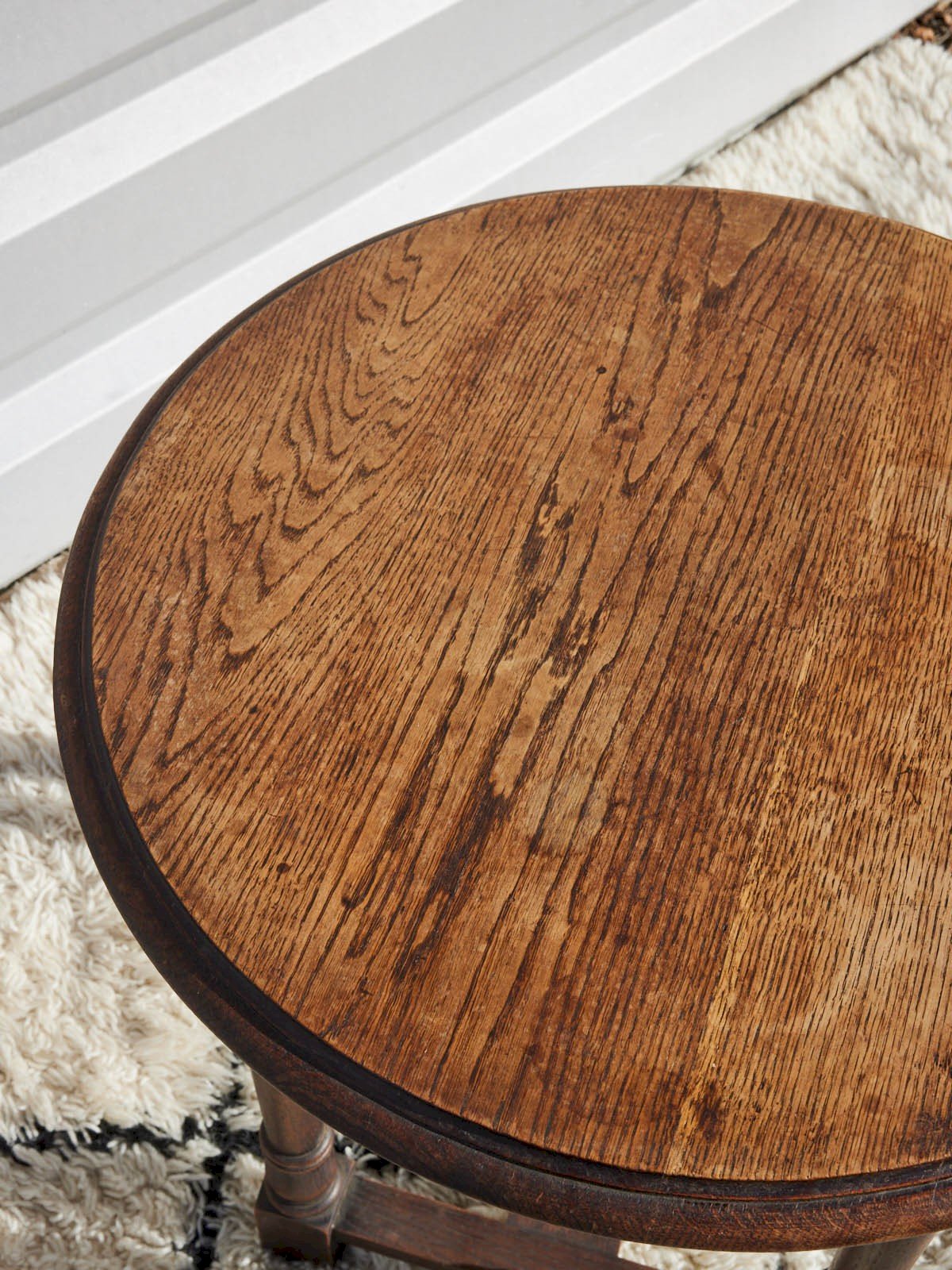
With its raw wood in a dark wood tone and its four legs in a brutalist spirit, this round coffee table adds a touch of chic countryside to the living room. The wood gives it a warm presence, while the circular top softens the composition and easily accommodates books, a vase, or a cup of coffee. Its height allows it to be paired with a sofa to create an elegant and functional conversation corner. Found through antique hunting, it fits well in both a sober interior and a more rustic decor, where it interacts with linen, ceramics, or a textured rug. In daily use, it can hold a stack of beautiful books and a lamp placed next to the sofa. Height: 61 cm Diameter: 65 cm A brief history of the coffee table Unlike dining tables, the coffee table only really appeared in the early 20th century with the evolution of living rooms towards greater comfort and relaxation. Its structure, purposely low to align with the seats of armchairs, takes inspiration from Eastern tea tables and 19th-century coffee supports. Known as a "living room table" or "cocktail table," it is defined by its generous top supported by a short and sturdy base.
Réf :
#413891
Brand / From : Debongout
Related Products
Comments
Léonie, the small coffee table in raw wood N°1579
119€
75002 Paris
Ce site contient des liens d’affiliation pour lesquels je peux recevoir une compensation.
Description
With its raw wood in a dark wood tone and its four legs in a brutalist spirit, this round coffee table adds a touch of chic countryside to the living room. The wood gives it a warm presence, while the circular top softens the composition and easily accommodates books, a vase, or a cup of coffee. Its height allows it to be paired with a sofa to create an elegant and functional conversation corner. Found through antique hunting, it fits well in both a sober interior and a more rustic decor, where it interacts with linen, ceramics, or a textured rug. In daily use, it can hold a stack of beautiful books and a lamp placed next to the sofa. Height: 61 cm Diameter: 65 cm A brief history of the coffee table Unlike dining tables, the coffee table only really appeared in the early 20th century with the evolution of living rooms towards greater comfort and relaxation. Its structure, purposely low to align with the seats of armchairs, takes inspiration from Eastern tea tables and 19th-century coffee supports. Known as a "living room table" or "cocktail table," it is defined by its generous top supported by a short and sturdy base.
Réf :
#413891
Brand / From : Debongout