 English
 Français


Description
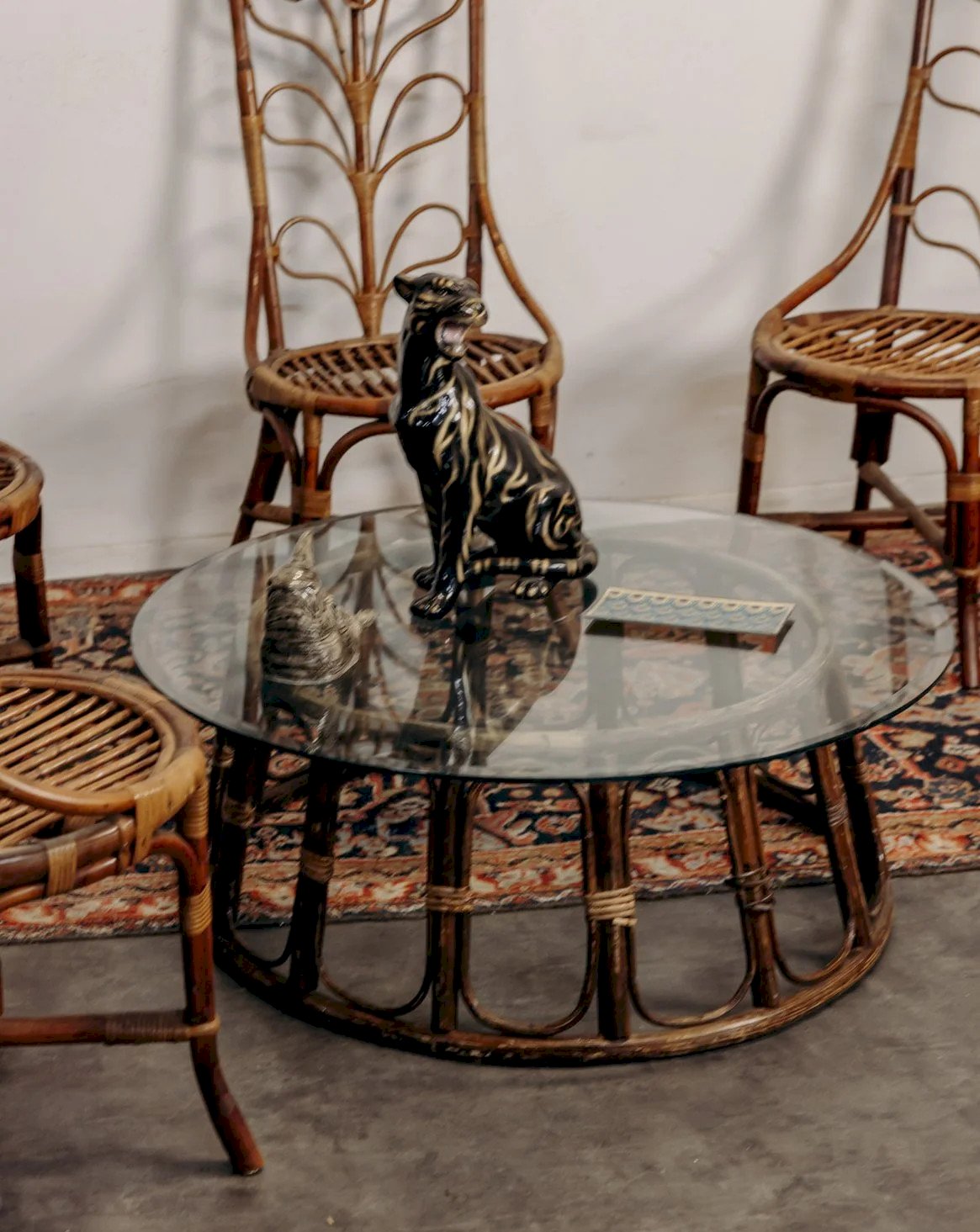
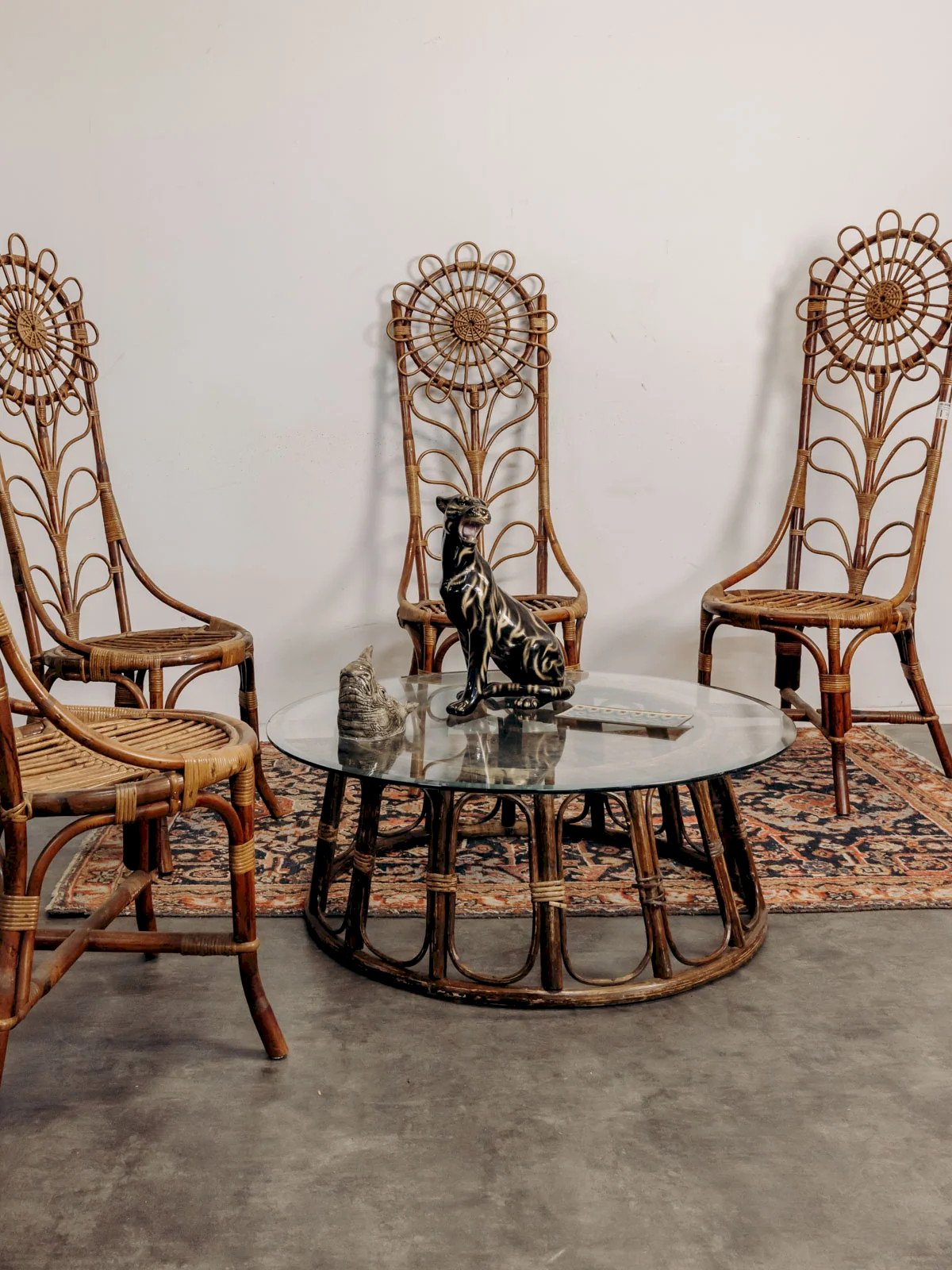
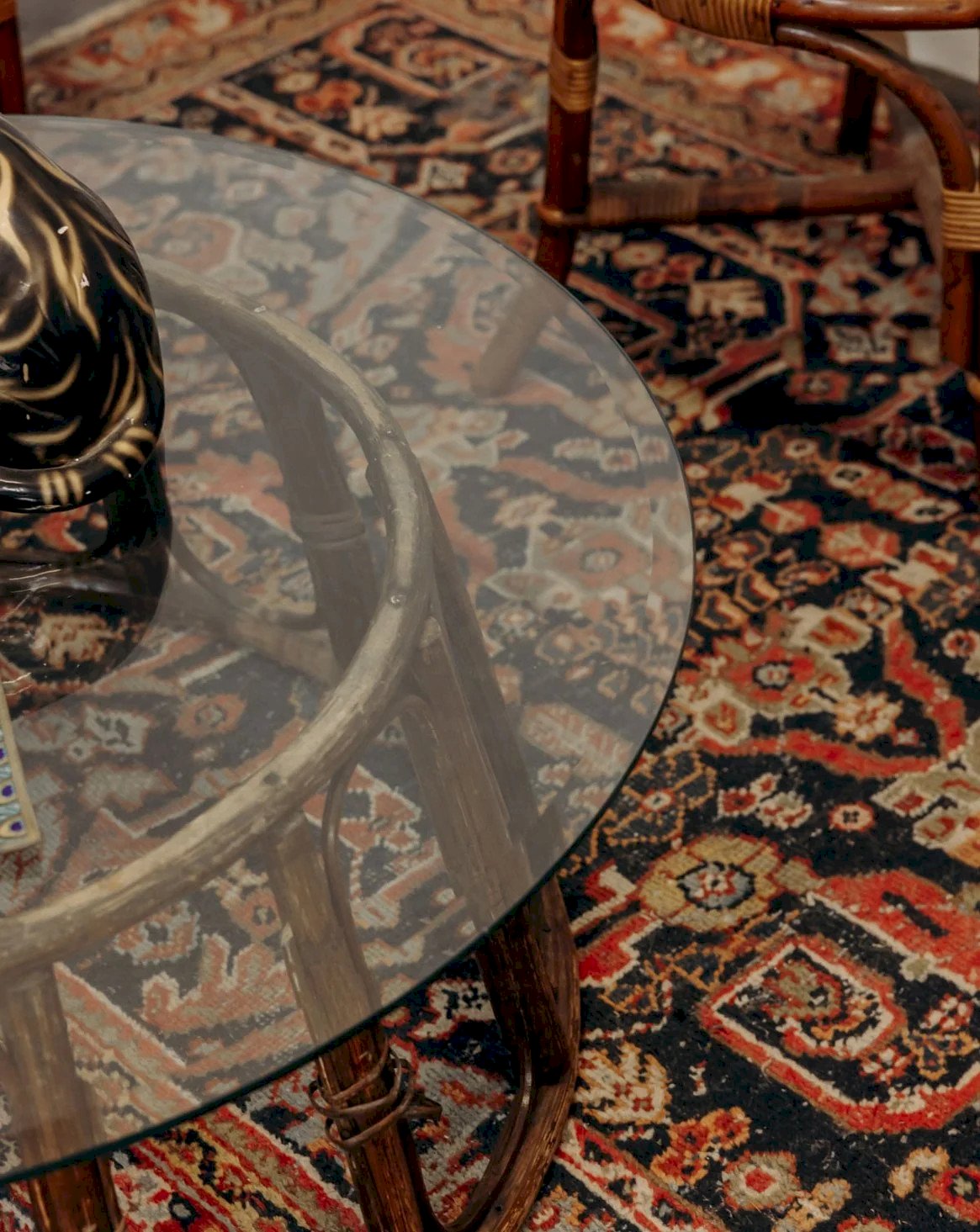
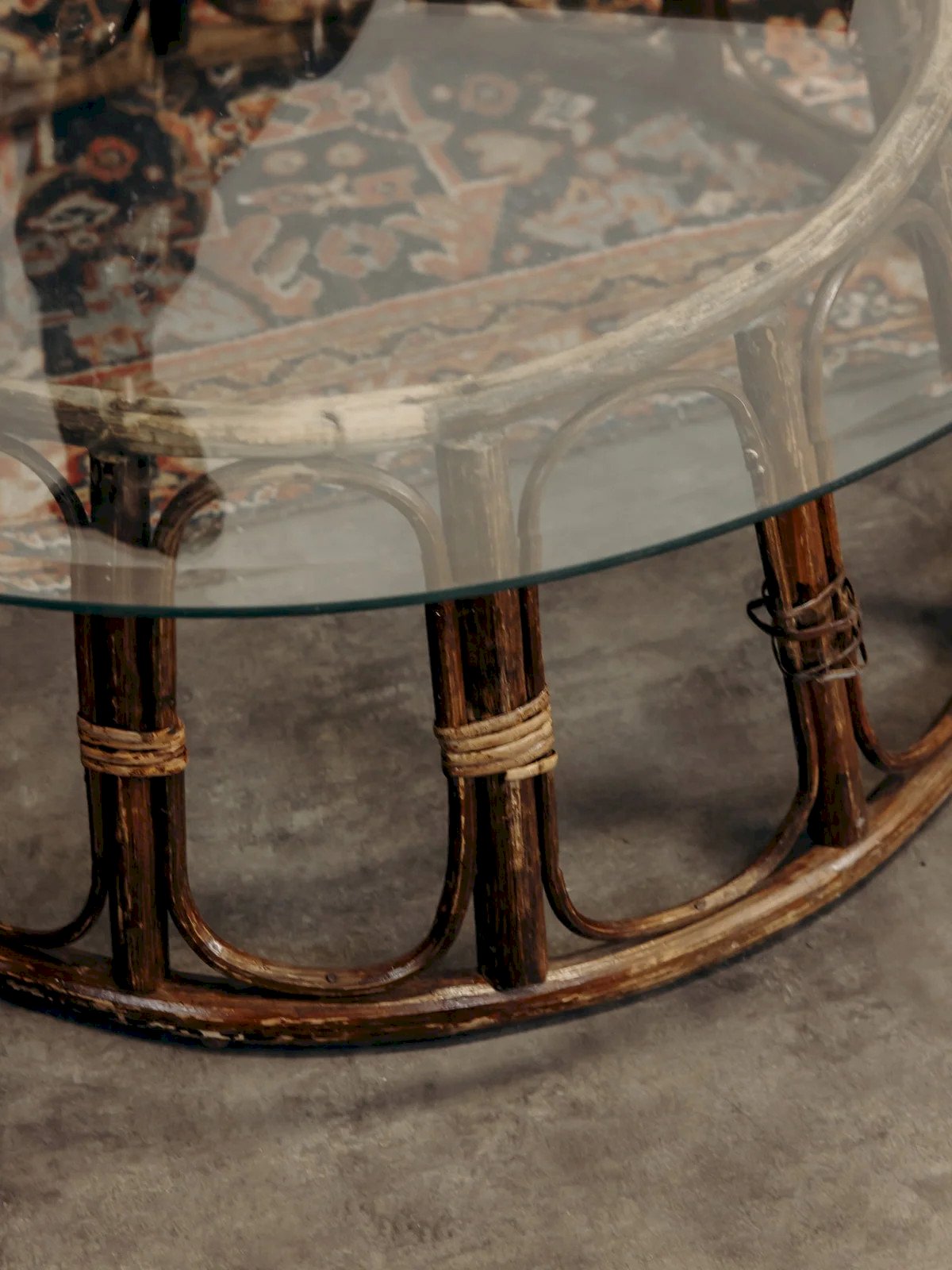
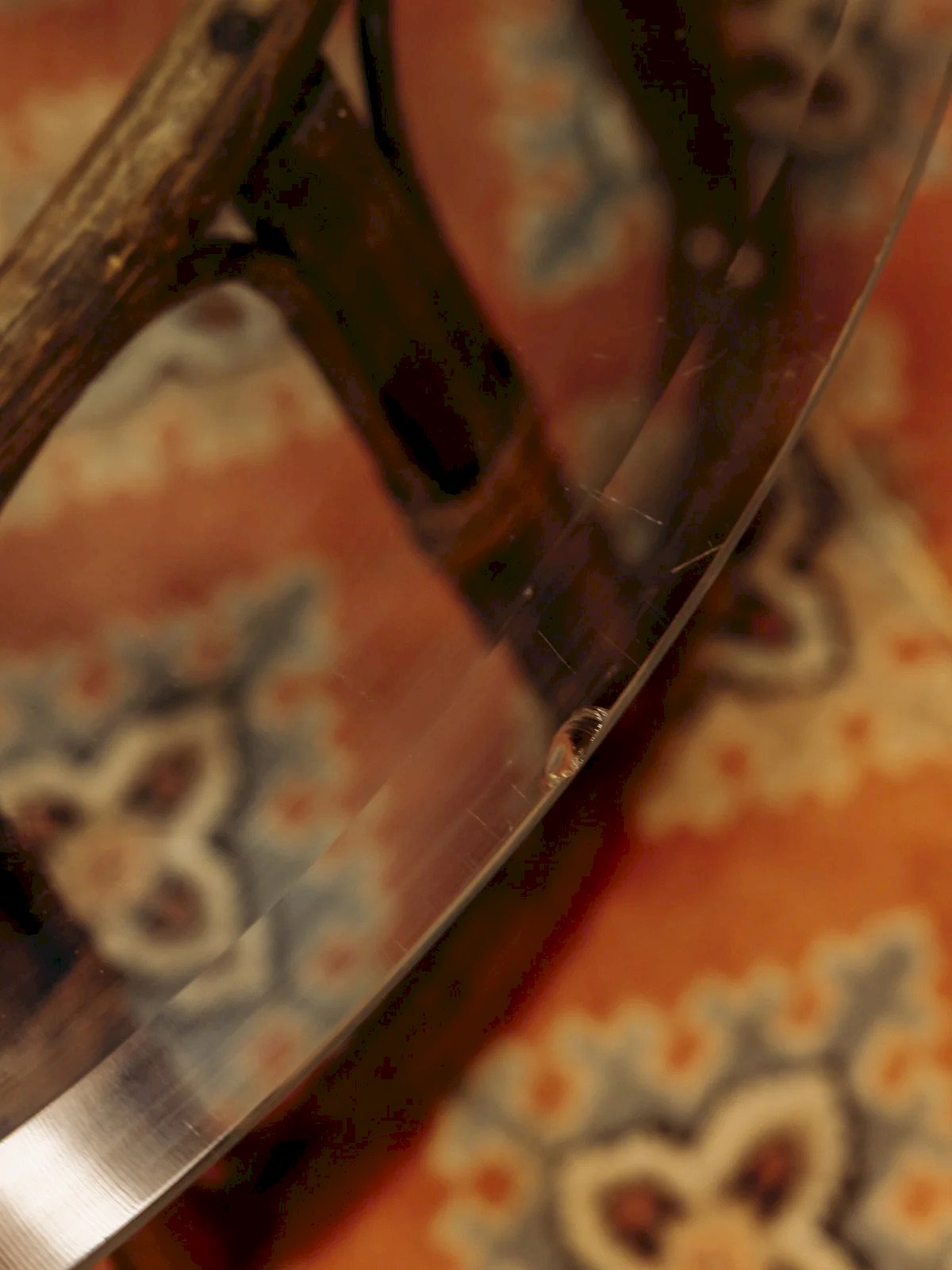
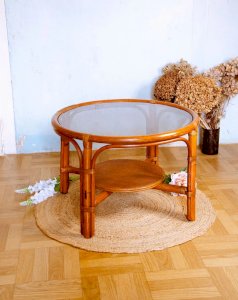
This vintage coffee table plays with the lightness of transparent glass and the warmth of bamboo, embodying a very elegant countryside spirit. Its top reveals the light wood-toned bamboo structure, providing a soft presence in the living room without overwhelming the space. Placed in front of a sofa, it discreetly holds a book, a lamp, or a few glasses. Its circular design is particularly suited to a convivial room, where natural materials interact with seating in linen or a rug made of plant fibers. On a light floor, it highlights a bouquet of dried flowers and a few carefully stacked magazines. It shows signs of wear, including a slight chip on the glass top. Height: 33 cm Diameter: 92 cm A brief history of the coffee table Unlike dining tables, the coffee table only truly emerged in the early 20th century with the evolution of living rooms towards more comfort and relaxation. Its intentionally low structure aligns with the height of armchair seats, drawing inspiration from Eastern tea tables and 19th-century coffee stands. Known as a "salon table" or "cocktail table," it is defined by its generous top supported by a short and sturdy base.
Réf :
#413823
Brand / From : Debongout
Related Products

Comments
Leonie, the glass and bamboo coffee table N°1170
229€
75002 Paris
Ce site contient des liens d’affiliation pour lesquels je peux recevoir une compensation.
Description
This vintage coffee table plays with the lightness of transparent glass and the warmth of bamboo, embodying a very elegant countryside spirit. Its top reveals the light wood-toned bamboo structure, providing a soft presence in the living room without overwhelming the space. Placed in front of a sofa, it discreetly holds a book, a lamp, or a few glasses. Its circular design is particularly suited to a convivial room, where natural materials interact with seating in linen or a rug made of plant fibers. On a light floor, it highlights a bouquet of dried flowers and a few carefully stacked magazines. It shows signs of wear, including a slight chip on the glass top. Height: 33 cm Diameter: 92 cm A brief history of the coffee table Unlike dining tables, the coffee table only truly emerged in the early 20th century with the evolution of living rooms towards more comfort and relaxation. Its intentionally low structure aligns with the height of armchair seats, drawing inspiration from Eastern tea tables and 19th-century coffee stands. Known as a "salon table" or "cocktail table," it is defined by its generous top supported by a short and sturdy base.
Réf :
#413823
Brand / From : Debongout