 English
 Français


Description
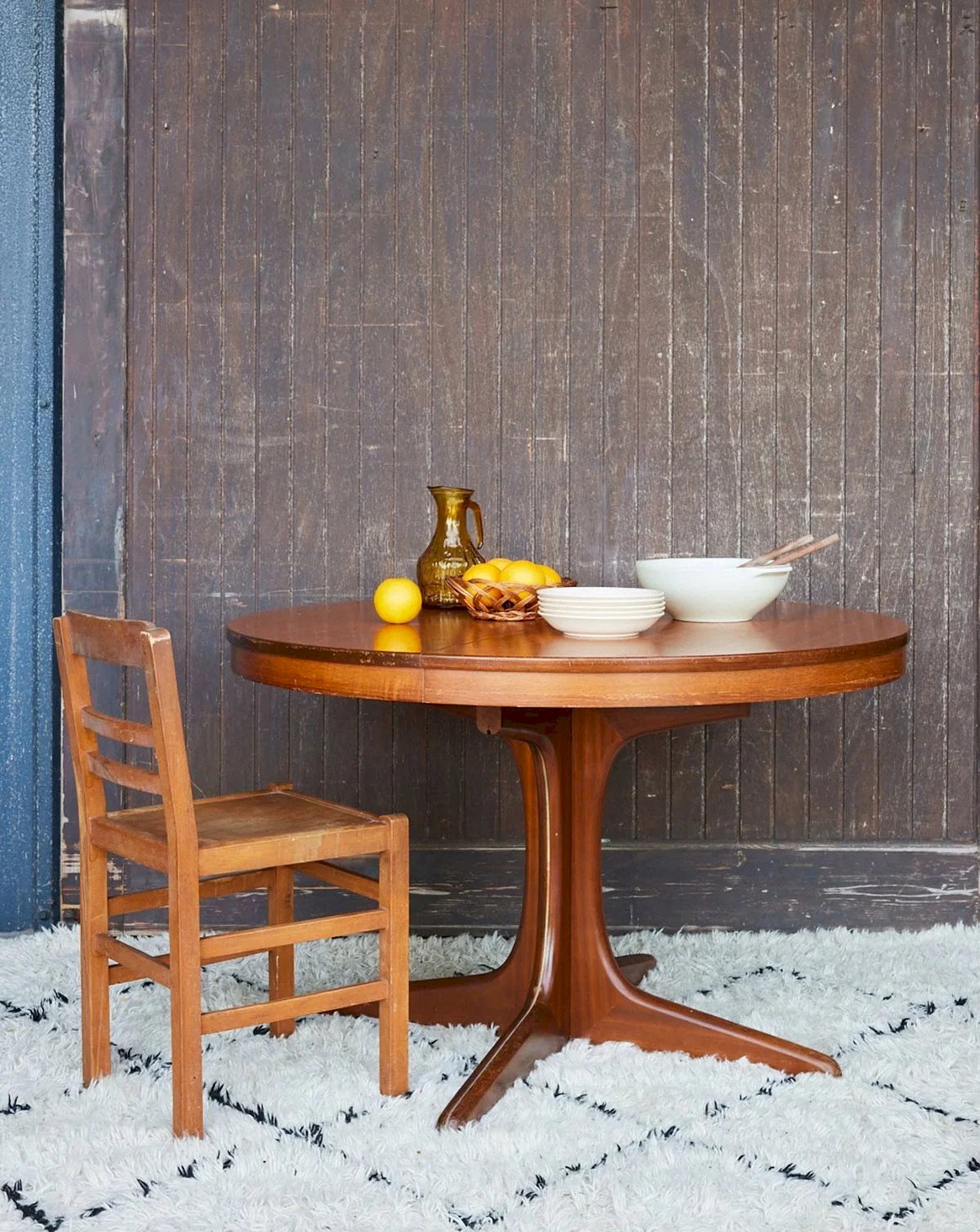
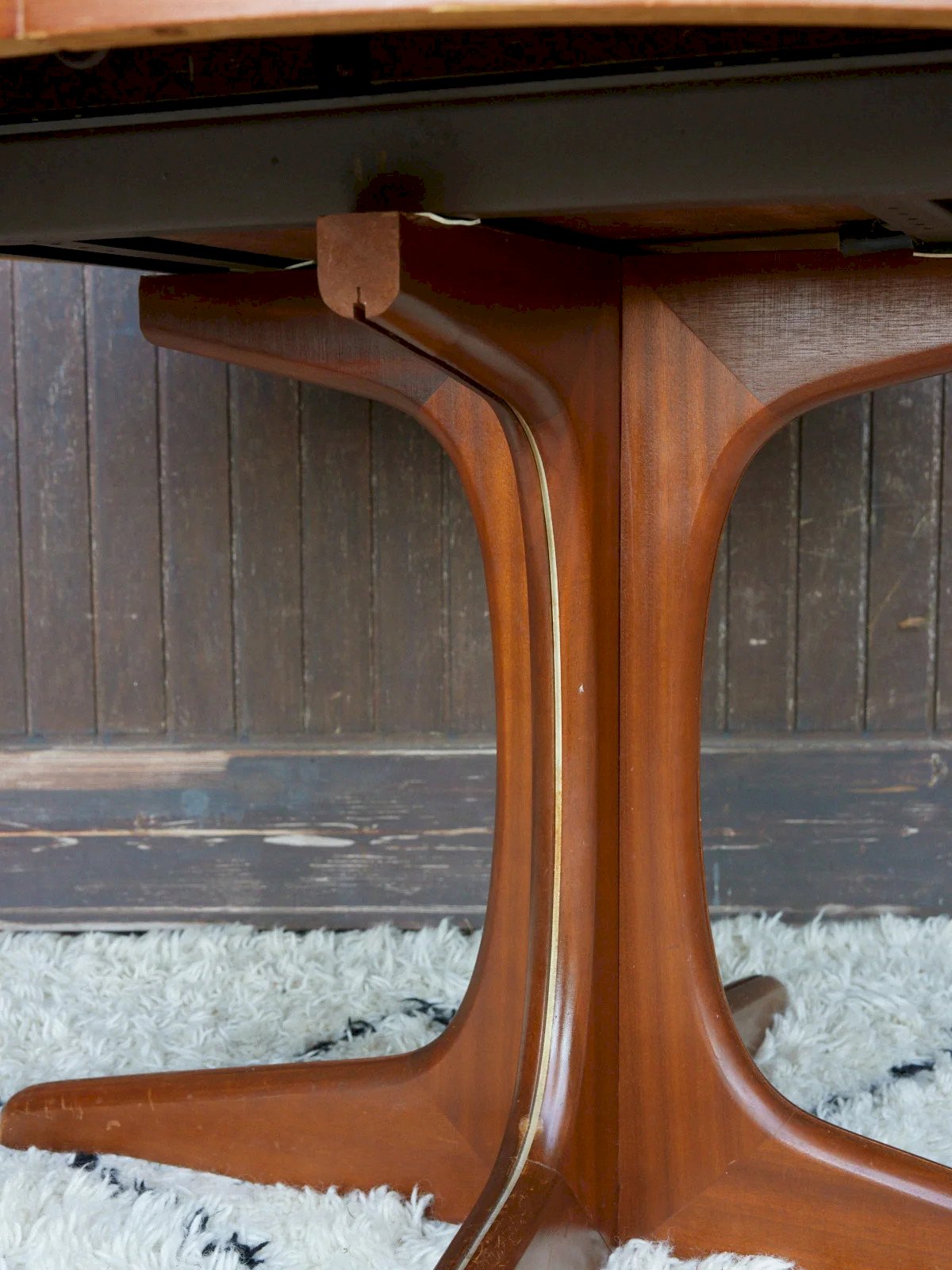
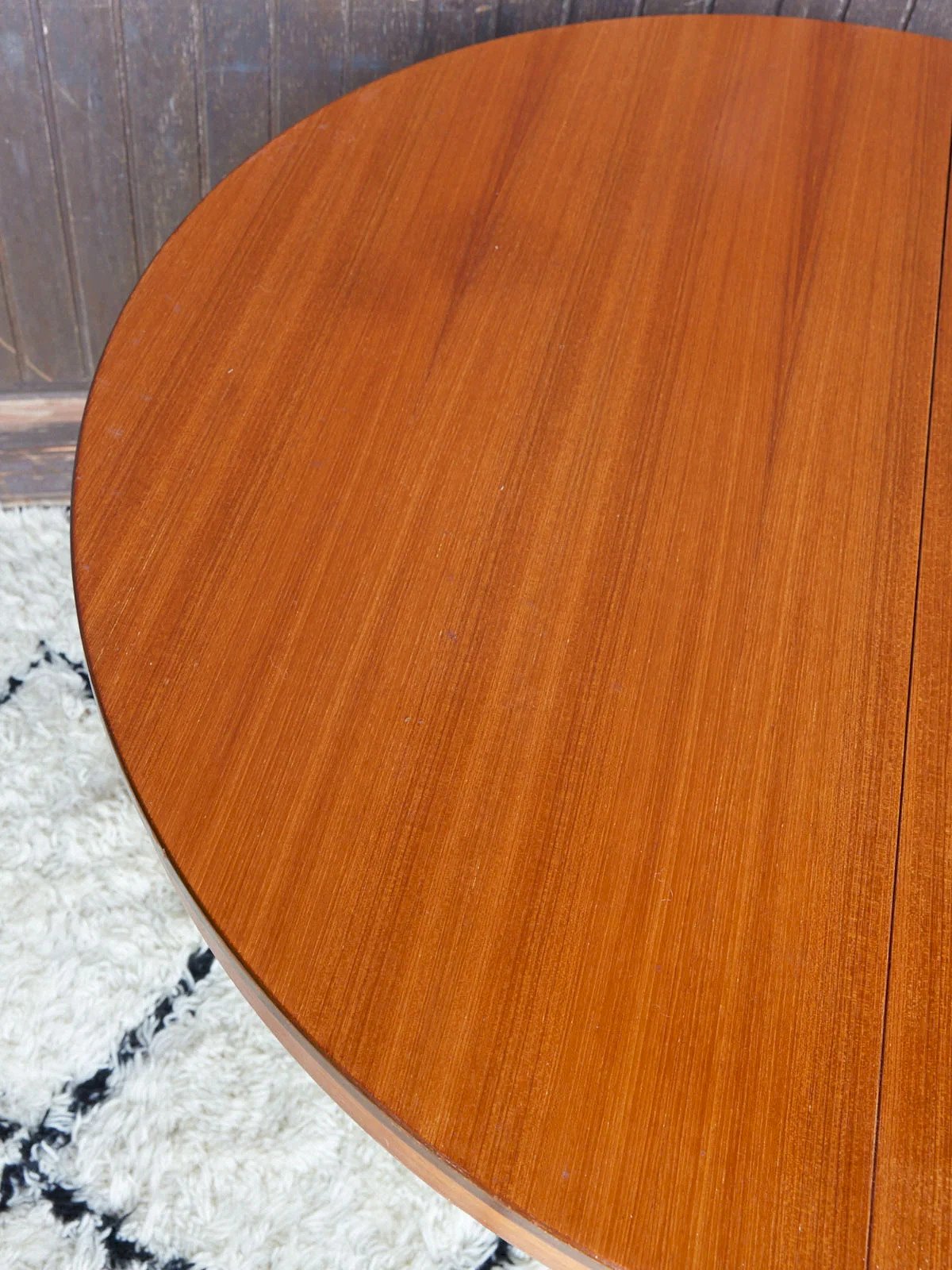
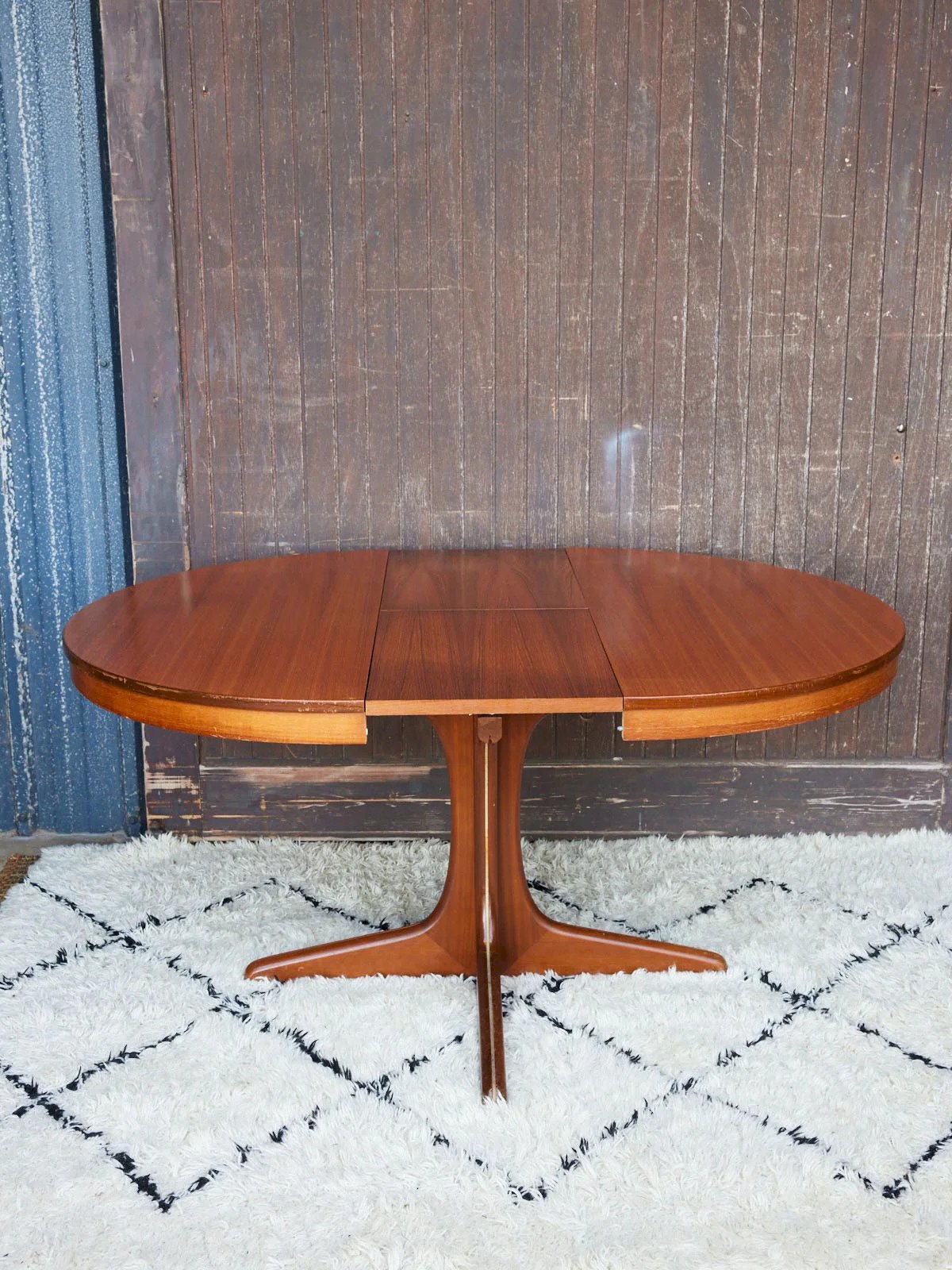
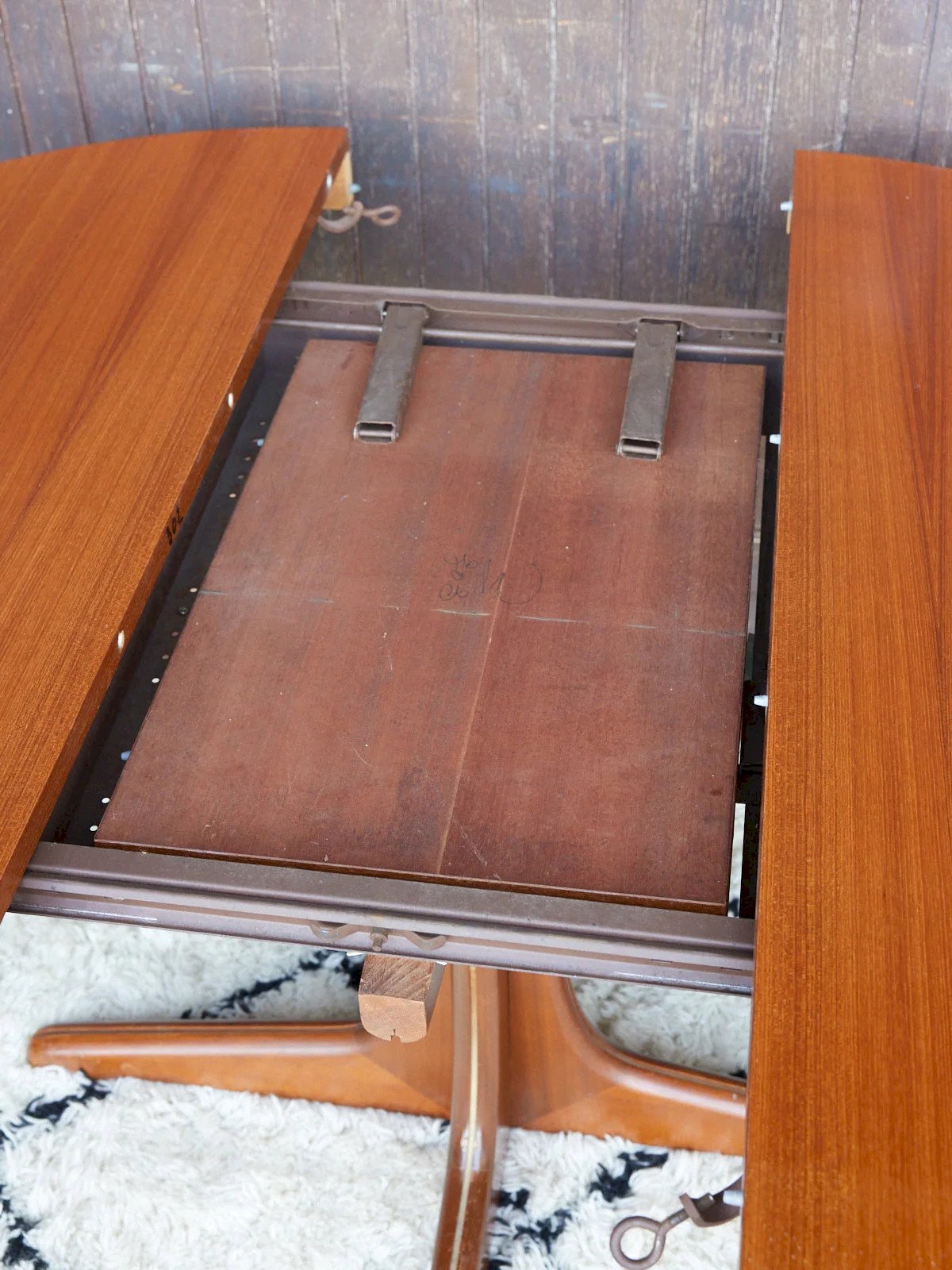
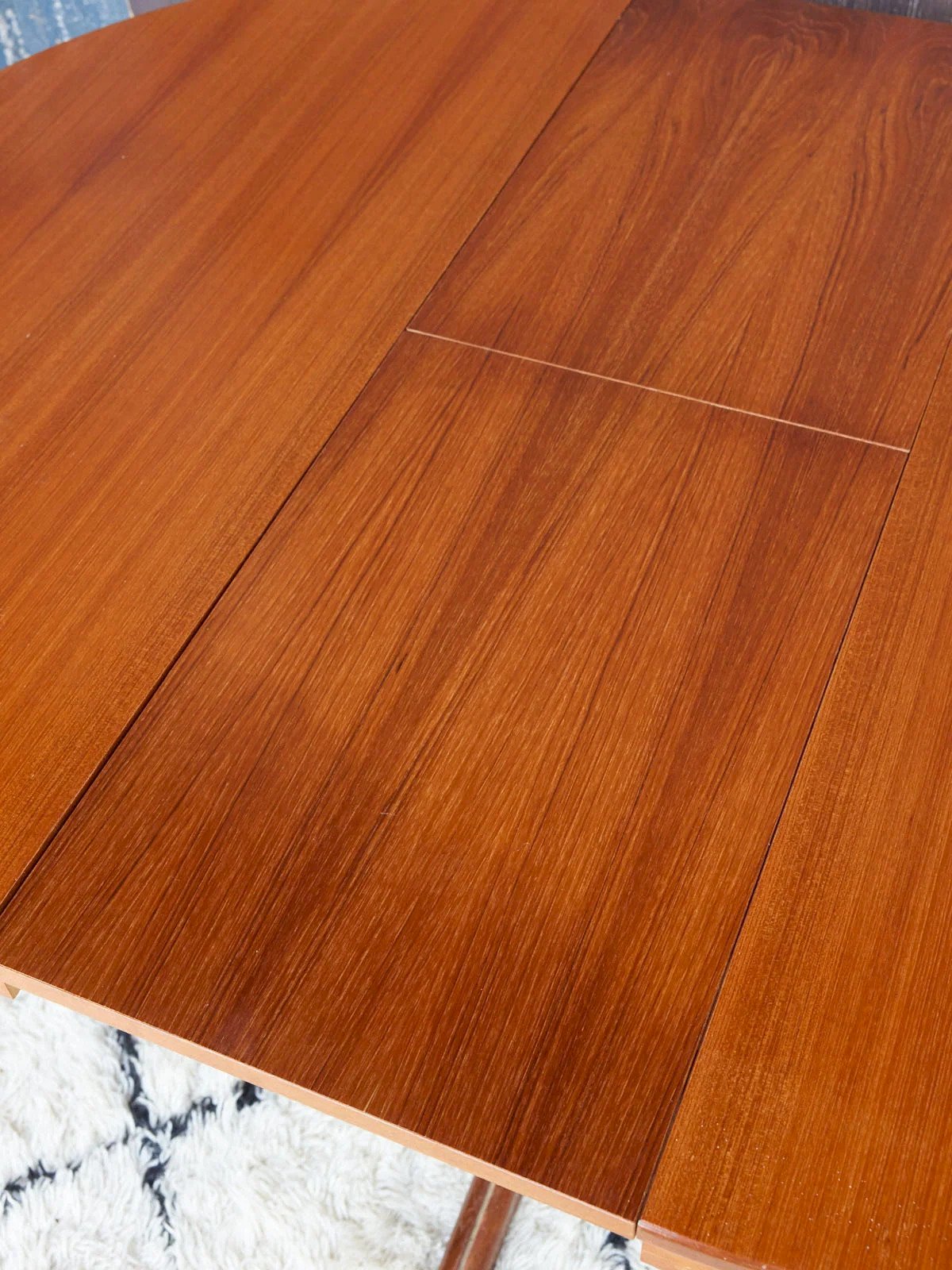
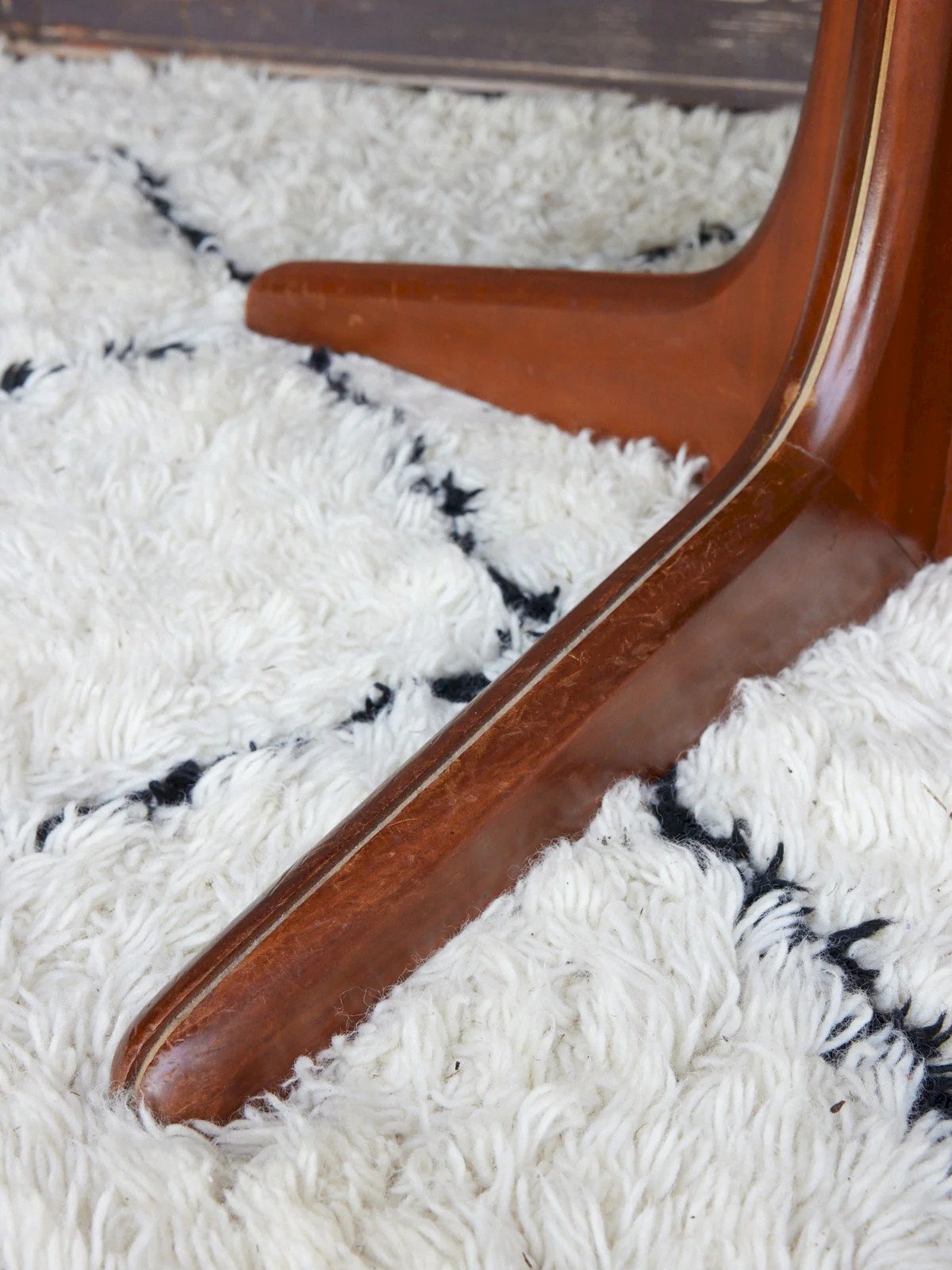
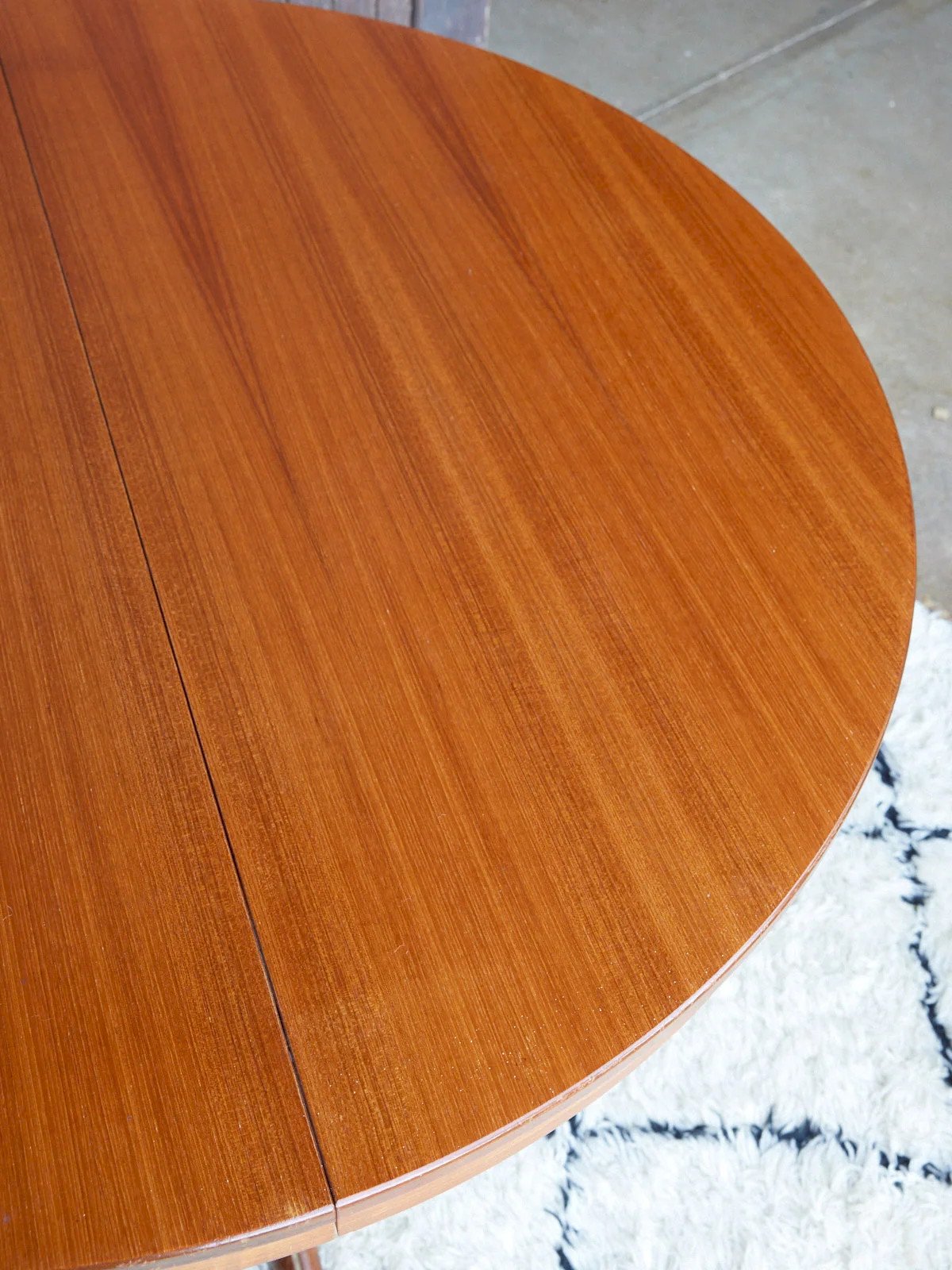
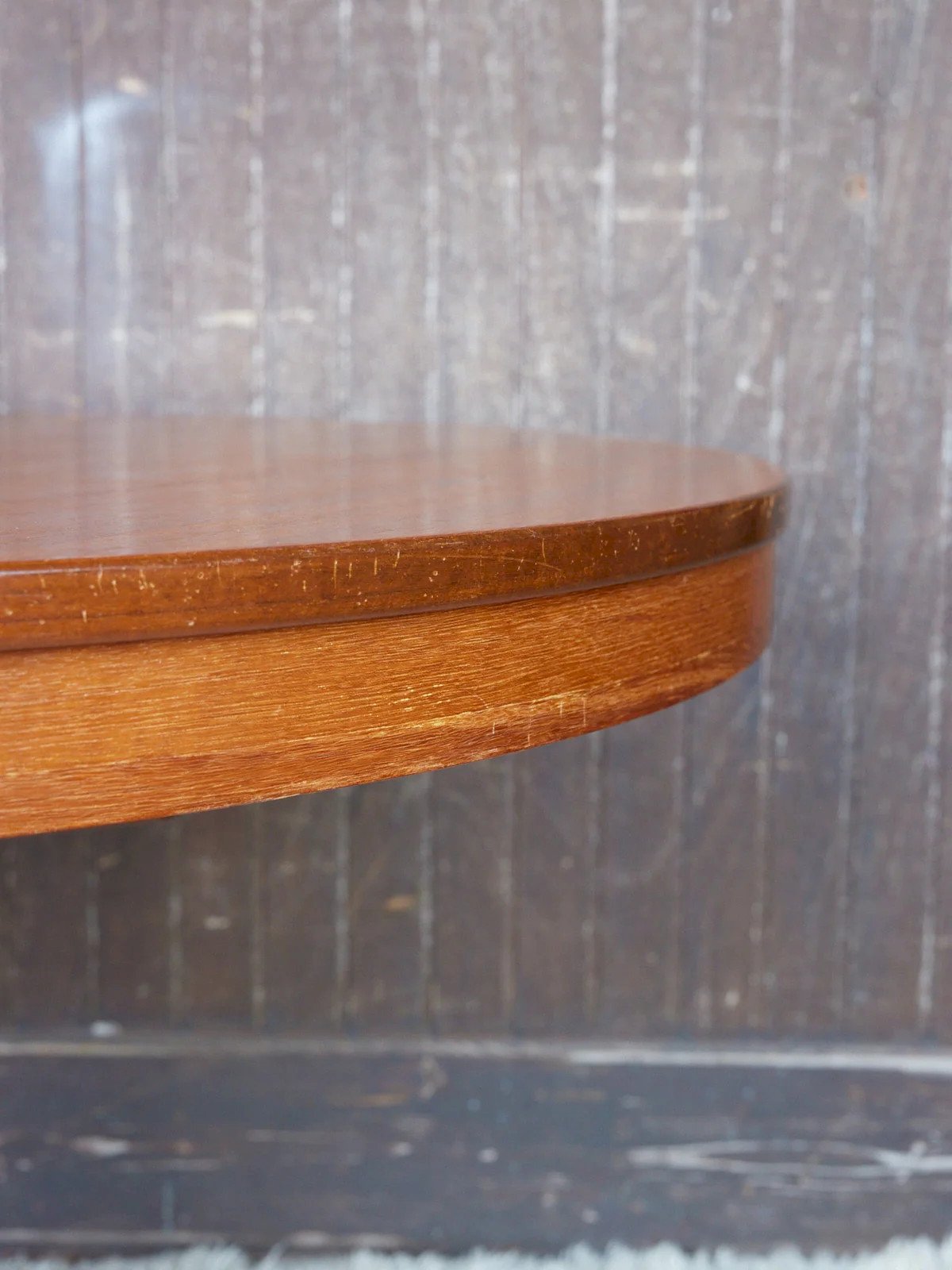
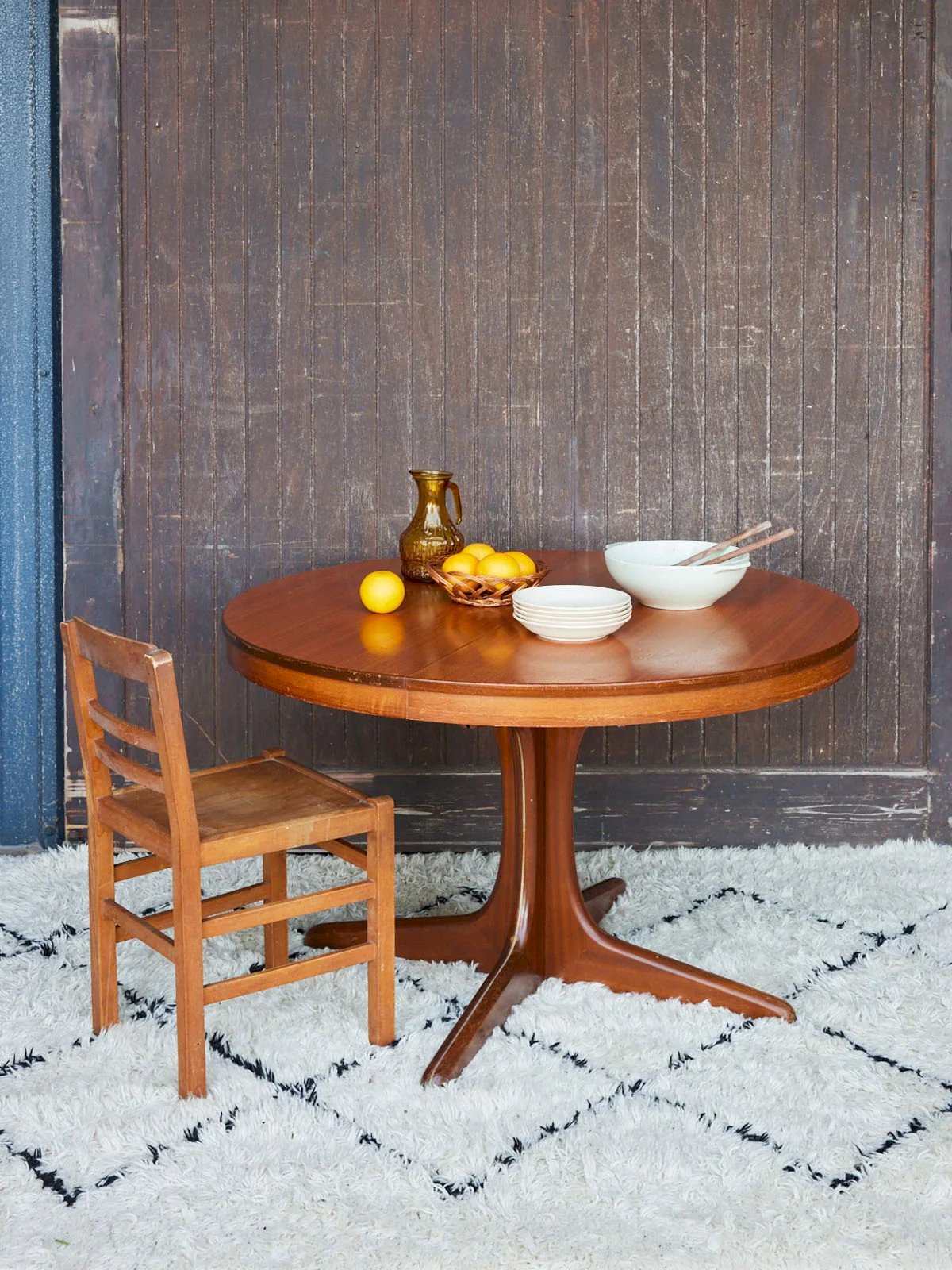
This wooden dining table in Baumann style impresses with its understated presence and contemporary look. Its top opens thanks to an extension integrated underneath, with a system that unfolds smoothly, while its base remains firmly connected in the center to maintain stability. In a dining room, it complements both everyday meals and more generous gatherings, with a sleek design that pairs well with modern seating as well as more classic pieces. Around it, stoneware plates, a few glasses, and a low bouquet create an elegant and measured scene. It can accommodate up to 6 guests. Width: 8 cm Height: 75 cm Diameter: 115 cm Open length: 155 cm A brief history of the dining table Long absent from interiors, the dining table only appears as a fixed piece of furniture in the 18th century with the emergence of dedicated dining rooms. Previously, people would "set the table" on simple trestles that were stored away after meals to free up space. Whether round, oval, or rectangular, it is defined by its generous top supported by a central base or at the four corners. Also called a "dining room table" or "reception table," it is the beating heart of the home, designed to anchor moments of sharing with durability and style.
Réf :
#414632
Brand / From : Debongout
Related Products



Comments
Karla, the design extendable dining table N°1303
1 079€
75002 Paris
Ce site contient des liens d’affiliation pour lesquels je peux recevoir une compensation.
Description
This wooden dining table in Baumann style impresses with its understated presence and contemporary look. Its top opens thanks to an extension integrated underneath, with a system that unfolds smoothly, while its base remains firmly connected in the center to maintain stability. In a dining room, it complements both everyday meals and more generous gatherings, with a sleek design that pairs well with modern seating as well as more classic pieces. Around it, stoneware plates, a few glasses, and a low bouquet create an elegant and measured scene. It can accommodate up to 6 guests. Width: 8 cm Height: 75 cm Diameter: 115 cm Open length: 155 cm A brief history of the dining table Long absent from interiors, the dining table only appears as a fixed piece of furniture in the 18th century with the emergence of dedicated dining rooms. Previously, people would "set the table" on simple trestles that were stored away after meals to free up space. Whether round, oval, or rectangular, it is defined by its generous top supported by a central base or at the four corners. Also called a "dining room table" or "reception table," it is the beating heart of the home, designed to anchor moments of sharing with durability and style.
Réf :
#414632
Brand / From : Debongout