 English
 Français


Description
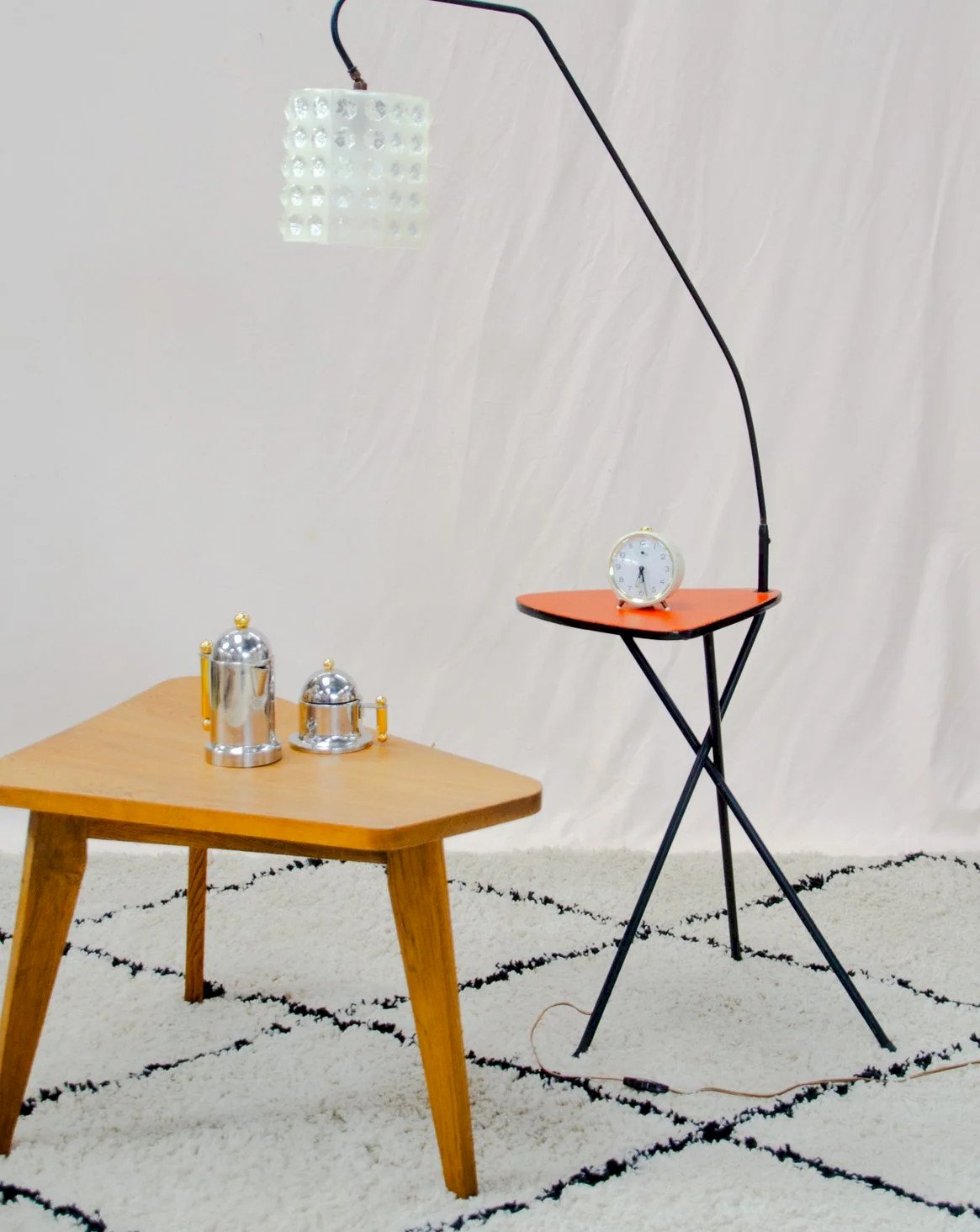
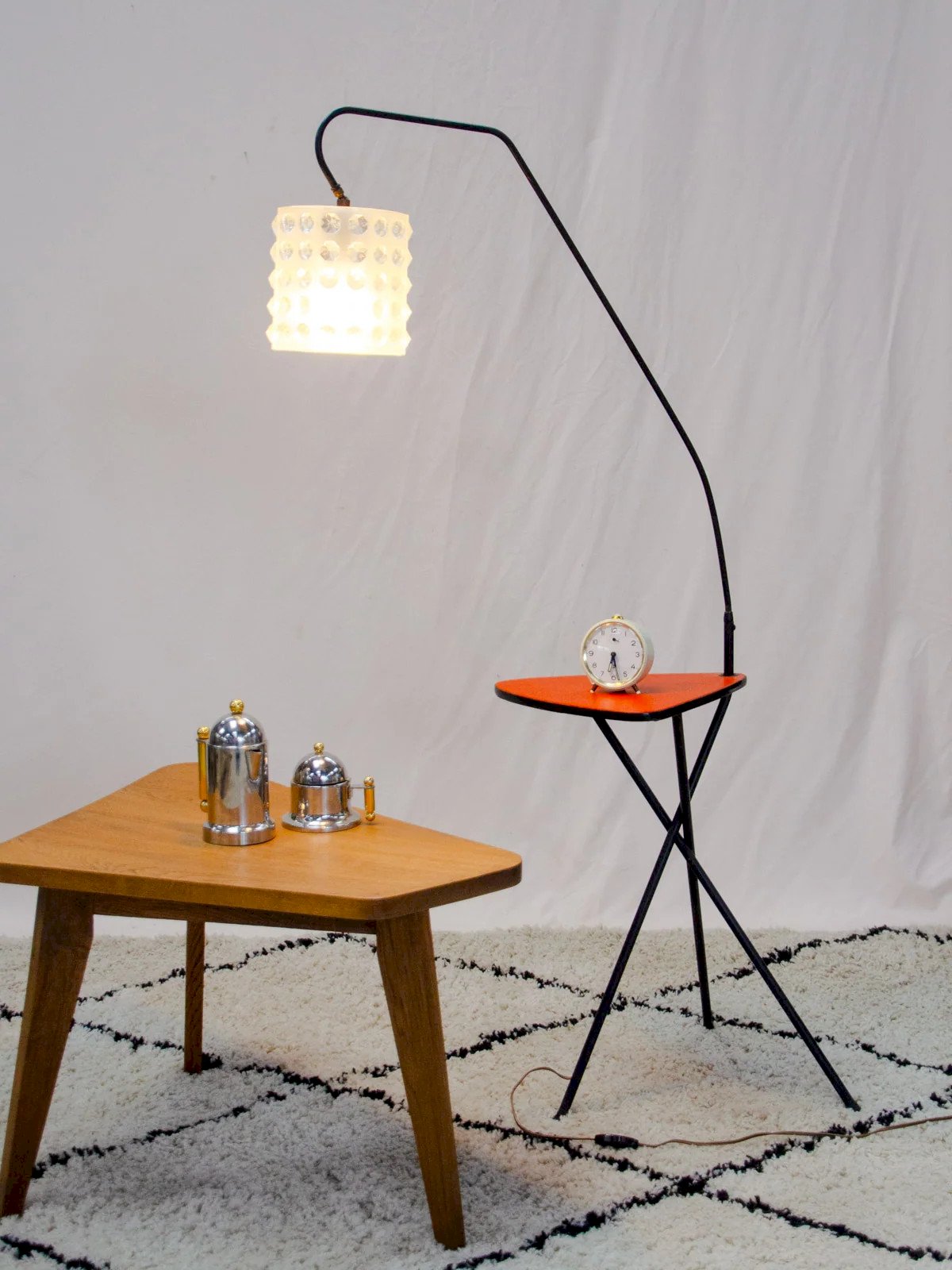
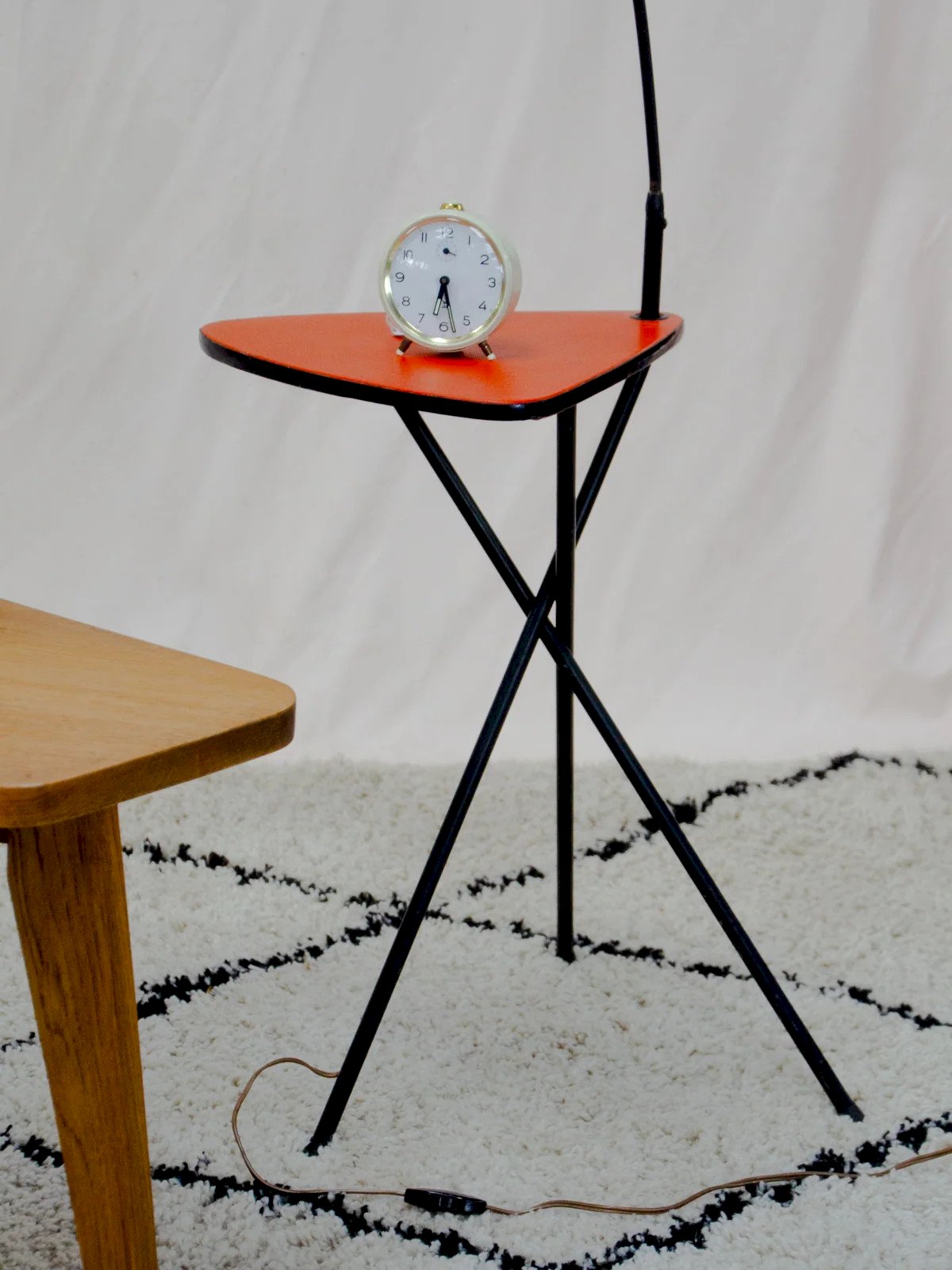
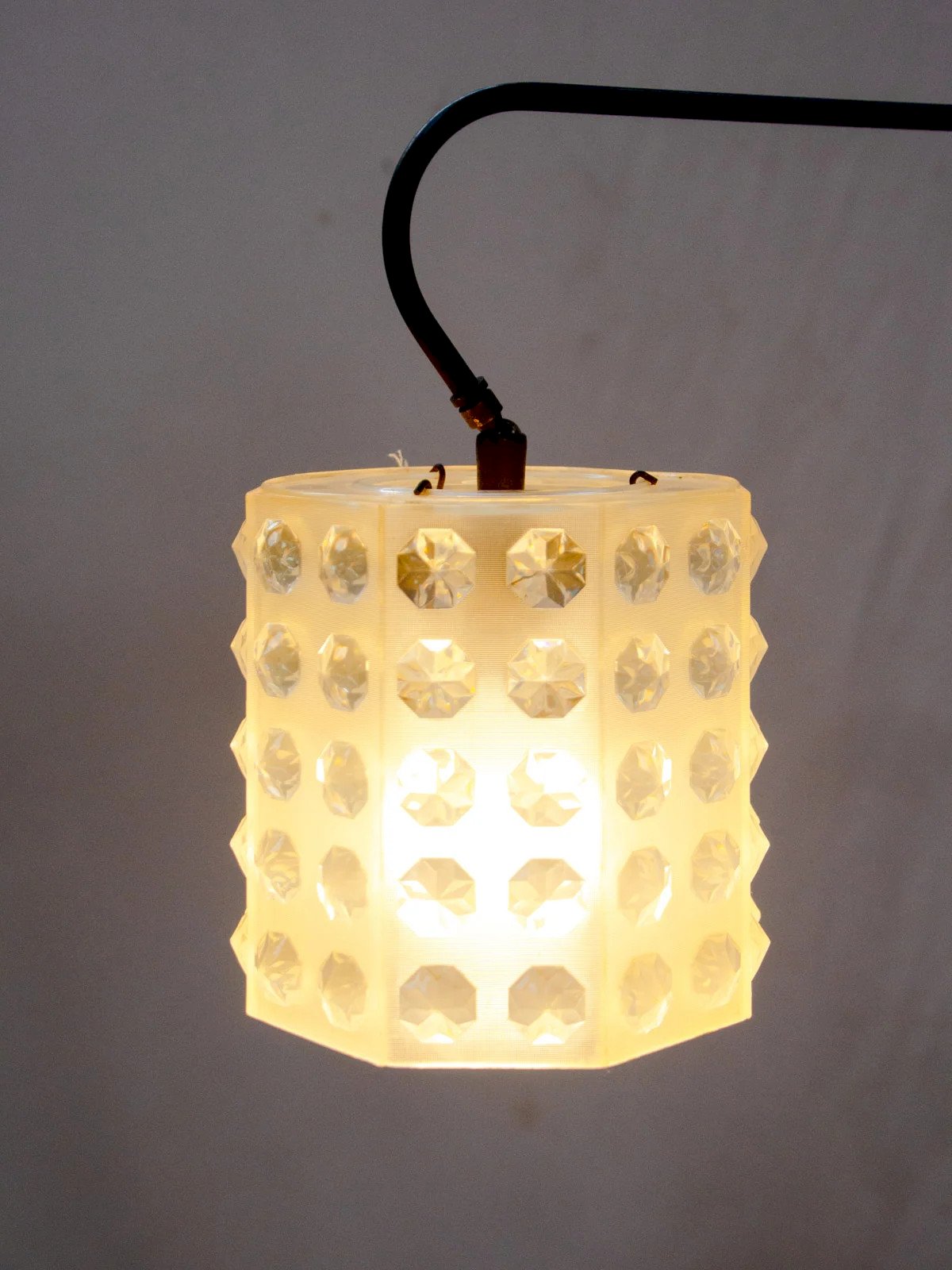
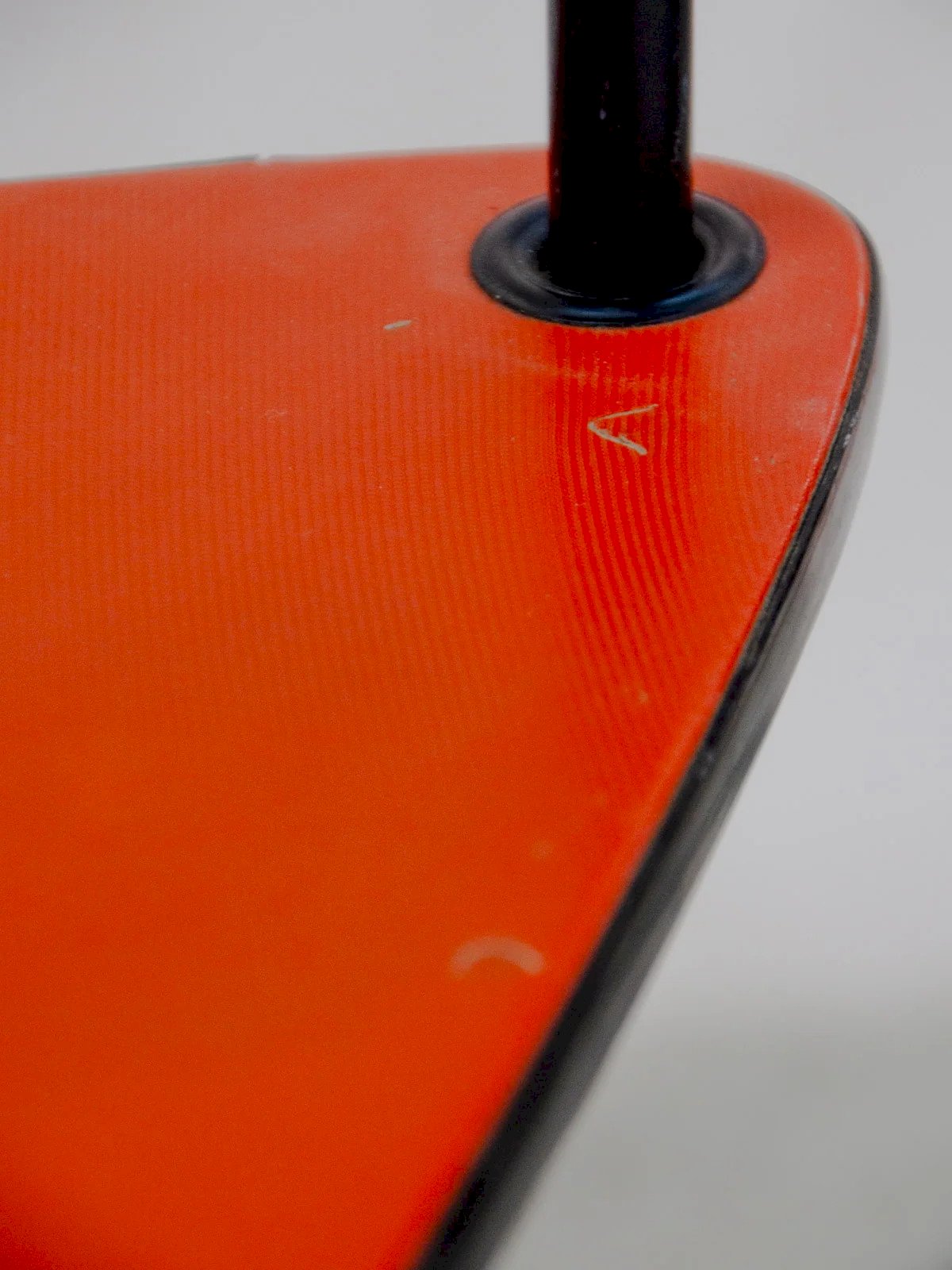
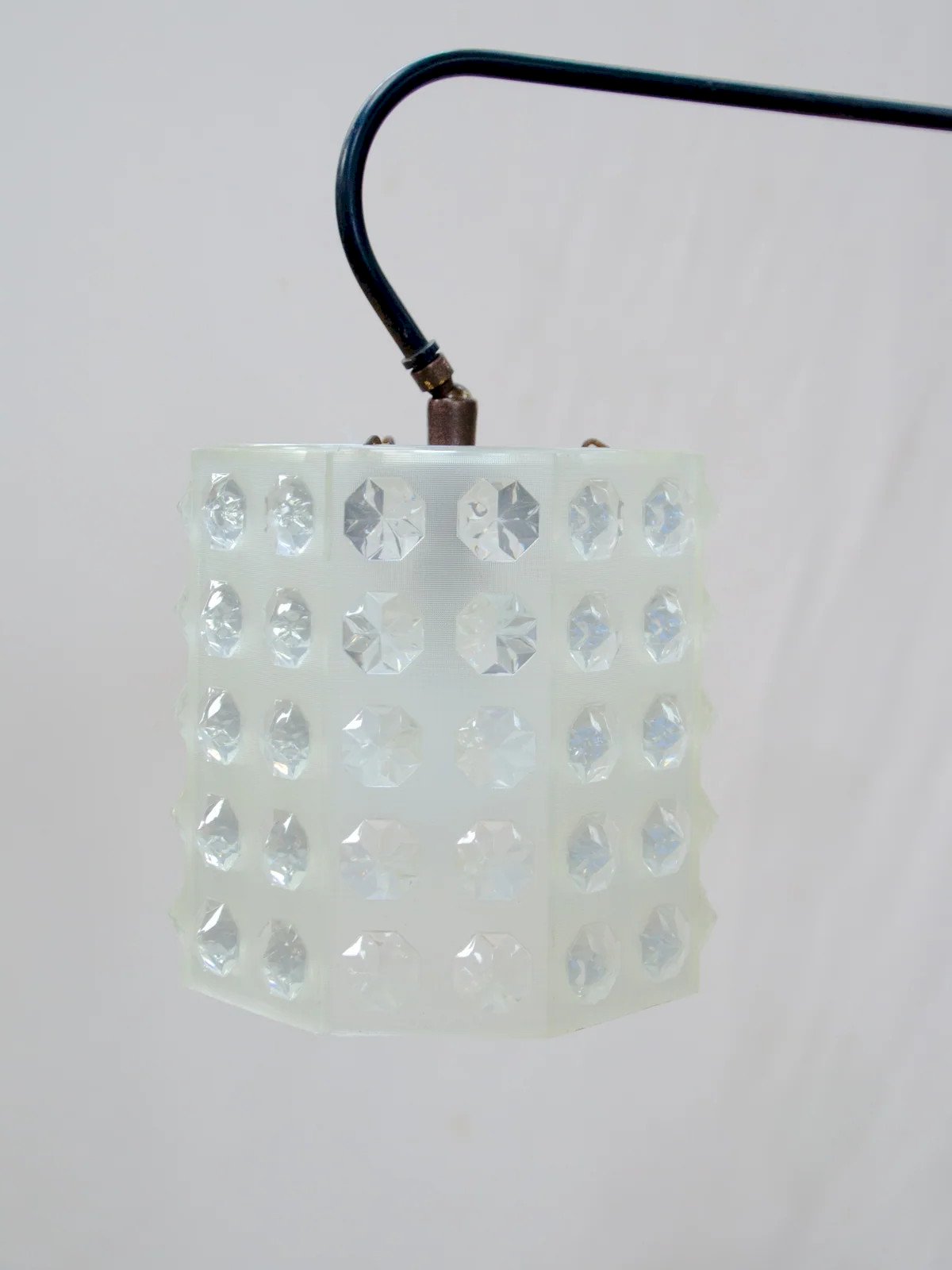
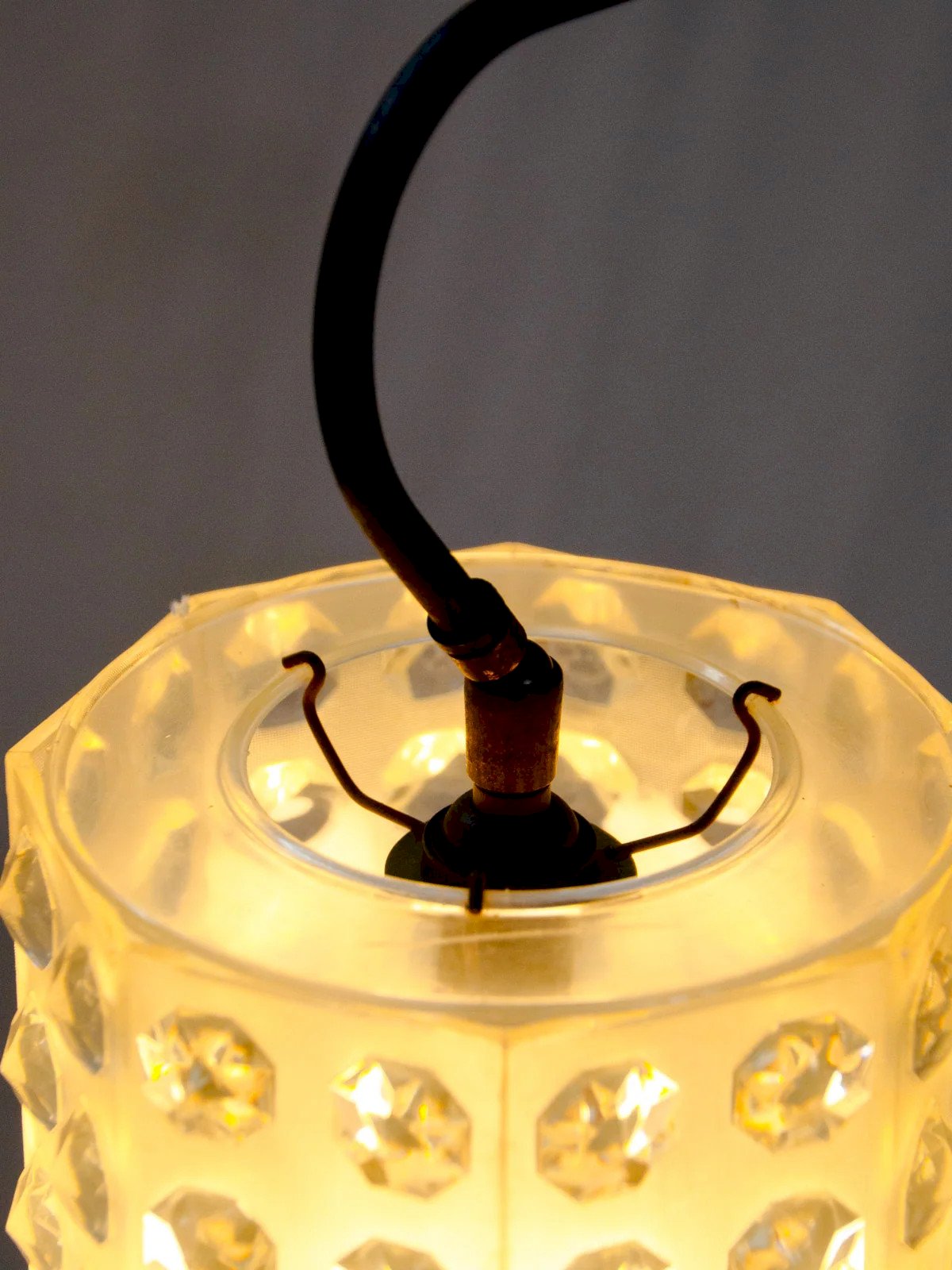
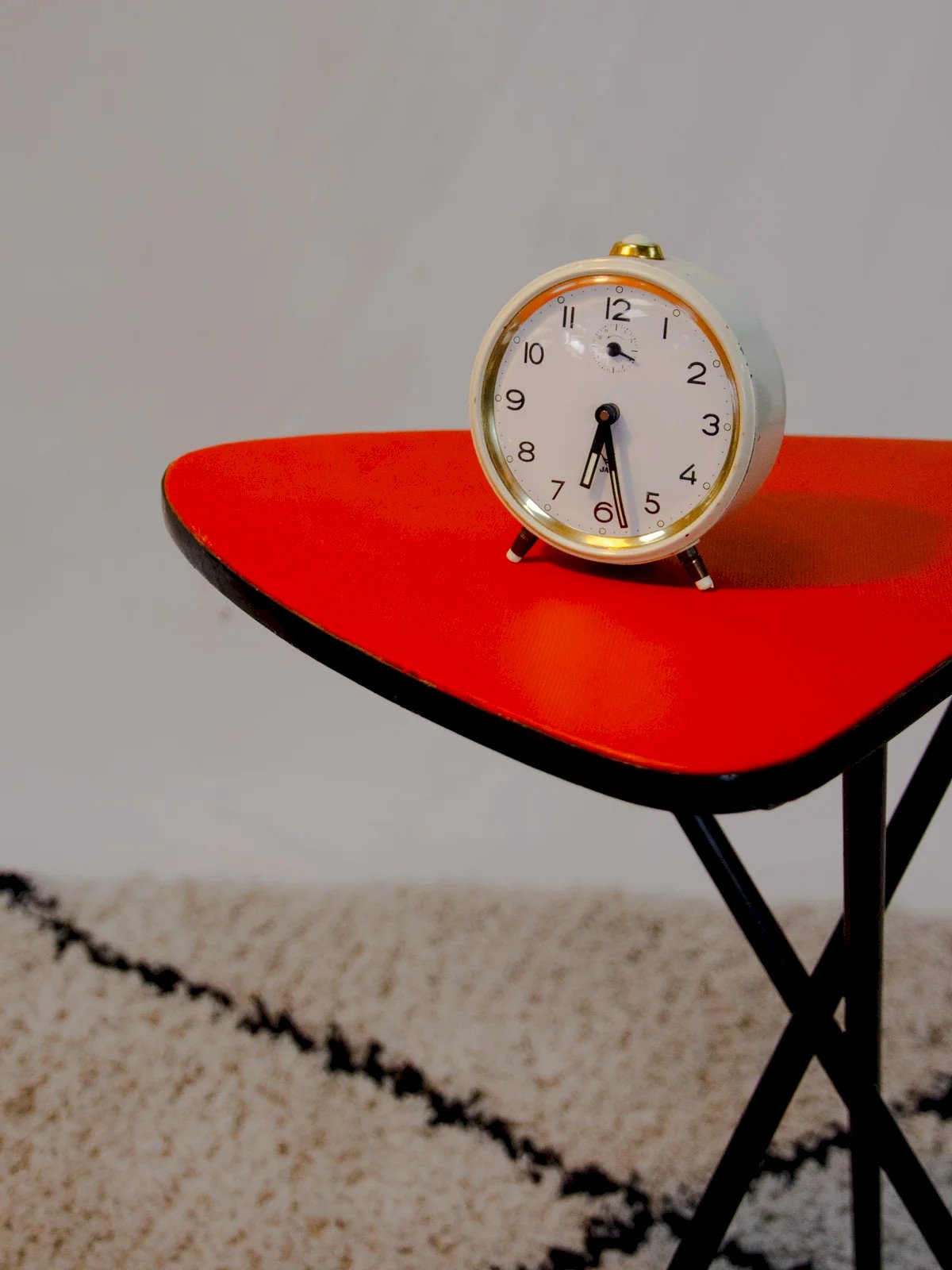
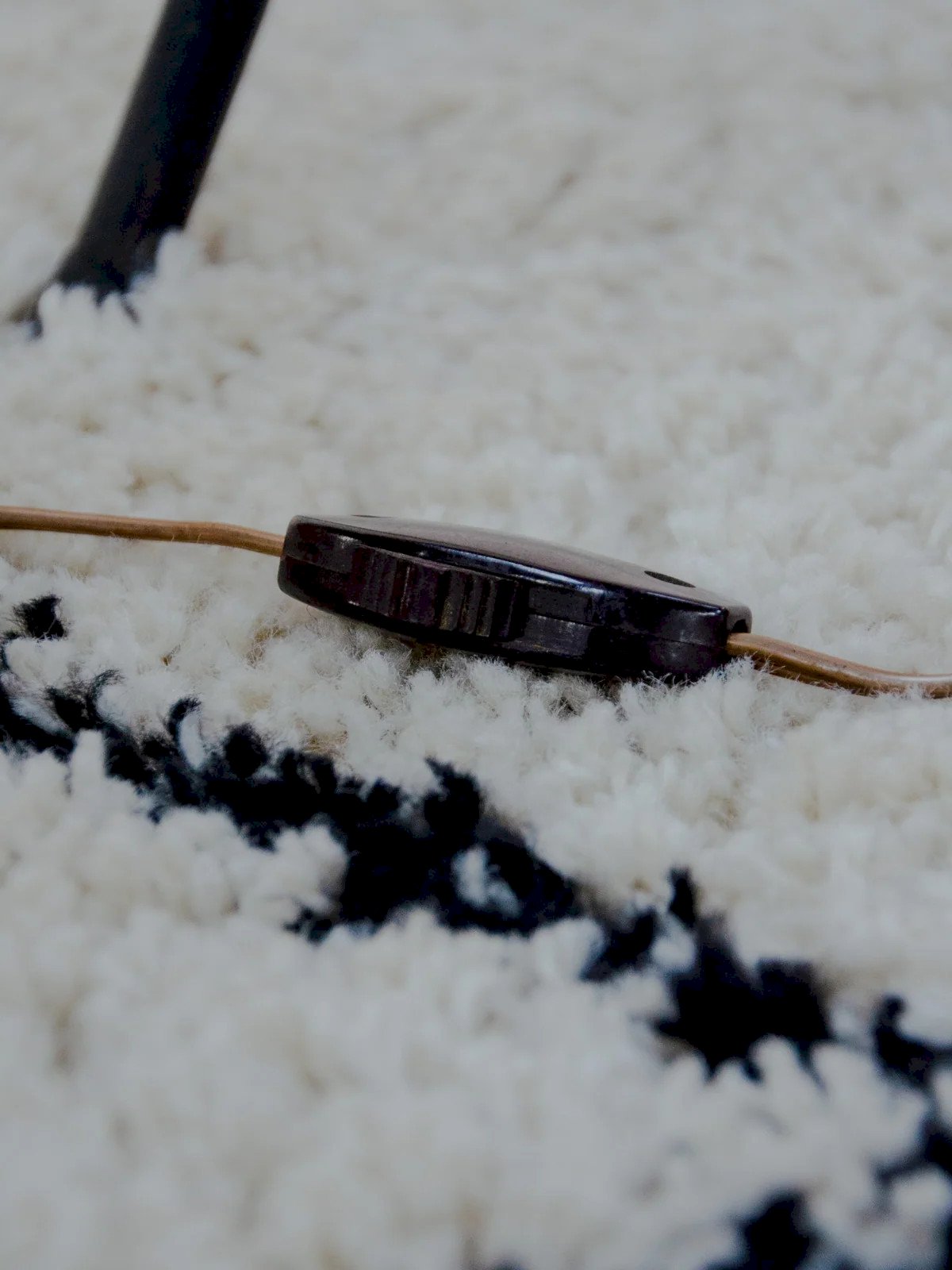
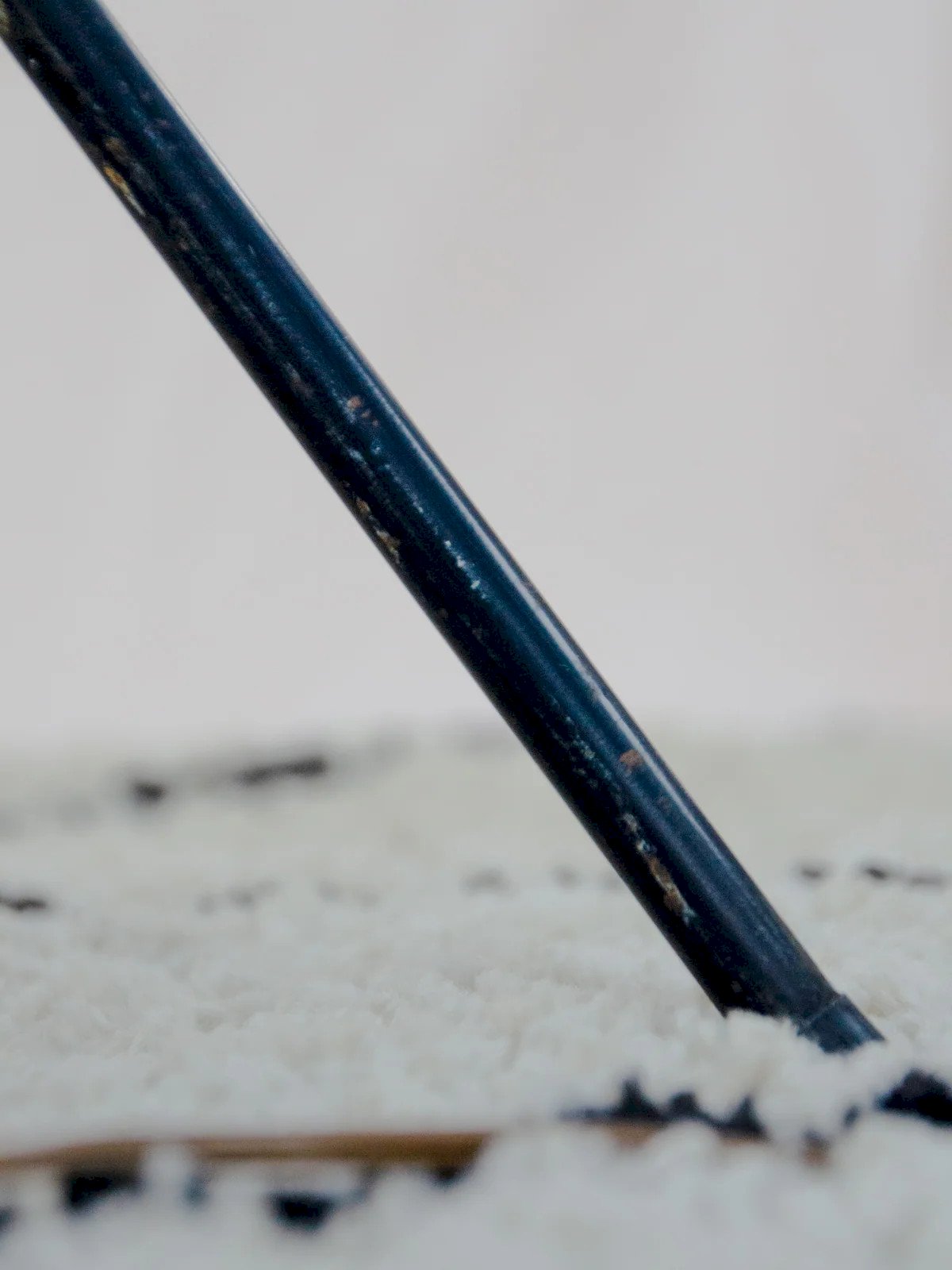
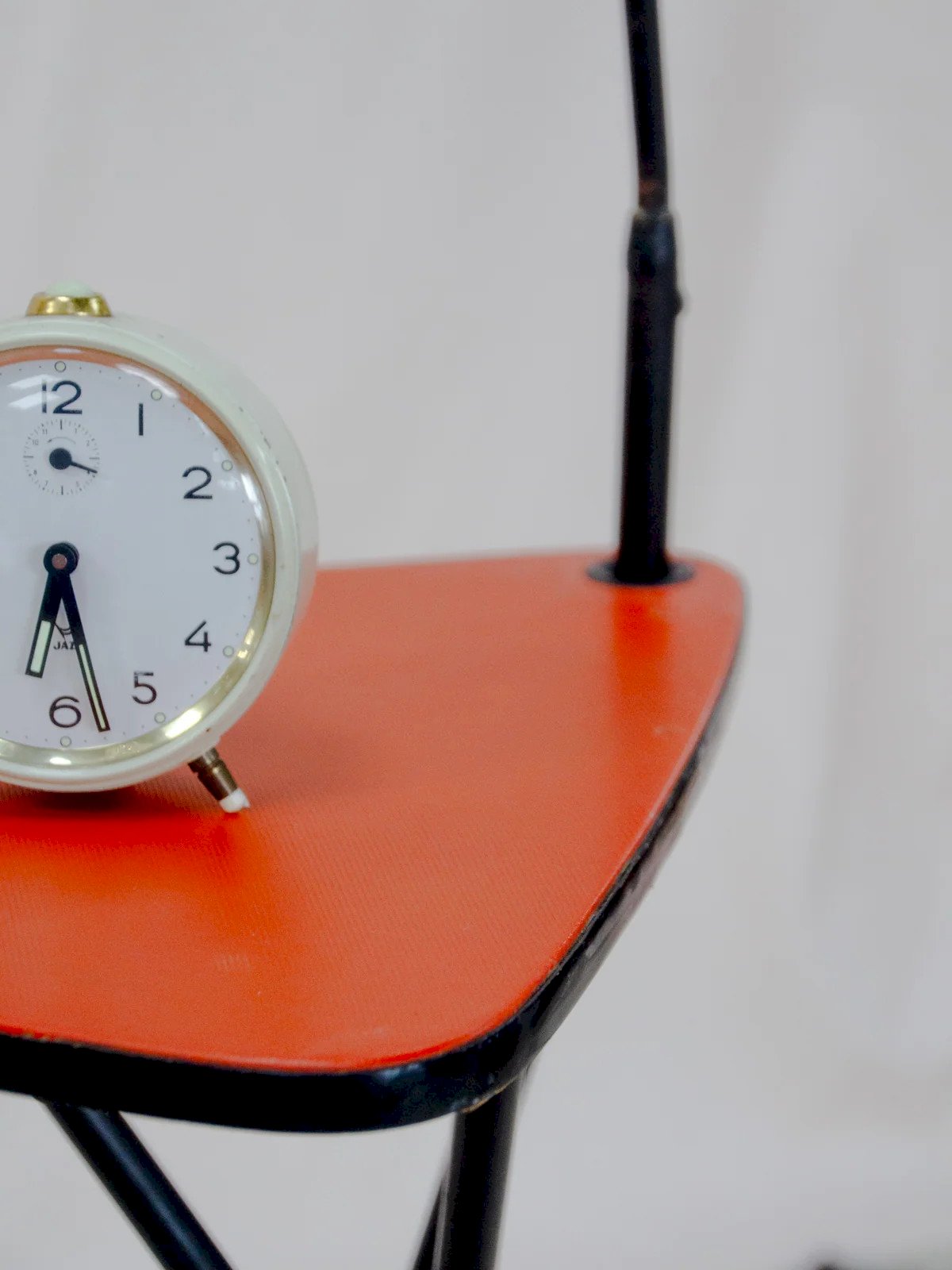
This black metal tripod floor lamp, with orange accents, displays a contemporary look enhanced by a touch of the 1950s. Its tubular metal structure supports a shelf covered with original orange vinyl, while the plastic lampshade diffuses a clear light in a living room or reading nook. Thanks to its ball joint, it allows the lampshade to be oriented according to the desired ambiance. Placed near a low armchair, its shelf holds a book, glasses, or a small accent lamp, creating a simple yet well-designed scene. Length: 32 cm Width: 70 cm Height: 137 cm Shelf: 33 x 32 cm Shelf height: 59 cm A brief history of the floor lamp As a descendant of the 17th-century "torch-bearing side tables," the floor lamp revolutionized lighting by taking light off the walls and making it mobile. Its height was historically calibrated to project light exactly above a reader's shoulder, thus avoiding cast shadows long before the invention of electricity. By the end of the 18th century, the advent of draft oil lamps allowed it to shine autonomously and steadily, making it the central pivot of reading salons.
Réf :
#414298
Brand / From : Debongout
Related Products




Comments
Julien, the metal and faux leather lamp post No. 435
349€
75002 Paris
Ce site contient des liens d’affiliation pour lesquels je peux recevoir une compensation.
Description
This black metal tripod floor lamp, with orange accents, displays a contemporary look enhanced by a touch of the 1950s. Its tubular metal structure supports a shelf covered with original orange vinyl, while the plastic lampshade diffuses a clear light in a living room or reading nook. Thanks to its ball joint, it allows the lampshade to be oriented according to the desired ambiance. Placed near a low armchair, its shelf holds a book, glasses, or a small accent lamp, creating a simple yet well-designed scene. Length: 32 cm Width: 70 cm Height: 137 cm Shelf: 33 x 32 cm Shelf height: 59 cm A brief history of the floor lamp As a descendant of the 17th-century "torch-bearing side tables," the floor lamp revolutionized lighting by taking light off the walls and making it mobile. Its height was historically calibrated to project light exactly above a reader's shoulder, thus avoiding cast shadows long before the invention of electricity. By the end of the 18th century, the advent of draft oil lamps allowed it to shine autonomously and steadily, making it the central pivot of reading salons.
Réf :
#414298
Brand / From : Debongout