 English
 Français


Description
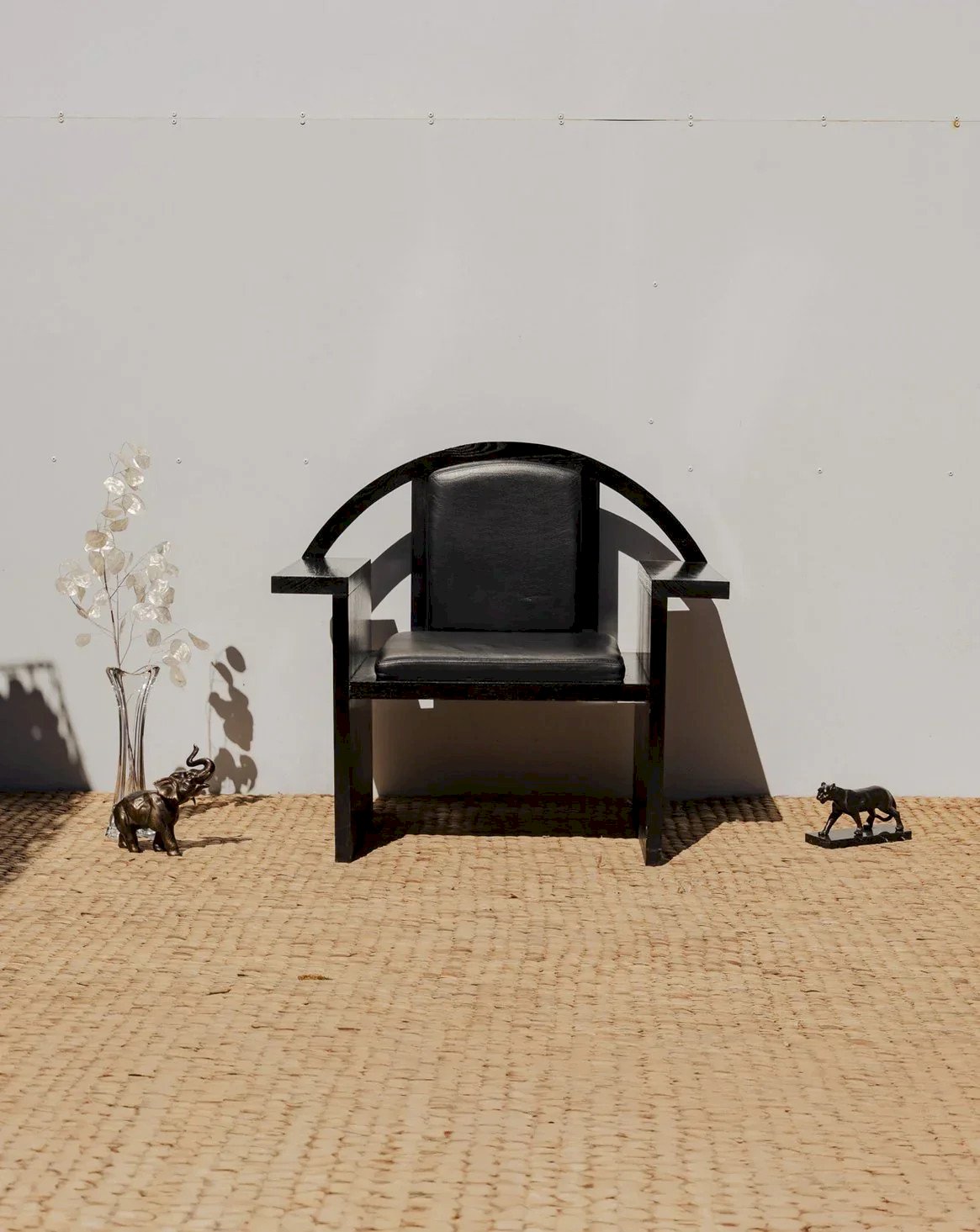
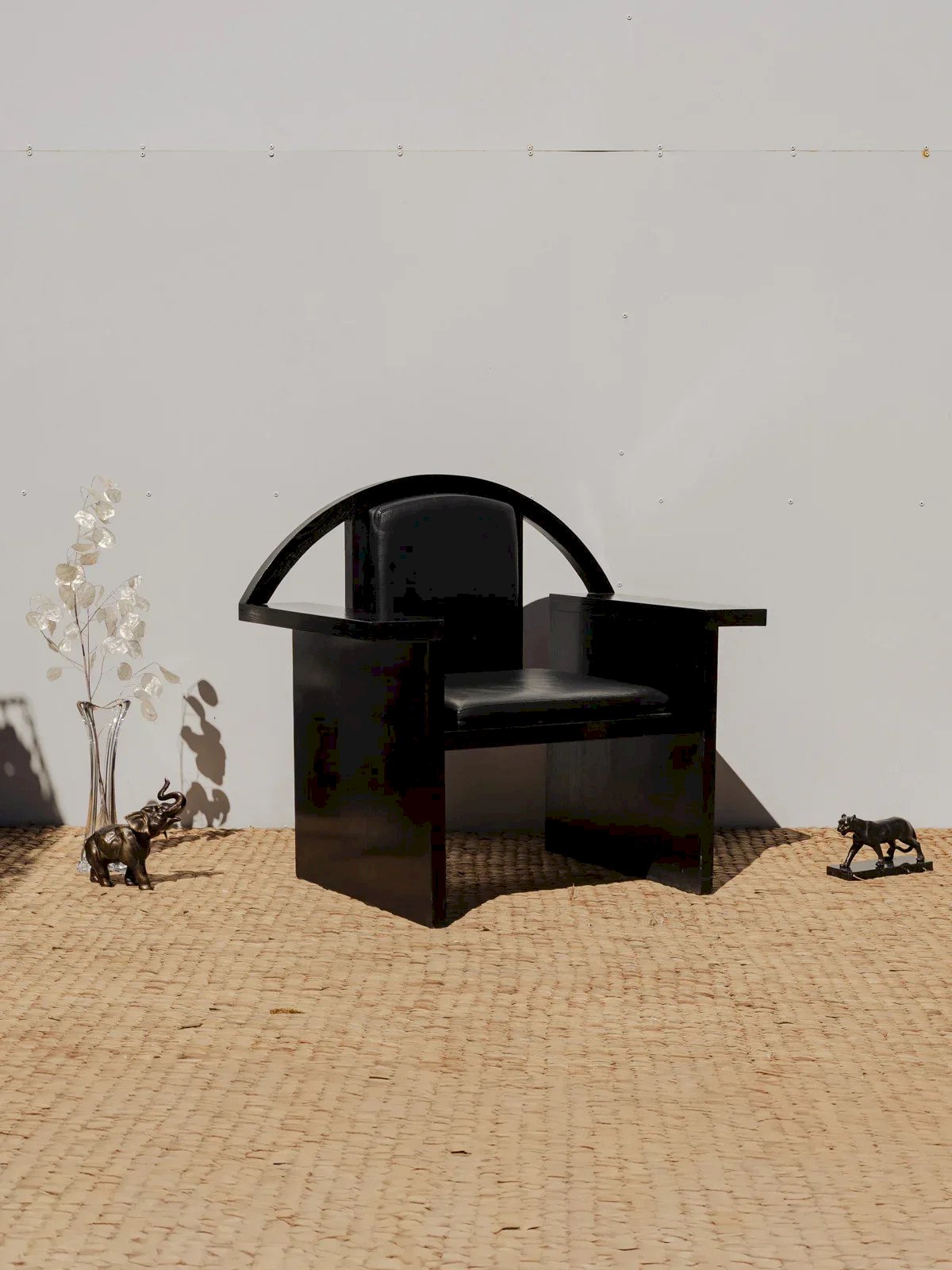
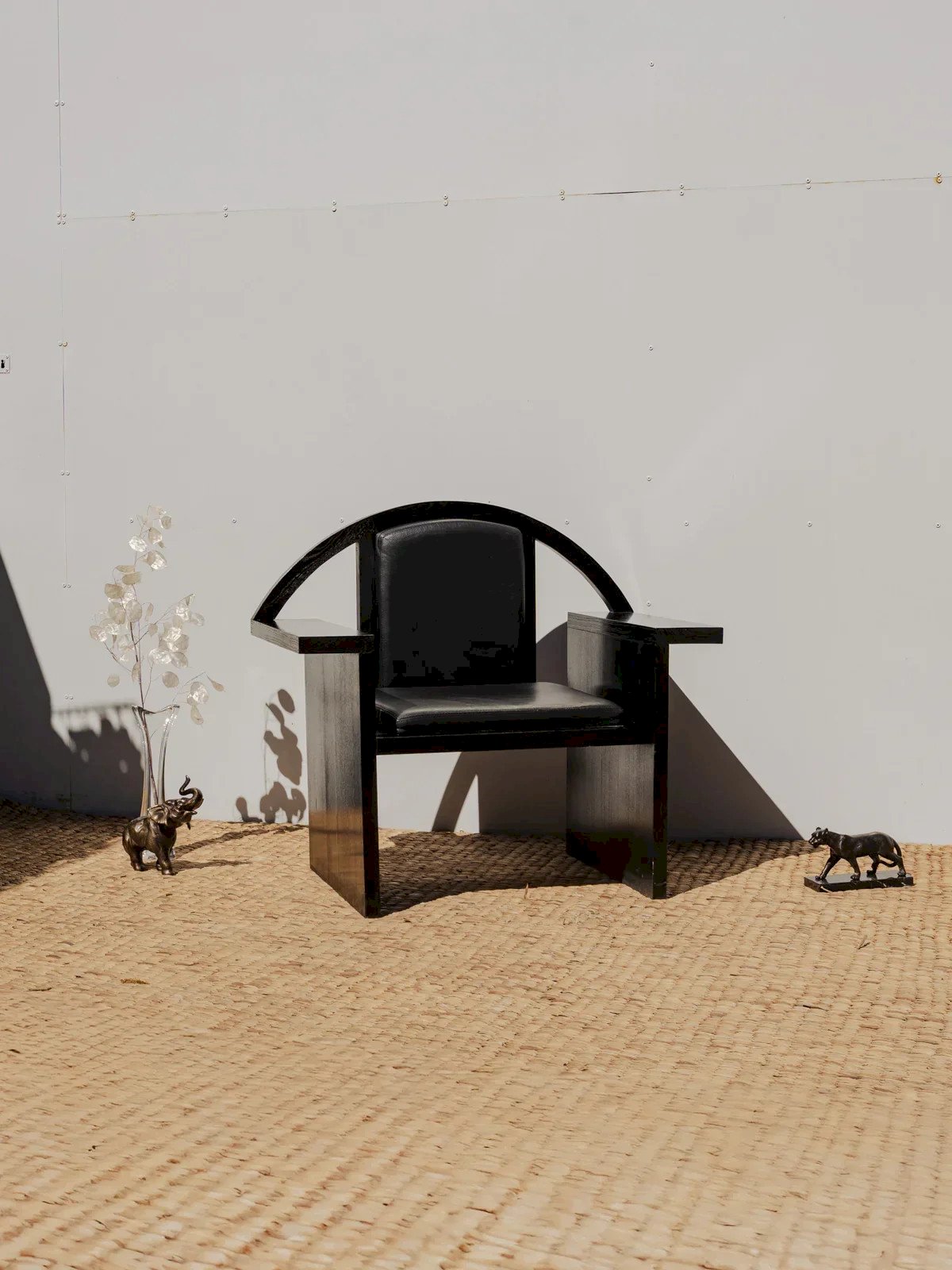
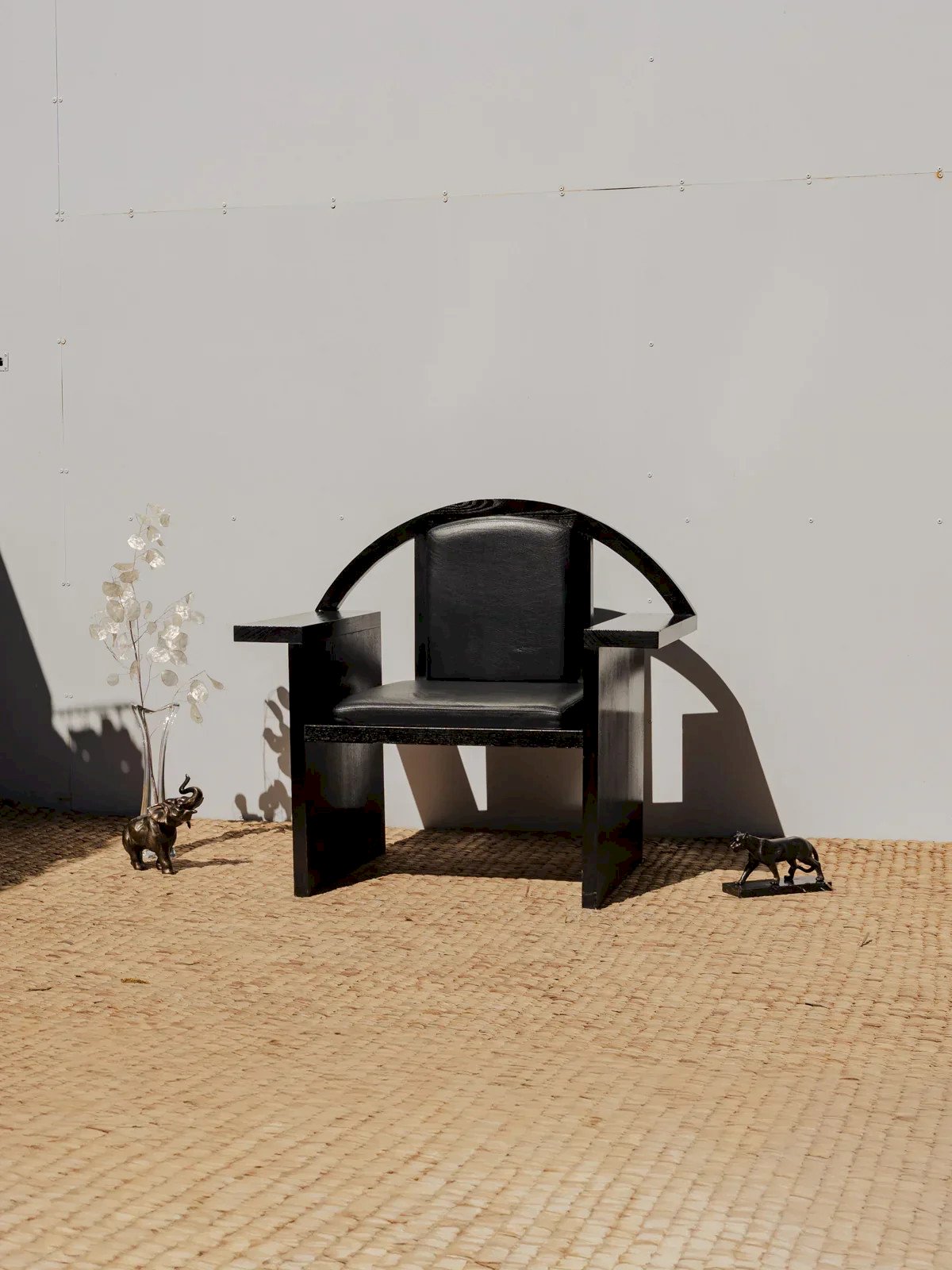
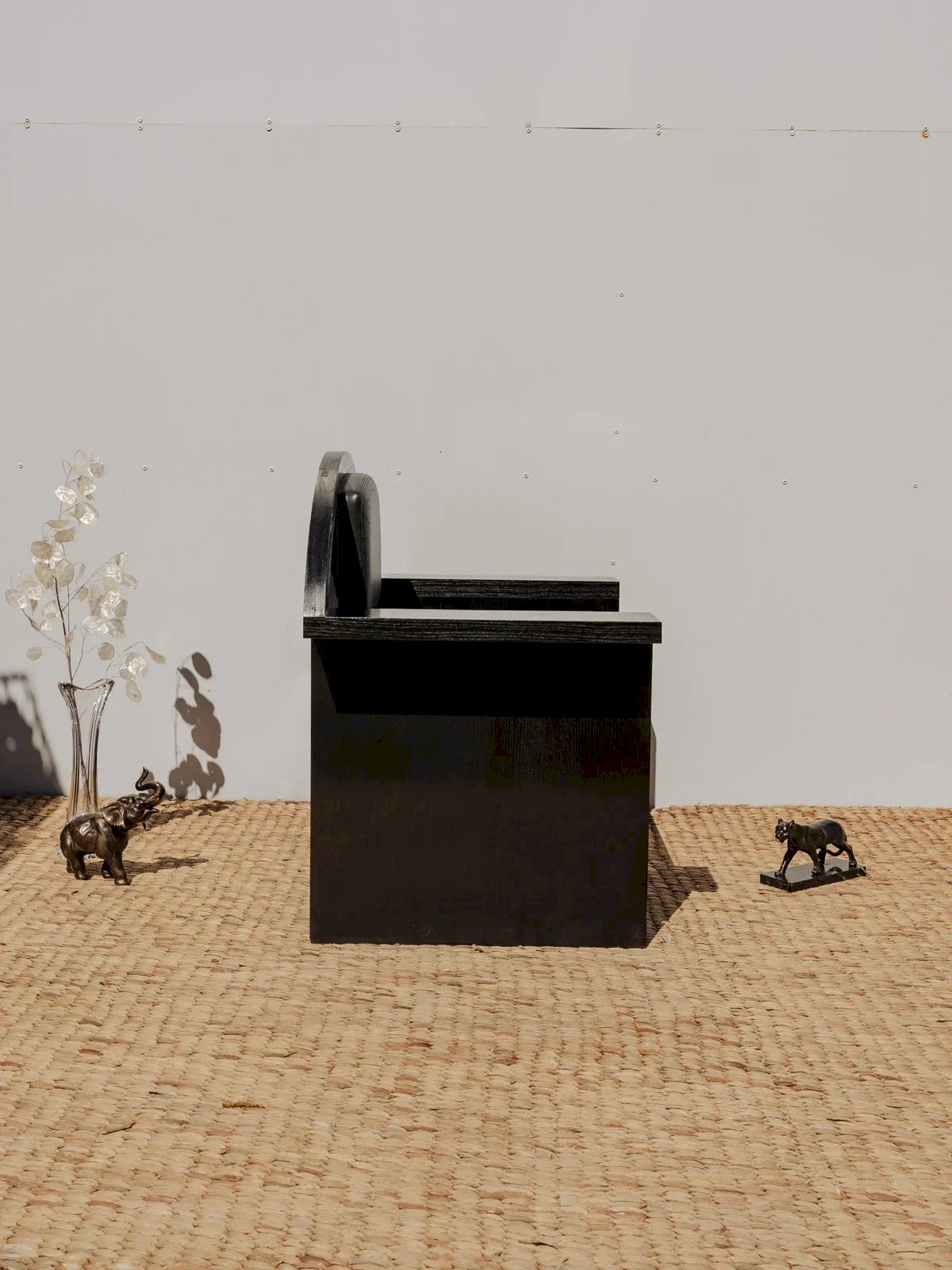
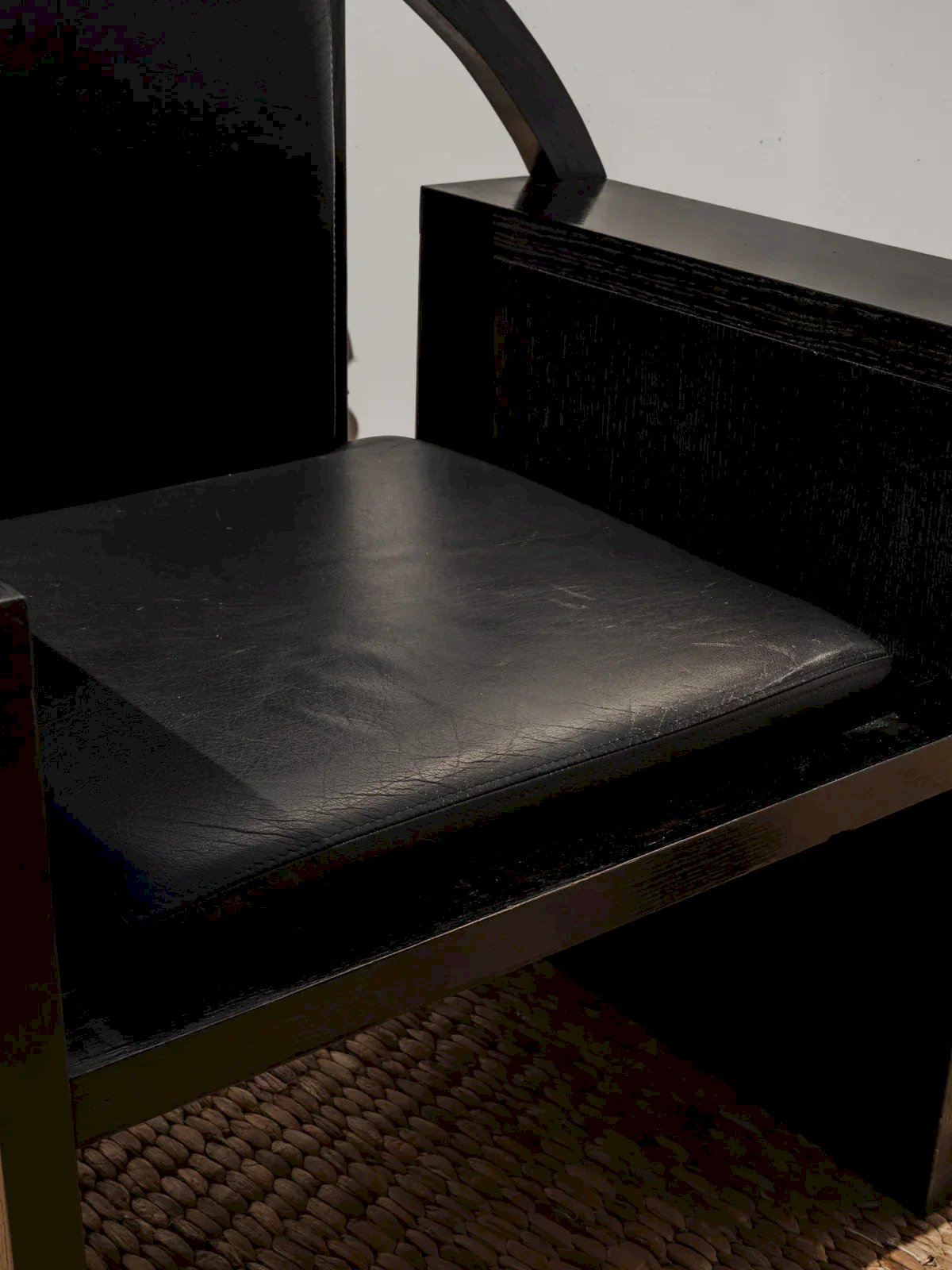
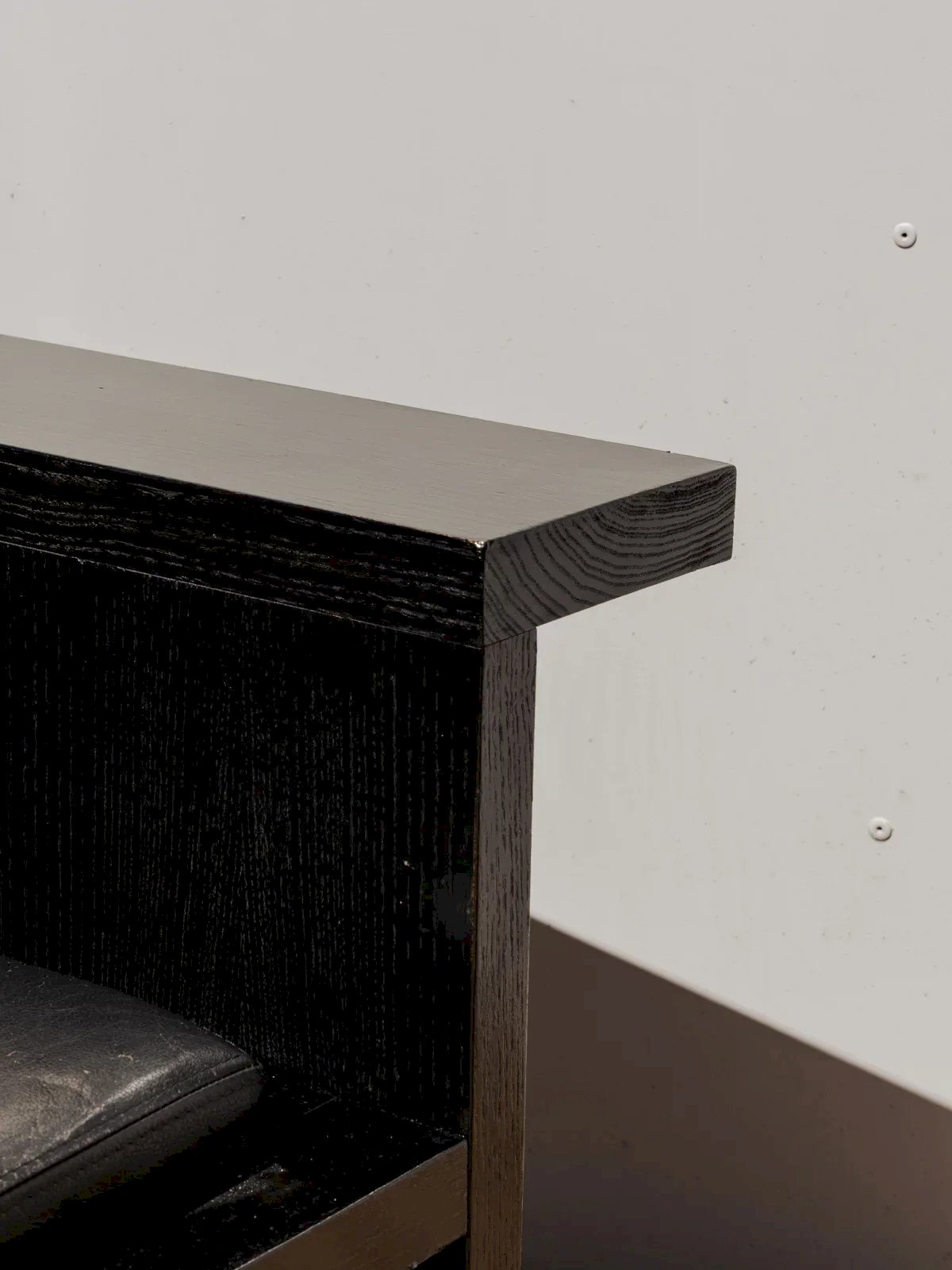
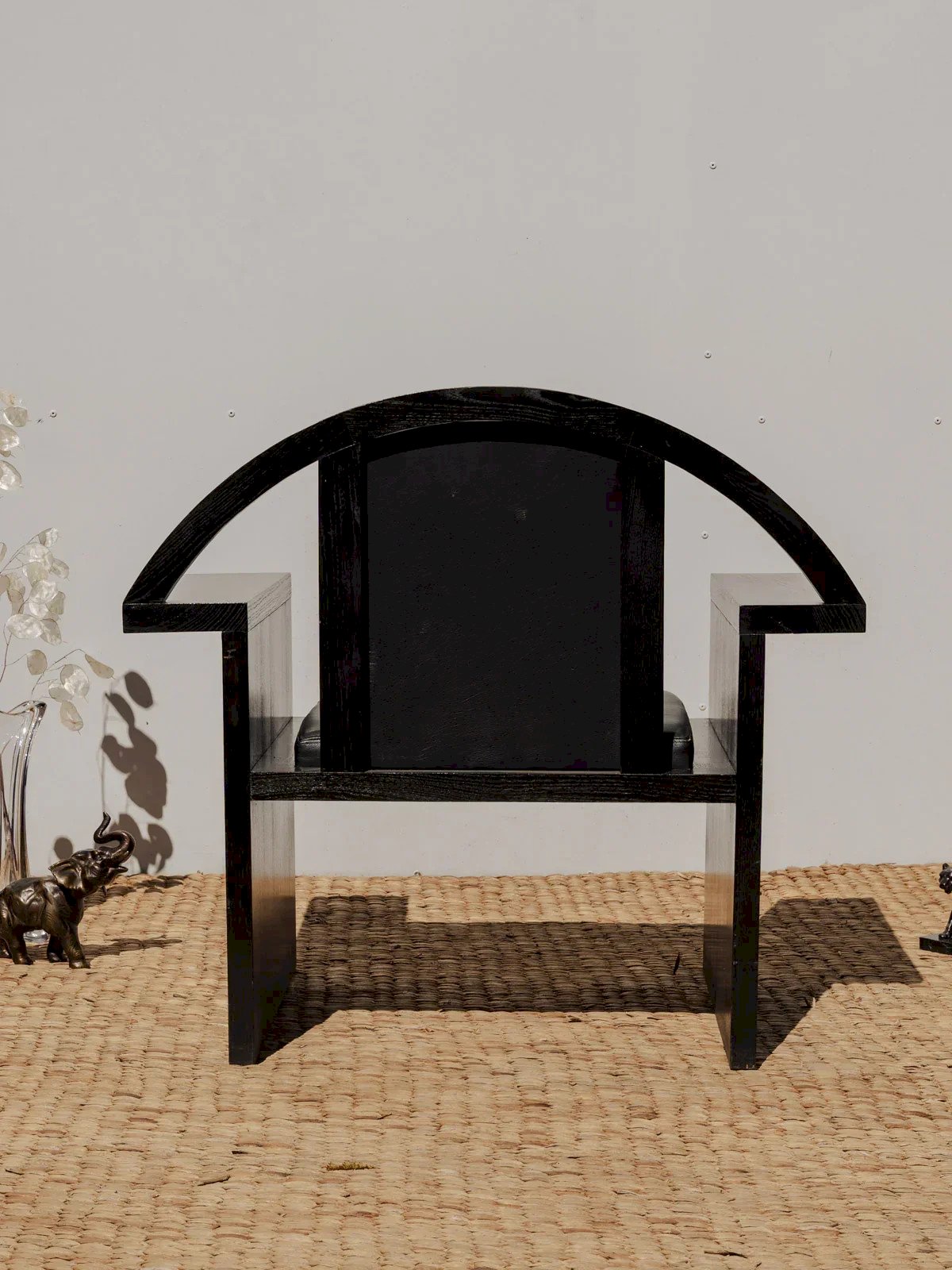
Adopt this sleekly designed armchair, whose black wood structure highlights graphic and contemporary lines. The black leather seat and backrest offer assertive comfort and understated elegance, while its balanced proportions make it an ideal seat for a living room, office, or reading nook. Its presence creates a warm and architectured atmosphere, easy to pair with a modern interior. Some signs of wear are present. Width: 86.5 cm Depth: 54.5 cm Height: 80.7 cm Seat height: 40 cm Seat width: 57 cm Seat depth: 43 cm A little history of the armchair If the chair is made for work or dining, the armchair was born in the 17th century for a single mission: rest. Its name derives from the Old French "faudesteuil," a folding seat for dignitaries, but it emancipated under Louis XV to become this comfort piece equipped with armrests. Unlike the chair, it favors a wider seat and a reclined backrest, inviting conversation rather than a rigid posture. Whether it's a "bergère" with full cheeks to shield from drafts or a lighter "bridge" armchair, it embodies the evolution of the art of living.
Réf :
#412009
Brand / From : Debongout
Related Products

Comments
Jakob, the black leather and wood armchair No. 967
849€
75002 Paris
Ce site contient des liens d’affiliation pour lesquels je peux recevoir une compensation.
Description
Adopt this sleekly designed armchair, whose black wood structure highlights graphic and contemporary lines. The black leather seat and backrest offer assertive comfort and understated elegance, while its balanced proportions make it an ideal seat for a living room, office, or reading nook. Its presence creates a warm and architectured atmosphere, easy to pair with a modern interior. Some signs of wear are present. Width: 86.5 cm Depth: 54.5 cm Height: 80.7 cm Seat height: 40 cm Seat width: 57 cm Seat depth: 43 cm A little history of the armchair If the chair is made for work or dining, the armchair was born in the 17th century for a single mission: rest. Its name derives from the Old French "faudesteuil," a folding seat for dignitaries, but it emancipated under Louis XV to become this comfort piece equipped with armrests. Unlike the chair, it favors a wider seat and a reclined backrest, inviting conversation rather than a rigid posture. Whether it's a "bergère" with full cheeks to shield from drafts or a lighter "bridge" armchair, it embodies the evolution of the art of living.
Réf :
#412009
Brand / From : Debongout