 English
 Français


Description
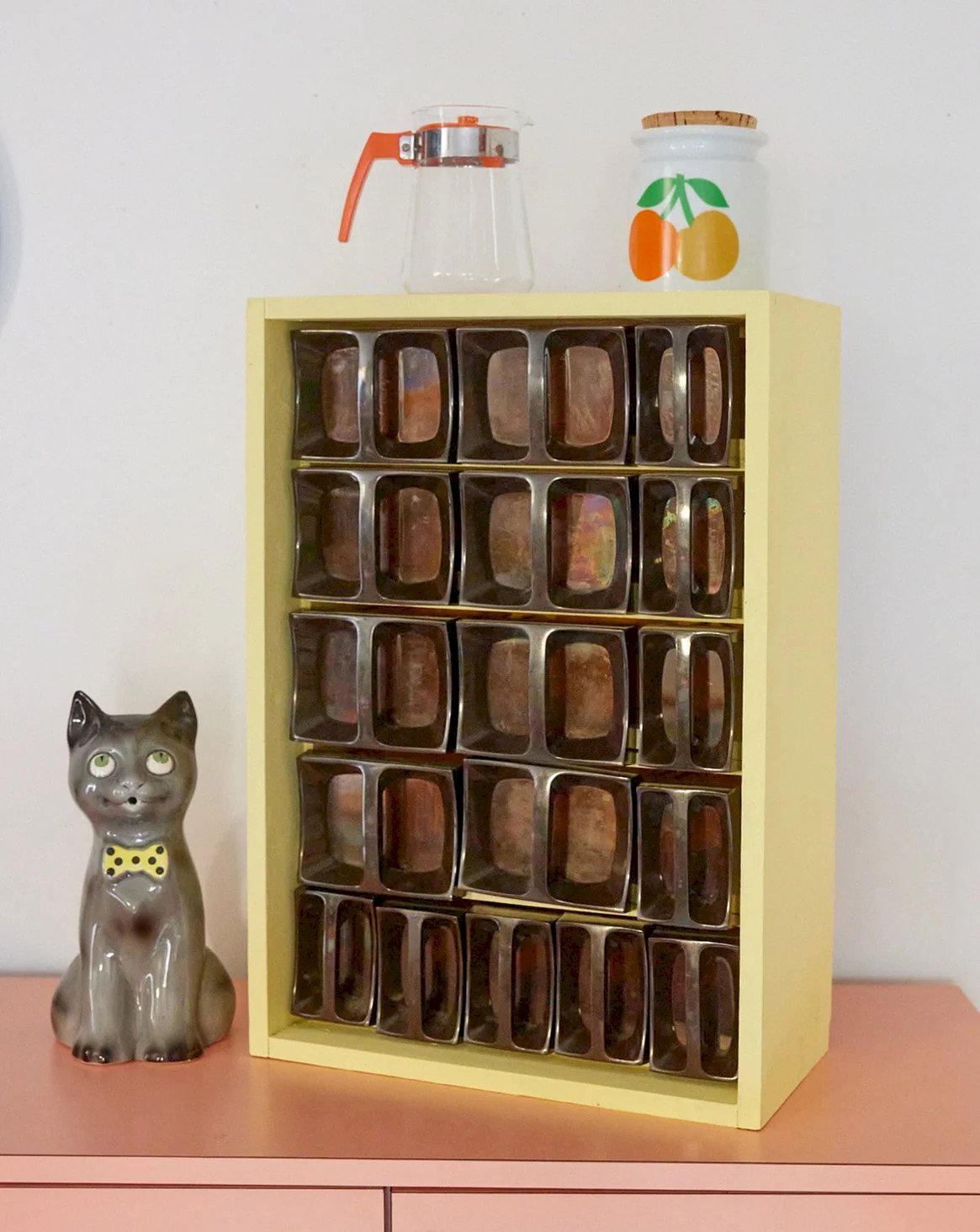
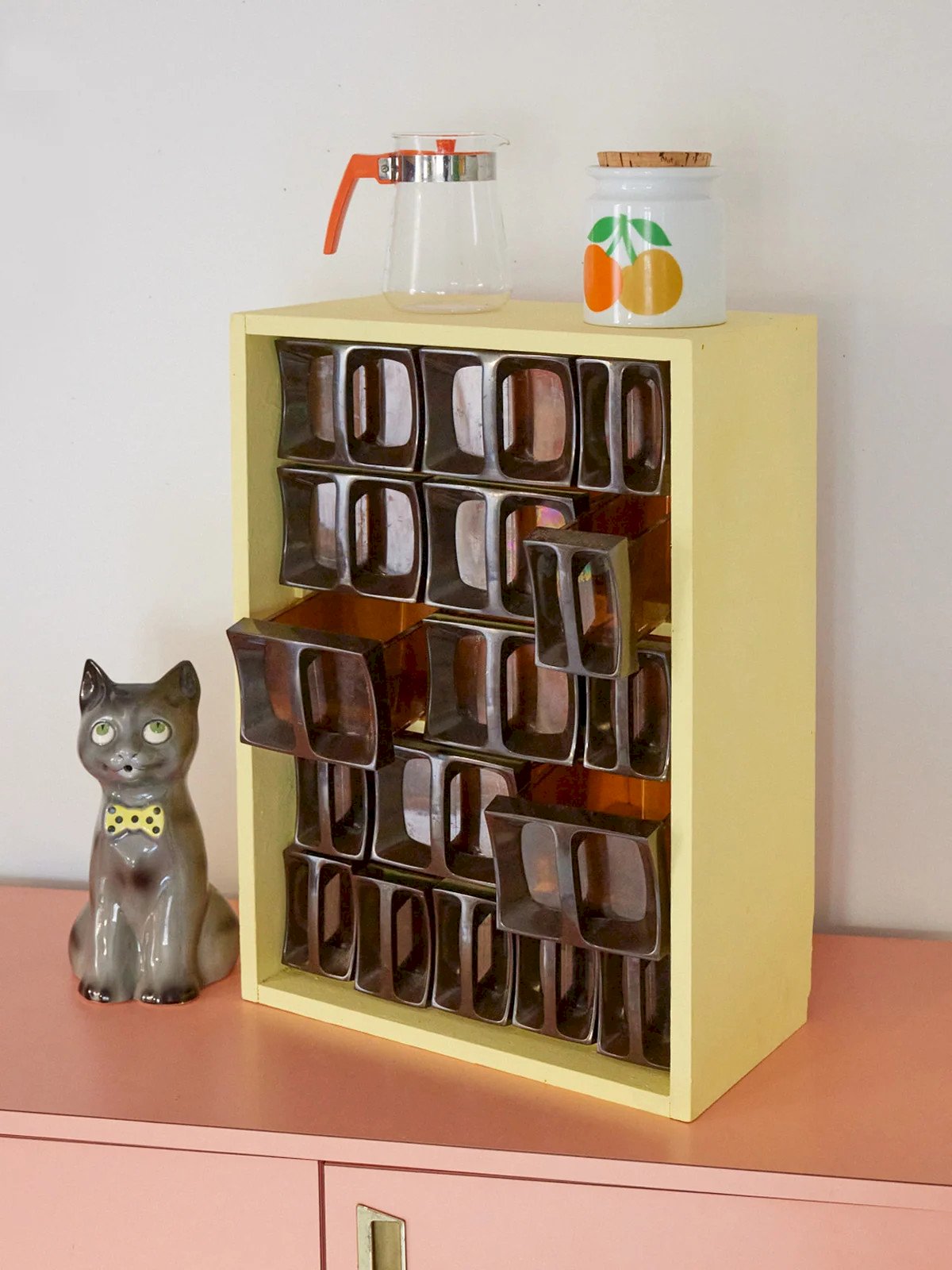
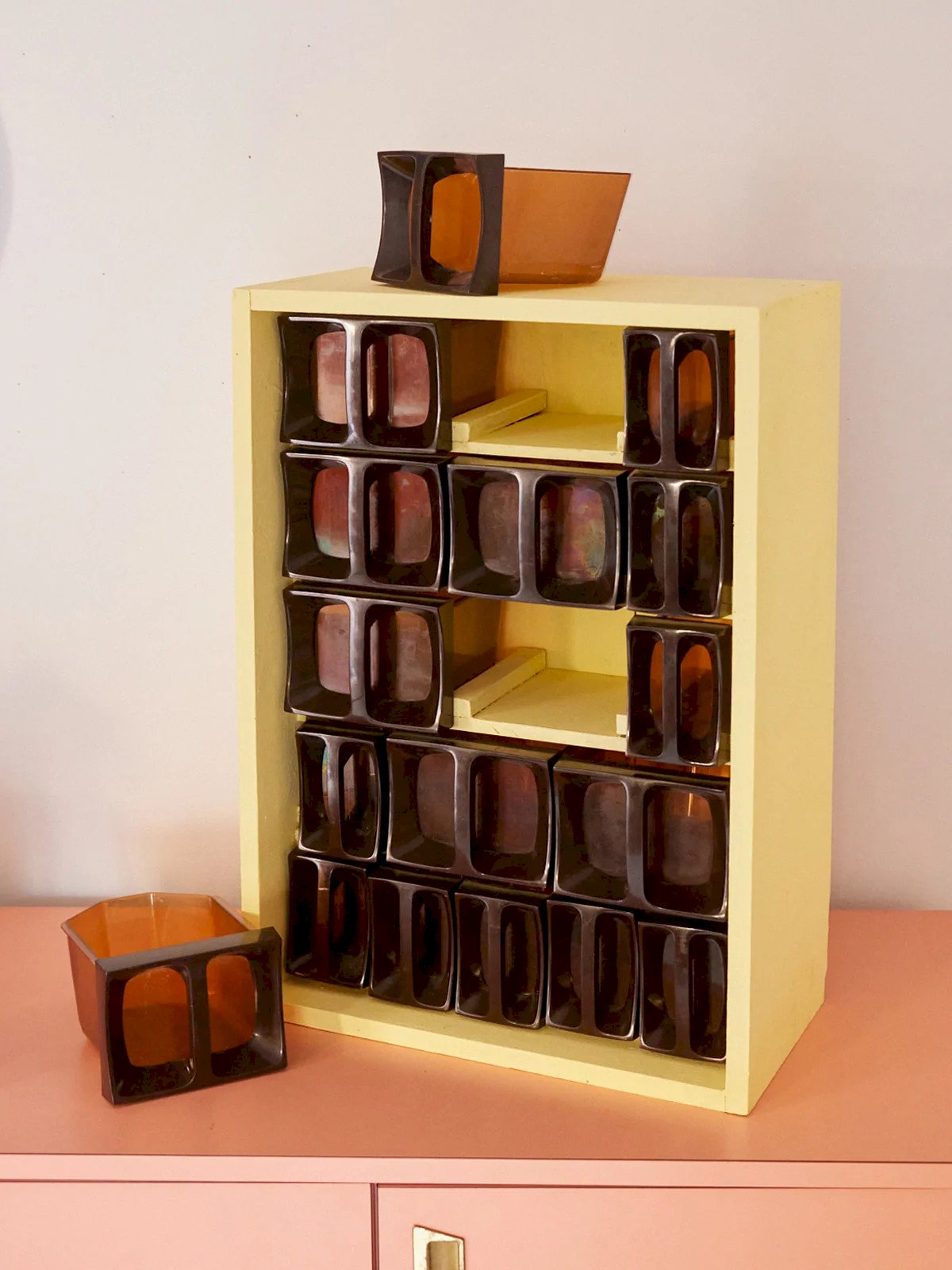
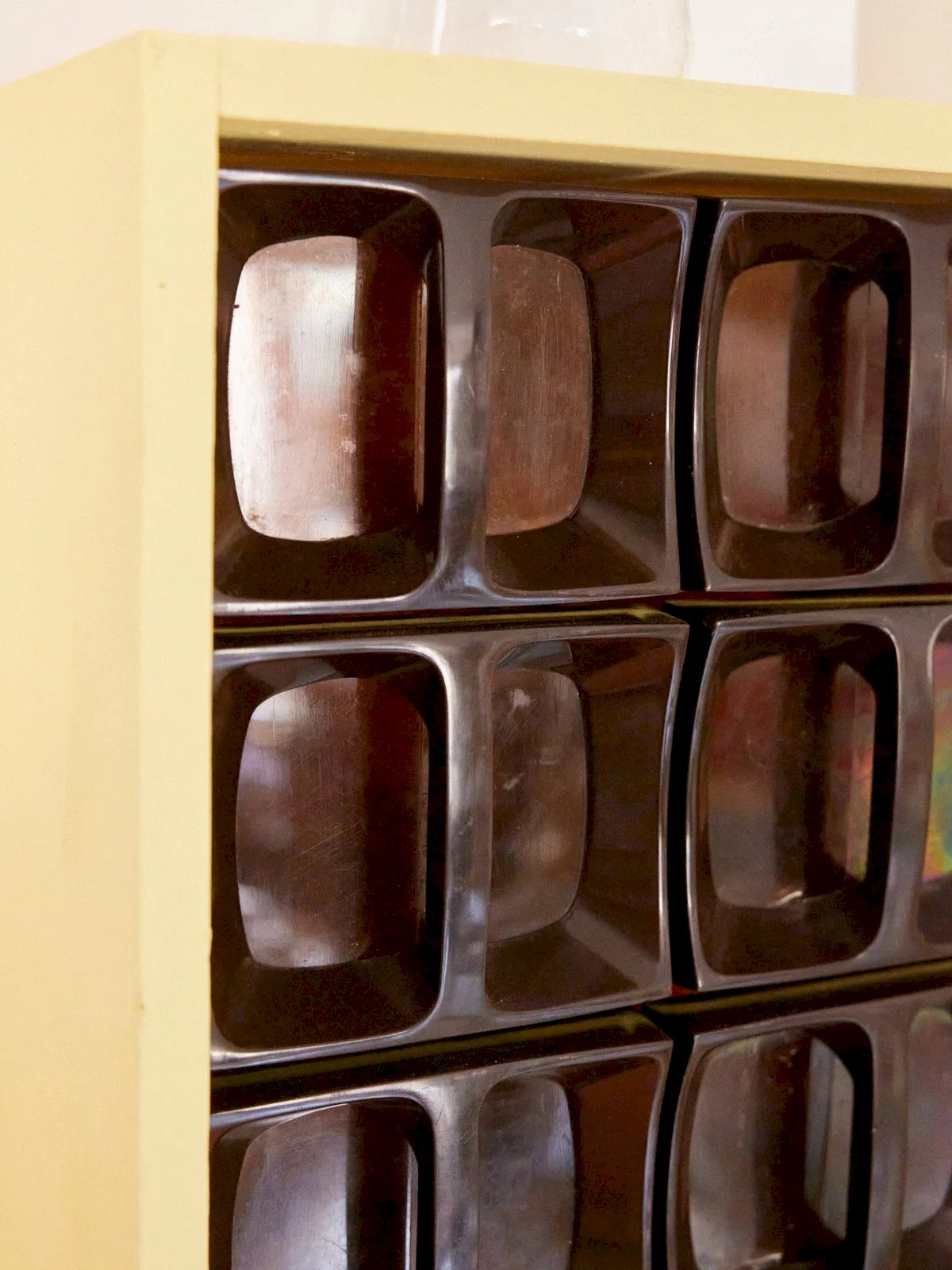
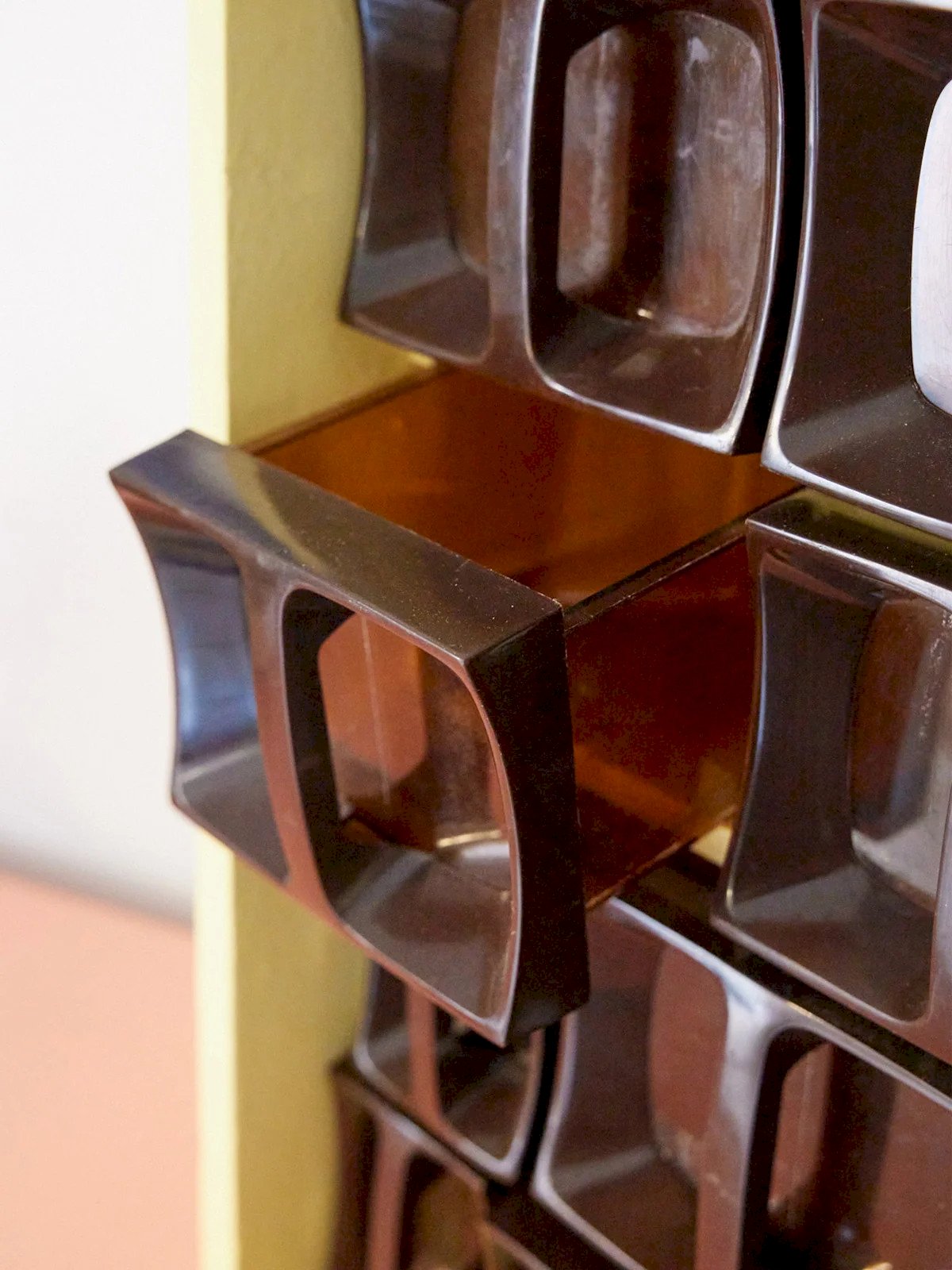
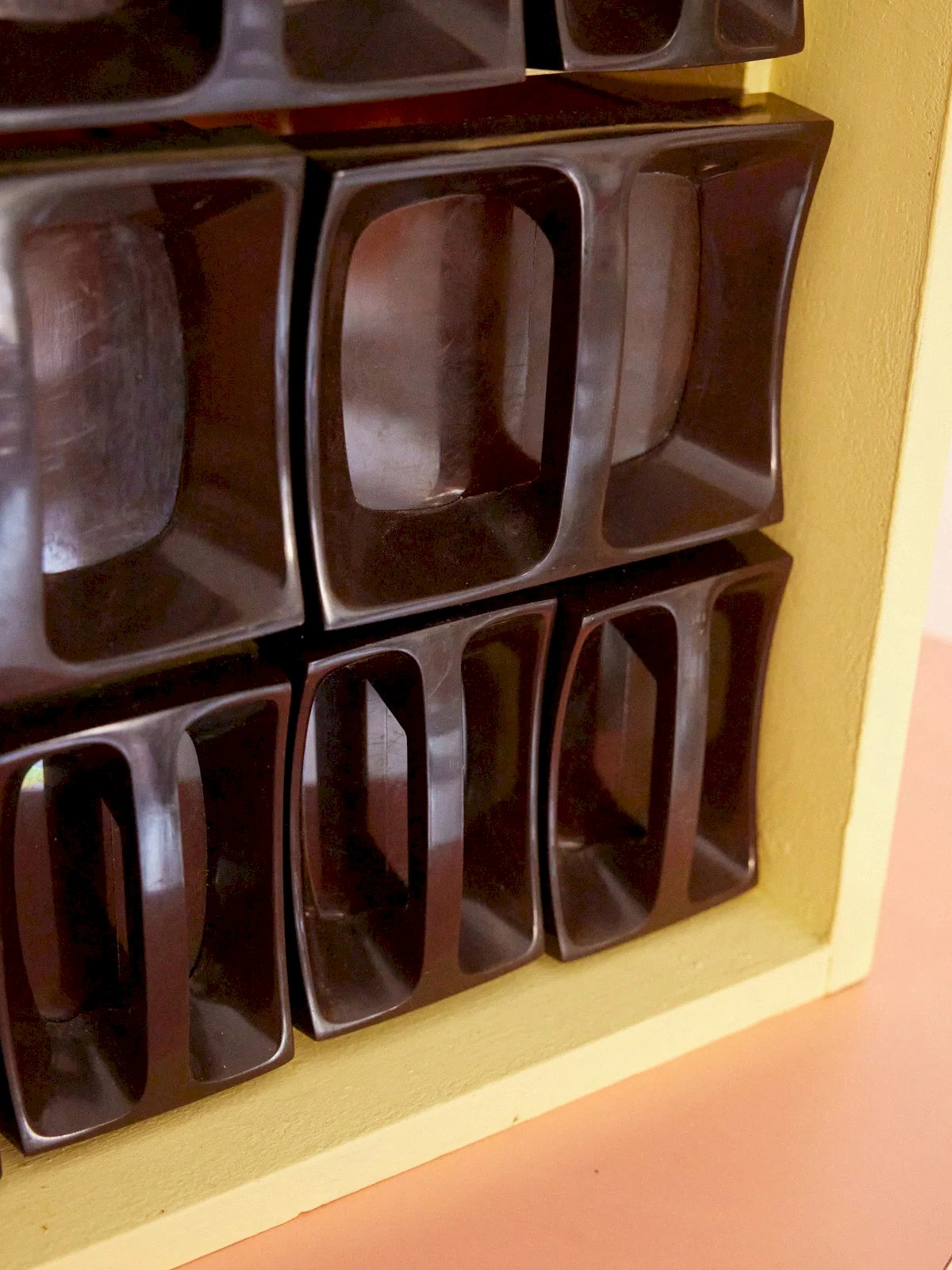
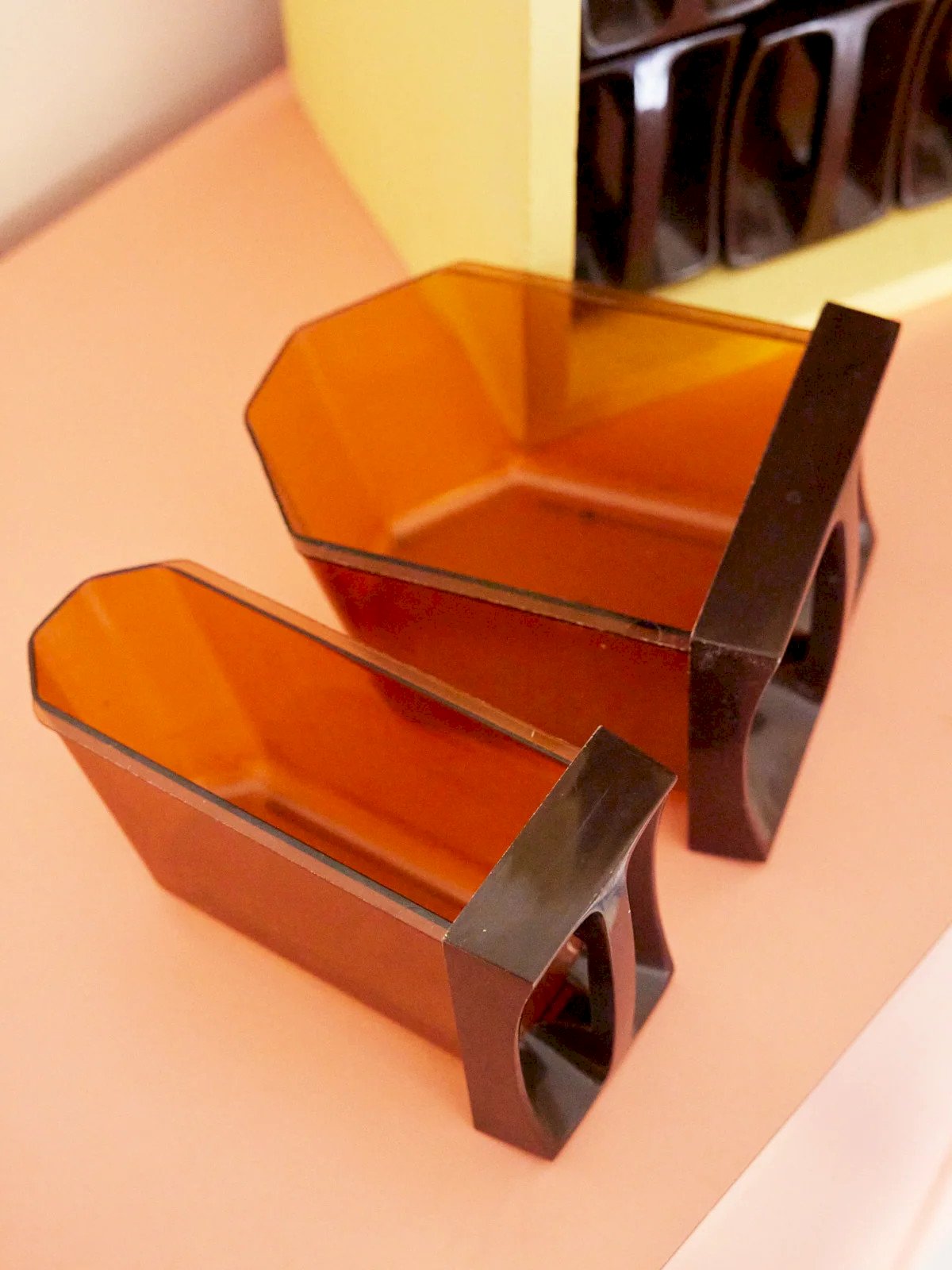
With its wood painted in a yellow hue and its drawers in a smoky-colored plastic, this second-hand spice rack brings a contemporary and tidy touch to the kitchen. Its seventeen drawers hold rice, pasta, salt, sugar, and flour, providing each ingredient with a distinct and easy-to-read storage space. The wooden box structure offers a sober base, while the smoky fronts allow a glimpse of the contents without weighing down the overall look. Placed on a countertop, it pairs well with glass jars, a cutting board, and white dishware. In a corner of the kitchen, it also complements an Italian coffee maker and a few metal tins for a neat and functional ensemble. Length: 42 cm Width: 23 cm Height: 61 cm A Brief History of the Shelf Long before becoming the sleek piece of furniture we know today, the shelf was just a simple plank of raw wood fixed in kitchens or workshops to keep tools within reach. It gained noble status in the 18th century under the name "gradin," making its way into living rooms to display precious bindings or fine porcelain. Its structure without doors or side panels makes it the lightest piece of furniture in the house, a feat of minimalism that frees up floor space while dressing the walls. Today, it serves not only as storage but also to stage our daily lives, transforming a utility surface into a true living tableau that breathes and allows light to circulate.
Réf :
#414704
Brand / From : Debongout
Related Products
Comments
Isabelle, the vintage wooden spice rack No. 376
229€
75002 Paris
Ce site contient des liens d’affiliation pour lesquels je peux recevoir une compensation.
Description
With its wood painted in a yellow hue and its drawers in a smoky-colored plastic, this second-hand spice rack brings a contemporary and tidy touch to the kitchen. Its seventeen drawers hold rice, pasta, salt, sugar, and flour, providing each ingredient with a distinct and easy-to-read storage space. The wooden box structure offers a sober base, while the smoky fronts allow a glimpse of the contents without weighing down the overall look. Placed on a countertop, it pairs well with glass jars, a cutting board, and white dishware. In a corner of the kitchen, it also complements an Italian coffee maker and a few metal tins for a neat and functional ensemble. Length: 42 cm Width: 23 cm Height: 61 cm A Brief History of the Shelf Long before becoming the sleek piece of furniture we know today, the shelf was just a simple plank of raw wood fixed in kitchens or workshops to keep tools within reach. It gained noble status in the 18th century under the name "gradin," making its way into living rooms to display precious bindings or fine porcelain. Its structure without doors or side panels makes it the lightest piece of furniture in the house, a feat of minimalism that frees up floor space while dressing the walls. Today, it serves not only as storage but also to stage our daily lives, transforming a utility surface into a true living tableau that breathes and allows light to circulate.
Réf :
#414704
Brand / From : Debongout