 English
 Français


Description
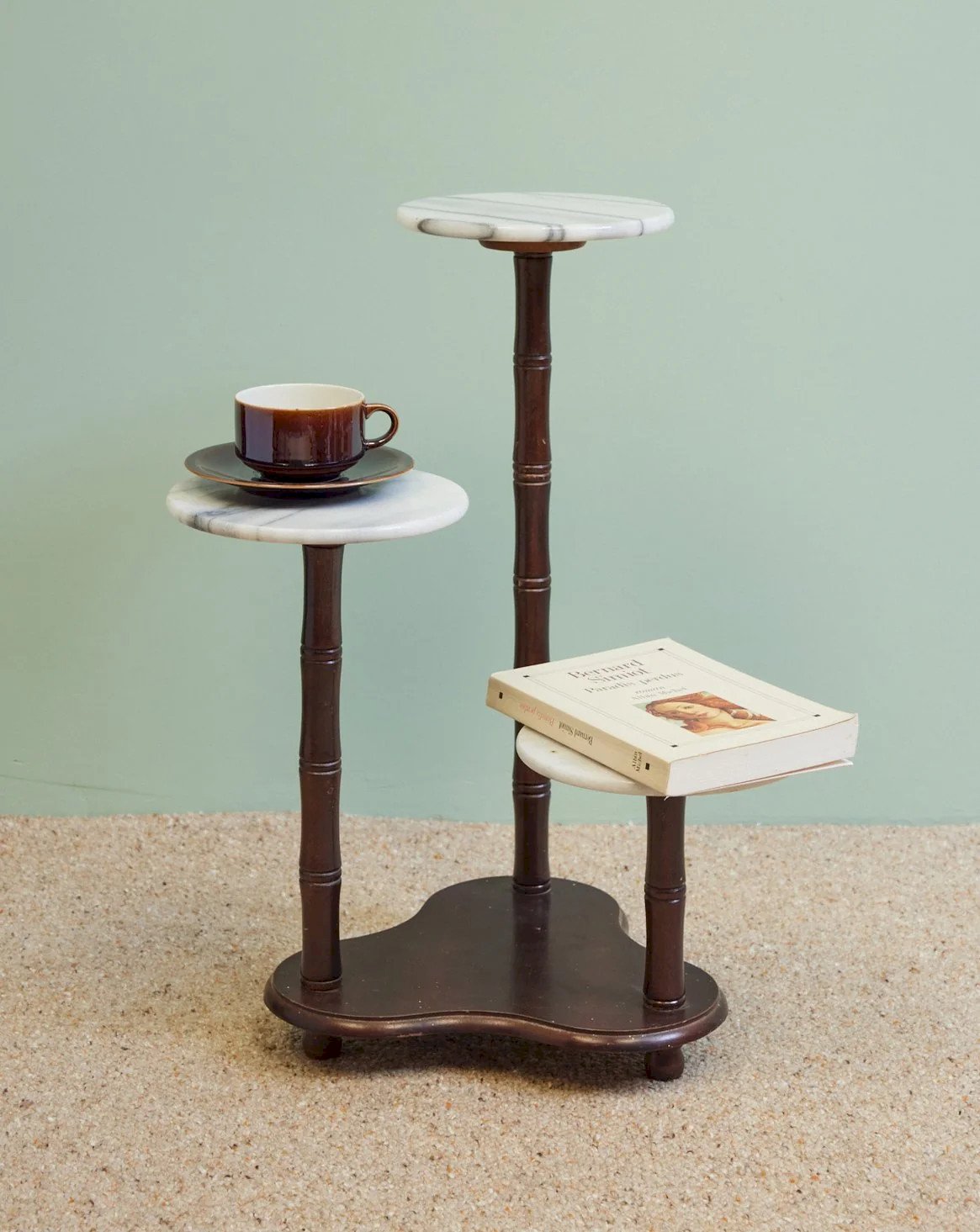
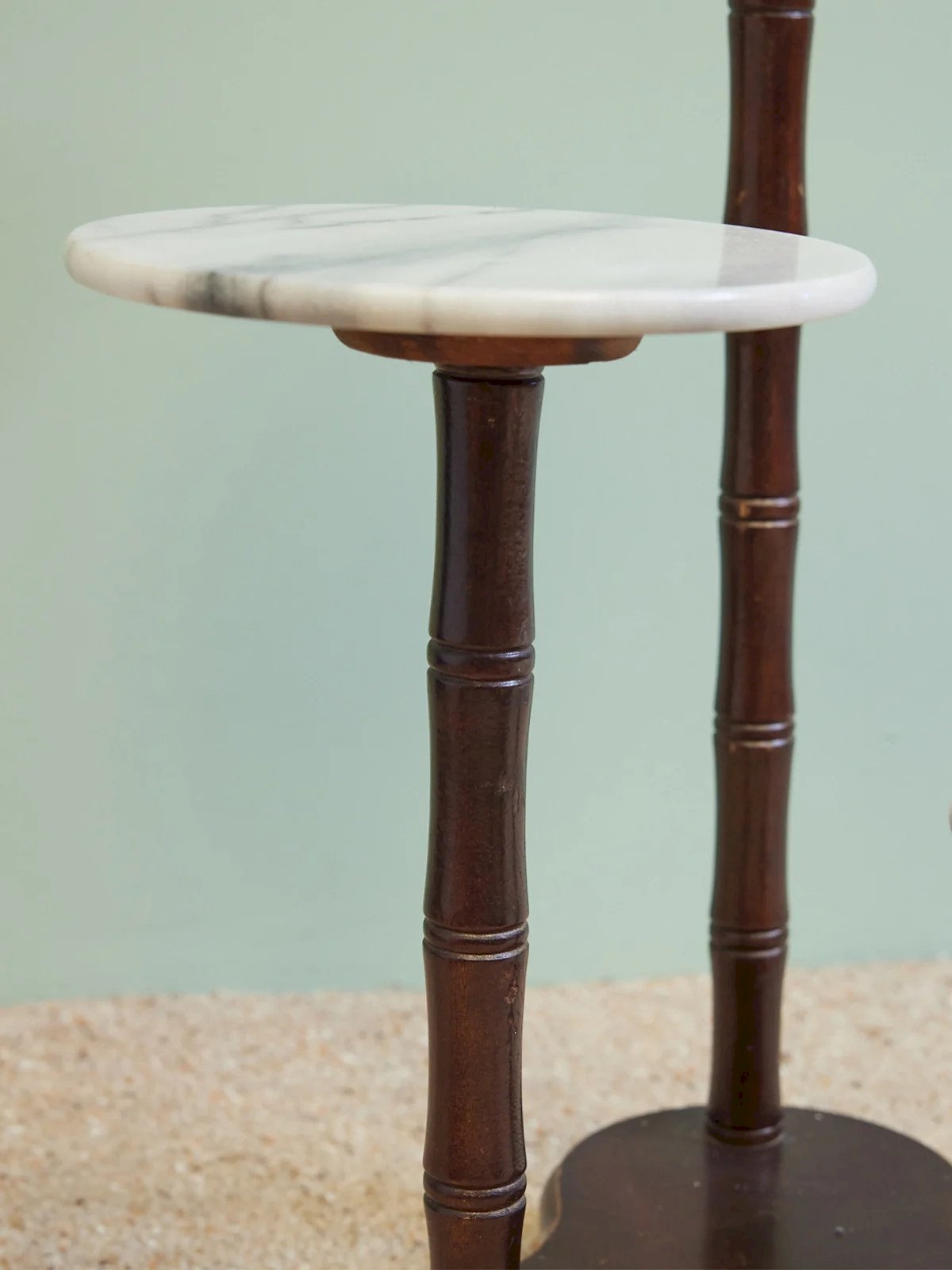
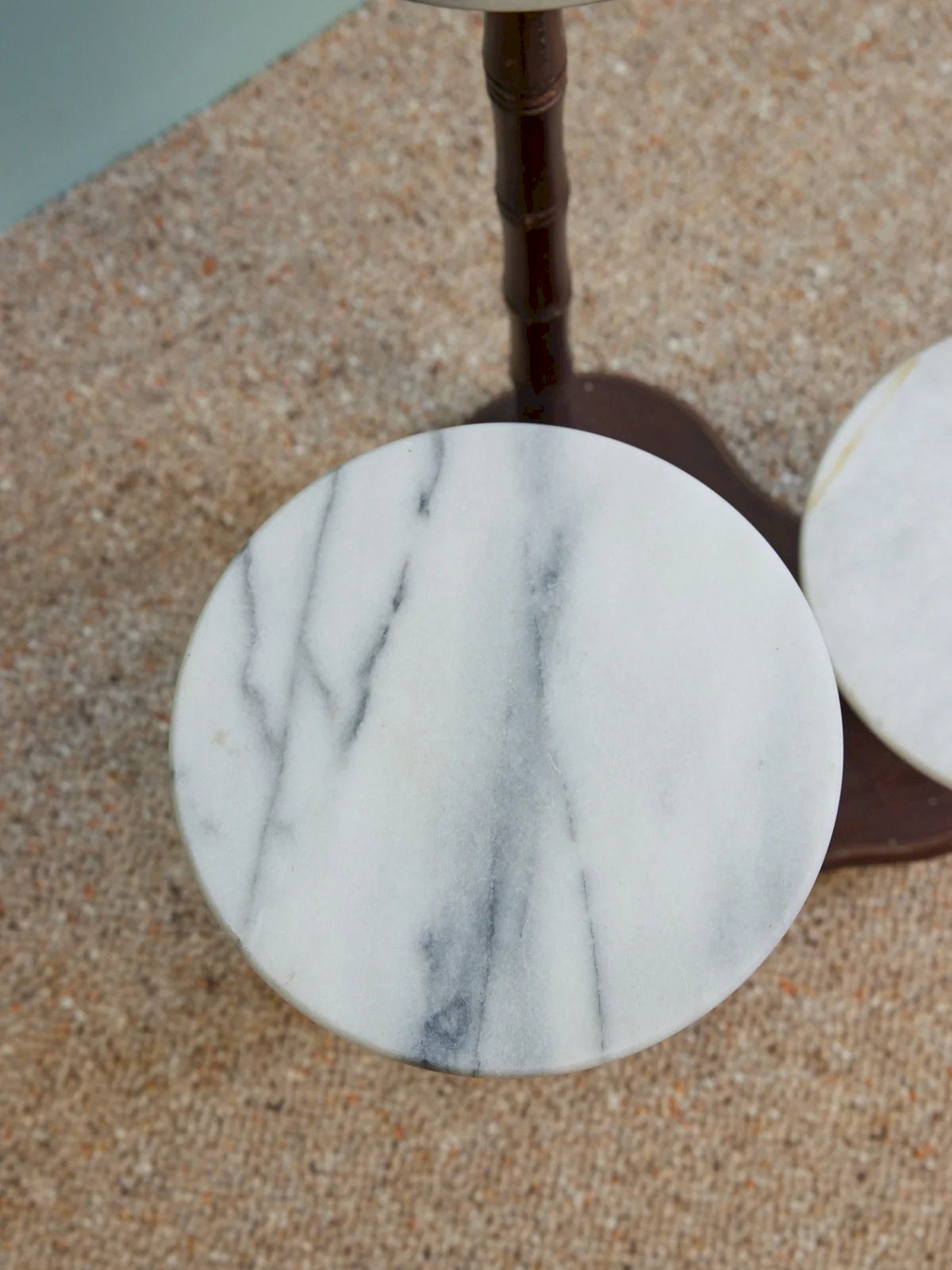
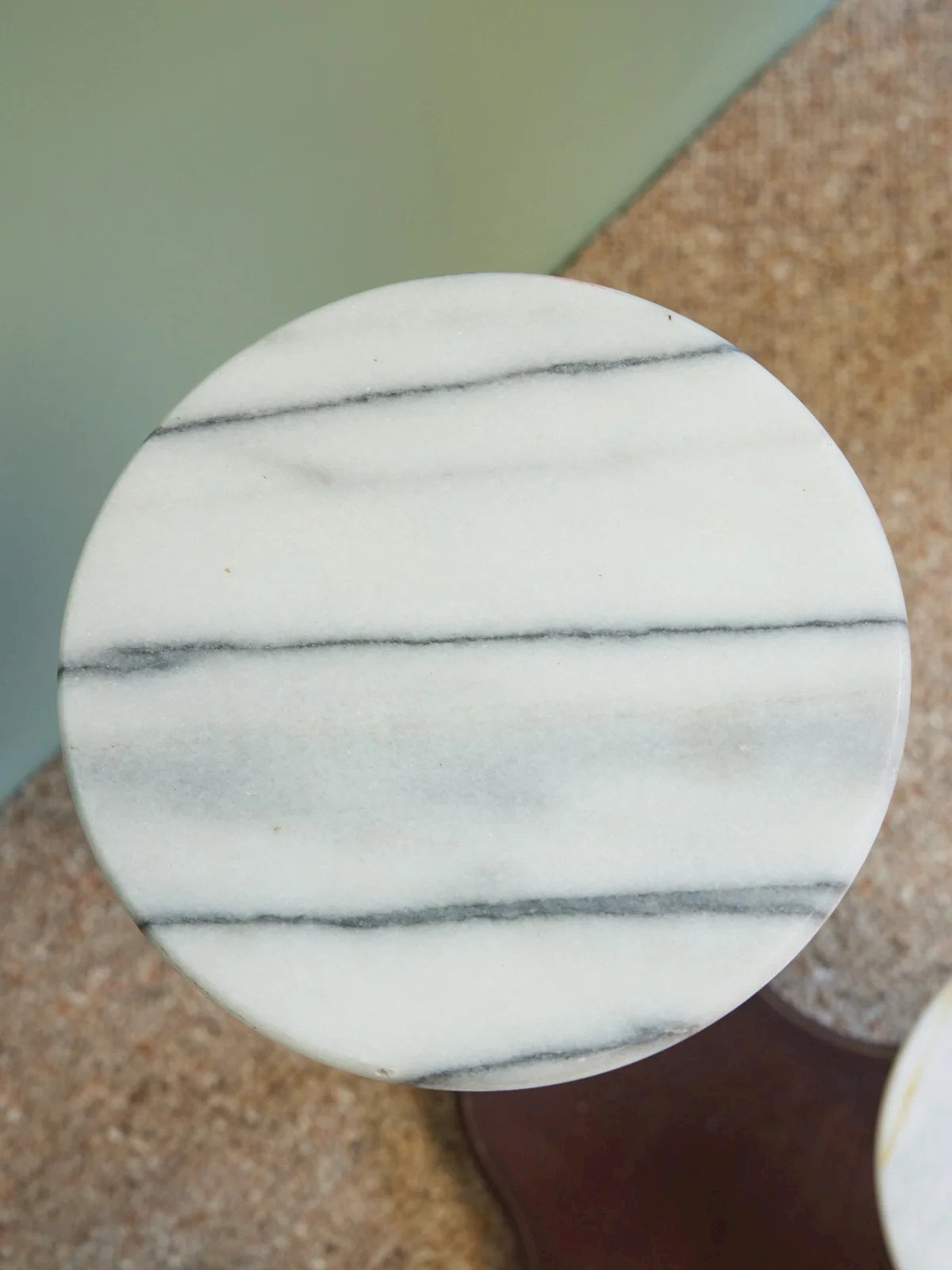
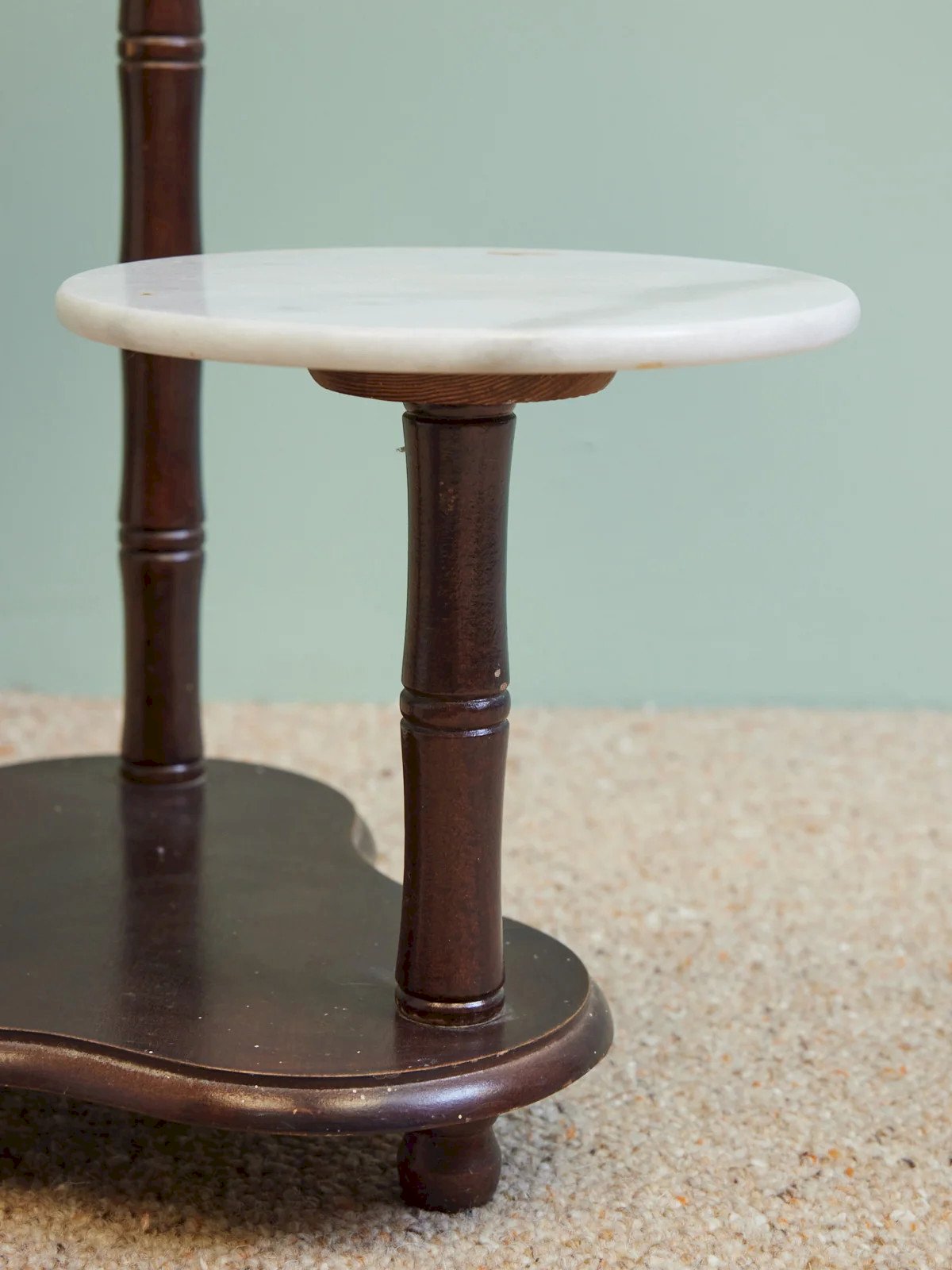
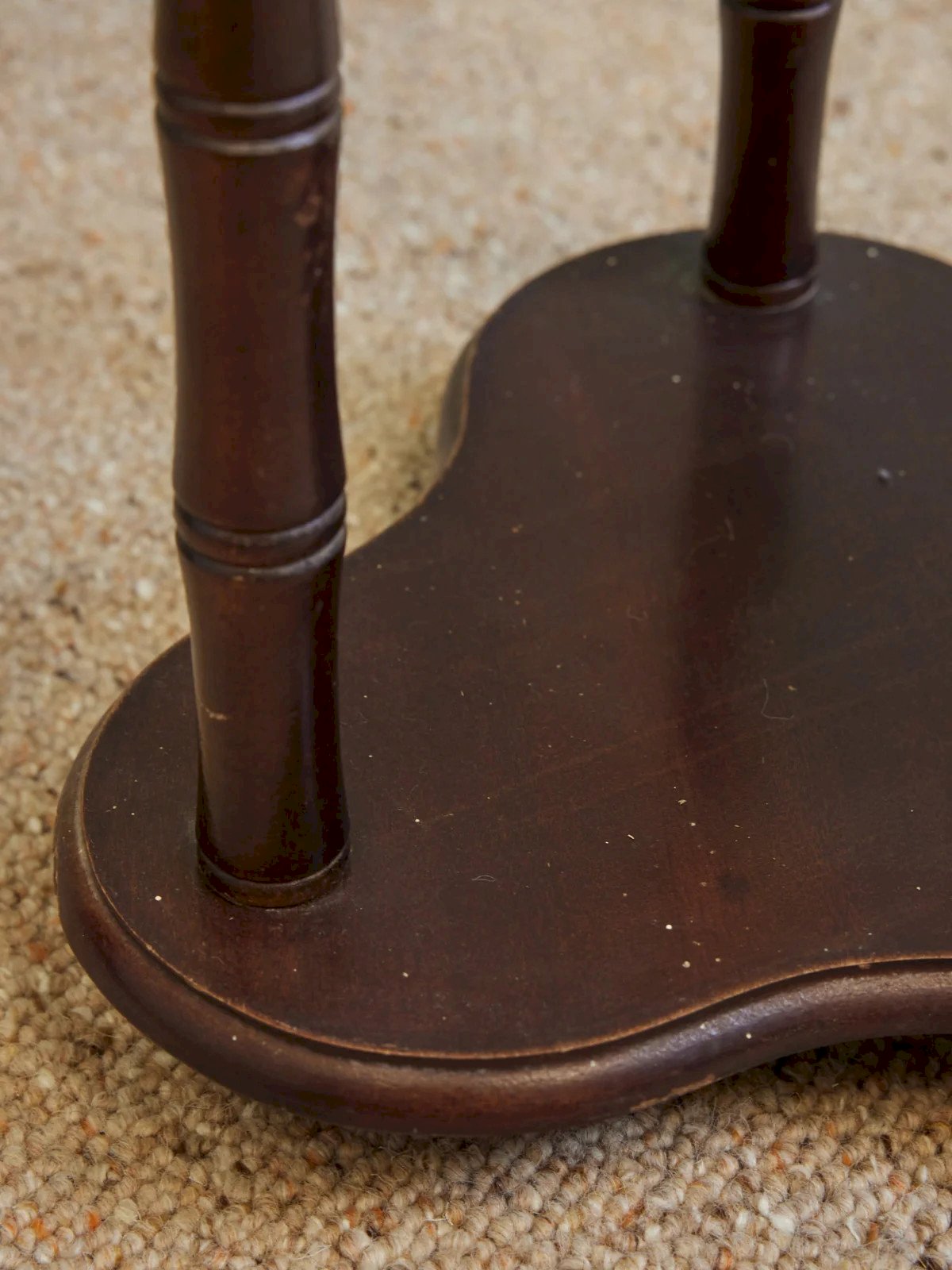
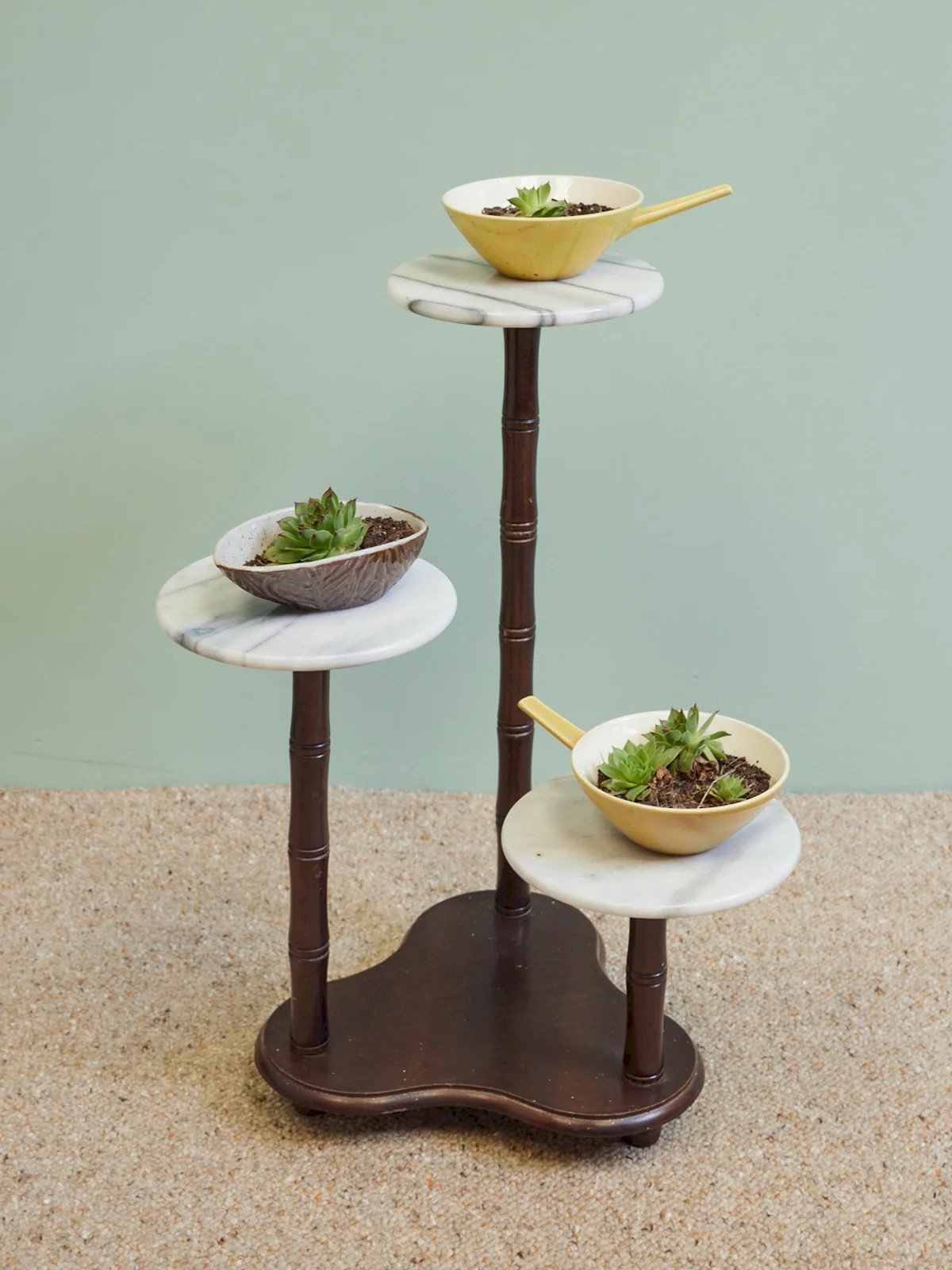
This dark wooden and gray marble side table, vintage and decidedly contemporary, attracts attention with the elegance of its three sculpted wooden legs in a bamboo style. The side table features three small round gray marble trays, providing a refined support for a cup, a book, or a reading lamp. Its slender format easily slips next to a sofa or near an armchair without weighing down the space. The combination of wood and stone creates a understated presence, ideal in a living room with modern lines. Placed next to a fabric armchair, it holds a stack of books and a light ceramic cup. Height: 52 cm Diameter: 40 cm A little history of the side table Born in the 17th century under the name "guéridon," the side table owes its origin to the Moorish slaves [called guéridons] depicted on the sculpted legs of the early models brought back from Italy. This nomadic piece of furniture revolutionized social life at court by breaking the rigidity of large buffets to create conversation islands anywhere in the room. Its lightweight and compact structure was designed to be moved according to needs: to place a candlestick, a cup of tea, or a bedside book.
Réf :
#413902
Brand / From : Debongout
Related Products


Comments
Hanna, the N°1584 wooden and marble side table
169€
75002 Paris
Ce site contient des liens d’affiliation pour lesquels je peux recevoir une compensation.
Description
This dark wooden and gray marble side table, vintage and decidedly contemporary, attracts attention with the elegance of its three sculpted wooden legs in a bamboo style. The side table features three small round gray marble trays, providing a refined support for a cup, a book, or a reading lamp. Its slender format easily slips next to a sofa or near an armchair without weighing down the space. The combination of wood and stone creates a understated presence, ideal in a living room with modern lines. Placed next to a fabric armchair, it holds a stack of books and a light ceramic cup. Height: 52 cm Diameter: 40 cm A little history of the side table Born in the 17th century under the name "guéridon," the side table owes its origin to the Moorish slaves [called guéridons] depicted on the sculpted legs of the early models brought back from Italy. This nomadic piece of furniture revolutionized social life at court by breaking the rigidity of large buffets to create conversation islands anywhere in the room. Its lightweight and compact structure was designed to be moved according to needs: to place a candlestick, a cup of tea, or a bedside book.
Réf :
#413902
Brand / From : Debongout