 English
 Français


Description
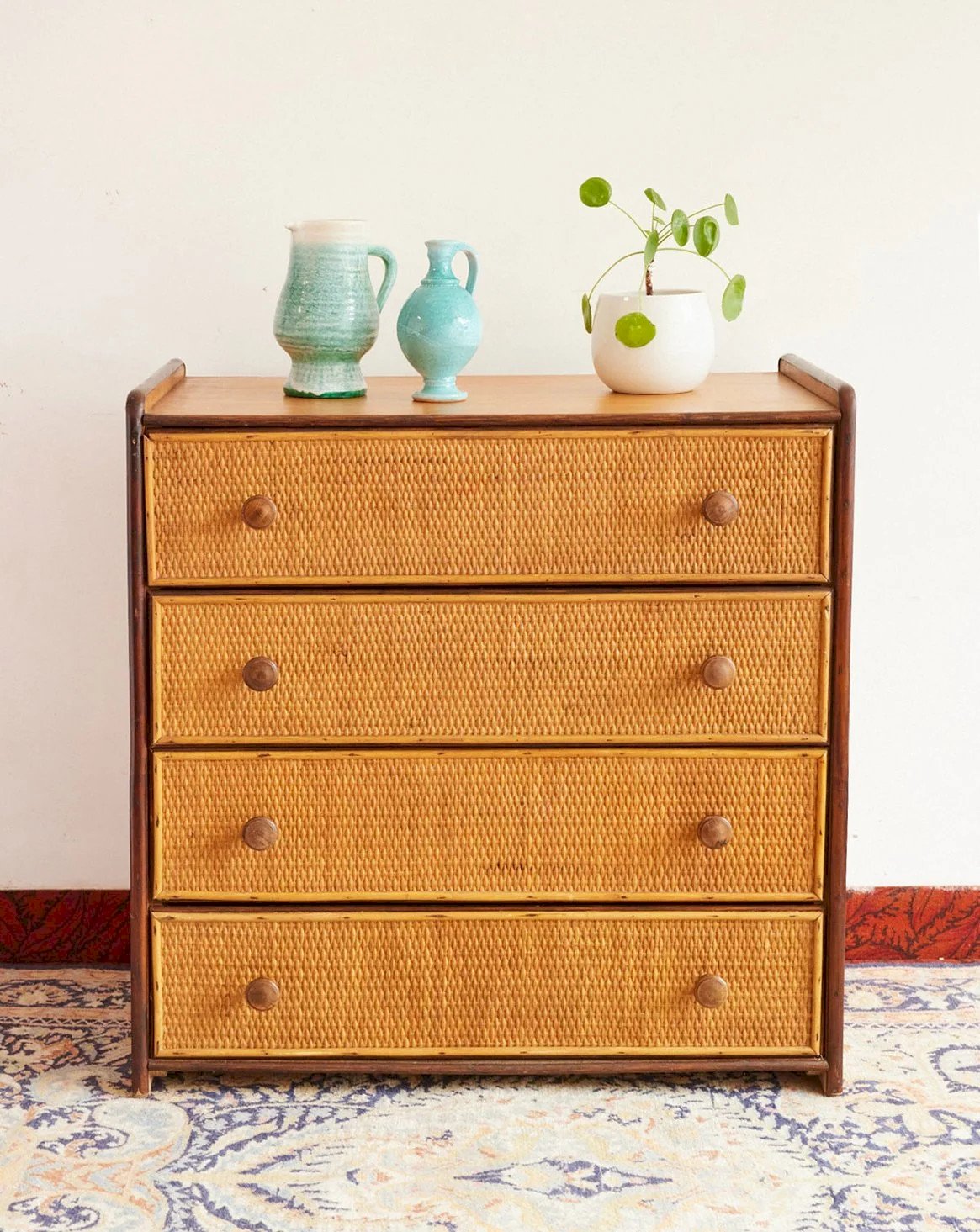
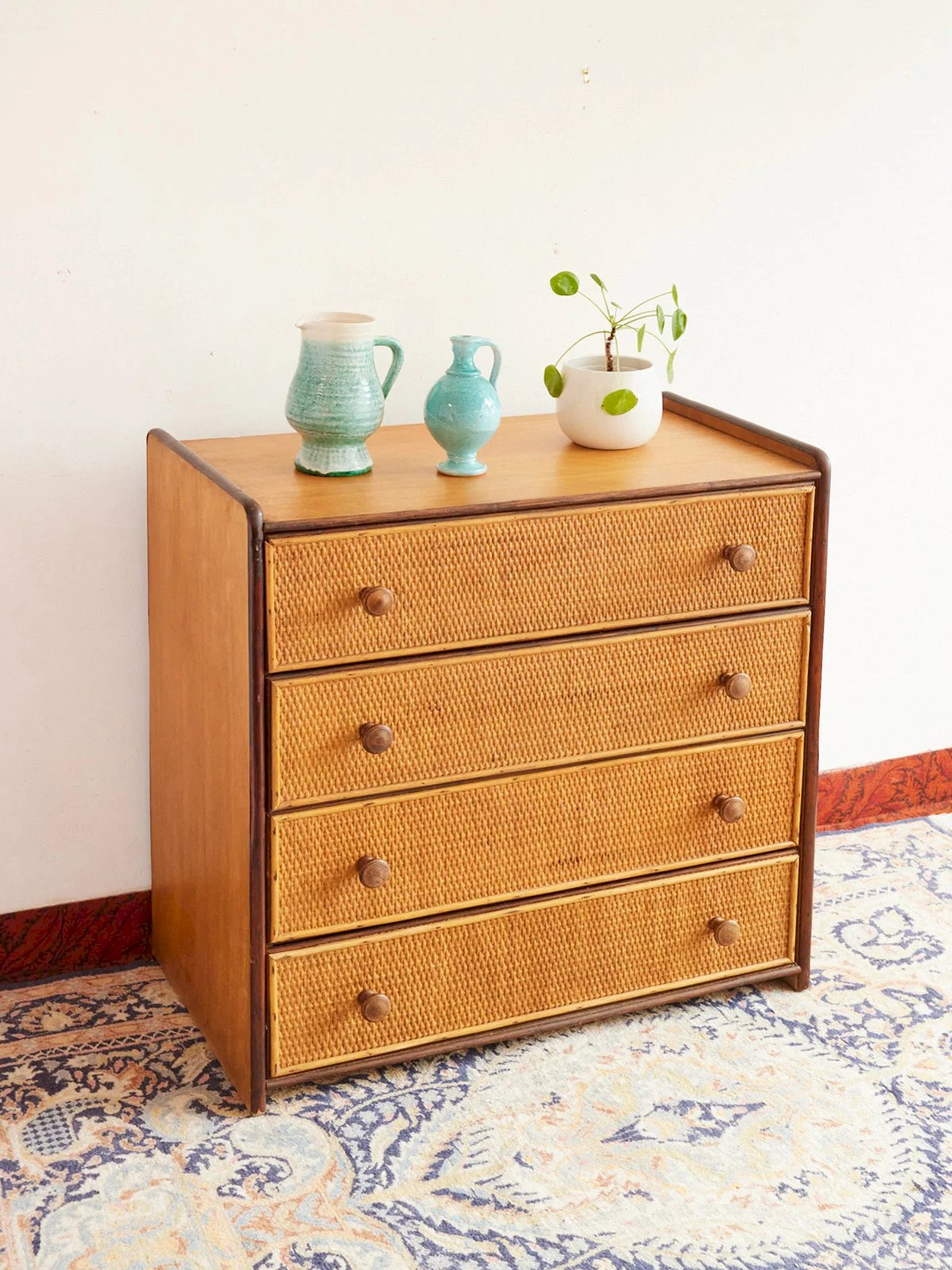
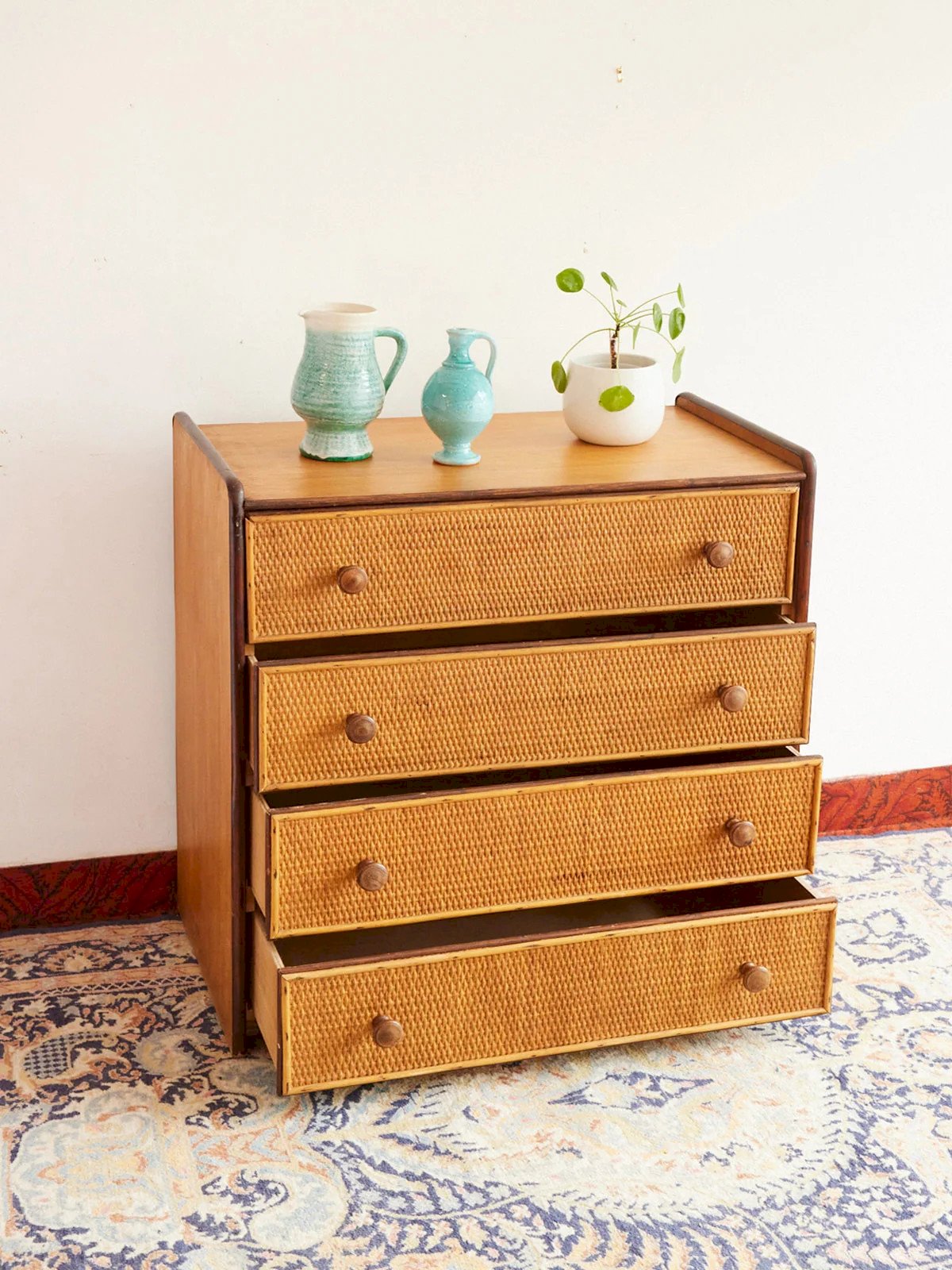
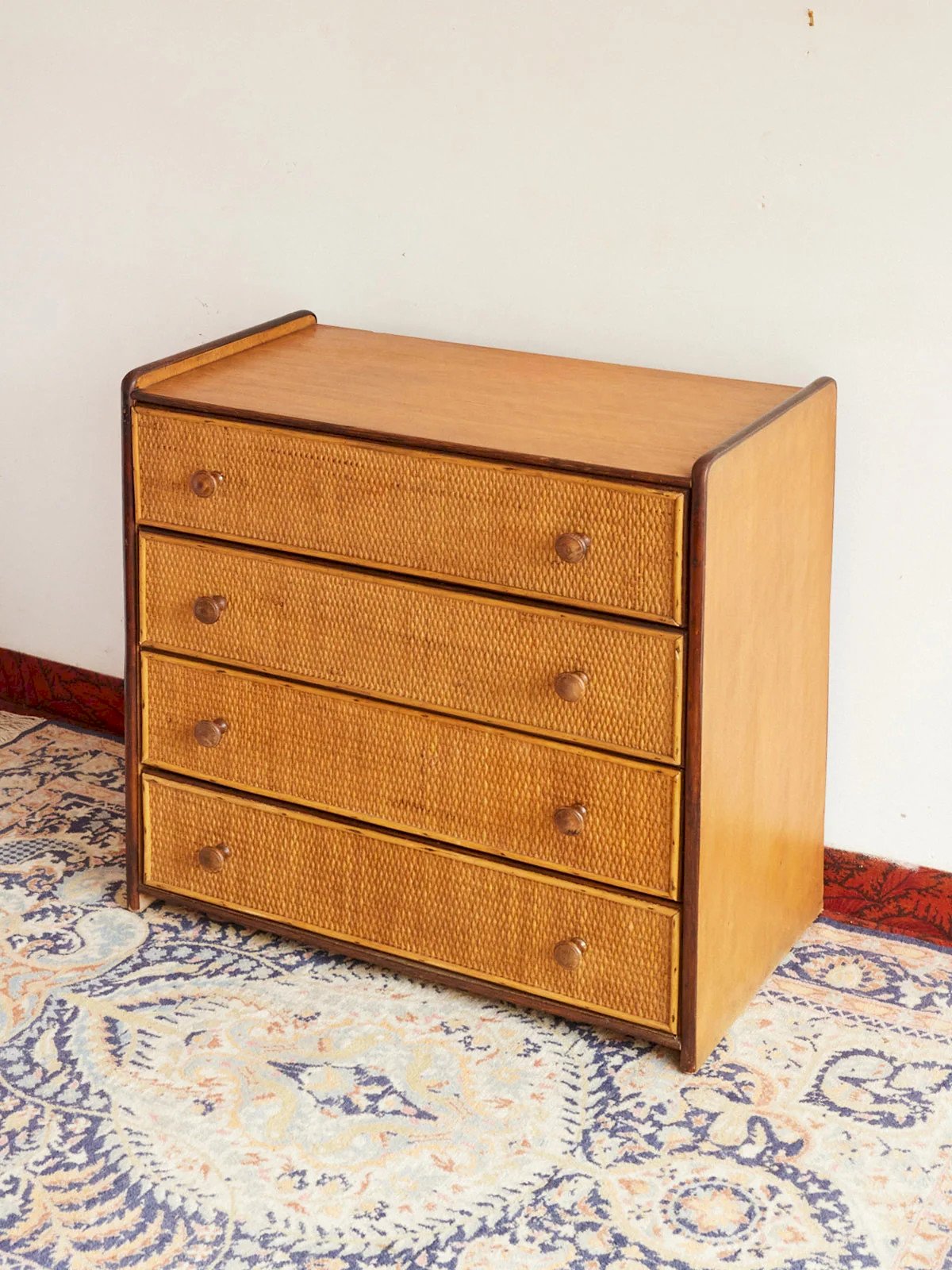
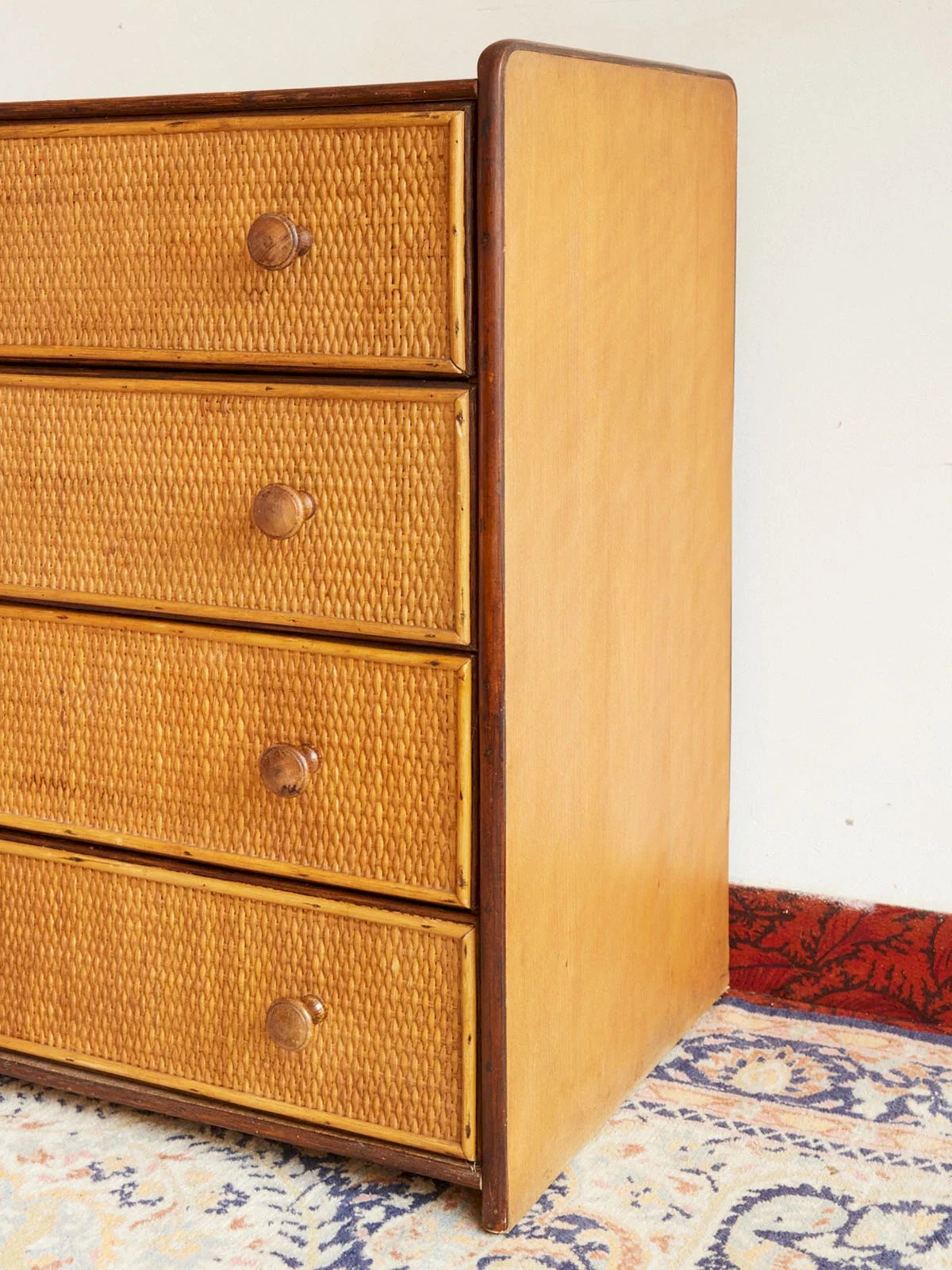
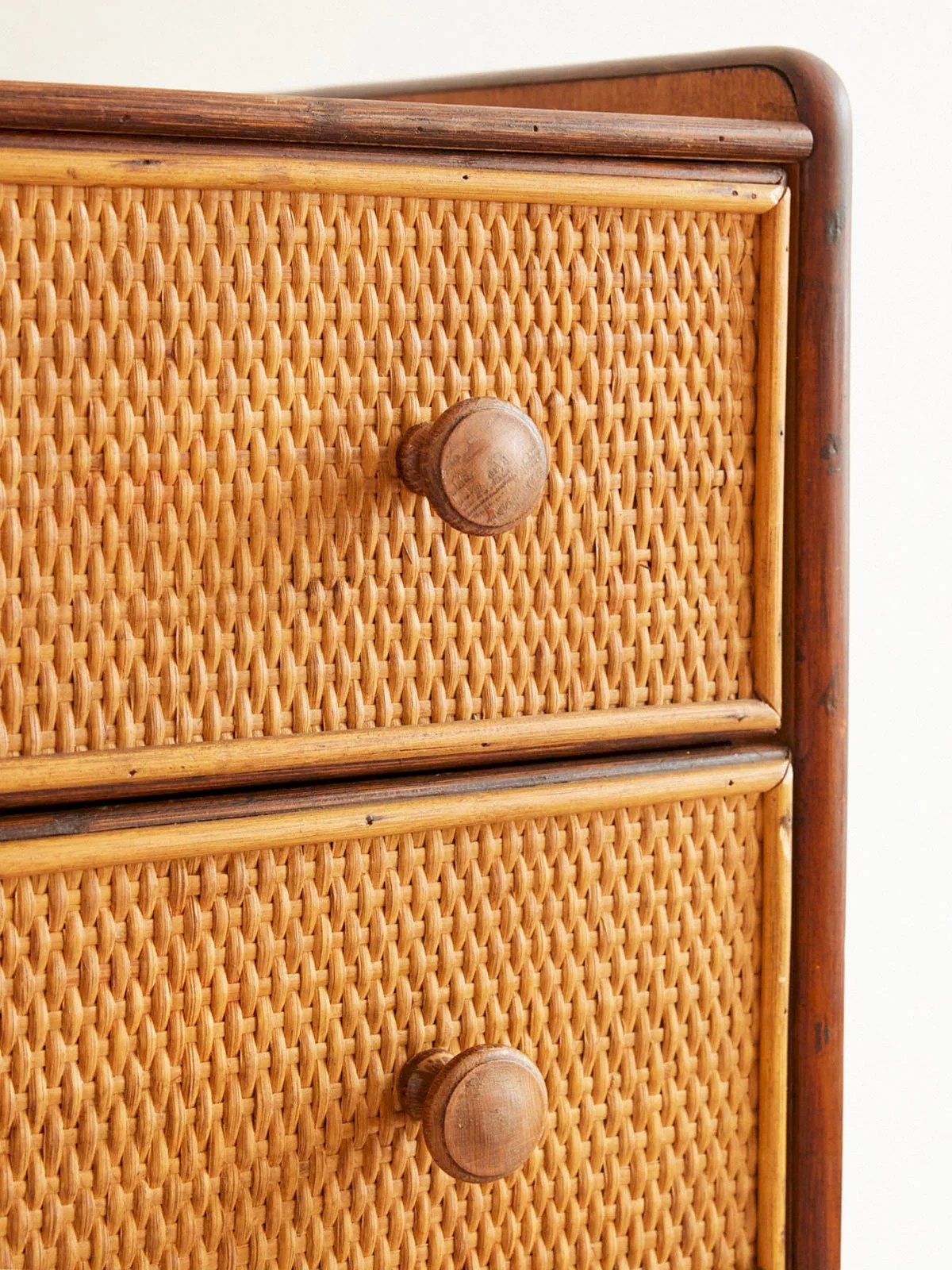
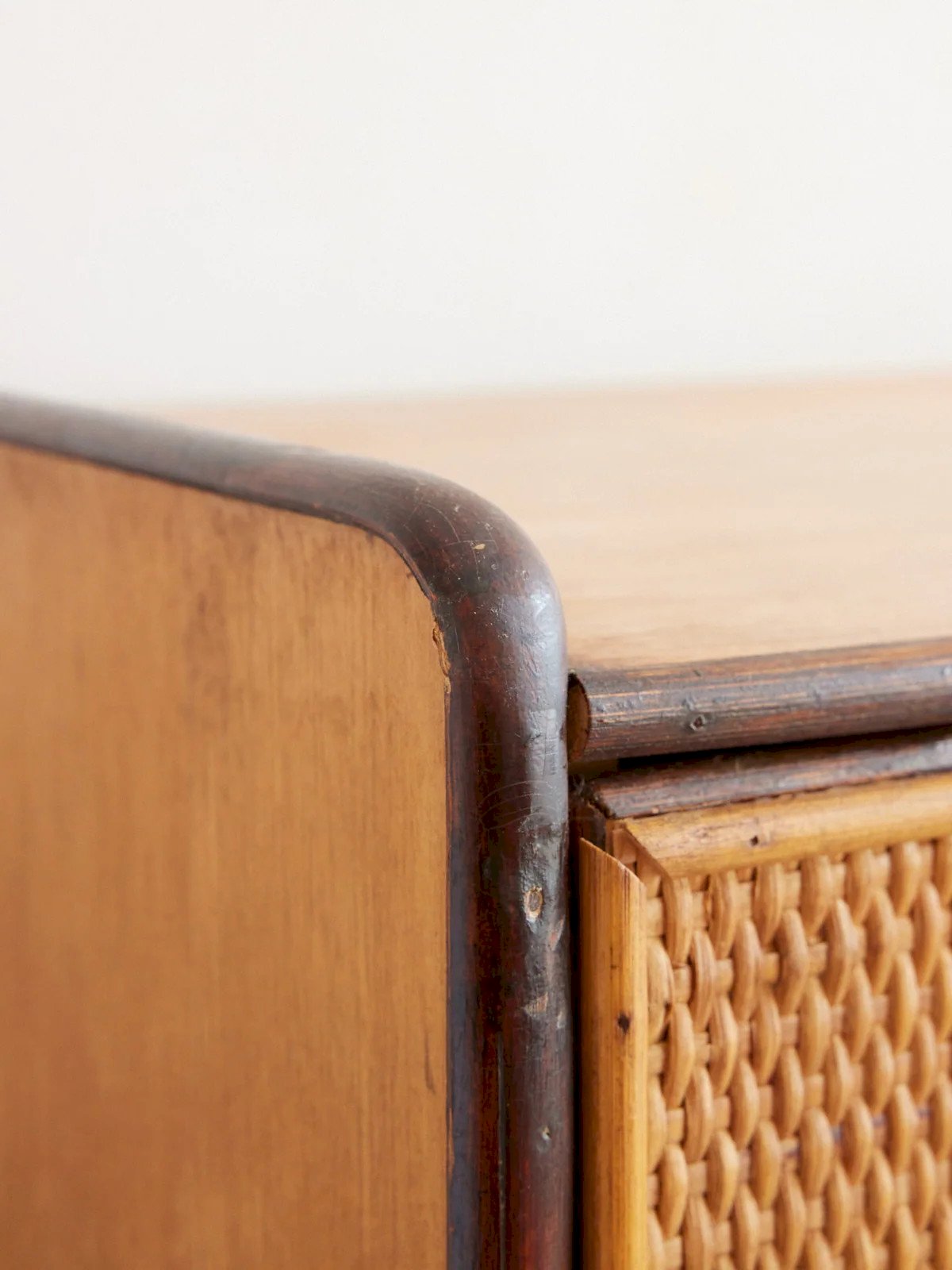
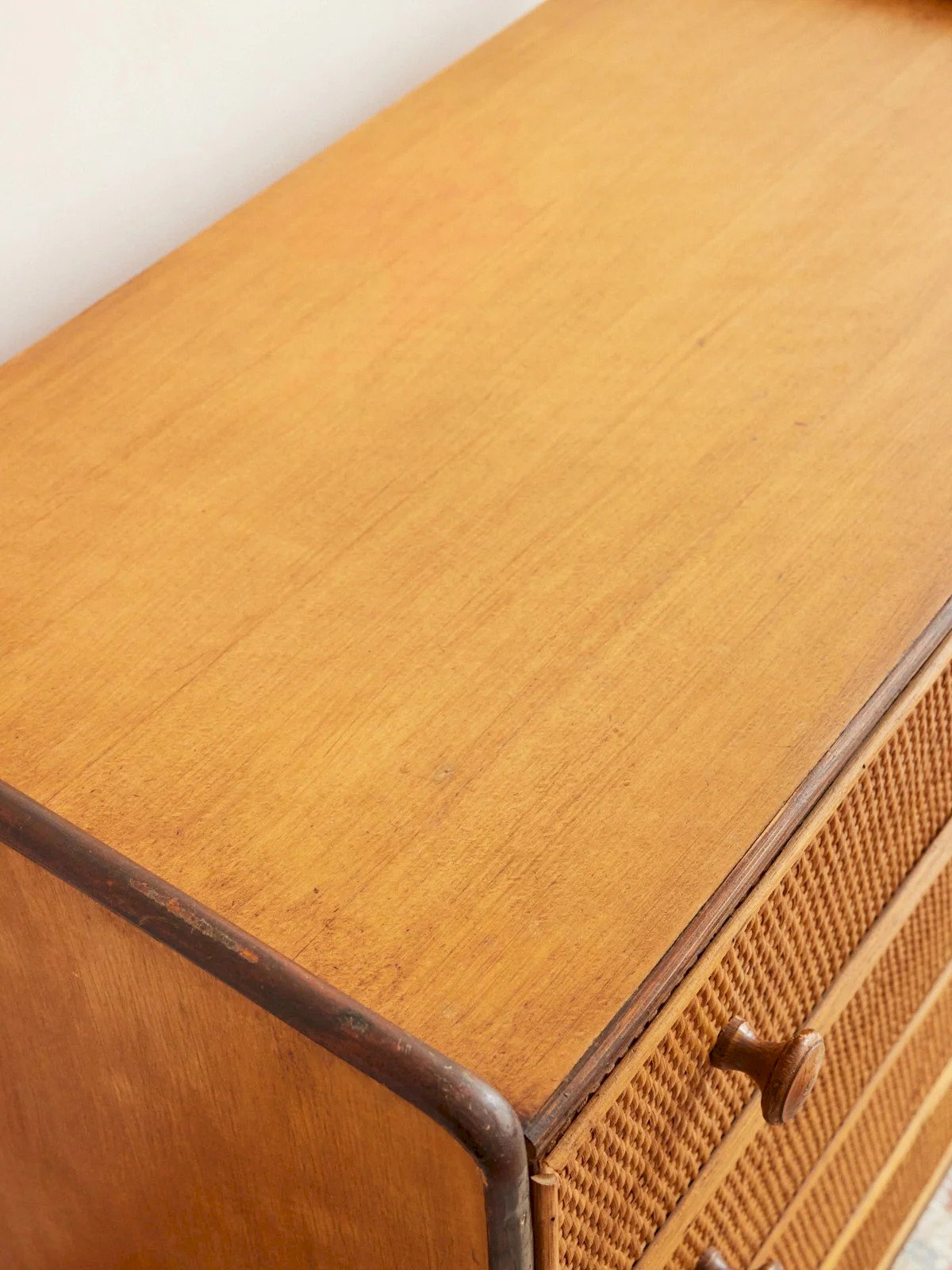
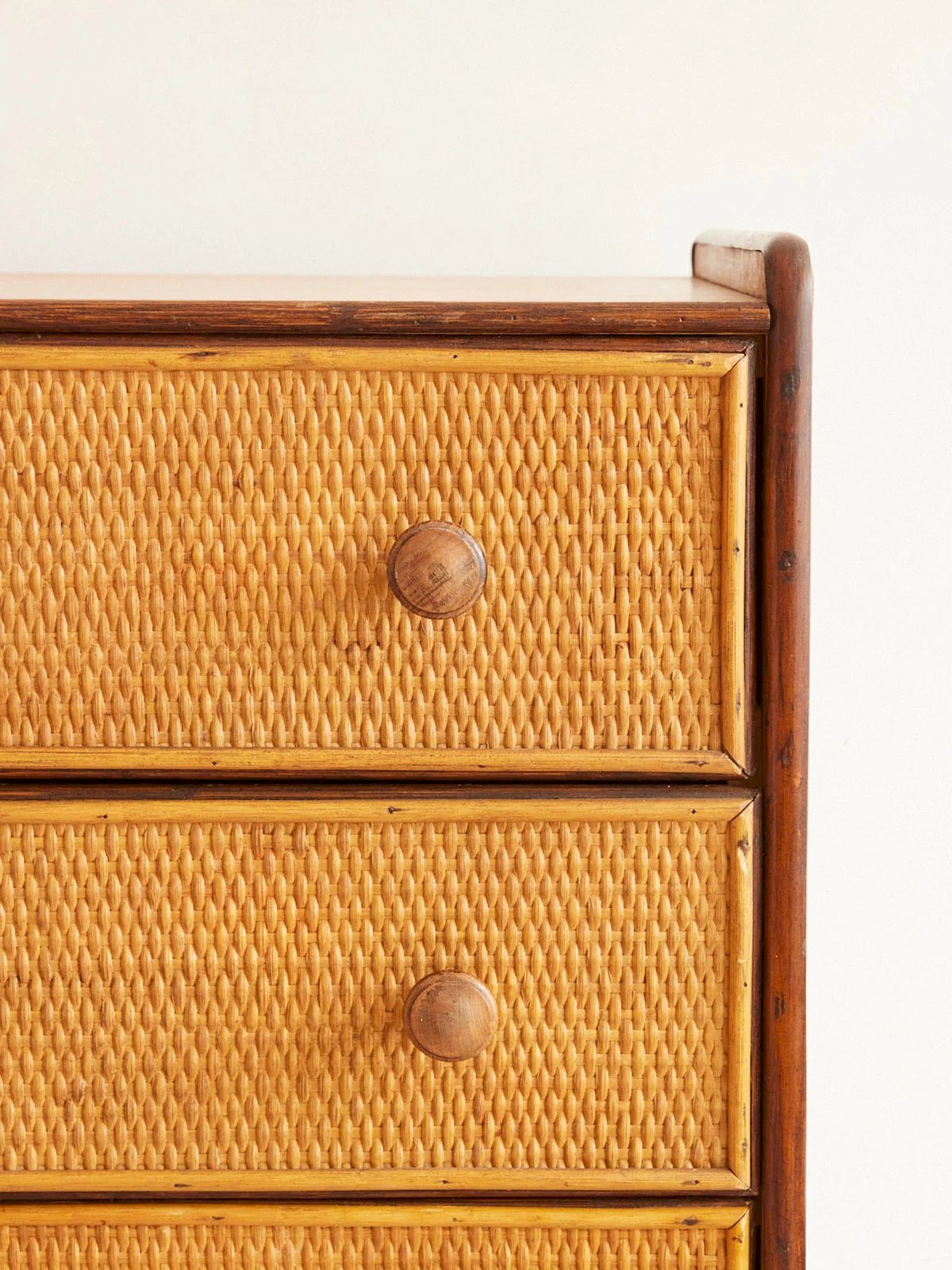
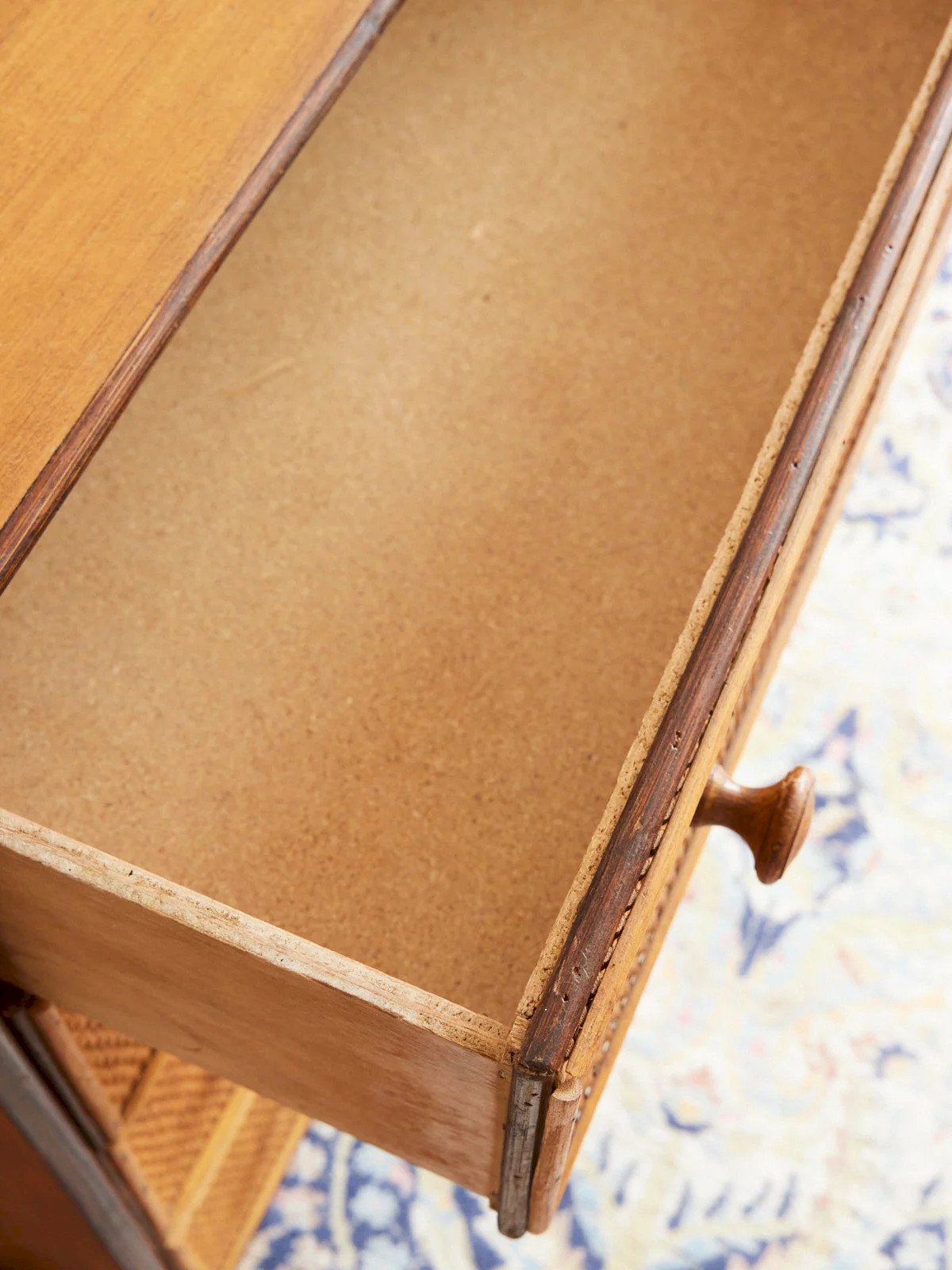
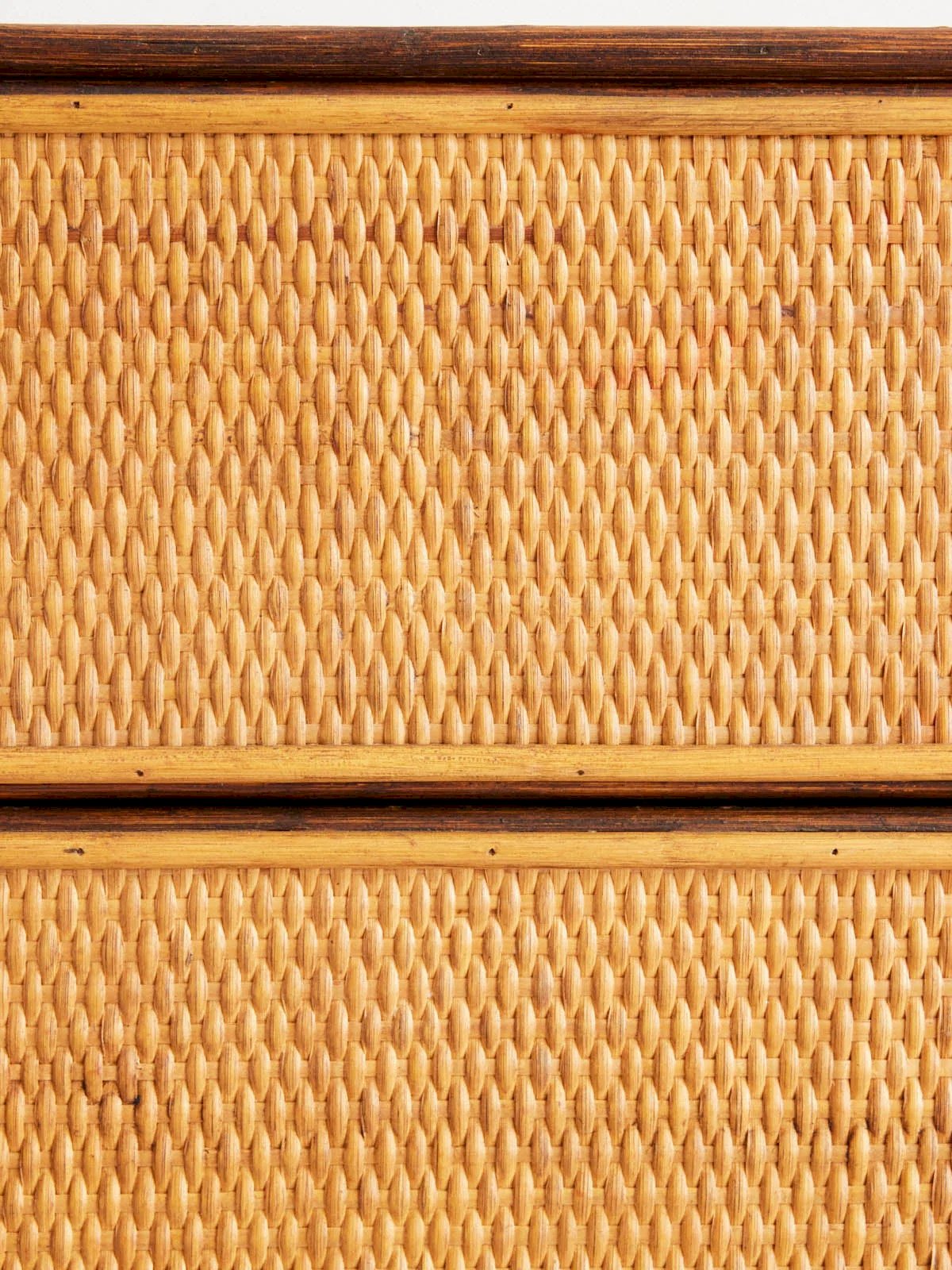
With its wicker weaving and light wood, this second-hand dresser adds a gentle countryside touch. The wood frames the faces of the drawers, while the wicker lightens the whole and emphasizes a warm finish. Thanks to its comfortable height and balanced width, it finds its place in a bedroom or an entrance hall, while offering useful storage for linens, accessories, or everyday essentials. Its twelve-centimeter-high drawer easily accommodates items you wish to keep at hand. In a bedroom, it can hold stacks of folded laundry, topped with a ceramic lamp and a vase of dried flowers. Length: 47 cm Width: 84 cm Height: 85 cm Drawer height: 12 cm A little history of the dresser Its name says it all: it was born to be "convenient," replacing deep chests where everything was piled up haphazardly. Appearing under the reign of Louis XIV, it was such a prestigious piece of furniture that it often graced reception rooms rather than wardrobes. It introduced the sliding drawer, a revolution that finally allowed easy access to one's belongings without having to empty everything out. Whether called a "jumping dresser" [on high legs] or a "tomb dresser," it is defined by its generous top and its façade rhythmically adorned with two or three rows of drawers.
Réf :
#414230
Brand / From : Debongout
Related Products
Comments
Garance, the wicker dresser No. 776
459€
75002 Paris
Ce site contient des liens d’affiliation pour lesquels je peux recevoir une compensation.
Description
With its wicker weaving and light wood, this second-hand dresser adds a gentle countryside touch. The wood frames the faces of the drawers, while the wicker lightens the whole and emphasizes a warm finish. Thanks to its comfortable height and balanced width, it finds its place in a bedroom or an entrance hall, while offering useful storage for linens, accessories, or everyday essentials. Its twelve-centimeter-high drawer easily accommodates items you wish to keep at hand. In a bedroom, it can hold stacks of folded laundry, topped with a ceramic lamp and a vase of dried flowers. Length: 47 cm Width: 84 cm Height: 85 cm Drawer height: 12 cm A little history of the dresser Its name says it all: it was born to be "convenient," replacing deep chests where everything was piled up haphazardly. Appearing under the reign of Louis XIV, it was such a prestigious piece of furniture that it often graced reception rooms rather than wardrobes. It introduced the sliding drawer, a revolution that finally allowed easy access to one's belongings without having to empty everything out. Whether called a "jumping dresser" [on high legs] or a "tomb dresser," it is defined by its generous top and its façade rhythmically adorned with two or three rows of drawers.
Réf :
#414230
Brand / From : Debongout