 English
 Français


Description
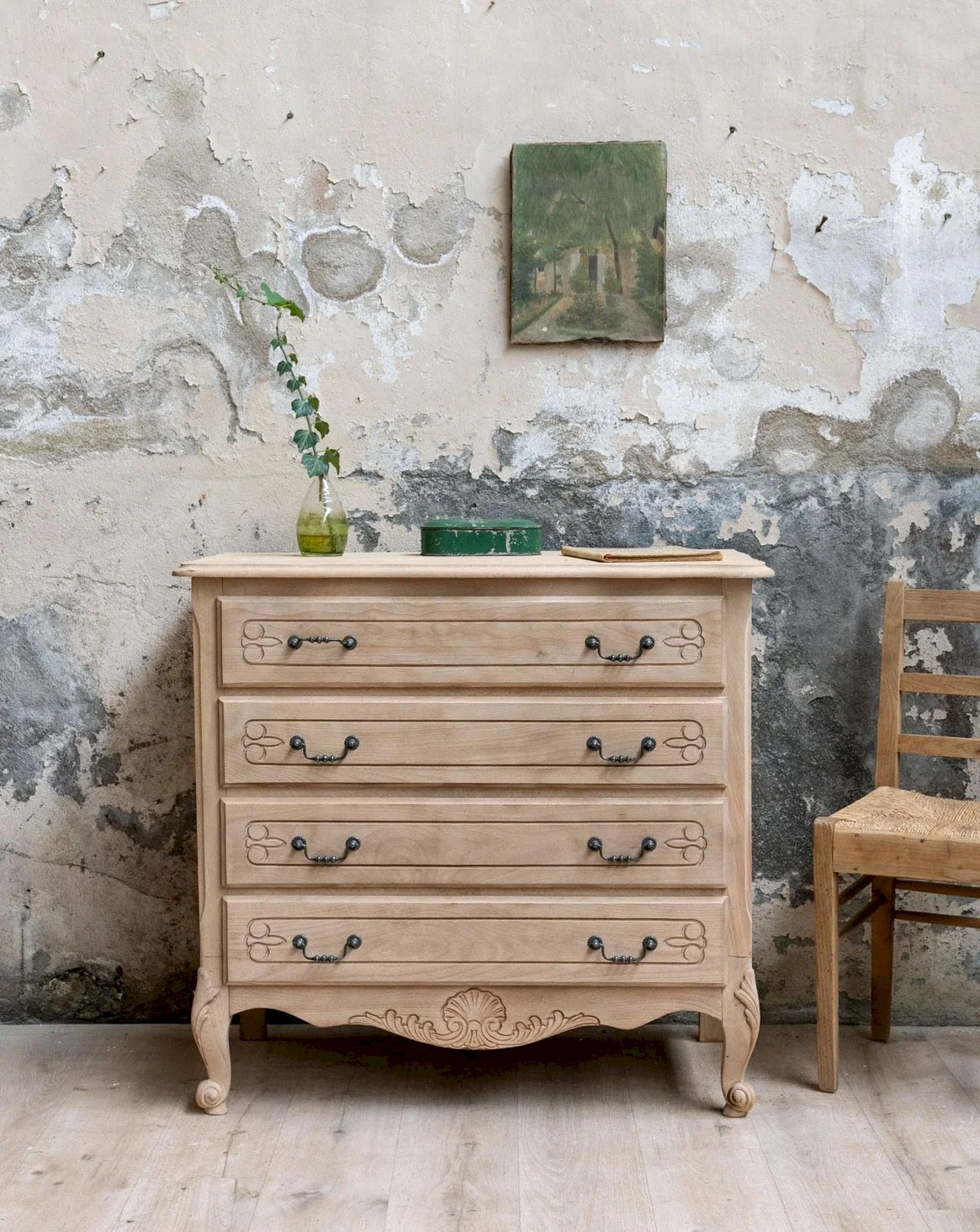
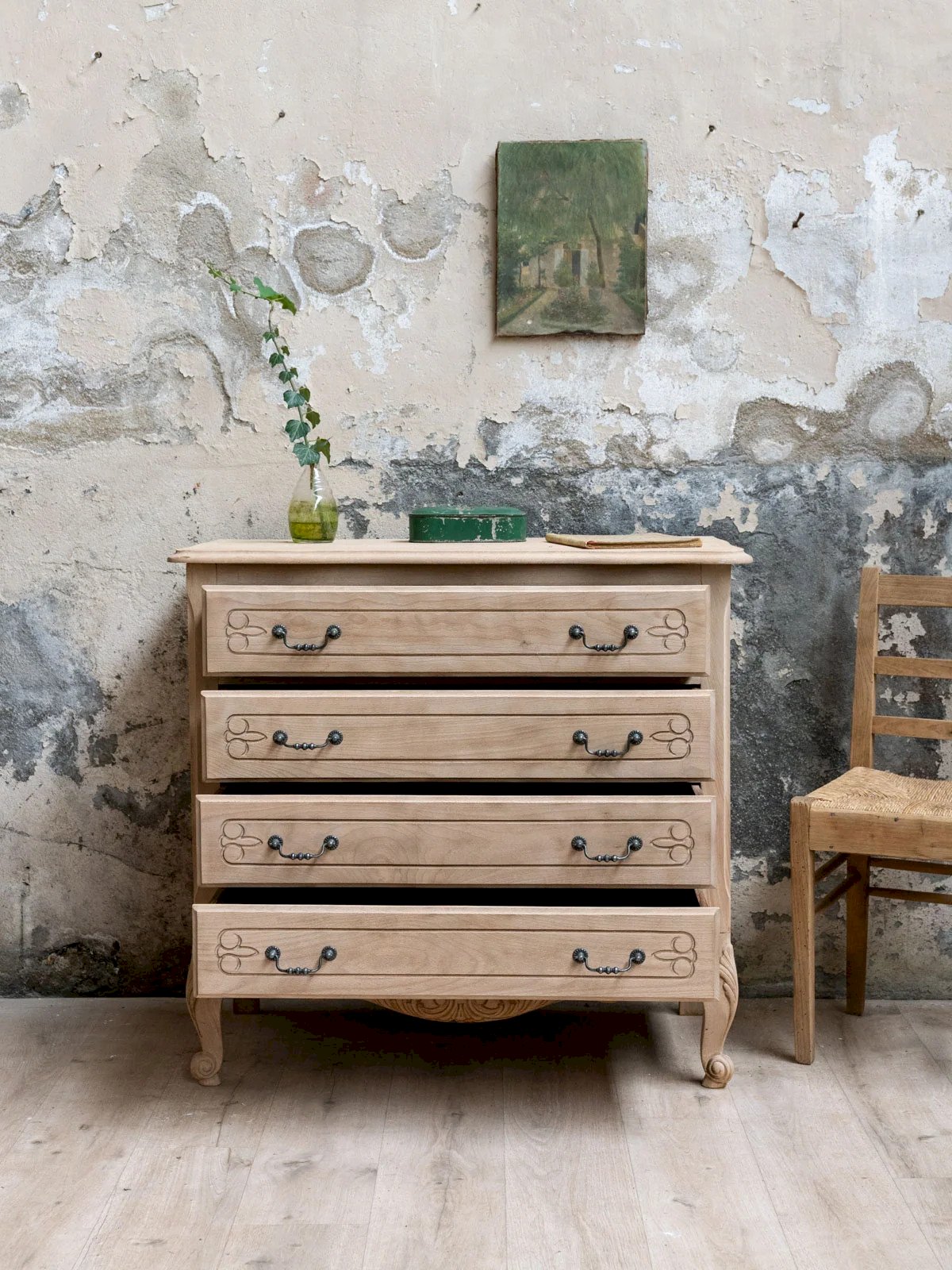
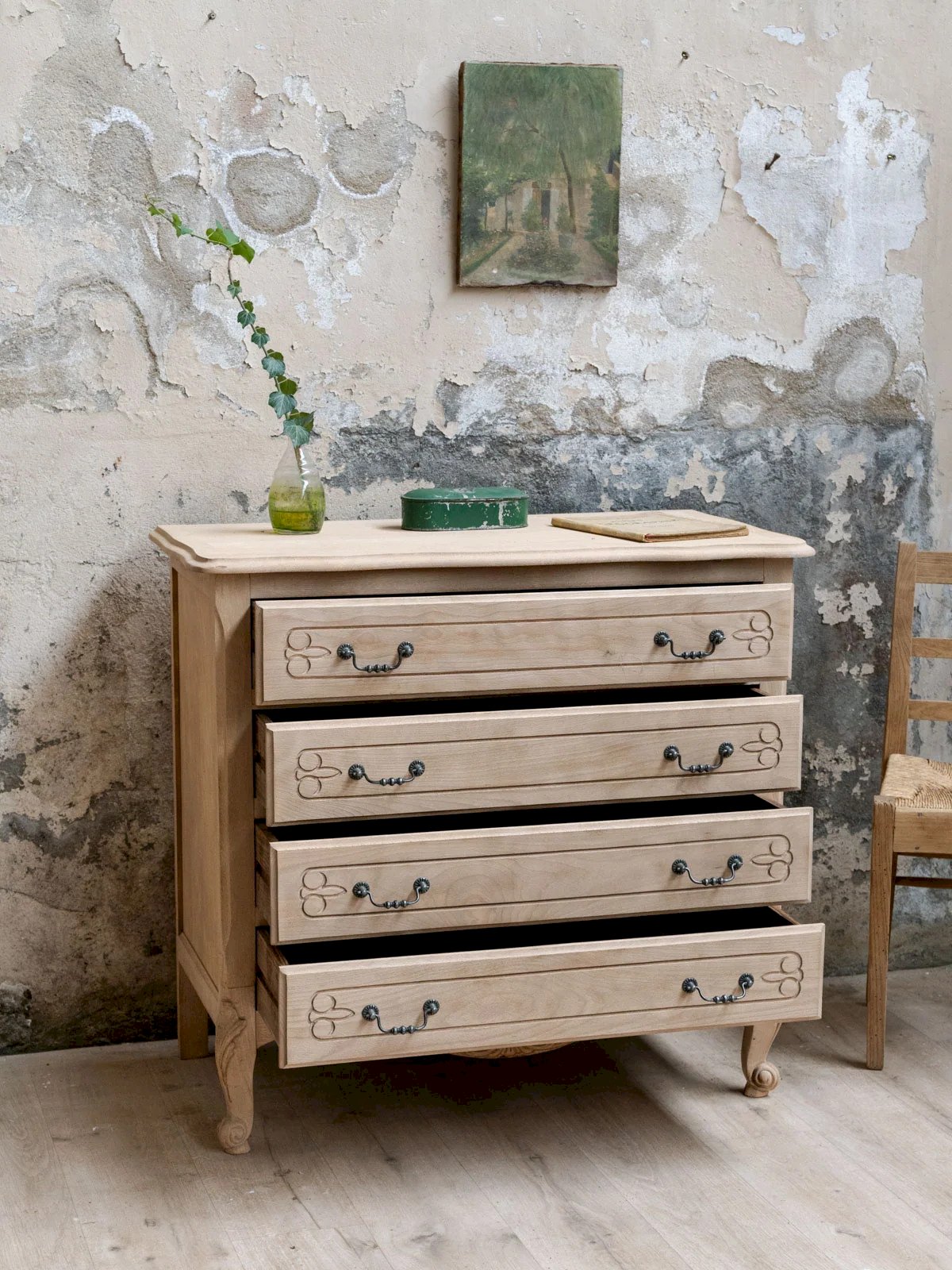
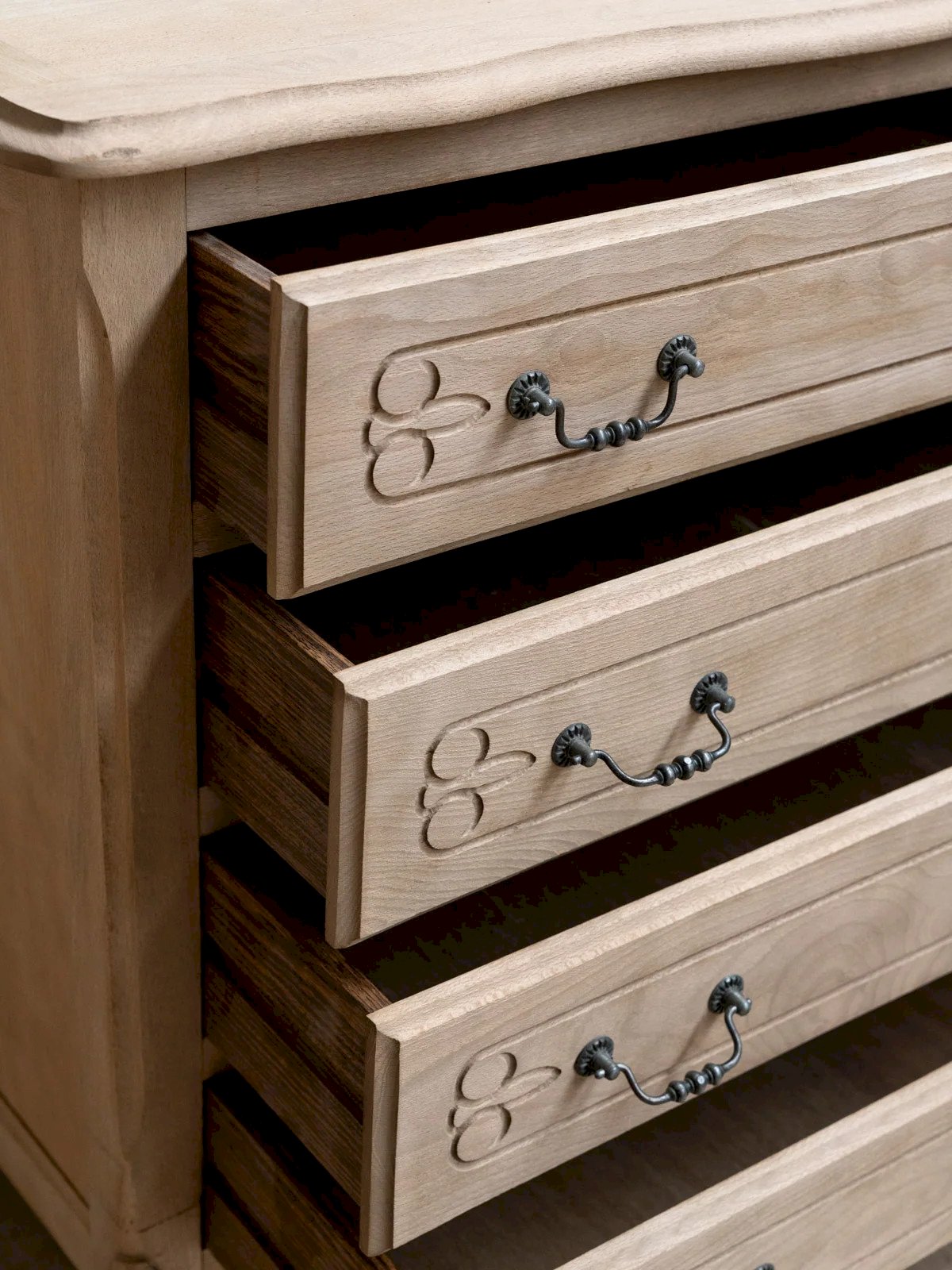
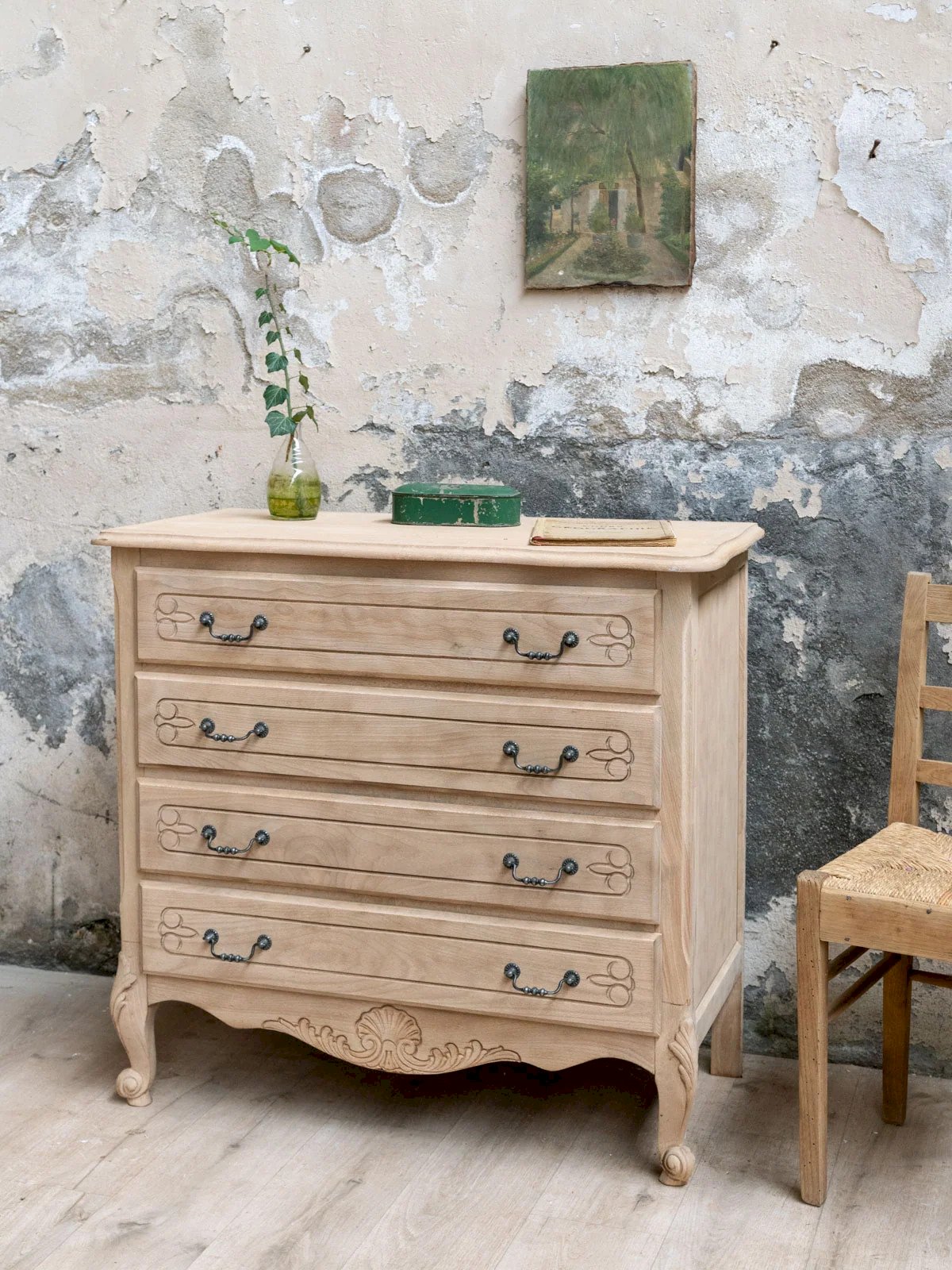
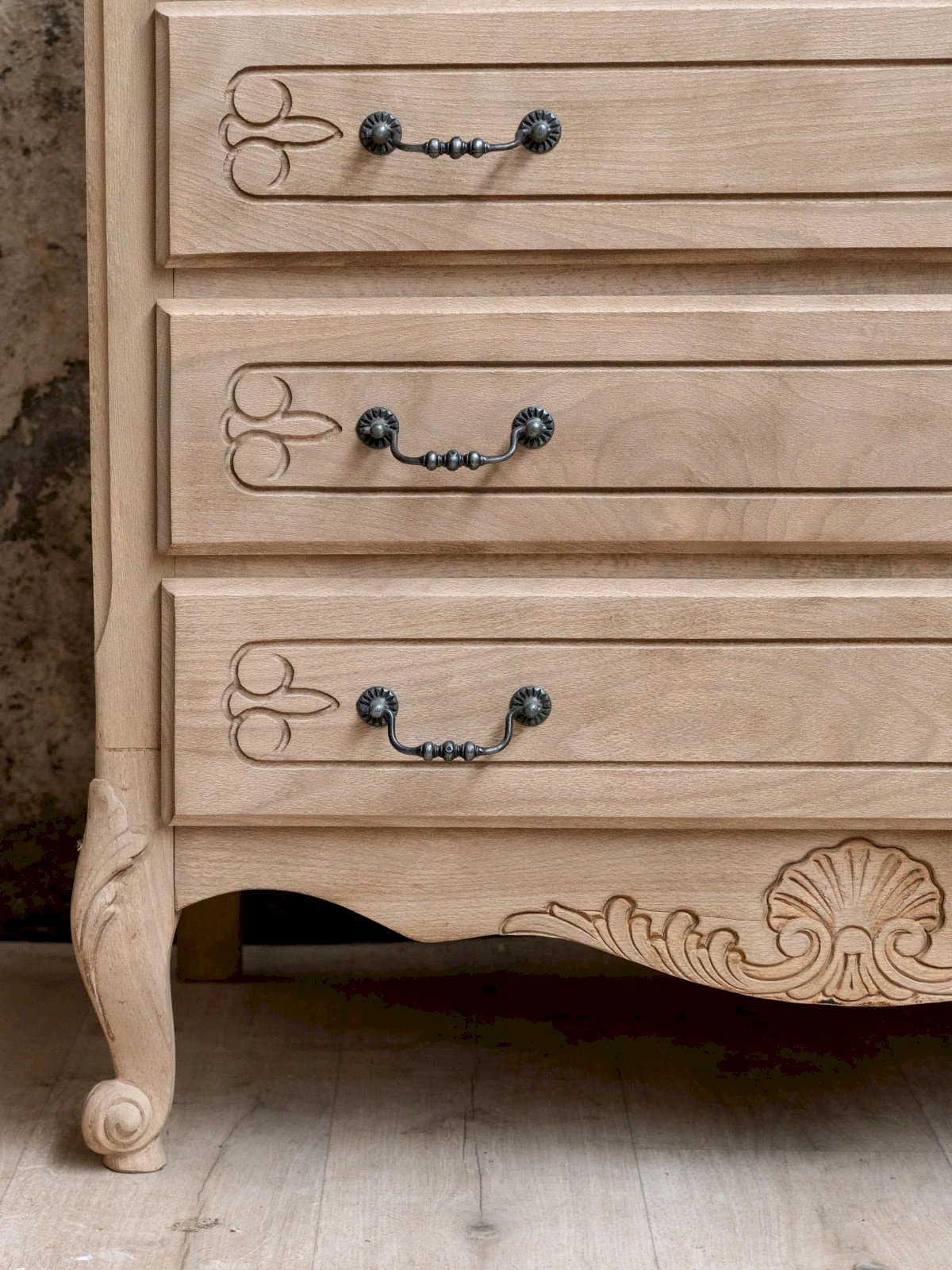
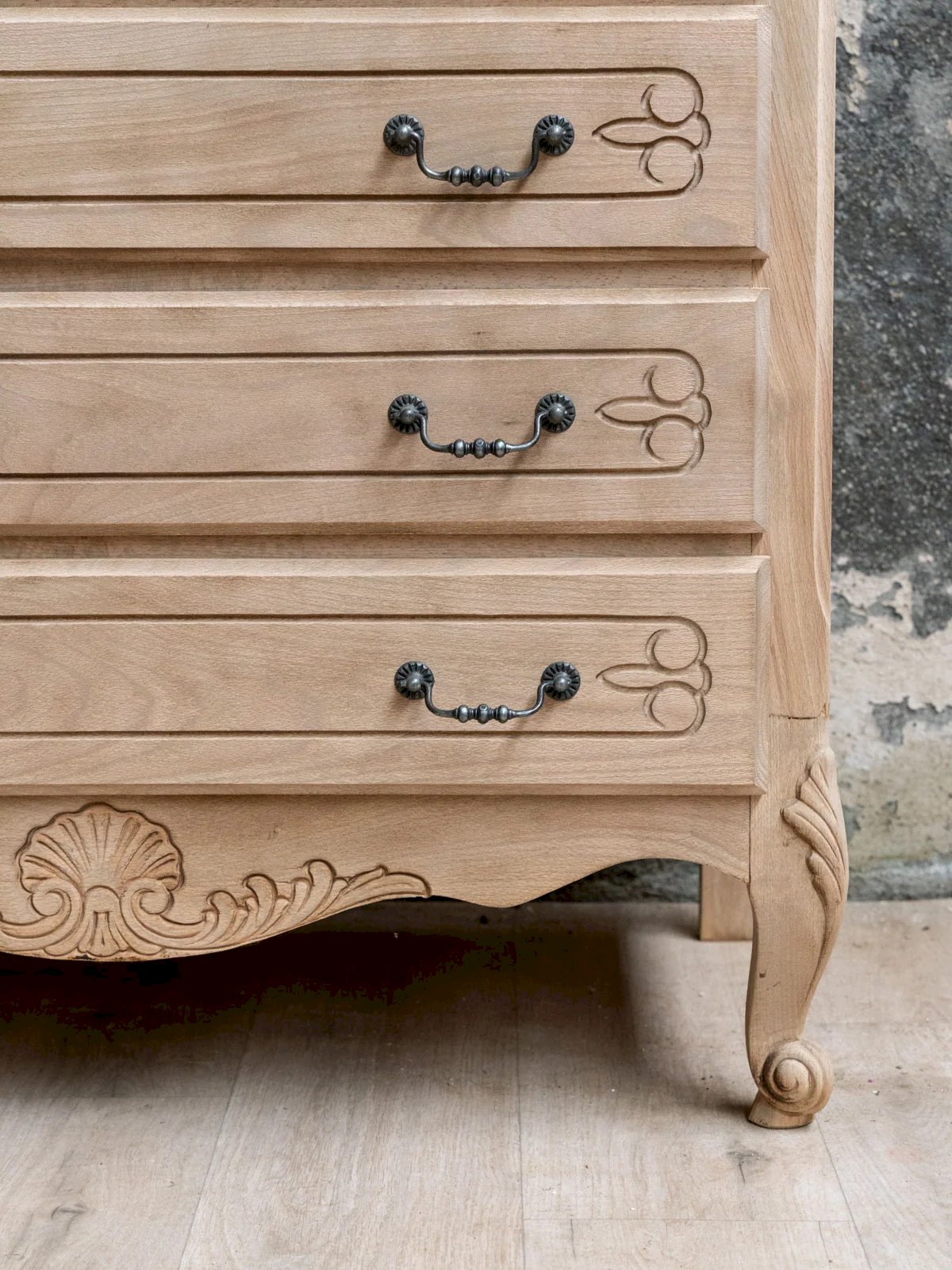
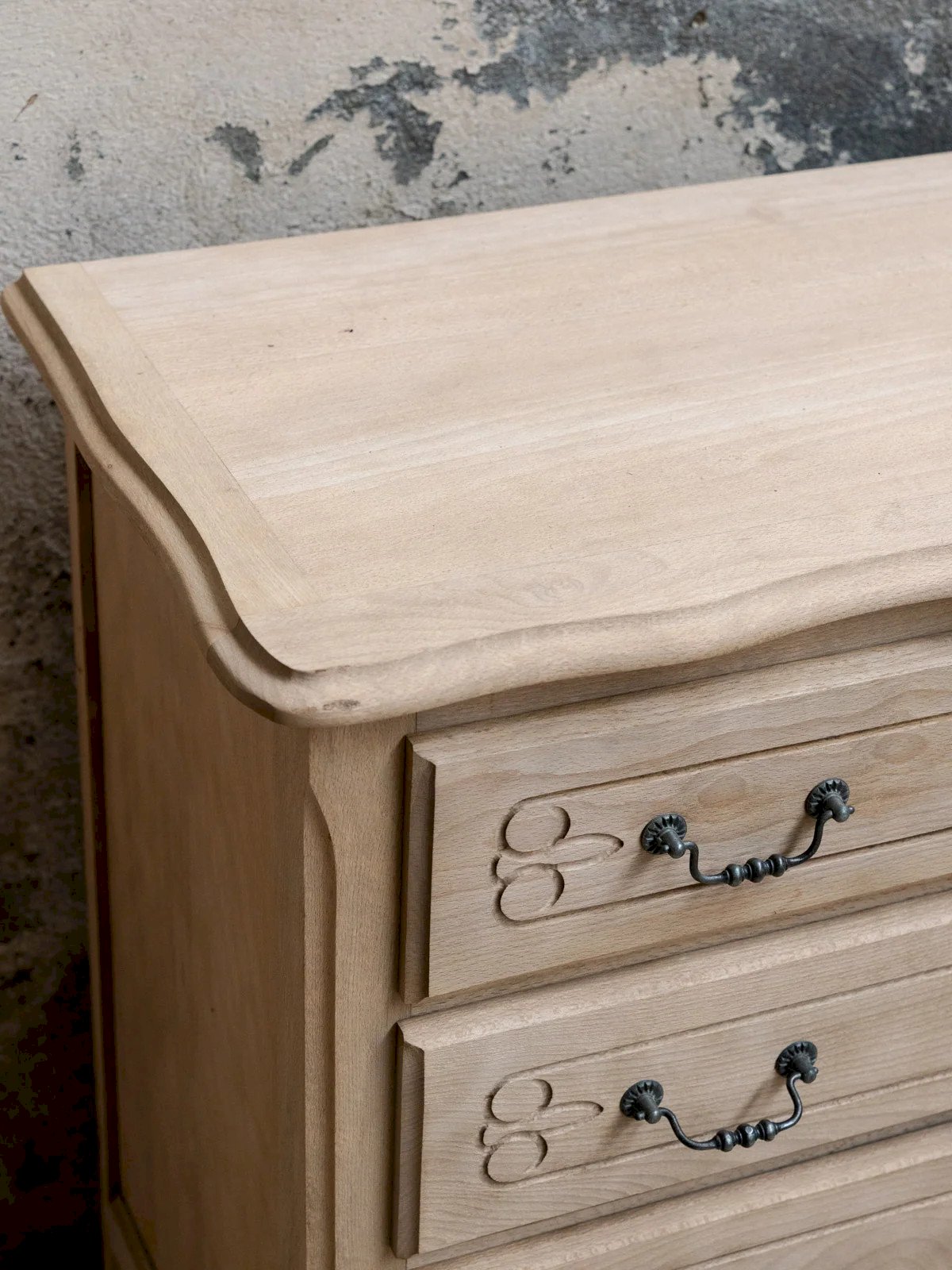
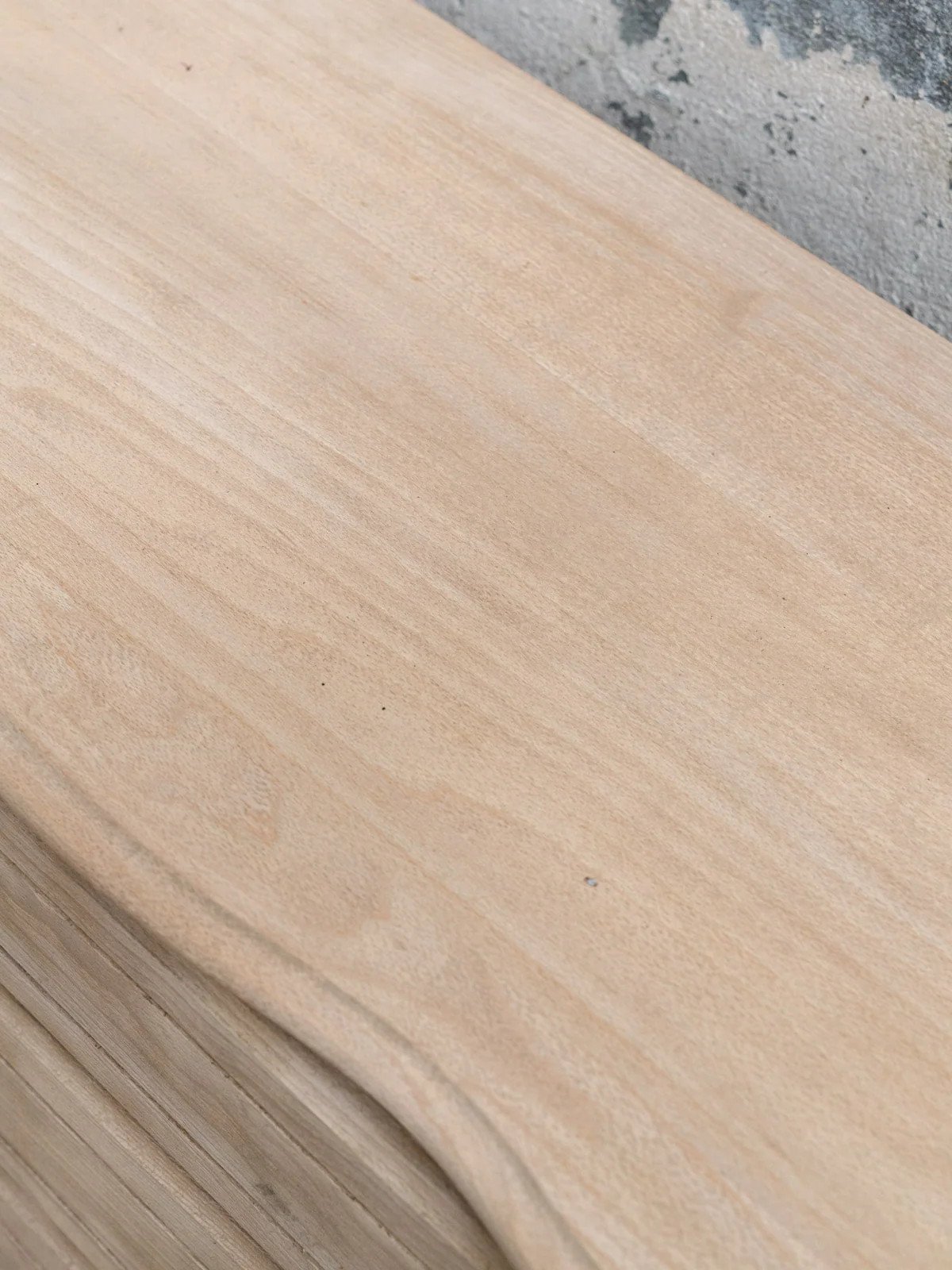
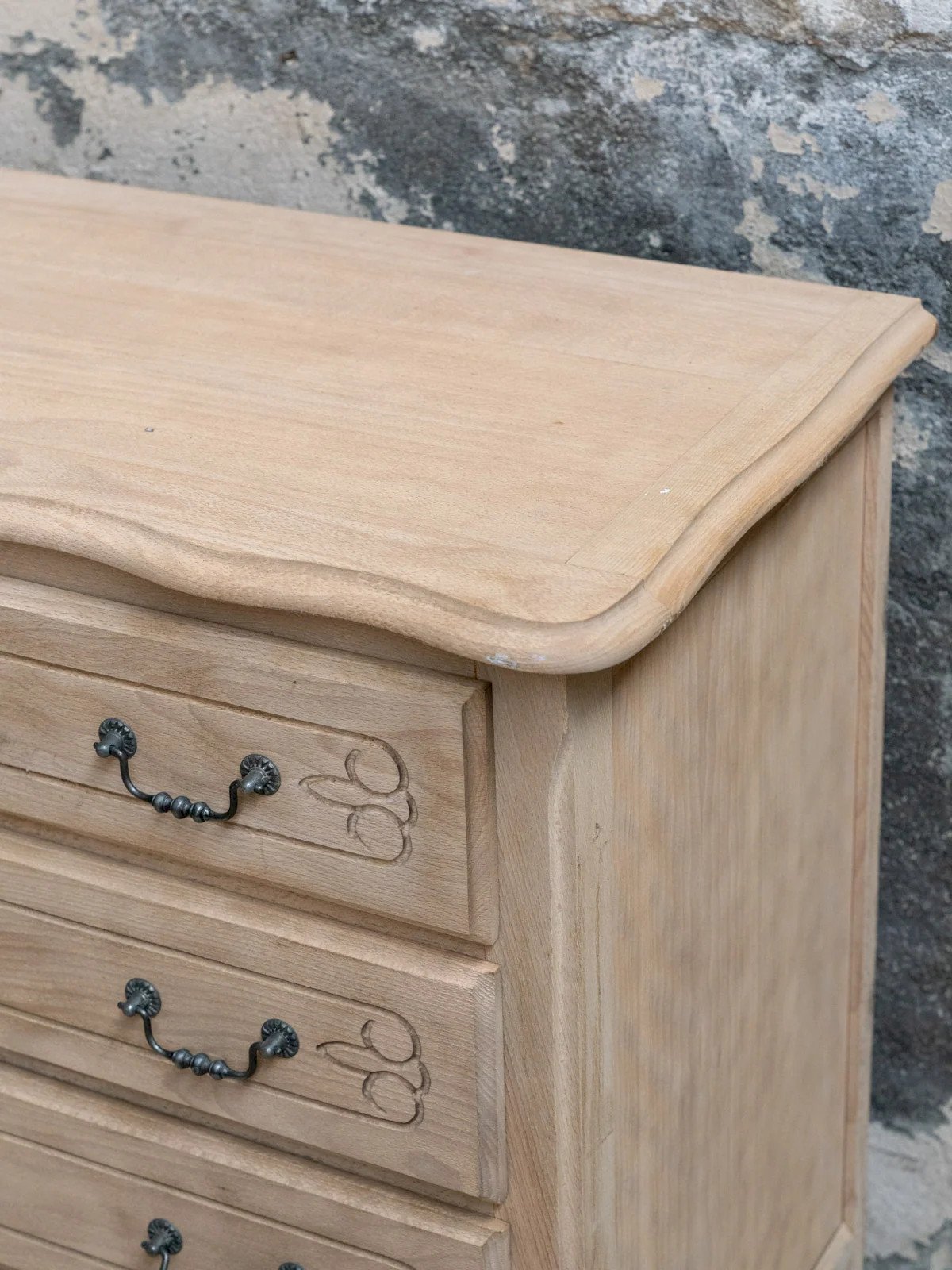
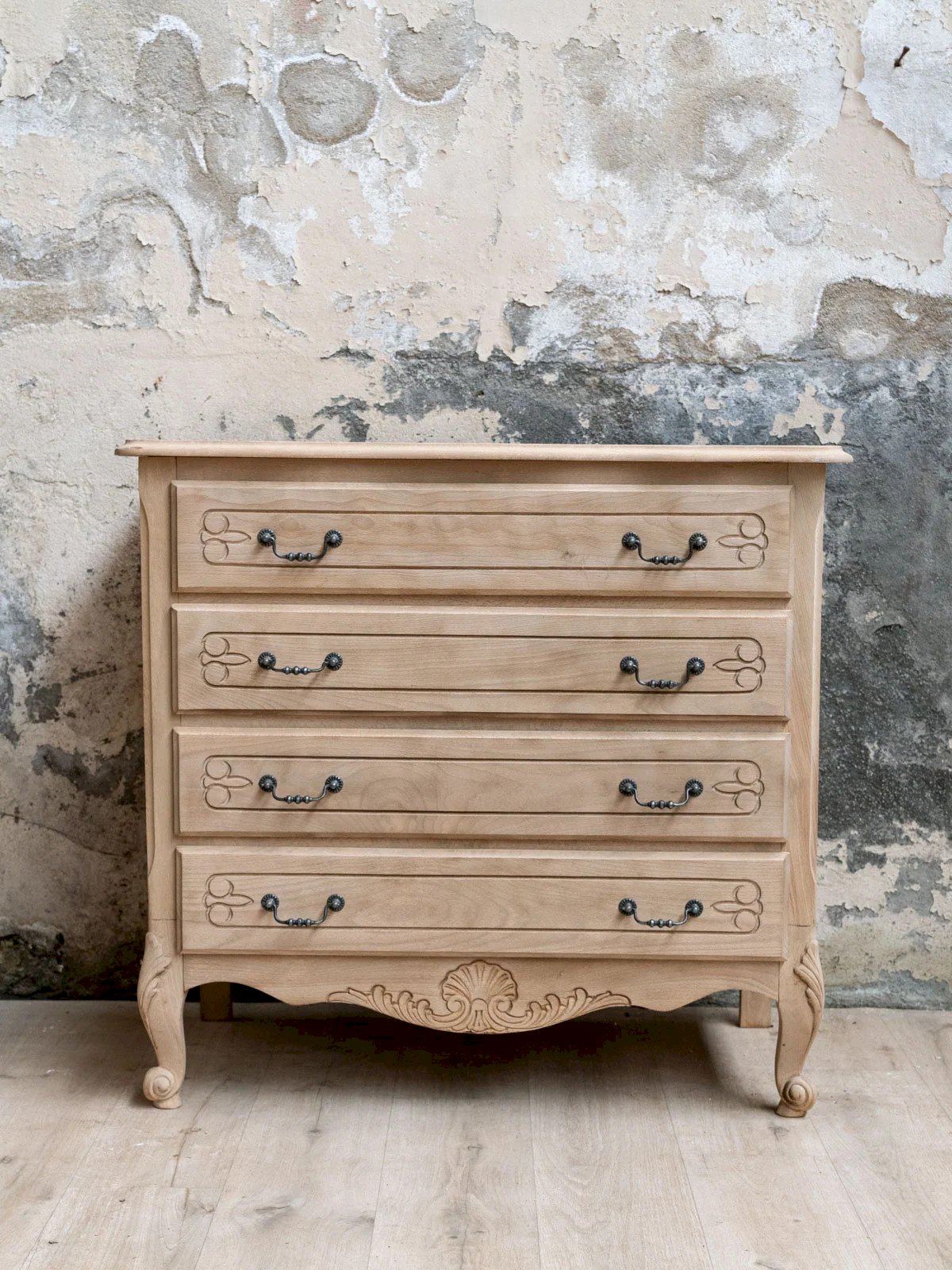
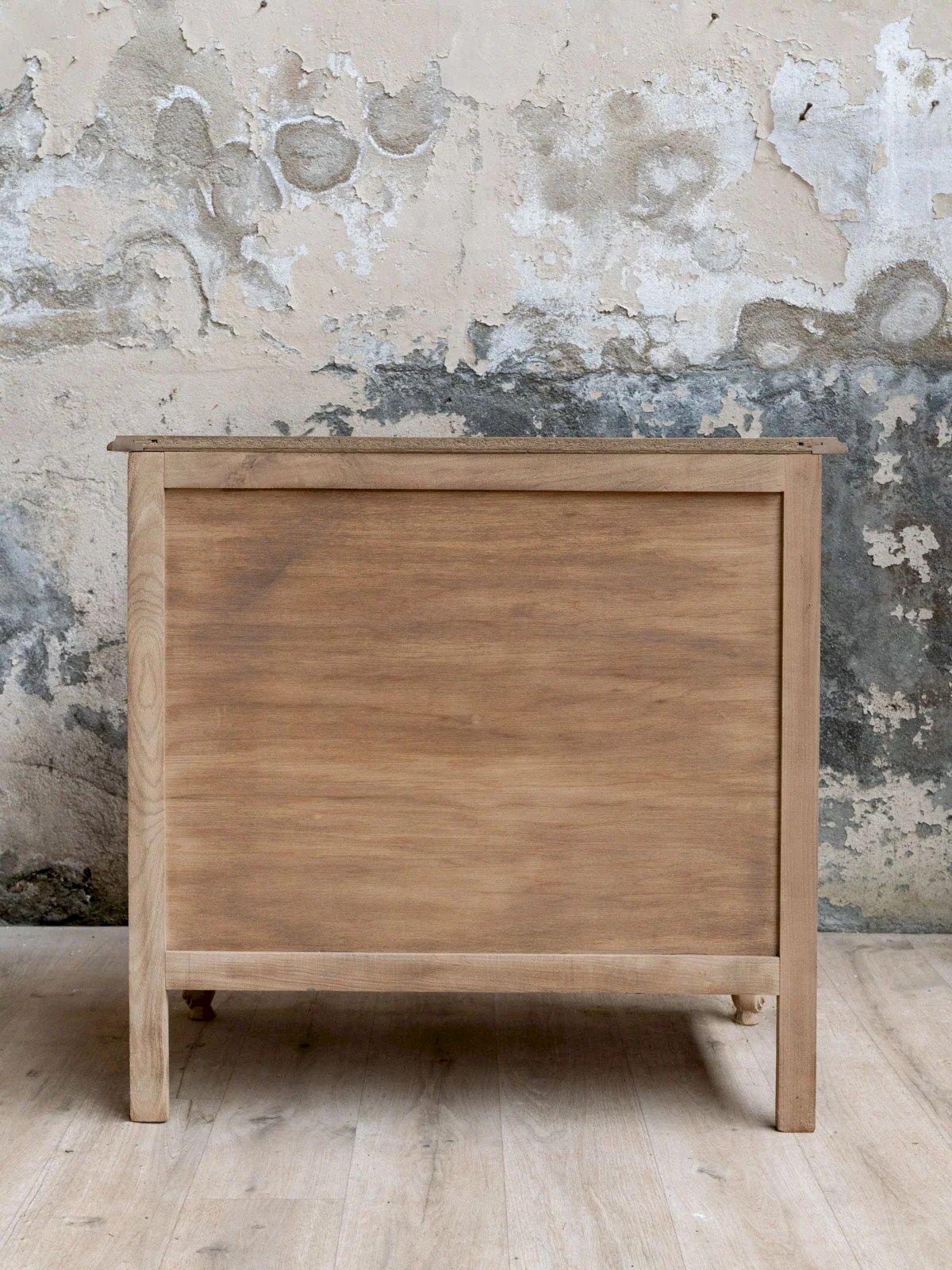
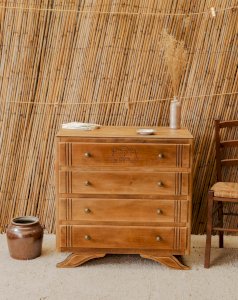
With its beautiful patina and delicate moldings, this light wood chest of drawers evokes the understated elegance of country style. Made of solid wood, it relies on a sturdy structure and offers four drawers that are easy to open thanks to their metal pull handles. Its volume easily accommodates folded linen, everyday accessories, and finds its place in both a bedroom and an entryway. The molded decor on the wood and the low crossbar give it a refined appearance, while its bright hue pairs well with rattan, washed linen, or a ceramic lamp. Length: 92 cm Width: 46.5 cm Height: 87 cm Drawer height: 10.5 cm A brief history of the chest of drawers Its name says it all: it was born to be "convenient," replacing the deep chests where everything was piled haphazardly. Appearing during the reign of Louis XIV, it was such a prestigious piece of furniture that it often held court in reception rooms rather than in wardrobes. It introduced the sliding drawer, a revolution that finally allowed access to one's belongings without emptying everything out. Whether called a "high-legged chest of drawers" or a "tomb chest," it is defined by its generous top and its front facade rhythmically arranged with two or three rows of drawers.
Réf :
#413980
Brand / From : Debongout
Related Products


Comments
Garance, the molded wood chest of drawers No. 773
649€
75002 Paris
Ce site contient des liens d’affiliation pour lesquels je peux recevoir une compensation.
Description
With its beautiful patina and delicate moldings, this light wood chest of drawers evokes the understated elegance of country style. Made of solid wood, it relies on a sturdy structure and offers four drawers that are easy to open thanks to their metal pull handles. Its volume easily accommodates folded linen, everyday accessories, and finds its place in both a bedroom and an entryway. The molded decor on the wood and the low crossbar give it a refined appearance, while its bright hue pairs well with rattan, washed linen, or a ceramic lamp. Length: 92 cm Width: 46.5 cm Height: 87 cm Drawer height: 10.5 cm A brief history of the chest of drawers Its name says it all: it was born to be "convenient," replacing the deep chests where everything was piled haphazardly. Appearing during the reign of Louis XIV, it was such a prestigious piece of furniture that it often held court in reception rooms rather than in wardrobes. It introduced the sliding drawer, a revolution that finally allowed access to one's belongings without emptying everything out. Whether called a "high-legged chest of drawers" or a "tomb chest," it is defined by its generous top and its front facade rhythmically arranged with two or three rows of drawers.
Réf :
#413980
Brand / From : Debongout