 English
 Français


Description
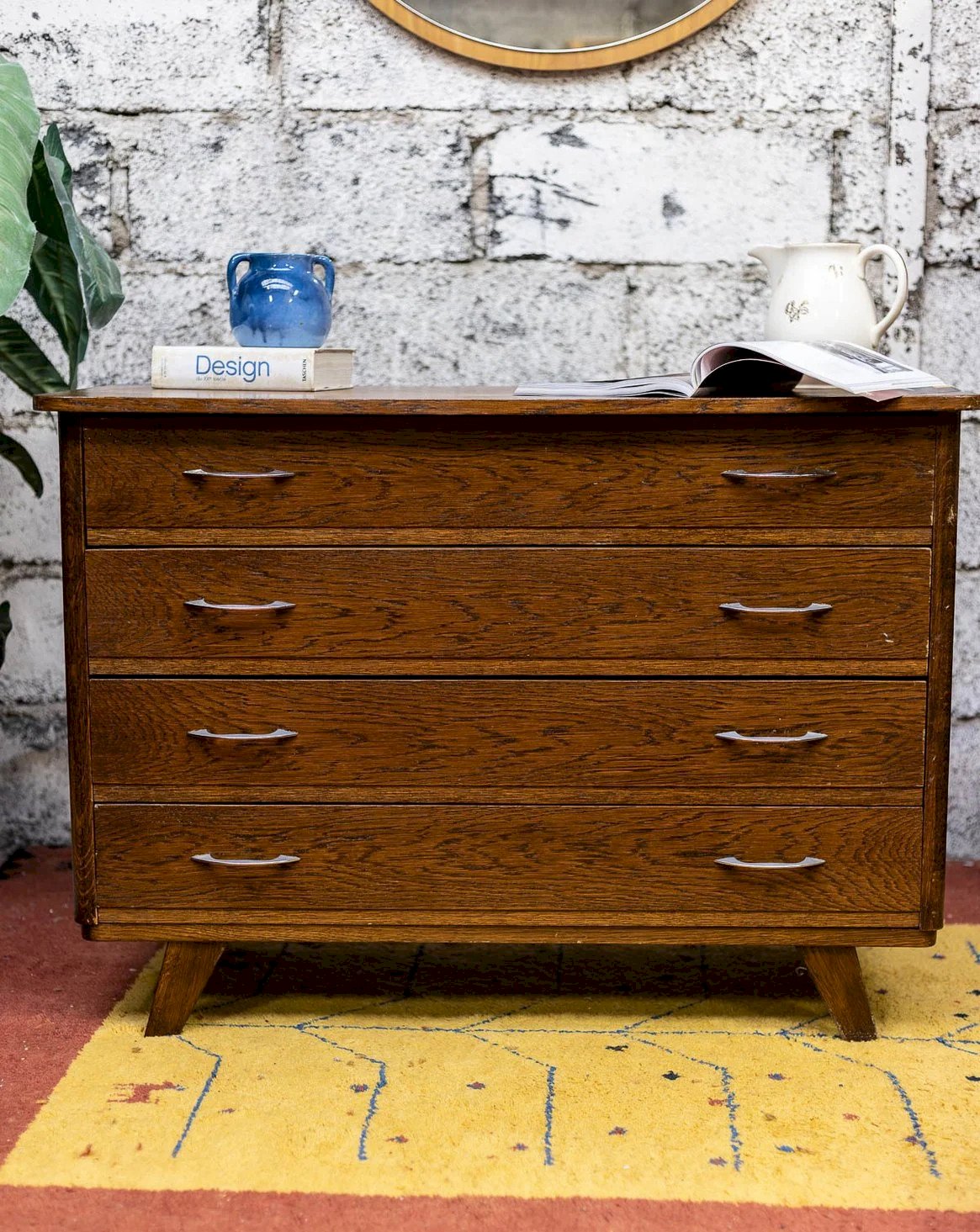
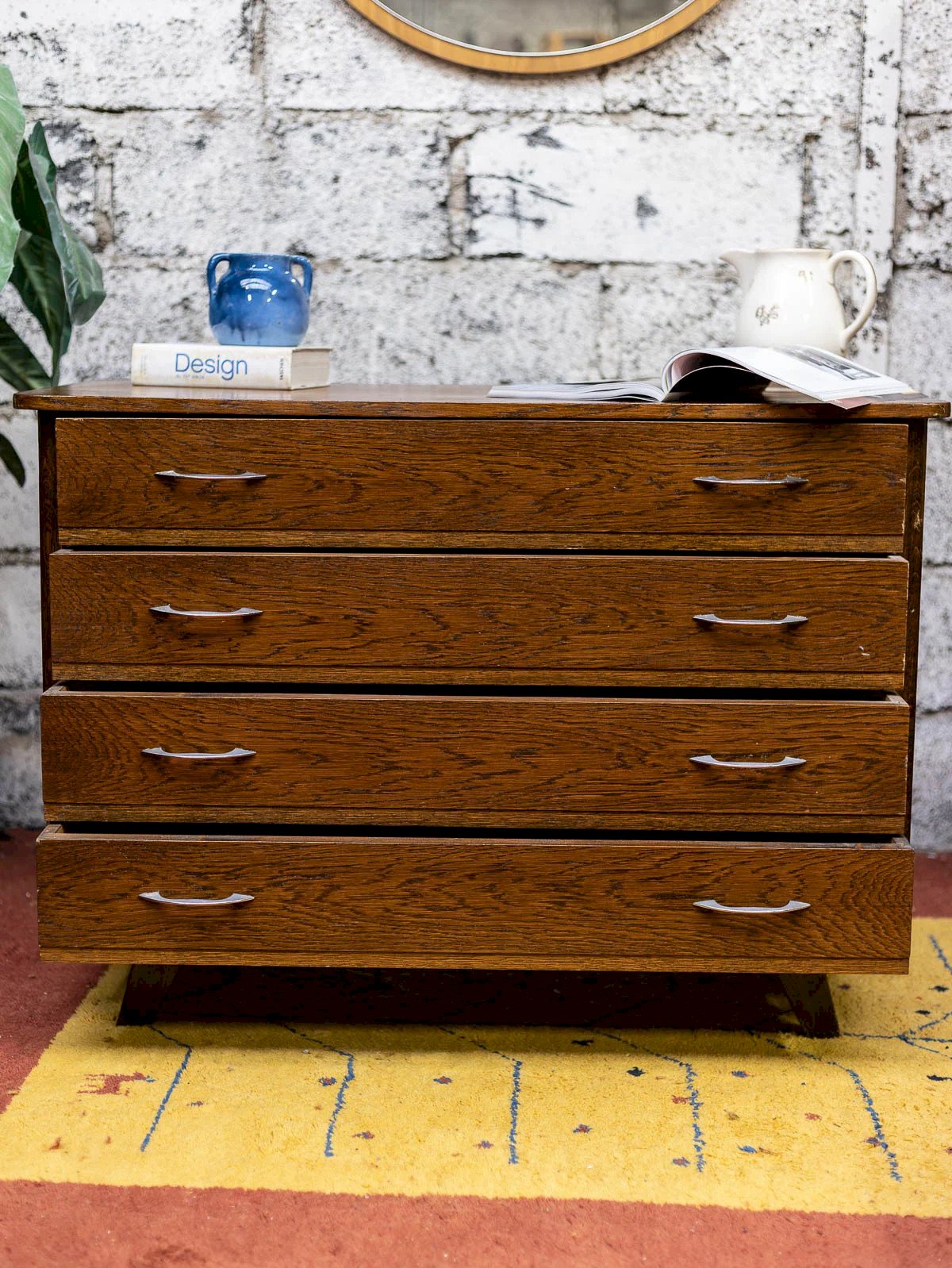
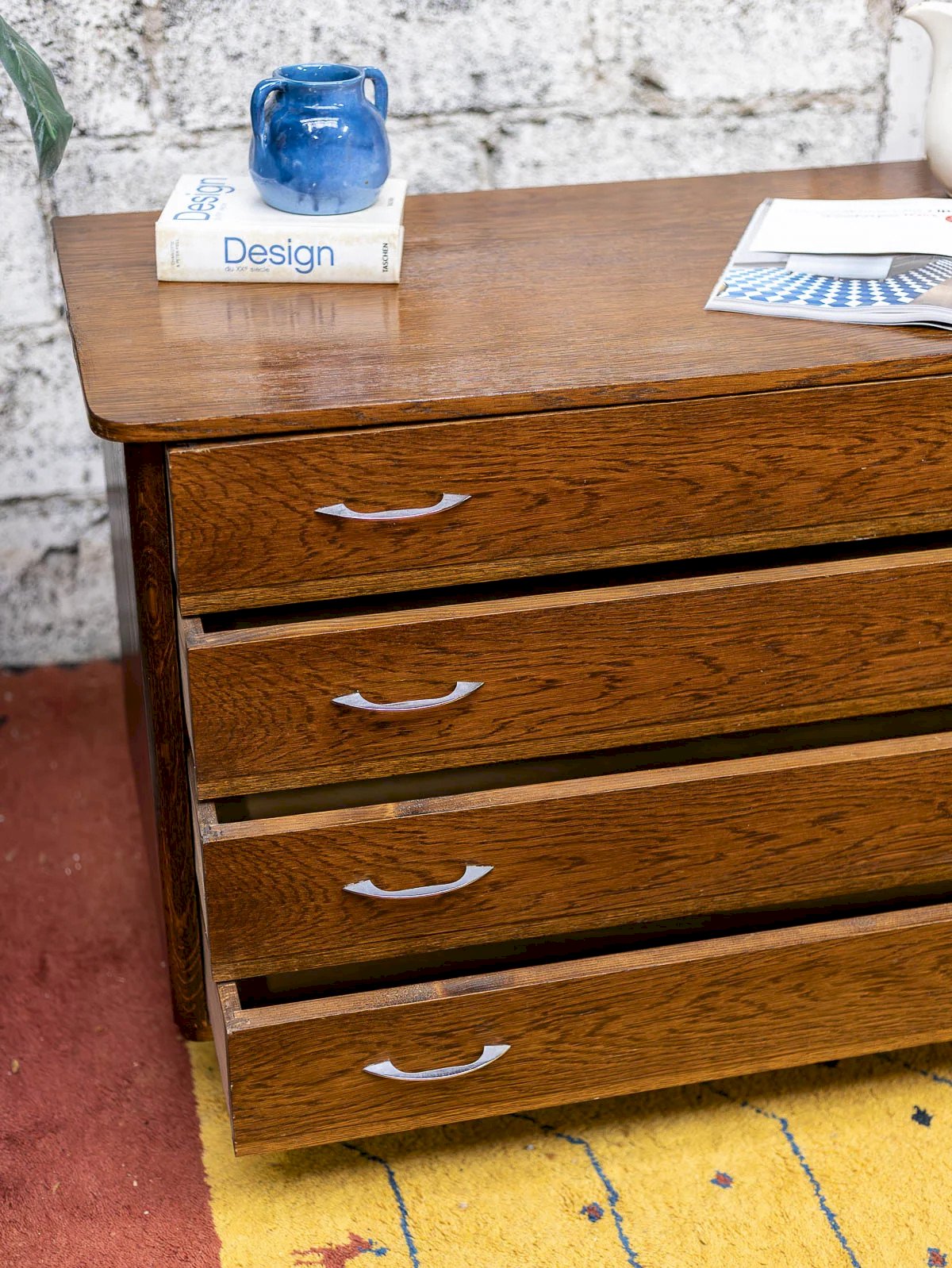
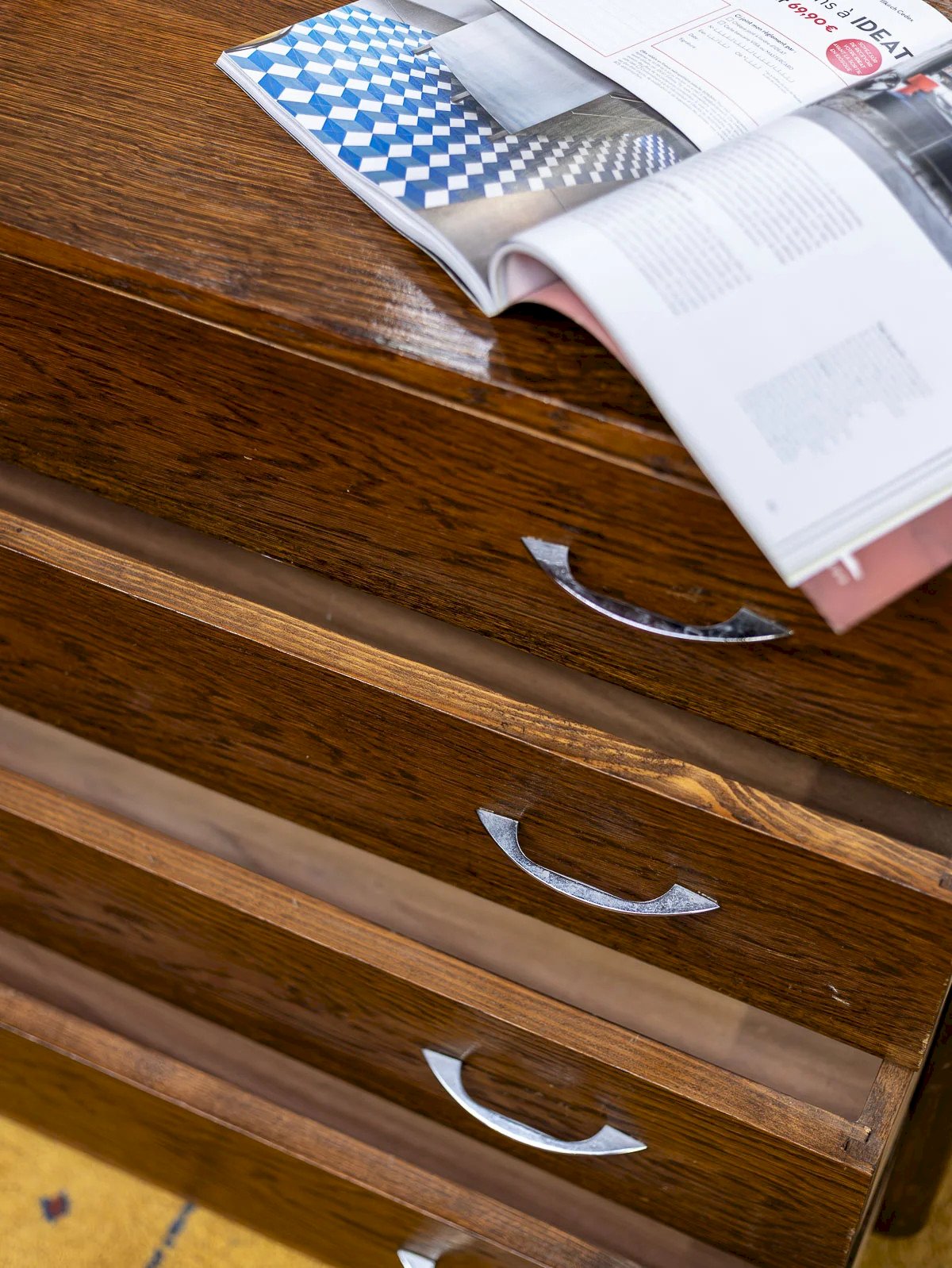
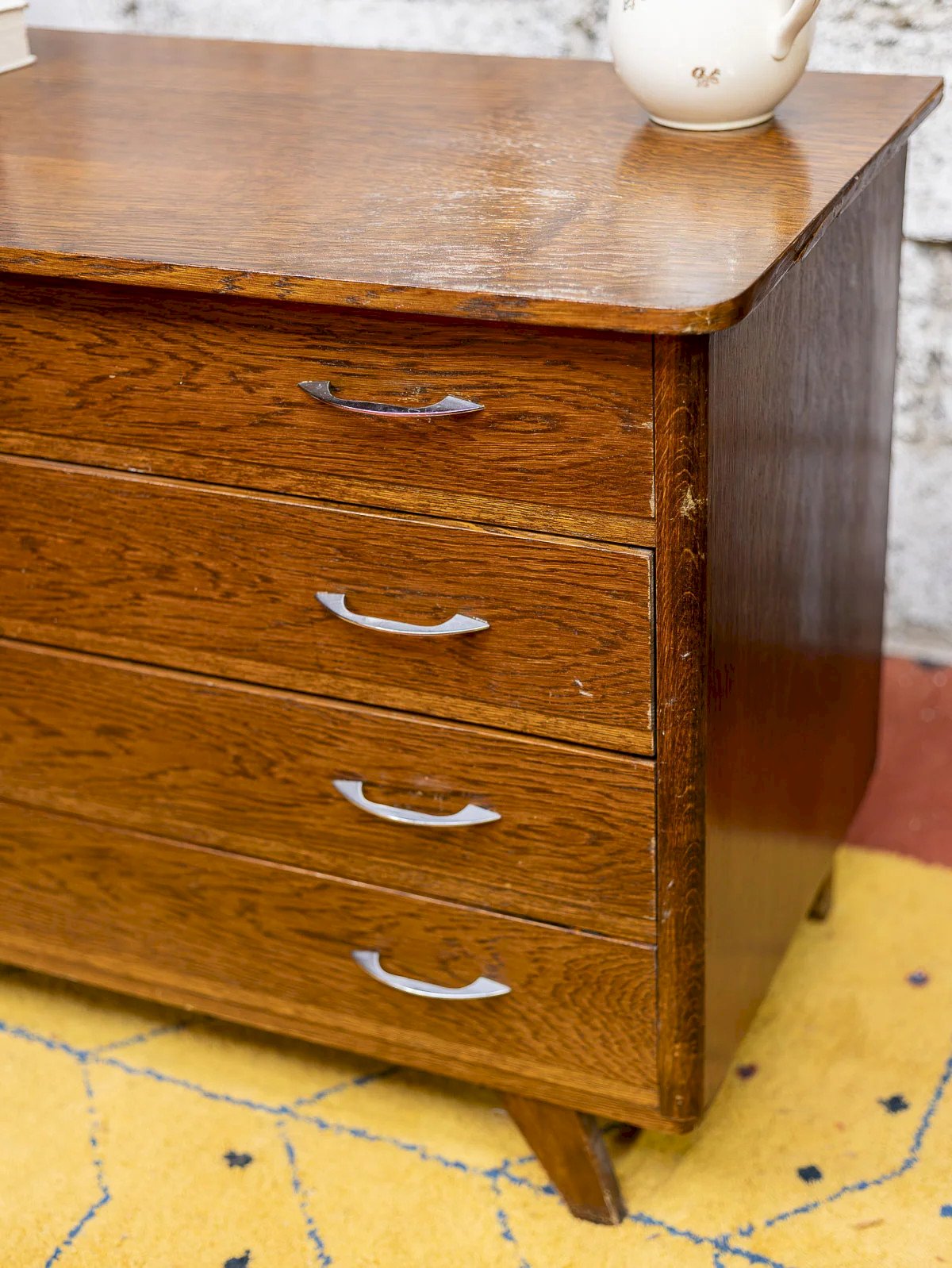
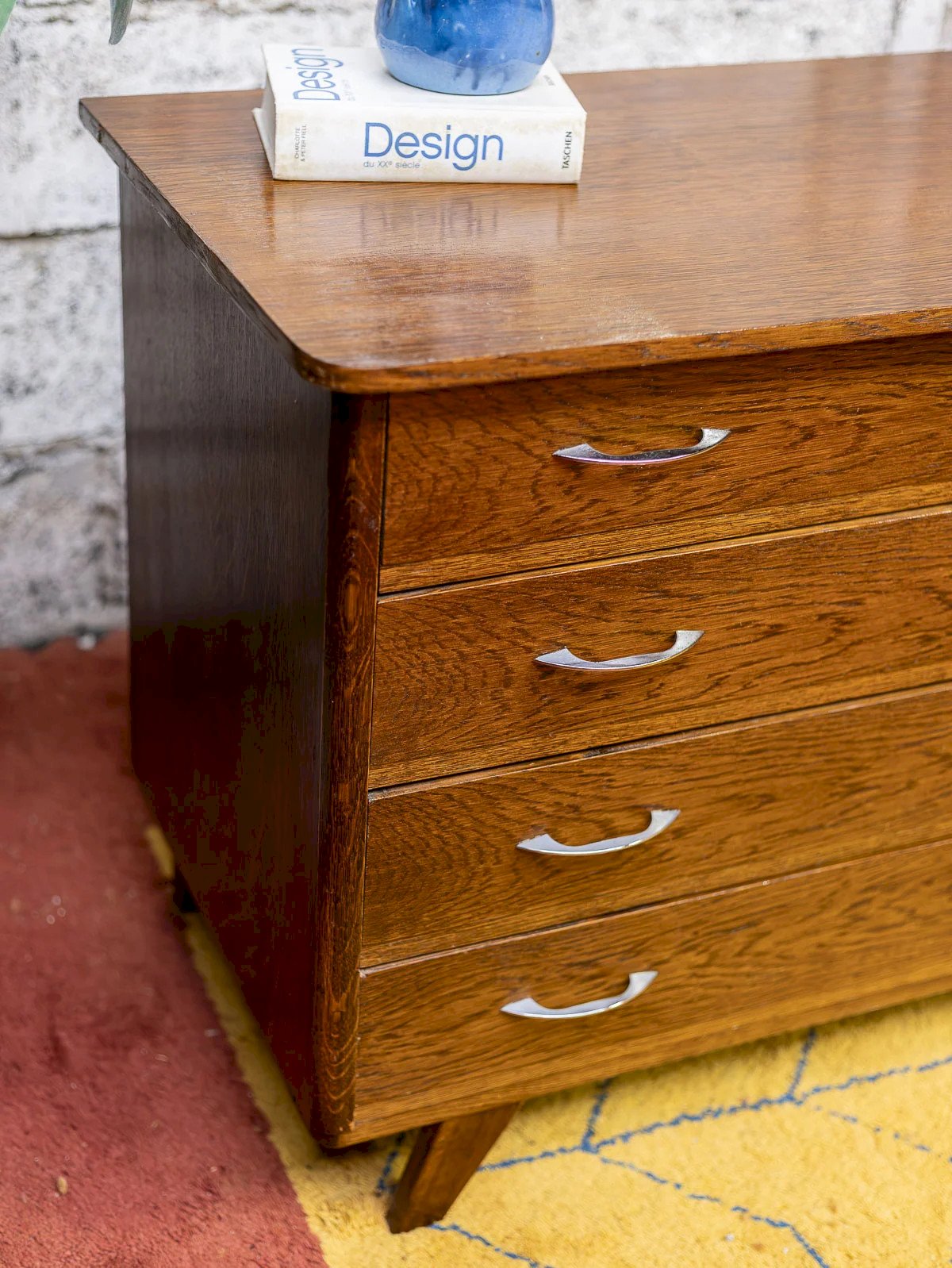
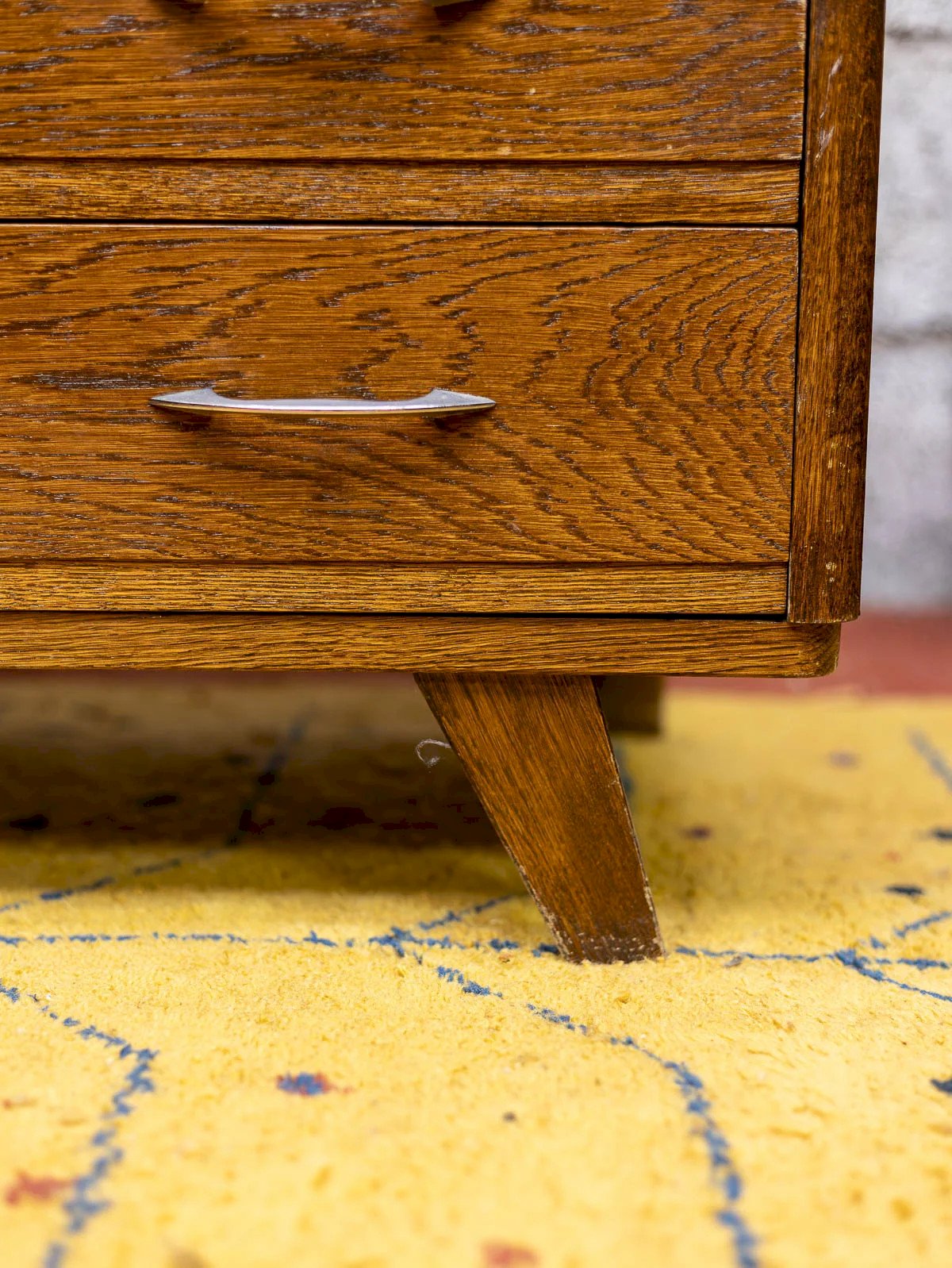
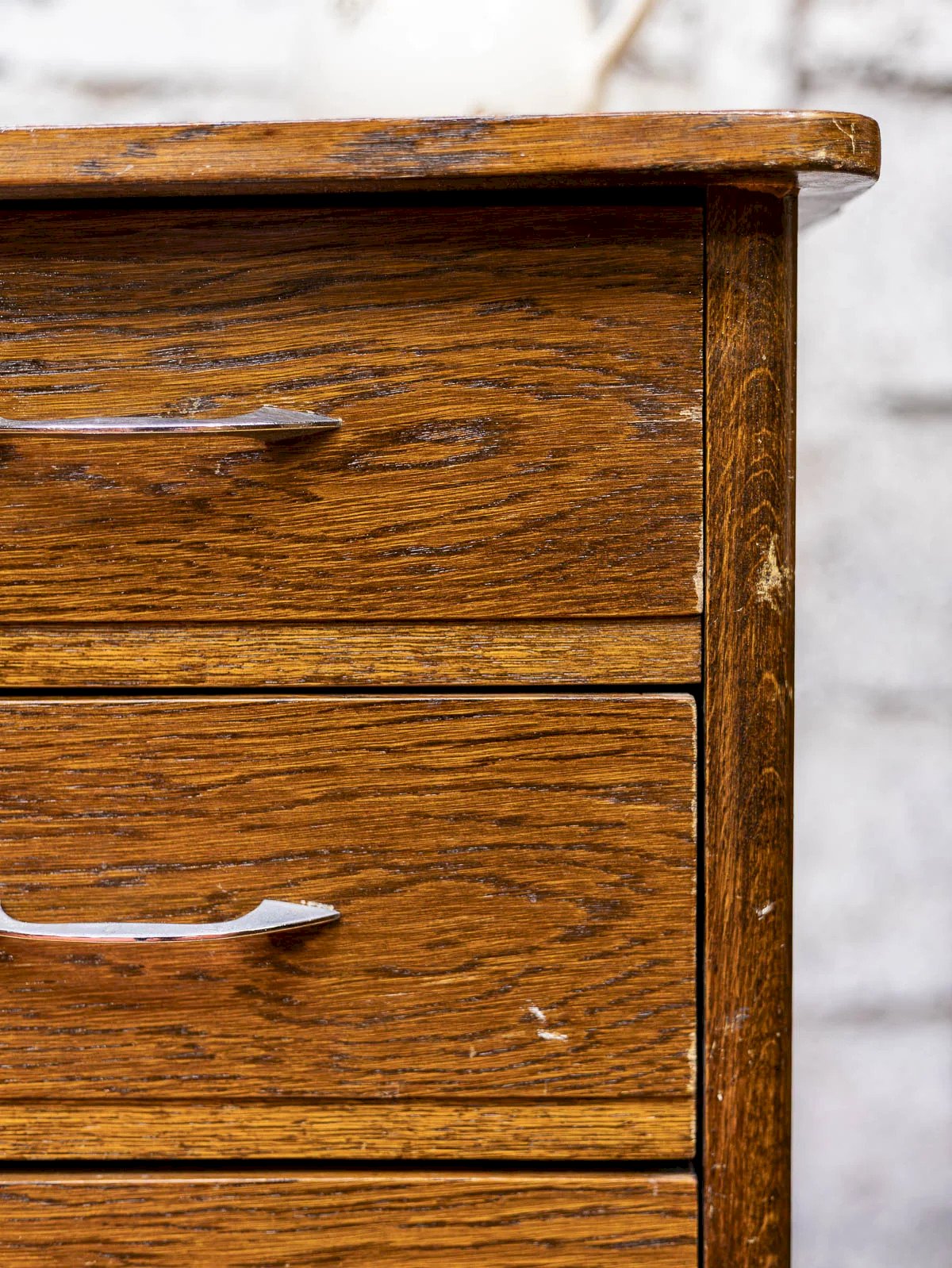
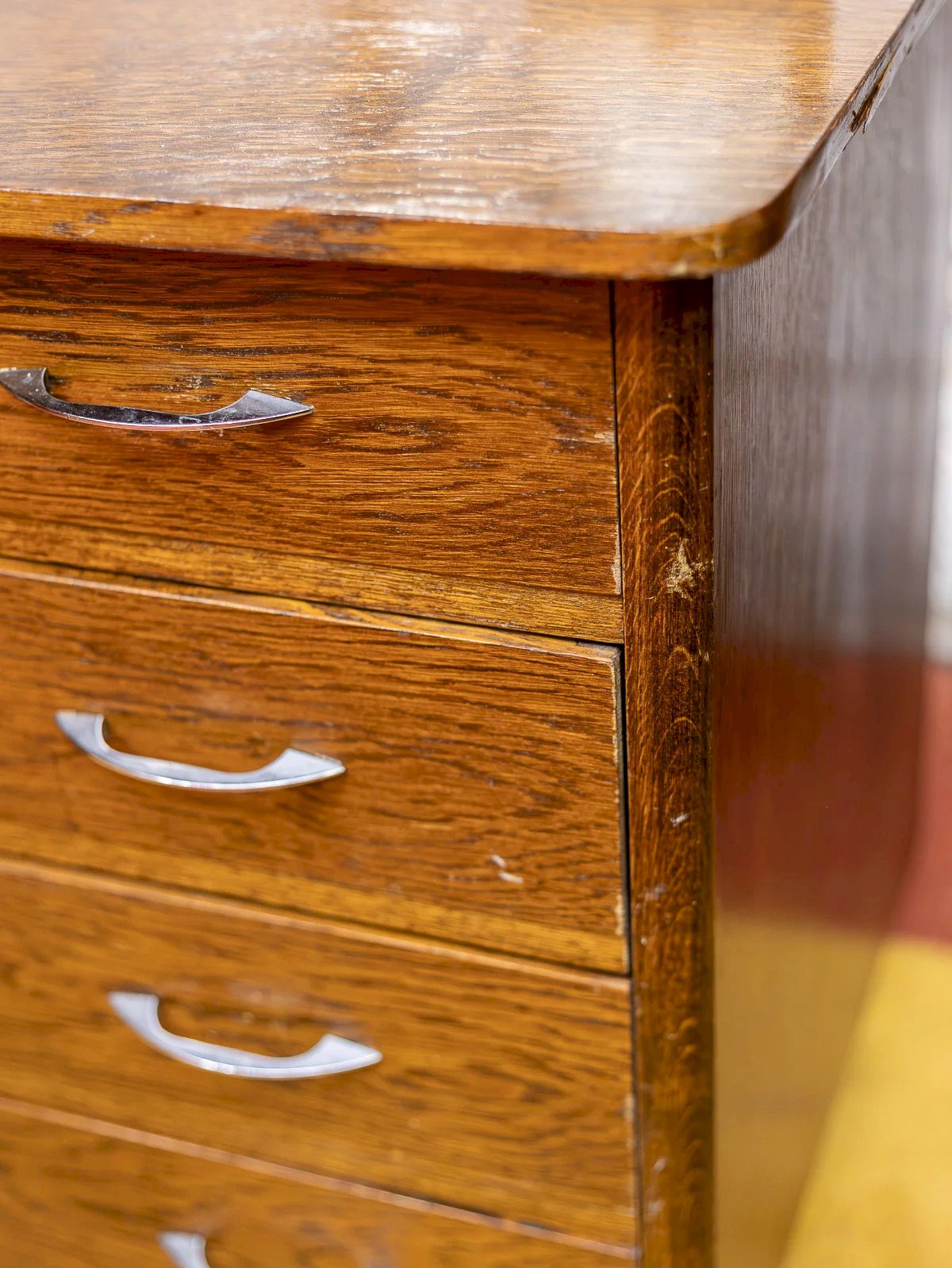
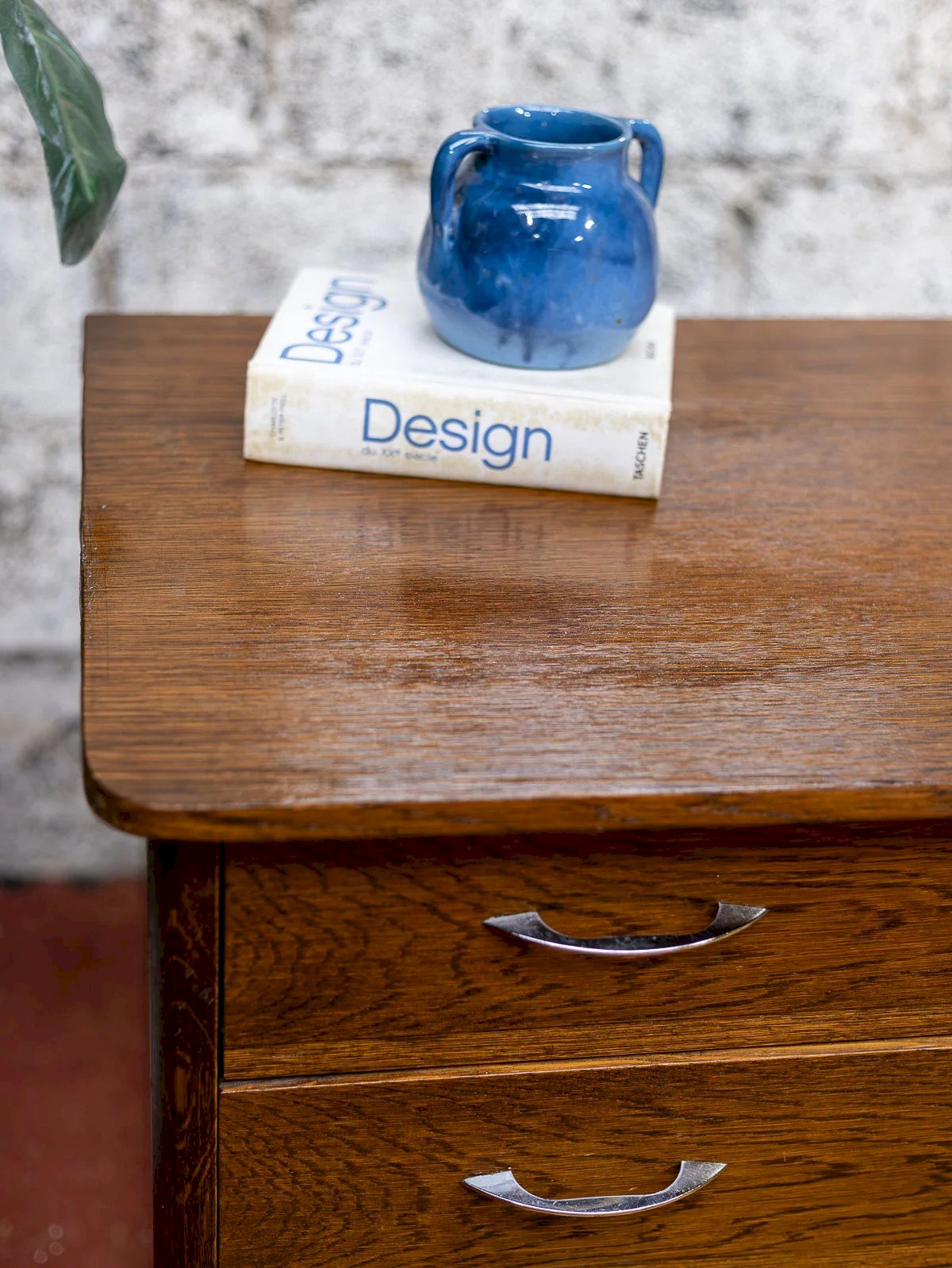
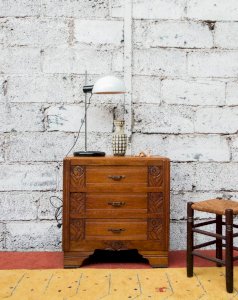
This wooden and metal chest of drawers attracts attention with its dark wood and silver handles, in a vintage contemporary style. Its four drawers provide regular storage for linens, accessories, or everyday papers, while its tapered legs lighten its look. Placed in a bedroom or living room, it combines a simple line with metallic details that emphasize its craftsmanship. Its dark wood easily complements a ceramic lamp, a few books, and a vase on its surface. In daily use, it gladly accommodates folded linens and a jewelry box, creating an elegant and discreet scene. Length: 100 cm Width: 50 cm Height: 71.5 cm Drawer height: 10 cm A Brief History of the Chest of Drawers Its name says it all: it was born to be "convenient," replacing deep chests where everything was piled up haphazardly. Appearing during the reign of Louis XIV, it was a display piece so prestigious that it often occupied reception rooms rather than wardrobes. It introduced the sliding drawer, a revolution that finally allowed access to one’s belongings without having to empty everything. Whether it's called a "jumping chest of drawers" [on high feet] or a "tomb chest," it is defined by its generous top and a façade rhythmically adorned with two or three rows of drawers.
Réf :
#414220
Brand / From : Debongout
Related Products
Comments
Garance, the contemporary dresser No. 784
639€
75002 Paris
Ce site contient des liens d’affiliation pour lesquels je peux recevoir une compensation.
Description
This wooden and metal chest of drawers attracts attention with its dark wood and silver handles, in a vintage contemporary style. Its four drawers provide regular storage for linens, accessories, or everyday papers, while its tapered legs lighten its look. Placed in a bedroom or living room, it combines a simple line with metallic details that emphasize its craftsmanship. Its dark wood easily complements a ceramic lamp, a few books, and a vase on its surface. In daily use, it gladly accommodates folded linens and a jewelry box, creating an elegant and discreet scene. Length: 100 cm Width: 50 cm Height: 71.5 cm Drawer height: 10 cm A Brief History of the Chest of Drawers Its name says it all: it was born to be "convenient," replacing deep chests where everything was piled up haphazardly. Appearing during the reign of Louis XIV, it was a display piece so prestigious that it often occupied reception rooms rather than wardrobes. It introduced the sliding drawer, a revolution that finally allowed access to one’s belongings without having to empty everything. Whether it's called a "jumping chest of drawers" [on high feet] or a "tomb chest," it is defined by its generous top and a façade rhythmically adorned with two or three rows of drawers.
Réf :
#414220
Brand / From : Debongout