 English
 Français


Description
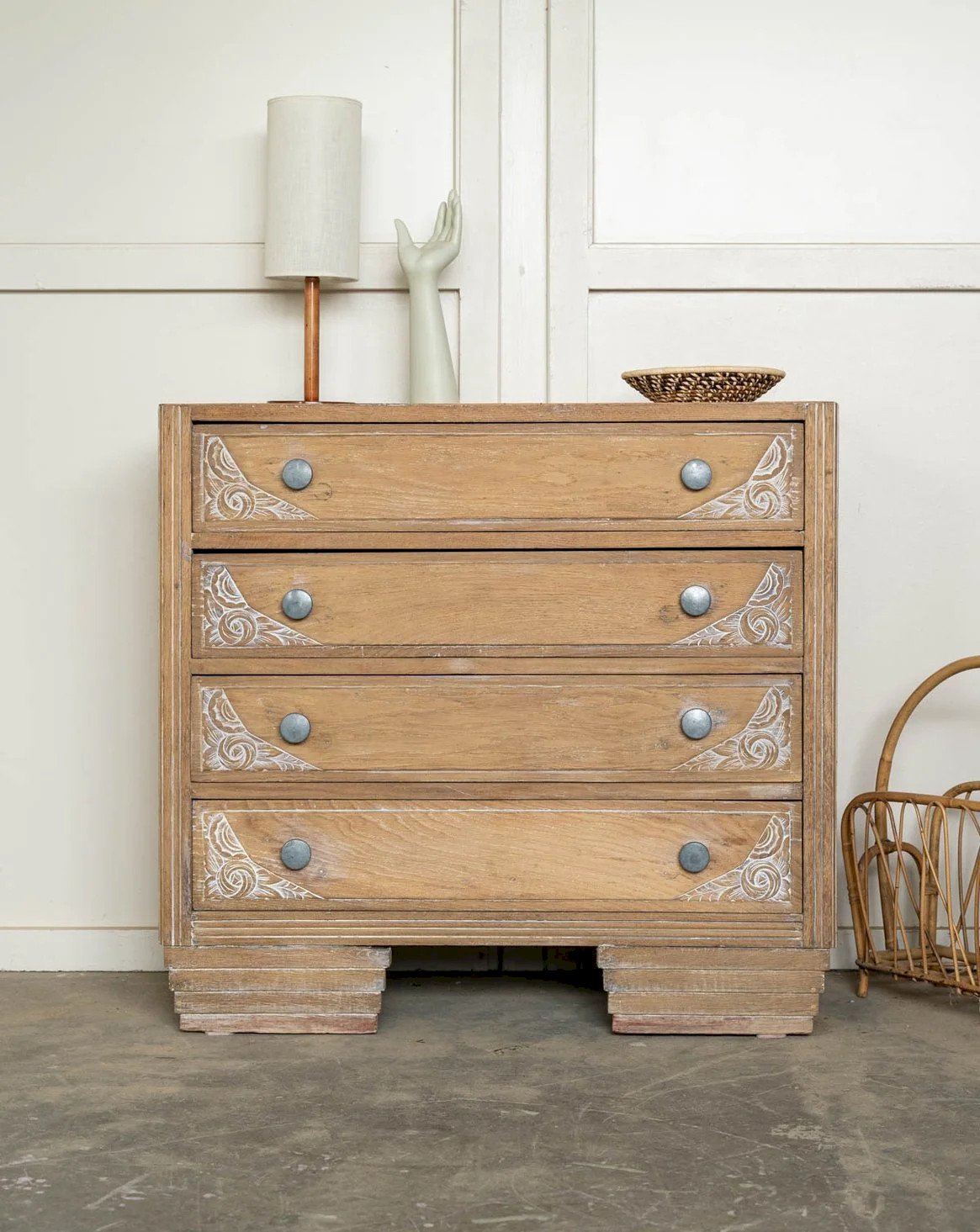
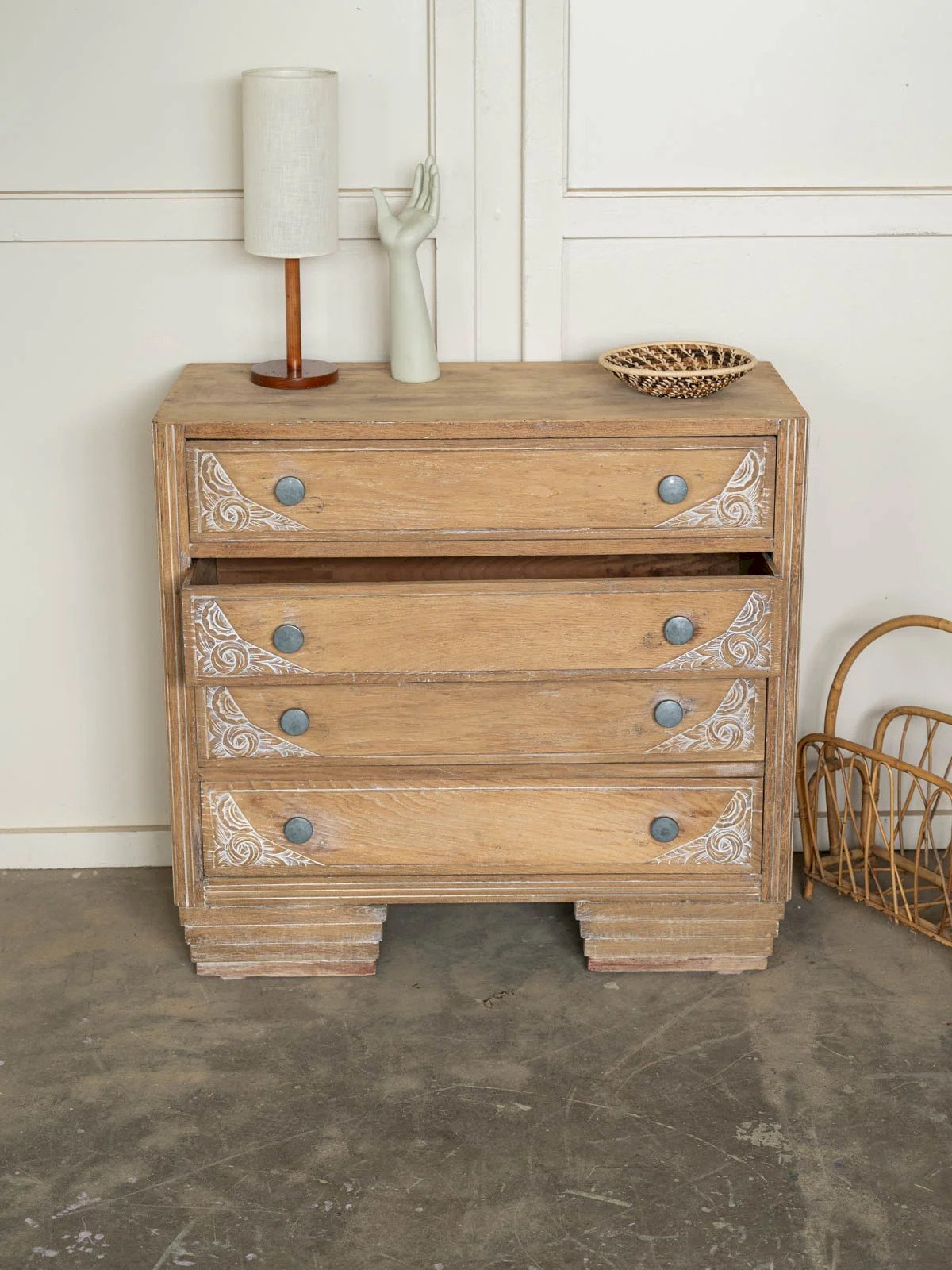
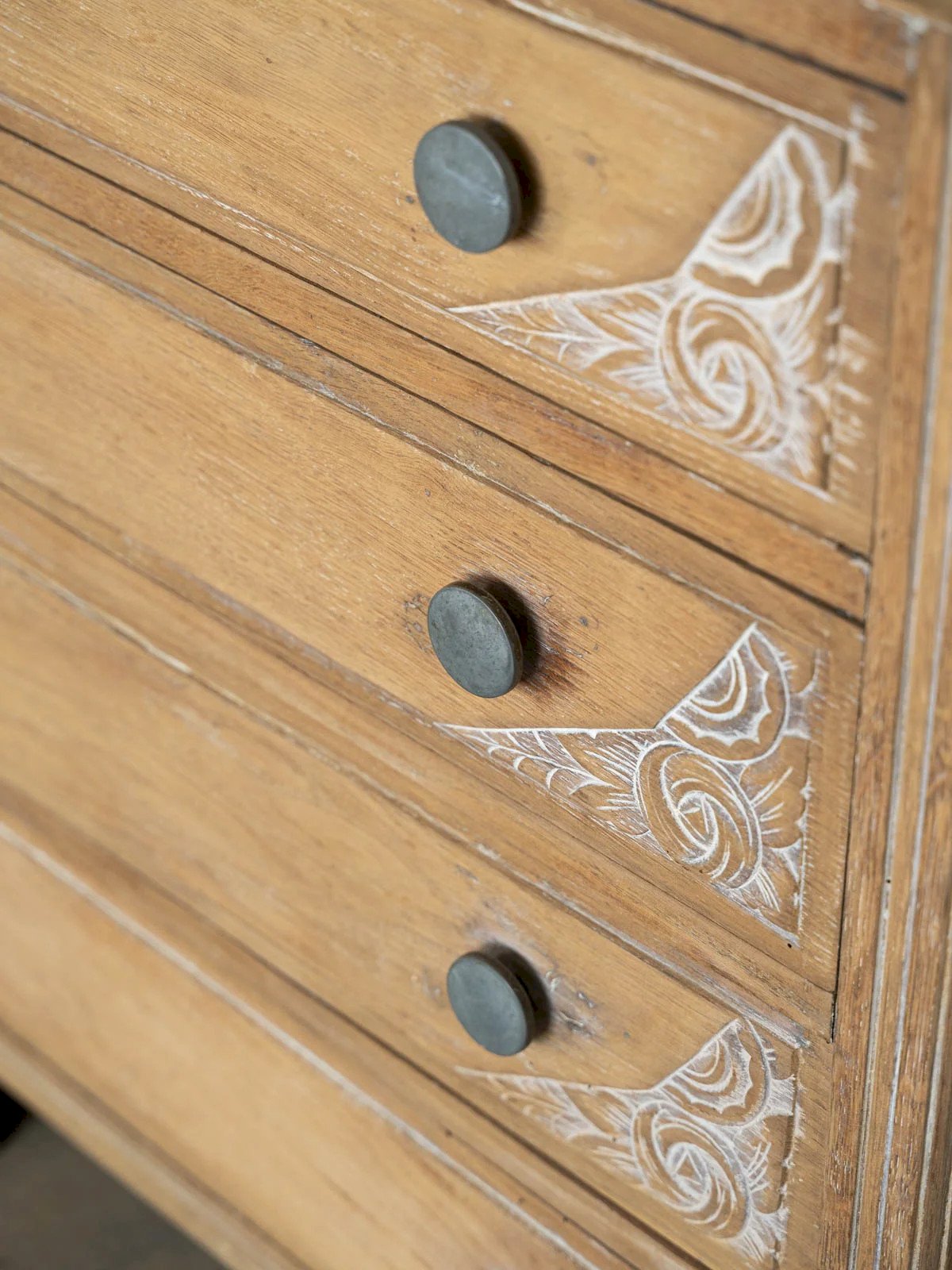
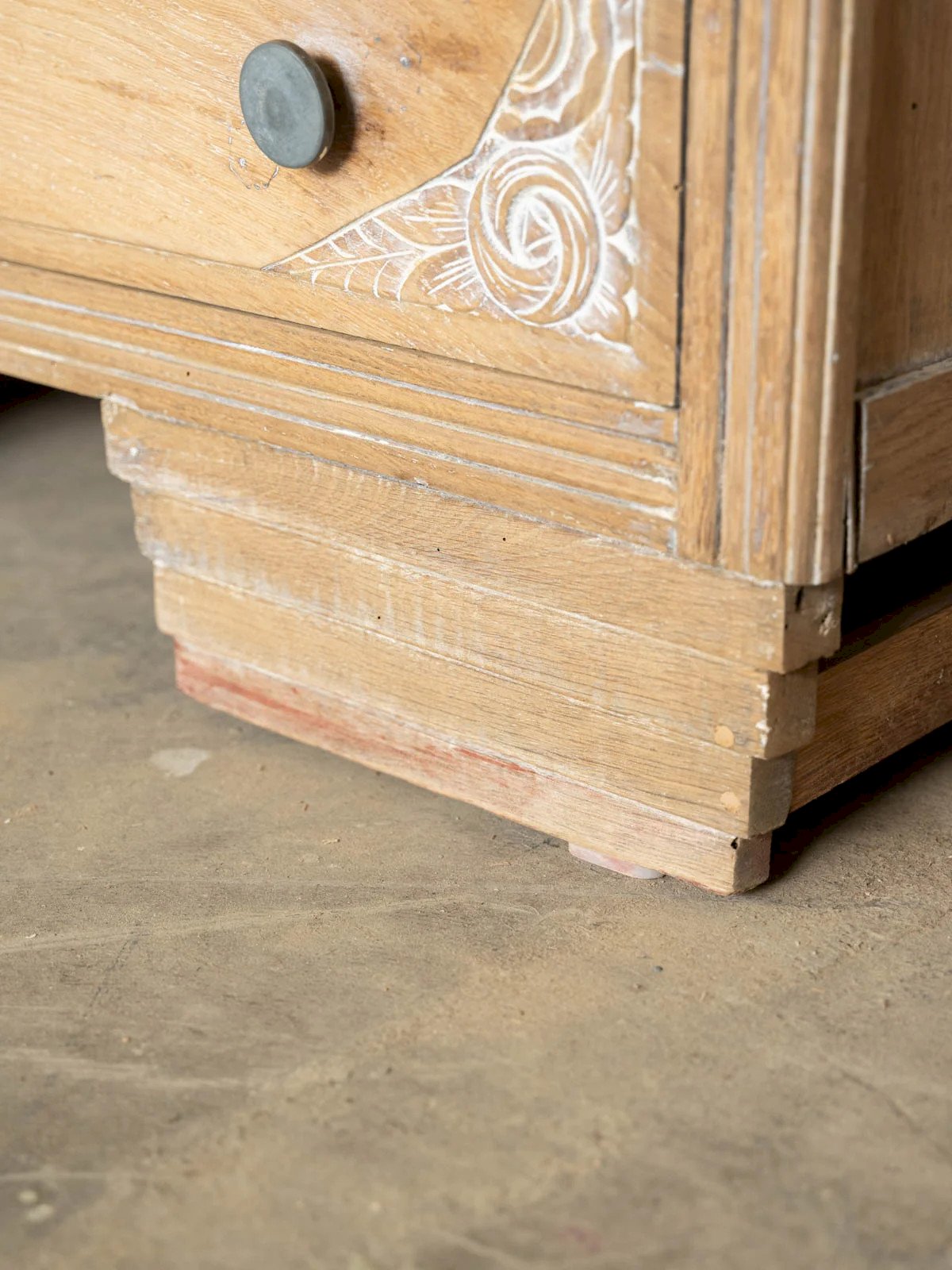
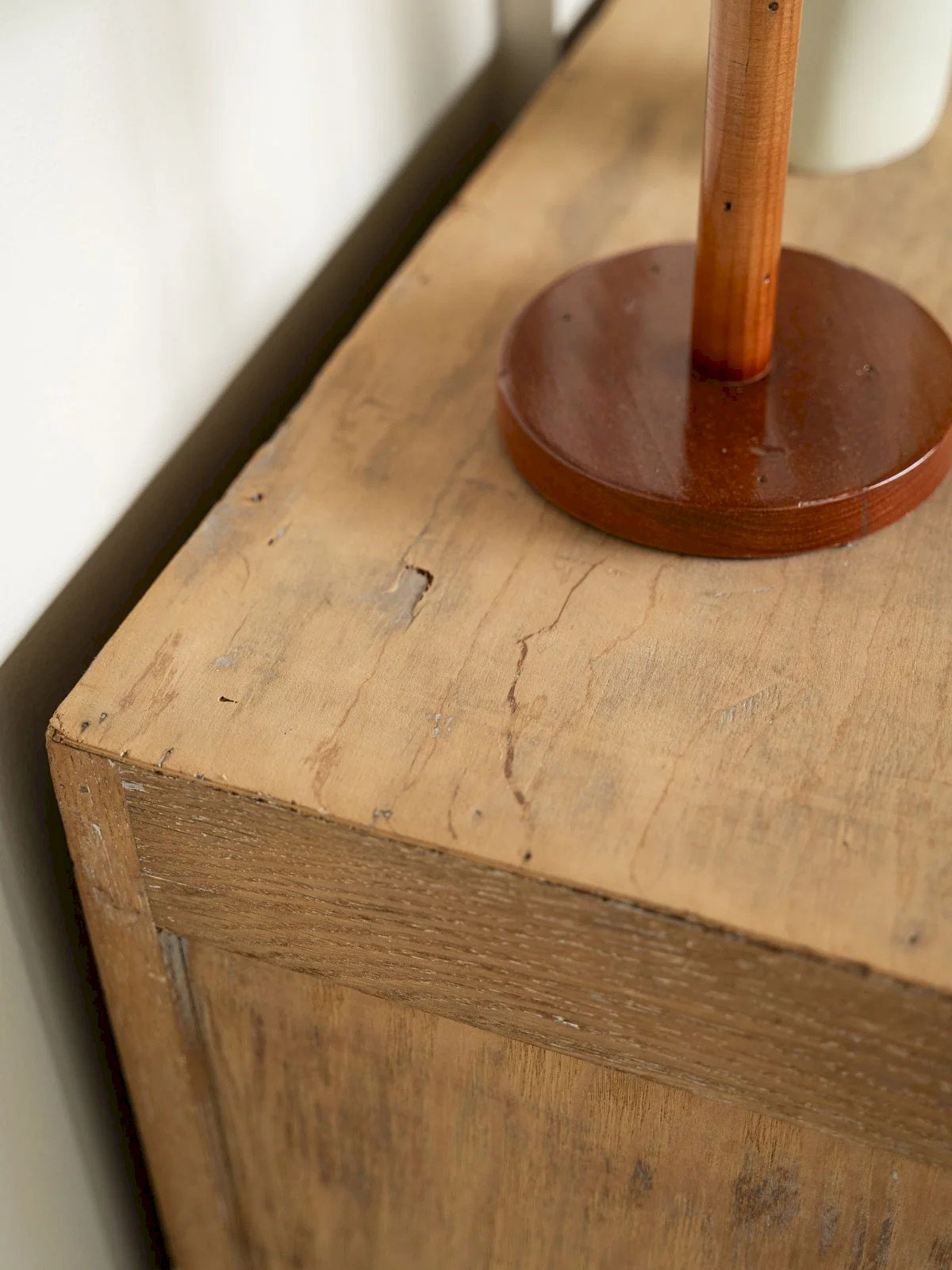
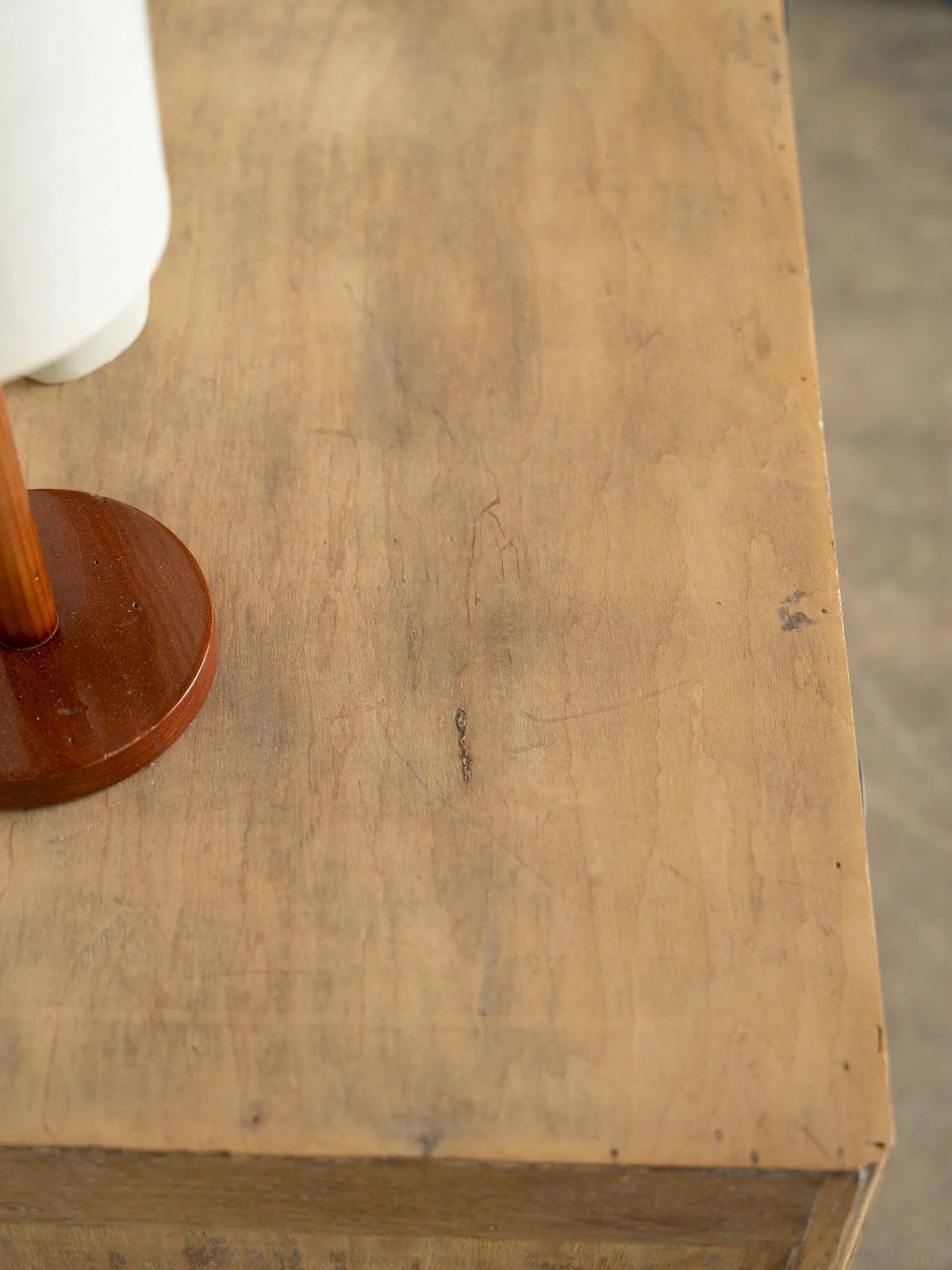
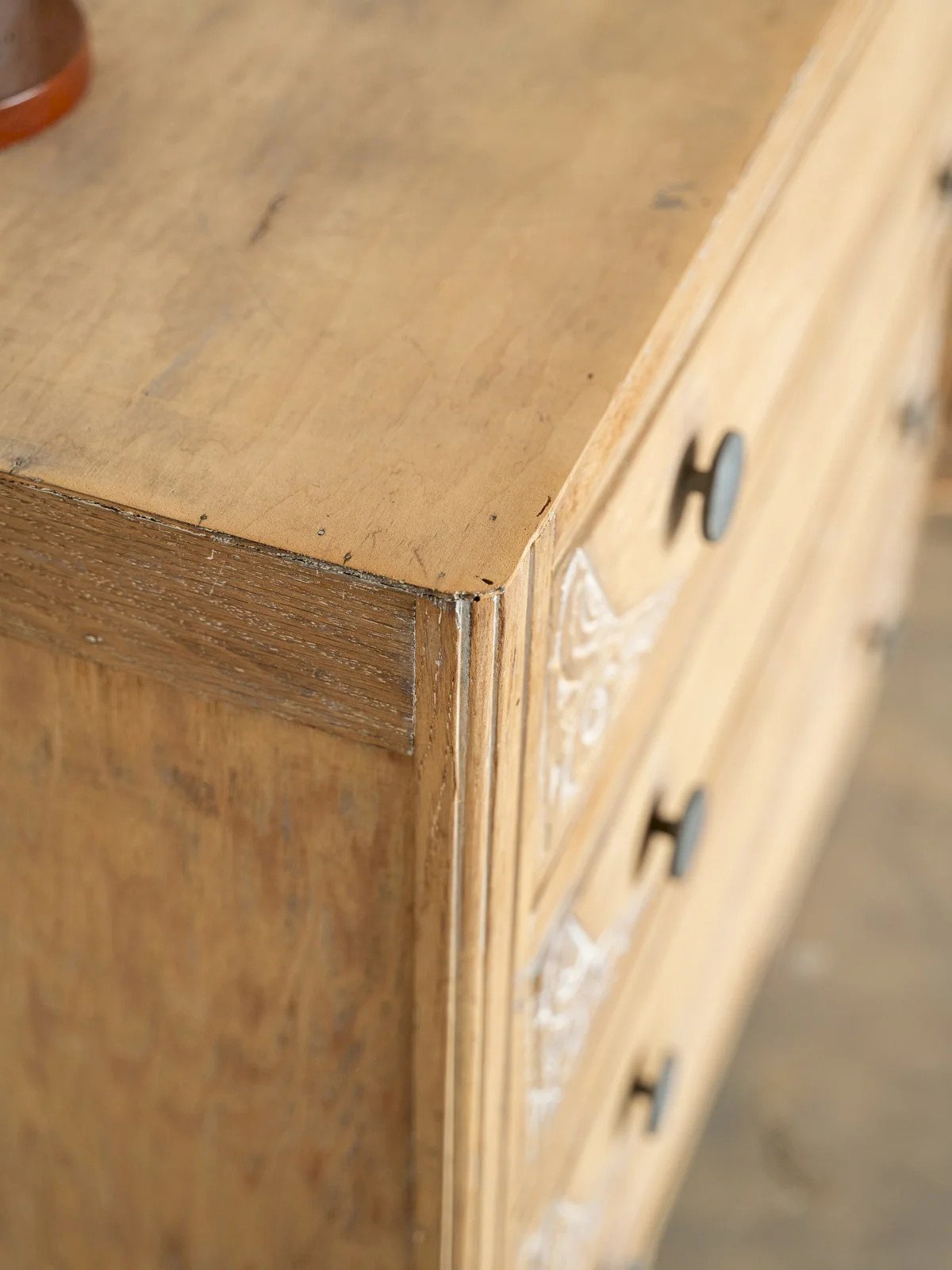
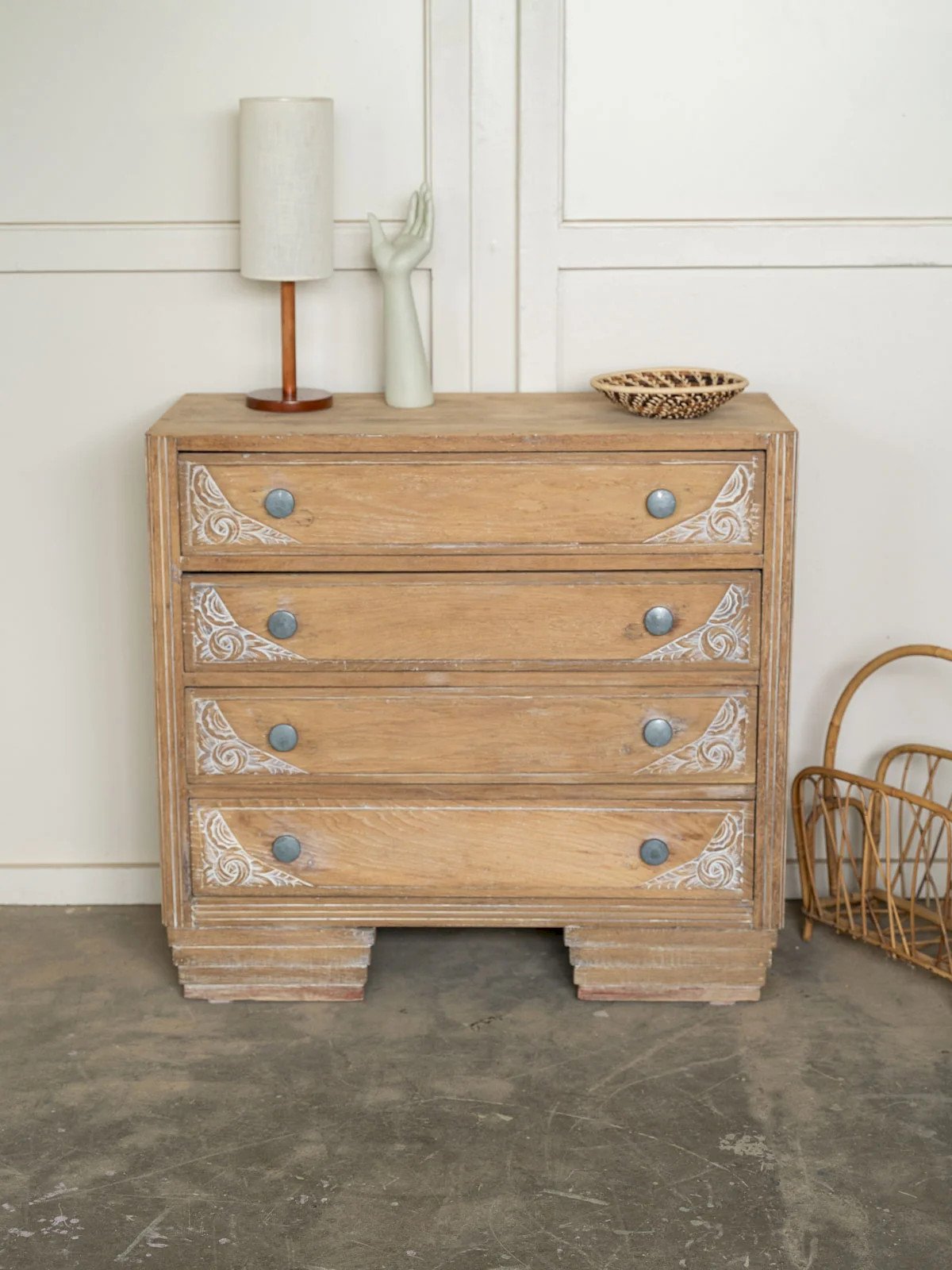
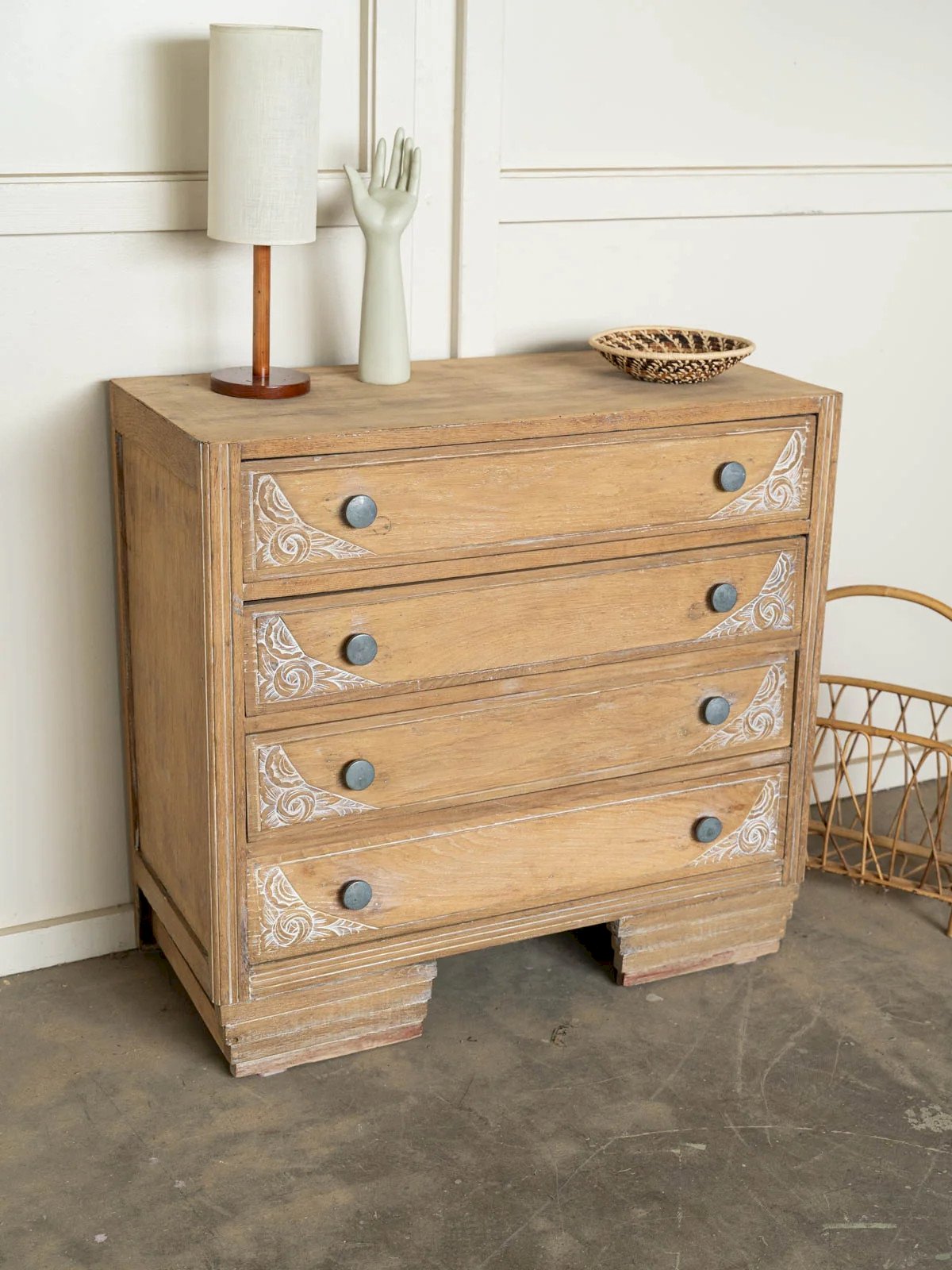
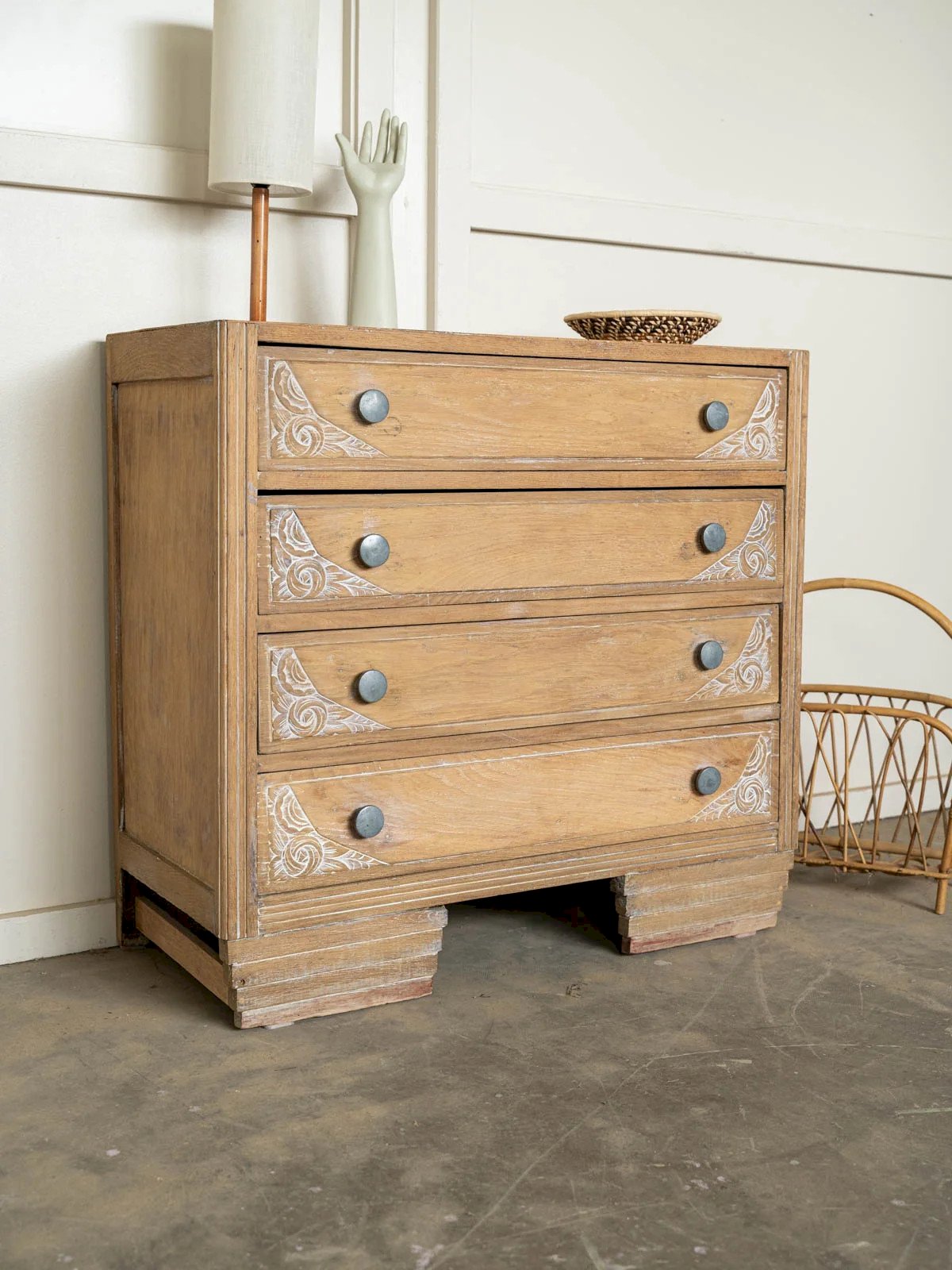
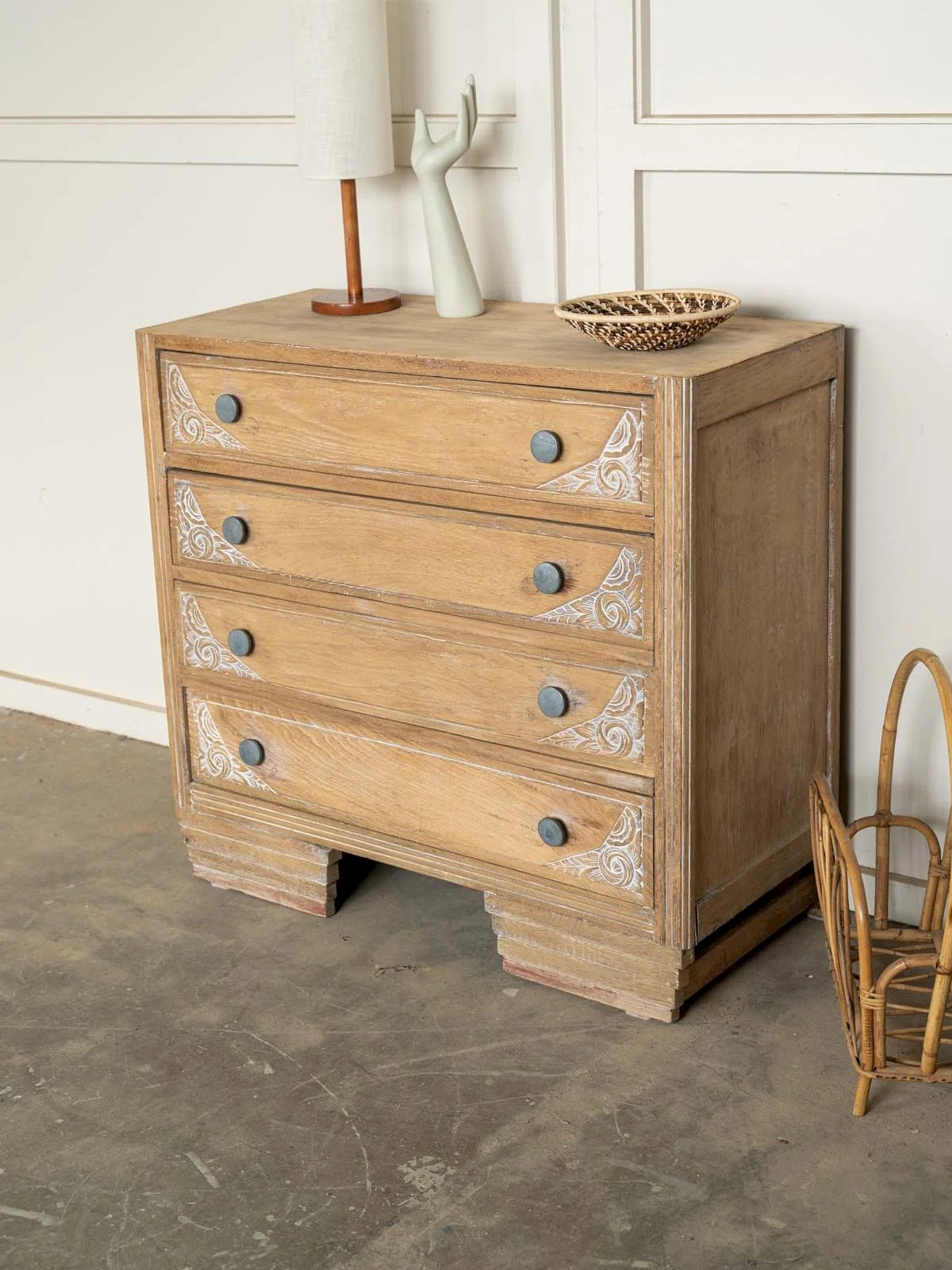
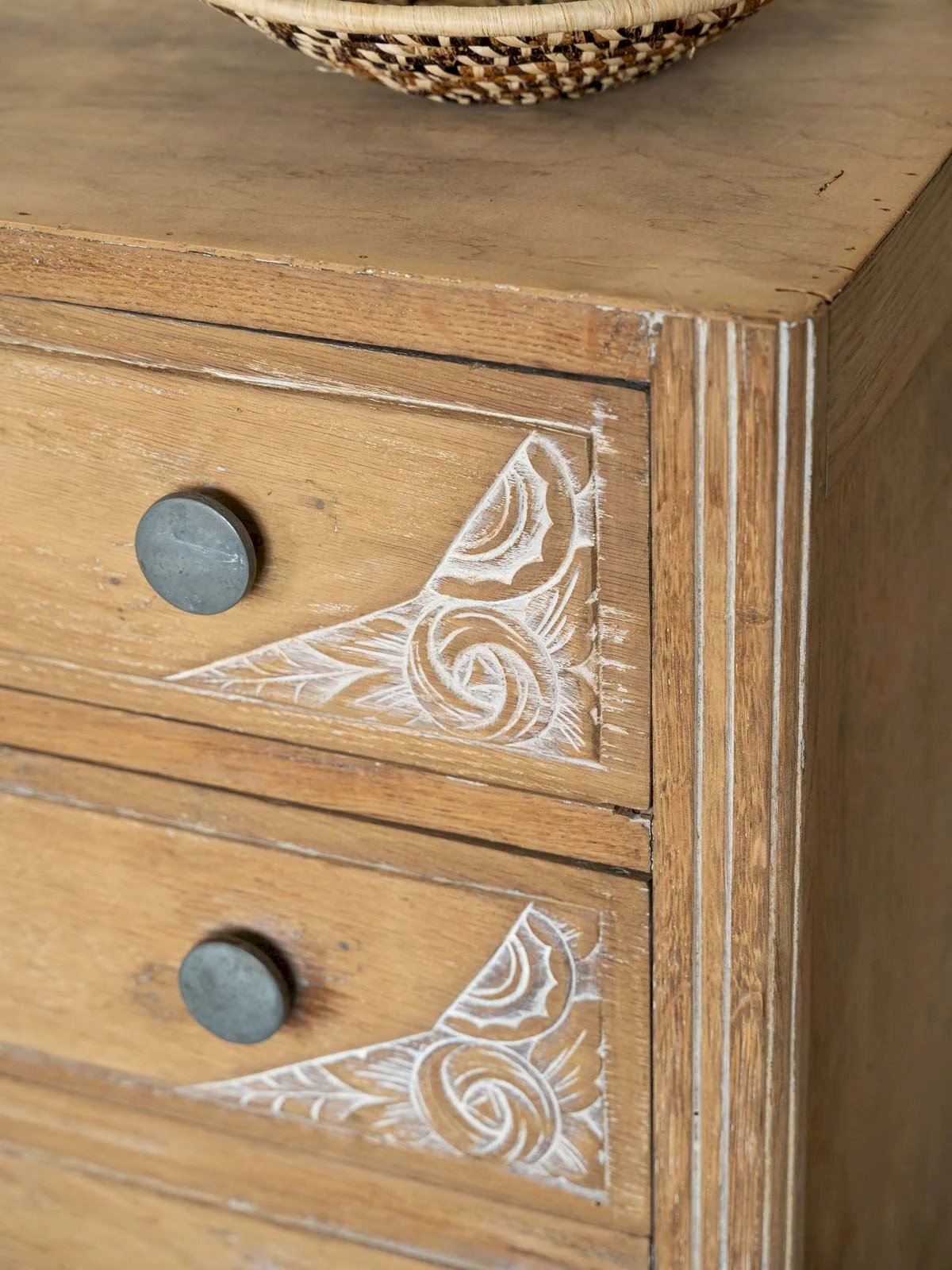
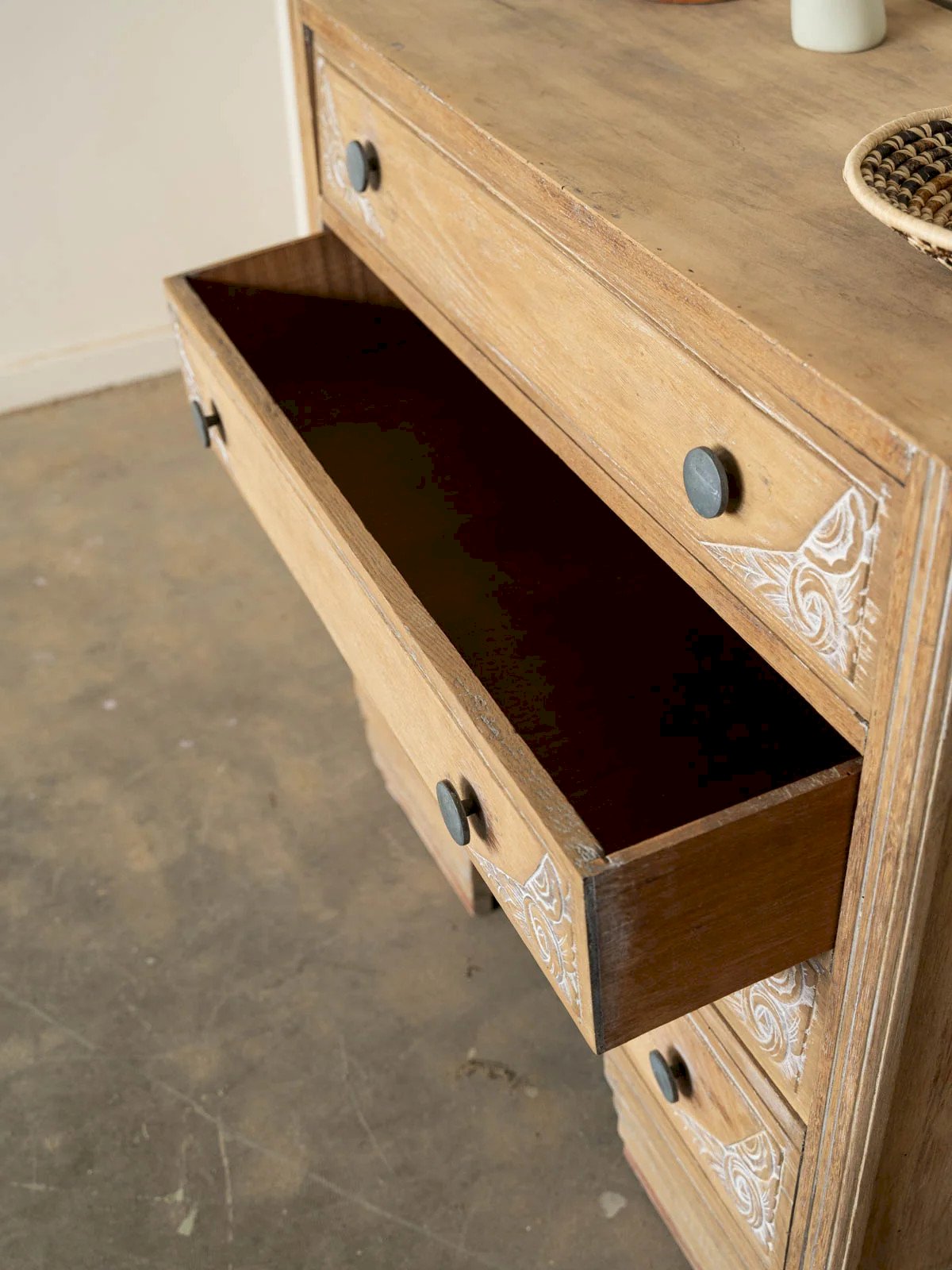
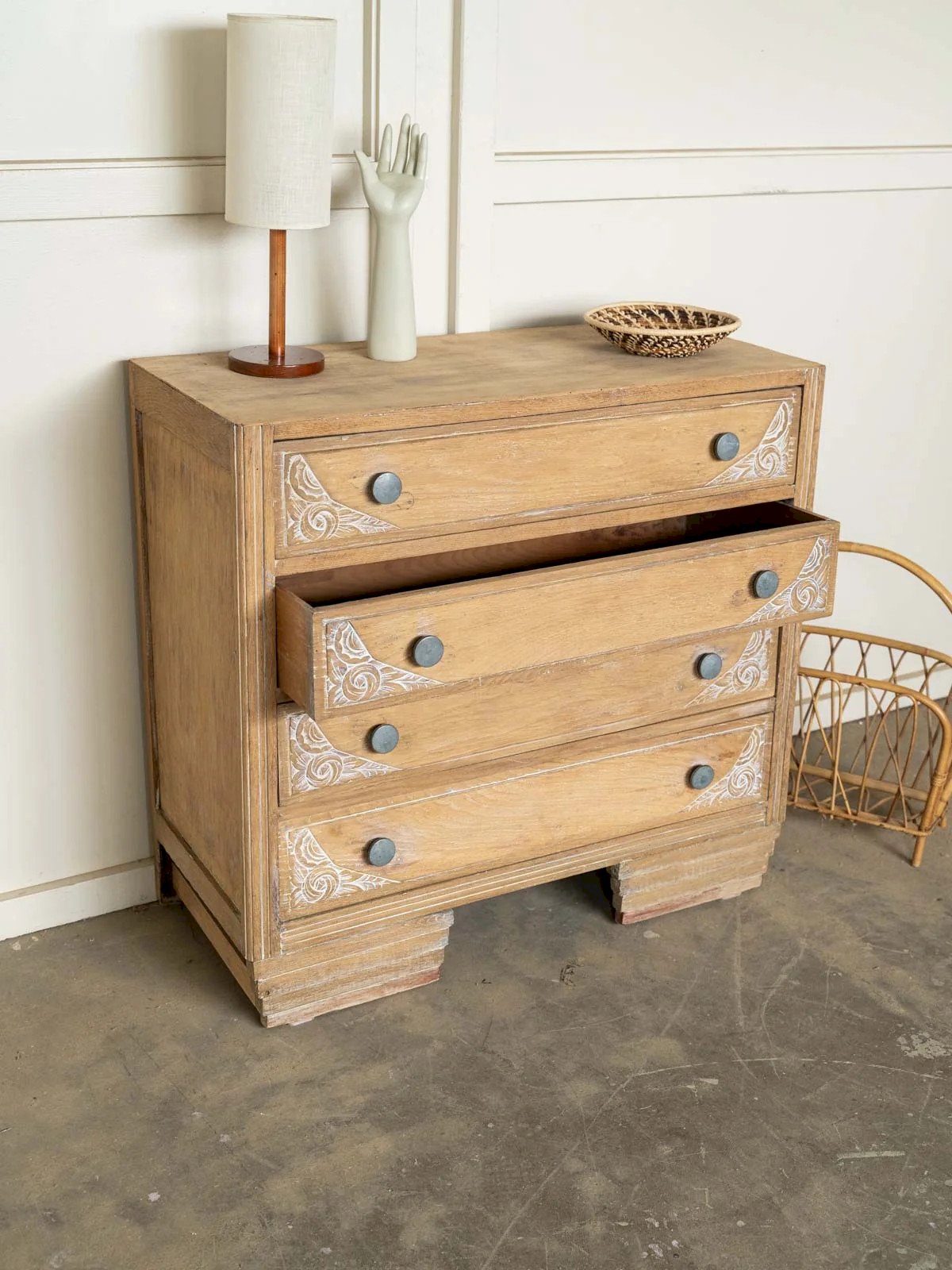
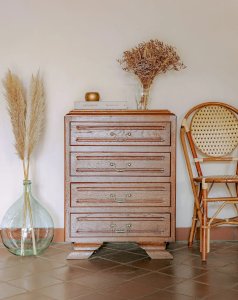
This second-hand light wood chest of drawers combines an Art Deco look with a country touch, achieving a sober and refined balance. Its four drawers rhythm the front and provide generous storage for linen, accessories, or everyday essentials. The light wood brings a soft light, while the lovely Art Deco patterns add an elegant presence in a bedroom or entryway. Sourced for its character, this piece harmonizes well with both natural materials and more graphic decor. In a bedroom, it holds stacks of linen and a lamp placed on its top, creating a warm and tidy scene. Width: 100 cm Depth: 45 cm Height: 94 cm Drawer height: 14 cm A brief history of the chest of drawers Its name says it all: it was born to be "convenient," replacing deep chests where everything was piled haphazardly. Appearing during the reign of Louis XIV, it was such a prestigious piece of furniture that it often adorned reception rooms rather than wardrobes. It introduced the sliding drawer, a revolution that finally allowed access to belongings without emptying everything out. Whether called a "high-footed chest of drawers" or a "tomb chest," it is defined by its generous top and a front rhythmically arranged with two or three rows of drawers.
Réf :
#413818
Brand / From : Debongout
Related Products


Comments
Garance, the Art Deco dresser No. 770
629€
75002 Paris
Ce site contient des liens d’affiliation pour lesquels je peux recevoir une compensation.
Description
This second-hand light wood chest of drawers combines an Art Deco look with a country touch, achieving a sober and refined balance. Its four drawers rhythm the front and provide generous storage for linen, accessories, or everyday essentials. The light wood brings a soft light, while the lovely Art Deco patterns add an elegant presence in a bedroom or entryway. Sourced for its character, this piece harmonizes well with both natural materials and more graphic decor. In a bedroom, it holds stacks of linen and a lamp placed on its top, creating a warm and tidy scene. Width: 100 cm Depth: 45 cm Height: 94 cm Drawer height: 14 cm A brief history of the chest of drawers Its name says it all: it was born to be "convenient," replacing deep chests where everything was piled haphazardly. Appearing during the reign of Louis XIV, it was such a prestigious piece of furniture that it often adorned reception rooms rather than wardrobes. It introduced the sliding drawer, a revolution that finally allowed access to belongings without emptying everything out. Whether called a "high-footed chest of drawers" or a "tomb chest," it is defined by its generous top and a front rhythmically arranged with two or three rows of drawers.
Réf :
#413818
Brand / From : Debongout