 English
 Français


Description
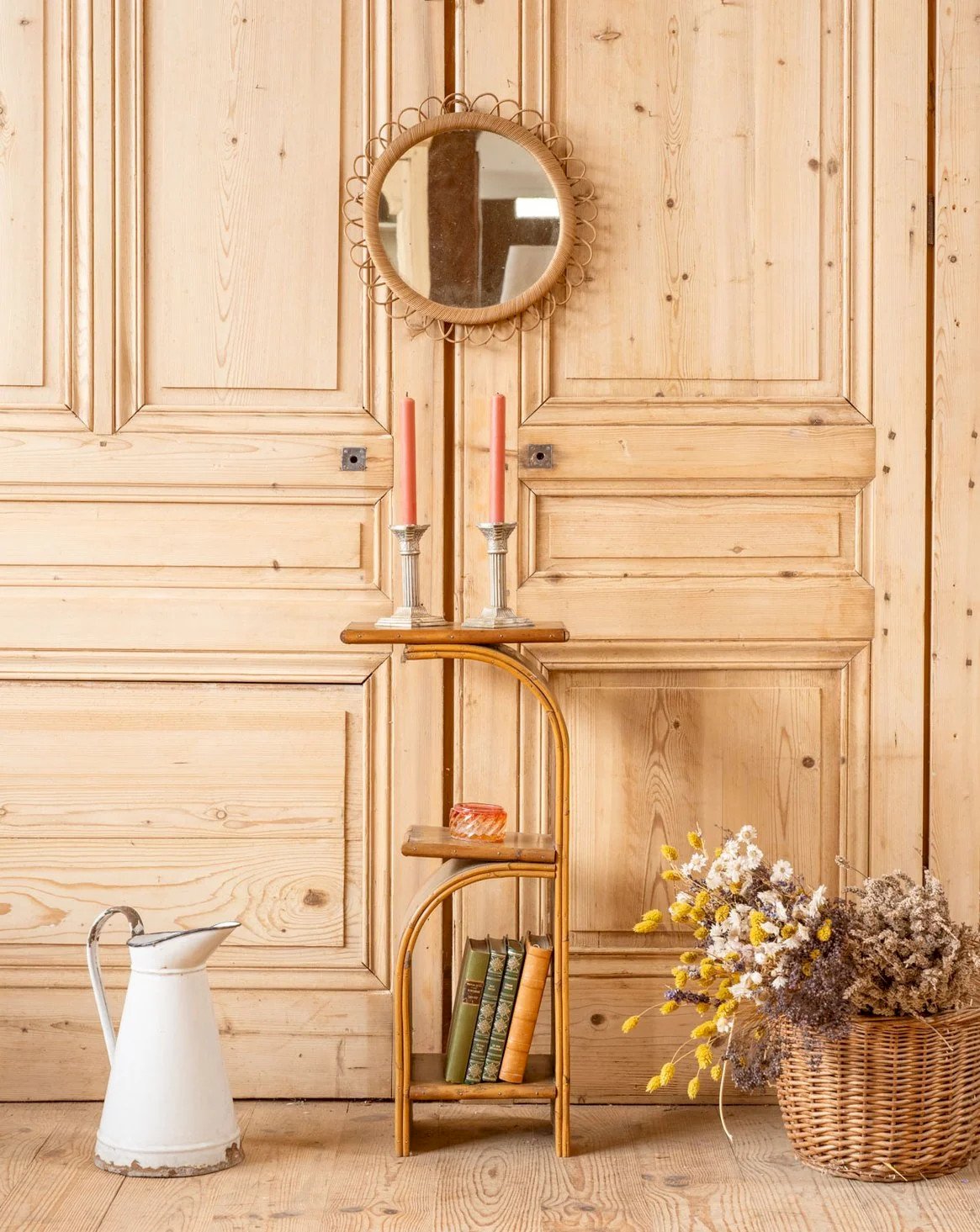
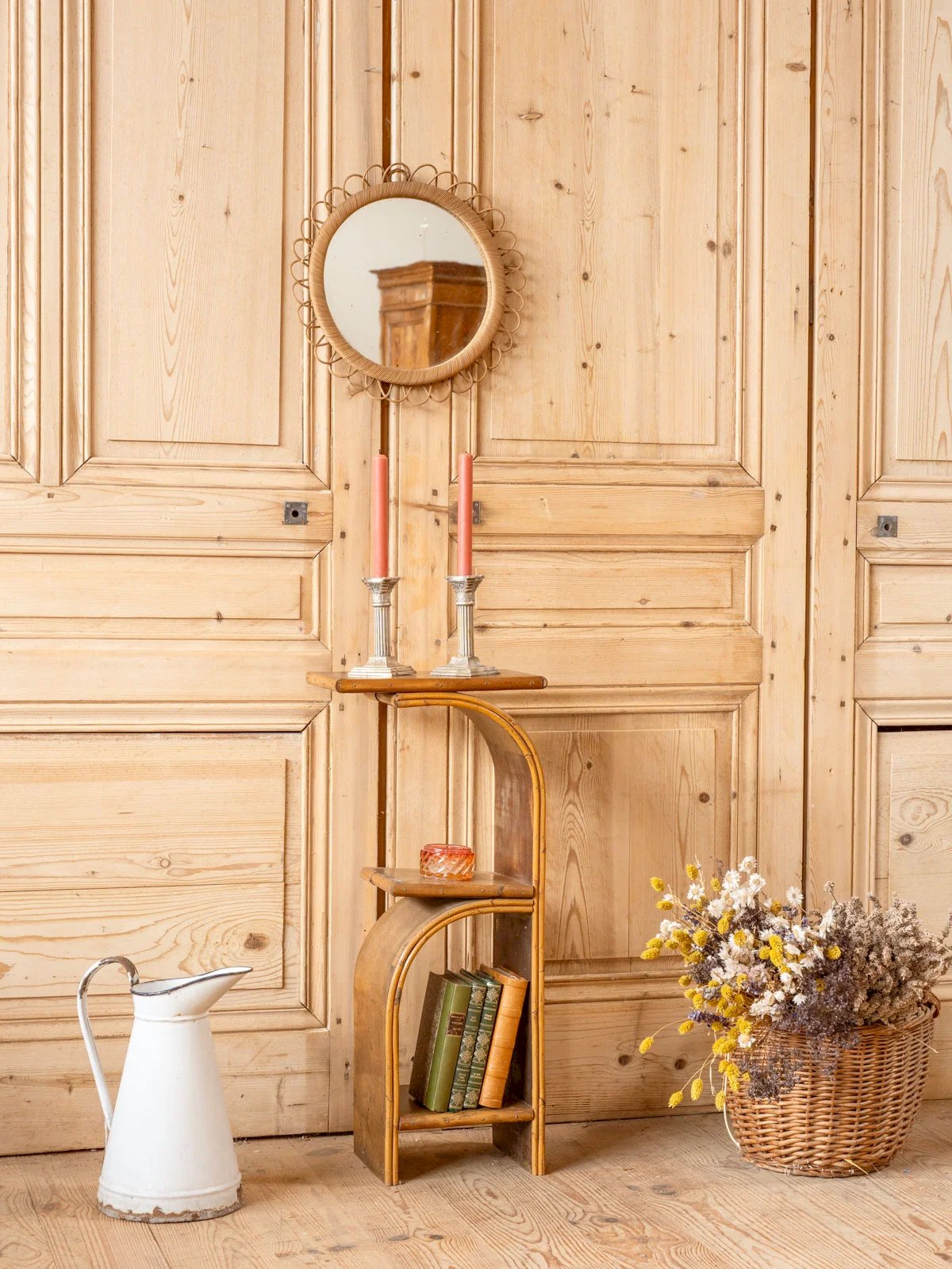
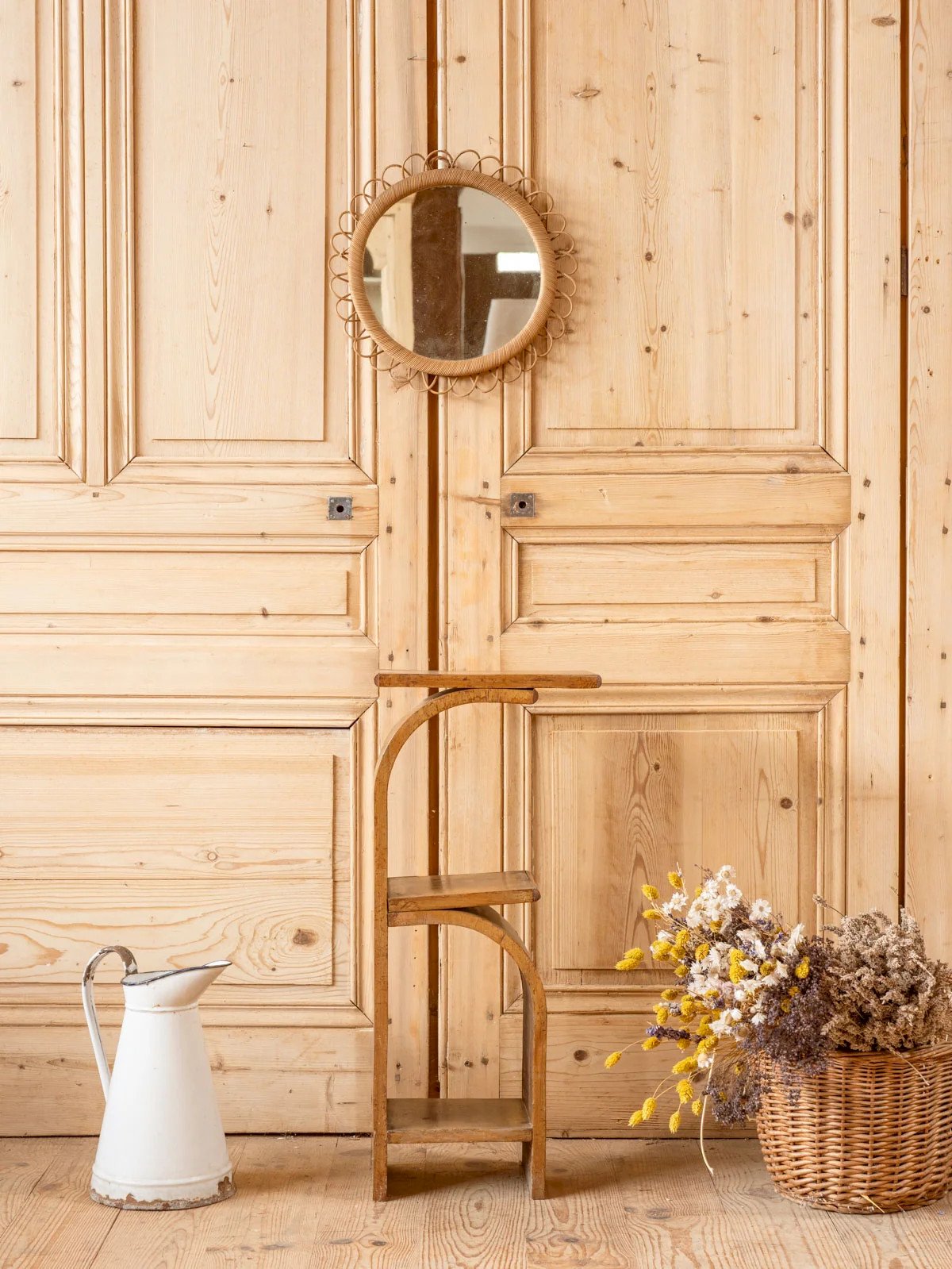
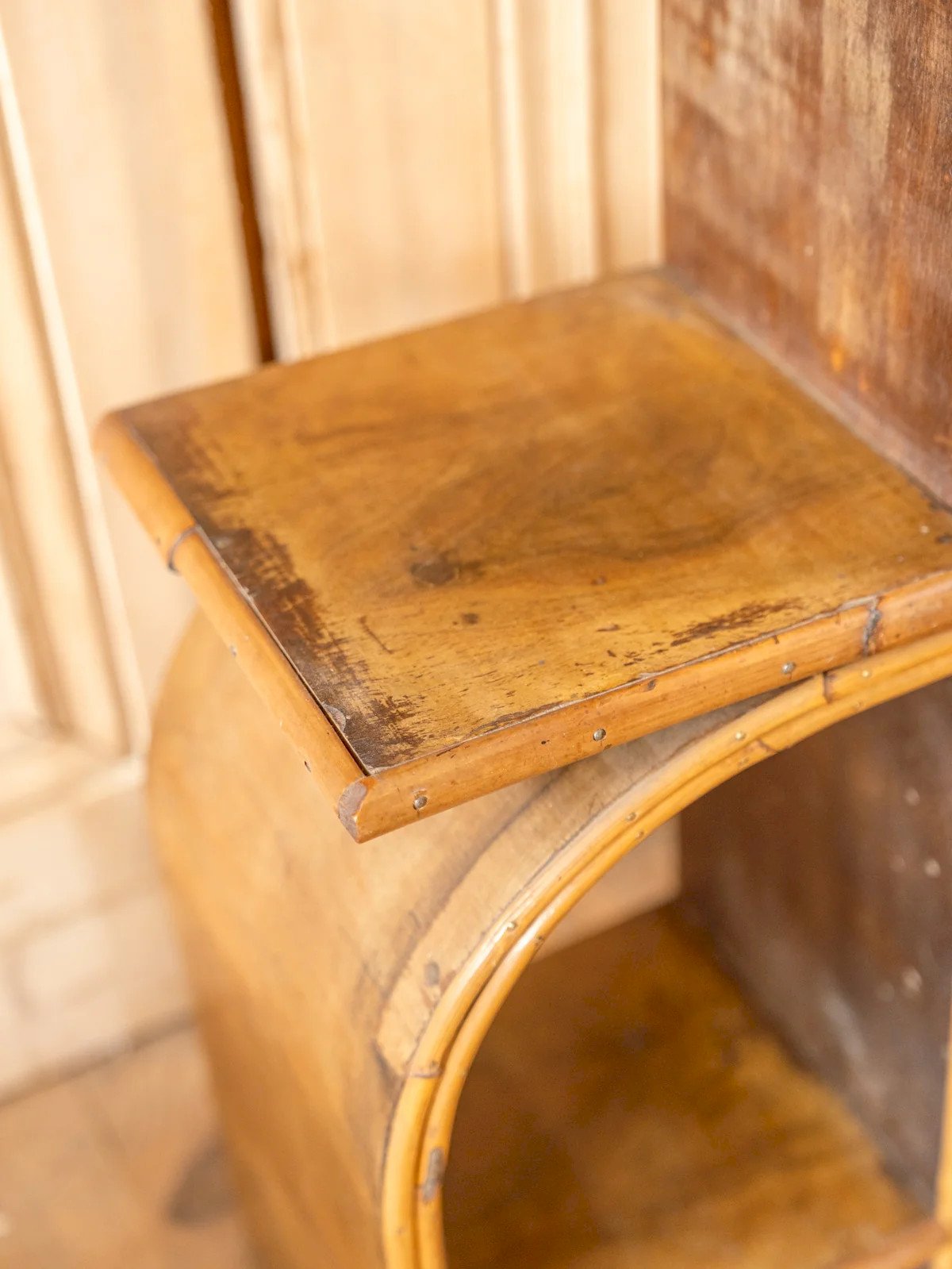
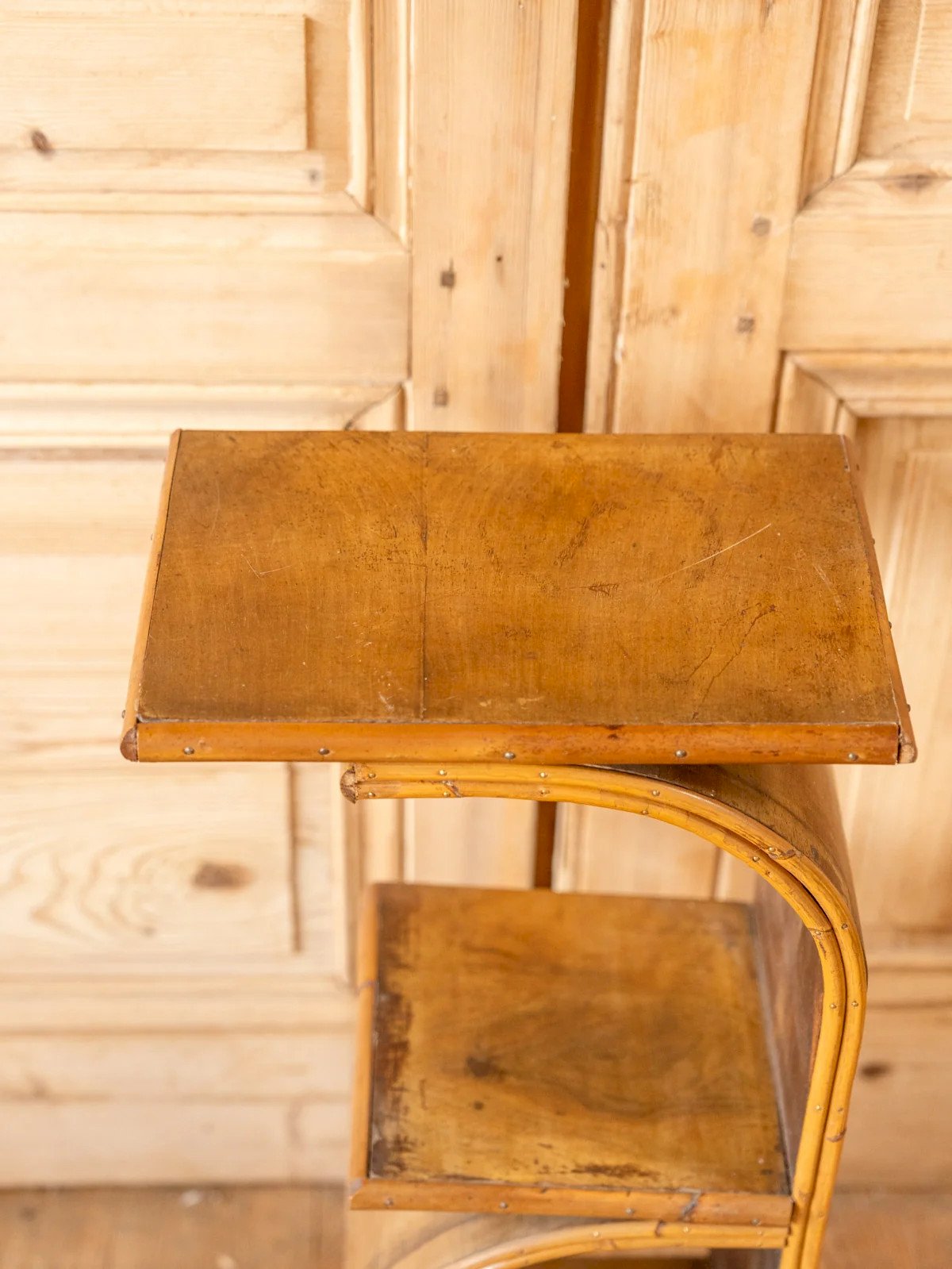
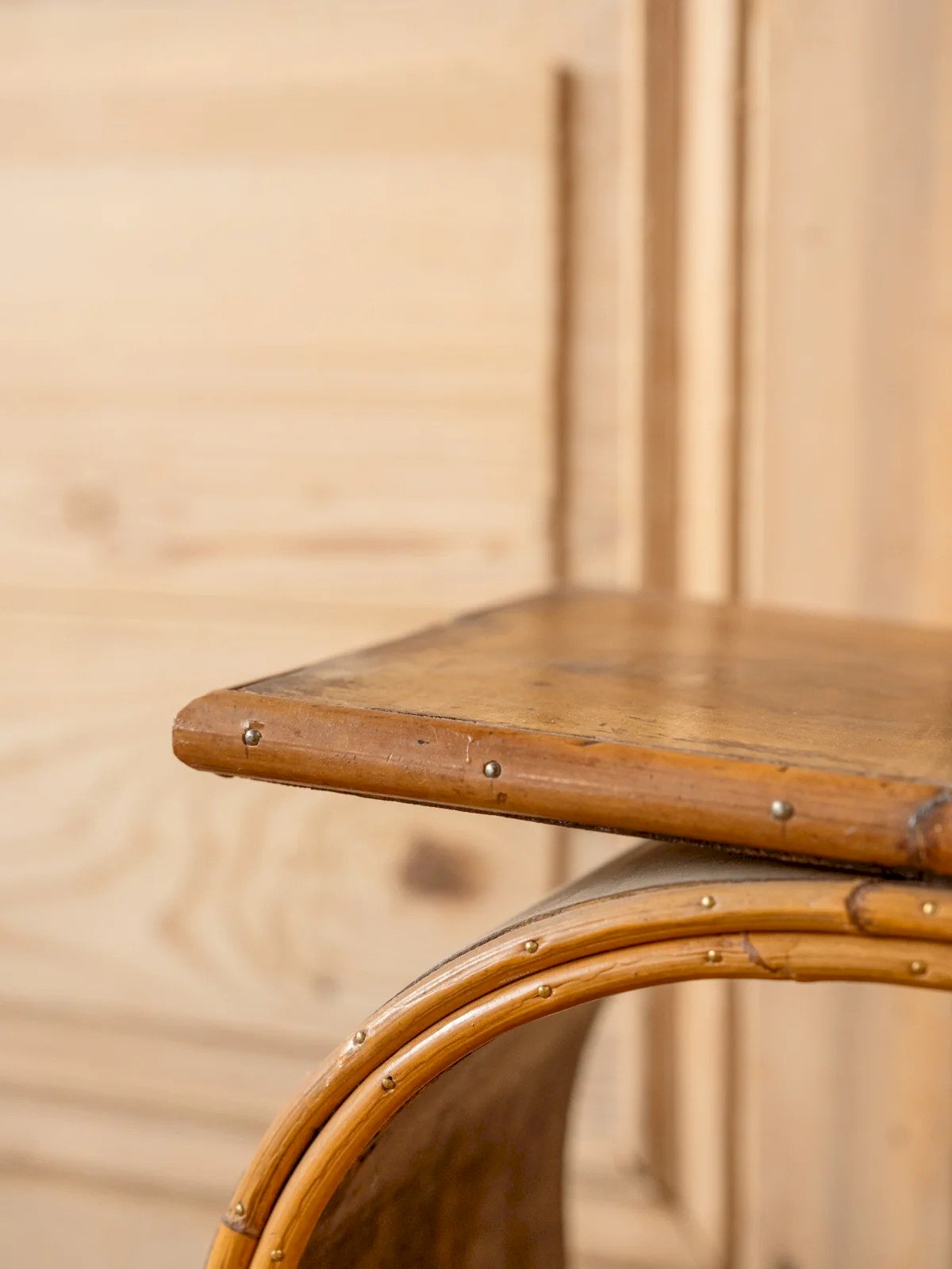
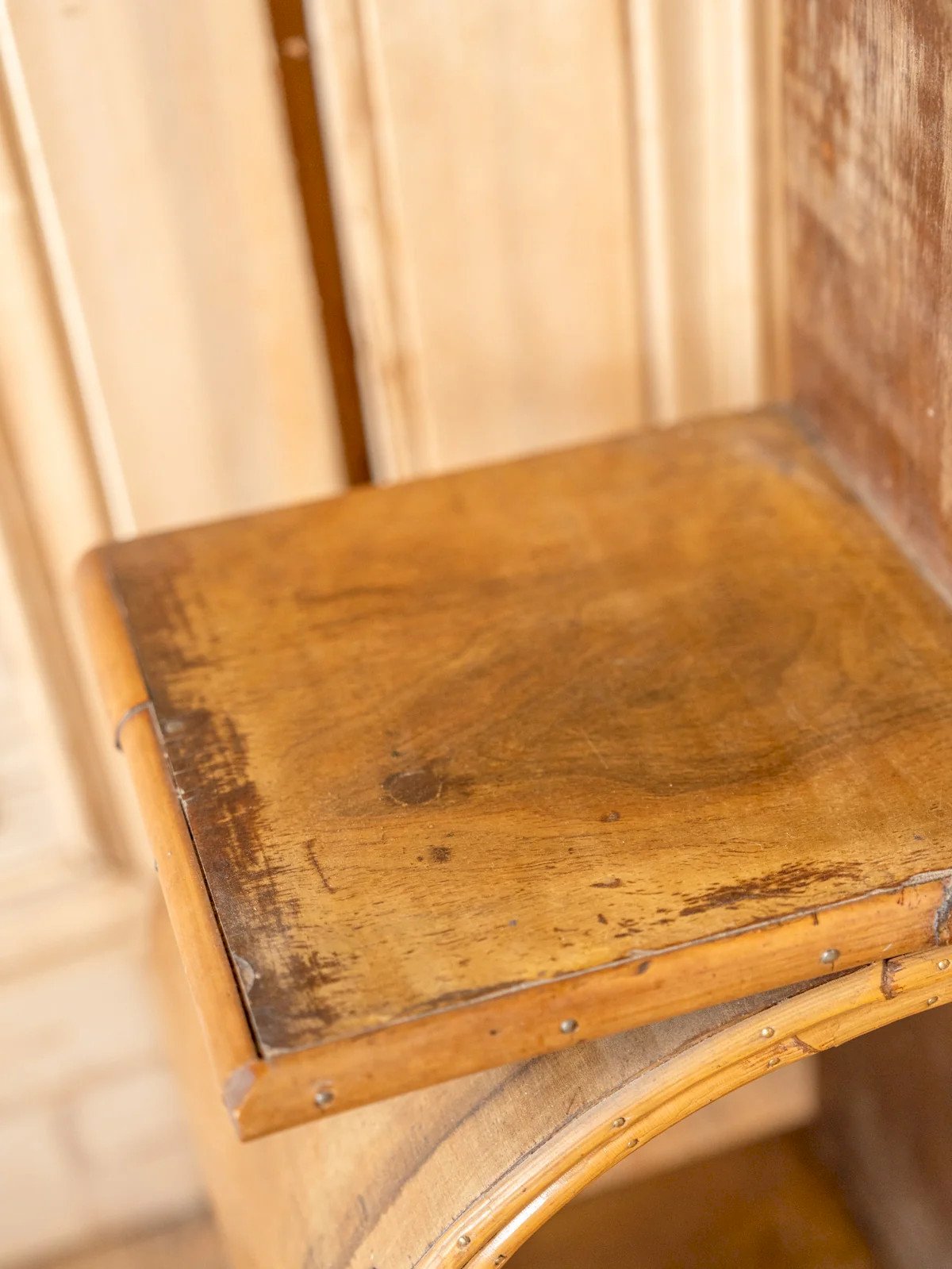
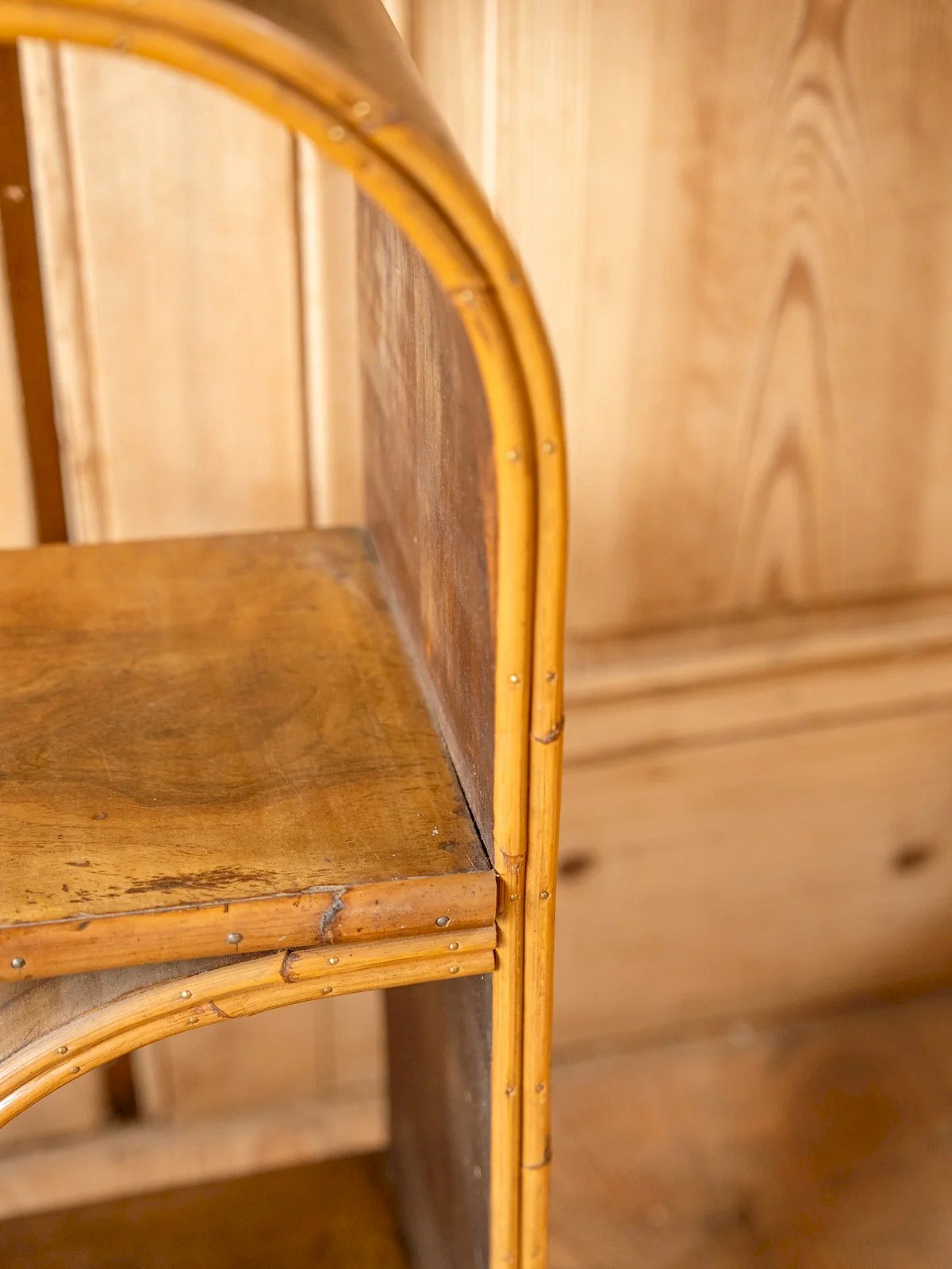
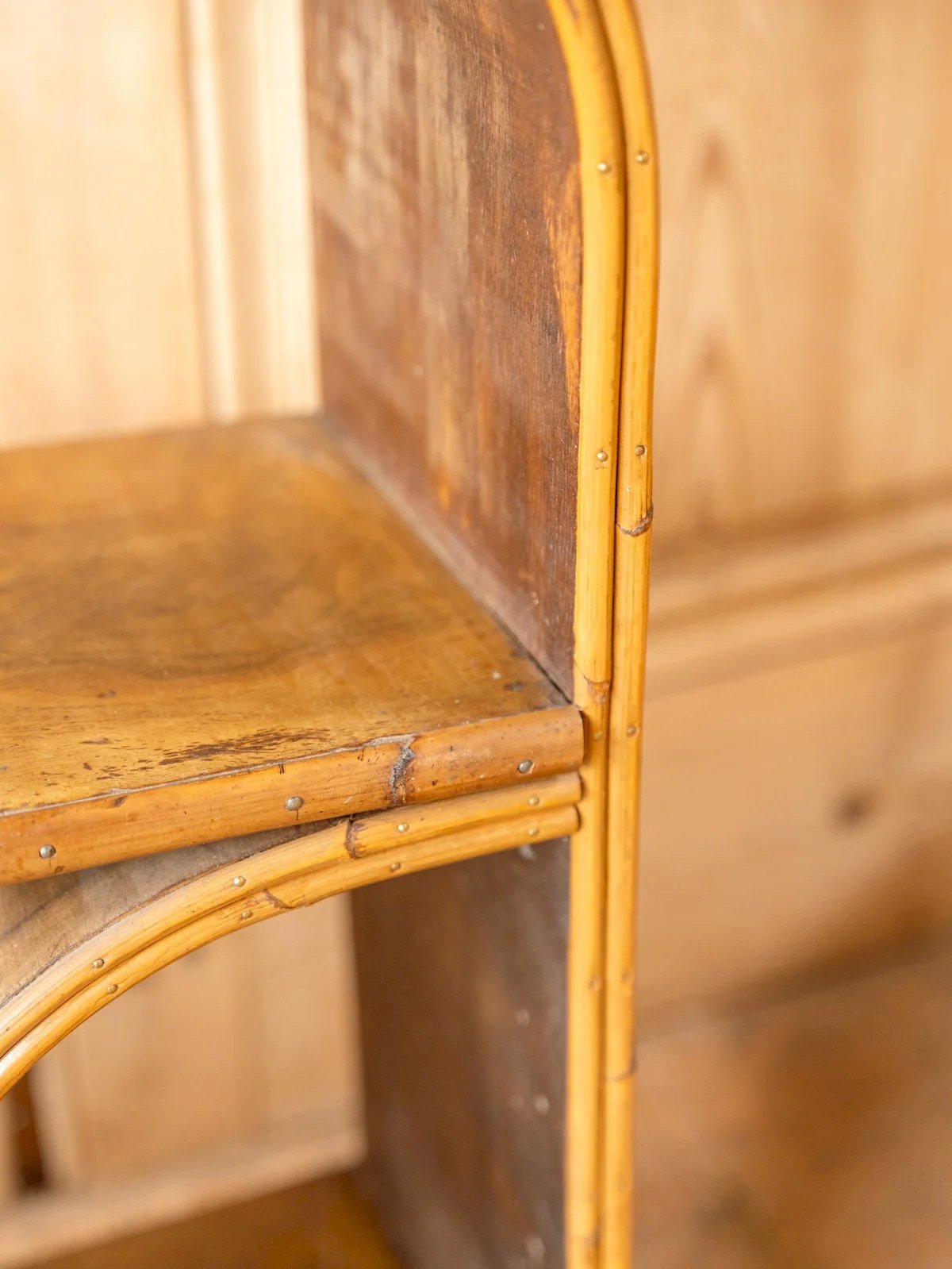
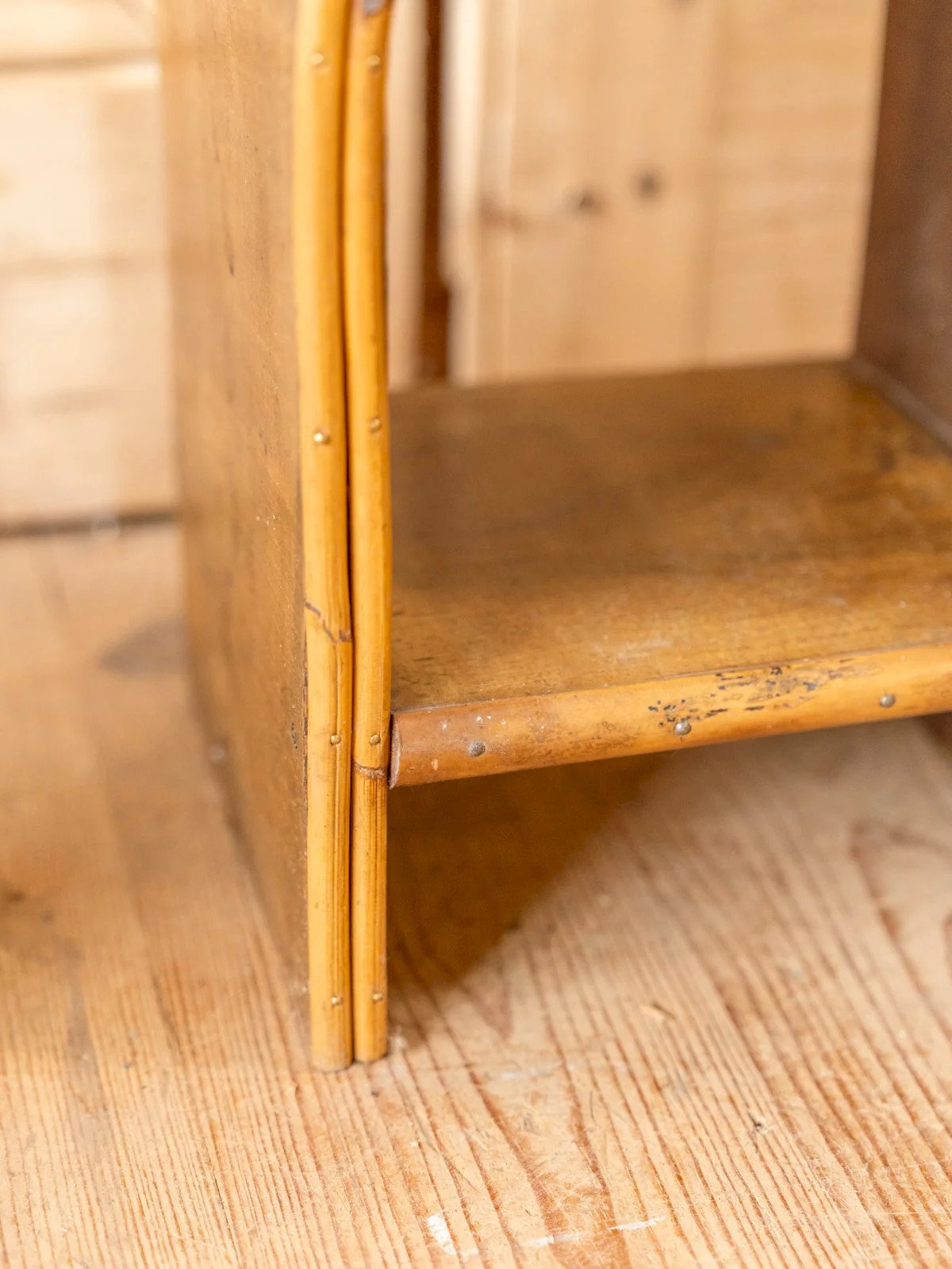
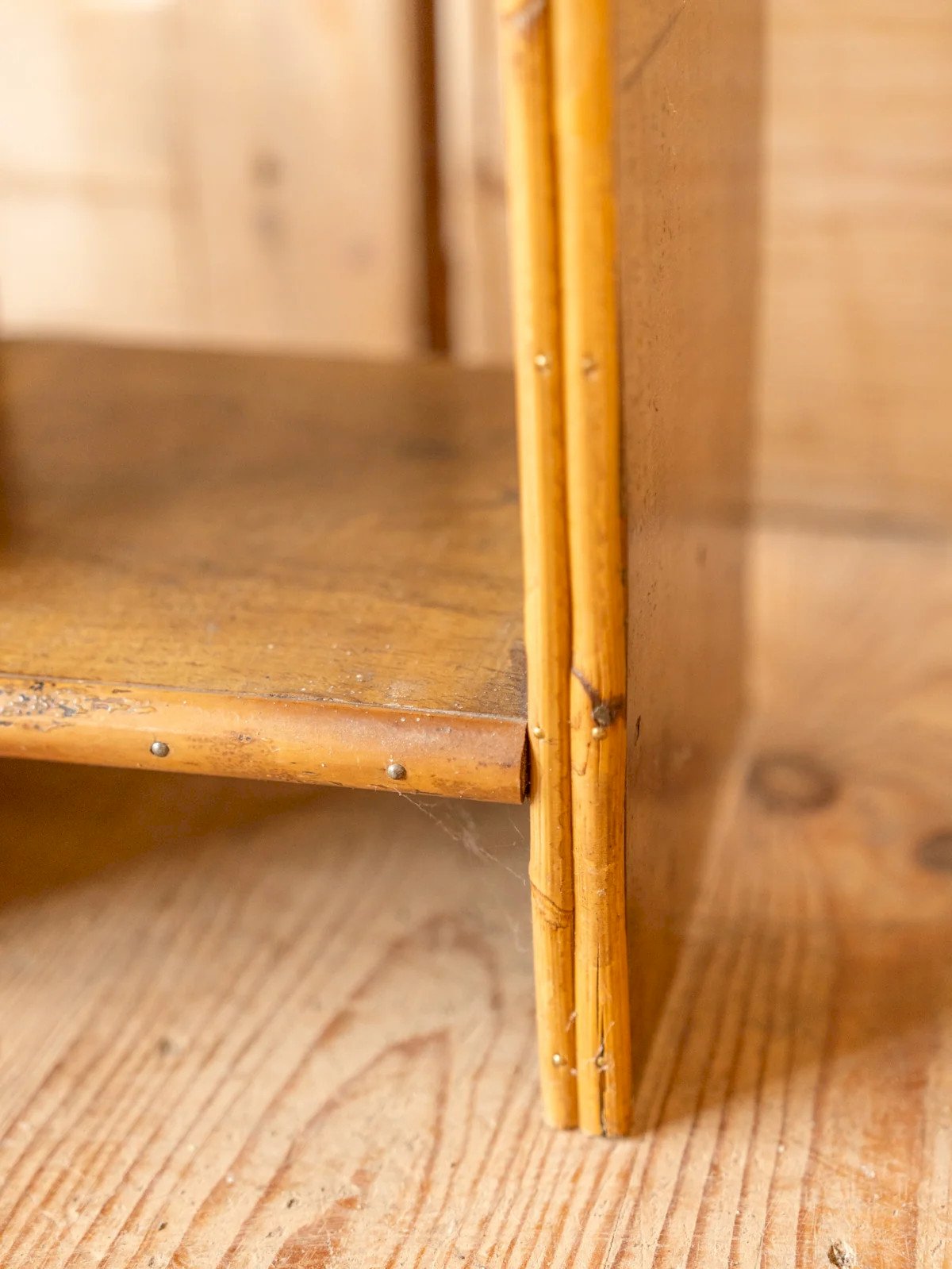
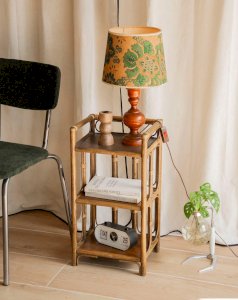
Invite nature into your home with this small rattan and wood shelf, ideal for showcasing your plants or decorative items. Its three shelves, with varying proportions, add a touch of elegance while optimizing space. The warmth of the rattan and the sturdiness of the wood create a welcoming and cozy atmosphere, perfect for a reading nook or a bright living room. Some signs of wear are present, highlighting its authenticity and history. Length: 32 cm Width: 20.5 cm Height: 75 cm Niche height: 27 cm A brief history of the shelf Long before it became the sleek piece of furniture we know today, the shelf was simply a raw wooden board fixed in kitchens or workshops to keep tools within reach. It earned its stripes in the 18th century under the name “stand,” making its way into salons to display precious bindings or fine porcelain. Its structure without doors or side panels makes it the lightest piece of furniture in the house, a feat of minimalism that frees up floor space while dressing up the walls. Today, it serves not only as storage but also as a stage for our daily lives, transforming a utilitarian surface into a true living tableau that breathes and allows light to flow.
Réf :
#412736
Brand / From : Debongout
Related Products
Comments
Gaëlle, the rattan shelf N°1472
259€
75002 Paris
Ce site contient des liens d’affiliation pour lesquels je peux recevoir une compensation.
Description
Invite nature into your home with this small rattan and wood shelf, ideal for showcasing your plants or decorative items. Its three shelves, with varying proportions, add a touch of elegance while optimizing space. The warmth of the rattan and the sturdiness of the wood create a welcoming and cozy atmosphere, perfect for a reading nook or a bright living room. Some signs of wear are present, highlighting its authenticity and history. Length: 32 cm Width: 20.5 cm Height: 75 cm Niche height: 27 cm A brief history of the shelf Long before it became the sleek piece of furniture we know today, the shelf was simply a raw wooden board fixed in kitchens or workshops to keep tools within reach. It earned its stripes in the 18th century under the name “stand,” making its way into salons to display precious bindings or fine porcelain. Its structure without doors or side panels makes it the lightest piece of furniture in the house, a feat of minimalism that frees up floor space while dressing up the walls. Today, it serves not only as storage but also as a stage for our daily lives, transforming a utilitarian surface into a true living tableau that breathes and allows light to flow.
Réf :
#412736
Brand / From : Debongout