English
 Français


Description
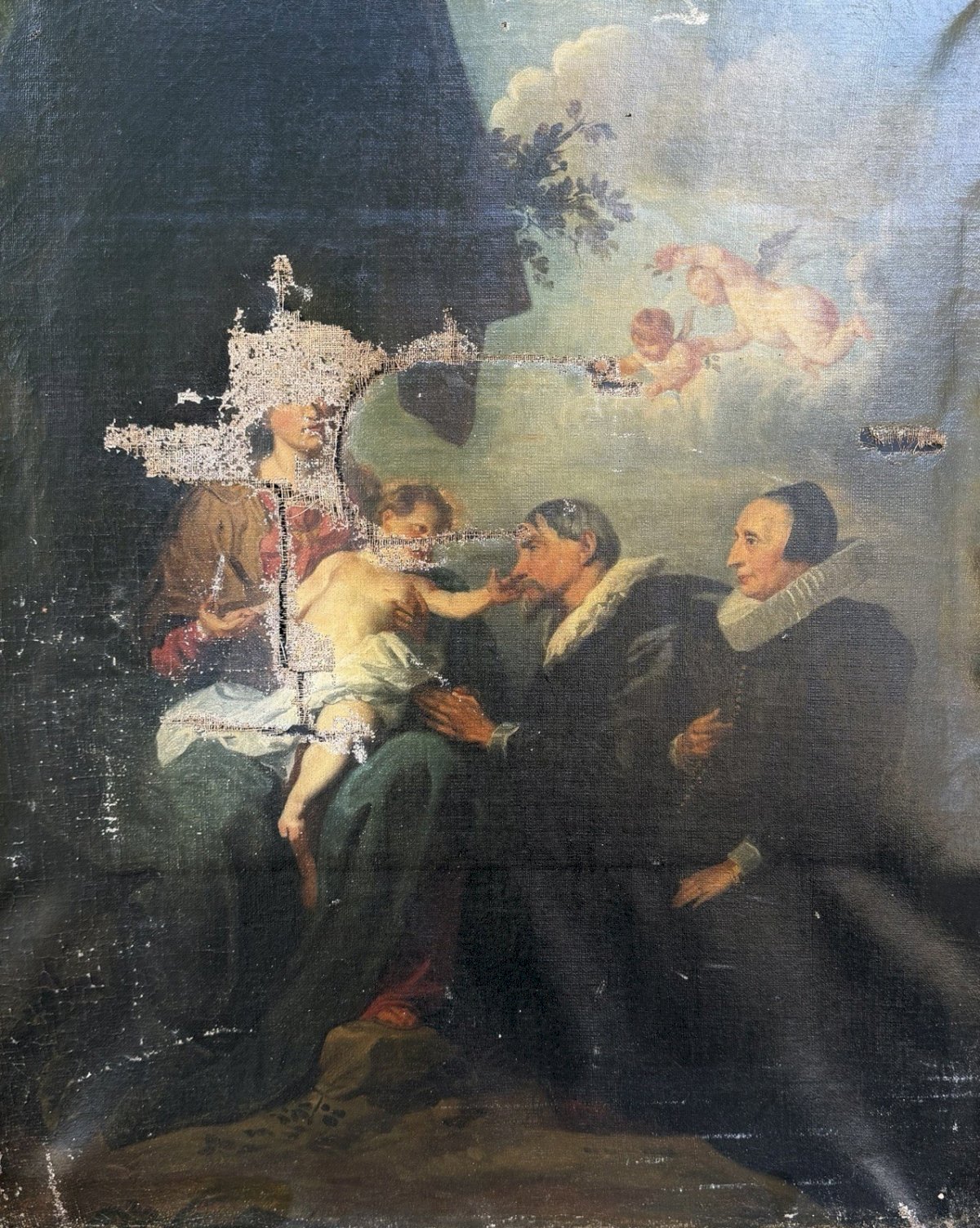
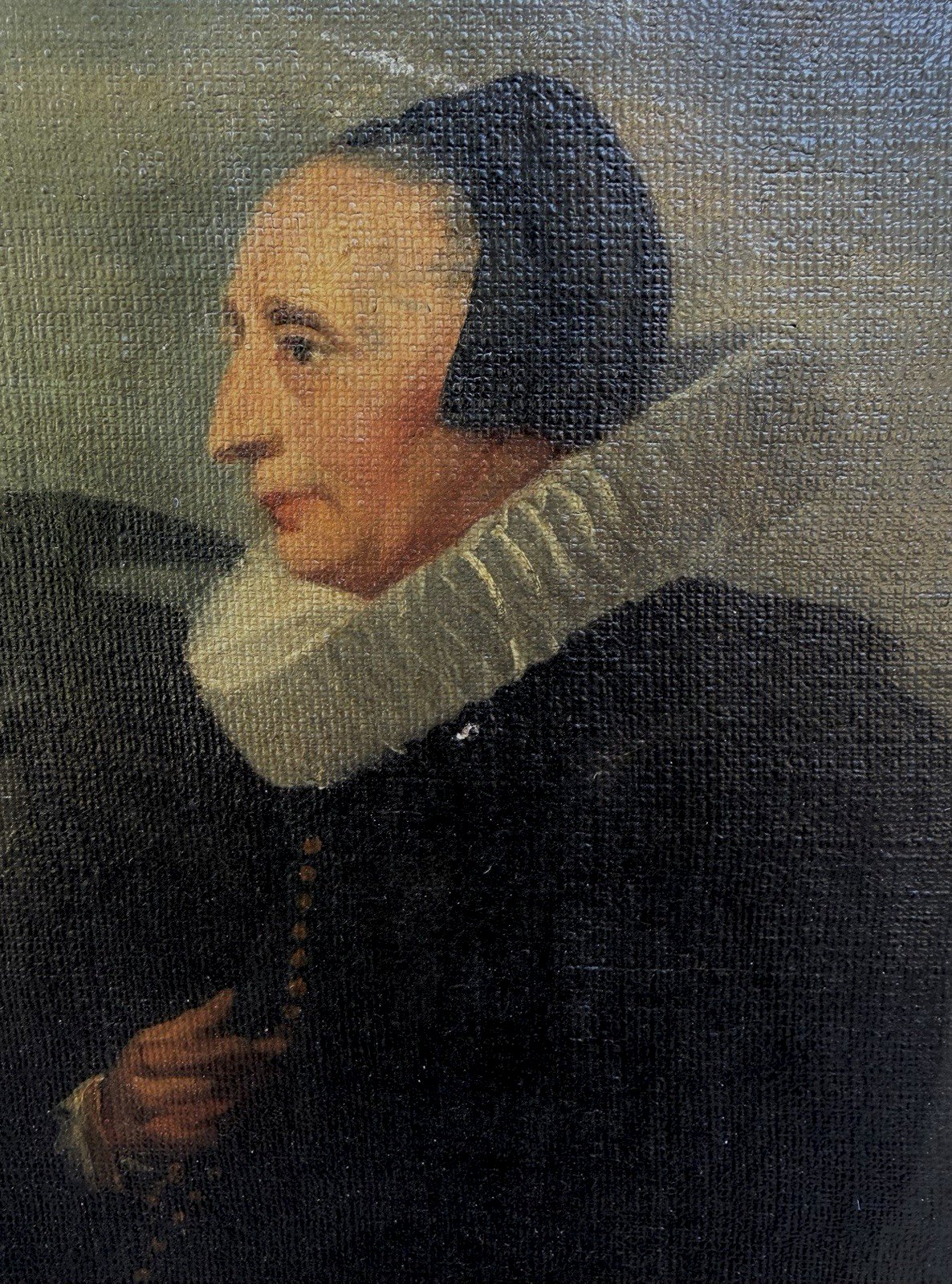
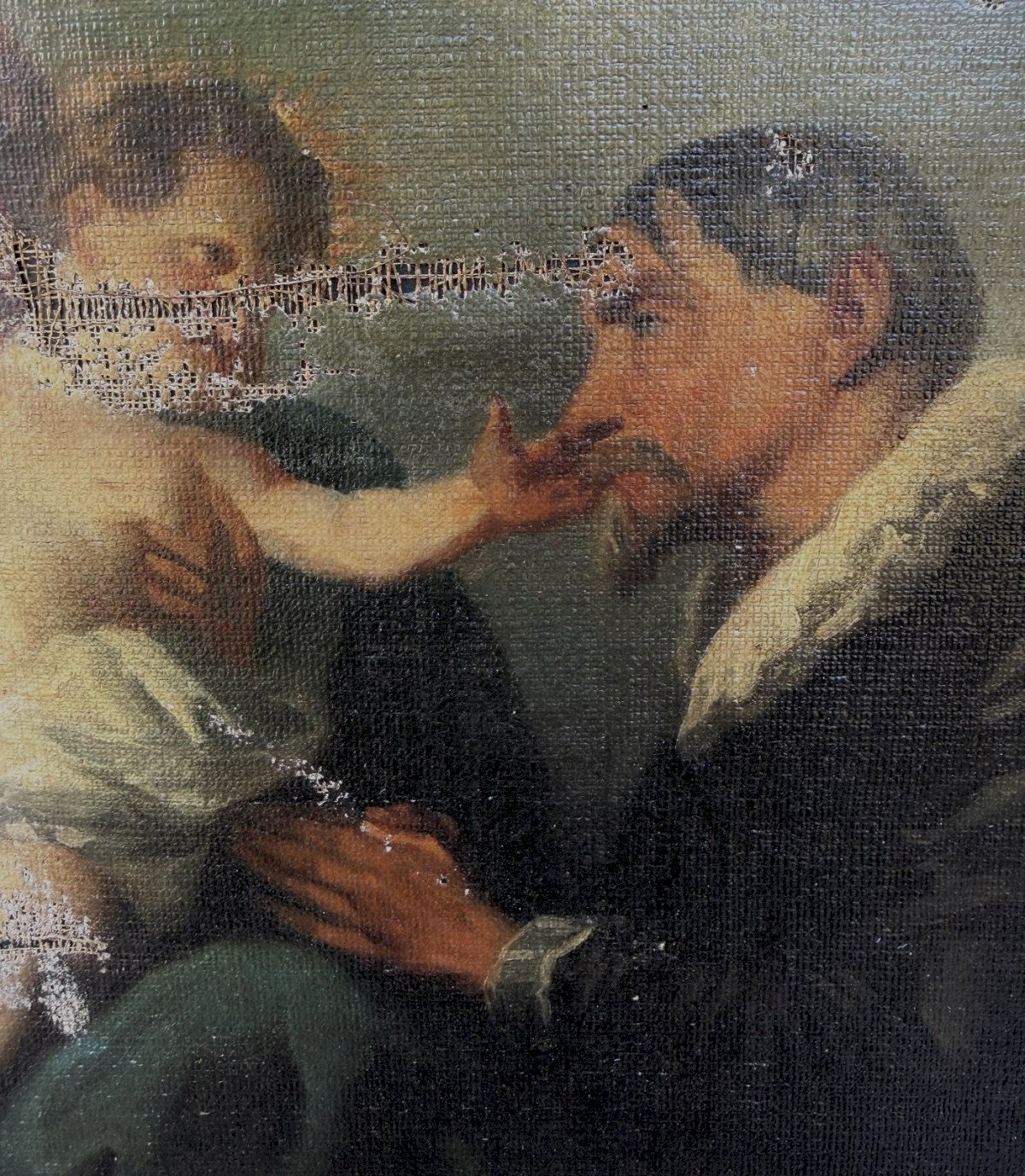
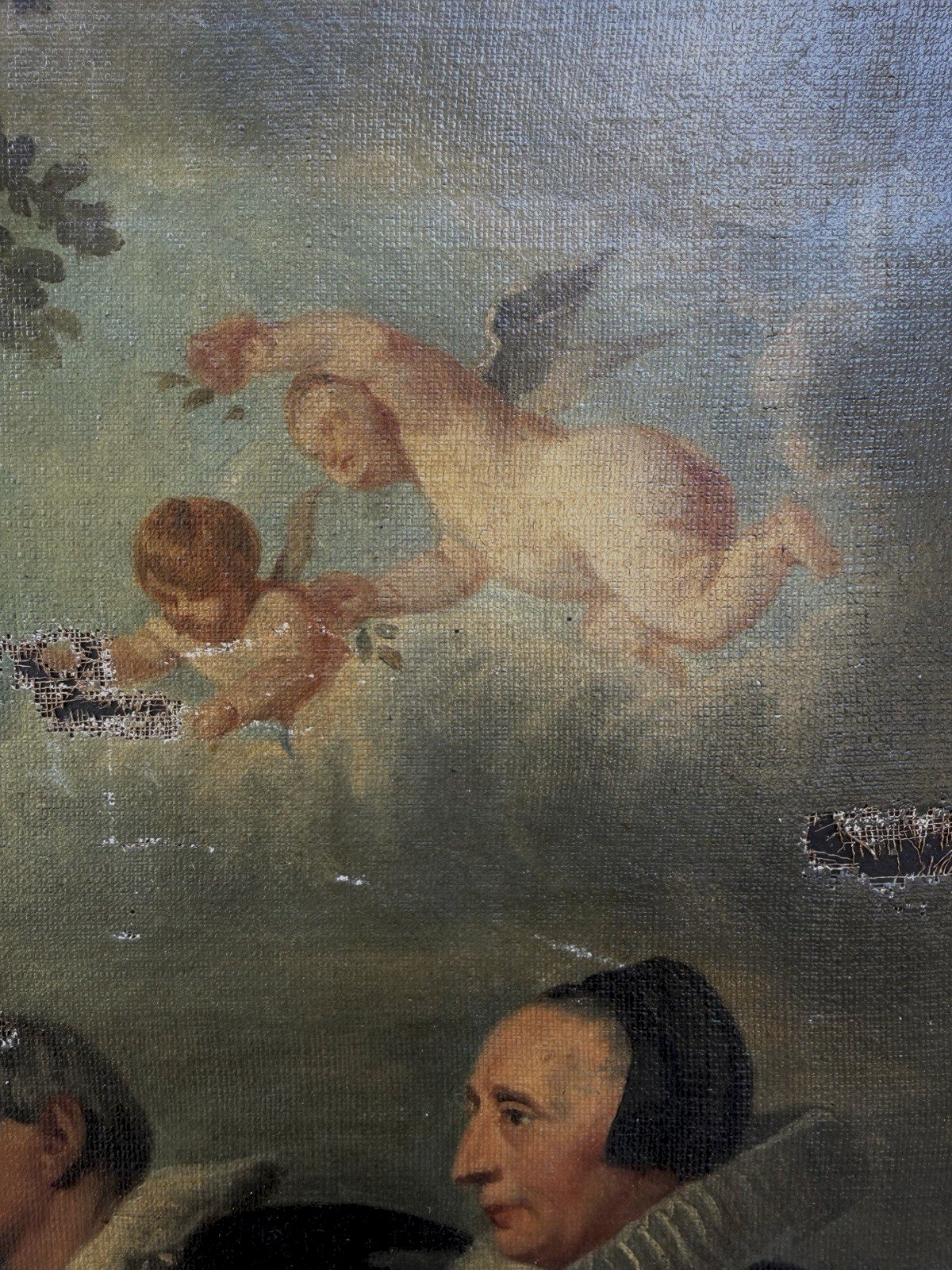
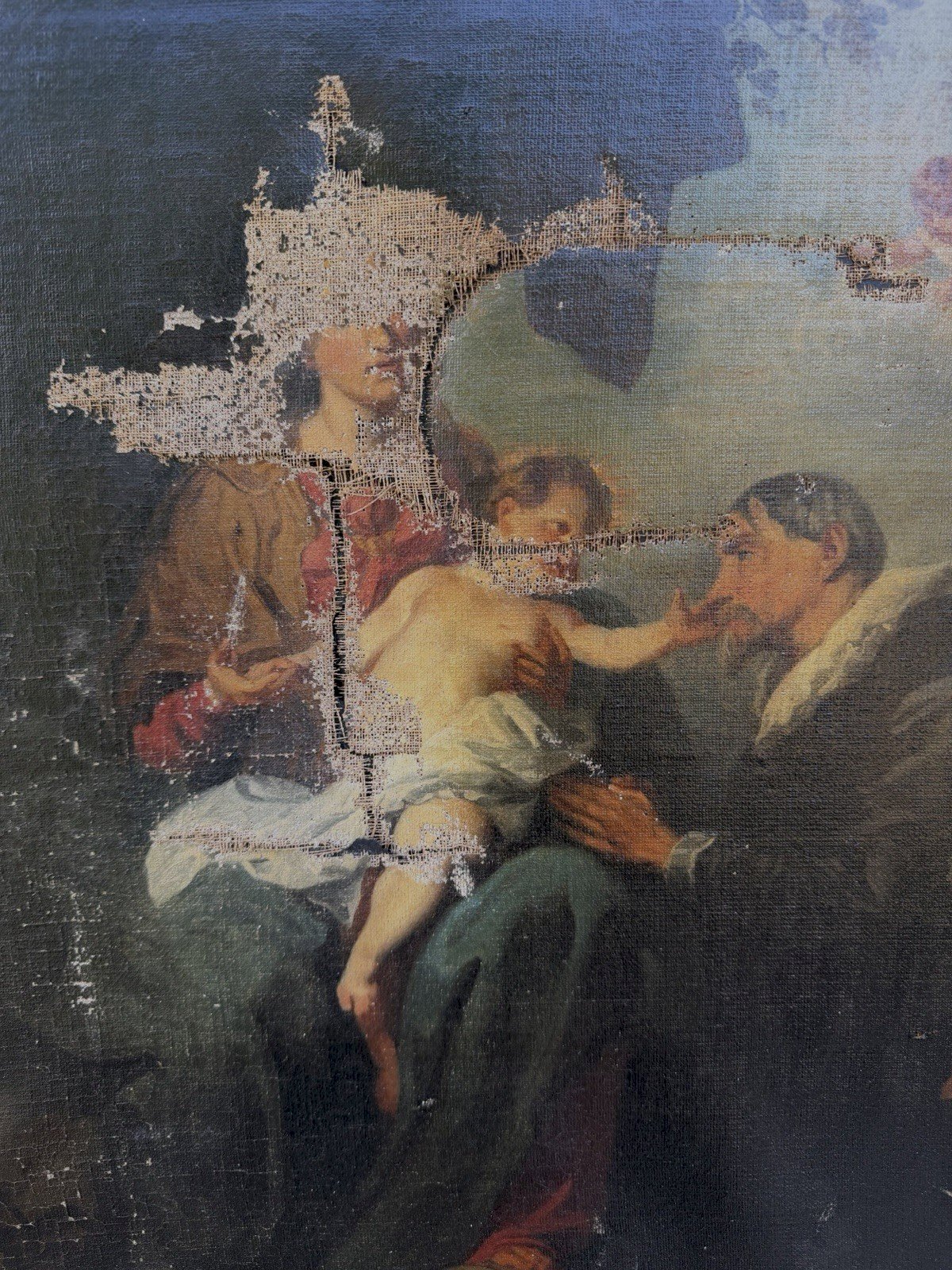
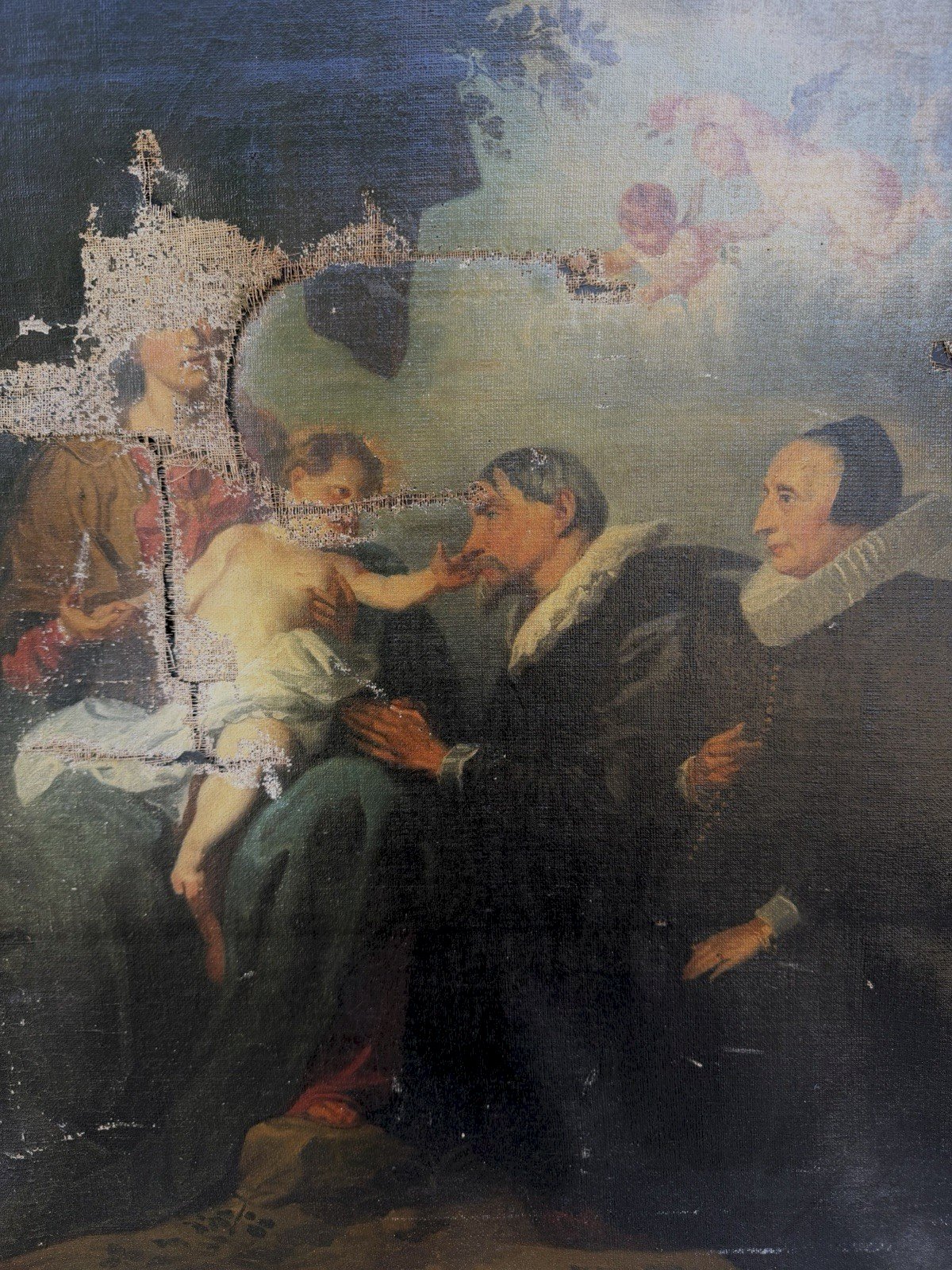
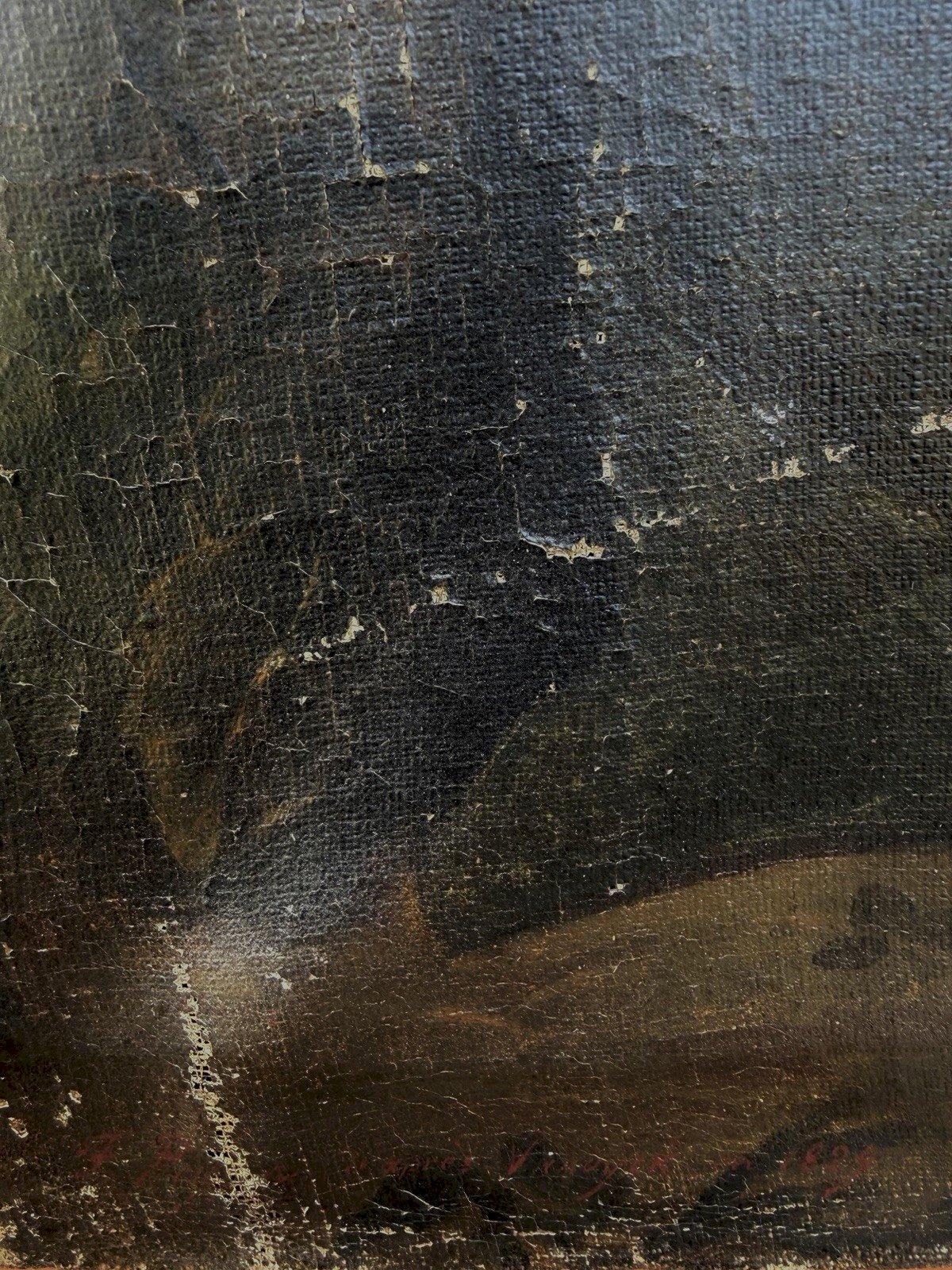
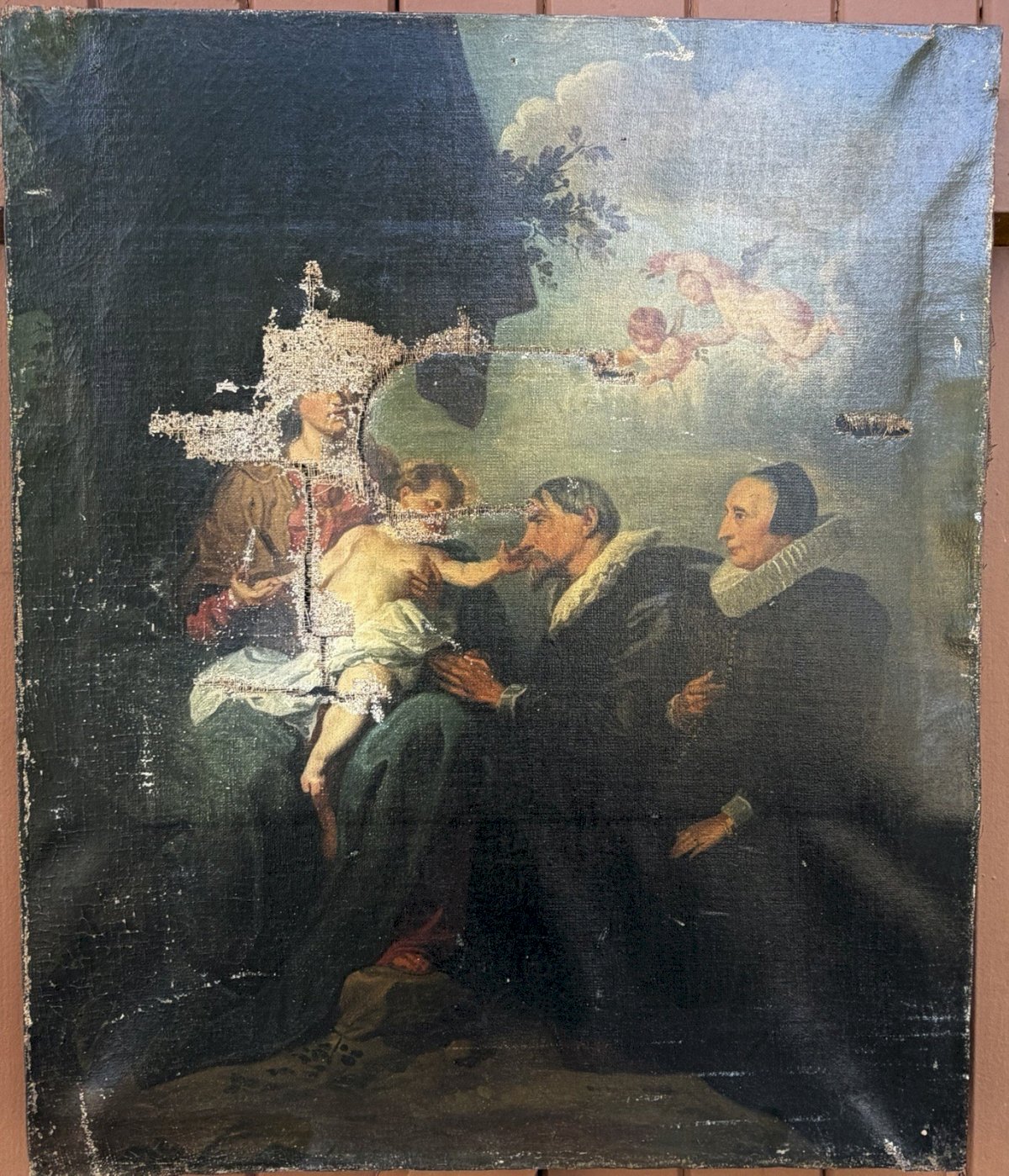
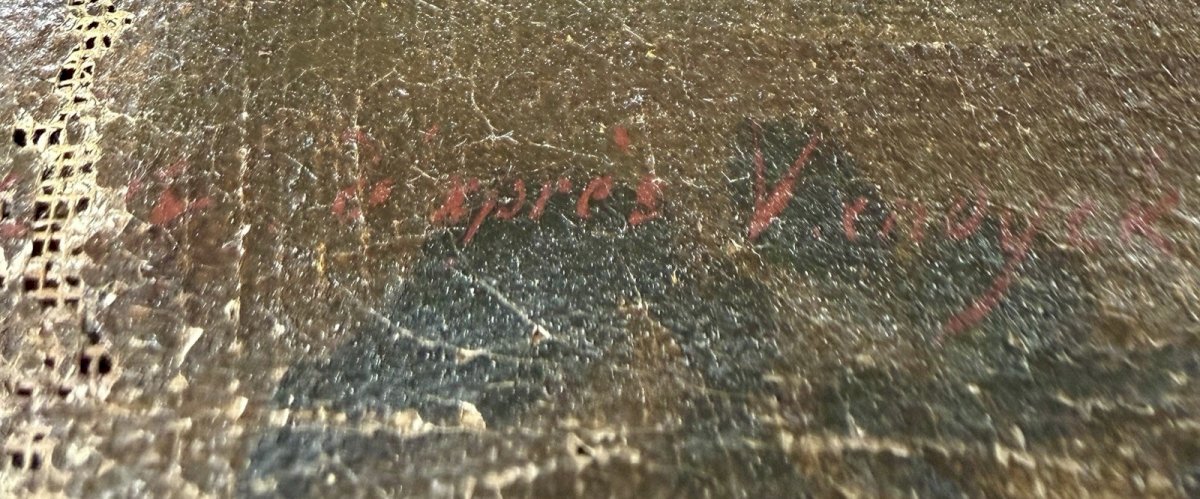
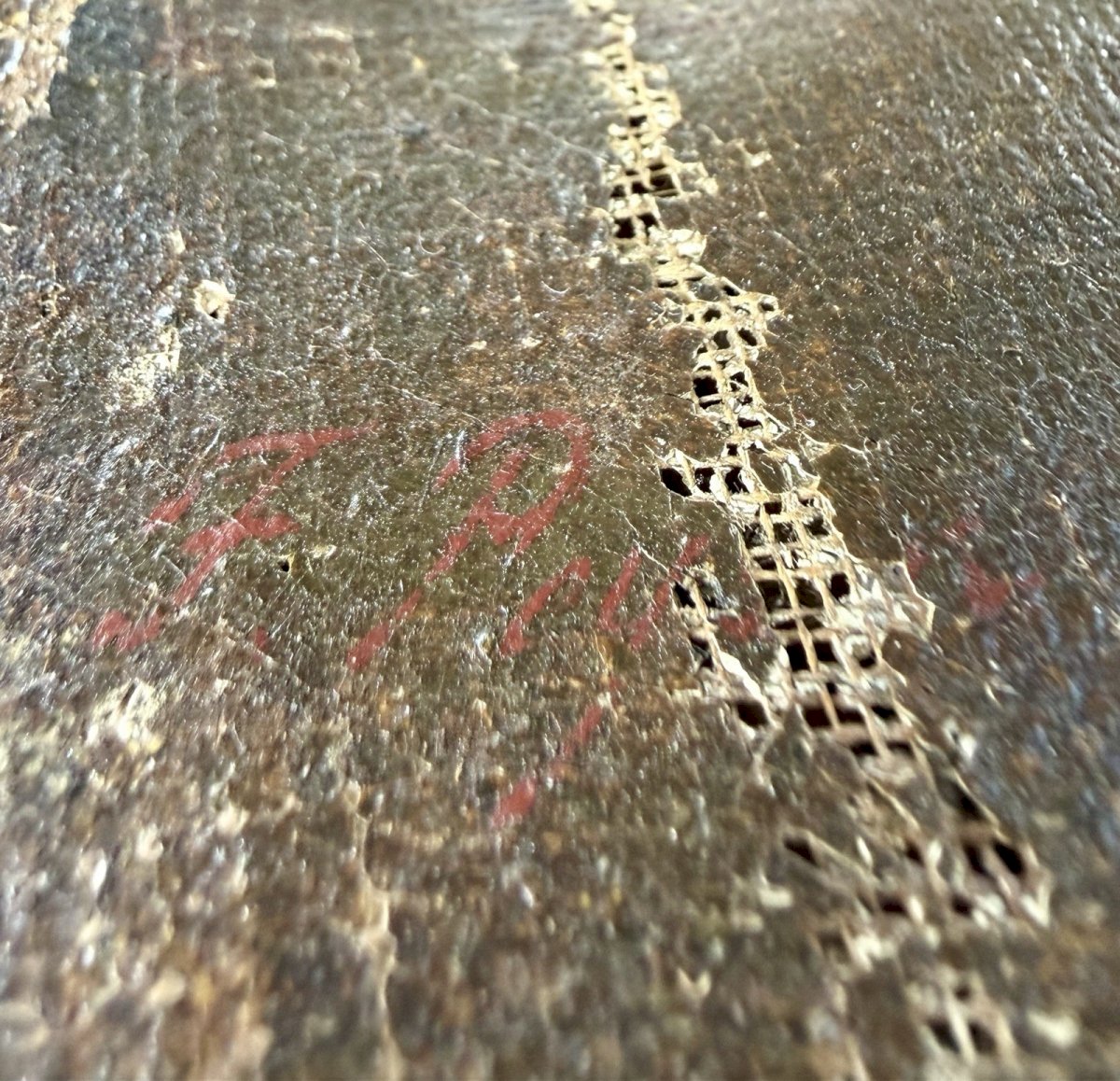
Rare oil on canvas from the first third of the 19th century, signed "F. Peyson," dated 1829, and executed after a famous composition by Antoon Van Dyck now housed in the Louvre Museum. This antique work, measuring 64 × 54 cm, replicates the composition known as The Virgin with Donors or The Roettiers Madonna, painted by Antoon Van Dyck (1599–1641) circa 1630–1632. The scene depicts the Virgin presenting the Child Jesus to a kneeling donor couple. The Child, in a gesture of great tenderness, reaches out to touch the donor's face while two cherubs appear among the clouds. The work bears a valuable ancient inscription painted in red at the bottom: "F. Peyson after Van Dyck in 1829."
Frédéric Peyson and the Tradition of Louvre Copies
This signature connects the work to Pierre Frédéric Peyson (1807–1877), a French painter trained in Paris and a student at the École des Beaux-Arts. The year 1829 corresponds precisely to his Parisian training period. Like many young artists of his generation, Peyson studied the old masters through copying. This practice was one of the cornerstones of academic instruction at the time: artists came to work in direct contact with masterpieces from royal, then national, collections. Copies after the great masters are documented in Peyson's oeuvre, notably after Rubens and Van Dyck. This canvas thus serves as a particularly evocative testament to French artistic training during the Restoration.
After a Prestigious Work by Van Dyck
The painting faithfully reproduces the composition of The Virgin with Donors, a monumental work by Van Dyck currently in the Louvre Museum in Paris. In this version, we find:
* the seated Virgin holding the Child;
* the extraordinarily tender gesture of the Child Jesus touching the donor's face;
* the two donors dressed in 17th-century Flemish fashion;
* large white ruffs;
* the two cherubs floating in the sky;
* the vertical and monumental structure of the original composition.
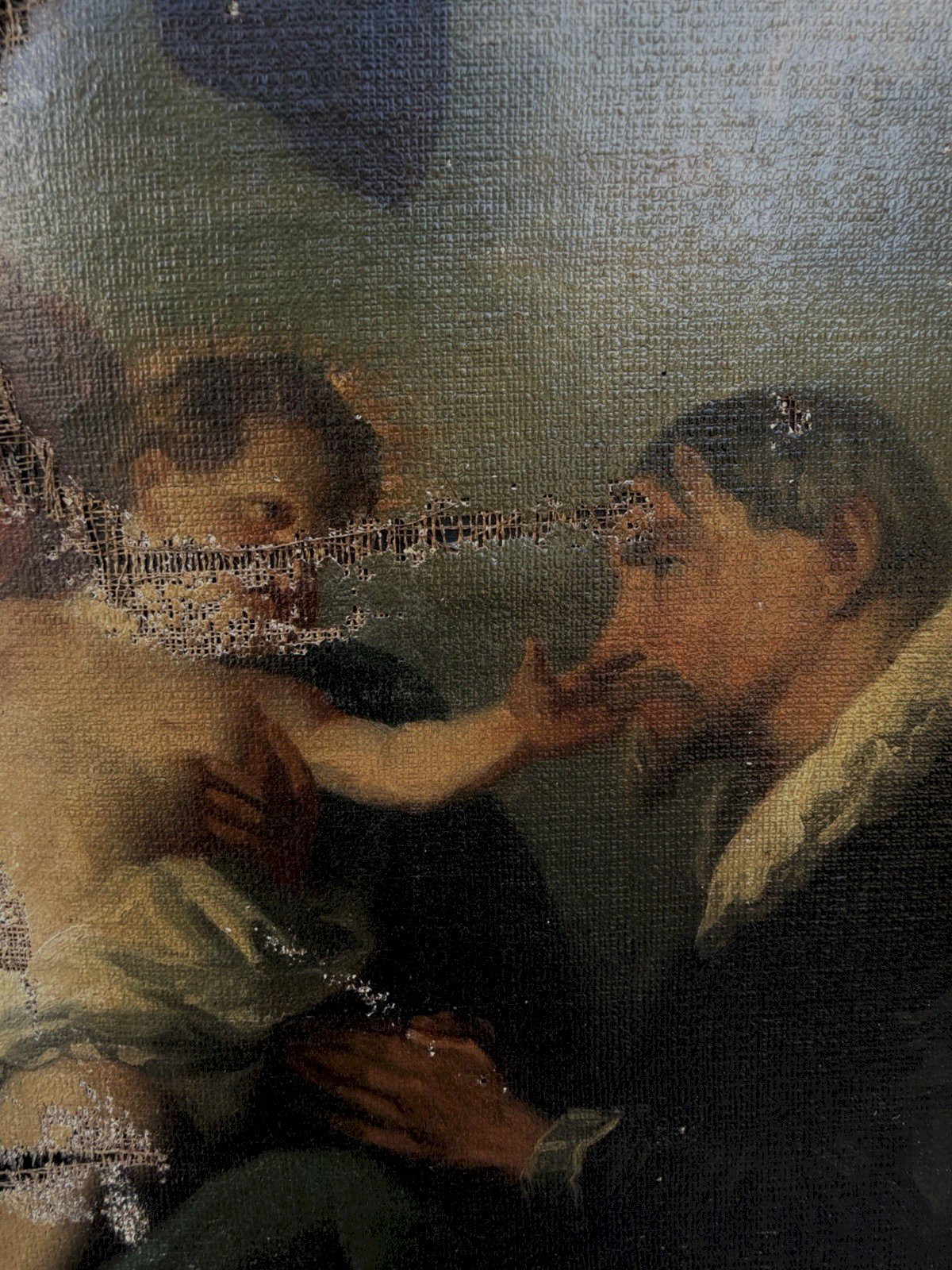
Despite the damage endured by the canvas over nearly two centuries, certain parts remain particularly appealing: the profile of the donor, the hands, the skin tones, the satin black garments, and several facial details still attest to the quality of the copyist's work.
State of Conservation
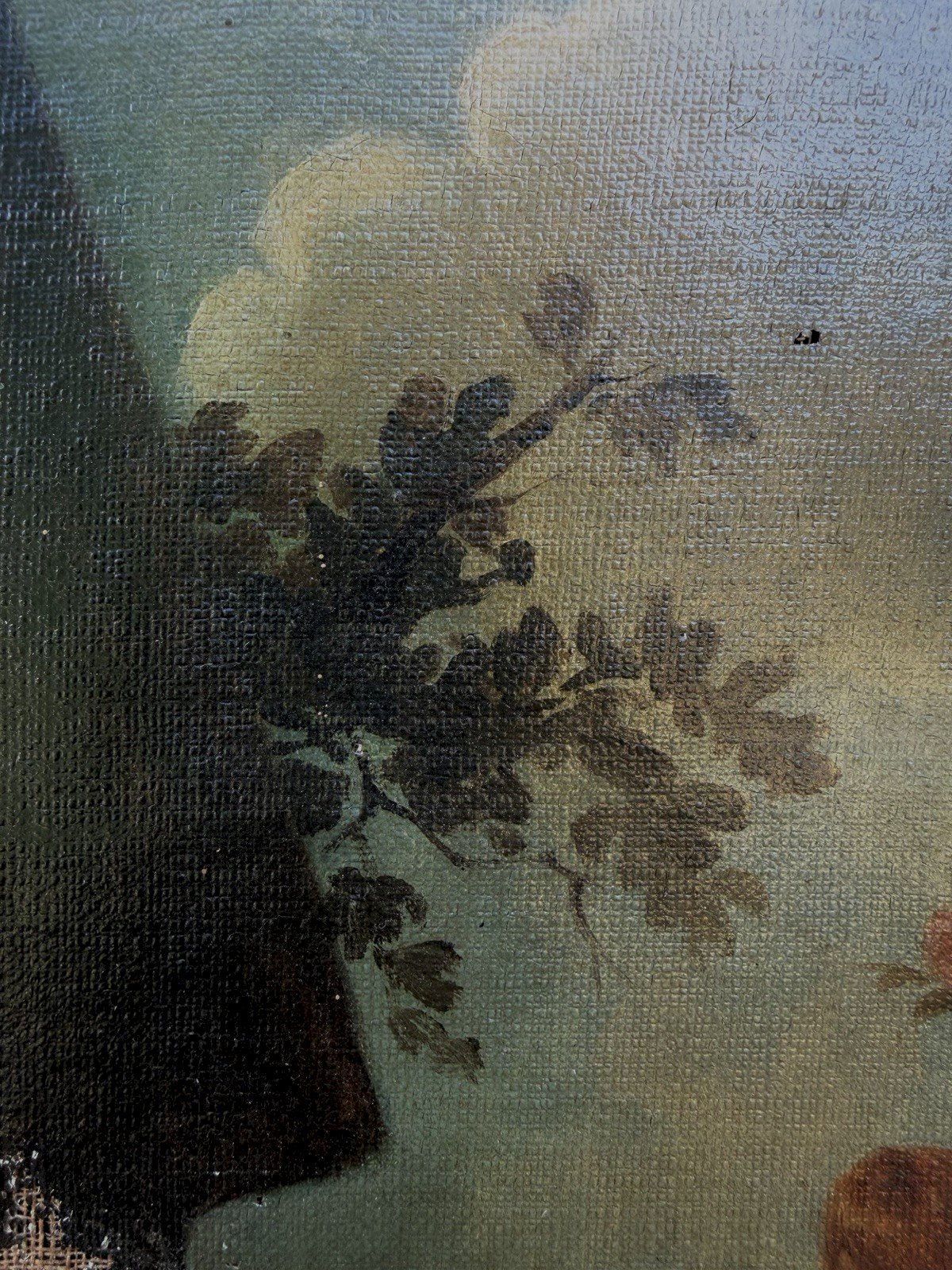
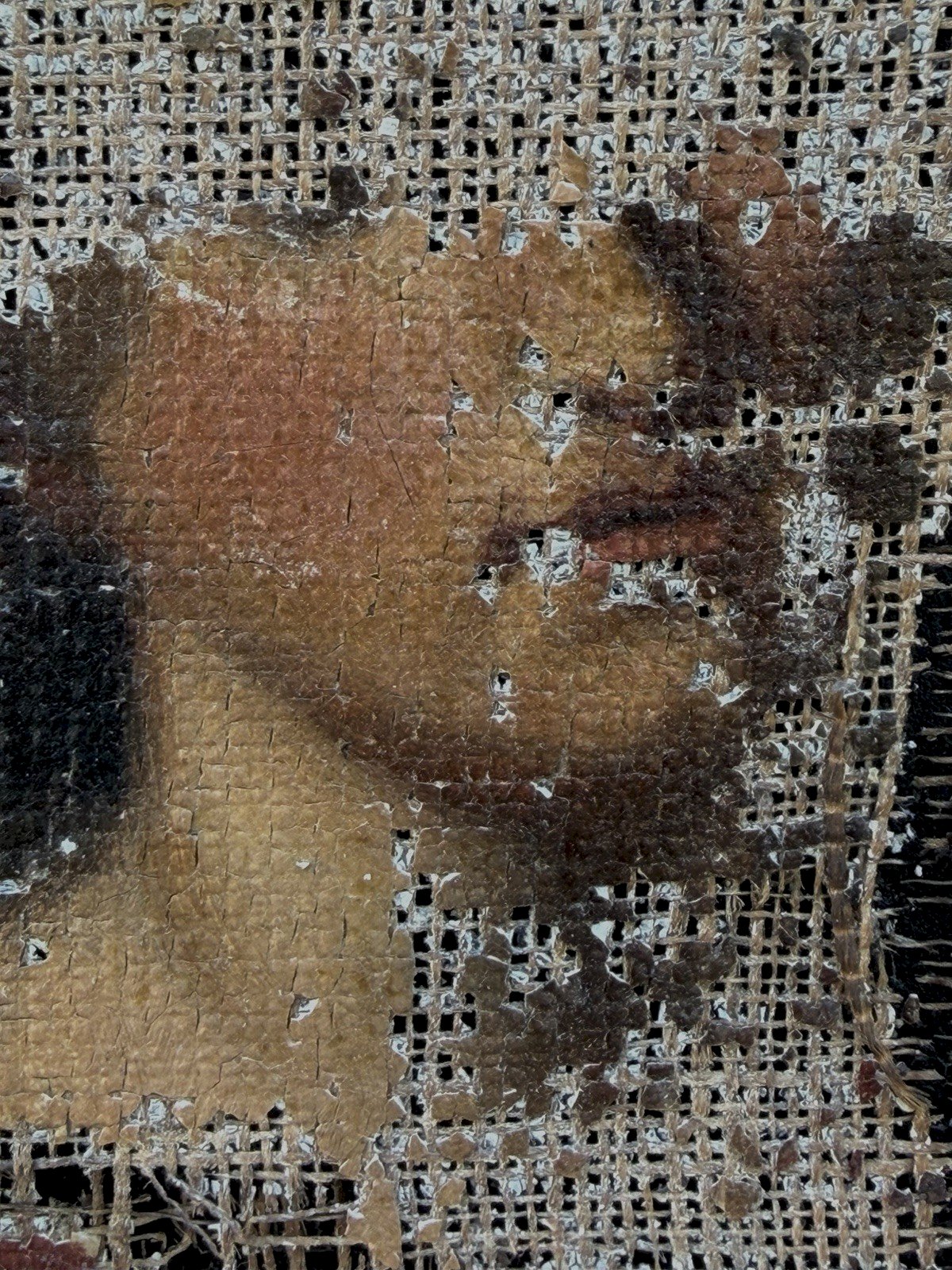
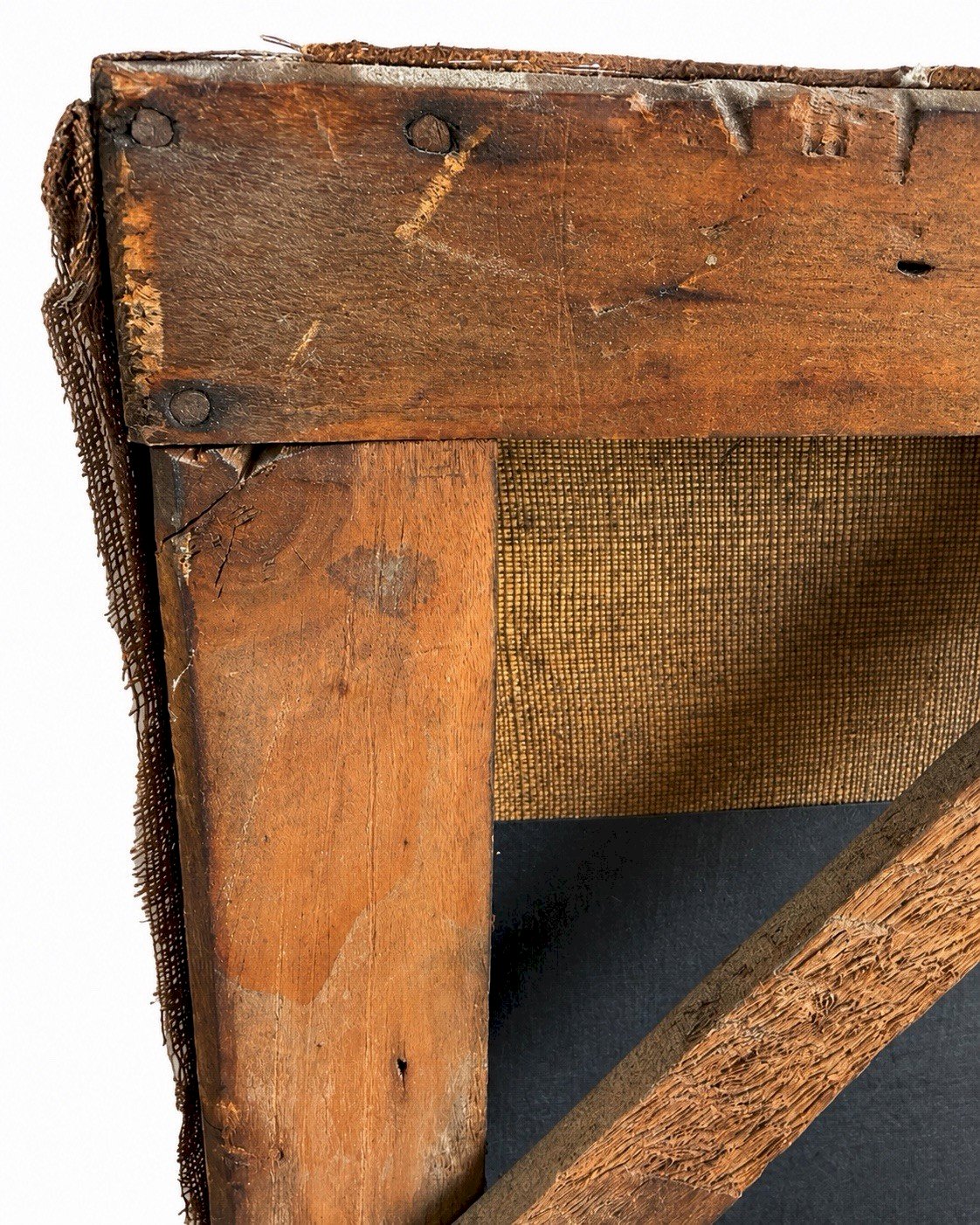
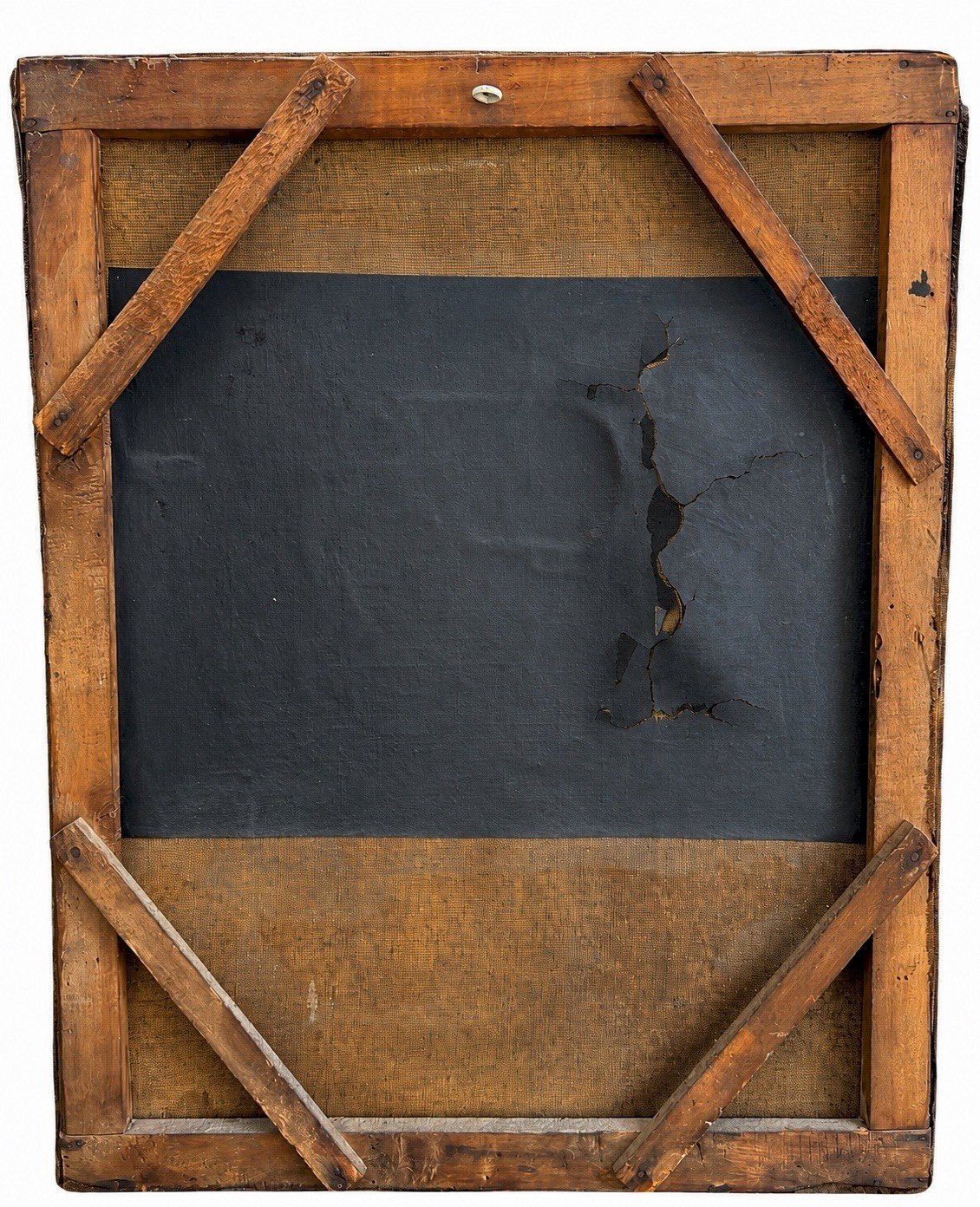
The work is presented in its original condition, without recent aesthetic restoration. It exhibits significant accidents and signs of time, notably: large losses of paint layer, old tears, wear, craquelure, deformation of the canvas, and various visible old consolidations on the reverse. The most significant loss affects the upper left part and part of the Virgin's figure. The wooden stretcher is old and features several reinforcements. Given its condition, this painting is offered as a collectible work and a restoration project. Its condition is fully visible in the photographs and constitutes an important part of its material history. A professional restoration could stabilize the canvas and significantly improve the readability of this historical composition.
A Unique Work for Collectors
Beyond its decorative character, this painting brings together several rarely encountered elements: an identifiable signature, a precise date of 1829, an attribution to Frédéric Peyson, a composition after Van Dyck, and a prestigious model preserved in the Louvre. Its old surface, the still-visible red inscription, and the marks left by nearly two centuries give it an almost archaeological presence: that of a painting that has endured time without losing its connection to its prestigious model. It is a work intended for a collector of 19th-century French painting, an enthusiast of old copies after the masters, or an interior seeking a historical painting with a strong personality.
Artist: Frédéric Peyson (1807–1877)
Signature: F. Peyson
Inscription: "after Van Dyck in 1829"
Date: 1829
Period: Restoration, first third of the 19th century
Technique: oil on canvas
Subject: The Virgin with Donors
After: Antoon Van Dyck (1599–1641)
Dimensions: 64 × 54 cm
Origin of the Model: composition housed in the Louvre Museum, Paris
Condition: significant signs of use and old accidents; professional restoration required
Unique piece.
Réf :
#409552
Related Products

Comments
Frédéric Peyson's painting (1807–1877) After Van Dyck Madonna Roettiers 1829
750€
77260 La-Ferté-sous-Jouarre
Ce site contient des liens d’affiliation pour lesquels je peux recevoir une compensation.
Description
Rare oil on canvas from the first third of the 19th century, signed "F. Peyson," dated 1829, and executed after a famous composition by Antoon Van Dyck now housed in the Louvre Museum. This antique work, measuring 64 × 54 cm, replicates the composition known as The Virgin with Donors or The Roettiers Madonna, painted by Antoon Van Dyck (1599–1641) circa 1630–1632. The scene depicts the Virgin presenting the Child Jesus to a kneeling donor couple. The Child, in a gesture of great tenderness, reaches out to touch the donor's face while two cherubs appear among the clouds. The work bears a valuable ancient inscription painted in red at the bottom: "F. Peyson after Van Dyck in 1829."
Frédéric Peyson and the Tradition of Louvre Copies
This signature connects the work to Pierre Frédéric Peyson (1807–1877), a French painter trained in Paris and a student at the École des Beaux-Arts. The year 1829 corresponds precisely to his Parisian training period. Like many young artists of his generation, Peyson studied the old masters through copying. This practice was one of the cornerstones of academic instruction at the time: artists came to work in direct contact with masterpieces from royal, then national, collections. Copies after the great masters are documented in Peyson's oeuvre, notably after Rubens and Van Dyck. This canvas thus serves as a particularly evocative testament to French artistic training during the Restoration.
After a Prestigious Work by Van Dyck
The painting faithfully reproduces the composition of The Virgin with Donors, a monumental work by Van Dyck currently in the Louvre Museum in Paris. In this version, we find:
* the seated Virgin holding the Child;
* the extraordinarily tender gesture of the Child Jesus touching the donor's face;
* the two donors dressed in 17th-century Flemish fashion;
* large white ruffs;
* the two cherubs floating in the sky;
* the vertical and monumental structure of the original composition.
Despite the damage endured by the canvas over nearly two centuries, certain parts remain particularly appealing: the profile of the donor, the hands, the skin tones, the satin black garments, and several facial details still attest to the quality of the copyist's work.
State of Conservation
The work is presented in its original condition, without recent aesthetic restoration. It exhibits significant accidents and signs of time, notably: large losses of paint layer, old tears, wear, craquelure, deformation of the canvas, and various visible old consolidations on the reverse. The most significant loss affects the upper left part and part of the Virgin's figure. The wooden stretcher is old and features several reinforcements. Given its condition, this painting is offered as a collectible work and a restoration project. Its condition is fully visible in the photographs and constitutes an important part of its material history. A professional restoration could stabilize the canvas and significantly improve the readability of this historical composition.
A Unique Work for Collectors
Beyond its decorative character, this painting brings together several rarely encountered elements: an identifiable signature, a precise date of 1829, an attribution to Frédéric Peyson, a composition after Van Dyck, and a prestigious model preserved in the Louvre. Its old surface, the still-visible red inscription, and the marks left by nearly two centuries give it an almost archaeological presence: that of a painting that has endured time without losing its connection to its prestigious model. It is a work intended for a collector of 19th-century French painting, an enthusiast of old copies after the masters, or an interior seeking a historical painting with a strong personality.
Artist: Frédéric Peyson (1807–1877)
Signature: F. Peyson
Inscription: "after Van Dyck in 1829"
Date: 1829
Period: Restoration, first third of the 19th century
Technique: oil on canvas
Subject: The Virgin with Donors
After: Antoon Van Dyck (1599–1641)
Dimensions: 64 × 54 cm
Origin of the Model: composition housed in the Louvre Museum, Paris
Condition: significant signs of use and old accidents; professional restoration required
Unique piece.
Réf :
#409552