 English
 Français


Description
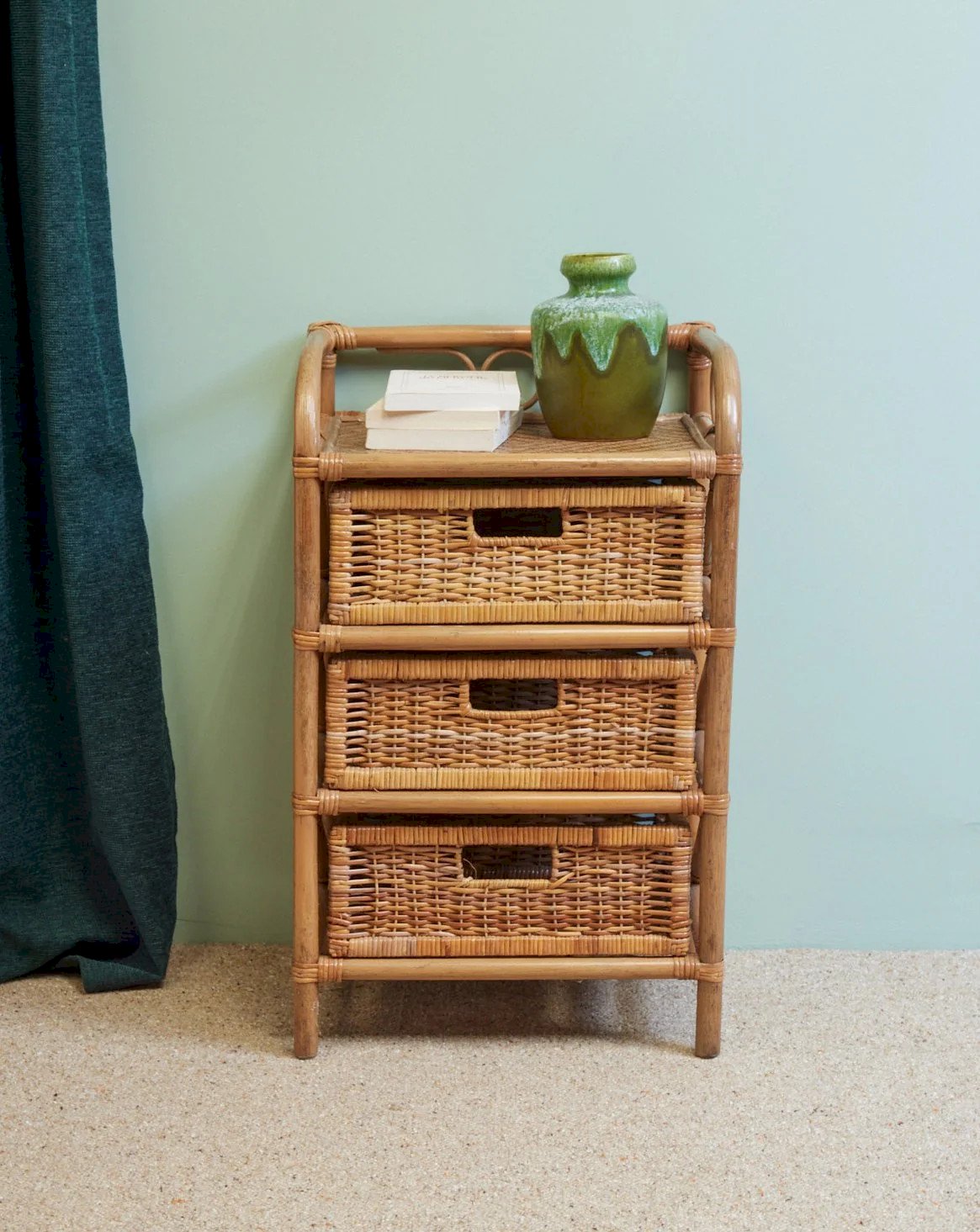
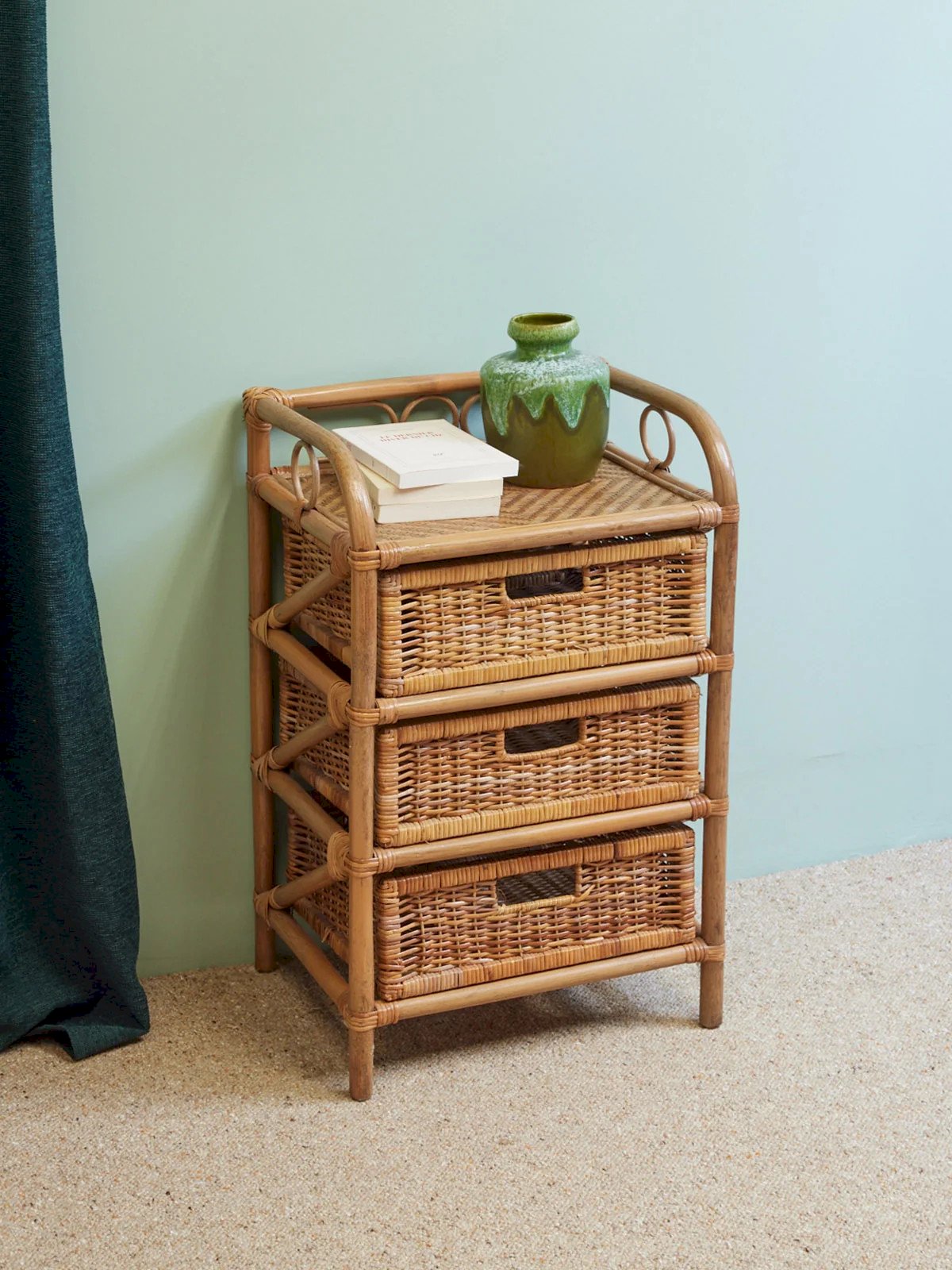
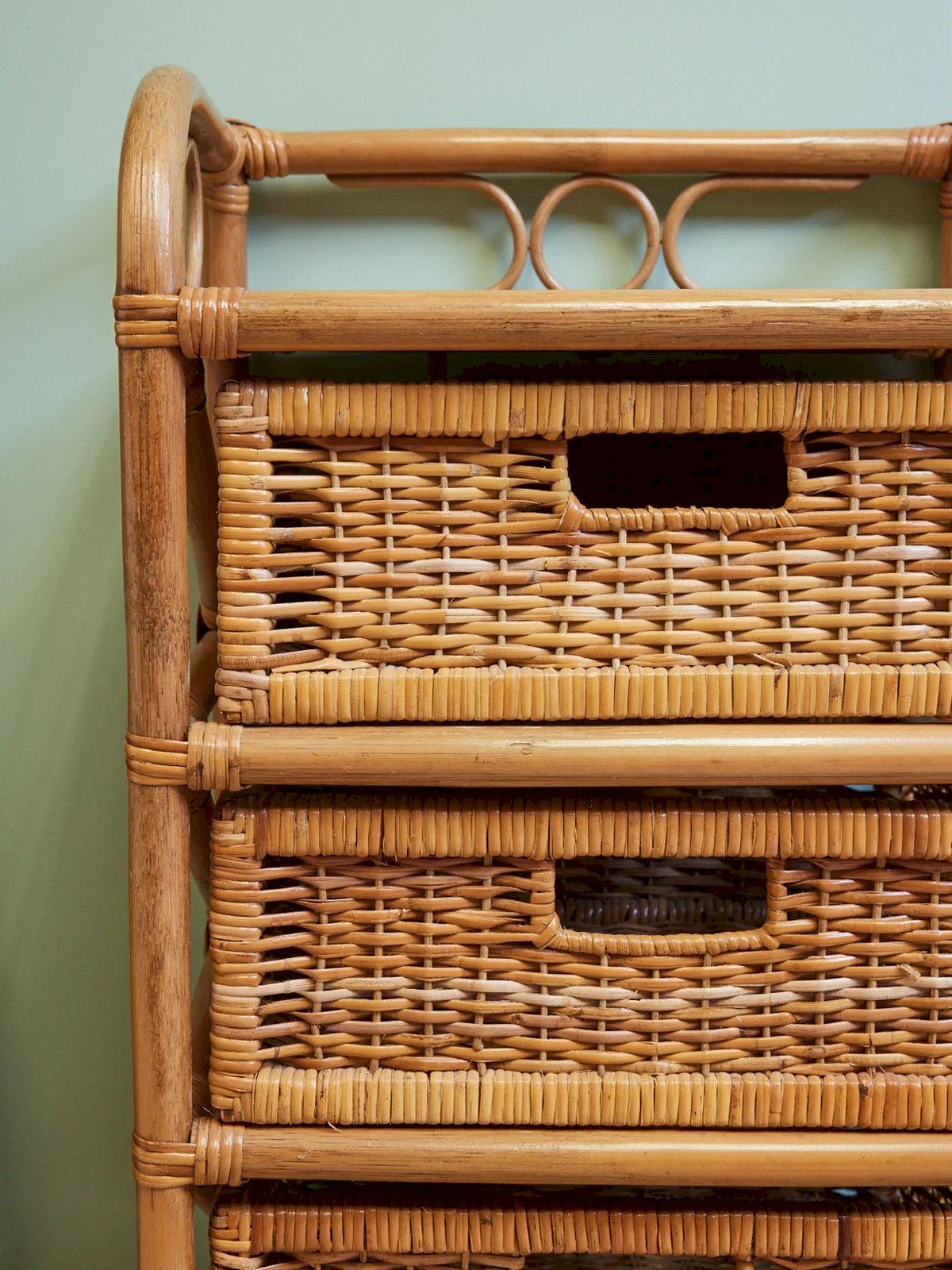
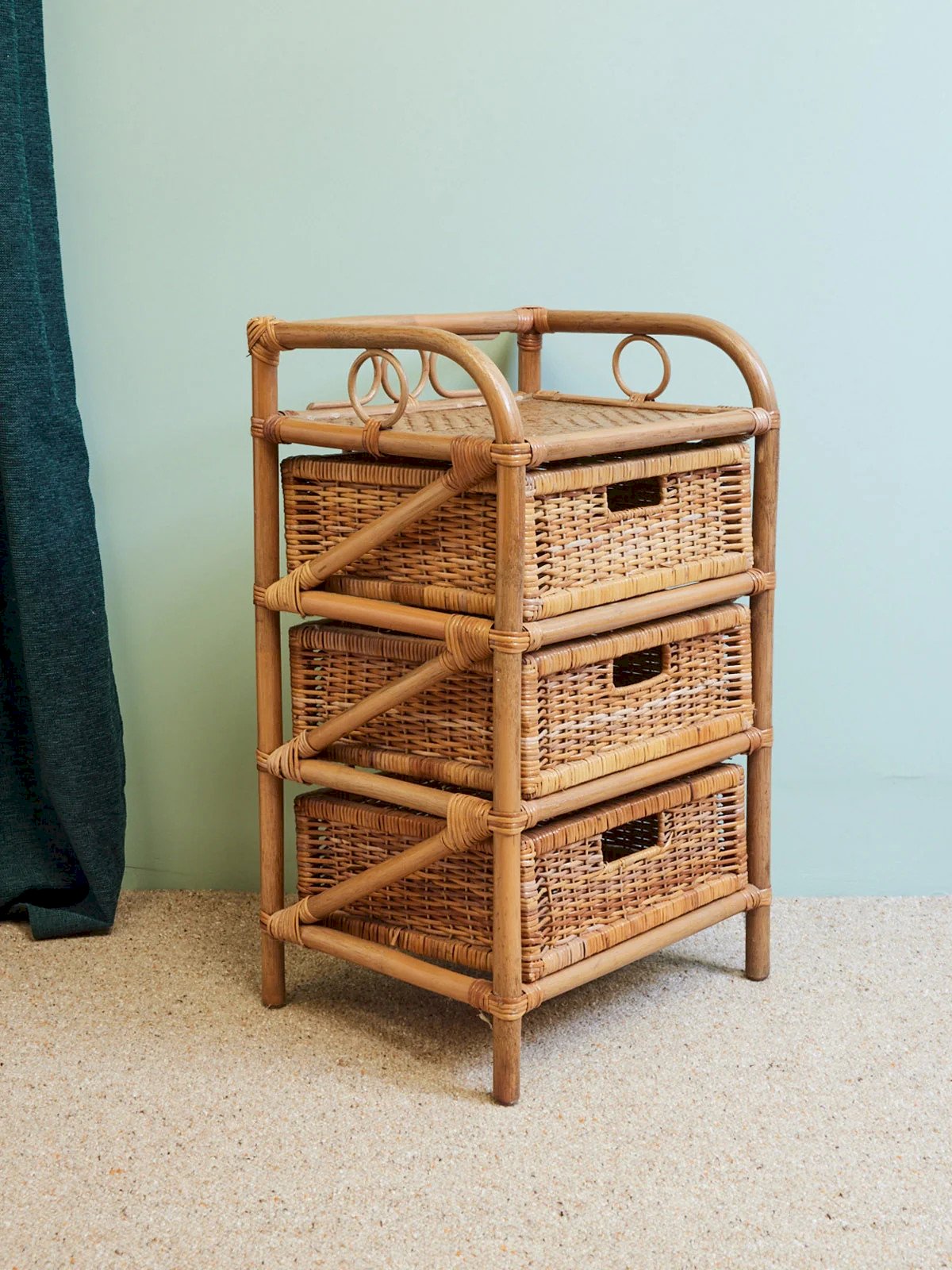
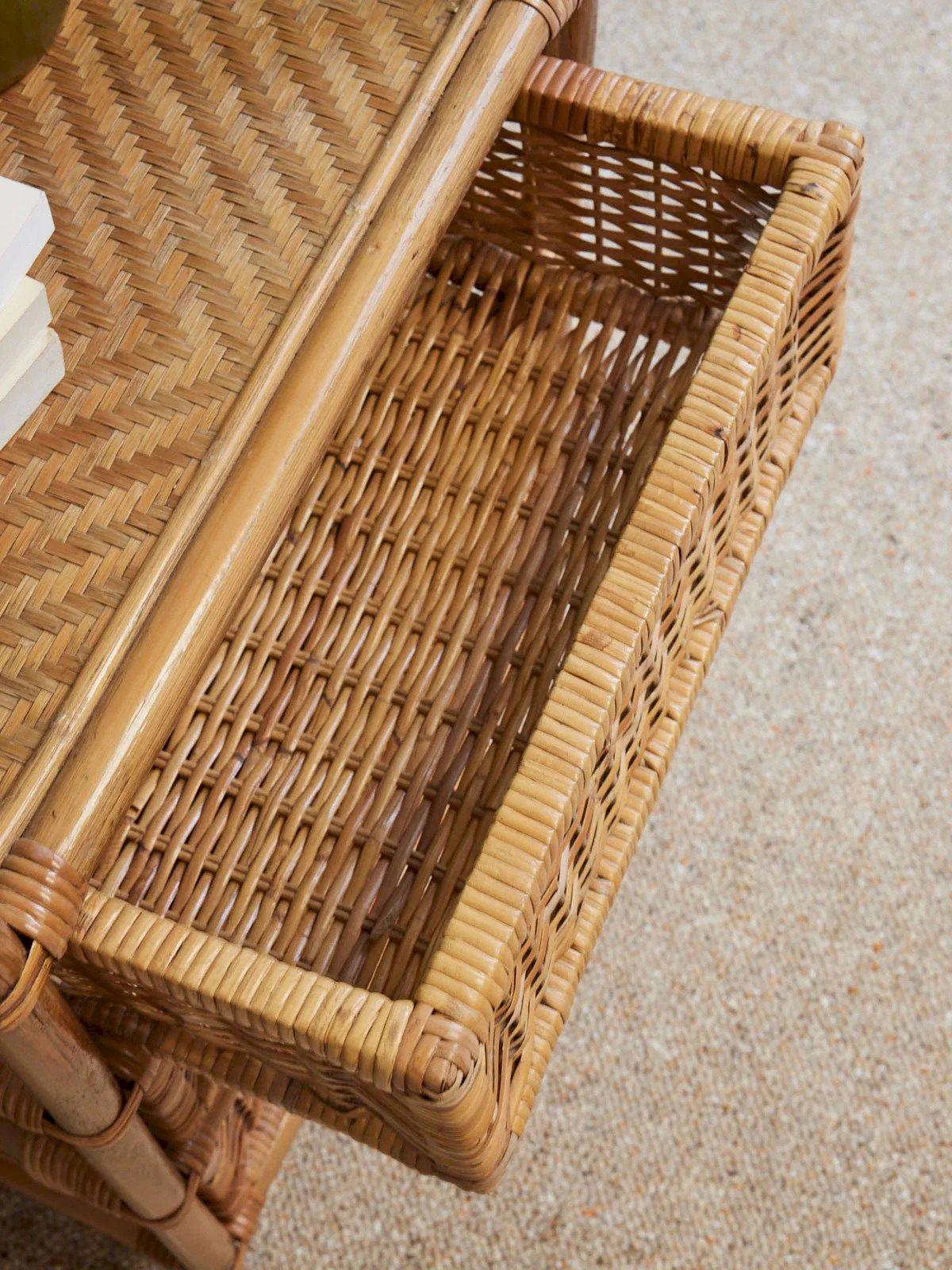
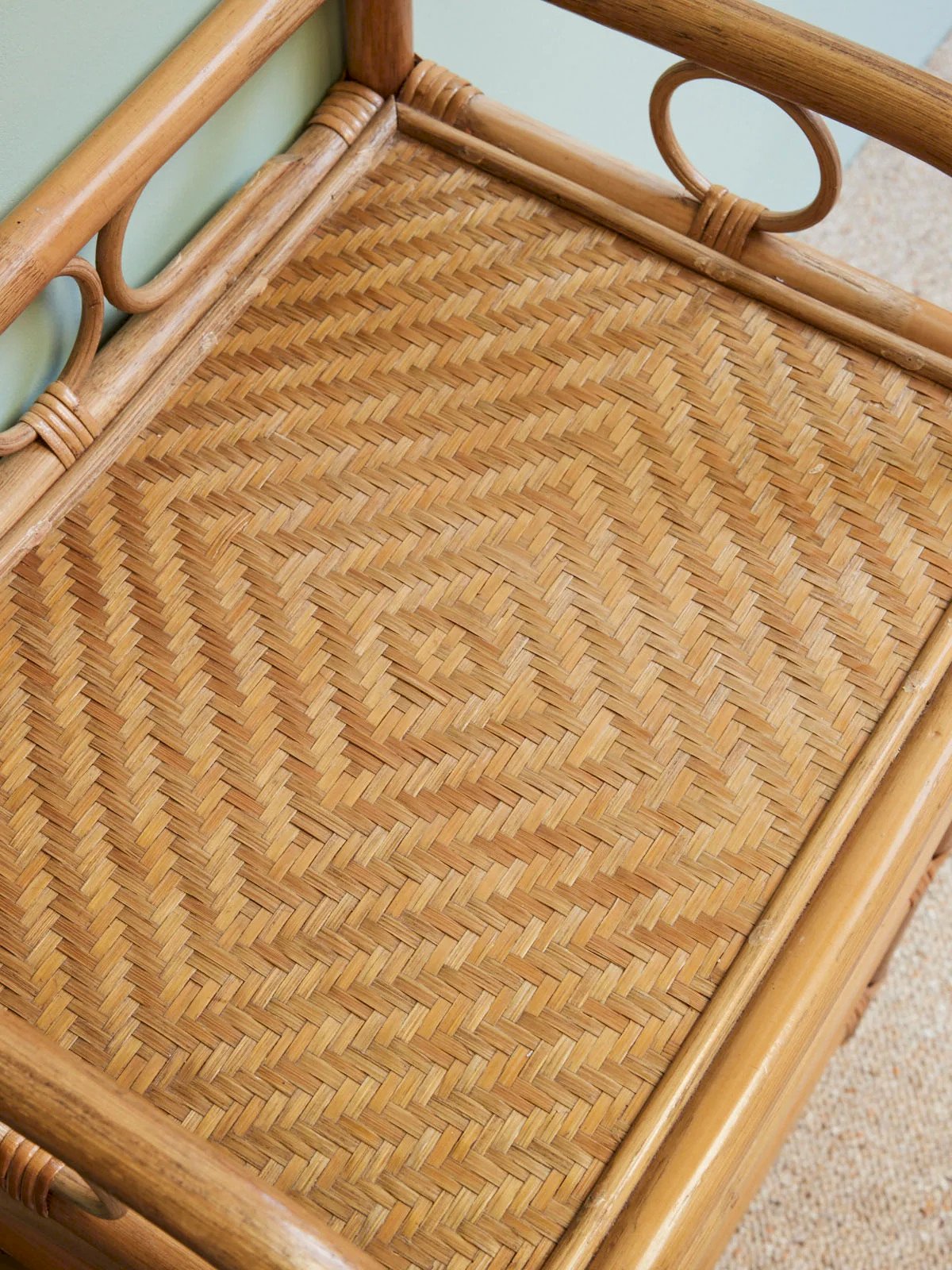
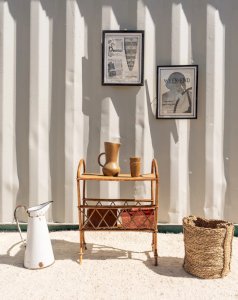
The honeyed rattan of this vintage entrance furniture brings a soft and bright country touch, enhanced by a beautiful natural material. This light wood-colored rattan side table features a shelf and three drawers, providing precious storage for everyday small items. In an entryway as well as in a living room, it gladly accommodates a catch-all, a lamp, or a few books placed on top. Its shallow drawer is suitable for keys, mail, and accessories that one likes to keep within reach, while a bouquet of dried flowers and a wall mirror beautifully complete the ensemble. Length: 46 cm Width: 36 cm Height: 75 cm Drawer height: 11 cm A brief history of the side table Born in the 17th century under the name "guéridon," the side table owes its origin to Moorish slaves [referred to as guéridons] represented on the sculpted legs of the early models brought back from Italy. This nomadic piece of furniture revolutionized social life at court by breaking the rigidity of large sideboards to create conversation islands anywhere in the room. Its lightweight and compact structure was designed to be moved as needed: to place a candlestick, a cup of tea, or a bedside book.
Réf :
#413945
Brand / From : Debongout
Related Products
Comments
Francine, the honey rattan side table with drawers No. 1619.
199€
75002 Paris
Ce site contient des liens d’affiliation pour lesquels je peux recevoir une compensation.
Description
The honeyed rattan of this vintage entrance furniture brings a soft and bright country touch, enhanced by a beautiful natural material. This light wood-colored rattan side table features a shelf and three drawers, providing precious storage for everyday small items. In an entryway as well as in a living room, it gladly accommodates a catch-all, a lamp, or a few books placed on top. Its shallow drawer is suitable for keys, mail, and accessories that one likes to keep within reach, while a bouquet of dried flowers and a wall mirror beautifully complete the ensemble. Length: 46 cm Width: 36 cm Height: 75 cm Drawer height: 11 cm A brief history of the side table Born in the 17th century under the name "guéridon," the side table owes its origin to Moorish slaves [referred to as guéridons] represented on the sculpted legs of the early models brought back from Italy. This nomadic piece of furniture revolutionized social life at court by breaking the rigidity of large sideboards to create conversation islands anywhere in the room. Its lightweight and compact structure was designed to be moved as needed: to place a candlestick, a cup of tea, or a bedside book.
Réf :
#413945
Brand / From : Debongout