 English
 Français


Description
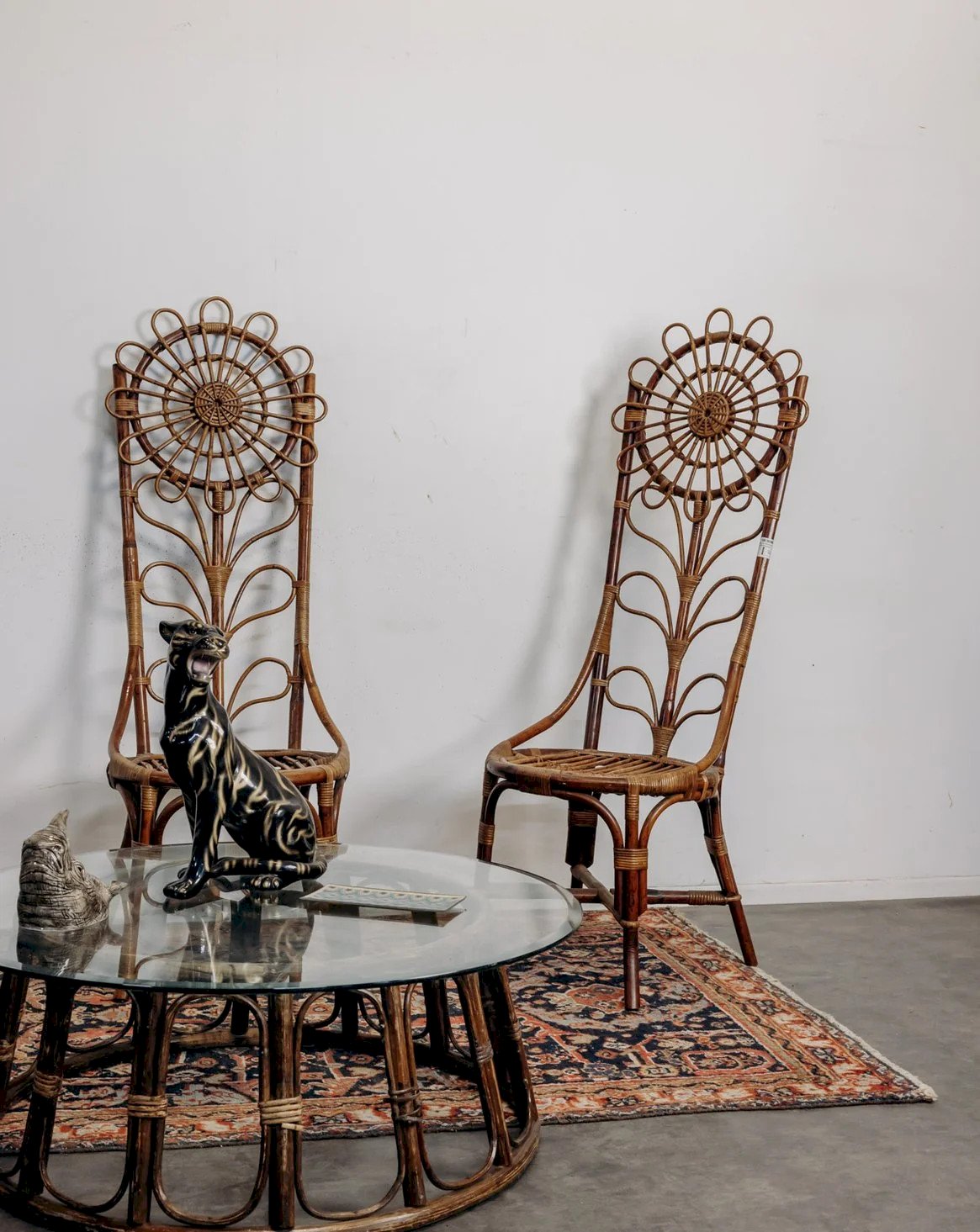
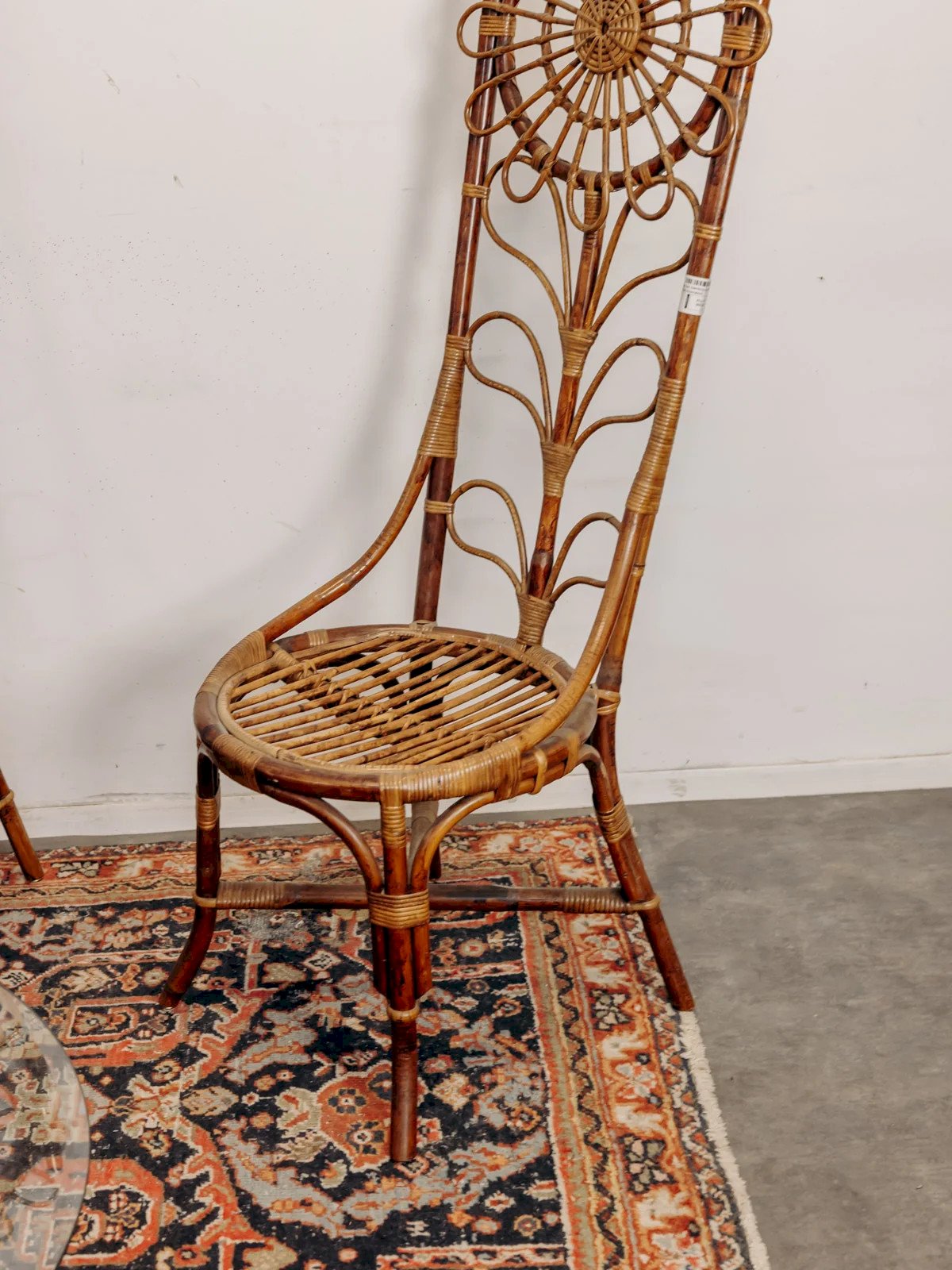
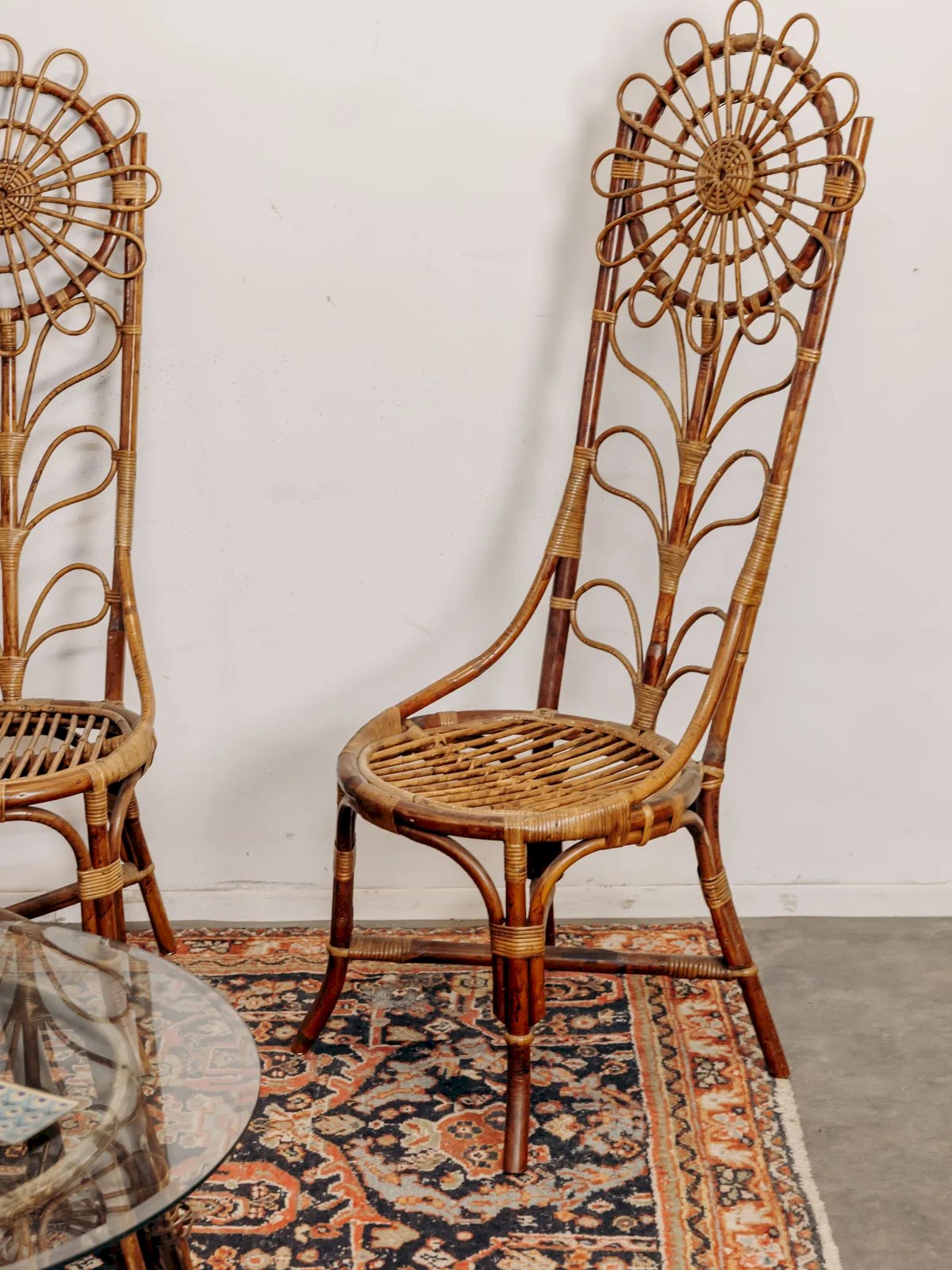
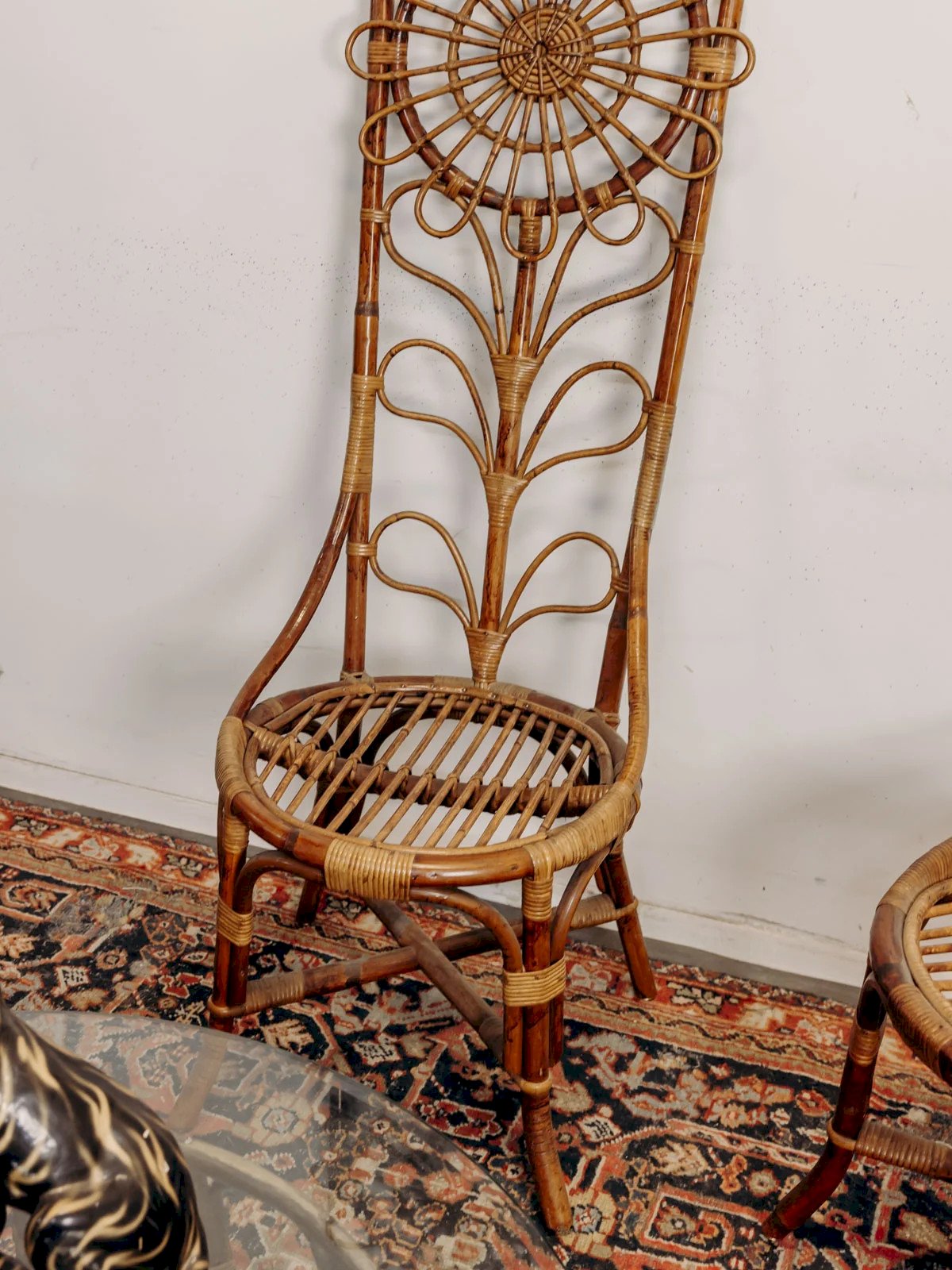
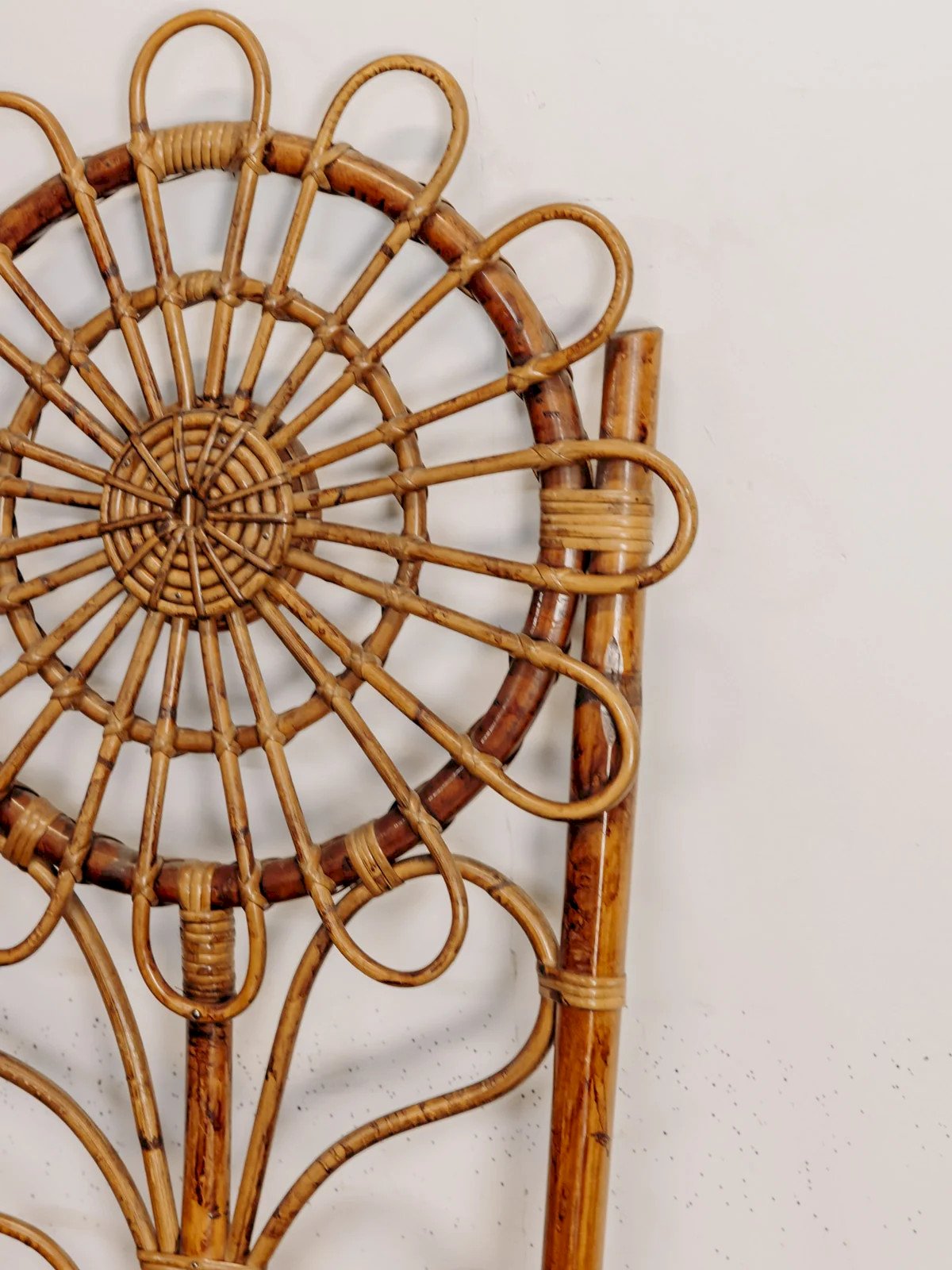
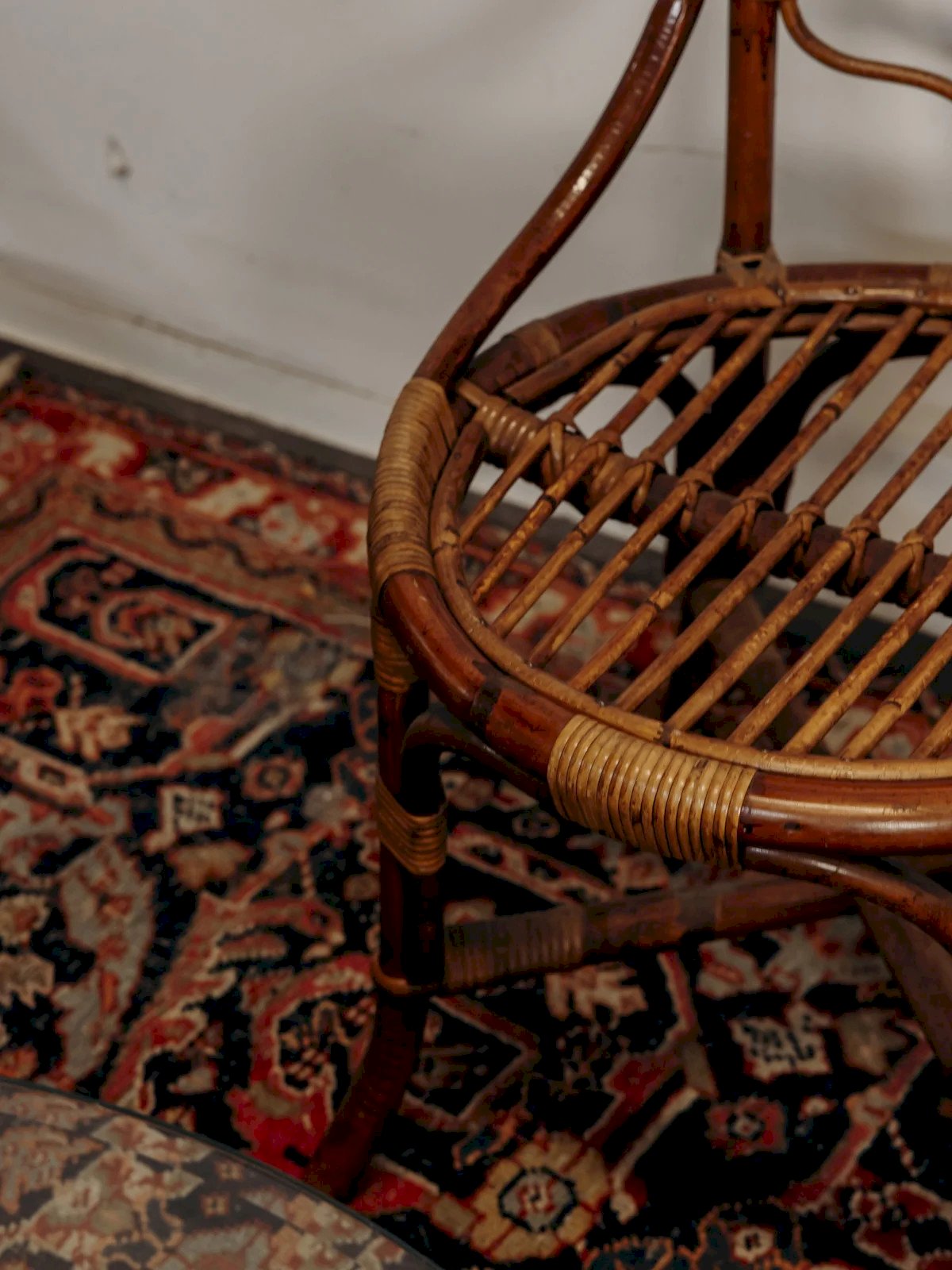
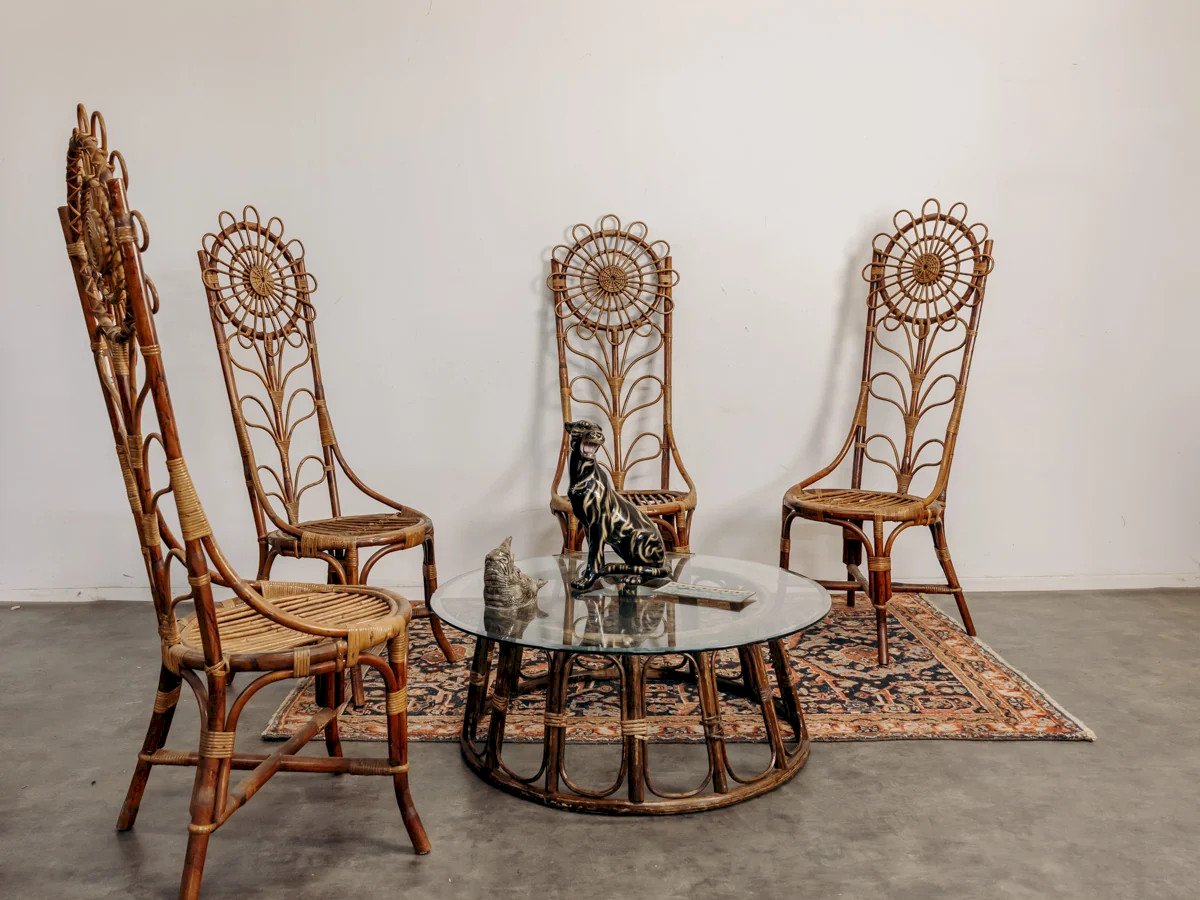
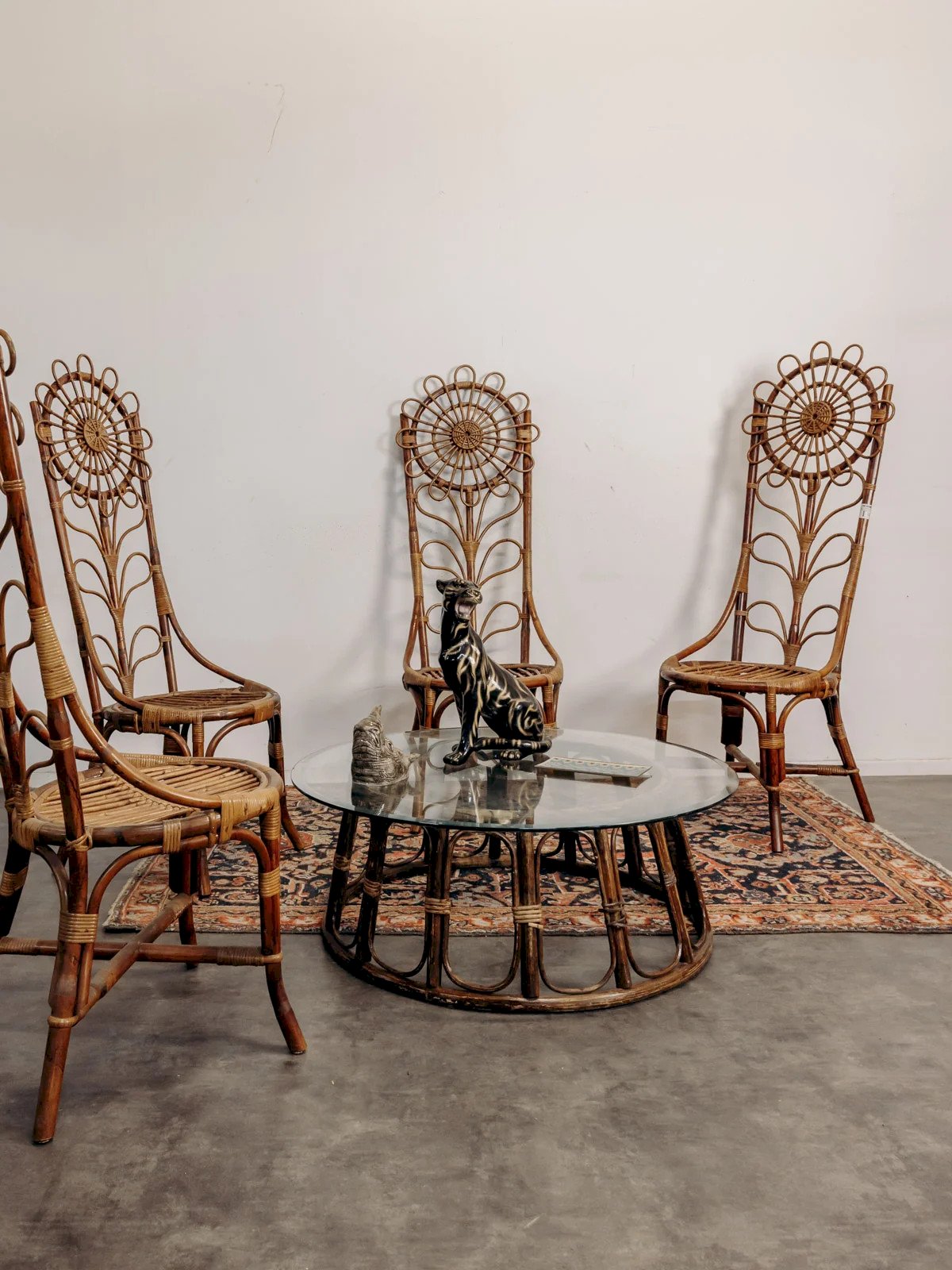
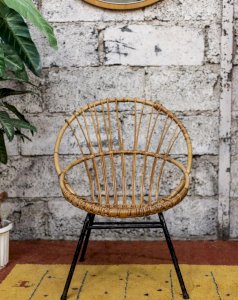
This rattan and bamboo armchair, with its light wood, combines a light presence and a 1970s spirit in a contemporary interpretation. Its natural weaving and sunflower decor give it a bohemian look, while the seat height invites you to sit comfortably in a living room, veranda, or bedroom. Carefully sourced, this second-hand piece attracts with the delicacy of its materials and the dialogue between bamboo and rattan. It pairs well with a raw wood side table, a few books, and a lamp placed nearby. In a bright entryway, it welcomes a folded throw and a ceramic vase on a neighboring console. Width: 47 cm Depth: 61 cm Height: 137 cm Seat height: 43 cm A brief history of the armchair: A true rattan throne, the Emmanuelle armchair has its origins in Polynesia, where it served as a ceremonial seat for tribal chiefs. Its spectacular fan-shaped backrest, whose complex weaving flares out to form a halo, was designed to shield the dignitary's head from drafts while asserting their presence. Initially called the "Pomare chair," it owes its current name to the worldwide success of the 1970s film of the same name, which turned it into an icon of bohemian and sensual design.
Réf :
#413786
Brand / From : Debongout
Related Products


Comments
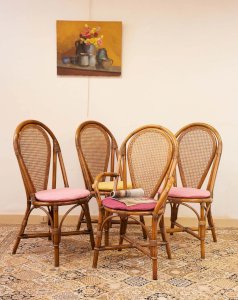
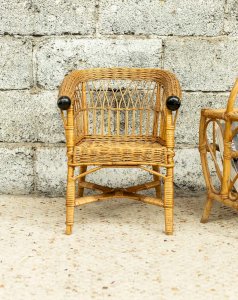
Emmanuel, the set of 4 bamboo and rattan chairs No. 29
1 639€
75002 Paris
Ce site contient des liens d’affiliation pour lesquels je peux recevoir une compensation.
Description
This rattan and bamboo armchair, with its light wood, combines a light presence and a 1970s spirit in a contemporary interpretation. Its natural weaving and sunflower decor give it a bohemian look, while the seat height invites you to sit comfortably in a living room, veranda, or bedroom. Carefully sourced, this second-hand piece attracts with the delicacy of its materials and the dialogue between bamboo and rattan. It pairs well with a raw wood side table, a few books, and a lamp placed nearby. In a bright entryway, it welcomes a folded throw and a ceramic vase on a neighboring console. Width: 47 cm Depth: 61 cm Height: 137 cm Seat height: 43 cm A brief history of the armchair: A true rattan throne, the Emmanuelle armchair has its origins in Polynesia, where it served as a ceremonial seat for tribal chiefs. Its spectacular fan-shaped backrest, whose complex weaving flares out to form a halo, was designed to shield the dignitary's head from drafts while asserting their presence. Initially called the "Pomare chair," it owes its current name to the worldwide success of the 1970s film of the same name, which turned it into an icon of bohemian and sensual design.
Réf :
#413786
Brand / From : Debongout