 English
 Français


Description
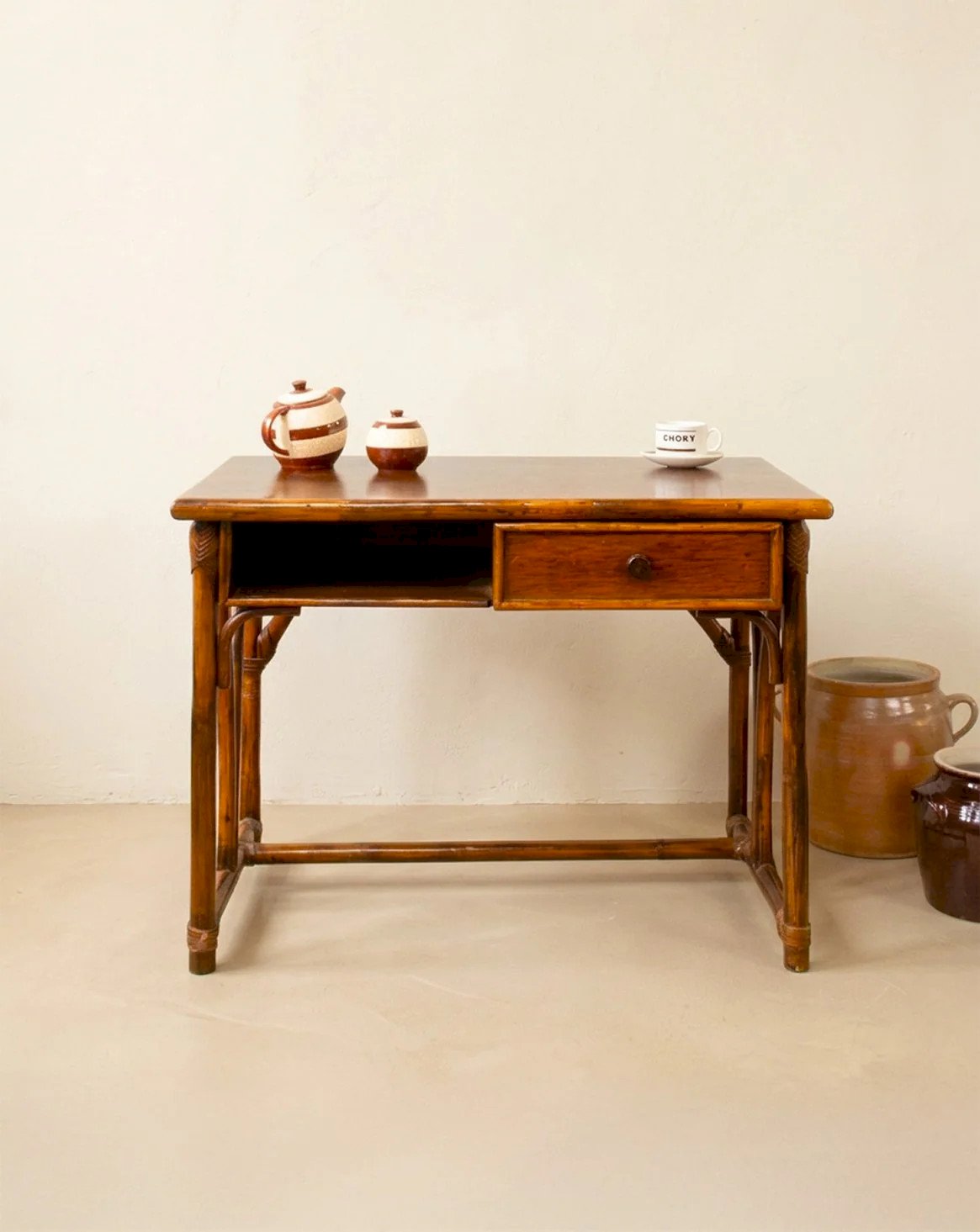
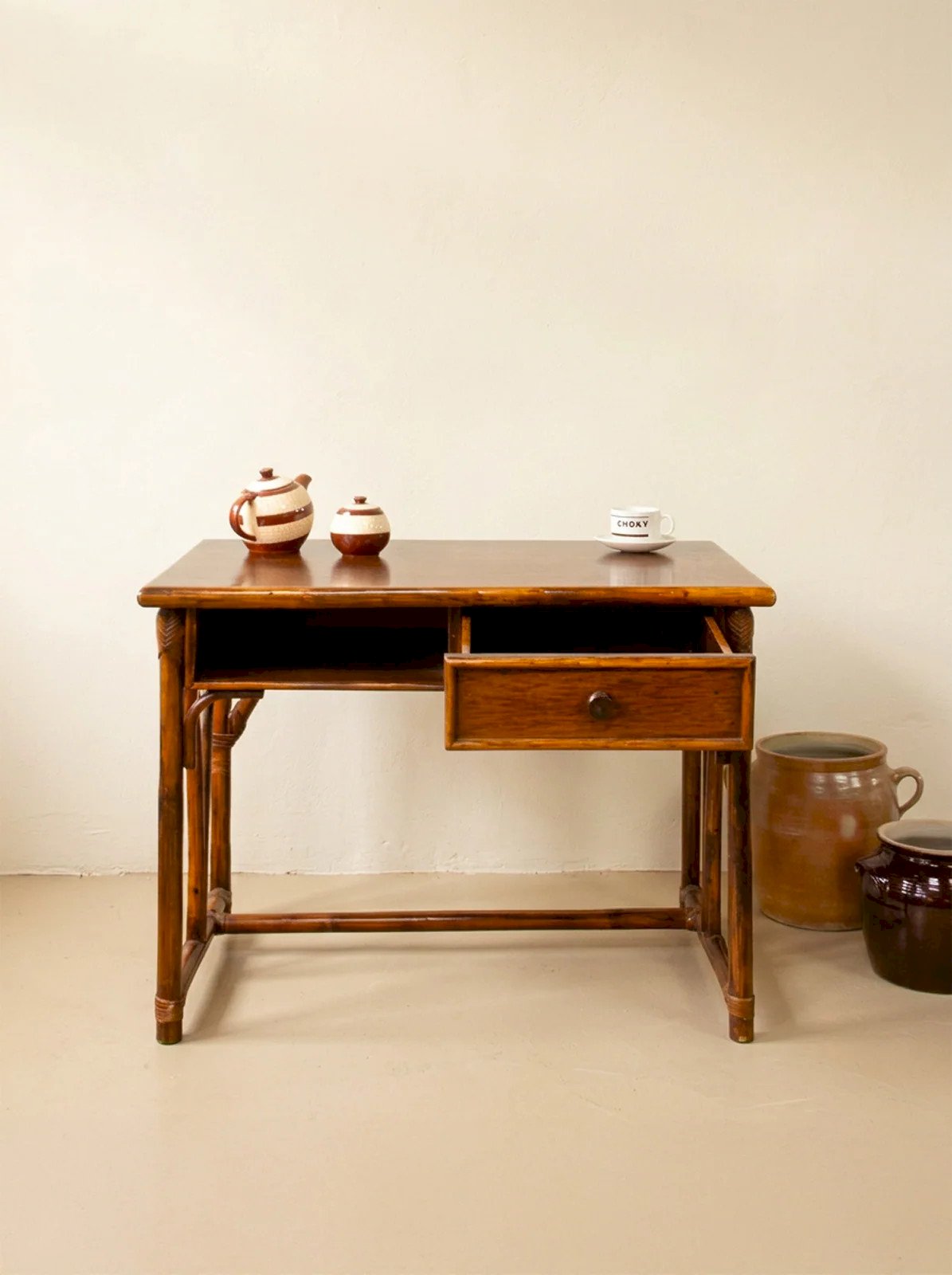
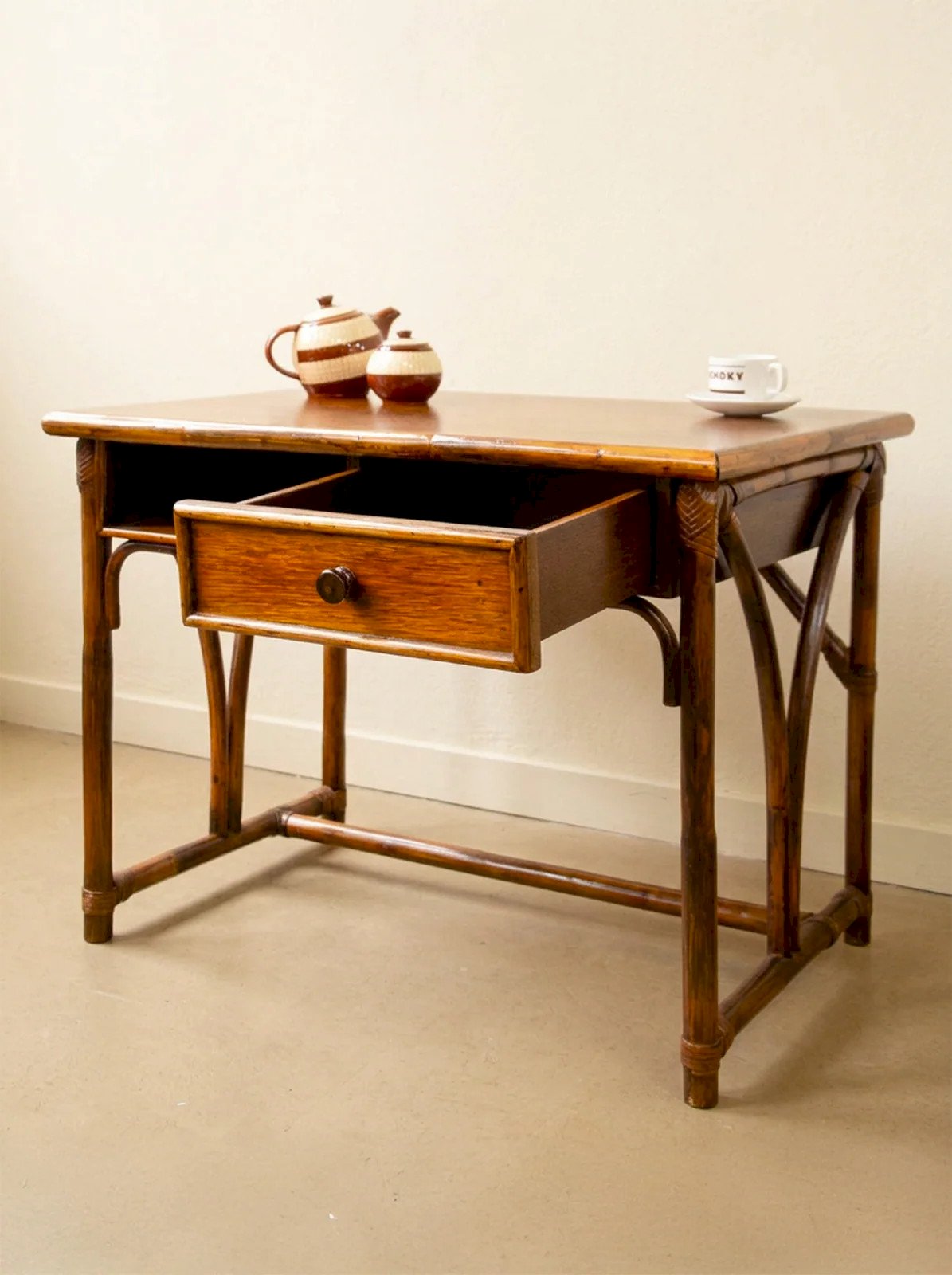
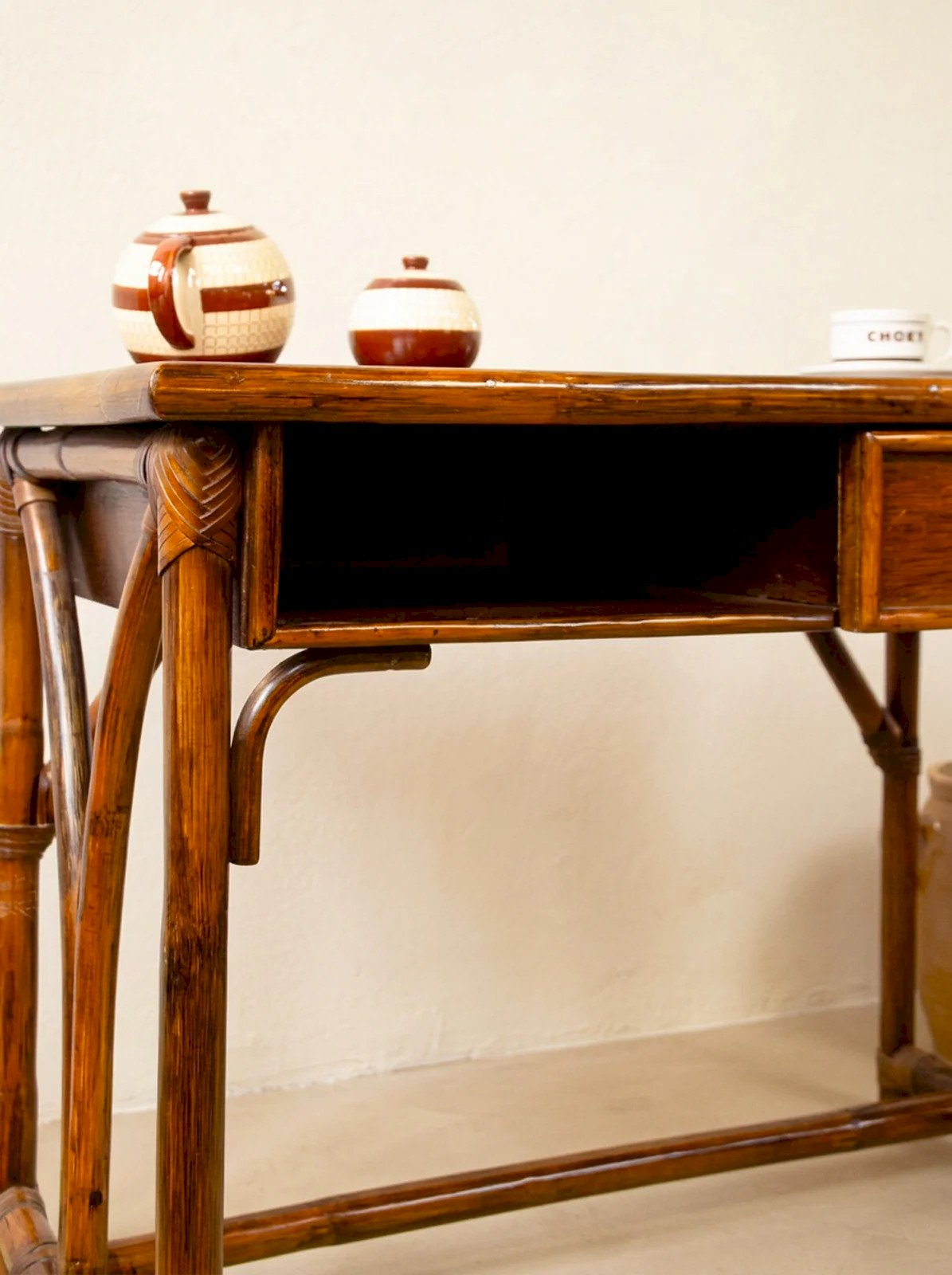
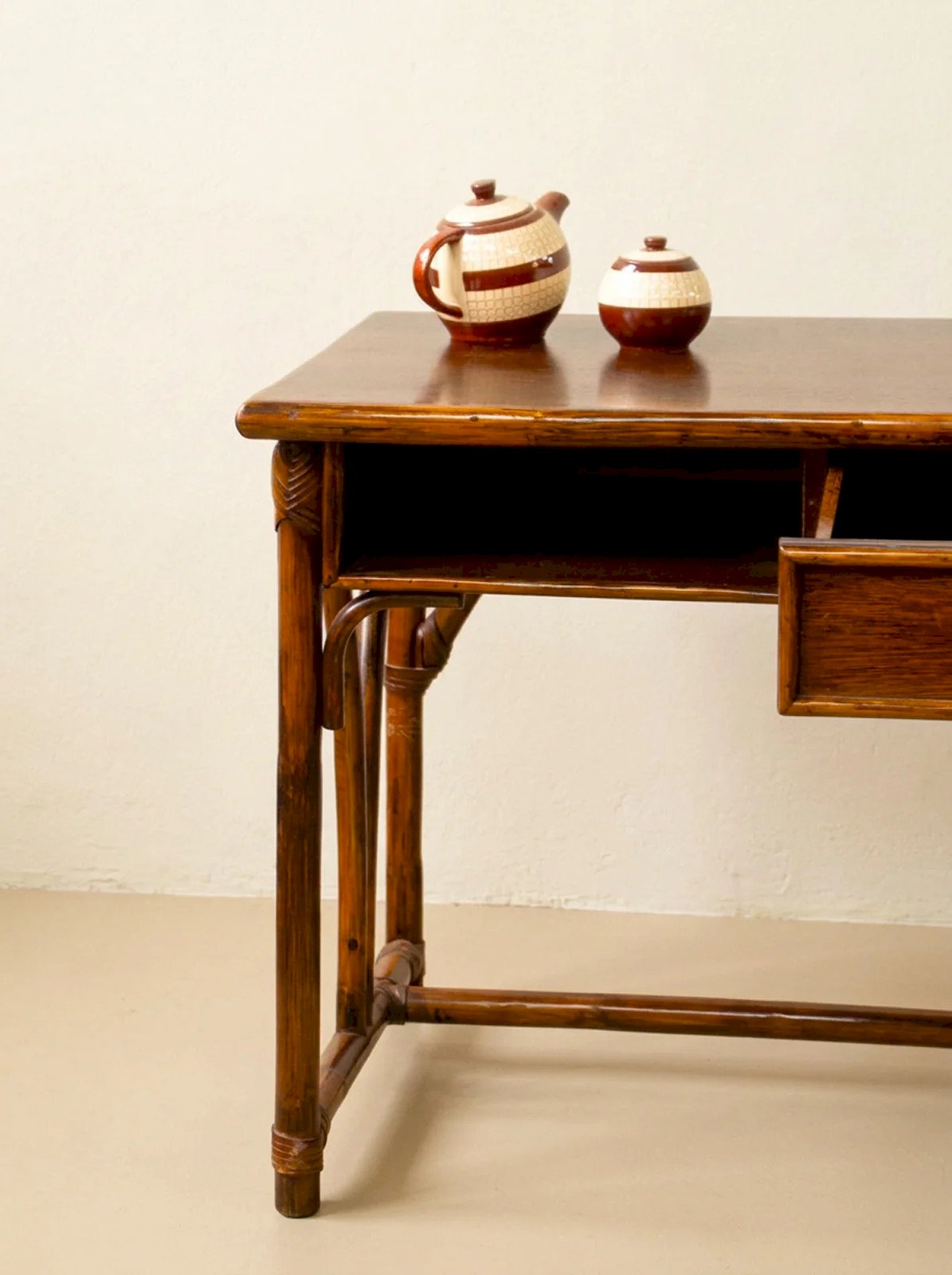
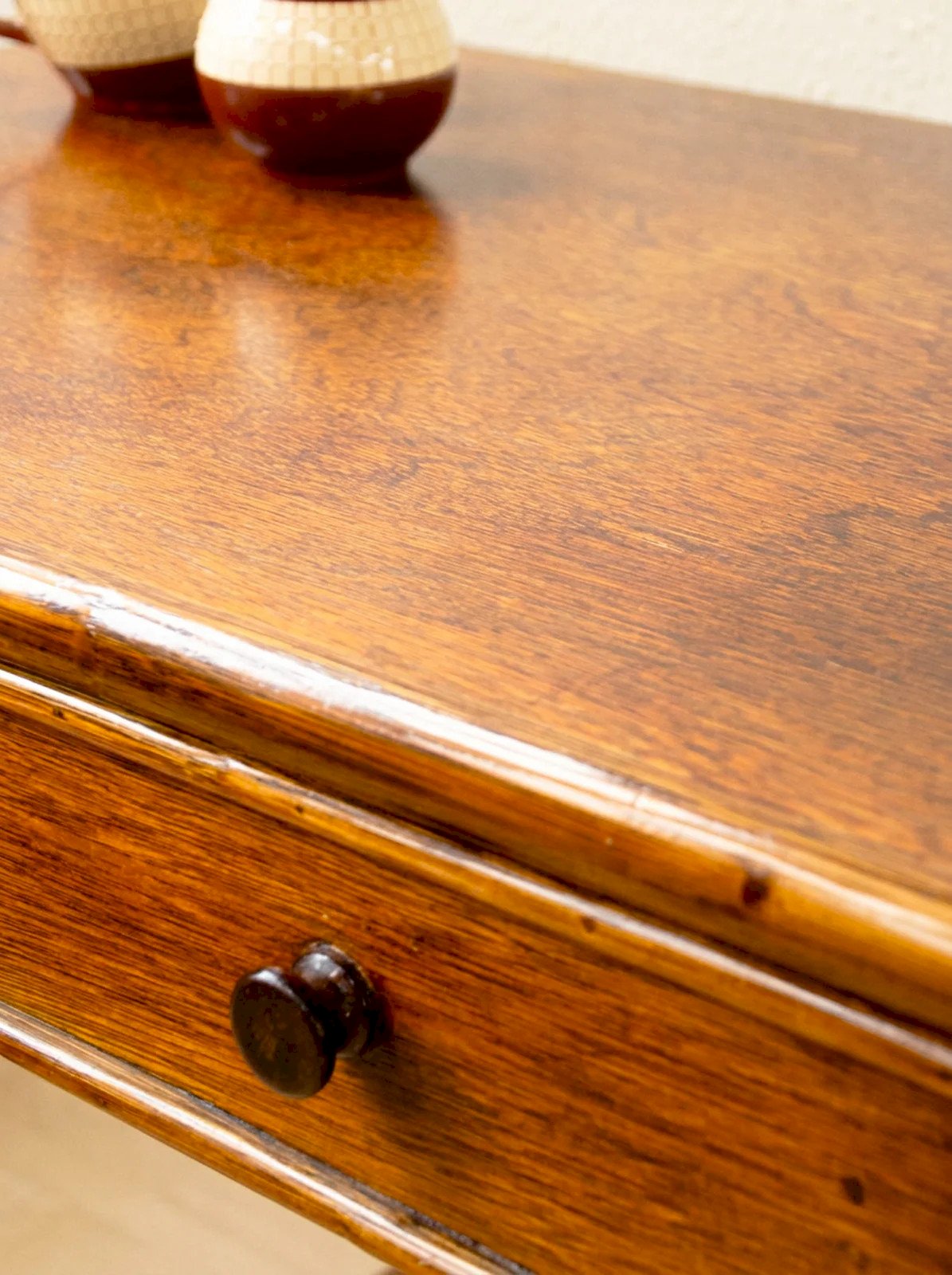
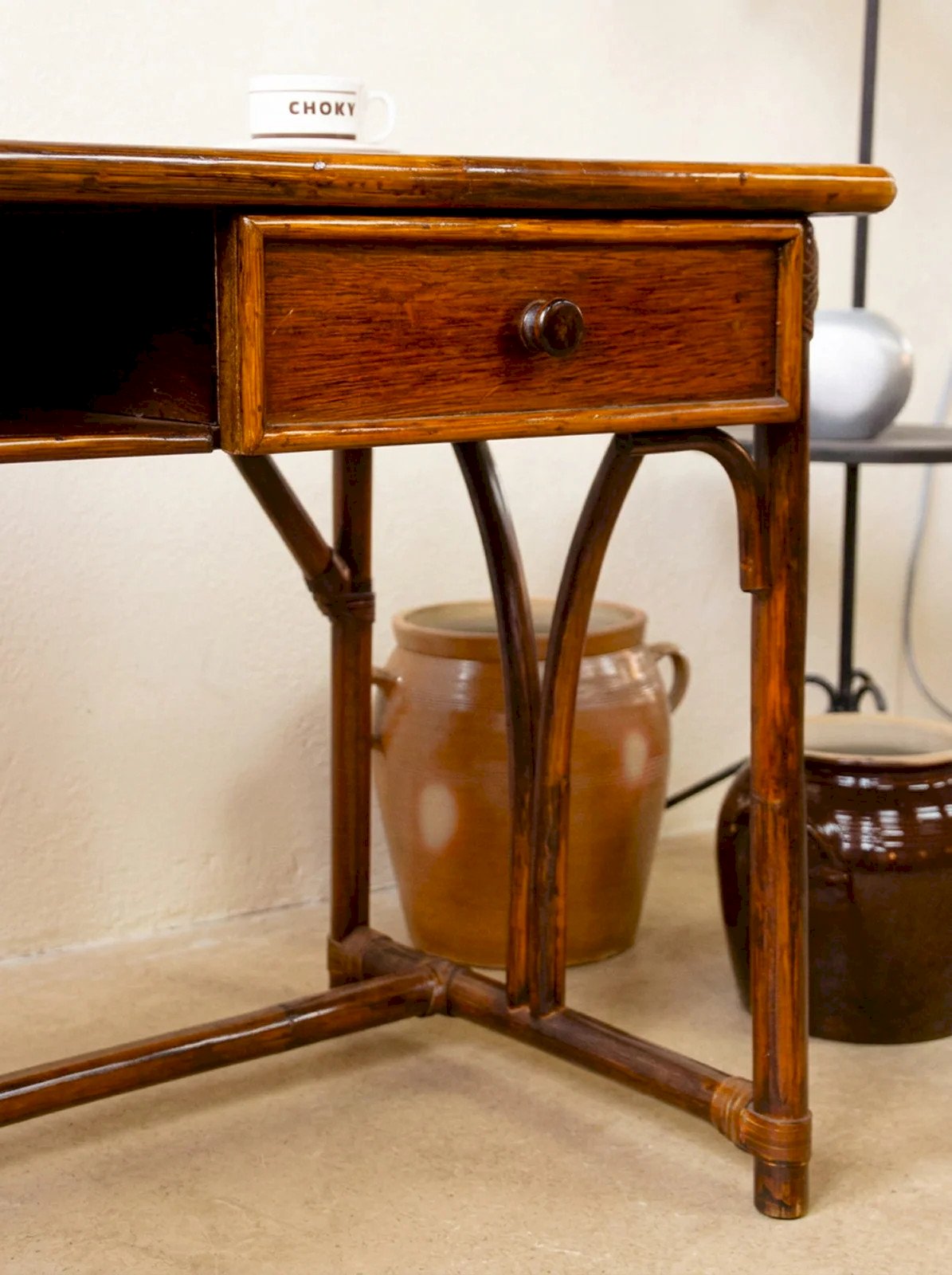
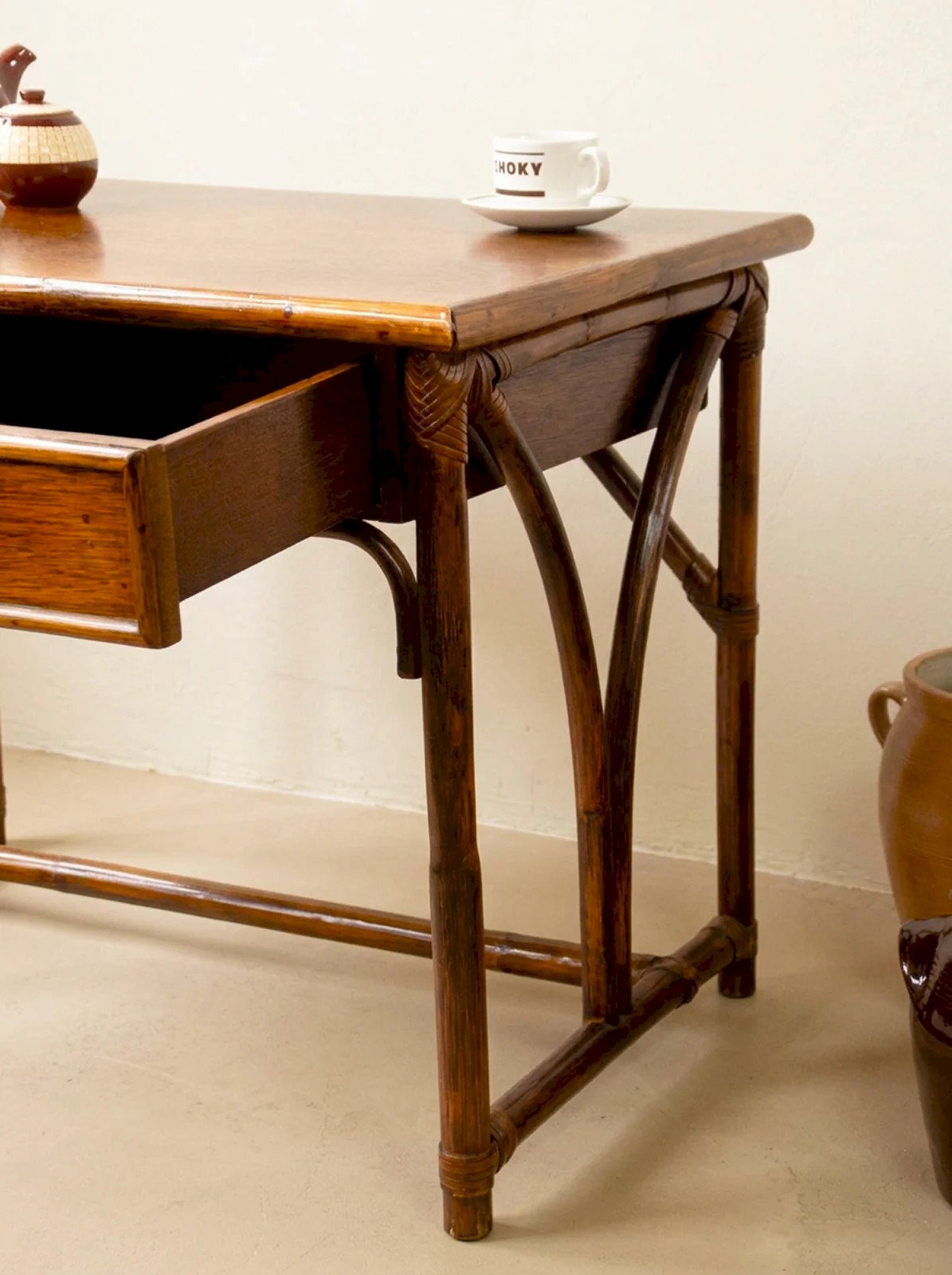
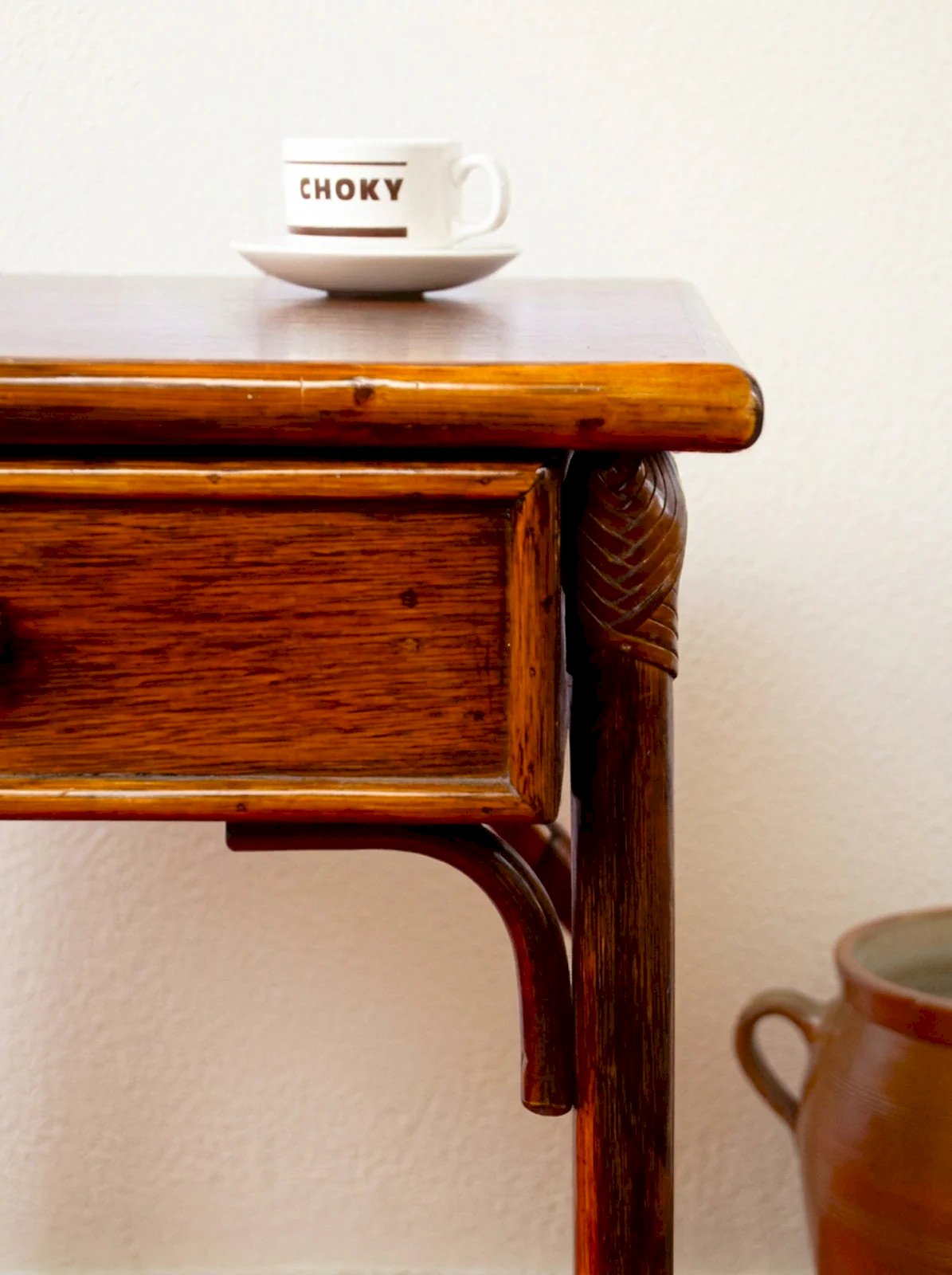
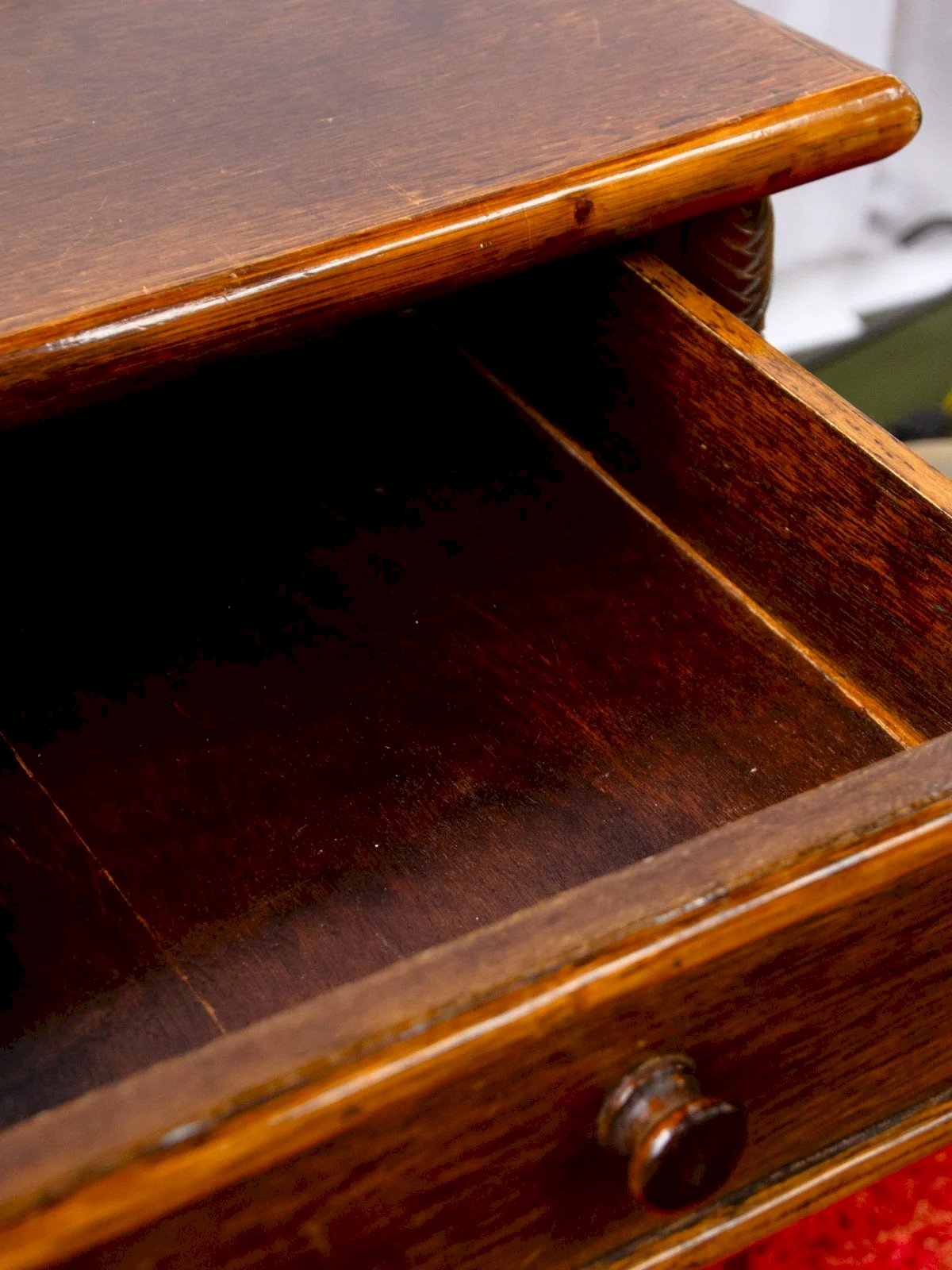
With its curved rattan and dark wood hue, this desk brings a countryside touch full of refinement. Its lightweight structure provides legroom thanks to the space under the top, while the drawer and niche easily accommodate notebooks, papers, and work accessories. The rattan pairs well with a wooden chair, whether in a bedroom or a workspace corner, to create a warm and tidy ensemble. Its 1970s look is also suited for staging with a table lamp and a few books placed on the surface. Length: 93 cm Width: 61 cm Height: 71 cm Height under the top: 55 cm Drawer height: 9 cm Drawer width: 34 cm Drawer depth: 38 cm Niche height: 9 cm Niche width: 50 cm Niche depth: 37 cm A brief history of the desk It all starts with the "bure," the thick brown woolen cloth that covered the tables of the copyist monks to protect their precious manuscripts. By extension, the table itself eventually took on the name of the fabric that covered it: the desk. Unlike the secretary, it is defined by its large fixed top and visible legs, offering a space for reflection without artifice. Also known as a "flat desk," it remains the centerpiece for anchoring a workspace with character.
Réf :
#414565
Brand / From : Debongout
Related Products




Comments
Edouard, the dark rattan desk N°1123
419€
75002 Paris
Ce site contient des liens d’affiliation pour lesquels je peux recevoir une compensation.
Description
With its curved rattan and dark wood hue, this desk brings a countryside touch full of refinement. Its lightweight structure provides legroom thanks to the space under the top, while the drawer and niche easily accommodate notebooks, papers, and work accessories. The rattan pairs well with a wooden chair, whether in a bedroom or a workspace corner, to create a warm and tidy ensemble. Its 1970s look is also suited for staging with a table lamp and a few books placed on the surface. Length: 93 cm Width: 61 cm Height: 71 cm Height under the top: 55 cm Drawer height: 9 cm Drawer width: 34 cm Drawer depth: 38 cm Niche height: 9 cm Niche width: 50 cm Niche depth: 37 cm A brief history of the desk It all starts with the "bure," the thick brown woolen cloth that covered the tables of the copyist monks to protect their precious manuscripts. By extension, the table itself eventually took on the name of the fabric that covered it: the desk. Unlike the secretary, it is defined by its large fixed top and visible legs, offering a space for reflection without artifice. Also known as a "flat desk," it remains the centerpiece for anchoring a workspace with character.
Réf :
#414565
Brand / From : Debongout