 English
 Français


Description
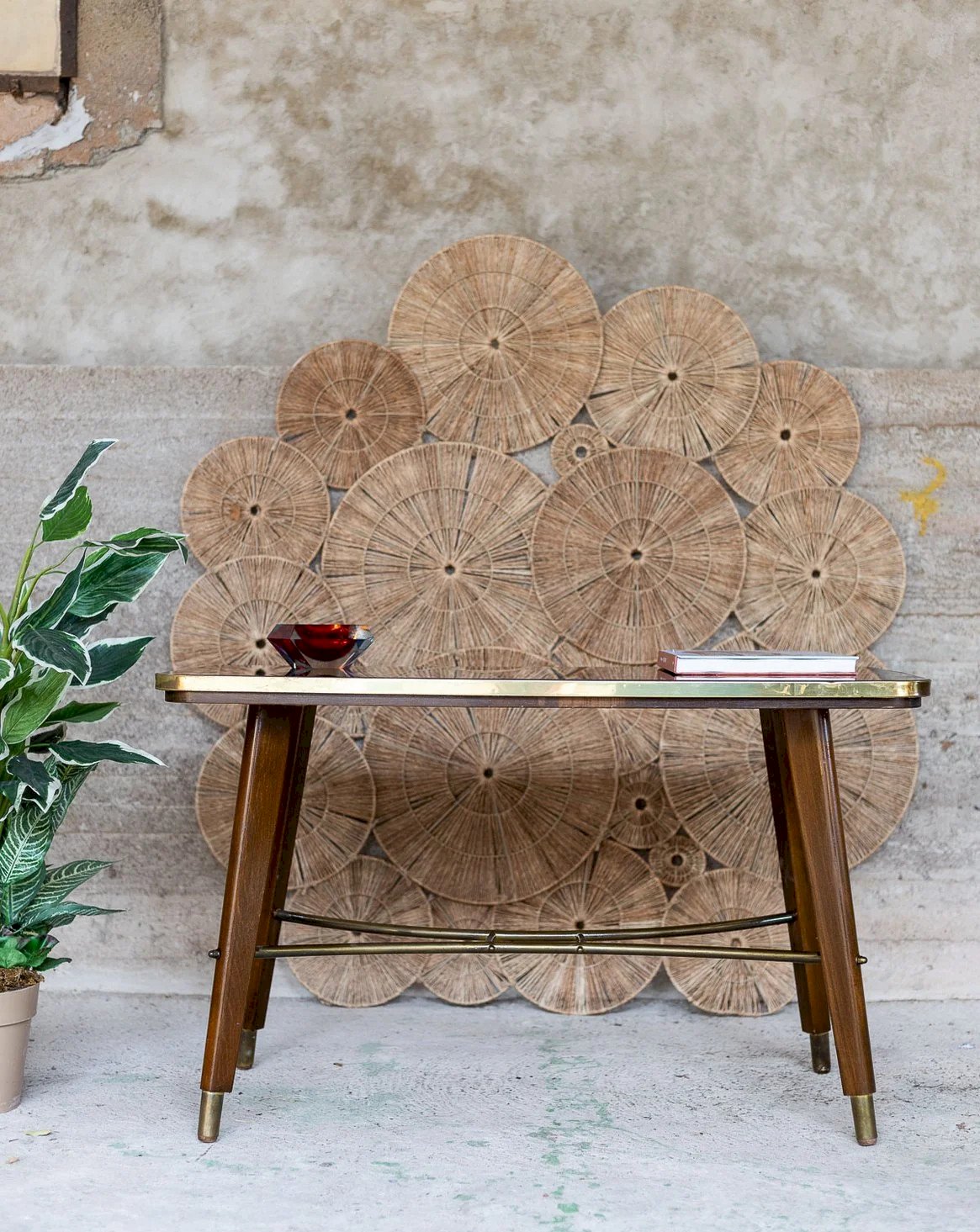
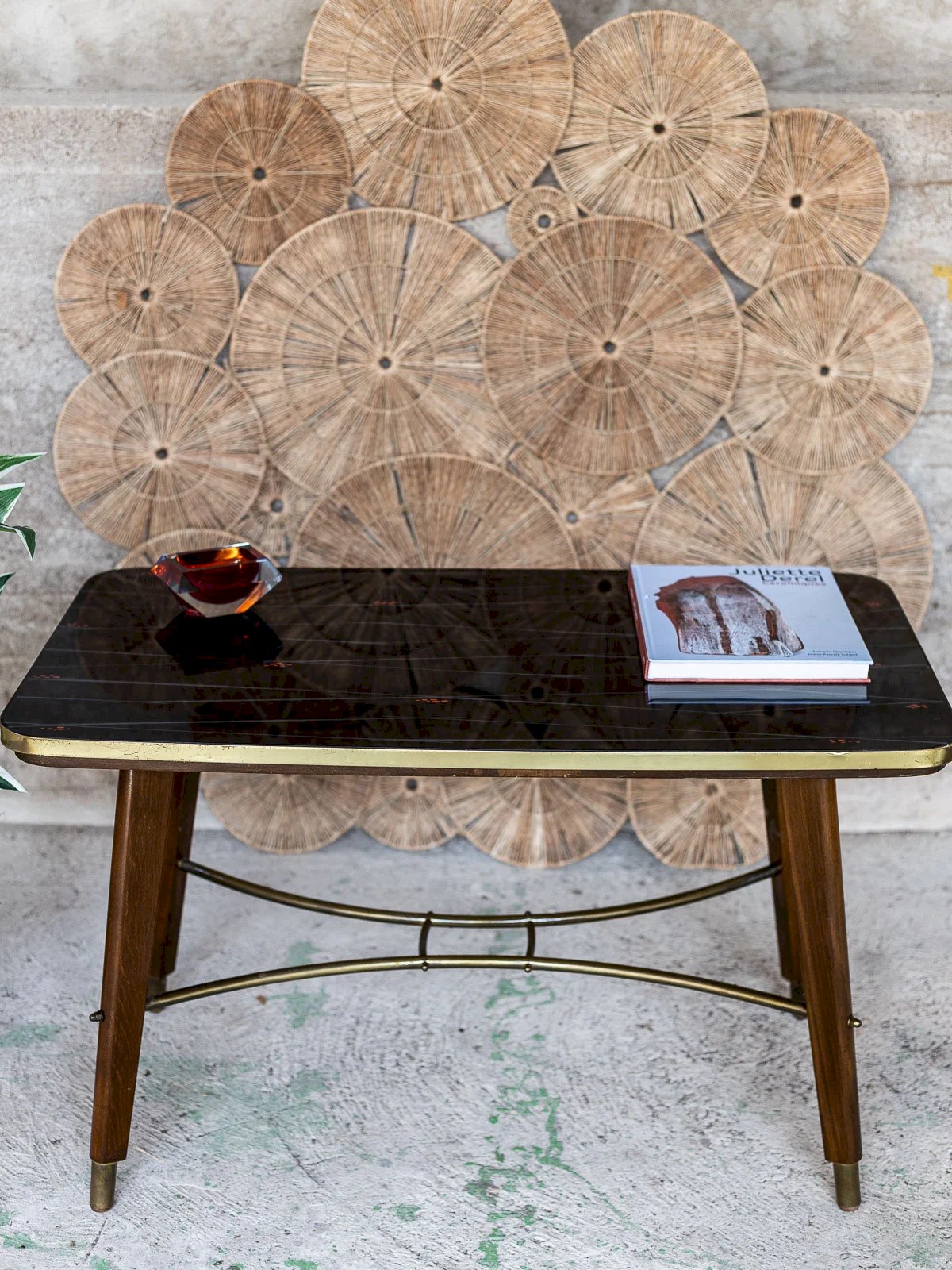
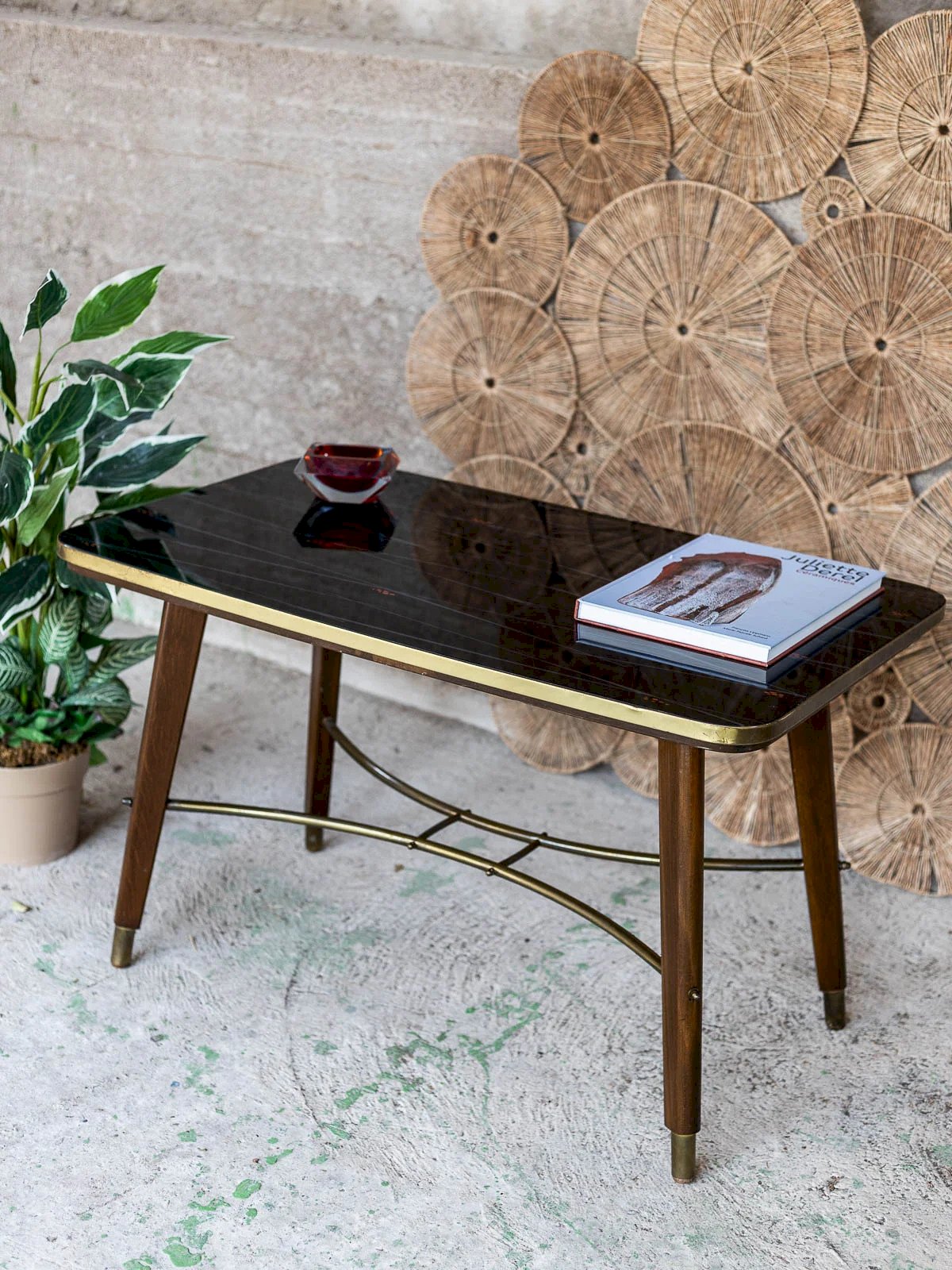
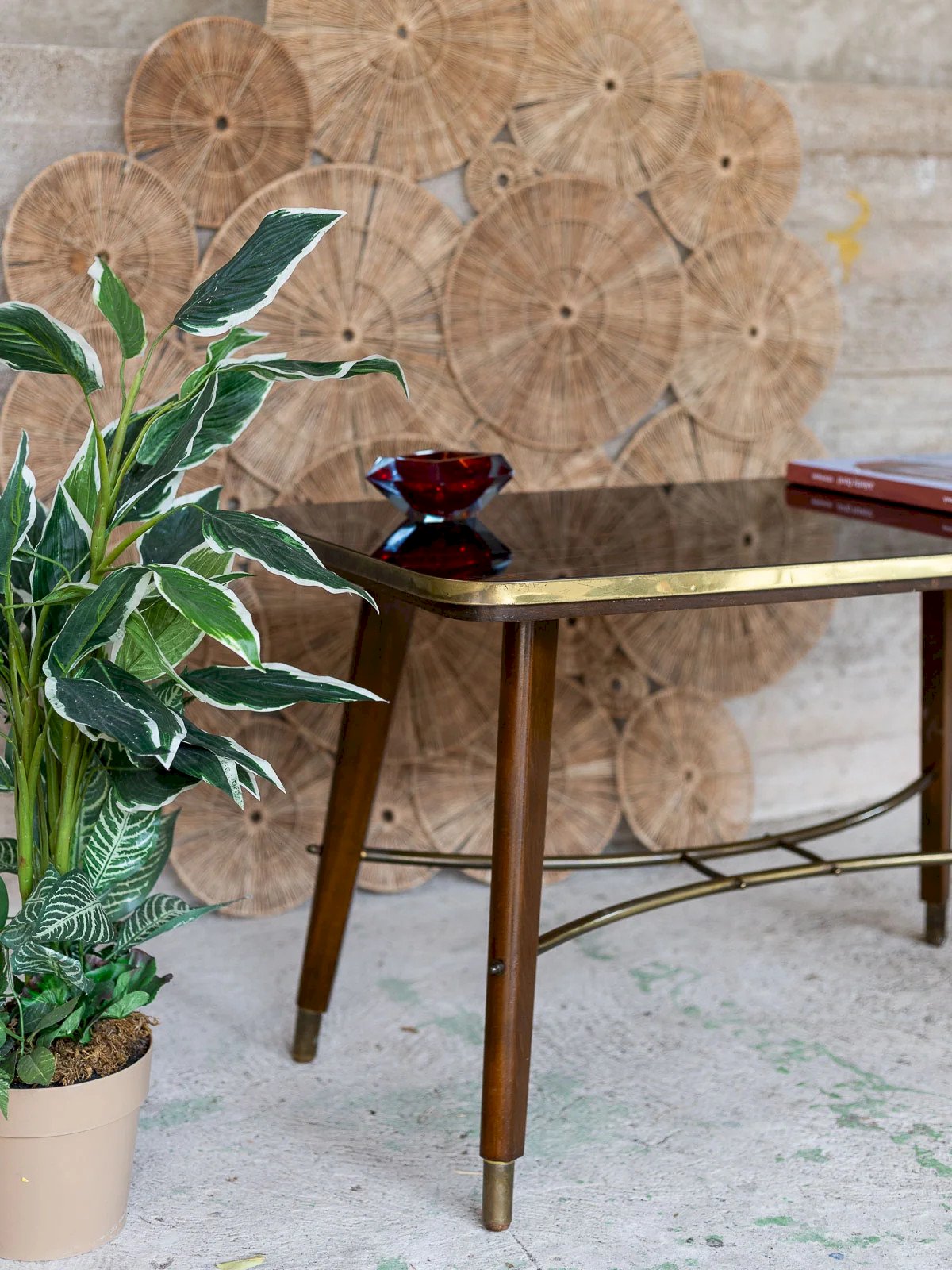
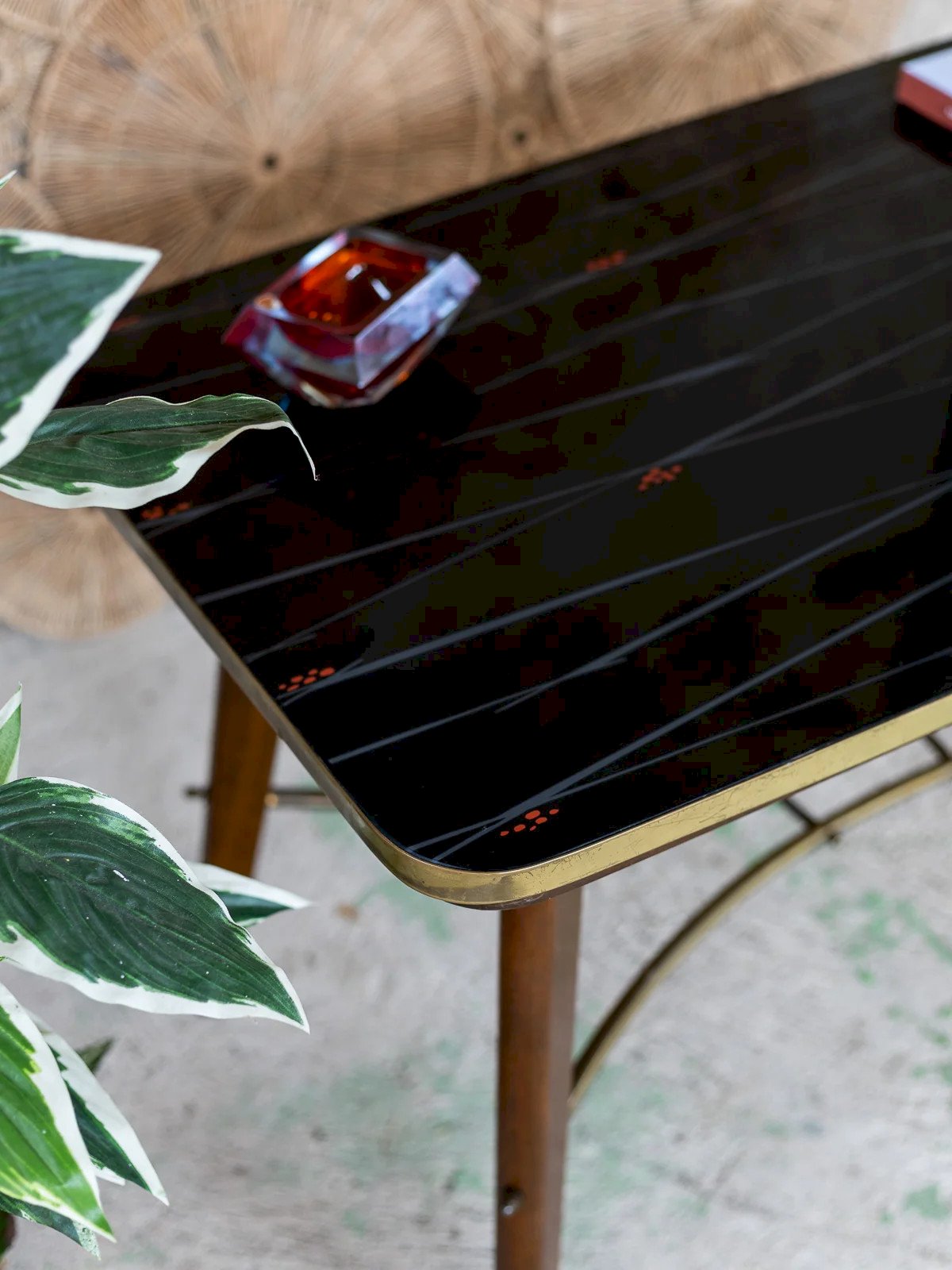
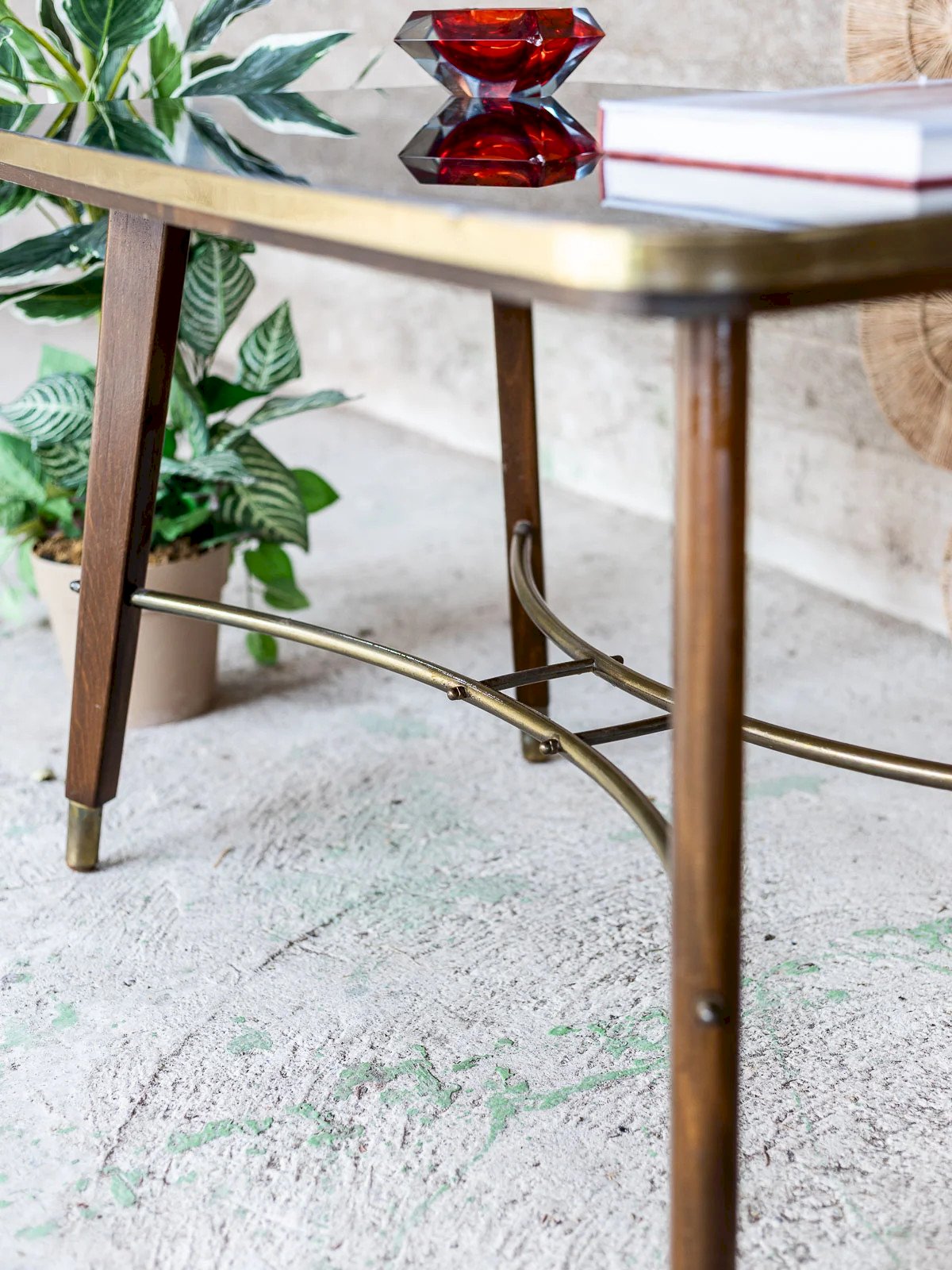
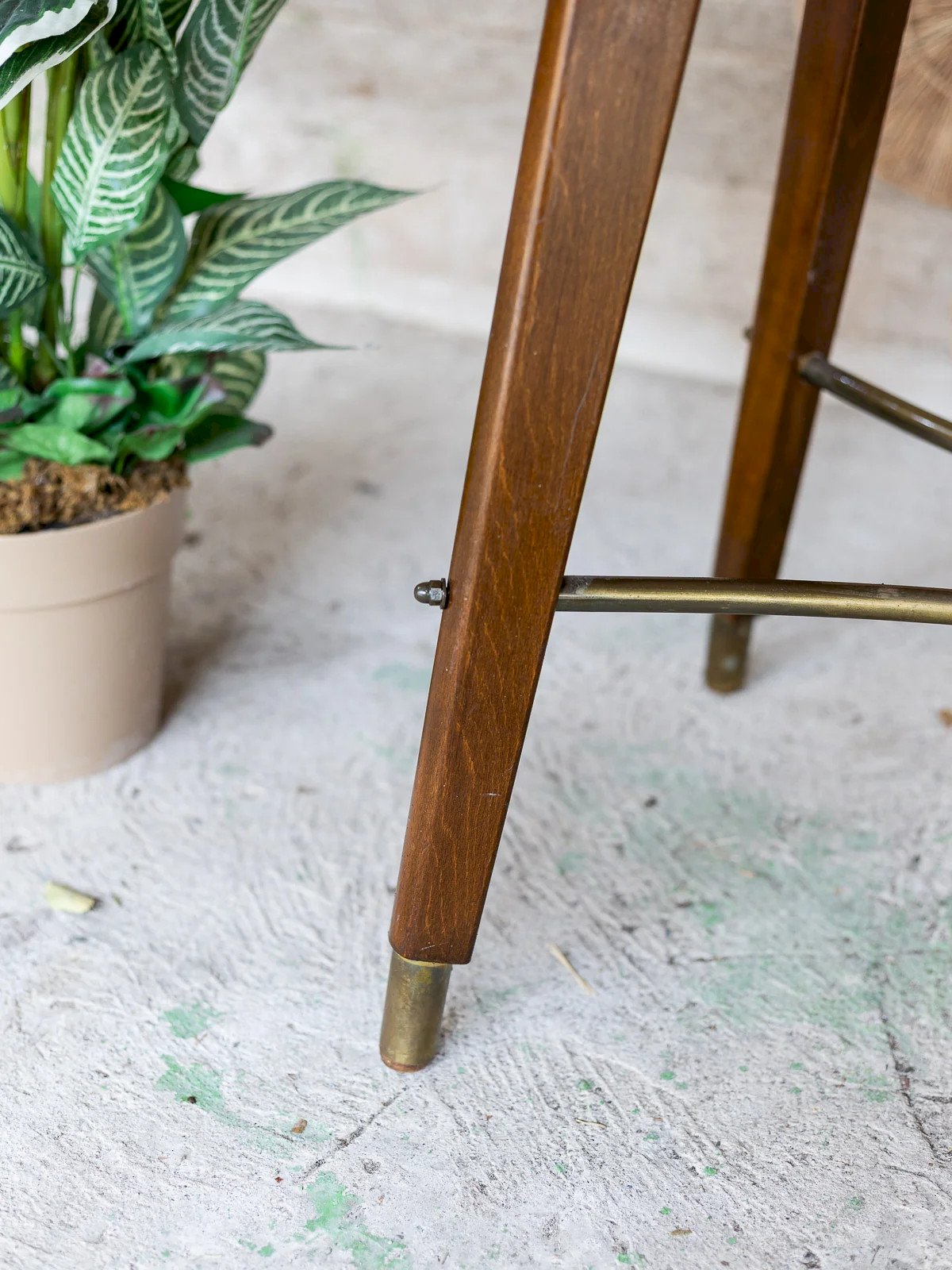
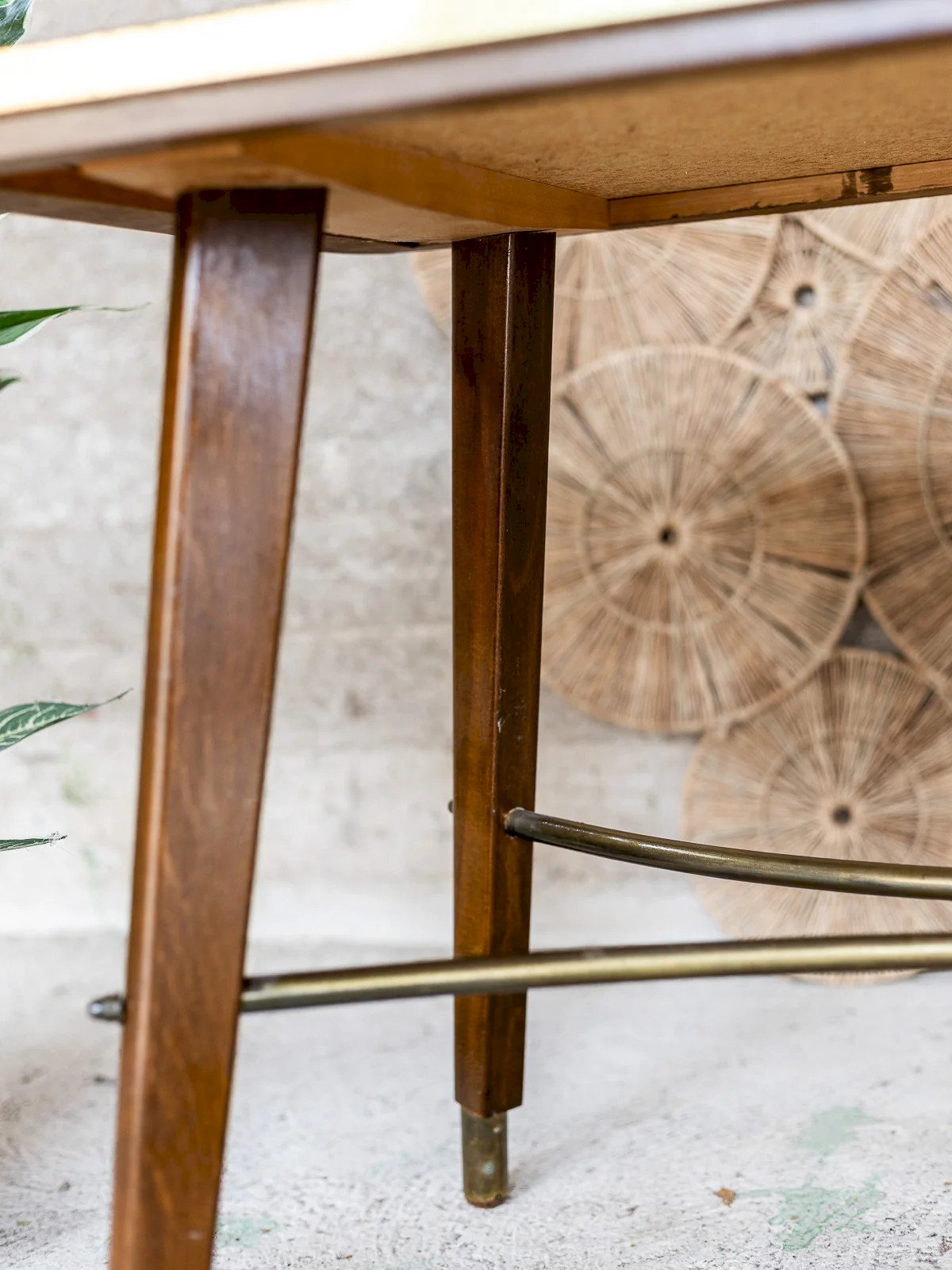
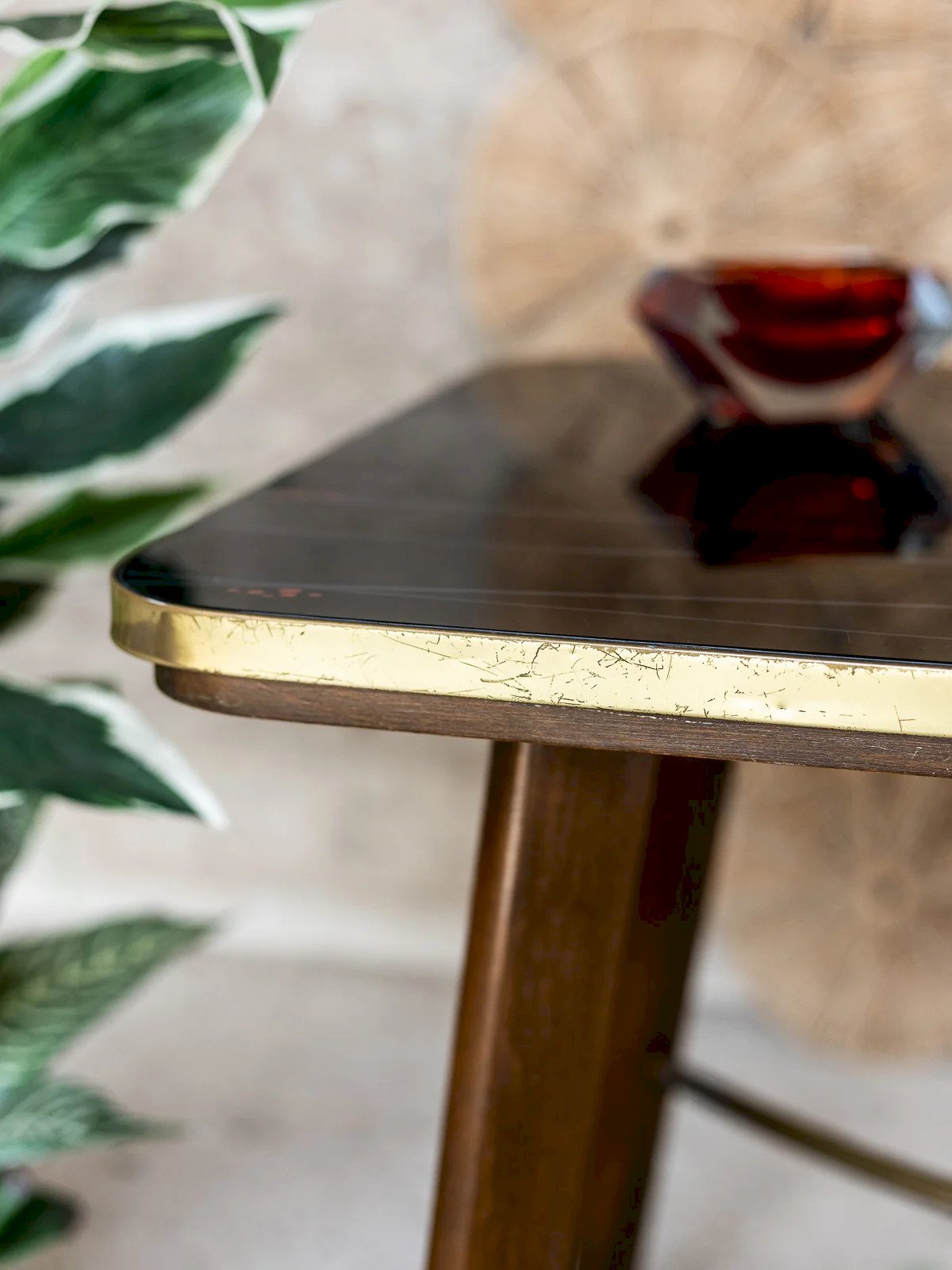
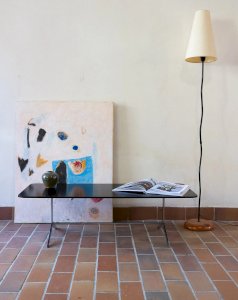
This second-hand coffee table combines dark wood with black and gold accents to create a very refined contemporary presence. Its wooden legs and splayed feet give it a light appearance, while the brass details highlight a glossy black patterned top with a precious touch. In a living room, it readily accommodates an art book, a catch-all, or a cup, while structuring the space around a sofa. It pairs easily with a solid color rug, a fabric armchair, and a few black metal objects. Placed in front of a sofa, it holds a table lamp and a stack of magazines for an elegant and measured scene. Length: 100 cm Width: 57.5 cm Height: 61 cm A brief history of the coffee table Unlike dining tables, the coffee table only truly emerged in the early 20th century with the evolution of living rooms towards greater comfort and relaxation. Its intentionally low structure, designed to align with the seating height of armchairs, is inspired by Eastern tea tables and 19th-century coffee supports. Referred to as a “parlor table” or “cocktail table,” it is defined by its generous top supported by a short and sturdy base.
Réf :
#413718
Brand / From : Debongout
Related Products



Comments
Donna, the elegant coffee table No. 1578
349€
75002 Paris
Ce site contient des liens d’affiliation pour lesquels je peux recevoir une compensation.
Description
This second-hand coffee table combines dark wood with black and gold accents to create a very refined contemporary presence. Its wooden legs and splayed feet give it a light appearance, while the brass details highlight a glossy black patterned top with a precious touch. In a living room, it readily accommodates an art book, a catch-all, or a cup, while structuring the space around a sofa. It pairs easily with a solid color rug, a fabric armchair, and a few black metal objects. Placed in front of a sofa, it holds a table lamp and a stack of magazines for an elegant and measured scene. Length: 100 cm Width: 57.5 cm Height: 61 cm A brief history of the coffee table Unlike dining tables, the coffee table only truly emerged in the early 20th century with the evolution of living rooms towards greater comfort and relaxation. Its intentionally low structure, designed to align with the seating height of armchairs, is inspired by Eastern tea tables and 19th-century coffee supports. Referred to as a “parlor table” or “cocktail table,” it is defined by its generous top supported by a short and sturdy base.
Réf :
#413718
Brand / From : Debongout