English
  Français
Description
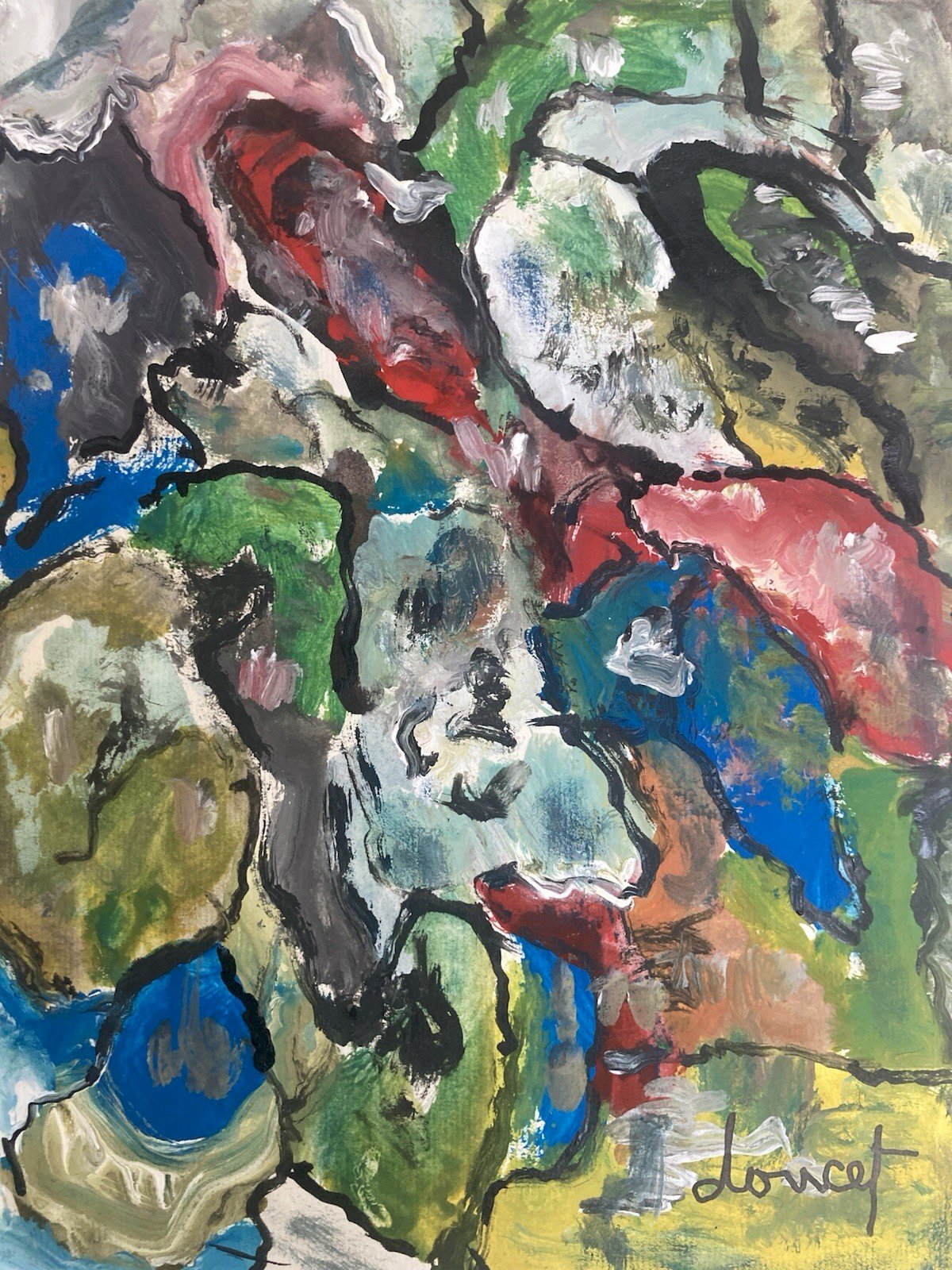
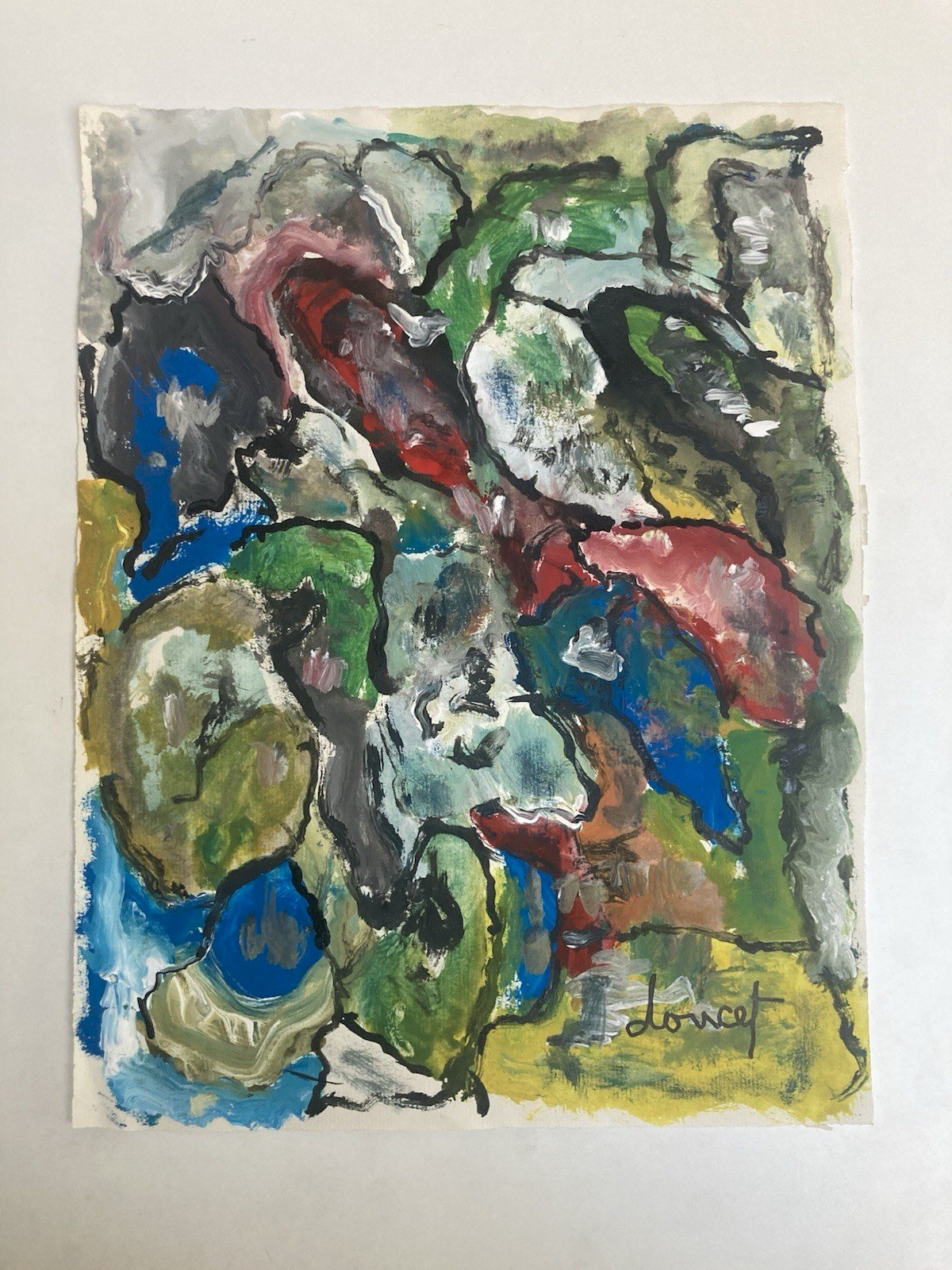
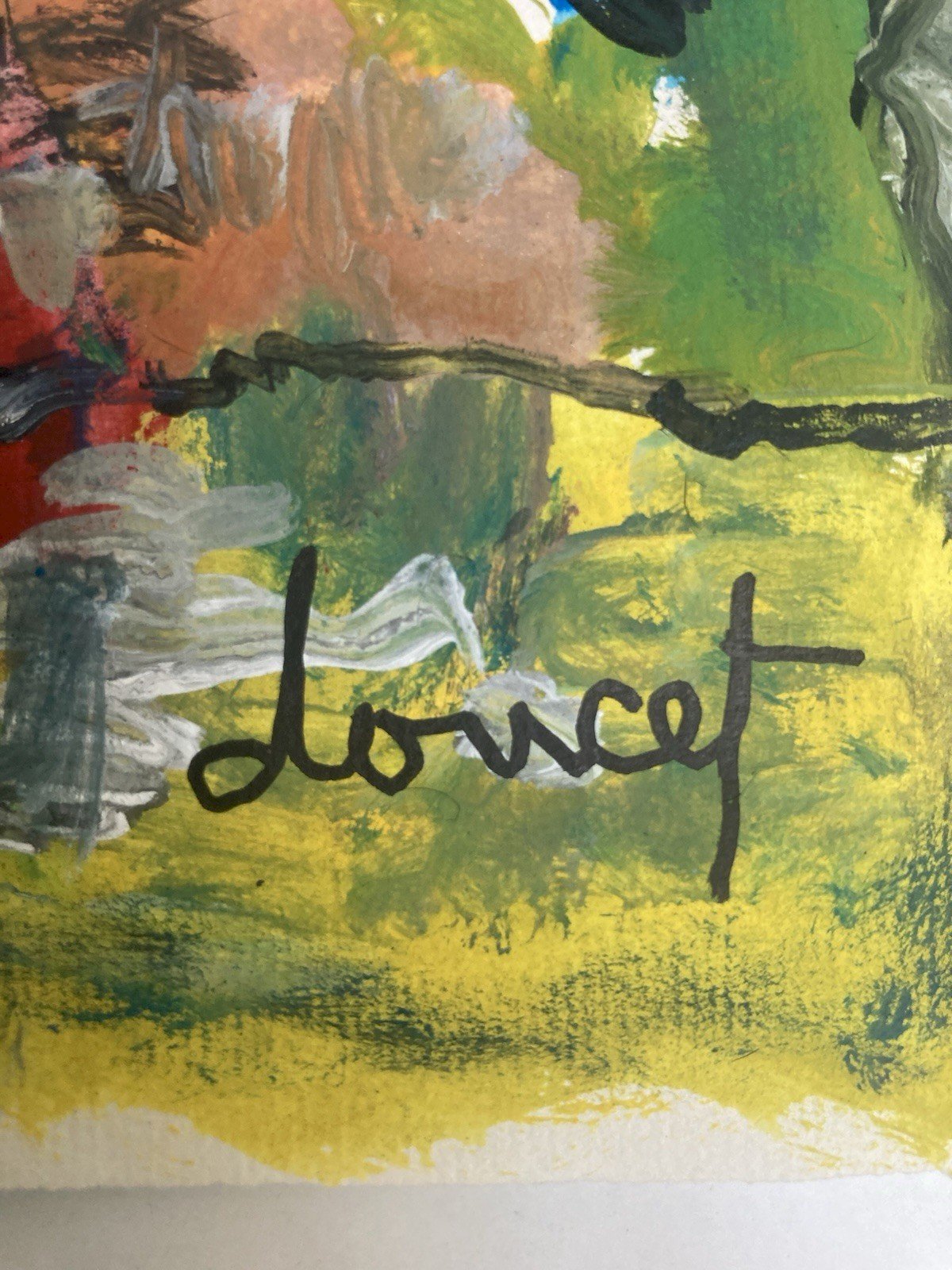
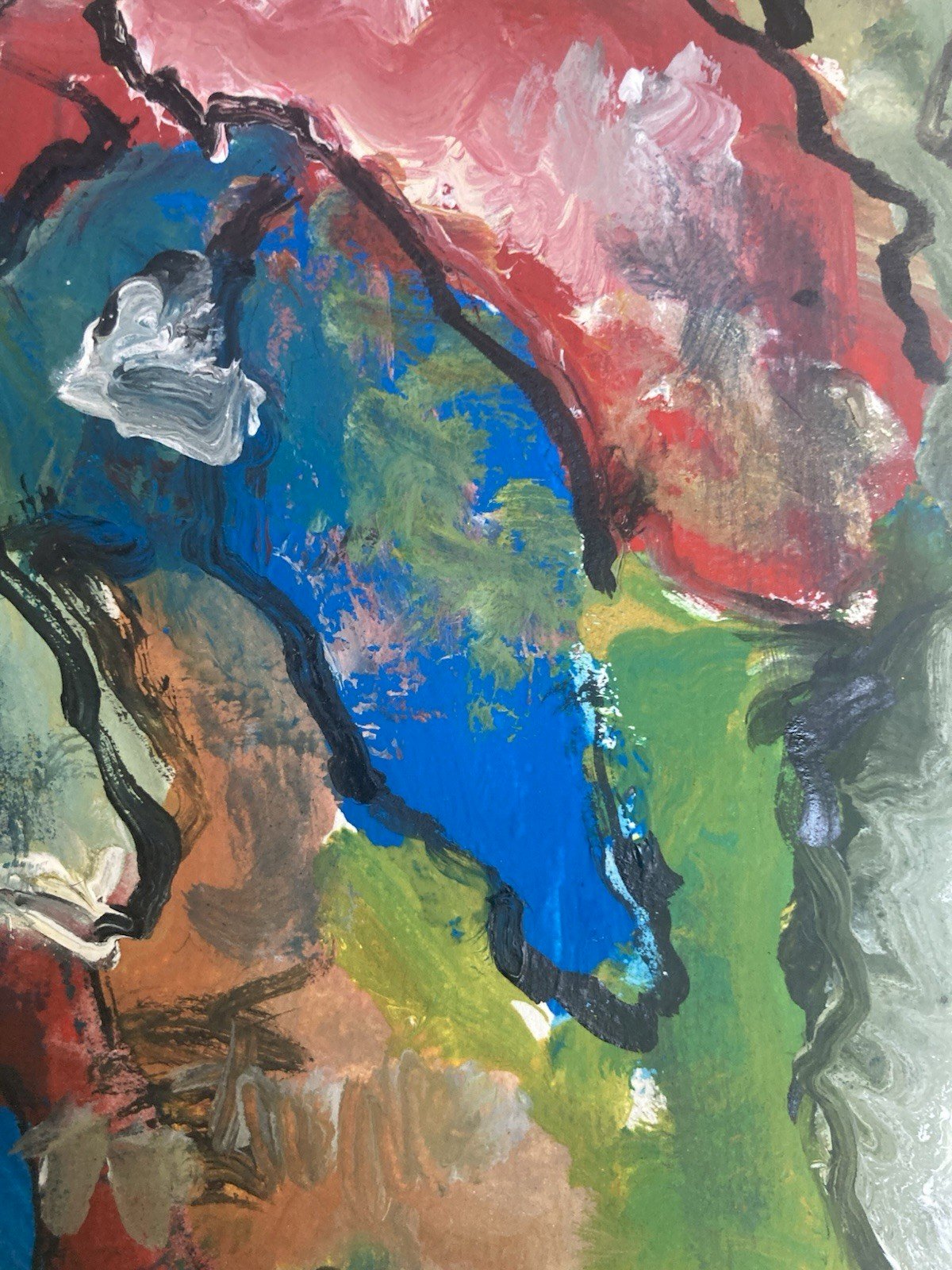
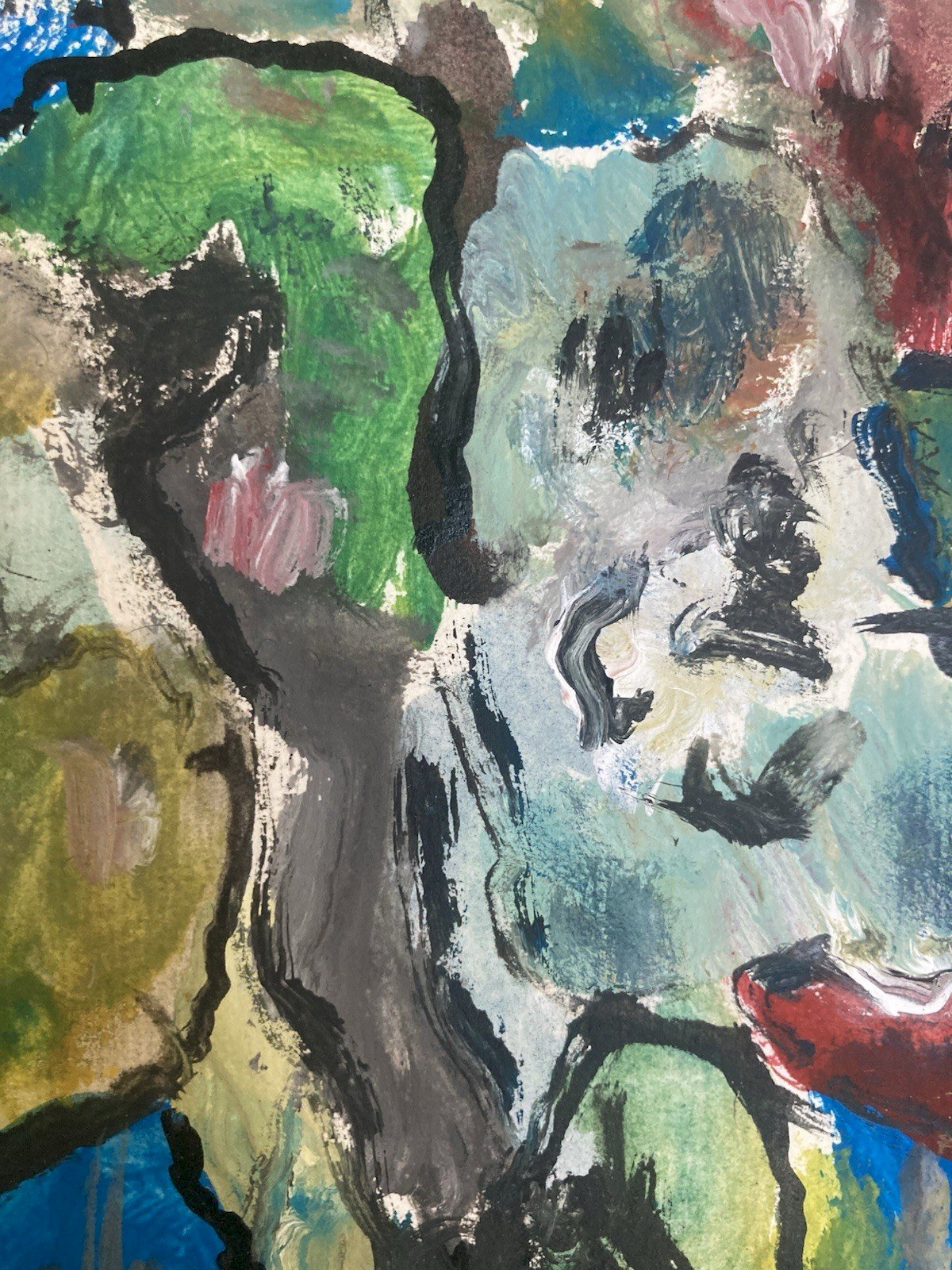
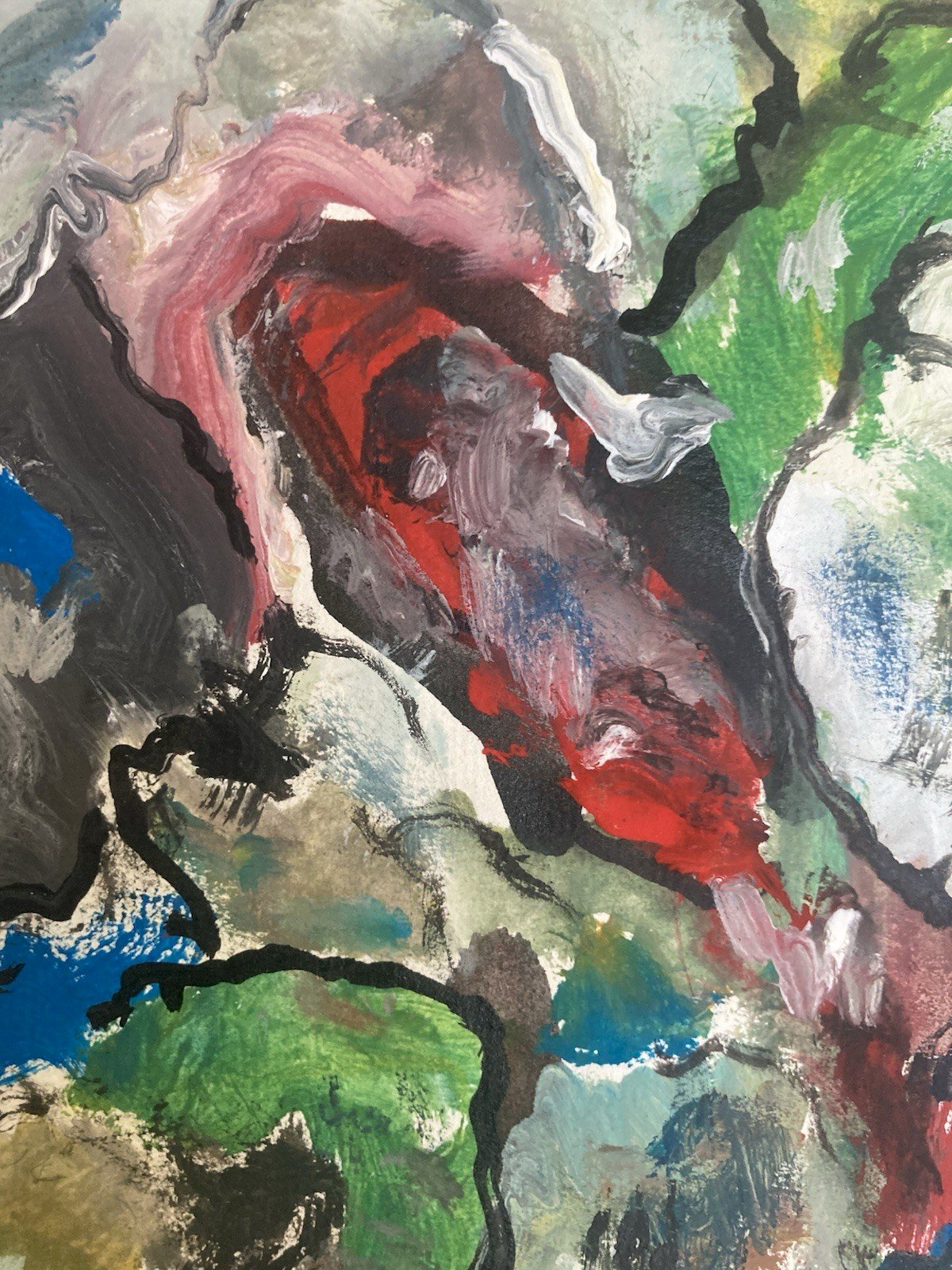
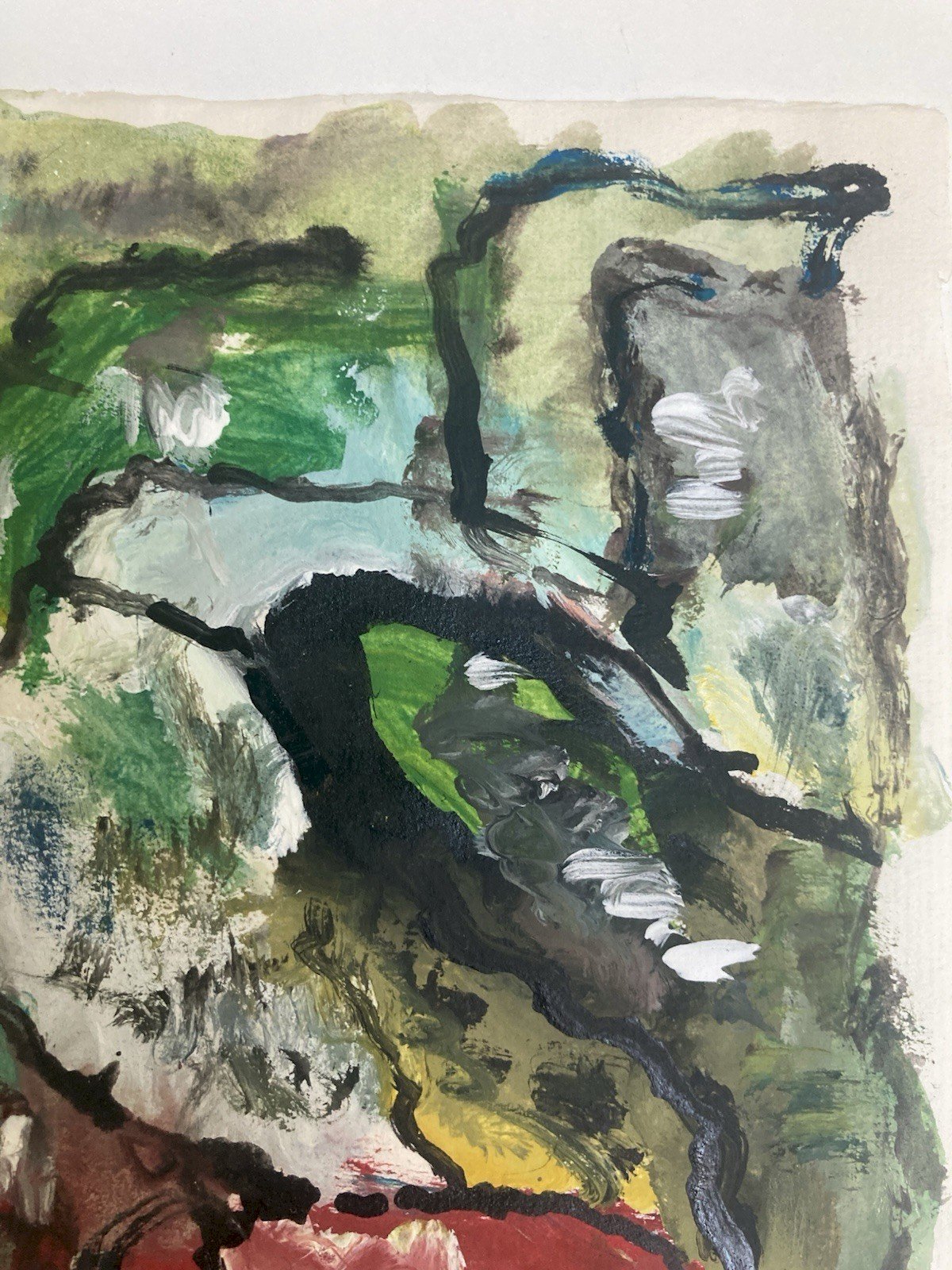
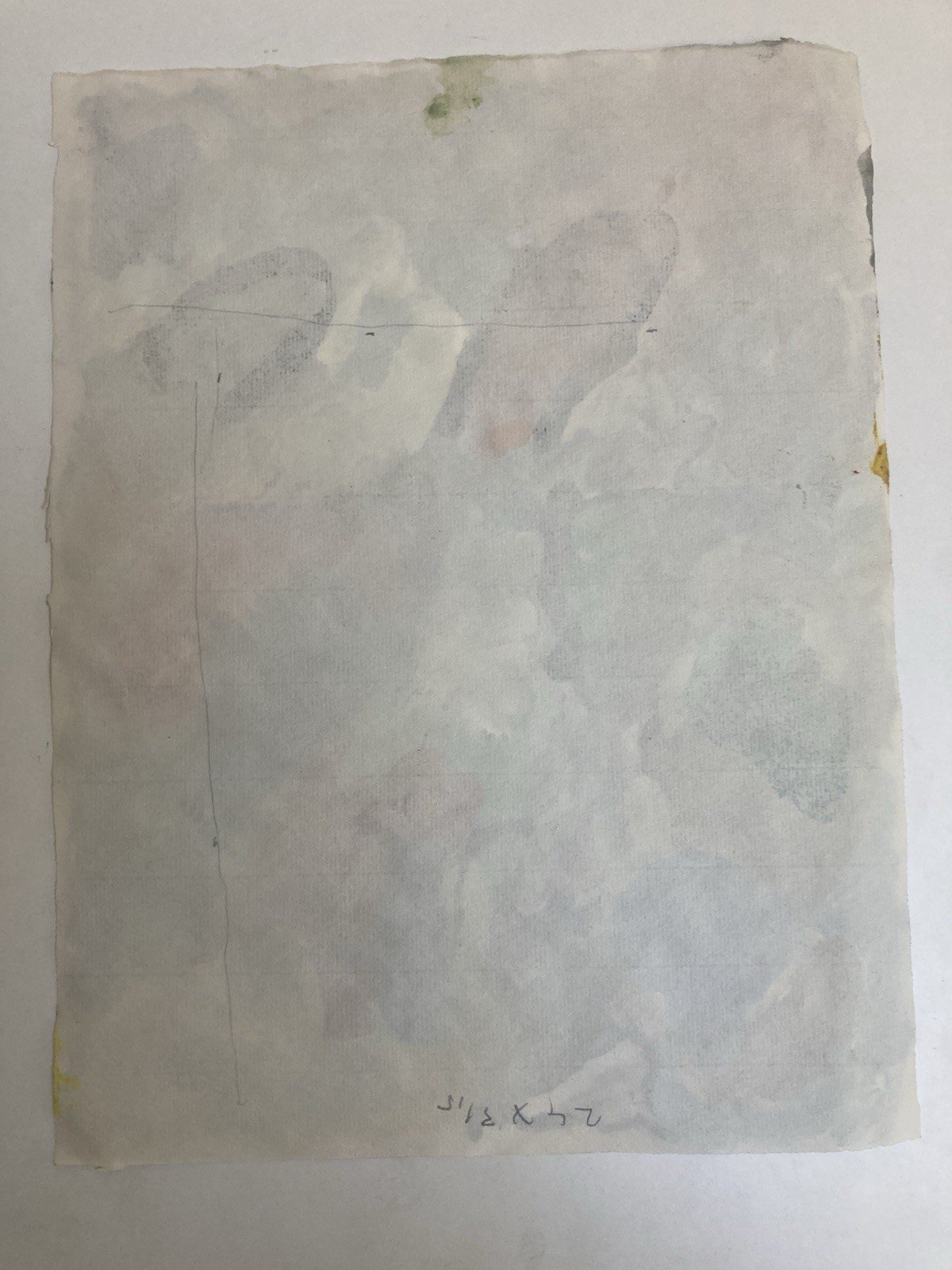
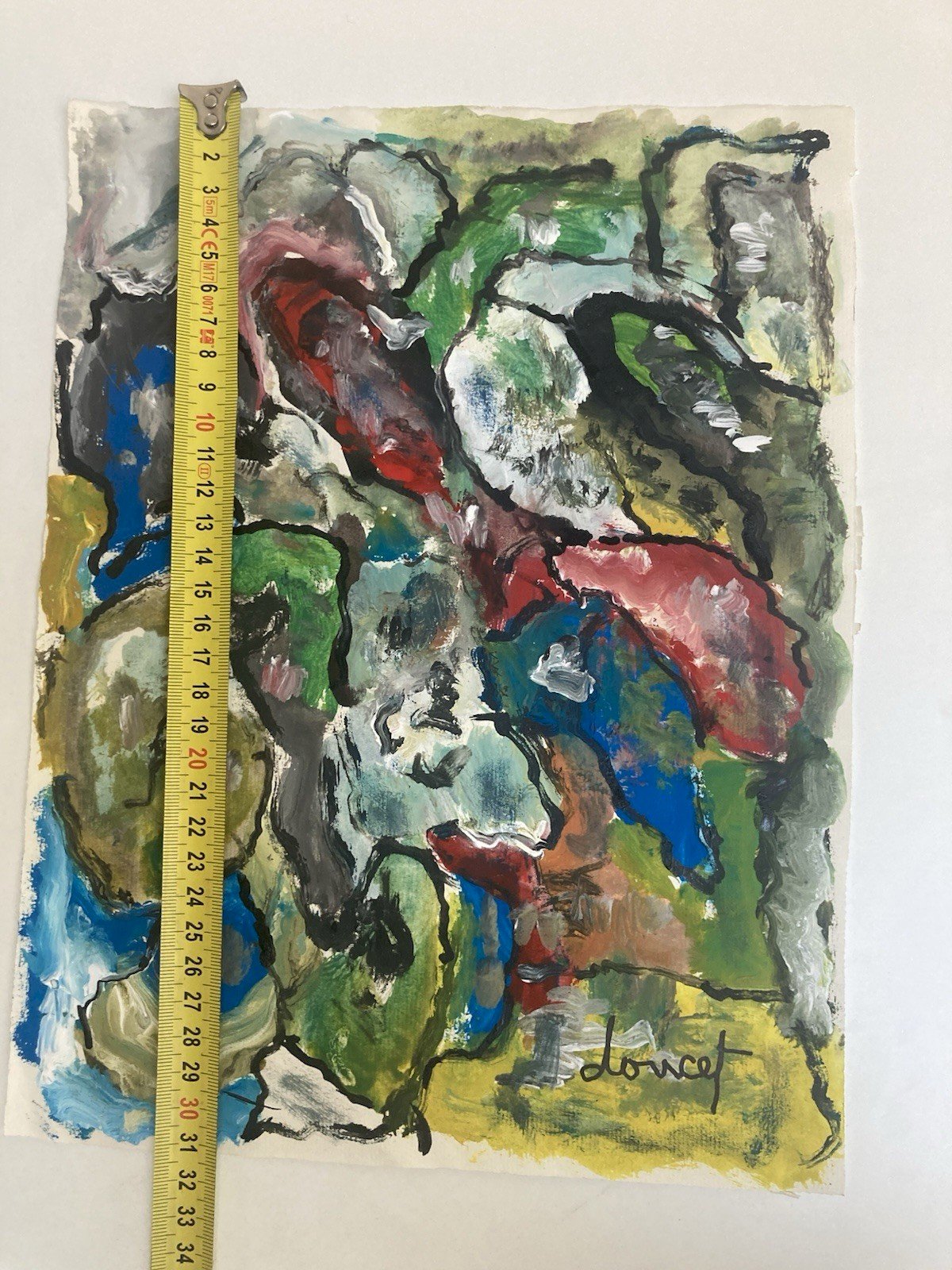
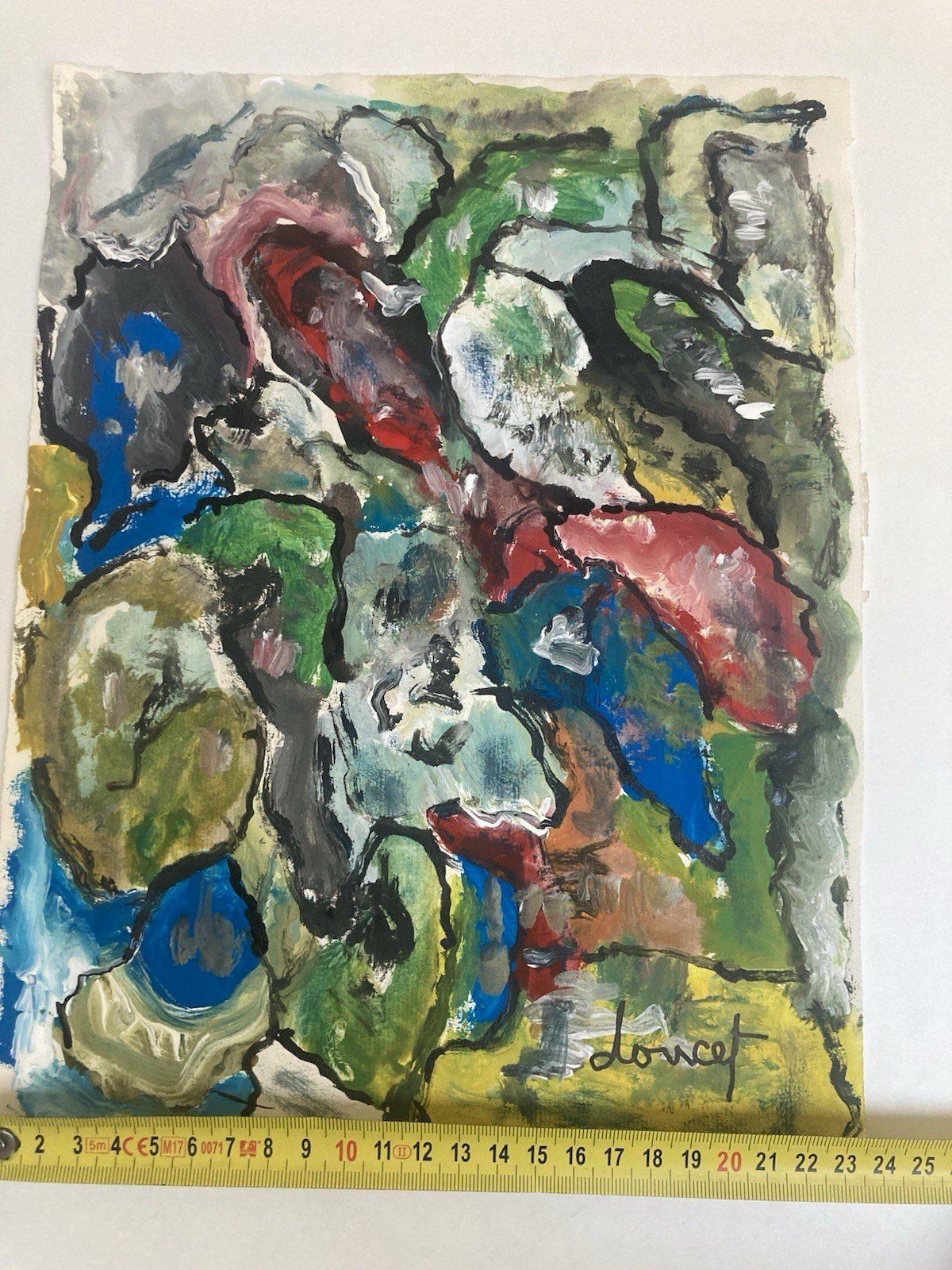
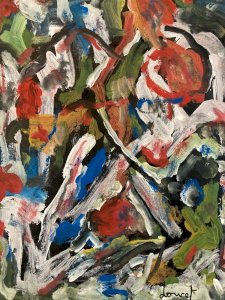
Abstract composition signed "Doucet" Technique: Oil and gouache on paper Dimensions: 23 cm × 31 cm Signature: Signed lower right Doucet Condition: The work shows typical traces of paper support: slight waviness at the edges, a few discreet signs of wear (micro-scratches, small creases) — overall good condition for this size. Style / visual remarks: • The work has a lyrical abstract or expressionist tendency, playing on organic volumes, free forms, and areas of color contrasts. • This small captivating format, due to its gestural freedom, invites the viewer to a colorful inner journey. Perfect for modern art collectors or fans of CoBrA / lyrical abstraction. To be framed with care. — Jacques Doucet (1924 – 1994), French painter of lyrical abstraction / CoBrA • Jacques Doucet was born in 1924 in Boulogne-sur-Seine (or Boulogne-Billancourt) and passed away on March 11, 1994, in Paris. • From a young age, he was passionate about poetry and drawing. In 1941, he met the poet and painter Max Jacob in Saint-Benoît-sur-Loire, who encouraged him in his artistic choices. • During World War II, he became politically active; he was denounced and incarcerated (notably at La Santé). This episode profoundly marked his artistic sensitivity. • After the Liberation, he resumed painting. He exhibited as early as 1943 and 1944 at the Salon d’Automne. • In 1947, he traveled to Budapest where he met the painter Corneille; he participated in the Dutch group “Reflex” through this connection. • He joined the CoBrA movement in 1948, becoming one of the few French painters associated with this group (alongside Atlan). He participated in CoBrA exhibitions, notably in Amsterdam (1949) and Liège (1951). • His artistic language oscillated between abstraction and figuration, but always with a strong freedom of gesture, material experimentation, collage, scraping, impasto, and the integration of varied materials. • In the 1960s-1970s, his research intensified towards materiality and the poetry of signs: he created collages, “petrifications” (aggregation of fragments, resin, various objects) and drew inspiration from children's drawings, graffiti, and primitive art. • He regularly exhibited in France, the Netherlands, Denmark, and Sweden. His works are part of several modern public collections (Paris, Valencia, Toulouse; Aalborg, Silkeborg in Denmark; Stockholm, etc.). • He is sometimes described as the “French CoBrA” for his unique affiliation with CoBrA while having a French background. • After his death, his works continue to be shown (posthumous exhibitions, specialized galleries) and studied.
Réf :
#405195
Related Products




Comments
Cobra painting Oil Jacques Doucet (1924 – 1994) Abstract Expressionist Art
1 450€
31500 Toulouse
Ce site contient des liens d’affiliation pour lesquels je peux recevoir une compensation.
Description
Abstract composition signed "Doucet" Technique: Oil and gouache on paper Dimensions: 23 cm × 31 cm Signature: Signed lower right Doucet Condition: The work shows typical traces of paper support: slight waviness at the edges, a few discreet signs of wear (micro-scratches, small creases) — overall good condition for this size. Style / visual remarks: • The work has a lyrical abstract or expressionist tendency, playing on organic volumes, free forms, and areas of color contrasts. • This small captivating format, due to its gestural freedom, invites the viewer to a colorful inner journey. Perfect for modern art collectors or fans of CoBrA / lyrical abstraction. To be framed with care. — Jacques Doucet (1924 – 1994), French painter of lyrical abstraction / CoBrA • Jacques Doucet was born in 1924 in Boulogne-sur-Seine (or Boulogne-Billancourt) and passed away on March 11, 1994, in Paris. • From a young age, he was passionate about poetry and drawing. In 1941, he met the poet and painter Max Jacob in Saint-Benoît-sur-Loire, who encouraged him in his artistic choices. • During World War II, he became politically active; he was denounced and incarcerated (notably at La Santé). This episode profoundly marked his artistic sensitivity. • After the Liberation, he resumed painting. He exhibited as early as 1943 and 1944 at the Salon d’Automne. • In 1947, he traveled to Budapest where he met the painter Corneille; he participated in the Dutch group “Reflex” through this connection. • He joined the CoBrA movement in 1948, becoming one of the few French painters associated with this group (alongside Atlan). He participated in CoBrA exhibitions, notably in Amsterdam (1949) and Liège (1951). • His artistic language oscillated between abstraction and figuration, but always with a strong freedom of gesture, material experimentation, collage, scraping, impasto, and the integration of varied materials. • In the 1960s-1970s, his research intensified towards materiality and the poetry of signs: he created collages, “petrifications” (aggregation of fragments, resin, various objects) and drew inspiration from children's drawings, graffiti, and primitive art. • He regularly exhibited in France, the Netherlands, Denmark, and Sweden. His works are part of several modern public collections (Paris, Valencia, Toulouse; Aalborg, Silkeborg in Denmark; Stockholm, etc.). • He is sometimes described as the “French CoBrA” for his unique affiliation with CoBrA while having a French background. • After his death, his works continue to be shown (posthumous exhibitions, specialized galleries) and studied.
Réf :
#405195