 English
 Français


Description
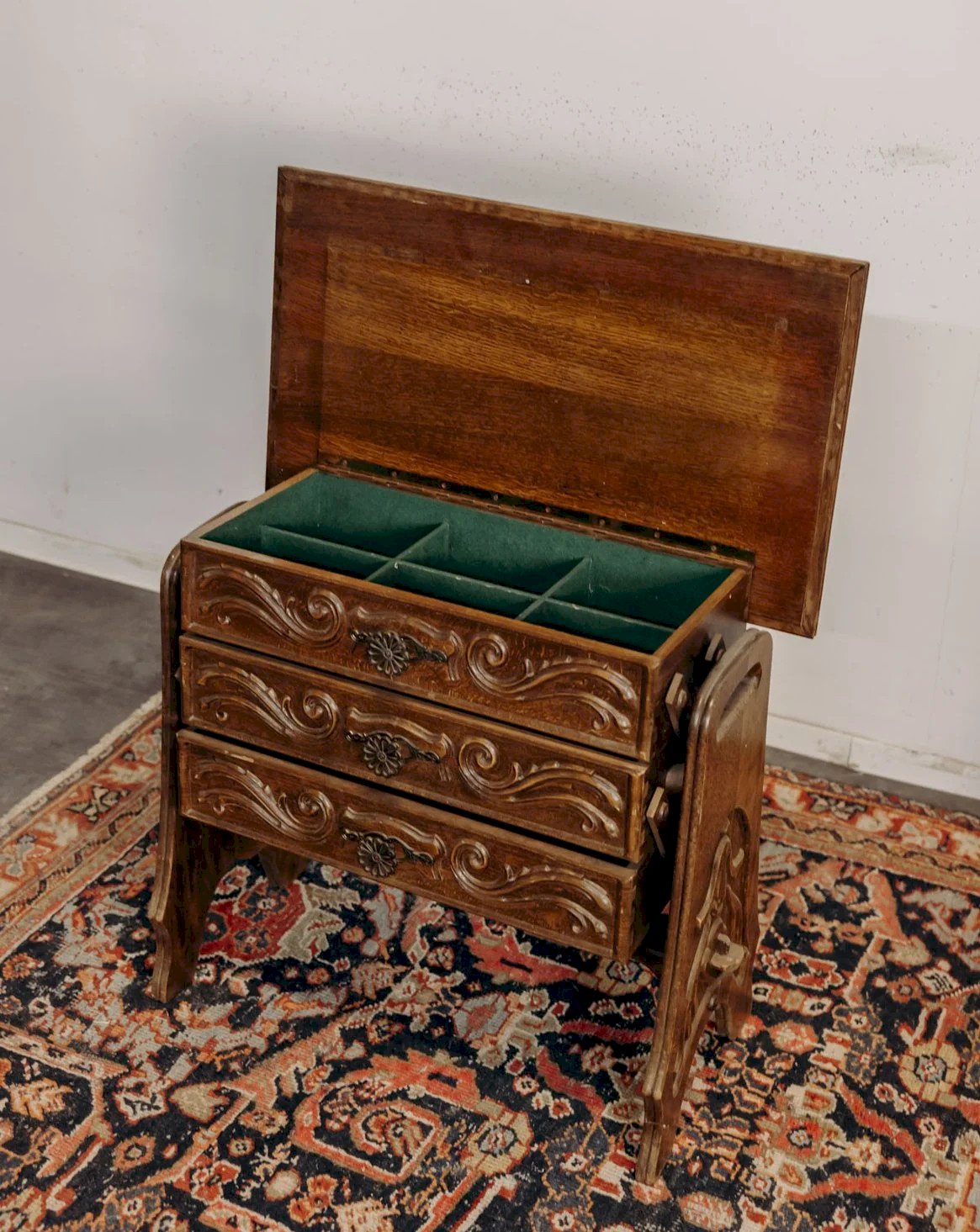
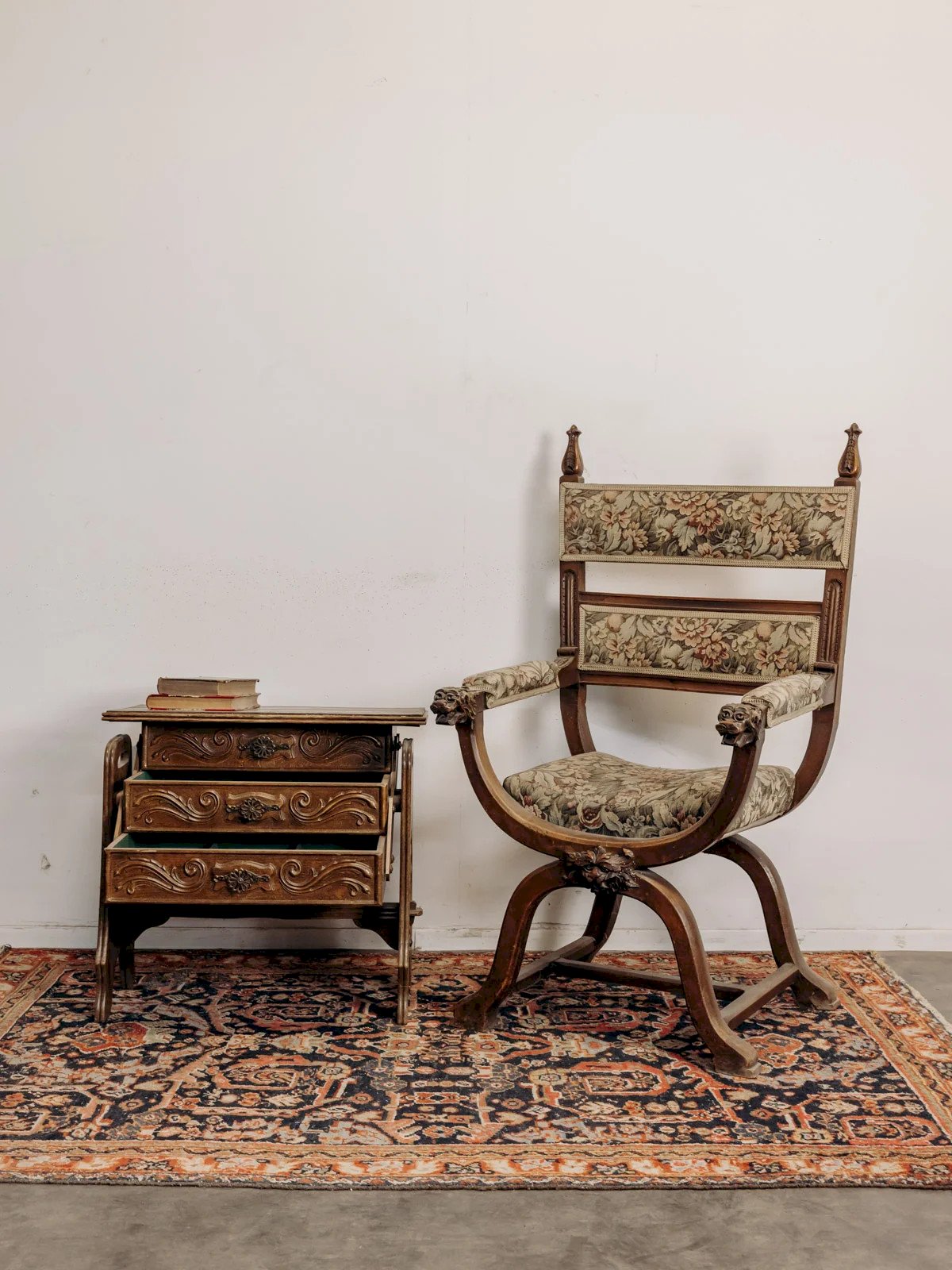
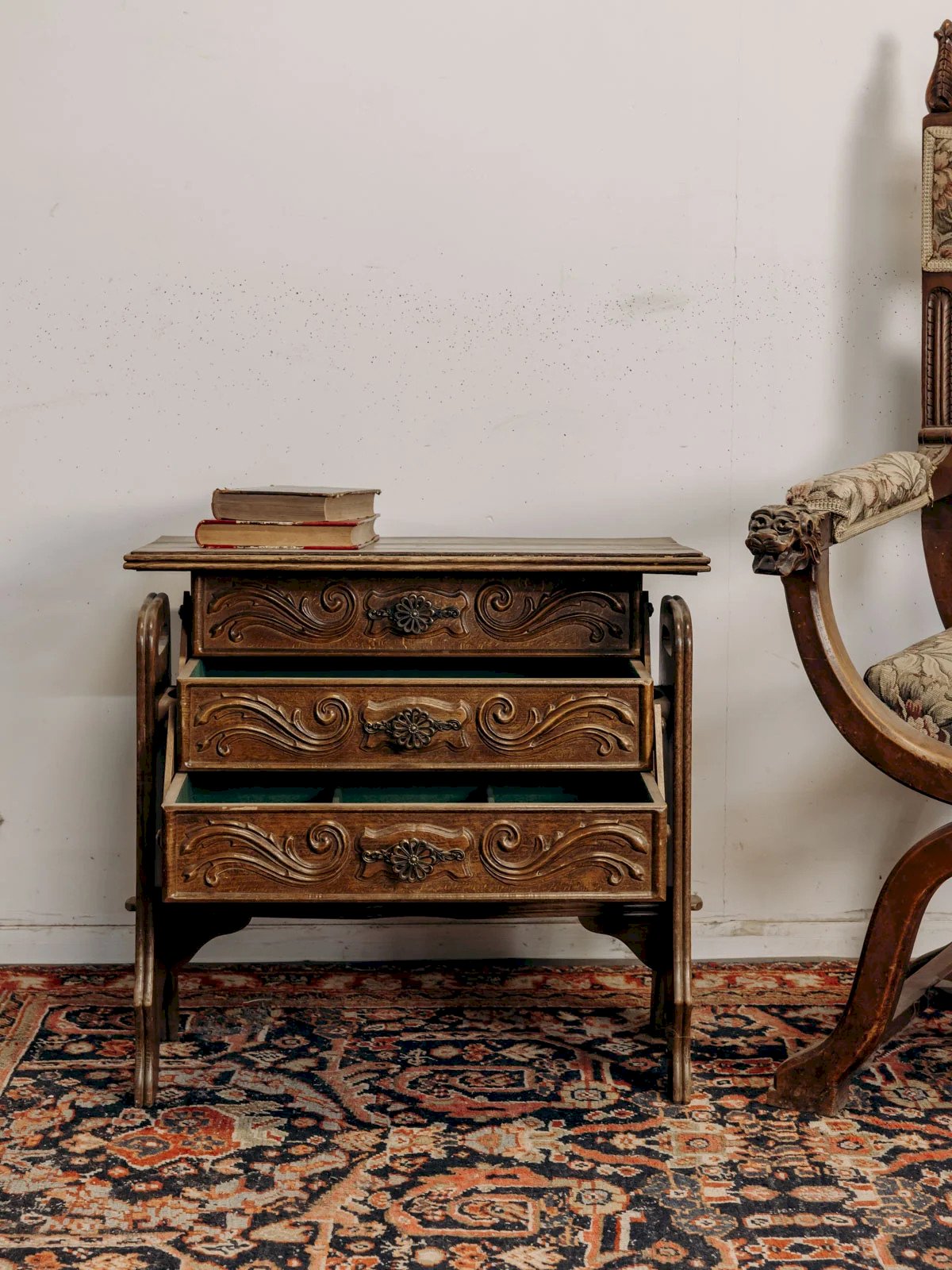
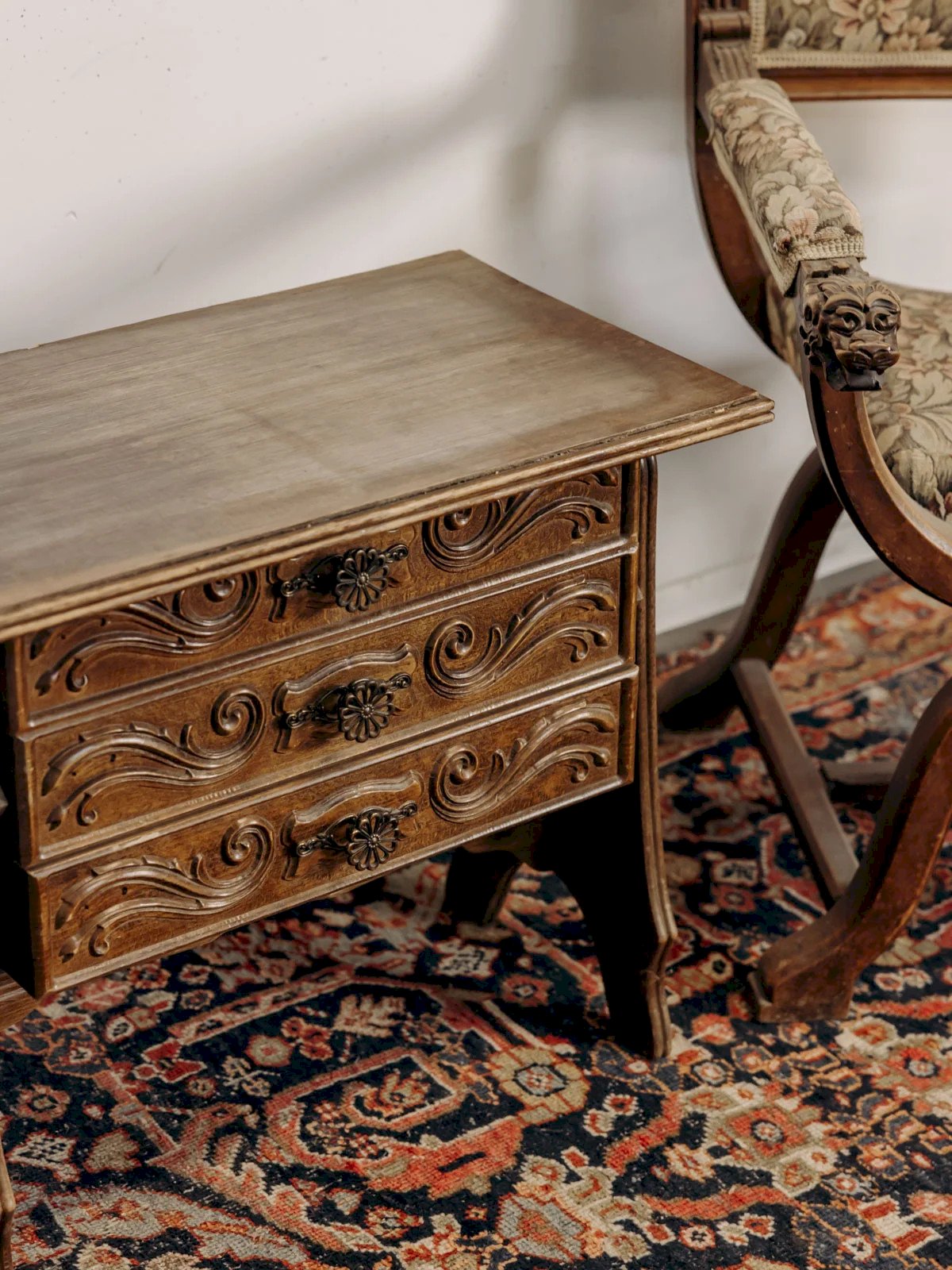
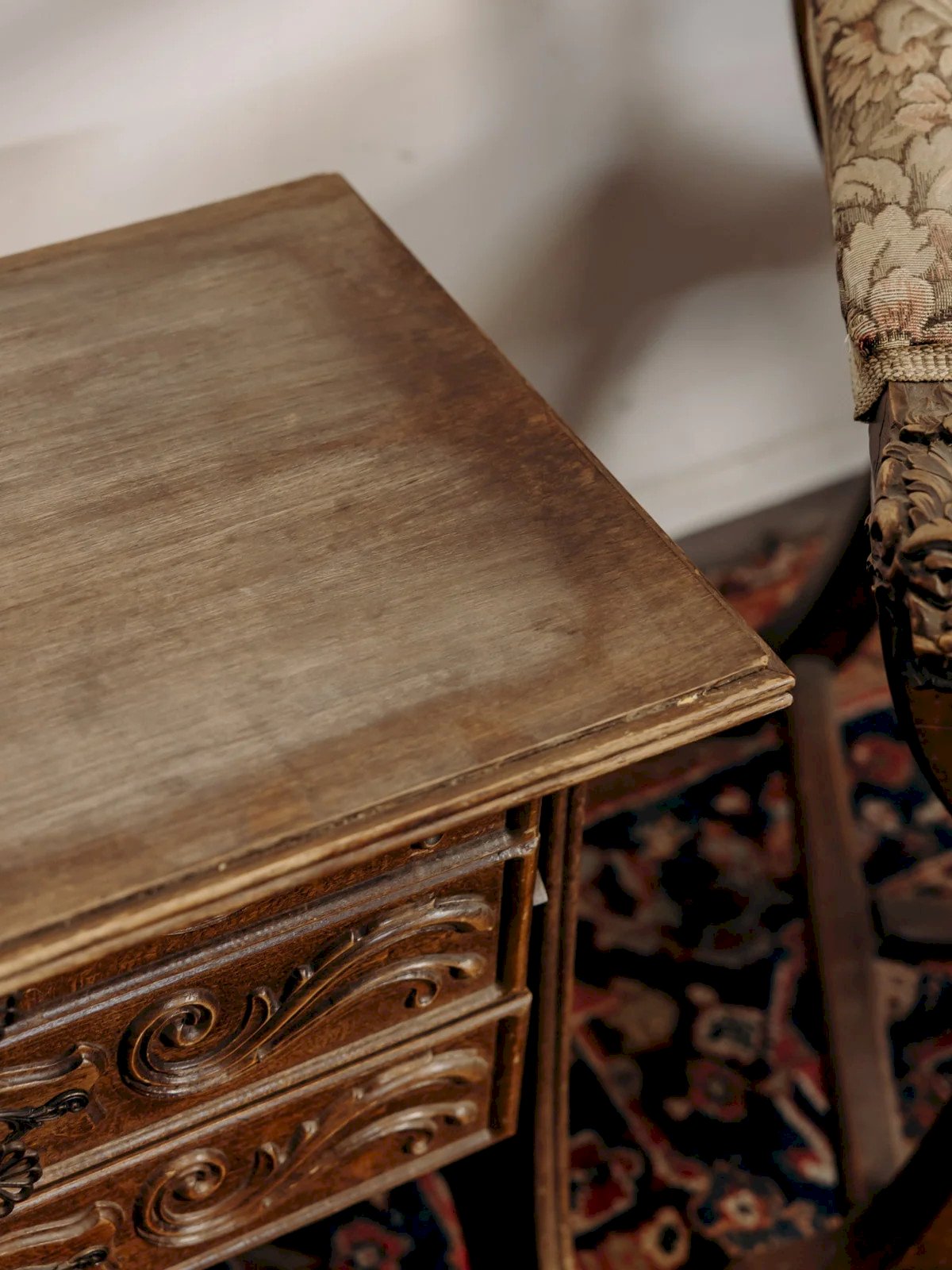
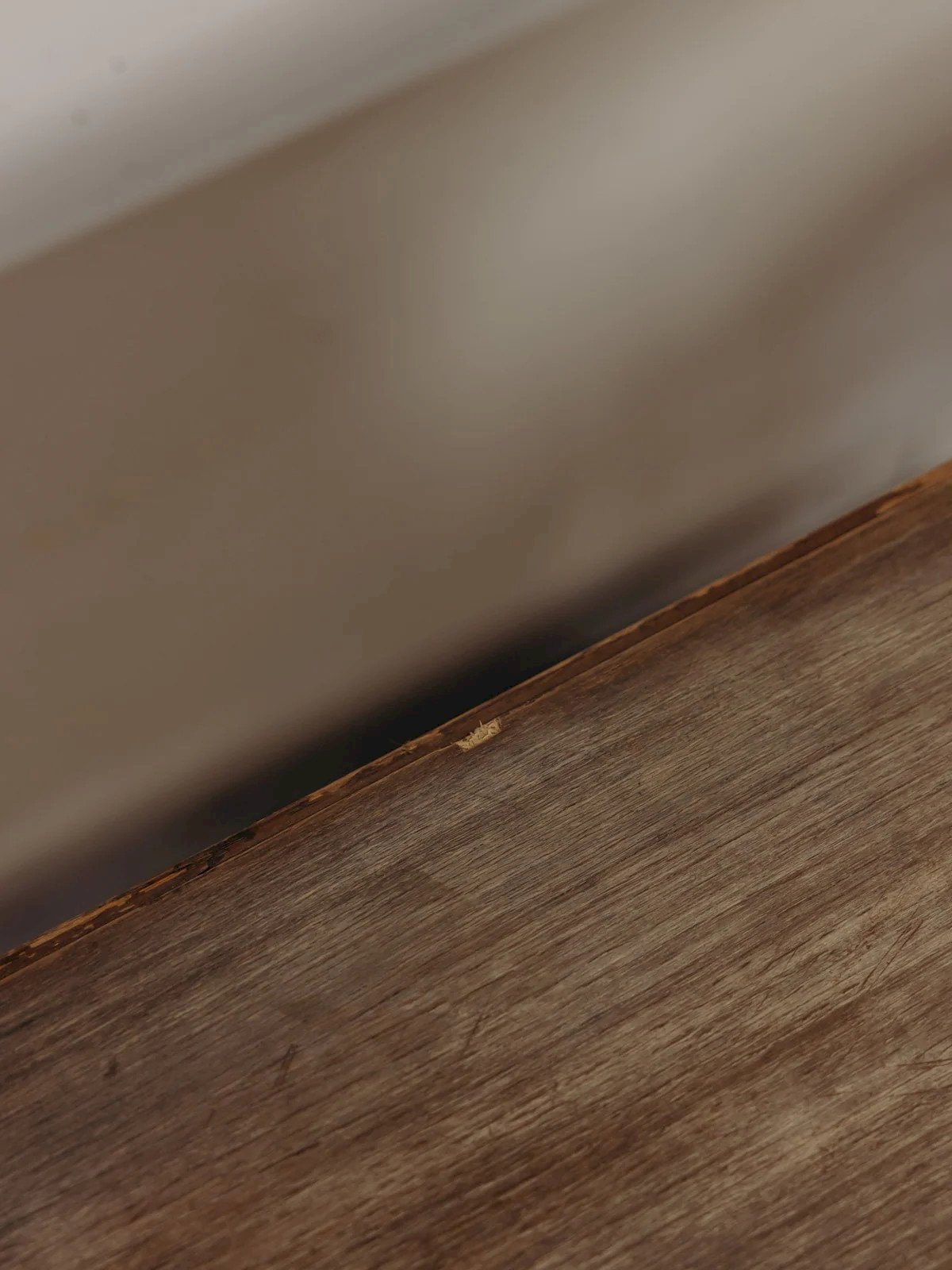
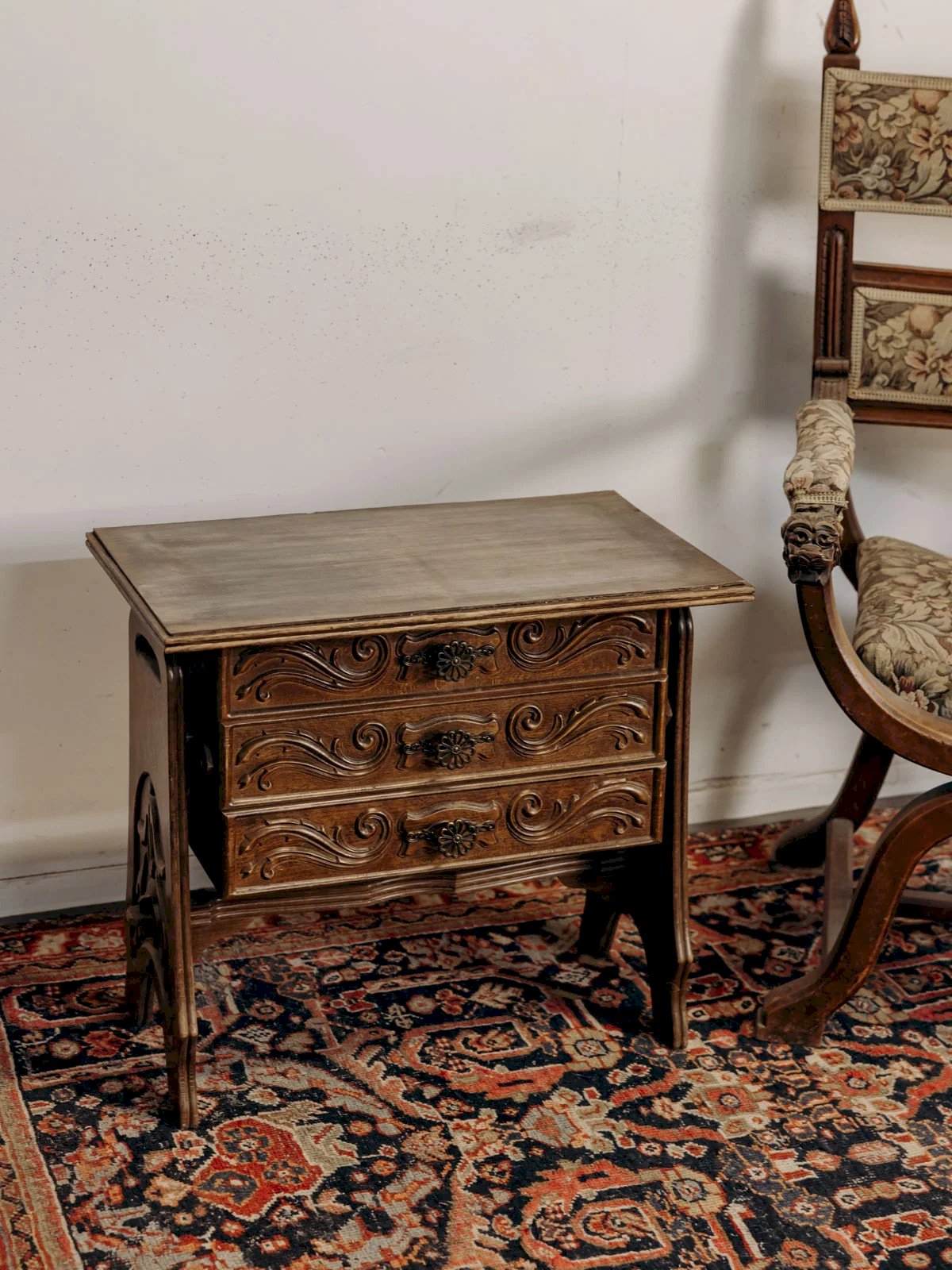
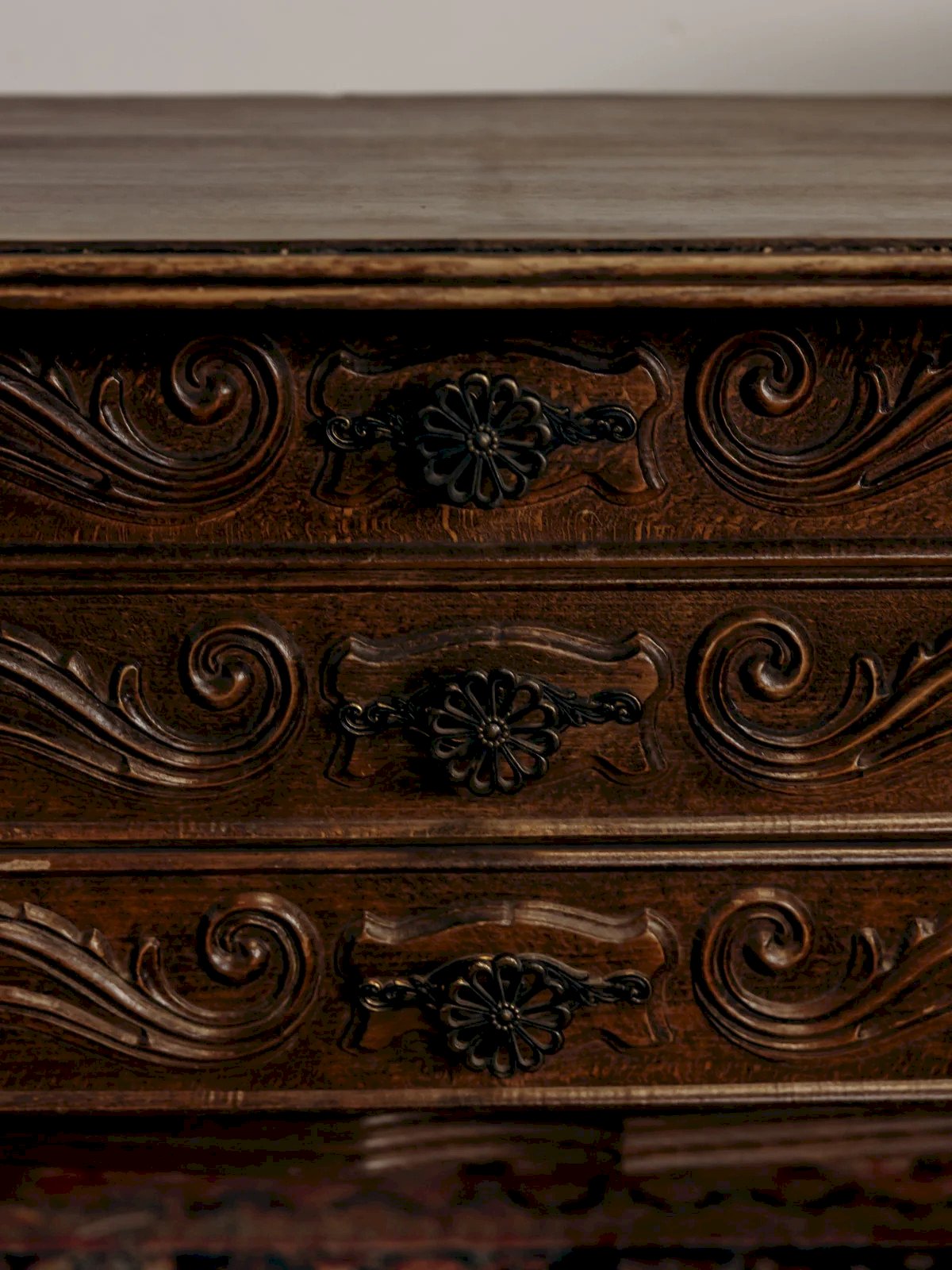
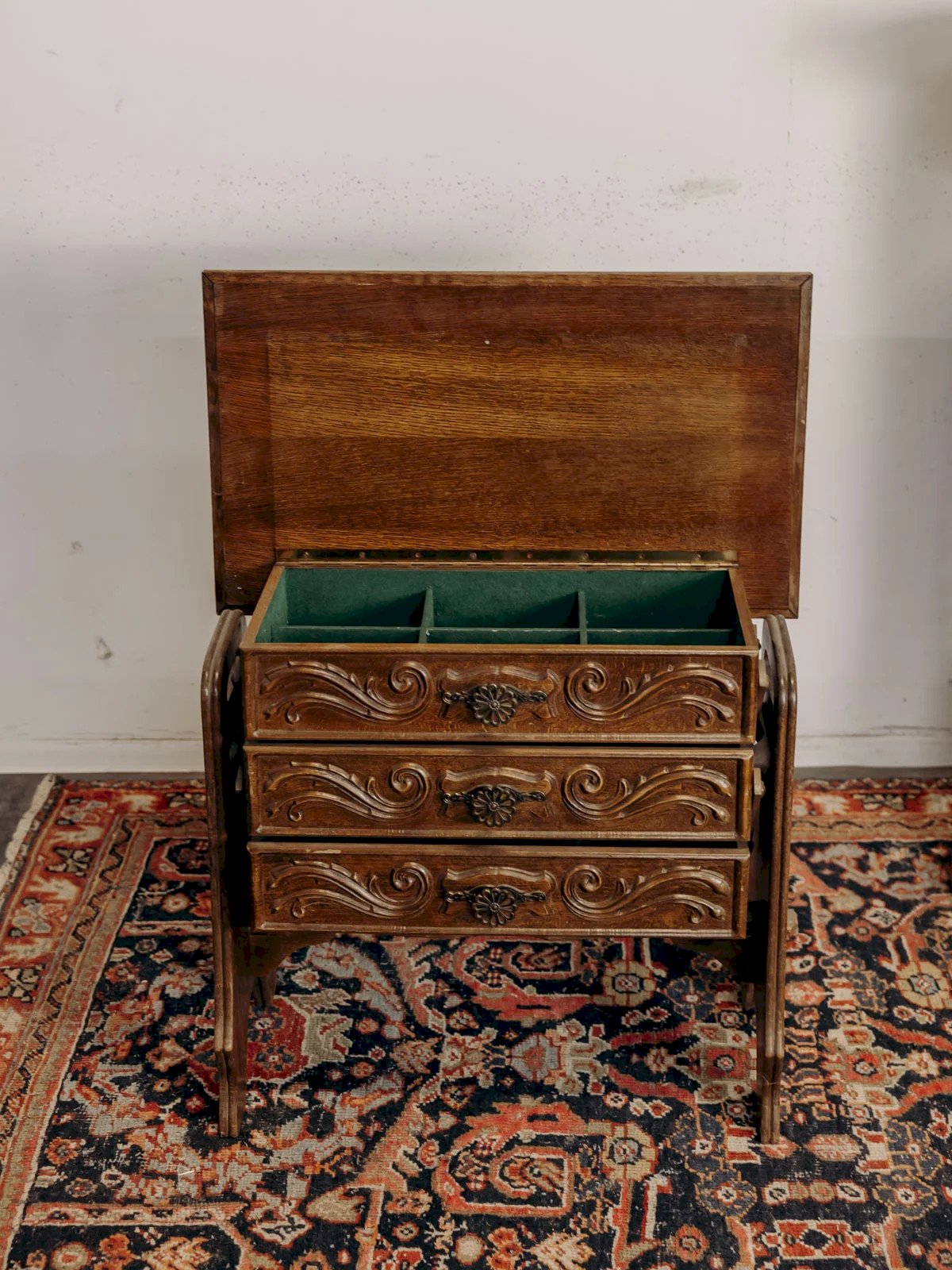
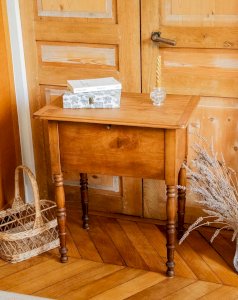
The dark wood work table captivates with its country furniture spirit, enhanced here by a brutalist fifties look. Its top opens to reveal a green fabric interior and six compartments, well-suited for keeping threads, scissors, or small sewing accessories within reach. Sourced from a vintage market, it naturally finds its place in a living room, a bedroom, or a craft corner, where the carved wood interacts with a simple and neat décor. Its proportions allow it to accompany an armchair without cluttering the room, while providing elegant and discreet storage. When closed, it readily accommodates an ongoing project and a notebook placed on top, creating a soft and orderly scene. Width: 63 cm Depth: 37 cm Height: 57.5 cm A brief history of the work table Born in the 18th century under the name "sewing table," the work table is the creation of ingenious cabinetmakers who competed in ingenuity to create furniture with secret compartments. Unlike a simple box, it is defined by its light legs and its pull-out compartments intended to house threads and needles. Also referred to as a "footed sewing box," it now beautifully serves as a nightstand or a charming jewelry box.
Réf :
#413806
Brand / From : Debongout
Related Products


Comments
Brigitte, the dark wood worker No. 370
409€
75002 Paris
Ce site contient des liens d’affiliation pour lesquels je peux recevoir une compensation.
Description
The dark wood work table captivates with its country furniture spirit, enhanced here by a brutalist fifties look. Its top opens to reveal a green fabric interior and six compartments, well-suited for keeping threads, scissors, or small sewing accessories within reach. Sourced from a vintage market, it naturally finds its place in a living room, a bedroom, or a craft corner, where the carved wood interacts with a simple and neat décor. Its proportions allow it to accompany an armchair without cluttering the room, while providing elegant and discreet storage. When closed, it readily accommodates an ongoing project and a notebook placed on top, creating a soft and orderly scene. Width: 63 cm Depth: 37 cm Height: 57.5 cm A brief history of the work table Born in the 18th century under the name "sewing table," the work table is the creation of ingenious cabinetmakers who competed in ingenuity to create furniture with secret compartments. Unlike a simple box, it is defined by its light legs and its pull-out compartments intended to house threads and needles. Also referred to as a "footed sewing box," it now beautifully serves as a nightstand or a charming jewelry box.
Réf :
#413806
Brand / From : Debongout