 English
 Français


Description
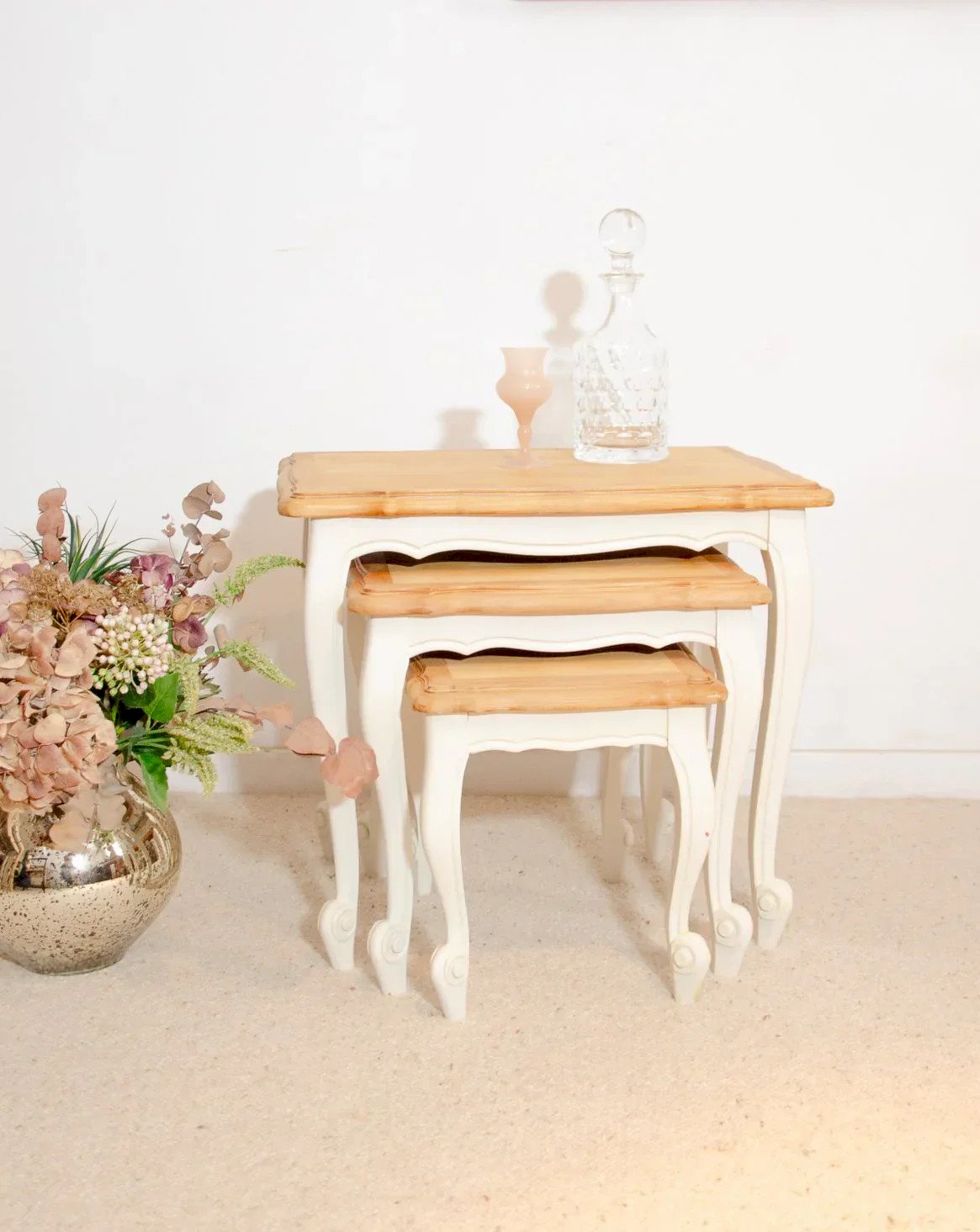
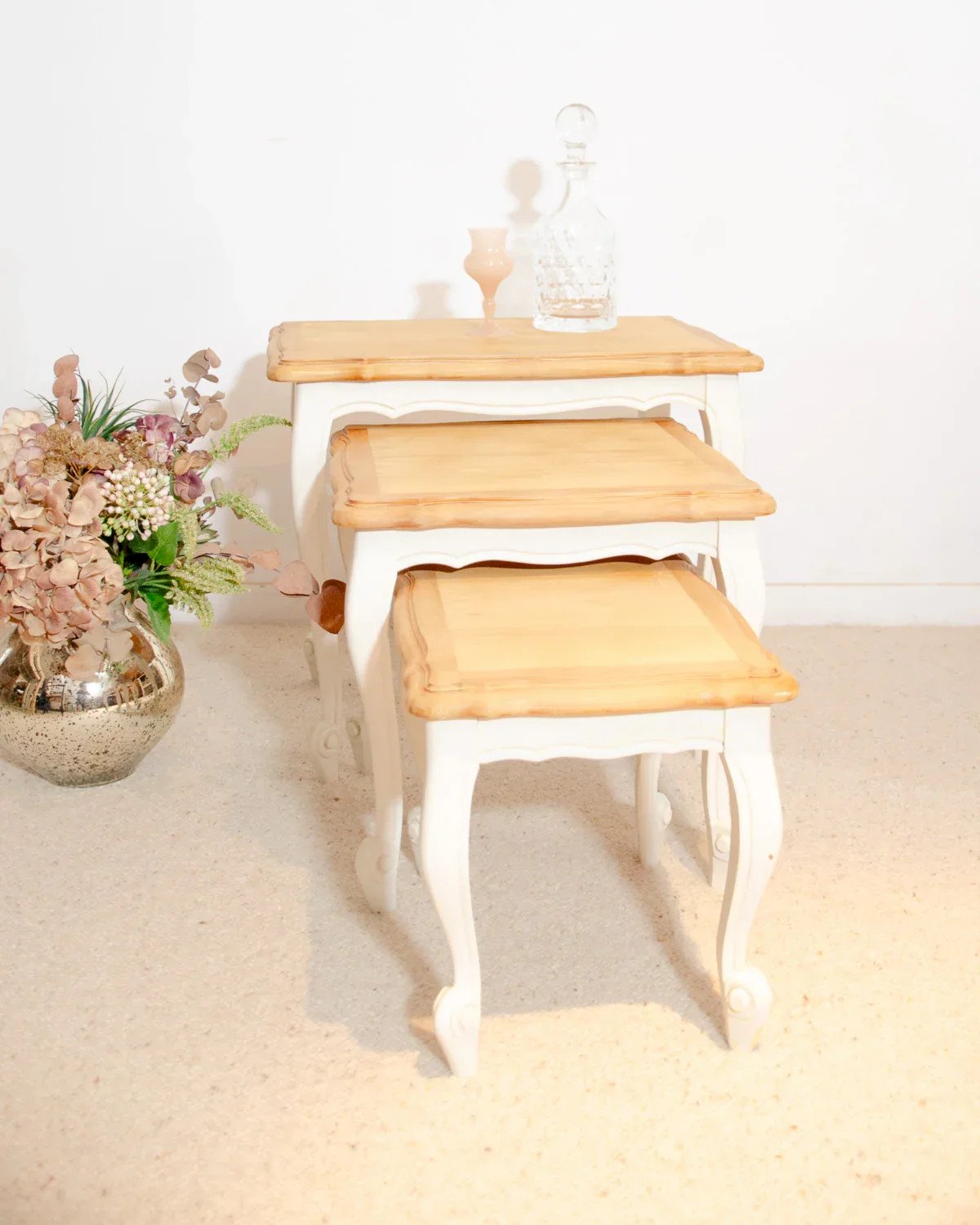
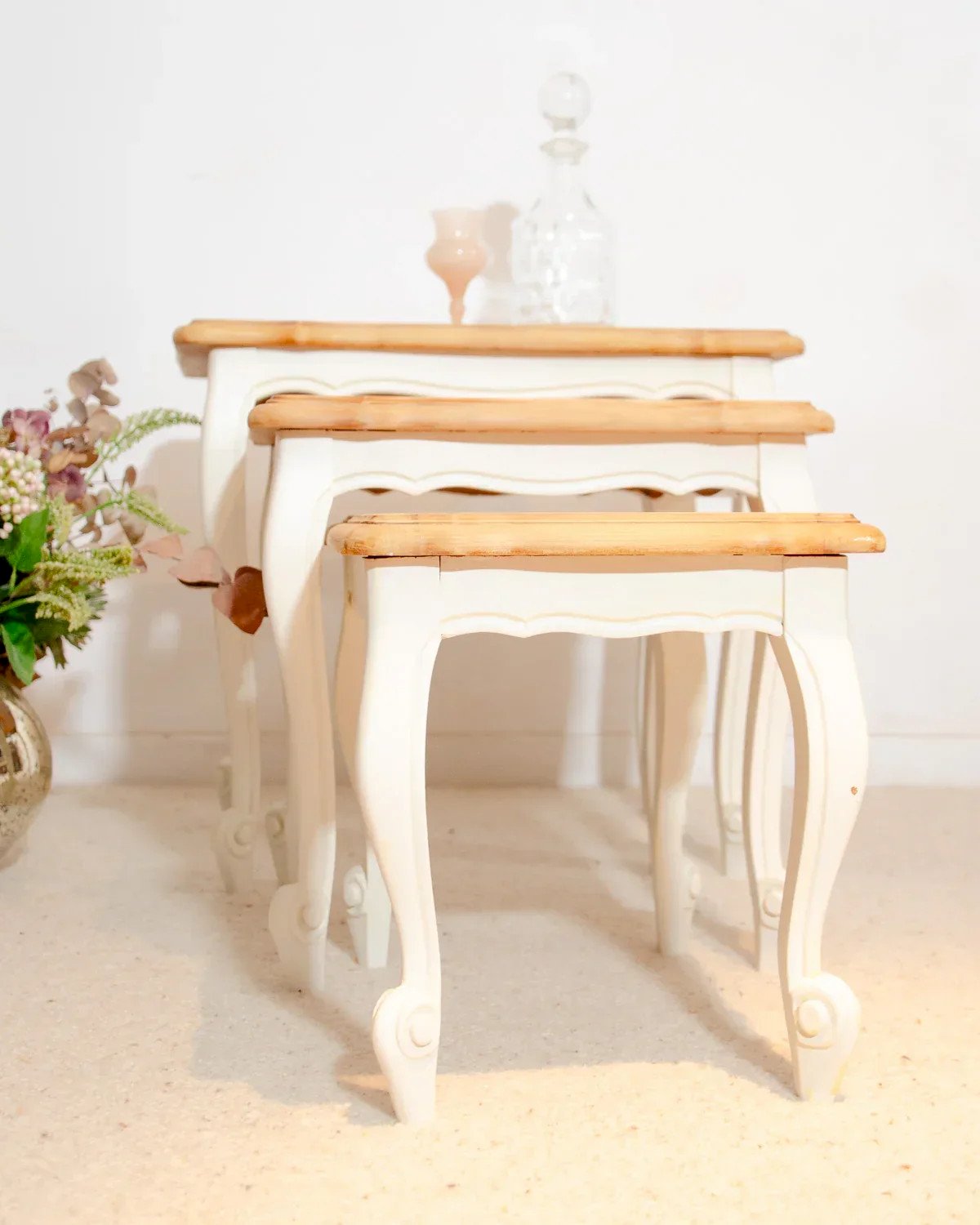
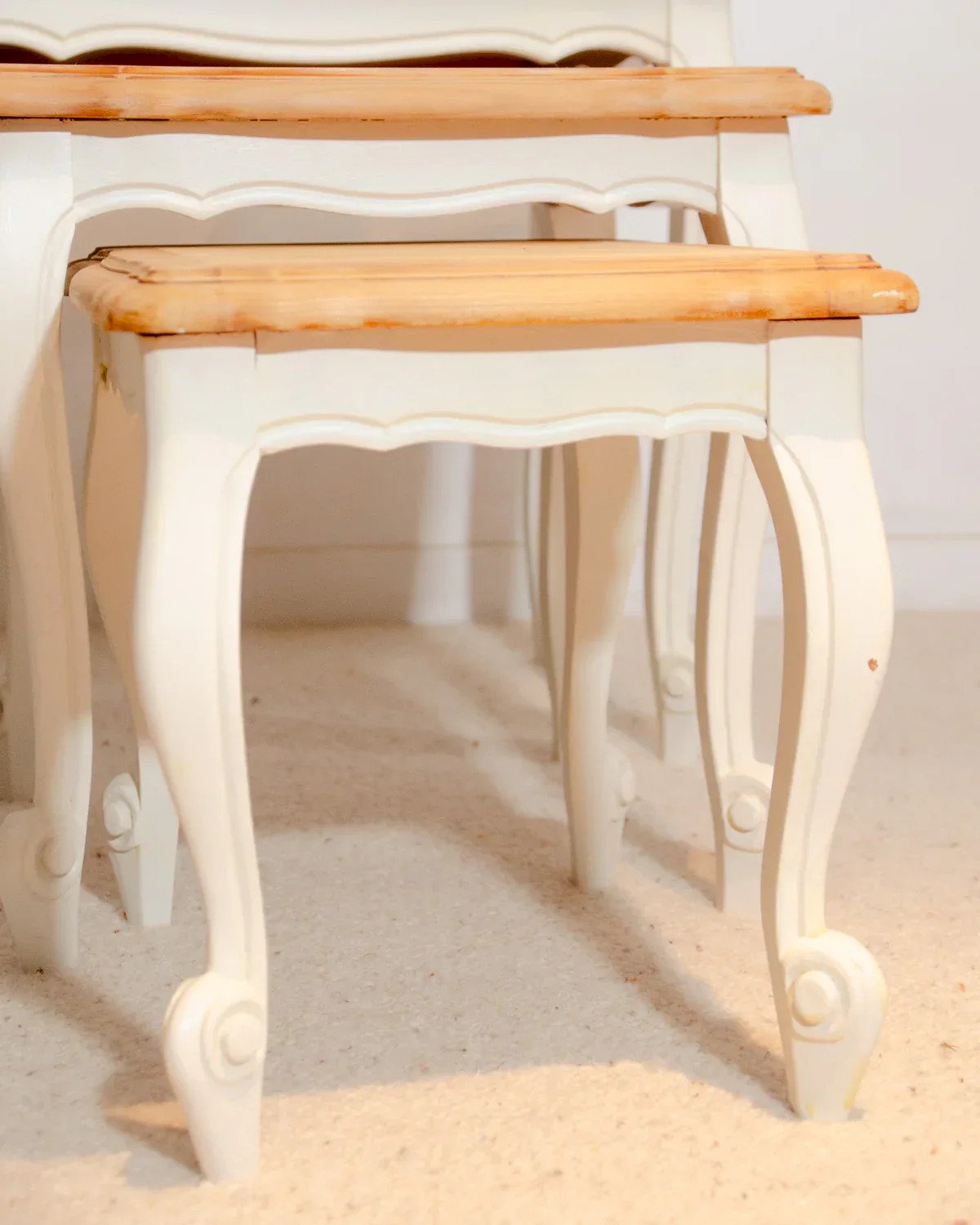
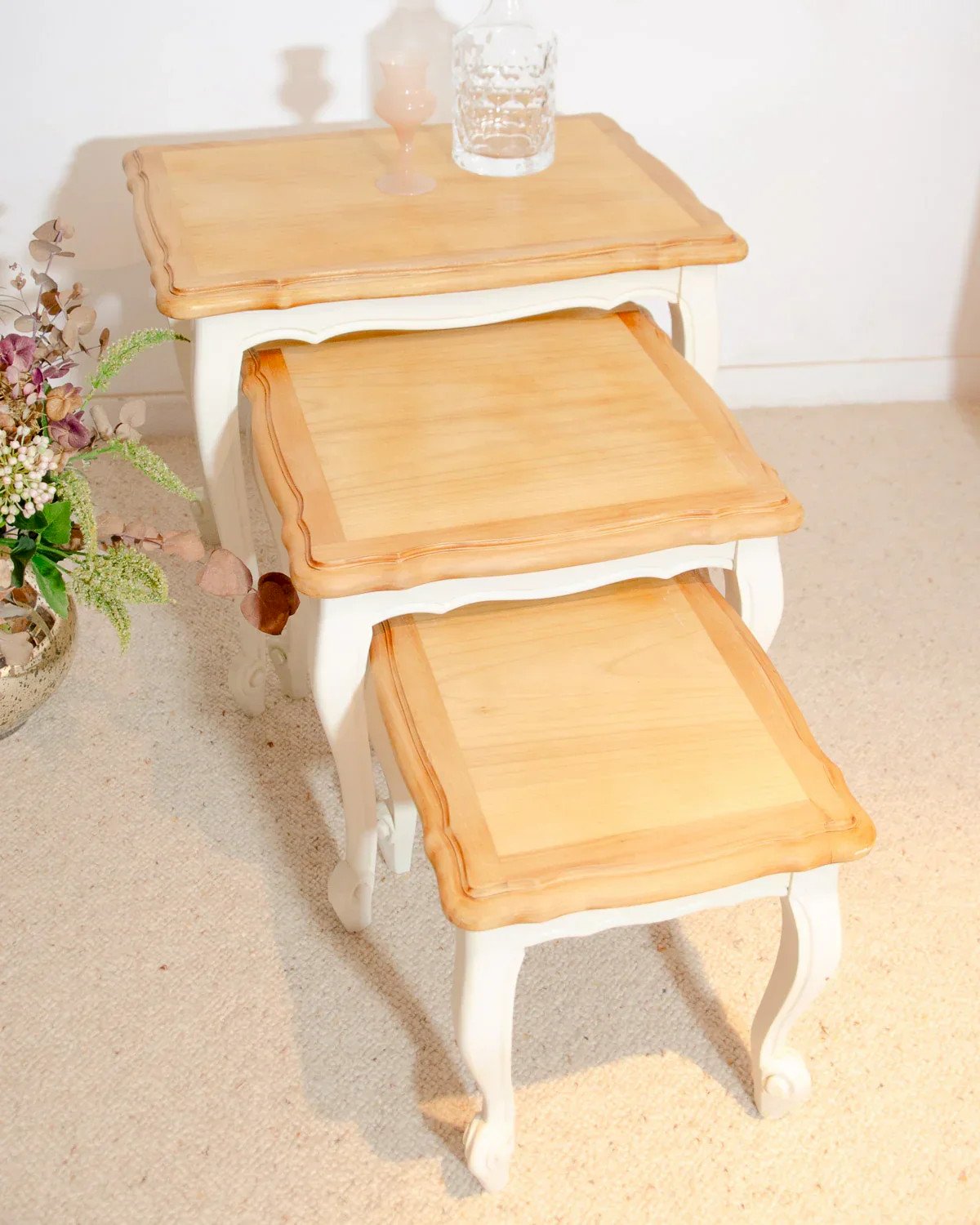
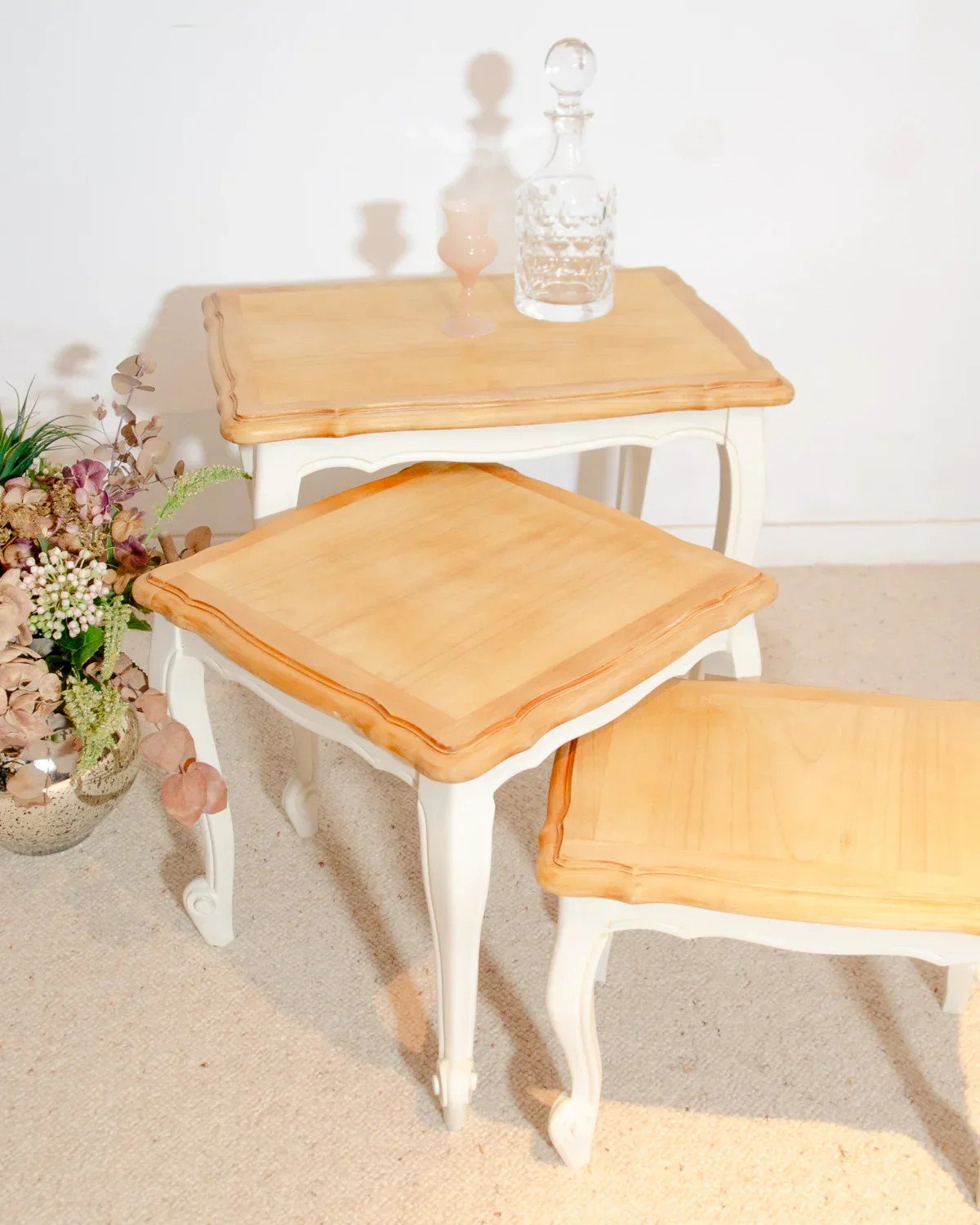
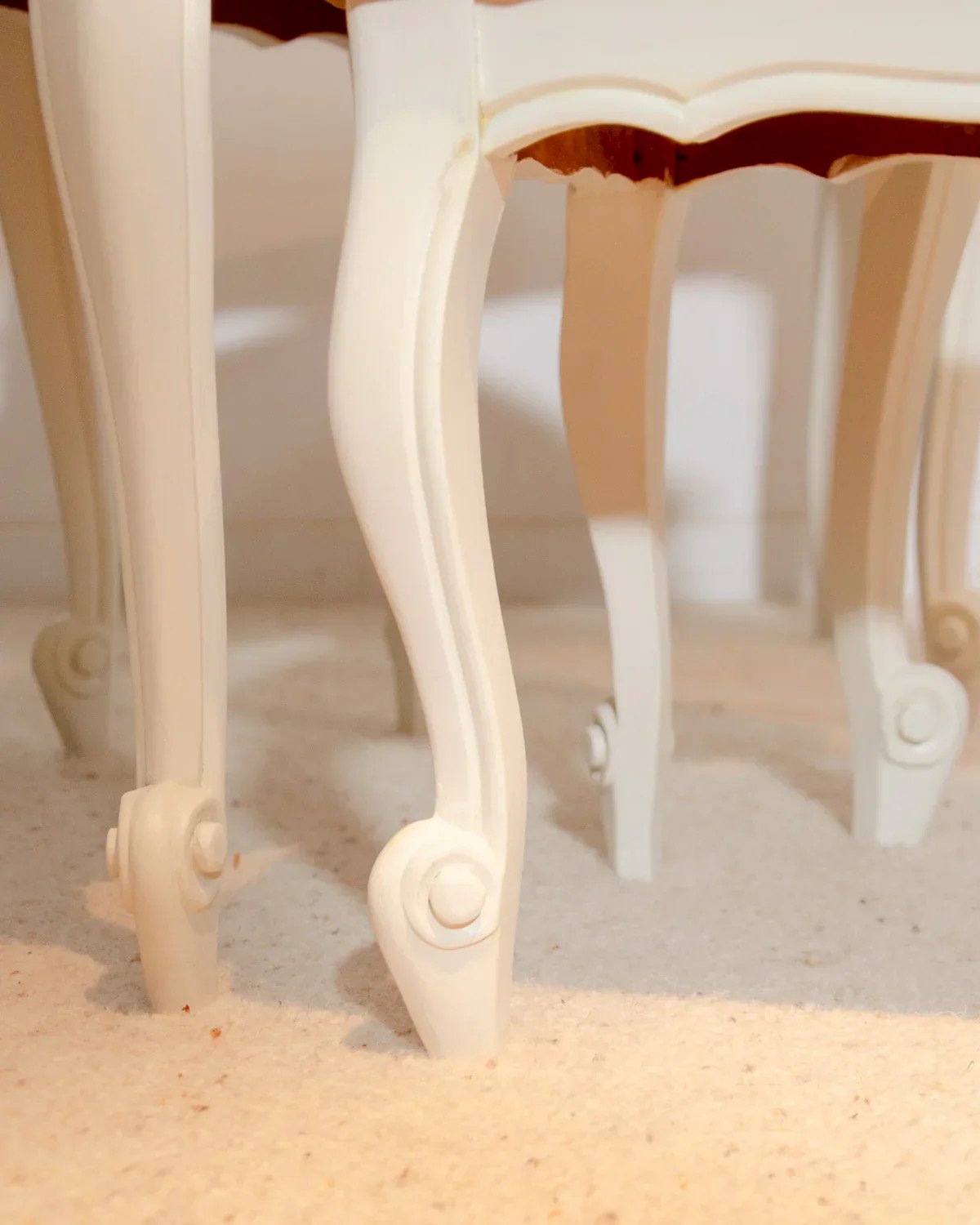
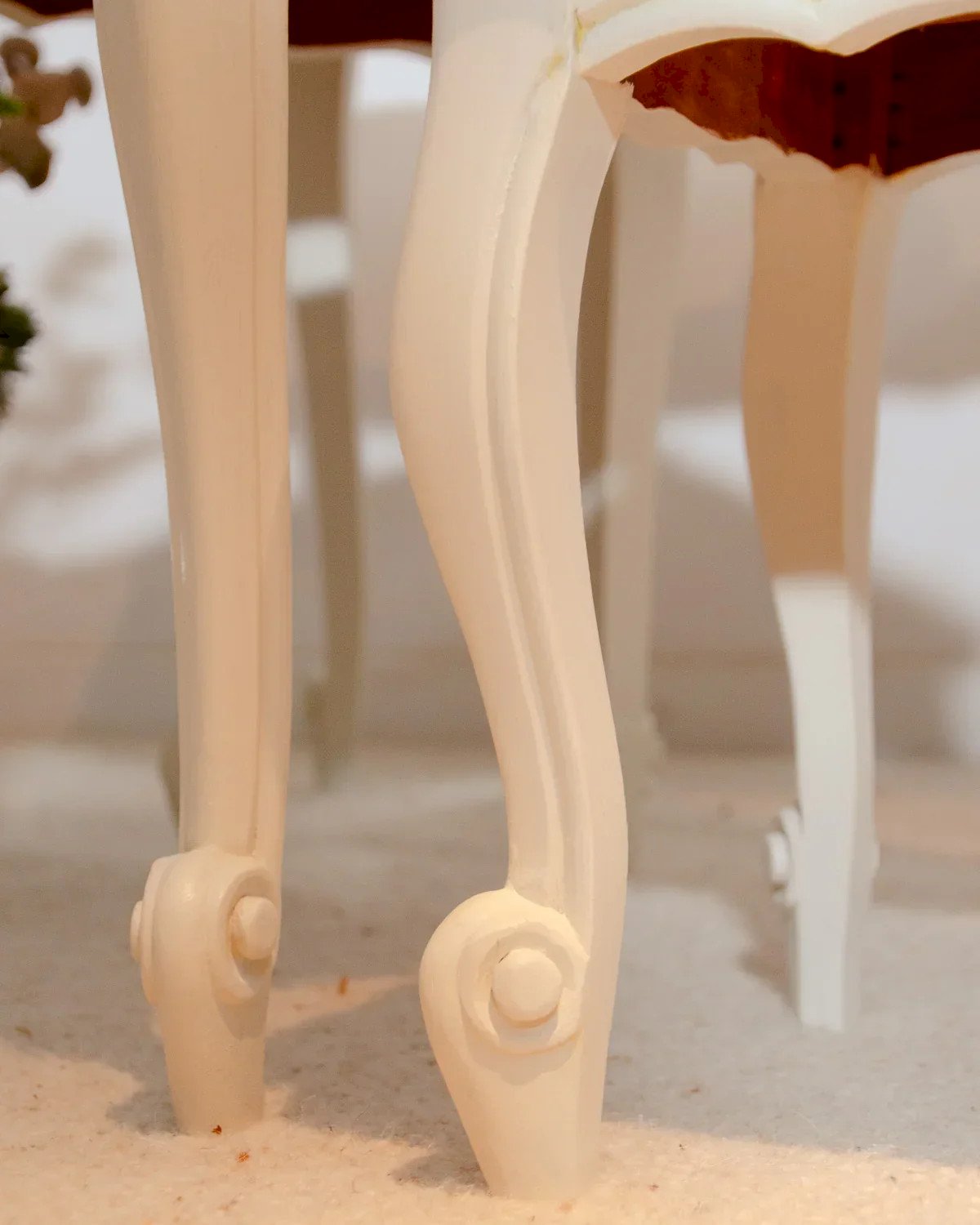
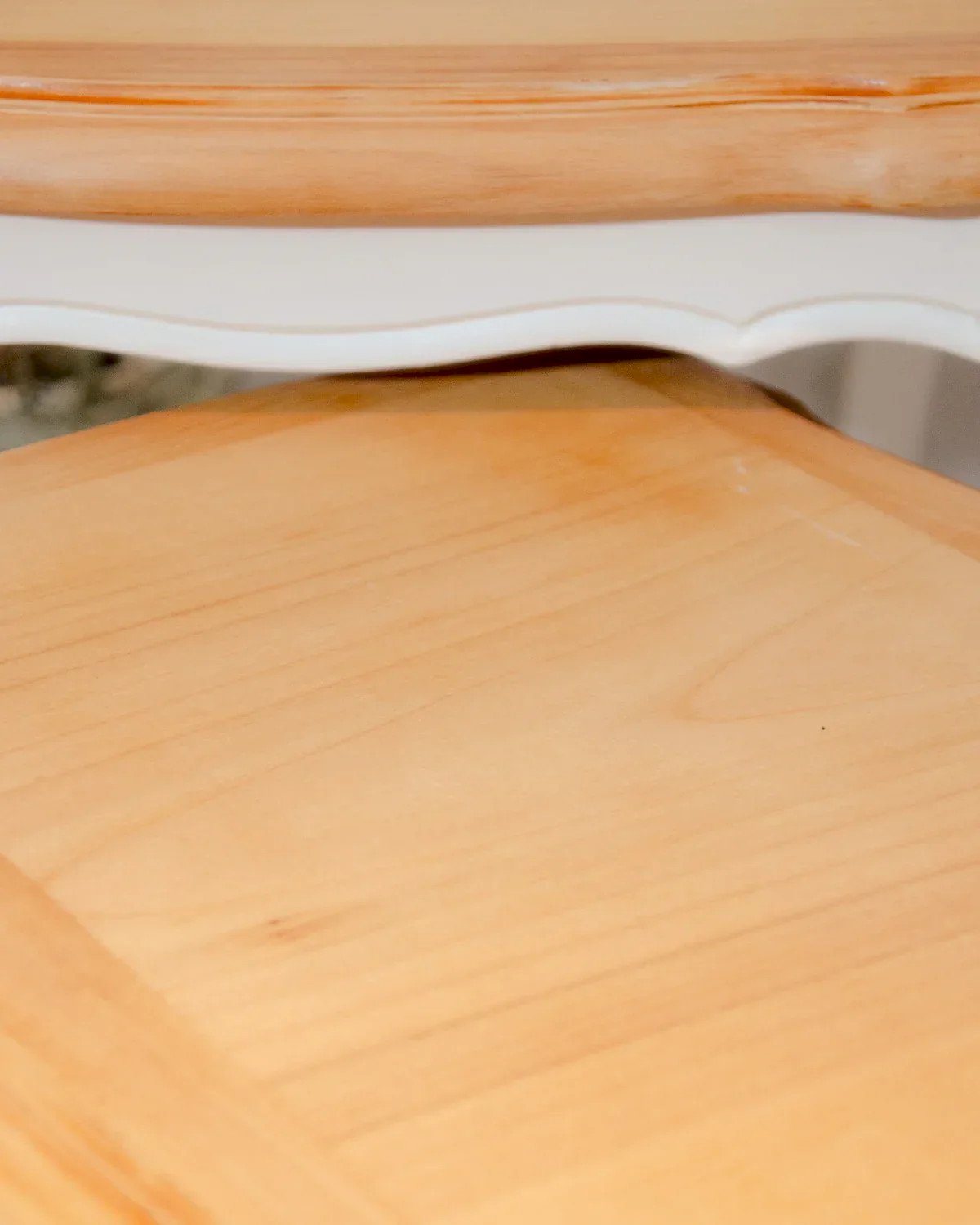
Enhance your living room with this trio of nesting tables made of wood with a light top and beige legs, designed to adapt the space to your needs. The decreasing proportions allow the pieces to be nested together to save surface area or to be scattered as side tables, end tables, or accent tables. The wood brings a natural warmth, ideal for a bright and soothing atmosphere. Simple lines and a soft finish make it easy to integrate into a Scandinavian or bohemian interior. Large table: Length: 56 cm Width: 41 cm Height: 48 cm Medium table: Length: 41 cm Width: 40 cm Height: 40 cm Small table: Length: 41 cm Width: 30.5 cm Height: 32 cm A brief history of nesting tablesInvented in the late 18th century by the English cabinetmaker Thomas Sheraton, nesting tables are a set of tables of decreasing sizes that fit under one another. Favored during the Art Deco period for their geometry and then reinvented in the 1950s and 60s with organic lines, they embody the ultimate modular furniture. They are called so by analogy to Russian dolls, offering an ingenious space-saving solution for small areas. Versatile, they alternately serve as coffee tables, nightstands, or accent supports according to your current needs.
Réf :
#412003
Brand / From : Debongout
Related Products




Comments
Barbara, nesting tables in wood N°149
199€
75002 Paris
Ce site contient des liens d’affiliation pour lesquels je peux recevoir une compensation.
Description
Enhance your living room with this trio of nesting tables made of wood with a light top and beige legs, designed to adapt the space to your needs. The decreasing proportions allow the pieces to be nested together to save surface area or to be scattered as side tables, end tables, or accent tables. The wood brings a natural warmth, ideal for a bright and soothing atmosphere. Simple lines and a soft finish make it easy to integrate into a Scandinavian or bohemian interior. Large table: Length: 56 cm Width: 41 cm Height: 48 cm Medium table: Length: 41 cm Width: 40 cm Height: 40 cm Small table: Length: 41 cm Width: 30.5 cm Height: 32 cm A brief history of nesting tablesInvented in the late 18th century by the English cabinetmaker Thomas Sheraton, nesting tables are a set of tables of decreasing sizes that fit under one another. Favored during the Art Deco period for their geometry and then reinvented in the 1950s and 60s with organic lines, they embody the ultimate modular furniture. They are called so by analogy to Russian dolls, offering an ingenious space-saving solution for small areas. Versatile, they alternately serve as coffee tables, nightstands, or accent supports according to your current needs.
Réf :
#412003
Brand / From : Debongout