 English
 Français


Description
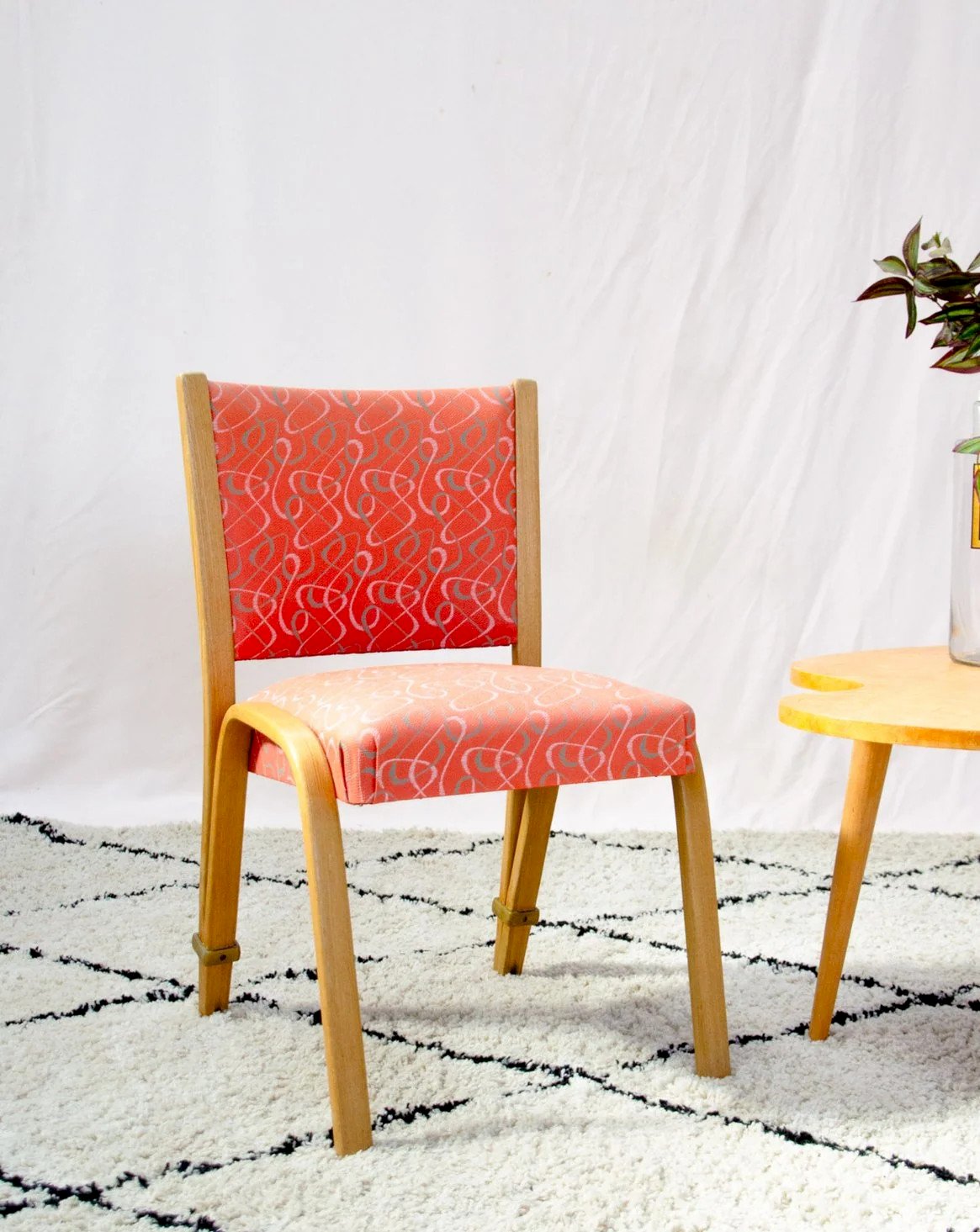
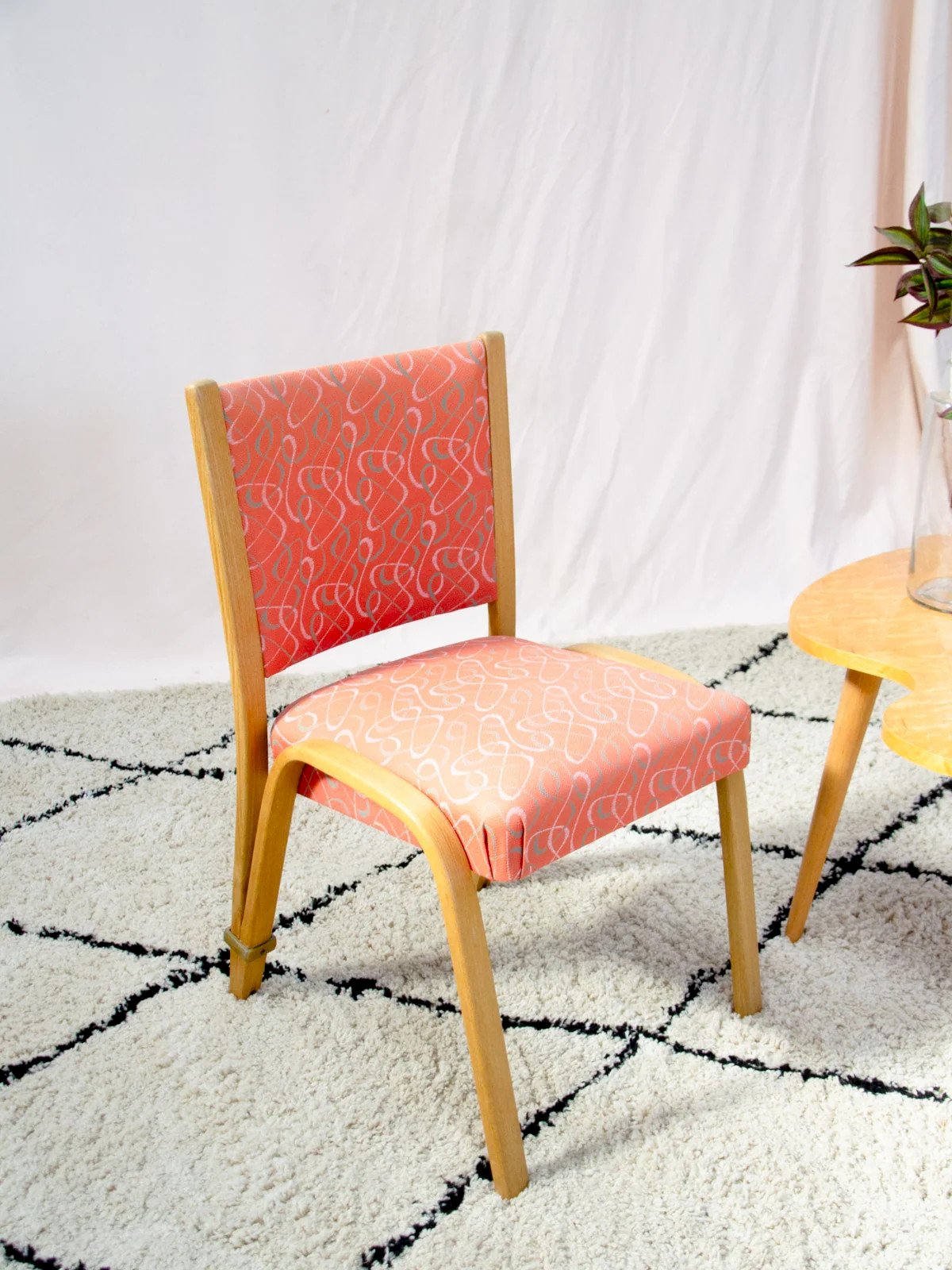
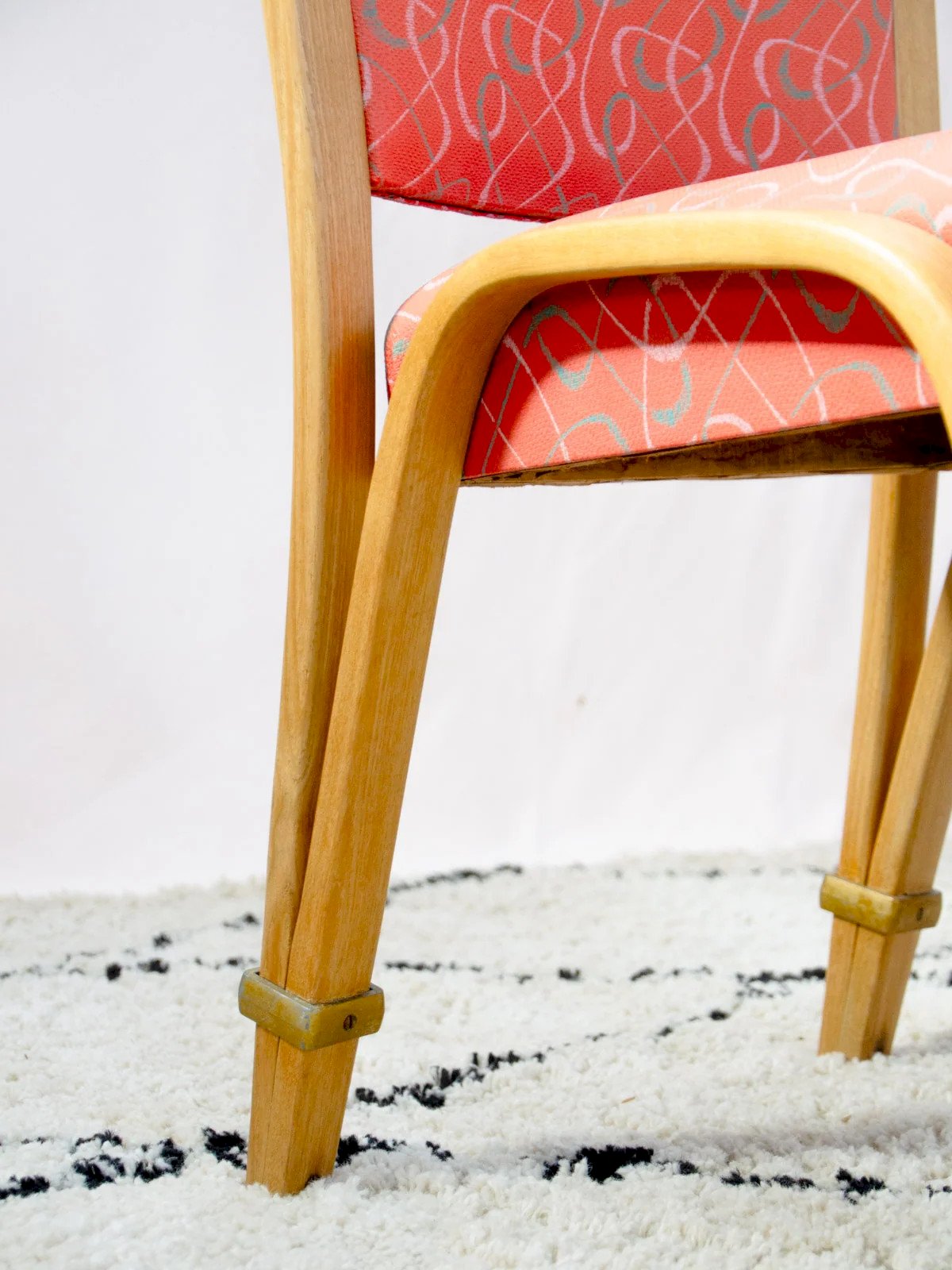
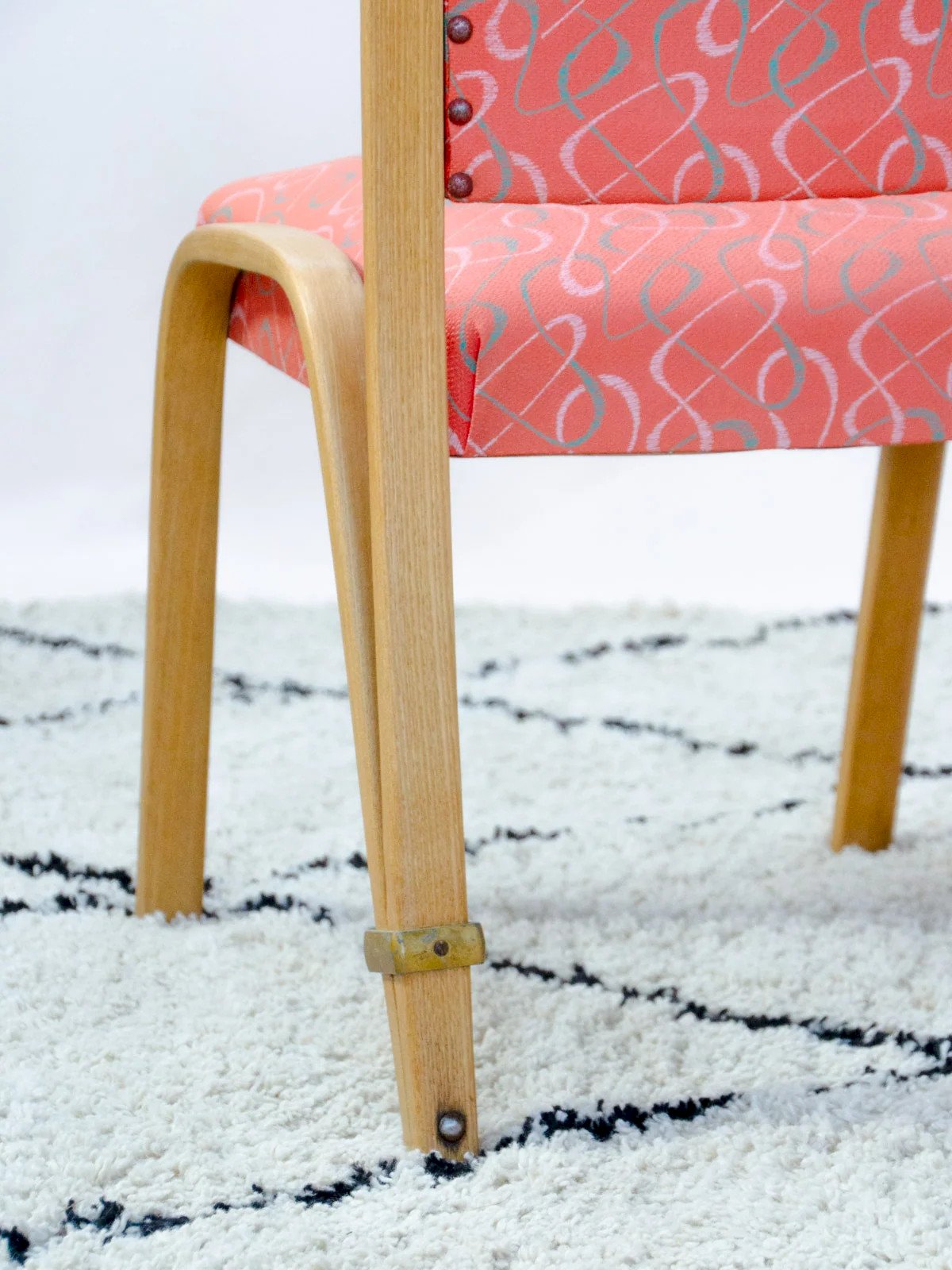
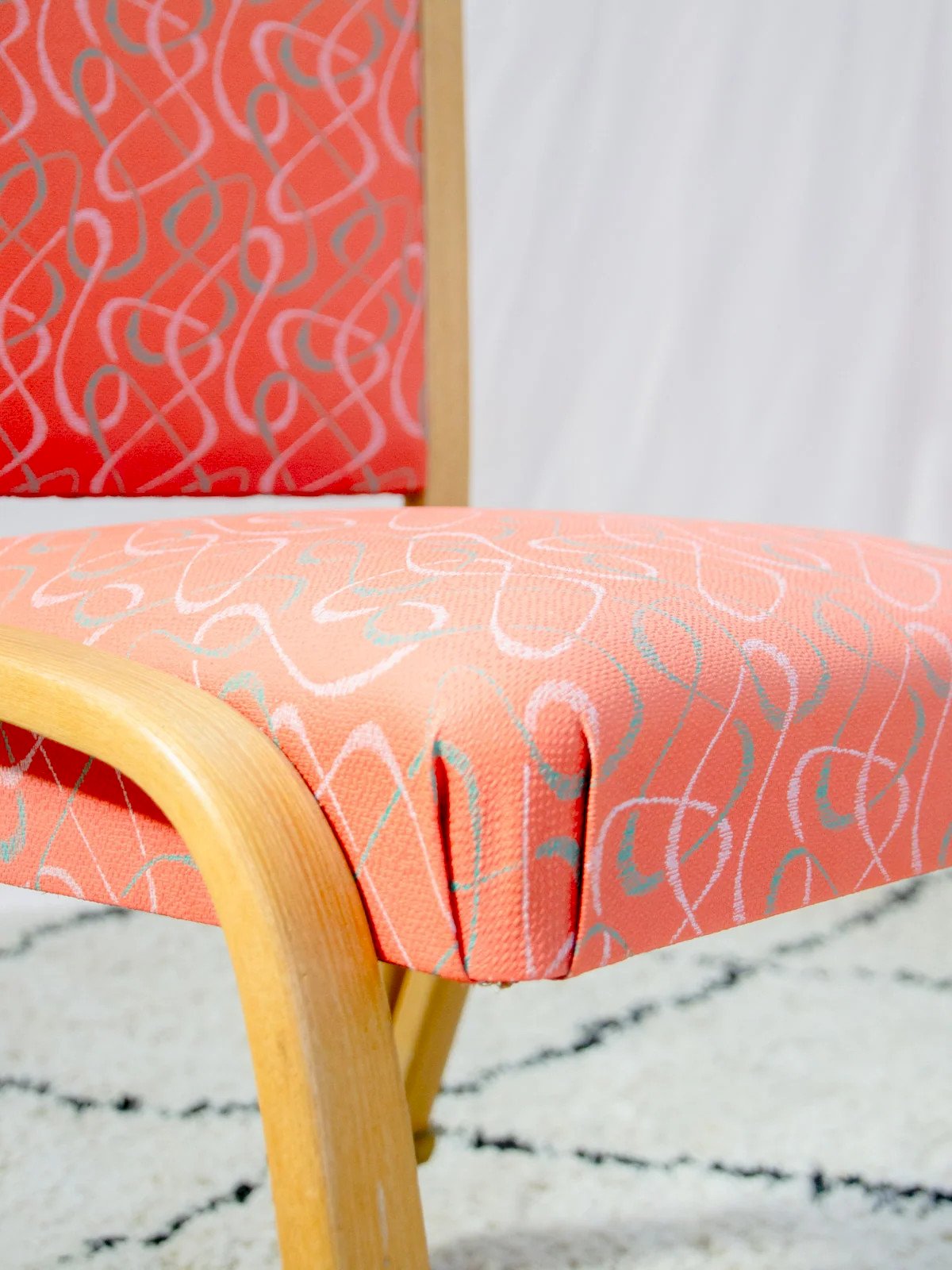
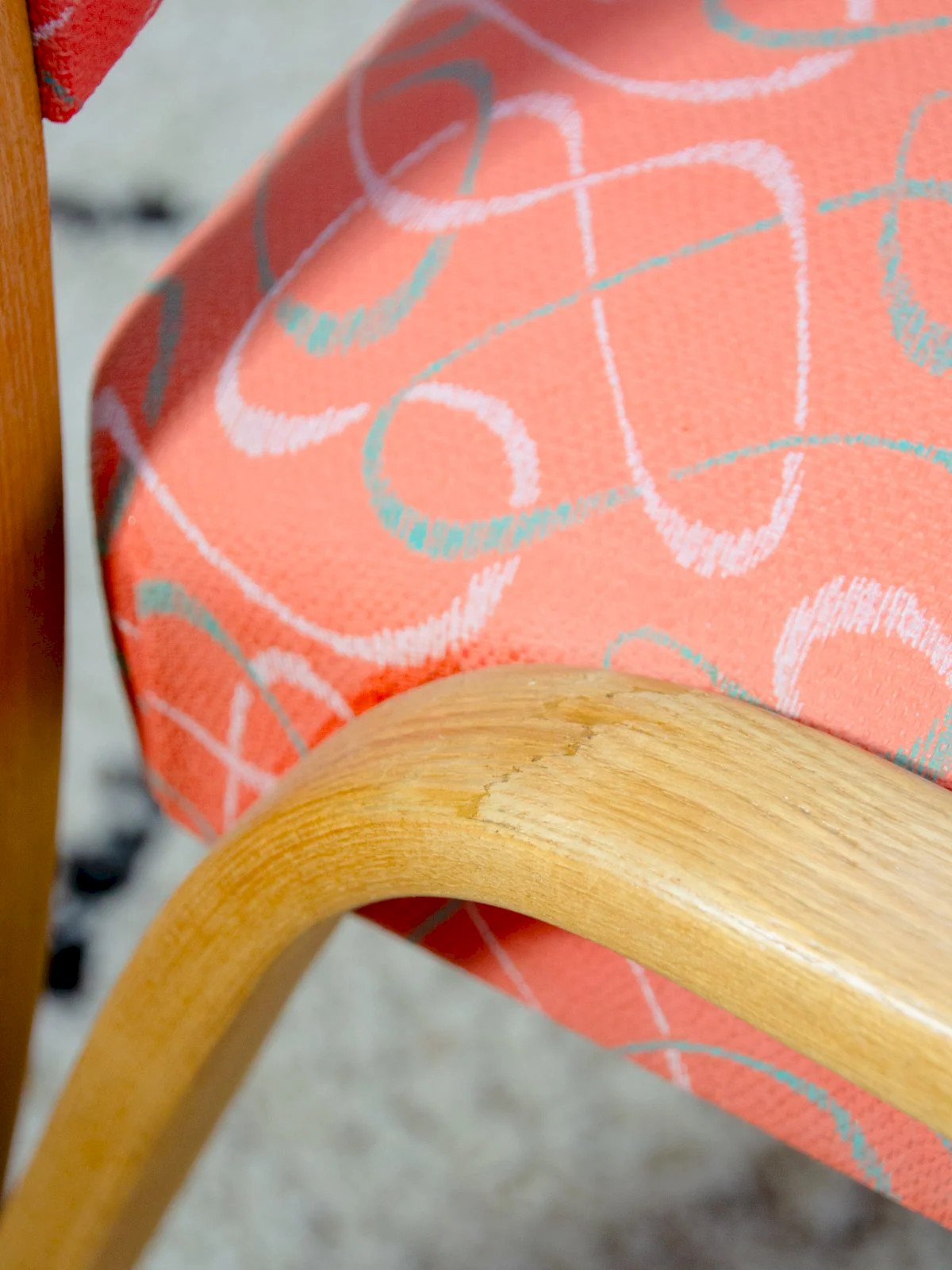
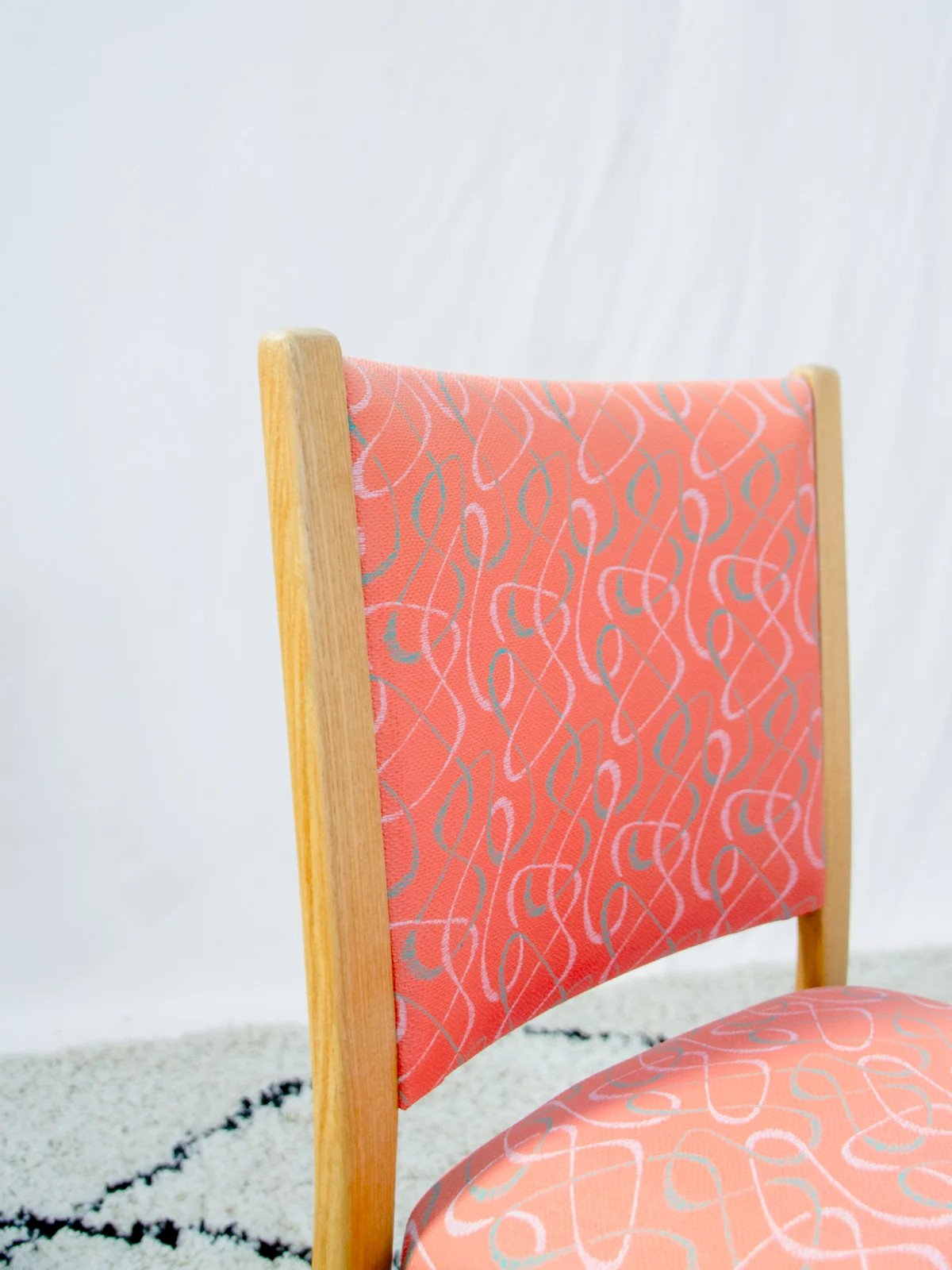
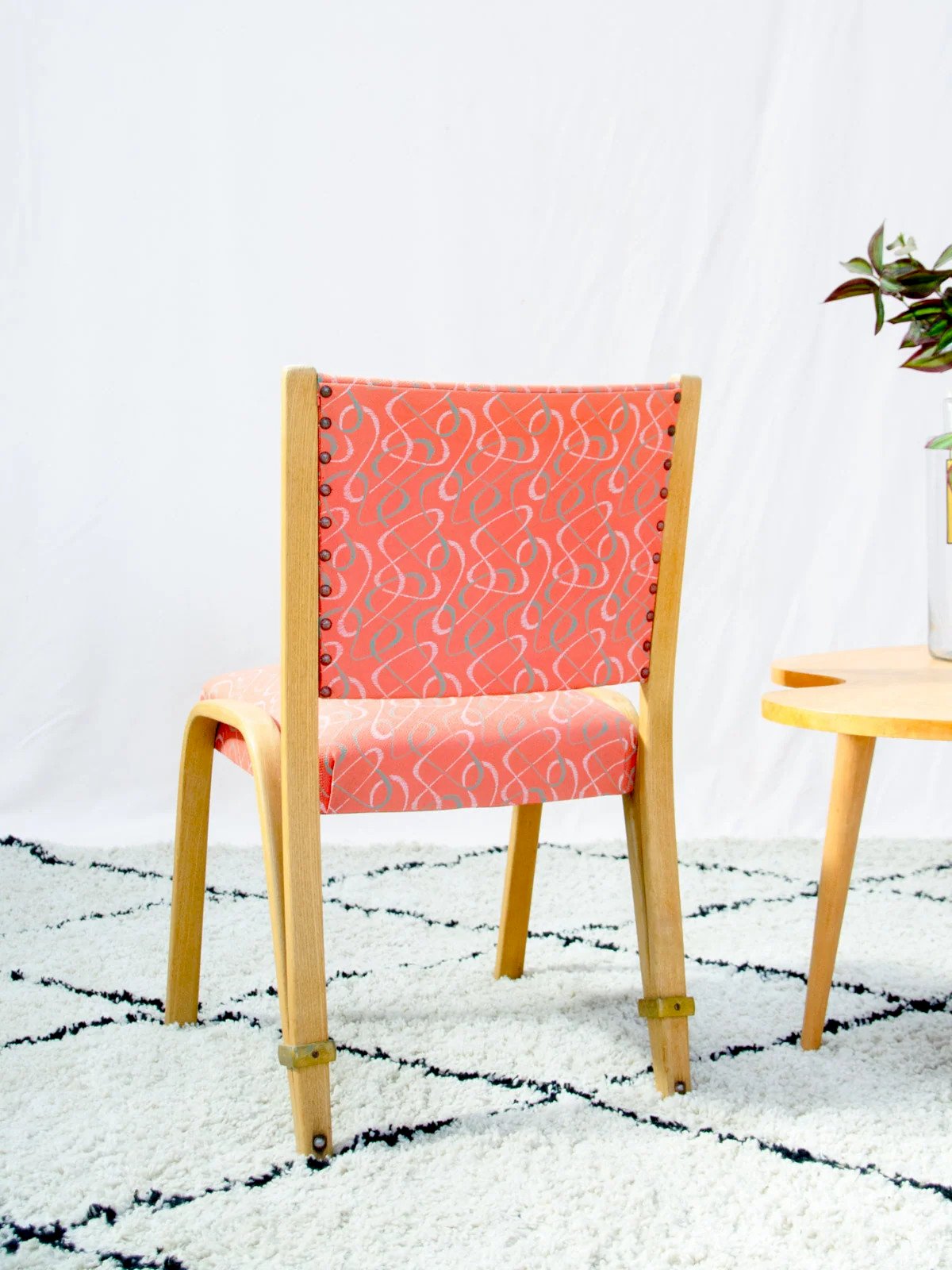
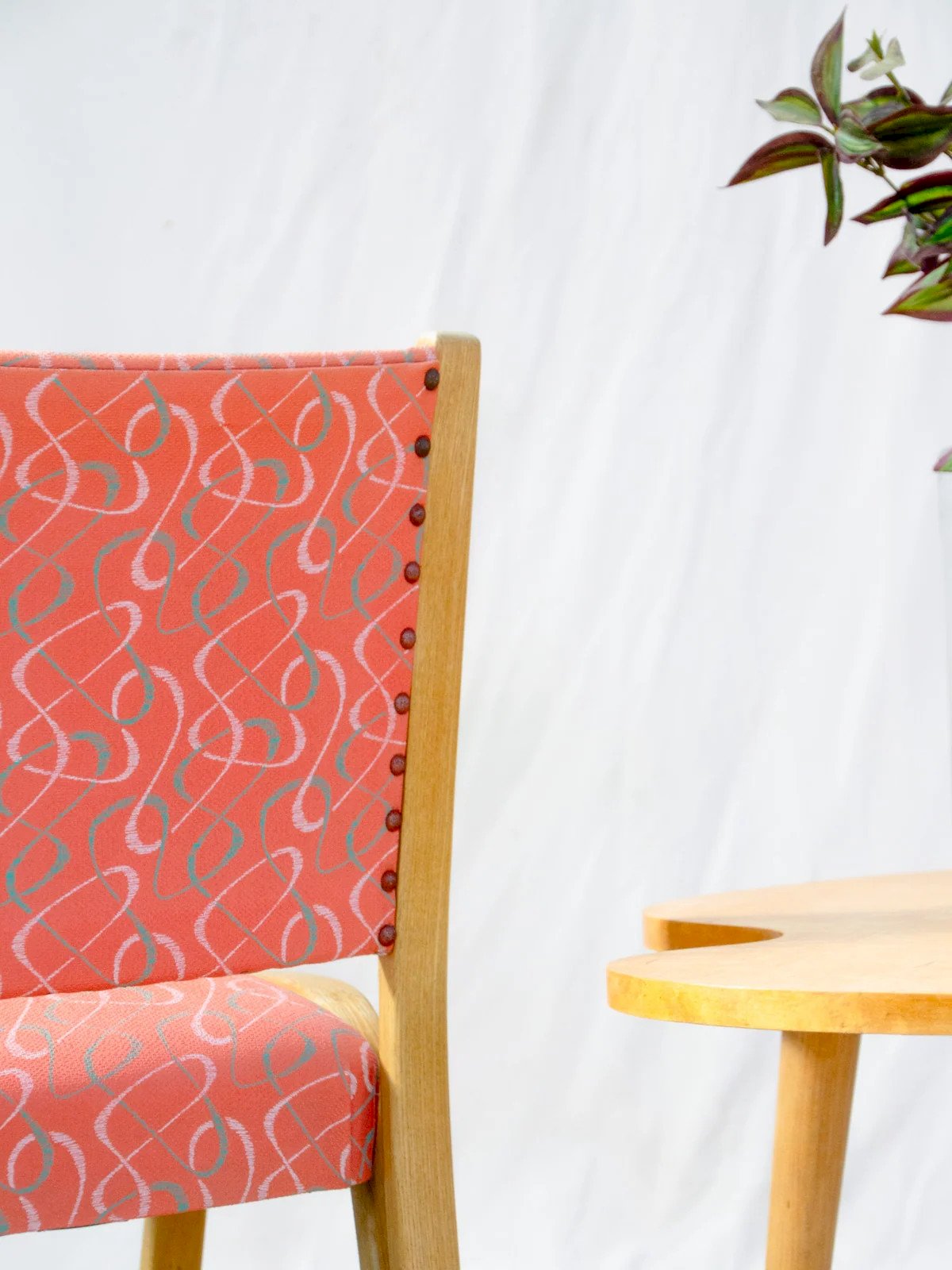
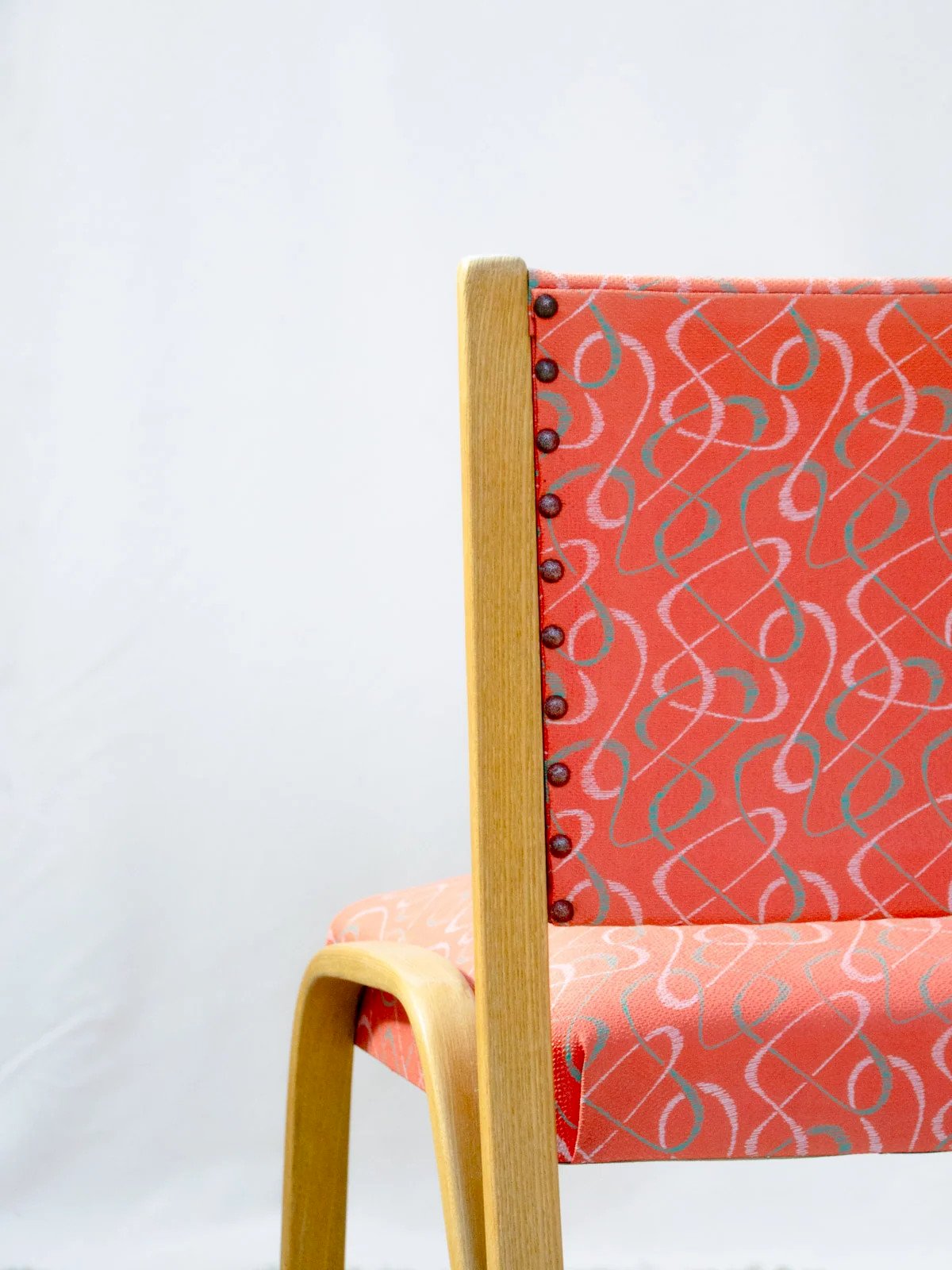
This second-hand chair in dark elm, accented with pink patterned faux leather and a bronze ring on the leg, features a very unique contemporary presence. The curved wood gives it a supple look, while the faux leather seat adds a graphical and comfortable touch, in the spirit of the fifties. French, it fits well around a dining table or in a bedroom as an elegant accent seat. Its format easily slides into a reading nook or near a desk, without weighing down the space. Placed near a wooden secretary, with a book resting on the seat and a lamp beside it, it creates a refined ensemble. Length: 50 cm Width: 45 cm Height: 82 cm Seat height: 46 cm Seat width: 43 cm Seat depth: 43 cm A brief history of the chair In the Middle Ages, sitting on a chair with a backrest was a rare privilege reserved for those who led the assembly: the "president" [from the Latin praesidere, to sit in front]. For a long time a symbol of prestige compared to the benches and stools of the common people, the chair only became democratized in the 18th century to become a daily object. It is distinguished from the armchair by the absence of armrests, a structure designed to offer total freedom of movement around a table or desk. The result of a constant quest between lightness and sturdiness, it has evolved from sculpted solid wood to more modern lines, making each seat a witness to the history of comfort.
Réf :
#414303
Brand / From : Debongout
Related Products


Comments
Alma, the elm and leatherette chair No. 2143
339€
75002 Paris
Ce site contient des liens d’affiliation pour lesquels je peux recevoir une compensation.
Description
This second-hand chair in dark elm, accented with pink patterned faux leather and a bronze ring on the leg, features a very unique contemporary presence. The curved wood gives it a supple look, while the faux leather seat adds a graphical and comfortable touch, in the spirit of the fifties. French, it fits well around a dining table or in a bedroom as an elegant accent seat. Its format easily slides into a reading nook or near a desk, without weighing down the space. Placed near a wooden secretary, with a book resting on the seat and a lamp beside it, it creates a refined ensemble. Length: 50 cm Width: 45 cm Height: 82 cm Seat height: 46 cm Seat width: 43 cm Seat depth: 43 cm A brief history of the chair In the Middle Ages, sitting on a chair with a backrest was a rare privilege reserved for those who led the assembly: the "president" [from the Latin praesidere, to sit in front]. For a long time a symbol of prestige compared to the benches and stools of the common people, the chair only became democratized in the 18th century to become a daily object. It is distinguished from the armchair by the absence of armrests, a structure designed to offer total freedom of movement around a table or desk. The result of a constant quest between lightness and sturdiness, it has evolved from sculpted solid wood to more modern lines, making each seat a witness to the history of comfort.
Réf :
#414303
Brand / From : Debongout